Livery Halls – Open House London

There is so much choice when it comes to Open House London that sometimes I like to come up with a theme in order to work out what buildings I want to visit. In the past, for example, I have focused on churches and theatres. This year, I decided to visit several livery companies, located in the City of London.


Chartered Accountants’ Hall
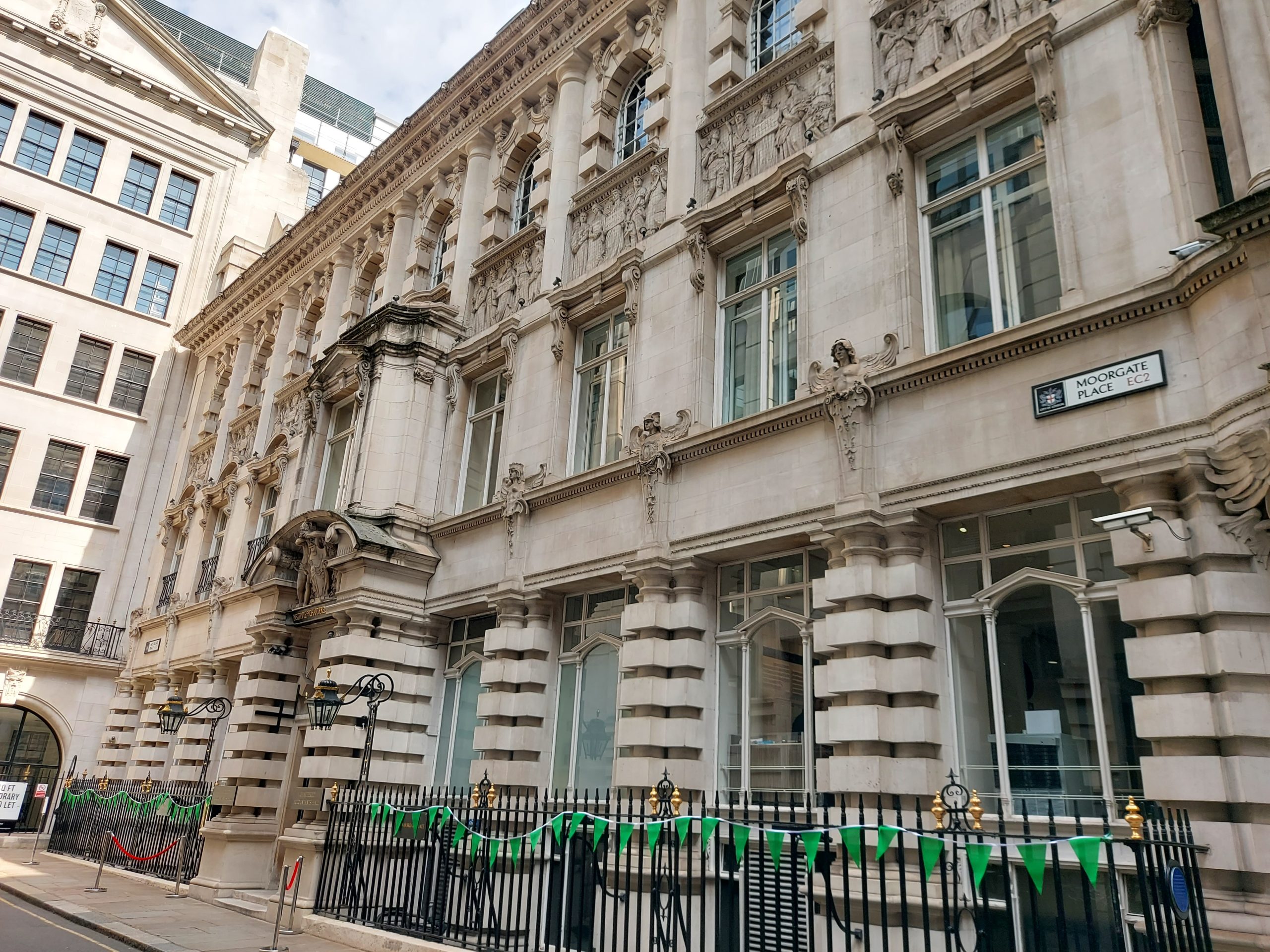
The front of Chartered Accountants' Hall

I began the day with a visit to the Chartered Accountants’ Hall, the headquarters of the Institute of Chartered Accountants in England & Wales. It was originally built in 1890 to the design of Sir John Belcher RA, and was extended in the 1930s and again in the 1960s, this time to a more modern design by Sir William Whitfield. I enjoyed my guided tour of the Hall, especially the decorative bridge, inspired by the Rialto Bridge in Venice. The stained glass windows in this room – the members’ room – are relatively recent, having been created by Alexander Beleschenko in 2022. Now Grade II listed, the building has a fascinating exterior, with a carved stone frieze by Hamo Thorneycroft. Its interior features works of art by, among others, Eduardo Paolozzi.
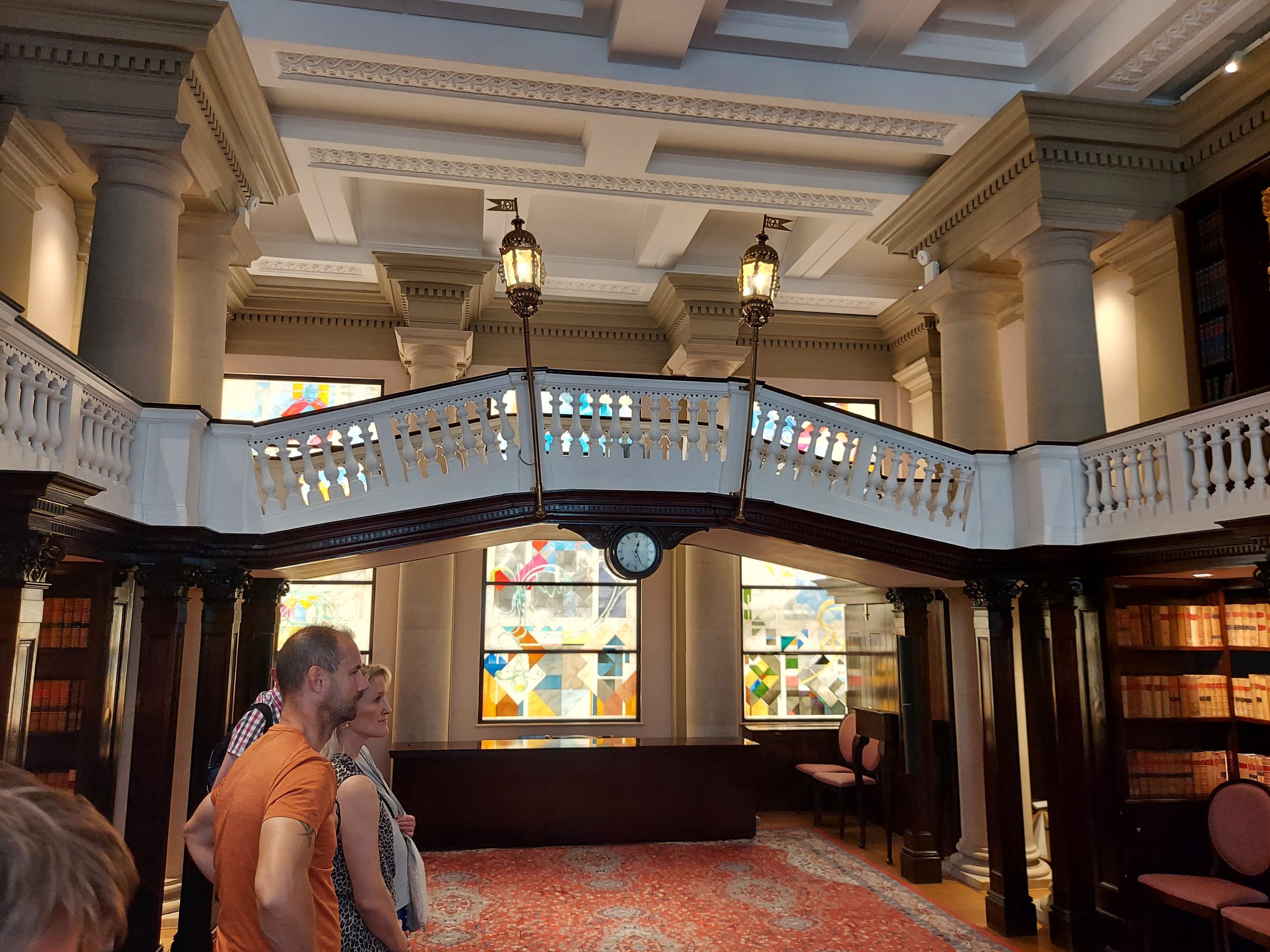
Decorative bridge at Charted Accountants' Hall


Stationers’ Hall

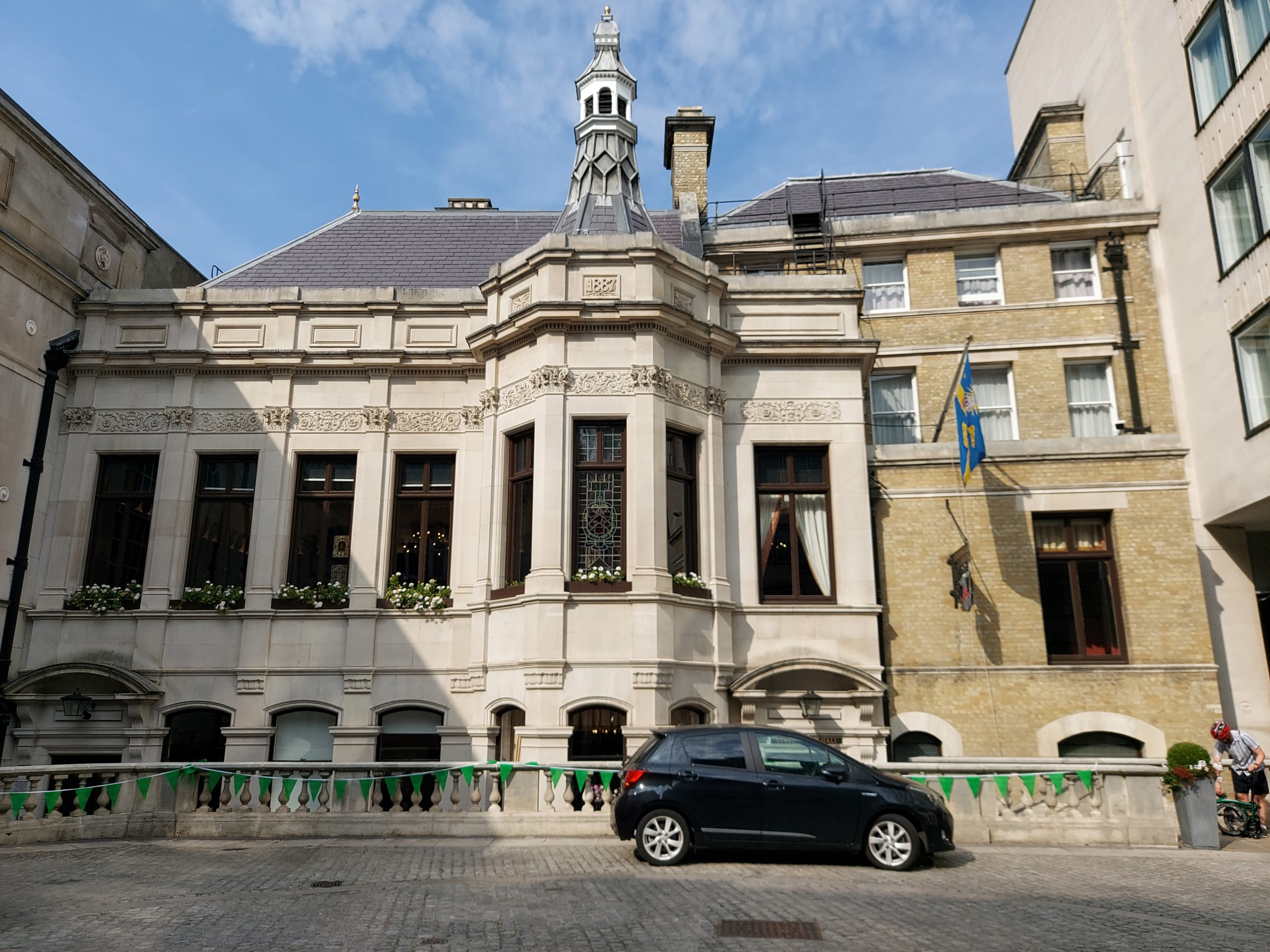
The front of Stationers' Hall

I then made my way to the Stationers’ Hall, home of the Stationers’ Company. The Company has the strap line, “The City of London Livery Company for the Communications and Content Industries“. Stationers’ Hall is one of the few ancient remaining Livery Halls in the City of London. It is Grade I listed and was completed in 1673, after the Great Fire of London.

The hall has several beautiful rooms. The Stock Room, named after the Company’s publishing venture founded in 1603, has oak panelling and carvings dating back to the 17th century, as well as armorial shields of Past Masters of the Company.

She oak panelling and carvings in the Stock Room date back to the 17th century, while around the friezes are displayed the armorial shields of Past Masters or the Company including HRH The Duke of Windsor.  The room takes its name from the Company’s publishing venture founded in 1603. The Court Room is bright, ornate and richly carpeted, with an 18th century carved mantelpiece and gold Rococo ornamentation on the walls. I also particularly liked the images of books dotted here and there around the room.

The Main Hall is the most magnificent room of all, with oak flooring and carved oak panelling dating from the 1600s. It even has a Minstrels’ Gallery. The stained glass windows display several important figures in the world of books and printing, such as William Shakespeare, William Caxton and William Tynedale.

This Hall also has a lovely peaceful garden, which was a joy to relax in after the hectic day.
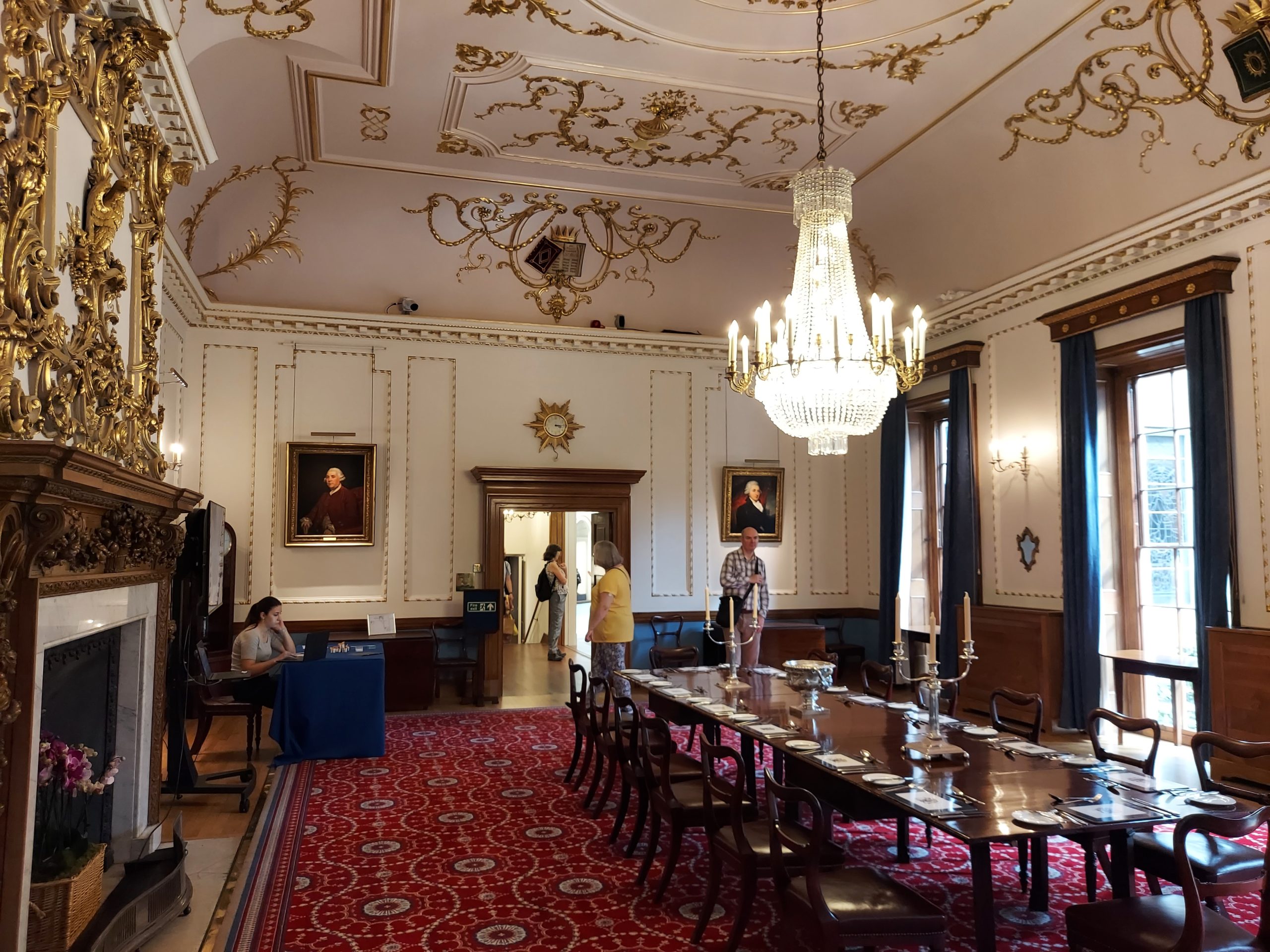
Court Room at Stationers' Hall


Founders’ Hall

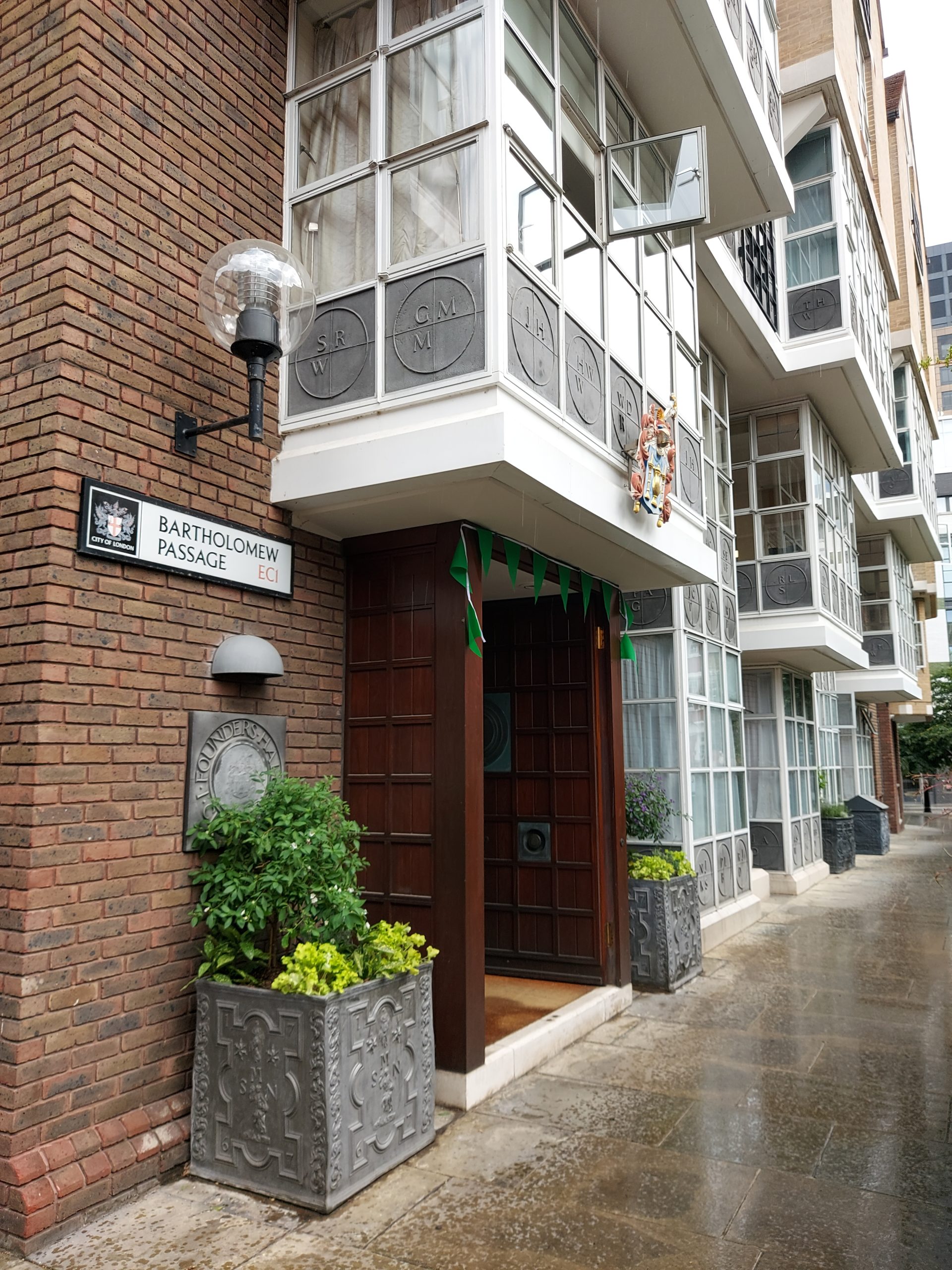
The front of Founders' Hall

Finally, I popped into Founders’ Hall, home to the Worshipful Company of Founders. Unlike the other two halls I visited today, Founders’ Hall is contemporary, though the company itself dates back to 1365. It was formed as a guild aiming to ensure high standards in the production of bronze and brass articles.

The first Hall was destroyed in the Great Fire of London. This one is actually the fifth Hall for the Company, and was begun in 1985, designed by Sam Lloyd. It was Grade II listed in 2018, and contains Arts & Crafts and postmodern influences. Here, it was particularly interesting to see the coats of arms and other articles on display in the basement Hall, and have the chance to ring some bells in the ground floor Parlour.
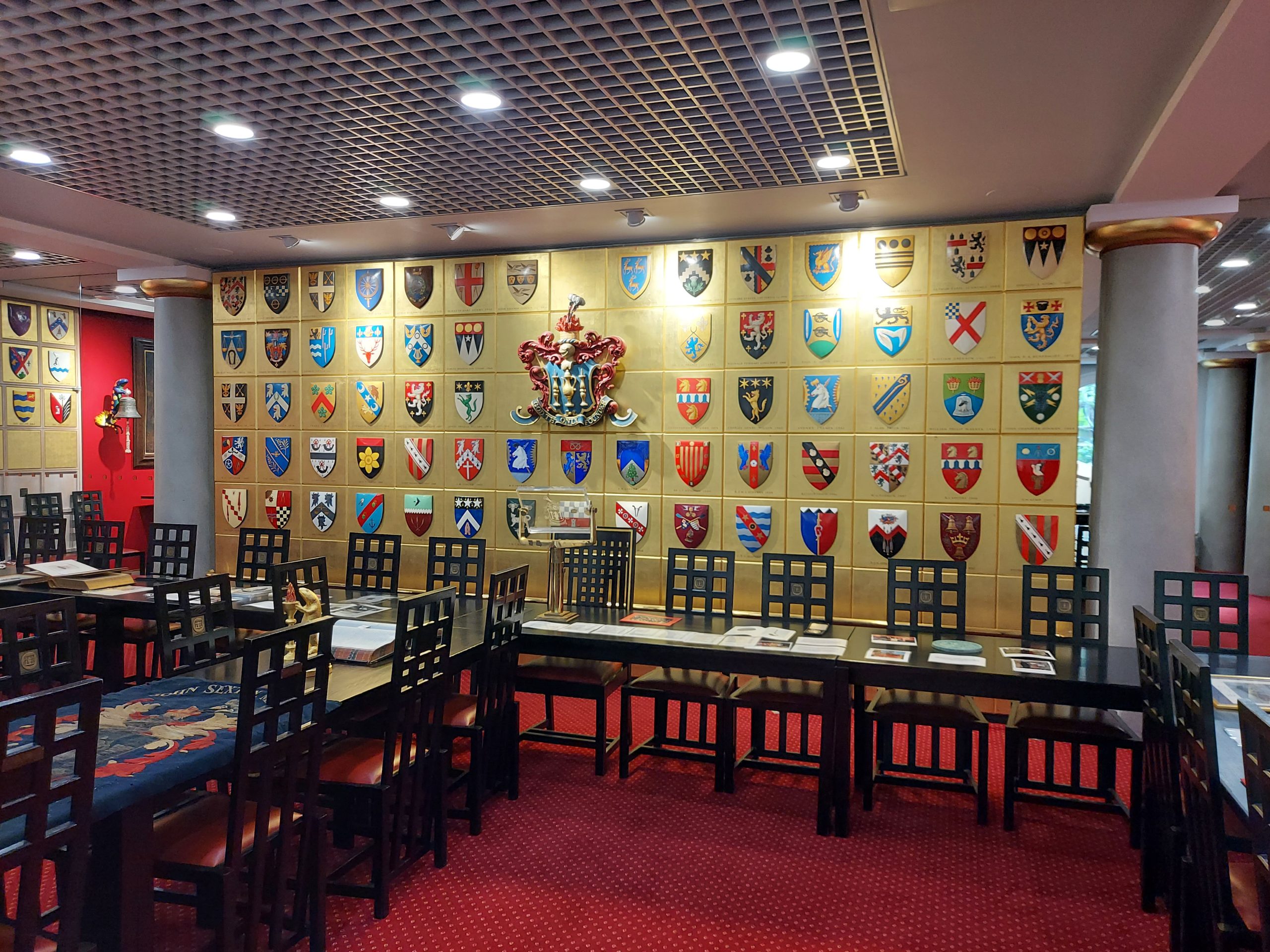
Coats of arms inside Founders' Hall


I had a great day exploring these Halls. I think my favourite was probably Stationers’ Hall, owing to their connection with books and their lovely garden, but they all have their merits, and a great deal of history.
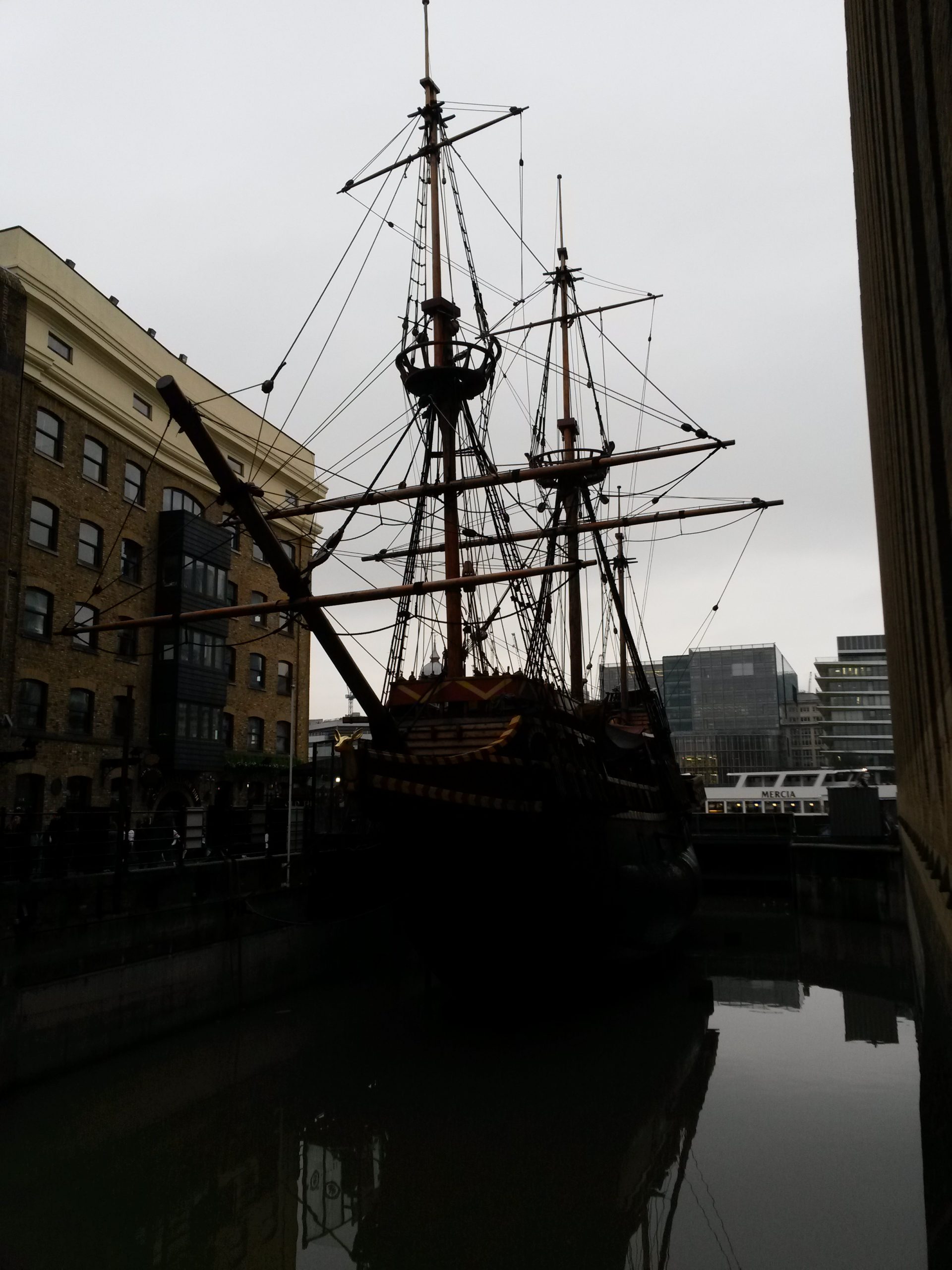
The Golden Hinde (Heritage Open Days)

The Golden Hinde

I’ve been meaning to visit the Golden Hinde in Southwark for years, but never got round to it, until this year’s Heritage Open Days when I finally got a chance to pay a visit (and for free).

The original Golden Hinde – the galleon in which Sir Francis Drake circumnavigated the world between 1577 and 1580 – rotted away and eventually broke up some time in the mid-seventeenth century (The best of the remaining timber was made into a chair, known as the ‘Drake chair’, which can be found in the Bodleian Library in Oxford). The current ship, located at St Mary Overie Dock on Bankside, is a full-size reconstruction and was built using traditional methods in Devon, launched in 1973. She has also circumnavigated the world, and has travelled more than 140,000 miles altogether, though she has been based at her current location since 1996.

Below deck on the Golden Hinde

It was fun to wander around the ship, imagining how sailors would have lived and worked on such a craft in the sixteenth century. Costumed guides were also on the ship and entertained the children visiting (as well as adults like me) with stories of life on board. I was particularly grossed out by tales of how the sailors wiped their bottoms, but the kids were delighted!

The water in the dock is currently drained as the ship is undergoing conservation work aimed at preserving it well into the future. Tours of the ship are available, and gigs occasionally take place on board, as well as events such as talks about female pirates to celebrate International Women’s History Month.

Inside the Golden Hinde

FACTS

Address: St Mary Overie’s Dock, Cathedral St, London, SE1 9DE

Website: goldenhinde.co.uk

Opening Hours: Daily 10am-5pm

Price: Visitors aged 3 and over £6, visitors aged 2 and under free, families of 4 £18.

Bow Street Police Museum

Entrance to the Bow Street Police Museum

On Saturday I paid my first visit to the Bow Street Police Museum, a new museum in Covent Garden. I visited in order to attend a talk, arranged for Heritage Open Days, called Performing Justice: How satire created London’s first police force. The fascinating talk explored how writer Henry Fielding, famous for his satirical plays hugely popular on the London stage, applied his keen mind to the role of Magistrate and ended up founding the Bow Street Runners, sometimes called the first police force. Fielding was fiercely critical of the corrupt court system and endeavoured to stamp out bribery and a good deal of brutality when he was in charge. True, he didn’t challenge capital punishment, which was a feature of the period: but he had sympathy for many criminals and understood how circumstances conspired to leave many feeling they had no choice but to turn to crime.

Gallery from the Magistrates' CourtGallery from the Magistrates’ Court
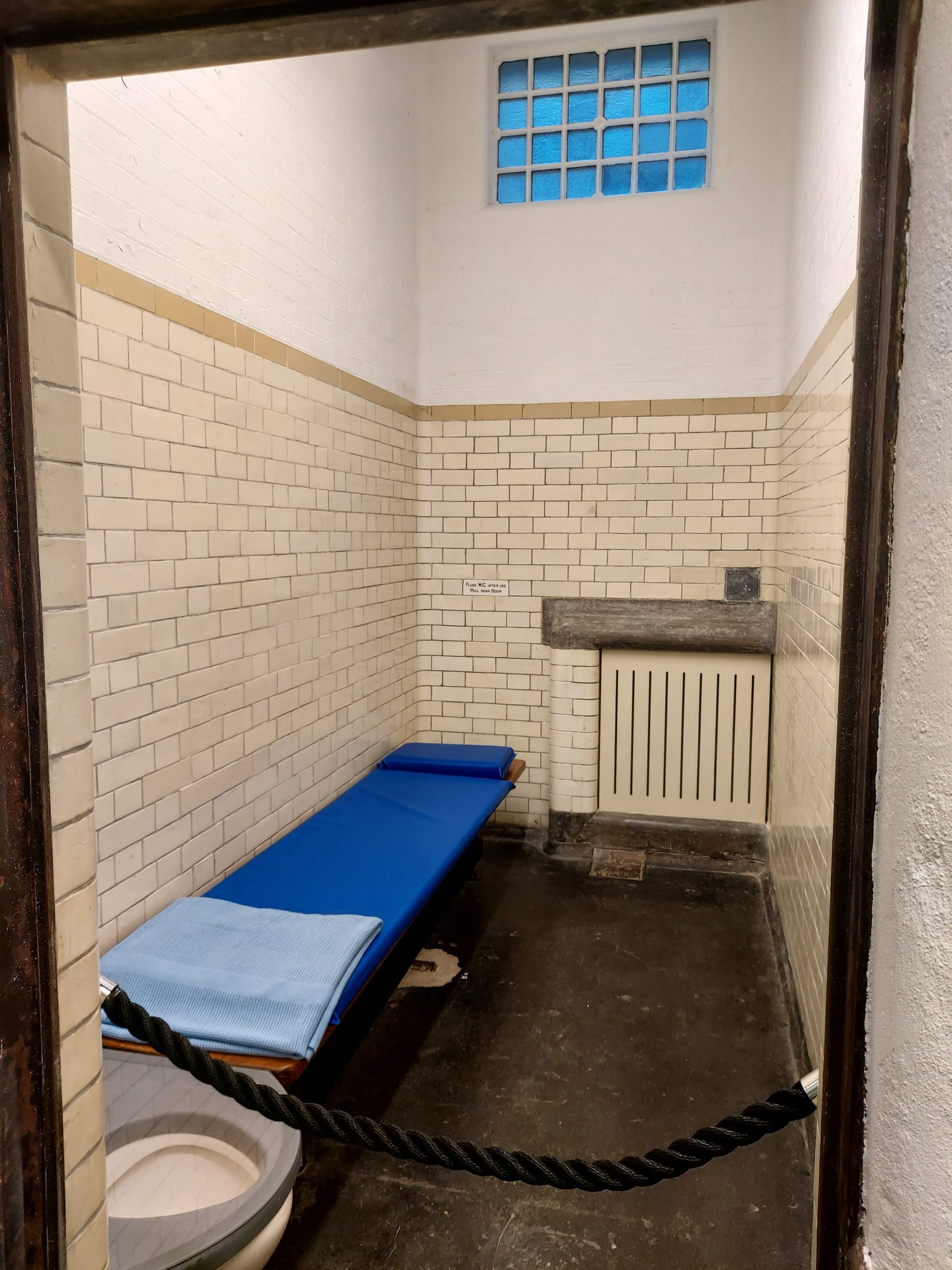
Trials were held at Bow Street Magistrates’ Court, which took place in the building next door: notable figures to be tried here include Oscar Wilde. The museum itself shows how the site developed over the years to become an early police station, with police cells built next to the court and used to house prisoners until the 1990s. Many of the original cells can be visited and they hold objects from the Metropolitan Police Heritage Service and videos featuring former Met officers, stationed in this building, telling their stories.

A police cell

The museum is fascinating and an essential resource to explore the history of policing in London, which is linked to the social history of the city and of Covent Garden. The museum also runs regular talks, and occasional walks and special events.

FACTS

Address: 28 Bow Street, London, WC2E 7AW

Website: bowstreetpolicemuseum.org.uk

Opening Hours: Fri-Sun 11am-4:30pm

Price: Adult £6, concession £4.50, under 12 free

Fitzrovia Chapel – Open House London

Chapel

I normally do my Open House London visits at the weekend, but if a venue is open late during the week I might try and visit it after work, and that’s what I did with Fitzrovia Chapel.

The chapel is located in the pedestrianised Pearson Square, which is off Mortimer Street on the site of the old Middlesex Hospital. I walked there from my office in Bloomsbury; the nearest Tube stations are Goodge Street, Warren Street and Oxford Circus.

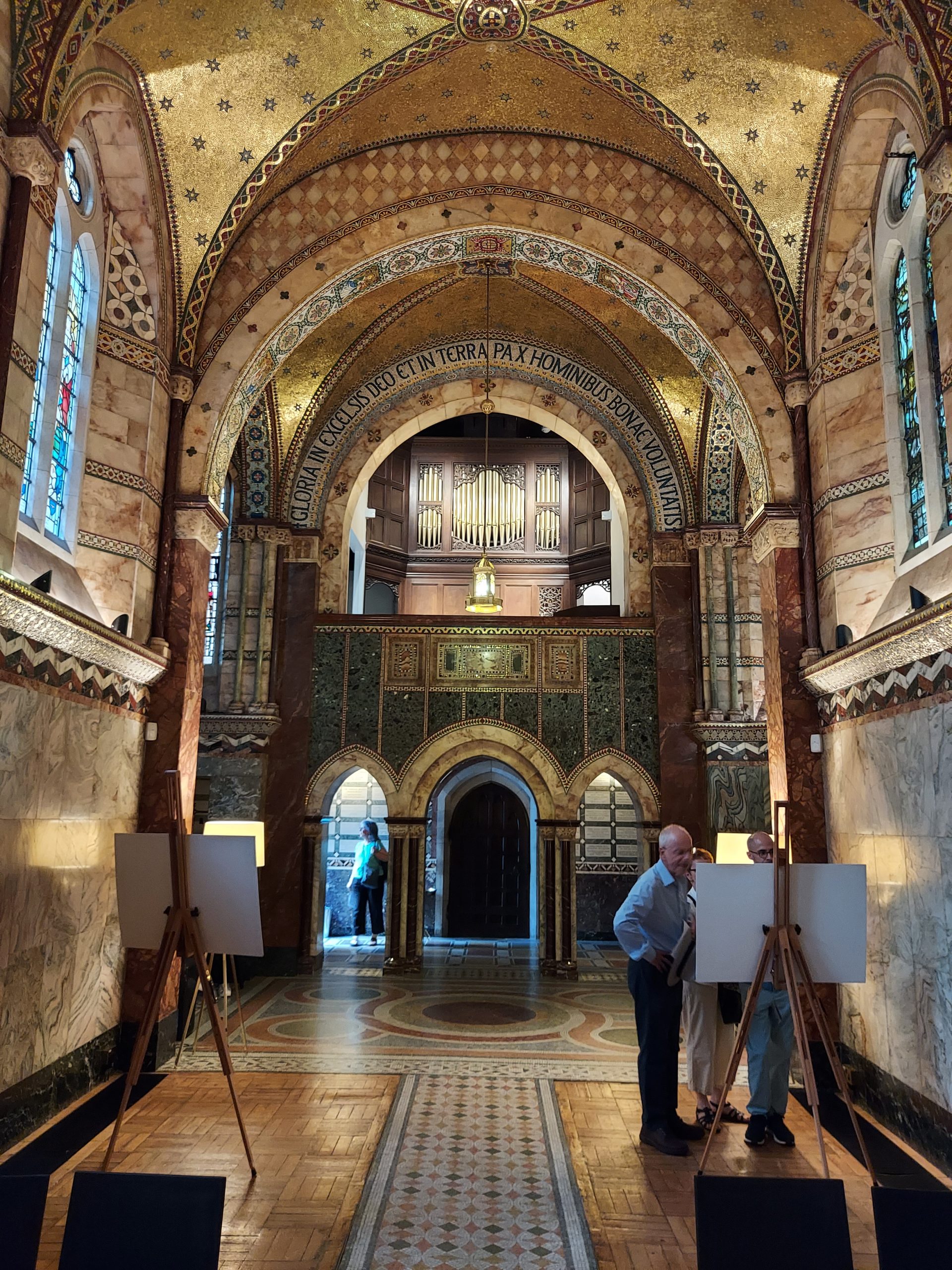
Ante-chapel

The chapel was originally built for staff and patients of the Middlesex Hospital (demolished in 2006). It was designed by John Loughborough Pearson (1817-1897), a leading Victorian architect, and was funded by donations and fundraising. Work began in 1891, but the chapel was not fully completed for almost forty years, as it was ensured that no money should be spent on the chapel that had been raised for patient care. After the death of the elder Pearson, his son, Frank Loughborough Pearson, completed the work.

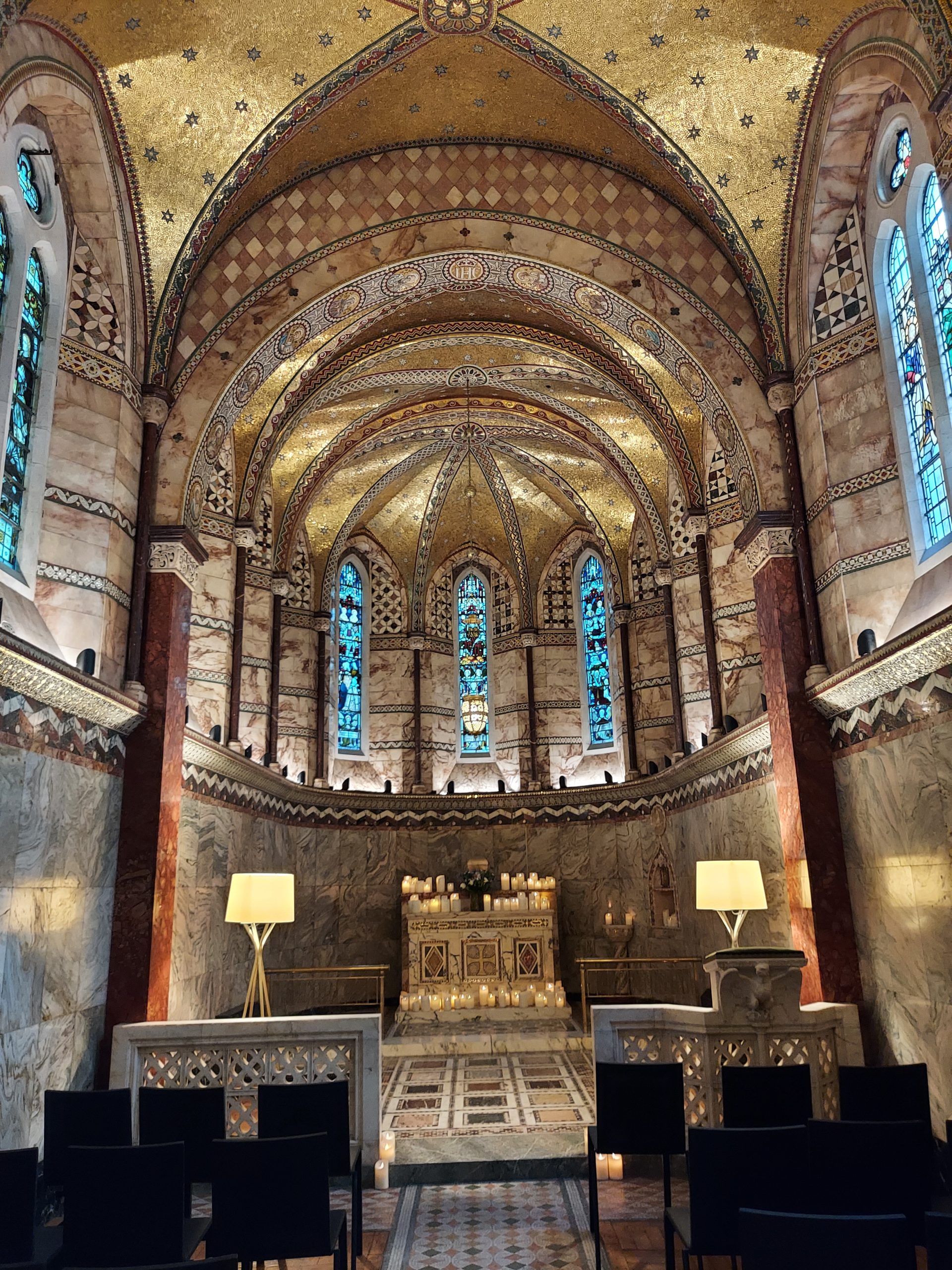
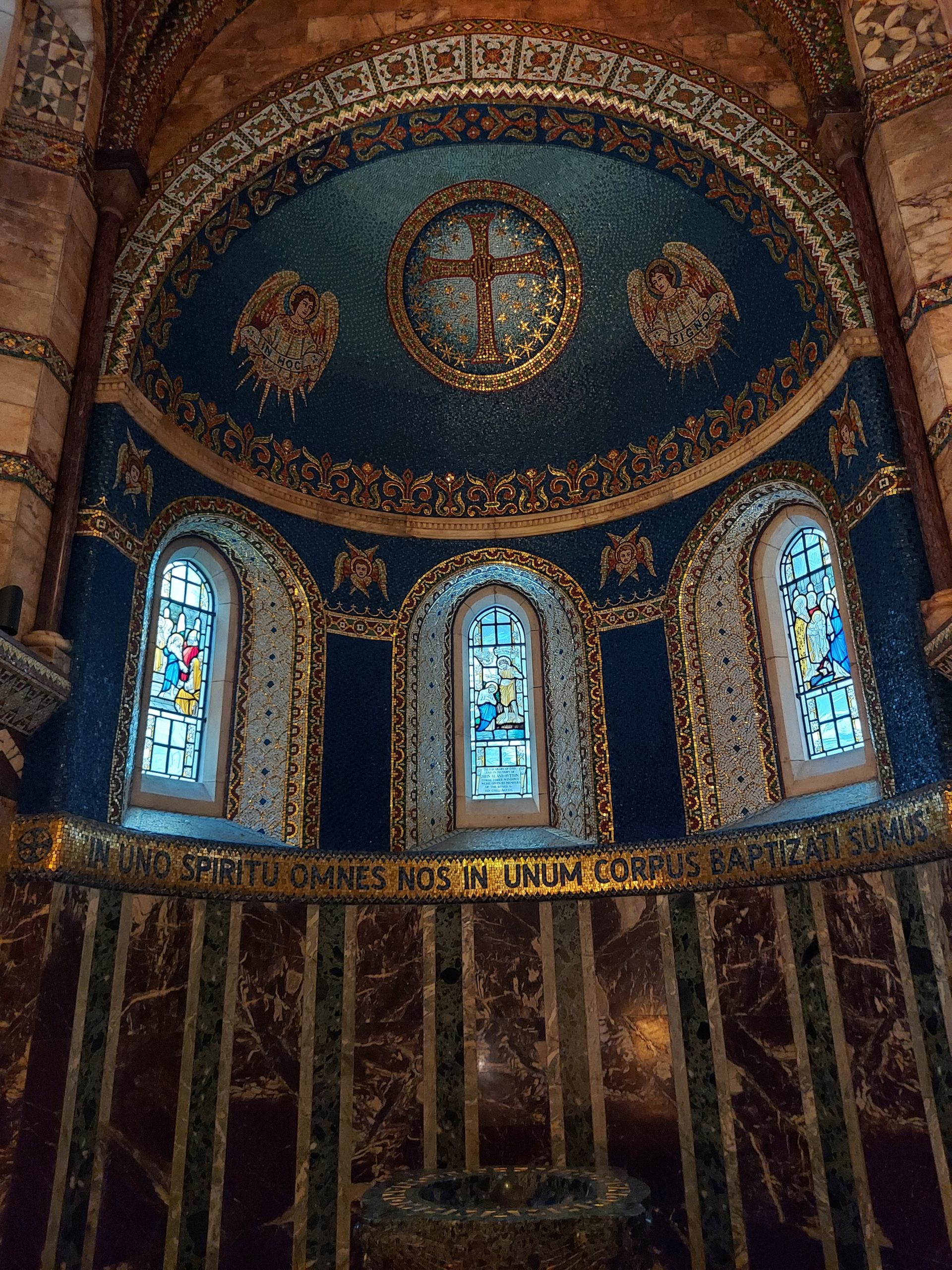
Iniside Fitzrovia Chapel

The first ever service was held in the completed structure on Christmas Day in 1891, and it was formally opened in 1892 by the Bishop of London. The chapel was never fully consecrated, as it has hosted services by chaplains and other faith leaders. It is now Grade II* listed and holds regular open days for the public, as well as concerts, exhibitions and other cultural events.

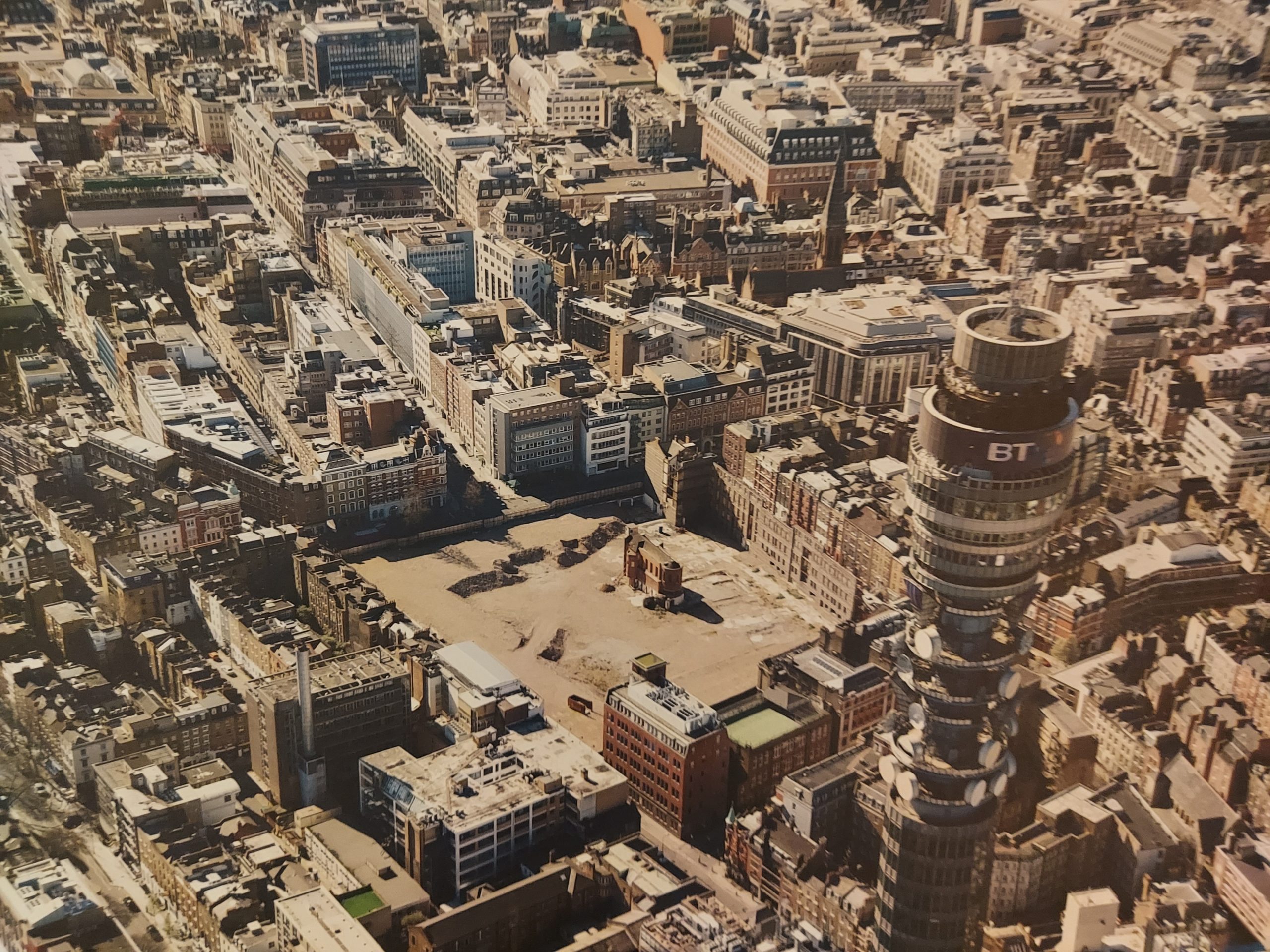
I found the chapel beautiful – I am so glad it was not demolished along with the rest of the hospital. Some photographs are on display showing the chapel in the middle of an empty building site, before work on the surrounding area was completed. It is a peaceful oasis in the middle of London, and beautifully decorated. The chancel over the altar is covered in golden mosaics and stars, while golden mosaics cover the entire ceiling. The ante-chapel contains tablets of white marble featuring inscriptions to hospital figures from all professions. The ceiling vaults contain roundels depicting the apostles.

Photograph of Fitzrovia Chapel after the hospital had been demolished around it

The Rossettis: Radical Romantics – Tate Britain

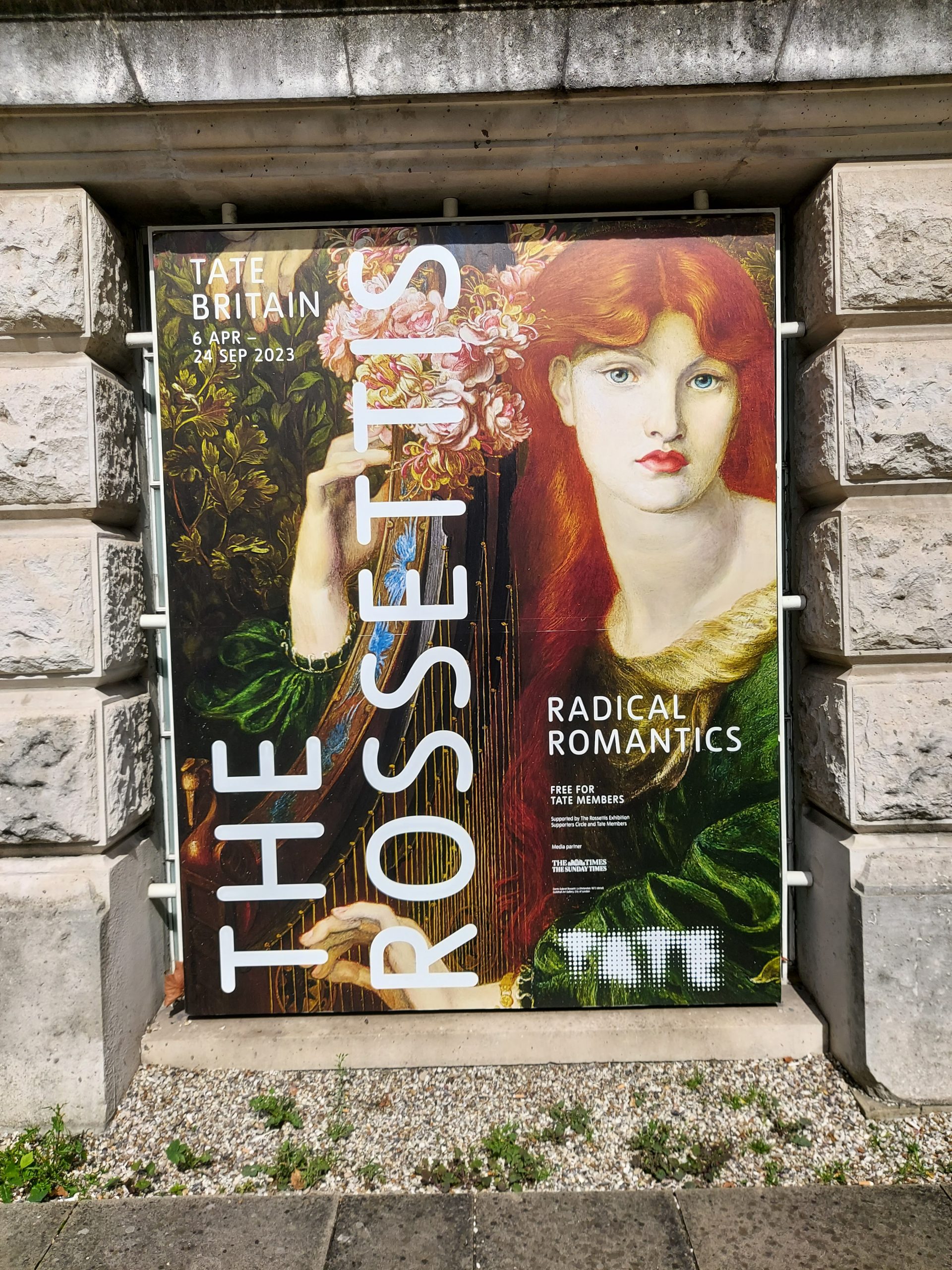
Poster for The Rossettis exhibition

I’m very interested in the Pre-Raphaelites, so was excited to see the exhibition The Rossettis: Radical Romantics at Tate Britain. It focused on brother and sister Dante Gabriel Rossetti (painter) and Christina Rossetti (poet), and, for the purposes of this exhibition, Gabriel’s wife Elizabeth (painter), born and better known to us as Elizabeth Siddal.

The exhibition explored how the family’s background – their parents were scholars of Italian heritage, and their four children, Maria (writer), Gabriel (who later adopted the name Dante), Christina, and William (writer and co-founder of the Pre-Raphaelite Brotherhood) had unconventional lives and shared anti-establishment views. Their father, Gabriele, was a revolutionary who had to flee Italy, and passed on many of his ideas to his children.

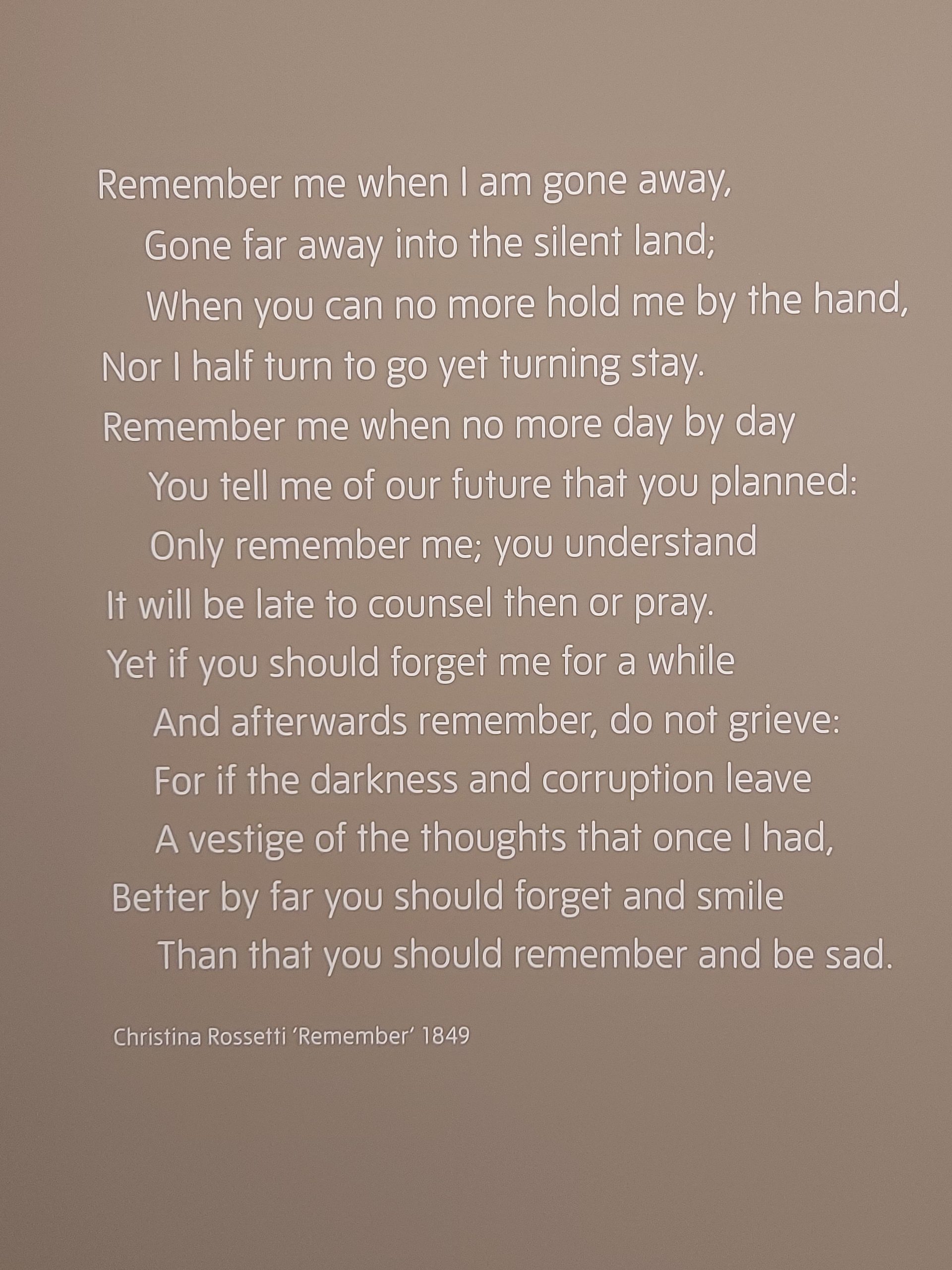
Poem by Christina Rossetti‘Remember’ by Christina Rossetti

Both Gabriel and Christina published poems at an early age. Today, Christina is the better known poet: her verse was inspired by poetry, love and religion, and is often passionate and full of life. Gabriel’s admiration for less conventional artists led him to co-found the Pre-Raphaelite Brotherhood with his own brother William and several other artists; his own work was inspired by the likes of Dante and William Blake.

Painting by Dante Gabriel RossettiLady Lilith by Dante Gabriel Rossetti

The inclusion of Elizabeth Siddal’s work here is interesting. I’m very glad her work is becoming better known and she is no longer seen as ‘just’ Dante Gabriel Rossetti’s muse. However I would be more interested to see how her background and experiences shaped her own work, rather than lump her in with the Rossetti family who had a very different upbringing. The exhibition, it must be said, does make a good case for her inclusion, showing how her work and Gabriel’s inspired one another, and the similarities between her poetry and Christina’s in terms of exploring women outside of the conventions of the time.

I really liked how the exhibition tried to dive in to the lives of the working class models that often featured in Gabriel’s paintings, as well as confronting the problematic portrayal of different cultures in his later works. Ultimately, the exhibition did a very good job in highlighting the Rossettis’ impact on art, literature and culture.

Animals: Art, Science and Sound – British Library

Entrance to the exhibition

At the weekend I decided to visit the Animals: Art, Science and Sound exhibition at the British Library. The exhibition brings together manuscripts, printed works, art and sound recordings to showcase how animals have been portrayed throughout the centuries.

In part the exhibition explores scientific advances in our understanding of animals: how writing about our fellow creatures and portraying images of them accurately has advanced our knowledge. However, it also looks at the misinformation spread by ignorant chroniclers: the naturalist Pierre Belon in his De aquatilibus (1553) portrayed a ‘monkfish’ quite literally, as a monk with a fish tail.

The exhibition is divided into four sections, darkness, water, land and air, each focusing on spectacular and unusual animals from that environment. It is a visual treat, with examples such as The Birds of America (1827–38) by John James Audubon showcasing gorgeous and detailed illustrations. Attention is paid to sound, too, with recordings such as Roger Payne’s Songs of the Humpback Whale (1970), a key player in the campaign to save whales from extinction.

I liked that the exhibition focused on the achievements of oft-overlooked women, including Sarah Bowditch, who illustrated and wrote The Fresh-Water Fishes of Great Britain between 1828 and 1838. It closes with three women talking about their own work and relationships to nature. This powerful exhibition is hugely enjoyable and I learned a great deal from it.

Luxury and Power: Persia to Greece – British Museum

Two head sculptures: the Greek god Apollo and a distinguished Persian

At the weekend I decided to visit an exhibition at the British Museum: Luxury and Power: Persia to Greece. The exhibition explores the ancient rivalry between Persia and Greece, and how the Greek view of a decadent Persian empire weakened by excess endured to this day. It suggests that the real situation was more complex, through an examination of material history taken from both empires.

Greek soldiers captured the royal command tent of the Persian king during the Greco-Persian Wars (499-449 BC) and were astounded by the luxury on display. The exhibition examines how luxury functioned as a political tool in the Middle East and nearby.

The concept of the exhibition is summed up at its very start. We see a pair of sculpted heads facing each other, one an ancient Persian with a beard and ringlets, the other the Greek god Apollo. However, both of these figures come from 5th century BC Cyprus, from sanctuaries where both Apollo and the Persian god Reshef were worshipped.

The royal Achaemenid court of Persia made use of precious objects to display authority. Rhytons – large, luxurious drinking cups – are perfect examples of these. Made of gold or silver, these huge cups feature portraits of humans, bulls and griffins. Later in the exhibition, we see how early democratic Athens adapted these to make them more palatable to a Greek audience. These new-style rhytons were made of clay, not gold or silver – which were considered ostentatious – and painted red, white and black. One drinking cup in particular does reinforce the idea that Greeks viewed Persians negatively: the cup is in the shape of a cariacature of a Persian. One can imagine a grinning Greek cheerfully toasting a Persian defeat from this mug.

The Persian empire was finally defeated by Alexander the Great, ensuring the domination of Hellenistic culture and tradition which fused eastern and western styles of luxury. Alexander burned the Persian capital Persepolis, and created a new Greek empire. Objects from the Panagyurishte Treasure, beautiful Thracian objects lent by Bulgaria’s National Museum of History, round off the exhibition. A true fusion of cultures, they combine Greek and Persian themes: a golden cup with bull faces features gods and demigods, while another cup shaped like a Greek amphora features two dancing centuars as handles.

This exhibition was a visual treat and definitely extended my understanding of this period of ancient history. It is well worth a visit.

After Impressionism: Inventing Modern Art – National Gallery

Entrance to the After Impressionism exhibition

On my day off I also paid a visit to the exhibition After Impressionism: Inventing Modern Art at the National Gallery.

The exhibition explored the years between 1880 and 1914 when artists such as Paul Cézanne, Vincent van Gogh and Paul Gauguin pushed the boundaries of art and inspired new generations.

It featured almost one hundred works by artists such as Klimt, Munch, Matisse and Kandinsky, loaned by the likes of the New York Museum of Modern Art, the Musée d’Orsay in Paris, and the Museu Nacional d’Art de Catalunya in Barcelona.

The sheer variety of art on display was impressive and really showed just how creative and original the artists of the period were. The exhibition showed how they experimented and pushed the boundaries of art, and it was fascinating to see.

Science Fiction: Voyage to the Edge of Imagination – Science Museum

I decided to pay a visit to this exhibition before it closed. Science fiction isn’t my favourite genre, but I’ve read several novels in this area and do feel like it’s worth exploring further.

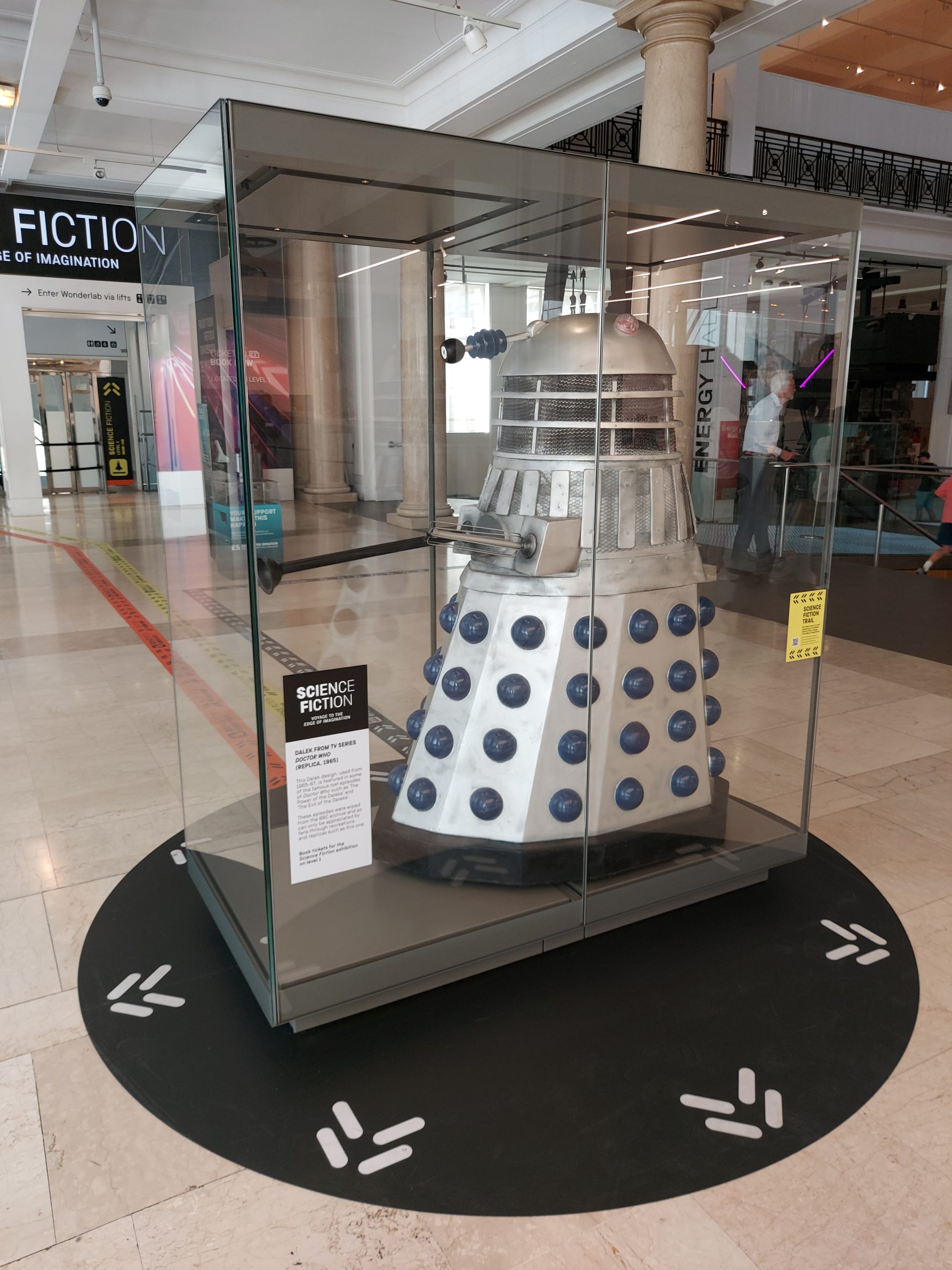
Model of a Dalek in the Science Museum foyer

Science Fiction: Voyage to the Edge of Imagination explores how science fiction writers – and scientists – have used their imagination and knowledge to create new worlds and try to understand our own. It explores well-known science fiction stories such as Star Wars and Star Trek, Doctor Who, Frankenstein, and classic novels by H. G. Wells and Jules Verne.

The entrance to the exhibition was pretty awesome. You have to get in a ‘spaceship’ and are ‘transported’ to the exhibition, which is quite exciting. Unfortunately for me, this was the best part of the exhibition.

Overall I thought the exhibition was rather light on detail and I didn’t feel I learned an awful lot. If you’re a fan of sci-fi franchises, the chance to see original costumes is a definite plus. But my interests lean more towards the written word, and there wasn’t much to see or learn.

I did like the part that focused on advances in science, previously the stuff of fiction, that are helping people today – such as bionic limbs. Overall, though, I wasn’t particularly wowed by this exhibition.

Donatello: Sculpting the Renaissance – V&A

I clearly hadn’t had enough of Italian sculpture after returning home from Italy, because before I went back to work I went along to the Donatello exhibition at the V&A. As a child, like many of my era, I only knew Donatello as a turtle, but now I know better! Florence-born Donatello has been called the greatest sculptor of all time. The exhibition looks at his work as well as the impact he made on subsequent generations of artists.

Donatello's statue of David
Donatello’s ‘David’

I admittedly don’t know all that much about sculpture, but Donatello’s pieces did seem superb, full of detail and humanity. I found his David particularly intriguing, contrasted with Michaelangelo’s version of the same figure. My only real criticism is that too many of the sculptures on display were not by Donatello, but his contemporaries.

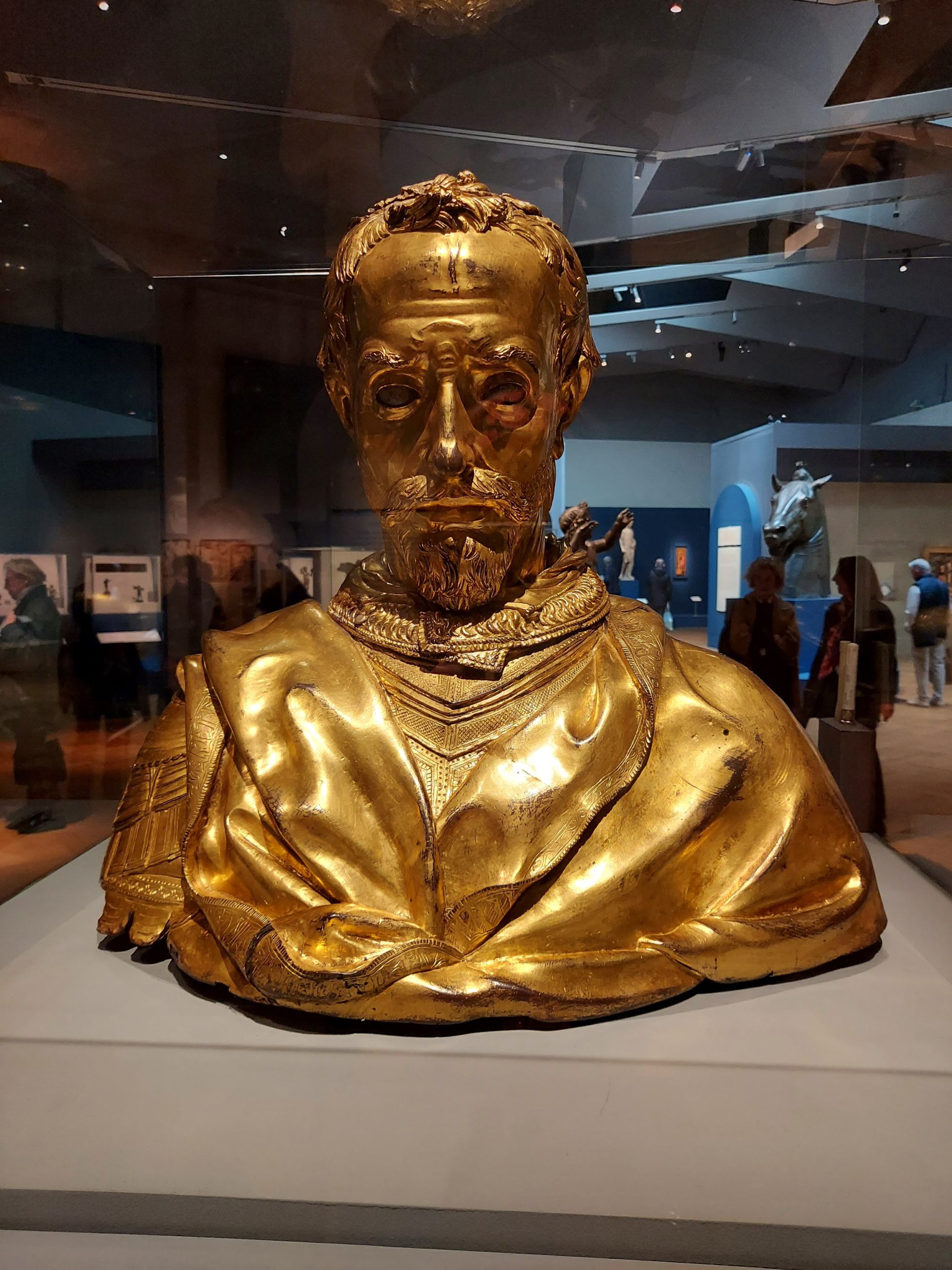
Donatello's bronze sculpture of a man
Bronze bust of a man