Sculpture Victorious – Tate Britain

During my day out at Tate Britain, I visited a great many exhibitions including Sculpture Victorious. This exhibition looks at the development of the art form during the Victorian era. Victoria and Albert encouraged and commissioned work, as did the state, and this helped to encourage a “golden age” of sculpture.

The first section explores images of Queen Victoria herself, from Francis Chantrey’s 1839 young and sensual marble bust to Alfred Gilbert’s 1887-9 marble bust and Edward Onslow Ford’s 1897 bronze bust, made only a few years before Victoria died. Her image was familiar to all her subjects as it was dispersed throughout the country on cameos, medals and coins – some of which are displayed here, including Canadian and Indian coins, a Crimea medal and a Great Exhibition medal – as well as large and small busts. The item I found particularly interesting was Benjamin Cheverton’s 1842 bust, a copy of Chantrey’s made using Cheverton’s ingenious “reducing machine”.

The nineteenth century saw a growth of interest in Britain’s history, particularly its medieval past. This was evident in the Houses of Parliament, designed in a Gothic style, and the fascination with the “Age of Chivalry” and church history. The House of Lords was decorated with models of the Magna Carta barons by James Sherwood Westmacott, including the Earl of Winchester (d. 1219), whose model has been loaned to this exhibition. Edmund Cotterill’s Eglinton Trophy is a beautiful and intricate example of medieval-inspired design, while many medieval tombs were conserved and their casts displayed at the Crystal Palace, including that of Eleanor of Aquitaine.

The classical world also inspired the Victorians, particularly the Parthenon marbles, casts and miniatures of which were sold and toured the country. Hamo Thornycroft’s bronze sculpture of Teucer (1881), a Greek archer named in the Iliad, was well received while John Gibson, a leading British neoclassicist, created Hylas surprised by the Naiades (1826-c.36) in marble. The Devonshire Parure (1856), a glorious collection of jewels, was inspired by classical style while Frederic Leighton’s bronze An Athlete Wrestling with a Python (1877) is particularly impressive.

The Great Exhibition showcased fine examples of sculpture from Britain and abroad. Minto & Co.’s Peacock (1873) and Elephant (1889) are attractive and bright; made of lead and tin-glazed earthenware, they exemplify the link between sculpture and manufacturing. Mid-19th century ivory sculptures from Barhampur in India are ornate and beautiful, while Thomas Wilkinson Wallis’s Partridges and Ivy (1871), made of limewood, is breathtakingly delicate and stunning. Sculptures of a Greek slave and an American slave helped to fuel the anti-slavery campaign. I was particularly impressed by Raffaele Monti’s Veiled Vestal (1847), a marble sculpture with remarkably realistic drapes veiling a young woman’s face.

The Victorian era saw the construction of more public statues than any other, designed largely for commemorative purposes. Still famous to this day is Alfred Gilbert’s 1893 Shaftesbury monument, a memorial to Lord Shaftesbury, most commonly known as the Statue of Eros in Piccadilly Circus. A statue of King Alfred by Hamo Thornycroft was erected in Winchester in 1901, accompanied by a carefully choreographed unveiling, and Alfred Stevens won the Wellington Commission to create a memorial to the Duke of Wellington in St Paul’s Cathedral.

The final section of the exhibition looks at individual craftsmanship, with examples including A Royal Game (1906-11) by William Reynolds-Stephens, an impressive piece of bronze, wood and stone showing Elizabeth I and Philip II of Spain playing chess. Another piece that caught my eye was Perseus and the Graiae (1877-88) by Edward Burne-Jones.

I have an interest in the Victorian period and this exhibition allowed me to learn about an area of Victorian art that I hadn’t really thought about before. Definitely recommended.

Nick Waplington/Alexander McQueen: Working Process – Tate Britain

At Tate Britain in order to attend some exhibitions, I came across a photography exhibition called Nick Waplington/Alexander McQueen: Working Process. The exhibition consists of a selection of photos taken by Waplington at McQueen’s invitation, concerning the latter’s final ready-to-wear collection for A/W 2009 known as The Horn of Plenty! Everything But the Kitchen Sink. As I have a ticket for the McQueen exhibition at the V&A later this year, I thought it would be a good idea to visit this one too.

The exhibition documents the process of creating the collection from start to finish, beginning with pictures of rubbish tips and ending with images of the catwalk. In between you see McQueen and his assistants designing, creating and constructing the costumes. The collection acted as a satirical and provocative retrospective of his career, with costumes made from fine silks designed to look like rubbish bags and an exaggerated emphasis on the models’ features. I found the exhibition interesting and it whetted my appetite for the larger exhibition at the V&A later on.

Sherlock Holmes: The Man Who Never Lived And Will Never Die – Museum of London

My parents and their friends came to London over Easter, and on Good Friday we went to the Sherlock Holmes exhibition at the Museum of London. We were excited by the entrance to the exhibition, which was in the form of a bookcase in which, so the assistant told us, we had to find the secret door. Unfortunately, we all felt that the exhibition itself failed to live up to this.

There were certainly many fascinating and relevant items on display, from film posters from the detective’s various incarnations over the years to original manuscripts, including Sir Arthur Conan Doyle’s 1886 A Study in Scarlet notebook, containing the first ever lines of a Sherlock Holmes story, and the manuscript of Edgar Allan Poe’s The Murders in the Rue Morgue. There were also a couple of costumes – including a traditional outfit from Holmes’s mid-20th century incarnation as well as the Belstaff coat worn by Benedict Cumberbatch in the most recent BBC series.

Overall, though, I thought that there was too little that was actually related to Sherlock Holmes, and too much context and setting the scene. For instance, there were many paintings and photographs of late nineteenth century London, which helped to put Doyle’s work in context and picture Holmes’s London, but which was not directly connected to Holmes. There were also objects on display that related to the novels and adaptations, such as Victorian ephemera like typewriters and costumes, not directly associated with Holmes.

It would be wrong to say that I did not enjoy the exhibition – I found it very interesting – but I thought it had been mis-advertised. If it had been marketed as an exhibition about nineteenth-century London, I would have been quite happy.

2015_0403SherlockHolmes03
Costume from the exhibition


2015_0403SherlockHolmes02
Benedict Cumberbatch’s coat from the modern Sherlock


Lines in the Ice: Seeking the Northwest Passage – British Library

I finally got around to seeing the free Lines in the Ice: Seeking the Northwest Passage exhibition at the British Library, after attending a talk last year about the finding of HMS Erebus near Canada. The exhibition was recently extended to 19 April, so you still have a few weeks to see it.

It tells the story of humanity’s interest in and travel to the Arctic from the earliest times onward, with a wealth of written and printed material relating to the subject including Inuit woodcuts, early printed books, Russian maps and, later, photographs. Interestingly, there is also information about Santa Claus and how his place of residence was “moved” from Finland to the North Pole as interest in the Pole grew.

Fiction, factual accounts, and evocative pictures combine to bring the story to life. Definitely worth popping in to see.

Cairo to Constantinople: Early Photographs of the Middle East and Gold – The Queen’s Gallery

I really like going to see exhibitions at the Queen’s Gallery at Buckingham Palace: they are always interesting and well-curated, and the one-year pass system – by which you buy a ticket on your first visit, get it stamped at the end, and gain free admission to the site for a year – means that you can see three different exhibitions for under £10. I visited on the last day of two smaller exhibitions that have been running since last autumn.

Cairo to Constantinople: Early Photographs of the Middle East

The first exhibition was Cairo to Constantinople: Early Photographs of the Middle East, which examined the Middle Eastern journey of the Prince of Wales (the later King Edward VII) in 1862, encompassing Egypt, Palestine, the Holy Land, Syria, Lebanon, Turkey and Greece. The exhibition mainly consisted of photographs taken by Francis Bedford (1815-94), which are evocative and beautiful. They had originally been exhibited immediately after the tour, when they fascinated Victorian audiences, particularly as many of the pictures were of sites it was very difficult to visit in person. I loved the pictures, although I was slightly concerned at the amount of heritage the Prince of Wales was seemingly allowed to keep for himself, like the statue of Queen Senet.

2015-02-22 11.35.16
Pyramids of Cheops and Cephrenes [The Great Pyramid and the Pyramid of Khafre, Giza], 1862
2015-02-22 11.34.32
Queen Senet, XII Dynasty (c.1985-1785 BC)
2015-02-22 11.33.06
View from the Seraskier Tower [The Golden Horn, Istanbul (then Constantinople)], 1862

 Gold

The second exhibition was Gold, which explored “the beauty and symbolism of gold, from the Early Bronze Age to the 20th century”. A fascinating range of items from the Royal Collection were displayed. I particularly liked the 18th-century tiger’s head from Mysore, India, and I also loved the painting The Misers which illustrated the evils of a love of gold and a miserly nature.

2015-02-22 11.36.27
Order of the Golden Fleece; Badge of Prince Albert. Might have belonged to George IV. c.1820
2015-02-22 11.39.09
Impressive tiger’s head
2015-02-22 11.41.12
The Misers, Follower of Marinus van Reymerswaele (c.1490/95-c.1567), 1548-51

Wallace Collection

2015_0214WallaceCollection01

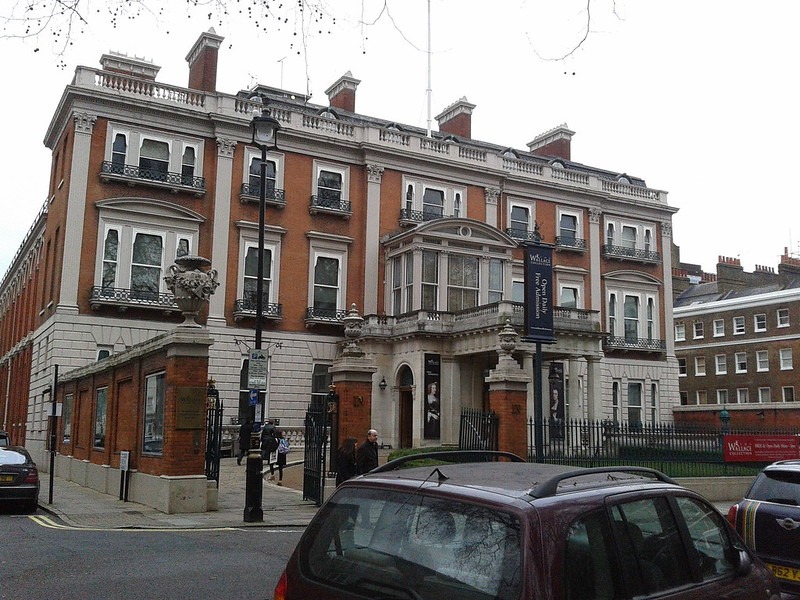
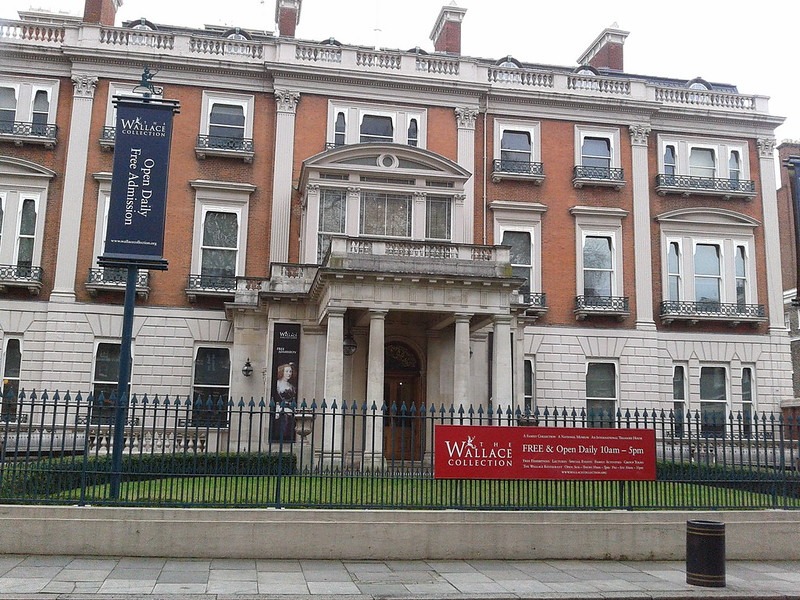
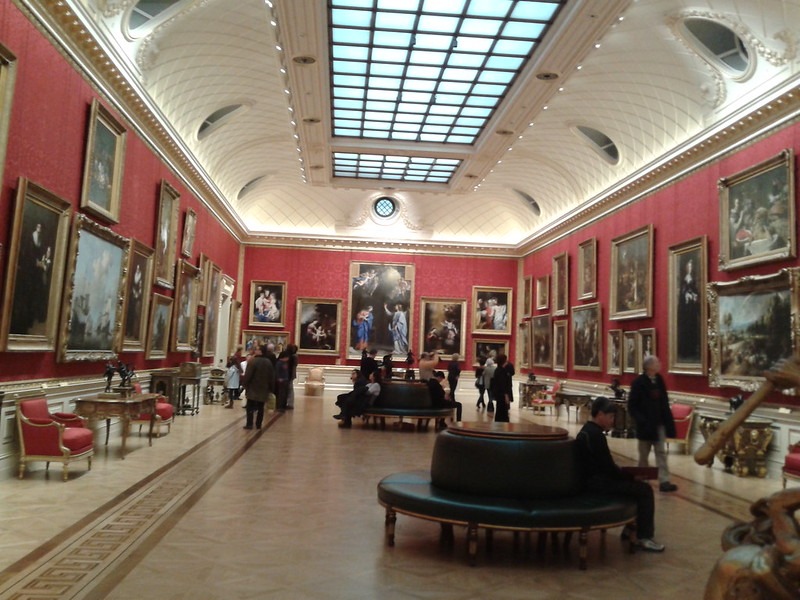
On Saturday I finally got round to visiting the Wallace Collection, a unique free museum based in Hertford House, Manchester Square near Oxford Street. The collection was accumulated in the 18th and 19th centuries by the first four Marquesses of Hertford and Sir Richard Wallace, the fourth Marquess’s son. Lady Wallace, Sir Richard’s widow, bequeathed the collection to the nation in 1897. Under the terms of the bequest the main collection cannot be added to, however museum staff do continue to seek out objects and archives relating to the family.

2015_0214WallaceCollection02

2015_0214WallaceCollection03

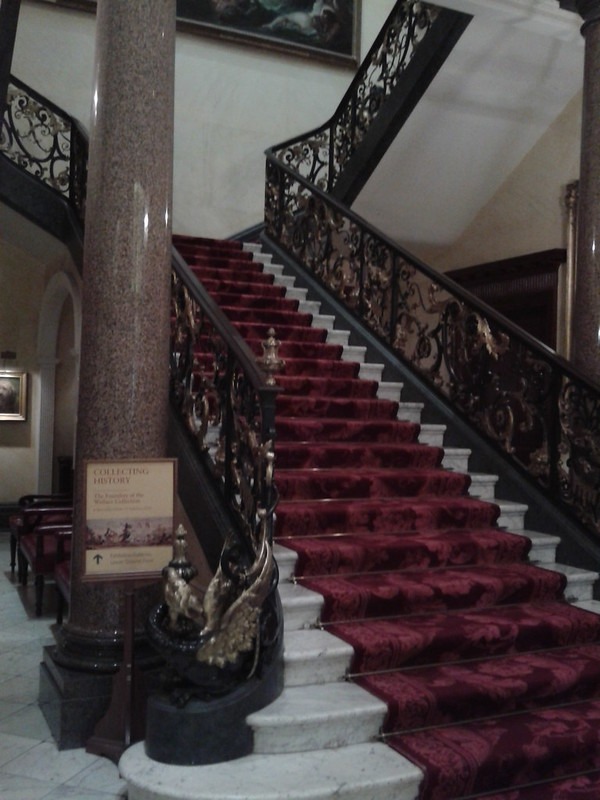
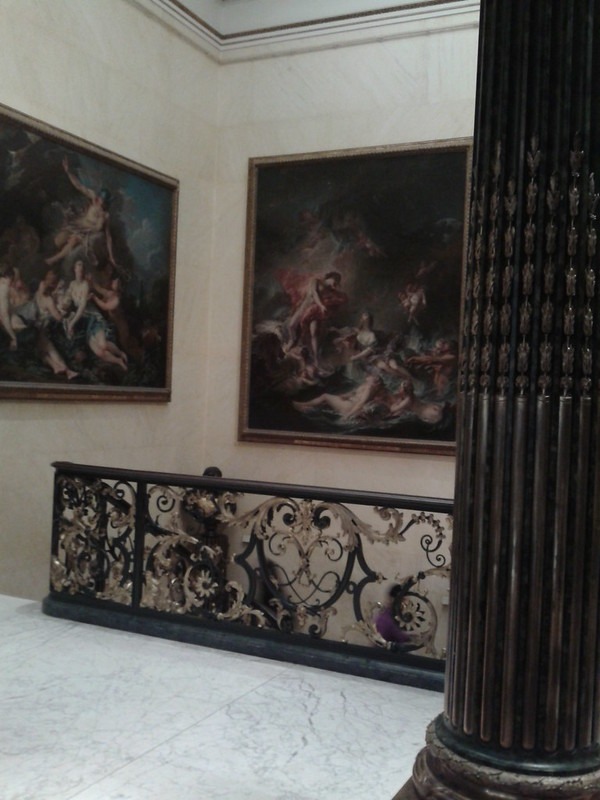
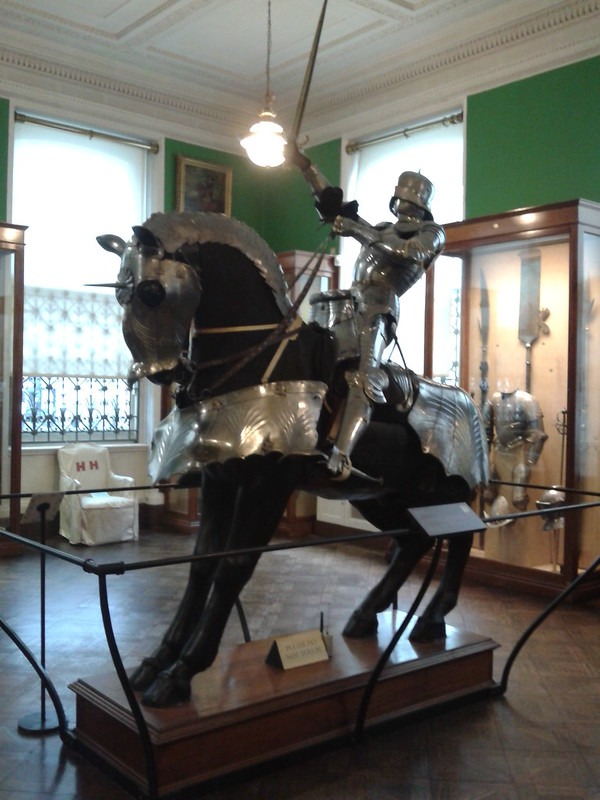
The house is situated in an impressive but quiet square, and opens into a lovely hallway. There is a posh-looking restaurant out the back (which I’d love to go to for Prosecco one day) and a gift shop, in addition to the 25 galleries. Eighteenth century French painting, works by the Old Masters and some rather famous works (including Frans Hals’ The Laughing Cavalier (1624)) sit alongside ancient furniture, small religious mementoes and an extensive armoury. I also saw the temporary exhibition, Collecting History: The Founders of the Wallace Collection.

2015_0214WallaceCollection04

2015_0214WallaceCollection05

I enjoyed looking around, although there was an overwhelming amount of art and I certainly couldn’t take it all in. I enjoyed the sumptuous interior of the house itself, however, and I would like to make a return journey or two to explore further.

2015_0214WallaceCollection06

2015_0214WallaceCollection07

FACTS

Address: Hertford House, Manchester Square, London, W1U 3BN

Website: wallacecollection.org

Opening Hours: 10am-5pm

Prices: Free

Wedding Dresses 1775–2014 – V&A

I’ve always said I never want to get married, but that didn’t stop me from visiting the V&A‘s exhibition Wedding Dresses 1775–2014. Firstly, it was historical. Secondly, I do have a thing for gorgeous dresses.

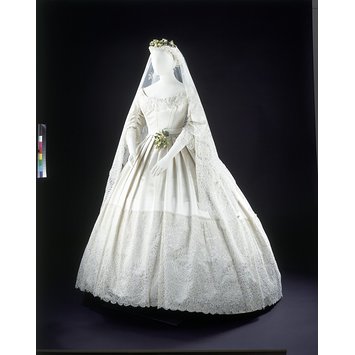
Silk-satin wedding dress from 1865
Silk-satin wedding dress from 1865 (Picture credit: V&A Collections)

There were plenty of those in the exhibition, but what really fascinated me was the history. From Georgian dresses that weren’t always white, but which tended to be “best” dresses then worn again later, through to Victorian white gowns with sprigs of orange blossom, to the development of the modern one-off white dress tradition during the twentieth century, the wedding dress has a rich and varied history. Upstairs, there were examples of more modern dresses from ordinary people and celebrities – I especially liked Dita Von Teese’s beautiful purple gown.

BOLT: Exhibition at GRAD London

I popped into GRAD (Gallery for Russian Art and Design), located near Oxford Street, last night. The current exhibition, BOLT, is about Dmitri Shostakovich’s 1931 ballet The Bolt, and includes rarely seen designs, photographs and costumes. The exhibition is organised in collaboration with the St Petersburg State Museum of Theatre and Music.

The ballet is described as the last Constructivist ballet, and judging by the costumes and photographs on display it is unique among ballets I have seen. The story, written by Victor Smirnov, is one of industrial sabotage and the innovative choreography by Fedor Lopukhov includes such pieces as the “Dance of the Cyclists” – a bit different from Sleeping Beauty!

The Bolt was pulled after its first performance at the Leningrad Academic Theatre of Opera and Ballet, after a backlash from critics and a perception that it was a threat to the Soviet authorities. It was not seen again until the Bolshoi Ballet performed it 74 years later. After seeing this exhibition, I am curious to see the ballet for myself.

A Victorian Obsession: The Perez Simon Collection at Leighton House

Last Thursday I went to the Leighton House Museum near Holland Park in order to visit the latest exhibition, A Victorian Obsession. Leighton House is the former home and studio of Frederic, Lord Leighton (1830-1896), a leading exponent of nineteenth-century classical art and one-time President of the Royal Academy. I’ve visited the house, designed and built to Leighton’s requirements by George Aitchison RA, before, and it’s beautiful: a Moroccan-style fountain court and a blue-tiled hallway are just two of the marvellous rooms inside.

Currently the house is home to part of the collection of Juan Antonio Pérez Simón, a Mexican businessman and art collector who holds the largest collection of Victorian and Edwardian art outside Britain. The pictures cover the period from around 1860 until the start of World War I, and the unifying theme is “representations of female beauty”. It’s easy to be somewhat cynical about this theme, but in fairness all of the artists represented were superb painters and their work encompasses a huge diversity in such representation, from the inspiration of the Greco-Roman period to Arthurian legend. The paintings are displayed throughout the main rooms of the house, which is a perfect setting considering that many of their artists knew this house and its owner well.

The paintings encompass late Victorian art in many forms, including historical painting and Pre-Raphaelite imagery. This kind of art is very much to my taste, so I greatly enjoyed the exhibition. There were paintings by artists with whom I am familiar, including Dante Gabriel Rossetti and Edward Burne-Jones. I particularly like the work of John Everett Millais: his The Crown of Love (1875) was on display here, and I also loved The Crystal Ball (1902), a magical work by another of my favourites, John William Waterhouse. Some of house owner Frederic Leighton’s work made an appearance, several paintings returning to the house for the first time since they were created. Leighton’s Antigone (1882) is impressive, as is Crenaia, The Nymph of the Dargle (1880), modelled by Leighton’s favourite muse Dorothy Dene.

Throughout the exhibition I was introduced to other artists I hadn’t previously been aware of, including Henry Arthur Payne, Arthur Hughes and John Melhuish Strudwick, whose Passing Days (1878) is an allegorical representation of the passage of time. His Elaine (c.1891) is a gorgeously detailed representation of the woman of Arthurian legend who pined away for love of Lancelot.

One artist seemed to dominate the exhibition – Lawrence Alma-Tadema. Famous for painting historical scenes, particularly those inspired by Ancient Rome, he painted several of the works on display, including An Earthly Paradise (1891), a rather sweet picture of a Roman woman with her young child. Alma-Tadema’s couch – the only object in the exhibition which is not a picture – sits underneath this painting. The artist designed the couch himself to use as a prop in his historical scenes, and it even has differently-designed legs – one side of the couch represents Egyptian style, the other, Roman. It’s rather fun to play “spot the couch” with Alma-Tadema’s pictures – it appears in several.

Alma-Tadema’s famous work The Roses of Heliogabalus (1888) is the highlight of the exhibition, presented in a room of its own which has been scented with roses courtesy of Jo Malone. The picture shows the young, wicked Emperor Heliogabalus suffocating his guests under a shower of rose petals, and it is beautifully detailed, although I can’t help but concur with the contemporary critics who felt that the victims hardly seemed frightened enough.

This superb exhibition is a must-see for any fans of late Victorian art. It runs until the 29th of March and normally costs £10, or £5 with a National Art Pass. Special late evening openings allow free entry for Art Pass holders between 5.30 and 8.30 on 19 February and 26 March.

Disobedient Objects – V&A

I popped into the Victoria & Albert Museum today to visit the Disobedient Objects exhibition, which is on until next weekend. This free exhibition looks at the role of objects used as tools for social change, beginning with the Suffragette teapots designed to promote the movement and ending with graffiti robots and protest banners.

The exhibition is inspiring, showing how people have come together over the years to protest against government decisions and instigate change. Quite different from the usual displays at the V&A, but well worth it.