Rituals of Power Through the Centuries – The Society of Antiquaries

The Society of Antiquaries

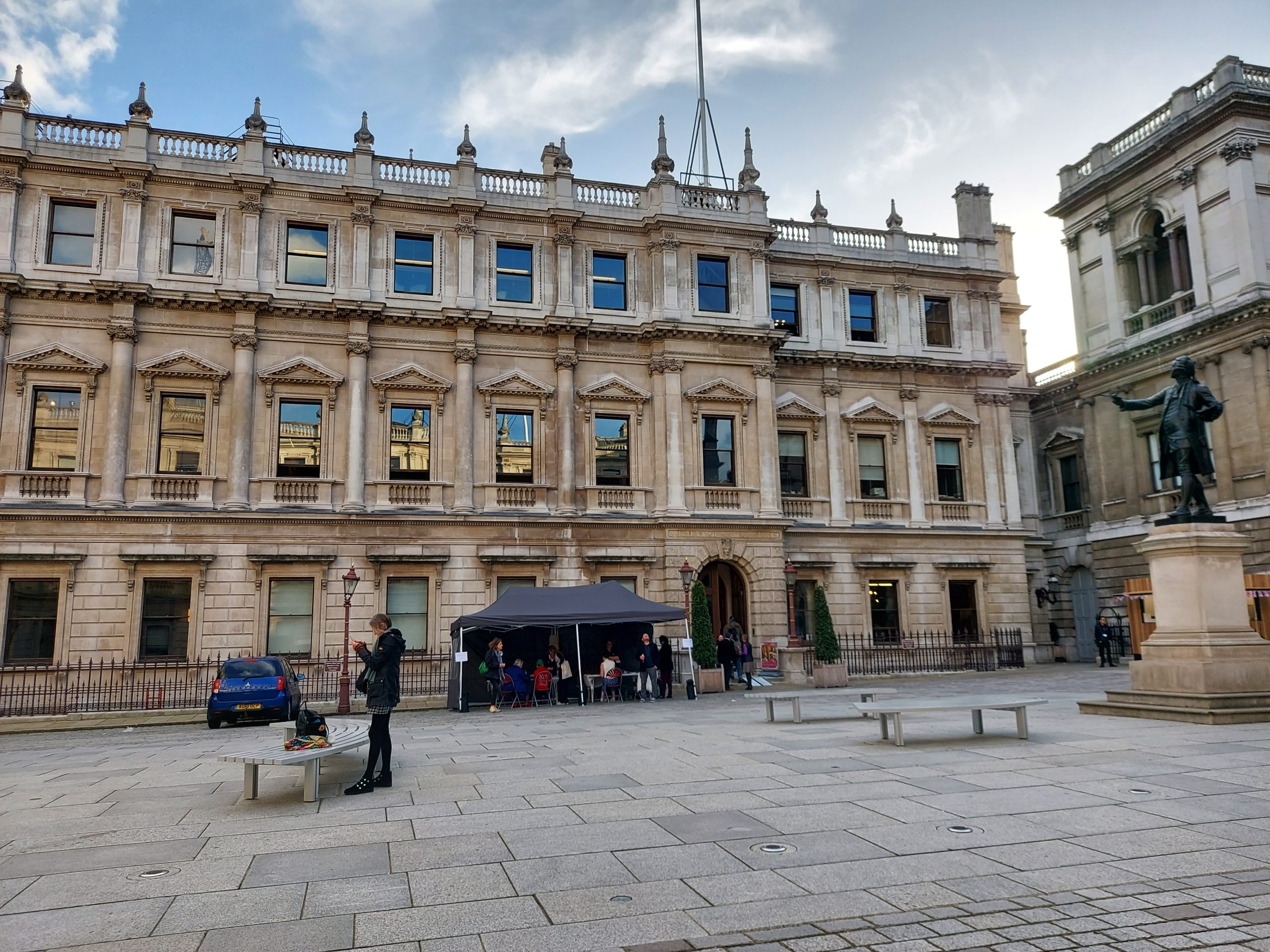
To coincide with Charles II’s coronation today, I went along to an event at The Society of Antiquaries last night. The Society organised poetry and music sessions, displayed portraits of royals across time and opened up access to its beautiful library.

I went to a fascinating talk about the Magna Carta and listened to a librarian talk about the Great Seal of Henry VIII, which was on display for visitors. I also saw other artefacts like Civil War pamphlets and a panorama of Queen Victoria’s coronation procession.

Finally I took part in some lino block printing, making myself a postcard and a little badge to take away.

The Library

Donatello: Sculpting the Renaissance – V&A

I clearly hadn’t had enough of Italian sculpture after returning home from Italy, because before I went back to work I went along to the Donatello exhibition at the V&A. As a child, like many of my era, I only knew Donatello as a turtle, but now I know better! Florence-born Donatello has been called the greatest sculptor of all time. The exhibition looks at his work as well as the impact he made on subsequent generations of artists.

Donatello's statue of David
Donatello’s ‘David’

I admittedly don’t know all that much about sculpture, but Donatello’s pieces did seem superb, full of detail and humanity. I found his David particularly intriguing, contrasted with Michaelangelo’s version of the same figure. My only real criticism is that too many of the sculptures on display were not by Donatello, but his contemporaries.

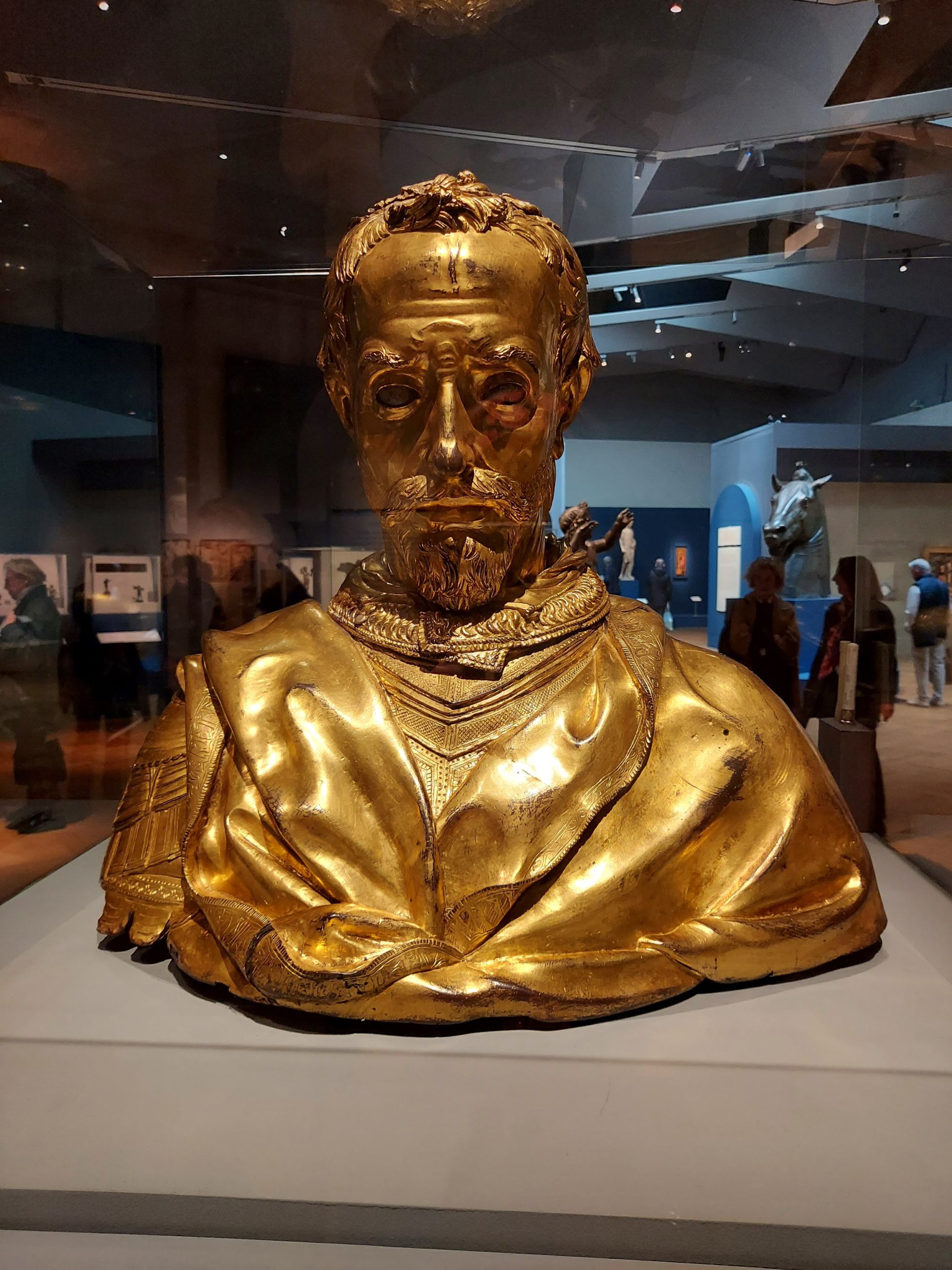
Donatello's bronze sculpture of a man
Bronze bust of a man

Executions – Museum of London Docklands

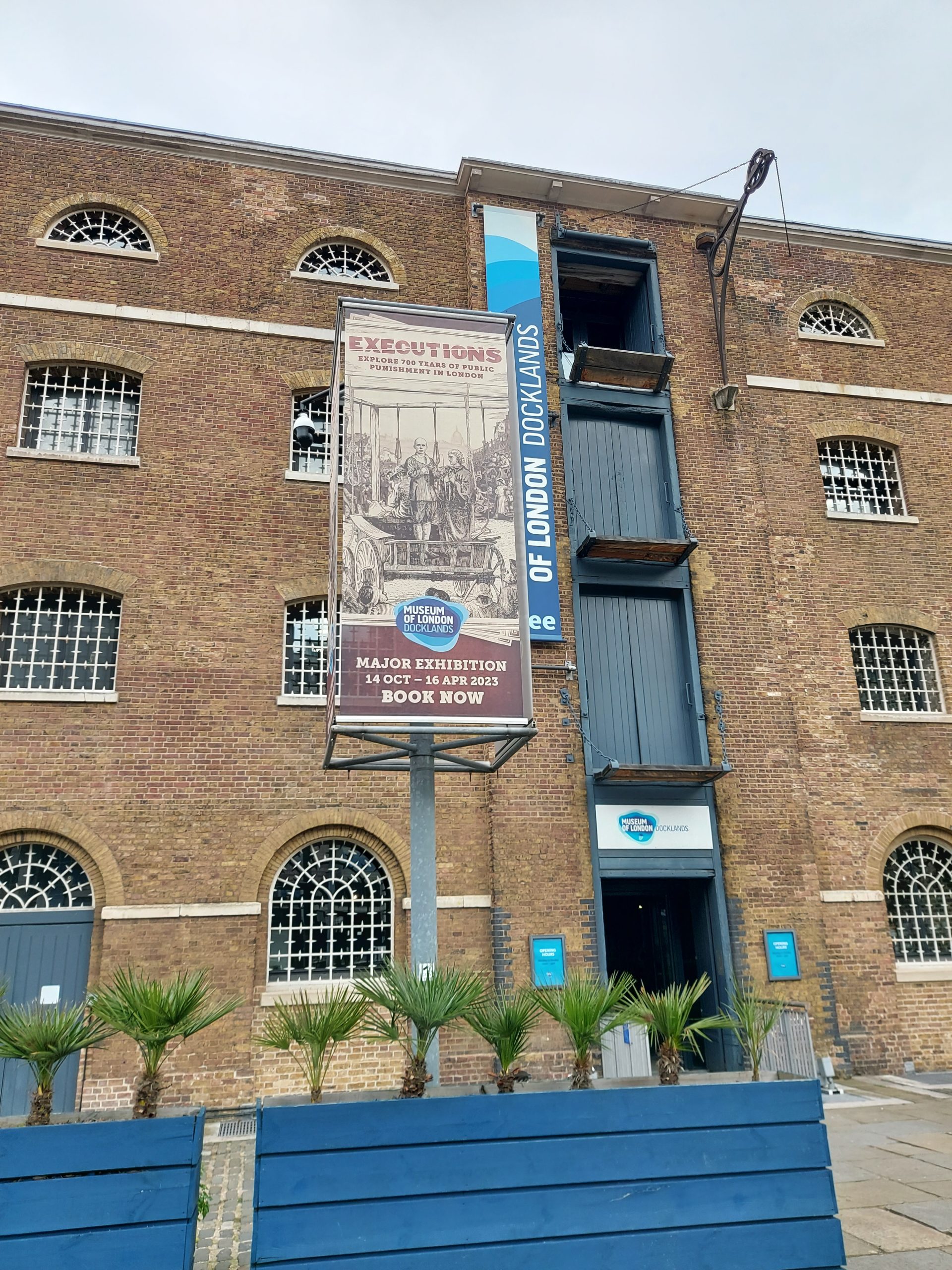
Museum of London Docklands

I visited the Museum of London Docklands to check out the Executions exhibition before it closed. The exhibition looked at the impact that capital punishment had on the history and landscape of London over the last few centuries.

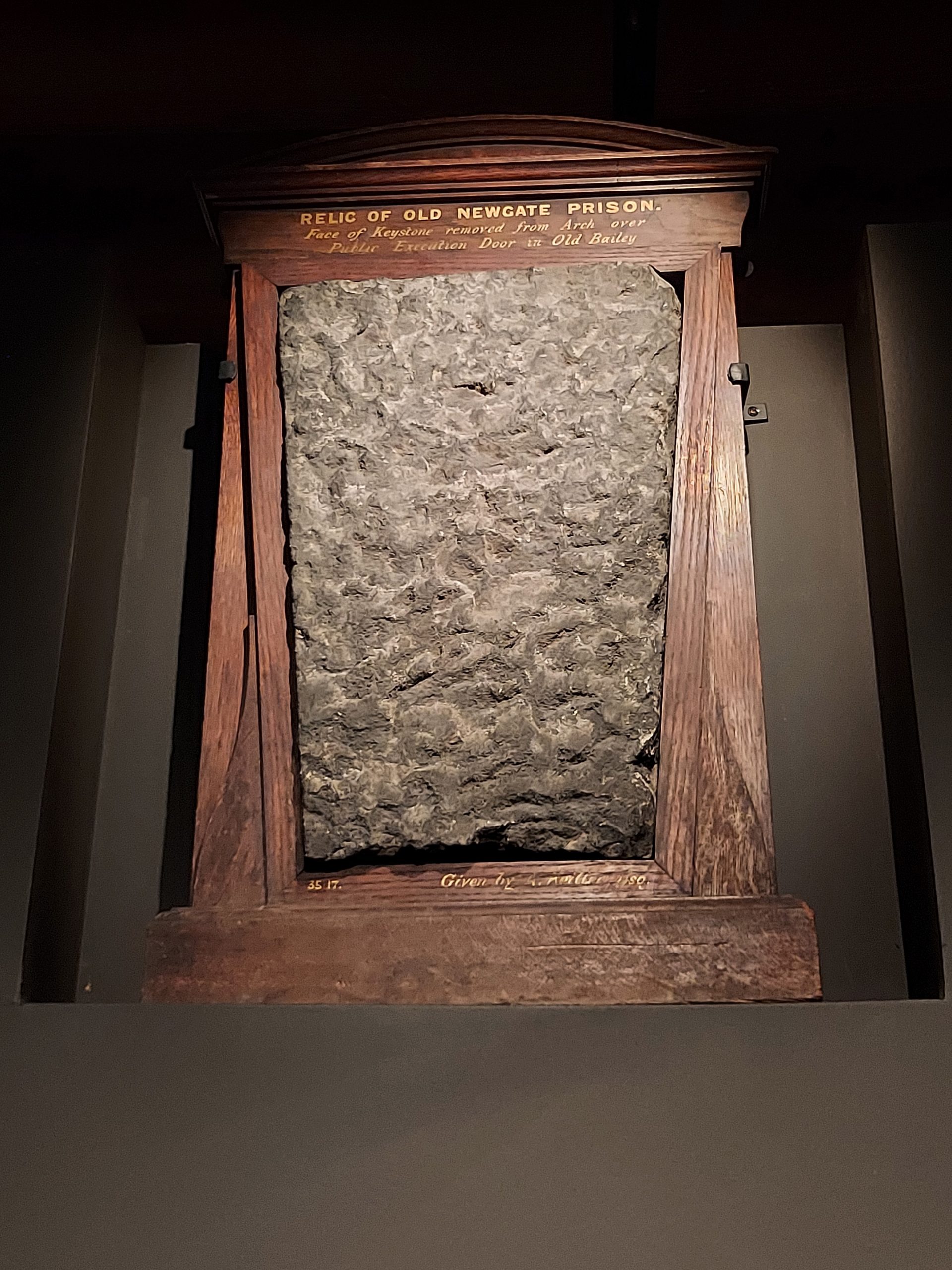
The first public execution took place in 1196, the last in 1868. During this time, these killings – supposedly meant to act as a deterrent to crime – were watched by huge crowds of people. An ‘execution economy’ developed, which was often bloodthirsty and rather chilling. As one map shows, executions became built into the very fabric of London. One of the most famous prisons, from which many prisoners were executed, was Newgate, relics from which are interspersed throughout the museum.

Stone from Newgate Prison

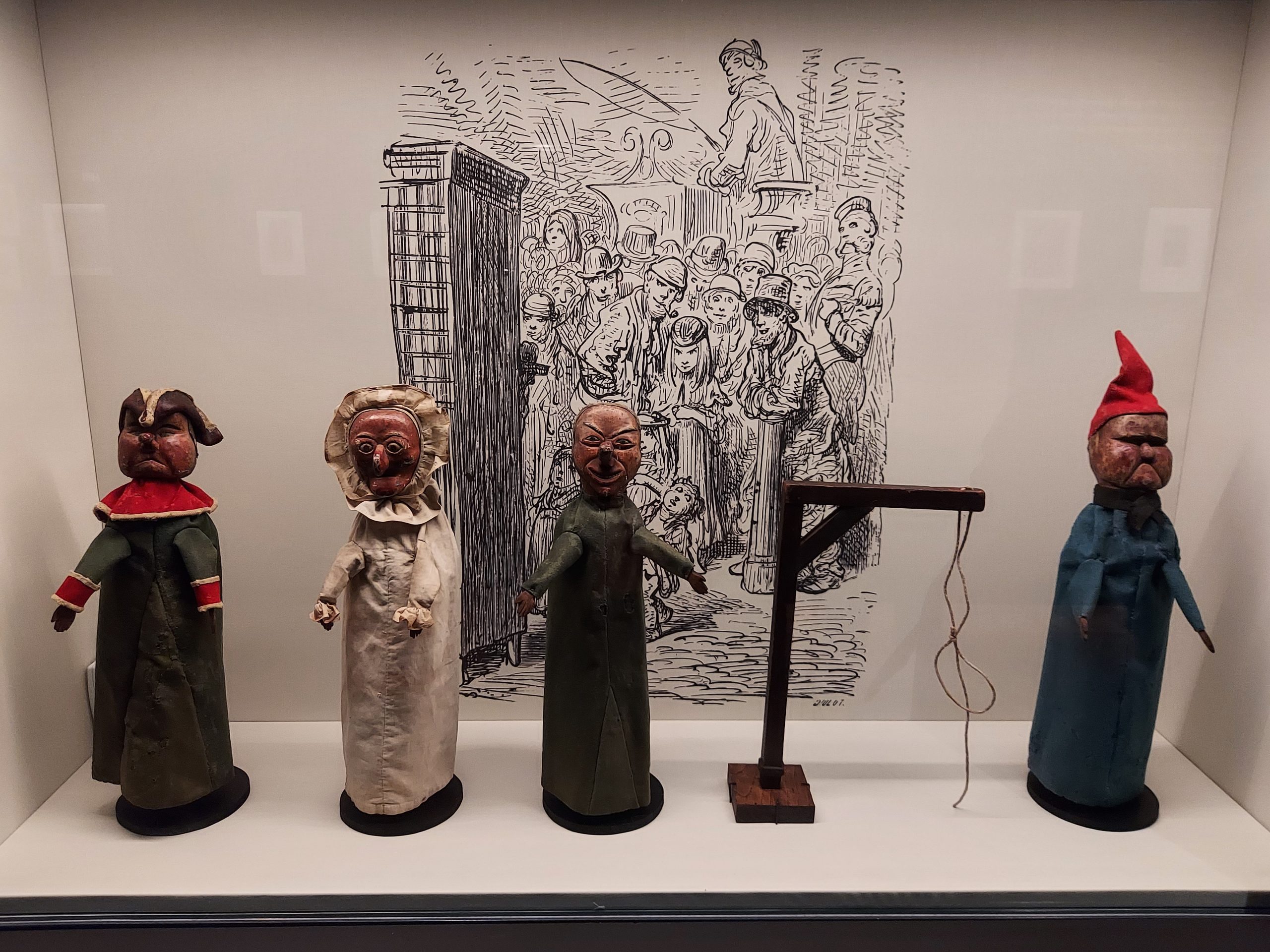
By the end of the eighteenth century, more than 200 crimes were punishable by death. Deaths were ordered in London’s courts more often than the courts of the rest of the country combined. Ballads were written about condemned criminals, papers detailing their horrific crimes did a roaring trade, and puppet shows made fun of executions.

Execution-themed puppets

Methods of execution were not limited to hanging. Traitors were hung, drawn and quartered. Members of the nobility were usually beheaded, while heretics were often burnt at the stake. The exhibition included many letters and pleas for clemency from criminals, which brought home the human aspect to this grisly history.

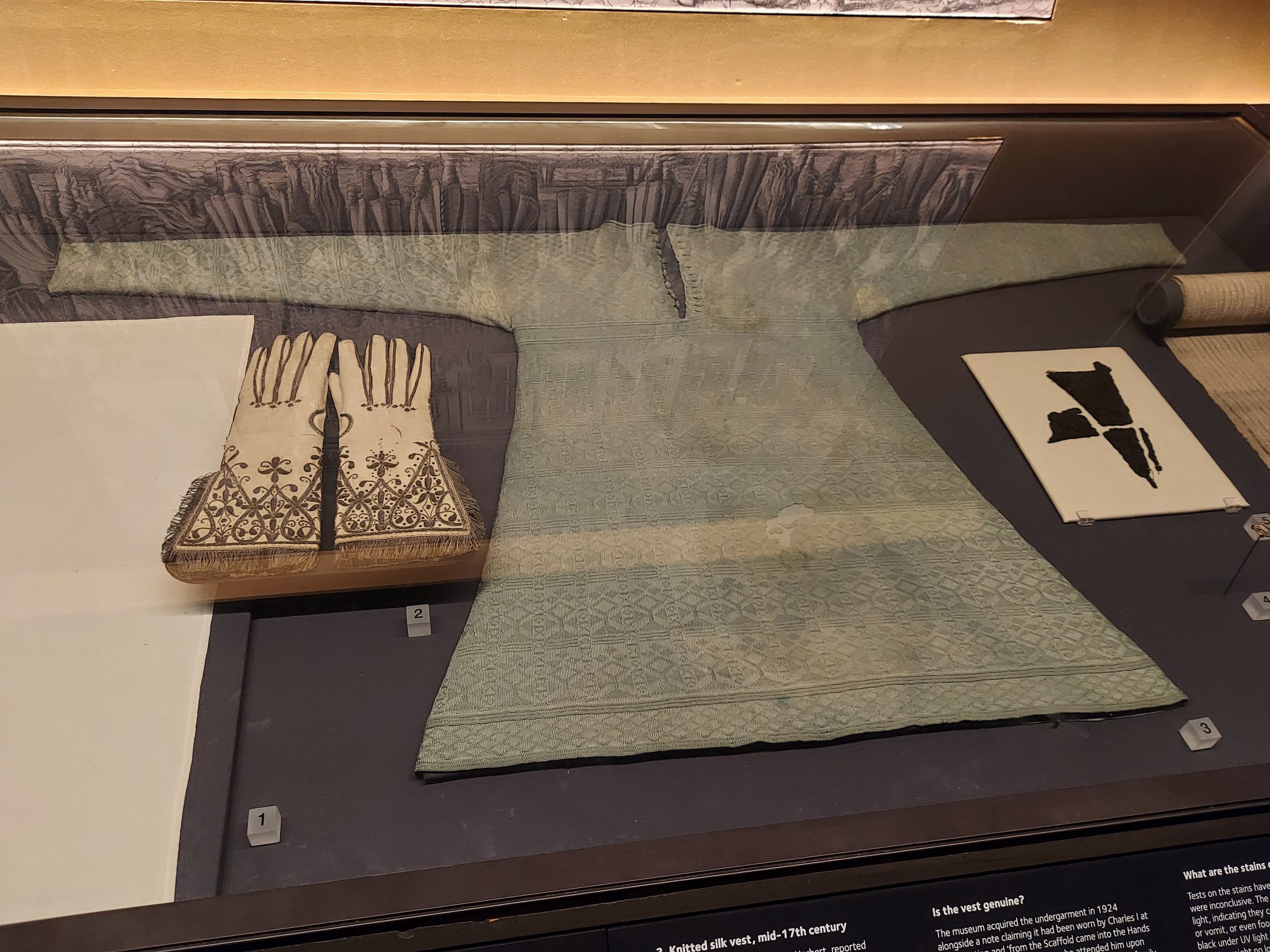
Possibly the most famous execution in London took place when Charles I was beheaded in 1649. The exhibition displayed one of the shirts he supposedly wore at his execution.

Charles I's supposed execution clothes

The exhibition was possibly not for the faint-hearted, but it was sensitively done and certainly worth seeing. It’s important that we confront the most unsavoury and difficult aspects of our past, and the exhibition certainly managed that.

Spain and the Hispanic World – Royal Academy of Arts

The front of the Royal Academy

At the weekend I attended an exhibition at the Royal Academy of Arts. Spain and the Hispanic World: Treasures from the Hispanic Society Museum & Library is the exhibition’s full title, and sums up what it is all about.

The Hispanic Society was founded in 1908 in New York by Archer M. Huntington. A childhood love of Spain grew into an obsession with the country, its culture and art, and subsequently Latin America. The works on display reflect his wide-ranging interests: manuscripts and rare books, Old Master paintings, modern art and prehistoric pottery. Indigenous works from Latin American artists also made it into the collection, and Huntington was unique among his peers in recognising the Arabic contribution to Spanish culture: he learnt Arabic and included related arts and crafts in his collection.

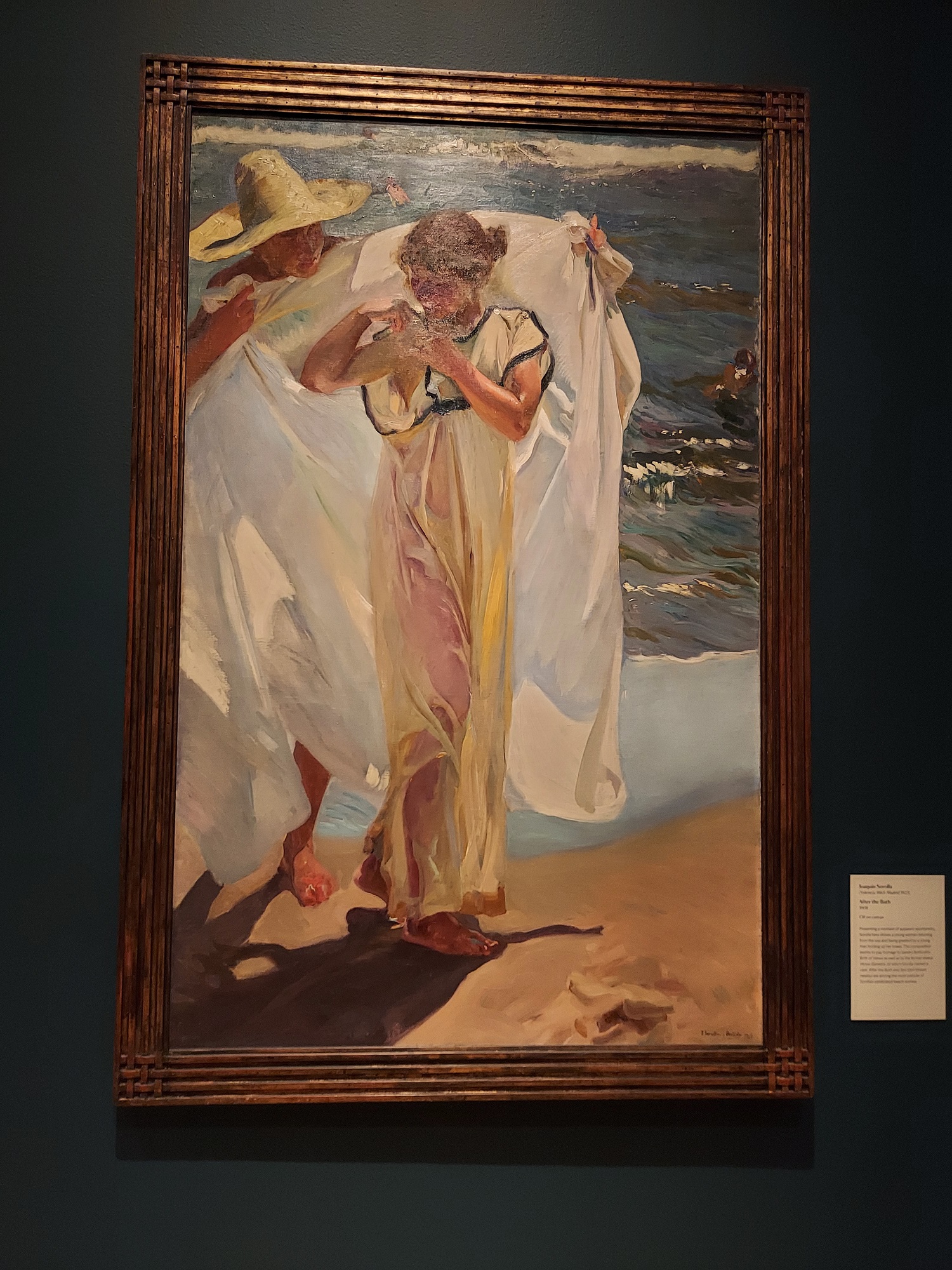
There was plenty to see in the exhibition: it is rare to find such a wide-ranging selection on display. Multiple facets of Spain and the Hispanic world’s culture were represented. The Celtiberian jewellery was impressive, I loved the beautiful books on display, and enjoyed the historic artwork, but my favourites were the more modern paintings, such as those by Sorolla.

M.K. Čiurlionis: Between Worlds – Dulwich Picture Gallery

Entrance to the exhibition

The third and final exhibition I visited was M.K. Čiurlionis: Between Worlds at Dulwich Picture Gallery. Čiurlionis, revered in his native Lithuania, is not an artist I’d ever heard of, but after seeing this exhibition, I’m so grateful to the Gallery for introducing me to his work.

Painting showing a ghostly figure travelling by water beneath the light of a moon

Mikalojus Konstantinas Čiurlionis (1875-1911) was an artist, composer and writer. All of the works in this exhibition, loaned by the M. K. Čiurlionis National Museum of Art in Lithuania, were made over the course of just 6 years, and for most of them it is their first time on display in the UK.

Čiurlionis’ works are magical and mythical. They are symbolist and sometimes abstract but they have an unearthly beauty all of their own. Many of his works are fantastical, inspired by fairy tales, and many have a pagan flavour, shot through with Lithuanian folklore. This makes sense when you discover that Lithuania was the last European country to adopt Christianity, meaning that its pagan heritage is longer and deeper than most.

Painting showing two royal figures bending over a small world

Lithuania was connected to Poland at the beginning of Čiurlionis’ life, but later came under control of Russia, despite protests. It wasn’t until after the First World War that Lithuania’s independence was confirmed. Čiurlionis was a founder member of the Society of Lithuanian Art in 1907, and dreamed of helping to create a ‘House of the Nation’ – a museum, concert hall and library of Lithuanian arts and culture. In his nationalism he rather reminds me of Alphonse Mucha, whose own later work aimed to uplift and unite the Slav peoples.

Čiurlionis was also interested in Eastern philosophy and religion. His works often feature a figure called Rex, representing a godlike monarch, creator or protector, symbolising the unity of the Earth. The mythical nature of his work reminded me of William Blake, who was also inspired by the tales and legends surrounding his homeland.

Painting showing a tower and walkways with tiny figures

Magnificent Maps of London – London Metropolitan Archives

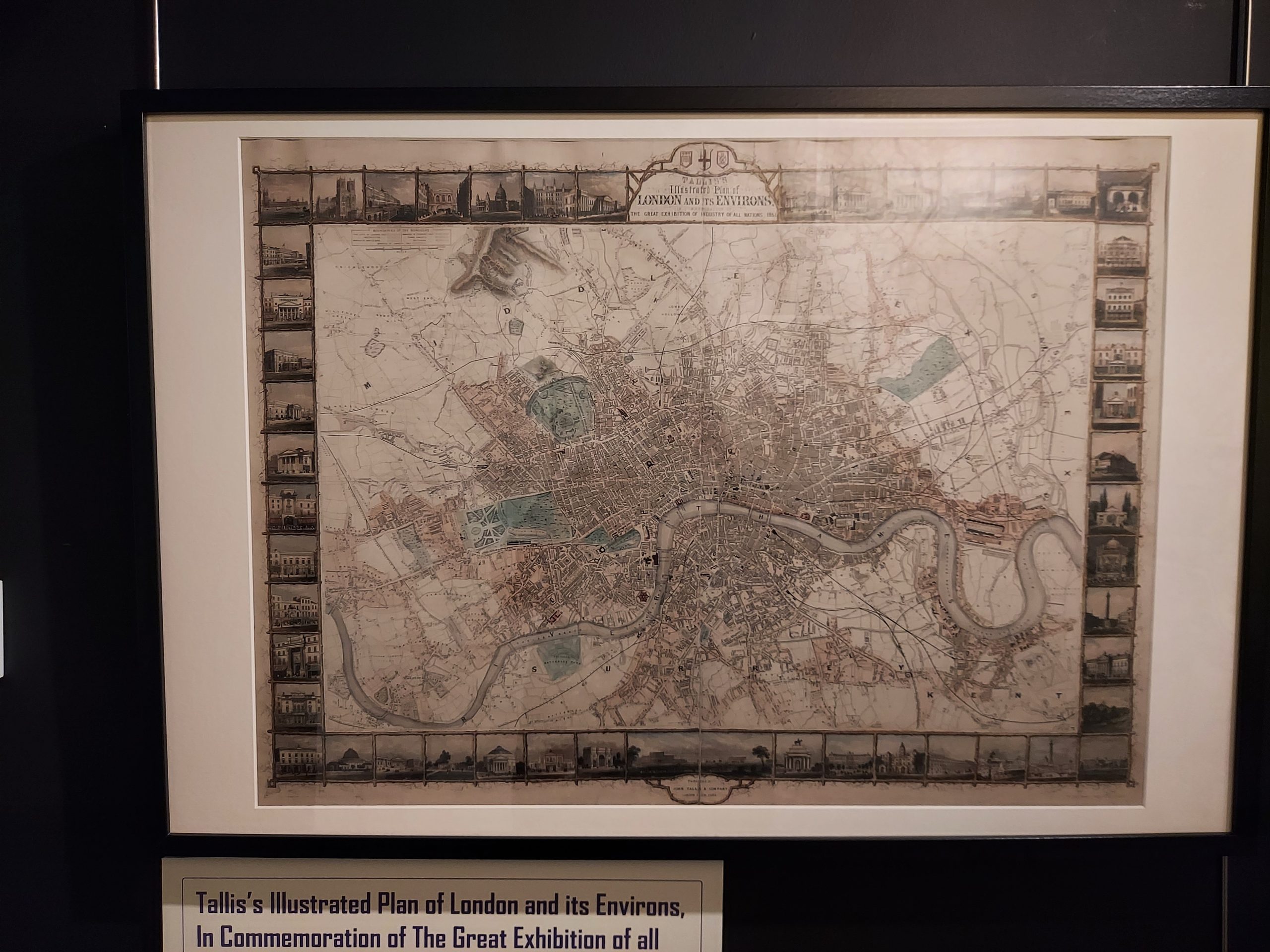
The second exhibition I visited on my day off was Magnificent Maps of London, held at the London Metropolitan Archives. As the title suggests, the exhibition was made up of weird and wonderful maps of London spanning the last 500 years, from the sixteenth century to the present day. The maps document the history of the city in detail, showing the development of London from a small city surrounded by rural fields to the sprawling metropolis we know today.

Map of London

The maps displayed served different purposes. Some were designed simply to map the city, showing what was there in greater or lesser detail. Others had another purpose: maps were created to chart poverty, to show the presence of a Jewish community, track the abundance of plague, trace bomb damage, and show the prevalence of racist attacks. Maps are not neutral: they are created for a purpose, whether explicitly political or with everyday usefulness in mind.

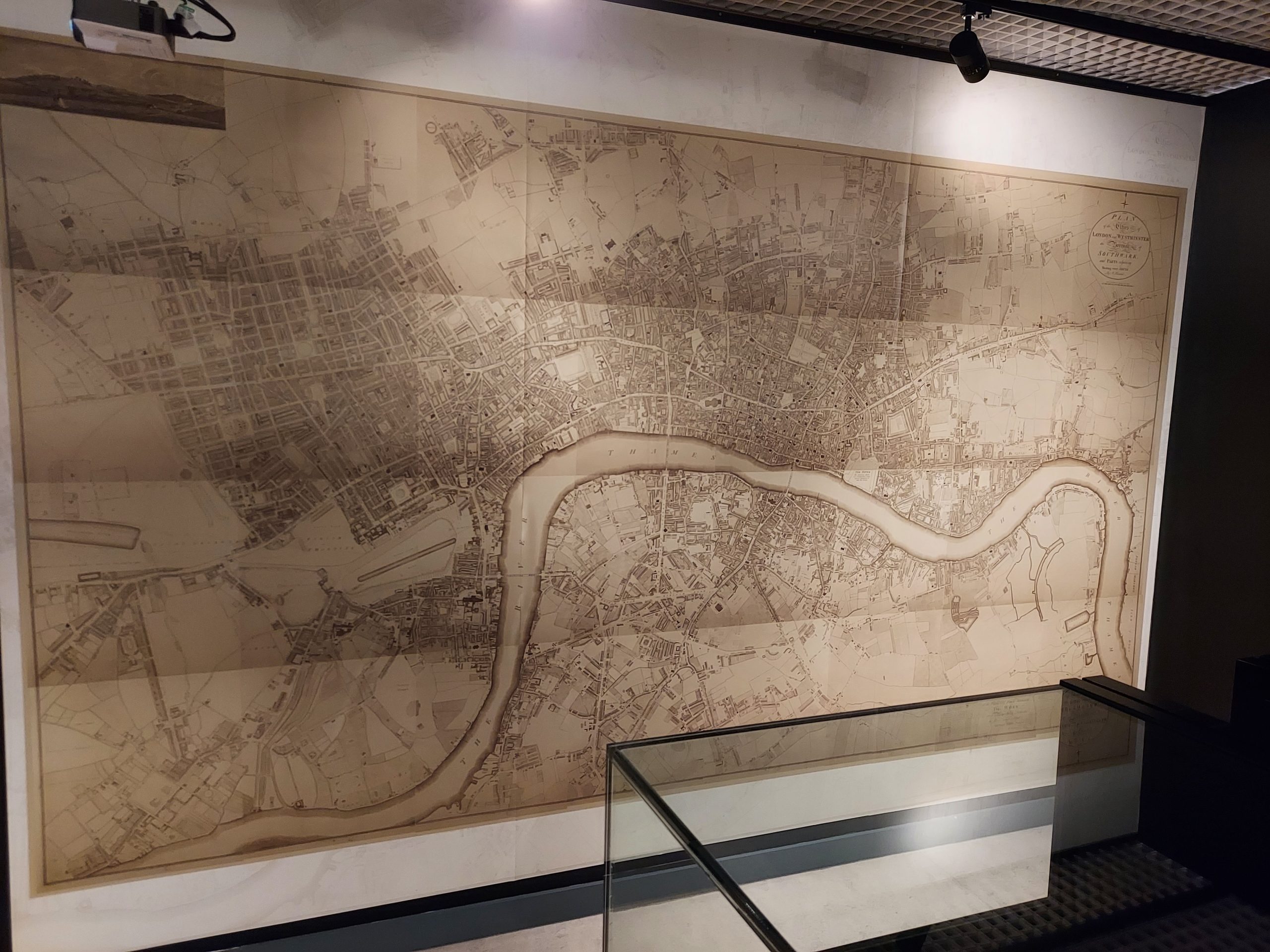
Some maps are huge, spanning the entirety of London and taking up an entire wall. Others are small, pocket maps or guidebooks designed to help tourists and visitors to London.

Map of London

I was fascinated by all the different maps and spent ages looking at them. My favourite was the sixteenth-century map of the city showing all the theatres on Bankside. I also loved the large map which covered as far as Ealing, so I could see how my local area has changed over the years.

This exhibition is fascinating and well worth a visit – especially as it’s free. It’s open until 29 March.

Map of London

Cezanne – Tate Modern

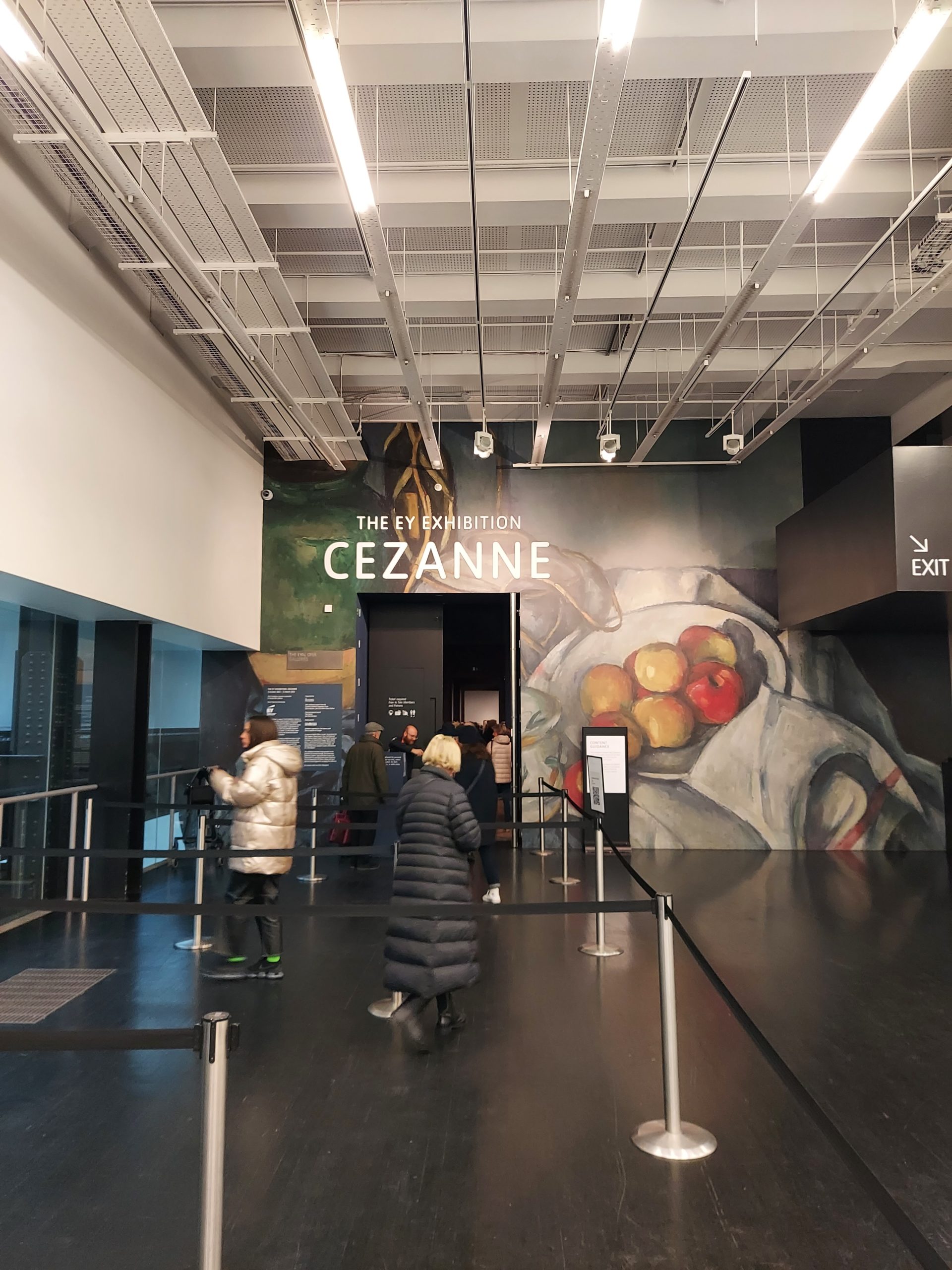
Entrance to the exhibition

I had a midweek day off work last week and decided to visit several exhibitions. The first one I chose was Cezanne at the Tate Modern, which is coming to the end of its run.

Paul Cezanne (1839-1906) is one of the most respected artists of the late nineteenth century. He revolutionised painting, seeing it as a process of investigation. The exhibition contains several works which have rarely been seen outside of France. The first half looks at Cezanne in the context of his time, while the second half focuses on particular themes.

As a young adult, Cezanne’s father wanted him to pursue a career in law, but his school friend, the novelist Émile Zola, encouraged him to move to Paris and pursue art. He was befriended and mentored by fellow artist Camille Pissarro, whose influence is present in his early work. Cezanne lived through times of social and political upheaval: this can be seen in paintings such as The Conversation, which hint at his political views, and Scipio, which was possibly influenced by abolitionism.

Painting showing skulls and flowers

Cezanne preferred to paint models he knew well, such as his partner  Marie-Hortense Fiquet and their son Paul. However, he also painted many works of bathers, which influenced painters such as Matisse and Picasso. He worked on several landscapes, particularly during his stay on the south coast of France, and is also famous for his still lives, mostly featuring apples.

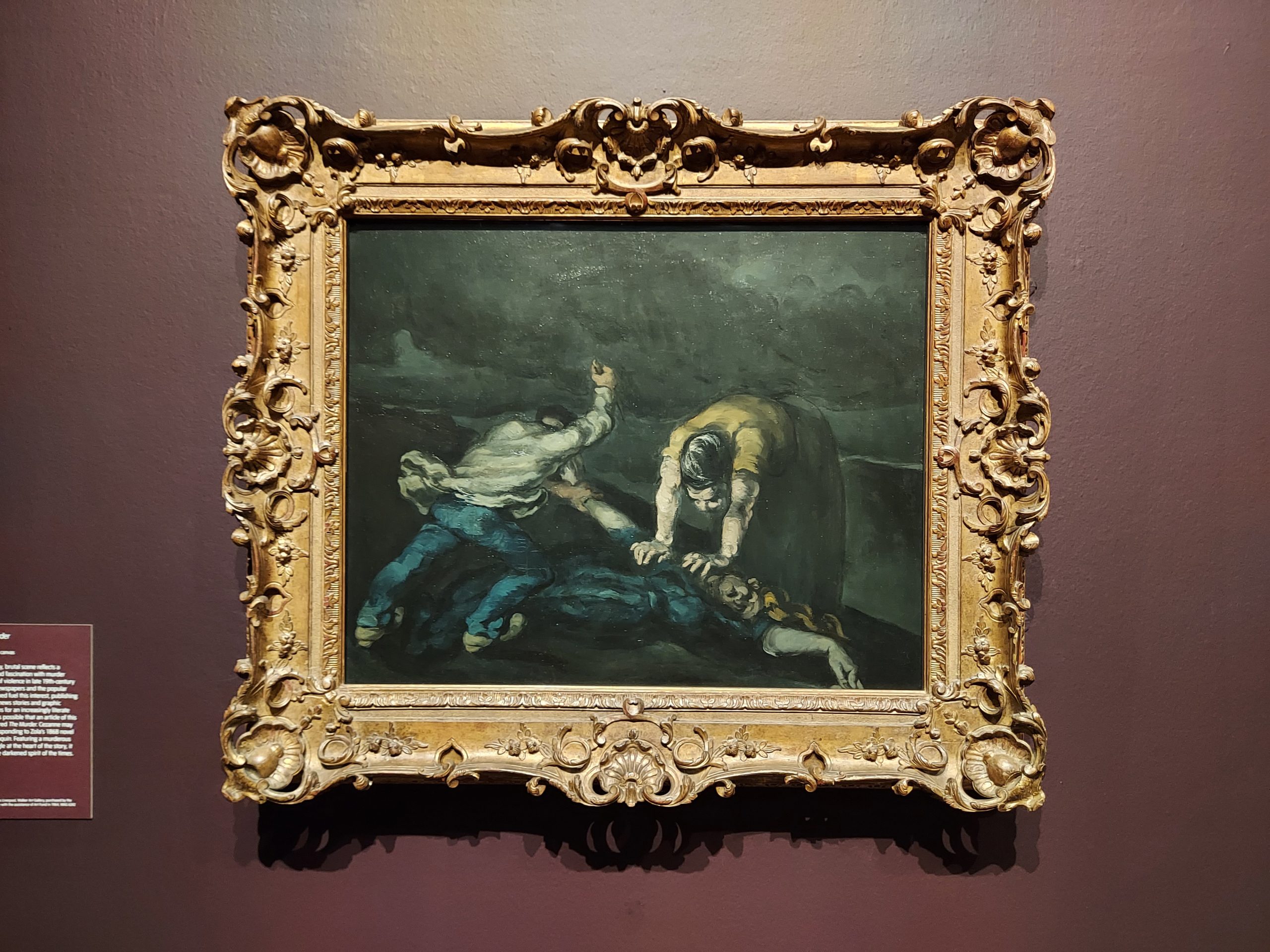
I must admit I struggled to engage with many of the paintings. I don’t find still lives particularly interesting and I wasn’t enamoured with the pictures of bathers. I could see the appeal in the landscapes, but my favourite works included the skulls that Cezanne painted towards the end of his life. There was also one particular work that seemed to show a murder, which had a strong compelling energy.

Cezanne painting showing two figures attacking another

I feel a bit guilty saying all of this as Cezanne is an acclaimed artist and I really don’t have the knowledge to be able to criticise his works properly. All I can do is comment from my own uneducated perspective, and I guess these works just aren’t really my thing.

Hieroglyphs: unlocking ancient Egypt – British Museum

The second exhibition I visited was Hieroglyphs: unlocking ancient Egypt at the British Museum. I love ancient Egypt – who doesn’t? – so I definitely wanted to see this.

Unlike many exhibitions on the topic, there are few mummies and tales of the Pharaohs to be found here – the focus of this show is the struggle to crack the code of Hieroglyphics. The Rosetta Stone, which inspired this breakthrough, is on display here: as it bears the same text, written in three different languages – hieroglyphs, demotic and Greek – it was the key to deciphering the mysterious pictorial language of the ancient Egyptians.

Before this discovery, hieroglyphic writing was thought by many to have magical or occult powers, and artefacts with such writing were often displayed by collectors in cabinets of curiosity. Items on display in the exhibition include a black granite bathtub, inscribed with spells to give bathers relief from lovesickness, and a model of a man’s torso covered with writing and pictures of gods.

The exhibition traces the complex history of how wars, invasions and conflicts both buried the meaning of hieroglyphs and assisted in its rediscovery: the Rosetta Stone was discovered by scholars accompanying Napoleon’s soldiers at a fort they were occupying. It follows the race between British polymath Thomas Young and Frenchman Jean-Francois Champollion to be the first to crack the code; Champollion won, outlining his findings in a letter that was read in public on 27 September 1822.

I really enjoyed the exhibition, but despite all the interesting information outlined above, the best thing I learned from it is that ‘cat’ in ancient Egyptian is ‘mioew’.

Ancient Egyptian statue of a cat

Alexander the Great: The Making of a Myth – British Library

Alexander the Great exhibition poster

I got up earlier than usual to visit the British Library and the exhibition Alexander the Great: The Making of a Myth. The exhibition explores the life of the famous warrior and conqueror and some of the myths surrounding his life that have appeared since then. It is true that Alexander built a huge empire throughout his short life. It is less likely to be true that he rode across the sky on a flying chariot, travelled to the bottom of the sea in a glass bell, or that his horse Bucephalus, strong and powerful as he was, actually ate people.

Alexander the Great was born in Macedonia in 356 BC, the son of King Philip II of Macedon and Queen Olympias. His empire stretched from Greece to India, encompassing Egypt and Persia, though he died at only 32. We are not completely sure why he was called ‘the Great’: the earliest reference is in Mostellaria, a play by Plautus. He has been known by many names, depending on the language and culture of the society referring to him:  some of his names include Iskandar or Sikandar.

One of the key sources for the myths surrounding Alexander’s life is the Alexander Romance. During the ancient and medieval eras, this text was hugely popular, and portrayed Alexander as a mythical adventurer. In the twelfth century, the poet Nizami’s Iskandarnamah (Story of Alexander) told of Alexander’s journey to see Sirens, mythical half-bird or half-fish creatures.

Even today, Alexander’s story is still being reinvented for a modern audience. Reimena Yee publishes an ongoing graphic novel online, entitled Alexander, The Servant and the Water of Life. It is an Alexander Romance for the 21st century and shows how Alexander’s life and mythical status still captures the imagination.

Hallyu! The Korean Wave – V&A

At the weekend I went along to see Hallyu! The Korean Wave at the V&A with a friend. I visited Korea a few years ago, so I was looking forward to it.

As I would have expected, the exhibition began with the video of PSY’s ‘Gangnam Style’, the 2012 hit that was absolutely everywhere and inspired hundreds of parody videos. It’s the most famous, but by no means the only, aspect of Korean culture that has fascinated Britain.

After a short section on the recent history of Korea, focusing on the Korean War which divided the country into North and South, we got to see exhibits from Korean romantic and historical dramas that have gained in prominence, as well as more modern shows such as Squid Game. Korean film is also looked at, with exhibits from the recent Oscar winner Parasite.

Later the exhibition begins to focus on K-pop and how it has achieved increased popularity abroad, with bands like BTS achieving superstar status. My favourite part of this section of the exhibition was the opportunity to have a go at some dance moves and get yourself recorded and displayed on screen. My friend and I didn’t do this but we enjoyed watching everyone who did!

Overall this exhibition is a fascinating exploration of modern Korean popular culture – and well worth visiting.