Titanosaur: Life as the Biggest Dinosaur – Natural History Museum

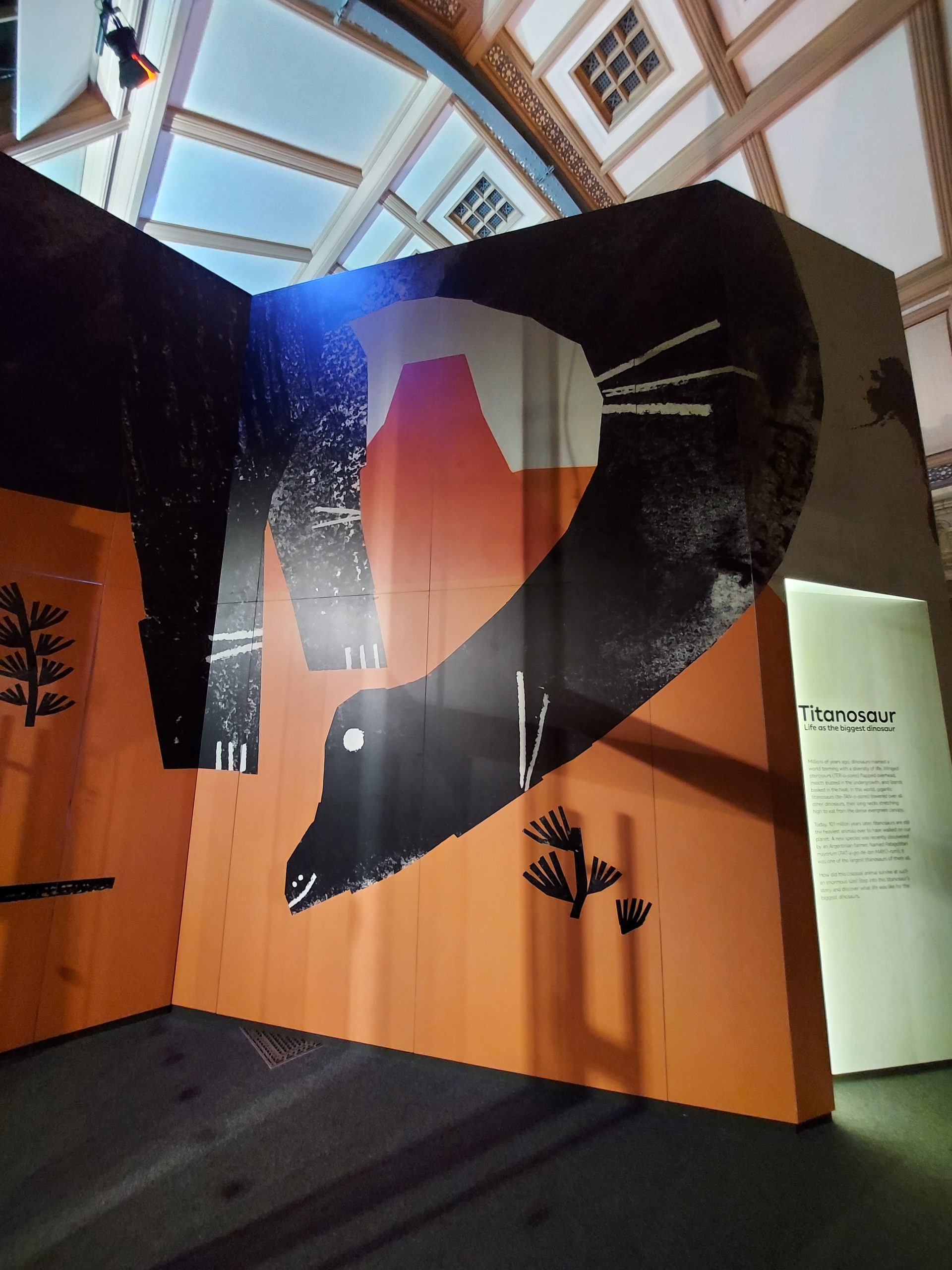
Entrance to the Titanosaur exhibition

I had some days off work to use up before Christmas and decided to pay a visit to the new Natural History Museum exhibition, Titanosaur: Life as the Biggest Dinosaur. Who doesn’t love dinosaurs, right? The exhibition had lots aimed at children, including an interactive game where you had to try and keep baby titanosaurs alive, but even as an adult it was hugely informative and fun.

The exhibition is all about the huge titanosaur Patagotitan mayorum. It was first discovered in 2010 when an Argentinian farmer spotted a large bone sticking out of the ground. Scientists descended on Patagonia, aiming to discover more, and as they dug nearby they found more bones from other titanosaurs: hundreds were found over a period of two years, from at least six individuals. By piecing these bones together, scientists have been able to recreate one nearly complete skeleton.

Thigh bone of the Titanosaur

Scientists have examined these bones to learn more about the titanosaur, and have modelled their skulls based on Sarmientosaurus, a close relative. Their peg-shaped teeth show that they bit leaves and swallowed them whole: usually conifer, horsetail and tree ferns. They had lots of space for jaw muscles, suggesting a strong grip. Their eyes and nostrils were placed far back to prevent twigs poking them as they explored trees for food.

A whole section of the exhibition explores the childhood of the titanosaur. Only one in one hundred babies survived to adulthood, as parents would lay eggs and then just leave them. The babies were tiny versions of adults from the very start, and only took two months to grow ten times their hatchling weight. Scientists can look at their bones to see how they grew: one ring equals one year of growth.

The exhibition also looks at how the titanosaur coped with being so huge, and why it might have grown so big in the first place. Patagotitan absorbed oxygen when it breathed in AND when it breathed out, helping it to function. It had light bones, with air sacs to make them even lighter, and wide hips for support, with a long tail for balance. They may have been able to keep warm by trapping heat in their body, generated by their guts and muscles. Their long legs also enabled them to walk huge distances in search of food. Their large size made it harder for them to get eaten.

With their rapid growth, long neck, sturdy legs and efficient lungs, they are the heaviest animals to ever walk the earth. The skeleton on display at the end of the exhibition makes you realise just how massive they were. I thoroughly enjoyed this fascinating exhibition.
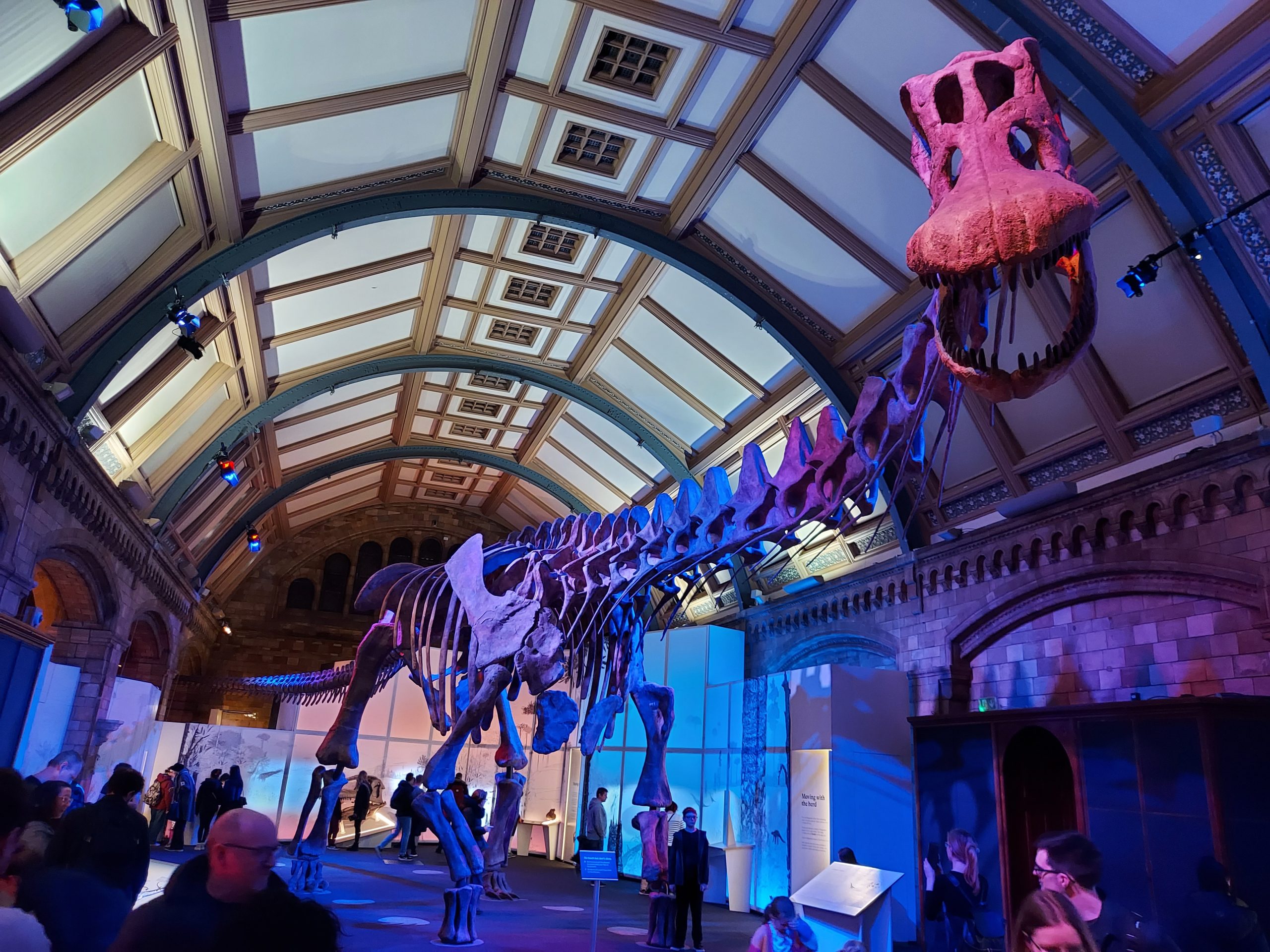
Model of the Titanosaur skeleton

Fantasy: Realms of Imagination – British Library

On Saturday morning I attended the exhibition Fantasy: Realms of Imagination at the British Library. I went along with a couple of friends and thoroughly enjoyed myself.

Fantasy isn’t my favourite genre, however the exhibition left me with a long reading list and a new appreciation for its history. The exhibition began with an exploration of fairy and folk tales, the foundation of modern fantasy. These began as oral folklore and over the years have been written down over and over, adapted to the needs of contemporary audiences, and constantly reinvented. Many are dark, especially the original versions, unsanitised for children.

The next section looks at epics and quests, another ancient form of literature. Some of the best known works are the Epic of Gilgamesh and Homer’s Iliad and Odyssey. Another section, on the weird and uncanny, follows, which was probably my favourite since it is most closely linked with horror. The final section looks at portals and worlds, which are particularly popular in the modern age. Some fantastical worlds, such as Wonderland, are reached via a portal; others are entirely separate from our own.

The overarching themes of the exhibition are the timelessness of fantasy storytelling and the ways in which it has been updated and reinvented to ensure its relevance to each generation. It’s a thorough, comprehensive exhibition with plenty of treasures on display, including a glorious fantasy map, the manuscript of Susanna Clarke’s Piranesi, and a room inspired by American series Twin Peaks. It’s definitely worth seeing, and you will come out with a new appreciation of the genre.

Treasures of Gold and Silver Wire – Guildhall Art Gallery

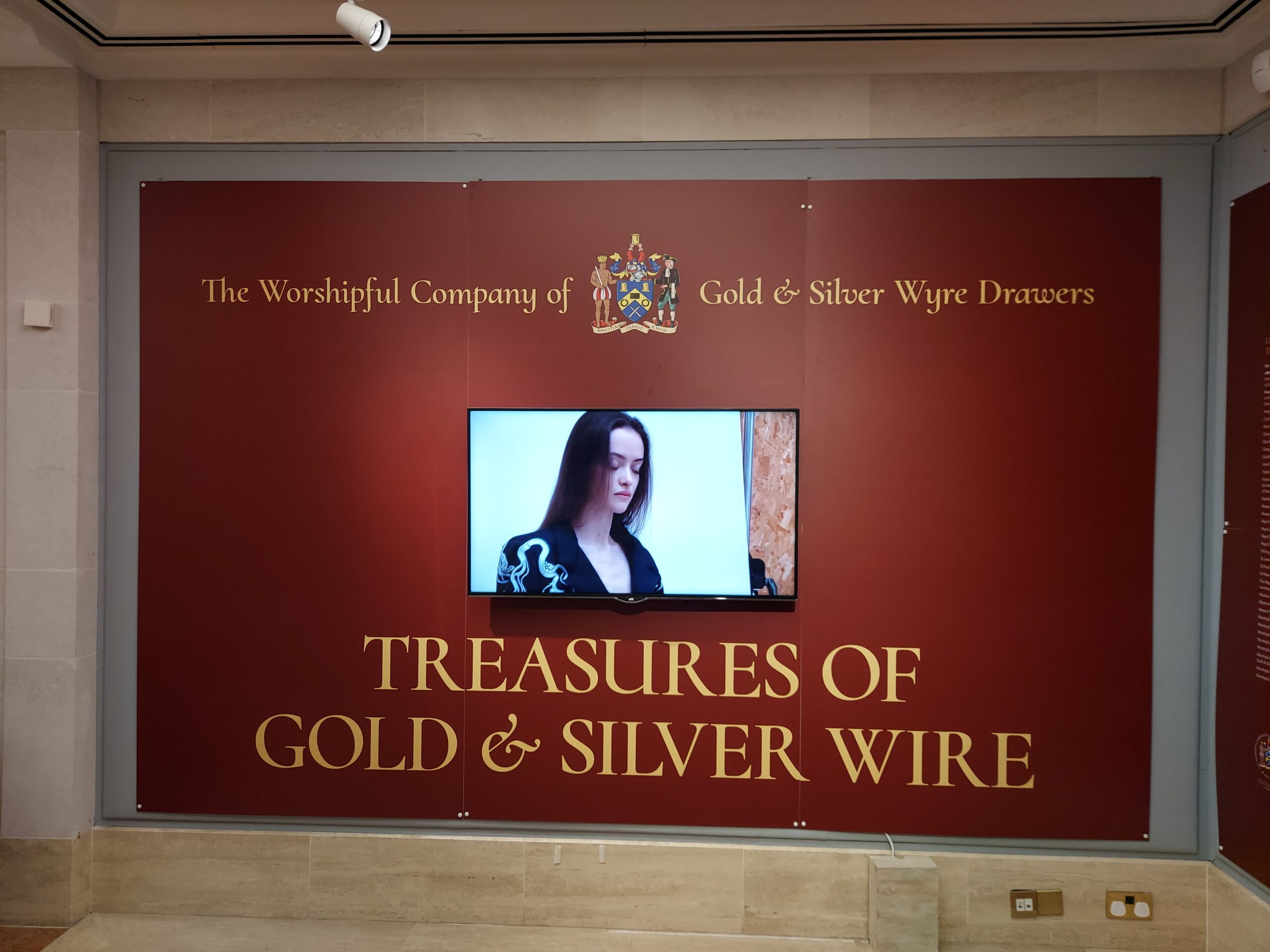
The entrance to the exhibition

In recent years I’ve got really into embroidery and other needlecrafts, so I was excited to visit the exhibition Treasures of Gold and Silver Wire at Guildhall Art Gallery. The exhibition, curated by Dr. Karen Watts, Curator Emeritus at the Royal Armouries, marks the 400th anniversary of the Worshipful Company of Gold and Silver Wyre Drawers, and features over 200 beautiful items made of gold and silver wire, some historical and others more recent, from a variety of different contexts.

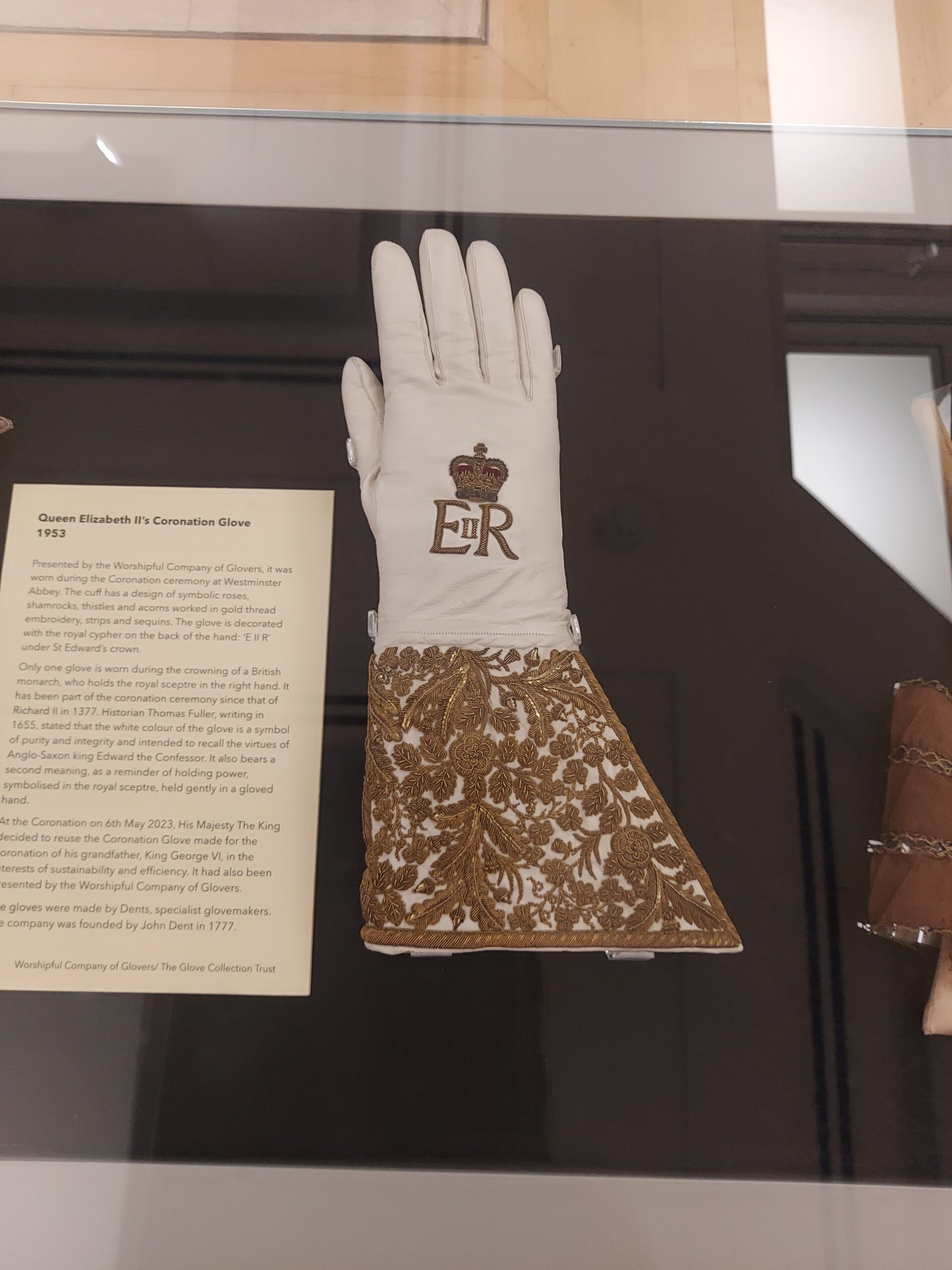
Many items in the exhibition are royal: garments worn by both Queen Elizabeth I and Queen Elizabeth II include the 16th century Bacton Altar Cloth, her only surviving dress, and a glove worn by the late Queen at her Coronation in 1953. The coronation dress worn by Queen Mary in 1911, adorned with gold and silver silk thread, is also featured.

A white glove embroidered with gold including the emblem of Queen Elizabeth II
Queen Elizabeth II’s Coronation glove

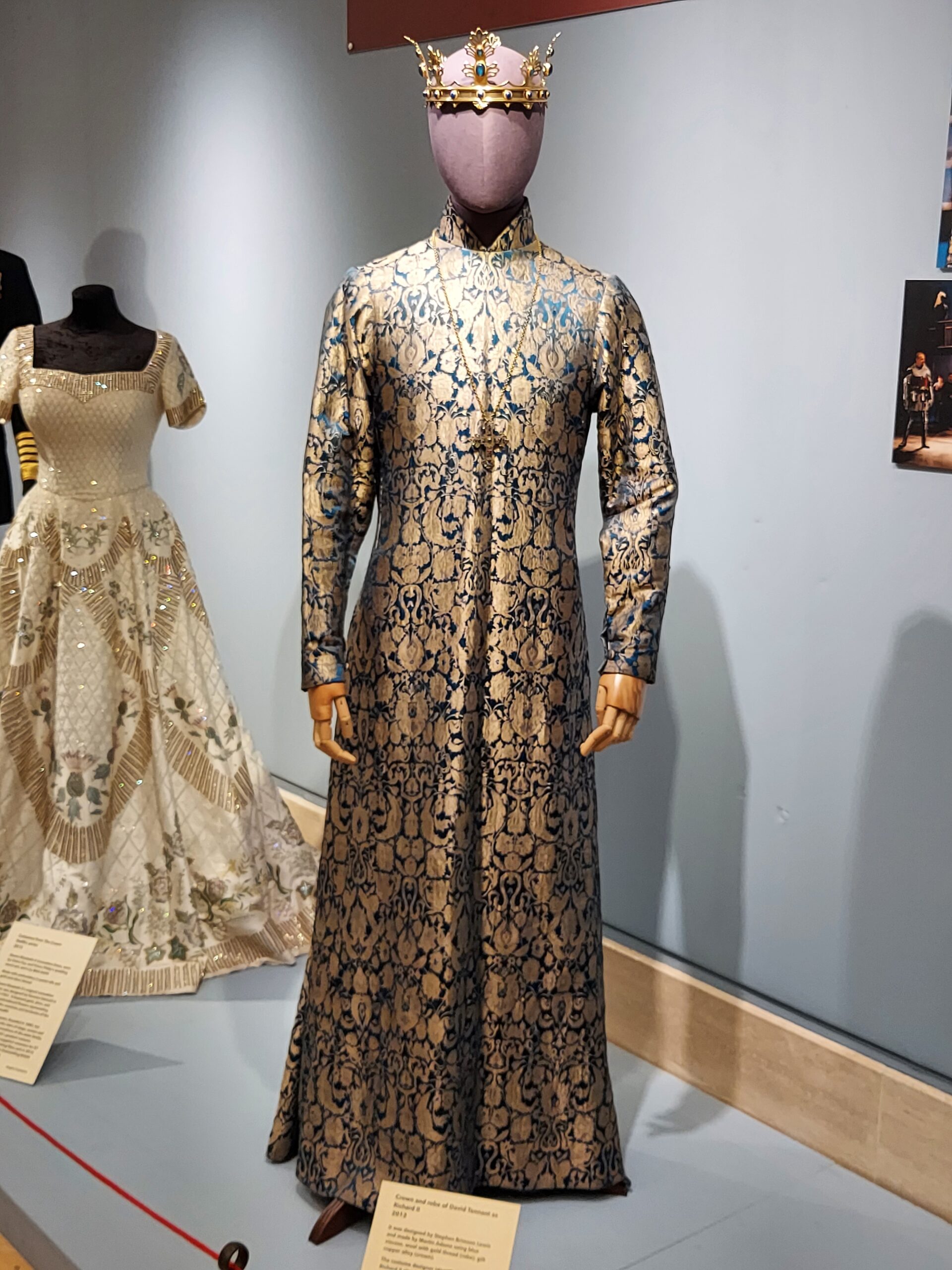
My favourite pieces in the exhibition came from theatre, such as a robe and crown worn by David Tennant in the title role of Richard II in the RSC’s production, as well as a crown and robe worn by Dame Helen Mirren in the RSC’s production of Antony and Cleopatra. Costumes worn by actors in the television series The Crown are also on display.

David Tennant's costume for Richard II
David Tennant’s costume for Richard II

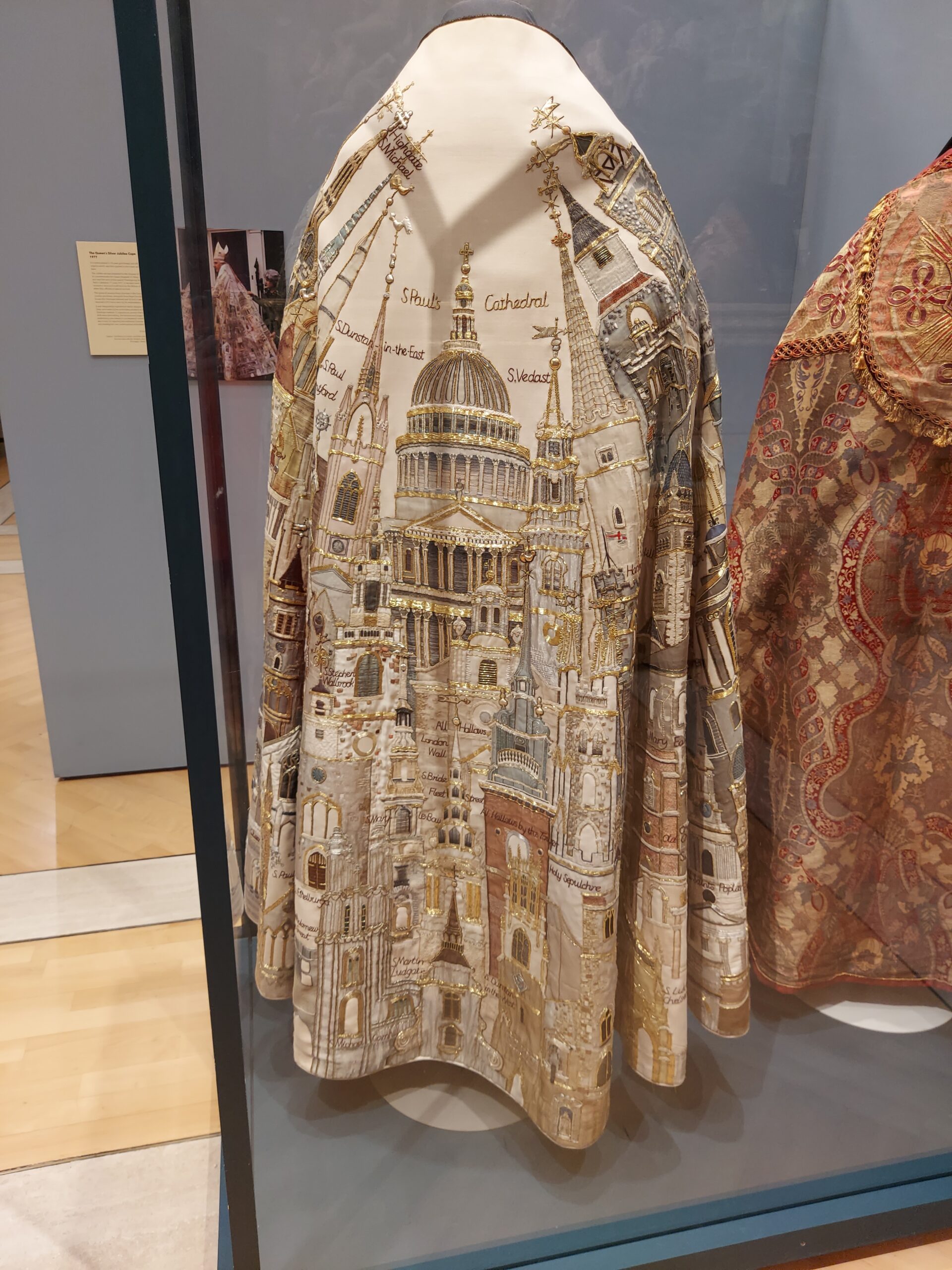
Menswear features strongly in the exhibition. A court suit worn by novelist Charles Dickens is shown, as is the Bishop of London’s Silver Jubilee Cope from 1977, and gold-braided dress uniforms from the British Army, Royal Navy, and Royal Air Force. A beautifully-embroidered hearse cloth from 1515 is one of the oldest pieces in the exhibition, and a piece of Oliver Cromwell’s dressing gown is also on display.

A cope embroidered with various London spires
The Bishop of London’s Silver Jubilee cope

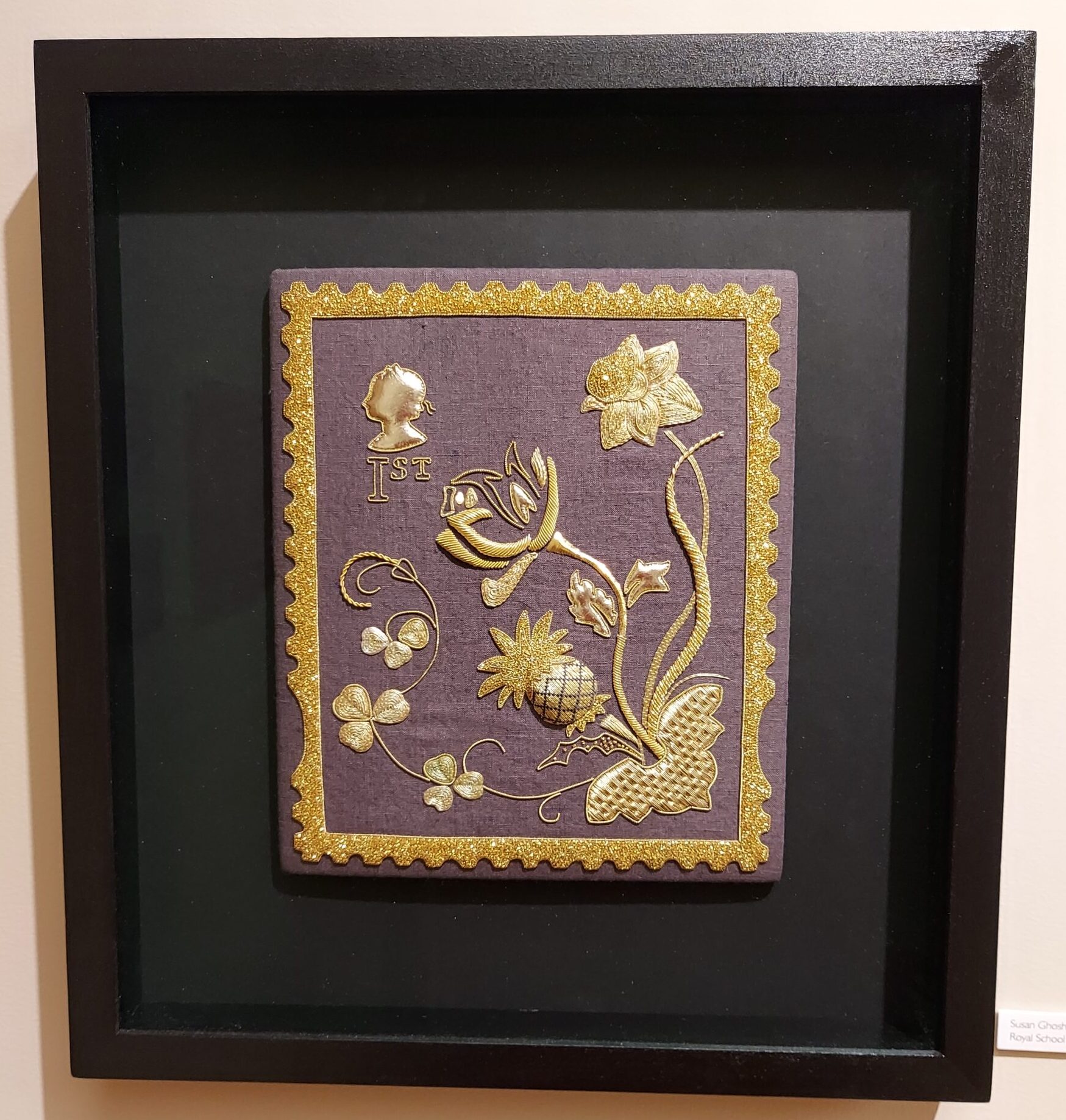
The exhibition ends with some beautiful examples of modern-day embroidery and jewellery using gold and silver wire. These gave me serious envy and inspired me to get working on more embroidery myself!

A stamp design embroidered in gold on purple
A modern stamp design

Crown to Couture – Kensington Palace

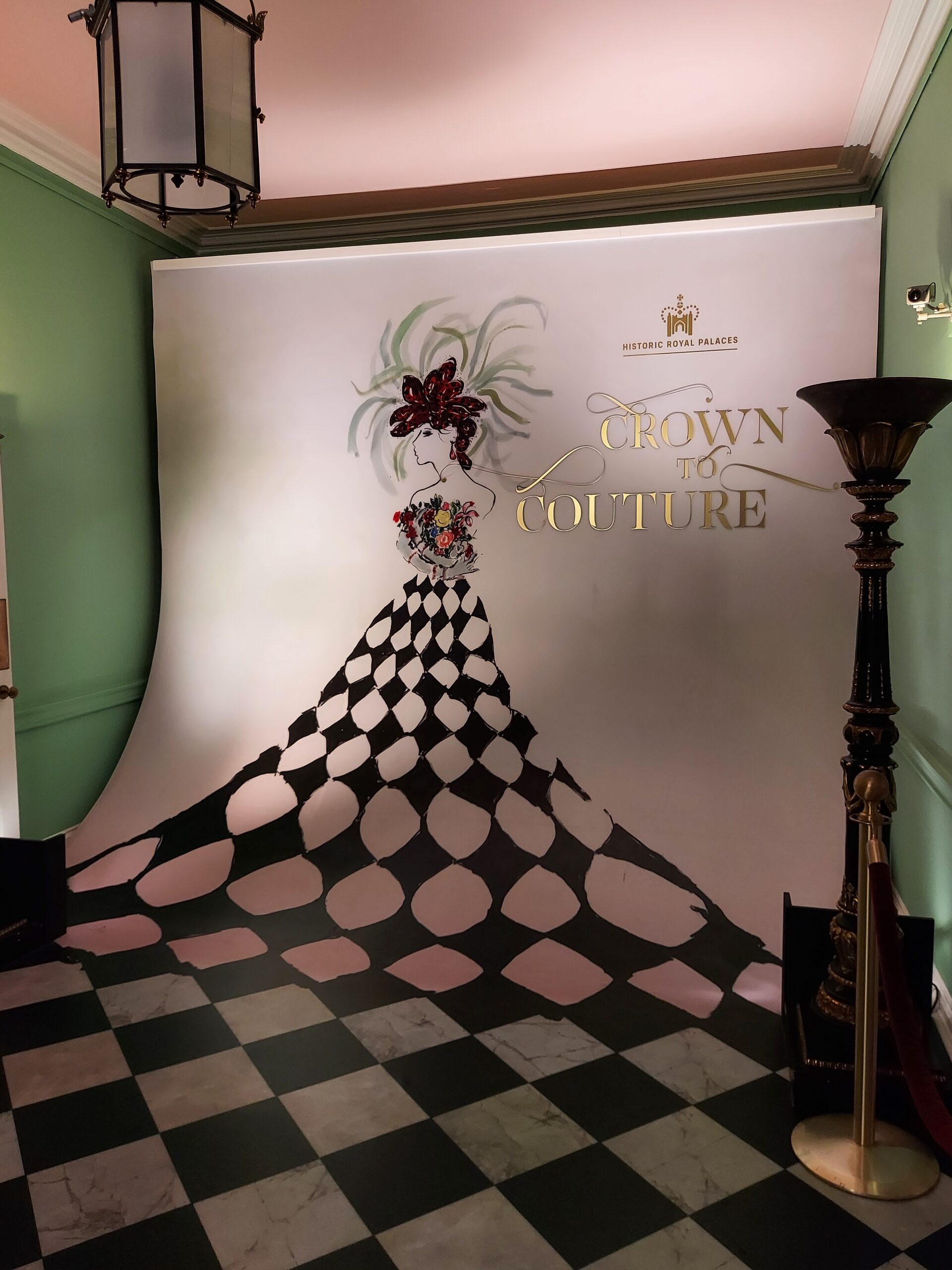
entrance to the Crown to Couture exhibition

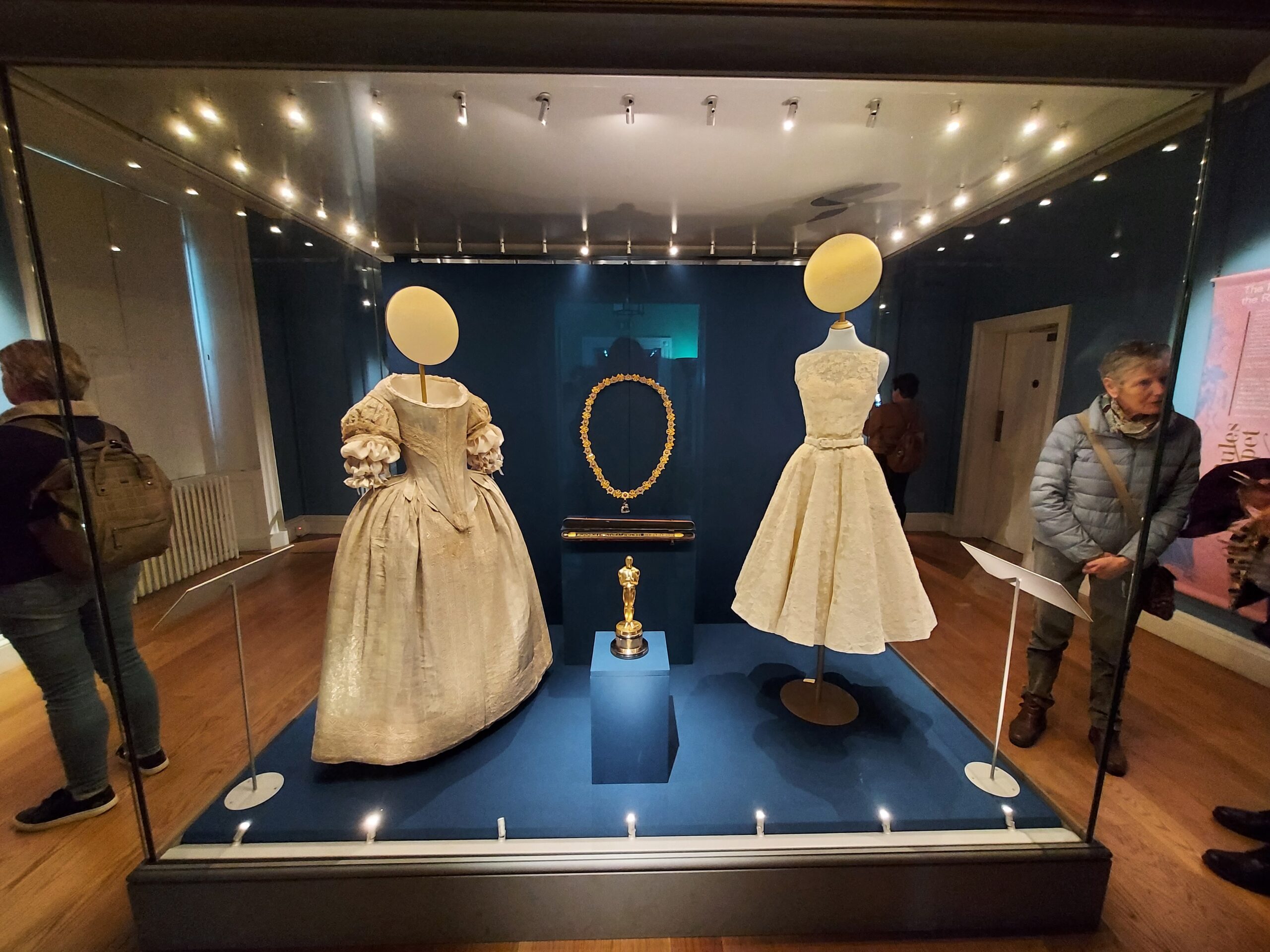
I attended the Crown to Couture exhibition at Kensington Palace one sunny Sunday in October. With 200 artefacts placed around the State Apartments, this is the largest exhibition ever held by Kensington Palace. It compares and contrasts eighteenth-century court fashions, then the height of style and glamour, with Hollywood designer outfits from the 1950s to the modern day.

While the eras are different in many ways, they have a lot in common. Both featured outlandish outfits worn to get the wearer noticed – either by the king, or by the media. As a rule, they are completely impractical – see the ridiculously wide ‘mantua’ dresses of the 1700s, or Katy Perry’s ‘chandelier’ dress – but they were also often beautiful, and sometimes made statements in other respects, such as Billy Porter’s outfits chosen to protest against gender and racial norms.

This rich, fascinating exhibition is well worth a visit. It is excellently put together and has some jaw-dropping costumes on display.

An eighteenth-century court dress and a 1950s Hollywood dress

Spirit of Invention – The National Archives

I visited the Spirit of Invention exhibition at The National Archives, partly to get inspiration for my RBC Inventor badge, but also because I was interested in seeing the wacky Victorian inventions on display, alongside intriguing modern creations.

Board for the Spirit of Invention exhibition

Innovation was rife during the nineteenth century, thanks to a combination of industrialisation, economic prosperity and societal change. In 1843, the Utility Designs Act made the process of protecting an idea much simpler and cheaper, so ordinary people were keener to get involved with inventing.

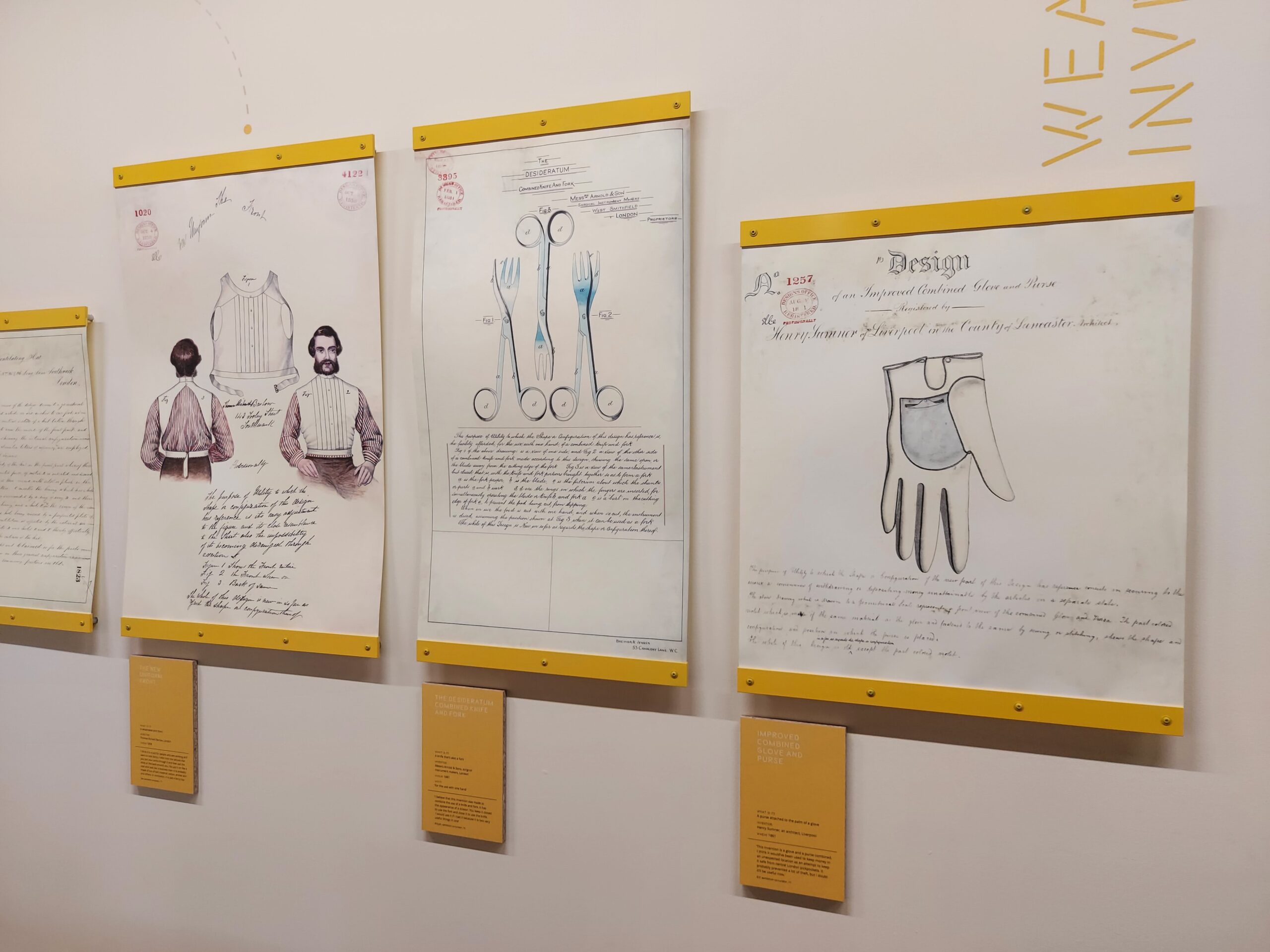
One of the most interesting and potentially useful inventions was the combined knife & fork by Messrs Arnold & Son. By making it easier to eat a meal with only one hand, it helped those with certain disabilities. John Mechi and Charles Bazin created the United Service Travelling Case, which even now looks handy for taking on holiday.

Some Victorian design ideas

The modern inventions explored in the exhibition are no less intriguing. For example, the Soul Cap is a swimming cap designed to accommodate particularly thick and full hair. It is designed for those with afro hair, ensuring that Black people can also protect their hair while in the pool. The ‘Hero Arm’ is a prosthetic arm with transferable covers, so wearers can use an arm designed to look like Iron Man or other superheroes.

The exhibition was great fun and gave me plenty ofinspiration for the badge!

The Rossettis: Radical Romantics – Tate Britain

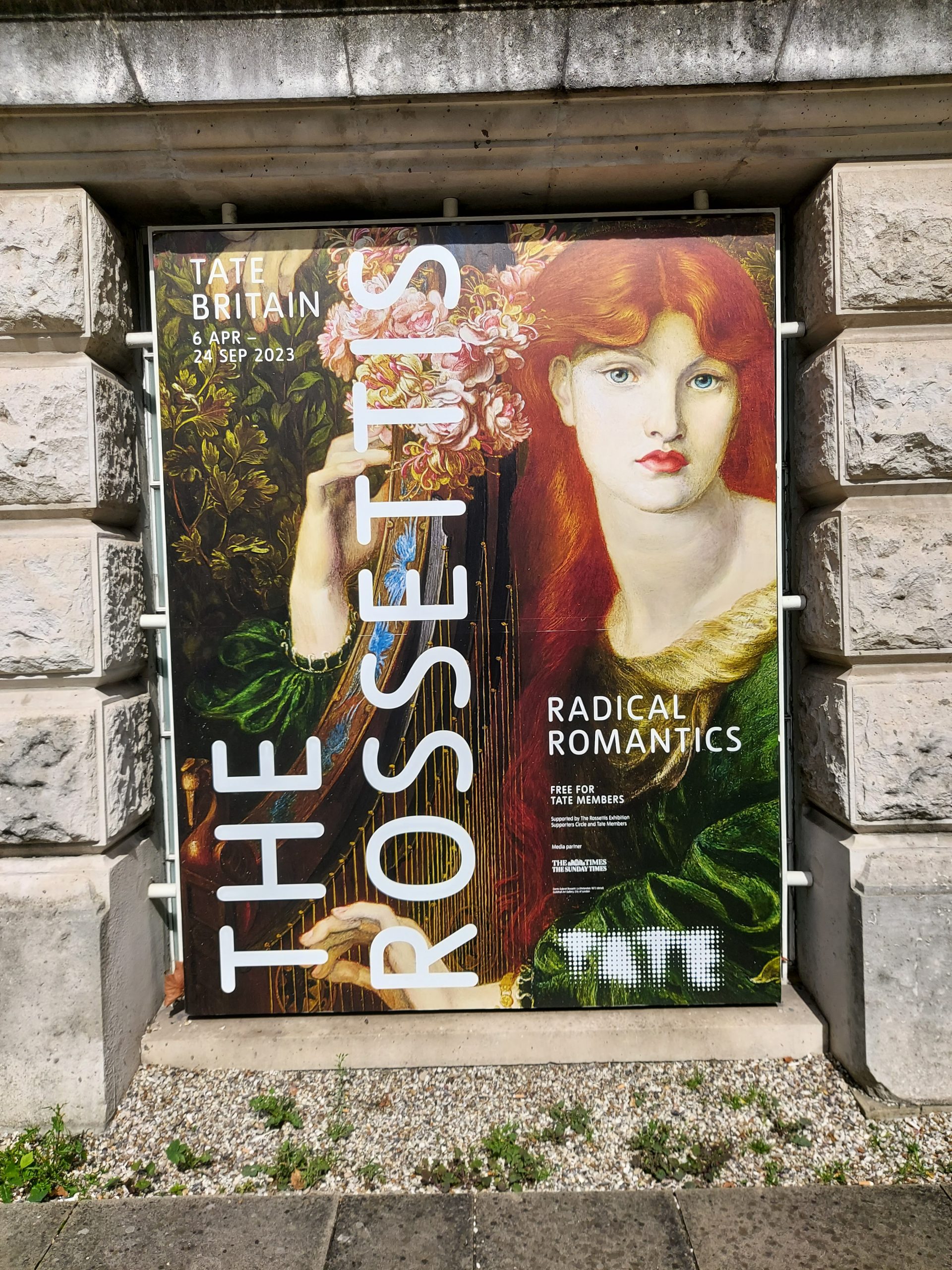
Poster for The Rossettis exhibition

I’m very interested in the Pre-Raphaelites, so was excited to see the exhibition The Rossettis: Radical Romantics at Tate Britain. It focused on brother and sister Dante Gabriel Rossetti (painter) and Christina Rossetti (poet), and, for the purposes of this exhibition, Gabriel’s wife Elizabeth (painter), born and better known to us as Elizabeth Siddal.

The exhibition explored how the family’s background – their parents were scholars of Italian heritage, and their four children, Maria (writer), Gabriel (who later adopted the name Dante), Christina, and William (writer and co-founder of the Pre-Raphaelite Brotherhood) had unconventional lives and shared anti-establishment views. Their father, Gabriele, was a revolutionary who had to flee Italy, and passed on many of his ideas to his children.

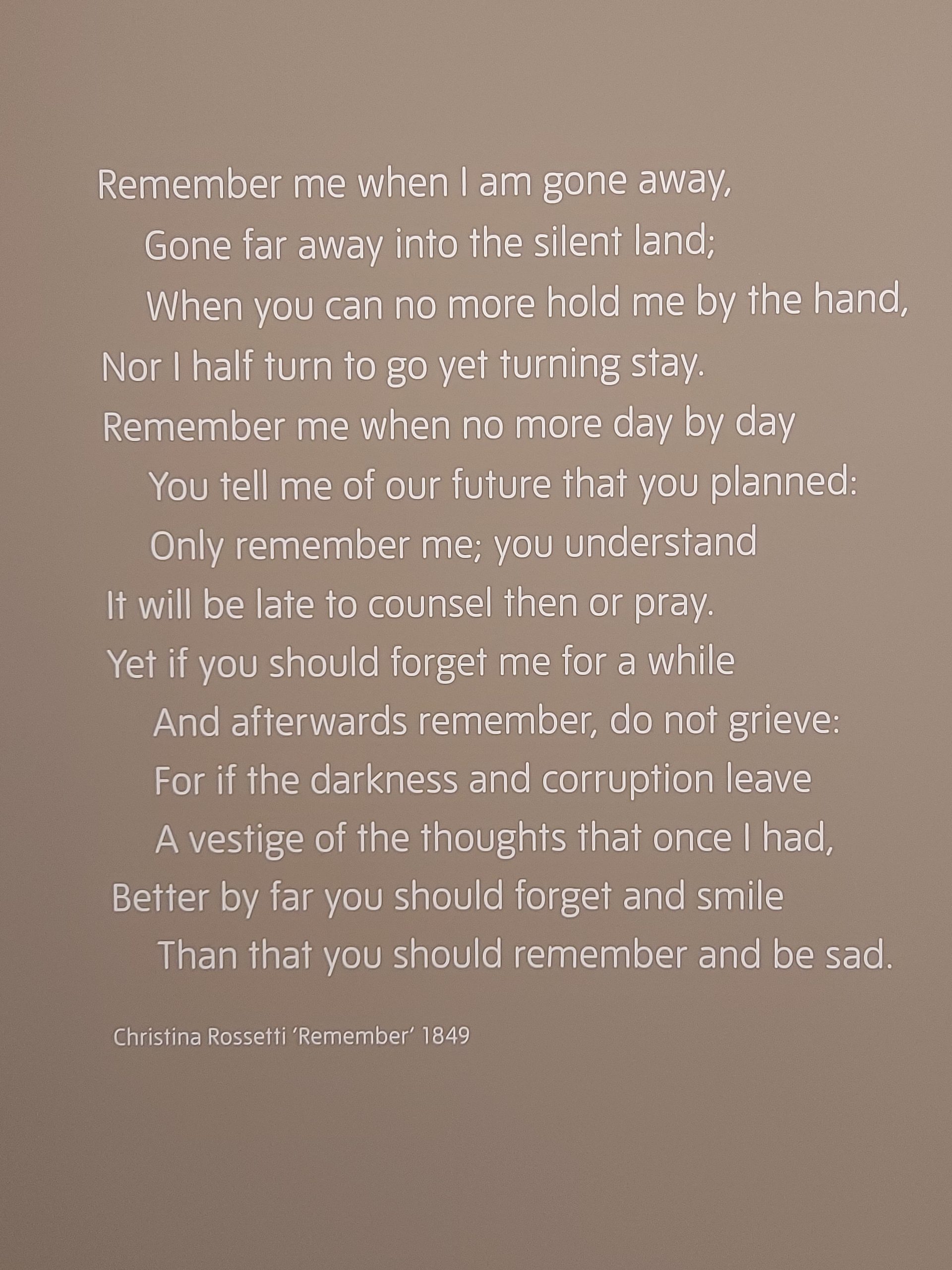
Poem by Christina Rossetti‘Remember’ by Christina Rossetti

Both Gabriel and Christina published poems at an early age. Today, Christina is the better known poet: her verse was inspired by poetry, love and religion, and is often passionate and full of life. Gabriel’s admiration for less conventional artists led him to co-found the Pre-Raphaelite Brotherhood with his own brother William and several other artists; his own work was inspired by the likes of Dante and William Blake.

Painting by Dante Gabriel RossettiLady Lilith by Dante Gabriel Rossetti

The inclusion of Elizabeth Siddal’s work here is interesting. I’m very glad her work is becoming better known and she is no longer seen as ‘just’ Dante Gabriel Rossetti’s muse. However I would be more interested to see how her background and experiences shaped her own work, rather than lump her in with the Rossetti family who had a very different upbringing. The exhibition, it must be said, does make a good case for her inclusion, showing how her work and Gabriel’s inspired one another, and the similarities between her poetry and Christina’s in terms of exploring women outside of the conventions of the time.

I really liked how the exhibition tried to dive in to the lives of the working class models that often featured in Gabriel’s paintings, as well as confronting the problematic portrayal of different cultures in his later works. Ultimately, the exhibition did a very good job in highlighting the Rossettis’ impact on art, literature and culture.

Animals: Art, Science and Sound – British Library

Entrance to the exhibition

At the weekend I decided to visit the Animals: Art, Science and Sound exhibition at the British Library. The exhibition brings together manuscripts, printed works, art and sound recordings to showcase how animals have been portrayed throughout the centuries.

In part the exhibition explores scientific advances in our understanding of animals: how writing about our fellow creatures and portraying images of them accurately has advanced our knowledge. However, it also looks at the misinformation spread by ignorant chroniclers: the naturalist Pierre Belon in his De aquatilibus (1553) portrayed a ‘monkfish’ quite literally, as a monk with a fish tail.

The exhibition is divided into four sections, darkness, water, land and air, each focusing on spectacular and unusual animals from that environment. It is a visual treat, with examples such as The Birds of America (1827–38) by John James Audubon showcasing gorgeous and detailed illustrations. Attention is paid to sound, too, with recordings such as Roger Payne’s Songs of the Humpback Whale (1970), a key player in the campaign to save whales from extinction.

I liked that the exhibition focused on the achievements of oft-overlooked women, including Sarah Bowditch, who illustrated and wrote The Fresh-Water Fishes of Great Britain between 1828 and 1838. It closes with three women talking about their own work and relationships to nature. This powerful exhibition is hugely enjoyable and I learned a great deal from it.

Luxury and Power: Persia to Greece – British Museum

Two head sculptures: the Greek god Apollo and a distinguished Persian

At the weekend I decided to visit an exhibition at the British Museum: Luxury and Power: Persia to Greece. The exhibition explores the ancient rivalry between Persia and Greece, and how the Greek view of a decadent Persian empire weakened by excess endured to this day. It suggests that the real situation was more complex, through an examination of material history taken from both empires.

Greek soldiers captured the royal command tent of the Persian king during the Greco-Persian Wars (499-449 BC) and were astounded by the luxury on display. The exhibition examines how luxury functioned as a political tool in the Middle East and nearby.

The concept of the exhibition is summed up at its very start. We see a pair of sculpted heads facing each other, one an ancient Persian with a beard and ringlets, the other the Greek god Apollo. However, both of these figures come from 5th century BC Cyprus, from sanctuaries where both Apollo and the Persian god Reshef were worshipped.

The royal Achaemenid court of Persia made use of precious objects to display authority. Rhytons – large, luxurious drinking cups – are perfect examples of these. Made of gold or silver, these huge cups feature portraits of humans, bulls and griffins. Later in the exhibition, we see how early democratic Athens adapted these to make them more palatable to a Greek audience. These new-style rhytons were made of clay, not gold or silver – which were considered ostentatious – and painted red, white and black. One drinking cup in particular does reinforce the idea that Greeks viewed Persians negatively: the cup is in the shape of a cariacature of a Persian. One can imagine a grinning Greek cheerfully toasting a Persian defeat from this mug.

The Persian empire was finally defeated by Alexander the Great, ensuring the domination of Hellenistic culture and tradition which fused eastern and western styles of luxury. Alexander burned the Persian capital Persepolis, and created a new Greek empire. Objects from the Panagyurishte Treasure, beautiful Thracian objects lent by Bulgaria’s National Museum of History, round off the exhibition. A true fusion of cultures, they combine Greek and Persian themes: a golden cup with bull faces features gods and demigods, while another cup shaped like a Greek amphora features two dancing centuars as handles.

This exhibition was a visual treat and definitely extended my understanding of this period of ancient history. It is well worth a visit.

After Impressionism: Inventing Modern Art – National Gallery

Entrance to the After Impressionism exhibition

On my day off I also paid a visit to the exhibition After Impressionism: Inventing Modern Art at the National Gallery.

The exhibition explored the years between 1880 and 1914 when artists such as Paul Cézanne, Vincent van Gogh and Paul Gauguin pushed the boundaries of art and inspired new generations.

It featured almost one hundred works by artists such as Klimt, Munch, Matisse and Kandinsky, loaned by the likes of the New York Museum of Modern Art, the Musée d’Orsay in Paris, and the Museu Nacional d’Art de Catalunya in Barcelona.

The sheer variety of art on display was impressive and really showed just how creative and original the artists of the period were. The exhibition showed how they experimented and pushed the boundaries of art, and it was fascinating to see.

Science Fiction: Voyage to the Edge of Imagination – Science Museum

I decided to pay a visit to this exhibition before it closed. Science fiction isn’t my favourite genre, but I’ve read several novels in this area and do feel like it’s worth exploring further.

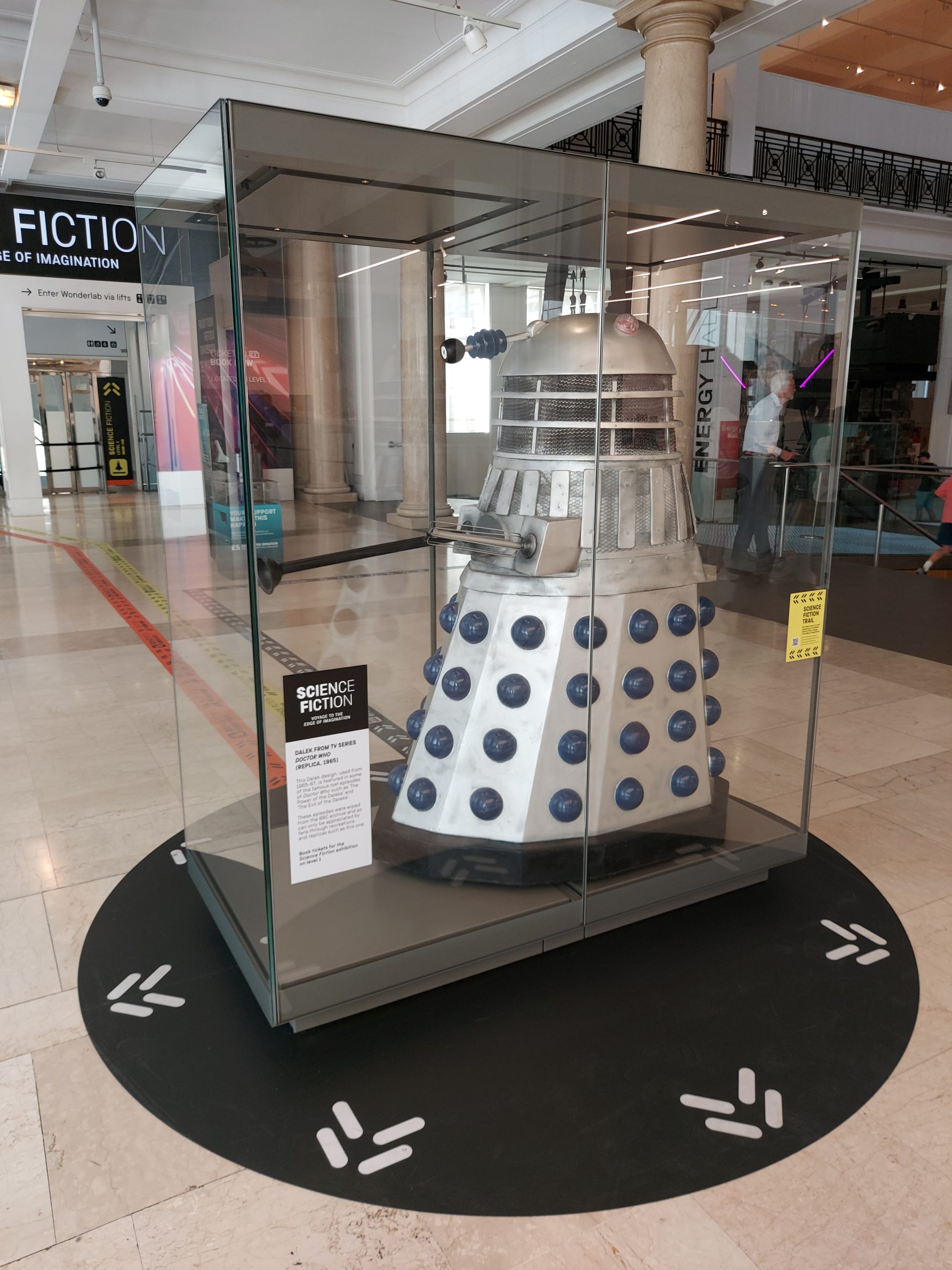
Model of a Dalek in the Science Museum foyer

Science Fiction: Voyage to the Edge of Imagination explores how science fiction writers – and scientists – have used their imagination and knowledge to create new worlds and try to understand our own. It explores well-known science fiction stories such as Star Wars and Star Trek, Doctor Who, Frankenstein, and classic novels by H. G. Wells and Jules Verne.

The entrance to the exhibition was pretty awesome. You have to get in a ‘spaceship’ and are ‘transported’ to the exhibition, which is quite exciting. Unfortunately for me, this was the best part of the exhibition.

Overall I thought the exhibition was rather light on detail and I didn’t feel I learned an awful lot. If you’re a fan of sci-fi franchises, the chance to see original costumes is a definite plus. But my interests lean more towards the written word, and there wasn’t much to see or learn.

I did like the part that focused on advances in science, previously the stuff of fiction, that are helping people today – such as bionic limbs. Overall, though, I wasn’t particularly wowed by this exhibition.