The Musical Museum

2014_0824MusicalMuseum01
The Musical Museum

I’ve gone past The Musical Museum in Brentford a few times on the bus, but had never been until it was open for free for the 50th anniversary weekend. Though I was supposed to be packing for my holiday, I took a break in order to go down to Kew Bridge.

2014_0824MusicalMuseum03
Inside the entrance
2014_0824MusicalMuseum04
Inside the museum

The museum contains one of the world’s foremost collections of automatic musical instruments, including pianos, orchestrions, orchestrelles and violin players, among others. The star of the collection is the Wurlitzer organ, which is located in the hall. When I arrived, a tour was just going into the hall, so I tacked onto the end and enjoyed a quick performance from the tour guide. We also got to see the organ lowered down into the pit!

2014_0824MusicalMuseum02
The Mighty Wurlitzer
2014_0824MusicalMuseum05
One of the museum’s instruments

As well as having a look around myself, I attended the beginning of the next tour, in which the enthusiastic guide played us some of the instruments. This was great fun and I found the ingenuity and cleverness of these machines fascinating. There were several children there and they seemed to be thoroughly enjoying themselves.

2014_0824MusicalMuseum06
One of the museum’s instruments
2014_0824MusicalMuseum07
One of the museum’s instruments

The museum normally costs £10 but as I mentioned, it was free on the anniversary weekend. The museum completely relies on entry fees to run and maintain the instruments, so I’d urge you to visit and check out this quirky and unusual museum.

FACTS

Address: 399 High Street, Brentford, TW8 0DU

Website: musicalmuseum.co.uk

Opening Hours: Fri-Sun (& Bank Holiday Mondays) 11am-5pm

Prices: Adult £10, Concession £17.50, Child £4; under-5s free

The Old Palace Exhibition – Somerset House

2014_0813TheOldPalace01

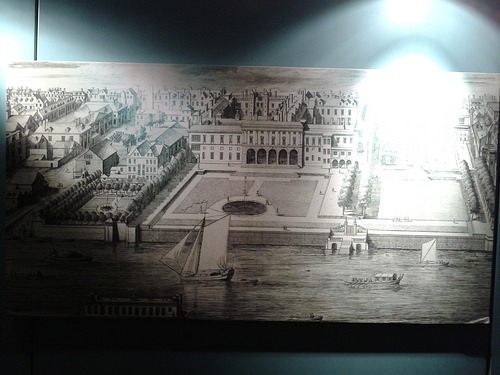
After visiting the tattoo art exhibition at Somerset House I found my way downstairs into a “hidden” exhibition about the old Somerset House palace. This was built during the Tudor period, originally for Protector Somerset, but he died before it was completed.

The palace being next to the Thames, it was ideally placed for river-based entertainment. During the seventeenth century, a floating coffee house called “The Folly” was often moored outside. Visitors travelling along the river would often stop and visit: Samuel Pepys, the famous diarist, himself visited in 1668.

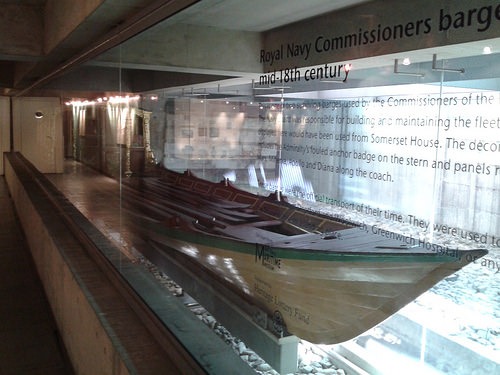
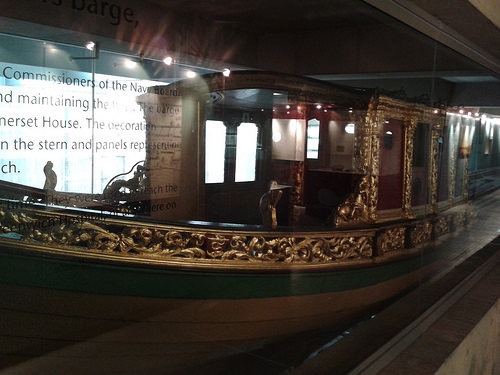
On display are several items from the history of Somerset House, dug up by archaeologists over the years. There is also a barge, used by the Commissioners of the Royal Navy, which would have patrolled the river during the 17th century.

2014_0813TheOldPalace02

2014_0813TheOldPalace03

Enduring War: Grief, Grit and Humour – British Library

Until 12 October 2014, a free exhibition in the Folio Society Gallery of the British Library, Enduring War: Grief, Grit and Humour, is on display to mark the centenary of the start of the First World War. The exhibition uses posters, poetry, books and pamphlets to look at how soldiers from home and overseas, and civilians back in “Blighty”, coped with the conditions of the war. It is really interesting – and sobering – to look at diaries, letters and journals from the conflict. The range of responses is fascinating and I thought it made an interesting foil to the recent exhibition of First World War portraits at the National Portrait Gallery.

Portraying the Past: Paintings from the Society of Antiquaries of London

The Society of Antiquaries of London originated in 1707, and was formally constituted in 1718. I recently attended their exhibition Portraying the Past, which showcased many of the Society’s collections, which largely originated in the 18th and 19th centuries before the establishment of national museums and galleries, when discerning collectors were looking for somewhere to safely leave their collections.

Based in Burlington House, near the Royal Academy, the exhibition takes place in the Meeting Room, Council Room and Main Staircase of the Society. These are worthwhile attractions in their own right, with their ornate furniture and sense of history. Of even greater interest, however, are the collections displayed on the walls. These include the famous Hans Eworth portrait of Mary I, well-known pictures of Edward IV, Richard III and other monarchs, important figures in the history of the Society and paintings of landmarks such as Stonehenge. Definitely worth a look around.

Ickenham Hall Open Day

2014_0608IckenhamHall
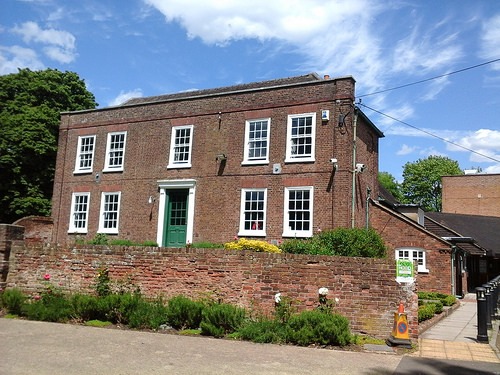
Ickenham Hall

I’ve been to the Compass Theatre in Ickenham a couple of times: a theatre attached to a beautiful old building called Ickenham Hall. The Hall had a free Open Day on Sunday, so I went along to take a look around and attend a talk.

Dating from 1740, the Georgian Ickenham Hall is Grade II listed. It’s a beautiful building, though in need of some repair, for which the Friends of the Hall are trying to raise money. Exploring it is very exciting, especially given that some doors have been boarded up and walls taken down; it’s fun trying to spot where changes have been made. Unfortunately the building suffers from some dodgy paint colours and, most horribly, neon strip lighting in the beautiful old rooms, and apparently as it was given listed status after these lights were added, they can’t be removed. I do hope this situation can be resolved somehow, as it would be lovely to see the house restored to its full glory.

Vikings: Life and Legend – British Museum

The Vikings: Life and Legend exhibition at the British Museum has proved very popular, so I made sure to book well in advance. I was pleasantly surprised to find it wasn’t as busy as I’d expected – perhaps the BM have decided to control numbers when it comes to entering exhibitions.

I went to the exhibition with five friends, but owing to the need to book in advance, we were all due in at slightly different times. It didn’t matter though as we were each absorbed by the exhibition while we were in there, and we were able to compare notes afterwards.

There was a great deal of Viking archaeology: the main thing I took away from the exhibition was that the Vikings liked bling. The bigger and more bejewelled your brooch, and the more precious the metal from which it was made, the more important you were in Viking society. There were a few brooches that took things a bit too far: they were huge, designed to be pinned to the side of tunics, and had massive spikes which could easily put out the eye of the person standing behind you. Further evidence that size mattered to the Vikings came in the form of boats: the remains of a huge longship form the focal point of the exhibition, and are very impressive.

I liked the way the exhibition emphasised how the Vikings traded with other societies, borrowing ideas and sharing their own. Another of my favourite items was a brooch covered in little bears, the result of this kind of inspiration. However, the display did not shy away from examining how the Vikings were fond of a fight. They didn’t always win though – at one chilling point we saw the remains of several Viking sailors and warriors, killed during a raid and buried where they fell.

I would have liked to find out a bit more about Viking mythology and belief – there was some information at the end but not as much as I would have liked. However, I really did enjoy the exhibition and thought it was definitely worth the advance planning.

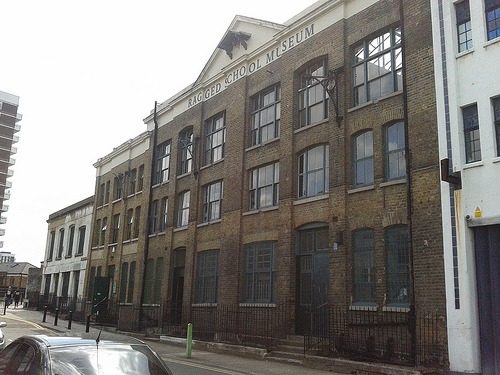
Ragged School Museum

2014_0601RaggedSchoolMuseum01
Ragged School Museum

One sunny Sunday I headed to London’s East End to have a look around the Ragged School Museum. It is open on the first Sunday afternoon of every month for anyone to visit, and for school groups at varying points during the week. The building, and those adjoining, was once the largest free or ‘ragged’ school in London, and was founded by Thomas Barnardo, now famous for the children’s charity that bears his name.

2014_0601RaggedSchoolMuseum02
Victorian schoolroom

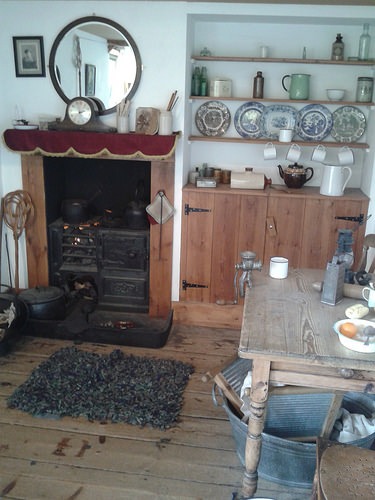
It is possible to have a ‘lesson’ in the school’s Victorian classroom, but I left that to the kids, and looked over the rest of the museum instead. It has a very interesting display on East End history, as well as information about the school and Barnardo himself. There is also a Victorian kitchen at the top of the building.

2014_0601RaggedSchoolMuseum03
Victorian kitchen

This interesting little museum is definitely worth a visit. It would be ideal with children, but there is enough to see for adults, too.

FACTS

Address: 46-50 Copperfield Rd, London, E3 4RR

Website: raggedschoolmuseum.org.uk

Opening Hours: Wed-Thurs 10am-5pm; 2pm-5pm first Sunday of each month

Prices: Free

‘This bewitching poison’: Alcohol and the Royal College of Physicians

There’s an interesting exhibition at the Royal College of Physicians at the moment. ‘This bewitching poison’: Alcohol and the Royal College of Physicians is on display at the RCP headquarters near Regent’s Park, and is open until 27 June. I booked for a lecture evening to coincide with the exhibition, and headed there after work last night.

The RCP is the oldest medical college in England, founded by royal charter of Henry VIII in 1518. The current building was designed by Sir Denys Lasdun and opened in 1964. The on-site museum contains many interesting items, including 300 oil and sculptural portraits, the Symons collection of medical instruments in the Treasures Room, the RCP silver collection and the Victor Hoffbrand collection of apothecary jars. The College was given the personal library of William Harvey (1578-1657), who discovered the circulation of the blood, although most of his tomes were lost during the Great Fire of London. The College is also in possession of six rare anatomical tables from Padua, dating from the 1650s, as well as archives containing near-complete records of RCP over the last 500 years. The lectures were held in the Dorchester Library, which contains many volumes of note including some which suffered shrapnel damage during World War II, pointed out to me as I walked in. The College has a long history of reporting and advising on public health, including the recent alcohol minimum pricing debate, making the current exhibition highly relevant.

‘This bewitching poison’: Alcohol and the Royal College of Physicians

When I arrived at the College, I registered, collected my glass of wine and proceeded to investigate the exhibition. It was very interesting, looking at “300 years of drinking history through the work of artists, doctors and satirists”. Alcohol has long been a part of life for people in Britain, and has been seen in both positive and negative lights.

Historically, Britain was a beer-drinking nation, but the arrival of the Romans introduced wine. One result was that wine drinking was associated with high social class, which it still is to a certain extent. Most native Britons drank ale, which from around 1400 often had hops added to produce the stronger drink of beer. For many years, beer was seen as healthy, being drunk on a daily basis as an alternative to water which was not safe to drink for much of Britain’s history. Physicians such as George Cheyne advocated wine in moderation as a tonic – even now, it is uncertain whether a small glass of red wine might prevent against heart disease – and alcohol was often used as a medicine: for instance, the juniper in gin was thought to help prevent the plague.

On a more negative note, the health problems caused or exacerbated by alcohol have been recognised since ancient times. Cirrhosis of the liver was recognised by the Ancient Greeks, while gin was blamed for drunkenness, vice and poverty in the eighteenth century. Temperance campaigners during the nineteenth century encouraged people to sign the pledge and become teetotal. As we move forwards, many campaigners argue that the government needs to take some responsibility for alcohol advertising by the drinks industry, and do more to help combat the negative effects of alcohol.

‘This bewitching poison’: from gin palace to temperance hall

There were two lectures; the first, Dutch courage & mothers’ ruin: The London gin craze, was delivered by Dr Richard Barnett, lecturer at the Universities of Cambridge and London, and Wellcome Trust Engagement Fellow. He has written several books on the subject including The Dedalus Book of Gin, which I have on my bookshelf (as yet unread)!

18th-century London was awash with cheap, fiery gin. William Hogarth railed against it, politicians legislated against it, and doctors blamed it for destroying the health of the nation. Dr Richard Barnett explores the cultural and political realities behind this notorious epidemic of alcohol-fuelled social breakdown.
From the RCP website

I learned a lot in this lecture, including how the increase in gin consumption (which peaked in 1743) frightened those in authority and highlighted the problems with excessive consumption of spirits. In fact Jessica Warner has suggested that there were actually two gin crazes – one of the ‘public’, and one of the ‘pulpit’, decrying the sin of drunkenness. The phenomenon was largely confined to London, particularly the poorer parts such as Soho and Covent Garden. Gin was seen as socially subversive, and inspired Hogarth’s 1751 picture Gin Lane, a vivid and unforgettable picture of degradation and moral degeneration resulting from the consumption of gin. The authorities took action – the first Gin Act in 1729 doubled duty on spirits. It has been suggested that drunkenness “became less Falstaffian, and more Hogarthian” – less convivial and jovial, and more immoral and sinful.

One interesting aspect of the gin craze, I thought, was the case of the man in 1720 who was accused of killing his mother: there was a suggestion that gin contributed although this was probably not true. This link between alcohol and crime made me think of the absinthe craze in 1900s Paris; from what I recall, it inspired similar worries about drunkenness and morality, and I believe there was a similar case where someone was accused of murder, supposedly under the influence of alcohol.

The second lecture, An imperious impulse: medicine, morality and drink in Victorian Britain, was delivered by Dr James Nicholls, research manager at Alcohol Research UK and honorary senior lecturer at the London School of Hygiene and Tropical Medicine.

In the late 19th Century, alcohol was a fiercely contested political issue. While debates centred on crime and the threat to social progress, medical concerns became increasingly important. From defining inebriety to questions over the effect of alcohol on the unborn child, medicine became embroiled in a range of thorny questions with very real political implications. James Nicholls looks at these problems and asks how far they have been resolved today.
From the RCP website

This lecture explored the history of organised campaigns against alcohol, led in the nineteenth century by the temperance movement (c. 1829) and social reformers in general, who argued that it was the duty of the state to intervene. By the period 1880-1910 alcohol had become a big political issue, and behind it was the important question, is alcohol a beneficial substance with the potential to cause harm, or a harmful substance with some benefits?

The concept of addiction has also developed over the years, with the archaic To addict yourself to giving way to the 20th century To become addicted, which has in turn morphed into To become an addict. This illustrates the medicalisation of addiction and the shift in thinking about alcoholism: from being seen as a sin, it has become recognised as a disease.

I really enjoyed these lectures: they gave me a lot to think about, and the accompanying exhibition was really fascinating. The exhibition is free – do check it out if you get a chance.

Portals to the Past: A Crossrail Exhibition

The Crossrail Visitor Centre at Tottenham Court Road is soon to close, but before it does there’s a chance to see some of the archaeological finds uncovered during the ongoing construction works. Portals to the Past: A Crossrail Exhibition showcases assorted finds including Roman skulls and a cremation pot (which contained remains when it was discovered), flint, and bones from a plague burial pit. There is also an iron chain recovered from a dock, and a horse skull from a market.

It was fascinating to see these artefacts, although I find it a huge shame that historic buildings such as the Astoria have been demolished to make way for Crossrail. I was fascinated, though, by the process of construction and references to previous Crossrail finds such as skeletons from the old Bedlam burial ground near Liverpool Street.

The Crossrail website has more information about archaeological discoveries uncovered during the works and a number of lectures have been put up on the topic – they look fascinating.

The Cheapside Hoard – Museum of London

The Museum of London‘s exhibition on the Cheapside Hoard has been open for a few months now, and I got the chance to visit with my friend on Saturday morning. Security is tight: you aren’t allowed to take bags or coats with you into the exhibition area, which I can understand – but you have to pay for the privilege of storing your stuff in a locker, which I feel is a bit cheeky.

The Cheapside Hoard: London’s Lost Jewels is a major exhibition, and looks at the collection of jewellery from the late 16th and early 17th centuries that was discovered in 1912, buried under a Cheapside cellar. The reason why this amazing collection was left here is as yet undiscovered; the mystery surrounding the treasure is part of what makes it so fascinating.

On entering the exhibition we were able to grab magnifying glasses to help us take a closer look at the jewellery: this proved very handy, although we didn’t need them for the first part of the exhibition, which was about the history and context behind Tudor and Stuart London and the jewellery trade. We learned about the importance of jewellery in society, and how it was used to indicate status: a portrait of Elizabeth I showed her dripping in gems – perhaps, as Francis Bacon rather harshly suggested, to detract attention from her ageing person. We also took a look at the inside of a goldsmith’s shop, and viewed a number of jewellery chests and boxes, many of them almost as beautiful and ornate as the jewellery they once contained.

Afterwards it was on to the Hoard itself, displayed within glass cases, with similar items grouped together. So the first section was filled with chains, enamelled, bejewelled and worked in gold, designed to be worn around the neck or the wrist. Another case contained pearls, another displayed rings, and yet another concentrated on the different kinds of gemstones found among the treasure, ranging from rubies and emeralds to amethysts and garnets. There was even a handy guide to where the various stones came from.

Many of the items could be worn today: necklaces, bracelets and rings are all common items of jewellery. However, others would be less common in the twenty-first century. Small scented bags would have undoubtedly helped to combat the stench of sixteenth and seventeenth century London, and the examples here are beautiful and ornate, particularly the little frog. It’s also unusual nowadays to carry a watch (except for a wristwatch), but the emerald pocket watch is undoubtedly one of the highlights of this collection.

Some of the items follow similar designs and patterns, but a few stand out as individual gems among a collection of treasures. A parrot cameo, a ship hairpin and a butterfly necklace are particularly beautiful, as is the tiny salamander brooch complete with little feet. Photography is not allowed in the exhibition, but this brooch’s design has been expanded and placed on the Museum of London wall for the duration.

Museum of London
Extremely large version of the salamander brooch adorning the wall of the MoL

Visit the Cheapside Hoard exhibition. Marvel at how such a beautiful collection managed to survive underground for three hundred years, and wonder how on earth it got there. You have until the 27th of April. It’s worth it.