The exhibition has been designed to coincide with the 300th anniversary of the accession of King George I in 1714. It examines the Georgian age in all its chaos, innovation, prosperity and poverty. The first section looks at life in Georgian Britain, showing how the legacy of the Georgians is all around us in the architecture, culture and literature of our time. The remainder of the exhibition is divided into sections, looking at the architecture and urban culture of the period, the role of shopping and consumerism, and leisure pastimes including theatre and sport. It is a superbly informative and fascinating exhibition, and I strongly recommend paying it a visit. The exhibition runs until 11 March next year.
Last Friday after work I visited the new exhibition at the British Museum, Beyond El Dorado: Power and Gold in Ancient Colombia. Organised with the Museo del Oro in Bogotá, the exhibition was a fascinating insight into the cultures of South America before the arrival of the Spanish in the 16th century.
The legend of El Dorado has survived to this day, most commonly as the ‘city of gold’, but at the time, it was also described as a man covered in powdered gold. Gold held supreme importance in pre-16th century South American societies: it wasn’t used as currency, but it had strong symbolic significance. I was amazed by the craftsmanship in the beautiful pieces on display, showing how the work of the various peoples of the region differed by style.
Definitely take a look at this exhibition if you can – the artefacts are just beautiful, and they emphasise how complex and diverse society was in South America.
After intending to do so for several months, I finally got round to making a visit to the Geffrye Museum in east London. The museum focuses on the history of the home during the past four centuries, exploring how homes have changed and how these changes reflect and are reflected in the way people live.
Open 10-5 every day except Monday (it’s open Bank Holidays though), the museum is free to visit and easy to reach: it’s fifteen minutes away from Old Street tube station, and a couple of minutes from Hoxton Overground station. The building itself is a set of almshouses built in 1714 by the Ironmongers’ Company, owing to a bequest from twice Company master and former Lord Mayor of London, Sir Robert Geffrye. Now Grade 1 listed, the building has been a museum since 1914, after it was sold off by the Ironmongers’ Company who wanted to relocate the almshouses out of Hoxton, which had become one of the most run-down and unhealthy parts of London.
Geffrye MuseumSir Robert Geffrye
One of the almshouses, No. 14, has been restored and is open to the public (for a small fee) on selected Saturdays and weekdays. Sadly it was not open on the day I visited, so I will have to make a return trip in order to see it. The museum’s past is also evident in the almshouse chapel, which you come across around halfway through your visit.
Former almshouse chapel
On entering the museum, you witness a microcosm of its theme: a selection of chairs arranged in a semicircle, each from a different era. Looking at them, you can see how styles have changed in four hundred years.
Chairs from the last four centuries
Most of the museum is made up of period rooms, each of which is made up to look like a typical family room from a particular period. The rooms are arranged in chronological order, and provide fascinating insight into how people lived during those times.
I really enjoyed looking at the development of the rooms and how they changed over time. One important factor in this change was that in the beginning, many middle-class people worked from home, perhaps running their business from the lower floor or front room of their house and living in other rooms. Later, people began to go out to work, and homes were used only for leisure purposes.
Later on, there is a section of the museum devoted to the twentieth century. Another arrangement of chairs greeted me at the start.
Chairs from the last century
These rooms represented shorter spaces of time than the older ones: each portrayed only a decade or so. Perhaps this reflects the more rapid changes in design during the twentieth century.
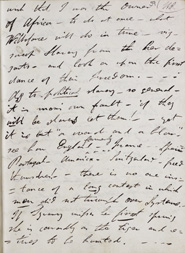
Manuscript of Byron’s ‘Detached Thoughts’, number 84, NLS Ms.43352
I managed to catch the King’s College exhibition about Byron just in time – it closes on Wednesday. The exhibition is displayed in the beautiful Weston Room, part of the Maughan Library, and was curated by the Foyle Special Collections Library of King’s College London and the John Murray Archive of the National Library of Scotland, for the 39th International Byron Conference in July (there’s an International Byron Conference! How awesome!).
I wanted to see the exhibition for two main reasons. One: it is full of manuscripts and rare books, which are always interesting. Two: it’s Byron! I have a bit of an obsession with the man, so there was no way I was going to miss this.
‘Byron and politics’ takes a slightly different look at the “mad, bad and dangerous to know” poet’s life, focusing on his political life and bringing together manuscripts, letters, printed editions and several of Byron’s personal possessions. The exhibition explores the contradictions in the poet’s thought and life: he hated the ruling Tory party but also disliked their opponents the Whigs; he was an aristocrat with a seat in the House of Lords, yet he spoke up for the poor and needy, notably in his Parliamentary speech in which he championed the cause of the Nottinghamshire Luddites; he was in love with the idea of democracy yet refused to admit the poor he knew to be capable of taking part in it. Byron greatly admired Napoleon and was overwhelmingly disappointed when he chose exile over a ‘noble death’. He himself met his end in Missolonghi, Greece, fighting for the cause of Greek independence.
For someone whose reputation is of a wild, wicked, immoral and frivolous poet, Byron’s deep engagement with the political issues of the day are something of a revelation. This aspect of his life shows, perhaps, a deeper side to his character and a more serious one. He also seems to have had a strong sympathetic understanding of the less fortunate, though ultimately he refused to side with any one party or way of thinking, preferring to form his own views. I took a copy of the exhibition guide, so that I can revisit this aspect of Byron’s life in the future.
At the weekend I visited Eastbury Manor House in Upney, east London. I’m a National Trust member so I get in for free, but an adult ticket is only £4 for non-members. There isn’t loads to see in the house, but there is some beautiful architecture and it’s fascinating to imagine how people lived in it years ago. The house is open Mondays to Thursdays in the summer months, as well as the first and second Saturday of the month.
The front door
Built during the reign of Elizabeth I, completed by around 1573, Eastbury Manor House was originally situated in rural parkland but is now in the middle of a housing estate. The original owner was Clement Sysley, and over the years the house has changed hands several times. Though some of the rooms have been adapted or changed, the essential structure of the house has remained more or less the same.
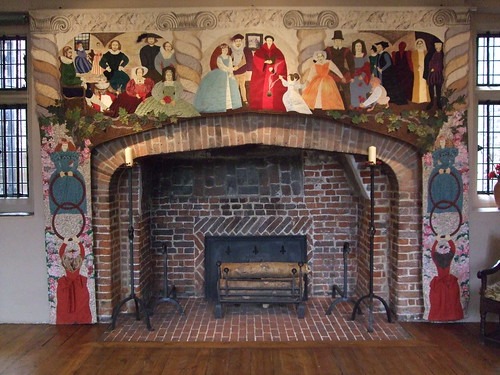
Fireplace with a modern surround
In the first room, an original fireplace has been complemented with a brightly coloured modern painting. This room is often used for weddings.
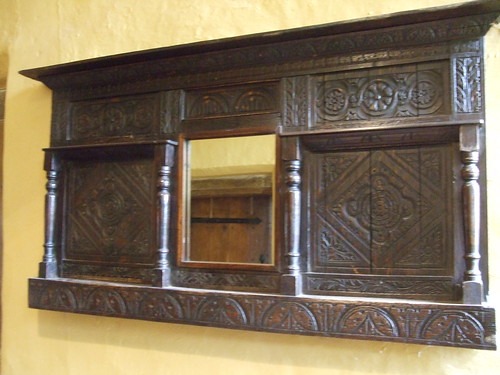
Ornate mirror
I love the ornately carved wood which is a hallmark of the Tudor style.
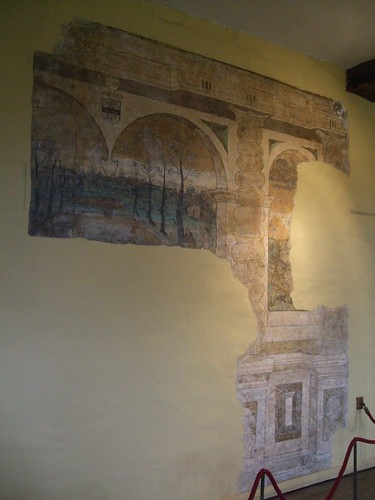
Remains of the mural
One room used to be decorated on all four walls with a beautiful mural, the remains of which are still visible.
Attic
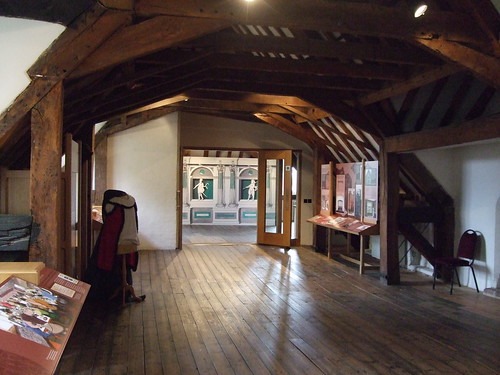
The attic was used by the family for exercise. Today it contains information boards and clothes for dressing up!
The other week I visited the British Library to see their latest exhibition, Propaganda: Power and Persuasion. Like all their exhibitions it was excellent: well laid-out, thought-provoking and fascinating.
The exhibition explored the idea and concept of propaganda, how it can be used to unify people and also how it can create divisions. It was divided into several sections, each of which looked at a different aspect of propaganda.
The first section, Origins, looked at the history of propaganda: Roman emperors plastered their images on coins and statues, while the advent of the printing press in the sixteenth century saw the spread of propaganda more widely than ever, particularly during the Reformation (the 1523 picture of ‘The Donkey-Pope of Rome’ is a particularly good example). Next, Nation explored how states establish their legitimacy via the use of symbols such as posters, stamps and flags, and through mass media.
Enemy examined the ways in which leaders demonise others to reinforce unity within their own people, creating a climate of fear and hatred. The most obvious example is the persecution of the Jews in Nazi Germany and occupied Europe during the twentieth century. Linked to this aspect, War showed how morale was maintained in societies engaged in conflict through emphasis on the rightness of the cause.
Health was one of the most amusing aspects of the exhibition, showing ways in which healthy behaviour has been promoted through the use of humour and even fear. Some of the campaign posters and videos displayed were hilarious. Finally, Today showed how the use of technology means that the volume and scale of propaganda is greater than ever, but criticism of it can also be spread more easily via social media.
I liked seeing the posters used to promote particular societies, and the other items on display such as books. One thing I found particularly interesting was the video about the London 2012 opening ceremony. Danny Boyle’s magnificent show became a brilliant example of propaganda, promoting a positive vision of modern Britain.
The exhibition is on until 17 September and I definitely recommend checking it out.
London’s Jewish Museum opens late on Thursday evenings in July and August, so I headed there last week. The museum is located near Camden tube station, and is relatively easy to find. Entrance is free for Art Fund card holders; the normal entry price is £7.50.
The museum has four floors and each has something different. The ground floor has the cafe and the shop; upstairs on the first floor, the exhibition Judaism: A Living Faith looks at the Jewish religion and displays several artefacts relating to it. Above that, History: A British Story looks at the history of Jews in the UK, particularly in London.
Also here there is a Holocaust Gallery. I found this incredibly sad and moving. It is told through the story of Leon Greenman, an Auschwitz survivor. Though of British nationality, he was living in the Netherlands with his wife and son when the Nazis invaded and, unable to prove his nationality, he was deported along with his family. Sadly his wife and son were killed in the gas chambers, but Leon survived and spent the rest of his life raising awareness of the Holocaust and campaigning against racism.
The top floor hosts temporary exhibitions: the current exhibition is Amy Winehouse: A Family Portrait. Most of the items on display were loaned by the singer’s brother Alex, who also wrote the captions. The displays portray a normal girl who enjoyed music and clothes but dreamed of fame. The family photographs are warm and intimate. Particularly moving were the notes covering the board at the end of the exhibition, full of heartfelt messages from Amy’s fans.
FACTS
Address: Raymond Burton House, 129-131 Albert Street, London, NW1 7NB
Like HMS Belfast, which I visited earlier the same day, the Churchill War Rooms are part of the IWM, and I visited one Sunday to take advantage of my Tesco Clubcard free ticket. Located beneath the streets of Westminster, these are the original Cabinet War Rooms used to protect the Government from attack during the Second World War. Initially I was just thankful to get out of the heat (the rooms were lovely and cool), but I thoroughly enjoyed my visit for its own sake.
The first important room I came to was the Cabinet meeting room. Not all meetings during the war were held here, but over 100 were.
The War Cabinet meeting room
I then came across the weather guide, designed to let those underground know what it was like outdoors. Famously, the guide was changed to ‘windy’ during air raids.
Weather information
There were a surprising amount of corridors, with random doors leading off them at various points.
Corridor
About halfway through the tour there was a Churchill Museum, examining the wartime Prime Minister’s life and career. I learnt several interesting things – I was surprised to hear that he was so radical early in his career.
Door to 10 Downing Street
After the Cabinet and a number of staff began to use the underground War Rooms, the ceiling was reinforced to provide protection in case of air raids. However, the bunker was still not completely secure and a direct hit would have destroyed it. Luckily, this never happened.
Reinforced ceiling
Members of staff worked day and night underground, sometimes even sleeping here.
One of the Cabinet rooms
Churchill had his own room in the bunker, complete with wall maps. He didn’t often sleep here, however.
Churchill’s room
The Churchill War Rooms are open seven days a week (except 24-26 December inclusive). I definitely recommend a visit – there is a surprising amount to see and take in, and the War Rooms are crucially important to the history of 20th century Britain.
FACTS
Address: Clive Steps, King Charles Street, London, SW1A 2AQ
I’d never heard of the Cinema Museum until I saw it appear on Groupon. I mentioned this to the very knowledgeable and informative guide who conducted my tour, and he said, “If I had a pound for every time I heard that…” I think the museum deserves to be better known, as it is fascinating.
The Cinema Museum
The address of the Cinema Museum is The Master’s House, 2 Dugard Way, London SE11 4TH. It is near Elephant & Castle tube station, surprisingly near to where one of my friends used to live. Other than organised events, it is only possible to visit the museum via a conducted tour, and this was how I got to look round on Saturday.
I’d booked in advance, but was disconcerted to find the place so quiet – I wondered if I’d turned up at the wrong time, but luckily someone opened the door for me. The first part of the tour involved watching a couple of short films while sitting in original theatre seats. One was a rather abstract promotion for the Post Office while the other was about the last tram in London – which fitted in well with my London Transport obsession. We joined up with the previous tour to visit the display of cinema uniforms, which came from a variety of different periods and cities and which varied considerably in colour, style and appeal.
Exhibition of cinema uniforms
After the first group left, their tour completed, our guide took us around the rest of the museum, which holds a wide and varied collection based around the concept of going to the pictures. Fixtures and fittings (e.g. carpets and signage), marketing materials, photographic images and publications such as fan magazines, films (e.g. B-movies, ads, trailers), equipment (e.g. projectors, sound systems and uniforms) and other random items. I was surprised at the number of items which seemed to be from Cumbria: when I asked the guide at the end he said that this was because one of the major contributors to the museum lived in a nearby town, and always made a point of turning up at cinema closures to get hold of bits and bobs. A piece of carpet from Workington and a sign from Egremont were just two of the items I spotted.
Old cinema signage
As a librarian by profession, I was pleasantly surprised to see that the museum has a library, which has been sorted by a volunteer (from what I could work out, the vast majority, perhaps even all, of the people associated with the museum are volunteers). There is also a room devoted to pictures of different kinds, such as stills from film sets.
Library
On the first floor, there is a room devoted to Charlie Chaplin. Fittingly, the man actually spent time here: the building used to be the Master’s House of the former Lambeth Workhouse, where Chaplin entered alongside his mother when he was a child. The room we ended up in, the former workhouse chapel, was beautiful and the ideal place to rest and have a cup of tea.
Collection of Charlie Chaplin postcardsFormer workhouse chapel (complete with giant Charlie Chaplin sculpture!)
I definitely recommend a visit to the Cinema Museum. It’s a hidden gem and well worth a look if you’re remotely interested in cinema. Get in touch on 0207 840 2200 or email info@cinemamuseum.org.uk to arrange a tour, which costs £10 for adults and £7 for children and concessions.
FACTS
Address: 2 Dugard Way (off Renfrew Road), London, SE11 4TH
When I was at home a few weeks ago, I visited Cragside with my friend Elisa. Cragside is a historic Victorian property owned by the National Trust, and I’ve wanted to visit for ages, but being a non-driver, getting there would have been extremely difficult. There are bus connections to nearby Rothbury, with connections from Newcastle Monday to Saturday and a special summer Sunday service to the property, but I thought this sounded like a bit of a hassle, so I was glad when my friend, who has a car, said she would like to go. The house is on the B6341, 15 miles north-west of Morpeth on Coldstream road (A697), and you turn left on to the B6341 at Moorhouse Crossroads, with the entrance three miles on the left. It took us roughly an hour to drive there from Washington (just south of Newcastle/Gateshead), and there was some beautiful scenery en route. A good thing about the site is that parking is both free and plentiful.
When you turn into the estate, you pay an assistant while still in your car. An adult ticket for the garden and the house is £13.80 (£6.90 for children), with lower prices for the garden only and for winter visits. I am a National Trust member so I got in for free.
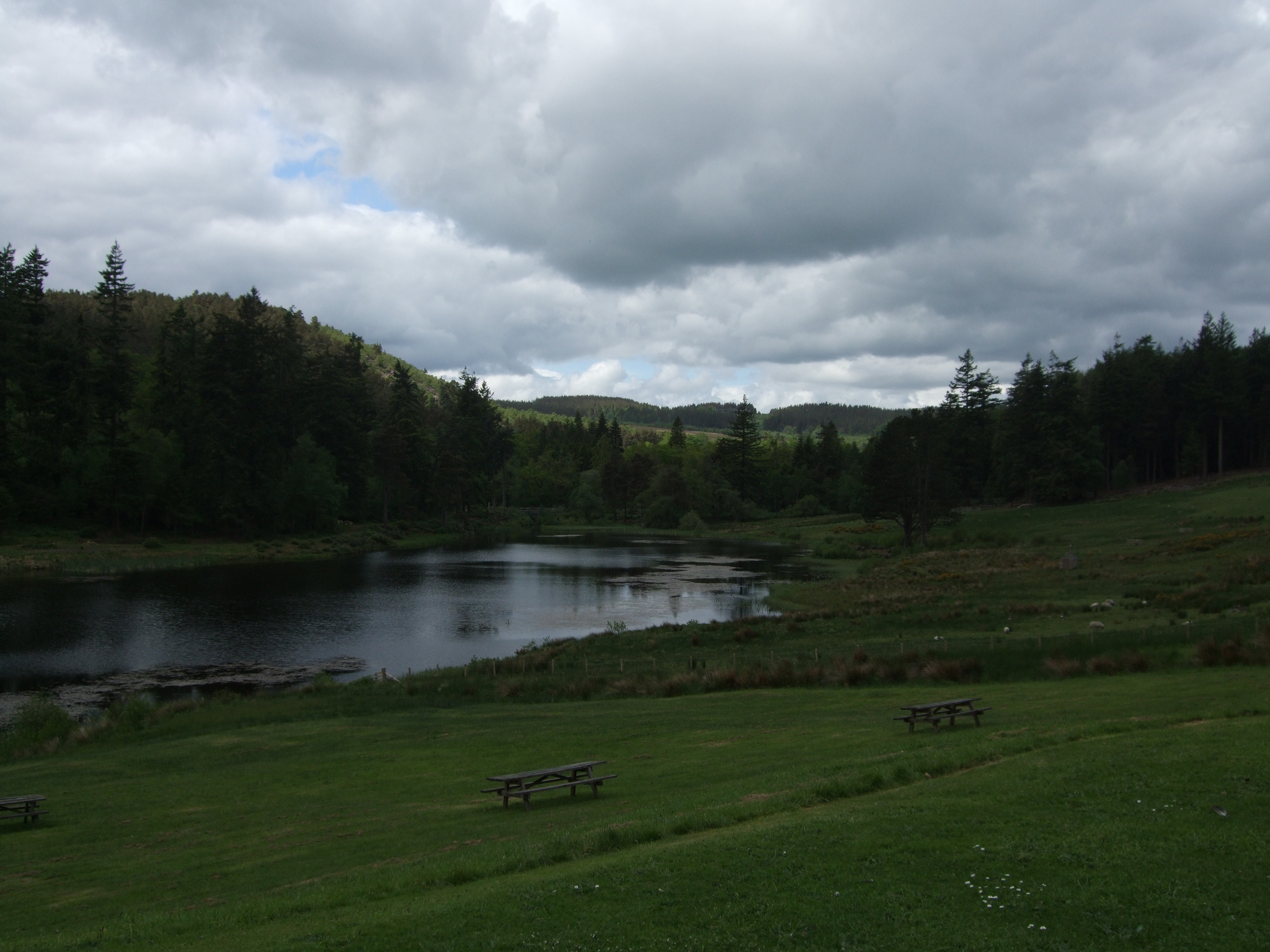
It was around lunchtime when we arrived so we decided to sit by the lake and eat the picnic food we had brought with us. The scenery was stunning, and it was so quiet and peaceful. We also took the time to look around the small visitor centre – the former stables – and check out the gift shop.
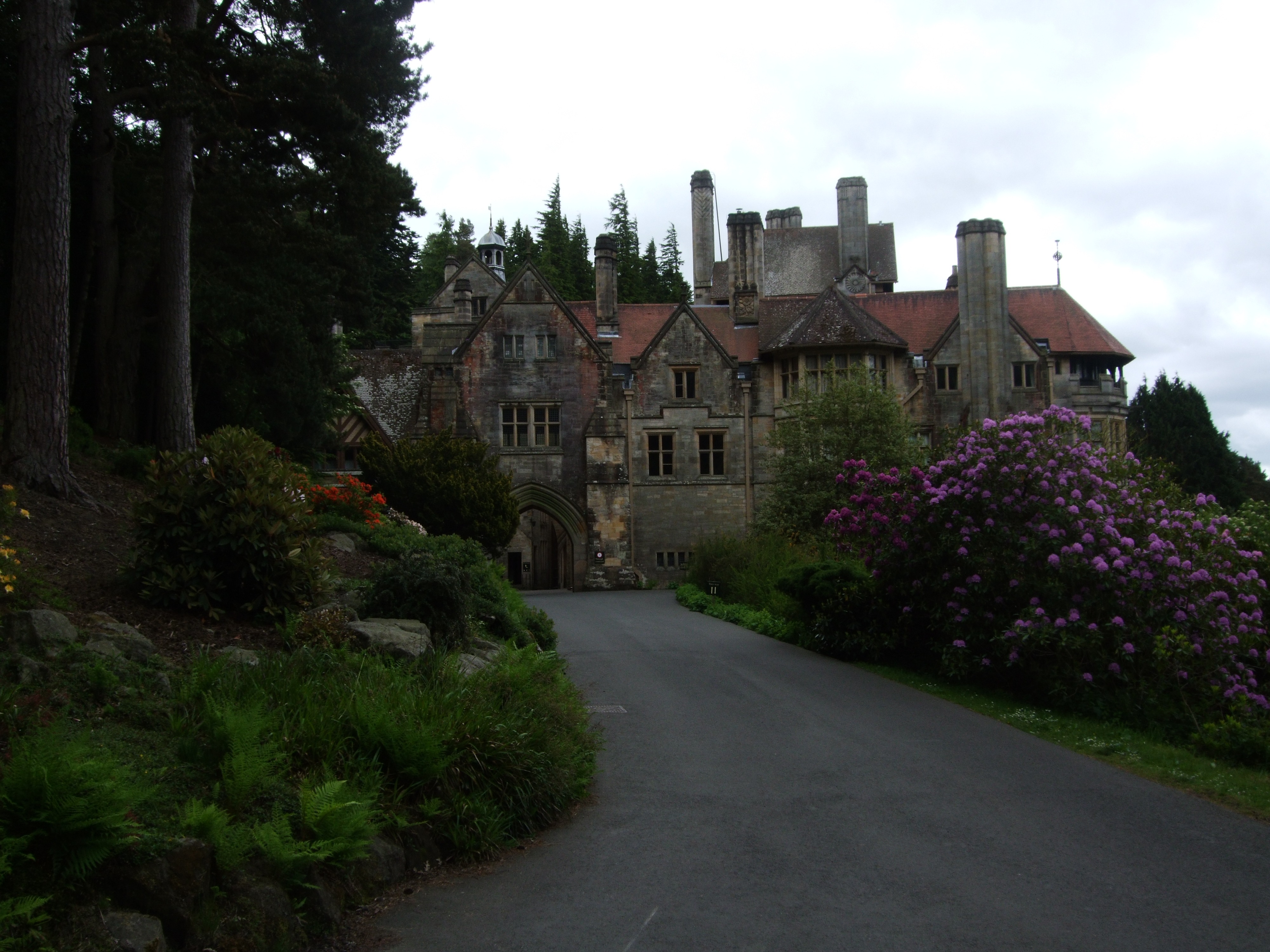
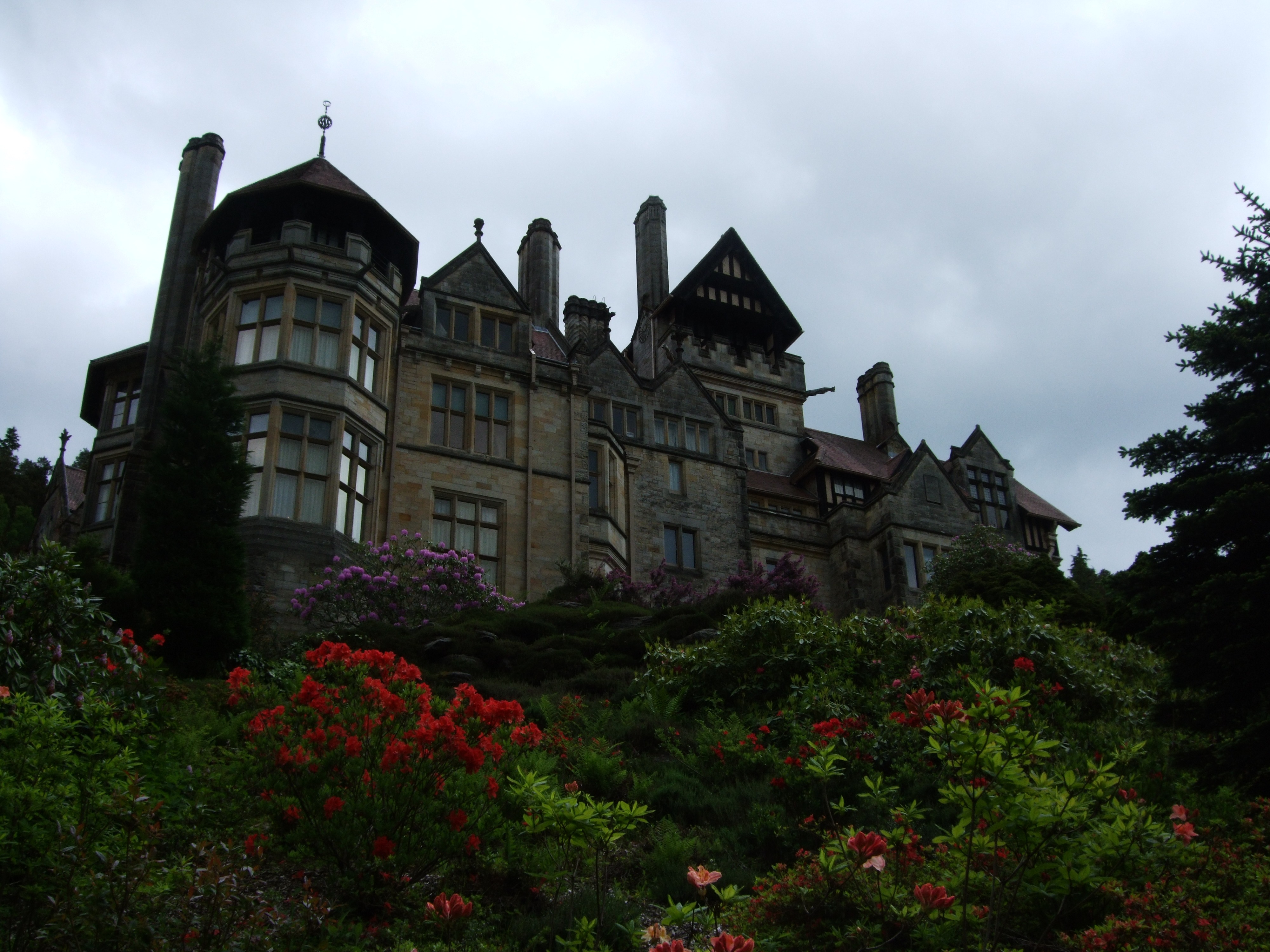
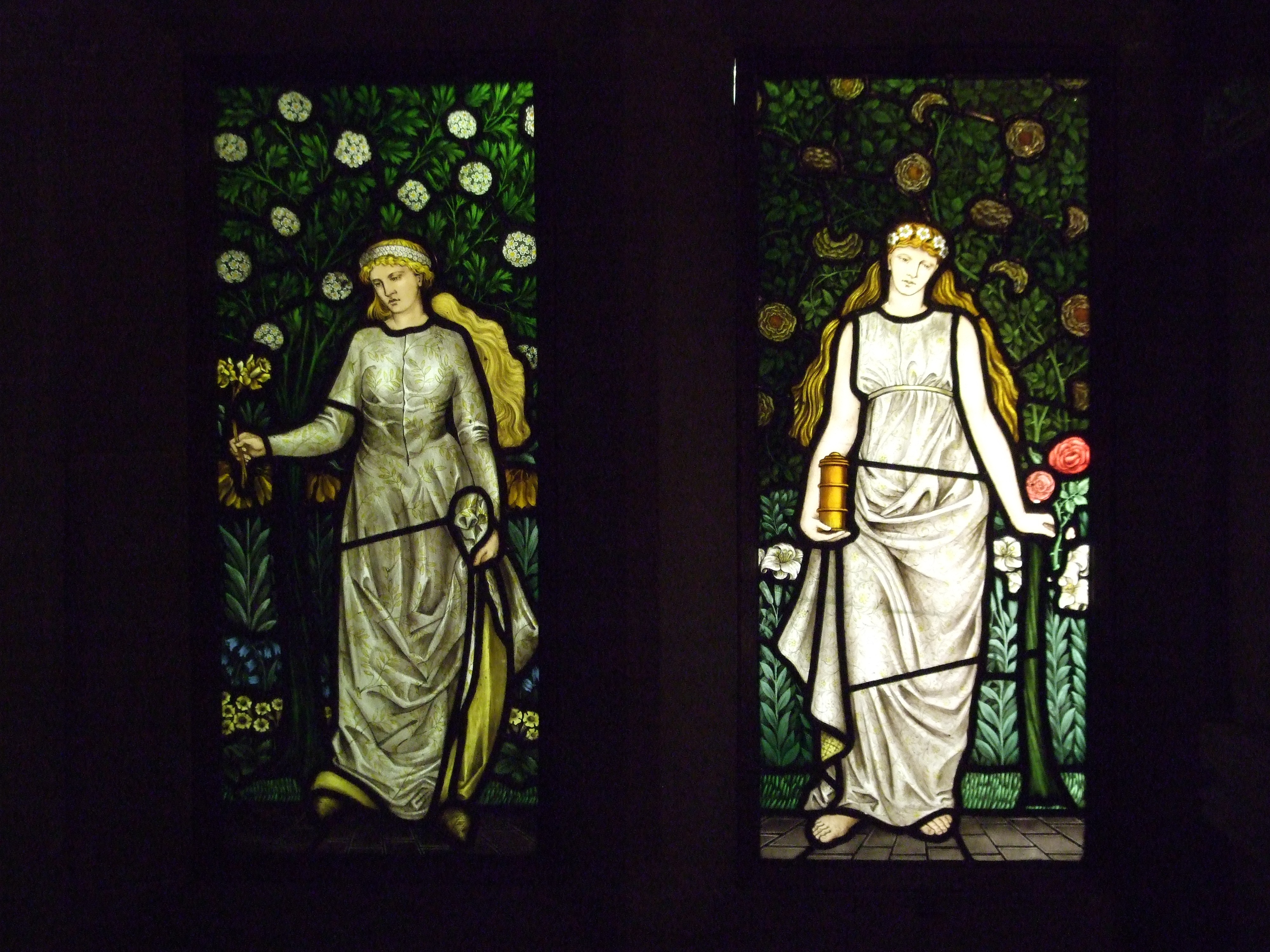
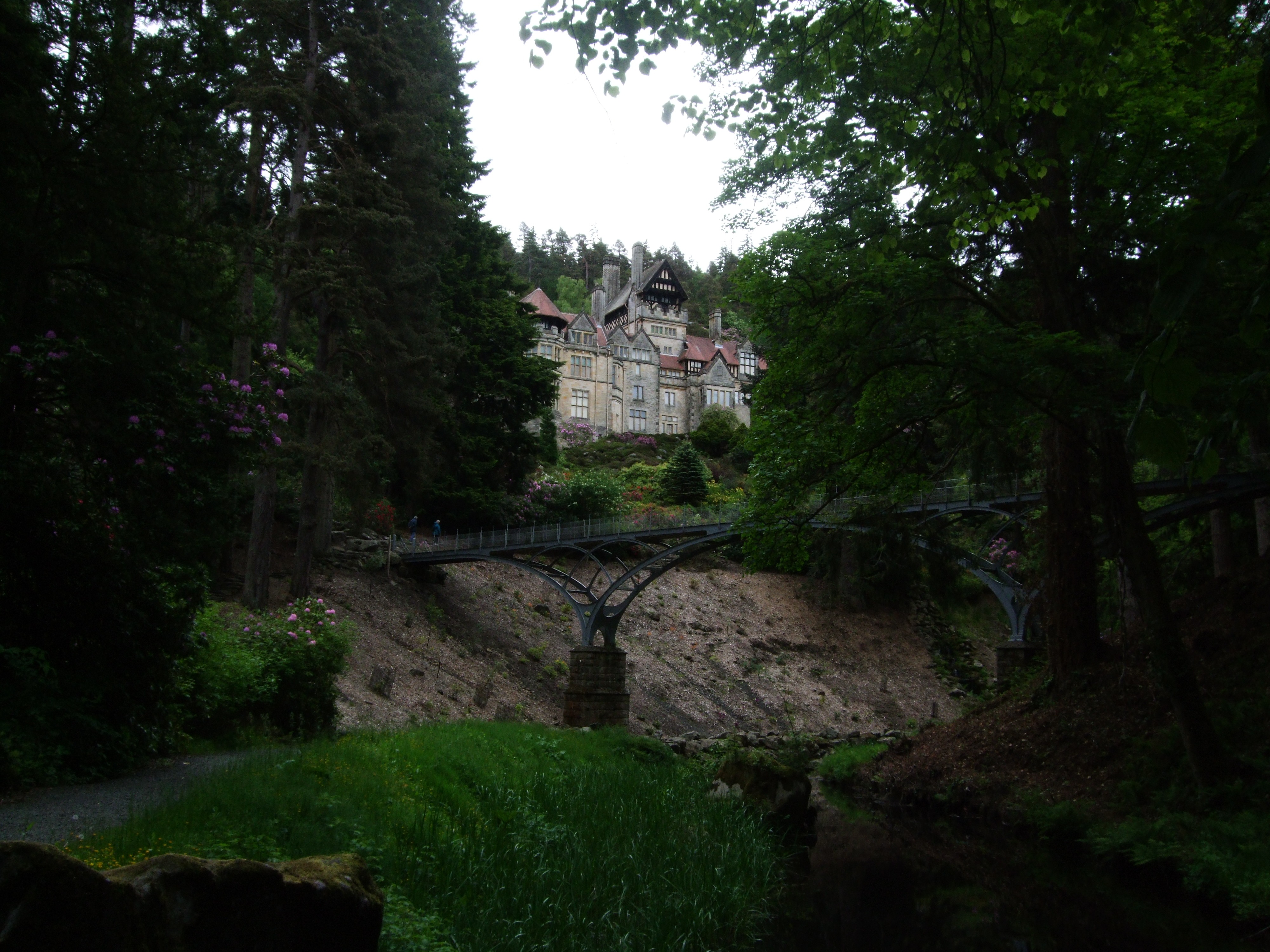
Heading towards the house, we were impressed by the beauty of it and its surroundings. Cragside is celebrating its 150th anniversary this year: it was begun in 1863 by the visionary inventor Sir William, later 1st Lord Armstrong (1810-1900), who decided to build it after recalling happy childhood memories of Northumberland during a visit to Rothbury in 1863. He was devoted to the study of engineering, science and technology, despite having been pushed towards a career in the law by his father, and Cragside became a space where he could experiment and try new things. It was the first house in the world to be lit by hydroelectricity, and it also had a hydraulic passenger lift, a dishwasher, hot and cold running water and a plunge bath – incredible for the time. The house is beautiful as well as technologically advanced, with ornate architecture, beautiful furniture and stunning Pre-Raphaelite stained glass windows.
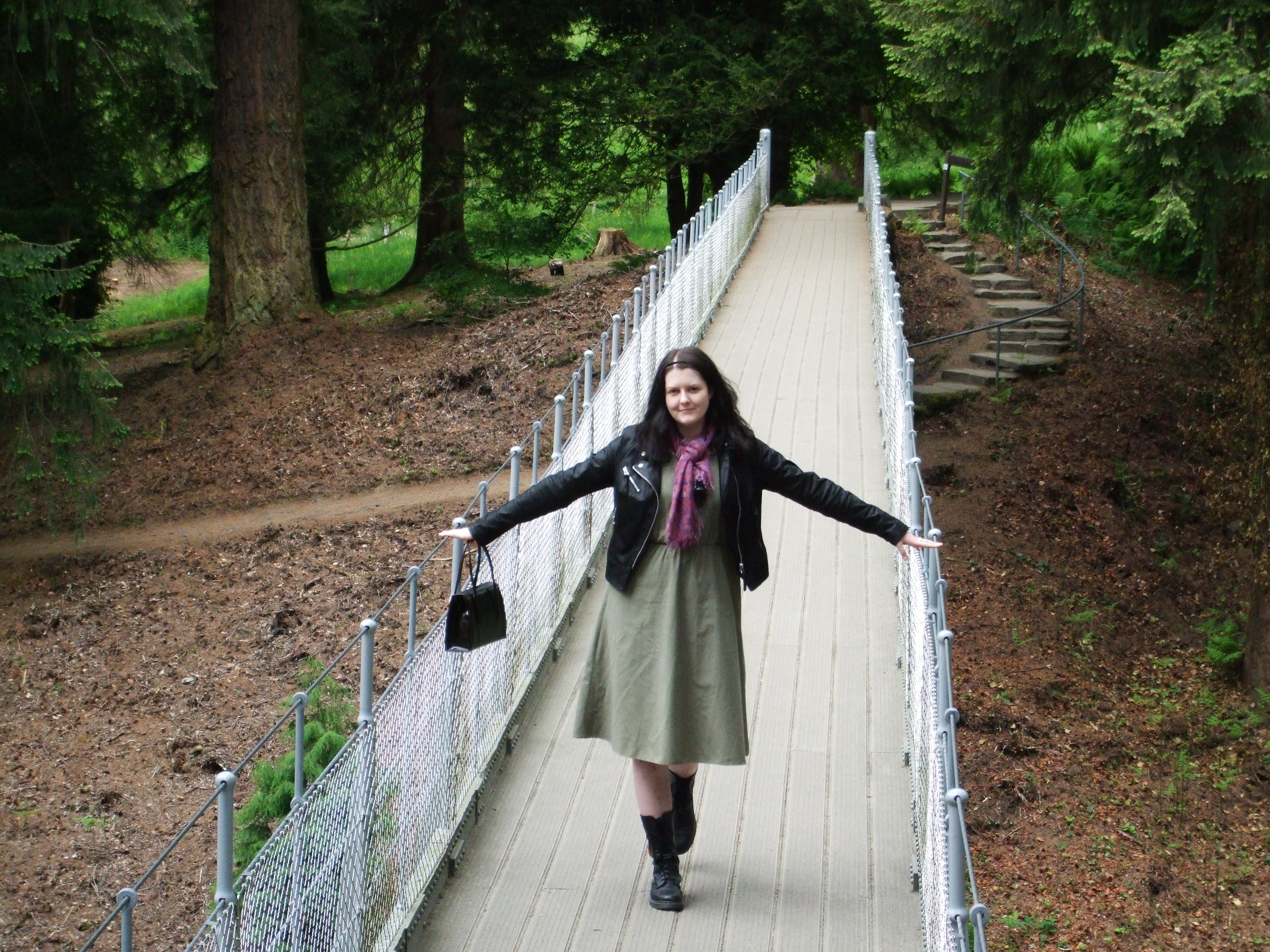
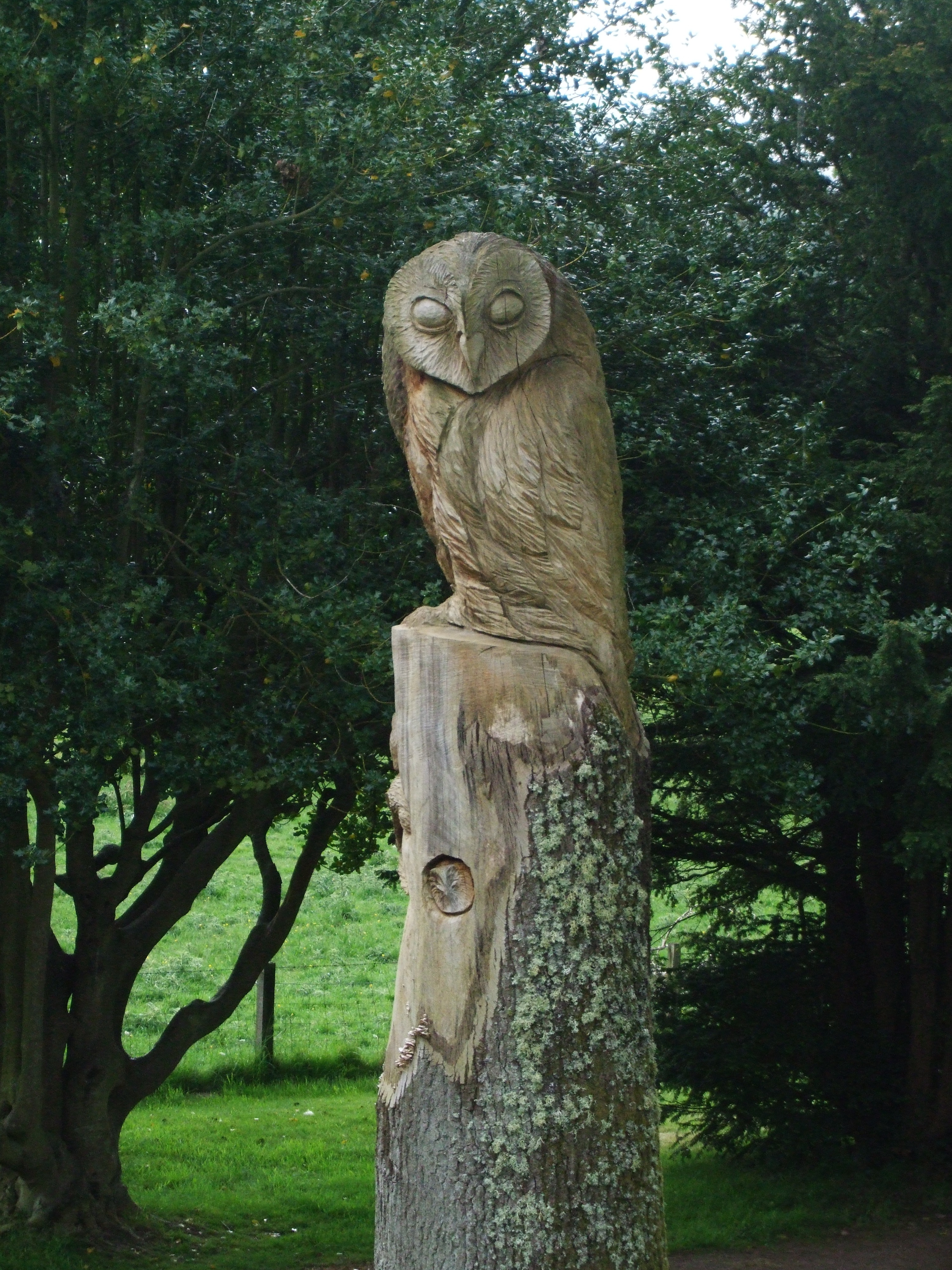
Outside, the house is set in the most beautiful grounds I’ve ever seen. My friend and I walked down the rockery, crossed the bridge and wandered around the wooded areas and the formal gardens. While the house was largely Lord Armstrong’s playground, the garden was the focus of his wife, Lady Margaret Armstrong, who took an active role in its development.
After a cup of tea in the outdoor café, we decided to drive around the estate. There is a specially designed route with a very low speed limit allowing you to travel slowly around the huge estate and take in the scenery. There was much excitement when a deer ran out onto the road in front of us and disappeared into the forest – I’d never seen a deer in real life before so I loved this!
Cragside is a gorgeous place and well worth a visit. If you’re in the north east, it’s a must see: beg, borrow or steal a car to get there if you have to.