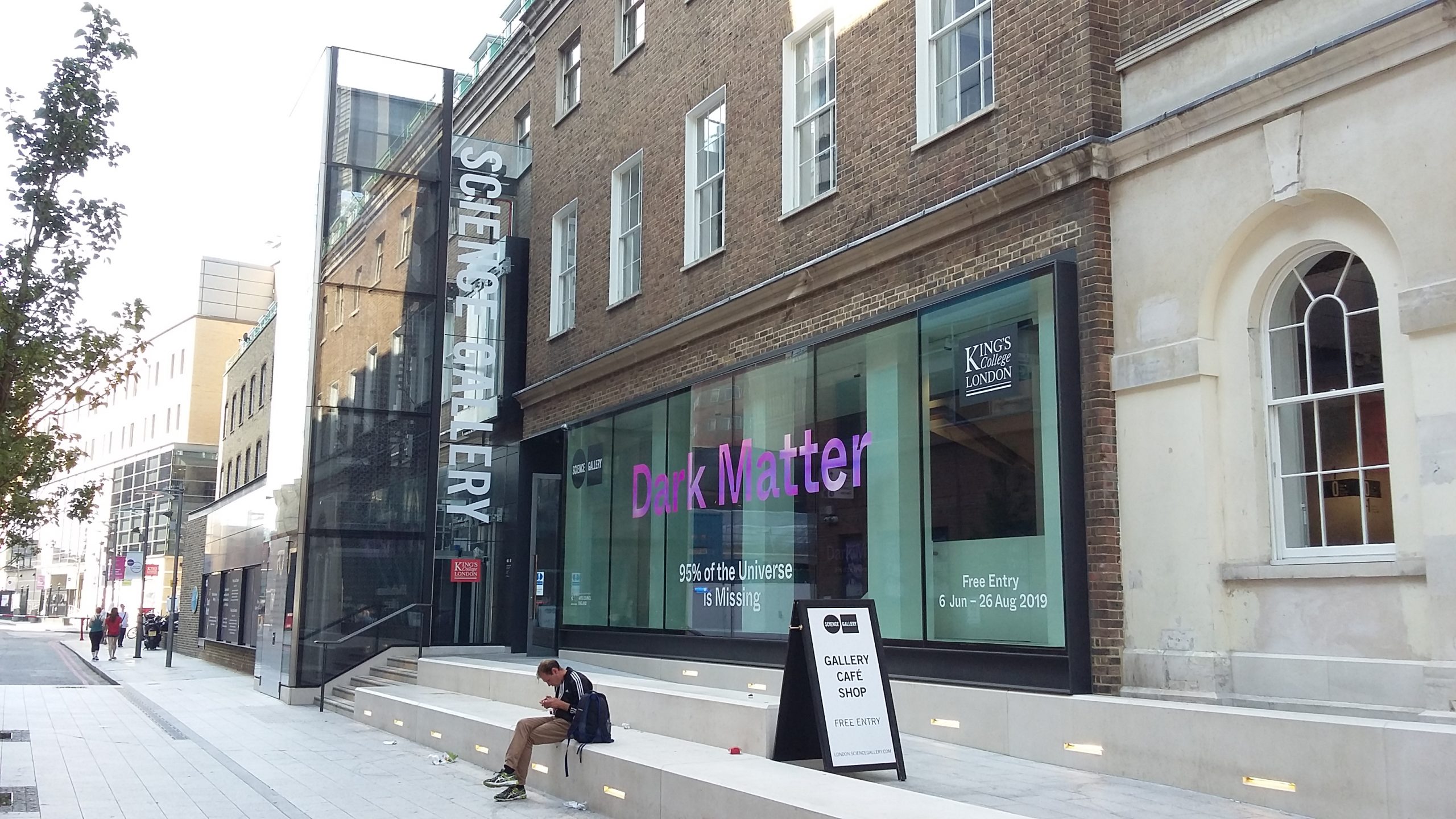
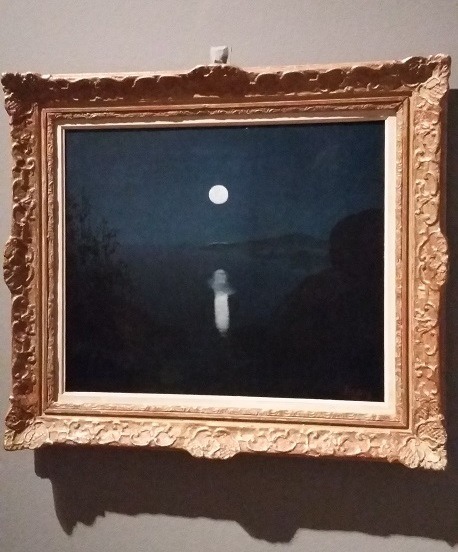
The Science Gallery London, part of King’s College London, is an exhibition space that hosts a variety of different exhibitions relating to different aspects of science. I attended the Dark Matter exhibition.
Dark matter is something I have an interest in, largely through reading the His Dark Materials trilogy, although since my scientific education ended with compulsory schooling, I can’t say that I know a great deal about it. This exhibition uses art, philosophy and literature to look at our understanding of dark matter, making use of the latest research from the Physics department at King’s.
What is dark matter? Well, that is the point: no one really knows. According to the world’s leading scientists, 95% of the material that makes up our universe cannot be observed. The exhibition looked at what dark matter might be and how our understanding has changed over the years. I enjoyed the exhibition, and would definitely like to attend more exhibitions at the Science Gallery.
When my friend E came down to London for a visit, we decided we wanted to go for afternoon tea, and chose the Science Afternoon Tea at the Ampersand Hotel, because it sounded like fun.
The experience was inspired by the nearby Science Museum in Kensington, and won ‘Best Themed Afternoon Tea’ at the Afternoon Tea Awards 2018. We booked online, and were pleased to be able to book a vegetarian option directly (vegan and gluten-free options are also available). A children’s version is also available, and arrives served on a rocket: personally I think this would be a great place to introduce kids to the delights of afternoon tea!
We chose the version of the tea with a glass of champagne, which was a lovely treat. The display stand came out with swirling mist, as if a science experiment was being conducted! We were allowed to choose the tea of our choice (or coffee, luckily for E, who doesn’t drink tea).
The sandwiches, featuring delicious ingredients such as truffle egg mayo, hummus and roasted vegetables, were yummy, and we were brought extra as the staff could see that we were demolishing them. The scones were possibly my favourite part: one plain, one white chocolate and cranberry, with clotted cream, strawberry preserve and lemon curd.
In terms of presentation and uniqueness, the cakes were definitely the highlight, designed to look like planets, the night sky and other science-related items. There was a petri dish containing jelly, a macaron which resembled a nebula, a half-moon cake and a planet mousse with a chocolate spaceman. Finally, we were brought a wooden box in which we had to brush away chocolate ‘soil’ in order to reveal a chocolate dinosaur ‘fossil’.
The Science Afternoon Tea got the thumbs up from both of us: it was a very speical experience but the food was also delicious in itself – no need to choose between taste and presentation. I would happily go back and experience it again.
The Science Afternoon Tea is available on the following days/times:
Mon – Fri: 1:00pm – 5:30pm
Sat & Sun: 12noon – 6:30pm
It costs £44.50 per person (£54.50 with a glass of Charles Heidsieck Champagne)
The exhibition was designed to coincide with the 100th anniversary of GCHQ, the UK’s Intelligence, Security and Cyber agency. There was even a Lego model of the GCHQ headquarters in Cheltenham.
Lego model of GCHQ headquarters
The exhibition started with the First World War and explored how communications and intelligence developed over a century. It featured artefacts, documents and declassified files.
The best-known aspect of the exhibition was probably the work of Alan Turing and the team at Bletchley Park to crack the Enigma Code, but there was also information relating to the Cold War, including a model of a house displaying a story about a quiet suburban couple who turned out to be Soviet spies.
There was also a hands-on area where you could have a go at cracking codes yourself, which was probably designed for children but which my friend and I thoroughly enjoyed.
The exhibition runs until 23 February 2020 and is then due to visit the Science and Industry Museum in Manchester. It’s well worth a visit.
I visited the BFI Southbank to attend a panel discussion about 90s Kids’ TV shows. This is exactly my era so I was incredibly excited.
First of all we were treated to a montage of TV shows including Chucklevision, The Queen’s Nose, Art Attack, Power Rangers, Clarissa Explains It All, and many many more, including shows I know and those I wasn’t familiar with. Afterwards, there was a panel discussion featuring actor and writer Sir Tony Robinson, performer Francis Wright, and producer Catherine Robins.
Naturally enough, the discussion focused on the shows that the panel members were involved in. This began with Maid Marian and Her Merry Men (my personal favourite), and it was interesting to hear Sir Tony’s stories and anecdotes about the production of the series. I was particularly excited when Marian and Robin from the series, Kate Lonergan and Adam Morris, made an appearance and came up to the front to talk about their experiences. Another show we heard about was Five Children and It, as Francis Wright was responsible for operating the puppet Psammead.
It was interesting that all three panellists seemed to think the 90s were something of a golden age in childrens’ television: I’ve always thought so but I lived through it, I wondered if it was just nostalgia, but apparently not. It seems officials were more willing to take risks back then, and to educate as well as entertain.
I left the event with my only regret being that I chickened out of asking Kate and Adam for a picture.
I visited the Edvard Munch: Love and Angst exhibition at the British Museum with a friend on its very last day. I actually knew nothing about Munch except for his painting The Scream, which I do love, so was interested to find out more.
Madonna
Munch came from a loving family in Norway but over the years his family became a source of deep worry and tragedy to him. His mother died when he was five and his oldest sister, Sophie, died of tuberculosis when he was thirteen. Another sister, Laura, spent time in a psychiatric hospital with schizophrenia and Munch himself had a breakdown later in life. This is reflected in much of his art, including his ‘vampire’ works, his images of illness and death, and the famous ‘Scream’. It’s the black and white lithograph that’s on display here, not the famous painting, but it still makes an impact.
The Sick Child
As a theatre fan. I was intrigued by Munch’s stage sets for the works of Norwegian dramatist Henrik Ibsen, and some of his designs are displayed alongside his painting of the great playwright himself. Overwhelmingly, though, this is an exhibition of work that focuses on the dark side of the mind.
The UK jewellery brand Tatty Devine turns 20 this year, and to celebrate has launched a touring exhibition, Misshapes: The Making of Tatty Devine, which kicks off in London before visiting various cities around the UK. As a longtime fan of the brand, I paid a visit on its first day.
The free exhibition, hosted at the Lethaby Gallery, King’s Cross, tells the story of how Tatty Devine founders Rosie Wolfenden and Harriet Vine met at Chelsea College of Art and began to work together, making jewellery out of guitar plectrums, leather samples and other bits of so-called “junk”, running a market stall selling their wares, and eventually, after a trip to New York, settling on acrylic as their main material. With the aid of a laser cutter, they began making jewellery from this versatile substance, and over the years have refined their techniques, pushing the boundaries of what acrylic can do.
I was interested to see examples of the pair’s early work, as this was long before I became a fan of the brand. Some of the early pieces were pretty cool – I wouldn’t mind a keyboard belt. I also didn’t know that the Tatty Devine logo was supposed to resemble the logos in old-style 50s records.
Examples of pieces from every stage of the brand’s heritage were on display. I did find myself with a big wave of Tatty regret as I viewed pieces that have long since vanished from stores (especially the fortune teller statement). However, I also saw a couple of pieces that I do own – one being the William Morris brooch.
I really loved the exhibition as a big fan of the brand. After its stint in London, it will visit various venues around the country – so keep an eye out!
Mary Quant was the second major fashion exhibition I attended at the V&A within a fairly short space of time. Born in London, Quant revolutionised the British high street in the 1960s, making high fashion available to everyone and popularising the famous miniskirt. I have to admit that on a personal level, the clothes aren’t really my style – I prefer longer skirts and dresses in general, and the Dior-influenced vintage look is much more my scene. In fact, my favourite piece in the exhibition was a maxi dress from the Seventies. However, there’s no doubt that Quant’s clothes had a huge influence on style, and her practical, fun pieces helped to democratise fashion.
Quant sailor dress
Mini dresses
The exhibition takes us through Quant’s career and showcases the pieces that made her famous, including monochrome daisies, coloured opaques, practical underwear, and even modern makeup (I could tell from the style of the marketing that Lush was influenced by Quant’s makeup range). I really liked that the museum got the public involved, requesting people to send in their own Quant clothes. I went to the exhibition with my auntie and I enjoyed hearing about her own experience of the brand – wearing a minidress to meet her future in-laws and worrying that the skirt was too short!
Makeup range, decorated with the trademark daisy
My favourite piece from the exhibition
I thought it was cute, too, to showcase the mini, Barbie-style Quant dolls, dressed in miniature versions of popular fashions. A way to get younger girls interested in the clothes so that they could covet them for themselves when they were older.
Daisy doll
Overall, the exhibition is definitely worth a visit – for the social history as much as the fashion.
The Red Bull Soapbox Race is held at Alexandra Palace in London every summer. After years of watching it on TV (races from around the world, not just London), I decided to go and see it for myself.
It’s a long walk from the station to Alexandra Palace, and it’s up a pretty big hill, too. (Naturally – they need a hill for the race). Not going to lie, I was shattered by the time I got to the top. It was a warm day, too, which didn’t help.
Refusing to descend the hill again until the end of the day, I made sure to hang about near the top of the course. Here, I could see the soapboxes begin their races, as well as take in the pre-race “show”. Soapboxes queued up here waiting their turn, so I was able to get a good look at them before they set off. My favourite was the Mr Bean-inspired soapbox, with one member of the crew dressed as his teddy.
The one downside of attending the event in person is that you only get to see the soapboxes at one stage of their race, potentially missing out on spectacular crashes further down the line. There are a few video screens here and there, but you have to be in the right position to be able to view them. Still, you do get to experience the great atmosphere.
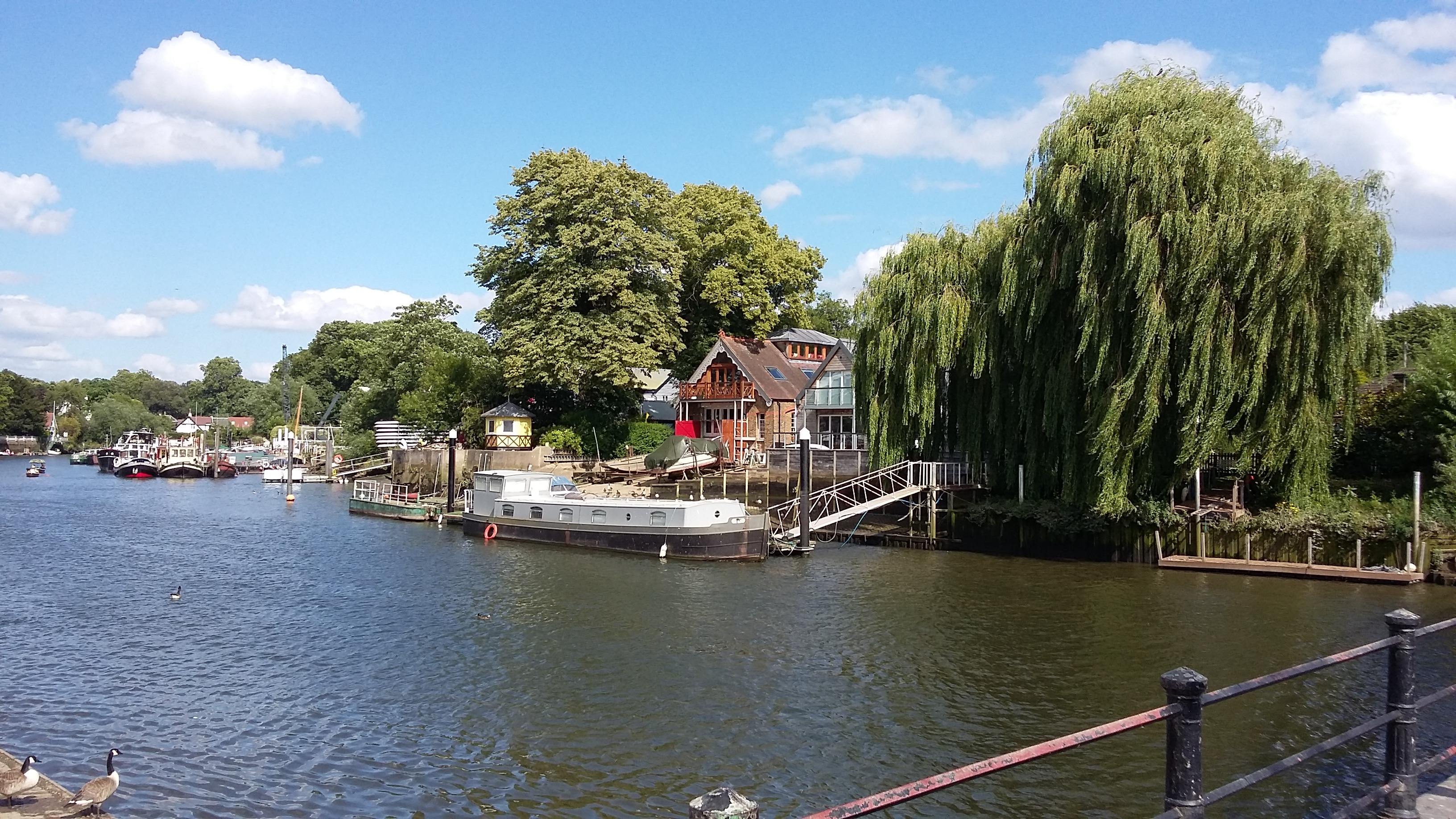
Eel Pie Island is a small island in the middle of the Thames, just across from Twickenham. It is currently home to several artists’ studios, and twice a year hosts ‘open days’ where the general public can visit this normally-private island and purchase art if they so wish.
Looking across to the island
One of these open weekends was held on 29-30 June and I went along towards the end. The island is reached via a bridge on the bank in Twickenham, and once you reach the other side there’s a winding path that takes you past plenty of weird and wonderful sights. My favourite was the house with an upside-down ice cream on its roof, but there was plenty to see all the way through.
I don’t have the budget or the space to indulge in art purchases, but if you do, there’s plenty on offer, both traditional paintings and more modern crafts.
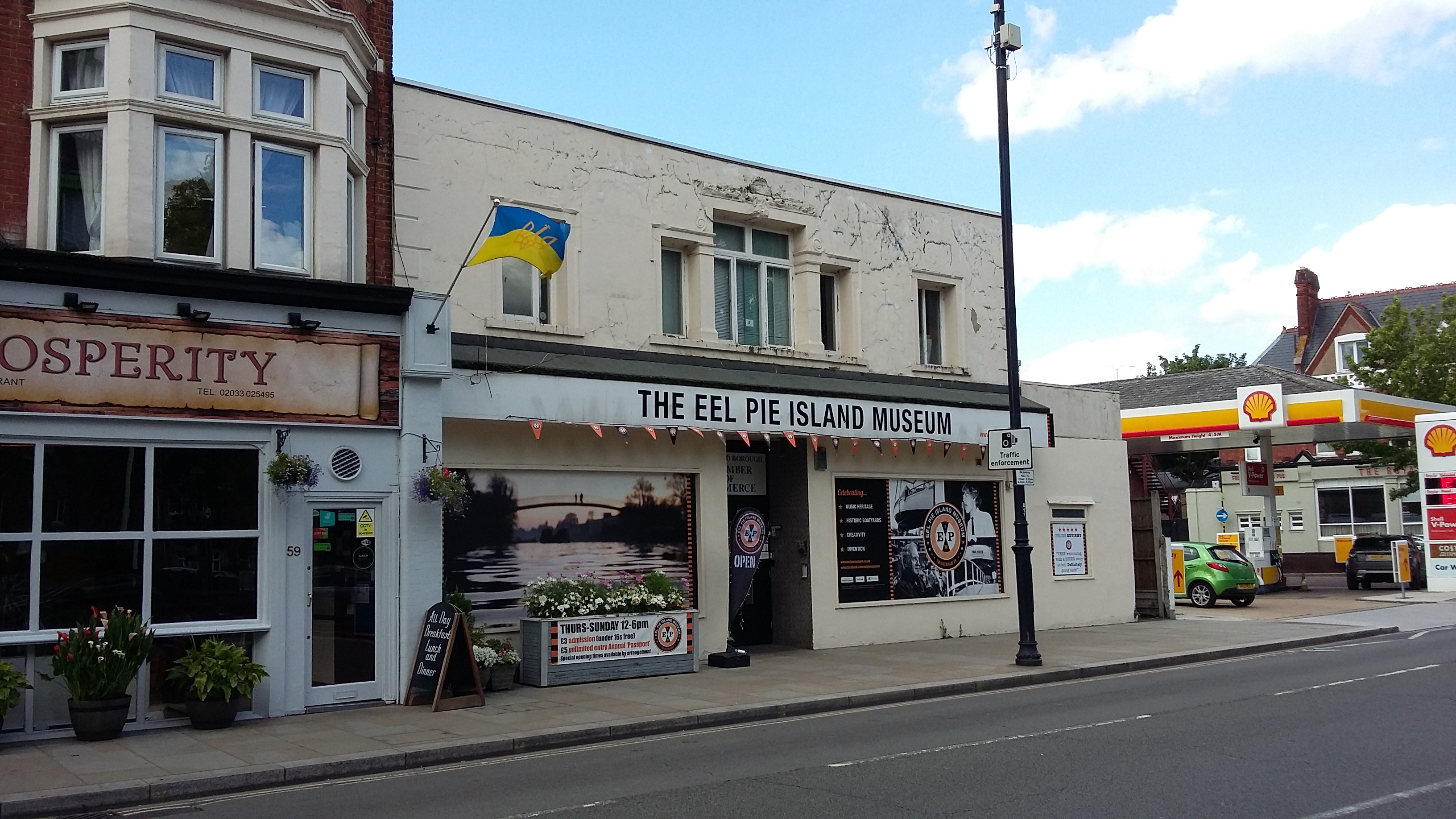
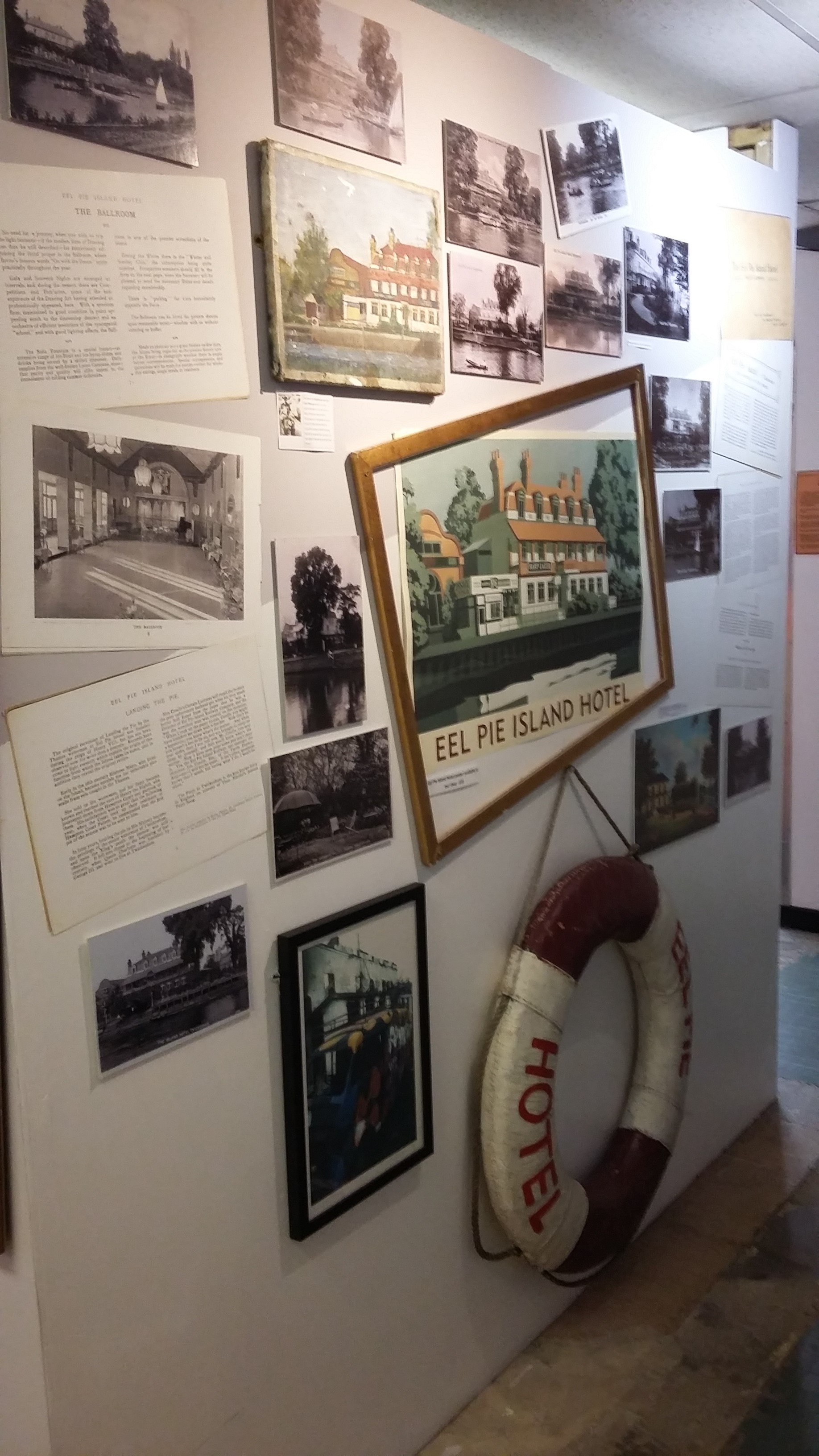
After my visit to the island, I headed back over the bridge to visit Eel Pie Island Museum. This small but impressive museum has been open since 2015 and tells the story of the island from its early days as a tourist attraction during Georgian times to its present as a home to artists.
Eel Pie Island Museum
During the era of Alexander Pope, Eel Pie Island was popular as a picnic and refreshment spot. Less congenially, it was also used as a place wealthy men could keep their mistresses out of the way of their wives’ prying eyes.
In the 1950s, owing to the efforts of a number of individuals, Eel Pie Island became home to a burgeoning jazz scene and eventually rock n’ roll. Major artists who played here included David Bowie in his early days, the Rolling Stones, Rod Stewart and more. The museum is full of artefacts from this era as well as reminiscences and remembrances from people who remember those days.
Sadly, the music scene eventually left the island, which became a commune for a short while before the hotel housing members eventually burned down. Nowadays, as I saw on my visit to the island, artists live and work here, meaning it still remains a home for creativity of one kind or another.
Price: £3 single visit (under 16s free, when accompanied by an adult); £5 Annual Passport (unlimited visits for one calendar year, from date of Membership)
Dulwich Picture Gallery‘s latest exhibition, Harald Sohlberg: Painting Norway, showcases the work of one of Norway’s greatest painters. He isn’t an artist I’ve come across before, but I was pleased at the opportunity to see his work, which, in its melancholic beauty, deeply appealed to me.
The exhibition marks 150 years since the artist’s birth, and showcases gorgeous paintings of Norway in all seasons, portraying the country’s gorgeous landscape and evoking Norwegian mythology. As someone interested in Scandi-noir and Norwegian literature, I really enjoyed the exhibition and the chance to learn more about one of Norway’s key artists.