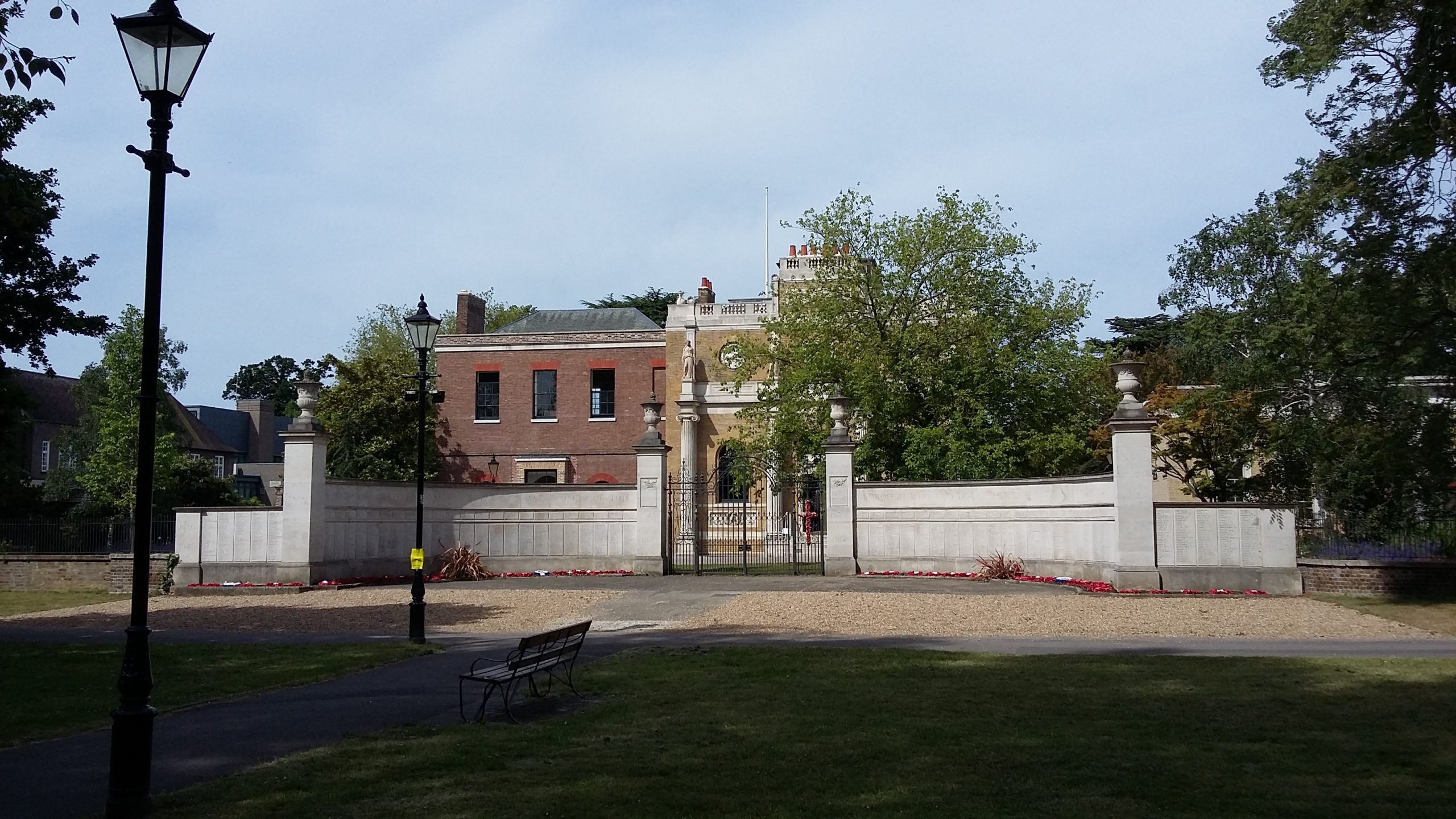
Pitzhanger Manor

Pitzhanger Manor

I’ve lived in Ealing for several years now, and did visit Pitzhanger Manor a while ago, but it has been closed for three years for refurbishment, only reopening in March of this year. I was happy to finally get the chance to visit this local landmark again.
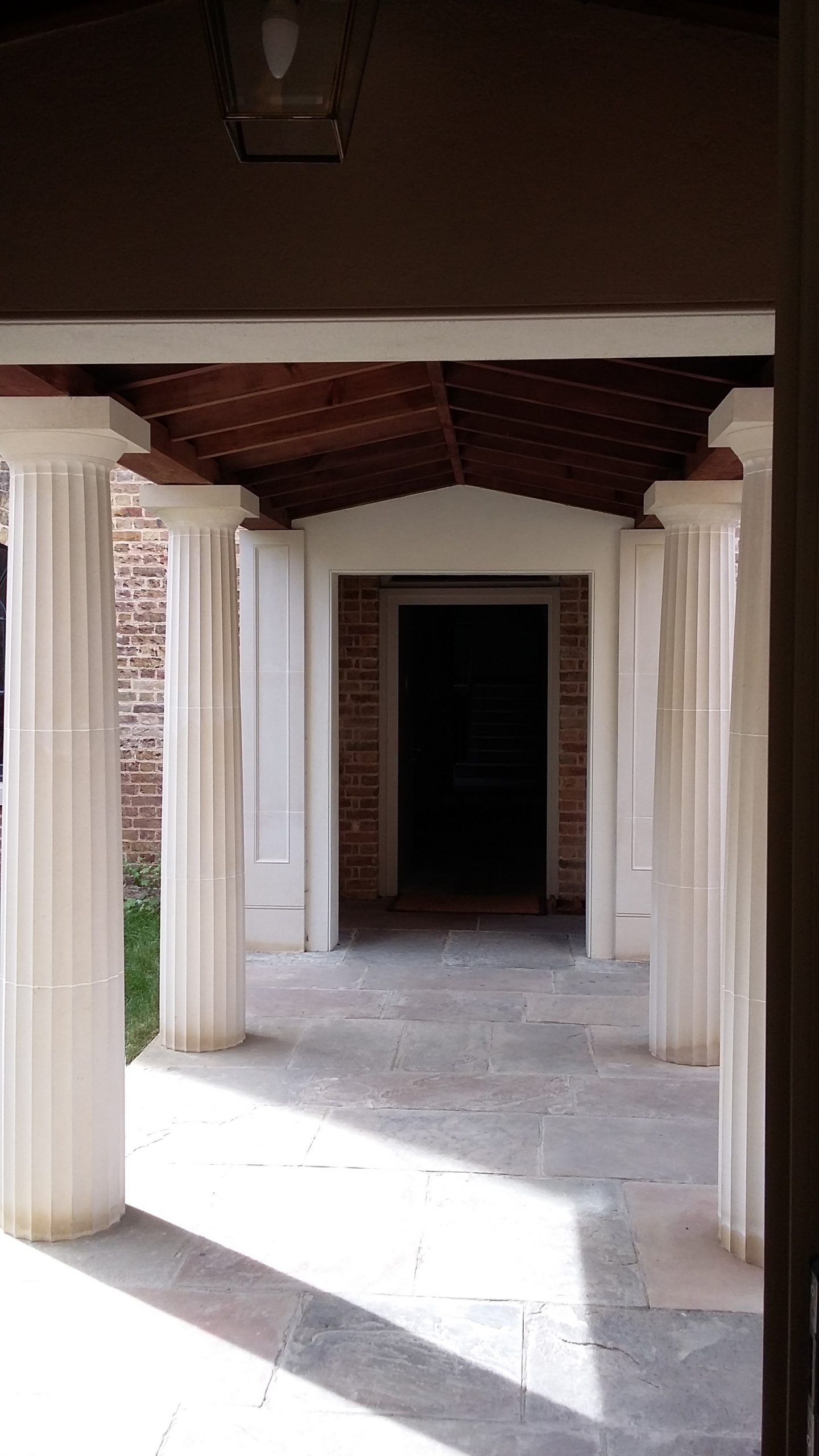
Colonnade
Colonnade

Pitzhanger Manor was designed by Sir John Soane, the architect who designed the Bank of England and whose central London home is now a museum showcasing the many antiquities he collected during his lifetime. In 1800-1804, when Pitzhanger was being designed and built, Ealing was outside of London and considered the countryside: this was well before the Tube and the expansion of the city. Despite this, Soane would often walk for several hours to reach Pitzhanger on foot.

Conservatory
Conservatory

Pitzhanger Manor was a family home that Soane hoped would nurture architectural ambitions in his sons; he harboured dreams of a Soane architectural dynasty. It functioned as a place of entertainment, playing host to clients and friends, as well as a place to display artworks, including Hogarth’s series A Rake’s Progress. Sadly, Soane’s sons proved disappointments to him, and he eventually sold Pitzhanger, moving back to his Lincoln’s Inn home.

Dining Room
Dining Room
Dining Room
Dining Room

The restoration programme has restored important elements of Soane’s original design, such as the conservatory, which has been rebuilt after originally being demolished in 1901, and a colonnade connecting the Gallery and Manor. Historic paint analysis and attention to the original details of the decor has led to the restoration, wherever possible, of Soane’s original vision.

Red room
Red room
Gallery
Gallery

I also attended the inaugural exhibition in the reopened Gallery, featuring works by Anish Kapoor.
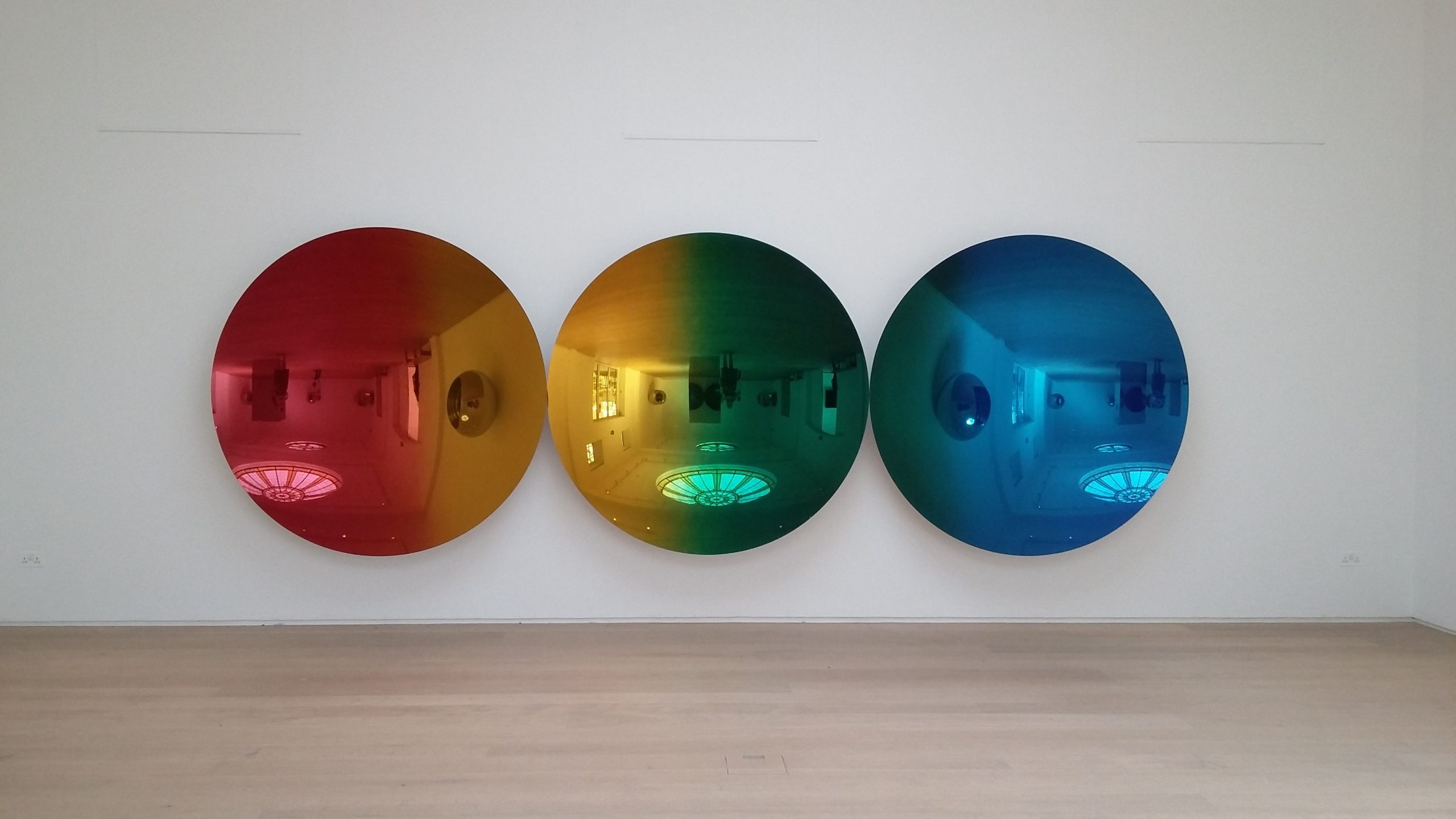
Anish Kapoor mirror sculpture
Anish Kapoor

Pitzhanger Manor is well worth a visit, not just for Ealing locals. The Gallery exhibition changes frequently and there are often events going on that are certainly worth a visit.
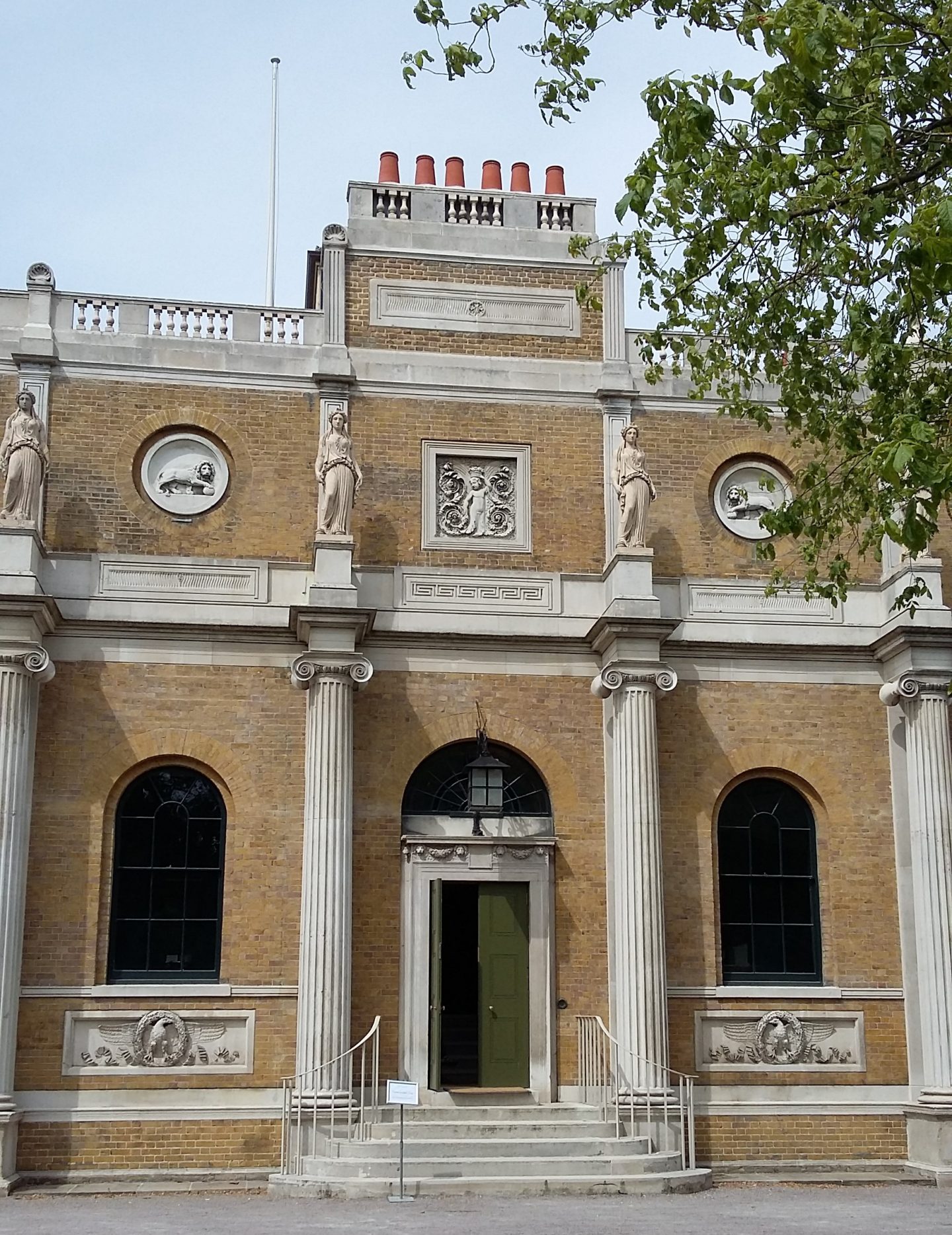
Pitzhanger Manor

FACTS

Address: Mattock Lane, Ealing, London, W5 5EQ

Website: https://www.pitzhanger.org.uk/

Opening Hours: Thursday – Sunday 11-3

Price: £7.70 standard; £4.95 concessions; £3.50 National Art Pass. Free entry for Ealing residents on Thursdays all day and Sundays 11-2:30.

Writing: Making Your Mark – British Library

British Library Writing exhibition

I paid a fascinating visit to the new British Library exhibition, Writing: Making Your Mark, which looks at the history of writing from ancient times to the present day.

The origins of writing can be found 5,000 years ago; it began in different places around the world at different times and for different reasons. One of the main advantages of writing was the possibility of communication across time and space: we can, if we understand the alphabet and language used, read what somebody wrote several thousand years ago. Various writing systems and styles have developed, many of which have common ancestors. I found it fascinating to look at different systems and see how they developed from older ones.

Materials and technology have changed over the years, beginning with carved letters produced by a stylus in wax. The ancient Egyptians used papyrus before paper was developed. Handwriting, too, has undergone changes, created first with quill pens then fountain and ball point. Medieval manuscripts gave way to the printed word, which at first emulated the handwritten style. Calligraphy remains a valued, albeit niche, skill even since the development of typewriters and then computers.

Learning to write has always taken time and effort, even from the very beginning. Learning how to form letters is an important part of education for young children. The future of writing surely involves technology, with the increasing use of emojis, but people are still interested in notebooks and pens.

Clay tablet
4,000-year-old clay tablet

The Sun: Living With Our Star – Science Museum

exhibition entrance

I managed to make it to the Science Museum‘s exhibition The Sun: Living With Our Star before it closed. The exhibition looks at the history of humanity’s knowledge and beliefs surrounding the Sun and the part it plays in our actual and our imaginative lives.

Early humanity’s belief in sun gods searched for explanations as to why the Sun appeared to rise and set every day; we see statues of sun gods from various cultures, including one of the Sun being pulled across the sky by a chariot. In the early sixteenth century, Copernicus challenged the idea that the Sun went round the Earth, supported by Newton 200 years later. From the earliest times, sundials were used to tell the time: there are examples from the Anglo-Saxon era on display. Later, the development of clocks made the Sun less important for telling the time, and nowadays standard time is taken from a network of atomic clocks.

From the earliest times the Sun has been associated with good health. Apollo was the Greek God of the Sun, light, truth and healing, while apothecary shops often had the Sun as their symbol. In the 1880s, scientists learned that ultraviolet light can kill TB bacteria: sunbathing was encouraged, and sanatoriums were opened, often in places like the Swiss Alps, emphasising fresh air, sunlight and good food. Later, suntans became fashionable, as holidays in the UK and abroad were seen as a sign of wealth.

tb poster

On the other hand, sun exposure has risks, many of which have always been known about. In recent times there have been campaigns to reduce sun exposure and lower levels of skin cancer. Inuit people have been using snow goggles to protect their eyes from the glare of the Sun for thousands of years; the first sunglasses as we know them were used by Venetian gondoliers in the 1700s. Sunglasses became fashionable in the 1950s but rarely offered ultraviolet protection; modern ones are usually UV-resistant.

The exhibition explored how we have taken power from the Sun, using it for heat and electricity. The Olympic torch from the 2012 Olympics was on display: each time the ceremony is held the torch is initially ignited by sunlight, with a curved mirror used to focus the flame. The Sun was responsible for one of our biggest energy sources, coal, which is made of plants and vegetation buried and transformed over millions of years. Interestingly, even in the nineteenth century some people were aware that resources such as coal were finite: a book from 1867 warns that coal will not last forever. More recently, solar power has been used as an energy source, and there have been attempts to recreate the Sun on earth with nuclear fusion: a project called ZETA aimed to do just that in the 1950s, though the claim of success in 1958 was later proved false.

sun

The final section of the exhibition looked at how we have observed the Sun over the years and discovered more about it. The Sun is made of hydrogen and helium, discovered by splitting light into a rainbow structure through the use of a prism; this conclusion was first put forward by astronomy student Cecilia Payne in 1925. More recently, the European Space Agency Solar Orbiter is one of the most ambitious solar missions ever attempted, aiming to fly closer to the Sun than the planet Mercury. It is hoped that the mission will help us understand the origins of the solar wind.

Jewellery of the exhibition

To this exhibition I wore my Eclectic Eccentricity Helios Vintage Sun Necklace, along with a pair of brass star earrings from the same store and a sterling silver sunstone ring from now-defunct jewellery store Cheap Frills.

jewellery I wore to the exhibition

Russia – Queen’s Gallery

I almost completely forgot about the Russia exhibition at the Queen’s Gallery, but luckily managed to make it there on the very last day. The exhibition was actually divided into two sections, together encompassing history, photography, war and revolution.

Shadows of War: Roger Fenton’s Photographs of the Crimea, 1855 was the first part of the exhibition. Fenton was the first photographer to document a war for public consumption. He spent four months in the Crimea, from March 1855. His pictures capture the reality of war and the lives of soldiers in the field. There are some incredible shots, including pictures of the infamous “Valley of Death” (from the Tennyson poem, ‘The Charge of the Light Brigade’) littered with cannonballs, as well as images of important figures from the war. One of my favourite pictures was of a soldier clearly suffering from shellshock, something which was not really known about or considered at the time.

Valley of Death
The ‘Valley of Death’
Shellshocked soldier

The second part of the exhibition was Russia, Royalty & the Romanovs, concentrating on the reigns of the numerous monarchs who made up the Romanov dynasty. There were some fascinating paintings and artefacts, including the picture of Peter the Great, highlighting his seagoing achievements (which he partly developed during a visit to London). Some beautiful Faberge eggs were displayed, but probably the most poignant item was a small suit made for the young Tsarevich Alexei.

Peter the Great
Peter the Great
Catherine the Great
Catherine the Great
Nicholas and Alexandra's coronation
Nicholas II and Alexandra’s coronation

Dior: Designer of Dreams – V&A

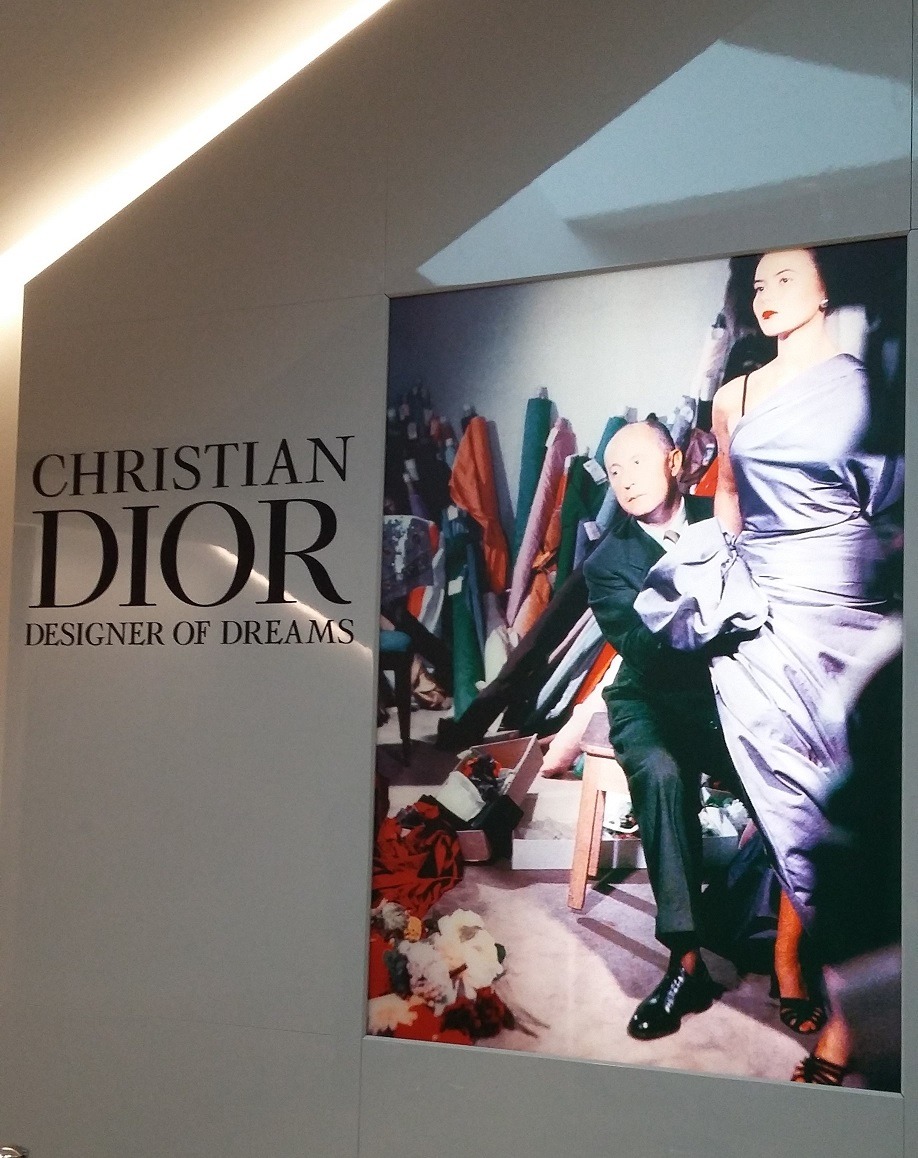
Introduction to the exhibition

I was very excited when the Dior: Designer of Dreams exhibition was announced at the V&A. The styles are exactly my kind of thing: I’m a vintage lover, and for me Dior epitomises the ‘vintage look’ of nipped-in waist and full skirt. This is one of the most popular exhibitions in the V&A’s history, and most tickets sold out way in advance.

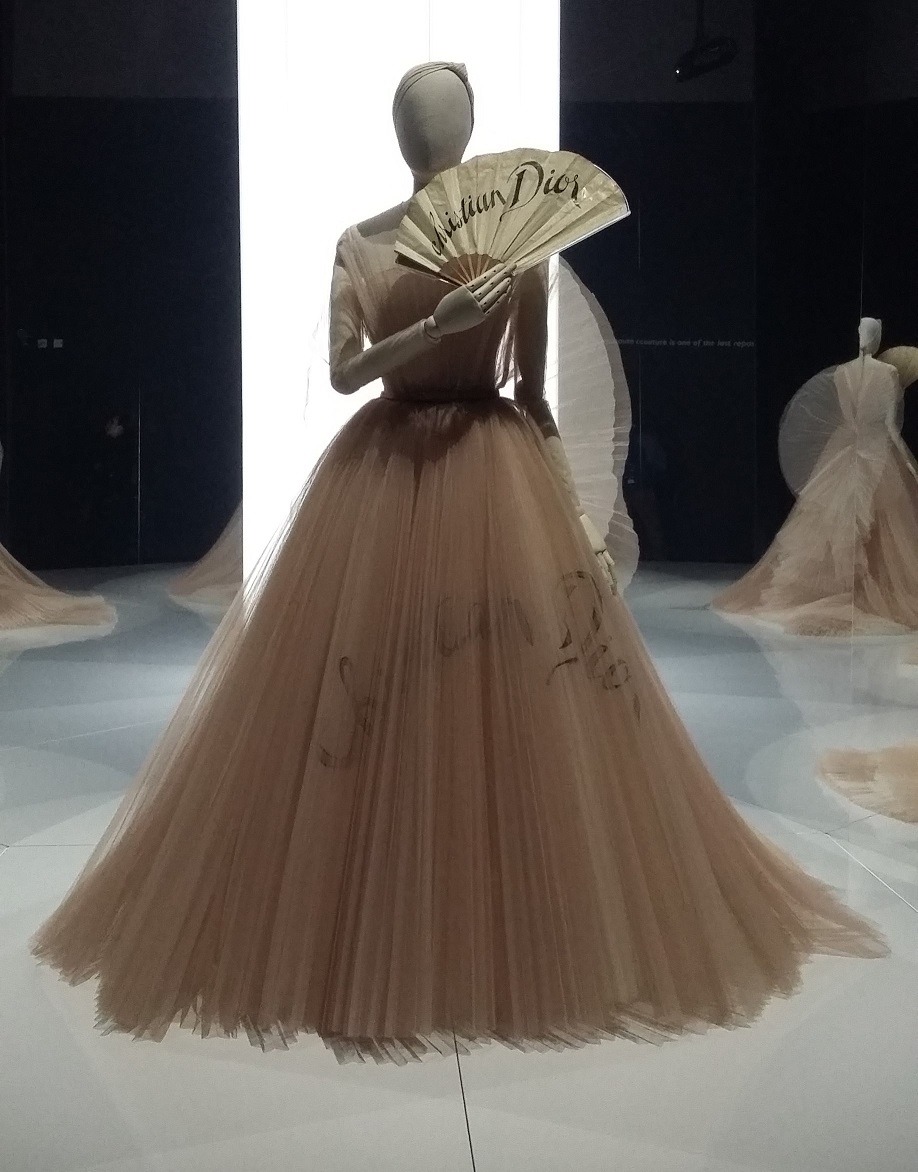
Dior ball dress
Beautiful ballgown

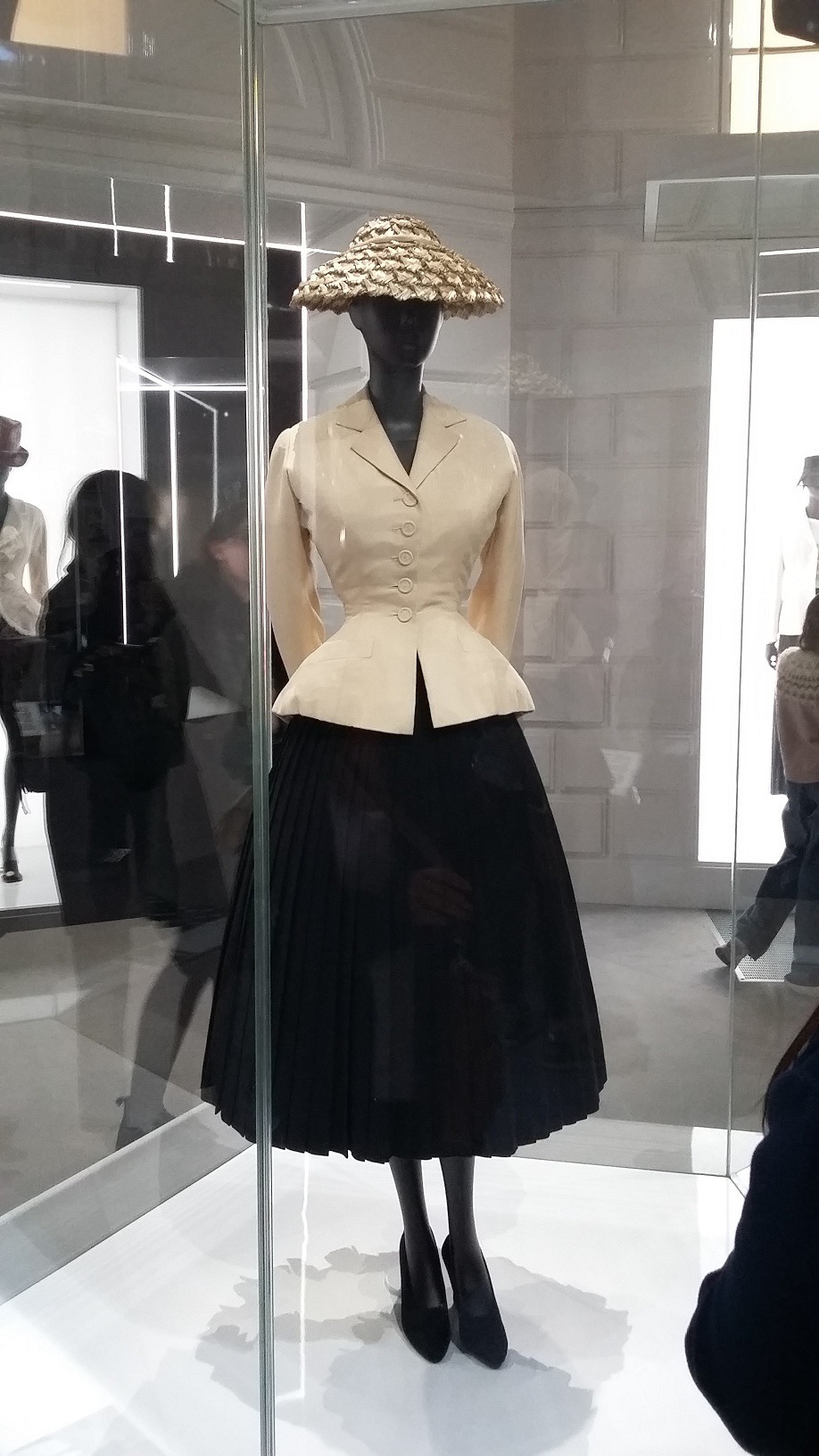
Dior became famous with the ‘New Look’ of 1947, when the privations and rationing of the war years made the full skirts and luxurious fabrics of this style seem particularly exciting. The exhibition begins with a single suit on display, epitomising this look with its nipped-in waist and generous skirt.

Early Dior 'New Look' suit
Early example of the ‘New Look’

The House of Dior began in 1946, set up by Christian Dior, born in Normandy in 1905, up until then a fashion illustrator. It has continued up until the present day, with a number of designers helming the company since Dior’s death (one of whom was Yves Saint Laurent). One room of the exhibition was devoted to these designers, including Marc Bohan and John Galliano, although for me nothing compares to the classic Dior designs.

Row of Dior dresses

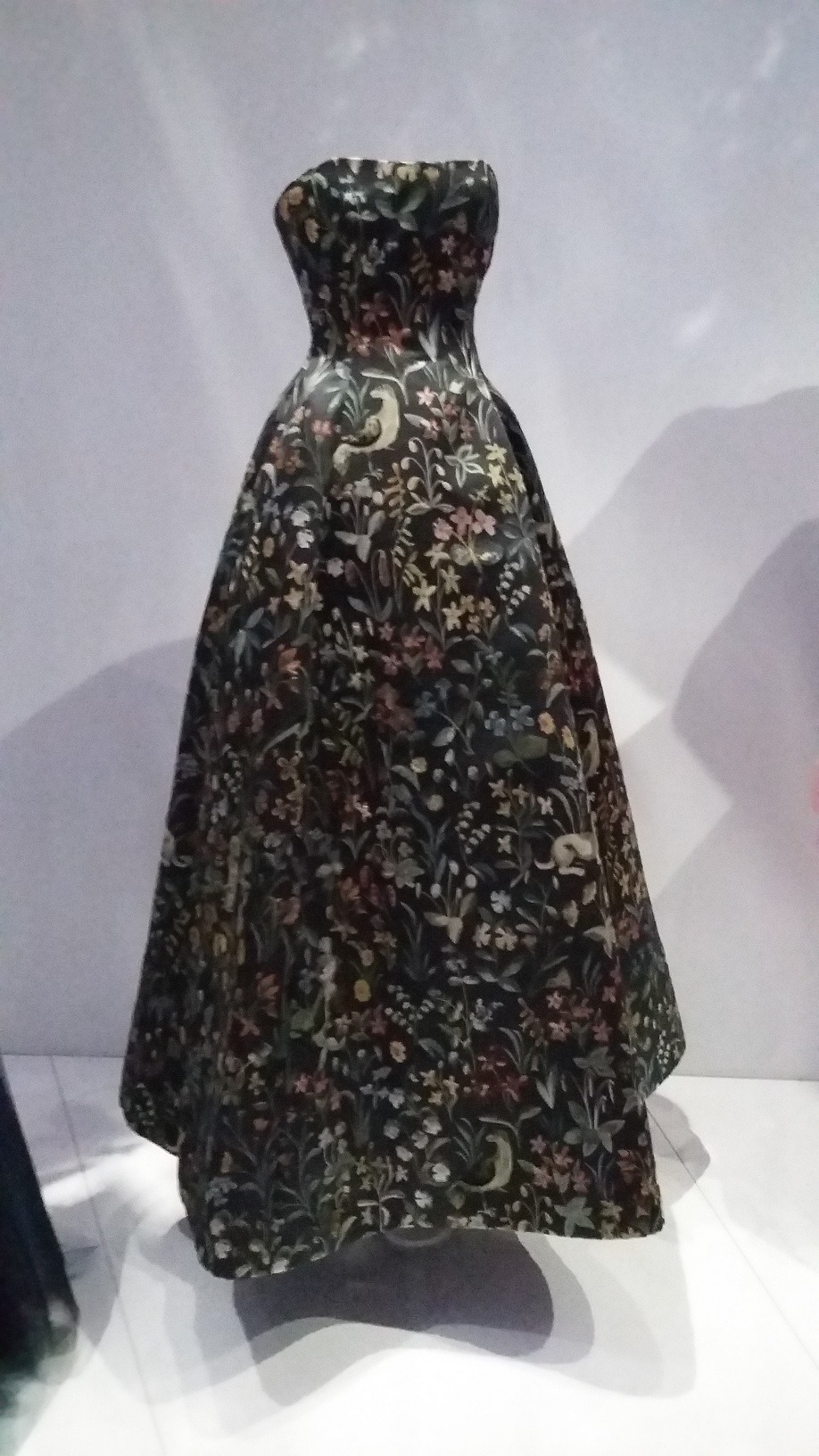
The exhibition is beautifully laid out, with different rooms devoted to different themes: I particularly liked the floral room.

My favourite dress in my favourite room - the floral dress
My favourite dress of the whole exhibition

The exhibition runs until 2 September and has a high recommendation from me.

End of the exhibition

Robyn (Honey Tour) at Alexandra Palace

Robyn gig

I’ve been a fan of Swedish singer Robyn for many years, and managed to get a ticket to see her perform live at Alexandra Palace. I went with a friend and we both had a great time. The atmosphere was amazing and Robyn was so good live. The best moment, naturally enough, was when she sang ‘Dancing On My Own’.

Setlist

  • Send to Robin Immediately
  • Honey
  • Indestructible
  • Hang With Me
  • Beach2k20
  • Ever Again
  • Be Mine!
  • Because It’s in the Music
  • Between the Lines
  • Love Is Free
  • Don’t Fucking Tell Me What to Do
  • Dancing on My Own
  • Missing U
  • Call Your Girlfriend

Encore:

  • Trust Me
  • Stars 4-Ever
  • With Every Heartbeat

Encore 2:

  • Human Being
  • Who Do You Love?

The Last Tsar: Blood and Revolution – Science Museum

last tsar poster

The Last Tsar: Blood and Revolution is a free exhibition at the Science Museum, looking at the life and death of the Russian royal family during the Russian Revolution. It explores their family life in the years running up to Tsar Nicholas II’s abdication, the family’s murder in Ekaterinburg in 1917, and the eventual identification of their remains using DNA technology.

The science used to identify the remains of the Romanov family is the main point of the exhibition, but there is plenty of filler leading up to that, much of which I already knew having read up on Russian history and visited the St Peter and Paul Fortress in St Petersburg where the family are now buried. However, there was a very interesting display showing how Queen Victoria passed on hemophilia to many of her children and grandchildren. The DNA section was also fascinating, showing how DNA from living royals including Prince Philip was used as a comparison to enable scientists to identify the remains.

In any case, it’s a free exhibition and well worth a visit.

Hidden London – Down Street: Churchill’s Secret Station

Entrance to Down Street

I’ve visited several “secret” stations on Hidden London tours, and recently was lucky enough to go to Down Street, also known as “Churchill’s secret station.” Down Street opened on 15 March 1907 on the new Great Northern, Piccadilly & Brompton Railway (GNP&BR), part of what is now the Piccadilly line.

Plan of the station

Designed by Leslie Green, the station was situated on a side road called Down Street, in between two popular stations in a rich area – so it wasn’t used much from the start. The station layout was designed by Sir James W Szlumper, Chief Engineer for the railway. A dispute about the escape route led to several redesigns, and the station opened after the rest of the railway with an extra cross passage, stairs and landing. It closed on 21 May 1932, with its passageways converted to act as a ventilation shaft for the Piccadilly line.

Inside the station

Down Street wasn’t empty for long, though. A Railway Executive Committee was formed to coordinate British railway companies in the event of war, ensuring the smoothest possible travel for people, the military, and supplies. A headquarters was needed: the Underground was safe and this station’s central location was ideal. Plans were drawn up to convert the station: the lift shaft was capped with concrete and air filtration protected against gas attacks. The REC met in the Committee Room, while a typing pool sat just outside and a telephone exchange was situated on the now boarded-up platforms, along with dormitories for those staying overnight: the need for secrecy meant staff could not be seen going in and out all the time and they needed to stay and sleep in shifts.

Sign directing passengers to the train

Executive staff members had sole bedrooms, as well as posh furniture and good food: catering was provided on-site, as well as bathroom and toilet facilities. A team of four motorcycle despatch riders carried letters from above ground. Executive staff members who needed to leave could use the red stop signal located on the platform, stop a Piccadilly line train, and board the train in the driver’s cab.

Old platform signs

Churchill used these rooms for 40 days from October to December 1940, at the height of the Blitz when the Cabinet War Rooms weren’t ready. He was impressed with the accommodation, unsurprisingly. One meal he shared with some REC and War Cabinet members included caviar, champagne, brandy and cigars. Later, rooms were built for him in the passageway that London Transport engineers had originally insisted be kept free for escape purposes, although he may have never used it.

Directions to the committee room

These days, Down Street is still used for ventilation purposes. If you look carefully when travelling on the Piccadilly line between Hyde Park Corner and Green Park, you may catch a glimpse of this hidden station.

Winston's bath?

Edward Burne-Jones: Pre-Raphaelite Visionary – Tate Britain

Burne-Jones poster

The exhibition Edward Burne-Jones: Pre-Raphaelite Visionary at Tate Britain looks at the career of Burne-Jones (1833-1898), taking a partly chronological and partly thematic approach to his life and work. There are sections on Burne-Jones as an apprentice and as a draughtsman, revealing another, humorous side to the artist. One room looks at the pictures Burne-Jones chose for exhibition, including some of his most famous works, such as King Cophetua and the Beggar Maid. Another explores the portraits he painted of family and friends, while one striking room displays his Briar Rose series of panels. Burne-Jones isn’t my favourite Pre-Raphaelite, but I enjoyed the exhibition.

Burne-Jones artwork

Anglo-Saxon Kingdoms: Art, Word, War – British Library

Entrance to the exhibition

Anglo-Saxon Kingdoms: Art, Word, War is an exhibition at the British Library that I knew I definitely wanted to see. Though the Anglo-Saxon era is not my favourite, I did study history for my degree and to some extent all periods of history are interesting to me.

Anglo-Saxon settlers from northern Europe came to Britain in the 5th century, eventually forming several kingdoms that would one day become England. The exhibition brings together manuscripts and artefacts that help to illuminate this exciting period of history.

The exhibition has some amazing treasures on display, including Bede’s Ecclesiastical History of the English People, the Domesday Book, and artefacts from the Sutton Hoo burial ground. It takes a broadly chronological approach, looking at how the Anglo-Saxon kingdoms developed from the first arrival of the Angles, Saxons and Jutes to the Norman Conquest.

The Anglo-Saxon era was not static; different kingdoms gained and lost power over the centuries. Early in the era, the kingdom of Northumbria was in the ascendant, while later on, Mercia became the most powerful. By the tenth century, King Aethelstan was exercising power over most of what is now England and south-east Scotland.

The exhibition emphasises the multicultural links of the Anglo-Saxon world, with connections to Ireland and mainland Europe, and its literary, artistic and scientific developments. It is a fascinating exhibition, showing that even a world over 1,000 years old can still be relevant to ours.