Celts: Art and Identity – British Museum

The Celts: Art and Identity exhibition at the British Museum looked at the history of the Celtic identity and what it means to be Celtic today. I was interested to learn that the name “Celts” was originally used by the ancient Greeks to refer to the “barbarians” in the north: it was a cultural label rather than an ethnic identity, and was adopted by the people of the modern Celtic nations.

The exhibition has been organised in partnership with National Museums Scotland, and traces the history of the Celts from 2,500 years ago to the present day. I was interested in the art and culture of the early Celts: helmets, shields and other artefacts are decorated with distinctive patterns, stylised as opposed to the increasingly realistic artworks of the Greeks and Romans. Many of the artefacts uncovered (some of which have come from the Thames, while others have been excavated from mainland Europe) have patterns relating to possibly mythical figures, though what they symbolise exactly is sadly lost to history. This is particularly apparent in the gorgeous Gundestrup cauldron, a breathtakingly detailed item on loan from the National Museum of Denmark.

Celtic culture survived throughout the Iron Age and the Roman conquest. Celtic art was influenced by Roman traditions, although it remained distinctive. As Christianity spread throughout Europe and Britain, Irish, Welsh and Scottish monasteries adopted many Celtic styles, in particular leading to the Celtic crosses that have become such a strong emblem for Celtic culture.

By the Victorian era, the Industrial Revolution made the lives of the Celts seem like very long ago indeed. Victorians were fascinated by Celtic culture, and reinvented it in literature and art: the poems of the supposed Celtic bard Ossian, and the Celtic-influenced designs of Rennie Mackintosh and the Glasgow School of Art, were particularly popular. I especially liked the statue meant to represent a noble Celtic warrior, standing proud in a kilt, but sporting a suspiciously Victorian moustache!

The exhibition ended in the modern day, looking at how Celtic culture is celebrated today, with clips from parades, football shirts and comic books. I really enjoyed this comprehensive and interesting exhibition.
 

An Evening with Ramin Karimloo at the Union Chapel

2016_0119UnionChapel01
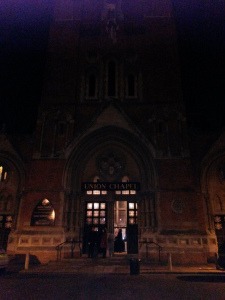
Union Chapel

I’ve written before about how much I love Ramin Karimloo, and I’ve been looking forward to his Union Chapel concert for months: he hasn’t performed in the UK for several years, owing to his role as Jean Valjean in Les Miserables on Broadway, followed by a stint in Japan. I was not the only one to be excited by the news, as the concert was sold out really quickly, so I was very happy to have got a ticket.

The Union Chapel is a beautiful venue, a working chapel which also hosts gigs, talks and other assorted events. It can be a bit chilly inside, but you’re allowed to take a cup of tea to your seat and watch the show, which helps create a cosy atmosphere. I must be getting old – this sounds very appealing compared to the traditional concert experience of moshing with a can of lager!

Ramin himself sounded incredible, but then I hadn’t expected anything less. He opened the show with “‘Til I Hear You Sing”, which is one of my favourite Andrew Lloyd Webber songs, and sang several musical numbers including “Oh What A Beautiful Morning” and “Bring Him Home”, which he performed as a duet with Hadley Fraser, who was present on stage for the entire concert. What I love about Ramin, though, is that he is so versatile – over the last few years he has branched out from musical theatre, and his gig included original songs and covers ranging from country and bluegrass to rock.

The concert was such a brilliant experience, and I’m really glad I made the effort to go. Who knows when Ramin will be back in the UK again? I’ve added the setlist at the bottom of this post: I would encourage you to go and look up the list on YouTube, to discover why this man is so amazing.

Setlist

1. Till I Hear You Sing

2. Traveller’s Eyes

3. On The Road to Find Out/Wild World

4. Driftwood

5. Broken

6. Letting The Last One Go

7. Constant Angel

8. State Lines (with Ashleigh Gray)

9. Bring Him Home (with Hadley Fraser)

10. We’re All In This Together

11. Wings

12. Oh, What A Beautiful Mornin’

13. Do You Hear The People Sing?

14. Murder In The City

15. I Wish The Wars Were All Over

16. Will The Circle Be Unbroken

Encore

17. Losing

18. Wagon Wheel

2016_0119UnionChapel07

Hornsey Town Hall Tour

2016_0117HTHArtsCentre02

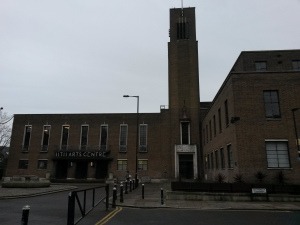
After visiting Hornsey Town Hall in Crouch End for a show last year, I became interested in this beautiful building, and was keen to explore it in more depth. I signed up for a tour, organised by Crouch End Walks, to learn more.

2016_0117HTHArtsCentre05

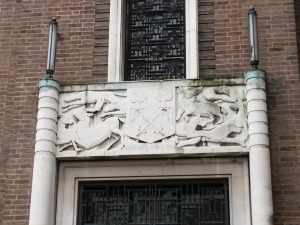
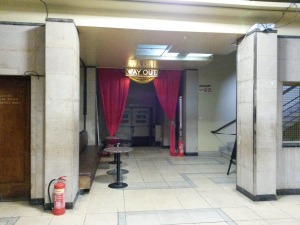
We met in the building’s foyer at 2pm and our guide began the tour by taking us outside to observe the front of the building and its beautiful façade, which harks back to the area’s rural past. Inside, we admired the modernist style of the foyer, which still has the original ticket desks and glass panels designed for function rather than form. The building was designed by R. H. Uren, a New Zealand-born architect who was only twenty-seven at the time of the design in 1933. It was influenced by European modernist architecture and radically broke away from the traditional Victorian design of previous town halls.

2016_0117HTHArtsCentre09 2016_0117HTHArtsCentre10

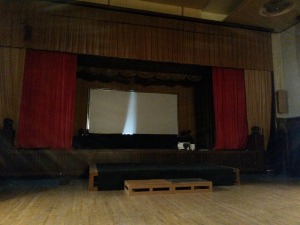
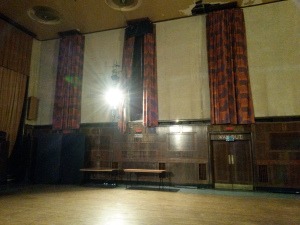
We were taken through the building, starting with the ground floor space currently being used as a cafe, into the large hall which has been used for concerts, dances and shows. The Kinks were one of the bands who played here in their early days. Our guide told us of her own memories attending a pantomime here as a small child. Today, the hall is very cold and clearly needs work done to it, but it’s easy to see that with a bit of TLC it could be a lovely space once again.

2016_0117HTHArtsCentre12 2016_0117HTHArtsCentre13

The open staircase and foyer spaces of the building are lovely, being ornate but spacious, well lit and stylish. The Art Deco influence is particularly strong here. We were able to see inside the former Mayor’s parlour, a very comfortable-looking room indeed.

2016_0117HTHArtsCentre14 2016_0117HTHArtsCentre26 2016_0117HTHArtsCentre15

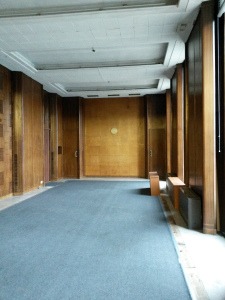
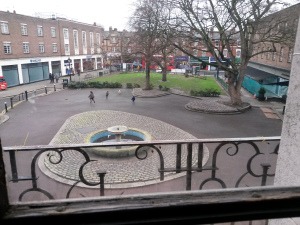
Along the corridor, we found ourselves in a large space with a fine view over the front of the town hall. This room can be divided into three, or left as one large space. We also got to see inside the council chamber, which still has the original (very comfortable) seats.

2016_0117HTHArtsCentre18 2016_0117HTHArtsCentre19 2016_0117HTHArtsCentre21

The future of the Hall is uncertain: it is currently used by a variety of arts organisations, but whether it continues to be used for performances and events or sold off to be converted into luxury flats, only time will tell. It would be a shame if it stopped being a public building, as it is beautiful and unique, a valuable community asset for the people of Crouch End and beyond.

Clockmakers’ Museum

2016_0116ClockmakersMuseum01

Originally assembled by the Worshipful Company of Clockmakers, the Clockmakers’ Museum is the world’s oldest clock and watch collection. Once located at the Guildhall, it can now be seen on the second floor of the Science Museum in South Kensington. It looks good in its new home, with chronological (naturally) displays of the history of clock and watch-making in London.

The Clockmakers’ Company (a Guild) was founded in London in 1620, with a Royal Charter granted in 1631. The museum contains many beautiful clocks and watches, demonstrating the fine workmanship and beautiful design that helped to make London the centre of the timepiece-making world for several centuries, until it lost out to the cheaper countries of continental Europe.

2016_0116ClockmakersMuseum02
One of the museum’s stunning clocks

I liked looking at the beautiful watches and clocks, still working after hundreds of years, and was impressed with the earliest examples of the clockmaker’s craft. There were even sundials! I was particularly fond of the eighteenth and nineteenth century ladies’ pocket watches, beautifully decorated, and was also very interested to see a clock which belonged to the Discovery and was taken to Antarctica.

2016_0116ClockmakersMuseum03
One of the earliest examples of clockmaking

It was interesting to see how timepieces developed over time, starting out as rather large objects but gradually becoming smaller and smaller, eventually leading to the wristwatch that we know today, although larger clocks have not yet gone out of fashion. The museum ended with a look at current cutting-edge watch technology and design – despite the proliferation of smartphones it doesn’t look as though more traditional timepieces are going to die out any time soon.

FACTS

Address: Science Museum, Exhibition Road, London, SW7 2DD

Website: sciencemuseum.org.uk/visitmuseum/plan_your_visit/exhibitions/clockmakers-museum

Opening Hours: 10-6 Mon-Sat

Prices: Free

Gathered Leaves: The Photographs of Alec Soth – Science Museum

I had some time left at the weekend so popped into the Science Museum to visit the exhibition Gathered Leaves: The Photographs of Alec Soth. The exhibition, which takes place in the Museum’s Media Space, showcases works by one of the world’s most famous documentary photographers, including pictures from four collections: Sleeping by the Mississippi (2004), Niagara (2006), Broken Manual (2010) and the most recent, Songbook (2014).

I’m no photography expert but I admired the poignant, intimate pictures, capturing the personalities of characters across America and the different, often vast landscapes. The collection of Mississippi images was my favourite, with its echoes of great American literature such as the work of Mark Twain. Definitely worth seeing.

House of Illustration

2016_0116HouseofIllustration02

The House of Illustration is a relatively new gallery in the recently redeveloped Granary Square in King’s Cross. It is home to changing exhibitions covering the history of illustration in all its forms: recent exhibitions have included images from Ladybird books and the work of Quentin Blake.

I visited in order to see the Main Gallery exhibition, E. H. Shepard: An Illustrator’s War. Shepard is perhaps best known for his classic illustrations of A. A. Milne’s Winnie-the-Pooh stories, probably as well-known as the books themselves. I had no idea until very recently that he also produced a great deal of work while serving in the trenches of the First World War.

Shepard’s distinctive style is evident in these wartime artworks, but the subject matter is very different. His pictures include humorous images of soldiers trying to make the best of life in the trenches, stark pictures of bare landscapes, and even topographical works used for strategic purposes. Many of his cartoons were sent to Punch and other publications. Shepard also spent time in Italy towards the end of the war, producing fascinating drawings of the scenes he witnessed, and meeting none other than the author Ernest Hemingway. Some of his work was more personal: he drew pictures in his diaries and in letters to his wife, which are on display for the first time. It was fascinating to see this different side to the familiar illustrator.

While in the building I also visited the exhibition in the South Gallery, Lauren Child’s Dolls’ House. Childs is an author and illustrator most famous for the Charlie and Lola books – I’ve heard of these books even though I don’t have anything to do with small children, which suggests that they are pretty successful. Childs has been working on her own dolls’ house for over 30 years, and it is beautiful – extremely detailed. Alongside the house, sets from the author’s works are displayed: the book The Princess and the Pea was made with photographs of three-dimensional miniature sets.

The House of Illustration is well worth a visit, possibly more than one, as the constantly changing exhibitions ensure that you are likely to go back again and again.

2016_0116HouseofIllustration01

FACTS

Address: 2 Granary Square, King’s Cross, London, N1C 4BH

Website: houseofillustration.org.uk

Opening Hours: 10-6 Tues-Sun

Prices: £7.70 adults, £5.50 concessions, £4.40 children; half price for Art Fund members

Ben Uri Gallery

2016_0116BenUriGallery

After visiting a very interesting exhibition at Somerset House last year, Out of Chaos – Ben Uri: 100 Years in London, I decided to visit the actual Ben Uri Gallery which is located in north London.

The Ben Uri Gallery is an art museum focusing on the work of artists of Jewish descent. It also focuses on the universal themes within these artists’ work, such as identity and migration. The Gallery displays its materials in a programme of temporary exhibitions; the exhibition I saw, which has just ended, was entitled Rothenstein’s Relevance: Sir William Rothenstein and His Circle. It contained impressive works, many of which looked at the concept of Jewish religious worship; others were more traditional portraits or drawing room scenes.

I was surprised at how small the Gallery actually is: it consists of one small ground floor room and another, larger, basement space. Still, with free entry it is certainly worth popping in.

FACTS

Address: 108A Boundary Road, London, NW8 0RH

Website: benuri.org.uk

Opening Hours: 1-5.30 Mon, 10-5.30 Tues-Fri, 11-5 Sat-Sun

Prices: Free

Egypt: Faith After the Pharaohs – British Museum

I’m lucky enough to work close enough to the British Museum that I am able to pop in on my lunch break, and on Friday I did just that, choosing to visit the current exhibition Egypt: Faith After the Pharaohs. The exhibition traces the history of Egypt from the death of Cleopatra and Mark Antony in 30 BC, when Egypt became a province of the Roman Empire, until AD 1171, when the rule of the Islamic Fatimid dynasty ended. It explores how Christians, Muslims and Jews lives alongside each other in the centuries after Pharaonic Egypt, and displays impressive artefacts to illustrate this, many of which have been uniquely preserved thanks to Egypt’s arid climate.

The issue of religious tolerance is a supremely important one in our present-day world and I was fascinated to learn about how members of different faiths lived together, sometimes peacefully, sometimes with periods of violence. The exhibition runs chronologically, showing that in the beginning there was still considerable influence from the old Egyptian gods – for instance, one statue from the first or second century BC shows the Egyptian god Horus – a falcon – dressed in Roman armour. Later Jewish, Christian and Muslim artefacts reveal the influence of Egypt’s history and culture; they were also influenced by one another. What impressed me the most was that, for all their differences, members of all religious communities still had plenty in common – some wooden toys on display are particularly poignant, well-made and preserved, and there are even some items of clothing on display – these tunics were worn by followers of all religions and I was very impressed to see that they have survived for over a thousand years.

This is definitely a worthwhile exhibition, educational and enlightening with plenty of interesting things to see.


Cosmetics Gift Workshop – Southbank Centre

Browsing the Southbank Centre website, I came across a craft workshop for only £5, designed for participants to make their own Christmas gifts. As a huge fan of bath products from places like Lush, I signed up straight away.

The workshop involved making natural cosmetics, the kind that are growing in popularity and are sold in shops like Oxfam, as well as some supermarkets. The session began with a short talk about the history of the company, as well as a discussion of some of the ingredients and their properties, including shea butter and coconut oil. All the ingredients are fair trade and organic.

2015_1219Southbank01
Workshop talk

After the talk it was time to get to work! We split into groups to make two bath melts, a sugar scrub and a lip balm for each person. We decided to make the lip balm first to allow it to set, followed by the bath melts and then the sugar scrub.

We found it quite tricky to weigh the ingredients exactly – to the nearest gram. However after some weighing and re-weighing we got into the swing of things and weighing the ingredients for the subsequent cosmetics was much more straightforward. We managed to divide up the work pretty well, with some people taking responsibility for weighing and measuring, others for chopping up the lumps of shea butter and others sorting out the outer wrapping, while one poor bloke who’d been brought along by his partner was relegated to standing in the microwave queue to get our ingredients melted down.

The lip balm was poured out and left to set while we started on the bath melts – scented with lavender. Finally we made the sugar scrub, which looked good enough to eat (but we didn’t).

The finishing touch was a little Christmas gift bag in which we placed our newly-made goodies. Though the workshop was designed to make presents, I don’t really know anyone who likes this kind of thing as much as I do, so I decided to keep it for myself (that’s my story, and I’m sticking to it!).

2015_1219Southbank02
Beautifully packaged

The Amazing World of M. C. Escher – Dulwich Picture Gallery

2015_1219Escher01
Exhibition poster

I’ve admired the work of artist M. C. Escher for a long time; his pictures are unique, and have influenced popular culture to a significant degree. In particular, a major scene from the film Labyrinth was inspired by an Escher work, and Mick Jagger even tried to commission a picture from the artist for a Rolling Stones album cover, though Escher, having never heard of Jagger or the band, turned him down.

It’s rare to have several Escher works collected together for an exhibition in the UK, so I was very excited to hear about The Amazing World of M. C. Escher, which runs at Dulwich Picture Gallery in south London until 17 January. The exhibition has been organised by the Scottish National Gallery of Modern Art, Edinburgh, and showcases nearly 100 works from the collection of the Gemeentemuseum Den Haag in the Netherlands.

2015_1219Escher02
Dulwich Picture Gallery

I had heard that the exhibition was rather busy, so I decided to book online in advance and choose an early time slot. I arrived in time for my 10.15 slot which was ideal – the exhibition was very quiet, with no queues as yet! Tickets cost £14 for adults and £7.50 for concessions/Art Fund members; children and Dulwich Picture Gallery Friends get free entry.

The exhibition follows a chronological timeline, beginning with Escher’s early landscape prints and tracing his development as an artist as he grew interested in perspective and developed knowledge of the mathematical principles that would inform his later work. The first major UK show of his work, it includes woodcuts, lithographs, drawings, watercolours and mezzotints, as well as exclusive archive material such as initial concept drawings and correspondence with mathematicians such as Roger Penrose, who assisted him in the execution of some of his later designs.

Dutch artist Maurits Cornelis Escher (1898–1972) started out by training as an architect. In 1918, he was studying at the School of Architecture and Decorative Arts in Haarlem, Holland, when a teacher noticed his talent as a draughtsman and printmaker. He was advised to move into the Graphic Art department, and his career as a printmaker dates from this moment.

Escher spent several years moving around Europe, and this is reflected in his earlier prints which include Italian townscapes, Netherlands landscapes, and influences including the Islamic tiles he saw on a visit to Moorish Spain. His early work consists of distinctive woodcuts, lithographs and drawings which are more straightforward in design, before he began playing with perspective. Though his work bears some resemblance to Surrealism, he had no contact with the Surrealist group.

I loved all the pictures, but one of my favourites was the still life that transformed seamlessly into a street scene. I also loved the picture showing lizards crawling out of a two-dimensional tessellation to become three-dimensional creatures. In fact, all the tessellated pictures were fascinating and extremely clever. Later in the exhibition, I loved the “impossible pictures” showing monks climbing neverending stairs and water flowing in impossible ways.

Escher’s career spanned two world wars and his work increased in popularity as the century wore on. His work was so different from that of any other artist and by the time of his death he was truly acclaimed. Today, his work is still appreciated and admired. I’m so glad I was able to see this exhibition and I left with an even greater appreciation of Escher’s work.

As a nice touch, the exhibition ended with the opportunity to take a selfie in an Escher-like pose!

2015_1219Escher03
Escher exhibition selfie