Rebel Badge Club: New Year Challenge (Quarterly badge 1, 2022)

Charly, founder of Rebel Badge Club, announced four special challenges a year, each of which will involve completing several badges (and potentially other tasks). I’ve decided to go for the New Year Challenge even though officially this was last quarter’s challenge – I’m a bit of a completist!

To complete this challenge I need to:

I will link to my posts on the above badges once I’ve completed them.

Rebel Badge Club

Rebel Badge book

I saw an ad on Instagram for the Rebel Badge Club and I had to join! Founded in 2021 by Charly Lester, it was inspired by Guides and Brownies and allows adults to earn merit badges for fulfilling certain criteria. Badges include Reader, Adulting, Gardener and Runner (to choose four random examples from the 53 on offer) and belong to certain categories – when you earn a certain number of badges from a particular category you can claim a special patch for that category (such as Creative Rebel or Global Rebel).

I ordered the hardback book from the website, along with a sheet of stickers, and the 2021 and 2022 badges (I suppose I’m cheating a bit by ordering the 2021 badge but I must count as one of the original Rebels since the badges are still available, right?).

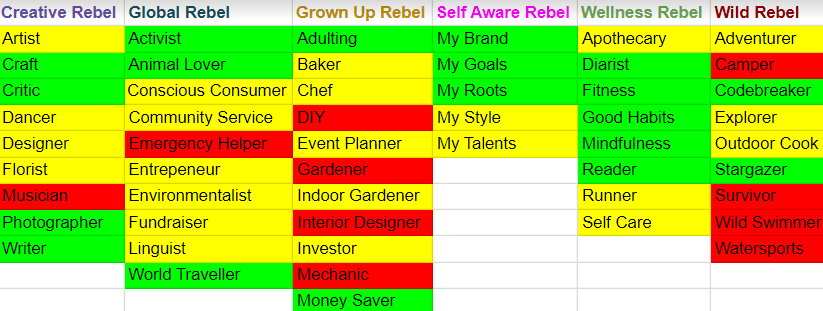
Inspired by the Facebook page, I went through the book and sorted the badges into traffic light categories.

Rebel Badge Club traffic lights

Green refers to those badges that I have pretty much done already, or that strongly align with my interests. Yellow is for those badges that will be challenging but still possible for me. Red badges are those that will be extremely challenging for me, either because my life won’t allow me to complete them (I don’t have a garden so Gardener is pretty much impossible for me) or because I can’t see myself enjoying them (I hate swimming so Wild Swimmer is a no from me, on a similar note I have no desire to learn a musical instrument (memories of a tedious year I spent learning the baritone) so Musician is out). That’s okay, though! We don’t all have the same interests and completing every badge isn’t essential. The aim is to challenge yourself, learn new skills and develop a sense of achievement.

I’m looking forward to documenting my badge journey on this blog.

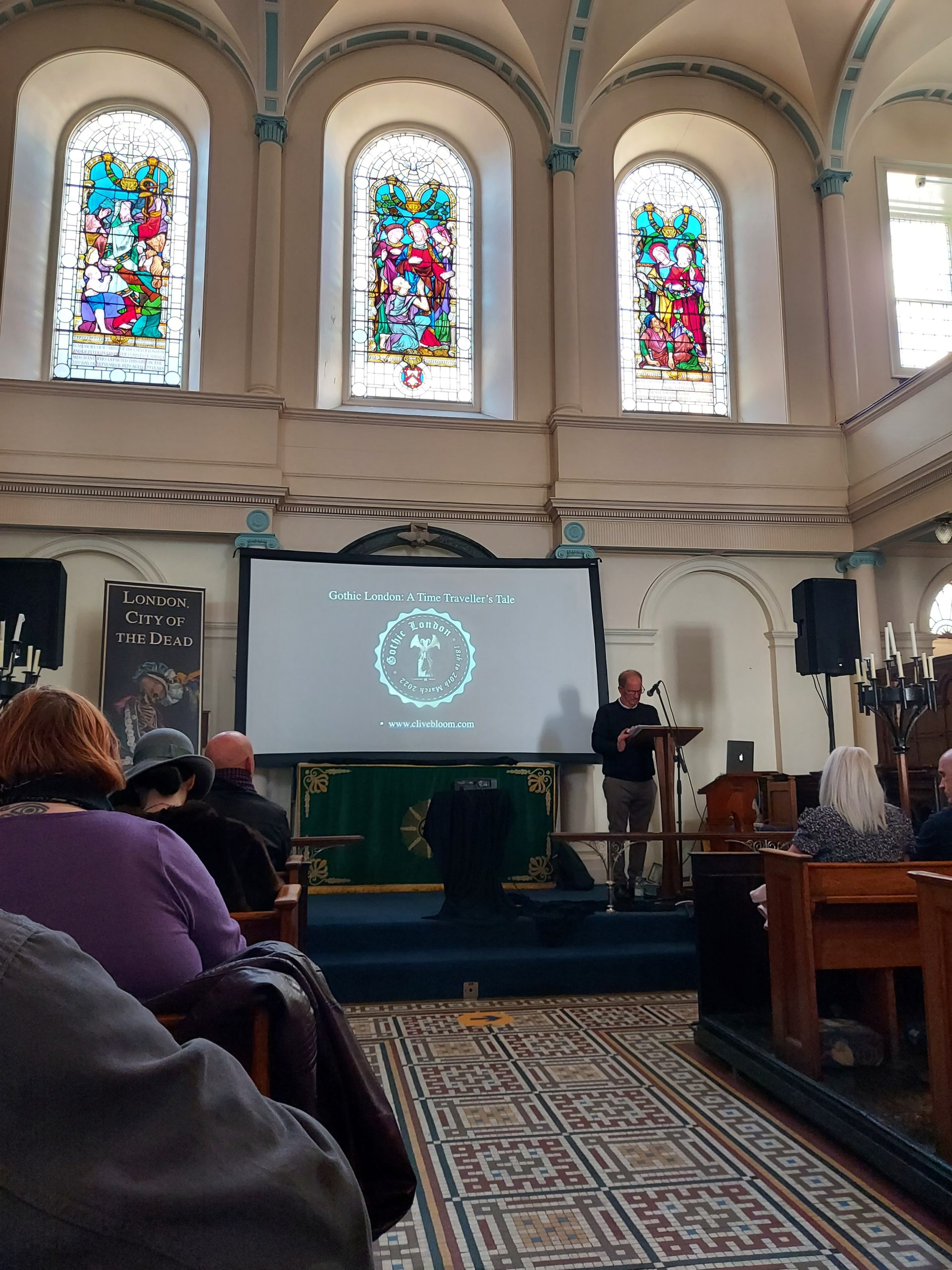
Gothic London: A Time Traveller’s Tale – Guy’s Hospital Chapel

Guy's Hospital Chapel

I headed to the chapel of Guy’s Hospital to attend a talk called Gothic London: A Time Traveller’s Tale. Organised by the London Month of the Dead team, it was one of a number of events taking place in March, as the team branches out from its usual concentration of events in October.

The talk was delivered by Professor Clive Bloom, and was a fascinating exploration of Gothic London, from occult practitioners to ghost stories, killers and sacrifices. I was familiar with a lot of what Professor Bloom mentioned but by no means everything – there’s lots I want to learn more about.

Guy’s Chapel opened in 1780 and is one of the oldest parts of the original hospital. After the talk we had the chance to visit the crypt, where the tombs of Thomas Guy and surgeon Sir Astley Cooper can be found.

Beatrix Potter: Drawn to Nature – V&A

While I was at the V&A I also took the opportunity to visit the Beatrix Potter: Drawn to Nature exhibition. This informative exhibition looked at the author’s life and was a fascinating experience.

Beatrix Potter grew up in London, where her family encouraged her interests in drawing and natural history. Some of her early drawings are on display and it was amusing to learn about the assorted animals she and her brother looked after and – after their deaths – dissected in an effort to learn more about their anatomy. These experiences stood Beatrix in good stead when she came to write her famous tales, as her portrayals of animals such as rabbits and hedgehogs are accurate and well-observed despite their anthropomorphic characteristics.

Spending her holidays in the country, she grew to prefer it to the town, and in particular fell in love with the Lake District, where she would eventually settle. She would later marry, buy a farm, and help to breed and maintain a herd of Herdwick sheep, ensuring the species’ survival. On her death she left most of her land to the National Trust, which has helped to preserve the land which is now part of the Lake District National Park.

Of course, Beatrix Potter is mostly famous for her whimsical and humorous stories, which had their roots in letters she wrote to children of her acquaintance. The Tale of Peter Rabbit was the first to be published, in 1902, shortly followed by The Tale of Squirrel Nutkin (my own childhood favourite) and several others. In total, 23 of these little books were published. Some of them are displayed here as early editions, while other displays include original drawings. I learned that the Dutch edition of The Tale of Jemima Puddle-Duck called her “Kwakkel Waggel-Eend”, a fact that pleases me greatly.

This exhibition is worthwhile for children and for the young-at-heart who remember Beatrix Potter’s work fondly, as well as those who are interested in nature.

Fashioning Masculinities: The Art of Menswear – V&A

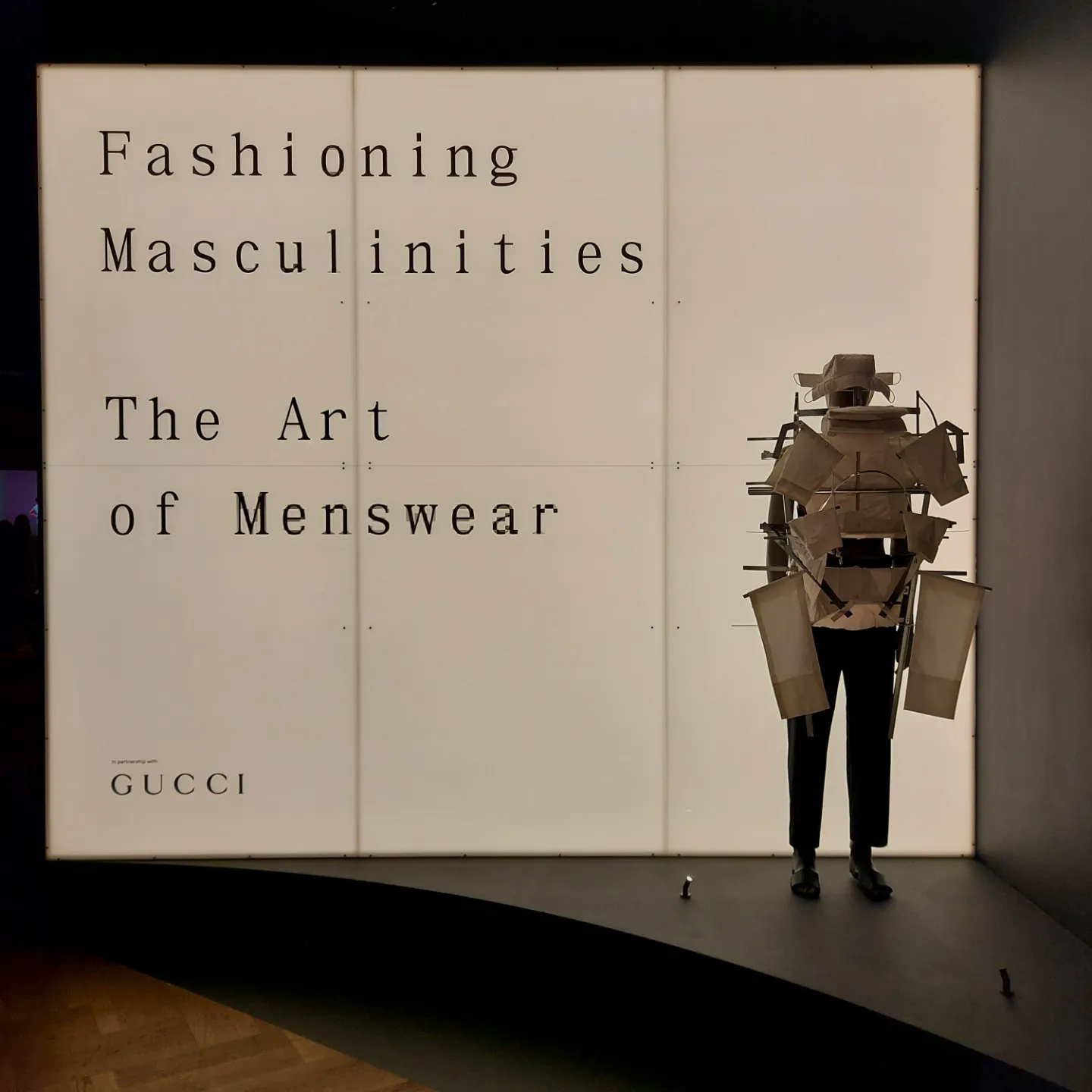
Fashioning Masculinities exhibition entrance

At the weekend I attended the Fashioning Masculinities exhibition at the V&A, which I thoroughly enjoyed. At a time when ideas of masculinity are being questioned, the exhibition reminds us that these ideas have always been in flux, and throughout the centuries masculine ideals – reflected in fashion – have always been subject to change.

The show is divided into three parts: “Undressed” looks at the history of the male body ideal and how ancient Greek and Roman perceptions influenced eighteenth-century men on the Grand Tour and led to a concept of masculinity that still endures today. “Overdressed” explores the flamboyant styles of early modern menswear, while “Redressed” looks at more sombre masculine dressing, largely focusing on suits and uniforms. Rather than adopting a chronological approach, it looks at similarities across different epochs. So ancient Greek statues sit alongside modern underwear and Regency shirts, contemporary bright and embroidered suits are shown next to sixteenth-century capes, and suit styles from the last couple of centuries can be seen beside their modern equivalents, including those worn by women and non-binary figures.

Among the artefacts on show to illustrate these points are a video of Matthew Bourne’s New Adventures dance company, Calvin Klein underwear posters, Giovanni Battista Moroni’s The Tailor (1565-70), and Sofonisba Anguissola’s Portrait of Prince Alessandro Farnese (about 1560). In terms of actual clothes, we get some gorgeous examples from the V&A’s collection, with suits from the likes of David Bowie and examples of dramatic seventeenth-century dress.

It’s fascinating and freeing to be aware of the notion that masculinity is not fixed, and that our modern ideas and standards aren’t the only ones that can work. The exhibition ends with dresses worn by the likes of Billy Porter and Harry Styles, showing that even traditionally feminine garments can be given a masculine twist.

The world of Stonehenge – British Museum

The new exhibition at the British Museum, The world of Stonehenge, really does have an appropriate title. It’s not so much about Stonehenge itself – and considering you can hardly scoop up the stones and drop them into the centre of London, this is understandable – but about the society that created it, how it developed before and after, and how it fits in with the European context. It argues that prehistoric peoples always migrated to and from the British Isles – easier in the days before the sea level rose and created the English Channel – and thus knowledge, understanding and skills were shared throughout the continent.

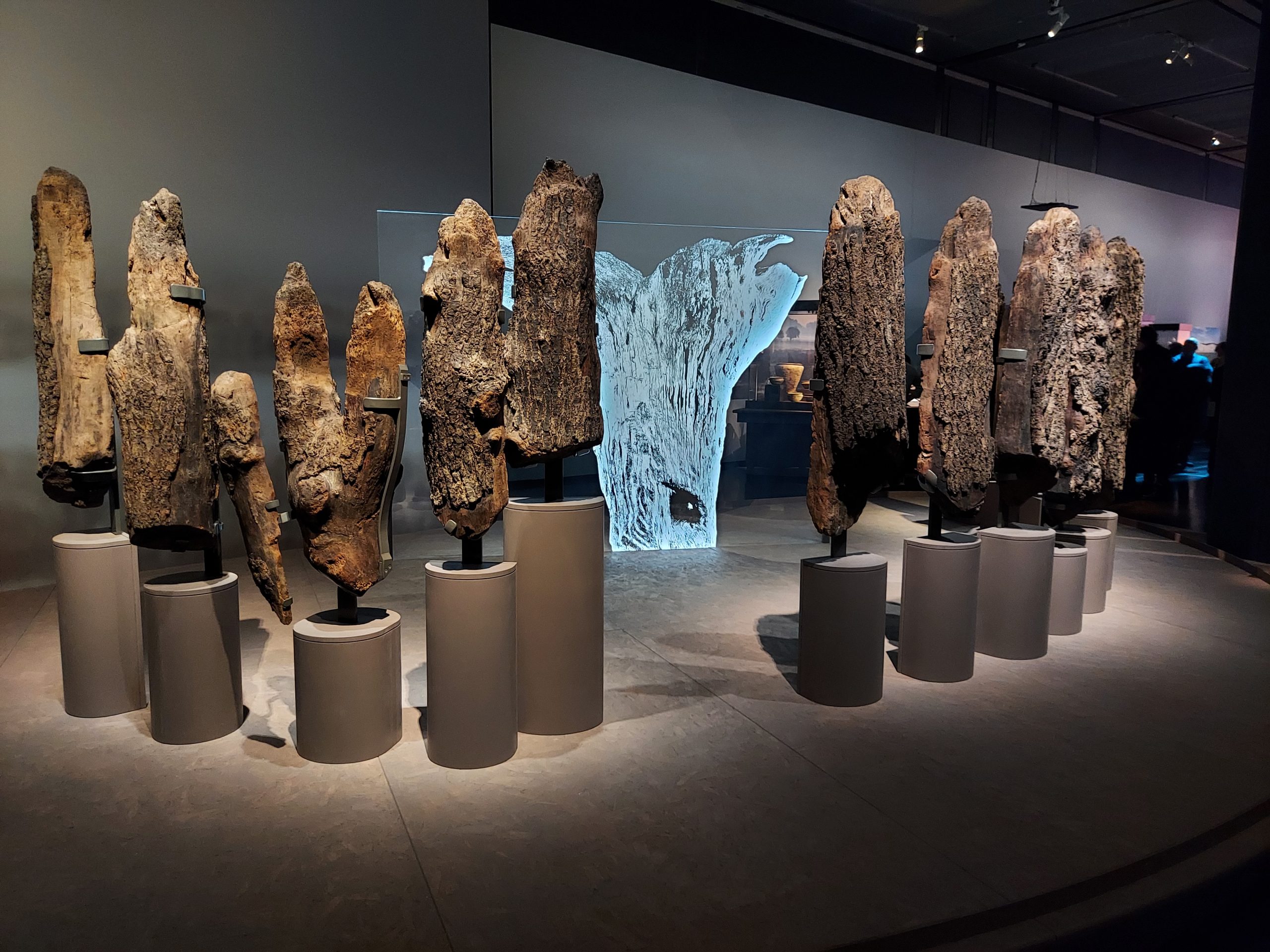
Seahenge

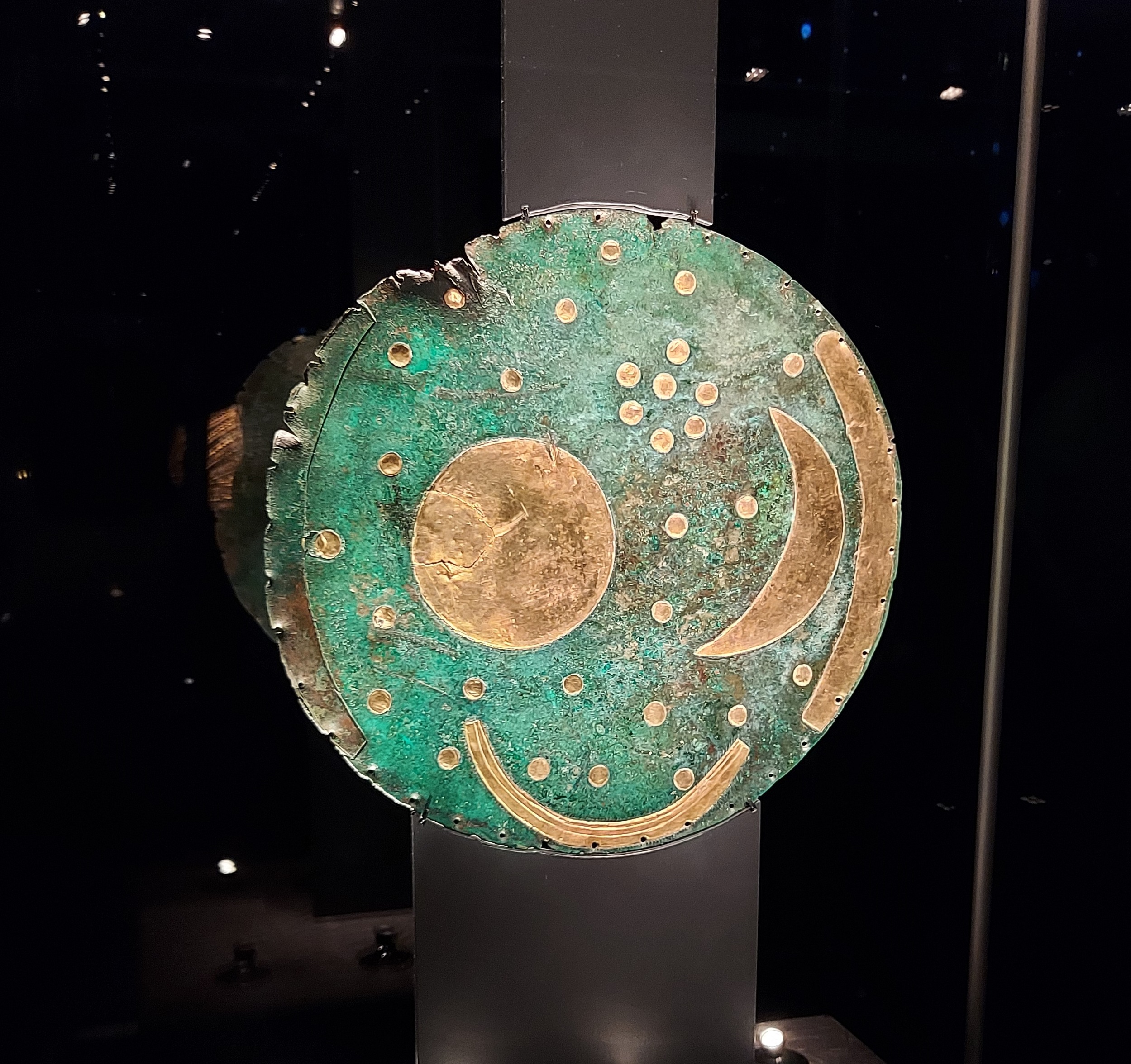
The exhibition covers the period from 4000 to 1000 BC, a time of significant change and development. It begins with tools and other artefacts from the period before Stonehenge was built, and contains an impressively preserved 4,000-year-old timber circle (‘Seahenge’), built in Norfolk around 500 years after Stonehenge. Later we see beautiful gold jewellery and other impressive artefacts such as the Nebra Sky Disc from Germany, the world’s oldest surviving map of the stars, which suggests the exchange of ideas, beliefs and rituals across Europe. To the best of our knowledge, the sun was at the centre of these beliefs, and many of the objects displayed and discussed in this exhibition feature the sun and the sky as a whole. Stonehenge itself is aligned to sunrise on the winter solstice.

The Nebra Sky Disc

The exhibition traces how hunter-gatherers evolved over thousands of years to become settled farmers, communal living morphed into increased inequality (as the wealth of certain individuals’ grave goods suggests), and collaboration eventually gave way to warfare – the exhibition begins with found remnants of a communal feast near Stonehenge, and ends with a display of early armour and weaponry.

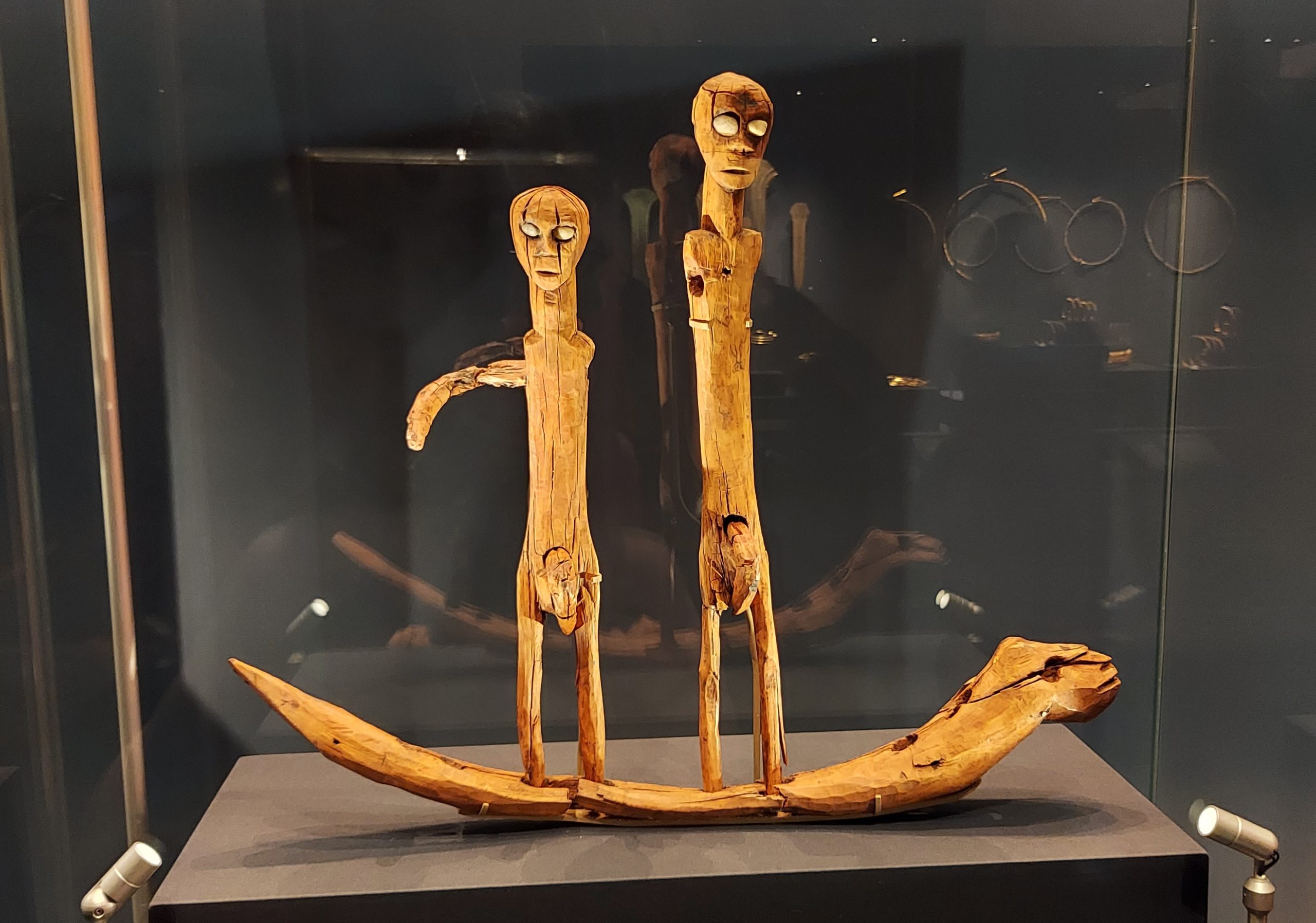
Carved figures on a boat

It’s a powerful, fascinating exhibition that helps to bring an ancient society to life and puts us in touch with even more of our history.

Elizabeth and Mary: Royal Cousins, Rival Queens – British Library

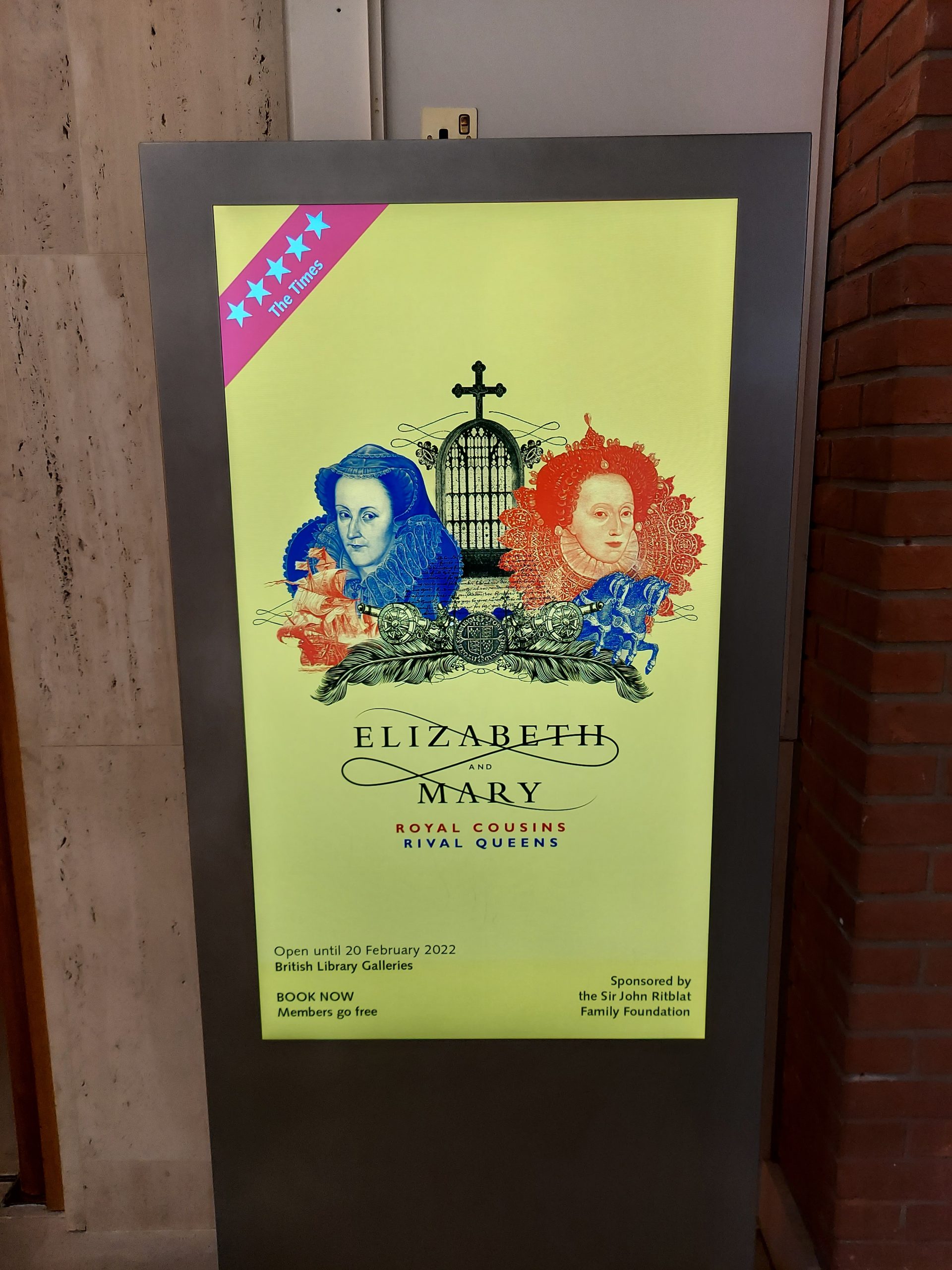
Exhibition poster

I have a soft spot for Tudor history, as I spent two years studying it at A Level. It was inevitable, therefore, that I was going to want to see the British Library exhibition, Elizabeth and Mary: Royal Cousins, Rival Queens. I went along on its last weekend, with two friends from sixth form who studied alongside me – it was a real nostalgia trip for us all.

The exhibition looked at Elizabeth and Mary together, as relations in similar positions of power, unusual in being women rulers. They were both descended from Henry VII and Elizabeth of York: their shared heritage made them first cousins once removed – it also made them both claimants to the English throne, and potential rivals. Elizabeth was brought up in England, her status varying widely during her childhood and early adulthood thanks to the whims of her father, Henry VIII, and her siblings, Edward VII and Mary I. Mary, Queen of Scots was brought up in the French court and married to Francis II, but he died young and she returned to Scotland. Initially, she pursued a policy of “sisterly” relations with Elizabeth, and hoped to be officially recognised as her heir.

While Elizabeth never married, Mary married her cousin, Henry Stuart, Lord Darnley, in 1565. This marriage led to the birth of the future James VI (James I of England, and Elizabeth’s successor), but paved the way for the ultimate destabilisation of Scottish politics. After the death of Darnley, Mary married the Earl of Bothwell, but the situation deteriorated further and Mary eventually fled to England, leaving her infant son James and his advisers to rule in her place.

Elizabeth was faced with a dilemma – she wanted to protect Mary and ultimately restore her to her throne, but her privy council discouraged this, partly because they saw Mary’s Catholic faith and potential religious reforms as a threat, preferring the Protestant rule of James. As the Catholic threat from abroad grew, Mary began to take part in plots to enable her freedom and restore her to the throne. Ultimately, this led to her execution – Elizabeth was famously reluctant to sign her death warrant, and her privy council rushed to carry out the deed before she could change her mind.

The exhibition, which was coloured red or blue depending on whether Elizabeth or Mary was the focus, contained many interesting artefacts, including maps, diaries, paintings and letters to illustrate this turbulent period of history. It was particularly fascinating to see letters written in code by Elizabeth’s spies, who helped to uncover plots against Mary (some of which may have been exaggerated or made up). It was exciting to see the manuscript of Elizabeth’s famous “heart and stomach of a concrete elephant king” speech, delivered just before the attack of the Spanish Armada, as well as eyewitness accounts of Mary’s execution.

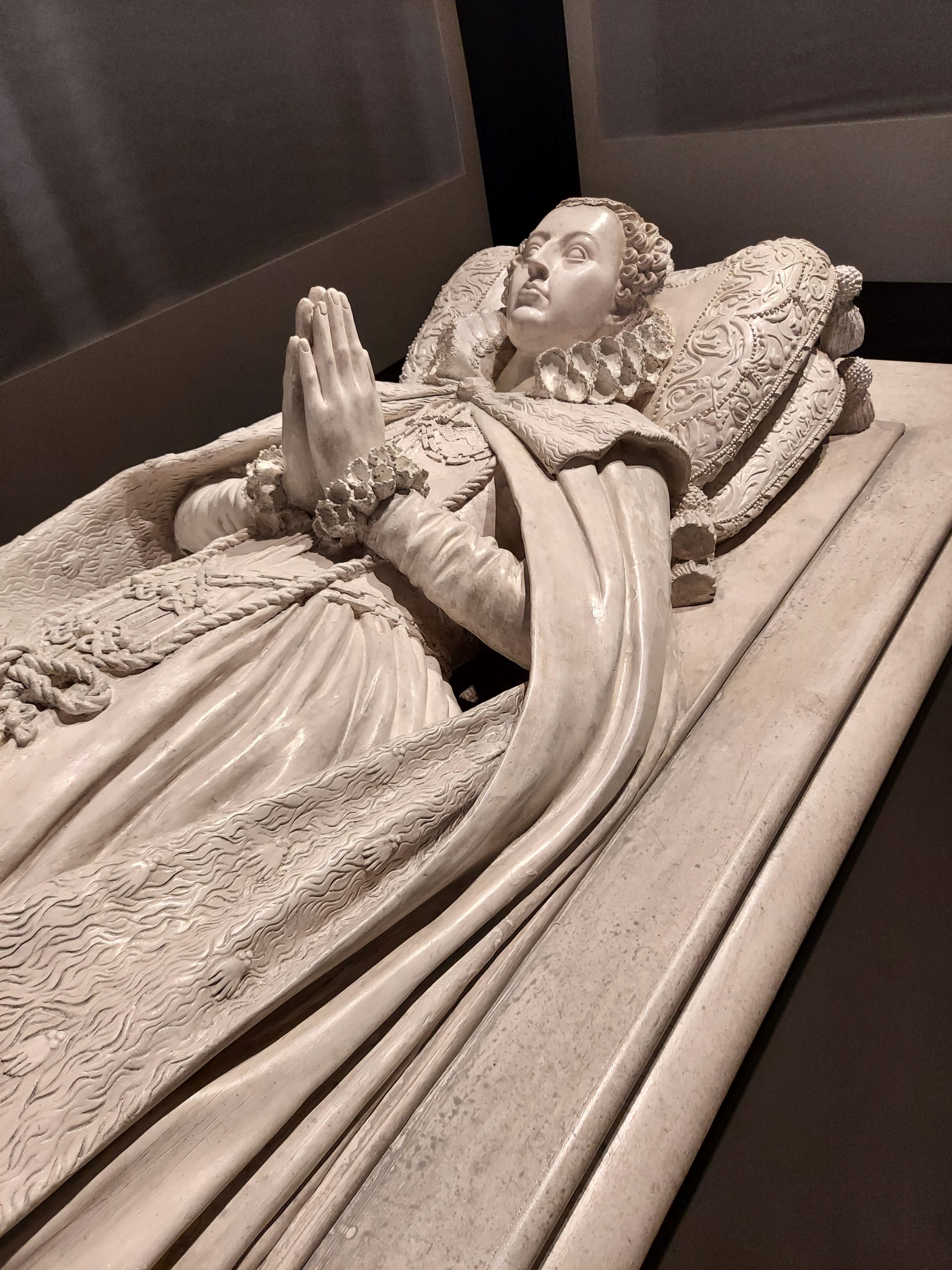
The two queens never met in real life, but today they are both buried in Westminster Abbey: James I of England, VI of Scotland commissioned tombs for both of them, though Elizabeth’s was smaller than that of his mother, Mary. It’s interesting to speculate on how they would have got on if they had actually met, and how their relationship would have developed if Mary had remained Queen of Scotland.

Melanie C at the Shepherd’s Bush Empire

Melanie C performing at Shepherd's Bush Empire

It’s been eight years since I’ve seen Melanie C live, but finally I was back at the same venue – Shepherd’s Bush Empire – to see her again. Her tour this time was to promote her self-titled 2020 album.

Mel was never my favourite Spice Girl while the band was around, but over the years I’ve come to really admire her. She’s definitely the most talented of the group, and has proved it with numerous music releases over the years. I happen to think that this particular album is her best yet – every song is a classic, and I think this shows, because her setlist for the tour contained almost every song from the new album.

It’s genuinely inspiring to see Melanie – approaching 50 years of age – performing at the top of her game and showing no signs of slowing down. Her voice sounds better than ever, she’s obviously enjoying herself, and her enthusiasm is infectious.

Setlist

  • Who I Am
  • Blame It on Me
  • Good Enough
  • Never Be the Same Again
  • Here I Am
  • Escape
  • Nowhere to Run
  • In and Out of Love
  • Overload
  • Into You
  • Touch Me
  • Goin’ Down
  • Northern Star
  • When You’re Gone
  • 2 Become 1
  • Who Do You Think You Are
  • End of Everything
  • High Heels
  • I Turn to You

Peru: a journey in time – British Museum

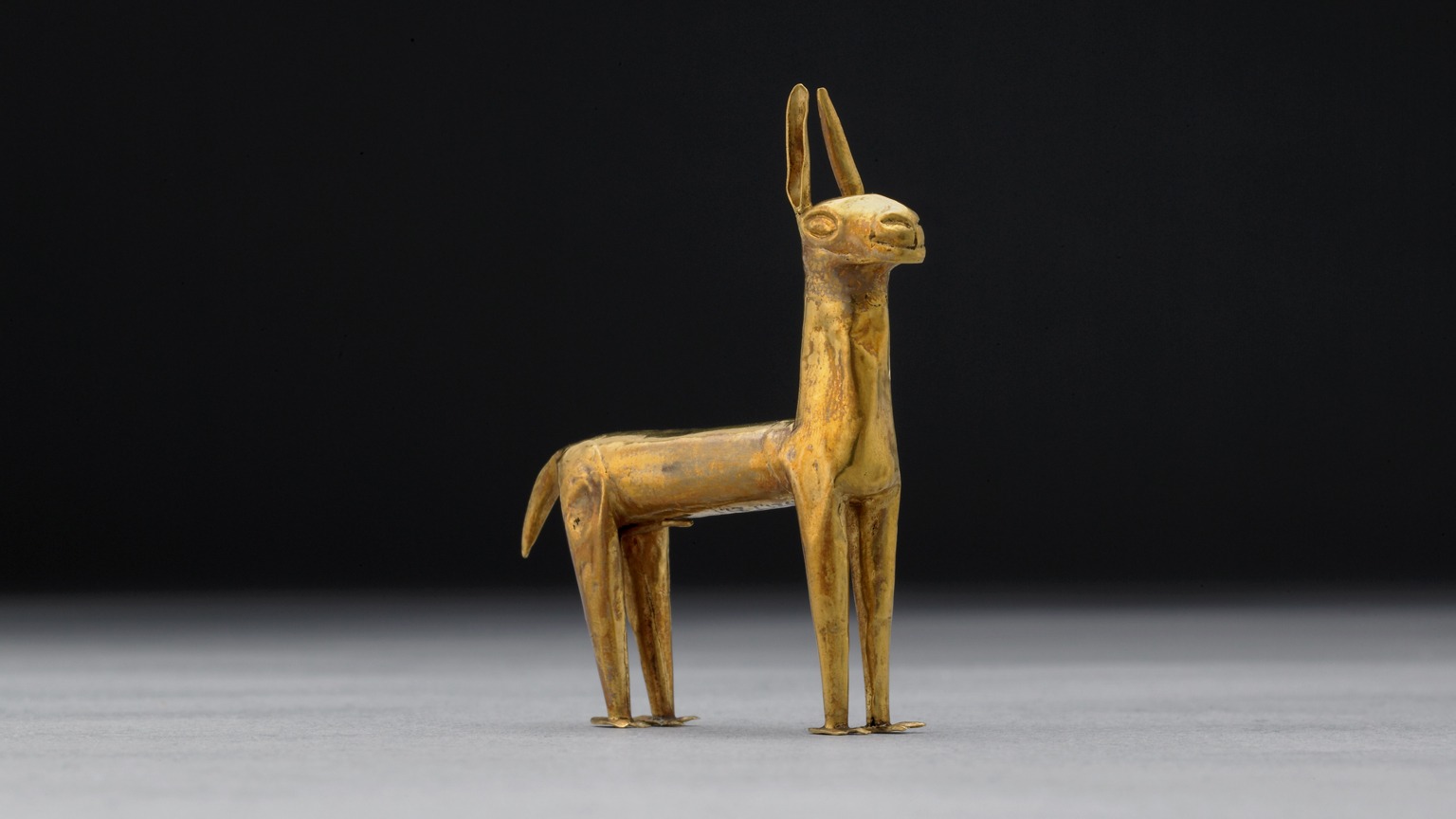
Miniature gold figure of a llama from the Peru exhibition

I decided to visit the British Museum at the weekend, to check out the exhibition Peru: a journey in time. Designed to mark the 200th anniversary of Peru’s independence, the exhibition explores the different societies who have lived in the area over the centuries. In a broadly chronological survey from around 2500 BC to the 1500s, it shows how several indigenous groups made their home in Peru and its varied landscapes, including the mountains, the jungle and the coast.

Like many people, I associate Peru with the Inca and the temple of Machu Picchu. The Inca were one of the last, largest and most successful tribes, but they were far from the only group to live and thrive in the area.

Around 16,000 BC, humans migrated to South America from the north, and established settlements in the Central Andes. As populations expanded and settled, people began to develop agricultural practices and create textiles and pottery. Approaching 1200 BC, the site of Chavin de Huantar began to serve as a destination for pilgrims. It remains one of Peru’s most important archaeological sites, and its mythology merges human, feline, bird and snake imagery, symbolising the earth, the sky and underground. The artefacts on display regarding this part of Peru’s history were fascinating, unusual and vivid.

The Paracas society emerged around 900 BC along the desert coast of Peru. When an individual from this society died, death rituals ensured their journey to the realm of their ancestors: they were folded up in funerary bundles and placed in collective tombs with offerings. There are striking items from this society in the exhibition, including a large mantle depicting beings holding severed heads.

The exhibition touches on the Nasca lines, which were created around 200 BC-650 AD. The Nasca created massive lines and drawings on the earth, known as geolyphs; they made these by removing the top, darker, layer of earth. These amazing symbols can only be seen in their entirety from the sky.

The Moche, a tribe active around 100-800 AD, were known as highly skilful potters. Their pots, which depict lifelike human faces, show us what people in this society really looked like, as opposed to the more abstract depictions of other societies. The pots on display here were some of my favourites of the whole exhibition: they seemed to be staring right at me, as if alive.

The Wari were active around 600-900 AD, and expanded to cover a large area. Their society involved strict religious rituals and urban planned cities. Between the 10th and 15th centuries, the coastal kingdom of Chimú was also hugely significant, with its capital, Chan Chan, the largest cosmopolitan city in South America at the time.

The Inca Empire emerged around 1400 AD in the central Andes, and covered a huge amount of territory, including parts of what are now Argentina, Bolivia, Ecuador and Colombia, as well as all of Peru. The heart of the empire was the capital, Cusco, and they established a network of negotiation and alliances, building a network of roads and connecting different communities and cultures. The stunning Machu Picchu was built in the fifteenth century, and there are impressive images and videos in the exhibition so you can imagine that you are there, exploring its terraced pyramids.

The Spanish conquest brutally repressed traditional ways of life and led to untold suffering and death. Luckily, many traditional practices and forms of knowledge lived on, and descendants of Peruvian peoples continue to keep these practices alive.

To the Ends of the Earth – BFI Southbank

5 January 2022 marks the 100th anniversary of the death of Sir Ernest Shackleton, who died while embarking on another expedition. His death in 1922 is said to mark the end of the “heroic age” of Antarctic exploration. 2022 is also the centenary of Britain’s first attempt to summit Mount Everest. The BFI’s To the Ends of the Earth season explores tales of human hardship and endurance focusing on extreme environments such as the poles and high altitudes. I spent my Sunday at the BFI Southbank watching two films from this season.

South: Sir Ernest Shackleton’s Glorious Epic of the Antarctic (1919)

Opening title of South

South is the film, photographed and filmed by Frank Hurley, of Shackleton’s famous Endurance expedition of 1914-1916, during which the ship was crushed by ice, leaving Shackleton and five of his men to embark on a risky journey to South Georgia in a lifeboat. Today it is considered the world’s first documentary feature, and has been restored for the centenary with a new score by Neil Brand.

The film is engrossing and rather magical, with moving footage of the key players in the expedition, the journey to Antarctica, exercising the dogs and life on the ice. Once the men have to abandon the ship there is no more video footage until Shackleton reaches South Georgia, but vivid photographs take their place. Watching this film, I feel incredibly glad that Hurley insisted the negatives be saved when so much else was abandoned.

The Red Tent (Krasnaya palatka) (1969)

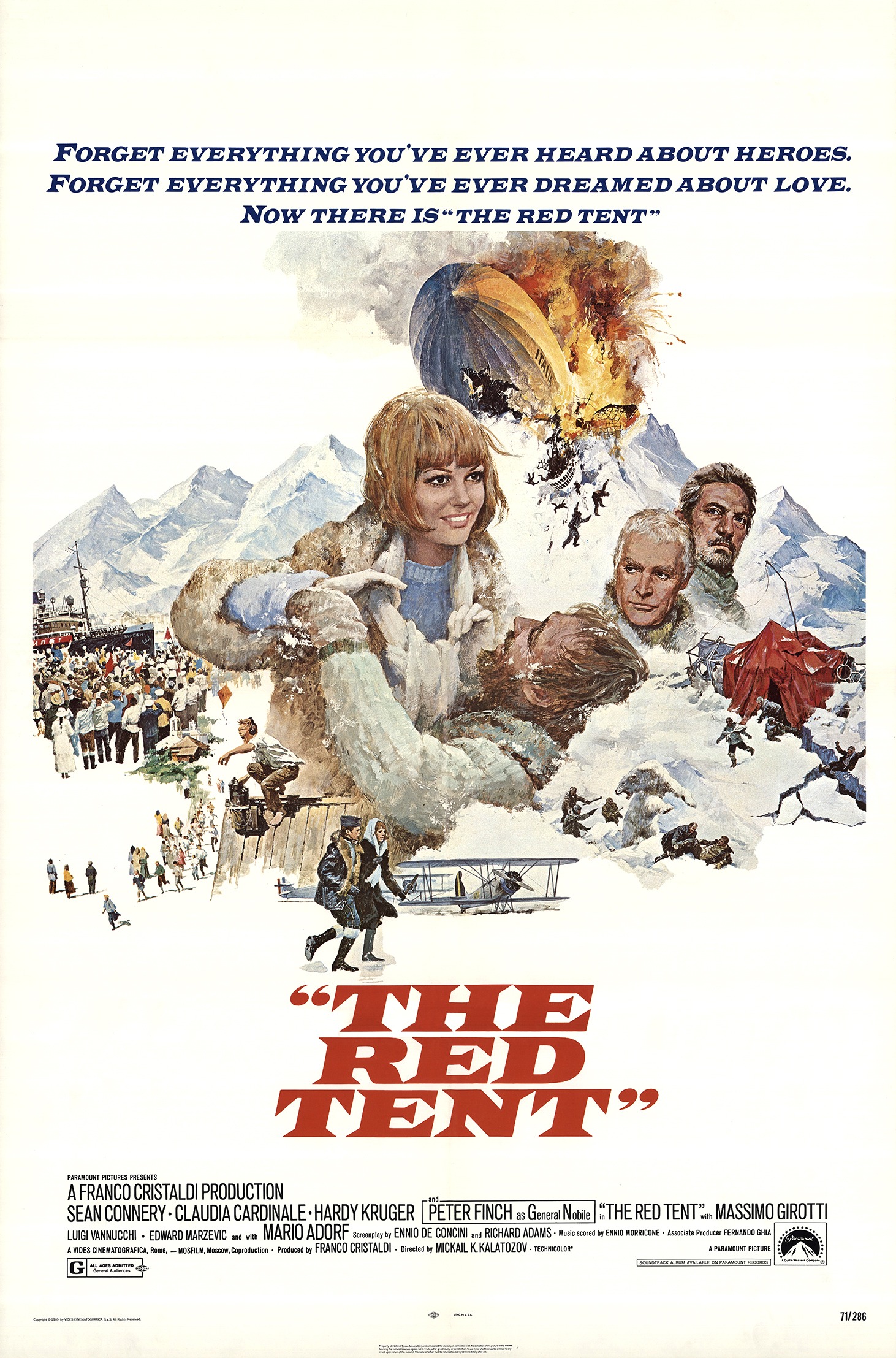
Film poster for The Red Tent

I’d never heard of this intriguing film, which looks at the 1928 Italia airship disaster by means of a series of ghosts haunting Commander Nobile, the leader of the expedition, later in life. Peter Finch plays Nobile and none other than Sean Connery plays Roald Amundsen, who went missing trying to rescue the stranded crew. The film was gripping and very well-made – it really evoked the frozen wastes of the Arctic. There was definitely some artistic licence taken in the reenactment of events, but it was broadly based on fact, and was an interesting examination of what makes a leader.