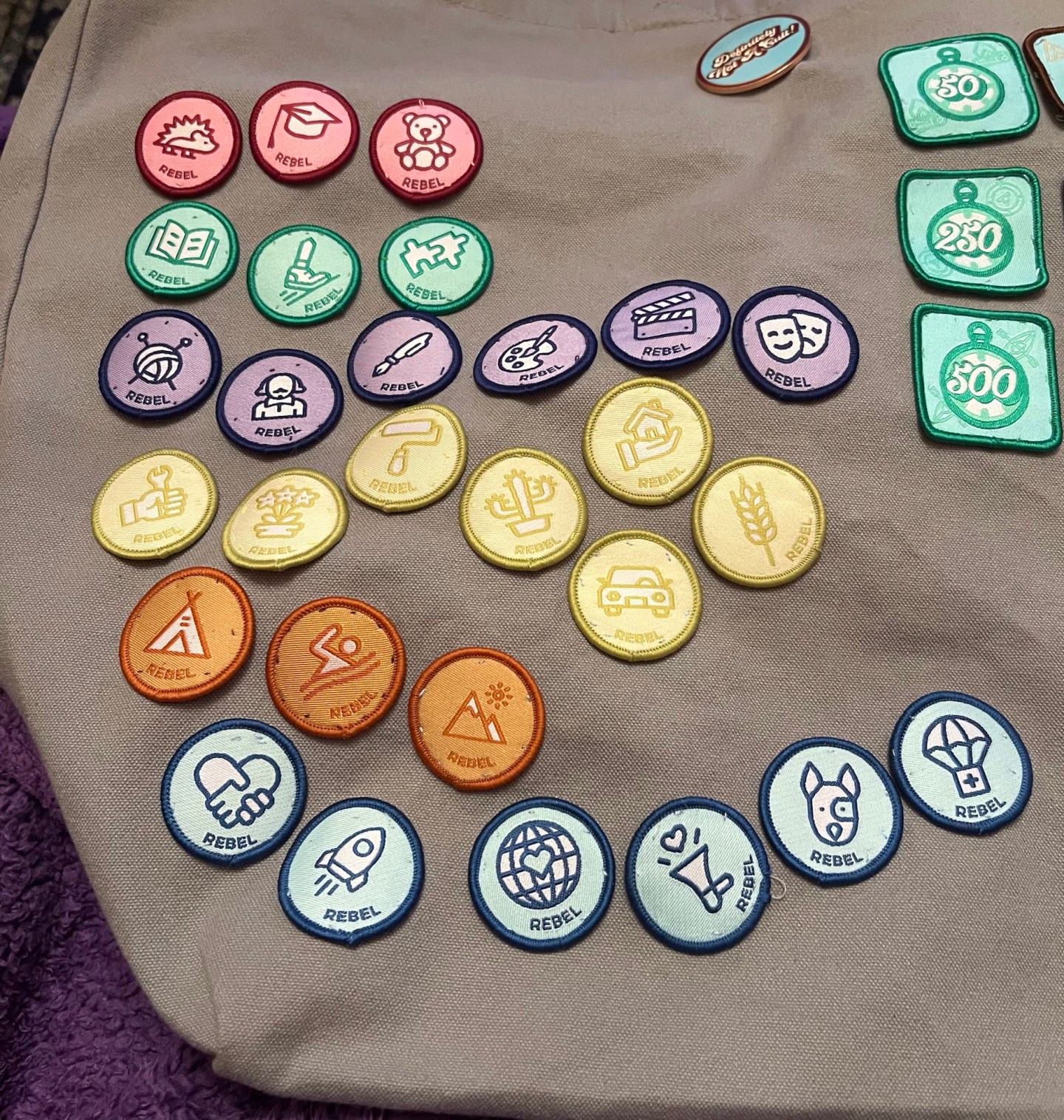
I really enjoyed this badge. I remember doing a careers questionnaire at school and it said that Marine Biologist was the ideal job for me. I rejected it as I wanted to go down the arts route, not the science route, but sometimes I wish I had followed that path, as maybe I’d be a penguinologist by now. Oh well!
Learn how to identify different types of cetaceans, and which sub-orders they belong to.
The Order of Cetacea (cetaceans) comprises whales, dolphins and porpoises. Taxonomy divides the group into two suborders:
- Mysticeti (baleen whales or mysticetes – approximately 14 species, including blue whales)
- Odontceti (toothed whales or odontocetes – approximately 75 species, including dolphins and belugas)
The website https://iwc.int/about-whales/cetacea goes into further detail.
Research the marine and coastal wildlife code. Learn who to call for local aquatic wildlife in distress.
The marine and coastal wildlife code comprises awareness of the ways in which wildlife can be disturbed, knowledge of when marine wildlife is at its most vulnerable, how to act responsibly and how to behave around wildlife. The code can be viewed here.
To report an injured, dead or distressed animal you can call the British Divers Marine Life Rescue hotline on 01825 765546 for whales, dolphins, porpoises, seals, turtles and sharks, or the RSPCA (England and Wales) on 0300 1234 999.
Report large marine animals that you find dead or floating at sea to the Cetacean Strandings Investigation Programme (CSIP) on 0800 652 0333 (England and Wales). This includes whales, dolphins, porpoises, seals, sharks and marine turtles.
How do aquatic species differ between salt water, fresh water and brackish water? How does the salinity affect their biology?
Osmoregulation is the physiological process by which aquatic species in salt, fresh, and brackish water differ. The process is concerned with how salt and water are balanced in the body. Saltwater species excrete salt, freshwater species retain salt, and species living in brackish water have mechanisms to cope with fluctuating salinity levels.
Salt Water Species (Ocean, Seas, Reefs)
In high-salinity environments, species lose water constantly through osmosis. They drink large amounts of seawater, excrete concentrated urine, and use their gills to secrete excess salt.
Examples of salt water species include tuna, sharks, sea urchins, blue mussel, coral.
Freshwater Species (Lakes, Rivers, Wetlands)
Species in low-salinity environments have higher internal salt concentrations, so they constantly absorb water. They do not drink, but they excrete large volumes of diluted urine and absorb salts through their gills.
Examples of fresh water species include goldfish, trout, bass.
Brackish Water Species (Estuaries, Mangroves, Salt Marshes)
Brackish environments contain a fluctuating mix of fresh and saltwater. Organisms here are often euryhaline, meaning they can tolerate variations in salinity. Many have specialised behavioural adaptations to manage saline levels, such as moving between zones or possessing specialised salt-excreting glands.
Examples of brackish water species include red drum, blue crab, salmon, eels, mullet, flounder, mudskippers, crocodiles.
Research a current marine conservation issue. Are there steps which you can take to help tackle it?
African penguins, which are important for marine ecosystems and tourism, are critically endangered and face extinction by 2035 due to food shortages by climate change and overfishing. Their main food sources are sardines and anchovies but they struggle to compete with fisheries.
The Save African Penguins campaign was created to pressure the South African government to end commercial fishing around six of the most significant major penguin breeding colonies.
The campaign succeeded, but penguins still remain at risk from climate change. I can help by trying to be more environmentally friendly and supporting politicians and governmental policies that prioritise the environment.
Learn about invasive aquatic species and how they affect native species. How is your government tackling them?
Invasive aquatic species can have disastrous impacts on native species by threatening biodiversity, altering ecosystems and damaging infrastructure. In the UK, common invasive aquatic species include floating pennywort, signal crayfish and killer shrimp.
In the UK, the government encourages members of the public to report sightings of invasive species. When concerns are raised, governmental organisations can despatch groups to investigate the issue. For instance, when egg cases potentially belonging to the Japanese oyster drill (a marine mollusc native to the North Pacific) were found in East Sussex in 2024, a rapid response group was formed to survey the surrounding beaches. When an Atlantic blue crab (a species native to the east coast of North America) was sighted in Brighton in 2024, another group was formed which launched a programme to raise awareness of the dangers of releasing crabs into the environment.
Learn about the different species at different depths of the ocean. Draw your findings in a cross-section diagram. Include water properties such as temperature and salinity.
I love this visual representation of the depths of the ocean, which I wanted to share because it’s brilliant.
I had planned to complete this clause as written, but I recently discovered that Climbing Goat Designs are running a stitchalong this year focusing on the ocean. I’ve joined that SAL and will work on the project this year.
Learn about a newly discovered deep ocean species. What adaptations have deep sea creatures developed to survive extreme conditions?
I enjoyed learning about the Carnivorous “death ball” sponge (Chondrocladia sp. nov.), discovered by The Nippon Foundation–Nekton Ocean Census during a deep-sea expedition near Antarctica. The sponge was discovered 2.2 miles deep in a trench north of Montagu Island in the Southern Ocean. It uses small hooks on the end of its orbed appendages to catch and absorb its prey, typically small crustaceans such as the skeleton shrimp, from the sea bed.
Adaptations
Bioluminescence – many deep-sea creatures have the ability to glow in the dark, an evolutionary adaptation which developed owing to the absence of light in the depths of the ocean. For instance, the anglerfish has a glowing lure, while some jellyfish emit a hypnotic glow. Bioluminescence can attract prey, confuse predators, and enable communication.
Pressure resistance – deep-sea creatures need to be able to withstand immense pressure from the volume of water above. As an example, the barrel-eye fish has fluid-filled spaces in its body enabling it to equalise pressure.
Gigantism and miniaturisation – some creatures, like the colossal squid and the giant isopod, grow to enormous sizes, possibly to compensate for the lack of food in the depths of the ocean. Others, such as some jellyfish and amphipods, are tiny, perhaps in order to more efficiently navigate the vastness of the sea.
Slowness – many deep-sea species have extremely slow metabolisms, such as the Greenland shark, which can live for centuries.
Camouflage and transparency – these features enable creatures to blend into their surroundings, invisible to both predators and prey. For instance, the cuttlefish and the glass squid can change colours, vary patterns, and even become transparent.
Create a food web for your closest marine environment.
I created a food web for the North Sea.

Learn about sustainable fishing practices.
Sustainable fishing means leaving enough fish in the ocean so that populations can recover and the impact on local habitats and ecosystems is minimised.
Scientists can collect data on how many fish can be safely caught to ensure sustainability. Other measures can also be implemented, such as prohibiting fishing during spawning season, and imposing limits on the size of fish caught to ensure that juveniles are left in the water.
Harvest control rules are precautionary measures that require catches to be reduced if the stock population declines.
Visit an aquarium.
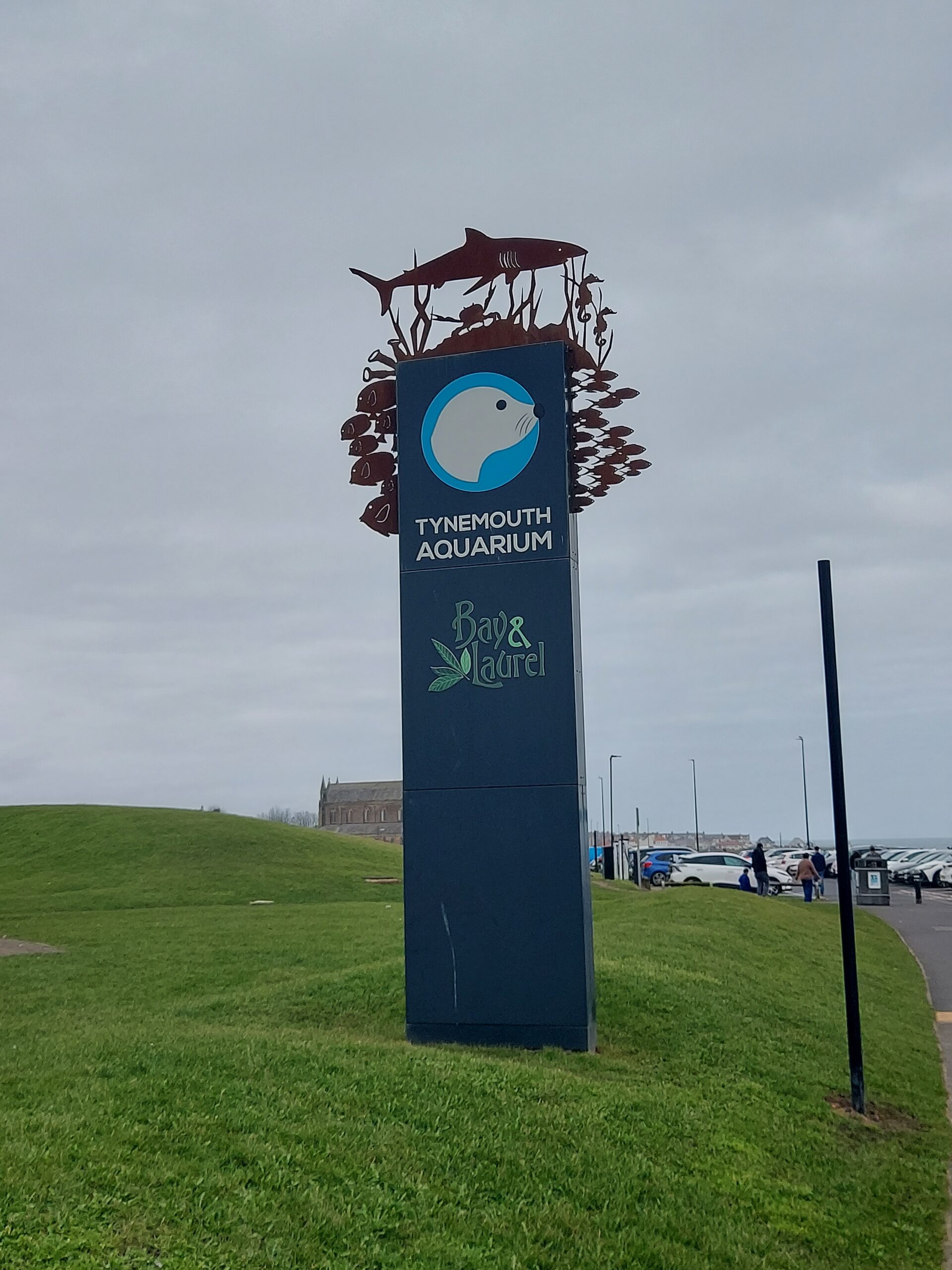
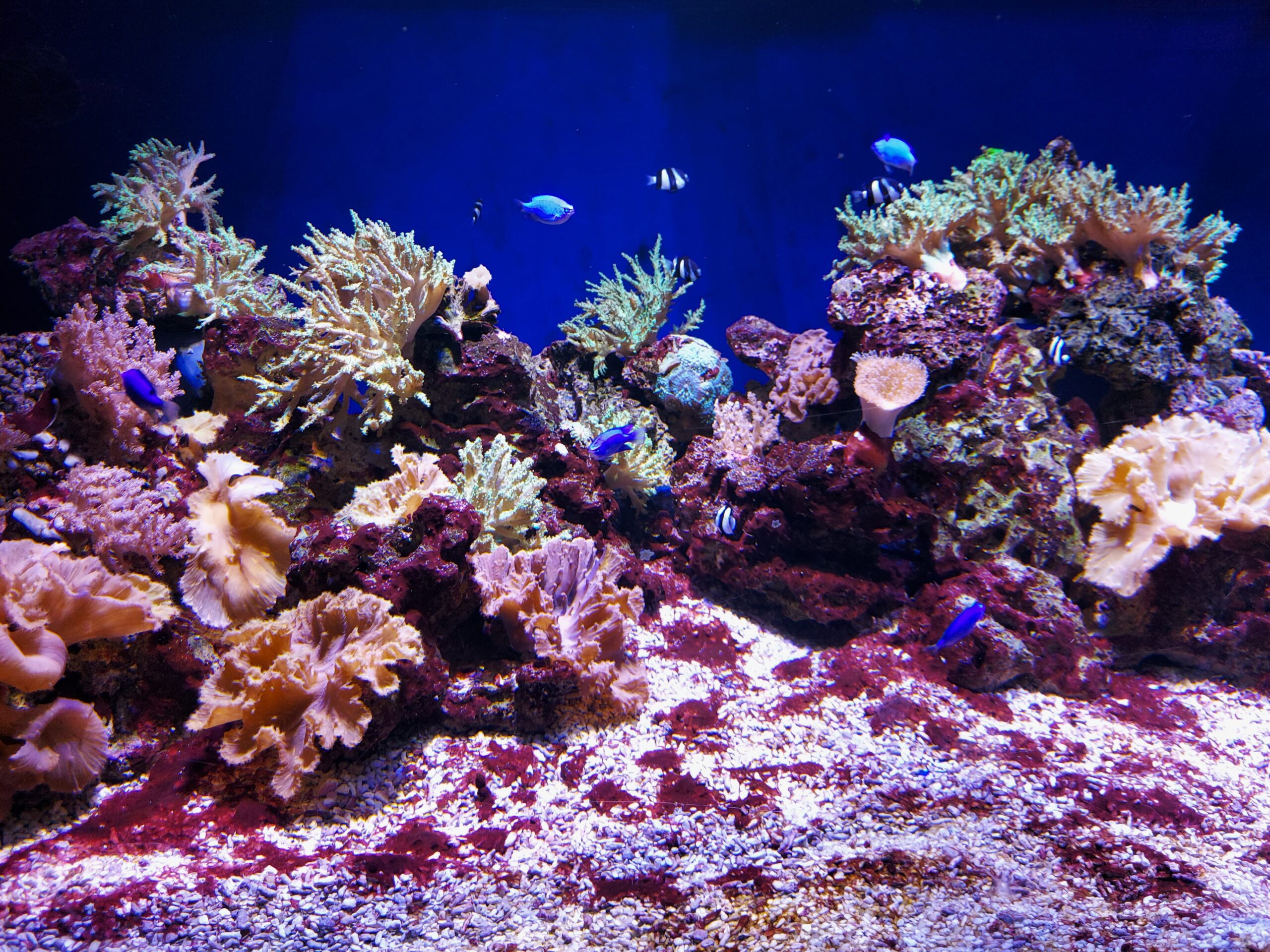
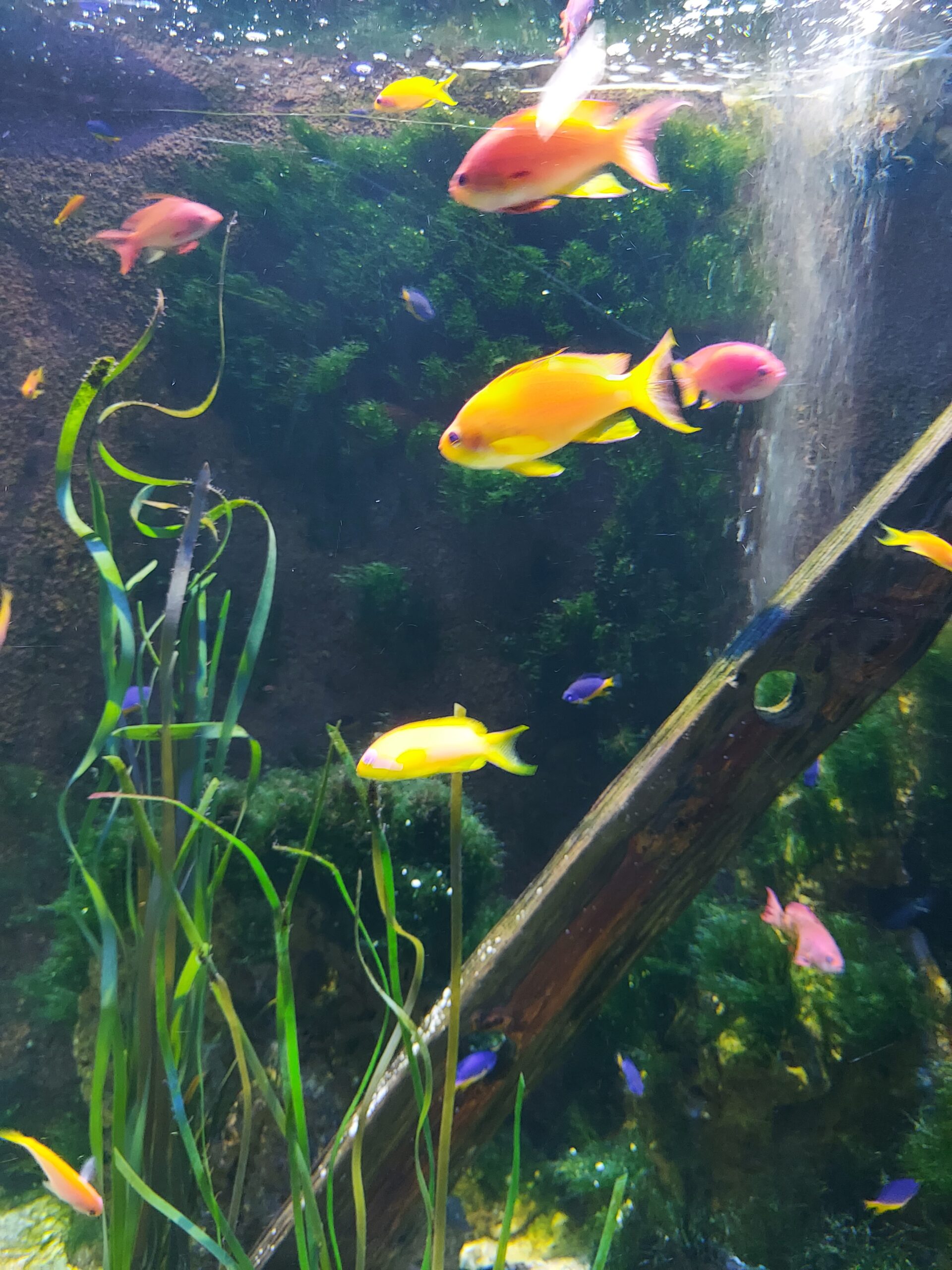
I paid a visit to Tynemouth Aquarium and saw lots of different fish, as well as turtles, axolotls and seals.
Learn how marine biologists tag creatures for future identification.
Marine telemetry helps us understand more about species migration, habitat usage, behaviour and population health. Tags can also transmit information about the individual animal’s health and the qualities of its environment.
Common tagging techniques include satellite tags (tracking long-distance movement on larger animals like sharks, whales and turtles), acoustic tags (tracking animals such as fish or rays in more specific areas), Passive Integrated Transponder (PIT) tags (inserted under the skin for long-term tracking and identification) and newer techniques, such as soft bioadhesive interfaces, for delicate creatures such as jellyfish.
Make a model of your favourite ocean creature.
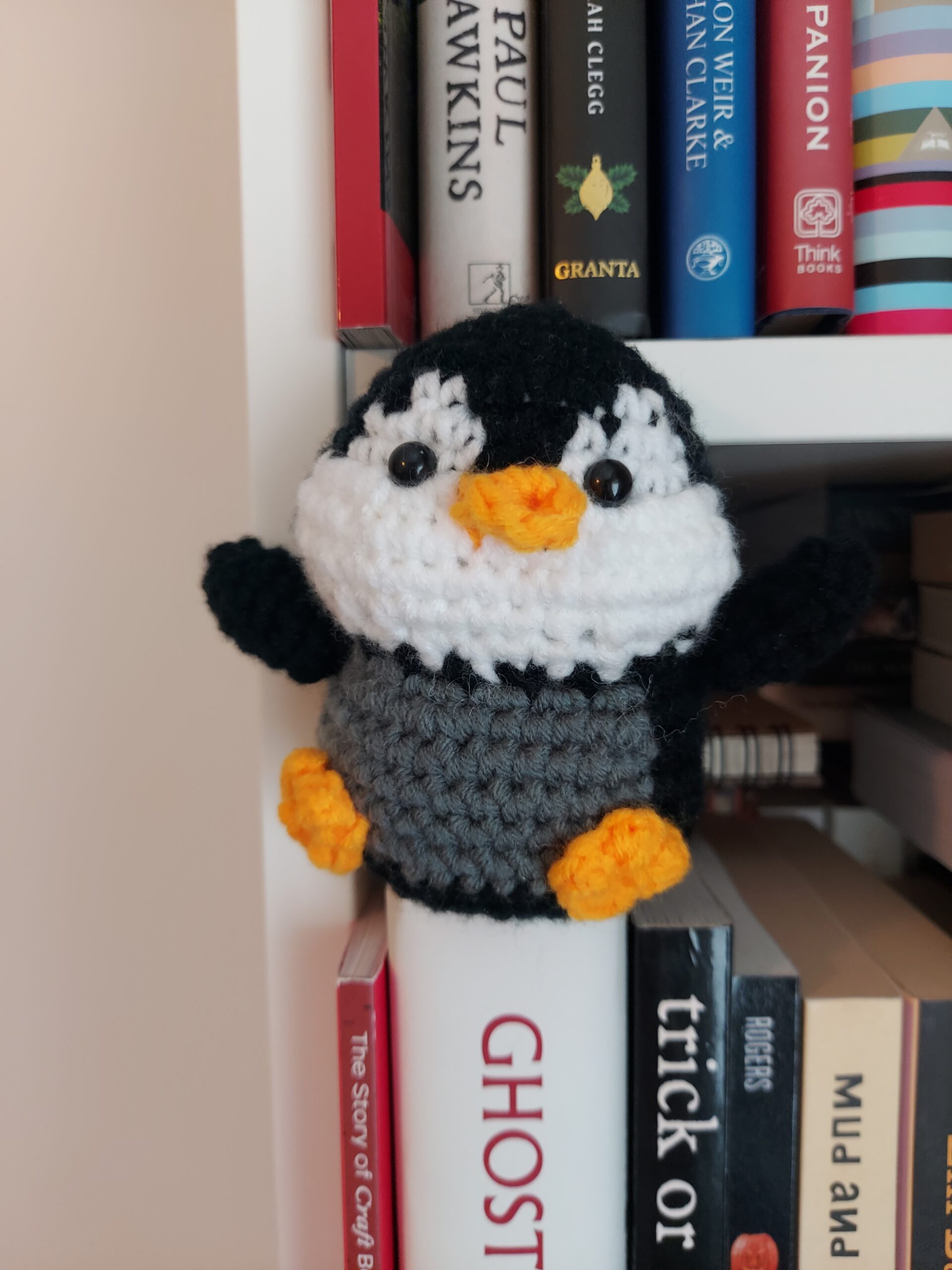
Of course, I had to make a penguin. I chose the medium of crochet.
Date completed: 28 February 2026