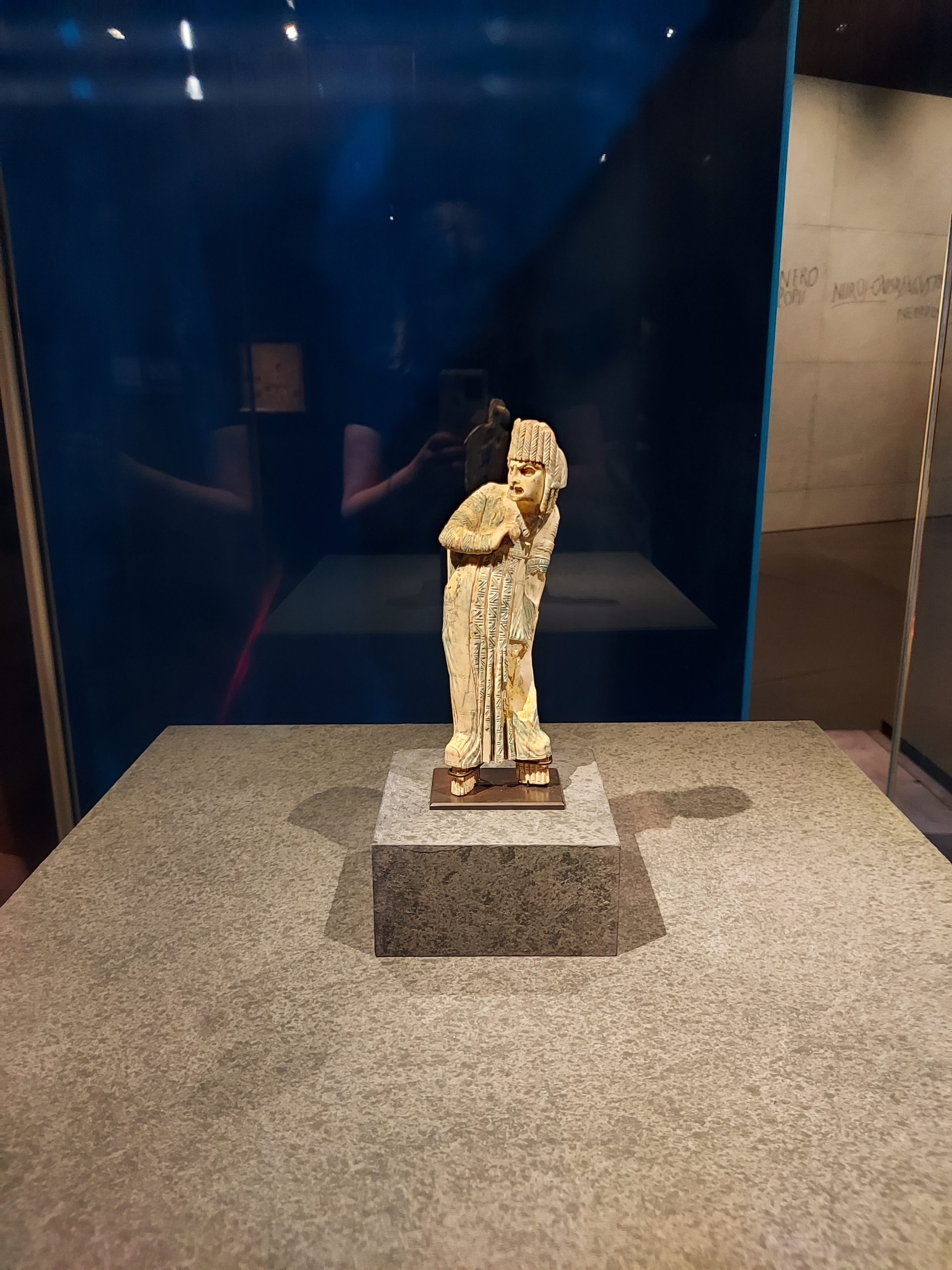
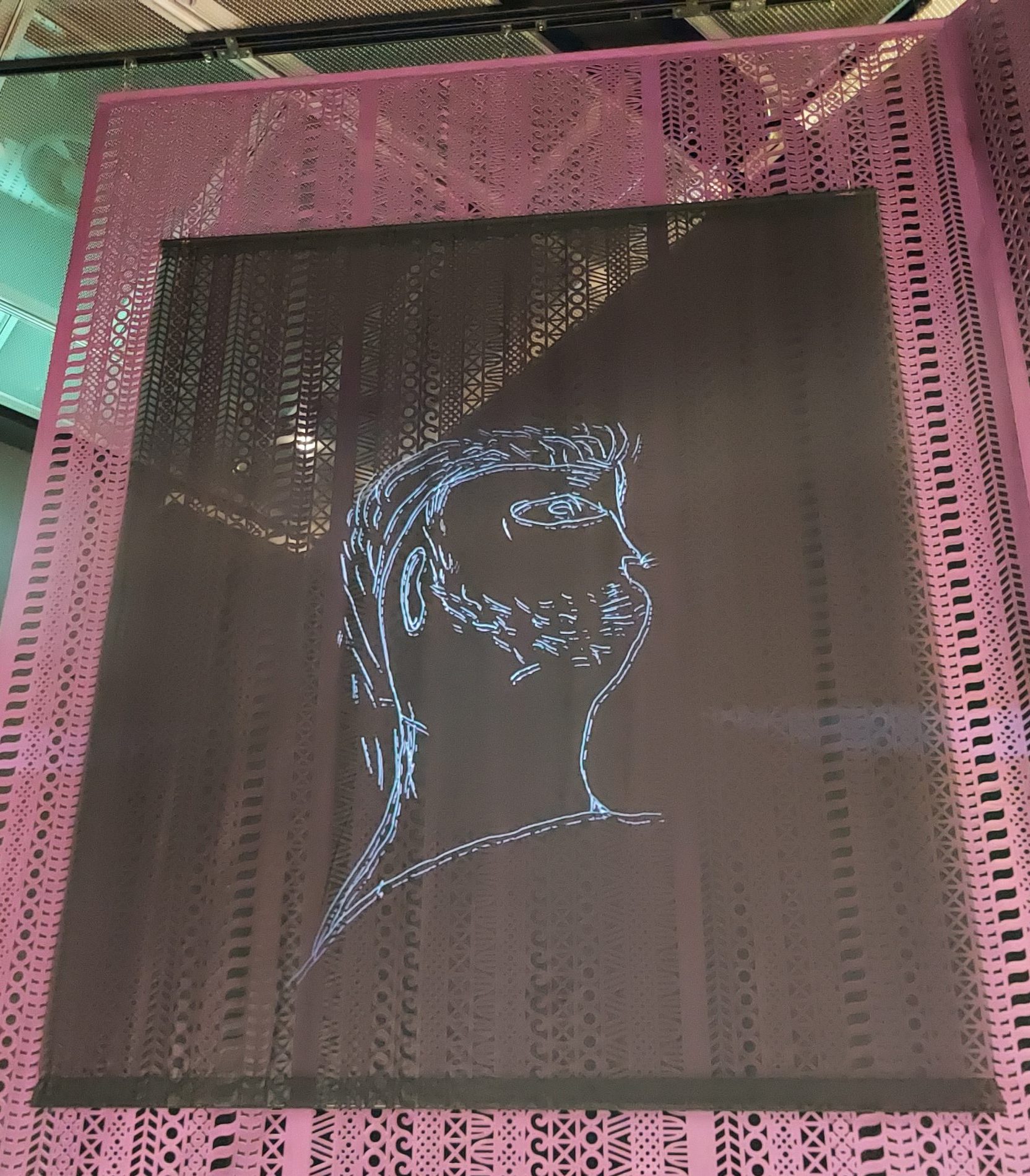
On the first day of my week off work I headed to the British Museum to see the Nero exhibition. Nero: the man behind the myth looks at this infamous Roman emperor and examines whether he really was the villain history remembers him as.
The exhibition began with an illustration of the complex family tree that enabled Nero to take power. He became emperor as a teen, and although close to his mother, later had him executed. He also executed his tutor and possibly his wife, although evidence suggests she was more likely to have died after a miscarriage. It’s worth noting that most of the Roman emperors executed members of their family at some point – it was a cut-throat world and, while not ideal(!), doesn’t necessarily make him any worse than the rest of them.
Nero as a boy
Part of the exhibition focused on the rebellion of Boudicca, which I found very interesting. After the rebellion Nero put another general in place to implement reforms, suggesting that he listened to those who were discontented. On the other hand, another incident closer to home showed that he could be ruthless – when a slave rebelled Nero ensured the law allowing a slave owner to execute all of their slaves was followed to the letter.
Nero was interested in the arts and enjoyed performing in plays, which some figures criticised him for. I can definitely understand this as should the leader of a people really be spending their time acting on stage?
Nero on stage
Nero is probably best remembered for playing the fiddle while Rome burned, but when the infamous fire started he wasn’t even in Rome. He actually came back and put measures in place to house and feed residents displaced by the fire. However, he did unfairly blame members of a new religious sect (later known as Christians) for the blaze. Nero rebuilt his palace in a lavish style, which drew some criticism – although it was no more lavish than the homes of other wealthy Romans. He did try to make events open to people from different classes, and seems to have been popular with ordinary people.
Nero was forced to commit suicide aged 30, and his reign was followed by a year of instability with four different emperors. An expert in Roman history may feel differently, but to me, the exhibition suggests that Nero wasn’t actually as bad as he was made out.
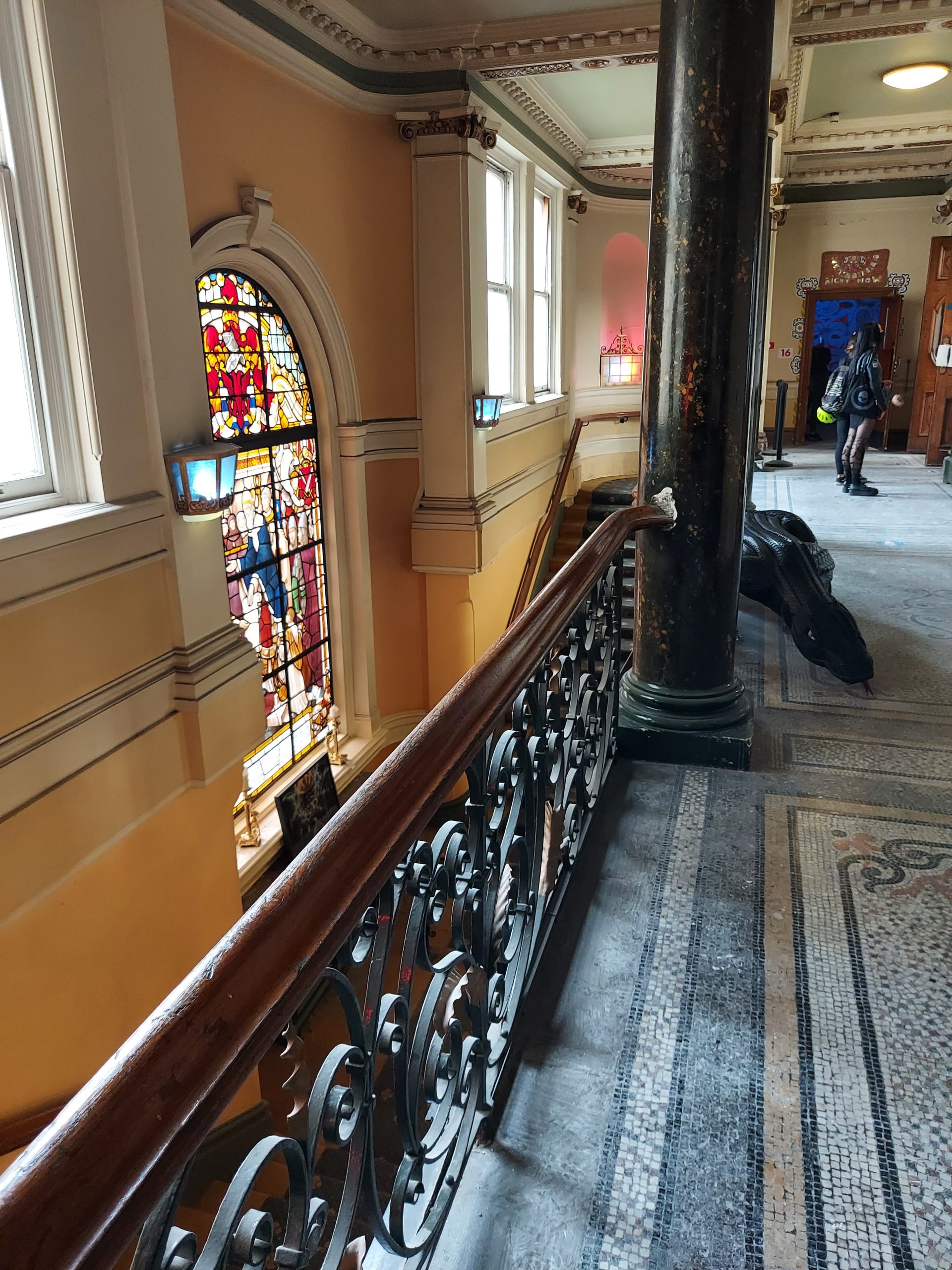
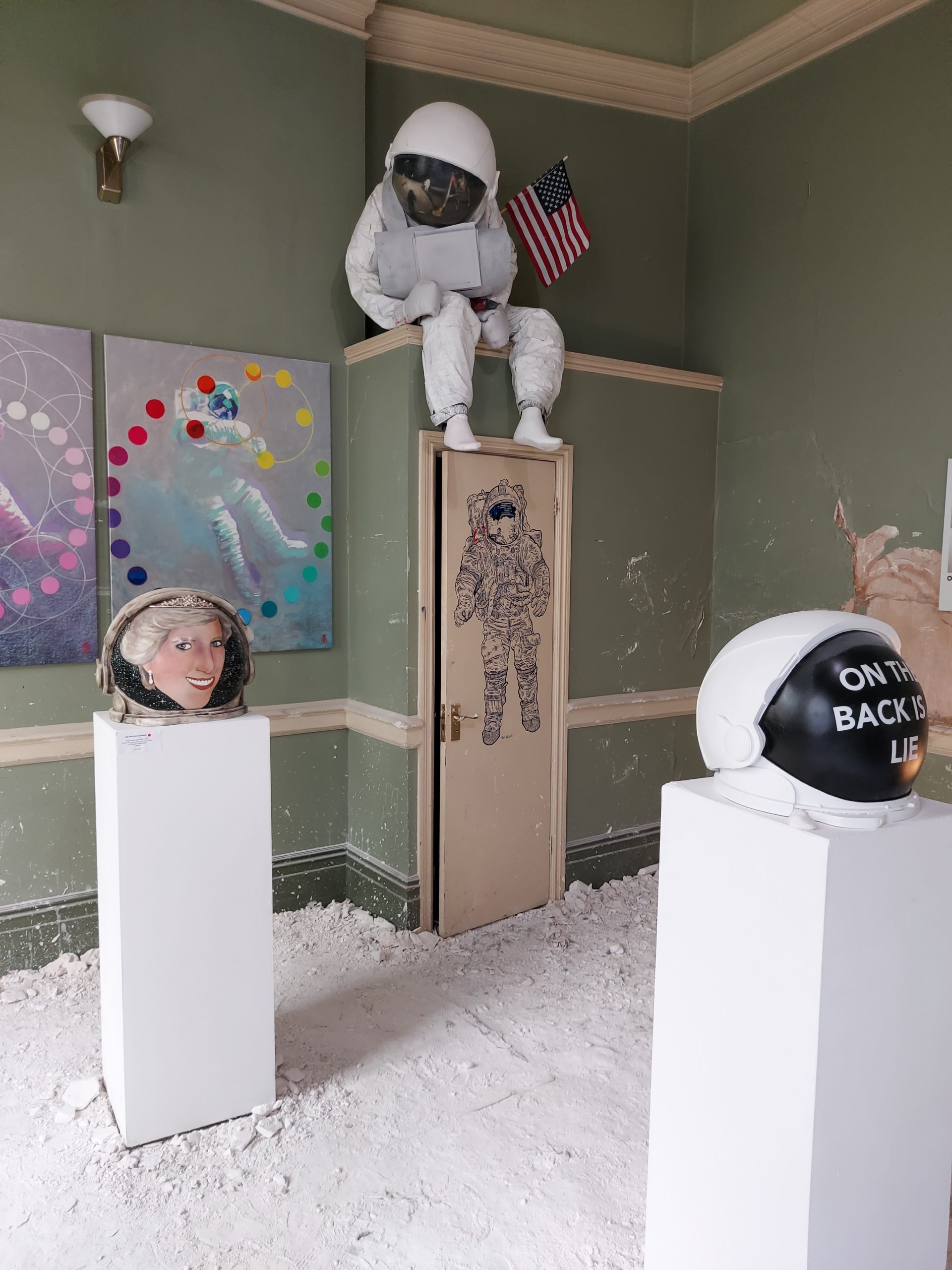
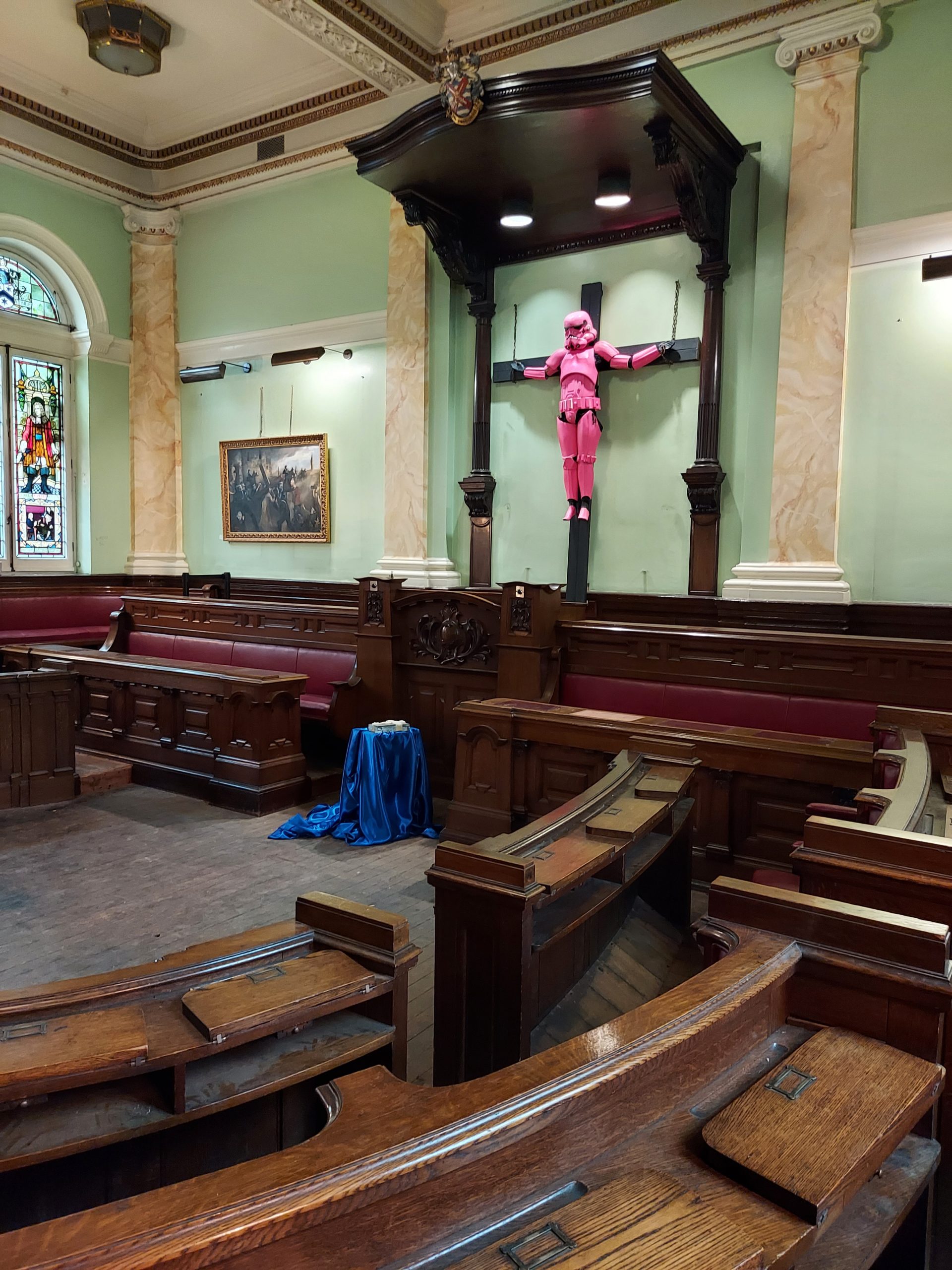
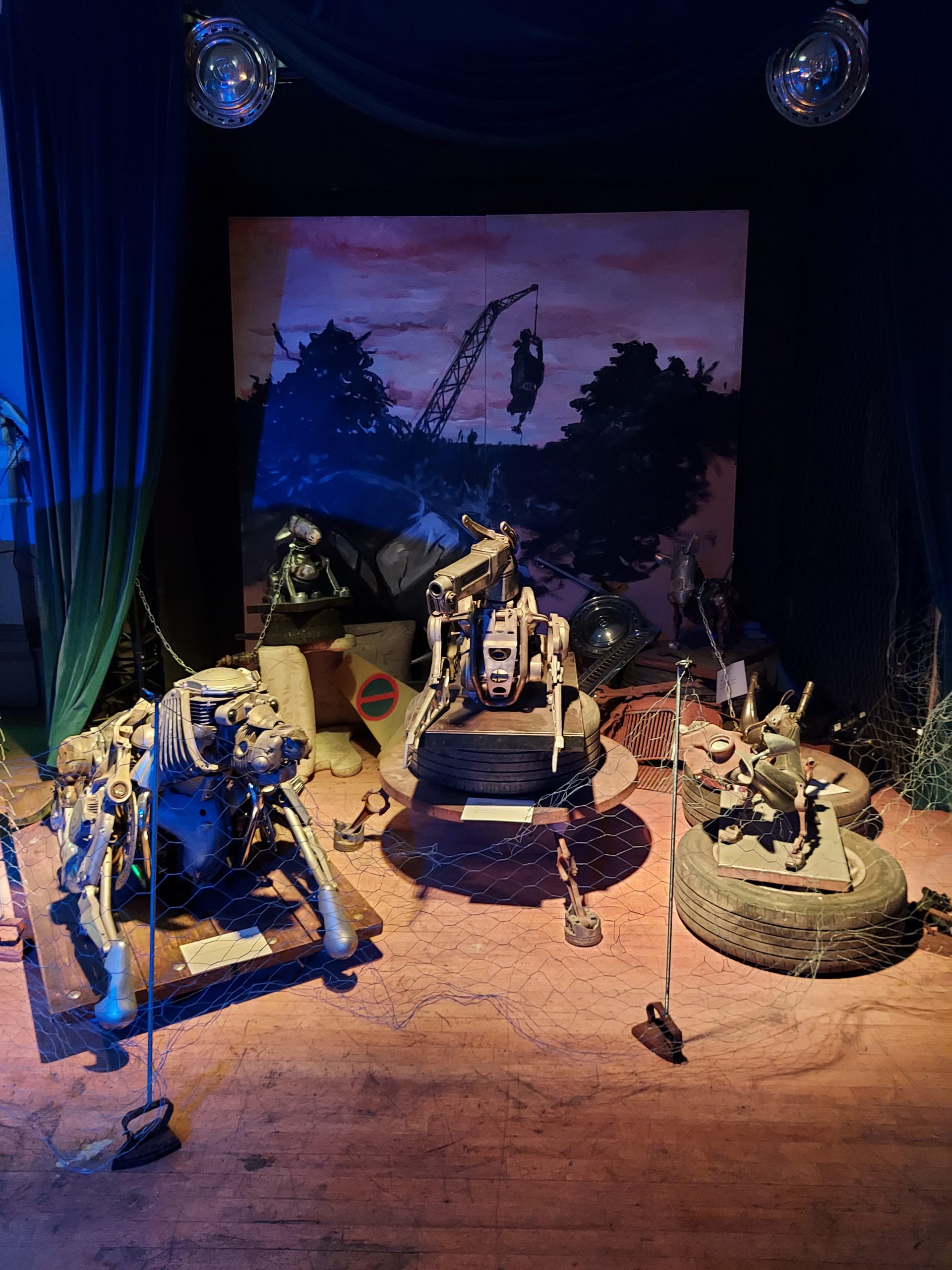
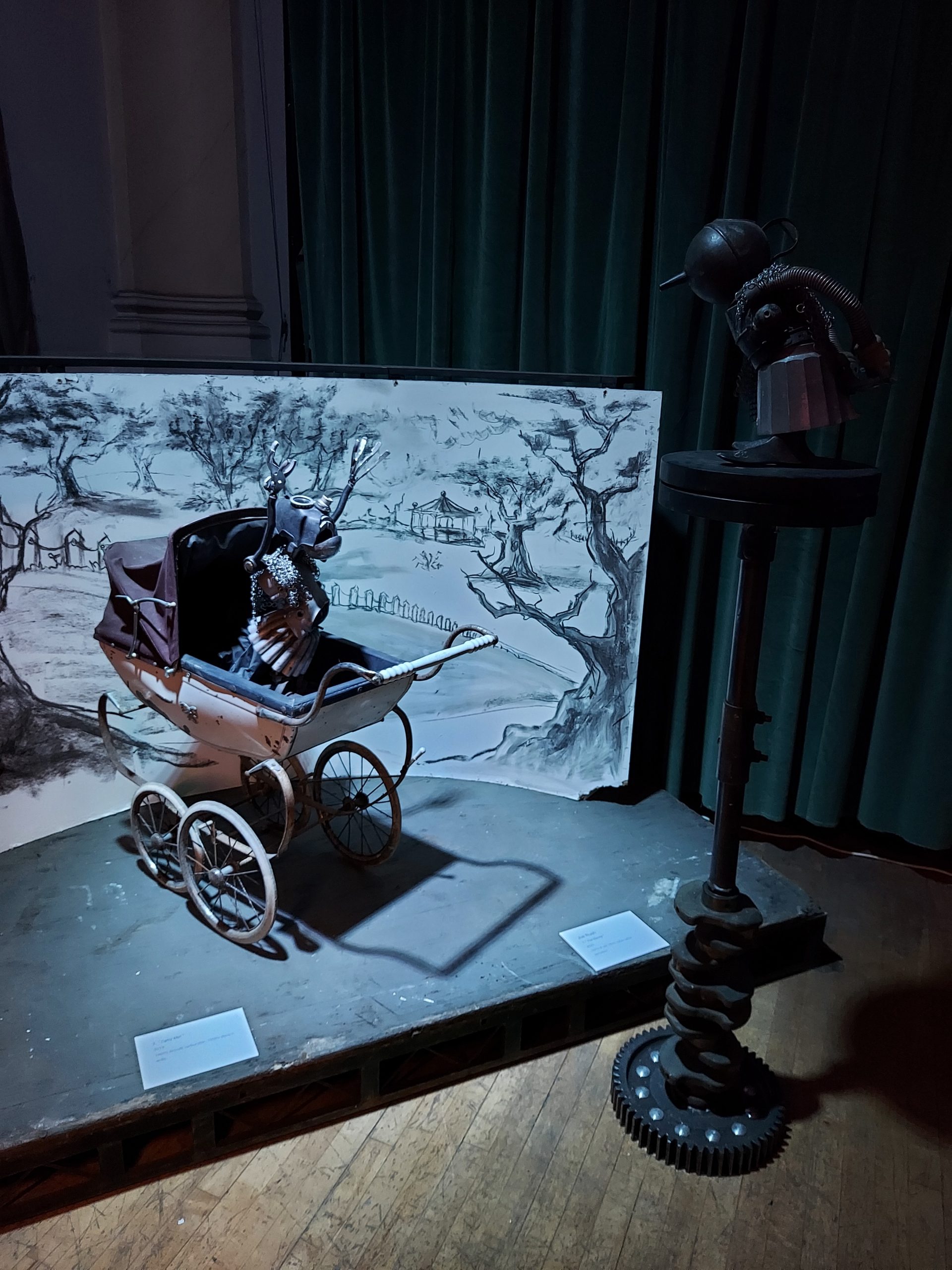
After attending the Bags exhibition I decided to head down to Fulham Town Hall to see the Art in the Age of Now exhibition. The building on Fulham High Street has been abandoned for 20 years and is about to be redeveloped, but not before hosting an exhibition of modern art.
For me the hall itself, built in 1890, was the main attraction. Shabby and run-down, it had the kind of faded grandeur that I love – it felt like somewhere Punchdrunk would host an immersive theatre production. For every crumbling ceiling or damp floorboard there was an ornate balustrade or a beautiful bit of stained glass. The original council chamber is still intact, and very impressive, but the main draw was the old ballroom.
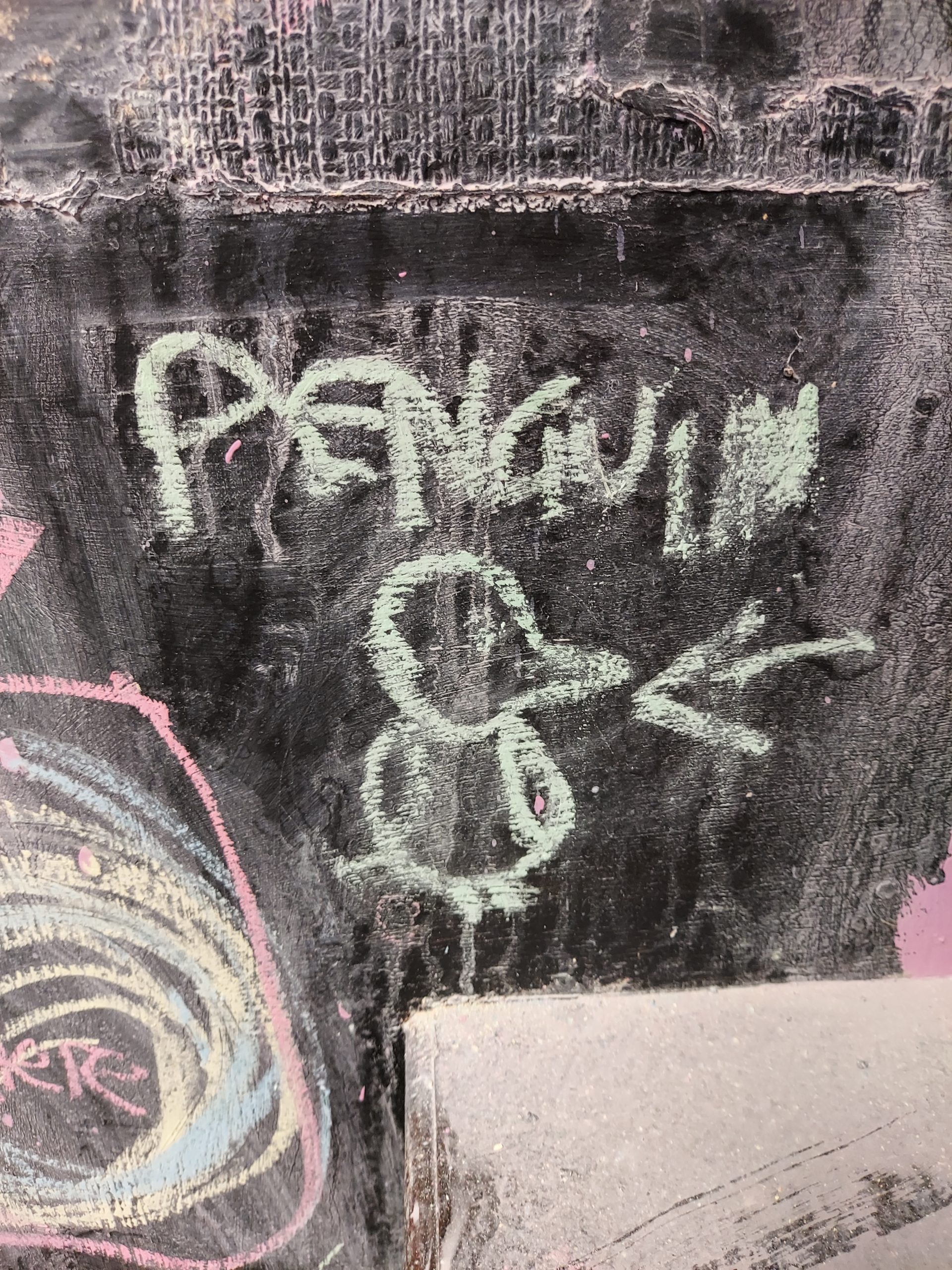
Los Hengeles by Ben Moore
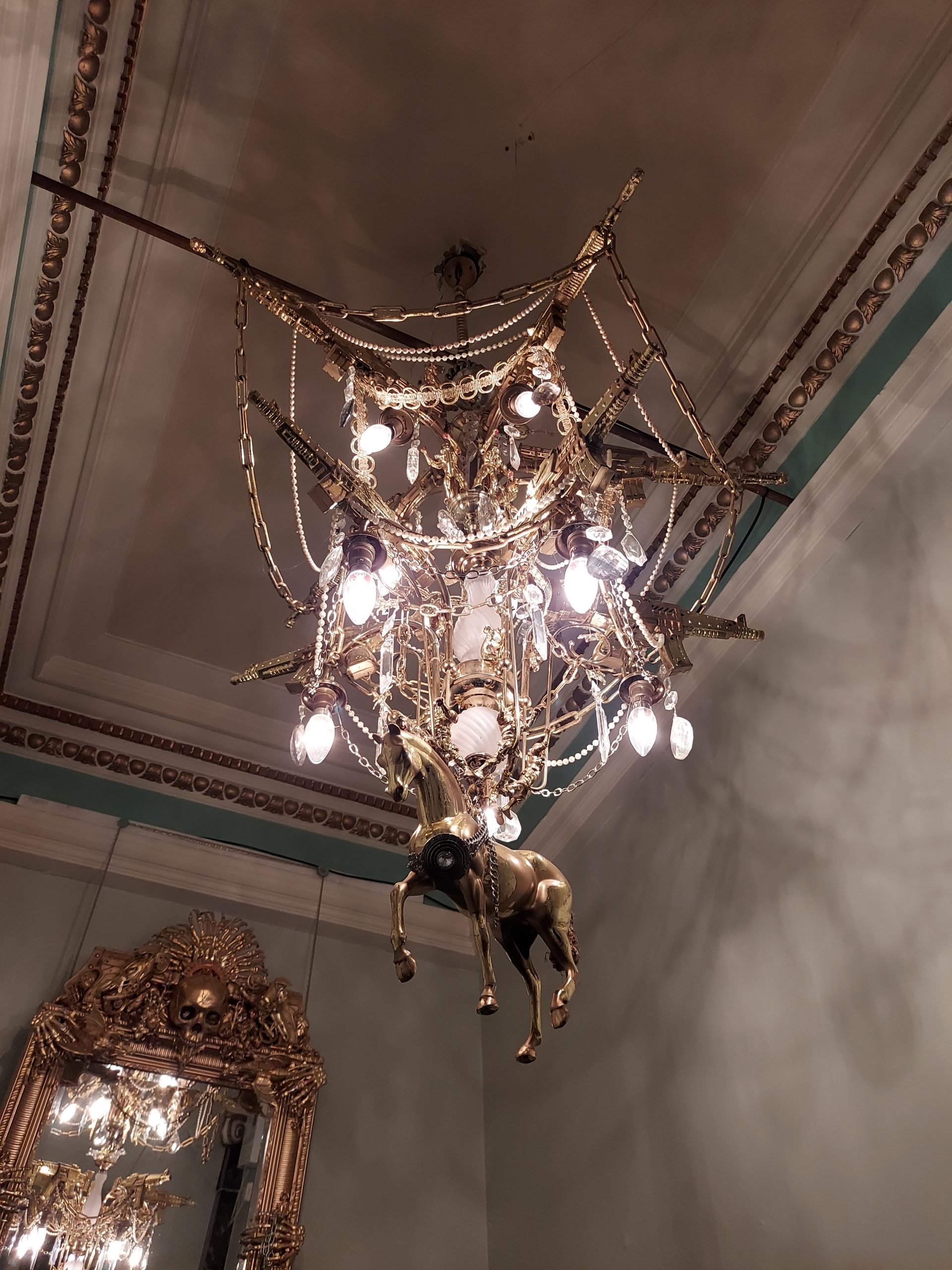
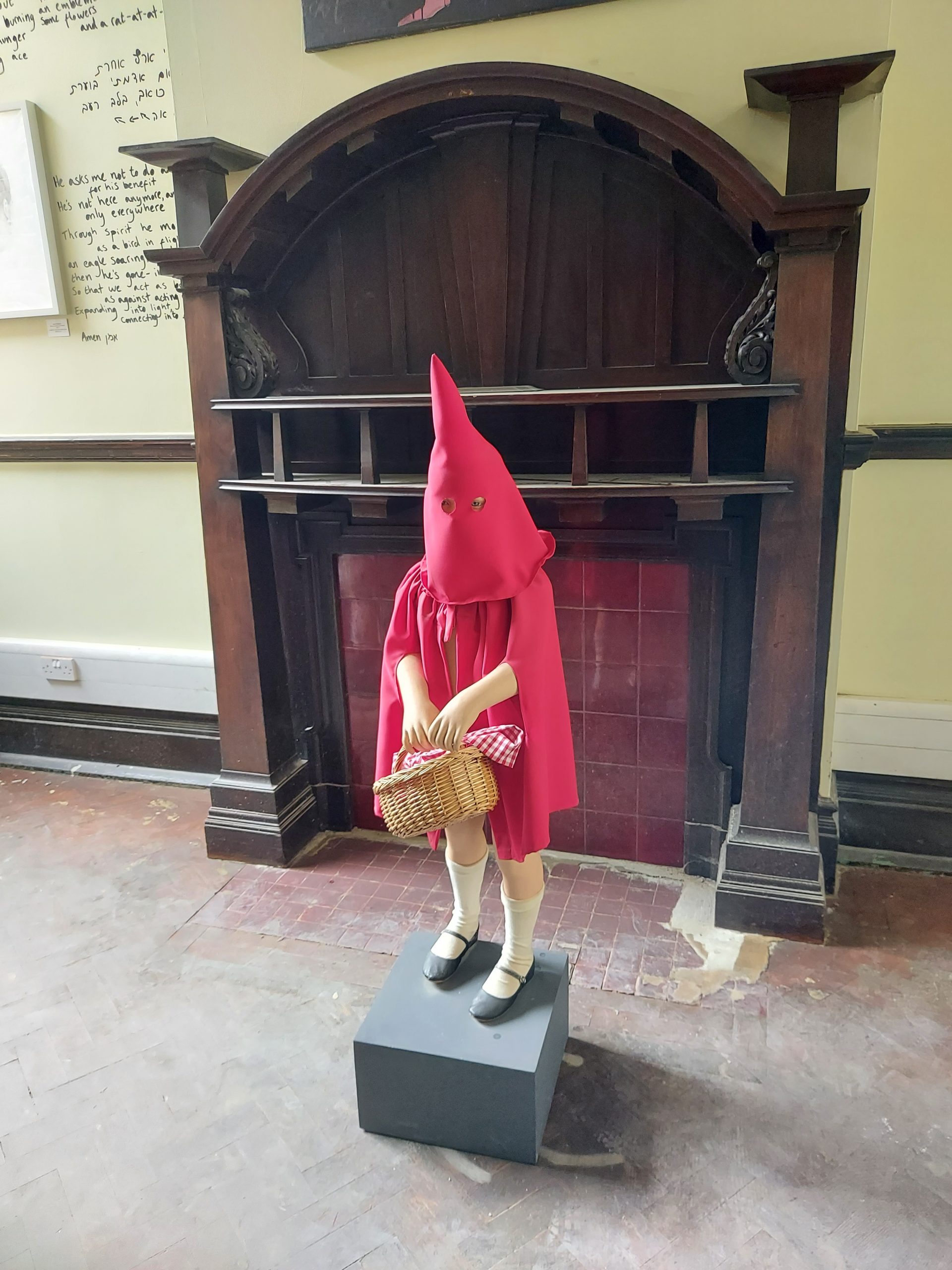
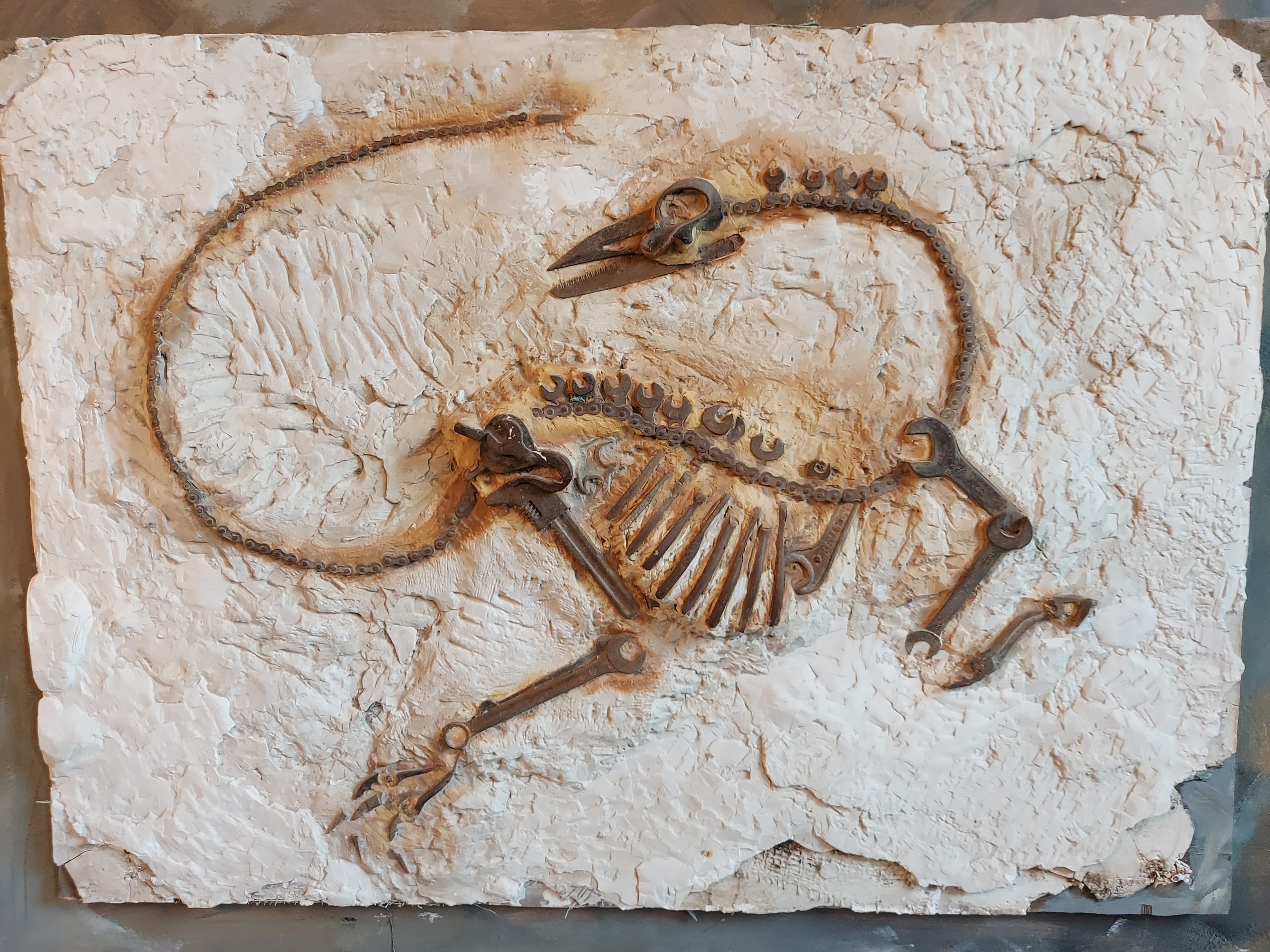
Having said that, the art itself, curated by Ben Moore, intrigued me too – modern art is very hit and miss for me, but there was plenty here to pique my interest. All kinds of artworks are on show, including sculptures, paintings, collages and photography.
My absolute favourite works were the mechanical sculptures by Joe Rush. These were incredible and full of detail – a definite highlight for me.
The building was such a maze I didn’t manage to get round it completely; I’m sure there were bits I missed. However, what I did see was fascinating and definitely worth a look.
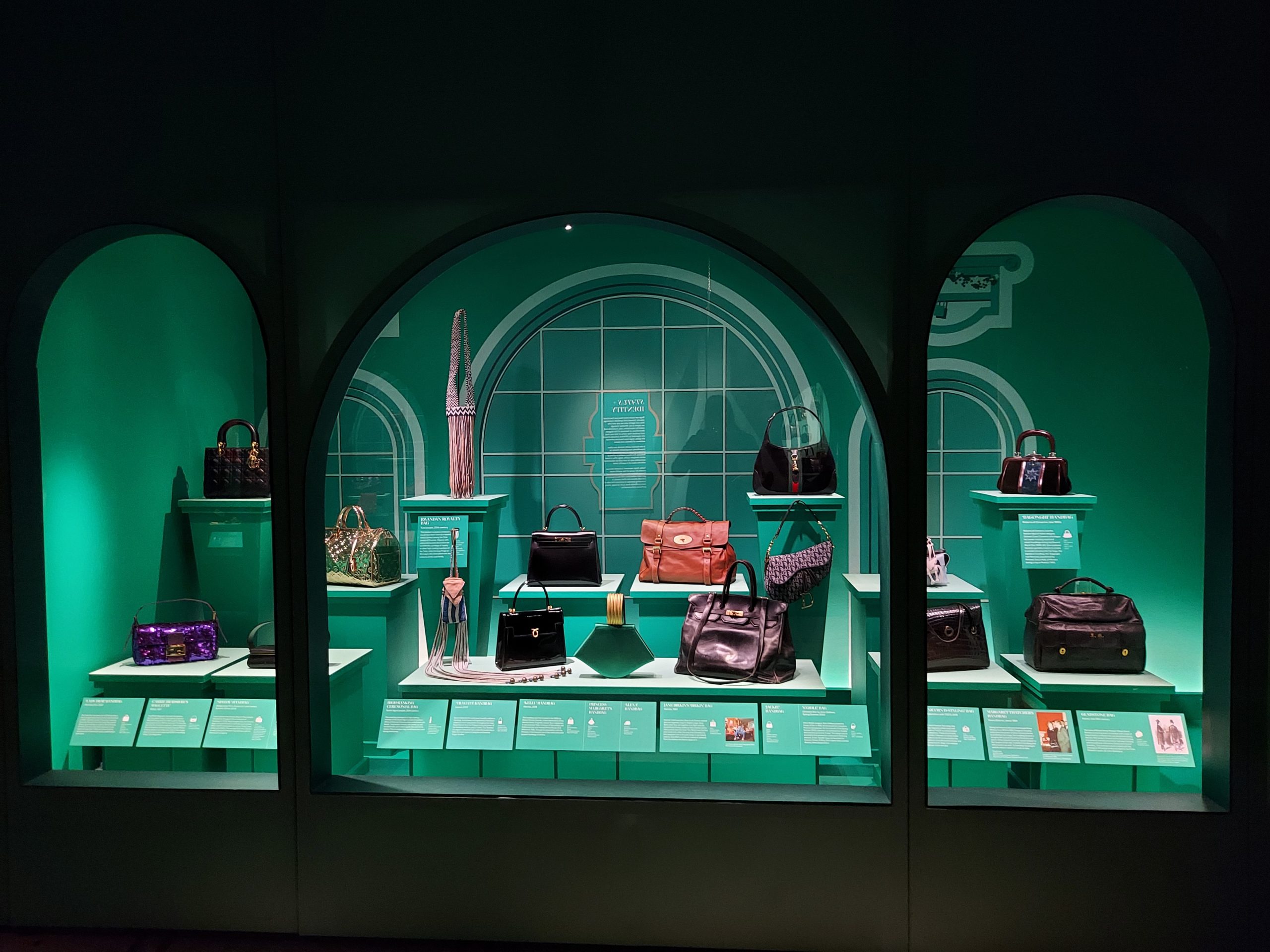
Recently I visited the Bags: Inside Out exhibition at the Victoria & Albert Museum. Along the same lines as the shoes exhibition a few years ago, Bags looks at the history of these accessories and displays examples of bags in all shapes and sizes, serving a variety of purposes.
A dress with pockets and another with a chatelaine
I’m personally a huge fan of bags* – I think it’s because unlike clothes, you can’t grow out of them – and so I was looking forward to this exhibition. The exhibition begins several centuries ago, when women often had pockets built deep into their dresses for storage purposes. Later, many women wore chatelaines – metal contraptions pinned to their waist with keys and other accessories dangling from them.
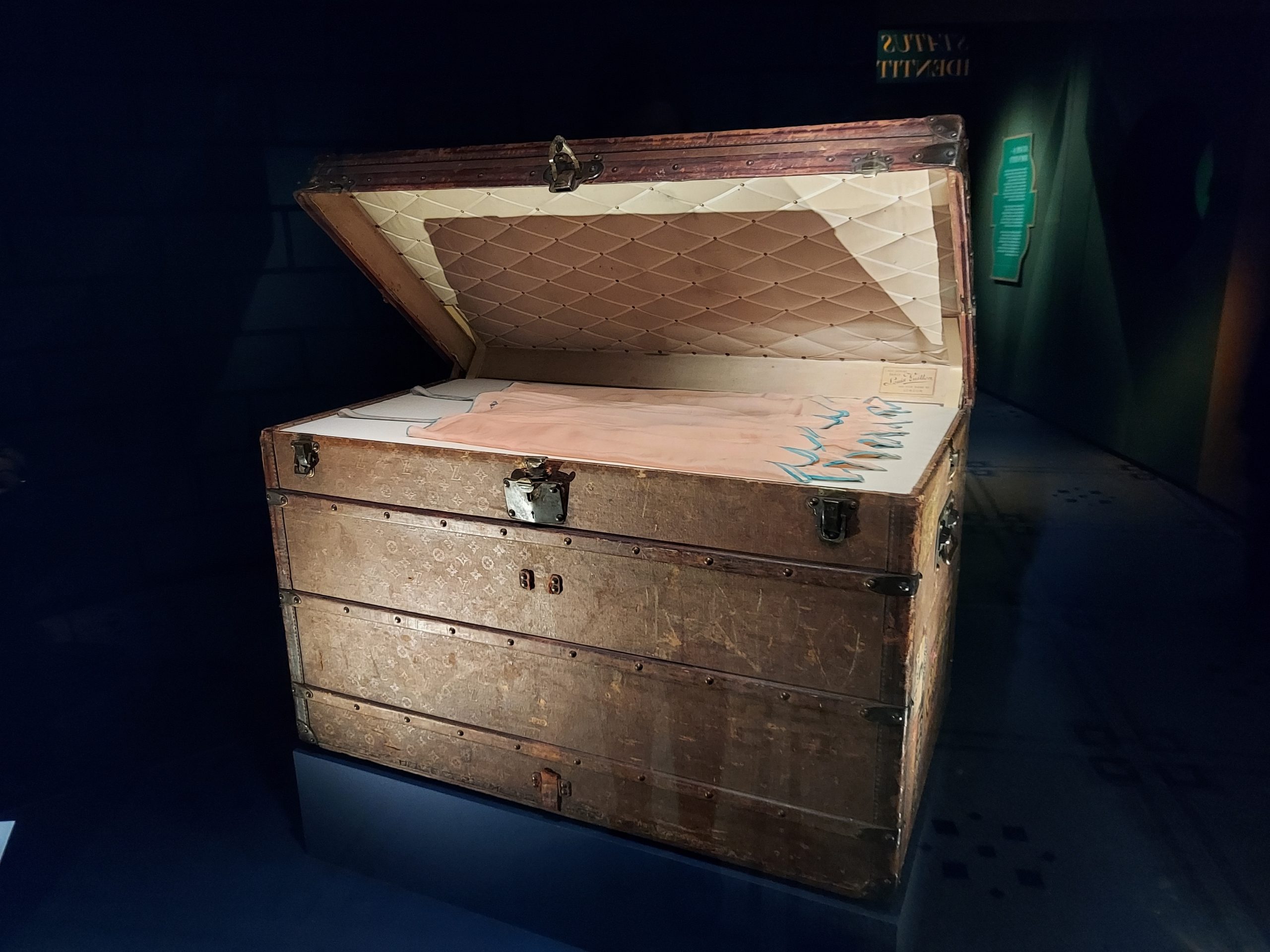
Both men and women often carried small coin purses.As the world moved on, different kinds of bags evolved: tiny evening bags, practical rucksacks, sturdy travelling trunks, convenient shoulder bags.
A trunk designed to store clothes while travelling by sea
Vivien Leigh’s writing case and Winston Churchill’s despatch box are two notable examples of bags on display alongside many beautiful examples from less famous owners.
Winston Churchill’s attache case and Vivien Leigh’s letter-writing case
I particularly liked the bags with lots of tiny compartments, popular in the late nineteenth and early twentieth centuries, such as a handbag with a compartment for lipstick, or an ‘opera bag’ containing opera glasses and a fan.
In terms of more modern styles, I liked a bag from the collection of fashion blogger ‘Mr Bags’ which comes with a cute unicorn charm.
Bag designed by ‘Mr Bags’
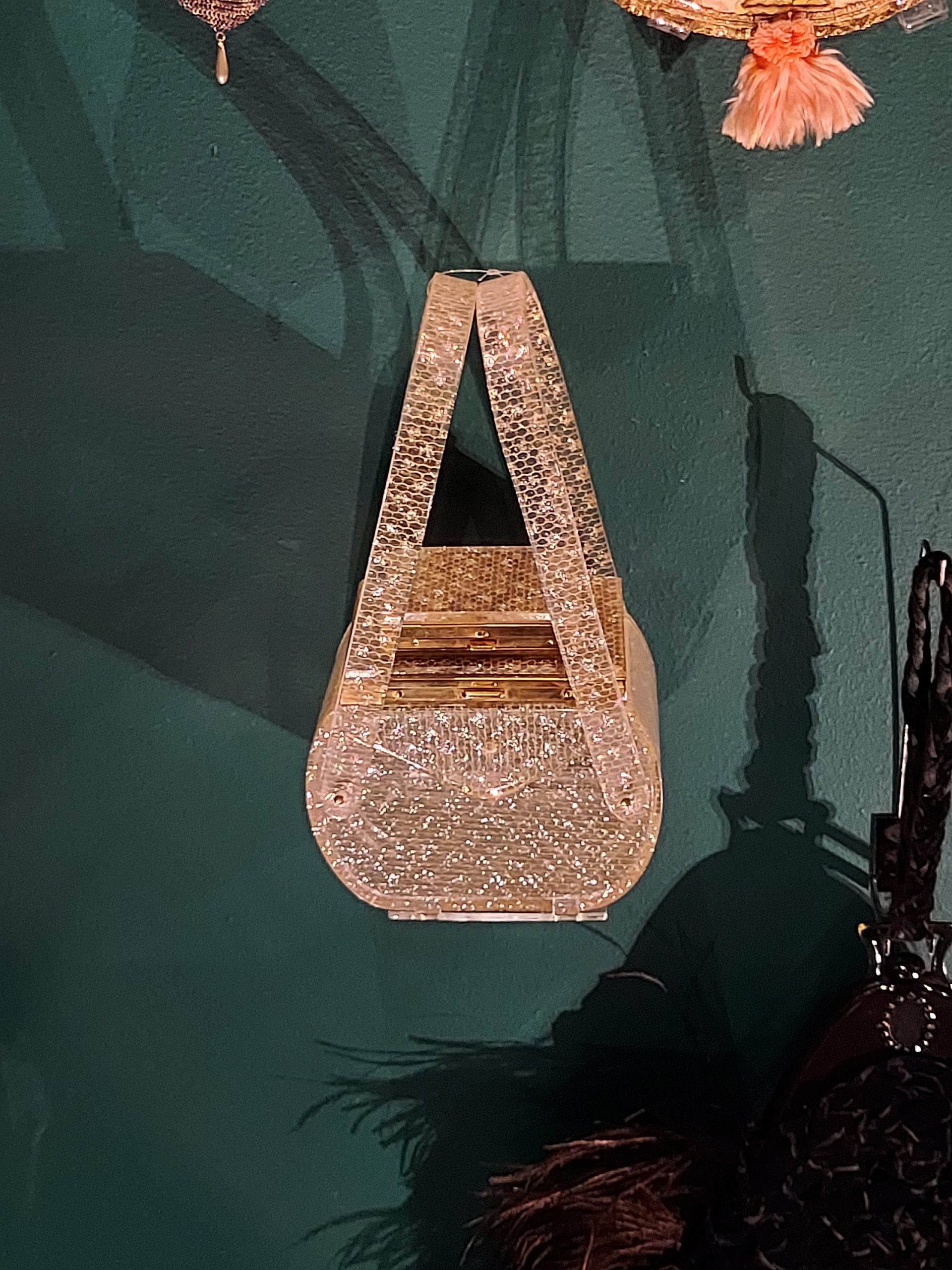
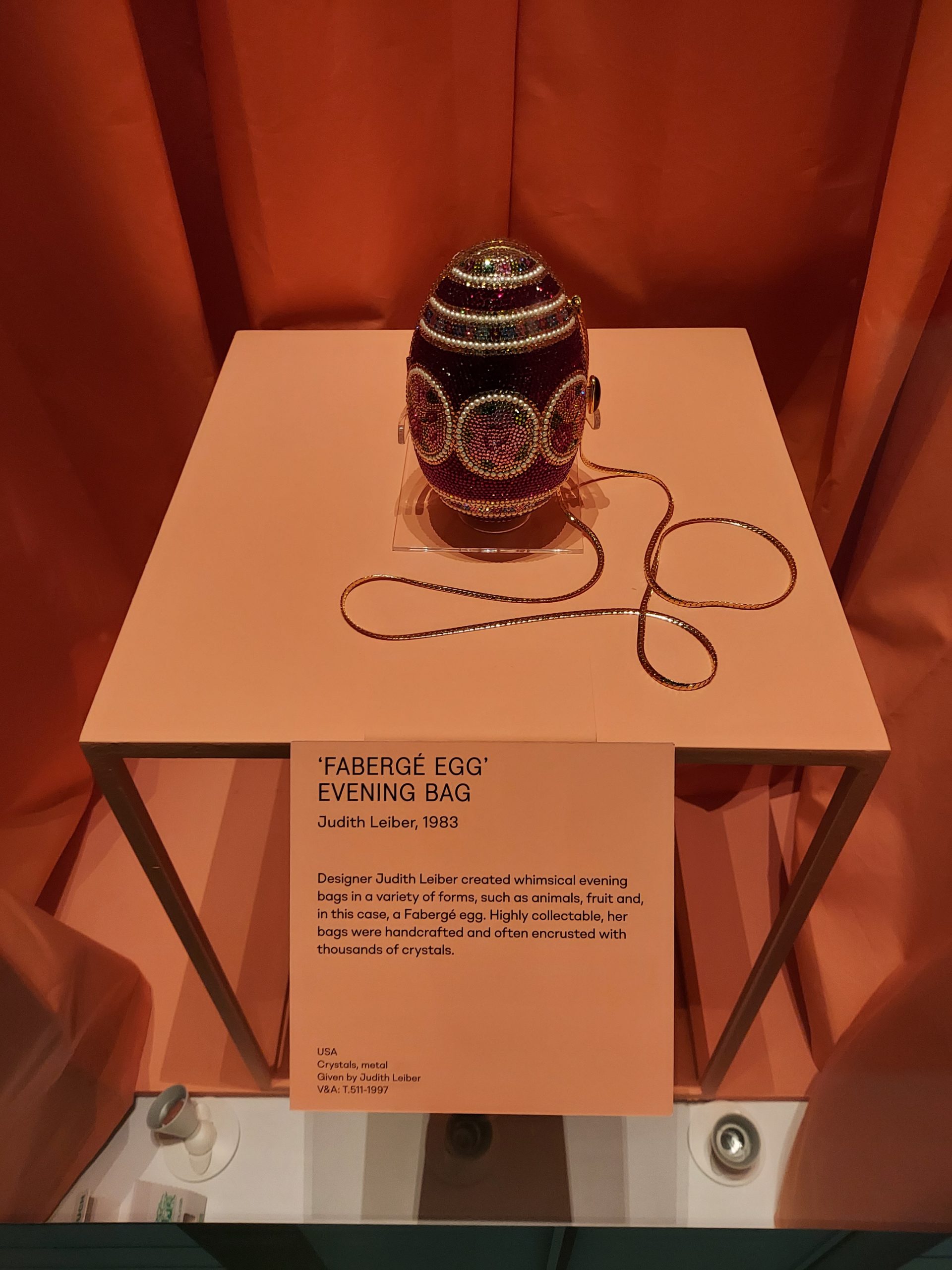
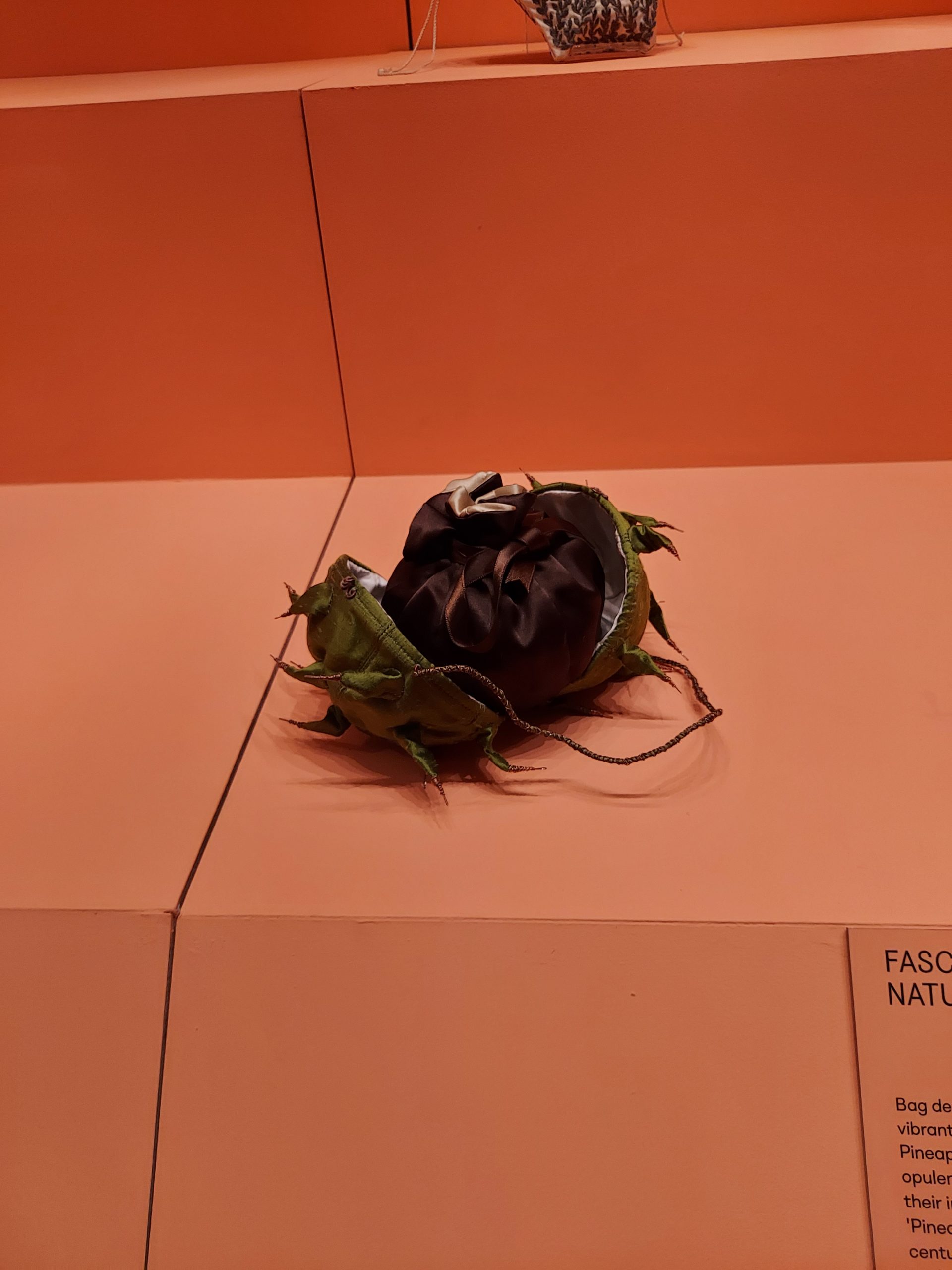
My absolute favourite bags, however, are novelty bags in unusual shapes, and this exhibition had several excellent examples.
On the upper level of the exhibition there was a display devoted to the making of bags – it looks like a very complicated and scientific process and I confess it was far beyond me! This part of the exhibition also looked at different materials used to make bags and their properties.
Bags: Inside Out is worth a visit especially if you are a bag lover like me. Even if you aren’t, you will probably appreciate the design and craftsmanship that goes into creating a beautiful bag.
*When I was a child I had a shiny black (fake) leather backpack that I adored. In it I kept my Dear Diary, notebook, lip gloss and whichever book I was reading at the time. I took it everywhere with me and loved it so much that my brother made up stories about it: “The Adventures of the Black Bag”. I can’t remember what any of the stories were about, but the title sounds vaguely Holmesian.
The Postal Museum, which has only been open in its current form for a few years, has been on my list of places to visit for a while, and I finally decided to visit one day in December. It is located near the site of the old sorting office at Mount Pleasant, and there are two sites across the road from one another: the museum itself and the Mail Rail, which I wrote about here.
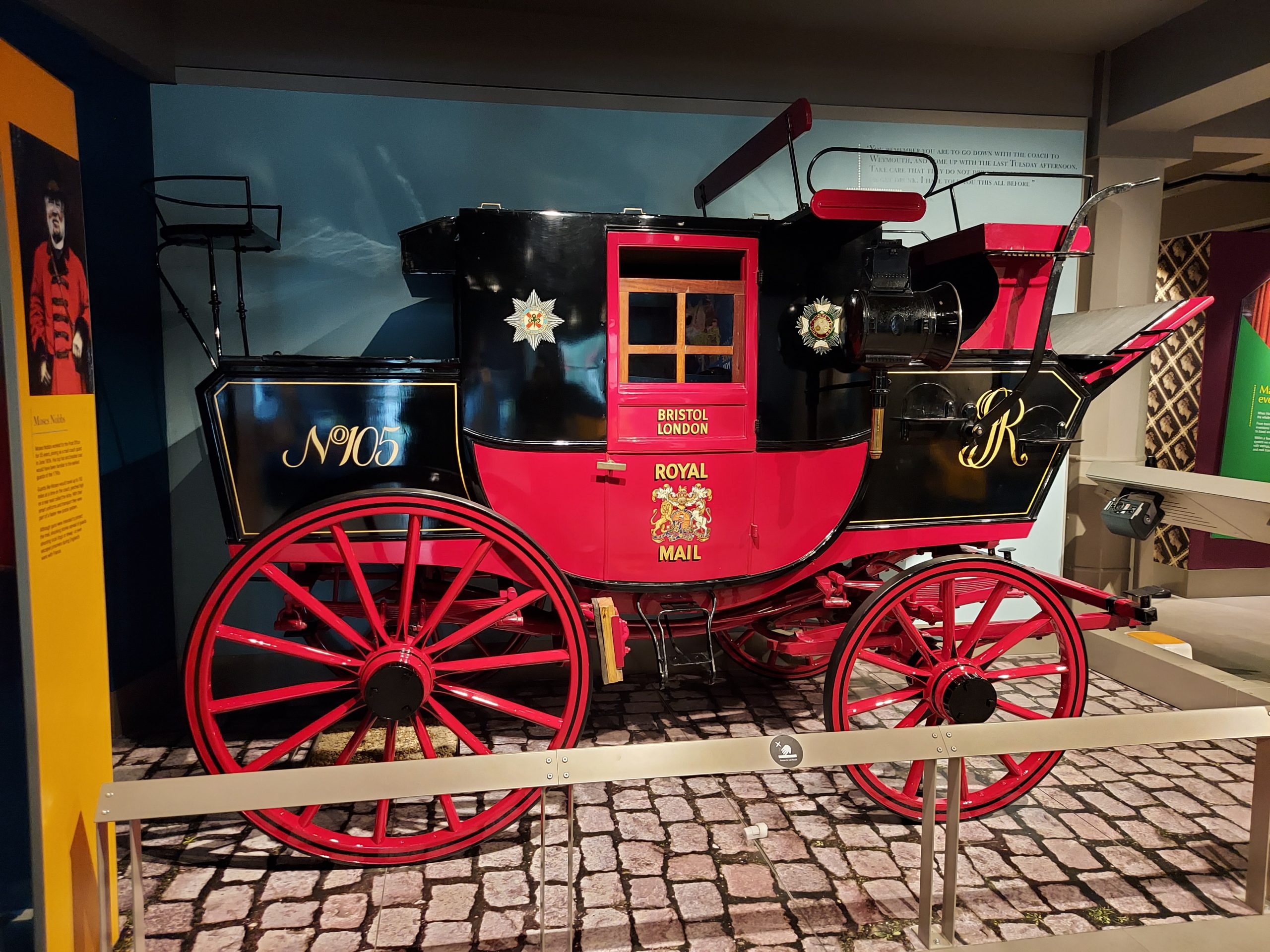
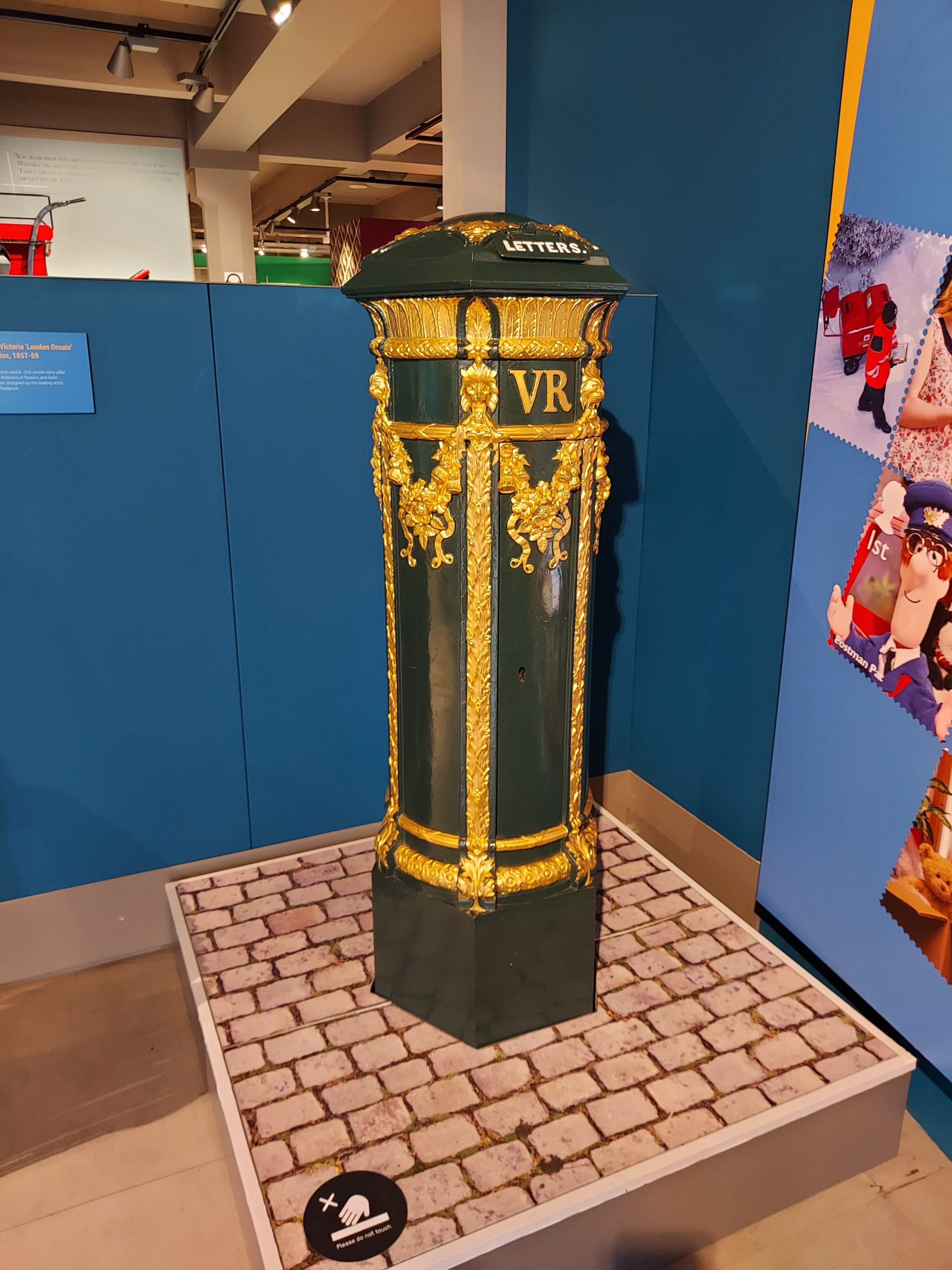
The Museum is packed full of artefacts which explore the history of mail transportation and delivery in the United Kingdom. From horse-drawn carriages emblazoned with Royal Mail livery, to specialist Air Mail post boxes, by the way of post buses, bicycles and motorbikes, the range of items is very impressive. The museum explores how the postal system has developed over the years, and how it has helped bring people together by delivering letters, postcards, cards and parcels.
The Museum holds regular special exhibitions and their current one explores the Great Train Robbery: this was a fun exhibition which told the story of this famous event and how the perpetrators were caught.
The Postal Museum is a great place to visit no matter what your age. The history of the postal service is fascinating, and, despite our increasingly digital world, still very much needed.
Opening Hours: Thurs-Sun 10:30am-5pm (6:30pm on Saturdays)
Price: Adult £16, young person £11, child £9 (other concessions available). Tickets include a 1-year pass to the Postal Museum and one ride on Mail Rail on your first visit.
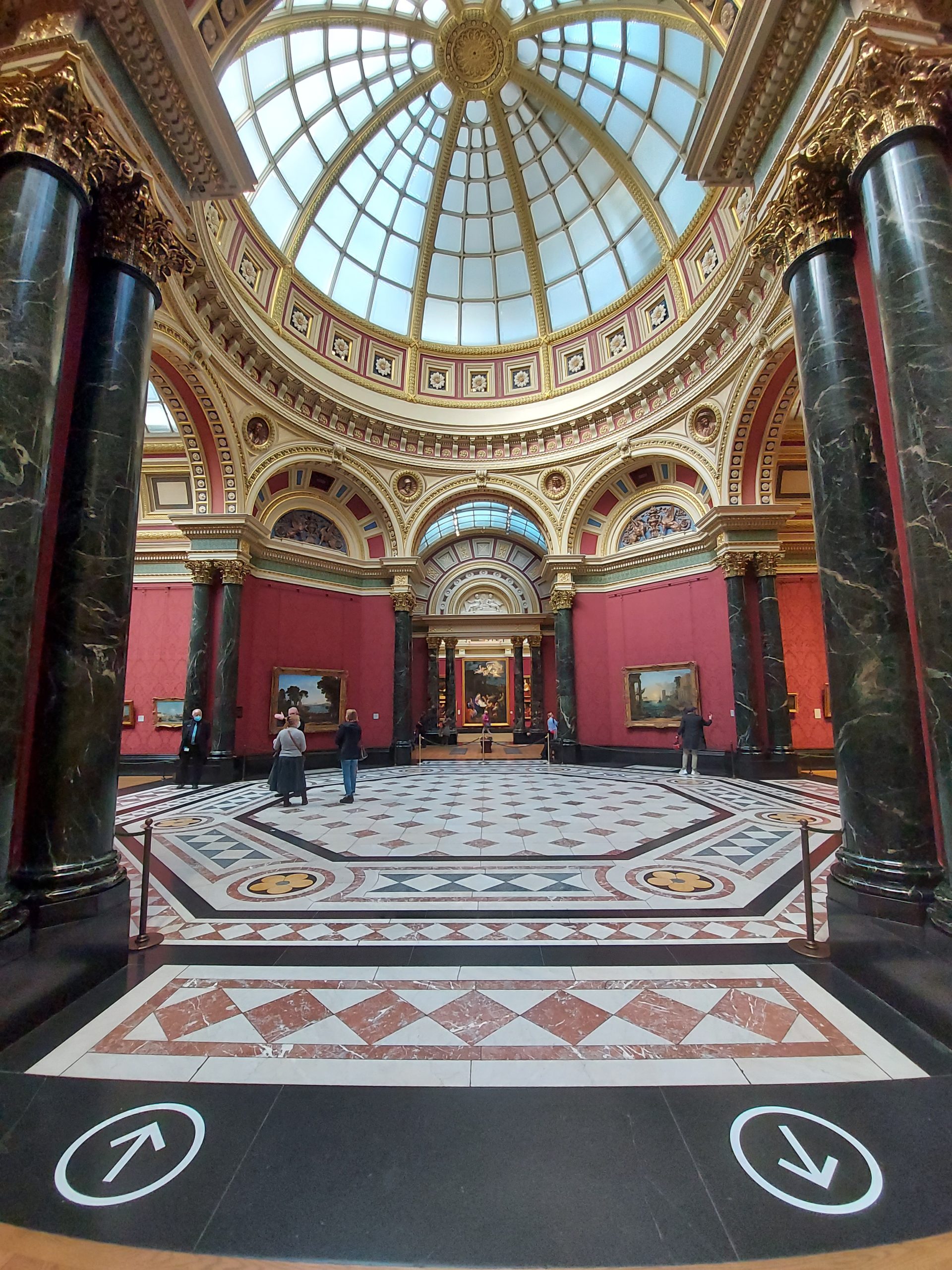
The National Gallery must be one of the most well-known and popular art galleries in the world, standing firmly in the centre of London, looking out over Trafalgar Square. I’ve visited several times over the years, mainly for special exhibitions, but recently decided to go and explore the whole thing.
History
The beginnings of the National Gallery can be traced back to the early nineteenth century, when the House of Commons agreed, in 1824, to purchase the collection of the banker John Julius Angerstein. Intended to form the core of a new collection of art for the nation, the pictures were first displayed at Angerstein’s house on Pall Mall while a building was constructed to house them. Initial administration of the Gallery was disorganised, but following a government enquiry a new post of Director was created, to shape the collection and manage the Gallery.
Trafalgar Square was decided upon as the site of the new gallery, being right in the centre of London. Architect William Wilkins was hired to construct it, using many of the construction methods of the King’s Mews, which originally occupied the site. The artist and collector Sir George Beaumont promised to donate his collection of pictures, and they took their place alongside Angerstein’s until they could all be moved to the new building. At this time the Gallery had no formal collection policy, with pictures being acquired owing to the personal tastes of the Trustees. This began to change when the administration was reformed, and the new Director travelled in Europe to purchase works for the Gallery. In 1871, many paintings were purchased from the estate of the late Prime Minister, Sir Robert Peel.
Wilkins’ building had often been criticised, and in 1869 the architect E. M. Barry was asked to submit designs for a new building. However, the original building was retained, albeit with a new wing and an impressive dome being constructed. A few decades later, most of the British collection was moved to the new gallery founded by wealthy industrialist Henry Tate on the banks of the Thames, freeing up more space for European art. Much later – in 1991 – the Sainsbury Wing was constructed, opening in 1991 and providing the National Gallery with even more space.
My Visit
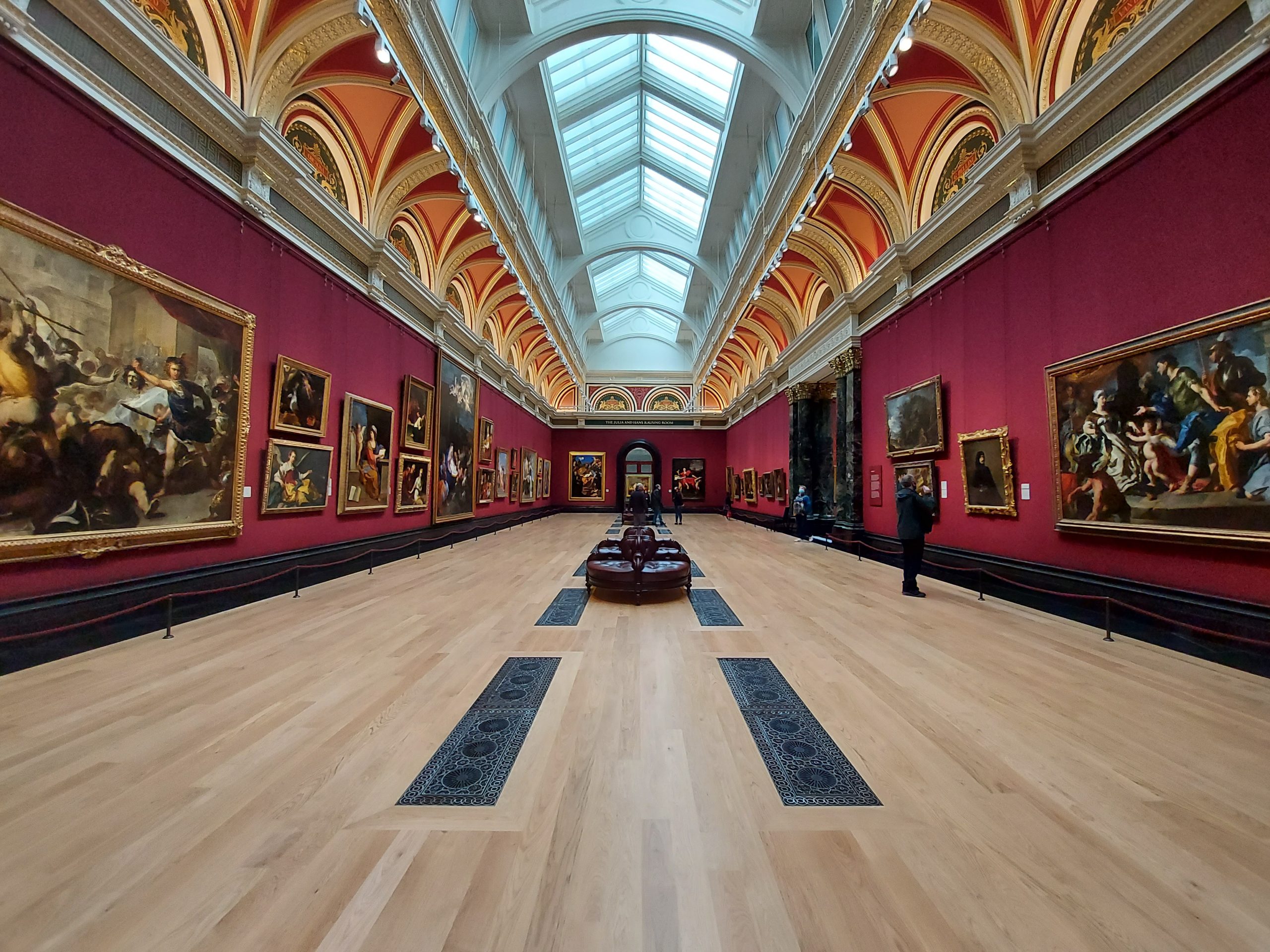
Normally, the Gallery is free to explore as you wish (except for special exhibitions), but in these Covid times, you are required to book a time in advance and follow specific one-way routes around the galleries. This means that it’s impossible to see everything on one visit (I made mine over a couple of days), but honestly, for me, the sheer peacefulness of the galleries at this time made it all worthwhile. I was sometimes the only person in a particular gallery or room – makes a change from the crowds usually jostling to view the paintings. I’m so glad I was able to take advantage of the current situation to experience the National Gallery when it’s quiet.
The Gallery’s rooms are divided into four main sections.
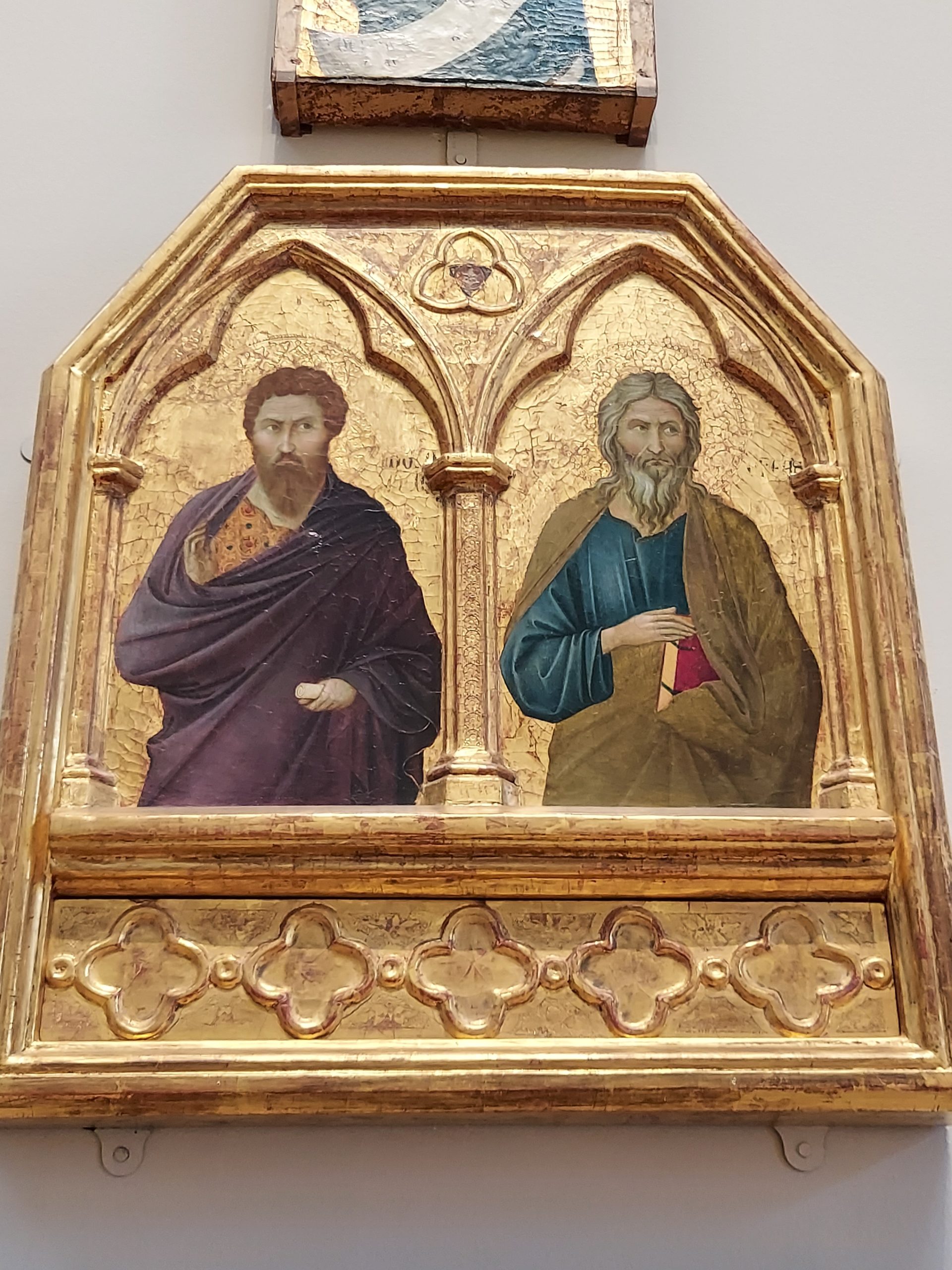
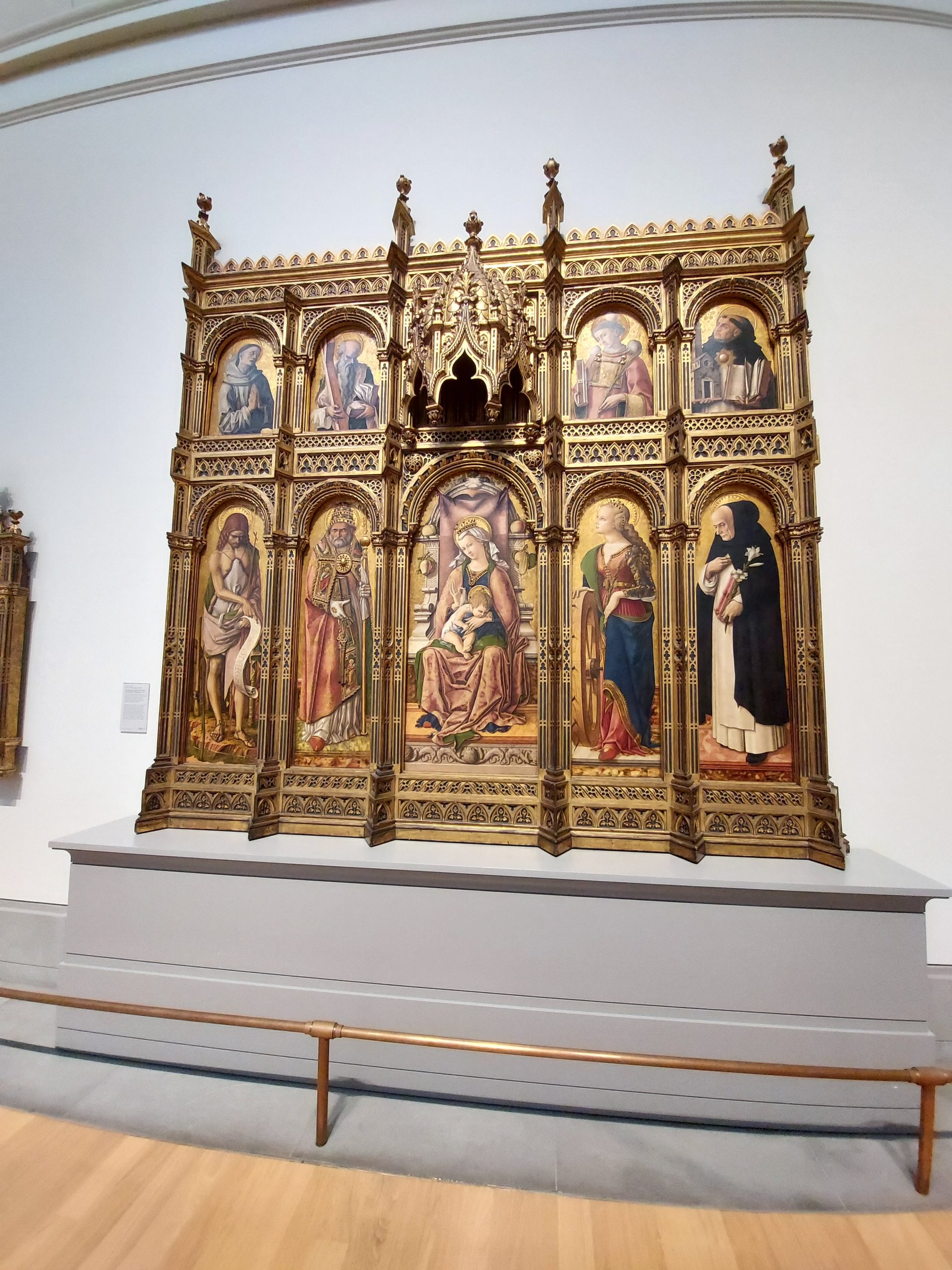
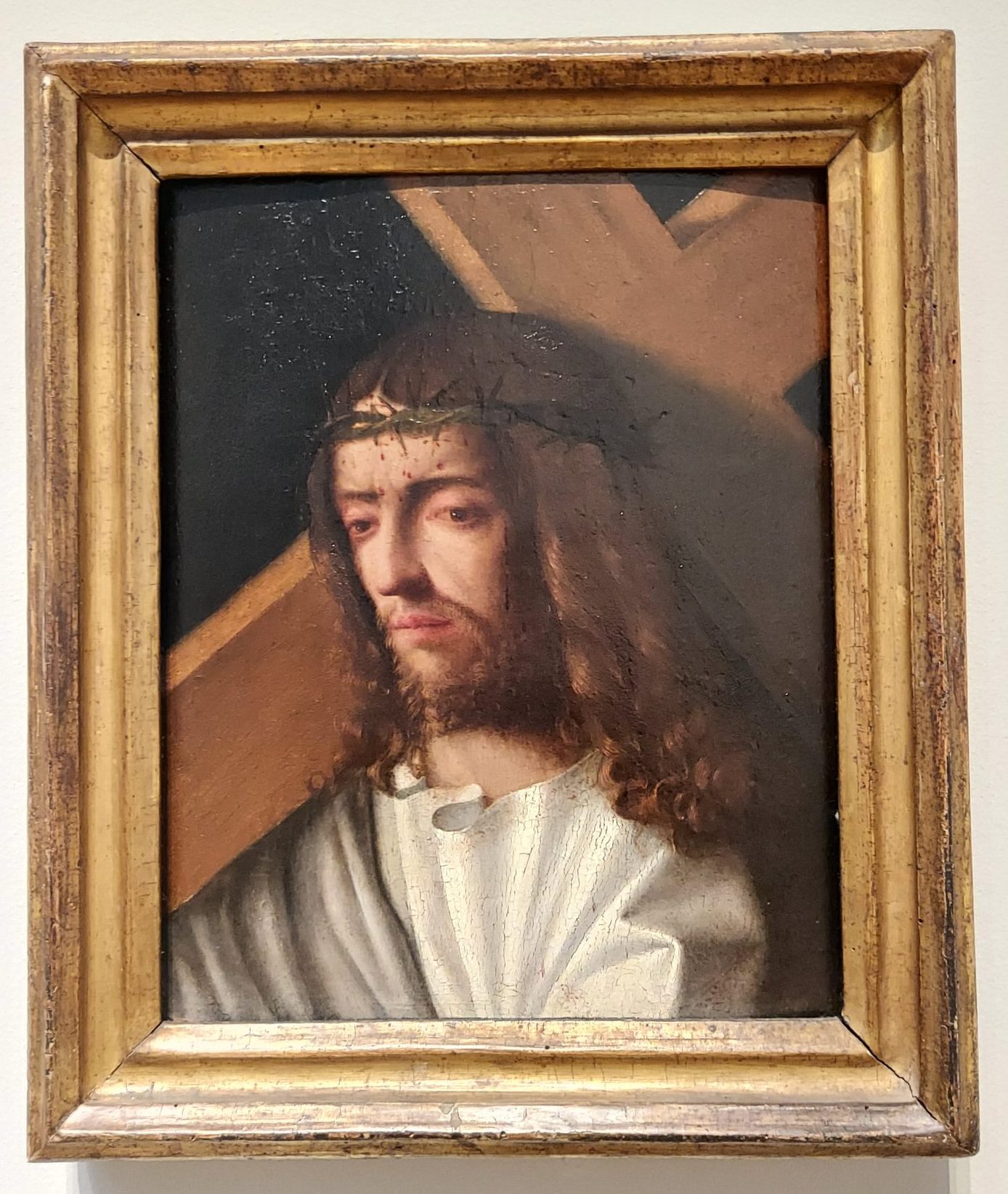
1200-1500 This section focuses on medieval artists such as Bellini, van Eyck, Leonardo, Piero and Raphael. This era of art is not my favourite, but there were some pretty elaborate triptyches and ornate decorations. A picture of Saints Bartholomew and Andrew made me laugh, as they look like they’re really pissed off with each other, but a picture of Jesus carrying the cross I actually found quite moving.
Saint Bartholomew and Saint Andrew
Carlo Crivelli, The Virgin and Child with Saints, 1476
Italian, Venetian, Christ Carrying the Cross, about 1500
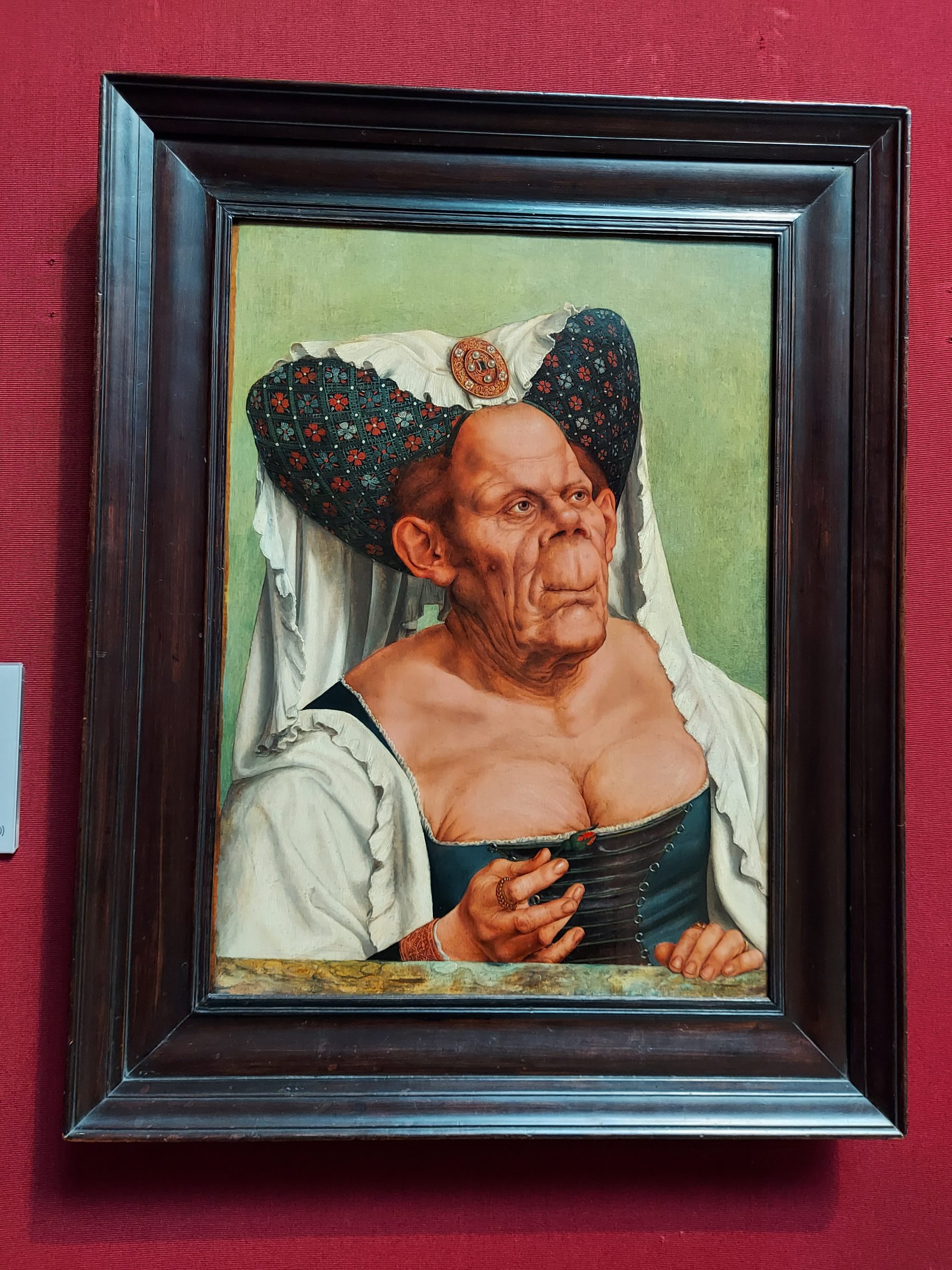
1500-1600 This section is focused on Renaissance art, featuring the likes of Titian, Holbein, Bronzino and Massys. I do like the Holbeins that are currently displayed, and I have a special fondness for the painting of the ‘Ugly Duchess’ since I read that it inspired John Tenniel’s illustrations of the Duchess in Alice’s Adventures in Wonderland.
Quinten Massys, An Old Woman (‘The Ugly Duchess’), c. 1513
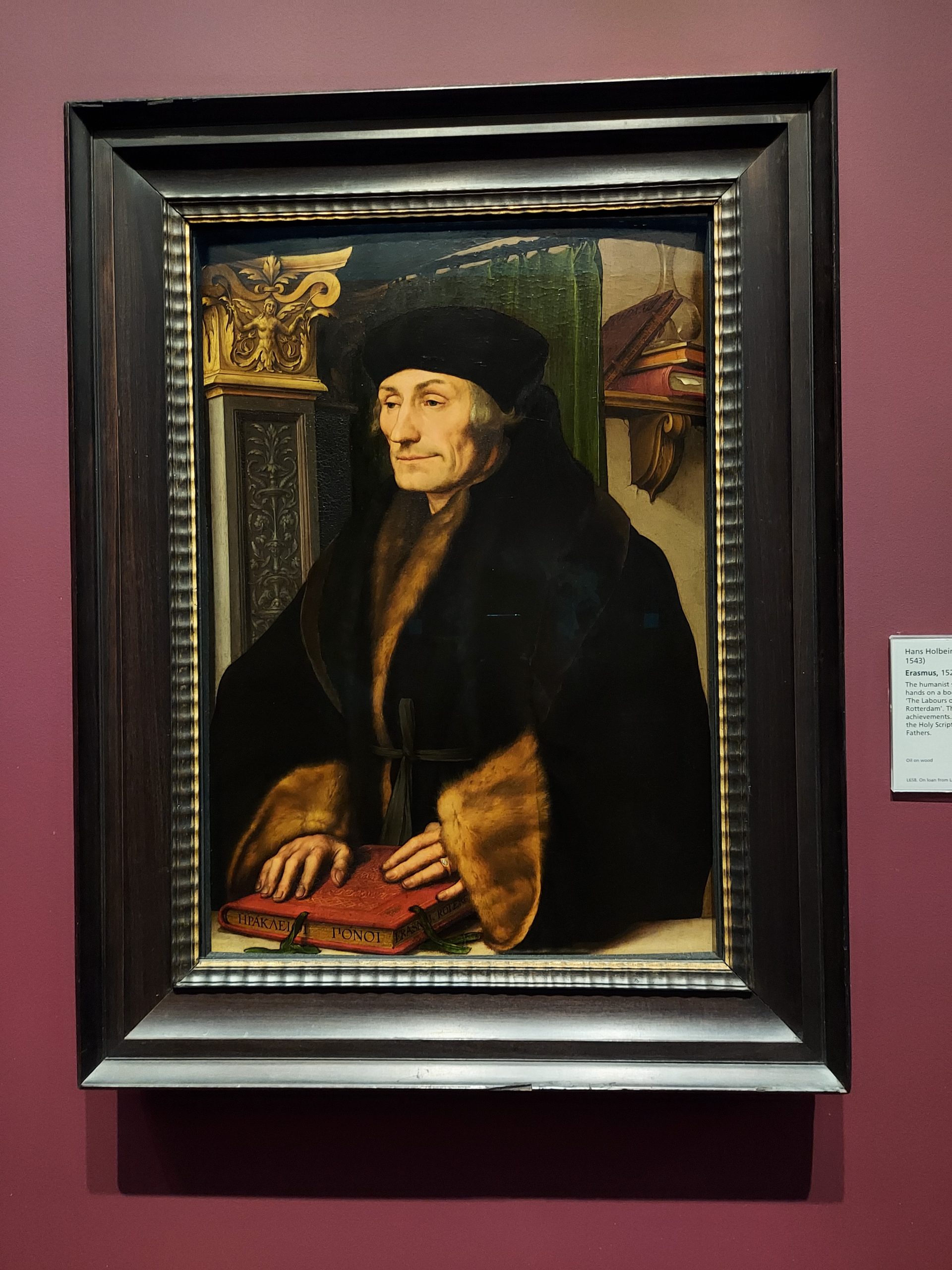
Hans Holbein the Younger, Erasmus, 1523
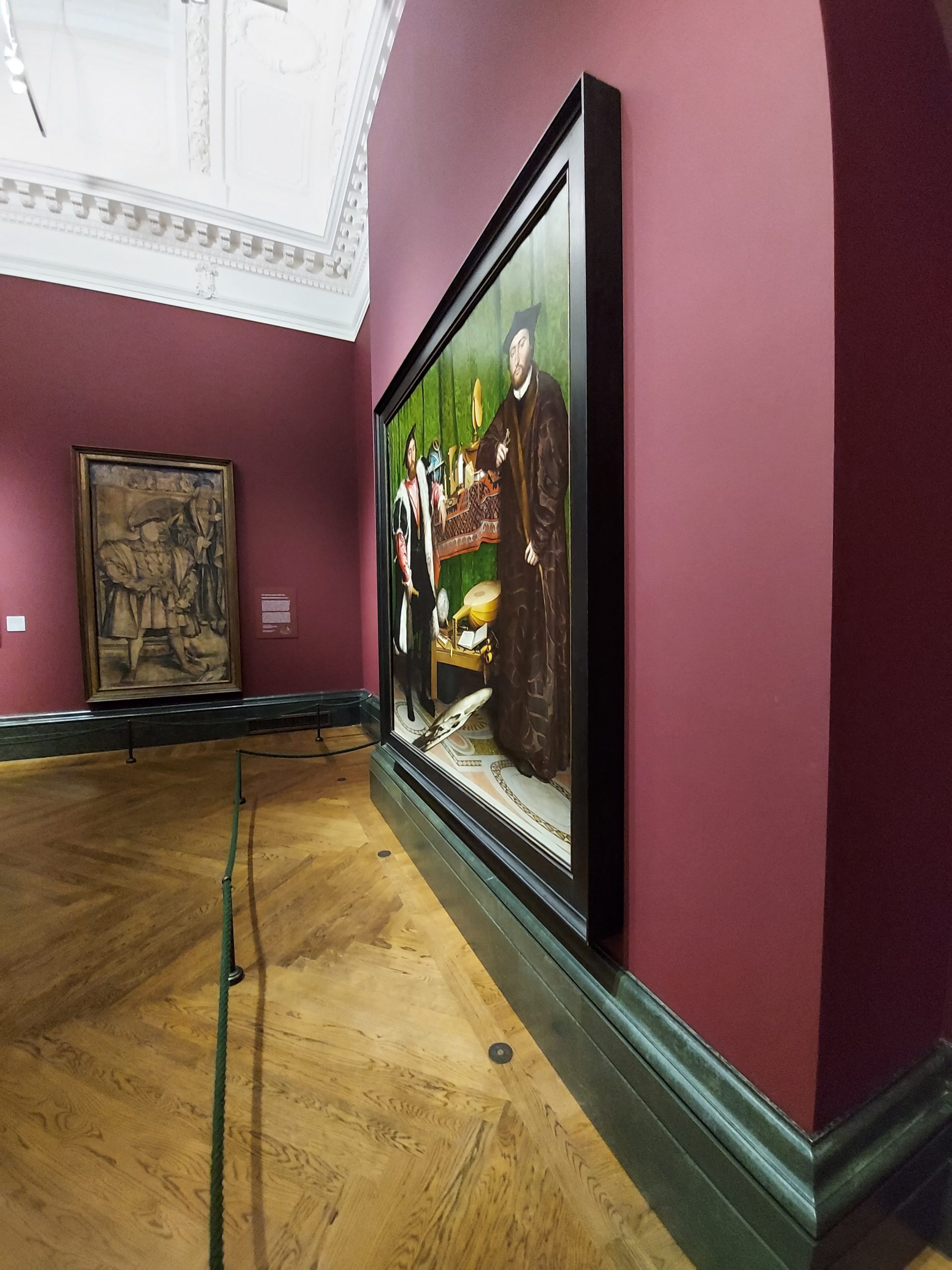
Hans Holbein The Younger, The Ambassadors, 1533
1600-1700 This section features the likes of Vermeer, Velasquez, Caravaggio and van Dyck. It’s not really my favourite, but there were some interesting pictures, including a Rembrandt.
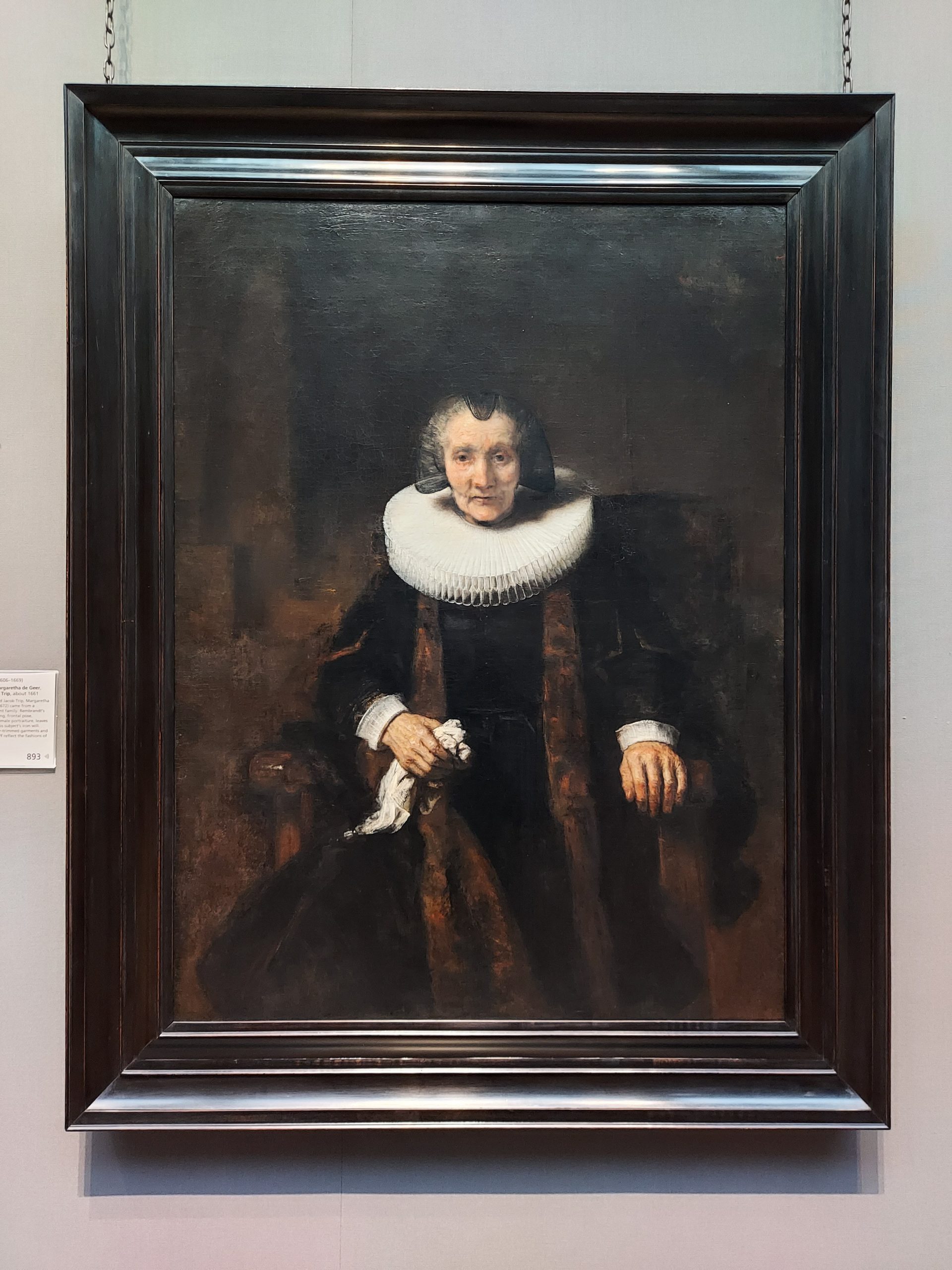
Rembrandt, Margaretha de Geer, c. 1661
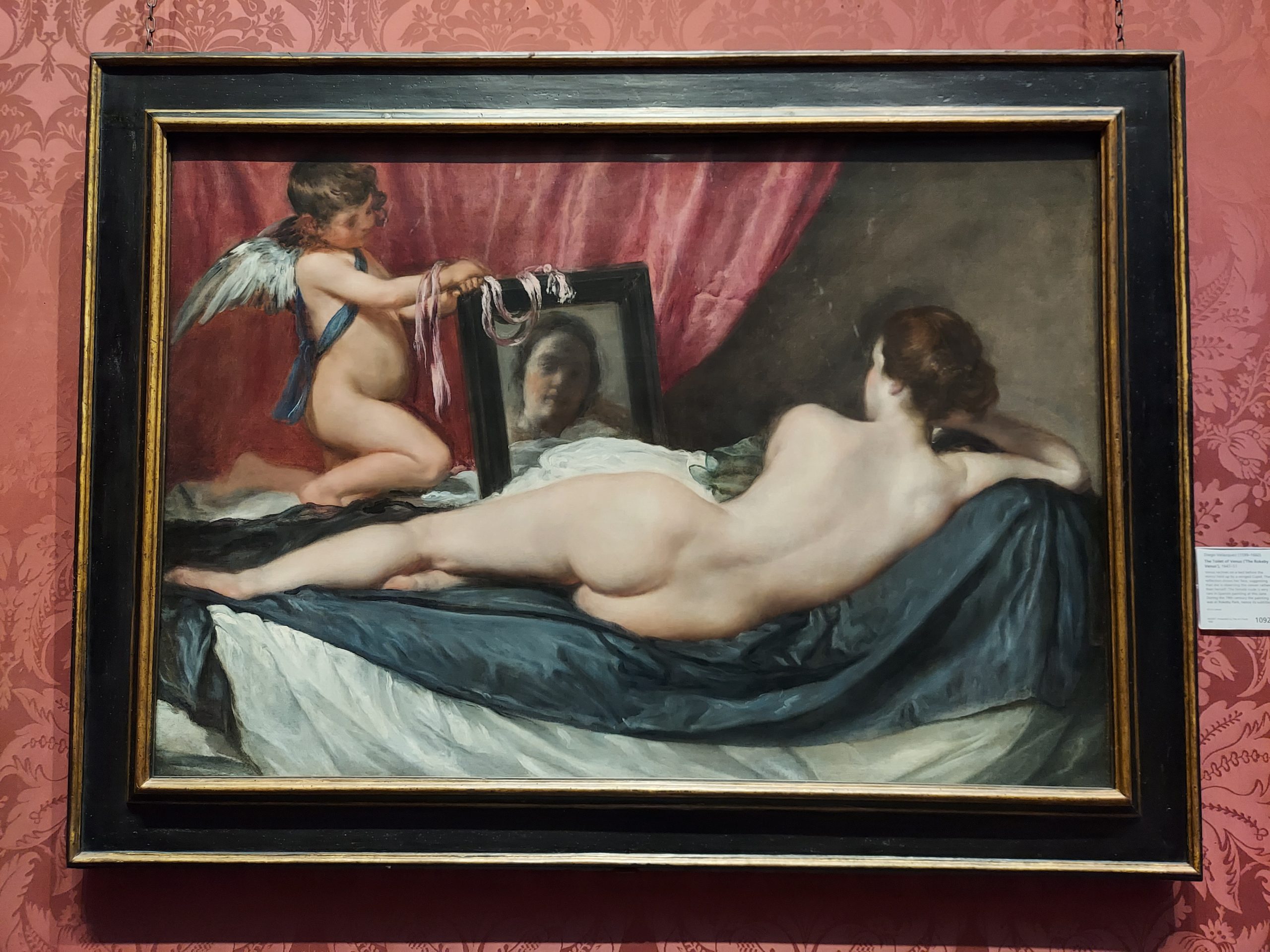
Diego Velázquez, ‘The Toilet of Venus (‘The Rokeby Venus’)’, 1647-51
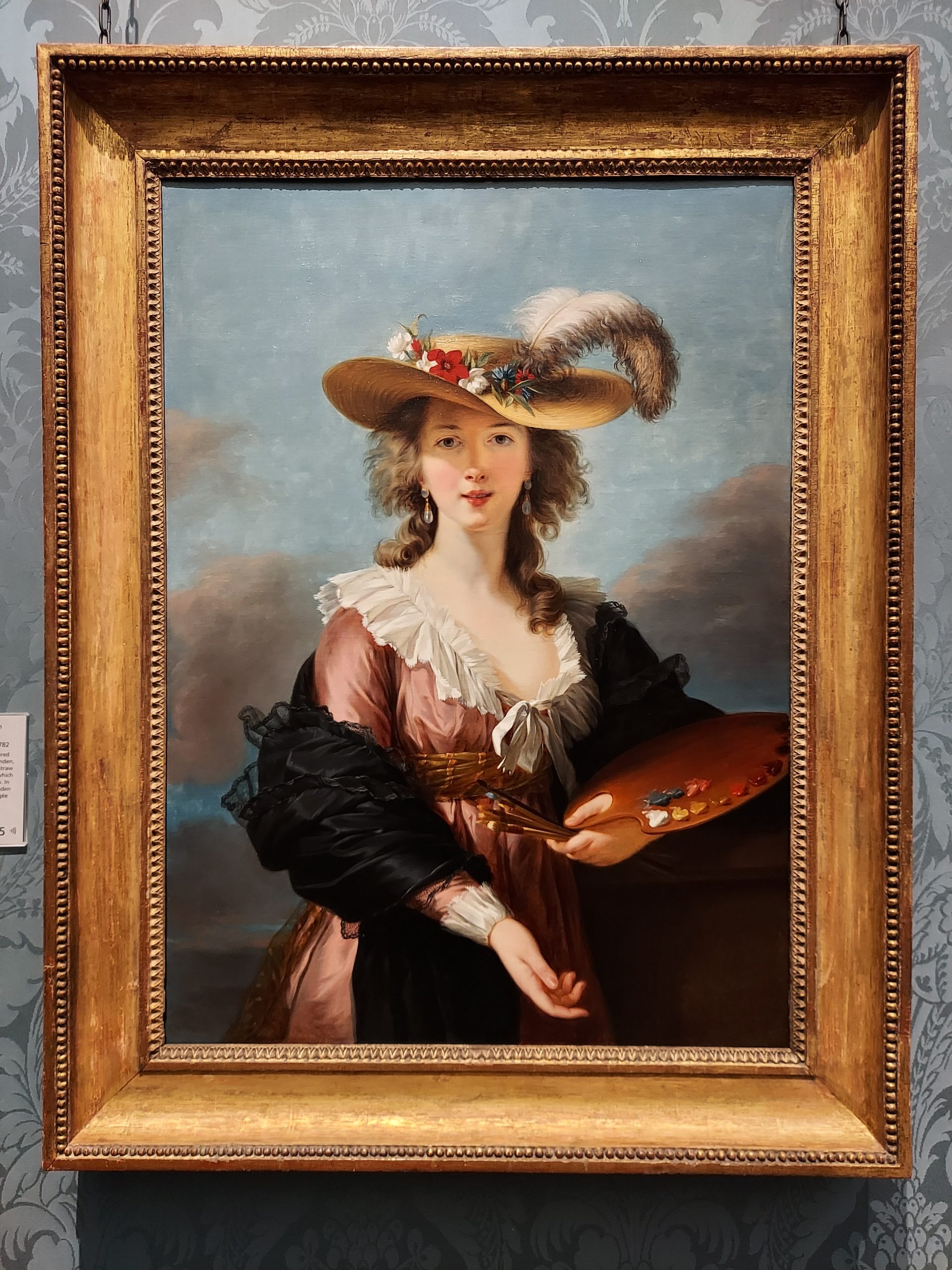
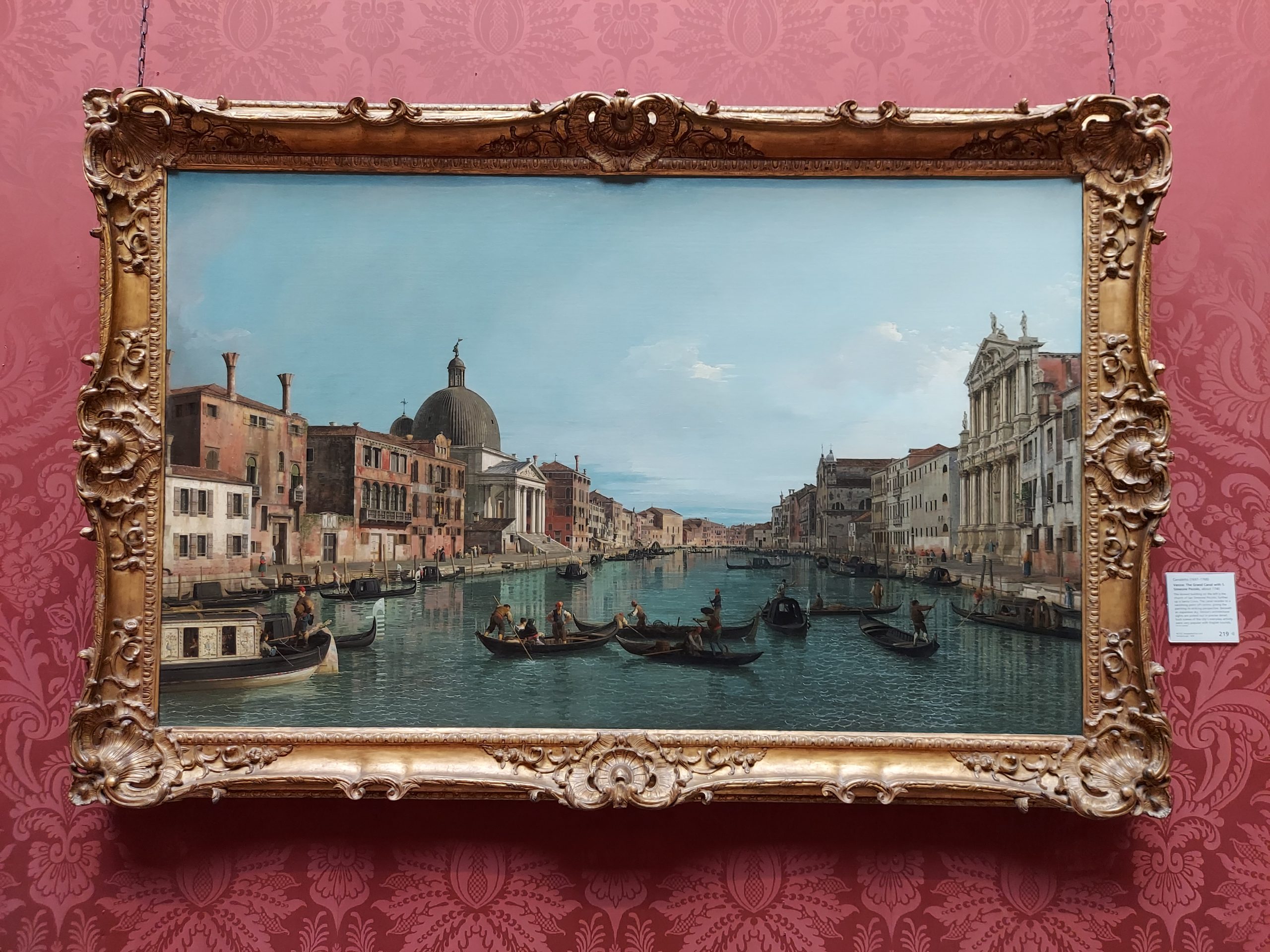
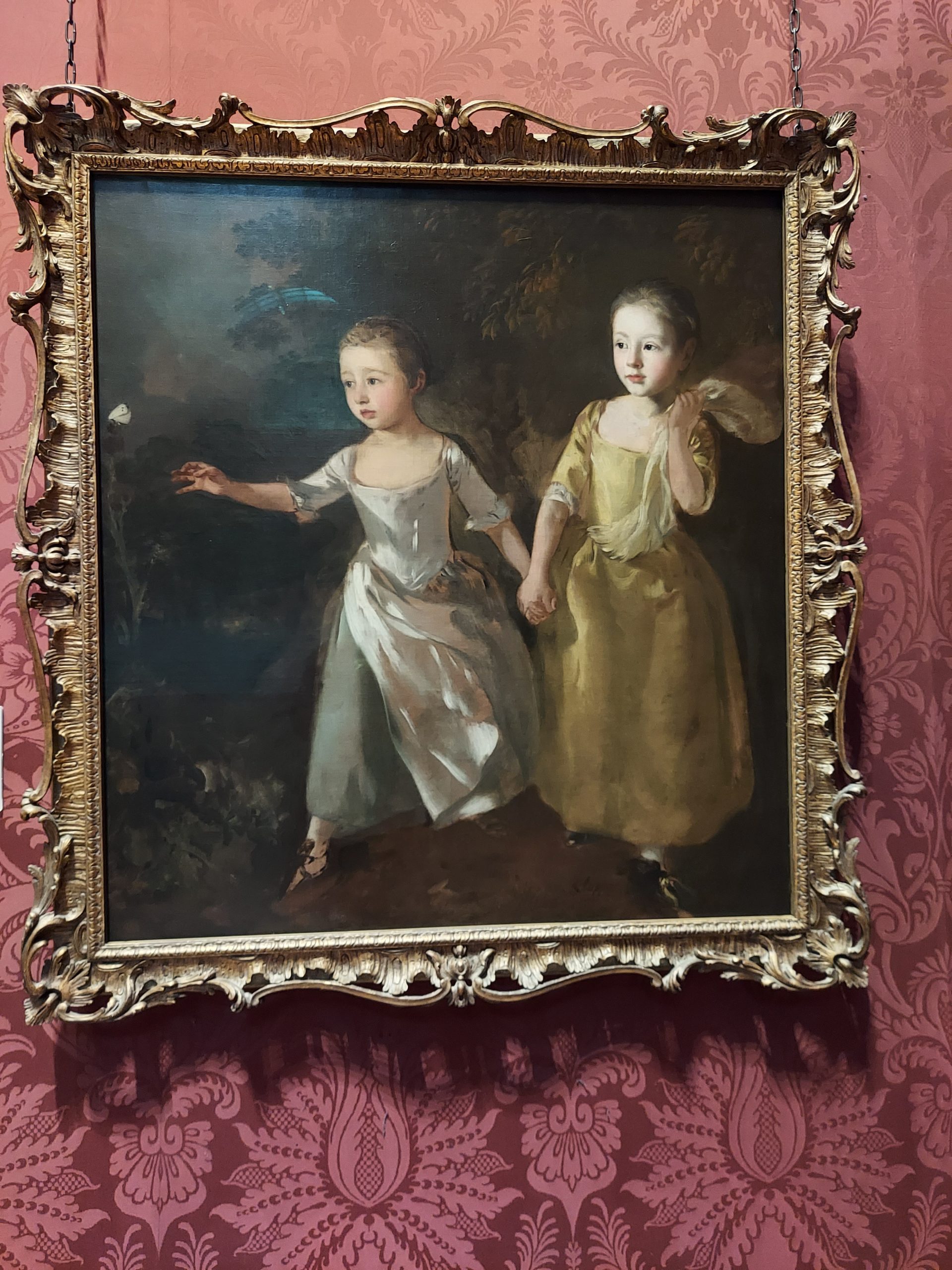
1700-1930 This final section covered a more wide-ranging period and was probably my favourite. Featuring the likes of Turner, Stubbs, Monet, van Gogh and Seurat, I was impressed with the variety. The section began with some eighteenth-century portraits and landscapes.
Élisabeth Louise Vigée Le Brun, Self Portrait in a Straw Hat, after 1782
Canaletto, Grand Canal: Looking South-West, c. 1738
Thomas Gainsborough, The Painter’s Daughters Chasing a Butterfly, 1756
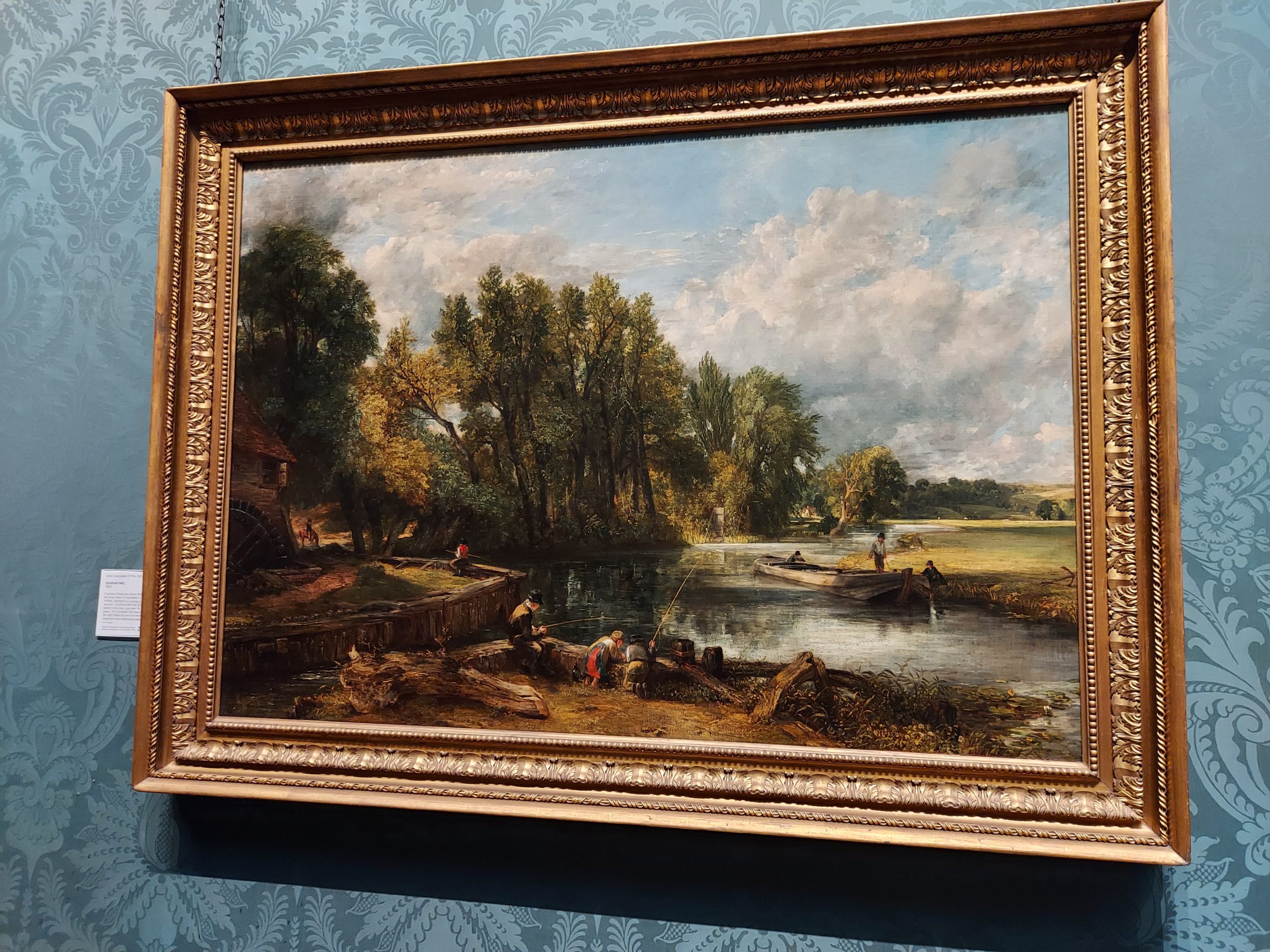
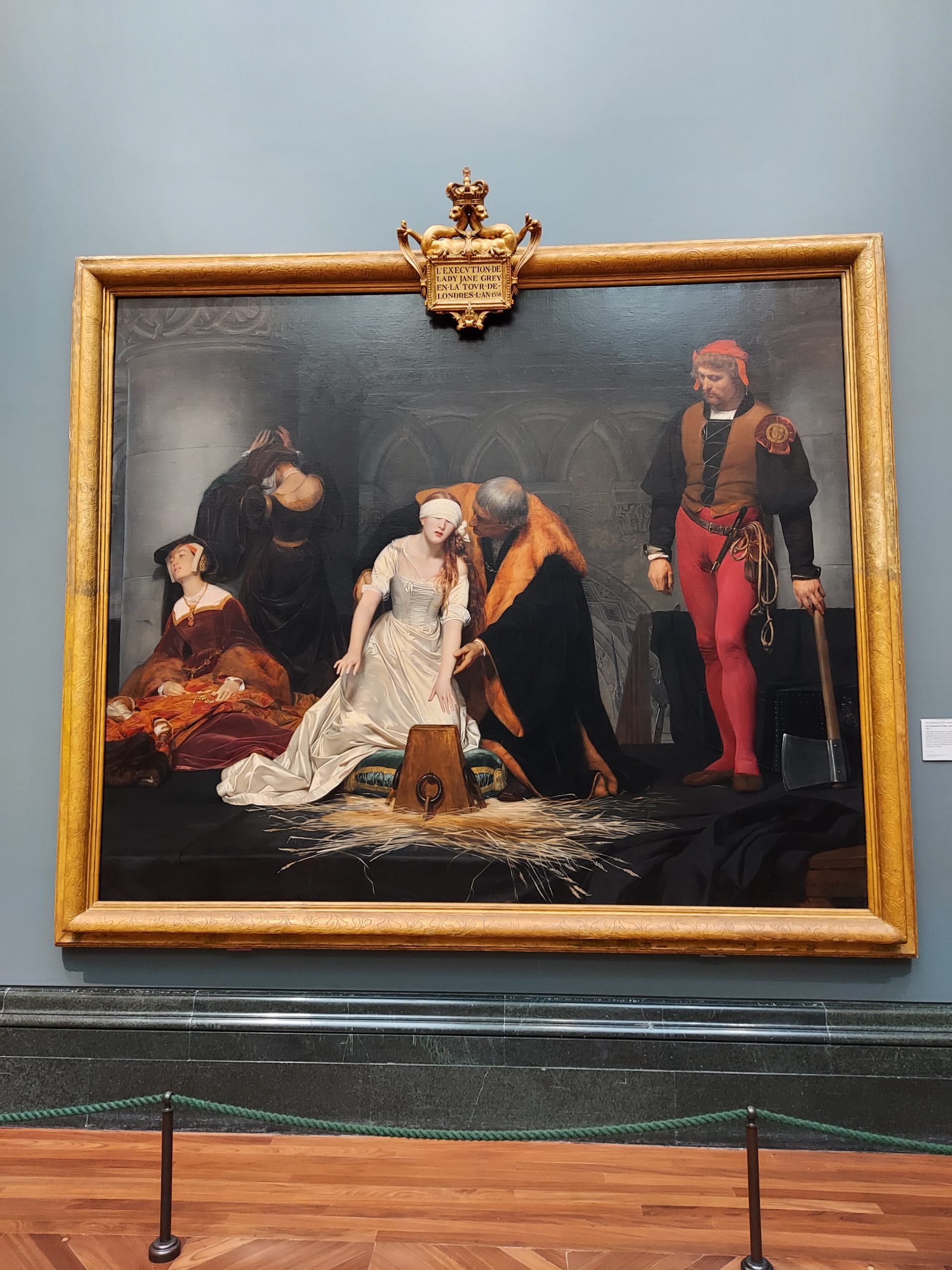
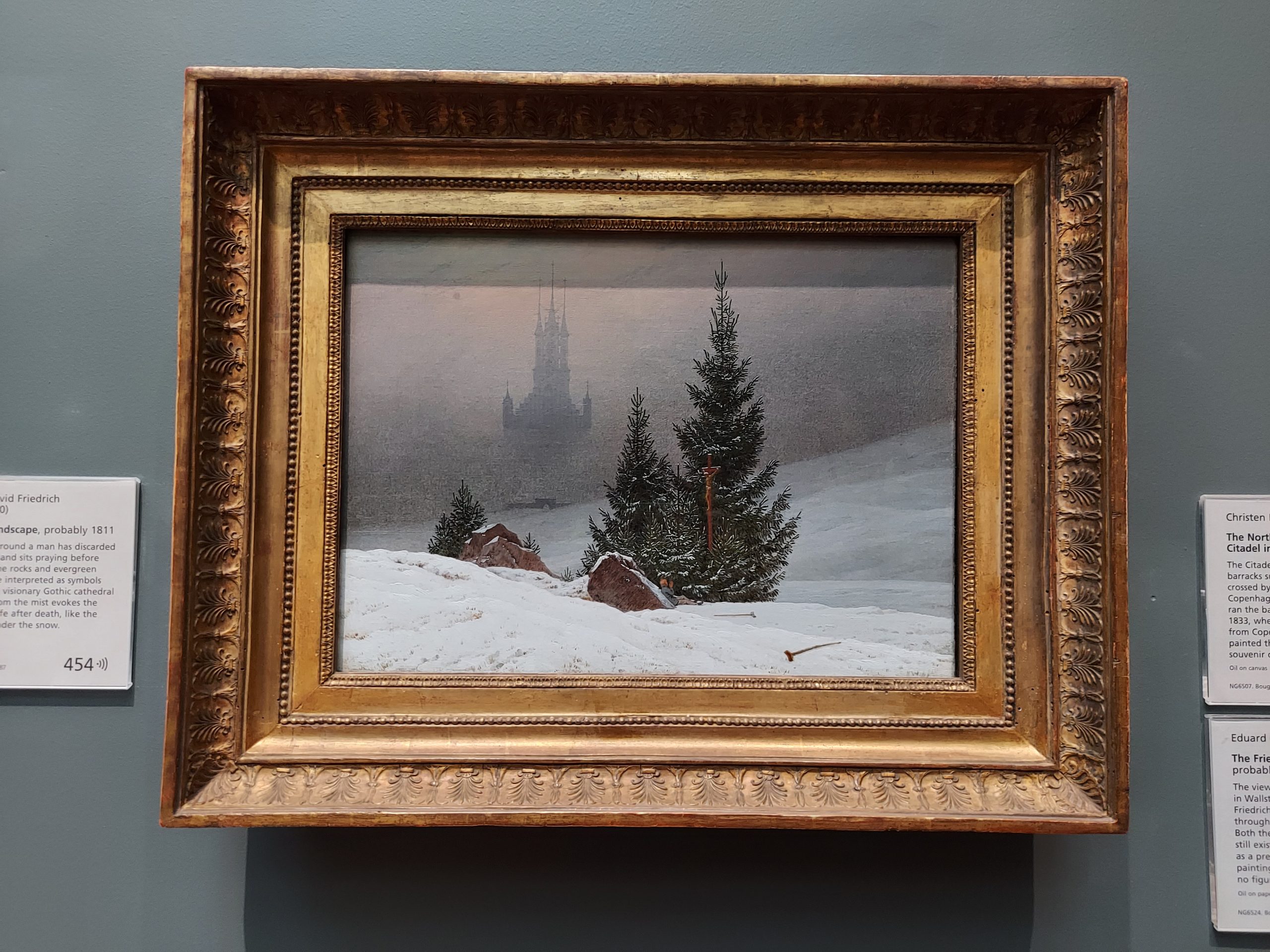
Then moved on to the nineteenth century with some dramatic scenes and landscapes.
John Constable, Stratford Mill, 1820
Paul Delaroche, The Execution of Lady Jane Grey, 1833
Caspar David Friedrich, Winter Landscape, 1811
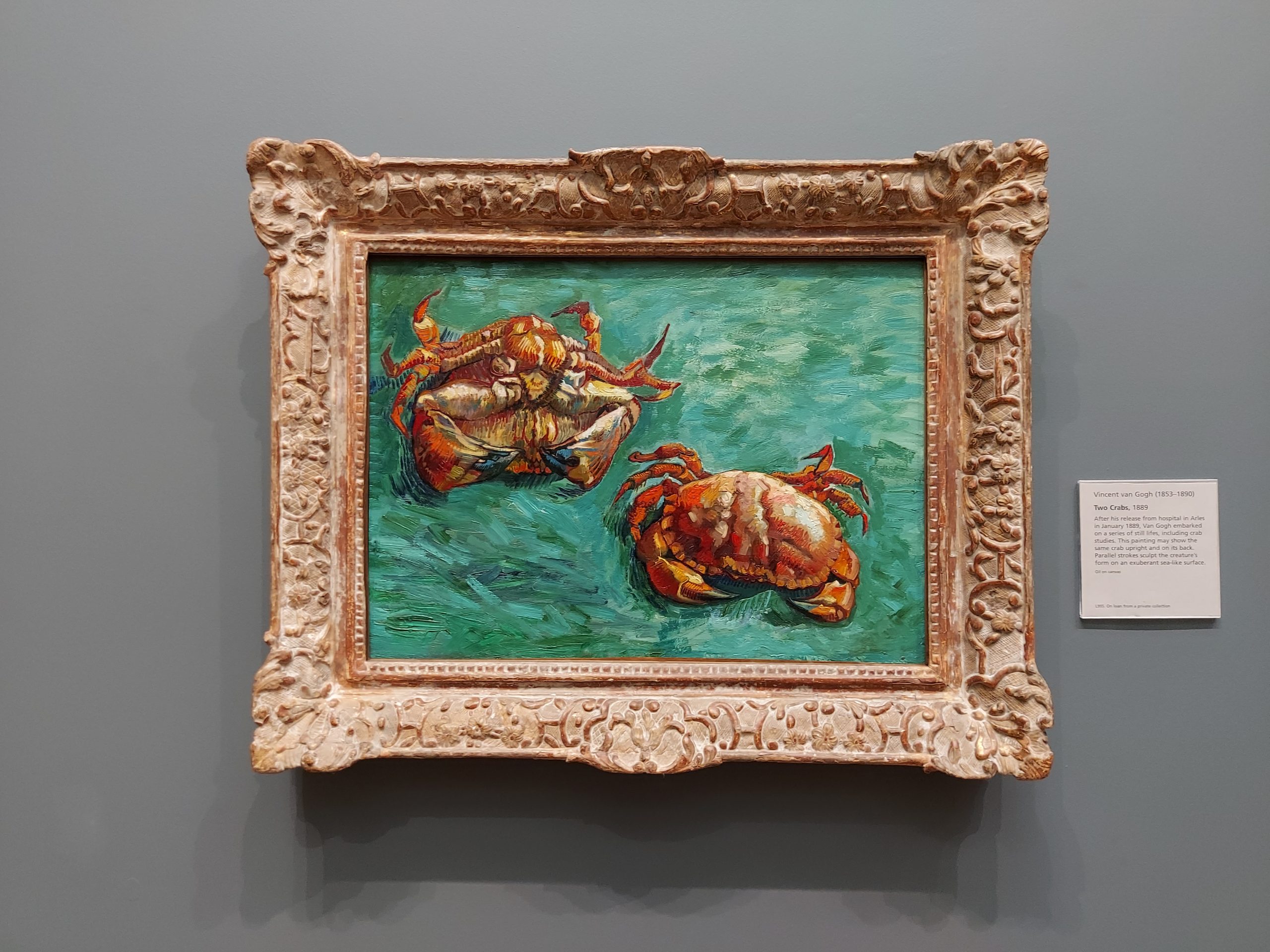
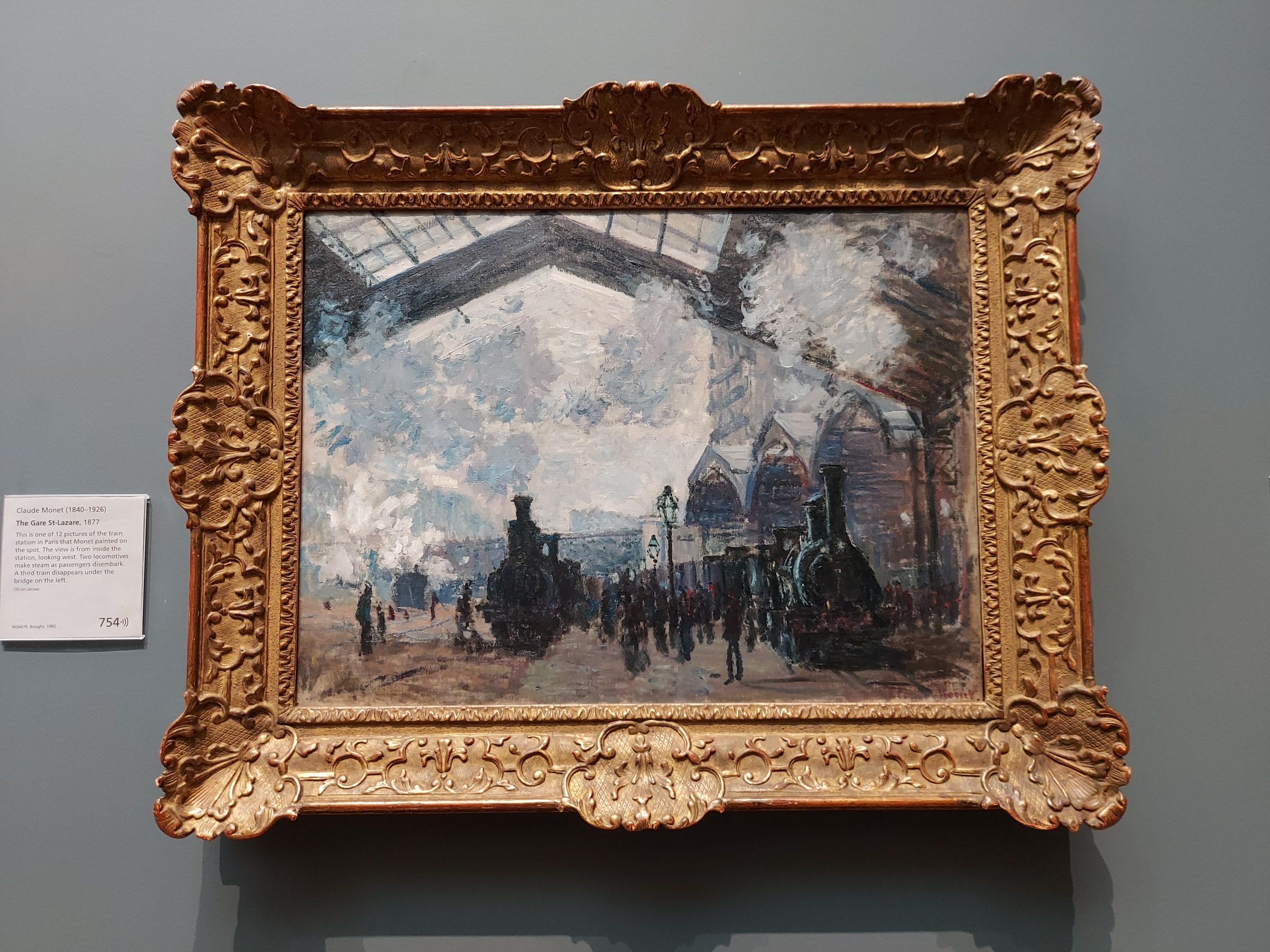
The final section looked at the new artistic styles emerging in the later nineteenth century.
Vincent Van Gogh, Two Crabs, 1889
Claude Monet, The Gare St-Lazare, 1877
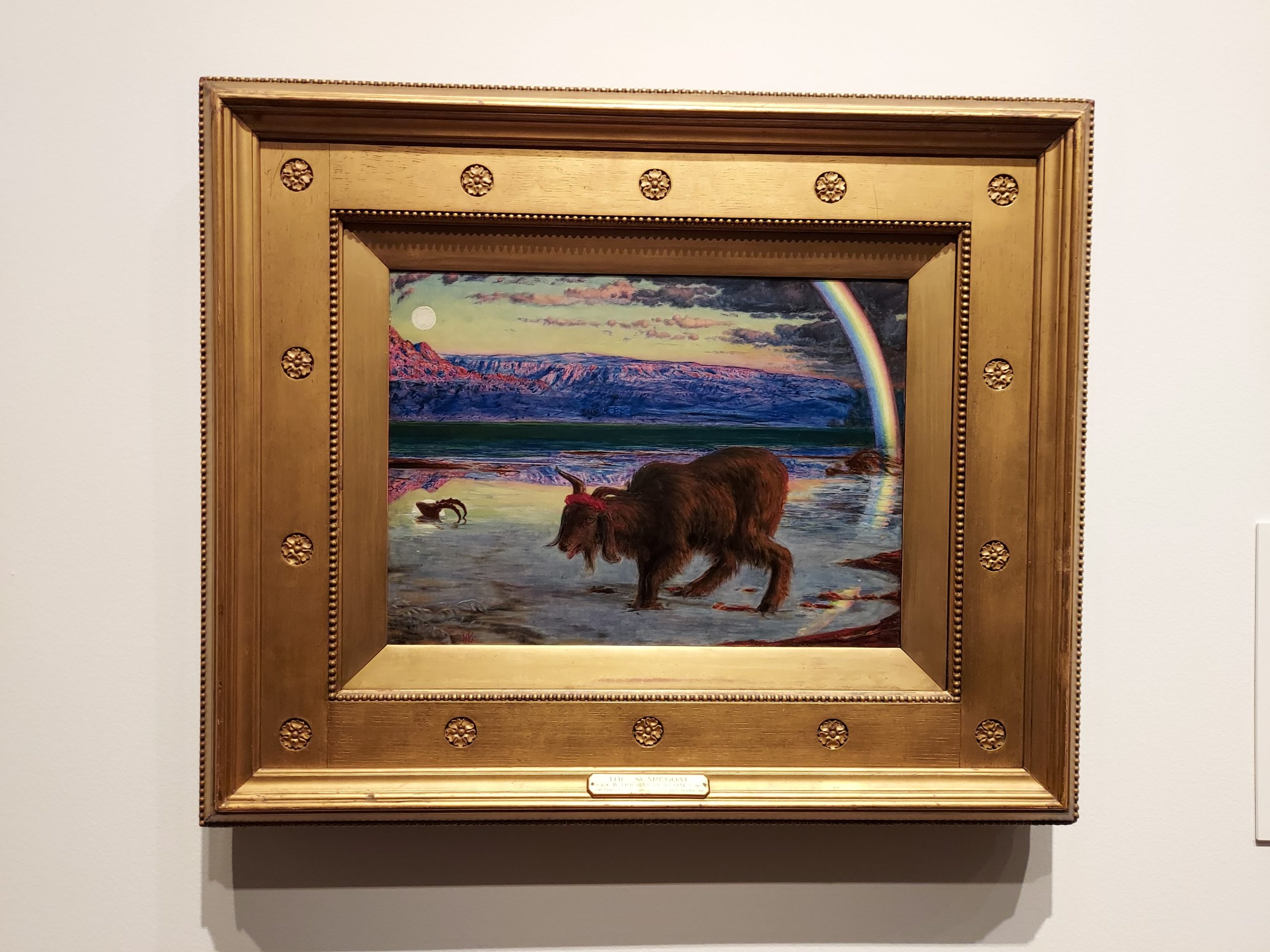
William Holman Hunt, The Scapegoat, 1854-55
A visit to the National Gallery is definitely recommended, especially as it’s free. If you can get there before the crowds begin to return, even better.
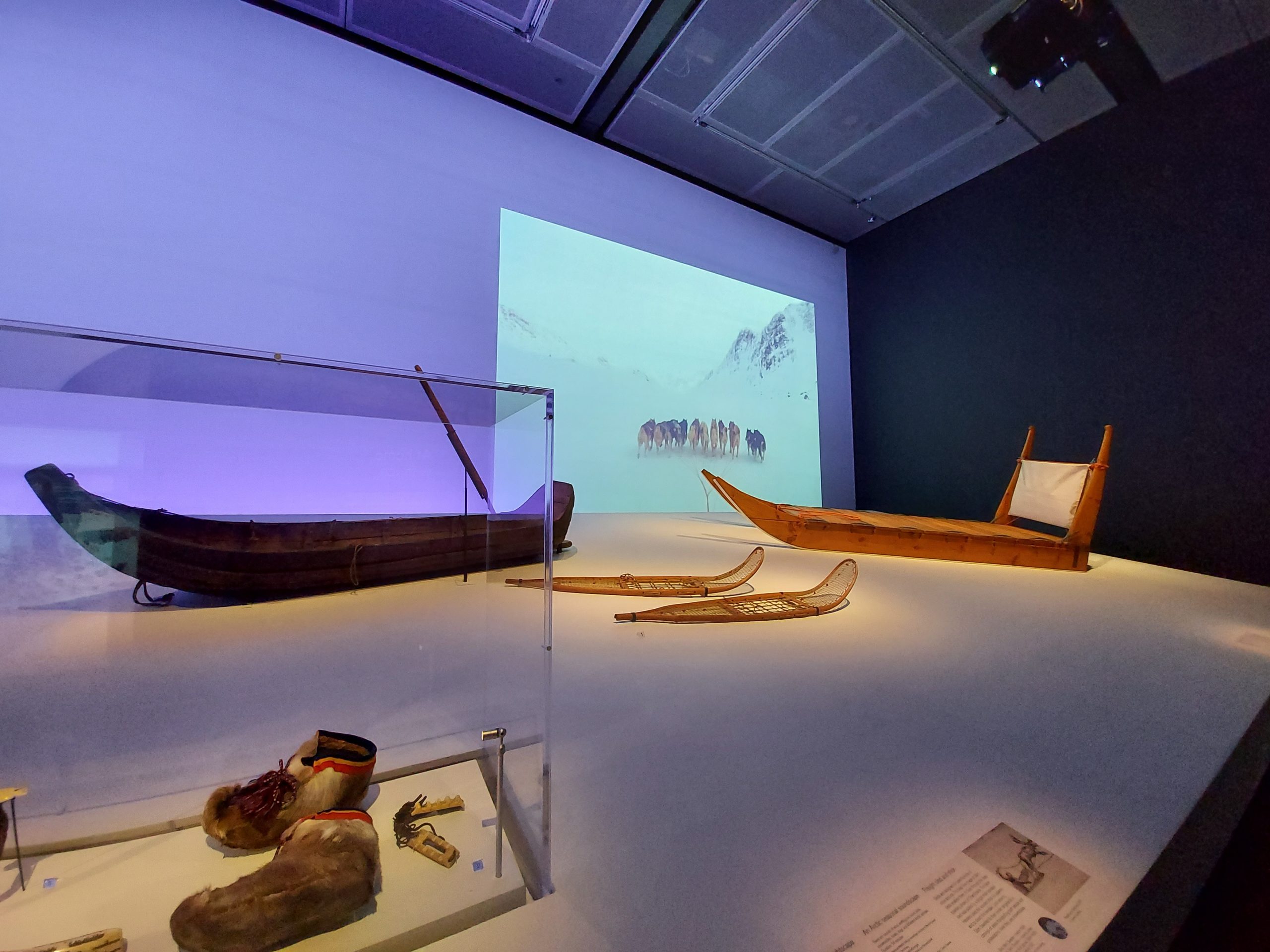
I visited the Arctic: Culture and Climate exhibition at the British Museum while I was off work. I’m fascinated by the history of this region, particularly the various expeditions that have taken place there, but this exhibition focused mainly on the peoples that have made their home in the Arctic for thousands of years. The main theme of the exhibition seemed to be that while Arctic peoples have adapted very well to the conditions of the area, climate change means that conditions in the Arctic are changing so fast that it is becoming more and more difficult to live here, and traditional ways of life are being threatened.
Clothing, tools and household items have been made with local materials, such as animal fur and bone, and decorated with beautiful designs. The artistry as well as functionality of these items is breathtaking. This part of the exhibition was fascinating, but makes it even sadder to learn that erratic weather and the melting of ice are making it increasingly difficult for societies to function.
I’m no art expert, but I’ve been aware of Artemisia Gentileschi and her work for a while. At university, I took a module on Renaissance Rome and she featured; in recent years I’ve encountered her life and work in stories and plays. I was excited, therefore, to visit the Artemisia exhibition at the National Gallery, making it there in between lockdowns.
Artemisia Gentileschi, Self-portrait as the Allegory of Painting, 1638-39
Artemisia, one of the most famous female artists in history, was the daughter of acclaimed painter Orazio Gentileschi. In an age when few women had the opportunities that men had to pursue artistic careers, she was painting professionally by the age of fifteen and enjoyed a successful lifelong career, painting for numerous wealthy patrons, befriending other artists and eventually becoming the first female member of Florence’s Accademia di Arte del Disegno.
The most famous incident of Artemisia’s life is probably her rape by a fellow painter at her home in Rome. During the subsequent trial, Artemisia was tortured with thumbscrews – a particularly frightening prospect for an artist, I’d imagine – to prove her testimony. Breach Theatre have produced a powerful play about the trial, but I was glad to see that the National Gallery did not allow this incident to overshadow Artemisia’s life and career. There is just as much focus on her subsequent marriage and move to Florence, her affair with a Florentine nobleman, her children and, later, her move back to Rome and visits to Venice, Naples and England.
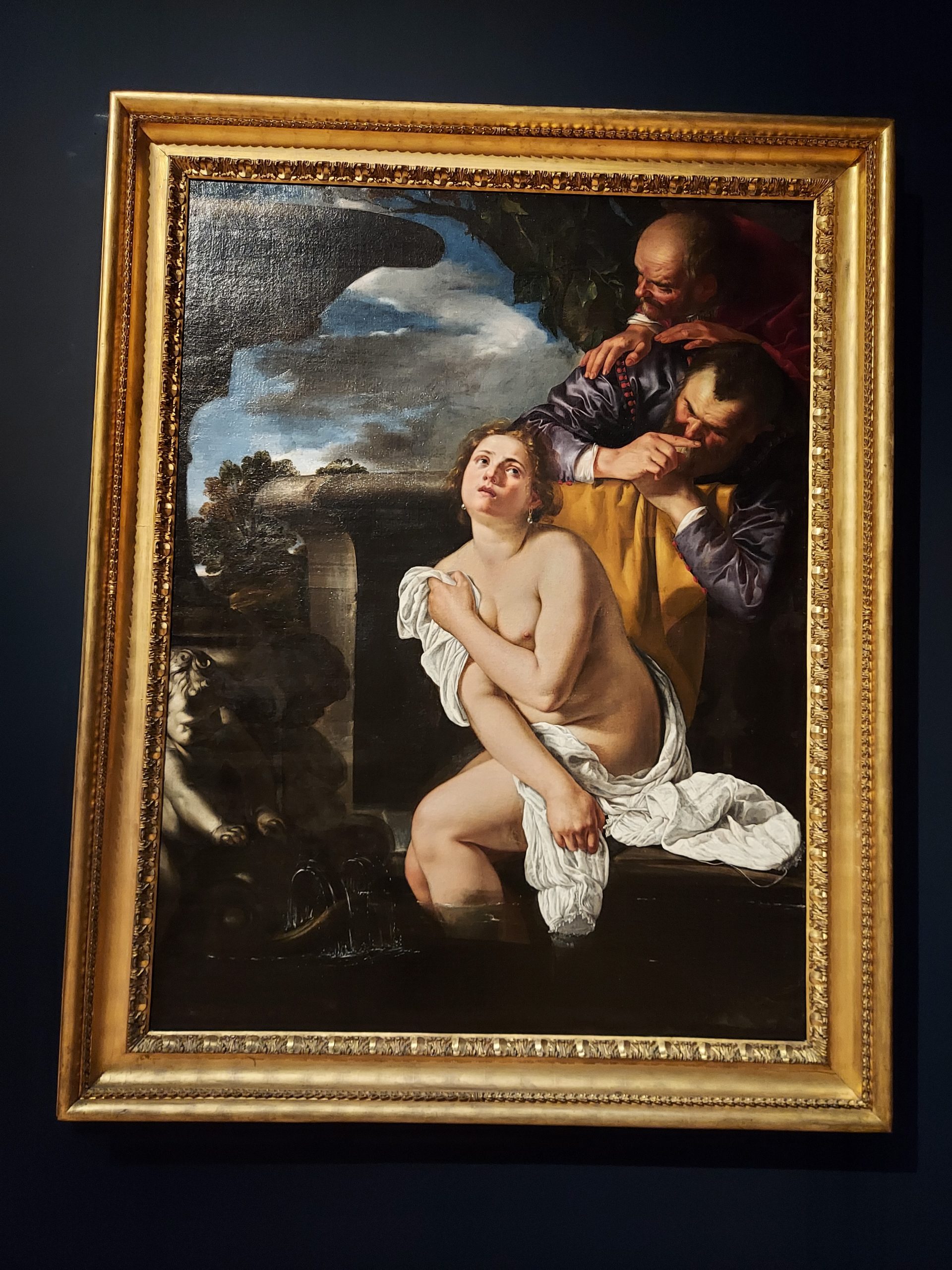
Artemisia Gentileschi, Susanna and the Elders
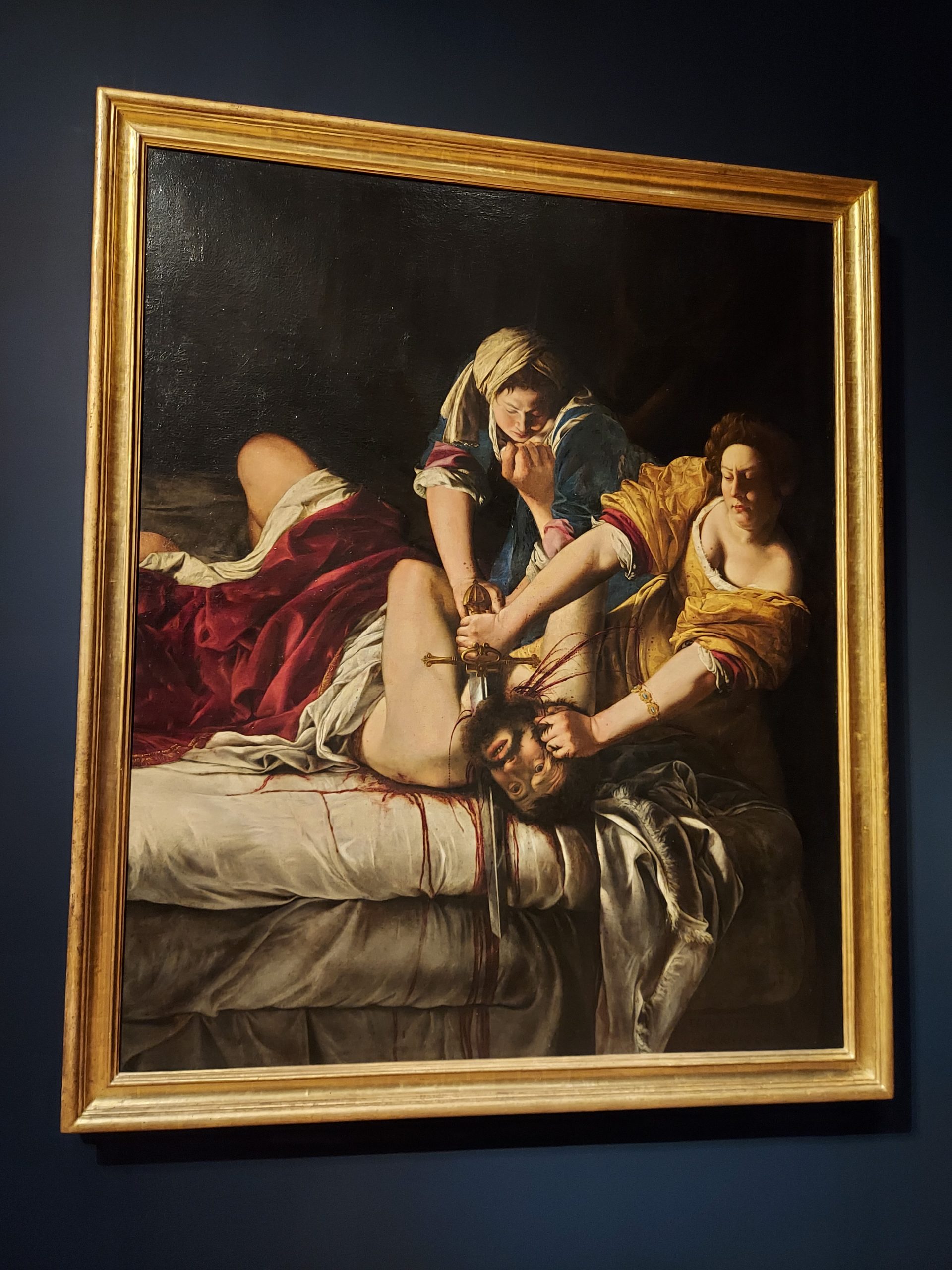
Even my untrained eye can see there is something different and special about Artemisia’s work: perhaps her gender helped her to see things differently; perhaps she was just incredibly talented; perhaps a bit of both. Some of her works are shown alongside her father’s: though Orazio was clearly an accomplished painter, Artemisia’s creations are (to my mind) far superior. Her versions of Susannah and the Elders show a frightened Susannah overlooked by lecherous old men, instead of the provocative nude often pictured by male artists. Judith beheading Holofernes, particularly the later version which is much more bloody and brutal, demonstrates visceral anger, and her self-portrait as the Allegory of Painting is an honest depiction of an artist lost in her work, not an idealised muse.
I loved this exhibition, and I’m so glad I got the chance to go.
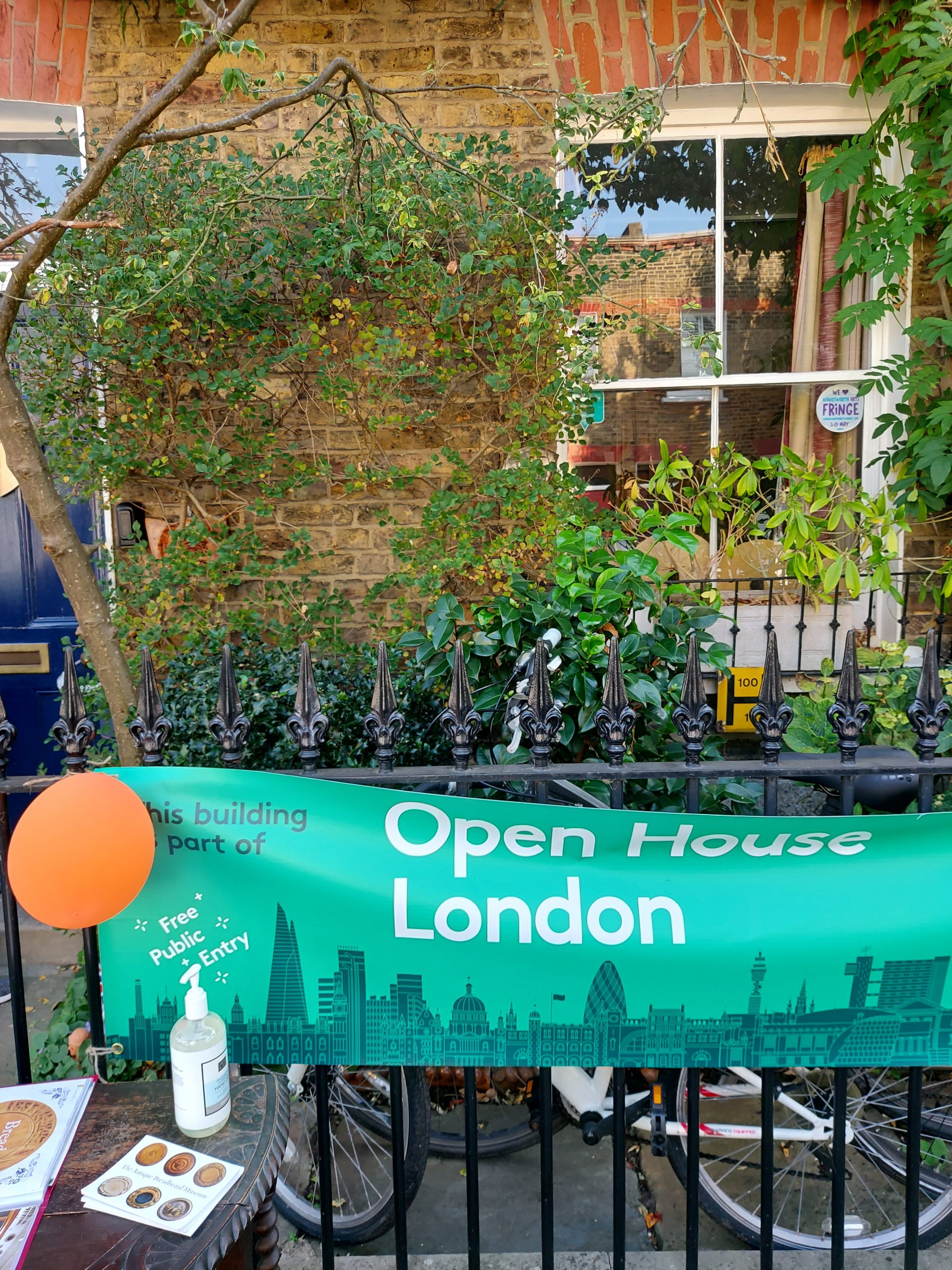
I’ve wanted to visit the Antique Breadboard Museum for a while, and was thrilled when it was announced as part of the Open House London programme for 2020. The programme has been sadly reduced owing to Covid, but I was very happy to get the chance to visit one of the places on my list.
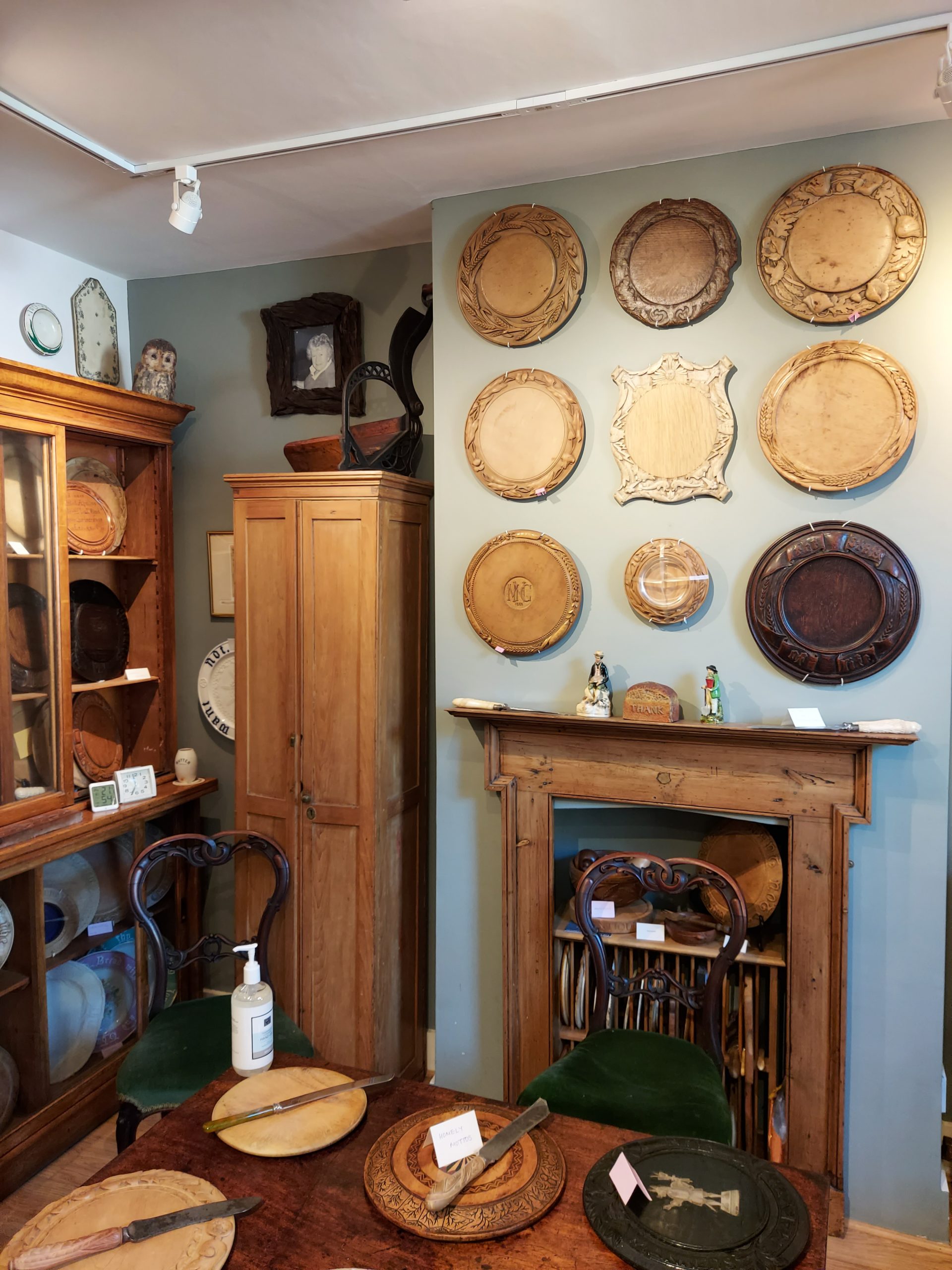
The museum is located in a house in Putney, the former home of antiques dealer Rosslyn Neave, who collected breadboards for several decades. The house is now owned by her daughter Madeleine, who lives there, inherited her mother’s collection and research, and hosts the museum’s collection in the dining room.
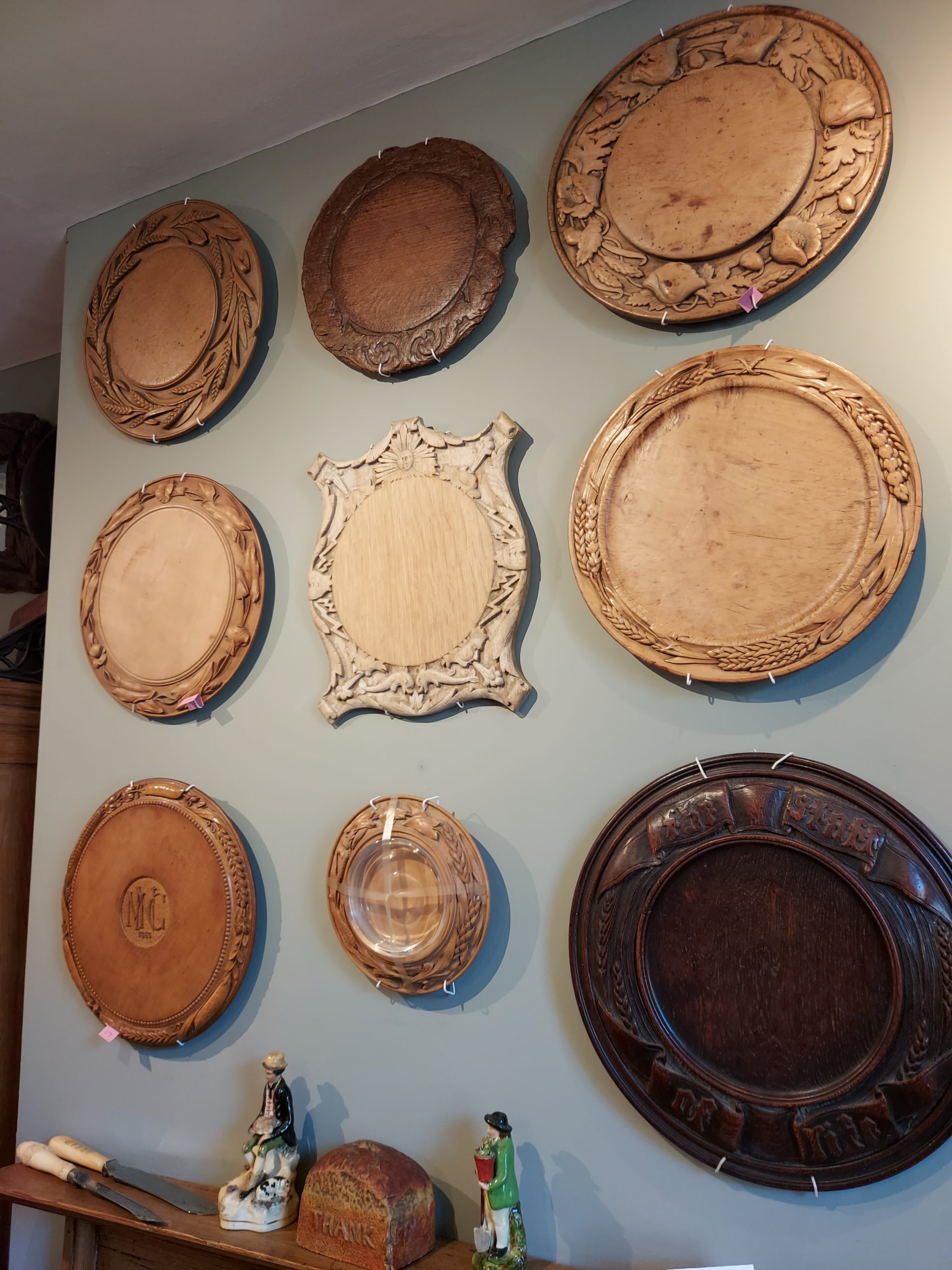
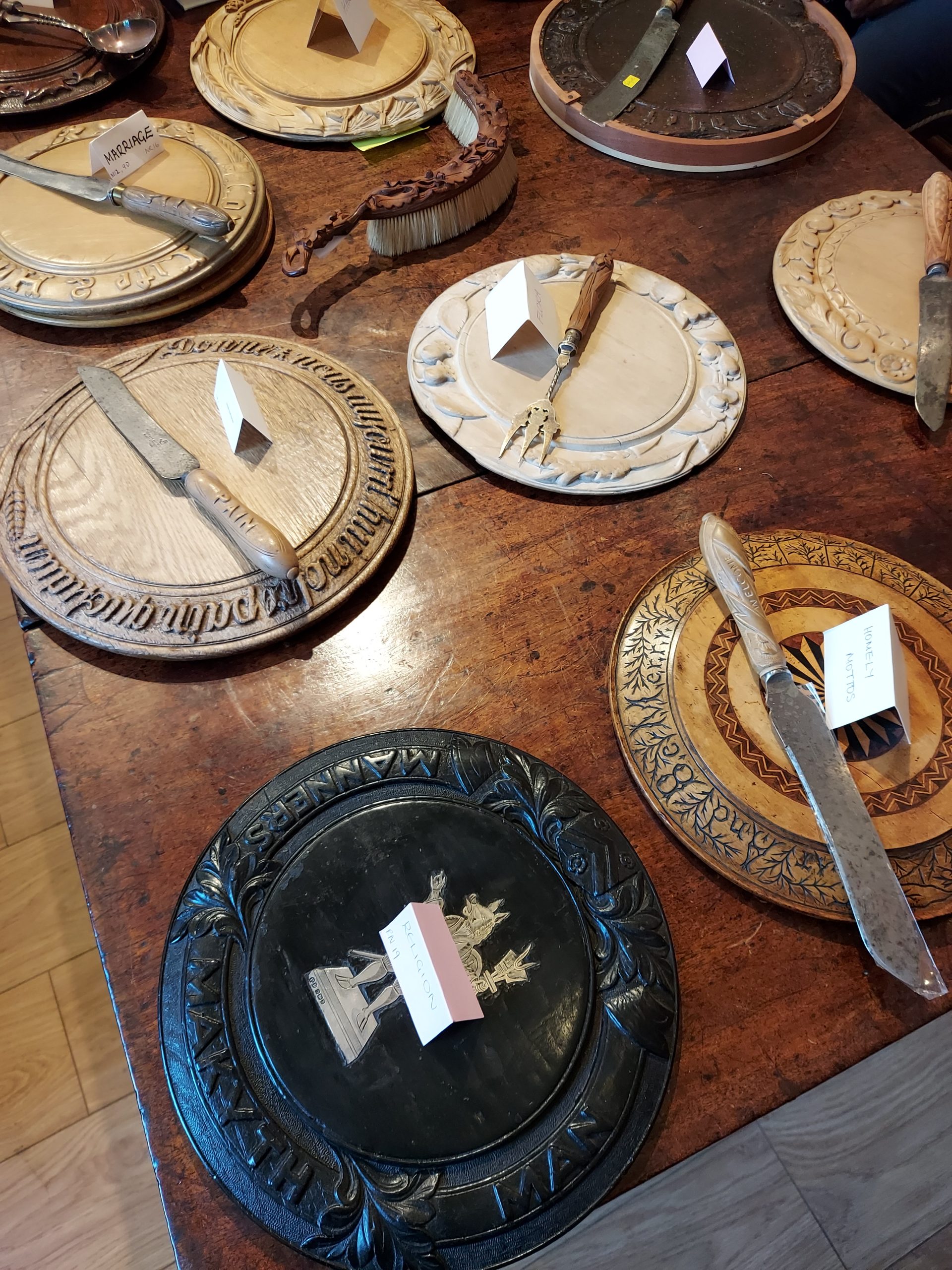
The room is packed floor to ceiling with antique breadboards of varying provenance, with some prime examples out for display on the dining table. Breadboards have a surprisingly fascinating history: the earliest ones date back to the early 19th century, and are beautifully carved around the edges. They are designed to make bread the centrepiece of the table – possibly because after the imposition of the Corn Laws (1815-46), which saw the price of bread go up, bread became a status symbol. Some beautifully ornate breadboards were designed for individuals and couples, sometimes as wedding presents; others were more simply decorated for the lower budget.
After the talk, we enjoyed scones and jam in the garden before leaving to make way for the next group. I’m so glad I got the chance to visit this lovely little museum.
FACTS
Address: Putney, London (full address provided on booking)
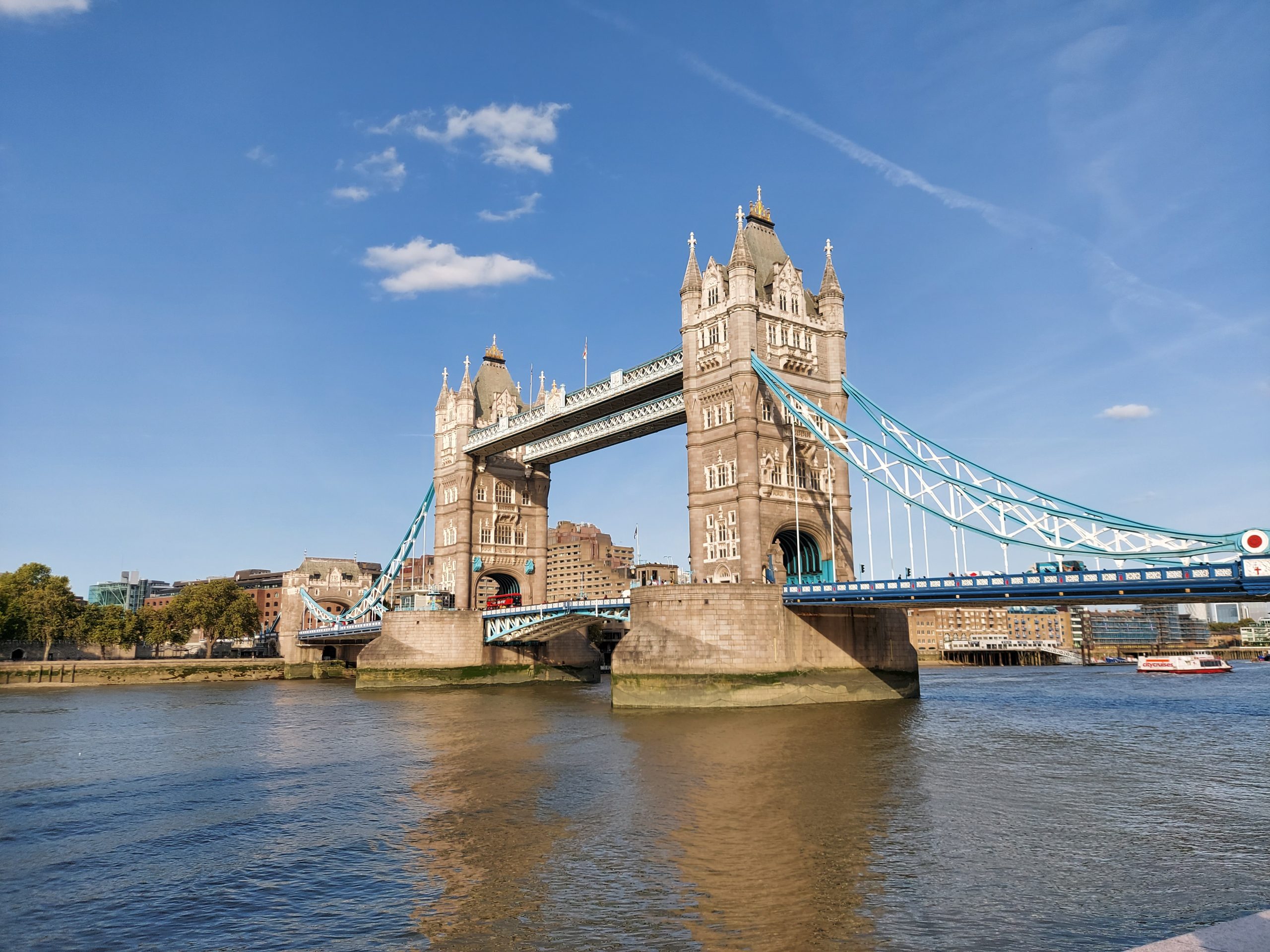
Tower Bridge is probably the most famous bridge in London, often mistaken for London Bridge, but actually it is relatively new – built between 1886 and 1894, engineered by John Wolfe Barry and architected by Horace Jones. The inner workings of the bridge are open to visitors, so in September when COVID regulations relaxed, my friend and I paid it a visit.
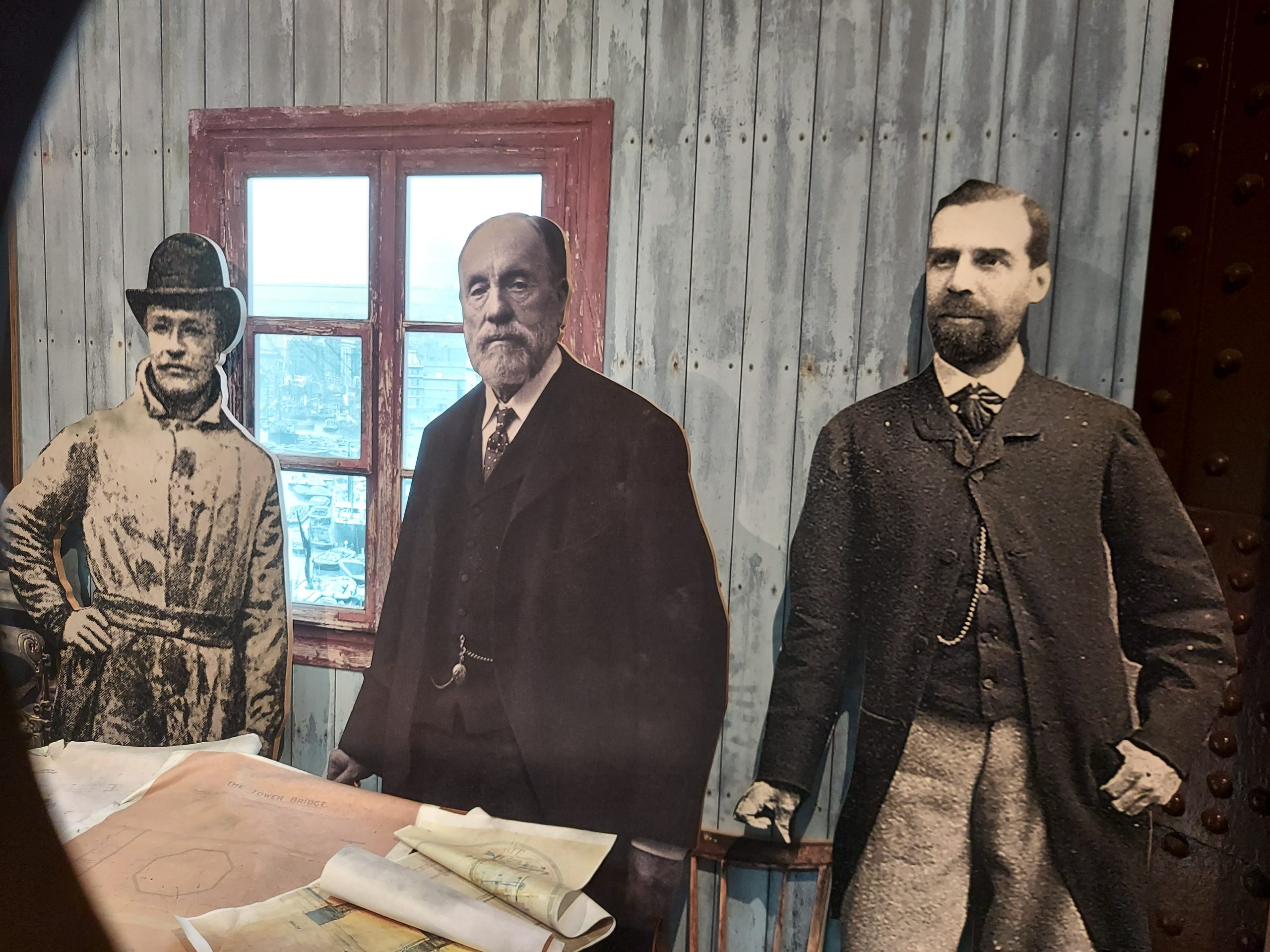
Construction of the bridge
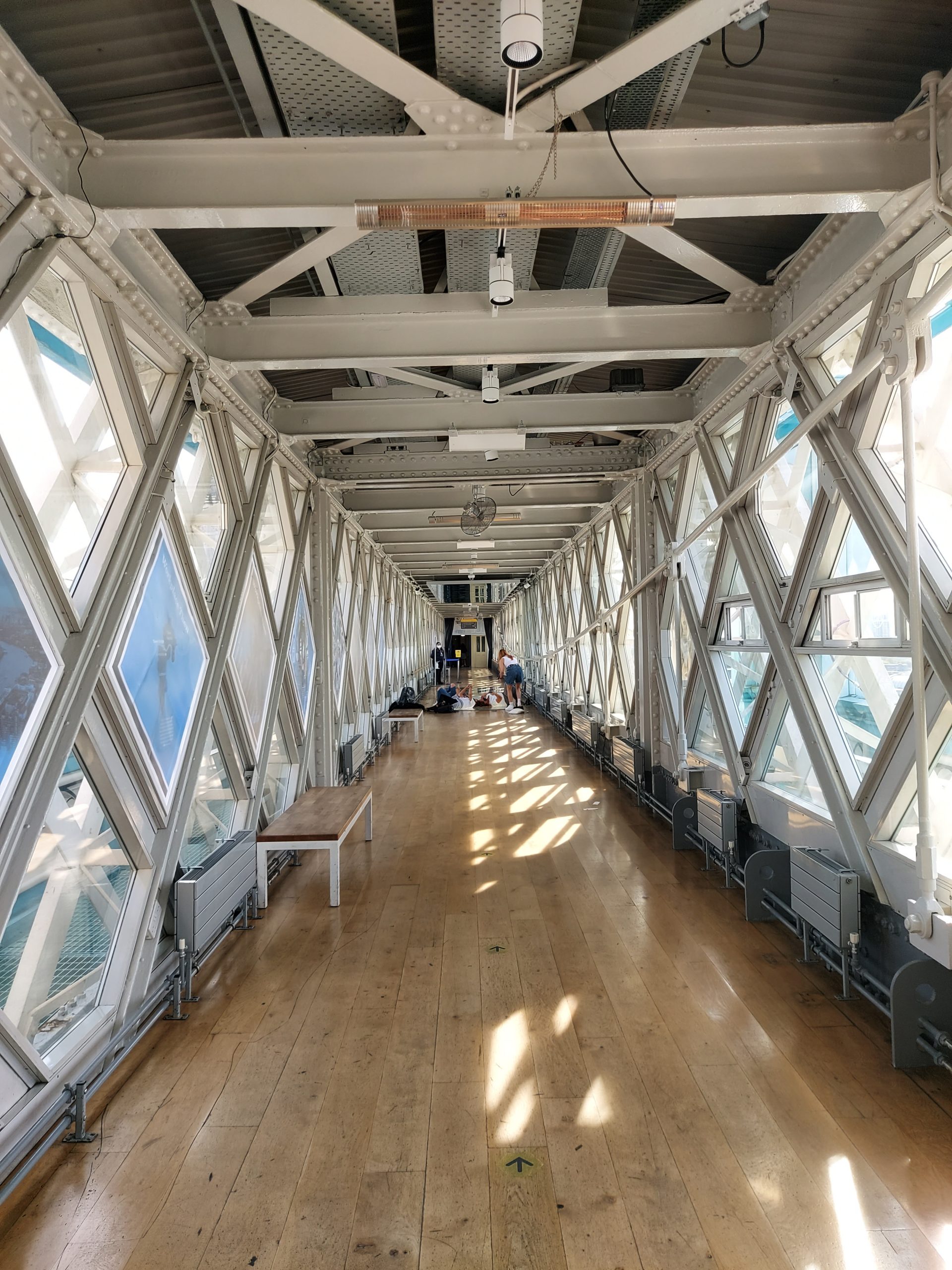
The route takes you up one side of the bridge, across the walkway, and down the other side. The exhibition begins by exploring the history of the bridge, which was built as a response to the industrial development of the East End. Designed as a combined bascule and suspension bridge, it needed to be able to open so that ships could pass through. More than fifty designs were submitted before Barry’s was eventually chosen. Construction began in 1886, when two piers filled with concrete were lowered into the Thames to support the construction. Over 400 people worked on the bridge while it was being built.
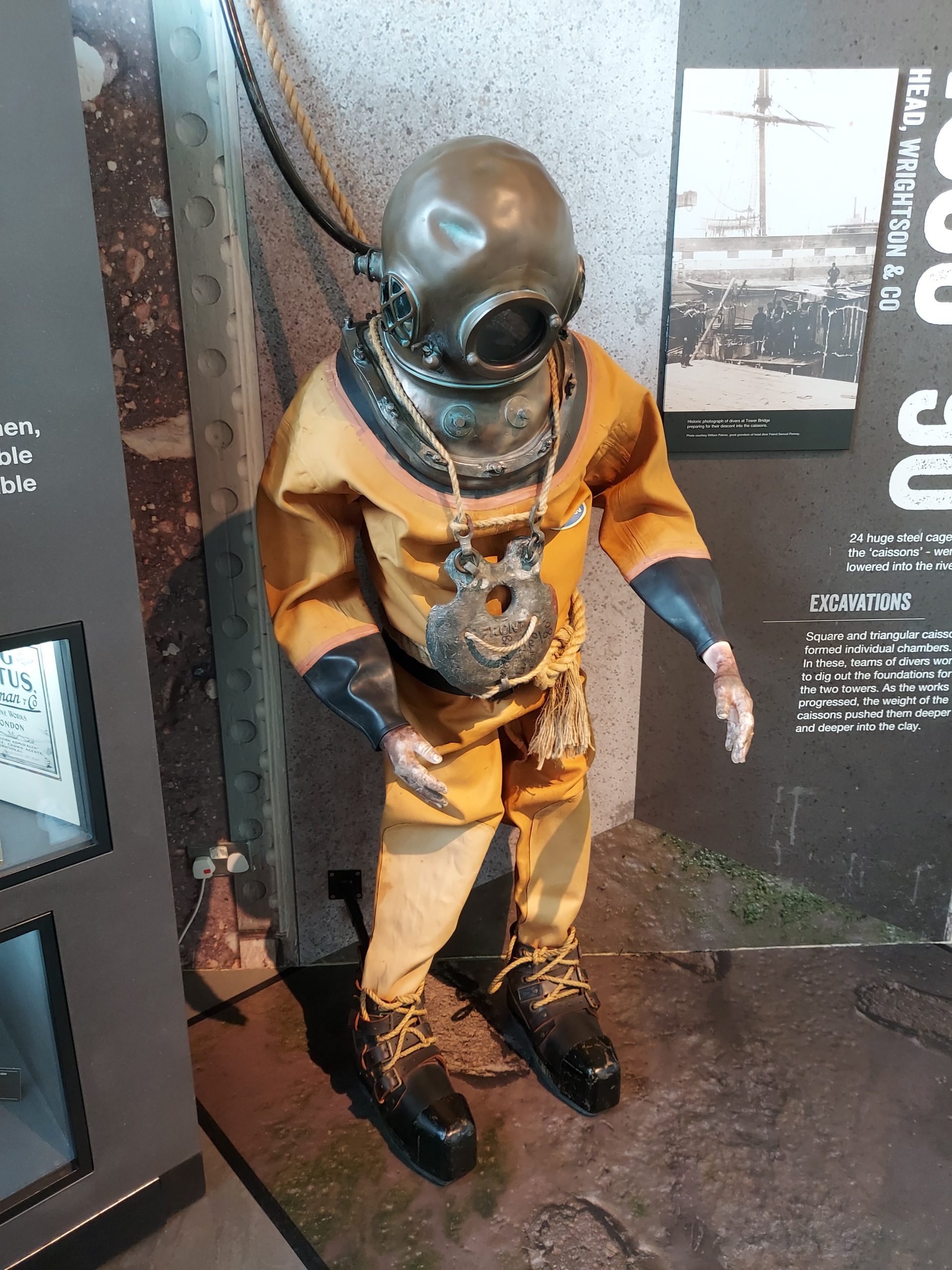
Diving suit worn during the construction of the bridge foundations
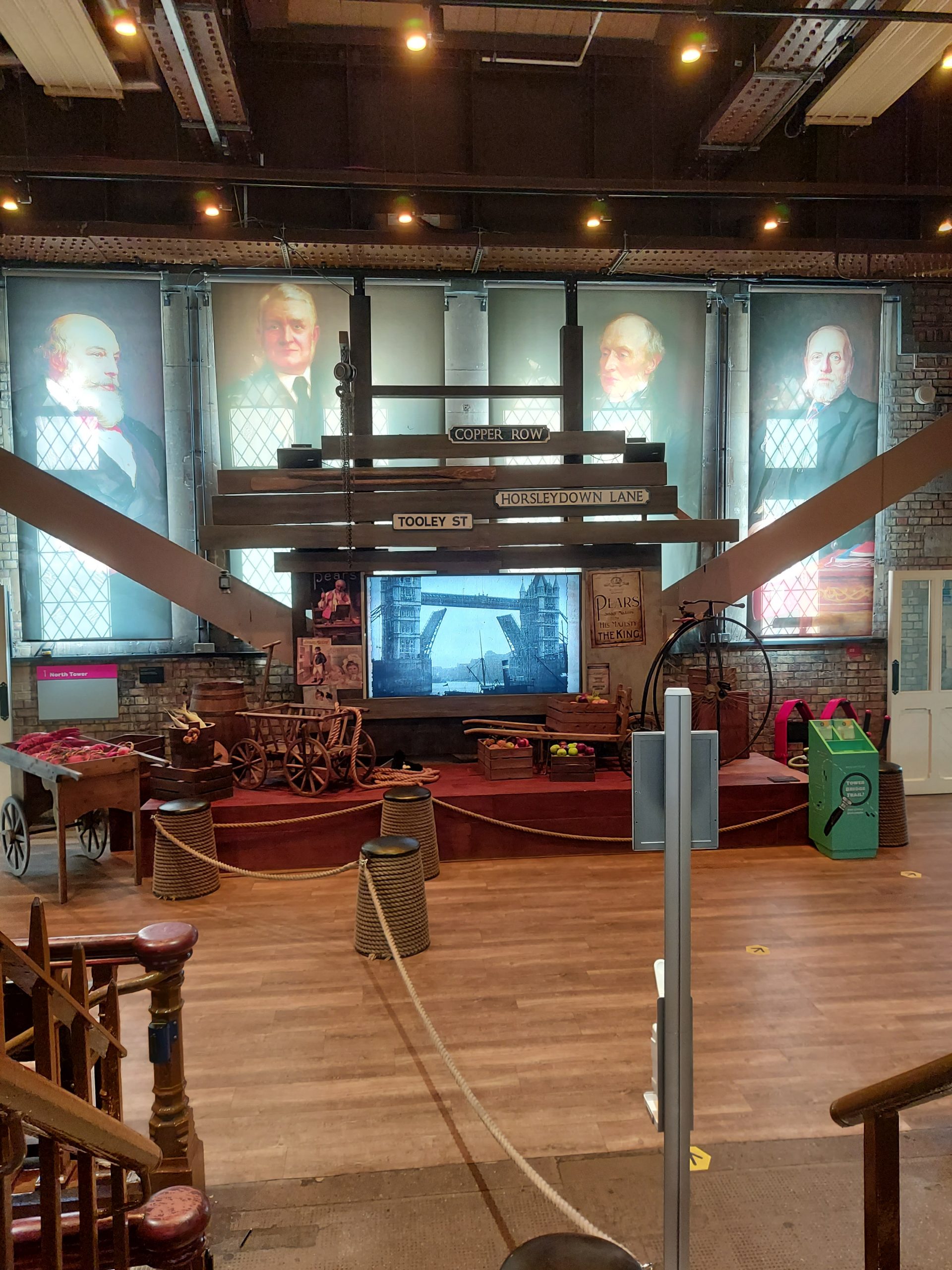
Information boards and exhibits explored the bridge’s construction and offered interesting facts and figures. Originally, the bridge opened quite frequently to let ships through; these days, river traffic is much reduced and the bascules only open about a thousand times a year; the times are published online.
Inside the exhibition
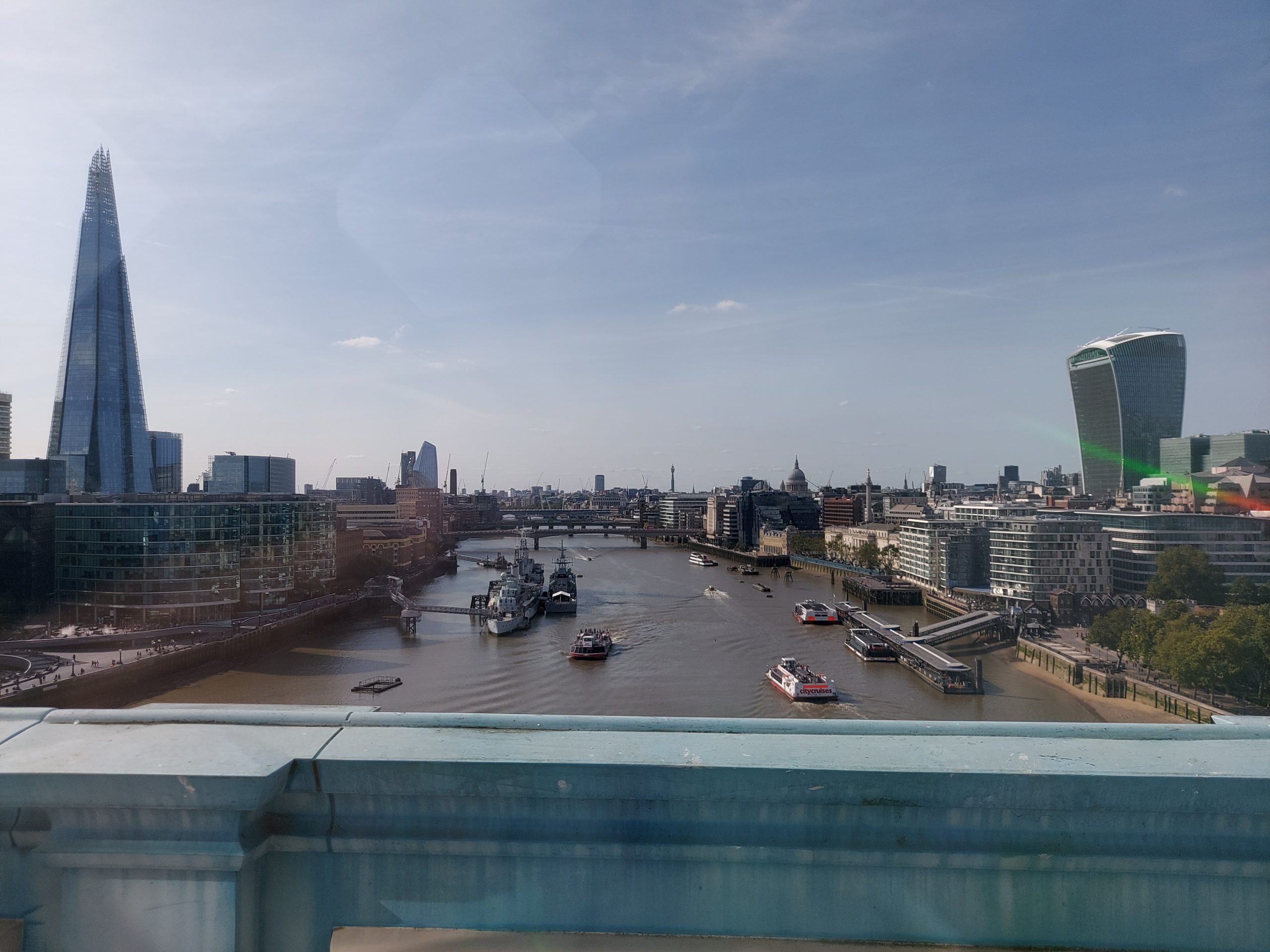
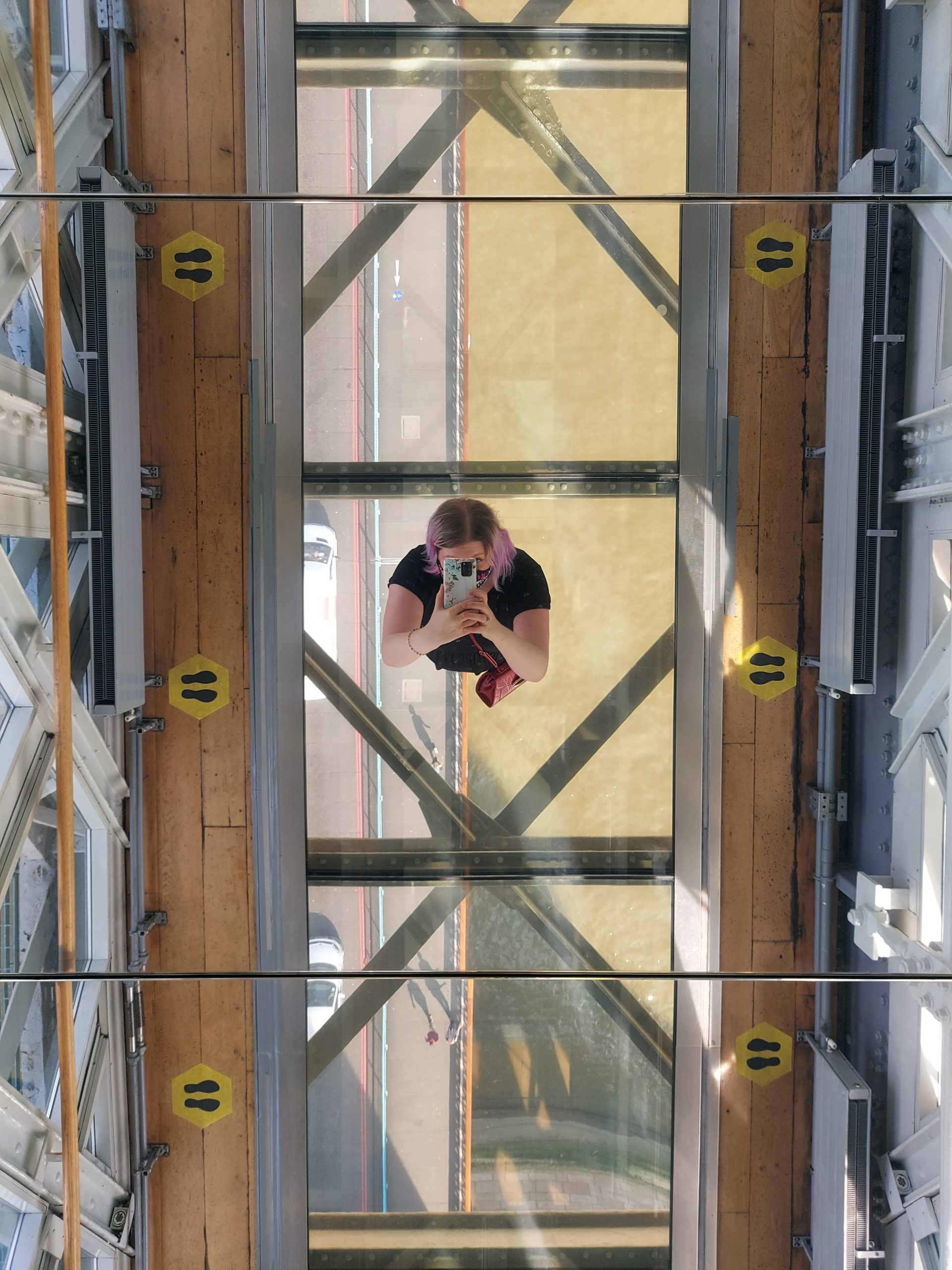
At the top of the north tower we reached the high-level walkways. These were open to the public when the bridge was first opened, but they gained a reputation for prostitutes and pickpockets and were subsequently closed. These days, they have been fitted with glass floors that provide dramatic views of the Thames, not to mention the views to either side of the bridge.
Looking west into London
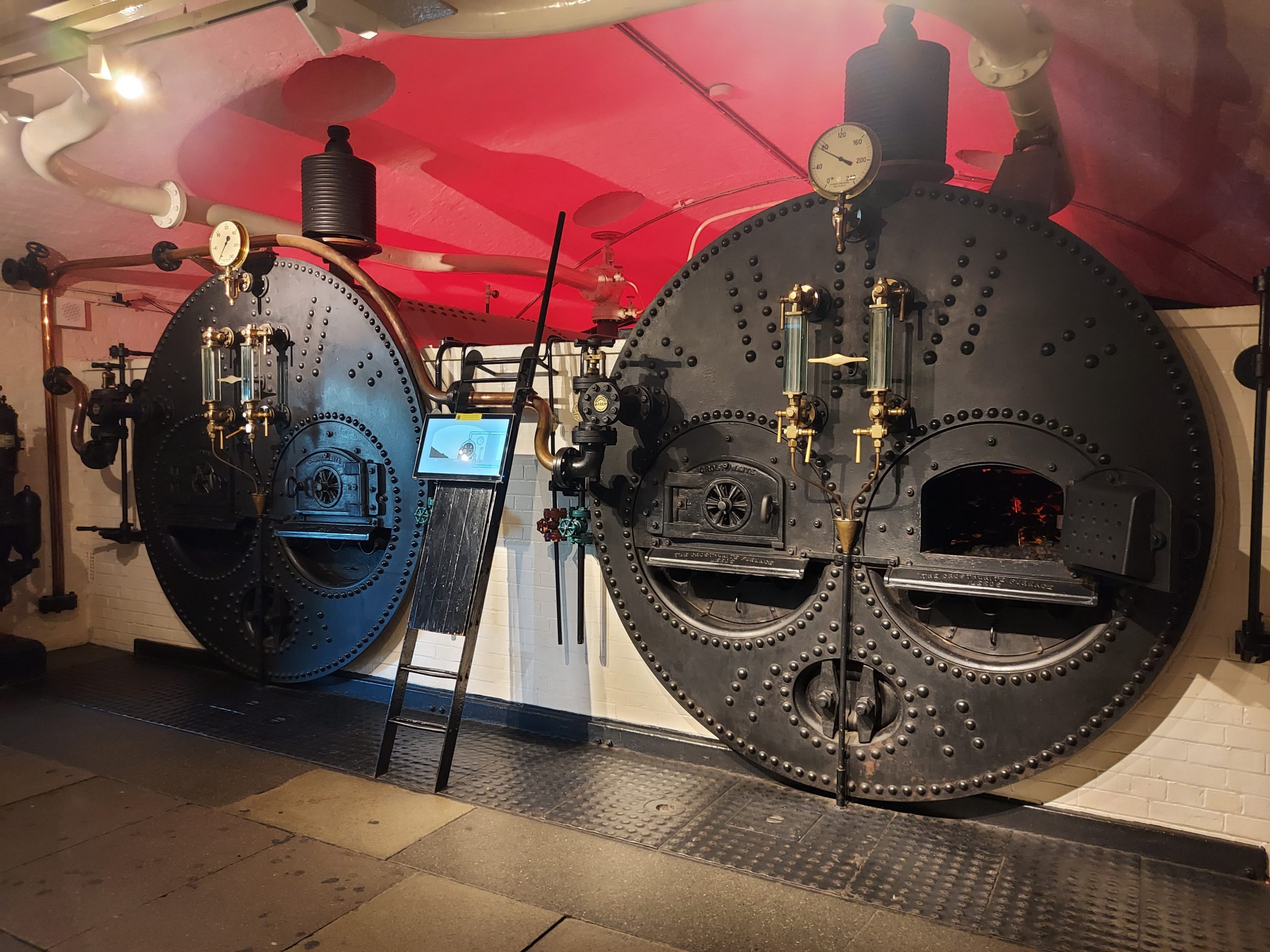
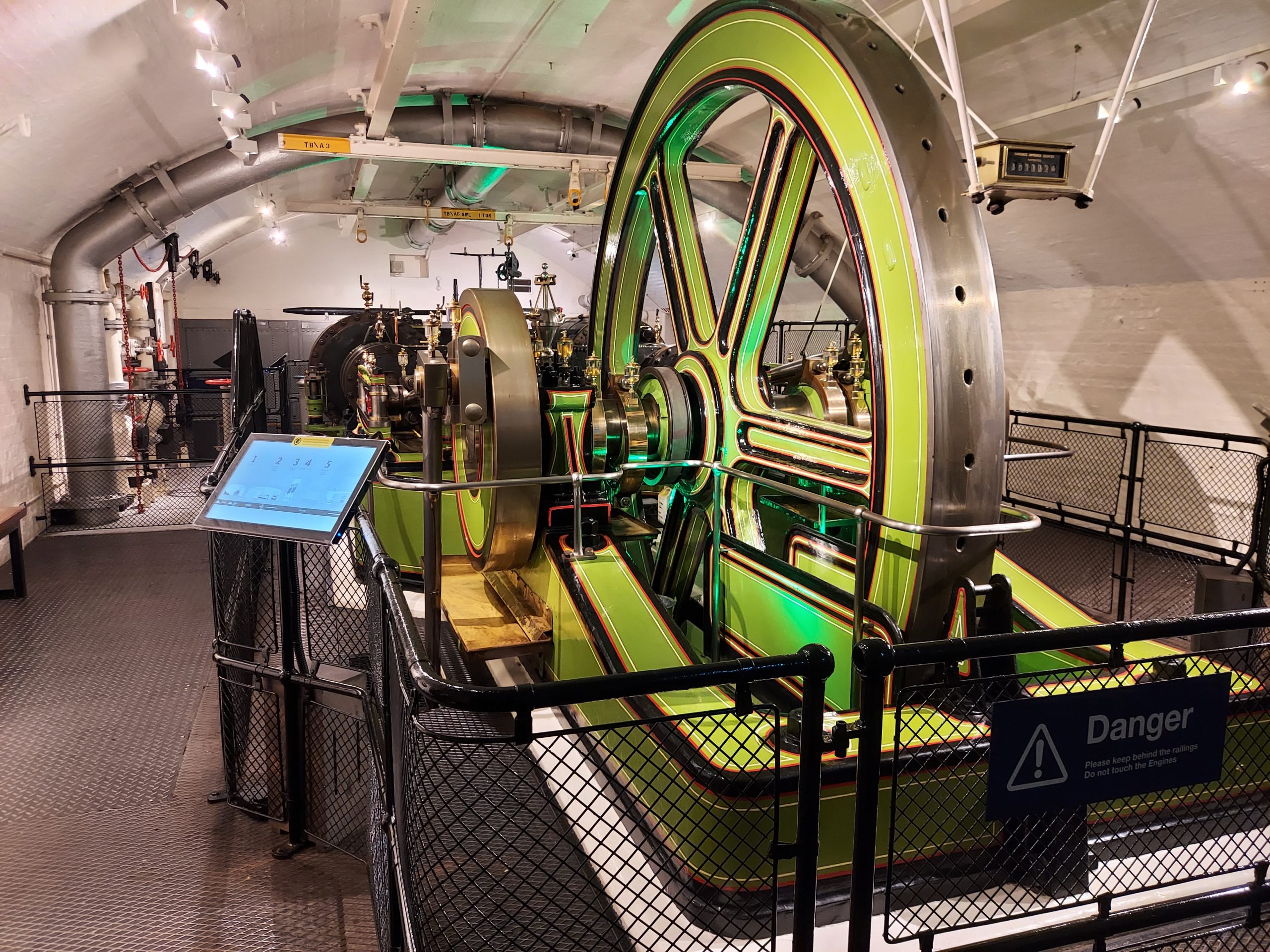
Finally, we arrived on the other side of the bridge, descended and entered the original Victorian engine rooms which form the final part of the exhibition. Originally, a hydraulic system powered the bridge raising mechanism, but in the 1970s this was converted to a new electro-hydraulic drive system.
Tower Bridge is well worth a visit. The exhibition is very informative and the glass walkway is amazing. I personally loved going during the COVID period as it was much quieter and the one-way system in place made navigating more straightforward, but I’m sure it would be enjoyable at any time. I really want to go back to find out more in a ‘Behind the Scenes’ tour.
After months of closures, museums were slowly starting to reopen, so I took my birthday off work and planned a few days out. My first stop was the Titian: Love, Desire, Death exhibition at the National Gallery.
Organised by the National Gallery, the National Galleries of Scotland, the Museo Nacional del Prado, and the Isabella Stewart Gardner Museum, Boston, the exhibition brings together all six paintings in the series commissioned by Philip of Spain, the future King Philip II, in 1551. Philip requested Titian, who at the time was the most famous painter in Europe, to produce a group of paintings representing classical myths, taken mostly from the Metamorphoses of the poet Ovid.
The paintings include ‘Diana and Actaeon’ and ‘Diana and Callisto’, works owned jointly by the National Gallery and the National Galleries of Scotland; ‘Venus and Adonis’, owned by the Prado, Madrid; ‘Danaë’, in the care of English Heritage and usually displayed at Apsley House; ‘Rape of Europa’, belonging to the Isabella Stewart Gardner Museum in Boston; and ‘Perseus and Andromeda’, part of the Wallace Collection.
The exhibition is certainly about quality rather than quantity; Titian described the works as his ‘poesie’, a visual equivalent of poetry, and they are certainly impressive even to a non-art expert like me. They are dramatic and full of detail, powerfully conveying a range of emotions: anger, shame, lust, guilt, sadness.