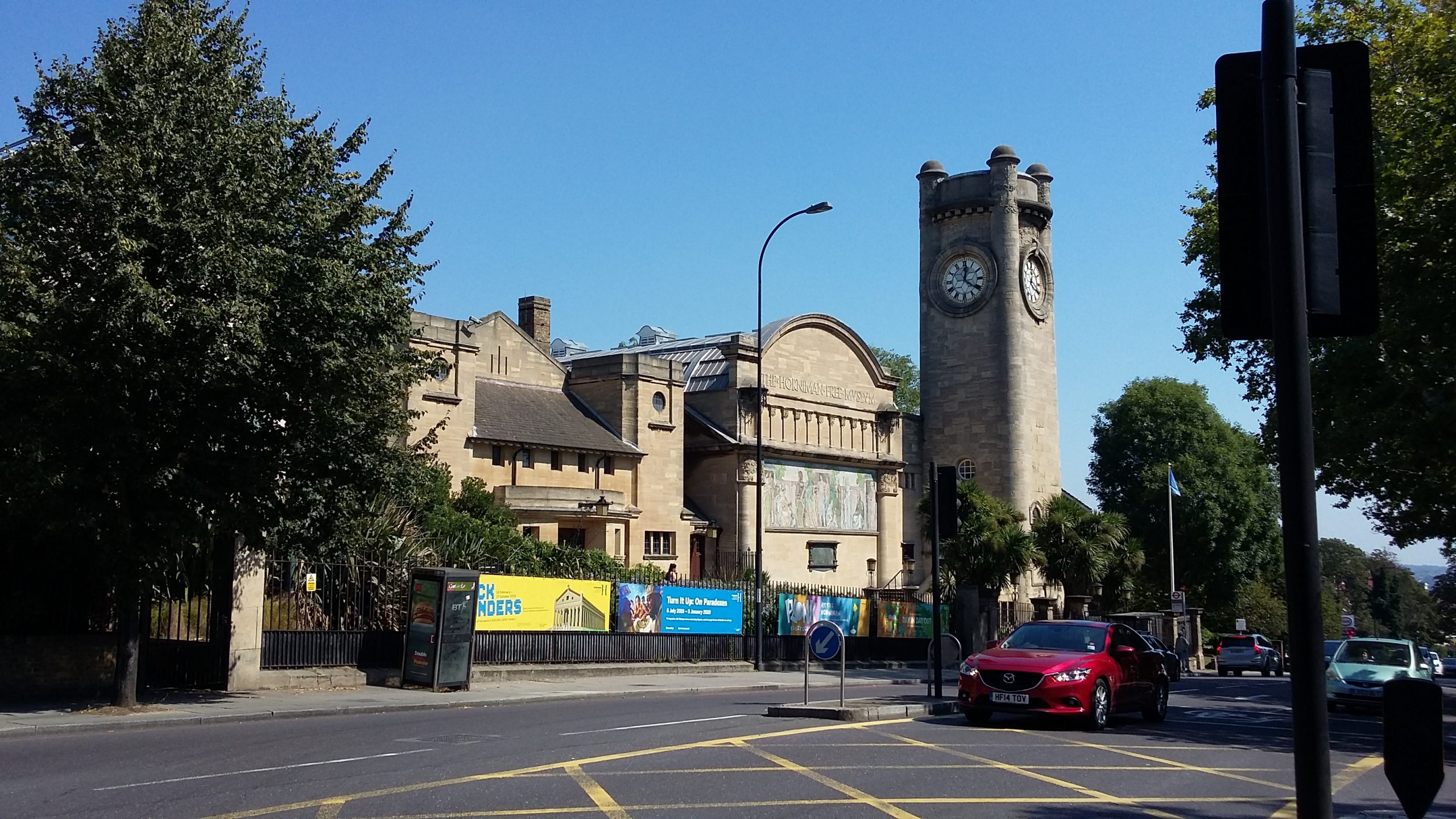
Horniman Museum & Gardens

Horniman Museum

I visited the Horniman Museum in Forest Hill, south London, on a sunny day with a friend. I’d been before, but it was a while ago, so I thought it would be good to take another look.
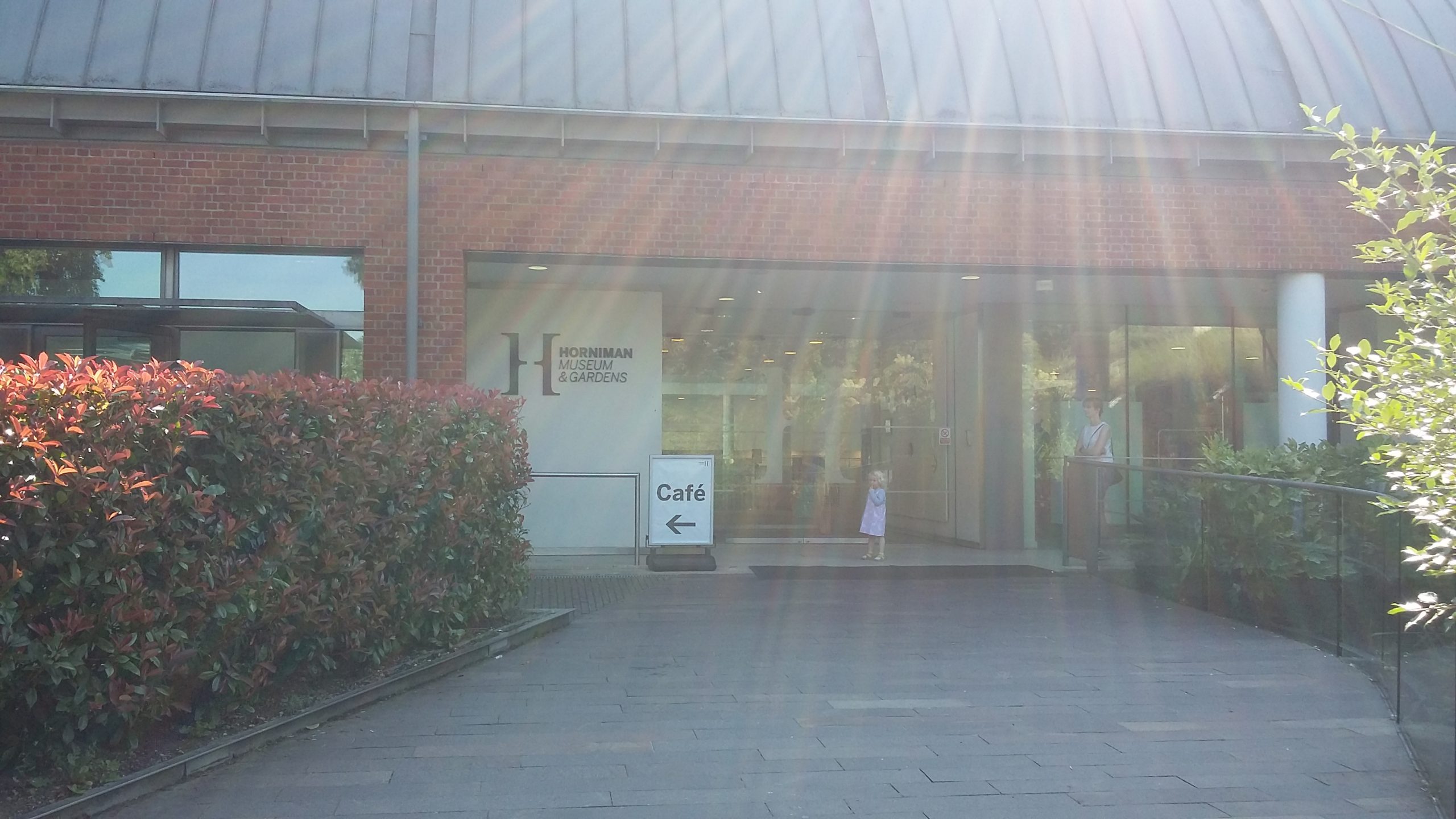
Horniman Museum entrance

History
The museum was named after its founder, Frederick John Horniman, who had inherited his father’s Horniman’s Tea business, the world’s biggest tea trading business at the time. Horniman junior loved collecting, and was able to indulge his passion thanks to the cash from the business. His extensive travels enabled him to collect some 30,000 items, mostly relating to natural history, world cultures and musical instruments. Horniman founded the museum in 1901 to display and showcase his collections.

The main museum is free to enter, and is a popular attraction for families with children – but there’s plenty to interest adults as well.

Horniman’s Vision
This gallery looks at the history of the Horniman and displays some of the earliest exhibits, including pottery, European armour and natural history. Much of what is displayed here was originally on show in Surrey House, Horniman’s family home, which originally stood on this site. Horniman started collecting in 1851, the year of the Great Exhibition, and his collections grew and grew.
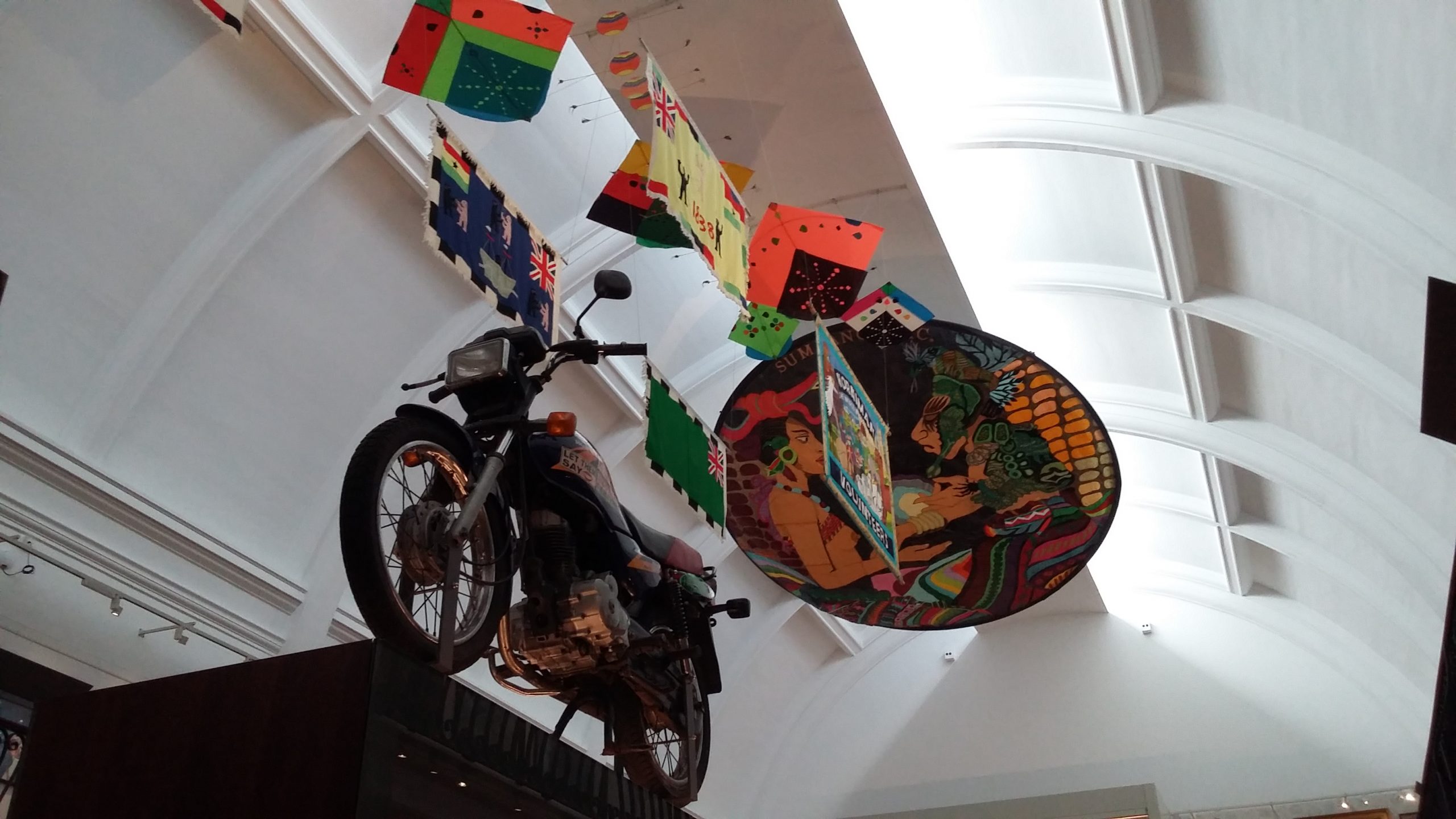
World Gallery
Ceiling of the World Gallery

World Gallery
The World Gallery encompasses cultural artefacts from all around the globe, and the collection is of international importance. Despite its roots in 19th-century colonialism, the gallery displays are thought-provoking, informative and sensitive.
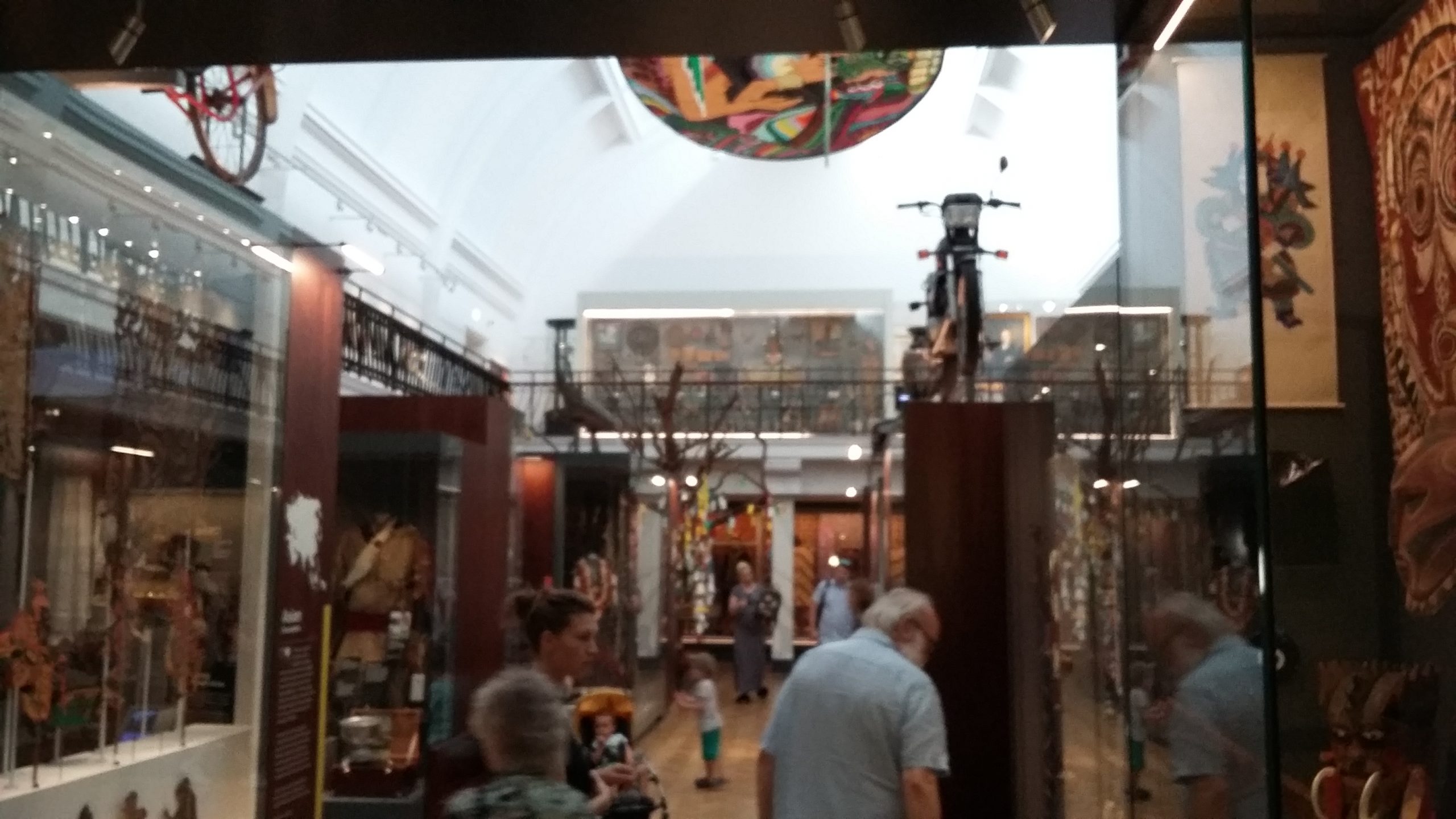
World Gallery
World Gallery

Music Gallery
This gallery contains musical instruments of all shapes and sizes, an impressive collection made up of instruments from all around the world. It isn’t just about the instruments themselves, but how they are used around the world to mark special events, such as weddings and funerals.
Natural History Gallery

Natural History Gallery
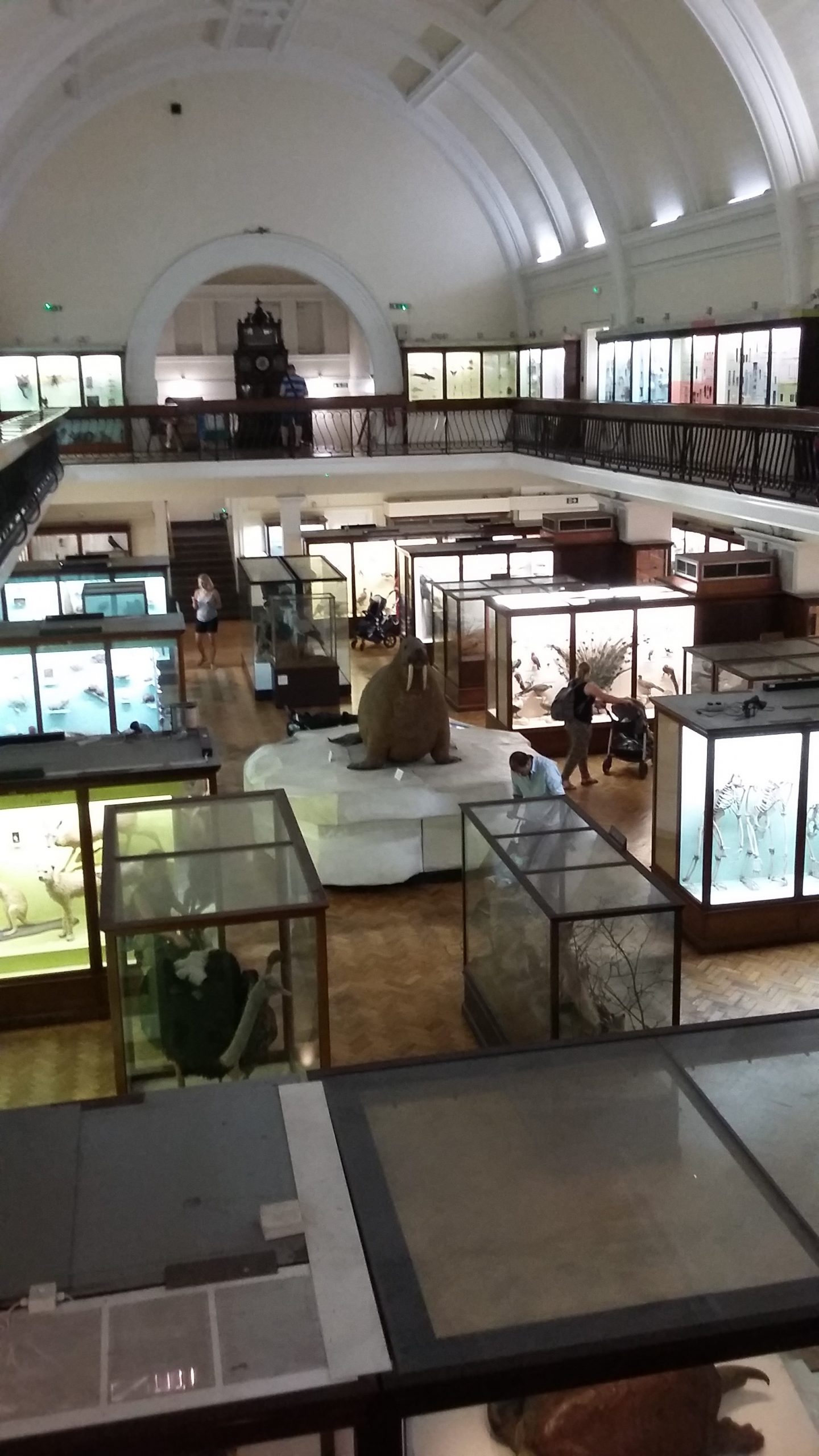
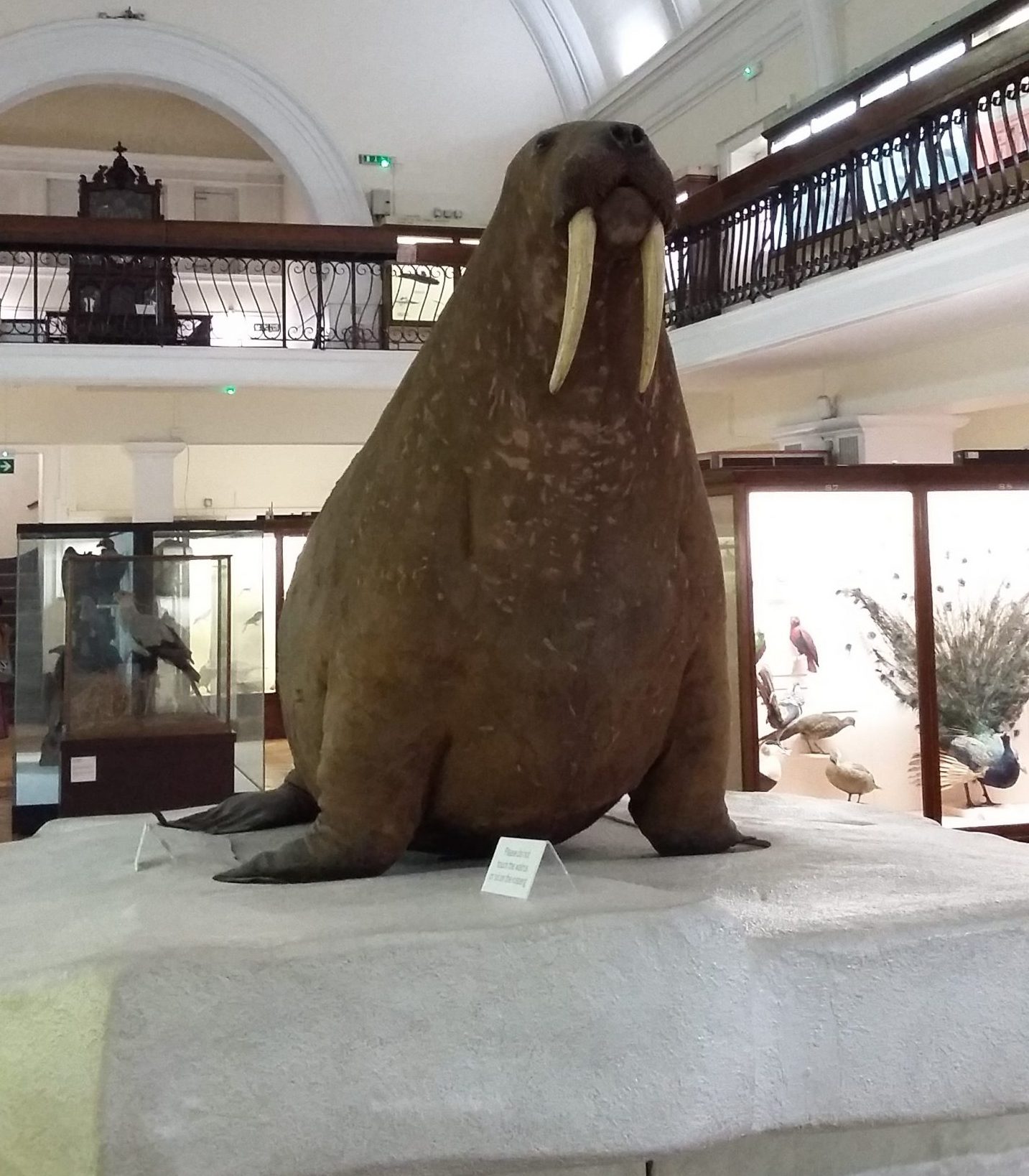
The Natural History Gallery is home to taxidermied animals including the famous Horniman Walrus – notoriously overstuffed as those responsible did not realise walruses have lots of wrinkles! The gallery is something of a time capsule as it features rare and unusual species, some rather threadbare as, naturally, it isn’t possible to just go out and replace the exhibits. It’s a fascinating learning tool and an interesting experience, similar to the Natural History Museum.
Walrus
The famous Horniman Walrus

Aquarium
There is a charge to visit the Aquarium, but it’s worth it if you’re interested in marine life. Fish, jellyfish and frogs are among the creatures on display.

Gardens
The gardens are free to visit, encompassing 16 acres of grasslands, sunken gardens and meadows, with amazing views over London.

There is also a Butterfly House, but there is a charge to enter and we decided against it on this occasion. A gift shop offers a range of gifts (including cuddly walruses!) and there is a cafe for refreshments.

A trip to the Horniman is definitely worthwhile, even if you don’t live in the area. Being mostly free, it is a cheap day out and very interesting.

FACTS

Address: 100 London Road, Forest Hill, London, SE23 3PQ

Website: horniman.ac.uk/

Opening Hours: 10-5.30

Price: The Museum and Gardens are free; there is a charge to visit special exhibitions, the Aquarium and the Butterfly House.
Dark Matter – Science Gallery London

science gallery London

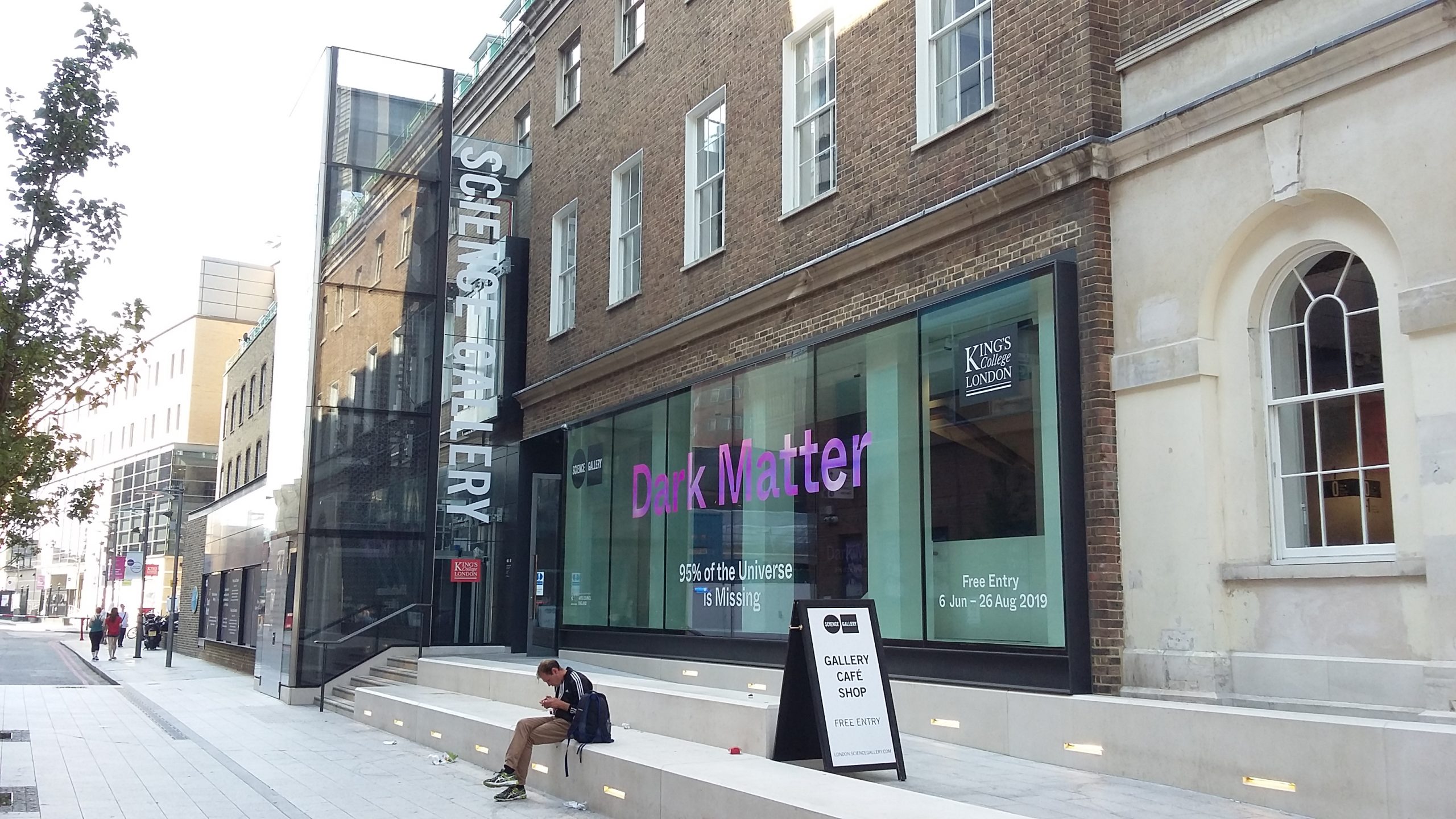
The Science Gallery London, part of King’s College London, is an exhibition space that hosts a variety of different exhibitions relating to different aspects of science. I attended the Dark Matter exhibition.

Dark matter is something I have an interest in, largely through reading the His Dark Materials trilogy, although since my scientific education ended with compulsory schooling, I can’t say that I know a great deal about it. This exhibition uses art, philosophy and literature to look at our understanding of dark matter, making use of the latest research from the Physics department at King’s.

What is dark matter? Well, that is the point: no one really knows. According to the world’s leading scientists, 95% of the material that makes up our universe cannot be observed. The exhibition looked at what dark matter might be and how our understanding has changed over the years. I enjoyed the exhibition, and would definitely like to attend more exhibitions at the Science Gallery.

FACTS

Address: Great Maze Pond, London, SE1 9GU

Website: london.sciencegallery.com/

Opening Hours: Tues – Sun 10-6

Price: Free

Top Secret: From Ciphers To Cyber Security – Science Museum

I visited the new Top Secret: From Ciphers To Cyber Security exhibition at the Science Museum with a friend. The exhibition was free, which I thought was really impressive, and very enjoyable.

The exhibition was designed to coincide with the 100th anniversary of GCHQ, the UK’s Intelligence, Security and Cyber agency. There was even a Lego model of the GCHQ headquarters in Cheltenham.

Lego model
Lego model of GCHQ headquarters

The exhibition started with the First World War and explored how communications and intelligence developed over a century. It featured artefacts, documents and declassified files.

The best-known aspect of the exhibition was probably the work of Alan Turing and the team at Bletchley Park to crack the Enigma Code, but there was also information relating to the Cold War, including a model of a house displaying a story about a quiet suburban couple who turned out to be Soviet spies.

There was also a hands-on area where you could have a go at cracking codes yourself, which was probably designed for children but which my friend and I thoroughly enjoyed.

The exhibition runs until 23 February 2020 and is then due to visit the Science and Industry Museum in Manchester. It’s well worth a visit.

Edvard Munch: Love and Angst – British Museum

The Scream
The Scream (lithograph)

I visited the Edvard Munch: Love and Angst exhibition at the British Museum with a friend on its very last day. I actually knew nothing about Munch except for his painting The Scream, which I do love, so was interested to find out more.

Madonna
Madonna

Munch came from a loving family in Norway but over the years his family became a source of deep worry and tragedy to him. His mother died when he was five and his oldest sister, Sophie, died of tuberculosis when he was thirteen. Another sister, Laura, spent time in a psychiatric hospital with schizophrenia and Munch himself had a breakdown later in life. This is reflected in much of his art, including his ‘vampire’ works, his images of illness and death, and the famous ‘Scream’. It’s the black and white lithograph that’s on display here, not the famous painting, but it still makes an impact.

The Sick Child
The Sick Child

As a theatre fan. I was intrigued by Munch’s stage sets for the works of Norwegian dramatist Henrik Ibsen, and some of his designs are displayed alongside his painting of the great playwright himself. Overwhelmingly, though, this is an exhibition of work that focuses on the dark side of the mind.

Henrik Ibsen
Henrik Ibsen

Misshapes: The Making of Tatty Devine

Entrance to the exhibition

The UK jewellery brand Tatty Devine turns 20 this year, and to celebrate has launched a touring exhibition, Misshapes: The Making of Tatty Devine, which kicks off in London before visiting various cities around the UK. As a longtime fan of the brand, I paid a visit on its first day.

Early examples of TD's work

The free exhibition, hosted at the Lethaby Gallery, King’s Cross, tells the story of how Tatty Devine founders Rosie Wolfenden and Harriet Vine met at Chelsea College of Art and began to work together, making jewellery out of guitar plectrums, leather samples and other bits of so-called “junk”, running a market stall selling their wares, and eventually, after a trip to New York, settling on acrylic as their main material. With the aid of a laser cutter, they began making jewellery from this versatile substance, and over the years have refined their techniques, pushing the boundaries of what acrylic can do.

New examples of the brand's work

I was interested to see examples of the pair’s early work, as this was long before I became a fan of the brand. Some of the early pieces were pretty cool – I wouldn’t mind a keyboard belt. I also didn’t know that the Tatty Devine logo was supposed to resemble the logos in old-style 50s records.

Plan for the archway of stars in Greenwich

Examples of pieces from every stage of the brand’s heritage were on display. I did find myself with a big wave of Tatty regret as I viewed pieces that have long since vanished from stores (especially the fortune teller statement). However, I also saw a couple of pieces that I do own – one being the William Morris brooch.

I really loved the exhibition as a big fan of the brand. After its stint in London, it will visit various venues around the country – so keep an eye out!

Giant jewellery shapes

Mary Quant – V&A

Entrance to the exhibition

Mary Quant was the second major fashion exhibition I attended at the V&A within a fairly short space of time. Born in London, Quant revolutionised the British high street in the 1960s, making high fashion available to everyone and popularising the famous miniskirt. I have to admit that on a personal level, the clothes aren’t really my style – I prefer longer skirts and dresses in general, and the Dior-influenced vintage look is much more my scene. In fact, my favourite piece in the exhibition was a maxi dress from the Seventies. However, there’s no doubt that Quant’s clothes had a huge influence on style, and her practical, fun pieces helped to democratise fashion.

Quant sailor dress
Quant sailor dress
Mini dresses
Mini dresses

The exhibition takes us through Quant’s career and showcases the pieces that made her famous, including monochrome daisies, coloured opaques, practical underwear, and even modern makeup (I could tell from the style of the marketing that Lush was influenced by Quant’s makeup range). I really liked that the museum got the public involved, requesting people to send in their own Quant clothes. I went to the exhibition with my auntie and I enjoyed hearing about her own experience of the brand – wearing a minidress to meet her future in-laws and worrying that the skirt was too short!

Makeup range
Makeup range, decorated with the trademark daisy
Red maxi dress
My favourite piece from the exhibition

I thought it was cute, too, to showcase the mini, Barbie-style Quant dolls, dressed in miniature versions of popular fashions. A way to get younger girls interested in the clothes so that they could covet them for themselves when they were older.

Daisy doll
Daisy doll

Overall, the exhibition is definitely worth a visit – for the social history as much as the fashion.

Eel Pie Island Open Day & Museum

Bridge to Eel Pie Island
Crossing the bridge to Eel Pie Island

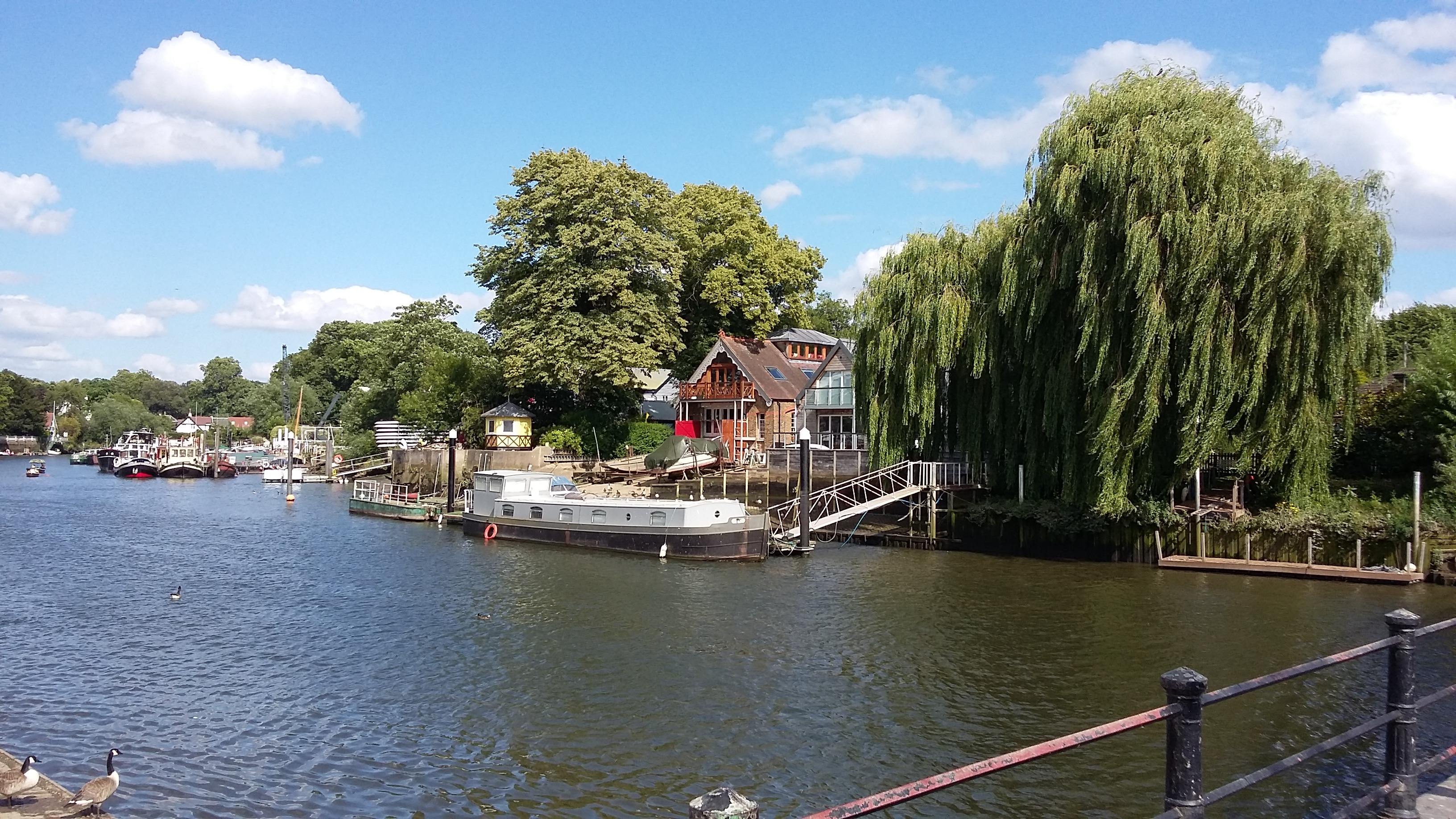
Eel Pie Island is a small island in the middle of the Thames, just across from Twickenham. It is currently home to several artists’ studios, and twice a year hosts ‘open days’ where the general public can visit this normally-private island and purchase art if they so wish.

View of the island
Looking across to the island

One of these open weekends was held on 29-30 June and I went along towards the end. The island is reached via a bridge on the bank in Twickenham, and once you reach the other side there’s a winding path that takes you past plenty of weird and wonderful sights. My favourite was the house with an upside-down ice cream on its roof, but there was plenty to see all the way through.

House with ice cream on the roof

I don’t have the budget or the space to indulge in art purchases, but if you do, there’s plenty on offer, both traditional paintings and more modern crafts.

Porthole

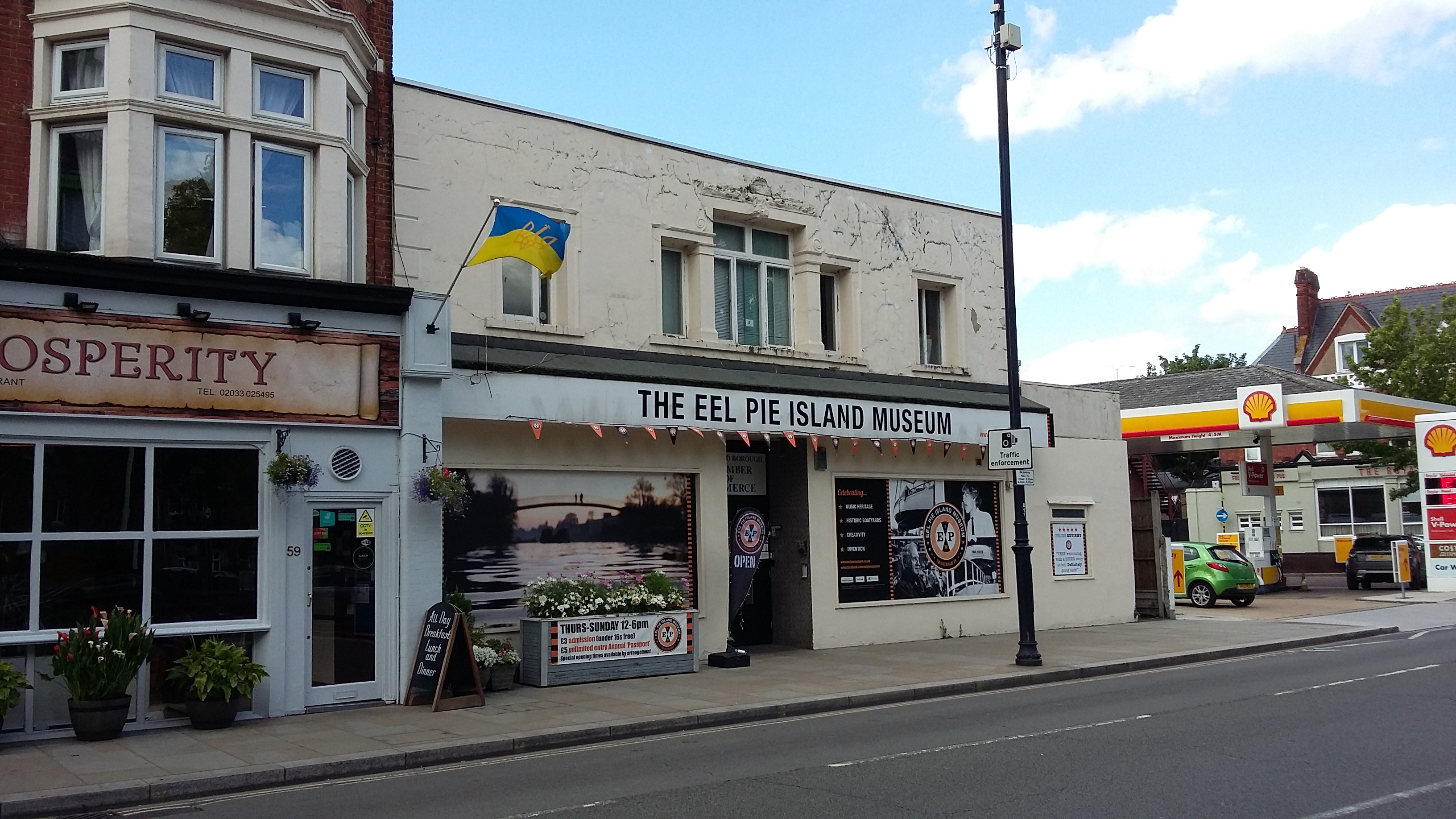
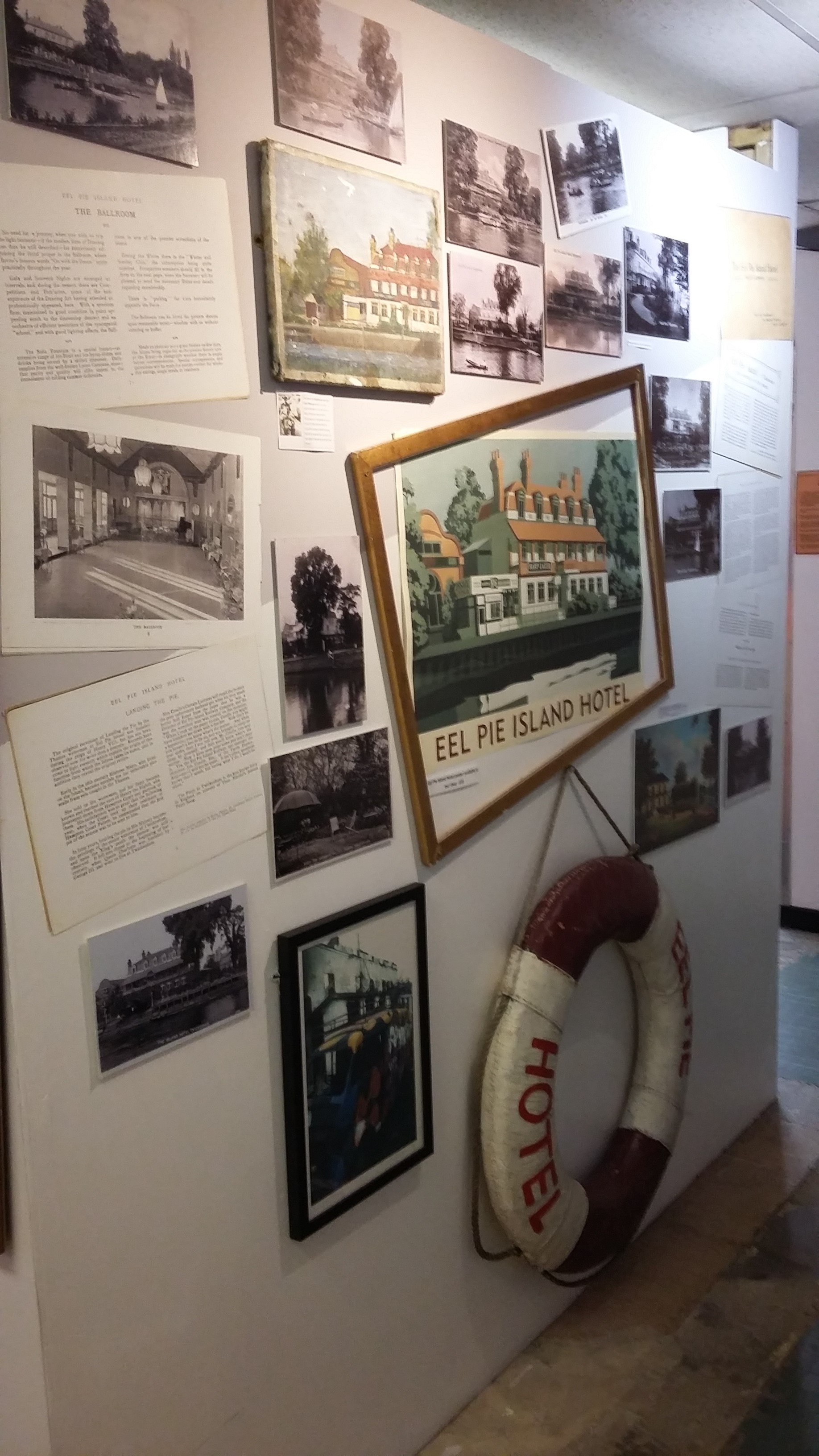
After my visit to the island, I headed back over the bridge to visit Eel Pie Island Museum. This small but impressive museum has been open since 2015 and tells the story of the island from its early days as a tourist attraction during Georgian times to its present as a home to artists.

Eel Pie Island Museum

During the era of Alexander Pope, Eel Pie Island was popular as a picnic and refreshment spot. Less congenially, it was also used as a place wealthy men could keep their mistresses out of the way of their wives’ prying eyes.

Music memorabilia

In the 1950s, owing to the efforts of a number of individuals, Eel Pie Island became home to a burgeoning jazz scene and eventually rock n’ roll. Major artists who played here included David Bowie in his early days, the Rolling Stones, Rod Stewart and more. The museum is full of artefacts from this era as well as reminiscences and remembrances from people who remember those days.

The history of the island

Sadly, the music scene eventually left the island, which became a commune for a short while before the hotel housing members eventually burned down. Nowadays, as I saw on my visit to the island, artists live and work here, meaning it still remains a home for creativity of one kind or another.

FACTS

Address: 1-3 Richmond Road, Twickenham, TW1 3AB

Website: eelpiemuseum.co.uk

Opening Hours: Wednesdays to Sundays 12-6pm

Price: £3 single visit (under 16s free, when accompanied by an adult); £5 Annual Passport (unlimited visits for one calendar year, from date of Membership)

Harald Sohlberg: Painting Norway – Dulwich Picture Gallery

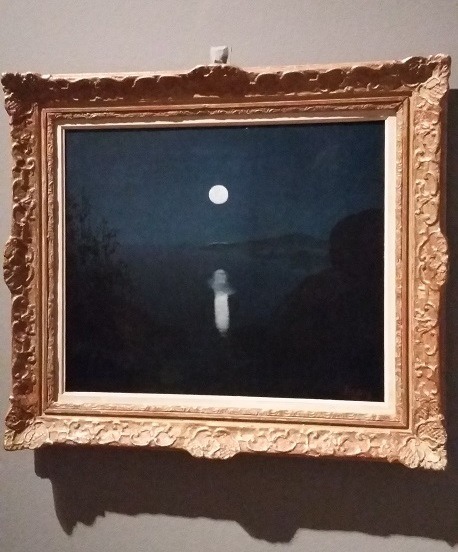
Sohlberg painting
Moonlight By the Sea 1907

Dulwich Picture Gallery‘s latest exhibition, Harald Sohlberg: Painting Norway, showcases the work of one of Norway’s greatest painters. He isn’t an artist I’ve come across before, but I was pleased at the opportunity to see his work, which, in its melancholic beauty, deeply appealed to me.

The exhibition marks 150 years since the artist’s birth, and showcases gorgeous paintings of Norway in all seasons, portraying the country’s gorgeous landscape and evoking Norwegian mythology. As someone interested in Scandi-noir and Norwegian literature, I really enjoyed the exhibition and the chance to learn more about one of Norway’s key artists.

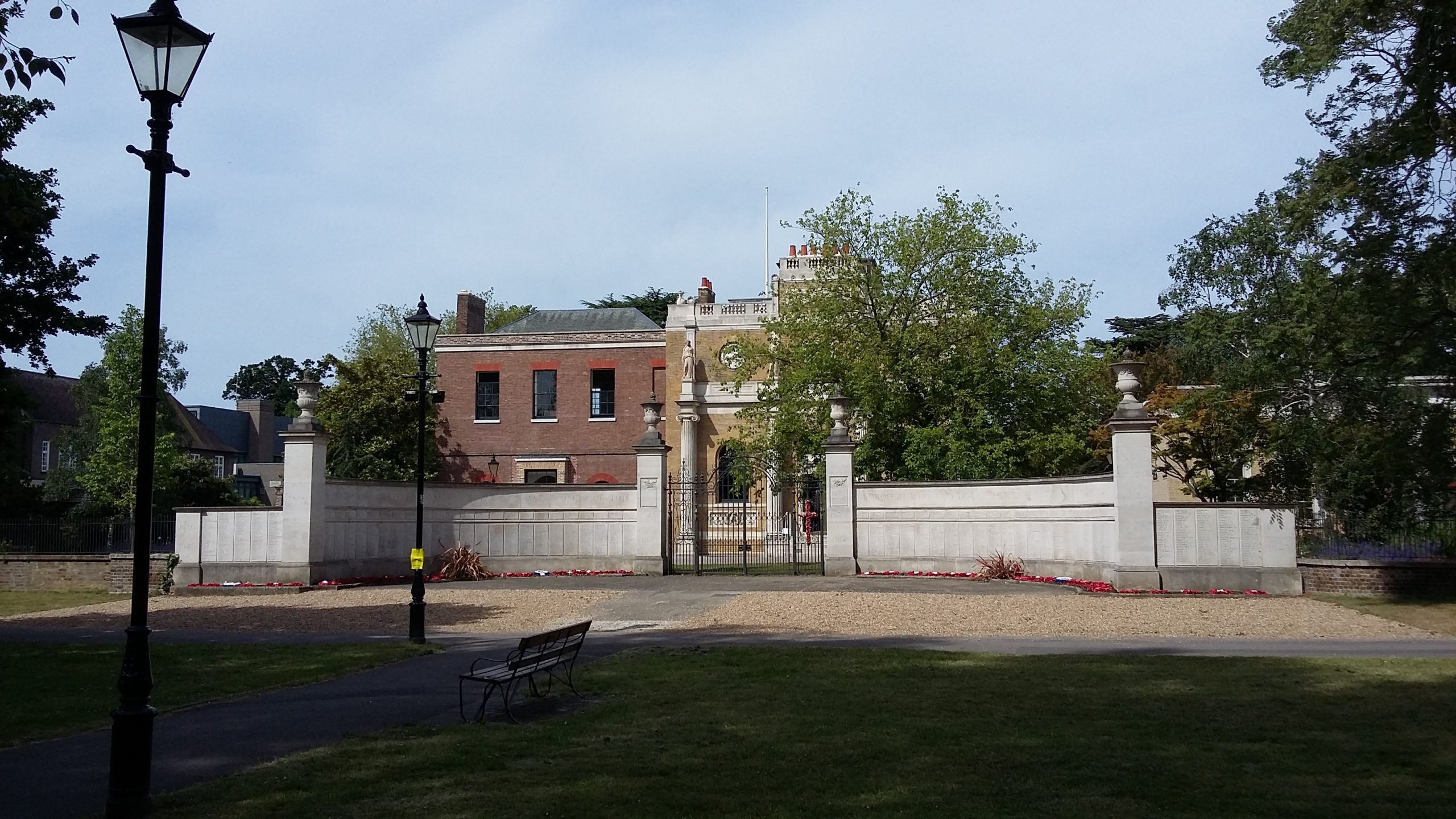
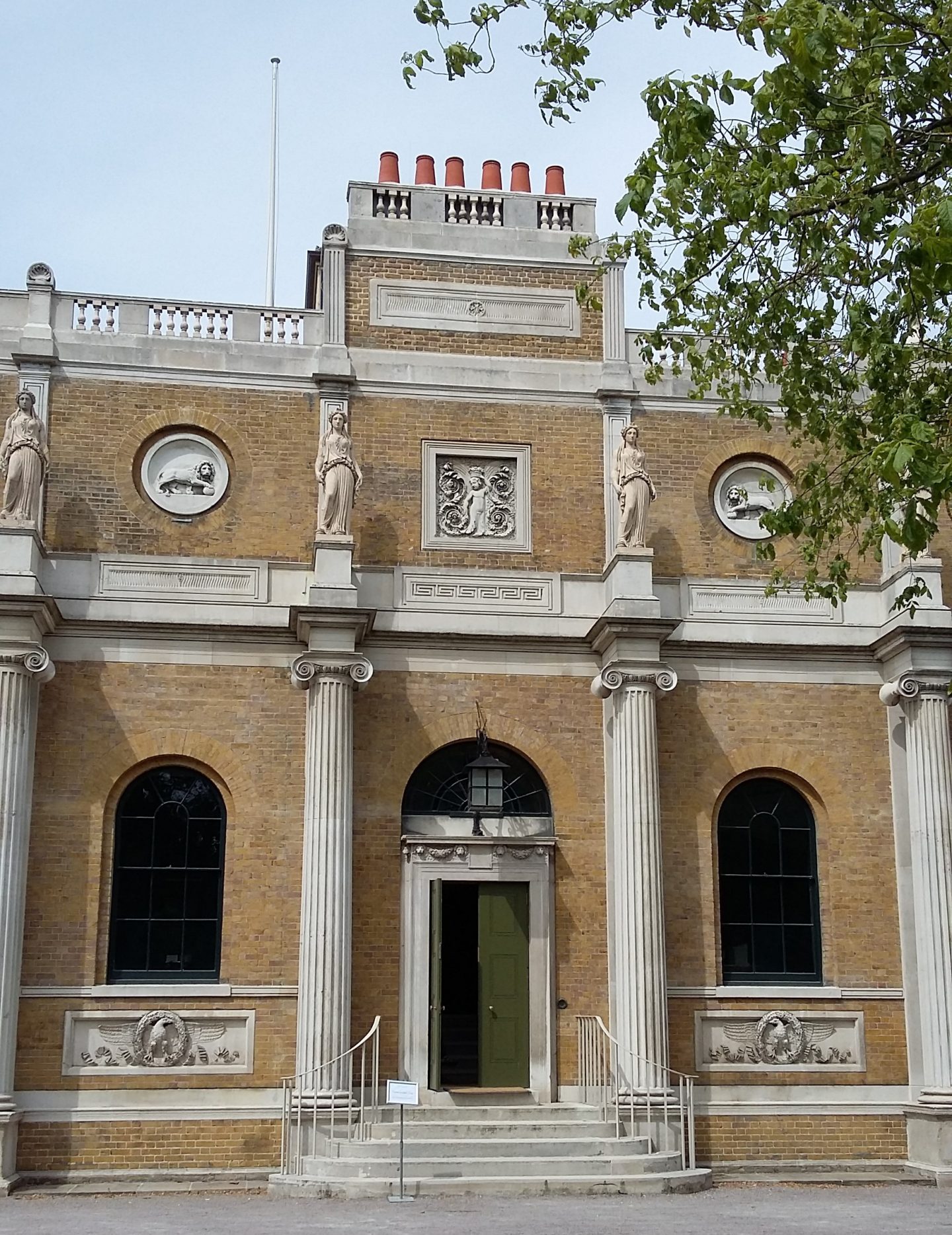
Pitzhanger Manor

Pitzhanger Manor

I’ve lived in Ealing for several years now, and did visit Pitzhanger Manor a while ago, but it has been closed for three years for refurbishment, only reopening in March of this year. I was happy to finally get the chance to visit this local landmark again.

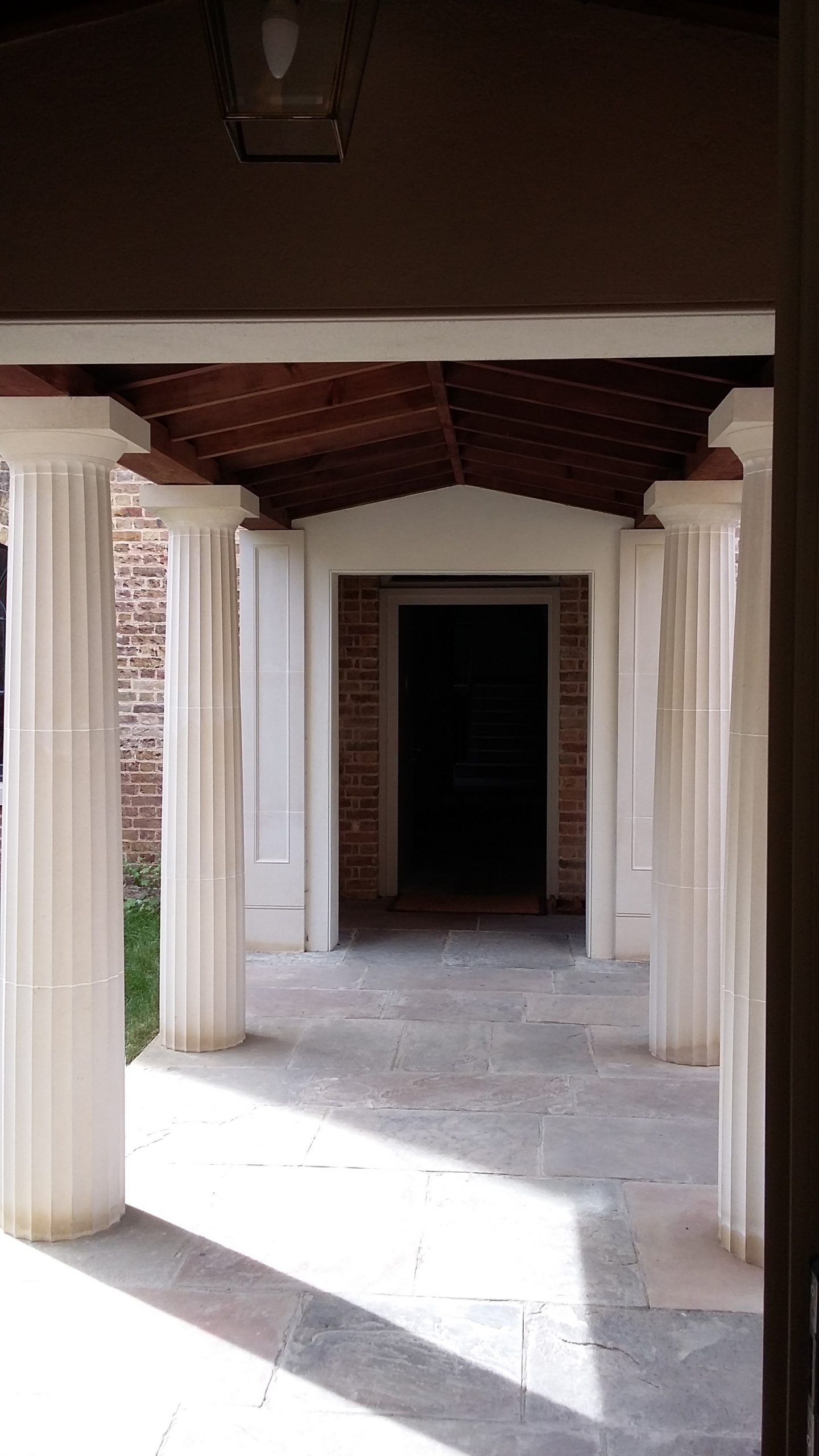
Colonnade
Colonnade

Pitzhanger Manor was designed by Sir John Soane, the architect who designed the Bank of England and whose central London home is now a museum showcasing the many antiquities he collected during his lifetime. In 1800-1804, when Pitzhanger was being designed and built, Ealing was outside of London and considered the countryside: this was well before the Tube and the expansion of the city. Despite this, Soane would often walk for several hours to reach Pitzhanger on foot.

Conservatory
Conservatory

Pitzhanger Manor was a family home that Soane hoped would nurture architectural ambitions in his sons; he harboured dreams of a Soane architectural dynasty. It functioned as a place of entertainment, playing host to clients and friends, as well as a place to display artworks, including Hogarth’s series A Rake’s Progress. Sadly, Soane’s sons proved disappointments to him, and he eventually sold Pitzhanger, moving back to his Lincoln’s Inn home.

Dining Room
Dining Room
Dining Room
Dining Room

The restoration programme has restored important elements of Soane’s original design, such as the conservatory, which has been rebuilt after originally being demolished in 1901, and a colonnade connecting the Gallery and Manor. Historic paint analysis and attention to the original details of the decor has led to the restoration, wherever possible, of Soane’s original vision.

Red room
Red room
Gallery
Gallery

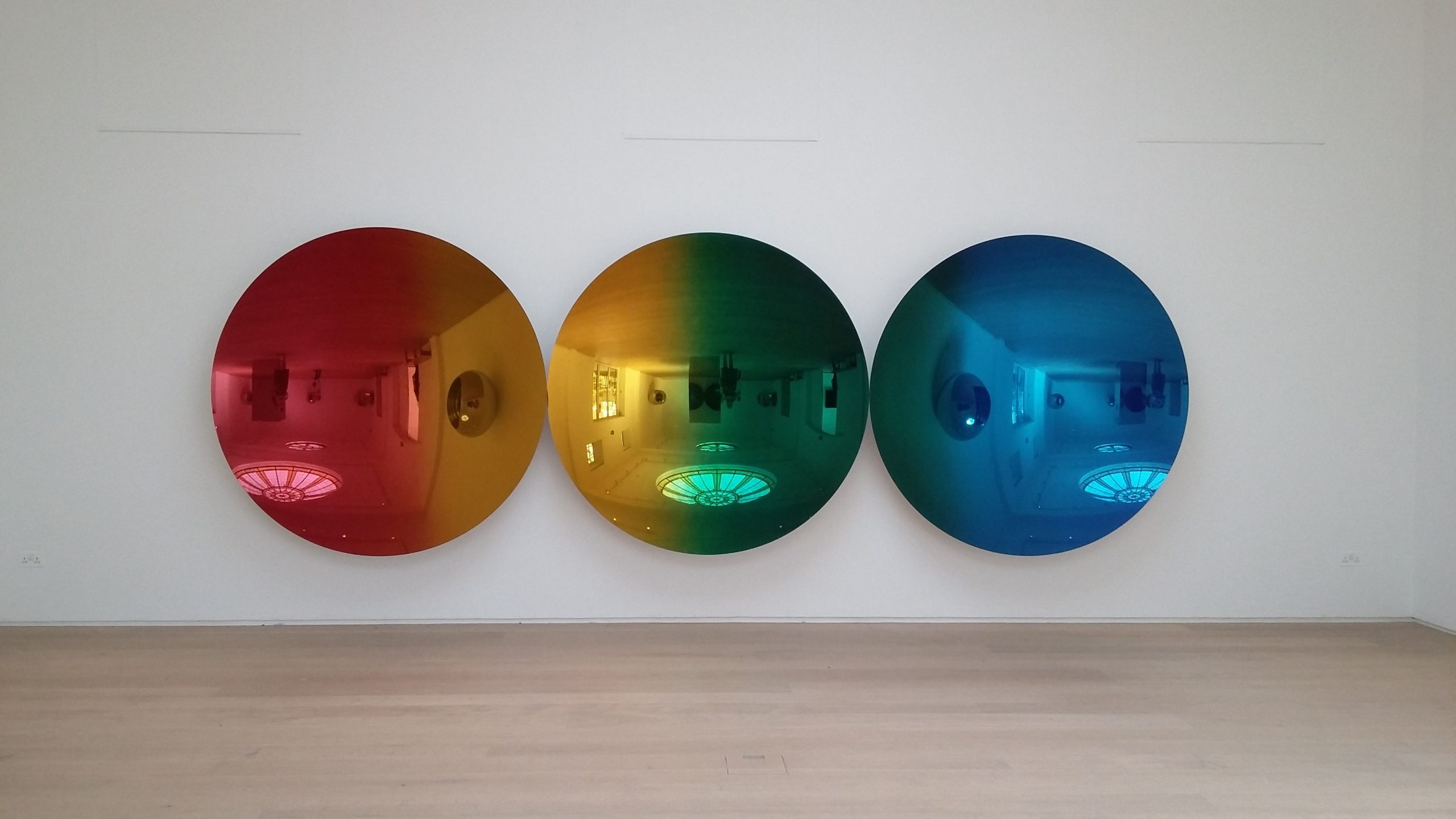
I also attended the inaugural exhibition in the reopened Gallery, featuring works by Anish Kapoor.

Anish Kapoor mirror sculpture
Anish Kapoor

Pitzhanger Manor is well worth a visit, not just for Ealing locals. The Gallery exhibition changes frequently and there are often events going on that are certainly worth a visit.

Pitzhanger Manor

FACTS

Address: Mattock Lane, Ealing, London, W5 5EQ

Website: https://www.pitzhanger.org.uk/

Opening Hours: Thursday – Sunday 11-3

Price: £7.70 standard; £4.95 concessions; £3.50 National Art Pass. Free entry for Ealing residents on Thursdays all day and Sundays 11-2:30.

Writing: Making Your Mark – British Library

British Library Writing exhibition

I paid a fascinating visit to the new British Library exhibition, Writing: Making Your Mark, which looks at the history of writing from ancient times to the present day.

The origins of writing can be found 5,000 years ago; it began in different places around the world at different times and for different reasons. One of the main advantages of writing was the possibility of communication across time and space: we can, if we understand the alphabet and language used, read what somebody wrote several thousand years ago. Various writing systems and styles have developed, many of which have common ancestors. I found it fascinating to look at different systems and see how they developed from older ones.

Materials and technology have changed over the years, beginning with carved letters produced by a stylus in wax. The ancient Egyptians used papyrus before paper was developed. Handwriting, too, has undergone changes, created first with quill pens then fountain and ball point. Medieval manuscripts gave way to the printed word, which at first emulated the handwritten style. Calligraphy remains a valued, albeit niche, skill even since the development of typewriters and then computers.

Learning to write has always taken time and effort, even from the very beginning. Learning how to form letters is an important part of education for young children. The future of writing surely involves technology, with the increasing use of emojis, but people are still interested in notebooks and pens.

Clay tablet
4,000-year-old clay tablet