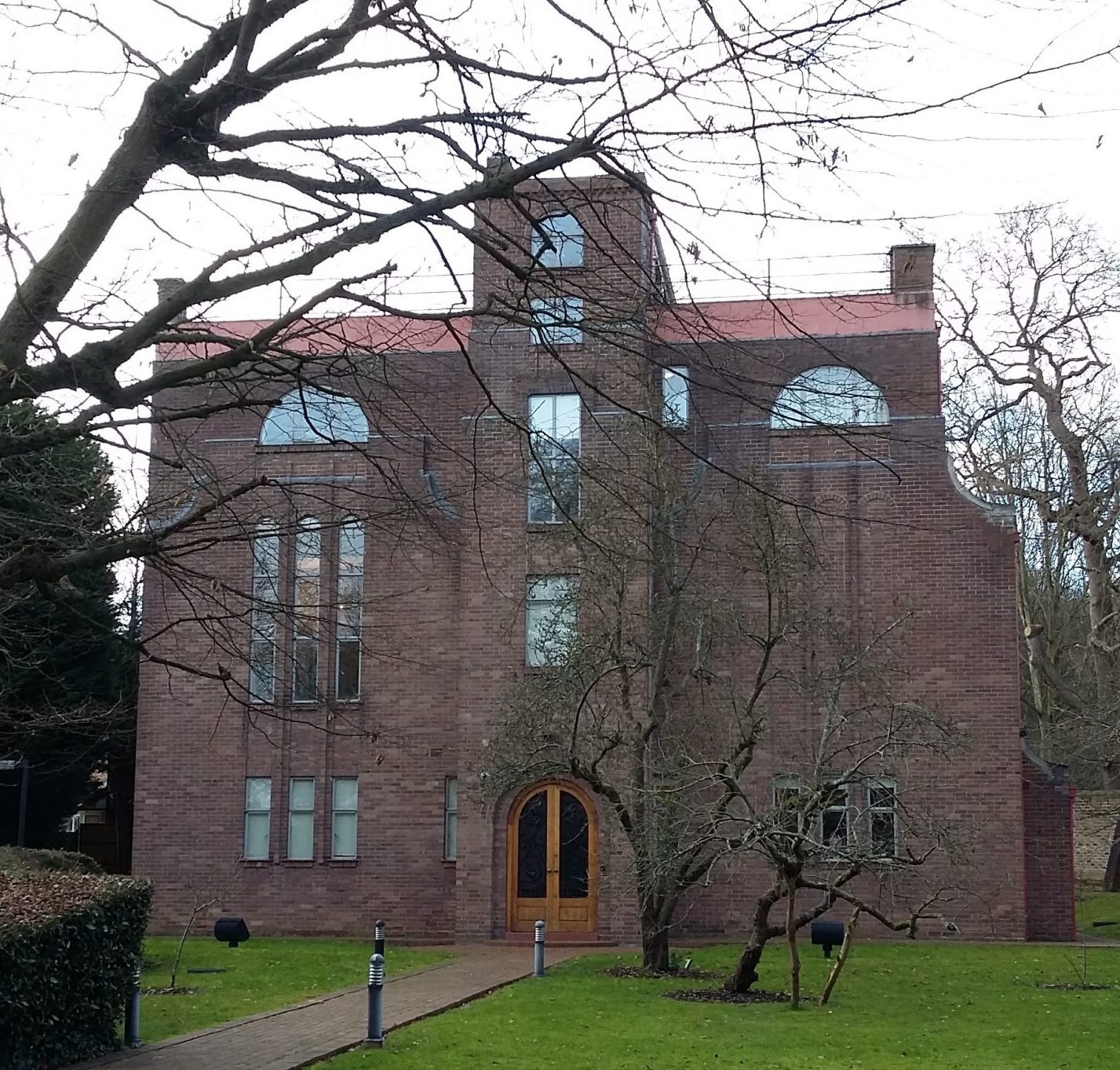
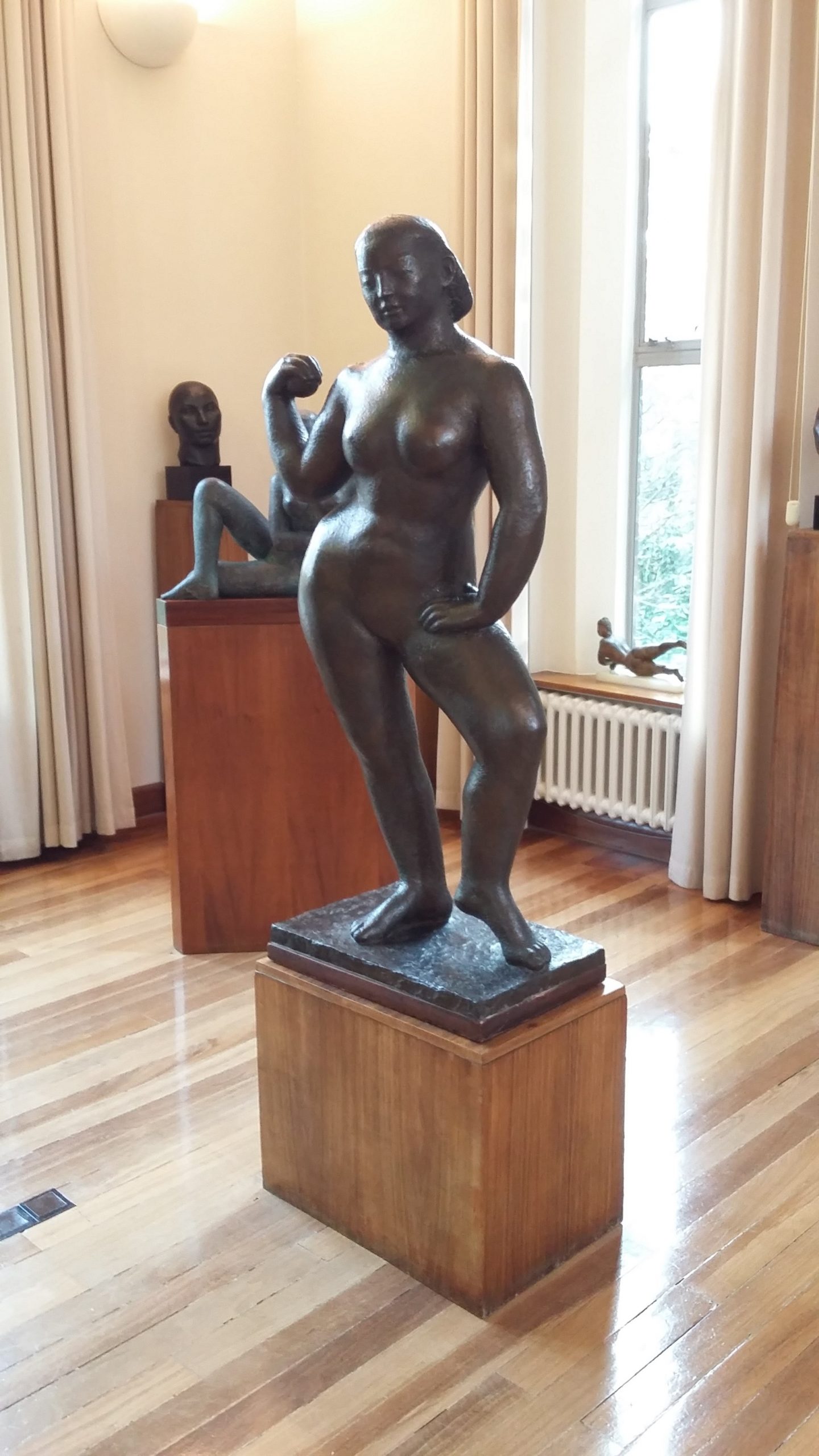
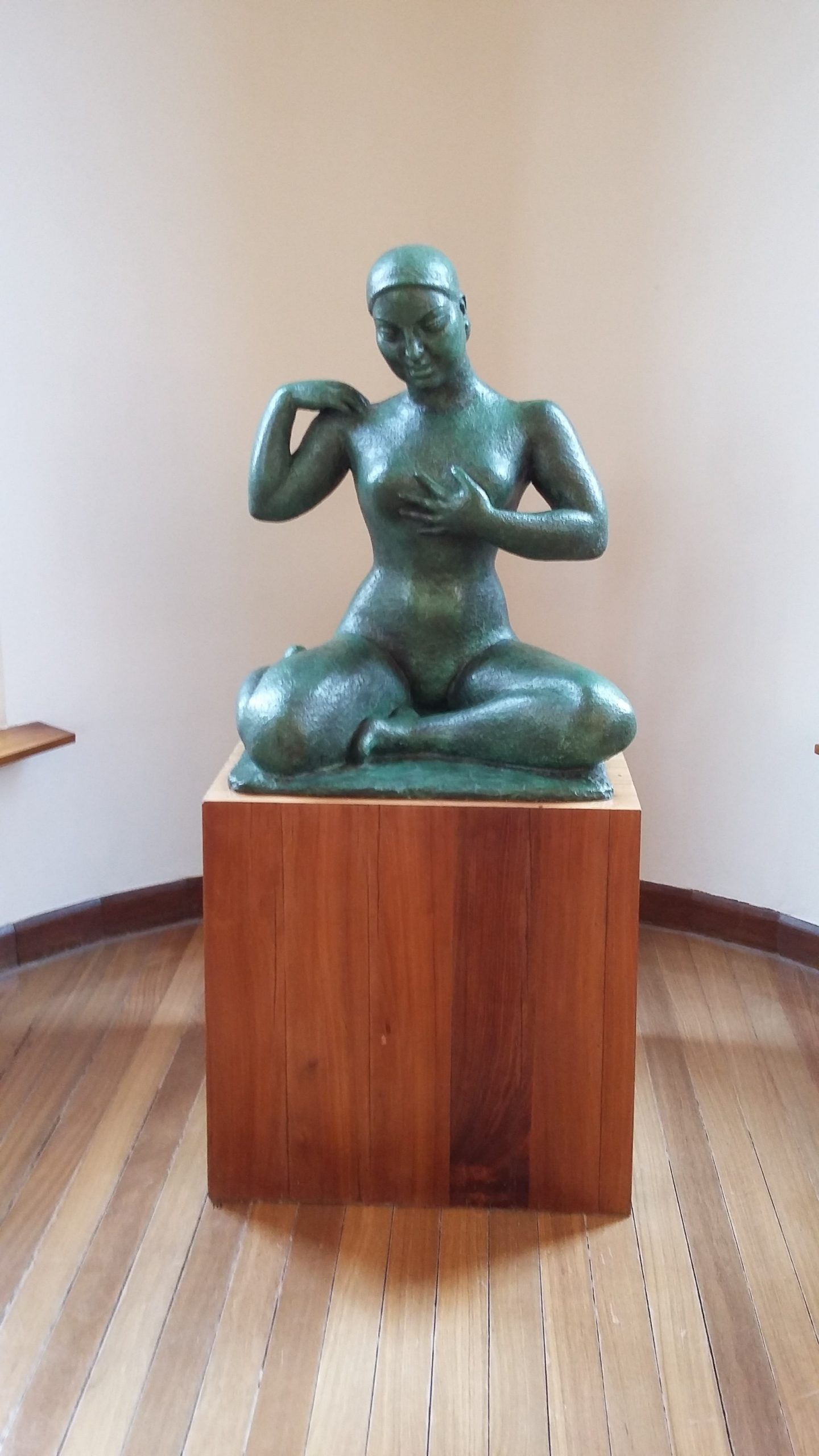
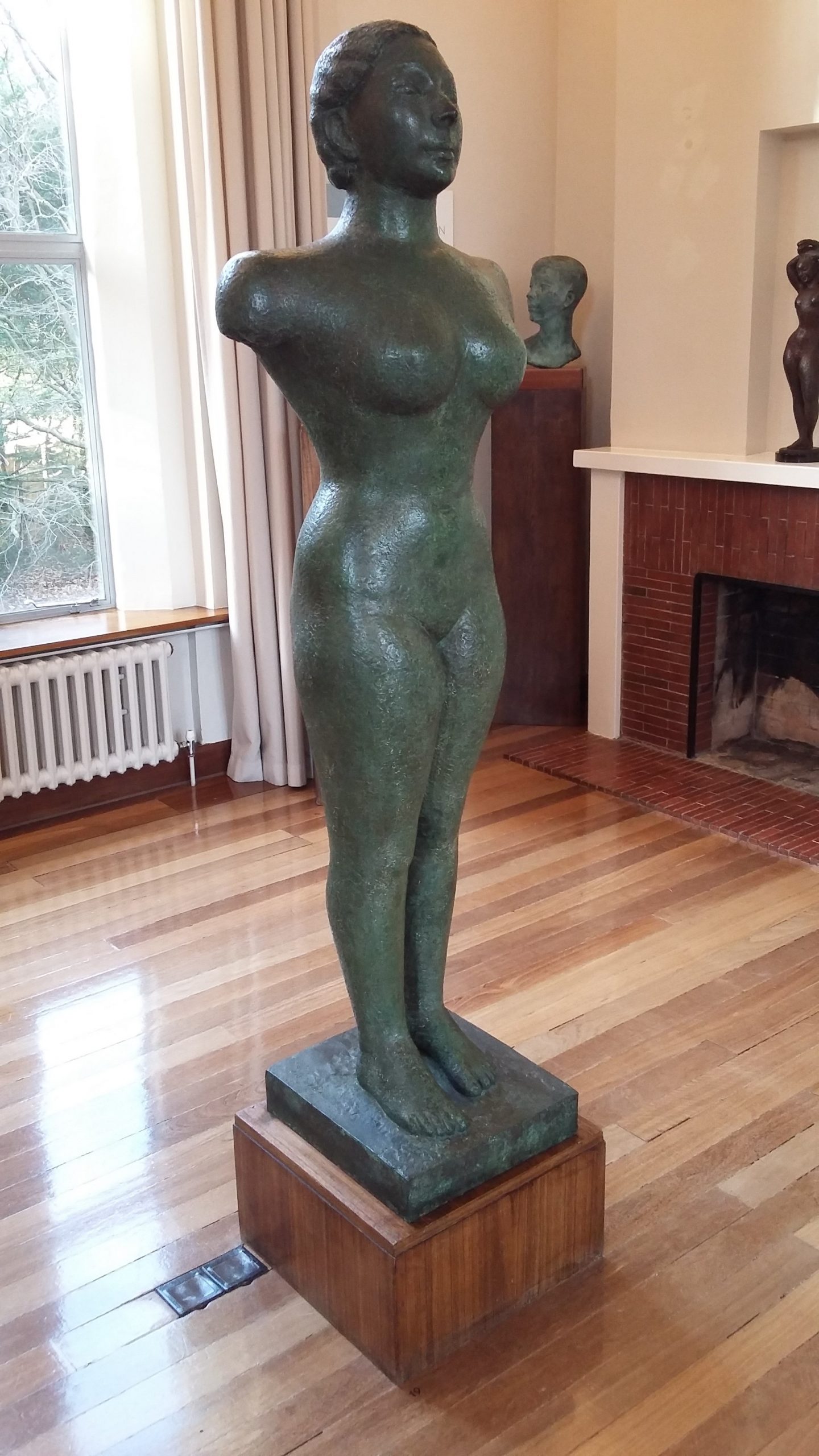
One Saturday in December I decided to visit the Dorich House Museum near Kingston, the former studio home of Dora Gordine (1895-1991) and Richard Hare (1907-1966). Now in the keeping of Kingston University, the house was completed in 1936 to a design by Gordine, who incorporated a modern studio, now used to display her impressive sculpture as well as paintings and drawings. There is also a gallery in which she displayed her work.
Sculptures by Dora Gordine
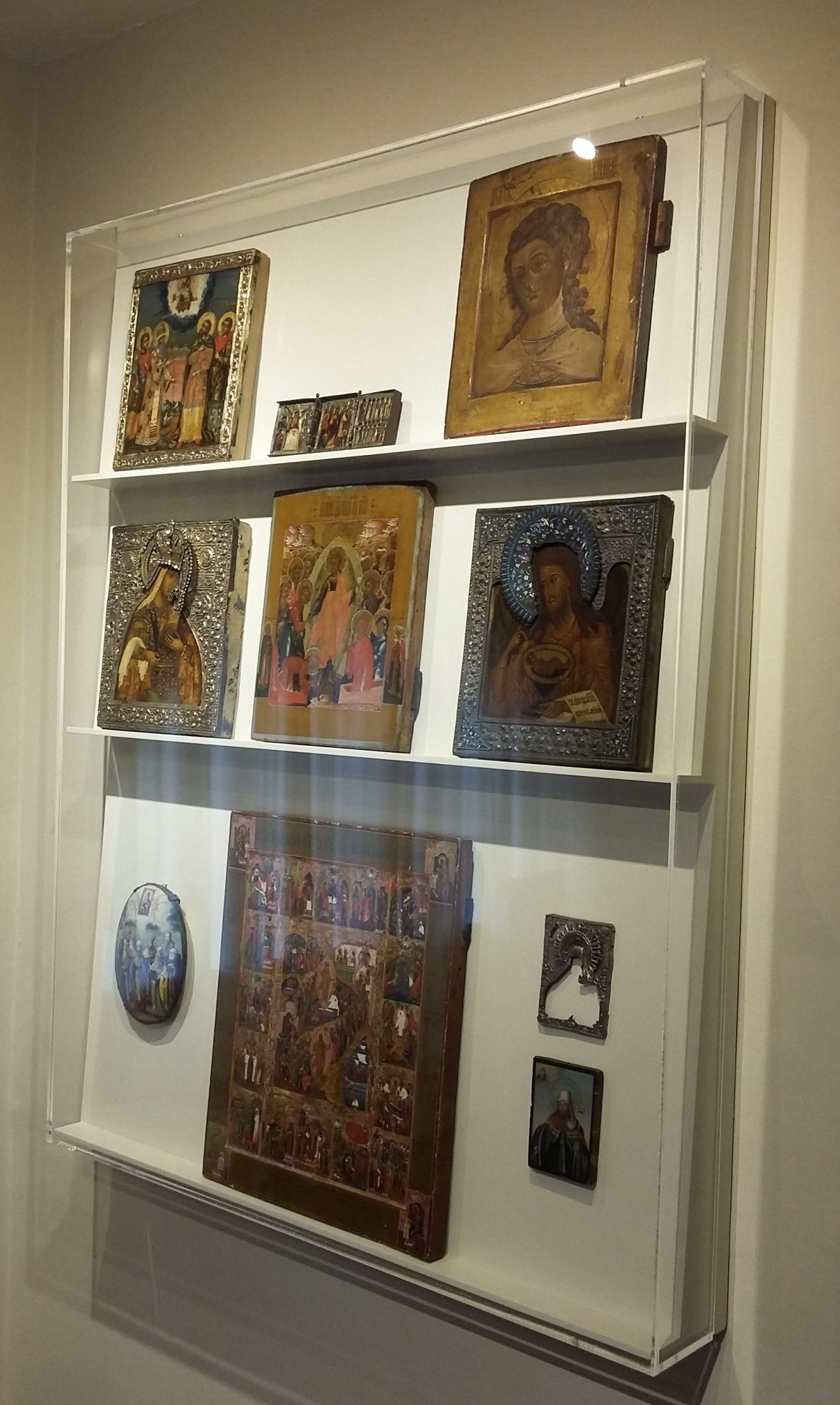
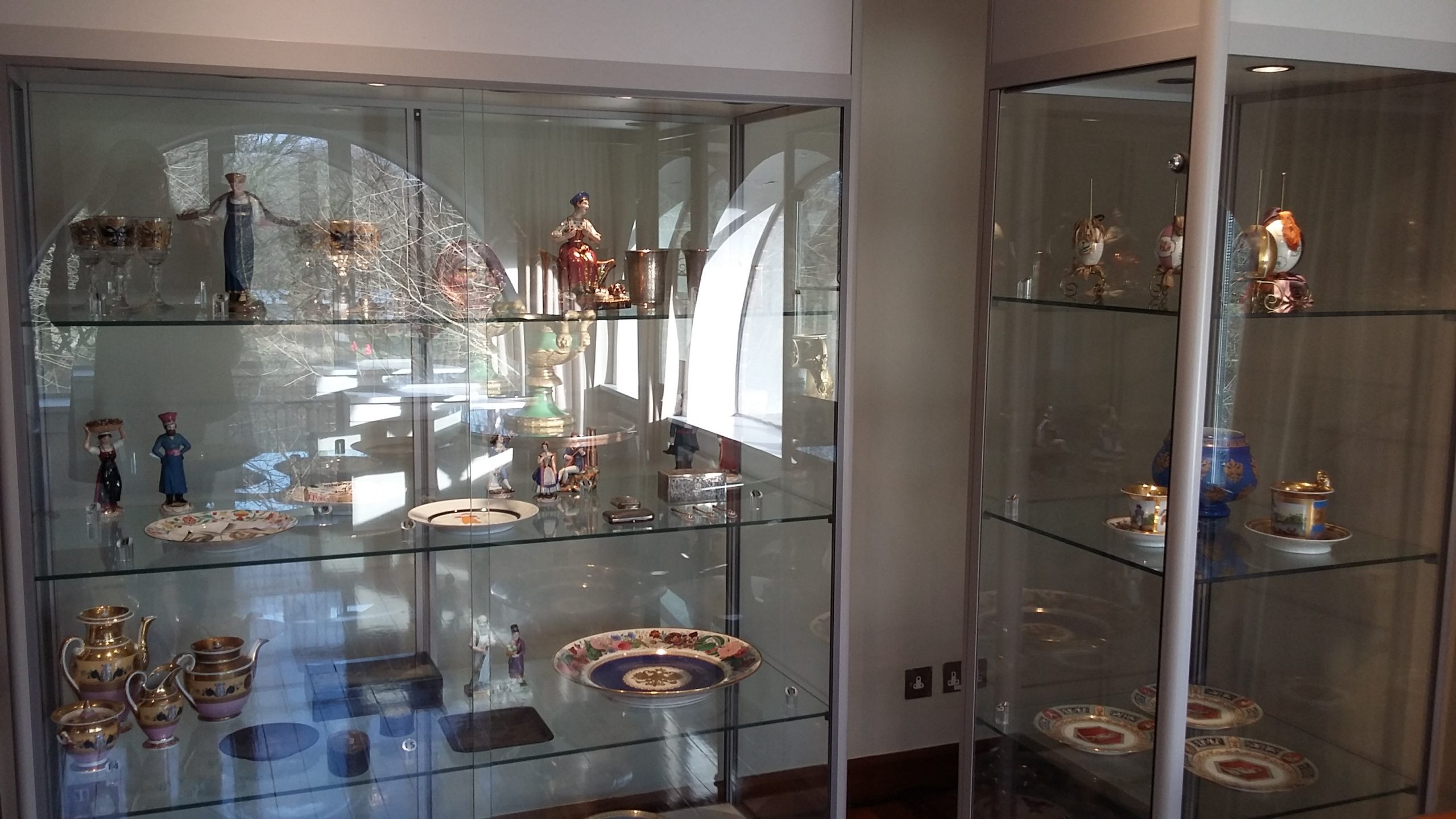
The museum also incorporates the Russian Collection of 18th to early 20th-century paintings, ceramics, glassware, metalwork, folk art and furniture. This was the domain of Russian scholar Richard Hare. Most of the collection can be viewed in the Russian suite on the top floor.
Russian iconsRussian artefacts
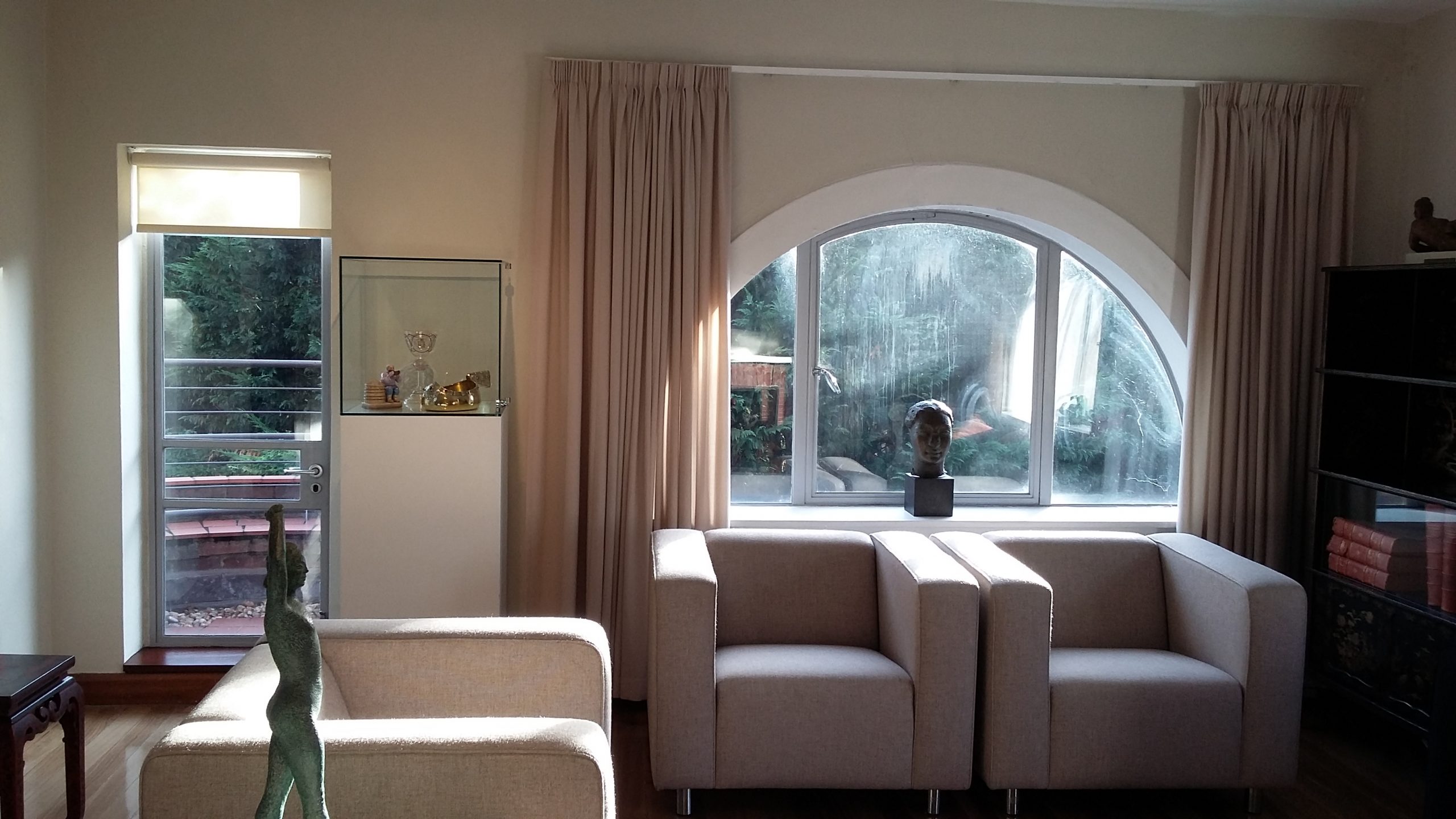
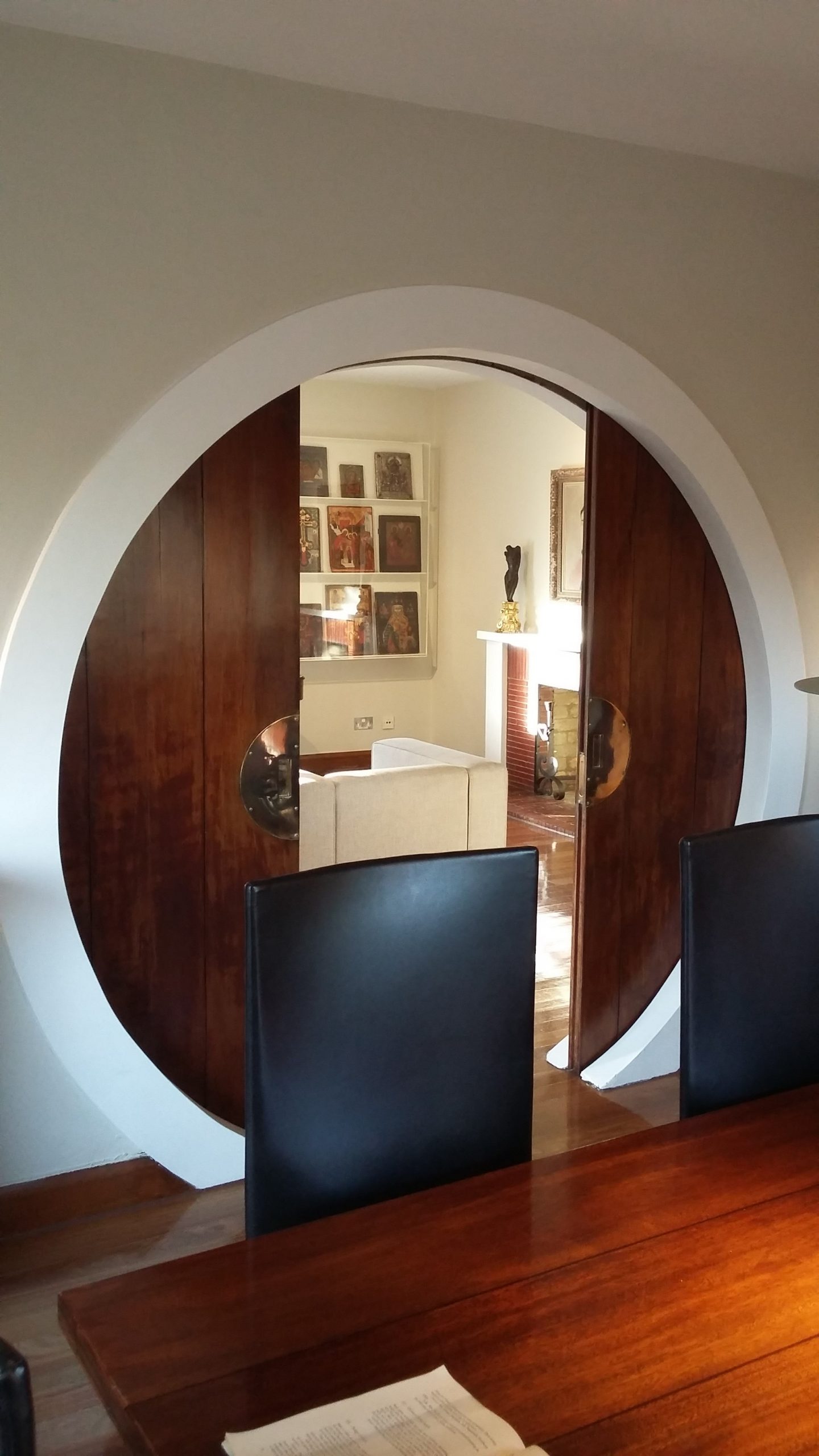
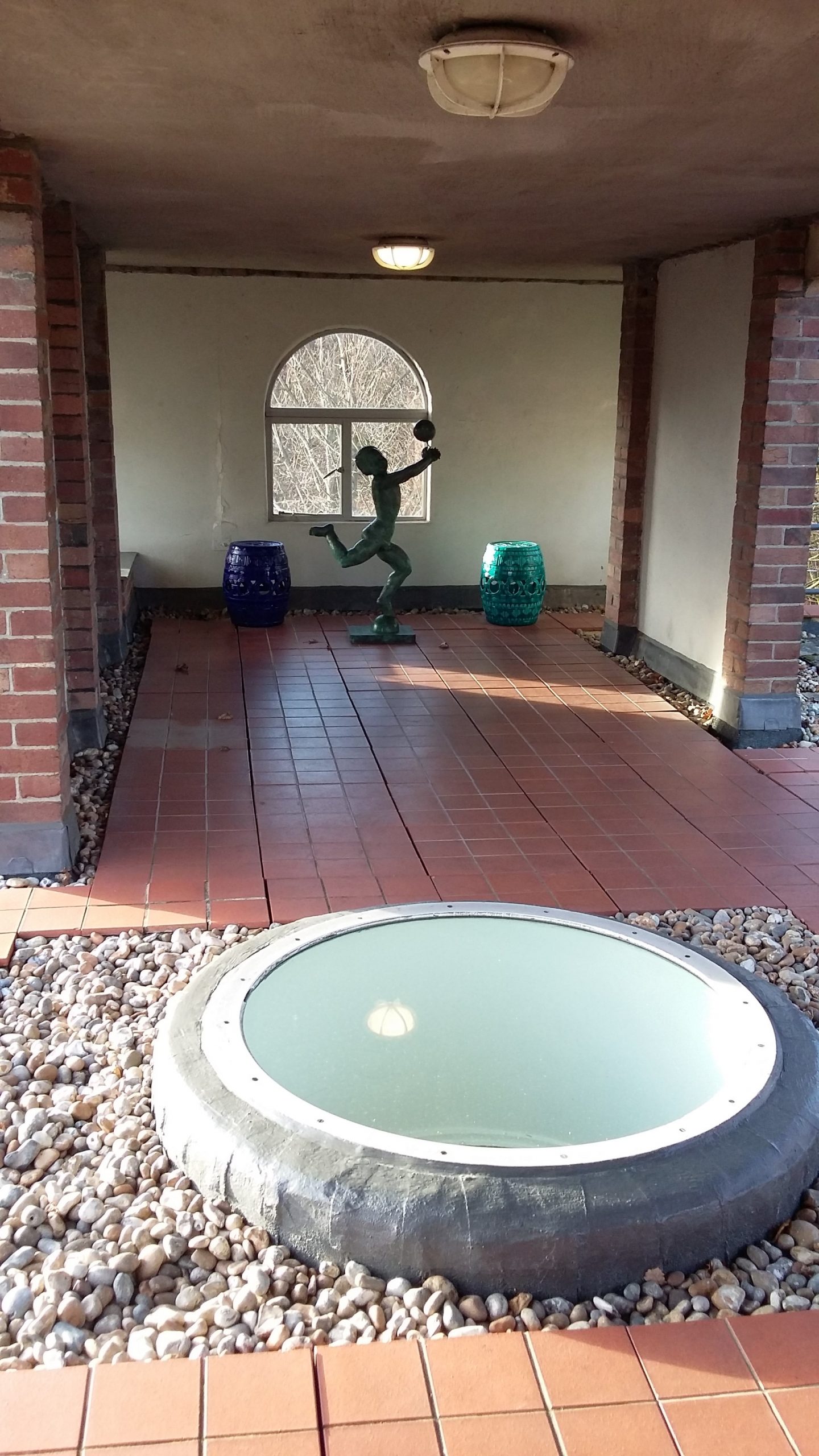
A more homely side to the house can be seen in the top floor apartment, though even here the decor is extremely stylish. There is also a roof terrace.
Inside the apartmentInside the apartmentRoof terrace
Even if, like me, you have no prior knowledge of Gordine and Hare, the museum is well worth a visit. The entry price is very reasonable and it is free with a National Art Pass. There is also a lovely café on the ground floor.
The auction house Spink held an exhibition entitled 200 Years of Polar Exploration recently, featuring artefacts that have never been on display before, including photographs, equipment, medals and other memorabilia, from the expeditions of Scott and Shackleton, to 21st century explorations led by figures such as Sir Ranulph Fiennes and the late Henry Worsley.
The exhibition was staged in aid of The Endeavour Fund, which aims to help wounded, injured and sick service personnel and veterans use outdoor challenges and sport as part of their recovery and rehabilitation. This was the charity promoted by Worsley, who took part in several Antarctic expeditions before tragically dying of peritonitis during his 2016 attempt to make the world’s first unaided Antarctic crossing. One of the items on display was his pair of skis, decorated before their use by his children – a moving and poignant sight.
Other items included medals, and photographs from the Heroic Age and later. As always, I loved the opportunity to explore artefacts re;ated to Antarctic exploration and its history.
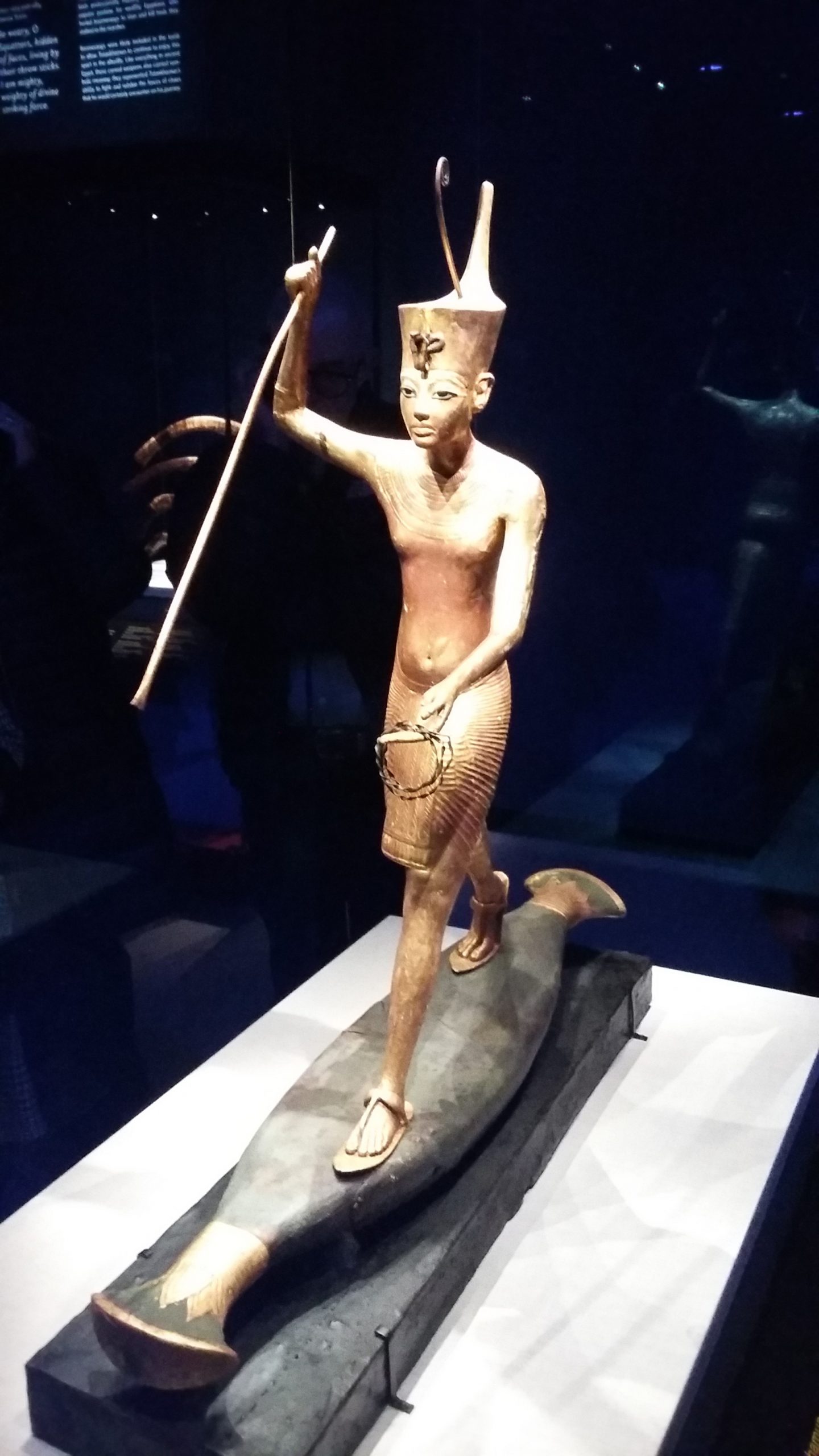
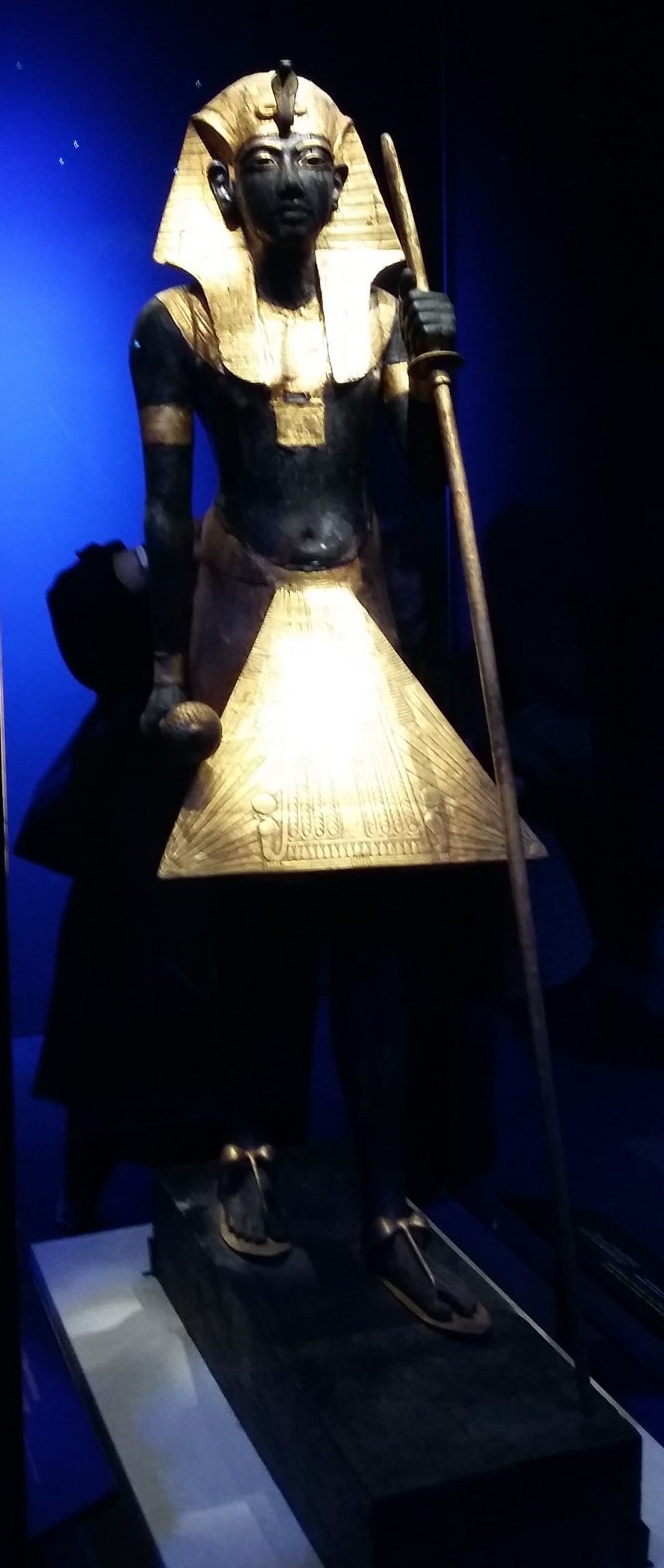
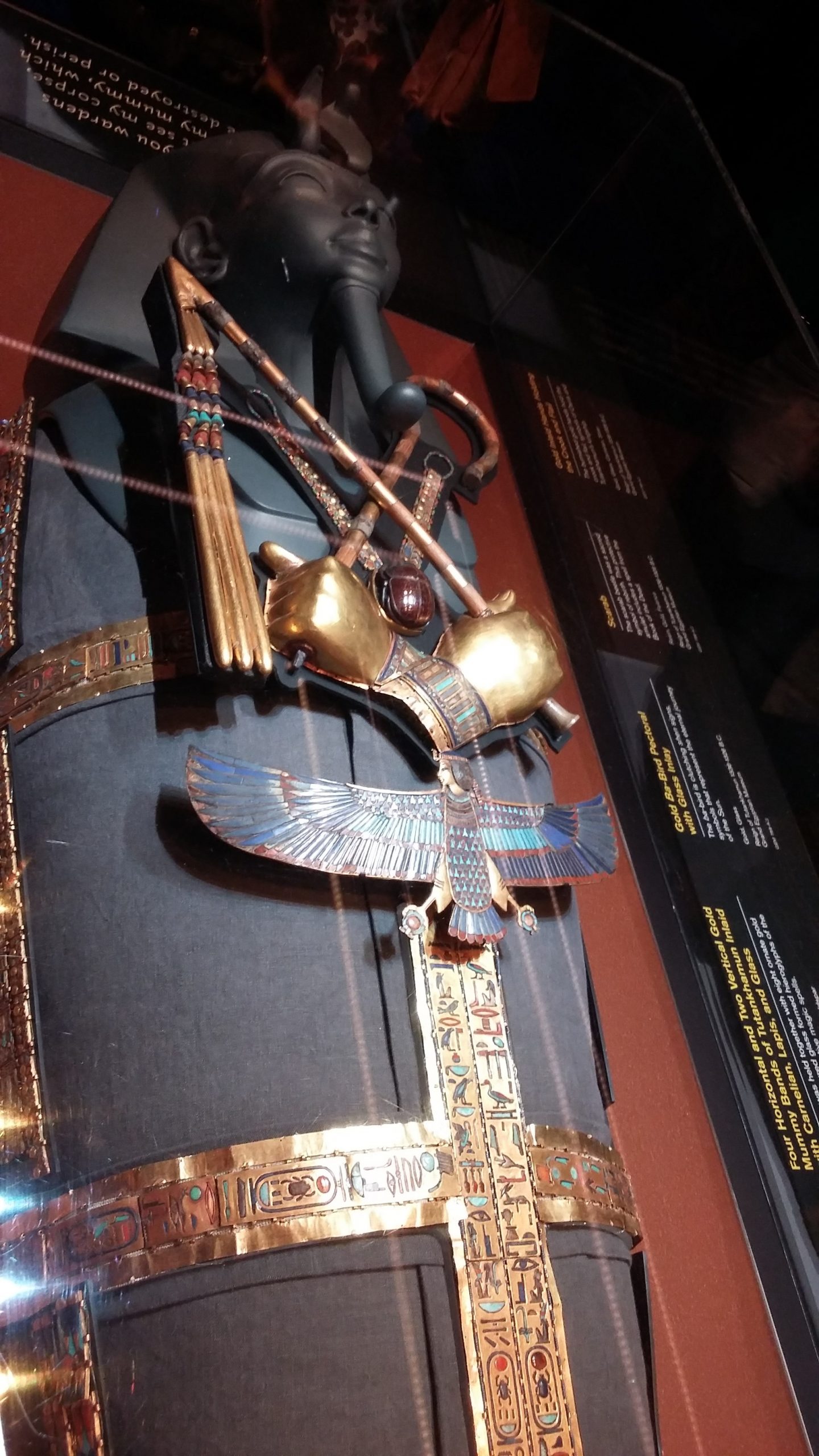
I feel very lucky to have got tickets for Tutankhamun: Treasures of the Golden Pharaoh at the Saatchi Gallery in London. I went to the exhibition on a day off in November, with my mam and a friend, who’d come down to London for the purpose.
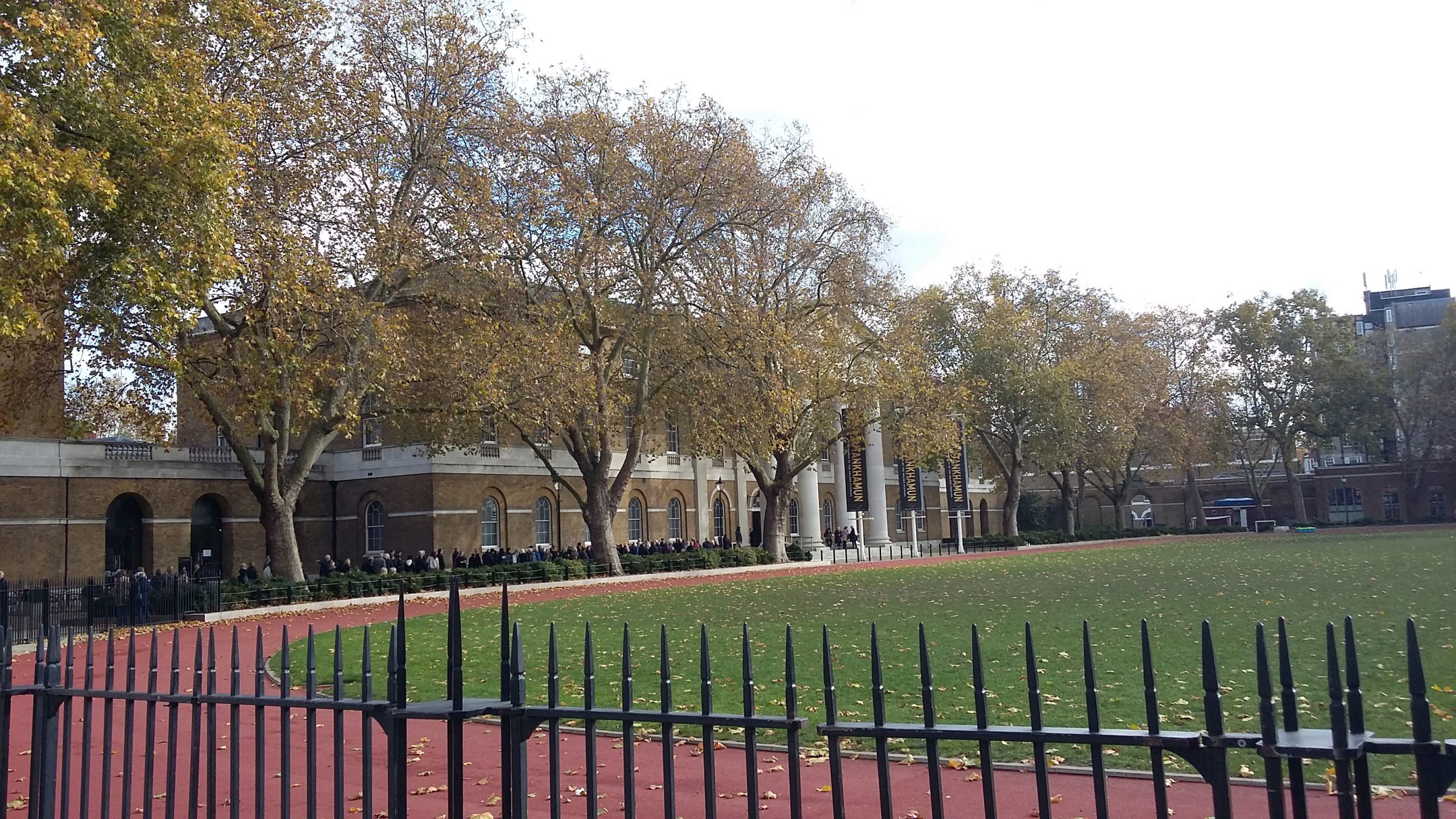
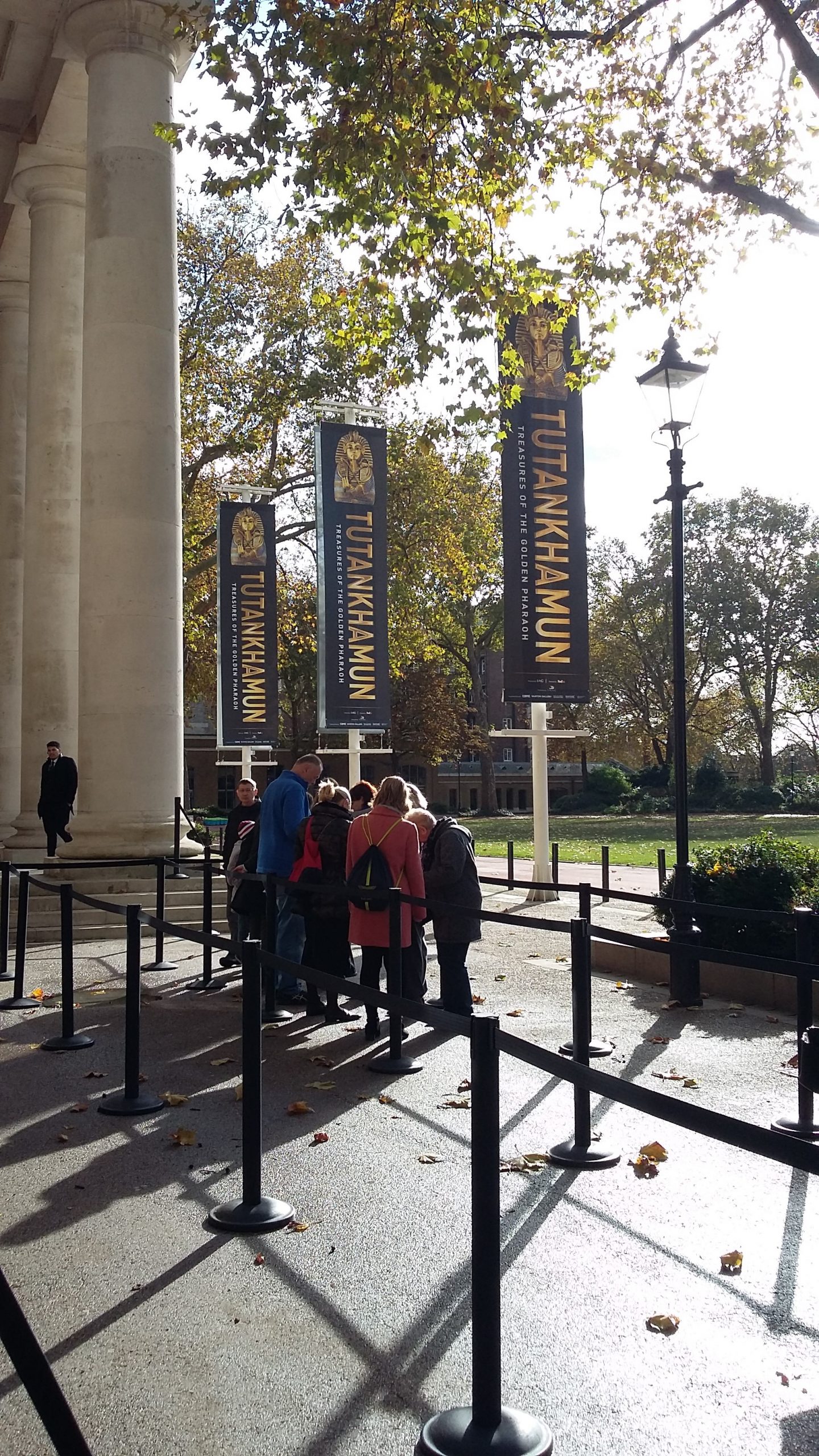
Saatchi GalleryWaiting to go in
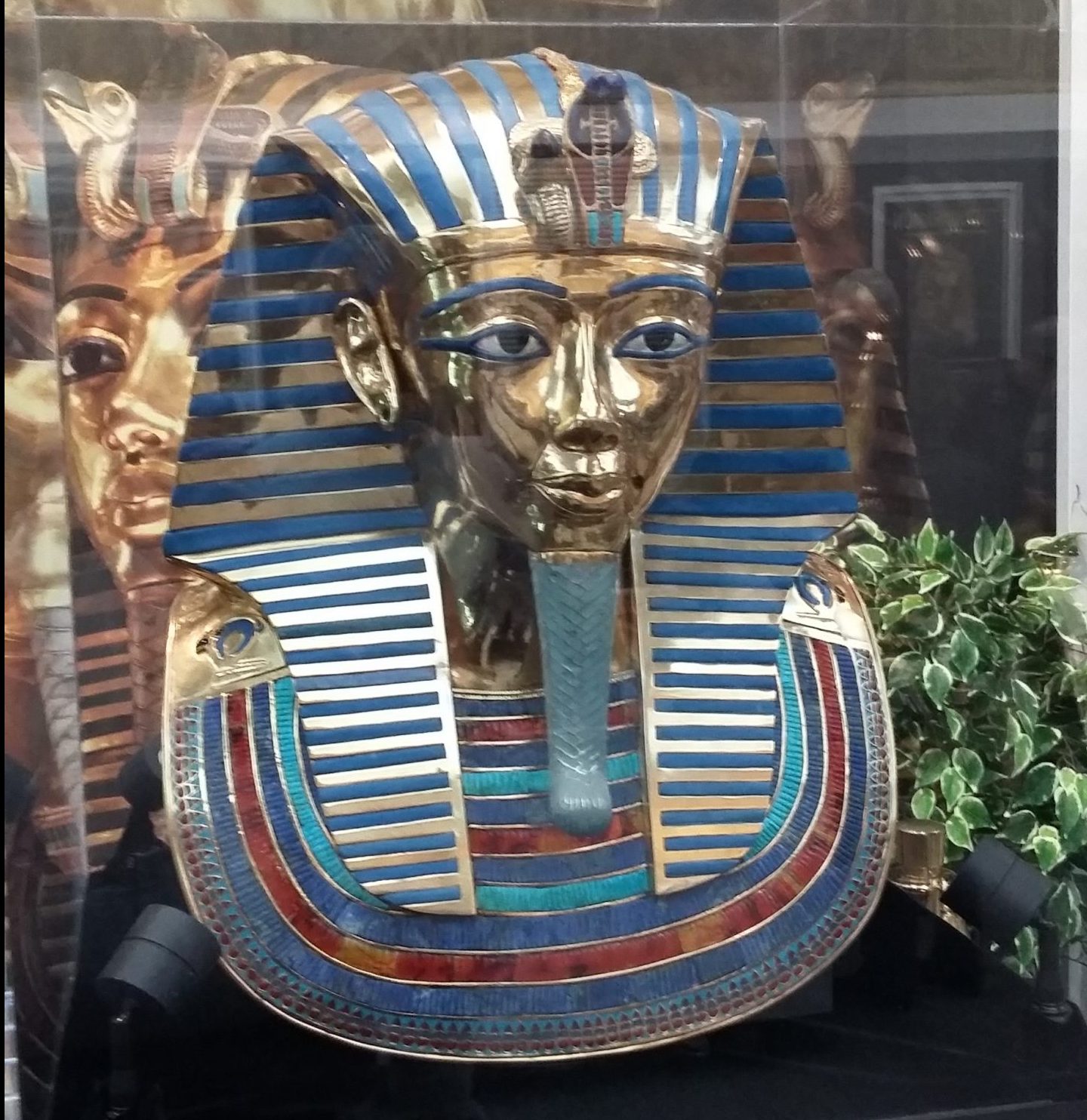
The queue outside the Saatchi Gallery was massive, and it was obvious that the exhibition was going to be popular. It commemorates the 100th anniversary of the discovery of Tutankhamun’s tomb, and marks the last time these artefacts will tour before being permanently housed in a purpose-built museum in Giza. Although the exhibition does not include Tutankhamun’s famous mask (which is available to view in replica at the end of the exhibition), it includes a vast array of treasures, many of which have travelled out of Egypt for the first time. London is the third stop on the exhibition’s world tour.
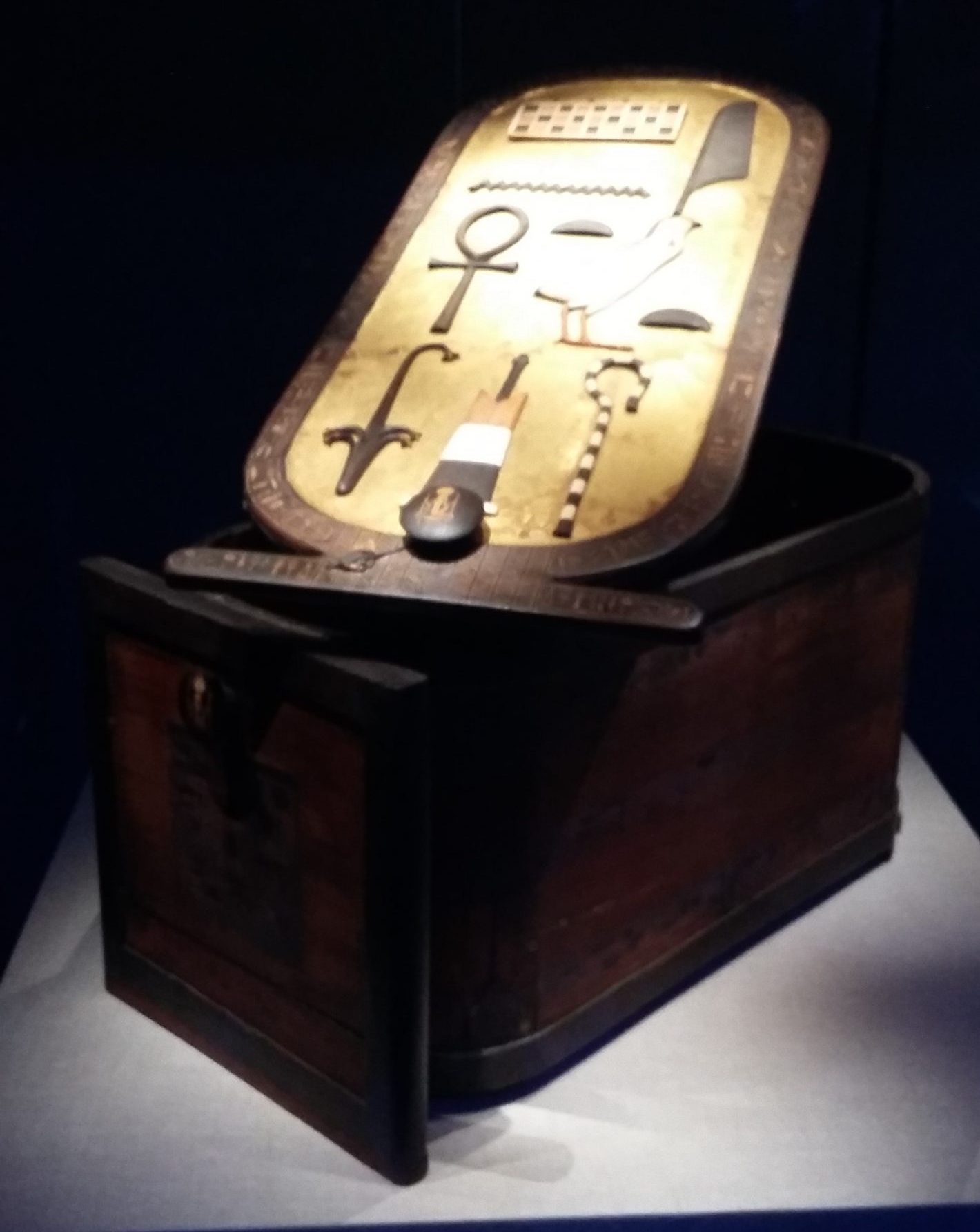
Cartouche box
The treasures take up the whole of the Saatchi Gallery; great thought and care have been taken in arranging a one-way route allowing visitors to navigate the site with ease. The space was crowded, but I can’t see how it could have been made less so to accommodate everyone wanting to see the exhibition. Though I had to wait a little time to view a few of the exhibits, I managed to see everything I wanted without feeling rushed or overwhelmed.
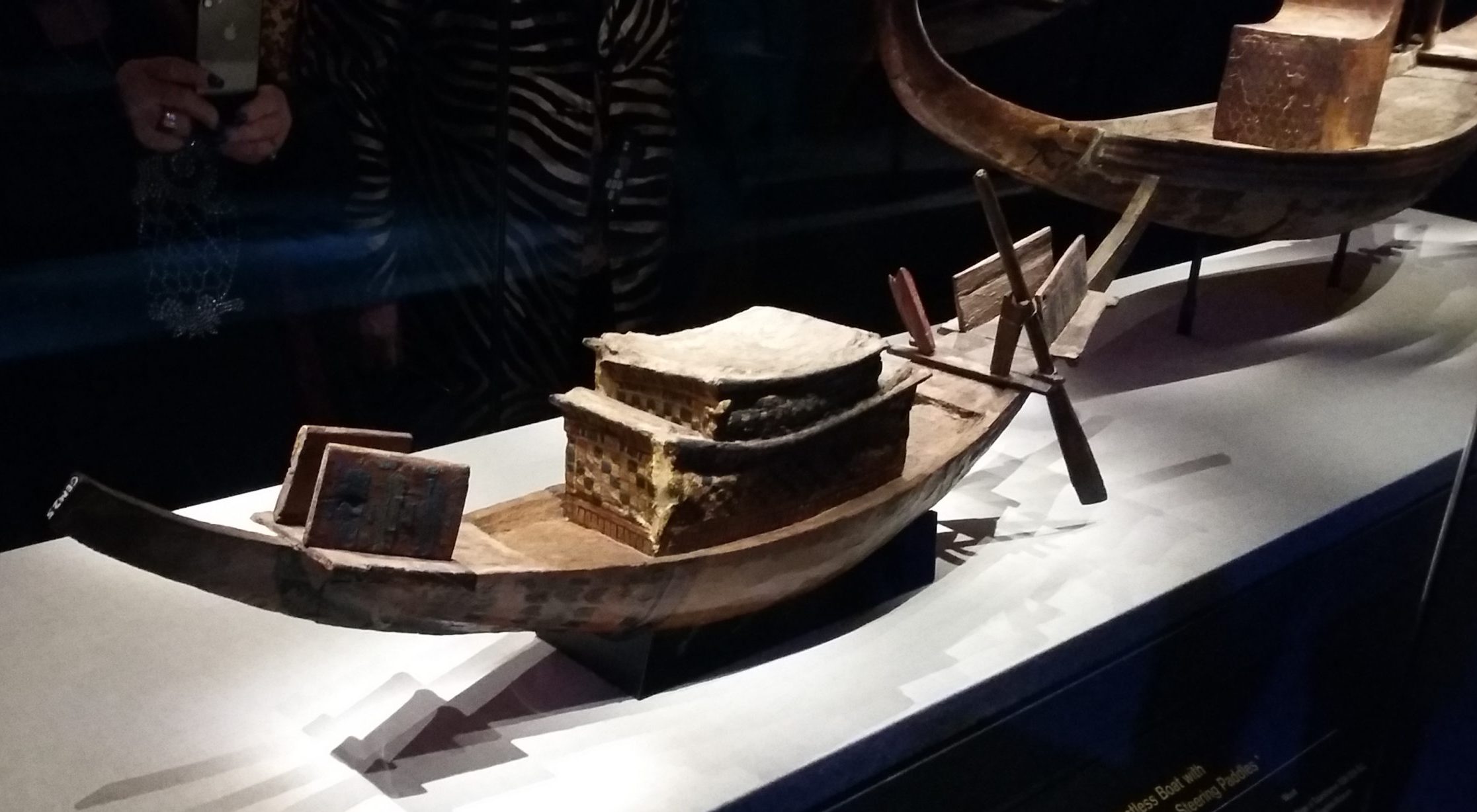
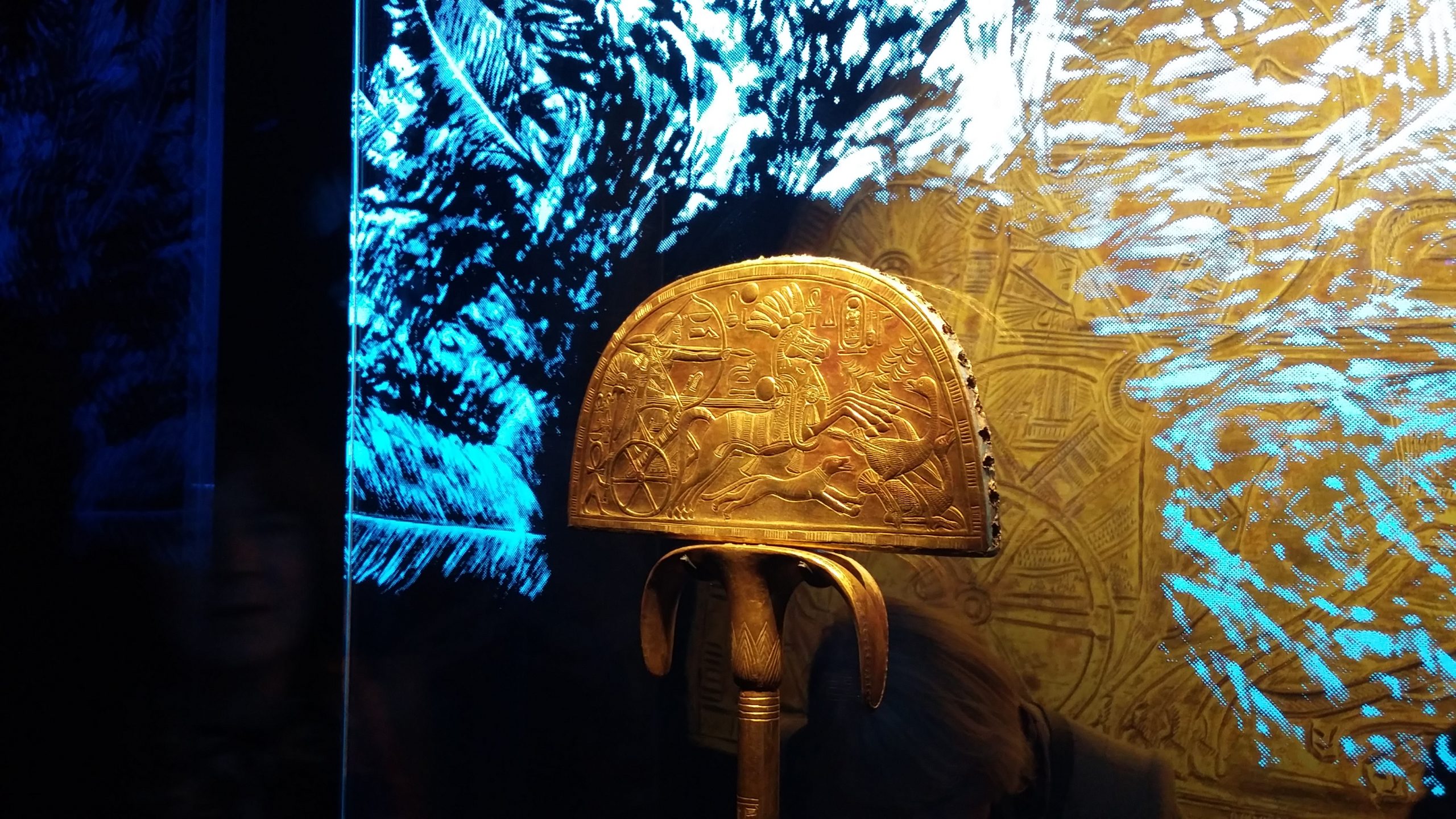
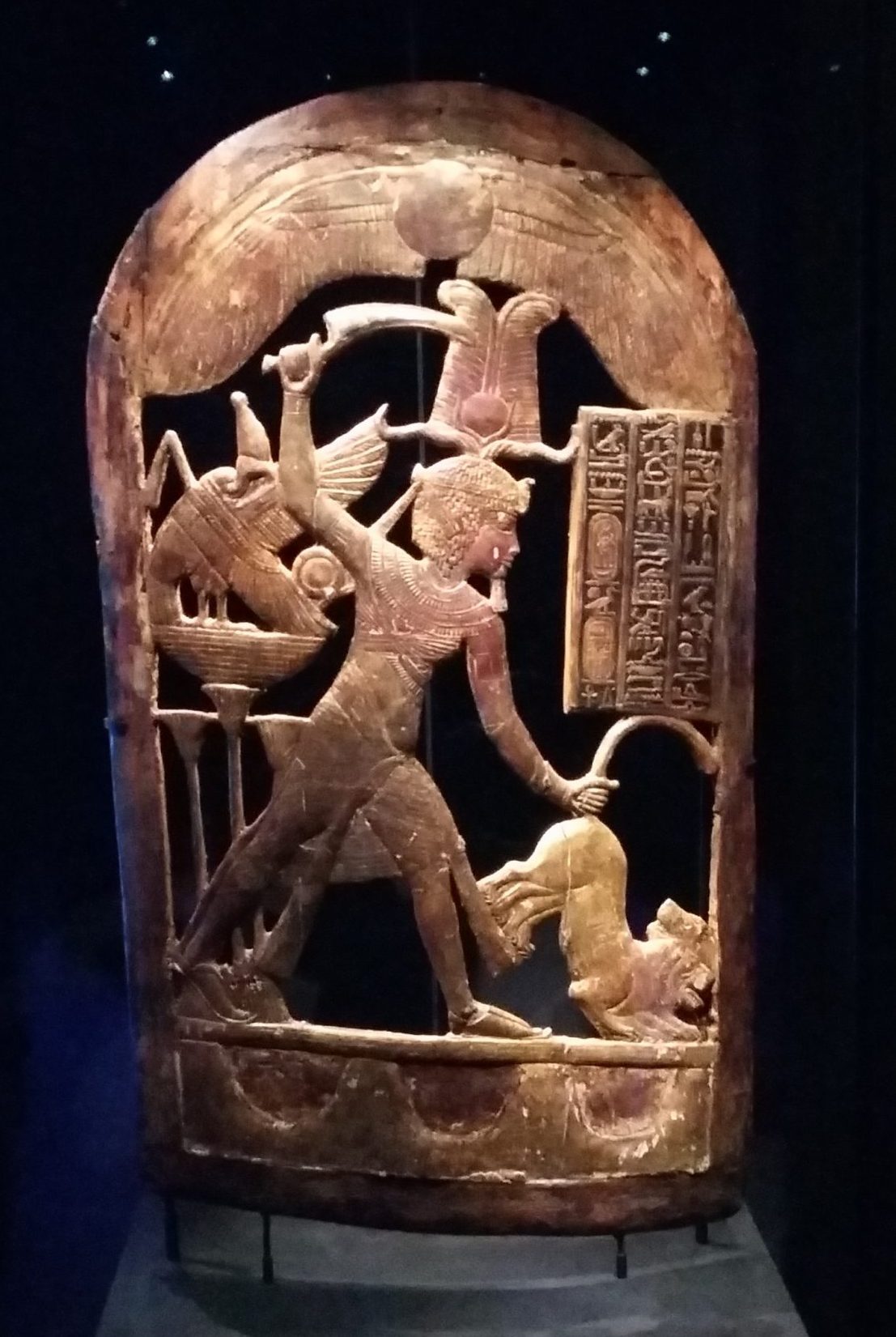
Wooden model of a boatFanShield
The exhibition is structured in a way that corresponds to how the boy-king’s tomb was laid out. You move through outer chambers before finally arriving at the sarcophagus. The artefacts, many of which were made in a hurry by artisans after Tutankhamun’s early death as a teenager, reflect everything a pharaoh would need in the afterlife, including statues, shields, fans, boxes embossed with hieroglyphs, shining and often encrusted with gems. However, there are also the more mundane items, such as simple chairs, a bed and even foodstuffs. It really struck me what good condition these items are in, considering they are over three thousand years old. I’m sure the centuries spent locked inside a dry, dark tomb would have helped, but still, it’s pretty impressive. Keeping in mind their age, the workmanship and the detail on these artefacts is simply astounding.
Statues
In addition there is an examination that led up to Howard Carter’s discovery of the tomb in 1922, including the acknowledgement that a young boy acting as a water carrier for the archaeological party, Sheikh Hussein Abd el-Rassul, helped to discover the tomb by uncovering the top step. Finally, the exhibition looks at Tutankhamun in popular culture, including songs, films, and the Egyptian influence on 1920s fashions.
Sarcophagus
Tutankhamun: Treasures of the Golden Pharaoh is an expensive exhibition, but I honestly feel it is worth the money. We spent a good half day there, and there was much to admire and to learn about.
I managed to catch the Secret Rivers exhibition at the Museum of London Docklands on its very last day. The exhibition looks at the history of several of London’s hidden rivers, many of which have been covered over, re-routed or used for other purposes.
First to be examined was the Walbrook, which flowed through the heart of the City of London. This river was often used for ritual (the Temple of Mithras, which I’ve previously visited, was nearby), and the items found in it bear witness to its role at the centre of life in Roman times.
Secondly, the most famous lost river, the Fleet, was explored. This river was located outside of the City, and as such originally played a role at the heart of rural life, before an increasingly dense population helped to pollute the river (during the fourteenth century, people used to build houses with toilets extending out over the river, so that waste would drop directly into it – one of the items recovered from the river was a three-seat medieval toilet). Eventually it was covered and used as a sewer, though you can still swim in the Fleet up at Hampstead, where the outdoor pools are filled with water from this river.
From here, the exhibition explored the contrasting ways in which rivers were used. The Neckinger in Bermondsey, for instance, was heavily polluted and had several mills along its banks, while the Westbourne in west London was used to create the ponds in Hyde Park. The Tyburn, now covered over, has been the subject of a campaign to restore it and use it for fishing, while the Wandle has been uncovered at several points, making it a haven for wildlife. There is also the Lea, still used for recreational activities and transformed towards central London by the construction of the Olympic Park.
Finally, the exhibition looked at the works of art that have been inspired by the hidden rivers. Of particular interest to me were the various books, which I plan to seek out in the future.
As part of Open House London, I was able to sign up to visit Dulwich College. This public school has a long and fascinating history, and there is a particular reason I wanted to visit, which I will discuss below.
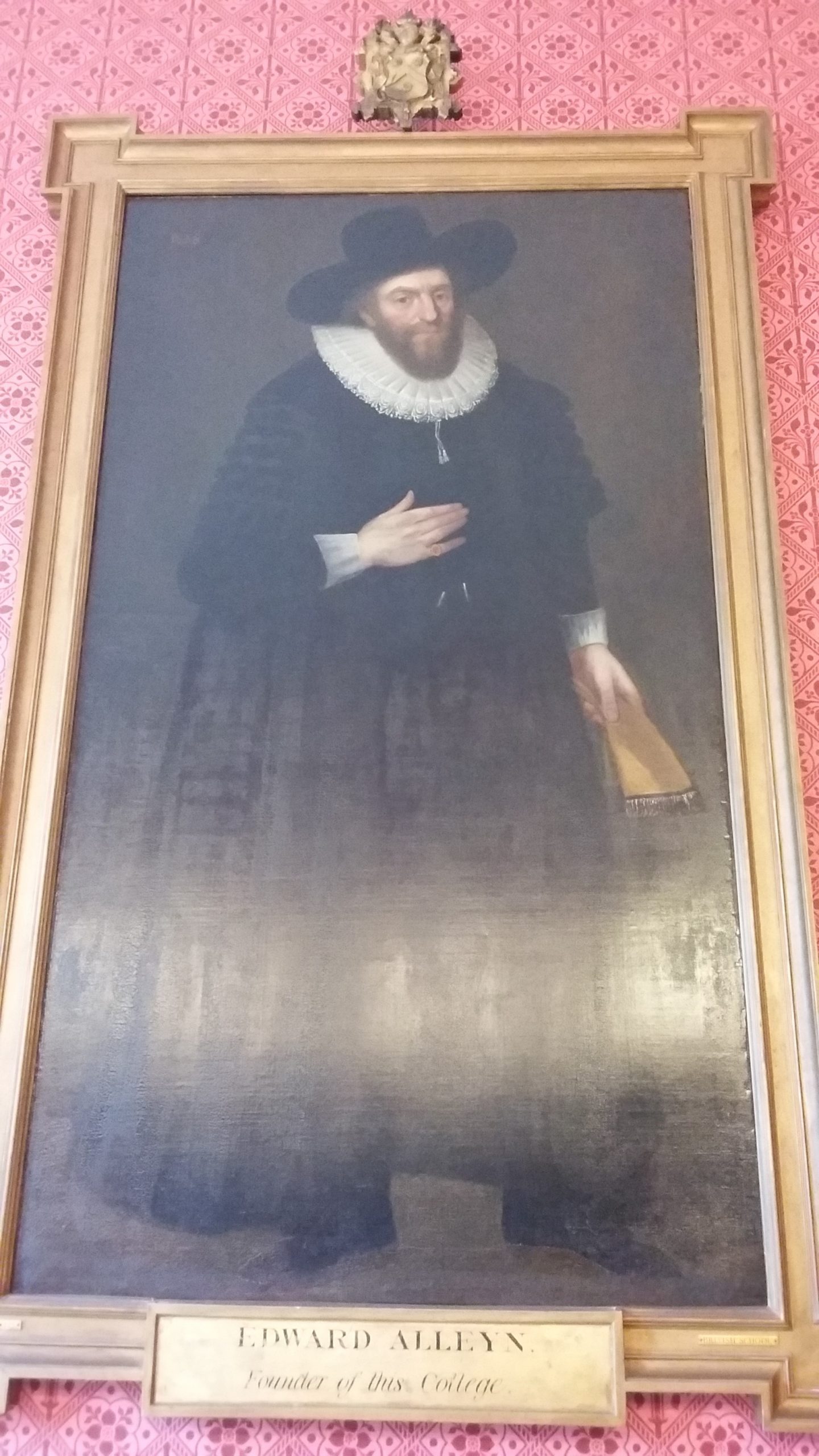
History It was founded in 1619 as the ‘College of God’s Gift’ by Elizabethan actor Edward Alleyn, who had performed in Christopher Marlowe’s plays at the Rose Theatre on Bankside. Alleyn possessed great wealth, and had owned the manorial estate of Dulwich since 1605. He decided to found an establishment originally intended for the education of poor boys. Over time the exact location and the purpose of the school changed, and it wasn’t known formally as Dulwich College until 1882. Notable alumni include Ernest Shackleton, P. G. Wodehouse, Raymond Chandler and Chiwetel Ejiofor.
Edward Alleyn, the school’s founder
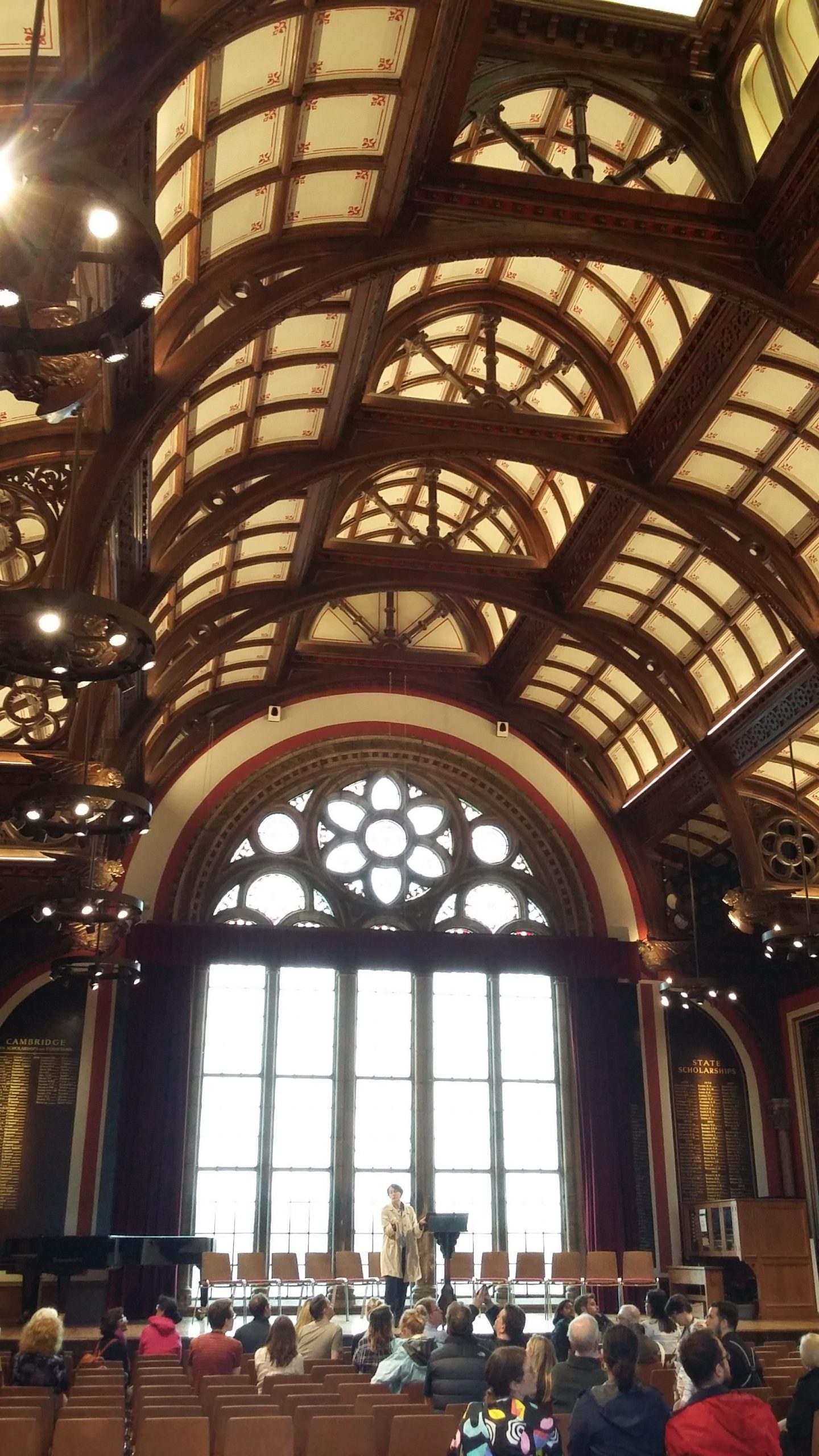
Dulwich College Now The current site was established in the 1870s; the main building, New College, was designed by Charles Barry Junior (son of the architect of the Houses of Parliament). Loosely based on Palladian architecture, it makes use of features such as triangular gables, turrets and cupolas. Interestingly, Dulwich was the first public school with a dedicated hall for assemblies, with all teaching taking place in the classrooms.
Assembly Hall
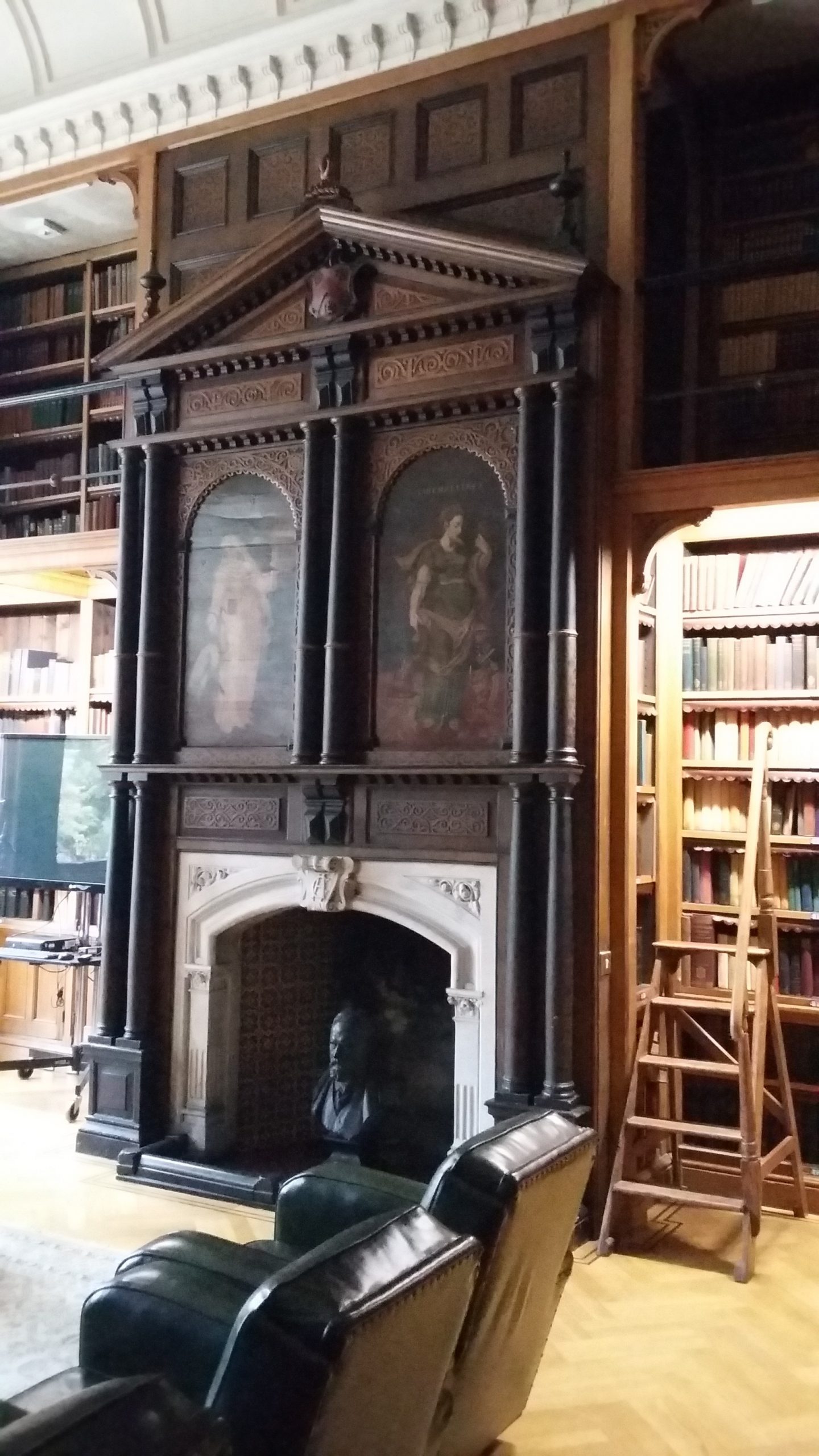
The College holds some impressive archival material, much of which came from Edward Alleyn’s own library, and focuses on drama and the arts. Material includes diaries, two of the three volumes of Shakespeare’s First Folio, a Mercator Atlas, first editions of poetry by John Donne, Edmund Spenser and Dryden. Above the fire in the Masters’ Library are two panels depicting pietas (Duty) and liberalitas (Generosity), which came from Elizabeth I’s state barge. They may have originally come from Francis Drake’s Golden Hinde.
Masters’ Library
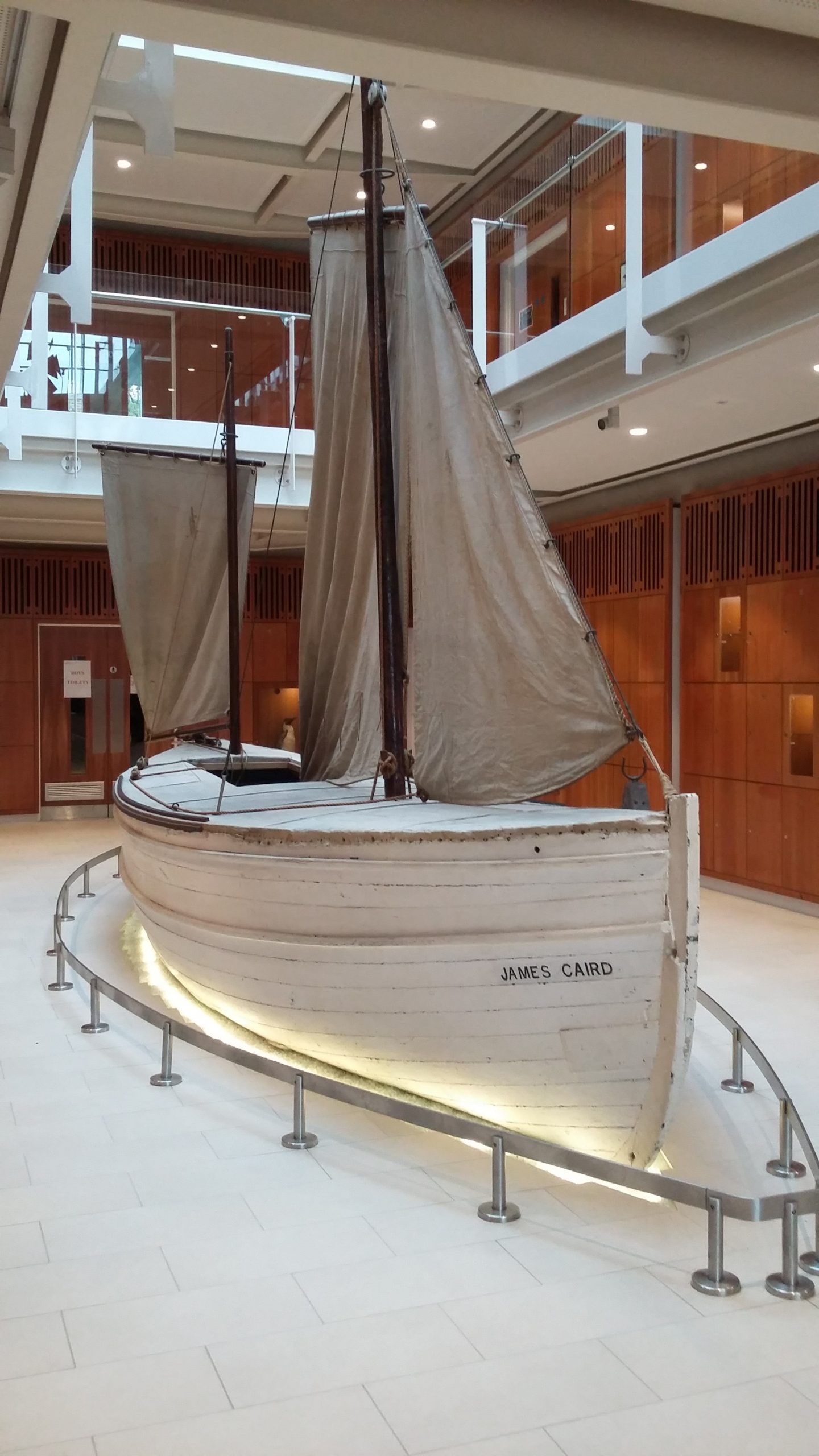
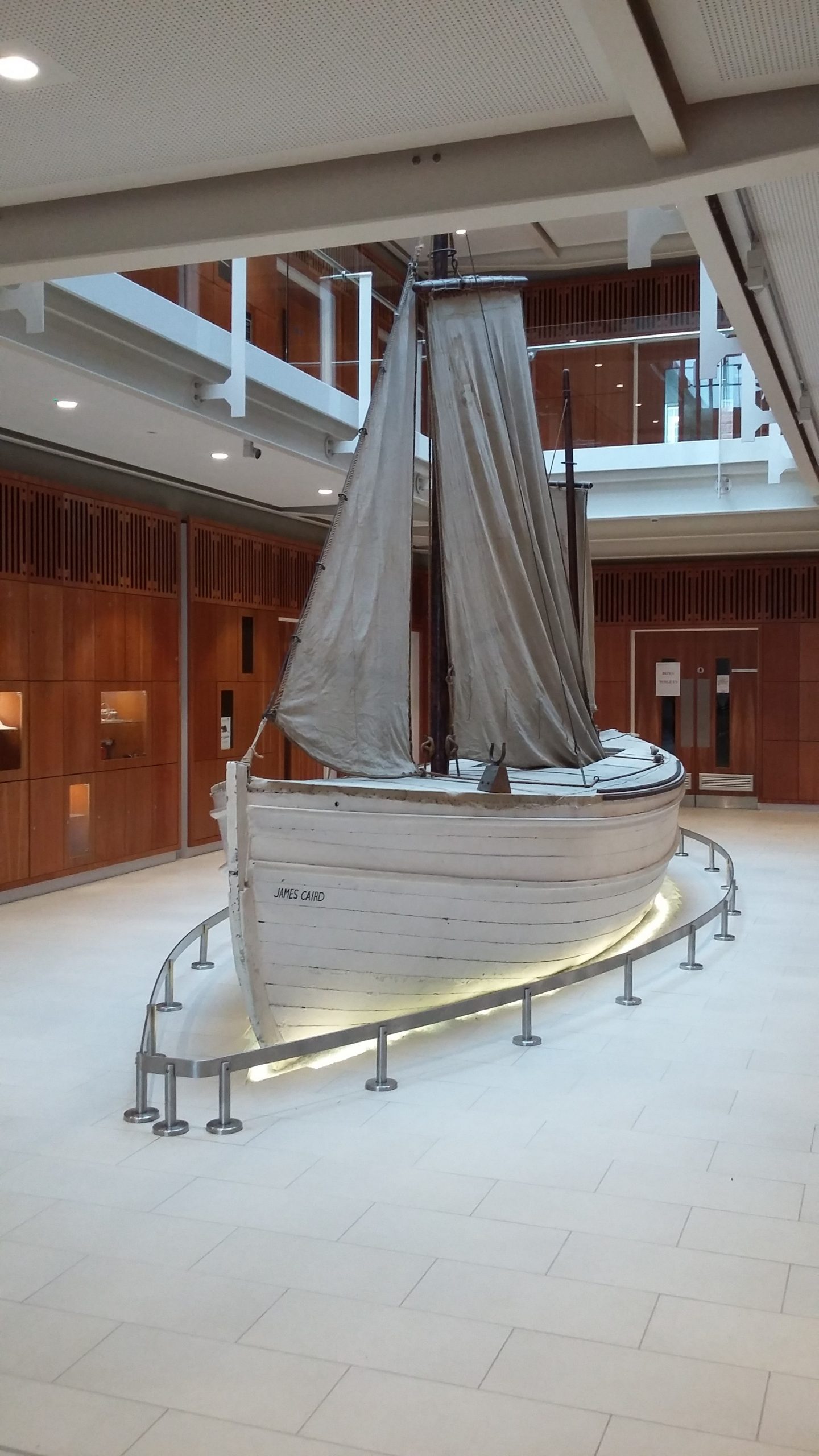
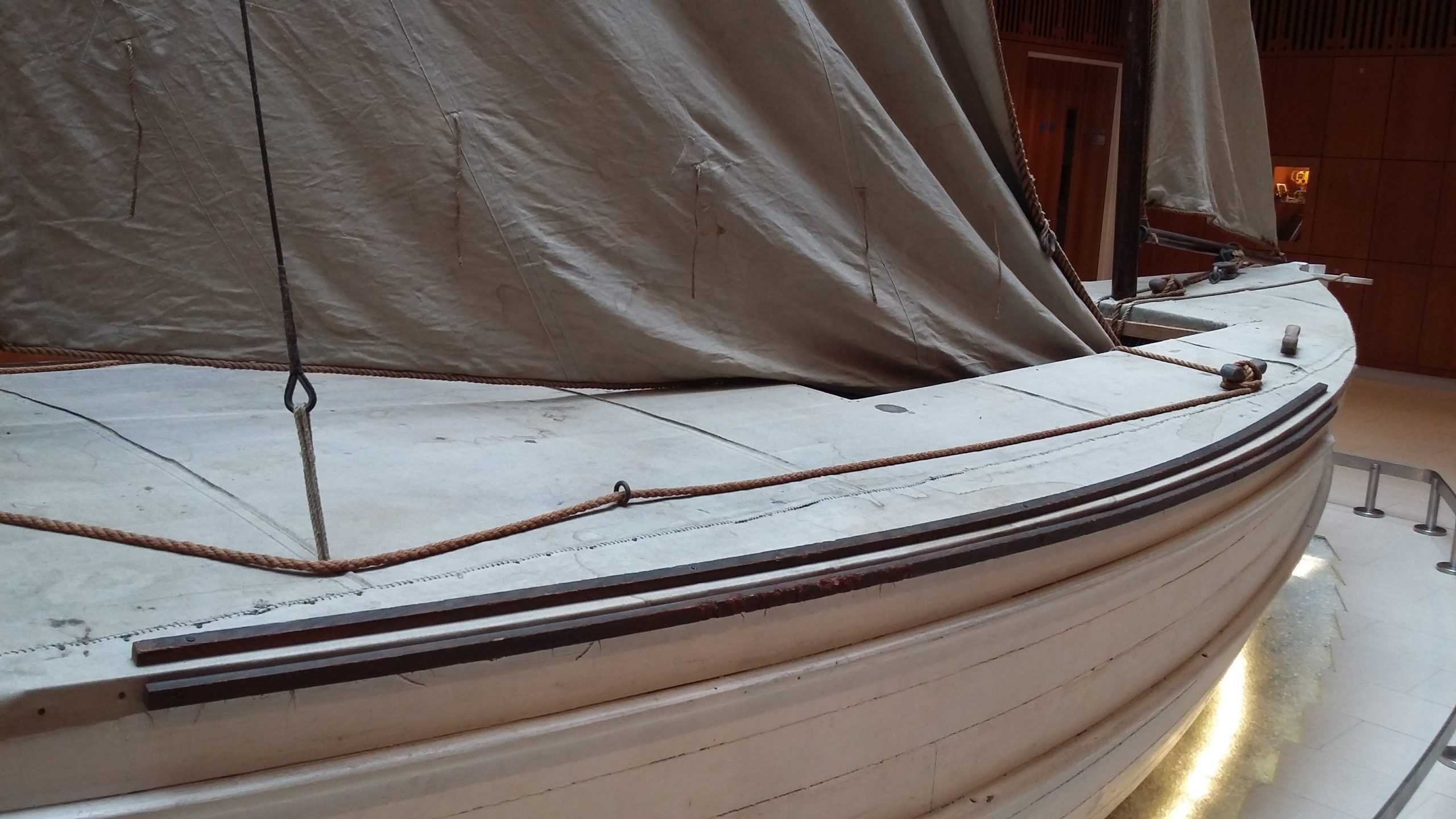
The James Caird And so to the reason why I wanted to come here in the first place: The James Caird. Donated to his alma mater by Shackleton, this famous lifeboat was the very boat in which Shackleton and five other men made their incredible voyage to South Georgia from Elephant Island in 1916. As someone with a deep interest in polar history, I’ve long wanted to see the boat for myself. It is housed in the purpose-built James Caird Hall, surrounded by other polar artefacts including items from Shackleton’s Nimrod expedition. Now white and gleaming, it’s hard to imagine six tired, hungry, filthy men ensconced in this 23-foot whaler, struggling through treacherous seas for over 800 miles during the Antarctic winter. What is apparent, though, is the superb workmanship of carpenter Harry ‘Chippy’ McNish who made the boat seaworthy enough to withstand the voyage: even Shackleton later admitted they could not have reached South Georgia without his efforts. McNish used wood from packing cases and sledge runners to build up the sides of the boat, caulking it using a mixture of seal blood and flour. The whole was then covered with canvas to protect the men from the elements as much as possible. I won’t lie: I felt quite emotional seeing this boat close up.
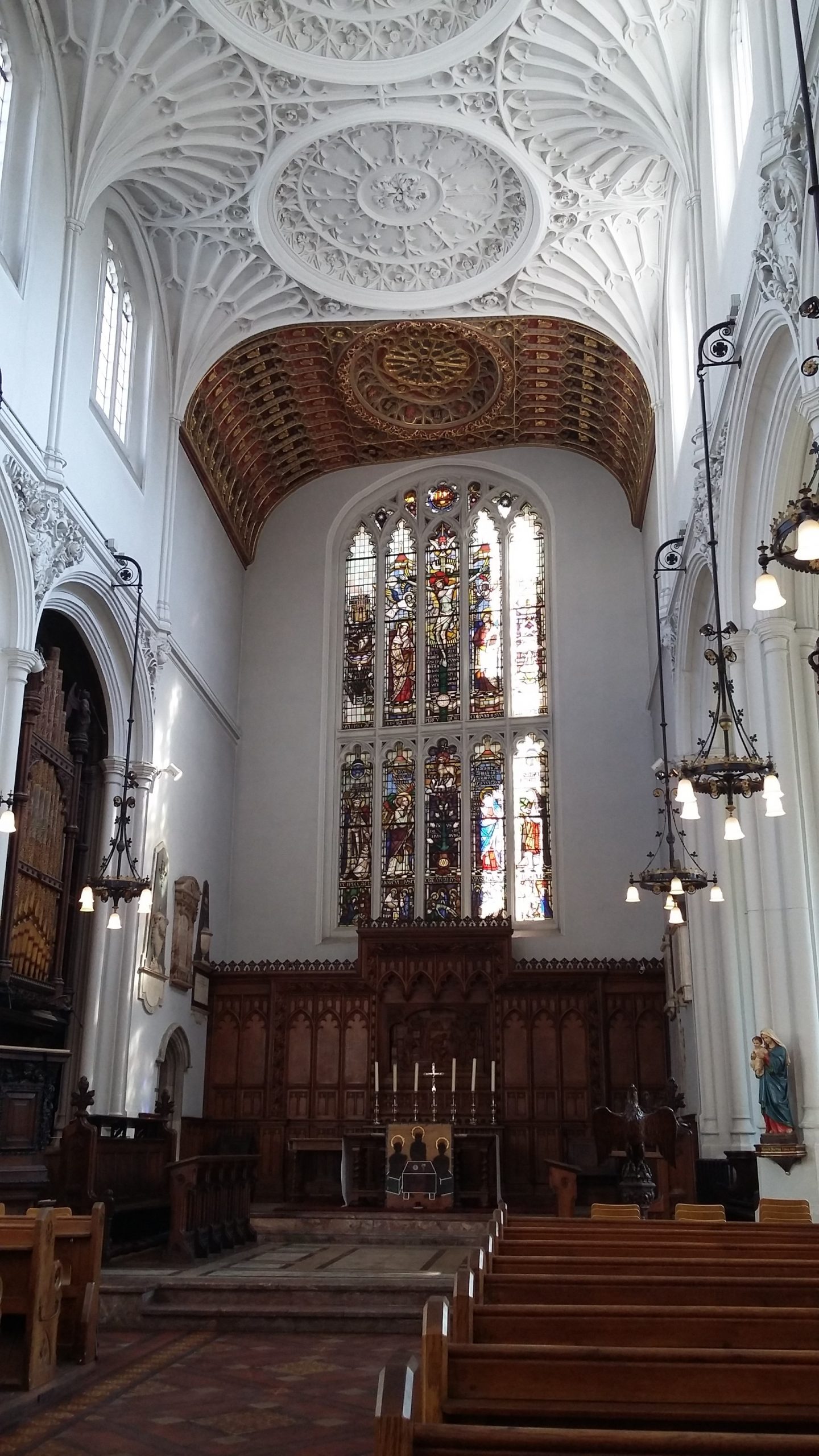
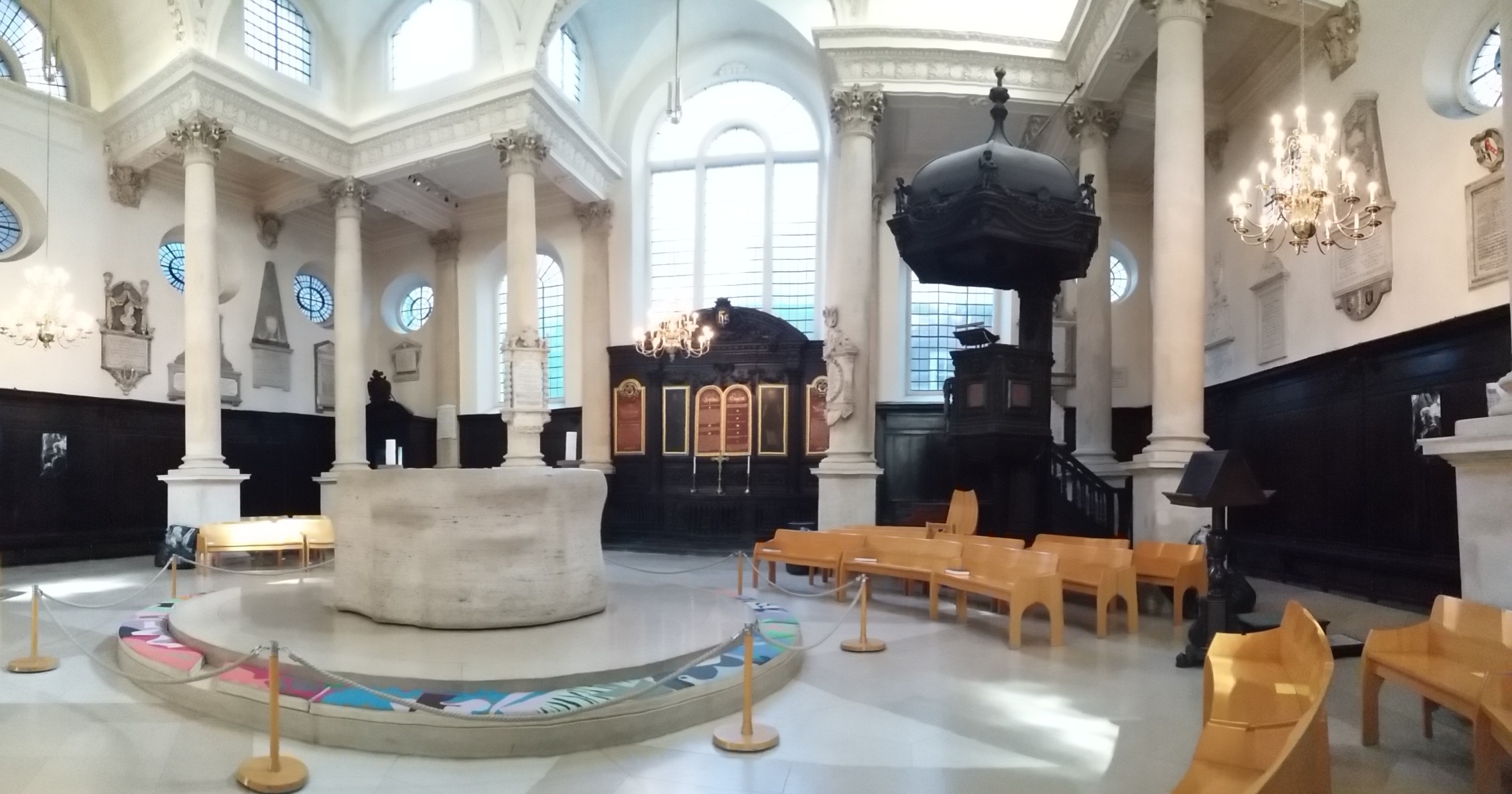
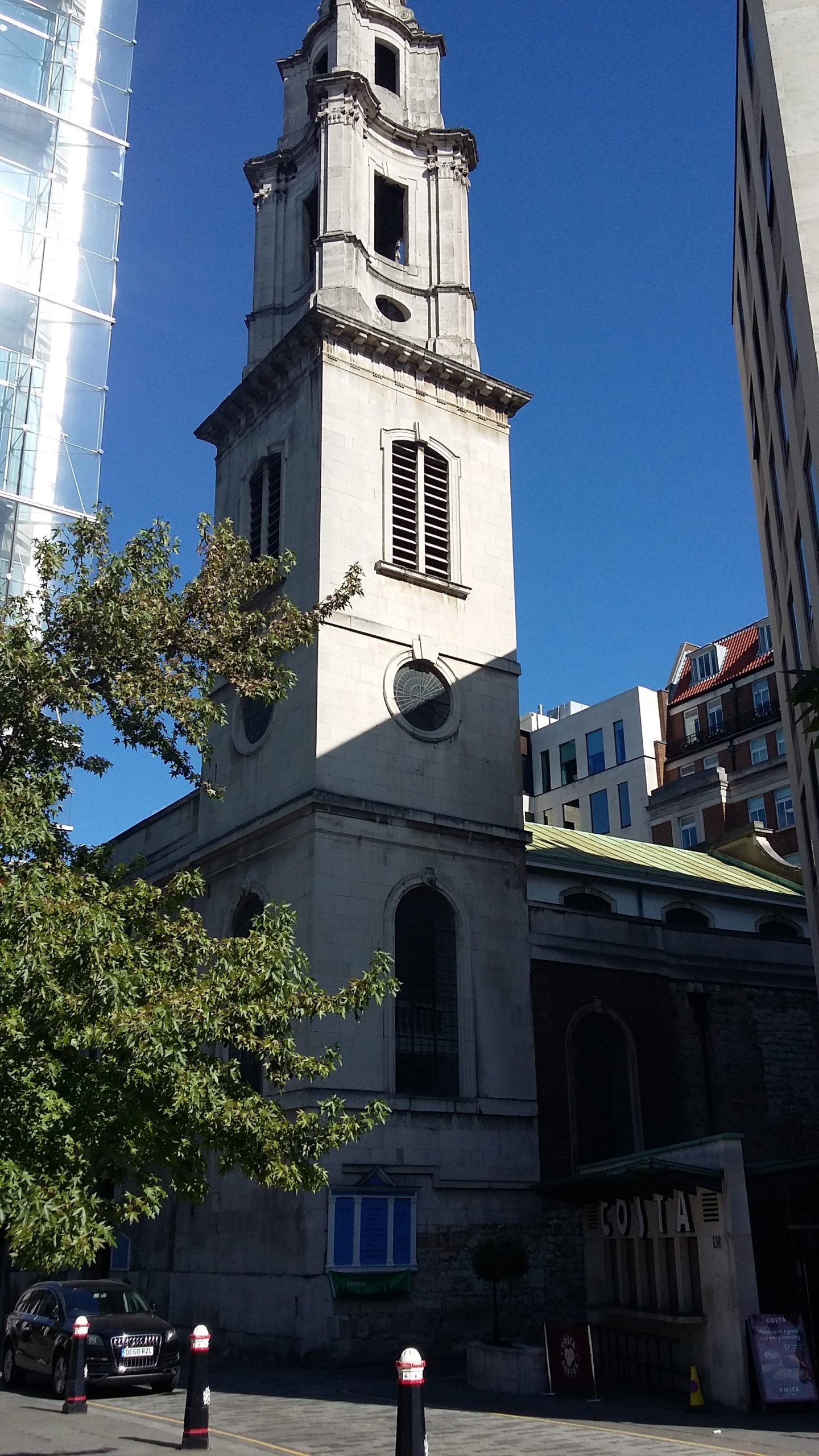
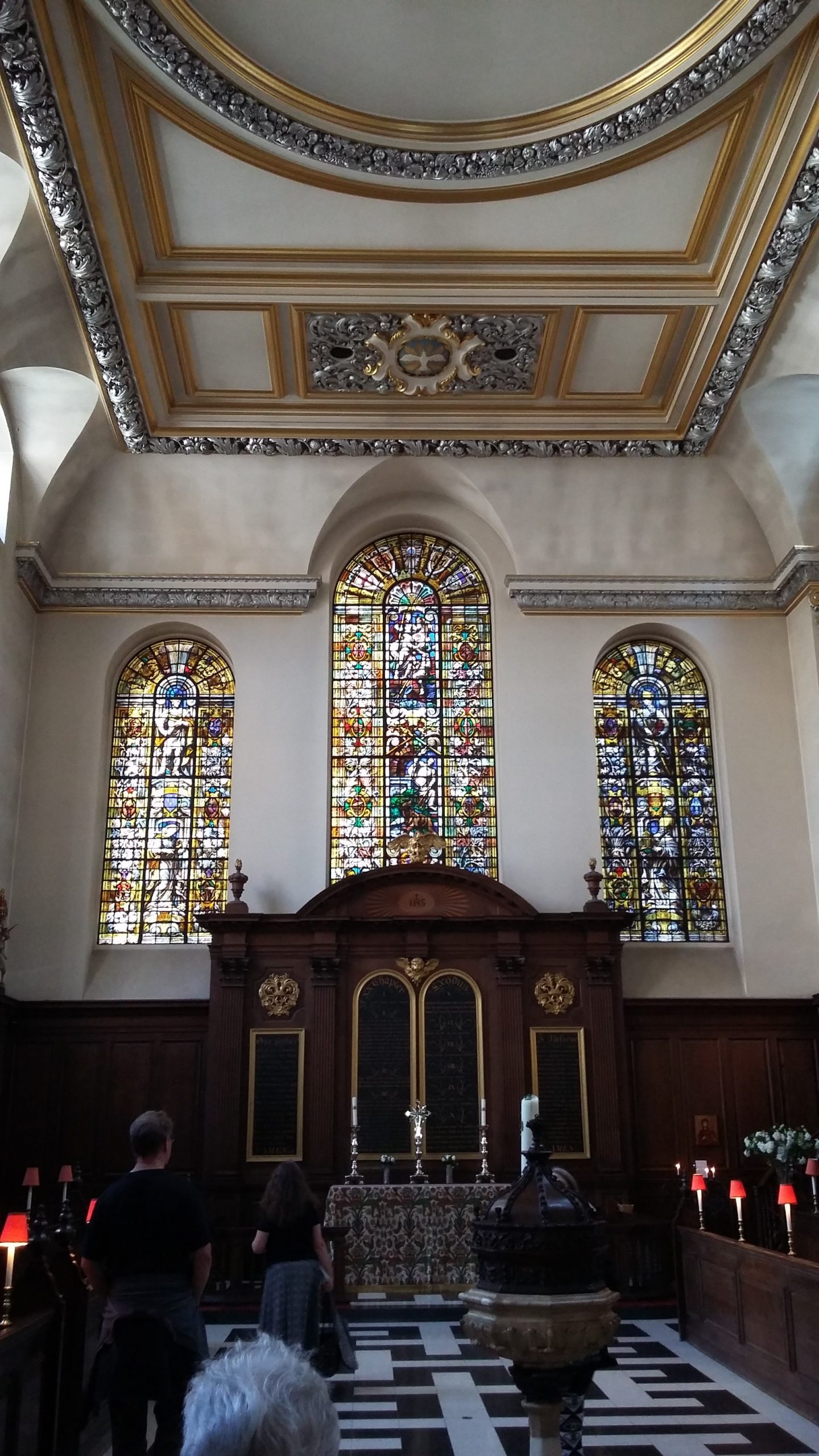
Something else I did during Open House London was visit a number of churches in the City of London. They were all built or rebuilt after the Great Fire of London, and all of them are of historical significance. Open House London was a chance to explore them in more detail.
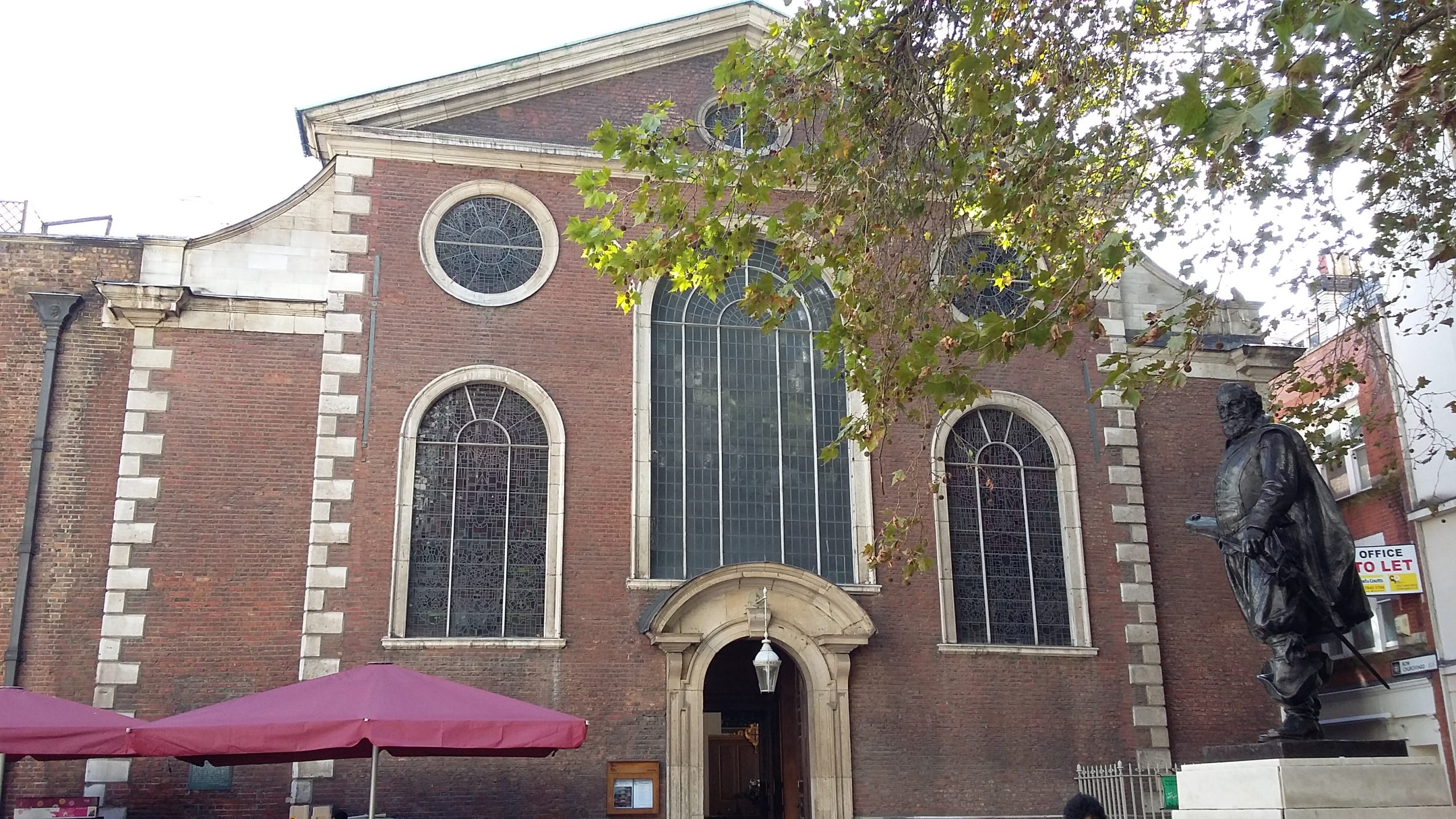
St Mary-le-Bow Possibly the most famous church in London, as according to tradition, a true Cockney must be born within earshot of the sound of Bow Bells, St Mary-le-Bow on Cheapside was rebuilt after the Great Fire of London by Sir Christopher Wren, although a church has existed on the site since Saxon times. Destroyed in the London Tornado of 1091, it was rebuilt during the reign of Henry II and was famous for its arches, or “bows”, of stone. Much of the church was destroyed by a German bomb during the Blitz, and was restored under the direction of Laurence King. Today, St Mary-le-Bow is a Grade I listed building. A statue of Captain John Smith of Jamestown, founder of Virginia, stands outside: he was once a parishioner of the church. Inside, there is a memorial to members of the Norwegian resistance who died during World War II.
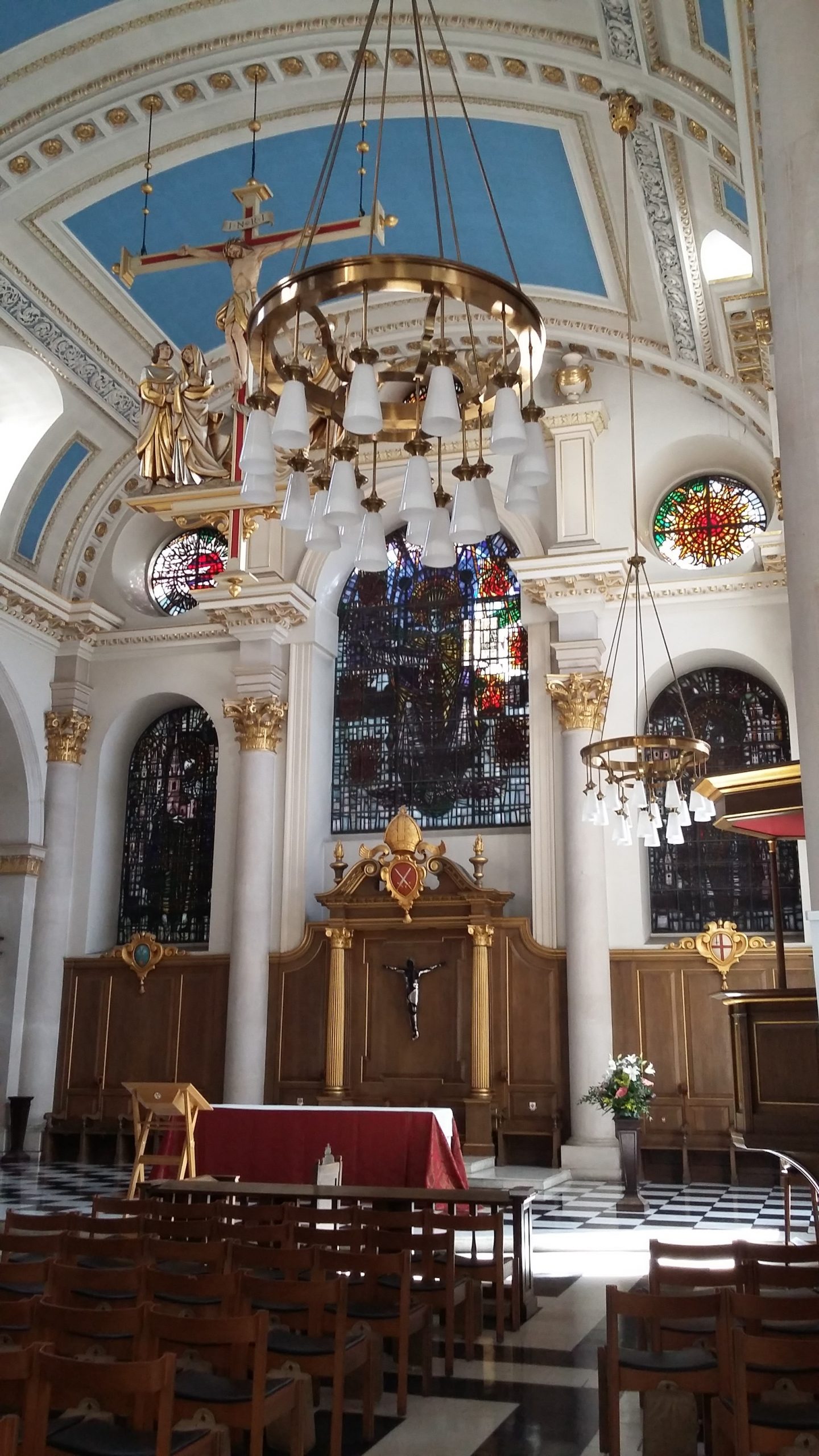
St Mary Aldermary This Guild church sits on Watling Street at the junction with Bow Lane. Originally a medieval church, it was rebuilt from 1510 and again after suffering damage during the Great Fire of London. Unusually for Wren’s churches, it is in the Gothic style. It has been the Regimental Church of the Royal Tank Regiment since 2007. I found this church particularly welcoming: it has a café, open to all, and hosts conferences, meditation sessions and discussion groups.
St Stephen Walbrook Of all the churches I visited, St Stephen Walbrook has perhaps the most interesting history. The original church stood on the east bank of the Walbrook, supposedly directly over the remains of a Roman Mithraic Temple, but was moved to its present site on the other side of Walbrook Street in the 15th century. Destroyed, like so many others, in the Great Fire, it was rebuilt to Sir Christopher Wren’s design. In 1987, an altar by the sculptor Henry Moore was installed. The dramatist and architect John Vanbrugh is buried here.
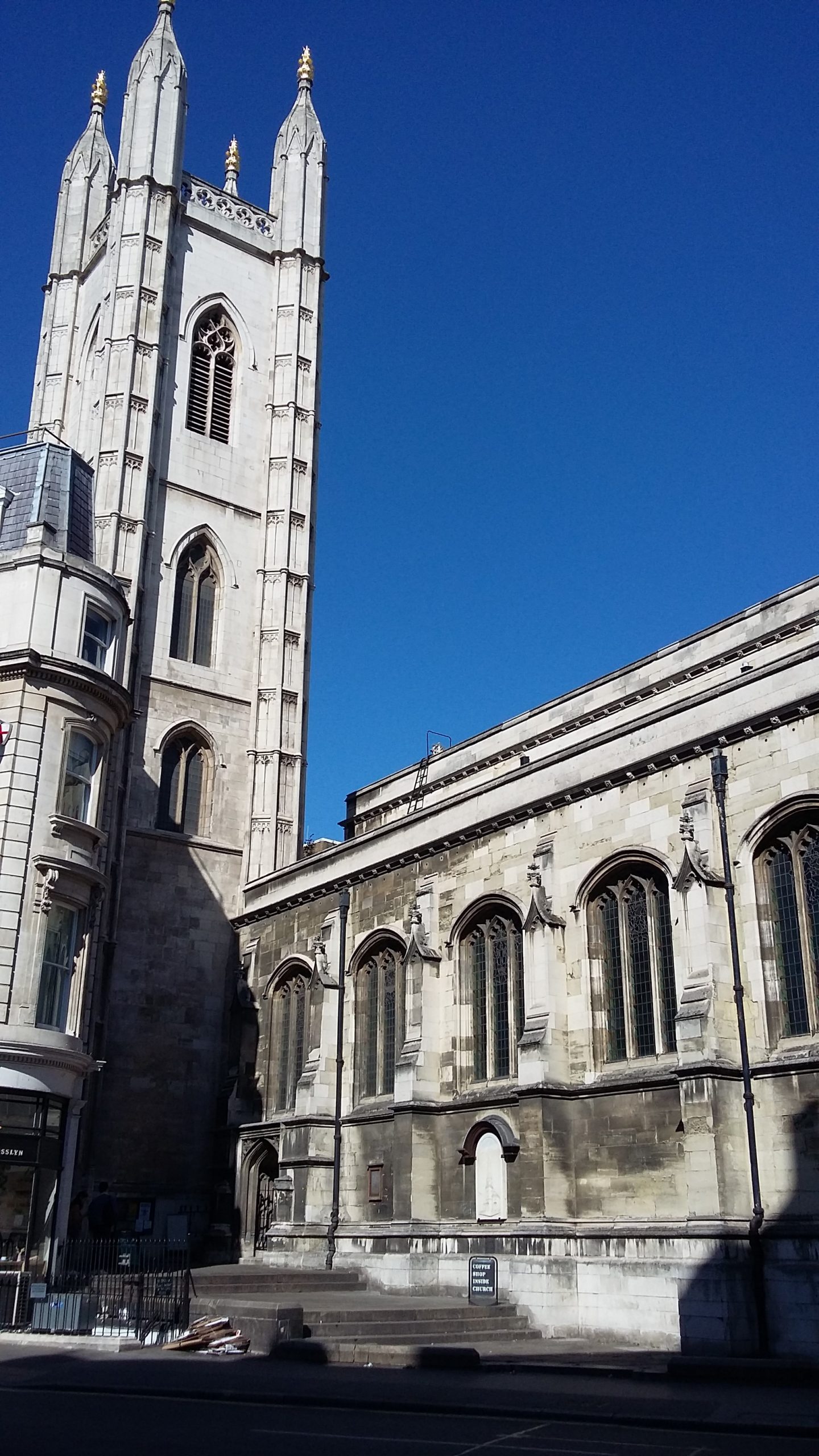
St Vedast St Vedast, also known as Saint Vedast Foster Lane or Saint Vedast-alias-Foster, so-called because of its location in Foster Lane, was founded before 1308 and repaired by 1662; unfortunately, it was badly damaged in the Great Fire four years later. Rebuilt by the office of Sir Christopher Wren, the new church incorporated aspects of the medieval framework. The spire, possibly designed by Nicholas Hawksmoor, was added in 1709-12. Gutted during the Blitz, the church was restored by Stephen Dykes Bower.
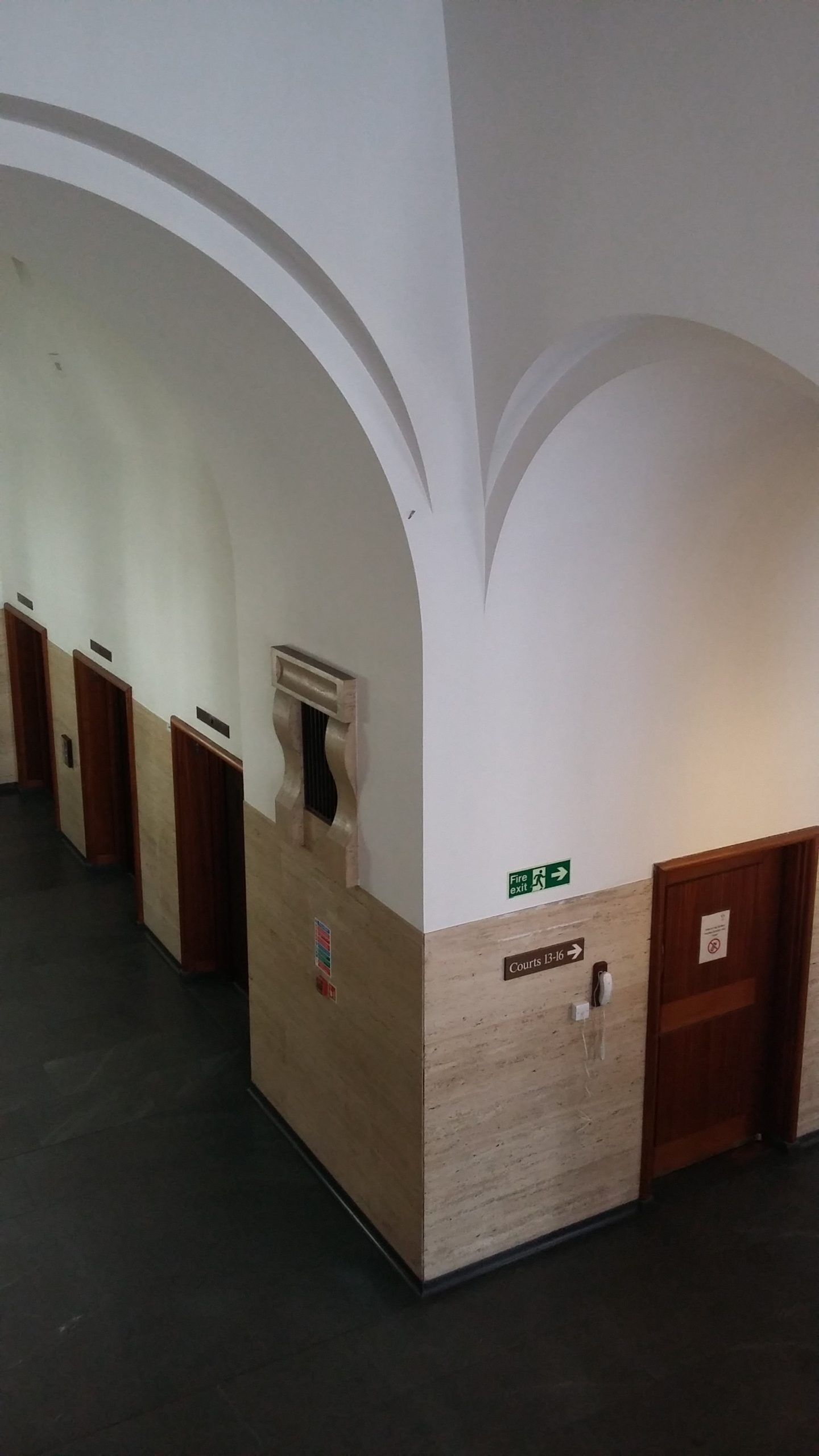
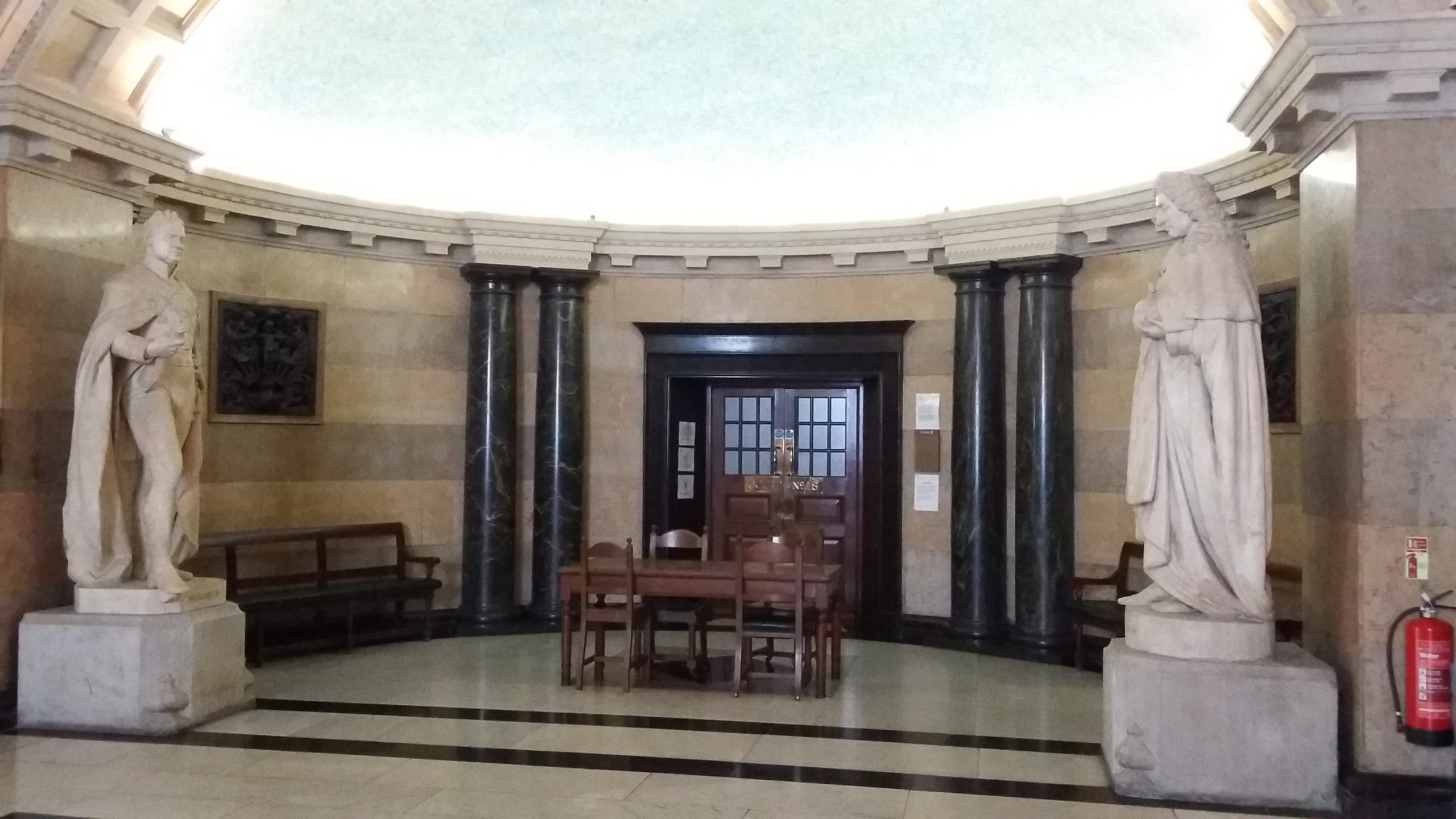
I was thrilled to get the chance to tour the Old Bailey, officially known as the Central Criminal Court, as part of Open House London. This imposing building is recognisable internationally by name, and it and its site is full of history.
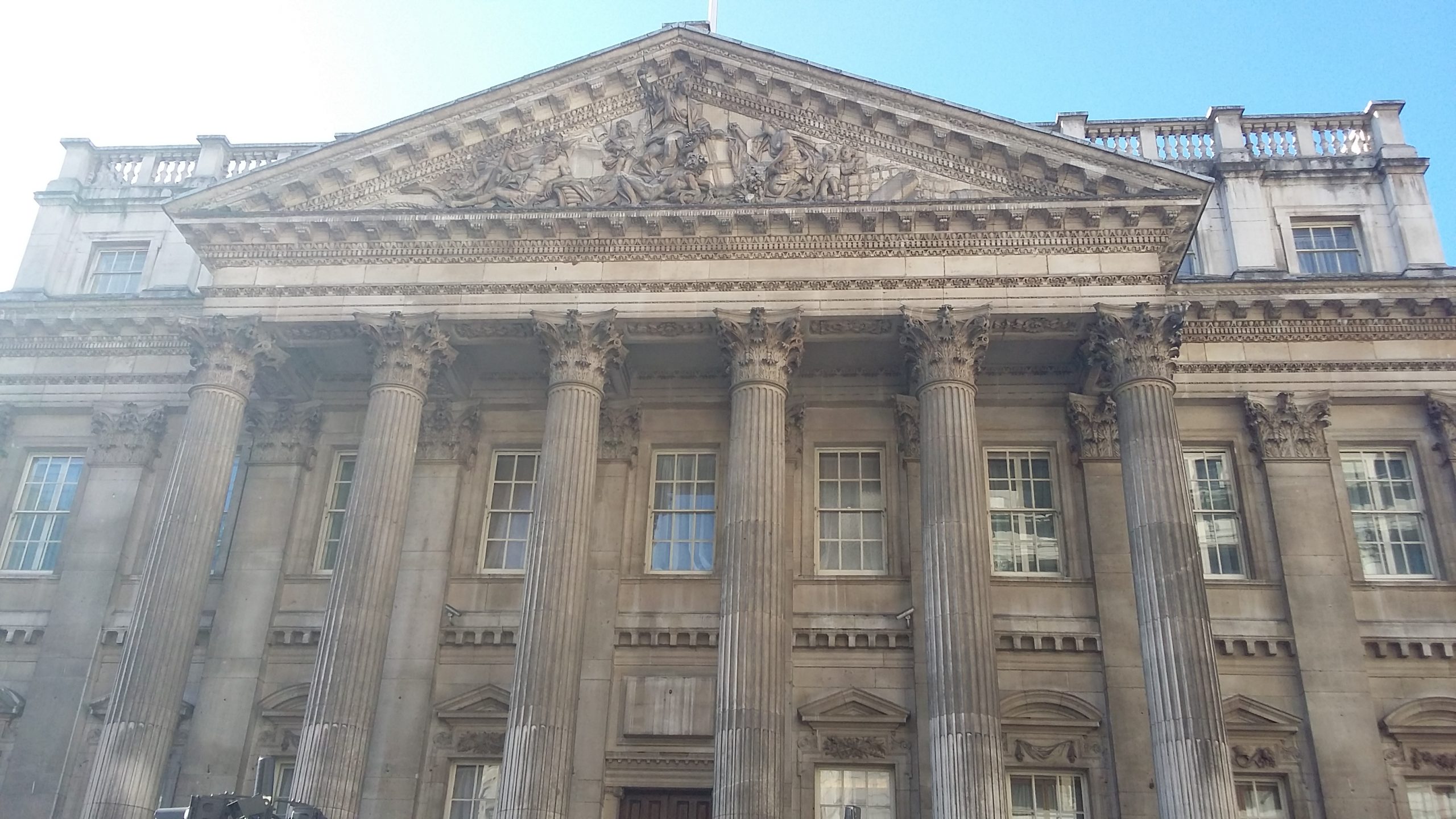
The building’s full name is the Central Criminal Court of England and Wales, but it is usually referred to as the Old Bailey, after the street on which it stands. It has been housed on the same site since the sixteenth century, and was formerly attached to the infamous Newgate gaol, which was demolished in 1904; an extension South Block was later constructed over the site.
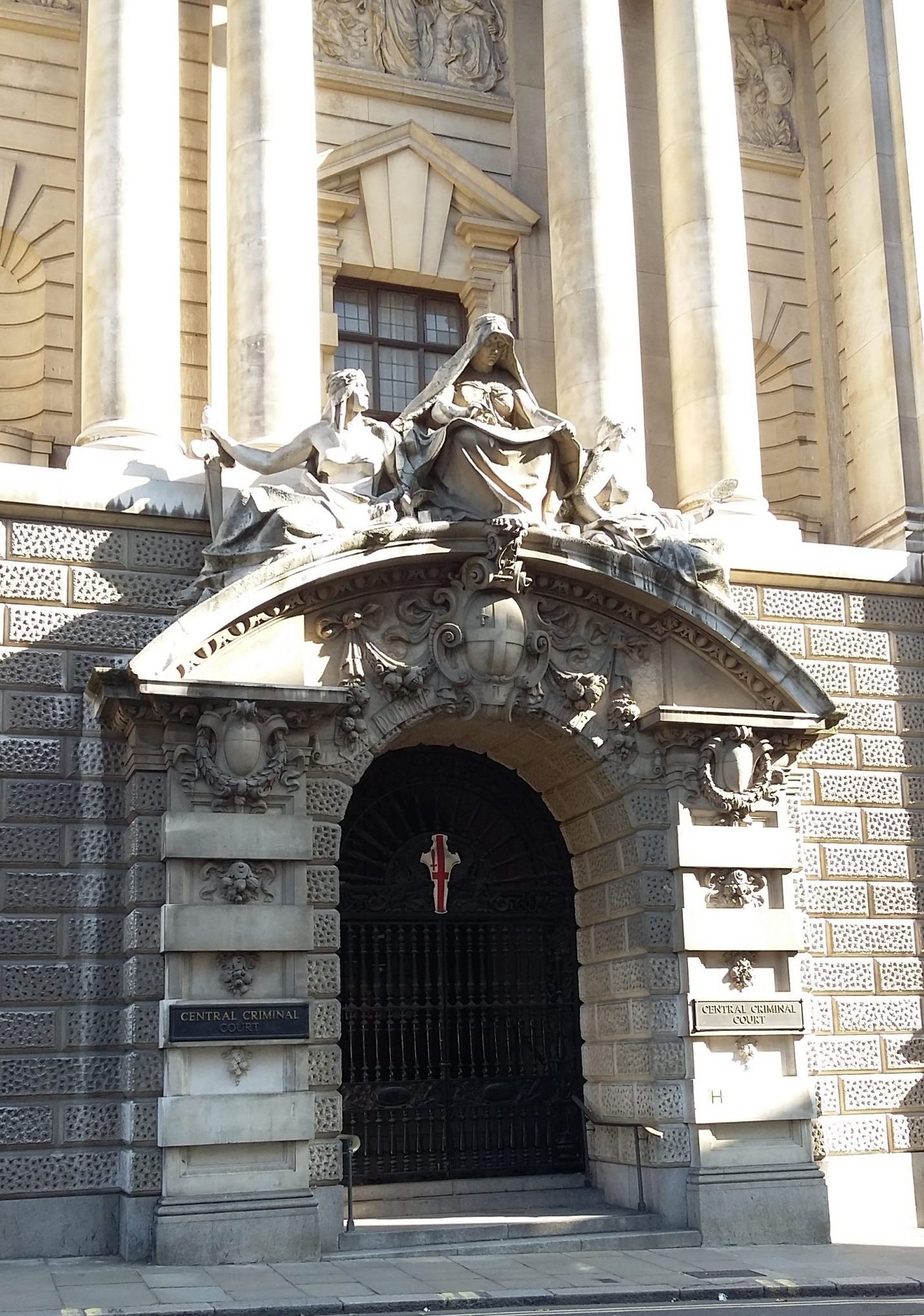
Entrance to the Old Bailey
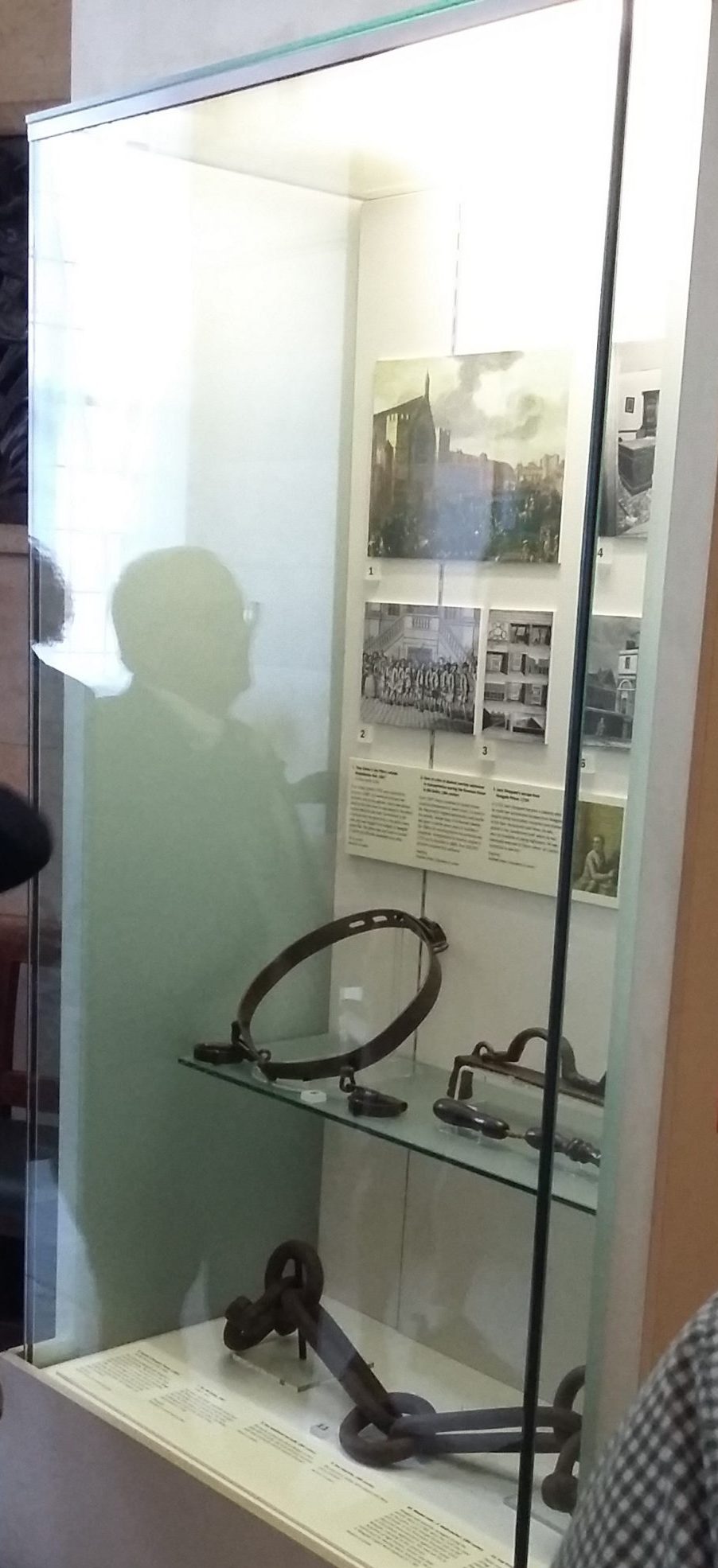
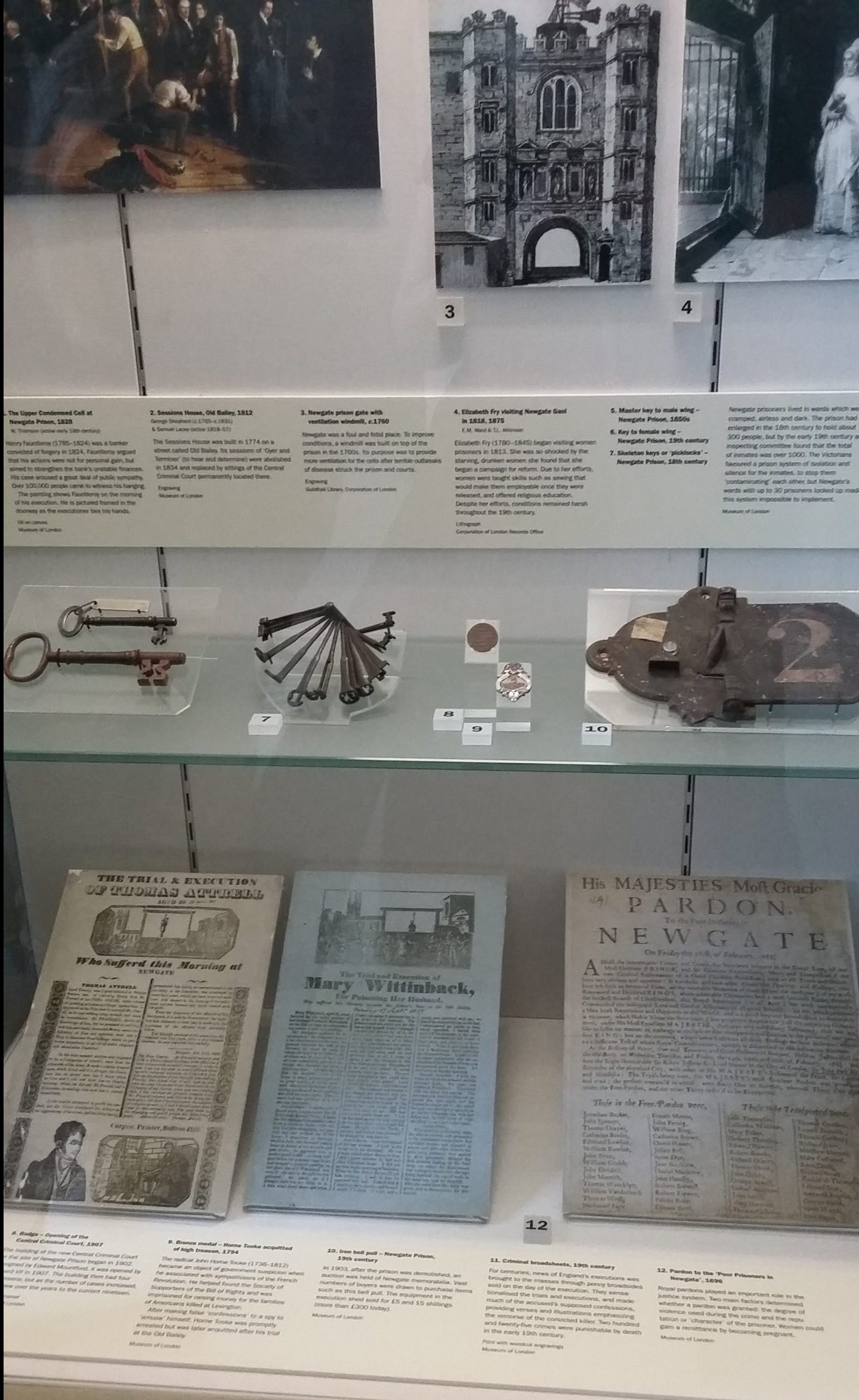
Newgate The prison, the name of which will be familiar to many thanks to history, literature and film, was established in the twelfth century and remained in use right up until the beginning of the twentieth. It was reconstructed and rebuilt several times in its history, notably after the Great Fire of London, when it was rebuilt by Sir Christopher Wren; considerable repairs also needed to be carried out after the Gordon Riots of 1780 (described in Dickens’ Barnaby Rudge). Conditions at the prison were often poor, with inmates crowded together in unhygienic conditions with little food. Towards the end of the eighteenth century, executions took place here after the closure of the Tyburn gallows; at first they took place outside the prison in front of crowds, until 1868 when they were moved inside. Today, the Old Bailey has a display of artefacts from Newgate, including items such as manacles.
Assorted artefacts from Newgate
The Old Bailey The Court was originally the sessions house of the Lord Mayor and Sheriffs of the City of London and of Middlesex. It also held trials, similar to the Courts of Assize which travelled throughout England and Wales. The first mention of the medieval court was in 1585; it was destroyed in the Great Fire of London in 1666 and rebuilt in 1674.
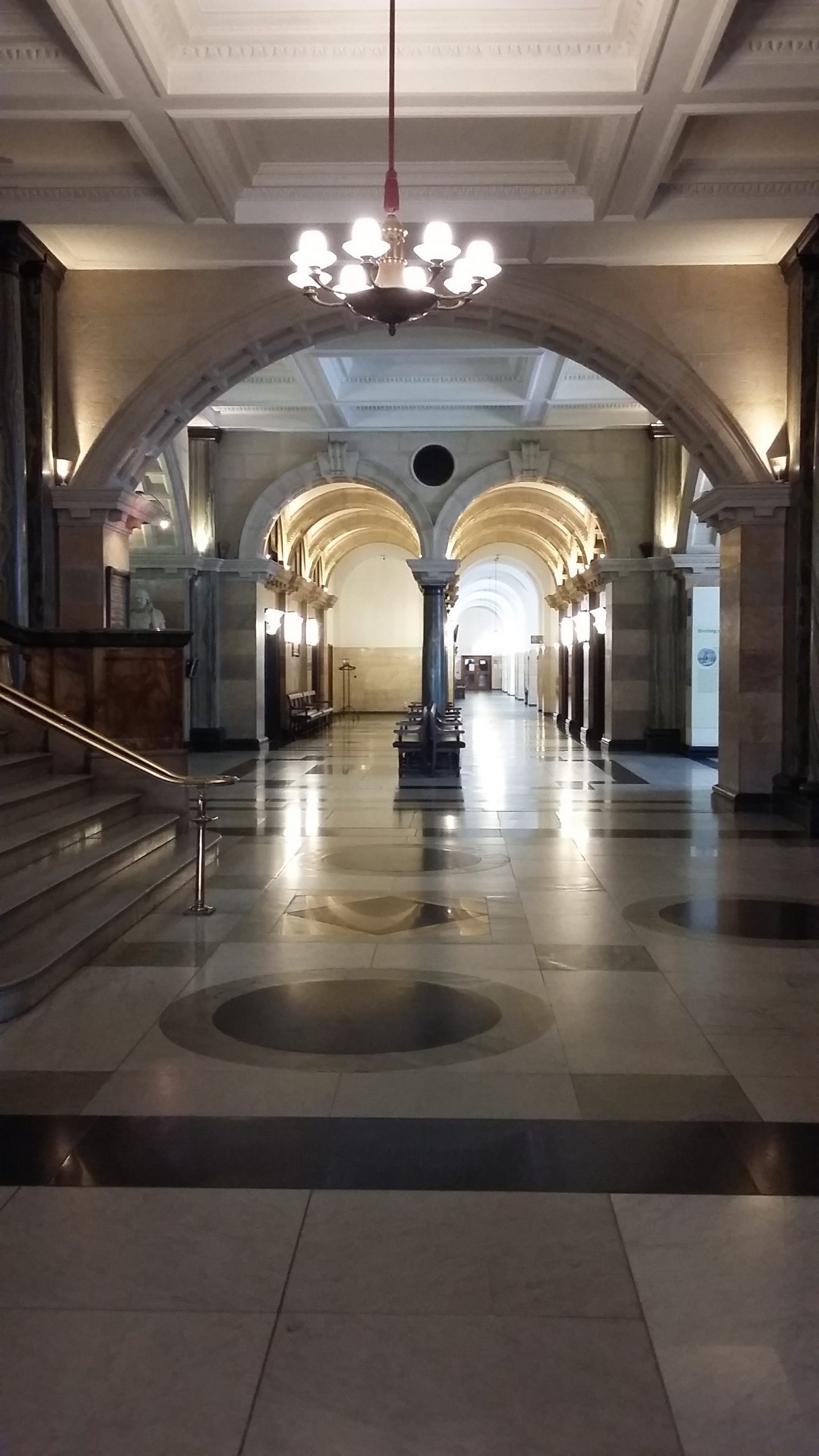
Ground floor
It was renamed the Central Criminal Court in 1834 and its jurisdiction grew to encompass major cases throughout England. In 1856, the Central Criminal Court Act was passed to enable high-profile trials to take place here, in part to ensure the fairness of trials concerning well-known figures who might experience prejudice (either for or against) in their local area.
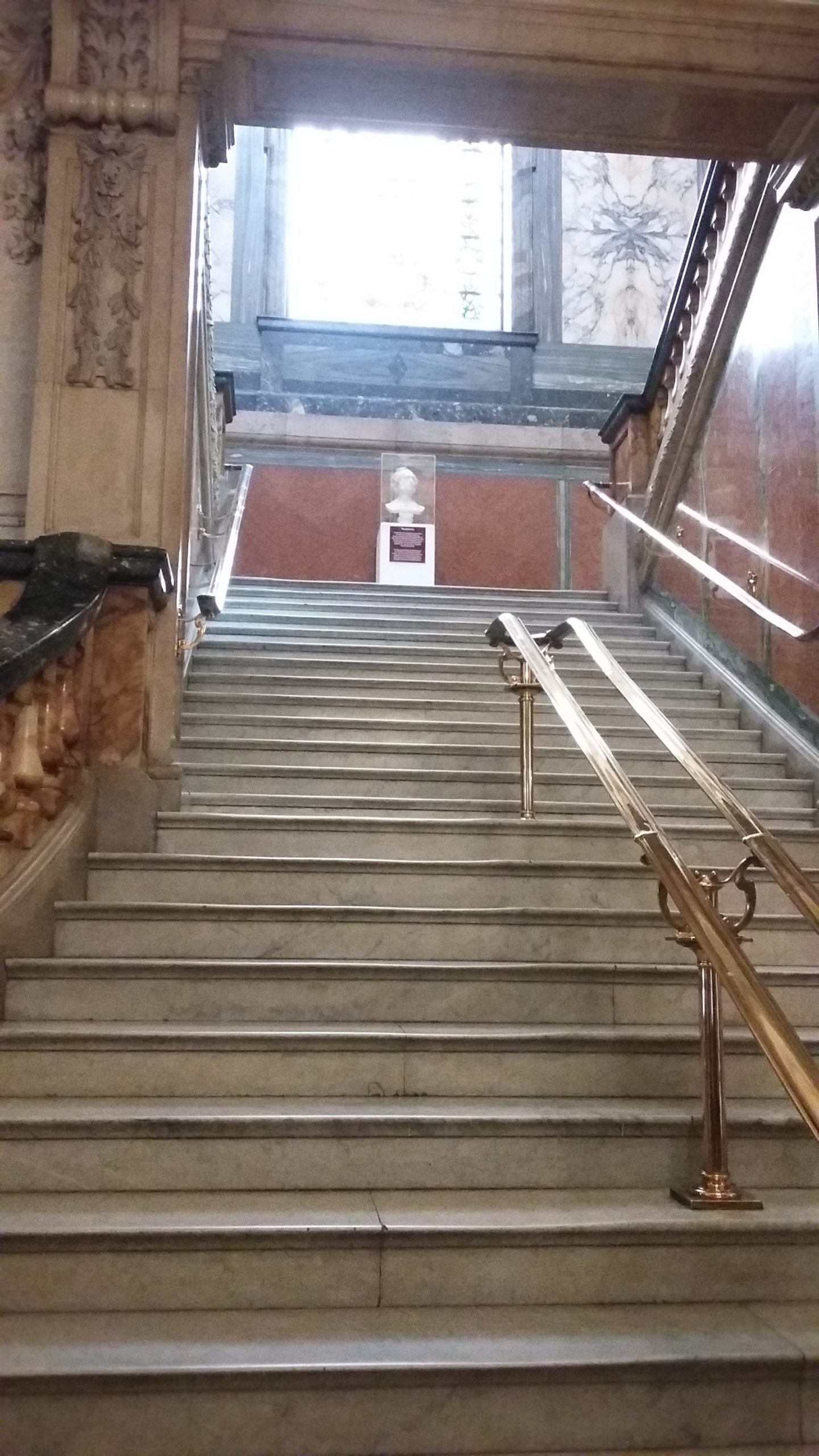
Main staircase
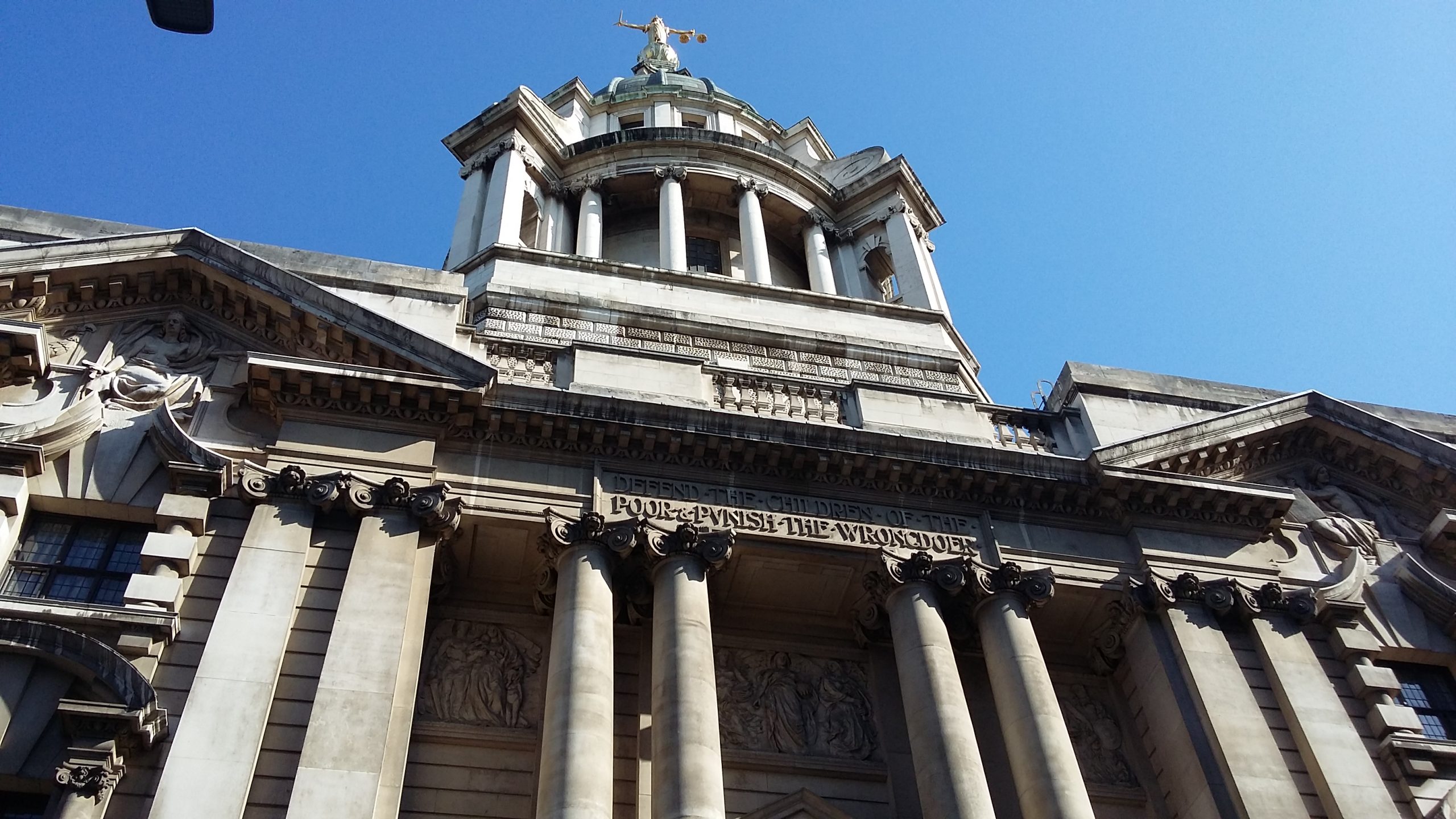
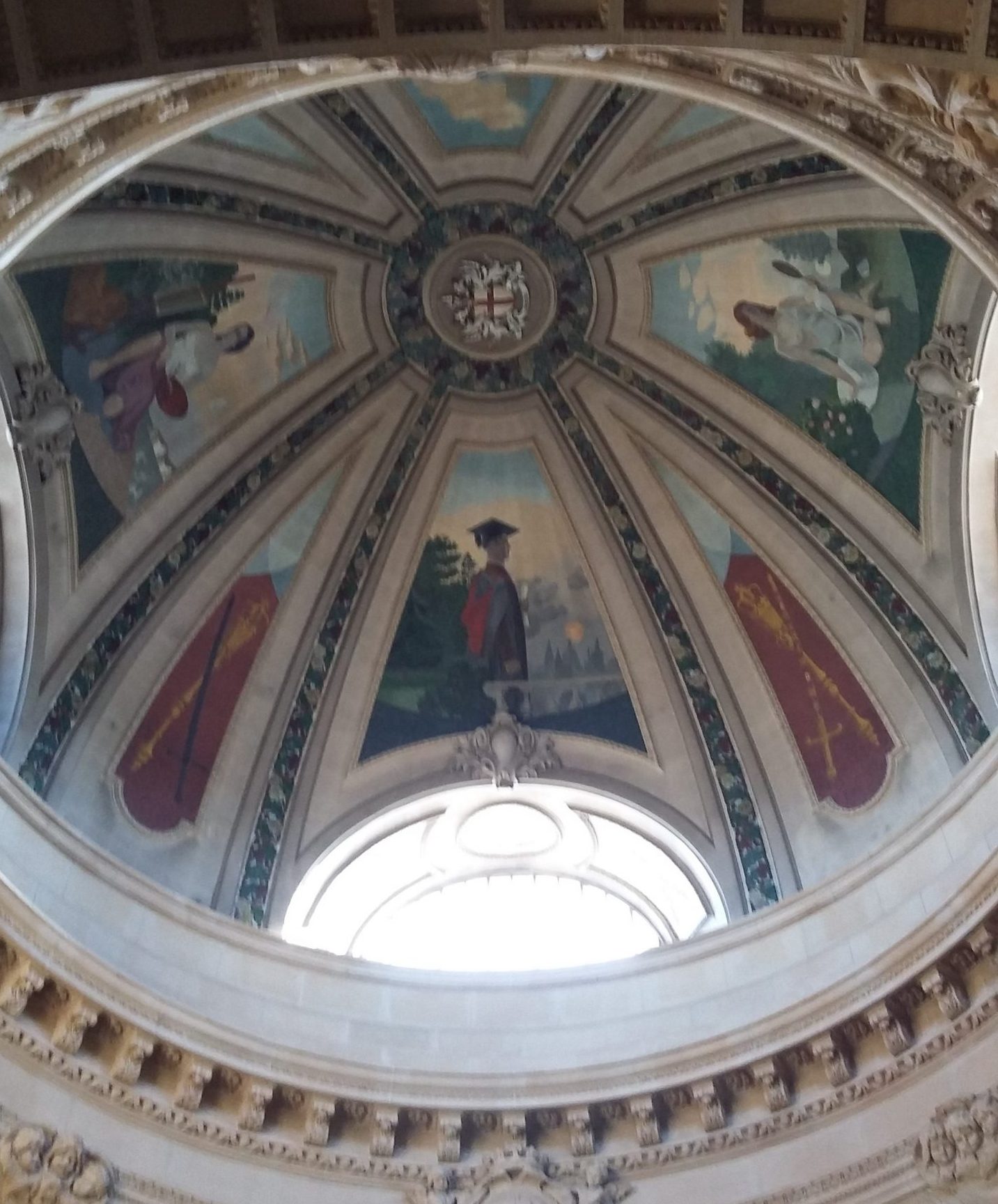
The Present Building The building which stands today dates from 1902, was designed by E. W. Mountford, and was officially opened in 1907. The phrase “Defend the Children of the Poor & Punish the Wrongdoer” can be seen above the main entrance. On the dome above the court, F. W. Pomeroy’s statue of Lady Justice can be seen, with a sword in her right hand and the scales of justice in her left.
The dome
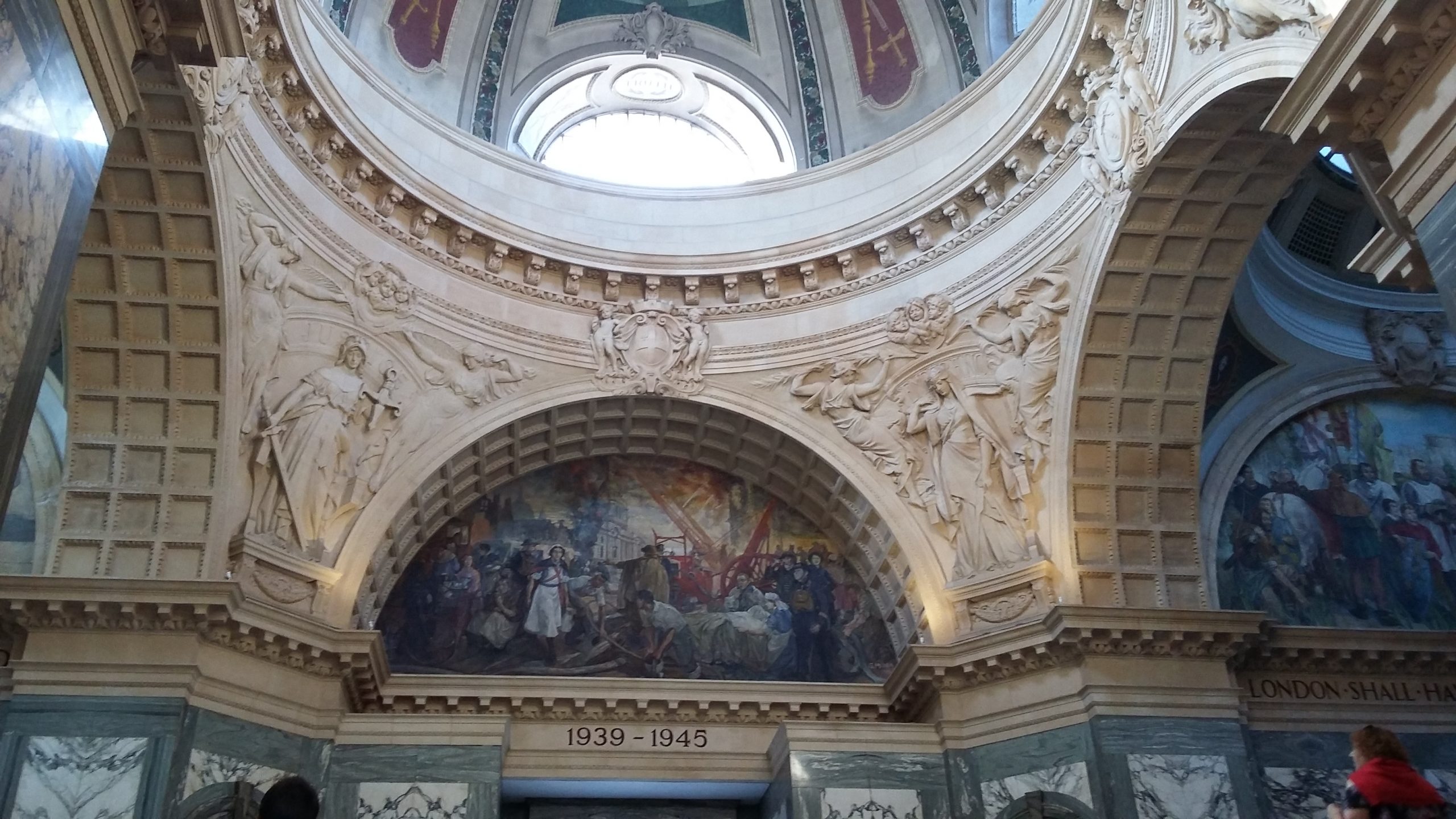
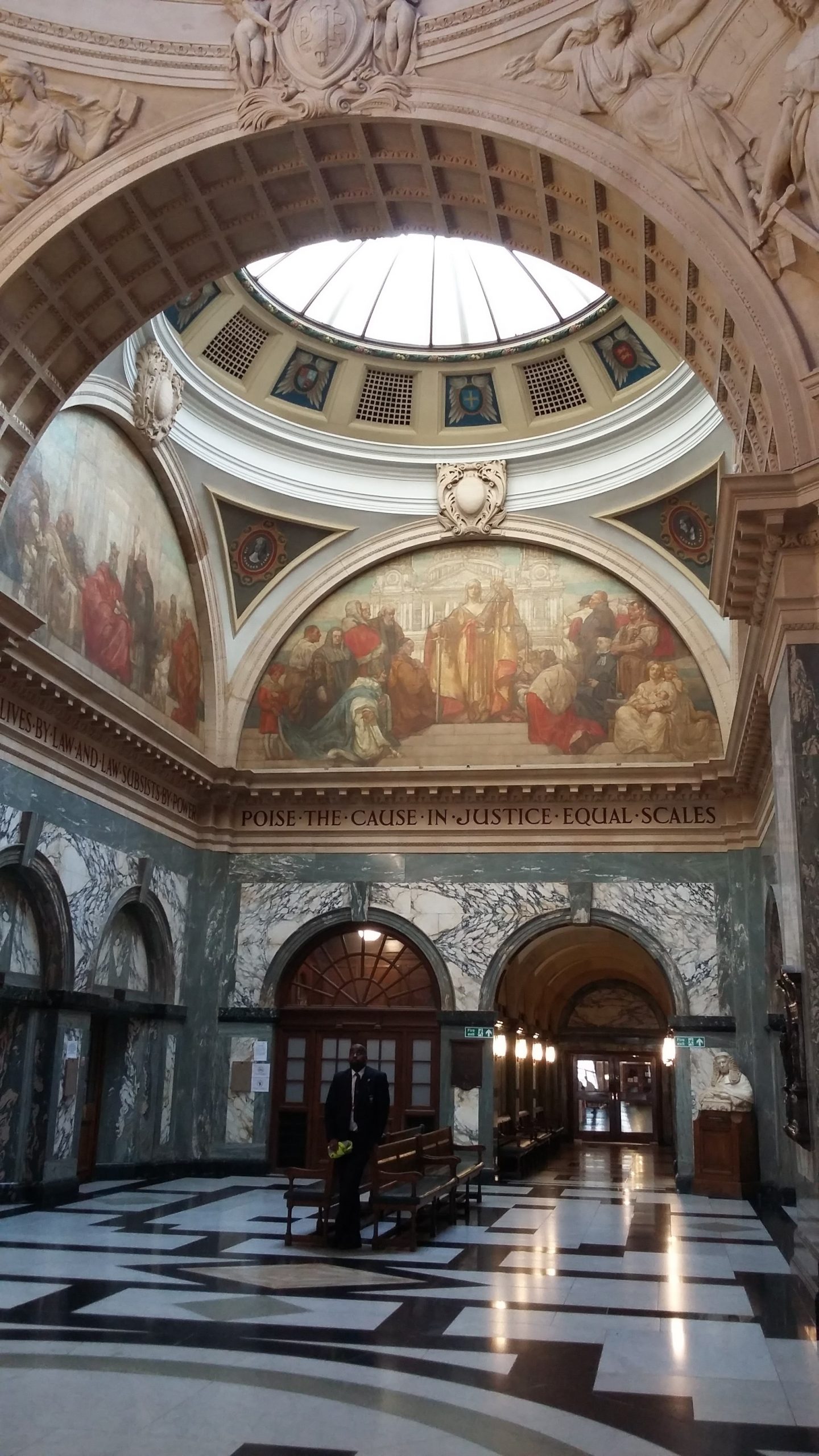
The Old Bailey was bombed during the Blitz, but reconstructed in the 1950s. The Grand or Great Hall commemorates this period of history with paintings of the Blitz, as well as images of St Paul’s and written axioms, some taken from the Bible.
Images of the BlitzThe Great Hall
In 1973, the Belfast Brigade of the Provisional IRA exploded a car bomb in the street outside the Old Bailey, injuring 200 people and killing one. You can still view a shard of glass, embedded in the wall at the top of the main stairs, which has been preserved as a reminder.
The shard of glass from the 1973 bombing
We got to stand in the courtrooms, which was a strange experience, knowing how many high-profile and notorious trials have been held here. Overall the Old Bailey is a fascinating place, and I feel lucky to have had the chance to visit.
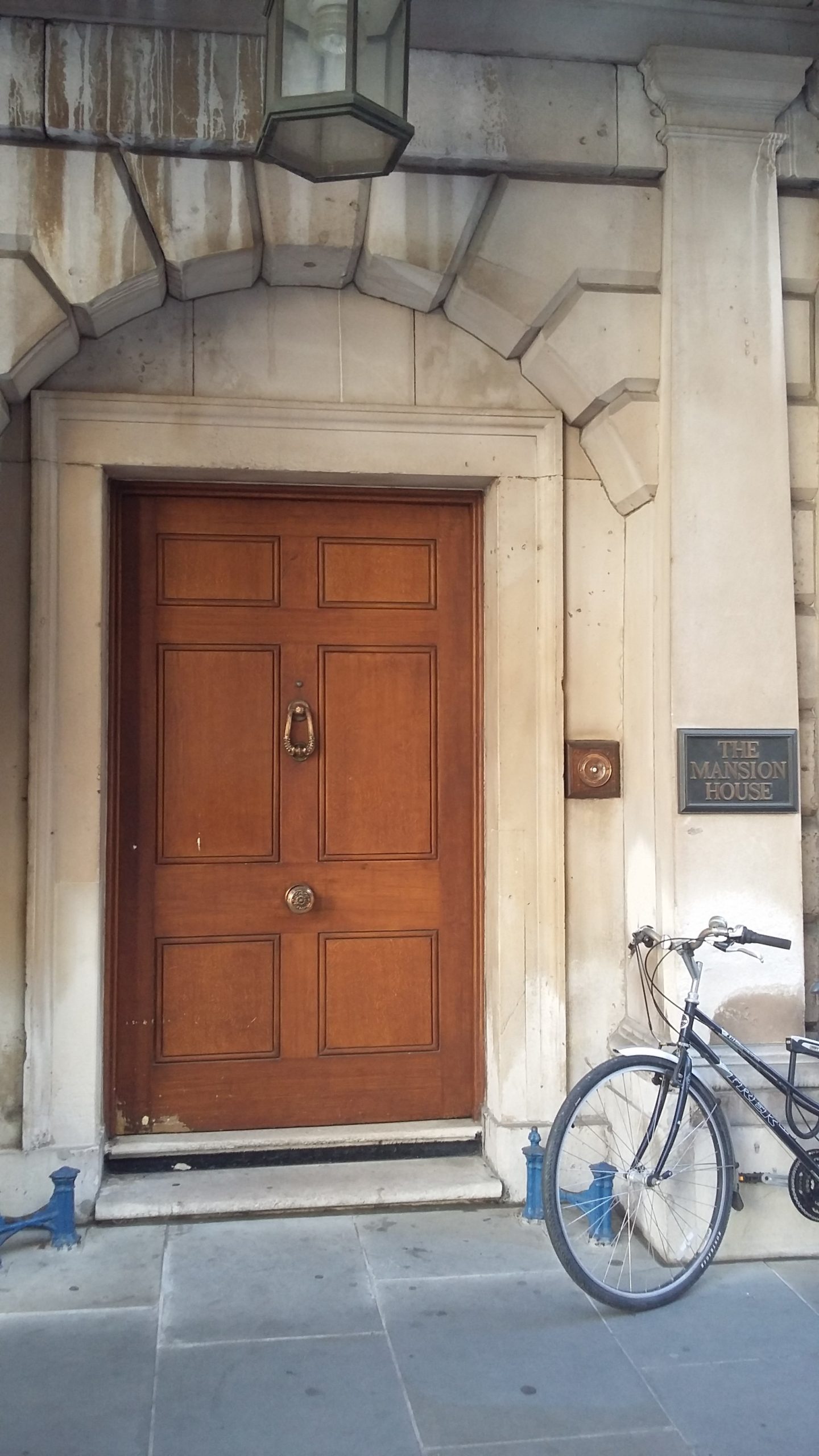
Every year, for as long as I can remember, Open House London has offered tours of Mansion House, the official residence of the Lord Mayor of London. Every year I’ve tried and failed to get a ticket – until now. I arrived on Saturday morning in great anticipation, looking forward to my tour. Sadly, but understandably, photography is not permitted inside, but please enjoy the image of the outside of the building that I managed to capture in the sunshine.
Mansion House was built in the Palladian style by Charles Dance between 1739 and 1752, but it has undergone some changes since then: traffic now runs past the front of the building, most of the original staircase having been removed to facilitate this. The entrance we used was originally designed as stables (but never used for that purpose), and later became servants quarters. One of the most interesting items in Mansion House can be seen here: the imposing 18th-century Hallkeeper’s Chair, which has a drawer in the bottom for coal or a hot pan to keep the Hallkeeper warm as he greeted guests outside the House.
The building is home to the Harold Samuel Collection of Dutch and Flemish Seventeenth Century Paintings, which is impressive, as are the magnificent rooms, which are still used for receptions, particularly the stunning Egyptian Hall – though this latter is somewhat misnamed as the decorations are largely Roman in style. On a smaller scale, the Drawing Rooms host the Nile Suite (furniture designed to commemorate Nelson’s naval victory), and the Long Parlour is decorated in a manner recalling its 18th-century heyday. The main hall used to be a courtyard, but it was soon realised that what worked well in sunny Italy was less practical in rainy England, and the courtyard was closed in. Today this area is known as the Salon and is home to magnificent chandeliers, which are regularly cleaned to maintain their sparkle: an arduous task, I would imagine!
During the tour we learned about how Lord Mayors are chosen. There are over one hundred livery companies, which contribute members to the electorate known as Common Hall. Each year, on Michelmas Day (29 September), a new Lord Mayor is elected; in order to stand for election, a would-be Mayor must have formerly served as a Sheriff (two Sheriffs are elected by Common Hall each year on Midsummer’s Day) and be a current Alderman.
I definitely recommend touring Mansion House if you get a chance. Regular tours do take place but they cost money; if you fancy a free tour, Open House London weekend is your best bet.
I had been planning to make a visit to Northampton for two reasons: one to see a friend, and two to see a play. When I realised that my visit would coincide with the annual Heritage Open Days, I decided to make the most of my day and look for a venue to visit.
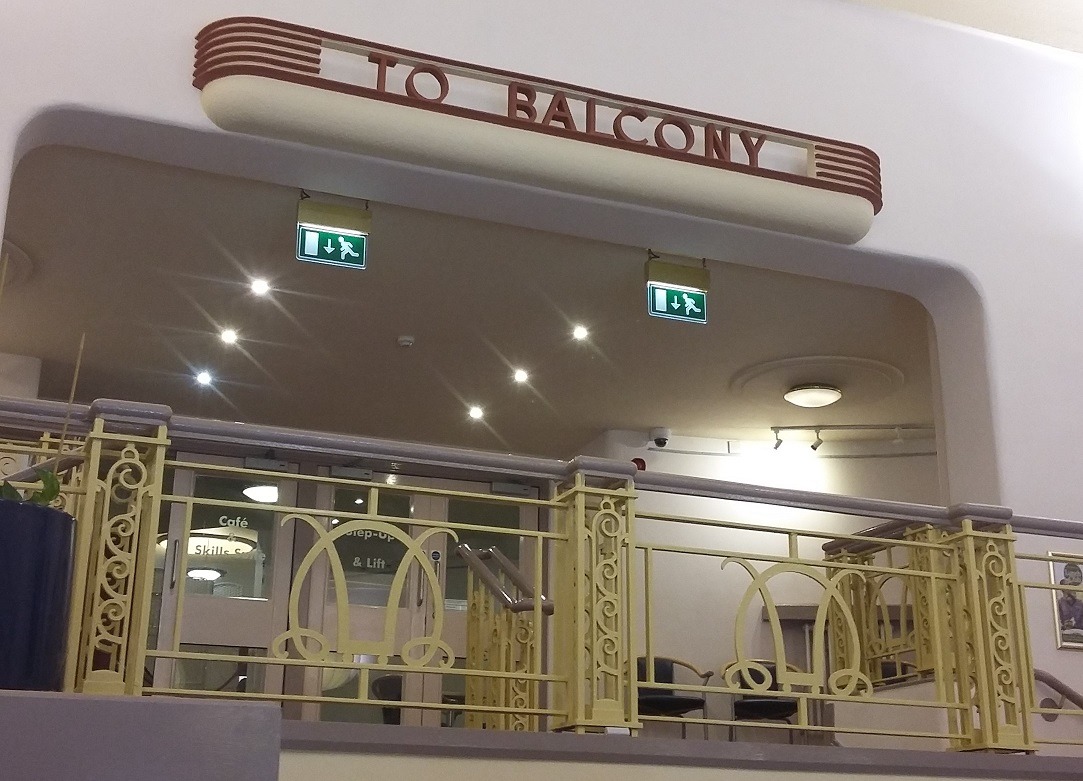
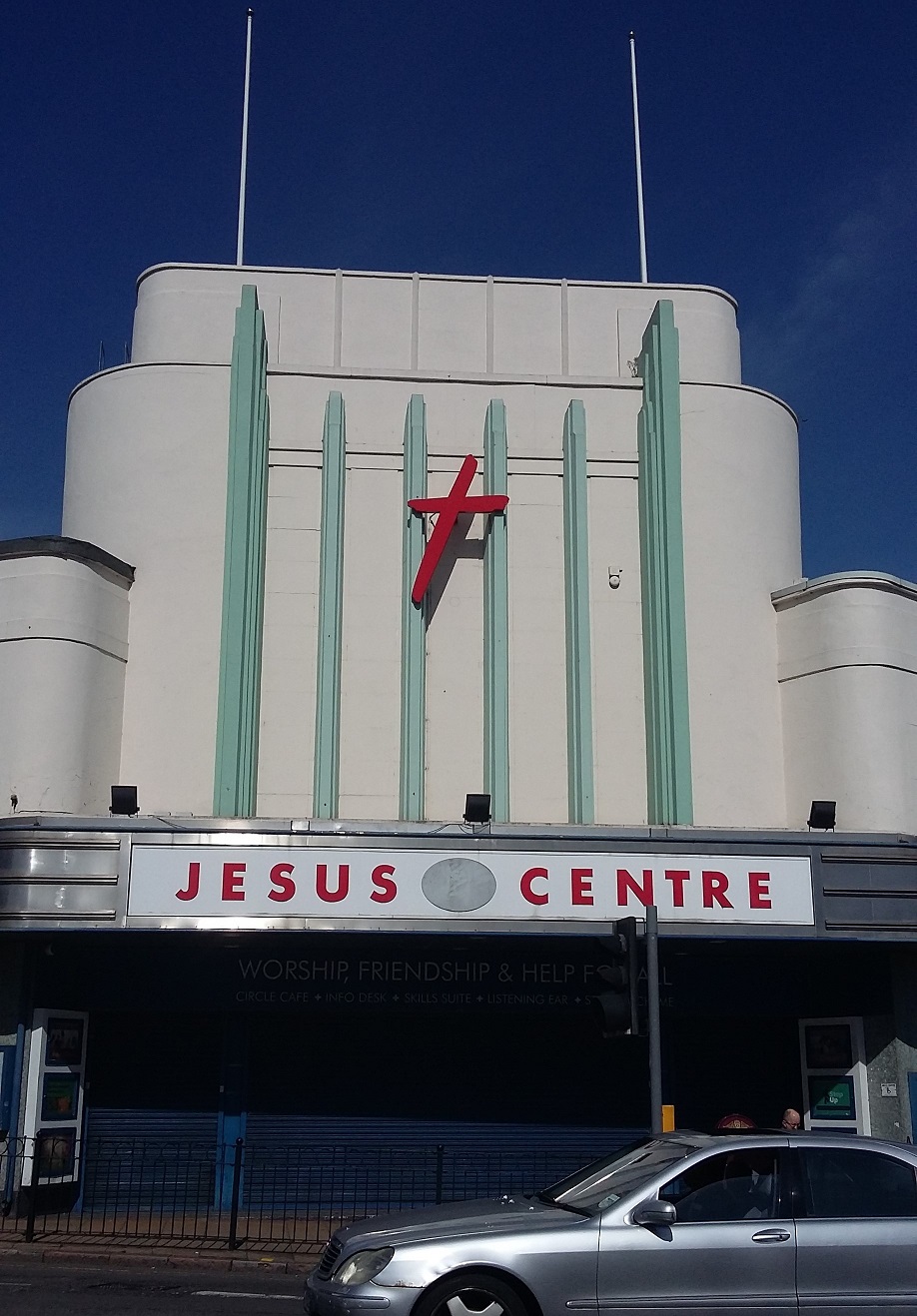
I decided on the Deco Theatre, which is located on Abington Square. Built in 1935-36, it was designed by William Riddell Glenn (1884-1950). It opened as The Savoy on 2 May 1936, as a cinema with an Art Deco auditorium, and originally seated nearly 2,000 people, with an in-house Compton organ which entertained audience during the interludes.
The auditorium today
The cinema closed in 1995, struggling to compete with multiplex cinemas, and was bought by the Jesus Army Charitable Trust (who still use part of the building as the Jesus Centre) in 2000. The Deco (not connected with the Jesus Centre) opened as a local theatre in 2004. Stage Right began running The Deco in 2009, and have gone from strength to strength. Plans are afoot to transform the entrance area and the front of the theatre, removing the cross and replacing it with new signage.
Art Deco-style sign in the foyer
Even though I’m not from the area I always enjoy visiting a theatre wherever I am. The Deco’s history is not uncommon, but still fascinating, and the efforts of those who work there to maintain it as a venue are admirable. I wish the theatre all the best for the future.
When I visited the Horniman Museum, I also visited the exhibition Brick Wonders. Like all special exhibitions at the Horniman, Brick Wonders has an admission price, but I found it to be well worth it.
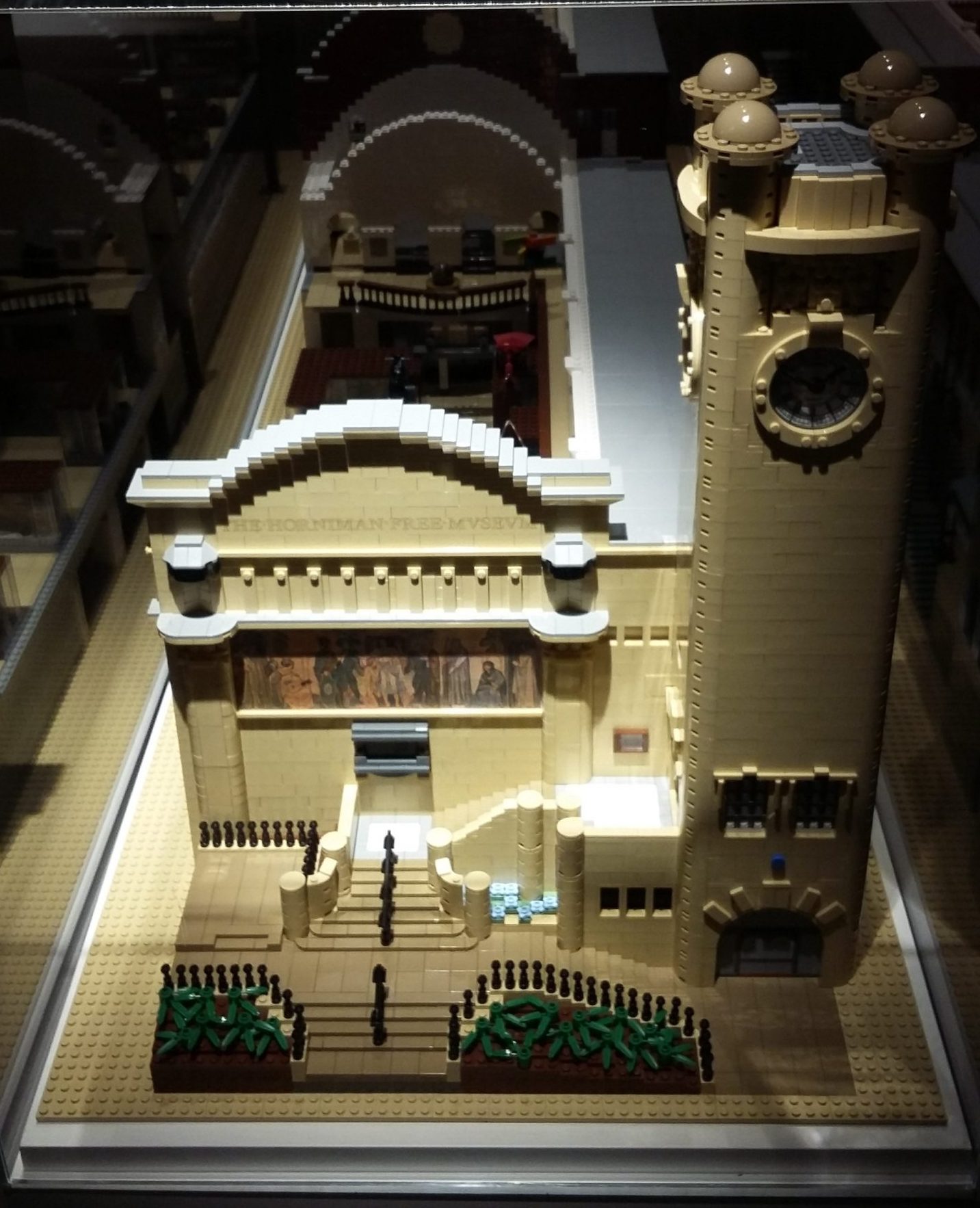
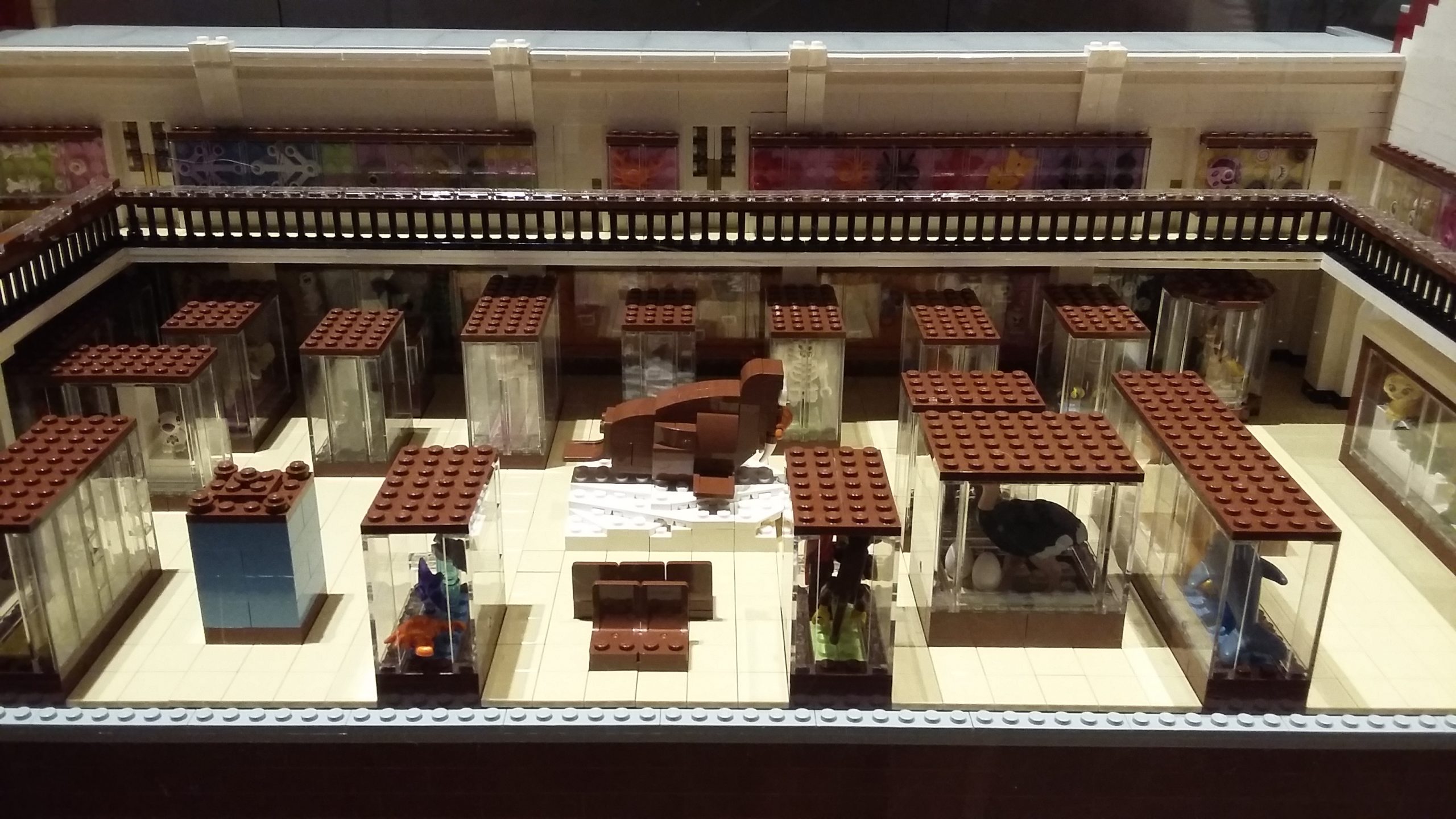
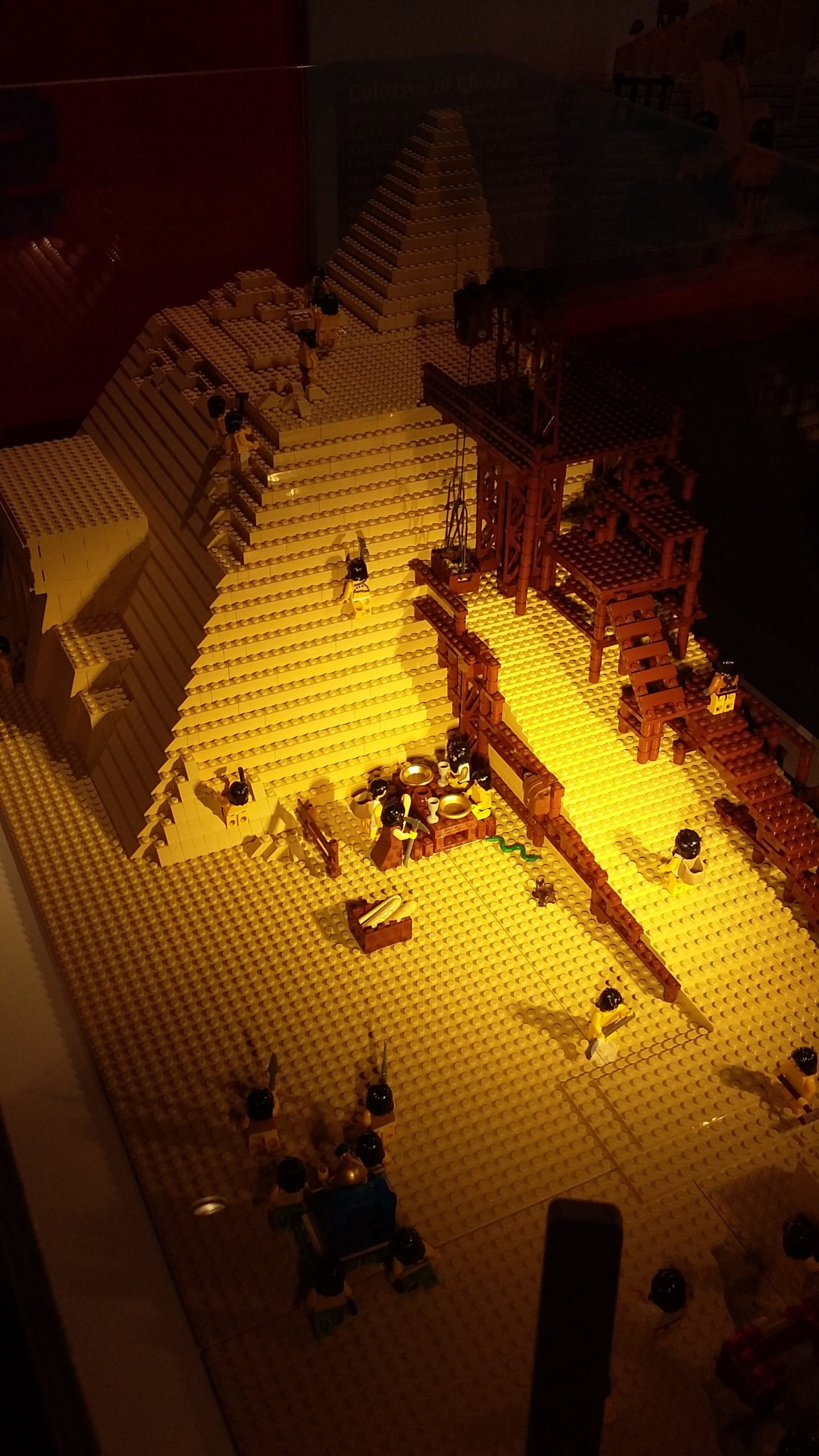
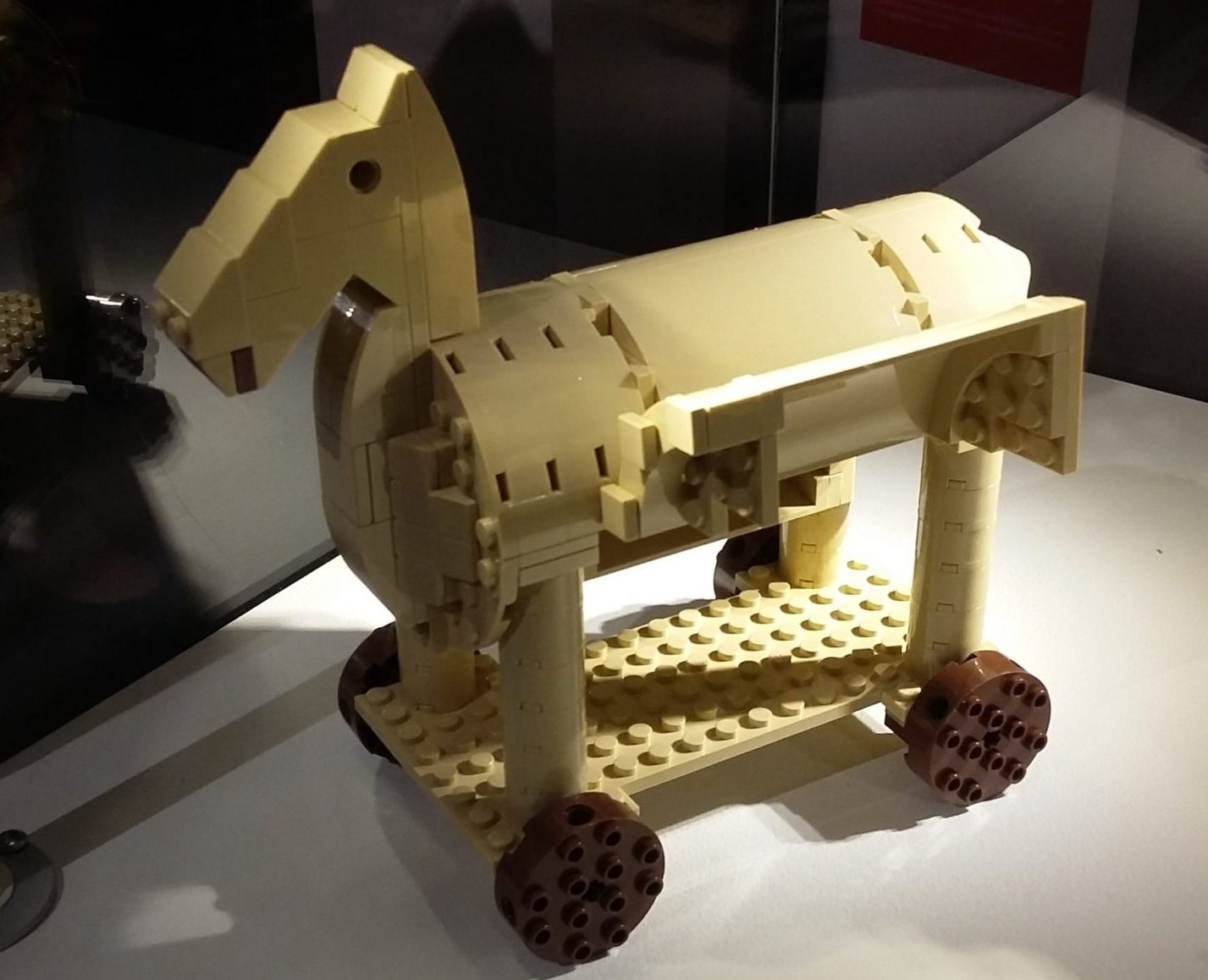
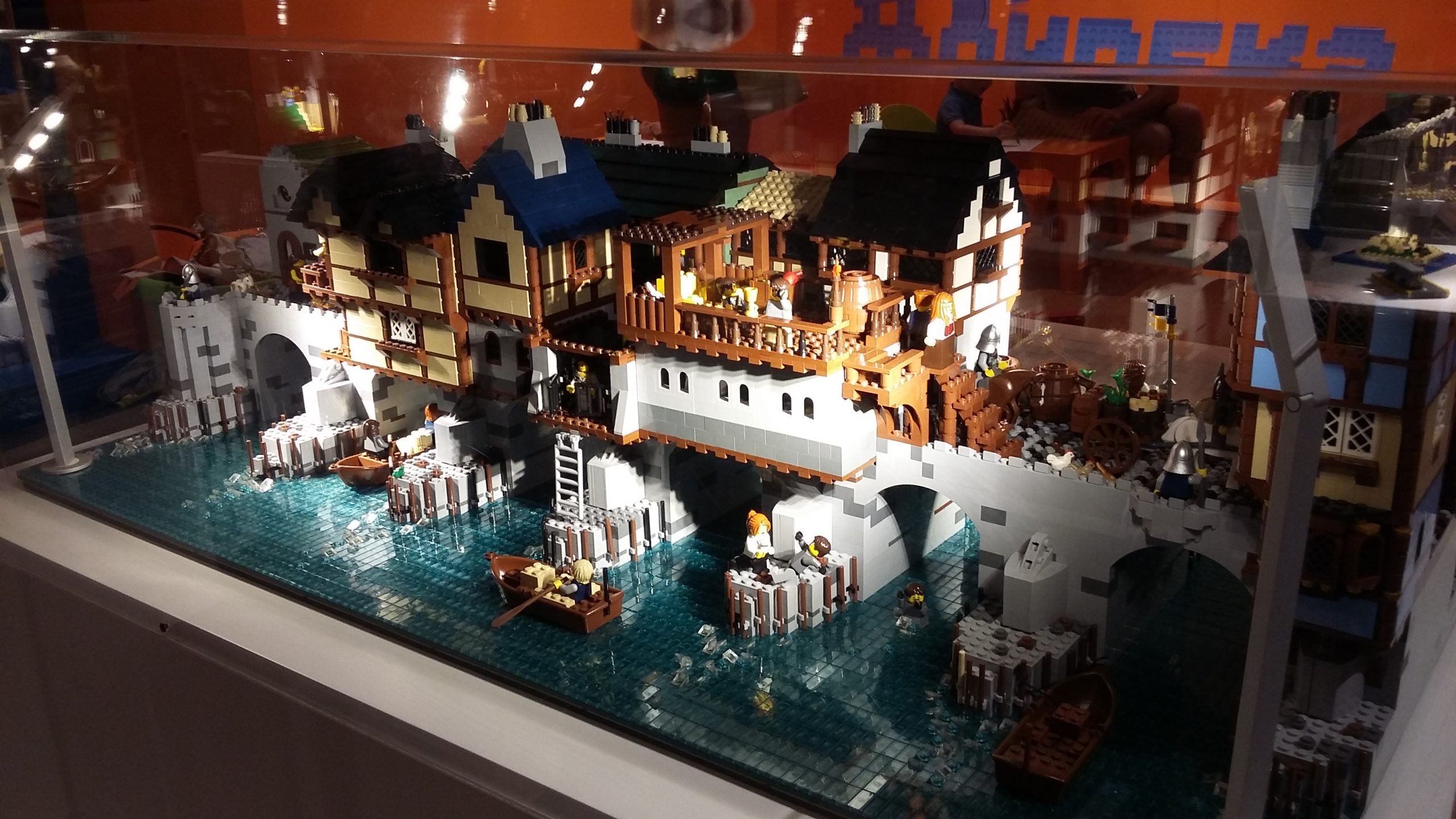
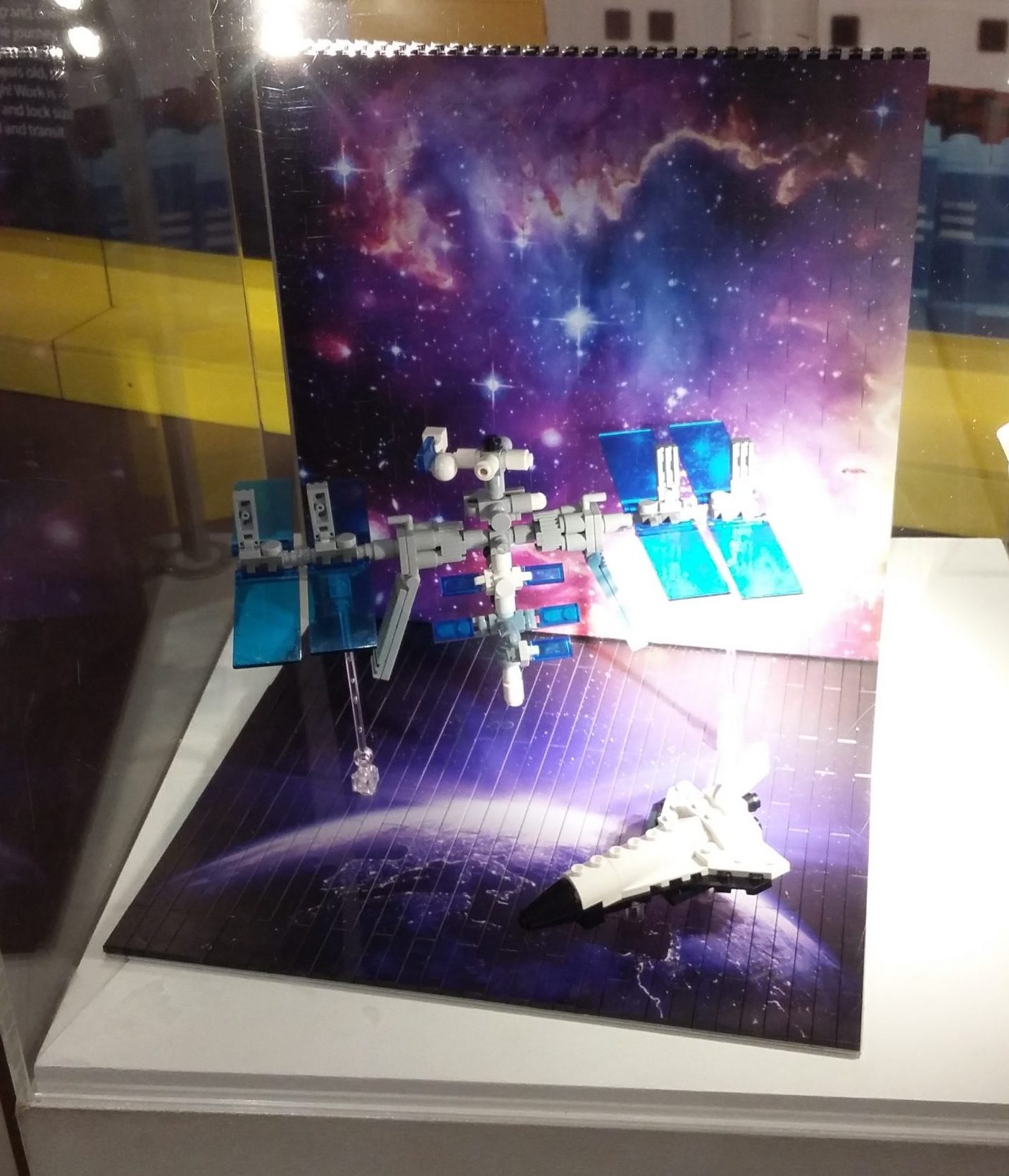
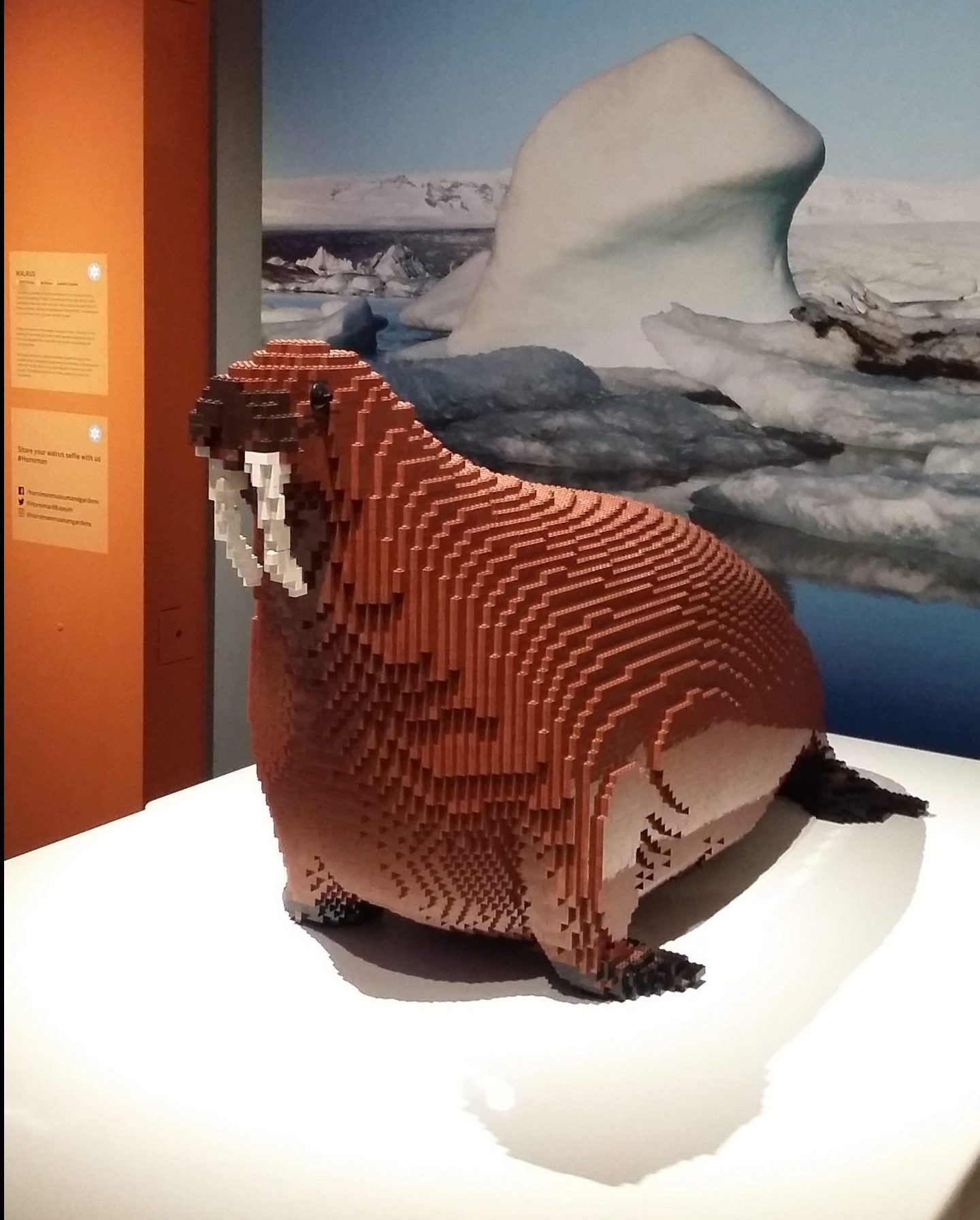
The exhibition showcases Lego models of attractions around the world, including an Egyptian pyramid and old London Bridge, as well as miniatures inspired by the Horniman itself. It was great fun to admire the attention to detail that went in to building each model.
Horniman MuseumNatural History GalleryConstruction of a pyramidTrojan HorseLondon BridgeSpace shuttleHorniman Walrus
Brick Wonders costs £9 for adults and £5 for children. It runs until Sunday 27 October.