Eltham Palace

I visited Eltham Palace when I first moved to London back in 2011. Recently I went back again with a couple of friends. We all studied history at uni, and every year or so we try to visit some site of historical interest. Eltham was our choice this year.

Getting there

The Palace is located just south east of London. We took the train from London Bridge to Mottingham station, a journey of under an hour. We then decided to walk to the Palace – we found an interesting route through some fields and made friends with a herd of donkeys.
Visitor Centre

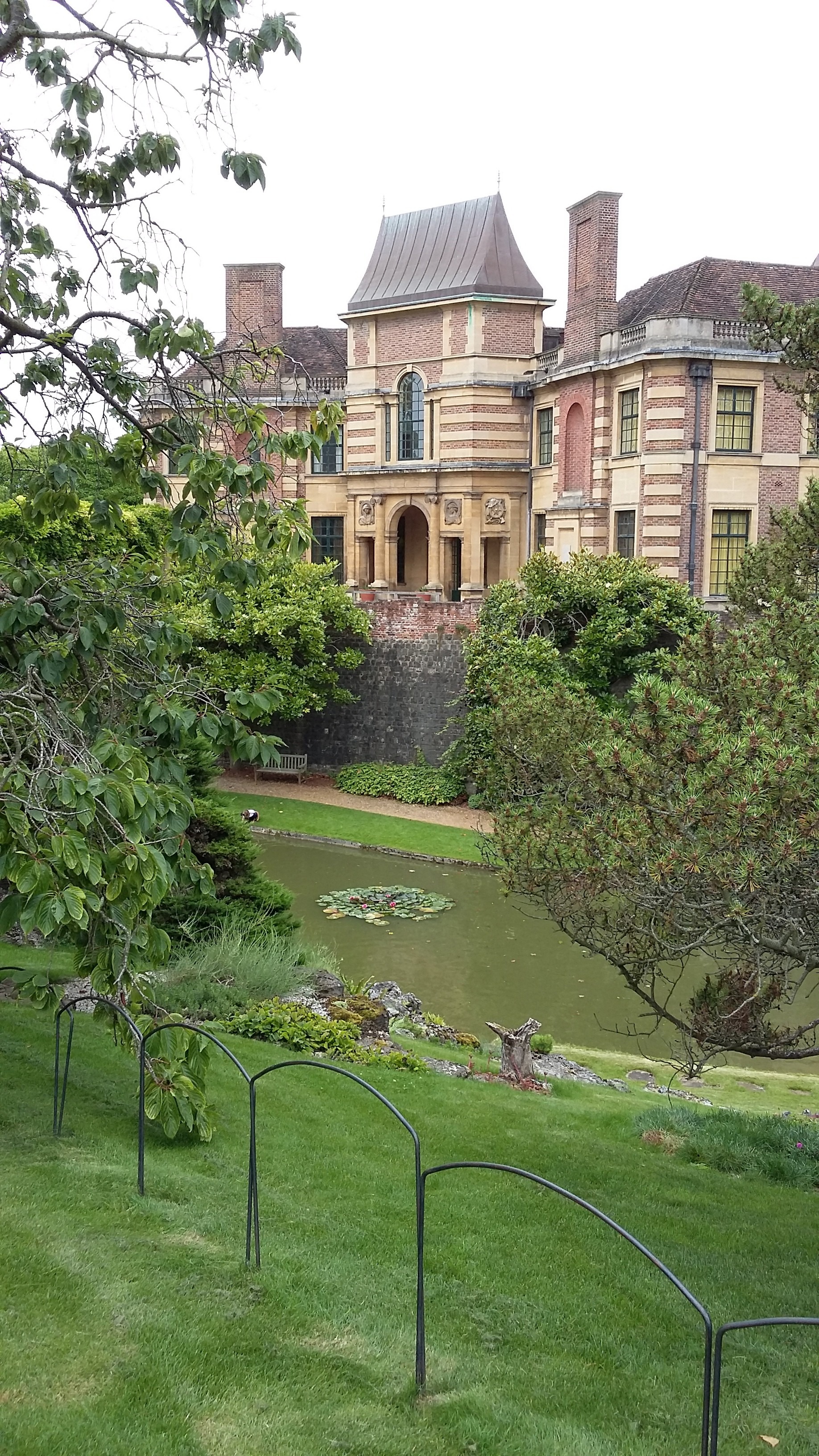
This was new since my last visit – back then you could just pay at the entrance. The visitor centre close to the Palace is where you buy tickets, browse in the shop and let the kids play in the outdoor play area (this looked like good fun and I was pretty jealous to be honest). There is also a café, where we stopped for a cup of tea before going to explore the house.
History

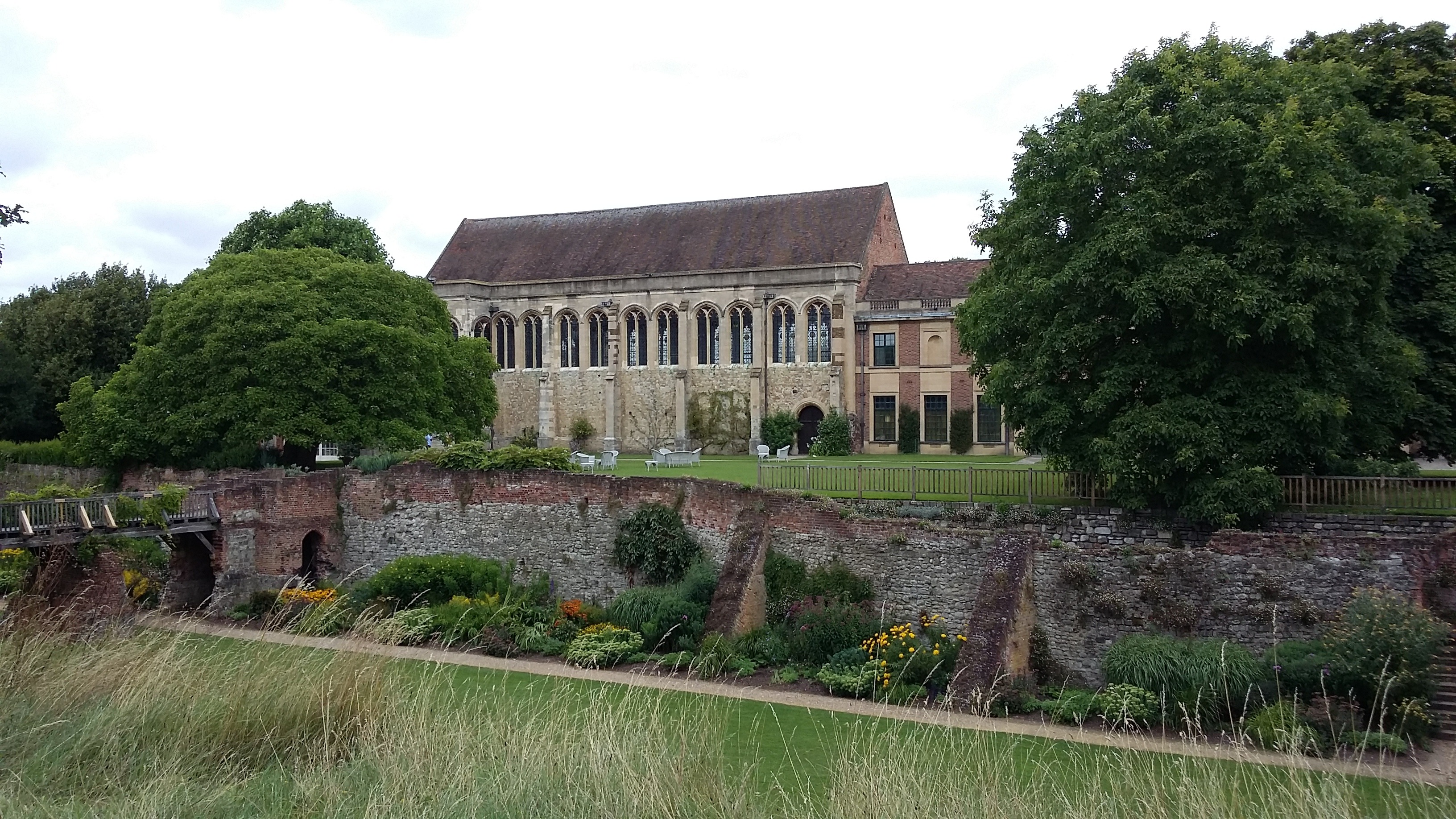
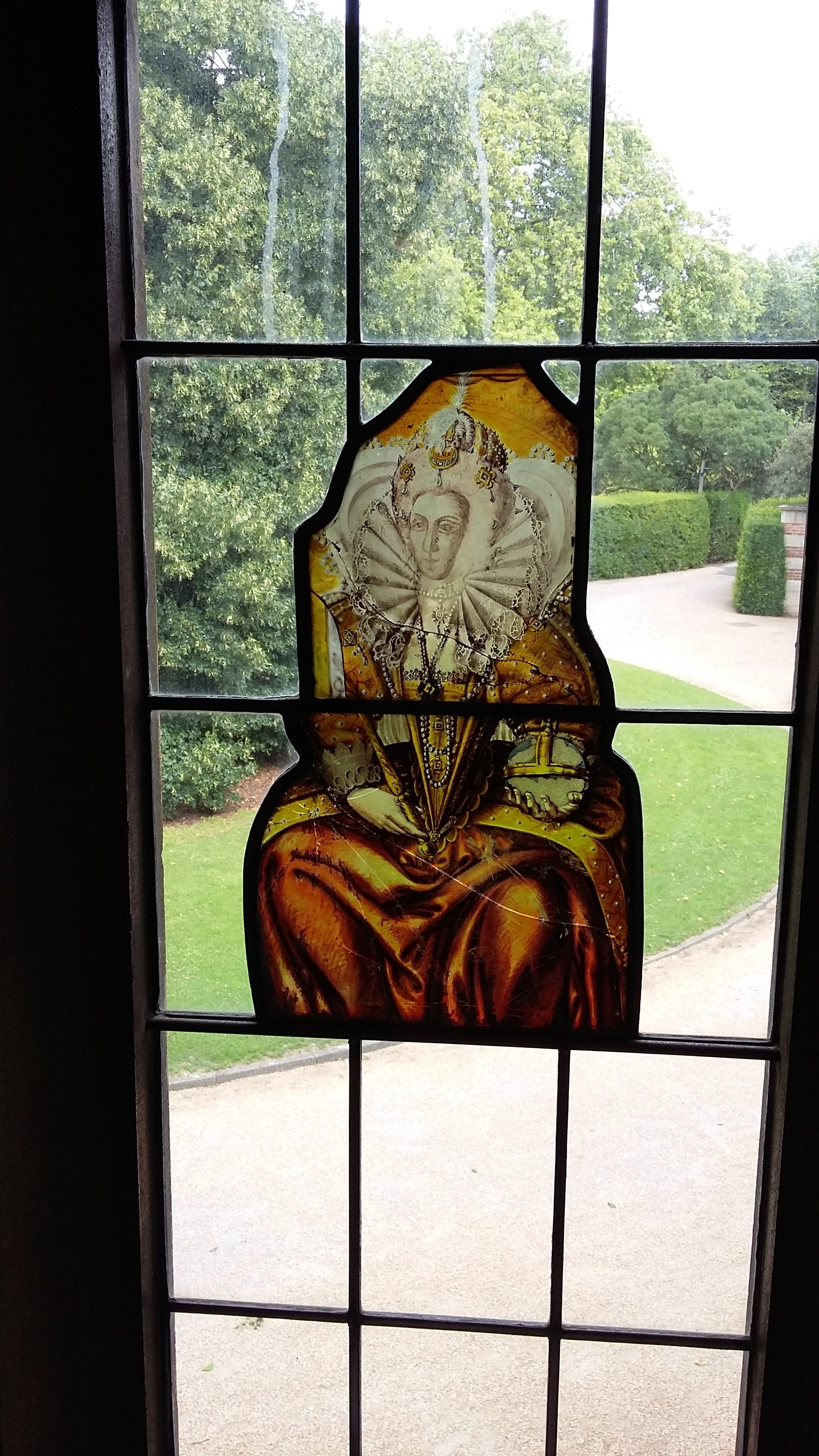
Eltham Palace is fairly unique among historic houses, and it has a fascinating and rich history. The Eltham estate was recorded in the Domesday book, and was presented to King Edward II in 1305. For several centuries it was a royal palace, and Henry VIII grew up here. However, his daughter Elizabeth preferred Greenwich, and Eltham slowly declined.
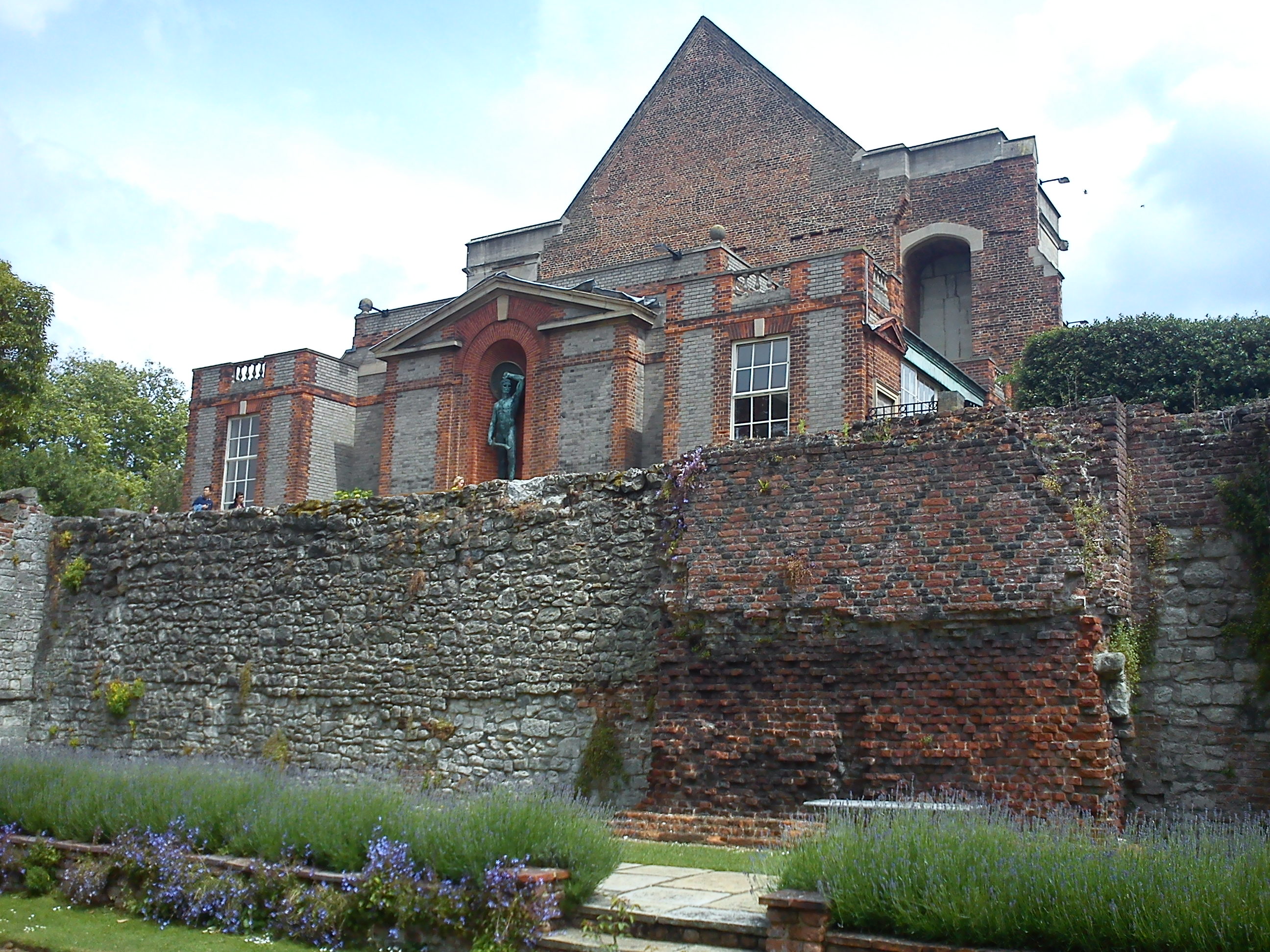
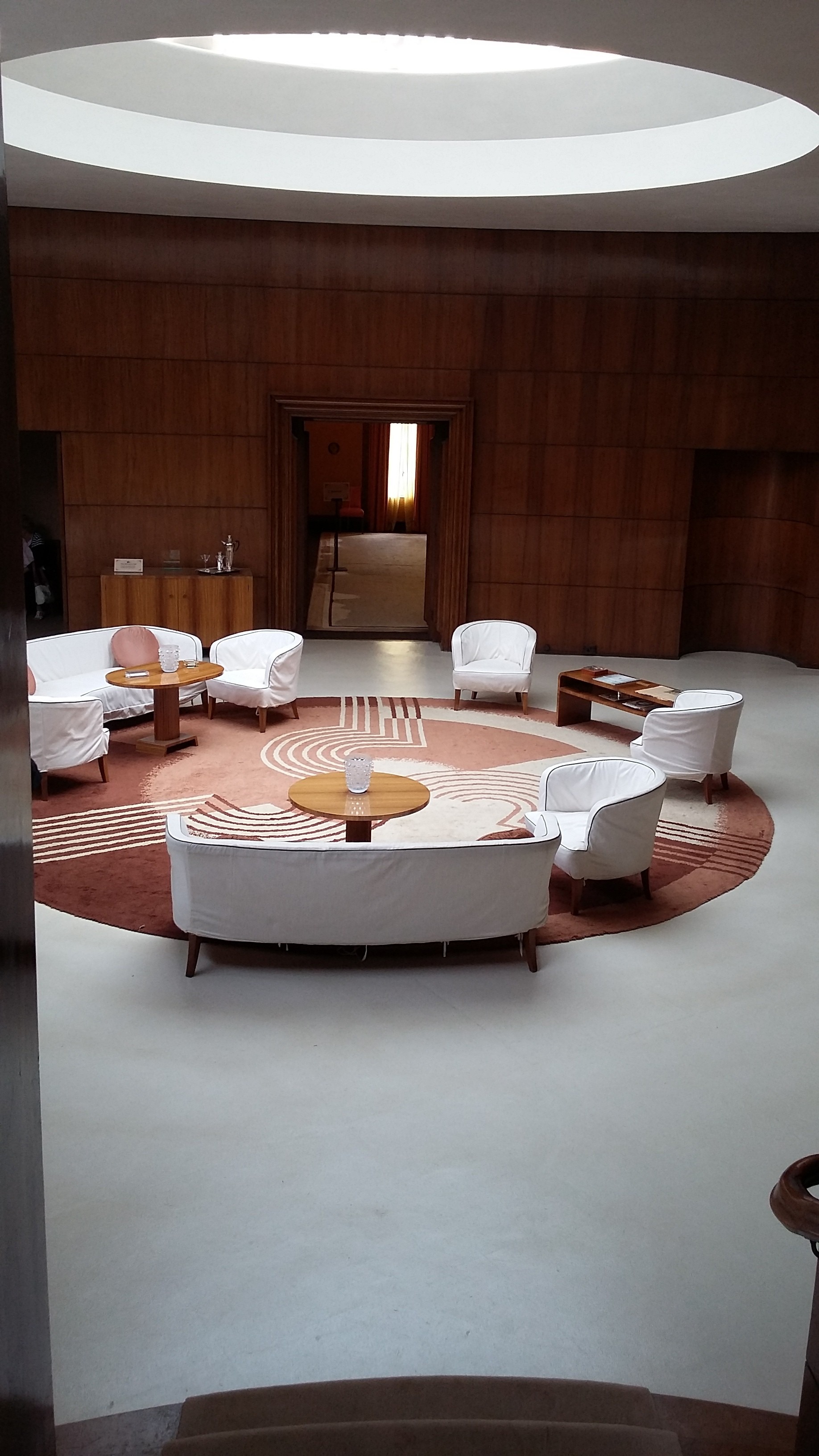
By the time Stephen and Virginia Courtauld leased the house in 1933, it was in a bit of a state, but the couple hired architects Seely & Paget to restore it and put their own Art Deco stamp on it. The pair hosted many lavish cocktail parties, attended by socialites, celebrities and politicians. The house was close enough to London to be convenient and far enough away to enjoy the relaxing atmosphere of the countryside, although it was close enough to habitation for annoyed neighbours to pen angry letters complaining about the late-night firework displays.
Towards the end of the war, the Courtaulds left Eltham, and they never went back: the postwar world was not exactly conducive to lavish housing set-ups with multiple servants. Various groups undertook, with varying degrees of success, to conserve the Palace. English Heritage, which had been involved in the conservation of the medieval Great Hall for a while, took over the management of the entire site in 1995.
 

The Palace

We picked up audio guides at the entrance and followed the suggested route around the house, starting upstairs and moving downstairs. The contrast between the amazing medieval great hall, with its roof built for Edward IV 500 years ago, and the 1930s Art Deco entrance hall, was incredible. Another highlight for me was the built-in cage for the Courtaulds’ pet ring-tailed lemur, Mah-Jongg, complete with painted mural and a ladder to let the little creature climb down and explore the house. Mah-Jongg did not prove particularly popular with the guests at parties – apparently he had a habit of biting their legs under the dining table.

Stephen and Virginia had separate bedrooms, bathrooms and sitting rooms: I was particularly jealous of Virginia’s glorious golden bathroom and Stephen’s library full of books. The couple’s personalities really came across during the tour – I think Virginia would have been great fun to be around, but I particularly identified with Stephen and his habit of retiring alone to his library after dinner.
The audio guides were pretty cool as you were able to choose which guest you would like to be while exploring the house. After the tour I found out the lady I chose was still alive at least a few years ago. I bet she has some amazing memories.
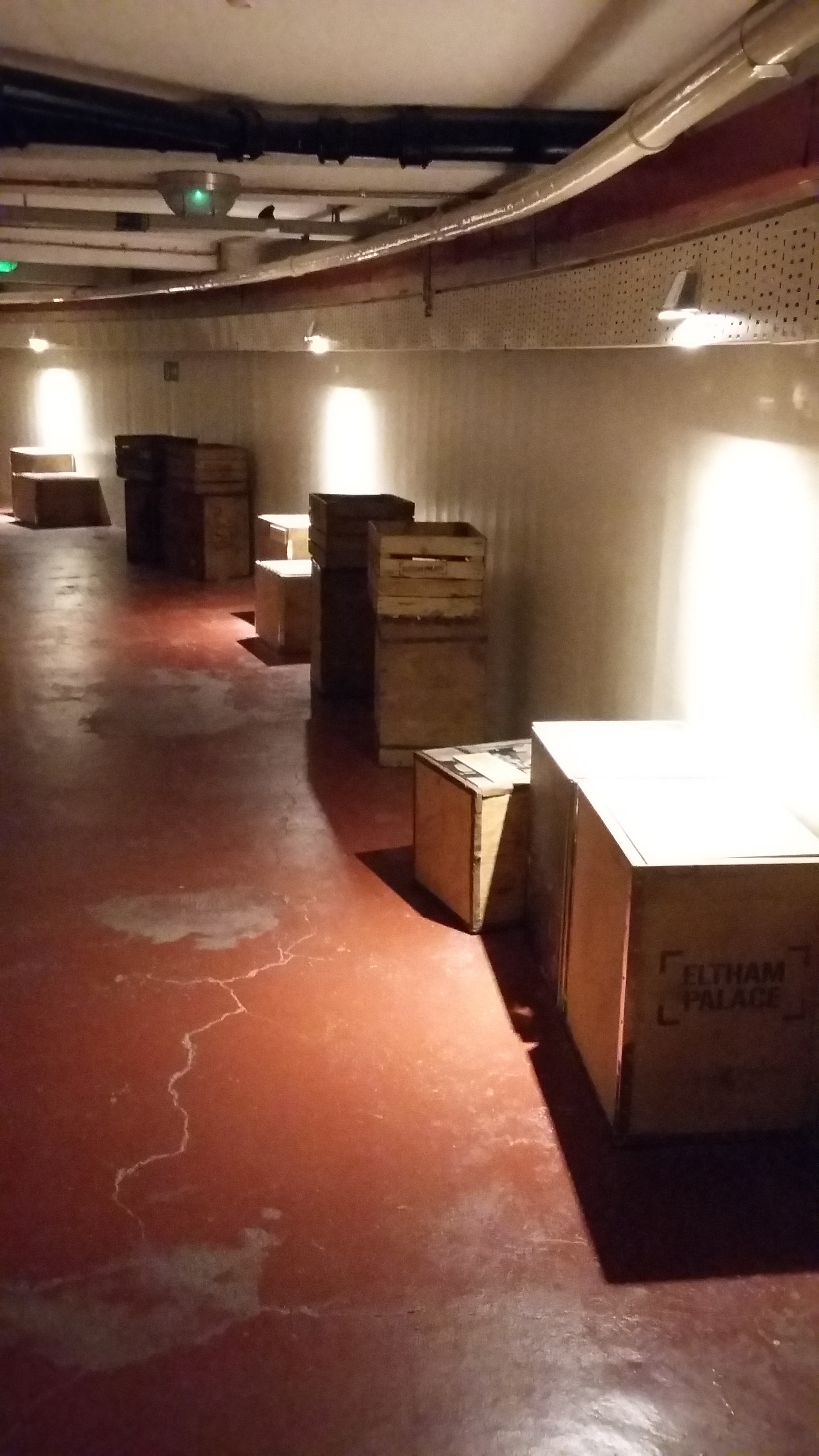
There were some basement rooms included in the tour that definitely weren’t there last time I was here. These were used by the couple and their guests during World War II. During the Blitz they would play billiards, put the gramophone on, or even go to sleep while the bombers were active outside.
The Gardens

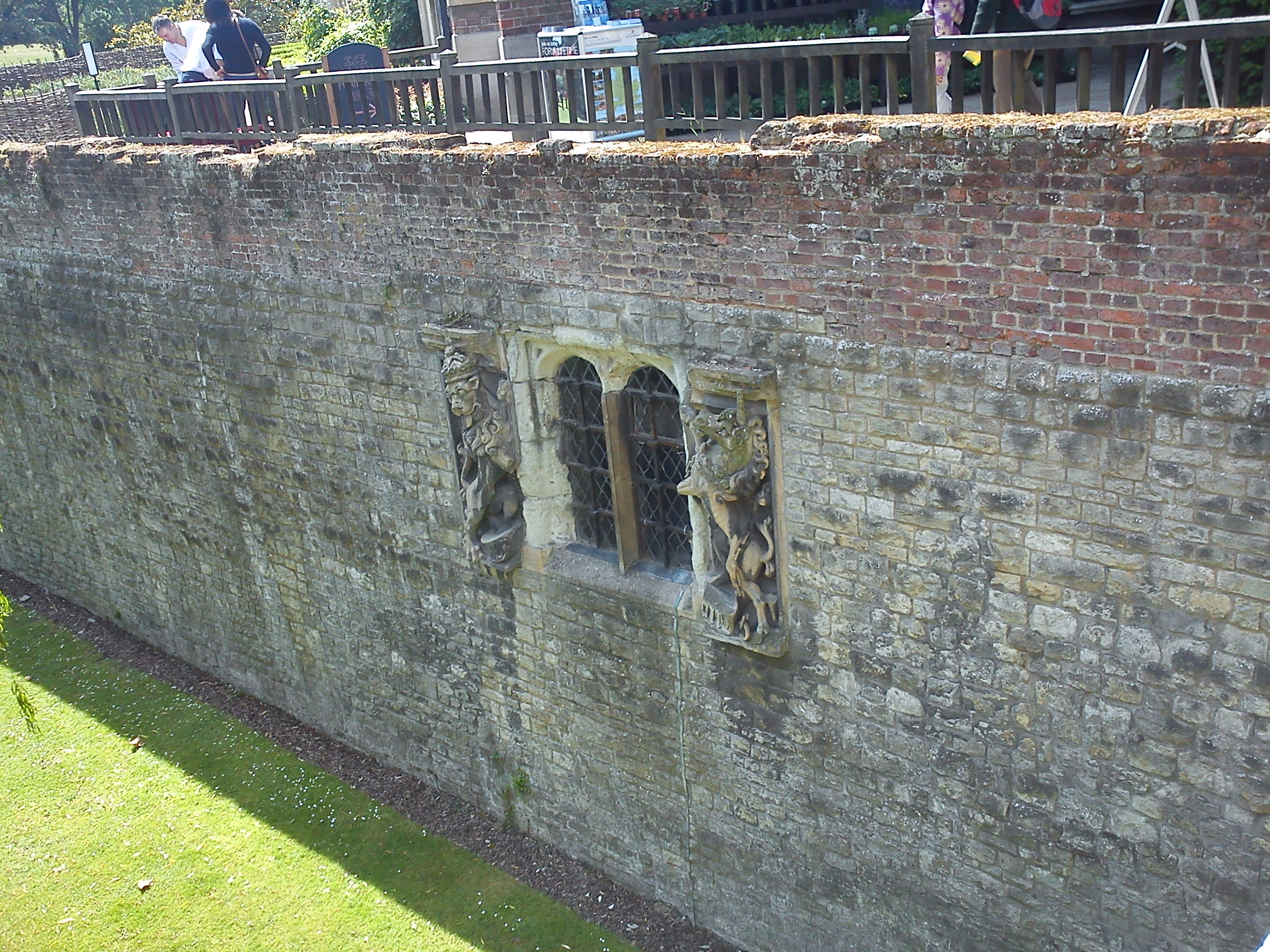
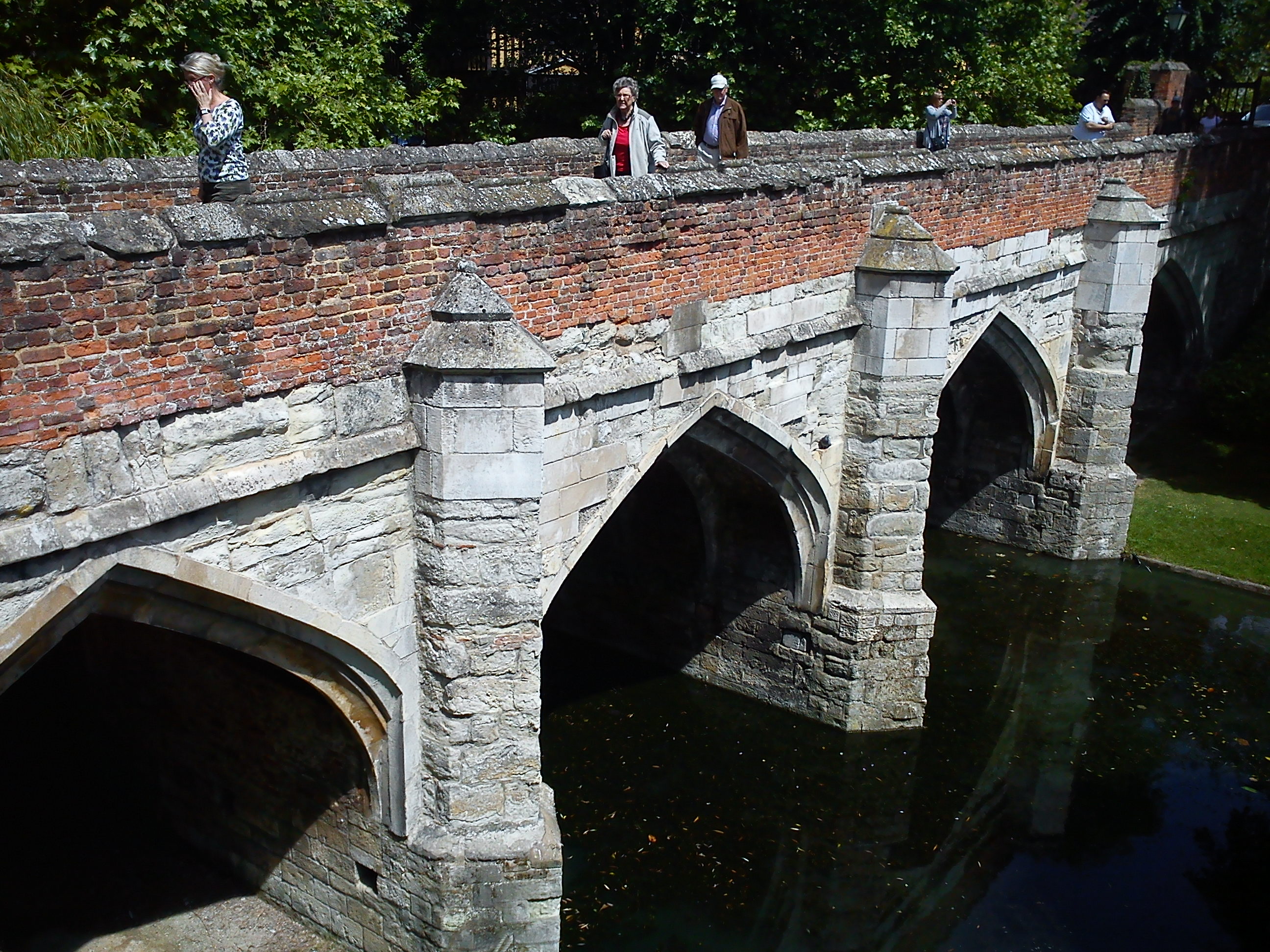
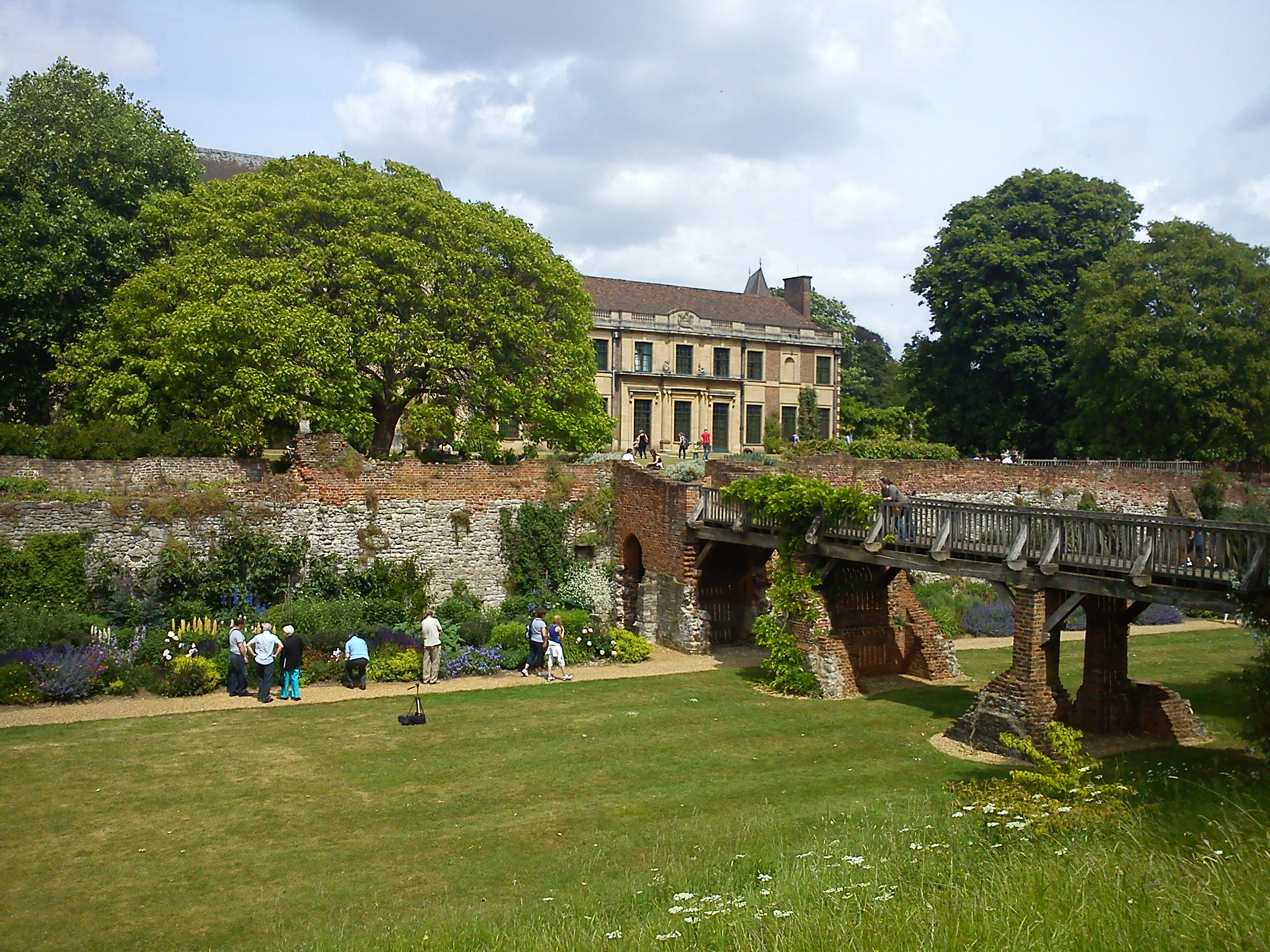
The guides include the gardens, too. I’m not really an outdoorsy person but I did appreciate the beauty of the gardens. Weekend guests at Eltham were often roped in to help with the gardening. I liked the way that older features like the bridge and the moat were complemented by the flowers chosen by the Courtaulds. The gardens are beautiful and would be a lovely place to relax or have a picnic.
My friends and I had a lovely time at Eltham Palace. Although I came here a few years ago I’m glad I visited again. It’s one of the most unique and special houses you can visit – the mix of medieval and 1930s architecture is really something. Highly recommended.

FACTS

Address: Court Yard, Eltham, Greenwich, London, SE9 5QE

Website: english-heritage.org.uk/visit/places/eltham-palace-and-gardens

Opening Hours: 10am-6pm daily in the summer, shorter opening times in the winter. Sometimes closed for special events – check website.

Prices: £14.40 adult, £8.60 child, £13.00 concession, under 5s free. Free to English Heritage and Art Fund members.

House of MinaLima

House of MinaLima

House of MinaLima in Soho is a must-see for Harry Potter fans. MinaLima, the company that designed the graphic props for the Harry Potter films as well as the recent Fantastic Beasts movie, have displayed examples of their work. You don’t have to buy anything – it’s still worth a visit just to look at the incredible designs.

House of MinaLima

The ground floor has a shop full of prints and other souvenirs, but if you want to look at the exhibition, head upstairs. The first two floors have art from the Harry Potter films, including the famous ‘Wanted’ posters from Prisoner of Azkaban and the artwork of the Weasley twins’ shop.

House of MinaLima

The top floor has artwork from Fantastic Beasts, taking inspiration from 1920s New York. My absolute favourite picture is the poster for the Blind Pig bar in the movie, which to me is more of an Art Nouveau design, but hey, it’s still gorgeous.

House of MinaLima

House of MinaLima

Do not miss this exhibition if you’re a Harry Potter fan. It’s not scheduled to close any time soon, so hopefully there should be time to check it out.

House of MinaLima

House of MinaLima

FACTS

Address: 26 Greek Street, Soho, London, W1D 5DE

Website: minalima.com/house-of-minalima

Opening Hours: 12pm-7pm daily

Prices: Free

Anaesthesia Heritage Centre

Anaesthesia Heritage Centre

As part of my bid to visit every museum in London, I popped into the Anaesthesia Heritage Centre one day when I had a bit of free time. This tiny museum can be found in the basement of the Portland Place headquarters of the Association of Anaesthetists of Great Britain and Ireland. It explores the (comparatively) short history of anaesthesia and pain relief.

The lack of pain relief in surgery obviously meant that the kinds of operations that could be performed were limited: usually things like amputations or the removal of bladder stones (as in the case of diarist Samuel Pepys, who underwent this excruciating operation in 1658). Early practitioners sometimes used herbs to anaesthetise (and, in the Far East, acupuncture), but more often an unfortunate patient was simply given some alcohol and then held down. More rigorous scientific practice led to the development of such anaesthetics as chloroform. On display are several examples of the apparatus used to deliver pain relief, including masks and needles. In the early days it was often hard to judge how much anaesthetic to give: too little and the patient might wake up mid-surgery, too much and they might die of an overdose.

Anaesthesia Heritage Centre

The display looks at the development of anaesthesia as a valid and recognised branch of medicine. From 1912 it became part of the medical curriculum, and the Diploma in Anaesthetics was introduced in 1935.

There is a brief display on the role of anaesthetics during World War I, which is particularly interesting. I definitely recommend this tiny free museum if you’re in the area.

FACTS

Address: 21 Portland Place, Marylebone, London, W1B 1PY

Website: aagbi.org/education/heritage-centre

Opening Hours: 10am-4pm Mon-Fri

Prices: Free

Tate Britain

Tate Britain

Following my visit to Tate Modern a few weeks ago, I decided to head to Tate Britain in Pimlico. This gallery, which specialises in British art, does hold more attractions for me than Tate Modern does, and has some of my all-time favourite pictures.

Inside Tate Britain

Inside Tate Britain

The bulk of the permanent collection forms the ‘Walk Through British Art’ which allows the visitor to explore 500 years of art chronologically. I do like this ordered way of doing things. Naturally enough, I started at the beginning.

Tate Britain

The early pictures in the collection suffer in my mind from a comparison with the National Portrait Gallery. They’re similar in style but unlike the NPG, they aren’t of anyone famous. One exception is the picture of Elizabeth I, and I was amused by an angular painting of a pair of identical twins holding their babies, apparently born on the same day.

Elizabeth I
Steven van der Meulen, Steven van Herwijck. Portrait of Elizabeth I, c.1563
Lady Macbeth Seizing the Daggers
Henry Fuseli. Lady Macbeth Seizing the Daggers, ? exhibited 1812

The rooms take you through the sixteenth, seventeenth and eighteenth centuries, featuring such artists as Lely, Gainsborough, Hogarth and Constable. Along the way I popped into a room to view John Martin’s incredible apocalyptic canvases.

The Destruction of Pompei and Herculaneum
John Martin. The Destruction of Pompei and Herculaneum, 1822

I came to my favourite room in the gallery, which focuses on nineteenth century and Pre Raphaelite art. I’ve been reading a book about poetical deaths recently, so I was fascinated to see the picture of Chatterton. Millais’ picture of Ophelia, one of my favourites, is also displayed here as well as Carnation, Lily, Lily Rose, which always reminds me of The Family From One End Street.

1890 room
My favourite room
Ellen Terry as Lady Macbeth
John Singer Sargent. Ellen Terry as Lady Macbeth, 1889

As well as familiar favourites, I came across a few unfamiliar pictures which I really loved.

Beyond Man’s Footsteps
Briton Riviere. Beyond Man’s Footsteps, exhibited 1894
The Doctor
Sir Luke Fildes. The Doctor, exhibited 1891

The next few rooms cover later art, which isn’t generally as interesting to me, although I find Francis Bacon’s picture of a man screaming rather chilling. Also, I quite like a Lowry.

Study for a Portrait
Francis Bacon. Study for a Portrait, 1952
The Pond
L.S. Lowry. The Pond, 1950

Before leaving I ventured to the back of the gallery to see the Turner Collection and the works of William Blake, both of which have their own spaces.

Turner Collection
Turner Collection
The Ghost of a Flea
William Blake. The Ghost of a Flea, c.1819–20

After my visit, my conclusion is that I should go to Tate Britain more often. There are some incredible paintings here, including some of my favourites, and while I can readily view them online, nothing compares to the real thing.

FACTS

Address: Millbank, London, SW1P 4RG

Website: tate.org.uk/visit/tate-britain

Opening Hours: 10am-6pm Mon-Sun

Prices: Free (there is a charge for special exhibitions)

The Building Centre

Building Centre

I work near to the Building Centre in Bloomsbury, so it’s strange that it took me so long to go in, and even stranger that when I finally did go, it was on a Saturday. The Centre exists to promote innovation in the built environment, according to its website, and was first established in 1931. Today, it functions as an architecture centre and galleries with exhibitions related to contemporary building and design – it also has a coffee shop, which is available to the public and also puts on various coffee-related events.

New London Architecture

The centrepiece of the permanent exhibition is the New London Model, a 3D map of central London, accompanying a series of displays on Transforming The Boroughs, which contain information about past, current and future projects in all areas of London. Check out your own area or explore more widely.

The Centre also has a programme of rotating free exhibitions. The current exhibition is Night Time Is The Right Time, which runs until 15 August. It explores how architects and designers have imagined cities to run better and more efficiently during the night time, and I found it fascinating. There is also a small exhibition on the 50th anniversary of the Lee Valley Regional Park.

If you’re in the area, it’s definitely worth popping in to check out how the built environment of London could transform within the next few years.

FACTS

Address: 26 Store Street, Bloomsbury, London, WC1E 7BT

Website: buildingcentre.co.uk

Opening Hours: 9am-6pm Mon-Fri, 10am-5pm Sat

Prices: Free

Tate Modern

Tate Modern

I love visiting art galleries in the summer. They’re lovely and cool when it’s hot outside. I popped into the Tate Modern one Sunday afternoon before going to the Globe. I’ve been before, but these days I don’t normally visit except to see the odd special exhibition. I decided to take another look at the permanent collection.

Welcome to Tate Modern

Tate Britain had been running for several years when the Tate Trustees announced their intention to create a new gallery for international modern art in London. The former Bankside Power Station was chosen as the site and the gallery opened in 2000. Recently, an extension to the gallery was unveiled, the Blavatnik Building at the rear (the original building is known as the Boiler House).

Turbine Hall

I entered the gallery via the River Entrance and came upon the Turbine Hall. This is one of the most impressive and iconic parts of the museum, its vast space playing host to a variety of installations. It’s also a lovely place to be during hot weather, as it’s nice and cool.

Thames

I worked my way through the various rooms in the Boiler House. Frankly many of them reminded me of how much I tend to dislike modern art, but there were a few gems, such as Salvador Dali’s lobster phone, pictures by Henri Matisse and Walter Sickert and sculptures by Edgar Degas. Rooms focus on themes such as ‘Artist and Society’, ‘Materials and Objects’, and ‘New Acquisitions’.

Blavatnik Building

I made my way over to the other side in order to explore the new extension, known as the Blavatnik Building. This was impressive but best thing about it is the roof terrace which offers great views over London (and also, infamously, into neighbouring flats).

View from the Tate Modern extension

Truthfully, modern art isn’t really my thing, but if you are a fan then the Tate Modern is a great place to go. For everyone else, it’s still worth visiting for the views.

FACTS

Address: Bankside, London, SE1 9TG

Website: tate.org.uk/visit/tate-modern

Opening Hours: 10am-6pm Sun-Thurs, 10am-10pm Fri and Sat

Prices: Free (there is a charge for special exhibitions)

Design Museum

Head of Invention, Eduardo Paolozzi

The Design Museum has undergone a pretty impressive transformation lately – it’s moved venue. Originally based in Shad Thames near London Bridge, it recently took over the old Commonwealth building on High Street Kensington, opening only a few months ago.

Ceiling

The building itself is pretty impressive. Located on a busy high street, it has an appealing modern entrance and is hugely striking inside. Photographs on the mezzanine illustrate the progress of the transformation. Like many museums in London, the Design Museum is made up of a mixture of free permanent exhibitions and temporary paid exhibitions, with something to suit every taste; there’s a café, restaurant and gift shop too.

Wall of designs

The major free exhibition is called Designer Maker User, and it looks at examples of good design throughout modern history, from furniture to games consoles to road signs. The Tube map makes an appearance, not to mention typewriters and computers.

Designer

Maker

User

The second free exhibition I saw was Cartier in Motion, which looked at the history of Cartier. Sponsored by the brand, it is in many ways a commercial exhibition, but it was informative and interesting, even if it didn’t convince me that I need a Cartier watch.

Design Museum

The two temporary exhibitions currently are Imagine Moscow, in the basement, and California: Designing Freedom, on the ground floor. I visited one and not the other; it’s handy to be able to choose what you want to see. There’s a rolling programme of paid temporary exhibitions, reason to go back again and again.

Design Museum

The Design Museum is definitely a worthwhile place to visit, should you be interested in this kind of thing. The free exhibition is wide-ranging enough to attract attention and the range of temporary exhibitions is certainly promising.

FACTS

Address: 224-238 Kensington High Street, London, W8 6AG

Website: designmuseum.org

Opening Hours: 10am-6pm daily

Prices: Free

Imagine Moscow – Design Museum

Design Museum

I’ve always had an interest in Russia, so when I visited the Design Museum recently I made sure to check out their exhibition Imagine Moscow. The exhibition, like so many this year, marks the centenary of the Russian Revolution, and explores Moscow as it was imagined by a new generation of architects and designers in the 1920s and early 1930s. The projects envisaged by them never materialised, but they remain testaments to the ambition and vision of the new regime.

Imagine Moscow exhibition

The projects explored include aviation, communication and industrialisation, using artwork, propaganda and architectural drawings. I was particularly struck by the vision of communal living, with its strict timetables laid out for each worker of the Soviet state. I was torn between admiration for the desire to ensure every person had ample time for recreation and exercise, and horror at the tightly regulated nature of every minute of the day.

One of the most fascinating projects, for me, is the Palace of the Soviets. This, the proposed centre of Soviet administration in Moscow, was imagined as a colossal edifice in the centre of the city, with a gigantic statue of Lenin on top. The nineteenth-century Cathedral of Christ the Saviour on the proposed site was demolished in preparation for work to begin, but the building never got off the ground (literally). Eventually the site became a public swimming pool before a replacement cathedral in the original design was built.

I found the exhibition to be an interesting exploration of what might have been, and a positive introduction to the Design Museum’s new site.

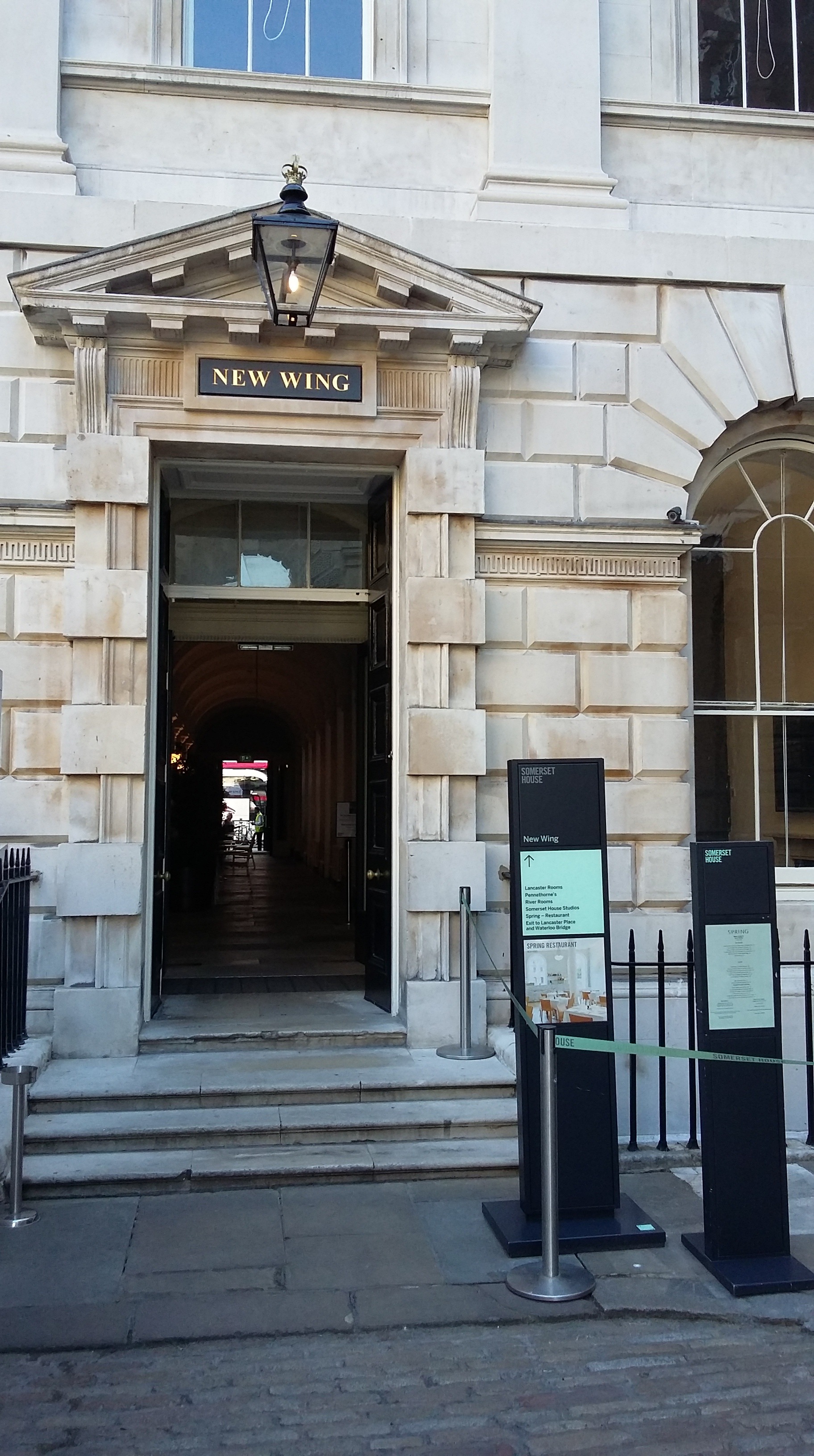
Mat Collishaw: Thresholds – New Wing, Somerset House

When I read about this exhibition, I knew I wanted to check it out. Mat Collishaw: Thresholds is a unique recreation of William Henry Fox Talbot’s first exhibition of photographs in Birmingham in 1839. But instead of plonking down the original photos and inviting audiences to view them again, the exhibition is more daring: it uses virtual reality technology to take you back to the original exhibition.

The actual room you enter, in a corner of the New Wing at Somerset House, is stark white and filled with plain white cases. When you put on the special backpack, with glasses and headphones, however, the space is transformed. Around you is a recreation of the original exhibition space. In front of you, cases showcase the impressive photographs that were originally displayed, and you can pick them up to take a closer look. Mice run along the floor, spiders creep over the paintings, and a fire burns in the corner. Outside, you can see guards policing the streets, and towards the end of the experience you can even see and hear the Chartist protesters who rioted in 1839 on the streets of Birmingham.

The actual experience lasts six minutes, though you need to allow time for the introduction and to get your equipment set up. Though short, it’s unforgettable, and its use of very modern technology reminds you of how cutting-edge the science of photography would have seemed to exhibition attendees in the mid-nineteenth century. The exhibition isn’t on for very long, but I’d urge you to catch it before 11 June.

Russian Revolution: Hope, Tragedy, Myths – British Library

These days I always seem to go to exhibitions towards the end of their run, but I ended up seeing Russian Revolution: Hope, Tragedy, Myths at the British Library fairly early, owing to the fact that some friends wanted to go too. We booked for Saturday afternoon and were surprised to find the exhibition so quiet. Marking the centenary of the Russian Revolution, it uses documents, books, letters, photographs and film footage to explore how the revolution began and developed and the impact it made.

I’m vaguely familiar with what happened, as I am very interested in Russian history anyway, but the exhibition helped to clarify events for me, and I think I left with a greater understanding of what was going on. The exhibition followed a largely chronological path, which I personally found very helpful. It looked at the structure of Russian society at the time of the Tsars before examining how and why the revolution was sparked.

My favourite section was actually the final one, ‘Writing the Revolution’, as it looked at some books which are my favourites, including Boris Pasternak’s Dr Zhivago. I also enjoyed the look at film at the end, including clips from famous Soviet films.

The exhibition runs until 29 August and it’s definitely worth taking some time out to see it this summer.