The Supreme Court

Supreme Court

Not so long ago I found out that you could book tours of the Supreme Court, which take place on Friday afternoons. I had some holiday to use up, so I booked the day off and booked myself onto a tour. I arrived at Parliament Square in plenty of time, and got through security in time to have a look around the exhibition before going off on my tour.

History

I’d assumed that the Supreme Court had been around for ages, but that isn’t the case at all: in fact, it’s a fairly modern institution. It was established in 2009, taking over judicial authority from the House of Lords. It is the final court of appeal for all United Kingdom civil cases, and criminal cases from England, Wales and Northern Ireland. The most famous case in its short history occurred last year, when Gina Miller and other campaigners challenged the government, arguing that Parliament should have a vote on Article 50. The public are able to watch cases as they are heard; this particular case was the busiest ever, with queues forming outside the building.

The Supreme Court is housed in what was once the Middlesex Guildhall, designed by J. S. Gibson in 1912-1913. It is Grade II* listed, but has been renovated to fit in with what it’s now used for.

Exhibition

This is housed in the basement, in an area which used to be taken up by prisoners’ cells when the building was a Crown Court. It has information about the history and role of the Supreme Court, as well as the Judicial Committee of the Privy Council, and how the two courts fit into the legal systems of the countries they serve.

Tour

The tour took us round all three courtrooms and the library. The first courtroom is the largest and in some ways the grandest; it still has many of the original features. The second is very different, with a much more modern appearance. Curtains and carpets have been designed specially for the building, showcasing the emblem which is displayed on the wall. This reflects the four nations which make up the United Kingdom: a rose for England, a thistle for Scotland, leek leaves for Wales and a flax flower for Northern Ireland.

Courtroom 1
Courtroom 1
Courtroom 1
Courtroom 1
Supreme Court logo
Supreme Court logo
Courtroom 2
Courtroom 2

The third courtroom is generally reserved for the Judicial Committee of the Privy Council, which is the highest court of appeal for many independent Commonwealth nations or Crown dependencies which are too small to have their own.

Courtroom 3
Courtroom 3
Courtroom 3
Courtroom 3

The library is impressive, with a large array of books and walls covered with quotes relevant to law.

Library
Library
Library
Library

I really enjoyed my tour, and would definitely recommend it.

FACTS

Address: Parliament Square, Little George Street, Westminster, London, SW1P 3BD

Website: supremecourt.uk

Opening Hours: Mon-Fri 9.30-4.30. Tours take place on Fridays.

Price: Entry free; tours £7 (£5 concessions)

Walker Art Gallery

Walker Art Gallery

While I was in the Walker Art Gallery visiting the Mucha exhibition, I thought I might as well explore the place thoroughly. After all, it is host to one of the largest art collections in the country outside London. The collection dates from 1819, when the Liverpool Royal Institution came into possession of 37 works belonging to businessman William Roscoe, who had to sell his collection. Over the next few years the collection grew, and the building opened in 1877, named after its leading benefactor, Sir Andrew Barclay Walker.

There are two downstairs galleries, craft and design and sculpture, which are interesting to see. Upstairs are the majority of the works, mostly paintings, which are arranged in chronological order, from medieval and Renaissance art through to Victorian, Pre-Raphaelite and modern art. Highlights for me include the Pelican portrait of Elizabeth I and the large portrait of Henry VIII, as well as the painting of actor David Garrick as Richard III.

I’ve been to Liverpool twice before, only on brief flying visits so I’d never previously had a chance to visit. The Walker Art Gallery is a gem, though, and I’m glad I finally had the chance to check it out.

FACTS

Address: William Brown Street, Liverpool, L3 8EL

Website: liverpoolmuseums.org.uk/walker

Opening Hours: 10am-5pm daily

Price: Free

Alphonse Mucha: In Quest of Beauty – Walker Art Gallery

Walker Art Gallery

I know in London we’re spoilt for choice when it comes to exhibitions but I still get cross when one that I want to see doesn’t make it to the capital. A case in point is Alphonse Mucha: In Quest of Beauty, which stopped at Bournemouth, Norwich and Glasgow before finally ending up at the Walker Art Gallery in Liverpool. Mucha is my favourite artist, so there was no question of me missing out. To Liverpool I would have to go.

One coach trip later, and I was at the gallery in time for its opening at ten.

Exhibition entrance

The exhibition explored how “Mucha’s idea of beauty influenced his work. Mucha believed that beauty was the essence of art and was achieved by striking a balance between the internal, spiritual world and the external, material world. This principle informed his entire oeuvre, from his Art Nouveau posters and commercial works to his later works on the history of the Czech and Slavonic people.” [Mucha Foundation]

The exhibition contained posters, sketches and artefacts relating to Mucha and his career, which came to define Art Nouveau and the fin de siècle. It began with some examples of posters he designed for the actress Sarah Bernhardt (their friendship and artistic partnership lasted many years), including the earliest, Gismonda, followed by Hamlet and La Dame Aux Camélias (one of my earliest memories of Mucha’s work is a mirror with this poster on top displayed on the landing in my childhood home).

Examples of Mucha’s advertising posters follow: some of the earliest examples of the use of art in advertising. Most of the posters include familiar Mucha tropes: the stylised women, the long flowing hair, the ‘halo’ and the use of motifs from nature. Later Mucha created designs without a particular advertising focus: the seasons, the muses, the flowers. He also began to work on his Slav Epic, a work dedicated to his homeland which was seeking independence (and gained it in 1918).

It was incredible being able to see some of these original posters on display, especially bearing in mind that they were not designed to last: they were temporary adverts only, but their impact has endured. I was also fascinated by the photographs of Mucha in his studio, surrounded by his work.

This is a fairly small exhibition, and perhaps not worth travelling from London and back in a day unless you’re a really big fan. I absolutely love Mucha, though, and for me it was totally worth it to see these beautiful designs.

Harry Potter: A History Of Magic – British Library

I booked my exhibition ticket for Harry Potter: A History of Magic back in April, and it’s just as well, as many dates for this groundbreaking exhibition are already sold out. It’s the first British Library exhibition to focus on the work of a living author, and I couldn’t imagine a better subject. The exhibition will fascinate any Harry Potter fan, but there’s much here to interest those who have never read a word about the famous boy wizard.

J.K. Rowling took inspiration from myths, legends and history to write about the magic in her books, and the exhibition looks at how magic as it has been seen in our world helped to inspire her. It’s divided up into sections based on the subjects Harry studies at Hogwarts: Potions, Divination, Charms, Care of Magical Creatures, and so on, and there is also a section on alchemy, relating to the Philosopher’s Stone which is so important in the first book.

We see many rare books and historical artefacts: the Ripley Scroll, purporting to explain how to make the philosopher’s stone, alongside Nicholas Flamel’s gravestone (apparently discovered being used as a chopping board in Paris). The Potions section has rare books describing the various potions and their antidotes – there is also a bezoar displayed – and Herbology displays a copy of Culpeper’s Herbal, of which Rowling had her own copy that she used to refer to when writing the books. We see a cauldron and a broomstick from the Museum of Witchcraft in Boscastle, and possibly my favourite exhibit of all: the ‘Invisibility Cloak’.

Throughout the exhibition, illustrations by Jim Kay bring the characters to life, and we also see sketches by Rowling, which are fascinating as they show the characters as she originally imagined them. My favourite parts were the handwritten or typed early drafts of various chapters, showing the Harry Potter stories as they might have existed, and offering insights into how Rowling changed and adapted her stories.

I loved this exhibition – it runs until February, so there’s plenty of time to see it, but I definitely recommend booking in advance.

Scythians: Warriors of Ancient Siberia – British Museum

This exhibition at the British Museum intrigued me: I’d never heard of the Scythians, but I’ve always been interested in Siberia. Scythians: Warriors of Ancient Siberia is a co-exhibition with the Hermitage Museum, St Petersburg, and many of the artefacts in the exhibition are on loan from that museum.

The Scythians were a nomadic group of tribes who endured for about 600 years, around 600BC, herding cattle and goats on the steppe, and the exhibition sheds light on their lives and culture. There is an abundance of beautiful jewellery, including belt buckles and neck ornaments depicting scenes mixing real animals with mythical ones which, experts have theorised, point to their religion and culture. Their warrior culture is alluded to by the prevalence of helmets and head ornaments, hugely elaborate and detailed. The Scythians spanned southern Siberia from west to east and evidence suggests they had contact with other groups from Africa, Europe and China. For several centuries, the only record of the Scythians came from the writings of Herodotus, who travelled in the area around 440BC. Many of these artefacts were later dug up by archaeologists sponsored by Peter the Great, who ordered them to be sent to St Petersburg for his new museum. As a result, they are well organised and well-catalogued, and some of the original eighteenth-century drawings of the ornaments are on display beside the originals. On the walls of the exhibition are quotations from contemporaries, including Herodotus, about the Scythians: their fearsomeness in battle, their wild drinking. As the Scythians themselves did not have a written culture, these ornaments and other excavated artefacts take on an even greater significance.

What really took my breath away were the wonderfully preserved things that by rights should have disintegrated long ago, saved by their preservation in Siberia’s permafrost. These include fleeces, squirrel fur coats, even a pair of boots, as well as the tattooed skin of a Scythian warrior on which the marks still show up clearly. A giant coffin, constructed of wood, looks as though it was built yesterday, and one bag, containing food to accompany a deceased chief to the afterlife, has yielded lumps of preserved cheese.

Most of the artefacts on display are from wealthier people, which is not surprising since these are more likely to have been preserved. However, there are some objects relating to more ordinary Scythians, including weapons, ornaments and cooking equipment. Several preserved heads have been found, enabling scientists to try and reconstruct the face of a Scythian.

What could have been another run-of-the-mill exhibition about an ancient people is brought to vivid life by the beauty of the incredibly well-preserved objects on display. I was fascinated by it and loved learning more about this ancient society.

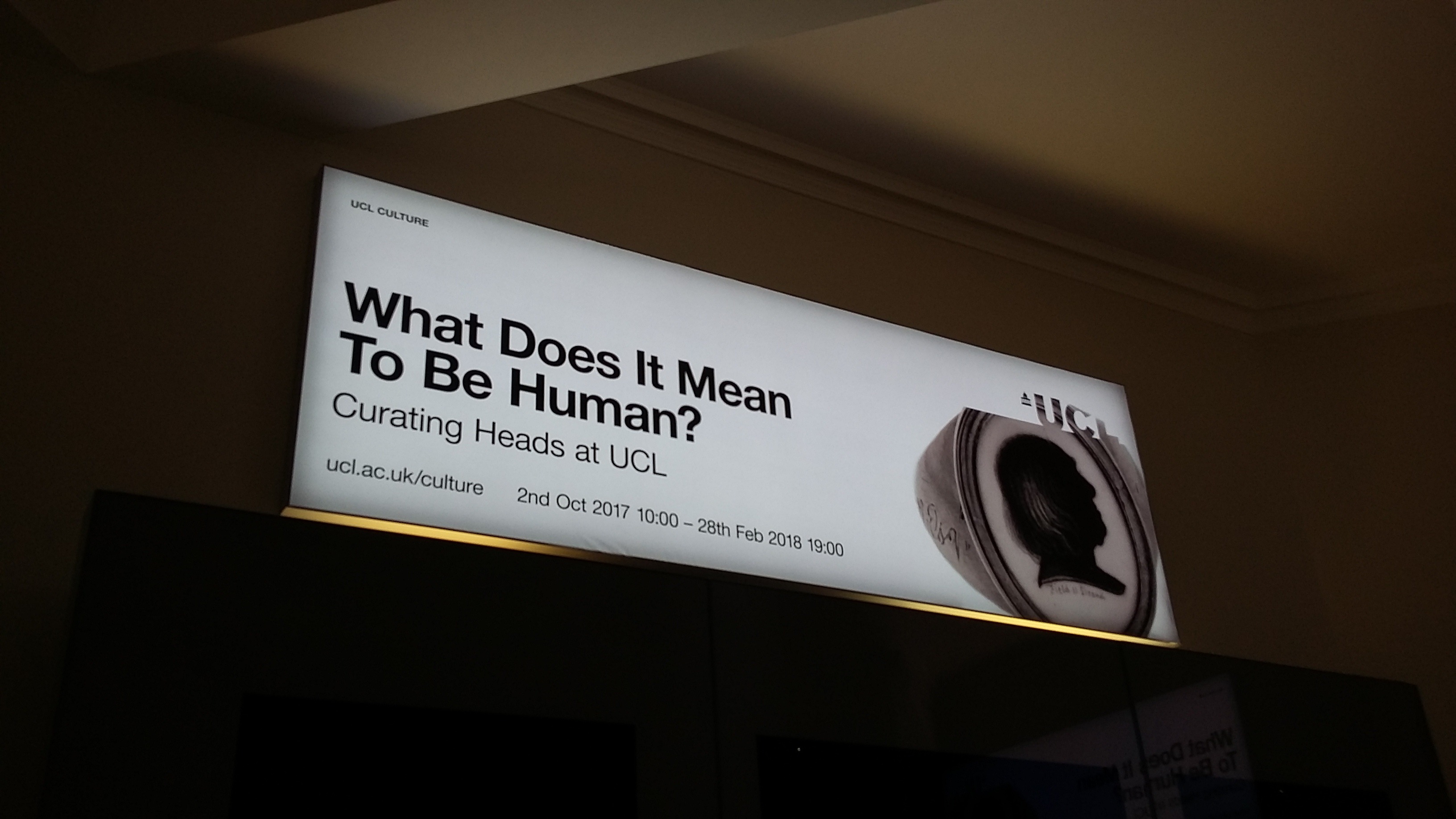
What Does It Mean To Be Human? Curating Heads at UCL – Octagon Gallery, University College London

I read about What Does It Mean To Be Human? Curating Heads at UCL online and went to check it out after work; it’s a tiny exhibition, covering the walls in the Octagon space within UCL’s Wilkins Building (entrance via Gower Street).

For several decades, the preserved heads of Jeremy Bentham and Flinders Petrie – two intellectuals related to UCL – have been hidden from view. Following on from a project to extract their DNA, this exhibition asks: what does the scientific interrogation of our dead bodies tell us about how we think about ourselves?

There are four cases: one concerning the archaeologist Flinders Petrie, one on cultural views on death and commemoration, one focusing on Jeremy Bentham, and the last case focused on DNA sequencing.

It’s a rather brief exhibition, but worth glancing at if you’re in the area.

I didn’t take any pictures of the preserved heads, feeling that this would somehow be inappropriate. I did, however, walk down the corridor and take a picture of Jeremy Bentham’s auto-icon. (Yes, that is his actual, preserved body; the head, however, is wax).

Bentham auto-icon

Opera: Passion, Power and Politics – V&A

As soon as I found out about the Opera: Passion, Power and Politics exhibition at the V&A I knew I wanted to go. So did my auntie, who loves opera, so I booked tickets for her visit in October – not long after the exhibition opened in the new Sainsbury Wing.

Rather than covering every single thing to do with the history of opera, the exhibition organisers have selected seven key dates and places in the history of this comparatively modern art form, and used them as pegs on which to hang a broad history of opera.

Venice 1642
Venice is traditionally regarded as the home of opera. During the seventeenth century, the importance of the city in international trade was in decline, but it was still a key centre for culture. With no Royal Court and a relatively lax attitude, the new art form was able to grow. The key work of this section was Claude Monteverdi’s L’incoronazione Di Poppea, the first public opera (I’ve seen his earlier L’Orfeo, but that was privately performed). It was based on historical events.

London 1711
By this time London was important on the world stage, having recently been rebuilt after the Great Fire of 1666. In 1689, Henry Purcell composed Dido and Aeneas, while Handel later wrote Rinaldo. A theatre opened in the Haymarket, specifically showing opera, though this blatant display of Italian influences on the English stage did not impress many critics. The Royal Opera House in Covent Garden opened in 1732.

Vienna 1786
Like the other cities, Vienna was enjoying a golden era of creativity during this period, when Mozart penned Le Nozze di Figaro. His opera was revolutionary in the sense that it brought servants to the fore.

Milan 1842
The opera house La Scala opened in Milan around this time, when Verdi composed Nabucco. Based on a biblical story, it nevertheless struck a chord with many Italians who sought to see their country united (which happened in 1861). ‘Va, pensiero’ became an unofficial Italian anthem and is still sung as such today.

Paris 1861
It seems to be a pattern that the upsurgence of opera in a particular city leads to the building of a new opera house: this did happen in Paris. This section focused on Wagner and his revolutionary opera Tannhauser. Wagner believed in the idea of opera as total work of art, and wrote all his libretti himself. He believed that the music should form one continuous melody, rather than being made up of separate arias and works.

Dresden 1905
This period is exemplified by Richard Strauss’ Salome, a one-act opera inspired by Oscar Wilde’s play. It tapped into contemporary ideas around the changing role of women.

Leningrad 1934
Shostakovich’s Lady Macbeth of Mtsensk shocked contemporary audiences with its depiction of female sexuality. At first acclaimed as a composer for ordinary people, Shostakovich was later accused of anti-Soviet behaviour, and Lady Macbeth was banned. 1934 was an important year in Russia because it marked the end of artistic freedom and the imposition of Socialist Realism.

The exhibition ends with a ‘world’ section in which you can see video clips from all over the world.

The exhibition has some fascinating artefacts on display: tableware used by Venetian nobility, busts of notable composers, original drawings by Aubrey Beardsley, Soviet posters advertising Shostakovich’s work. I would have liked to see more costumes, but the ones they had were impressive, including a dress covered in stars. There was a beautiful selection of items that would have been worn by fashionable Parisian opera goers, including a lace mantilla, opera glasses, and a collapsible top hat for the gentleman opera goer.

The exhibition does miss quite a bit out: I was sorry not to see more about my own favourite, Puccini. However, with such a big subject to cover, it does do a good job of exploring the history in an accessible way without overwhelming with information.

Garrick’s Temple to Shakespeare – Open House London

Garrick's Temple to Shakespeare
Garrick’s Temple to Shakespeare

On the Sunday of the Open House London weekend, I headed south again to visit Garrick’s Temple to Shakespeare, created by David Garrick for his hero William Shakespeare. Born in Hereford and raised in Lichfield, Garrick moved to London and became the most well-known and acclaimed actor of the age. In 1754 he purchased Hampton House, now Garrick’s Villa, overlooking the Thames at Hampton.

Garrick's Villa
Garrick’s Villa

His riverside garden was laid out by Lancelot ‘Capability’ Brown, and this octagonal Palladian temple was built in 1756. The temple has a dome and eight Ionic columns, making it similar in style to the temple at Chiswick House.

Bust of Garrick
Bust of Garrick

From the temple, Garrick gave money and cakes to poor children every year on May Day. He also used it for entertaining friends such as Dr Johnson, as well as for writing and storing relics to Shakespeare. Eventually he had a tunnel constructed to enable him to reach the temple from his house.

Inside the temple
Inside the temple

In 1758 Garrick commissioned a life-size marble statue of Shakespeare from the eminent Huguenot sculptor, Louis François Roubiliac *Garrick may have posed for this himself). The original version had ‘veins’ across the face, a characteristic of the marble; Garrick insisted the head was replaced. The original statue is now in the British Library; this version was given to the Trust by the British Museum.

Shakespeare sculpture

The temple eventually fell into disrepair until the late 20th century when the local council and several charities raised funds to restore the building and lay out the gardens again. It is now managed by the Garrick’s Temple to Shakespeare Trust, and contains copies of paintings from major galleries plus original 18th century prints and engravings about Garrick. It’s open on Sunday afternoons throughout the summer months and occasionally you can attend concerts here, too.

Garrick on stage
Garrick on stage

FACTS

Address: Hampton, Middlesex, TW12 2EJ

Website: garrickstemple.org.uk

Opening Hours: Sundays 2-5 March-Oct (check the website for exact dates/times)

Price: Free

The National Archives – Open House London

The National Archives

Every year as September approaches I look forward to Open House London, when normally closed buildings open their doors to the public for free. This year I spent my Saturday down at The National Archives at Kew, somewhere I’d never yet visited.

History

The National Archives are the official archive and publisher for the UK government and they also care for over 1,000 years of national documents. They are experts and leaders in the information and records management and archive fields, and focus on ensuring the future of physical and digital records.

The National Archives was created in 2003 by combining the Public Record Office and the Historical Manuscripts Commission. The building itself was built in 1977 as an additional home for the public records then held at Chancery Lane. The site used to be a World War I hospital, and it was later used by several government departments.

NA foyer

My visit

There were a number of activities and talks taking place all day. I went on a Repository Tour, which was a fascinating journey through the document shelves behind the scenes. We saw the carts zooming past the shelves, on their way to pick up books ordered by readers, and saw the lift system that sends requested books down to the reading room. Extra-valuable items can only be viewed in a specially-constructed strongroom, where you’re only allowed out by a member of staff. I also joined a Collection Care Studio tour, which was a fascinating chance to explore the ways in which the NA look after the objects in their collection. These included the protection of fragile or unusual objects with 3D printing technology, iron gall ink and the Naval Knights of Windsor, conservation as part of the digitisation process, care of highly used documents, caring for Terence Cuneo’s war paintings, packing items for loans and collections, wax seals, x-rays and the hunt for arsenic wallpaper samples, and the emergency plan.

Afterwards I attended a couple of talks: The Public Record Office, Kew: Its place in British Architecture of the 1970s and The Changing Face of Kew. I also wandered around the public areas of the building and saw a couple of screenings of films from the archives including excerpts from Blue Peter. There were a few displays of documents about the building of the PRO at Kew and the 40th anniversary of the National Archives at Kew.

Domesday book

Finally I popped into the Keeper’s Gallery, which has a permanent exhibition about the history of the Archives and its most popular holdings, including the Domesday Book. It proved an interesting way to round off my day.

FACTS

Address: Kew, Richmond, Surrey, TW9 4DU

Website: nationalarchives.gov.uk

Opening Hours: Tues-Sat 9-5 (late opening Tues and Thurs)

Price: Free

Croydon Airport Visitor Centre

Croydon Airport
Croydon Airport

When you think of airports in London, you probably think of Heathrow or Gatwick, but before these airports, there was… Croydon. Based in South London, it was the main airport for London before it was replaced by Northolt Aerodrome, London Heathrow Airport and Gatwick Airport. Croydon Airport was Britain’s first major international airport, coming into being during World War I and closing in 1959.

Croydon Airport
Croydon Airport

The Historic Croydon Airport Trust, also known as the Croydon Airport Society, was founded in 1978 and became a registered charity in 1983. It aims to conserve the history and heritage of London Croydon Airport for the community. The Croydon Airport Visitor Centre is a ‘micro museum’ run by the charity, and is open to the public once a month. I headed down one Sunday to find out more.

Model of the airport
Model of the airport (plane is not to scale…)

History

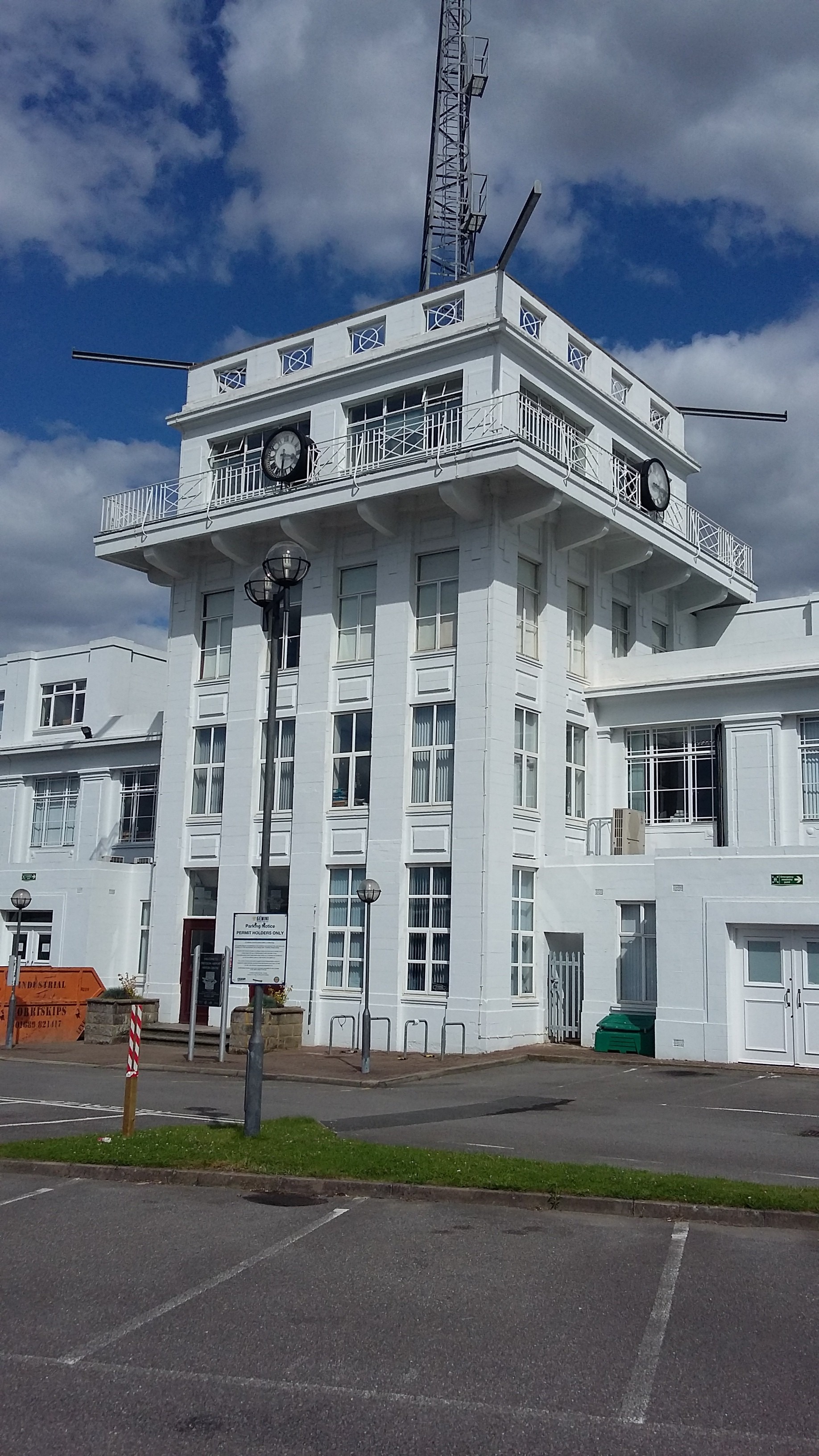
London Croydon Airport was once Britain’s major and only international gateway airport. It played a significant part in early twentieth century British history and helping to shape global air travel. The airport was the birthplace of Air Traffic Control – the control tower here was the world’s first. It also played an important part as the site of many world record-breaking flights, including those undertaken by Amy Johnson. The international distress call ‘Mayday’ was coined here.

Inside the airport
Inside the airport

Airport House, as the terminal building and control tower are now known, are Grade 2* listed.

Control tower
Control tower

My Visit

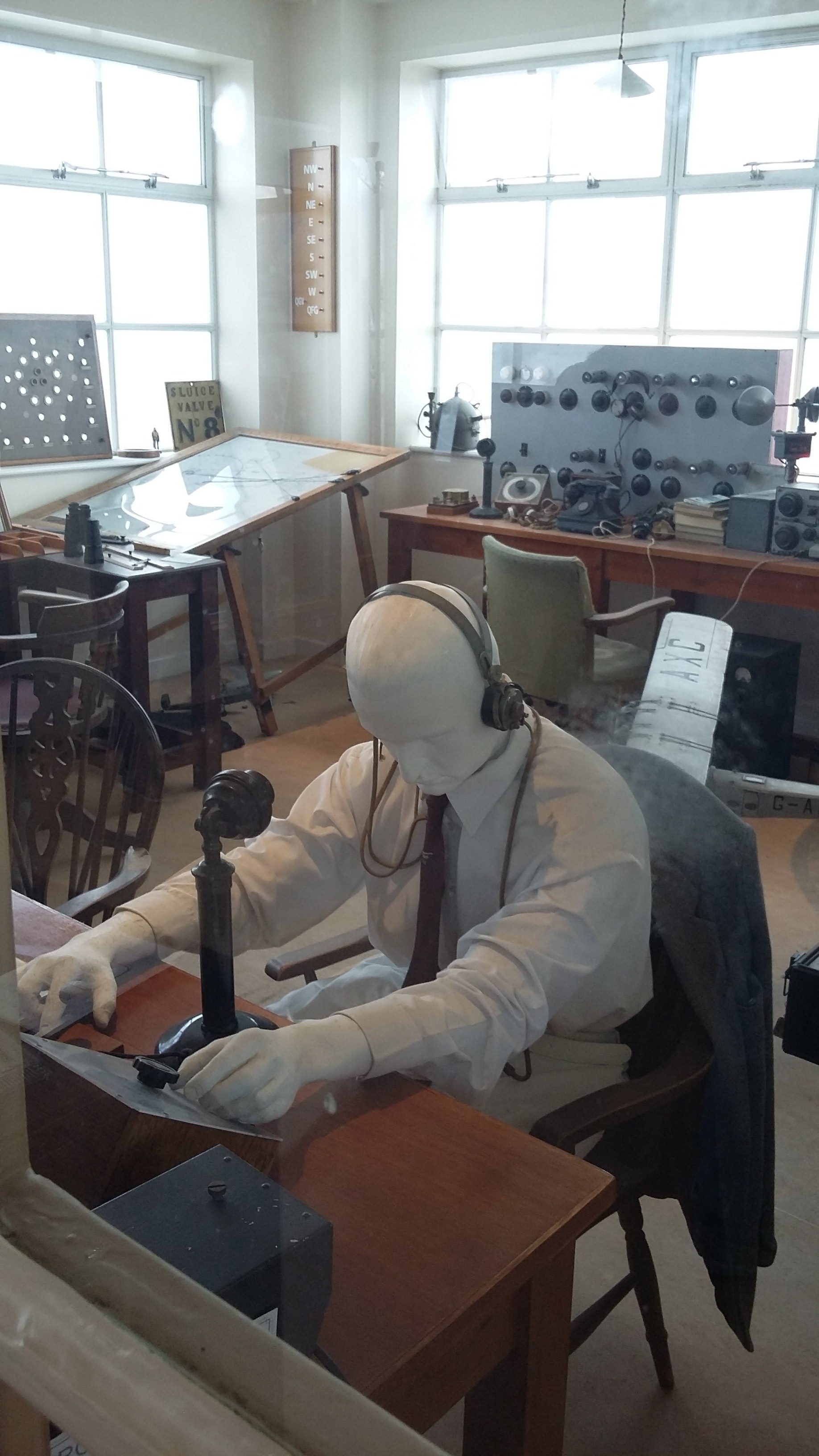
I joined a tour pretty much as soon as I arrived. My guide was very informative and took us around the building, showing us where visitors used to arrive and depart, taking us to the control tower at the back before heading up the stairs to view the displays. He regaled us with interesting historical info that complemented the exhibition.

In the control tower

There are some flight simulator games at the top of the control tower to keep kids happy, but the whole site should be interesting for adults. There are some original aeroplane seats which seemed much more comfortable and luxurious than the ones we get nowadays, and displays about the history of the site. It made me think of Agatha Christie for some reason, and made me feel nostalgic for the good old days when you could turn up at the airport with a bag and hop on a plane without all the queuing and security checks we have to go through now.

A visit to Croydon Airport is definitely worth it. Keep an eye on the website for details of open days.

FACTS

Address: Airport House, Purley Way, Croydon, CR0 0XZ

Website: croydonairport.org.uk

Opening Hours: First Sunday of the month, 11am-4pm.

Price: Free