Crown to Couture – Kensington Palace

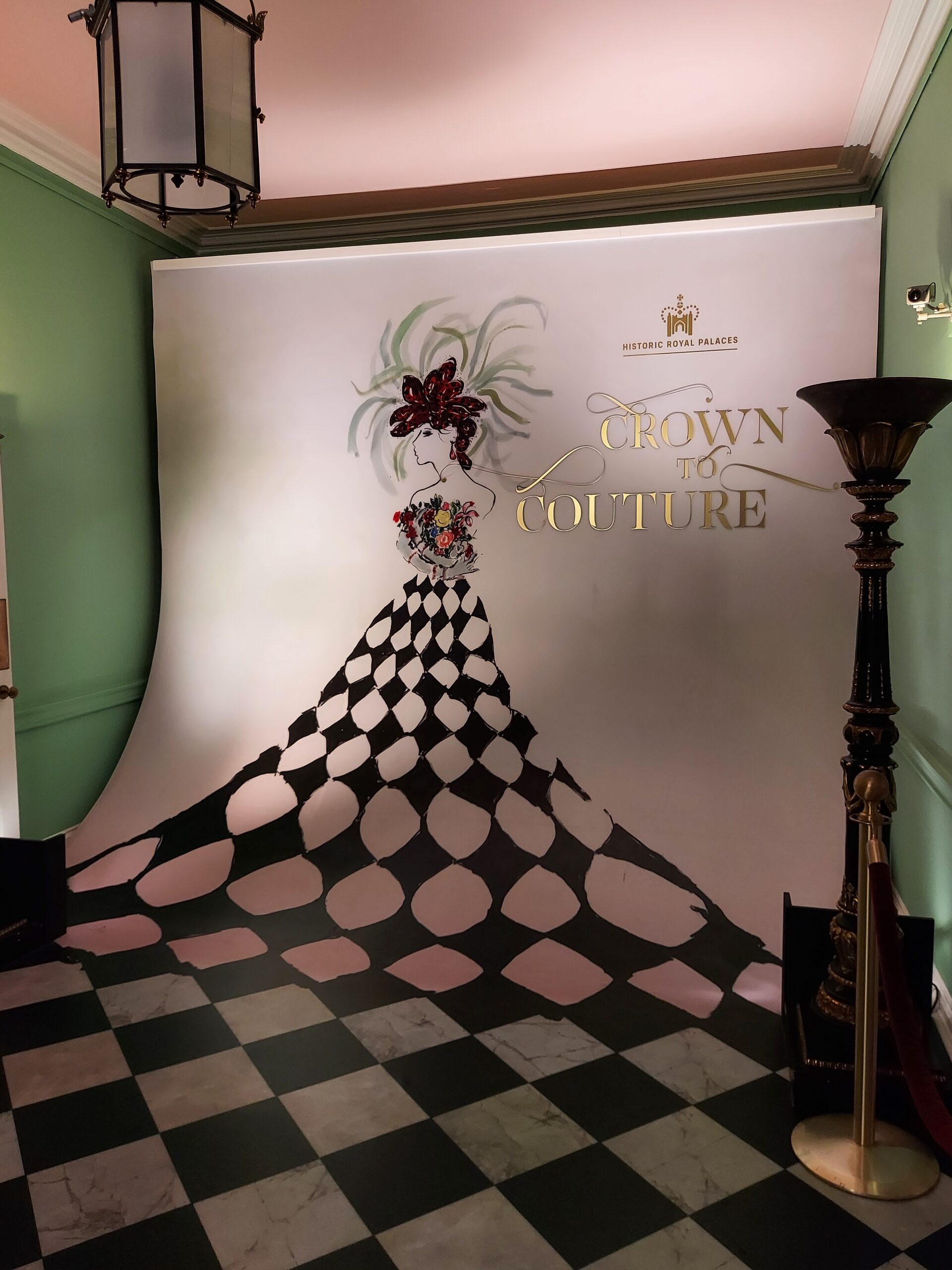
entrance to the Crown to Couture exhibition

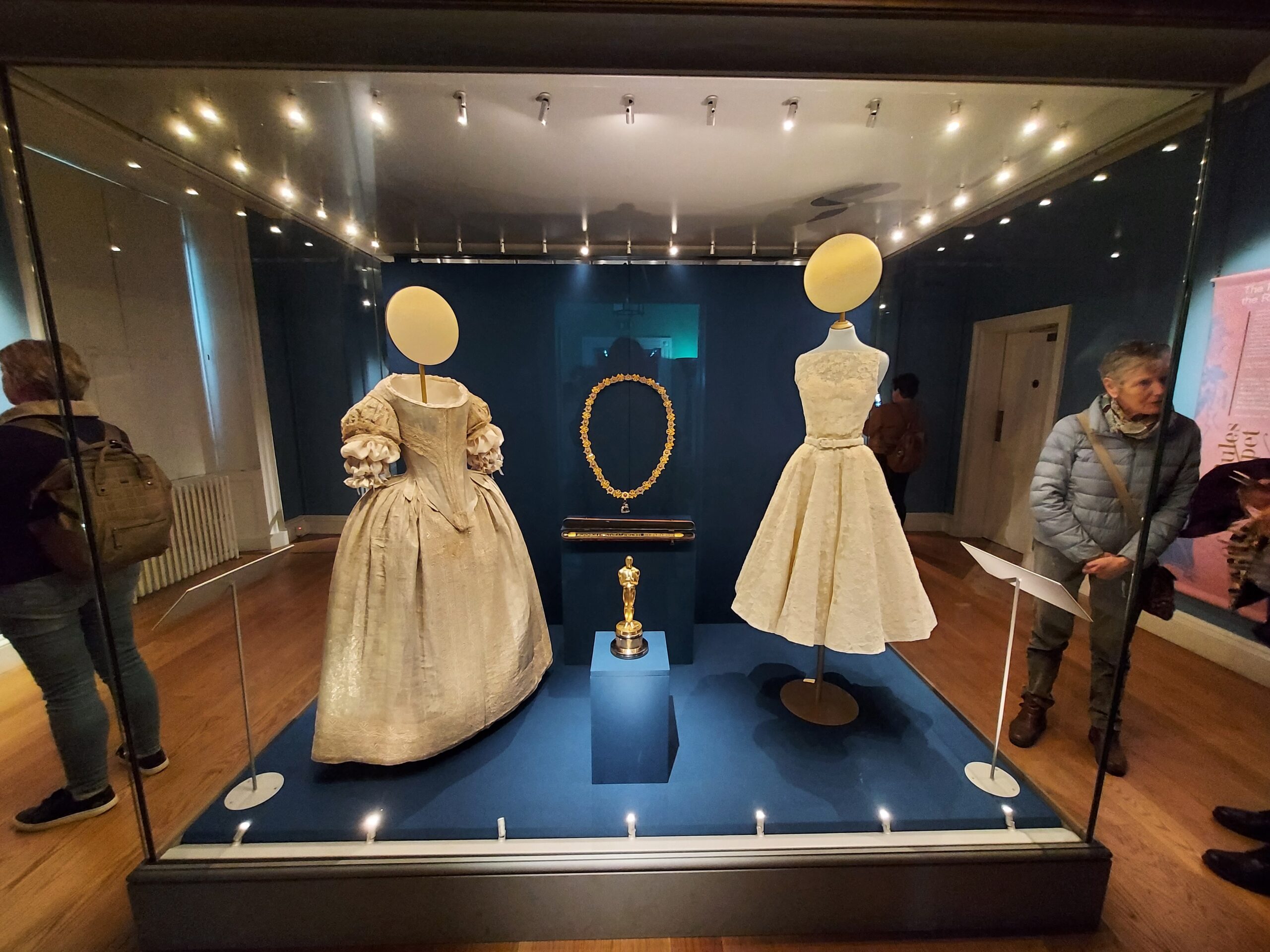
I attended the Crown to Couture exhibition at Kensington Palace one sunny Sunday in October. With 200 artefacts placed around the State Apartments, this is the largest exhibition ever held by Kensington Palace. It compares and contrasts eighteenth-century court fashions, then the height of style and glamour, with Hollywood designer outfits from the 1950s to the modern day.

While the eras are different in many ways, they have a lot in common. Both featured outlandish outfits worn to get the wearer noticed – either by the king, or by the media. As a rule, they are completely impractical – see the ridiculously wide ‘mantua’ dresses of the 1700s, or Katy Perry’s ‘chandelier’ dress – but they were also often beautiful, and sometimes made statements in other respects, such as Billy Porter’s outfits chosen to protest against gender and racial norms.

This rich, fascinating exhibition is well worth a visit. It is excellently put together and has some jaw-dropping costumes on display.

An eighteenth-century court dress and a 1950s Hollywood dress

Spirit of Invention – The National Archives

I visited the Spirit of Invention exhibition at The National Archives, partly to get inspiration for my RBC Inventor badge, but also because I was interested in seeing the wacky Victorian inventions on display, alongside intriguing modern creations.

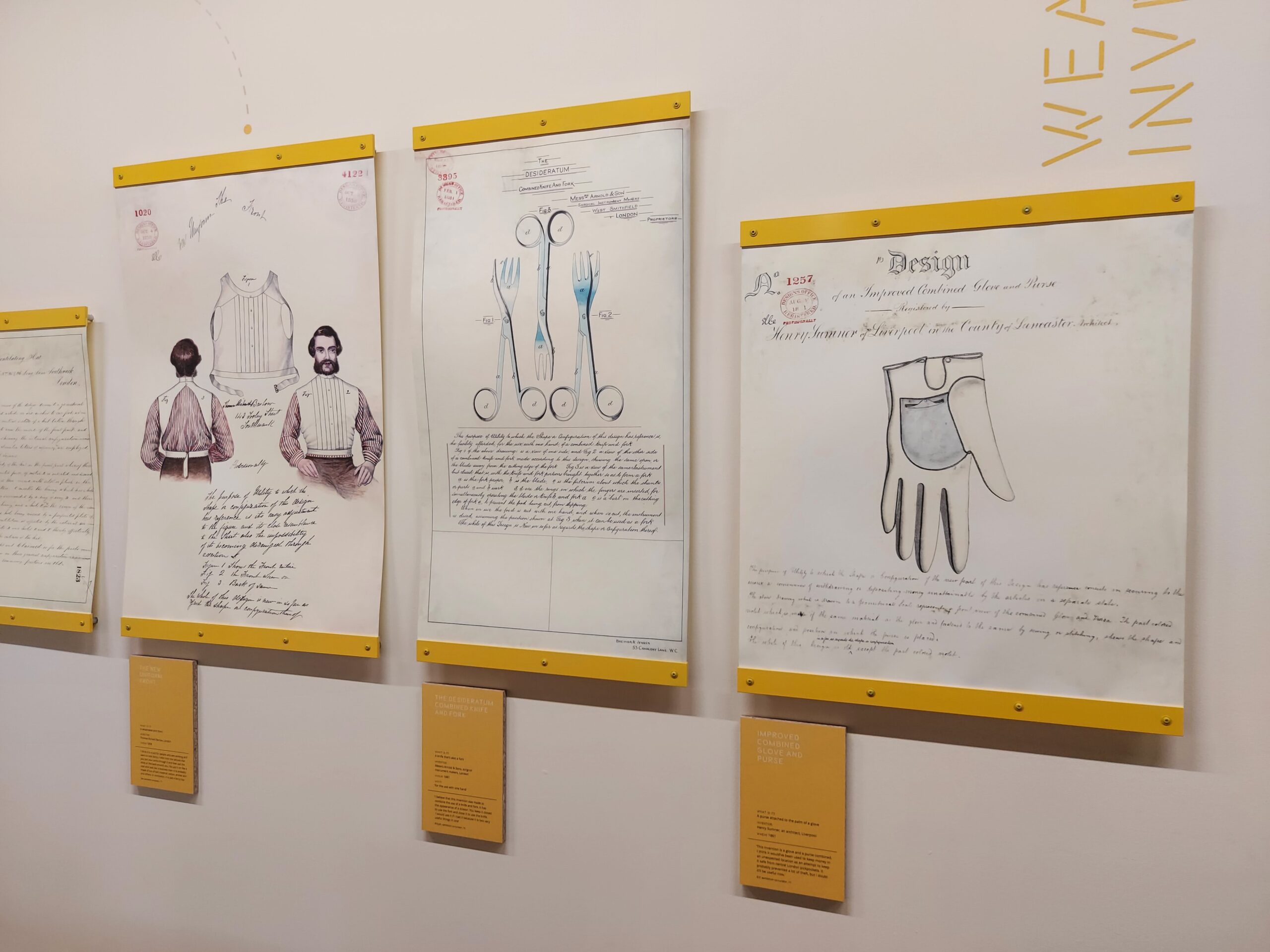
Board for the Spirit of Invention exhibition

Innovation was rife during the nineteenth century, thanks to a combination of industrialisation, economic prosperity and societal change. In 1843, the Utility Designs Act made the process of protecting an idea much simpler and cheaper, so ordinary people were keener to get involved with inventing.

One of the most interesting and potentially useful inventions was the combined knife & fork by Messrs Arnold & Son. By making it easier to eat a meal with only one hand, it helped those with certain disabilities. John Mechi and Charles Bazin created the United Service Travelling Case, which even now looks handy for taking on holiday.

Some Victorian design ideas

The modern inventions explored in the exhibition are no less intriguing. For example, the Soul Cap is a swimming cap designed to accommodate particularly thick and full hair. It is designed for those with afro hair, ensuring that Black people can also protect their hair while in the pool. The ‘Hero Arm’ is a prosthetic arm with transferable covers, so wearers can use an arm designed to look like Iron Man or other superheroes.

The exhibition was great fun and gave me plenty ofinspiration for the badge!

St Mary’s Church, Ealing: Open Day

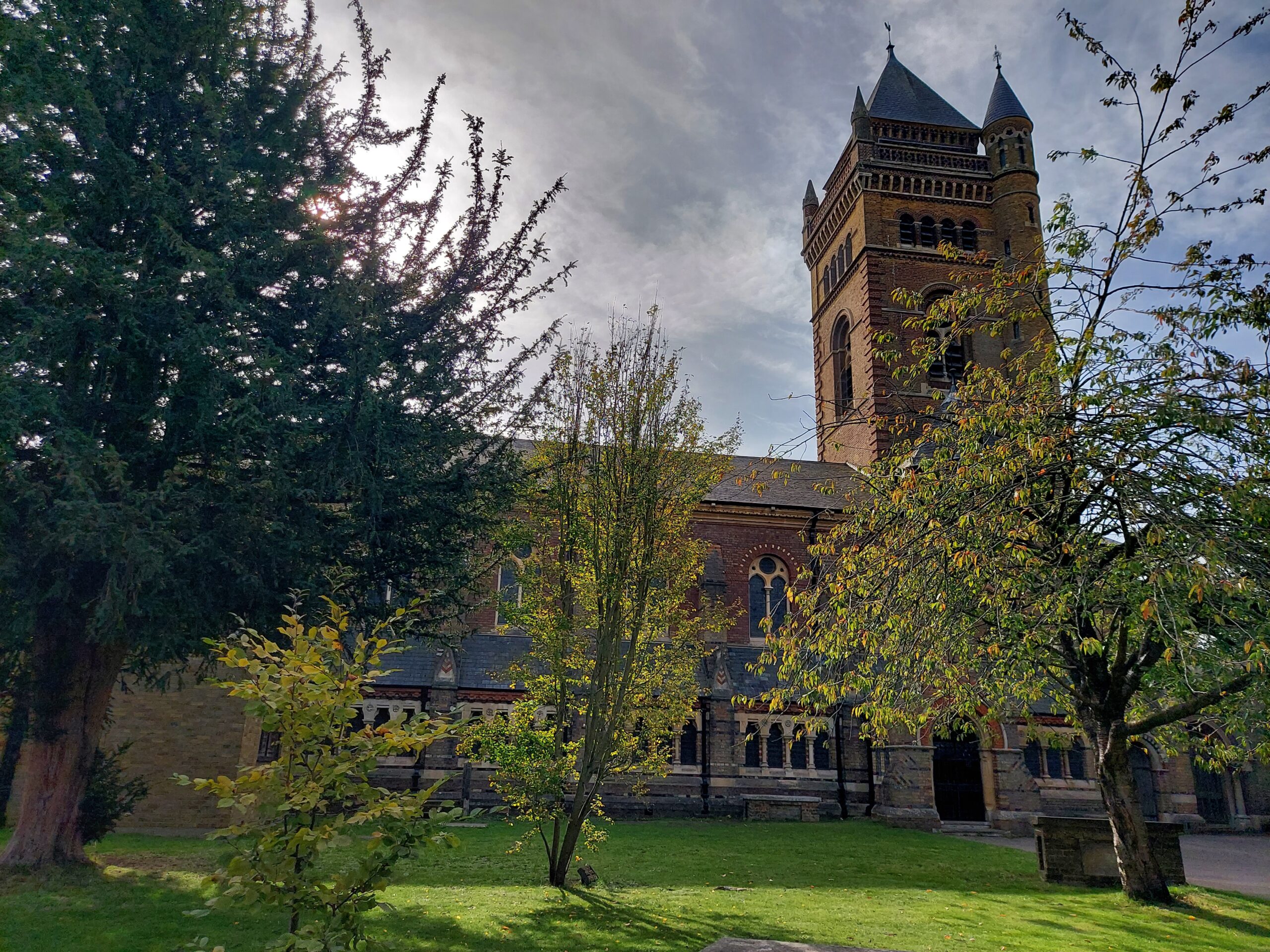
St Mary's Church seen from the side

I’m not religious at all, but I find churches interesting from a historical point of view, so when my local church, St Mary’s Ealing, had an open day recently I made sure to go.

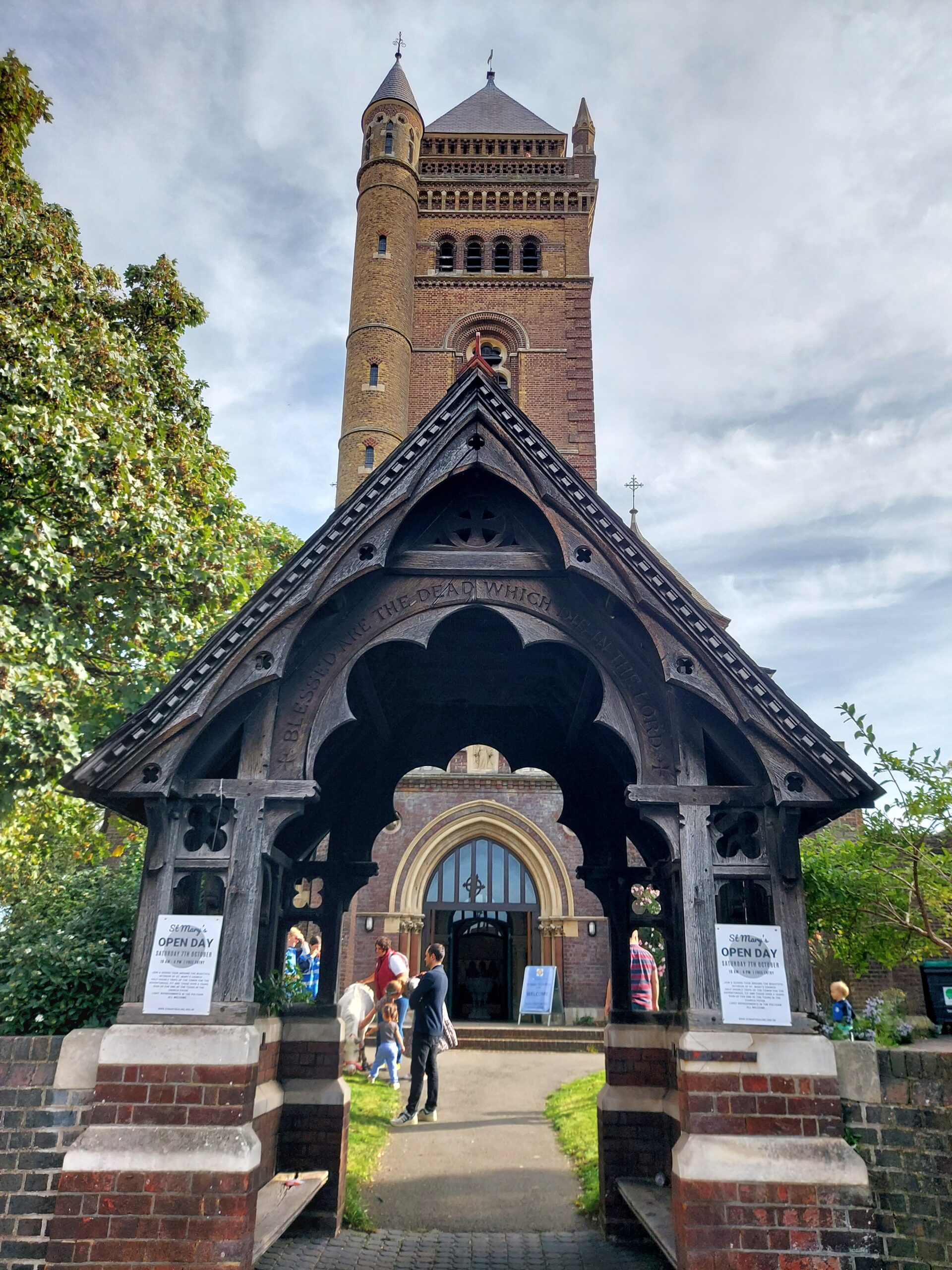
There has been a church on the site for almost a millennium. Located on St Mary’s Road on the way from Ealing Broadway to South Ealing, the Grade II listed church originally marked the centre of Ealing. As the only church in a large parish stretching from Brentford towards Wembley, it was a key landmark in the area. Richard Smart, the vicar at the end of the sixteenth century, compiled a census recording a total of 427 inhabitants in the area. The only two roads from London to the West passed through the parish, and travellers often stopped to rest at the parsonage.

St Mary's Church seen from the front

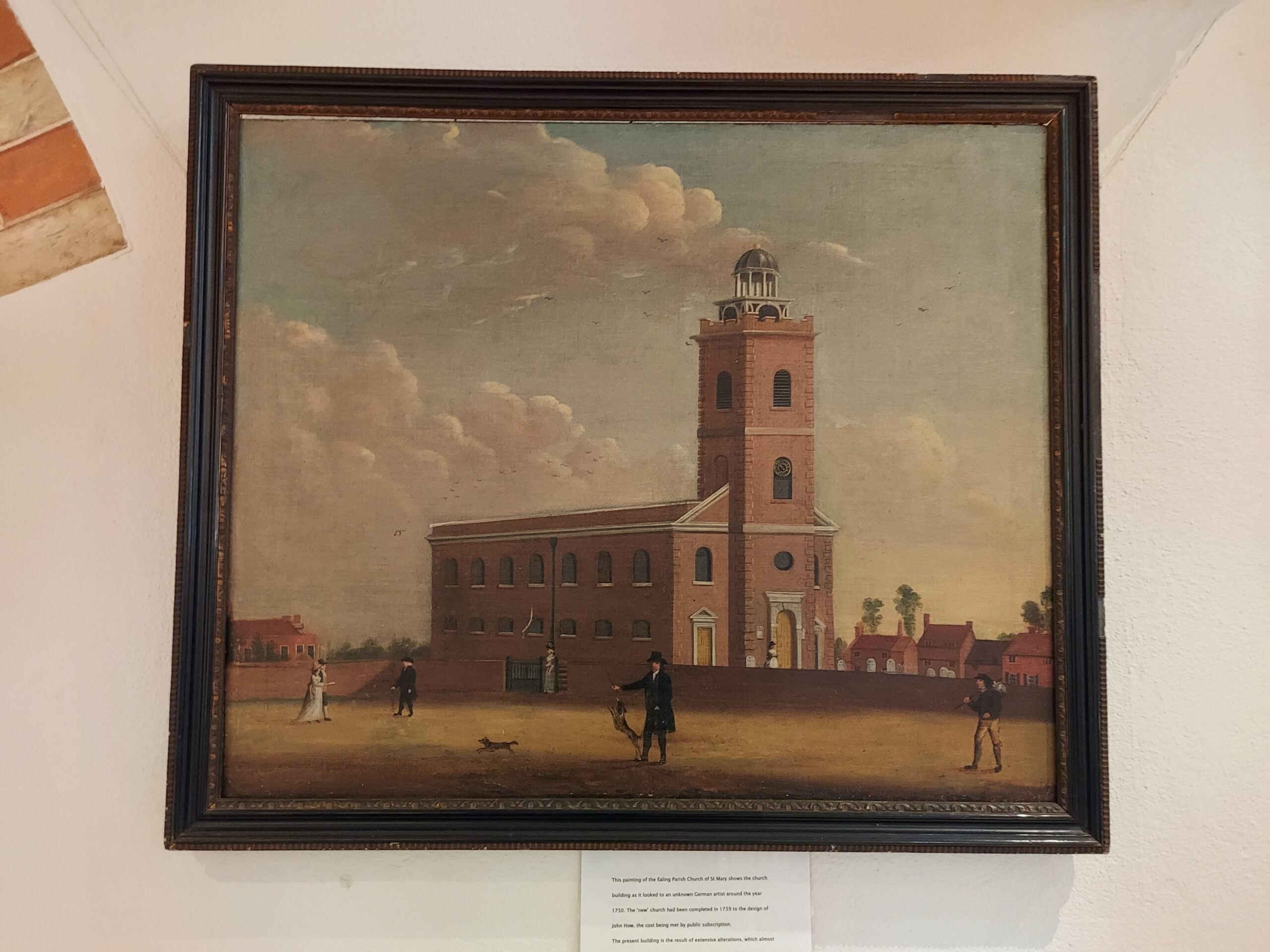
In 1642, during the English Civil War, the church was severely damaged by Cromwell’s troops. In 1650, a parliamentary survey described St Mary’s as “ruinated and lying open since the plundering”. The Plague, which followed soon after, did not help, as many parishioners died. The original medieval church – now neglected and of which, sadly, no pictures survive – was demolished in 1720, to be replaced by James Horne’s design in 1740.

An eighteenth-century painting of the churchThe church as it looked in around 1750

Once the railway reached Ealing in 1838, the area’s population began to grow rapidly, and the centre began to shift towards what is now Ealing Broadway.

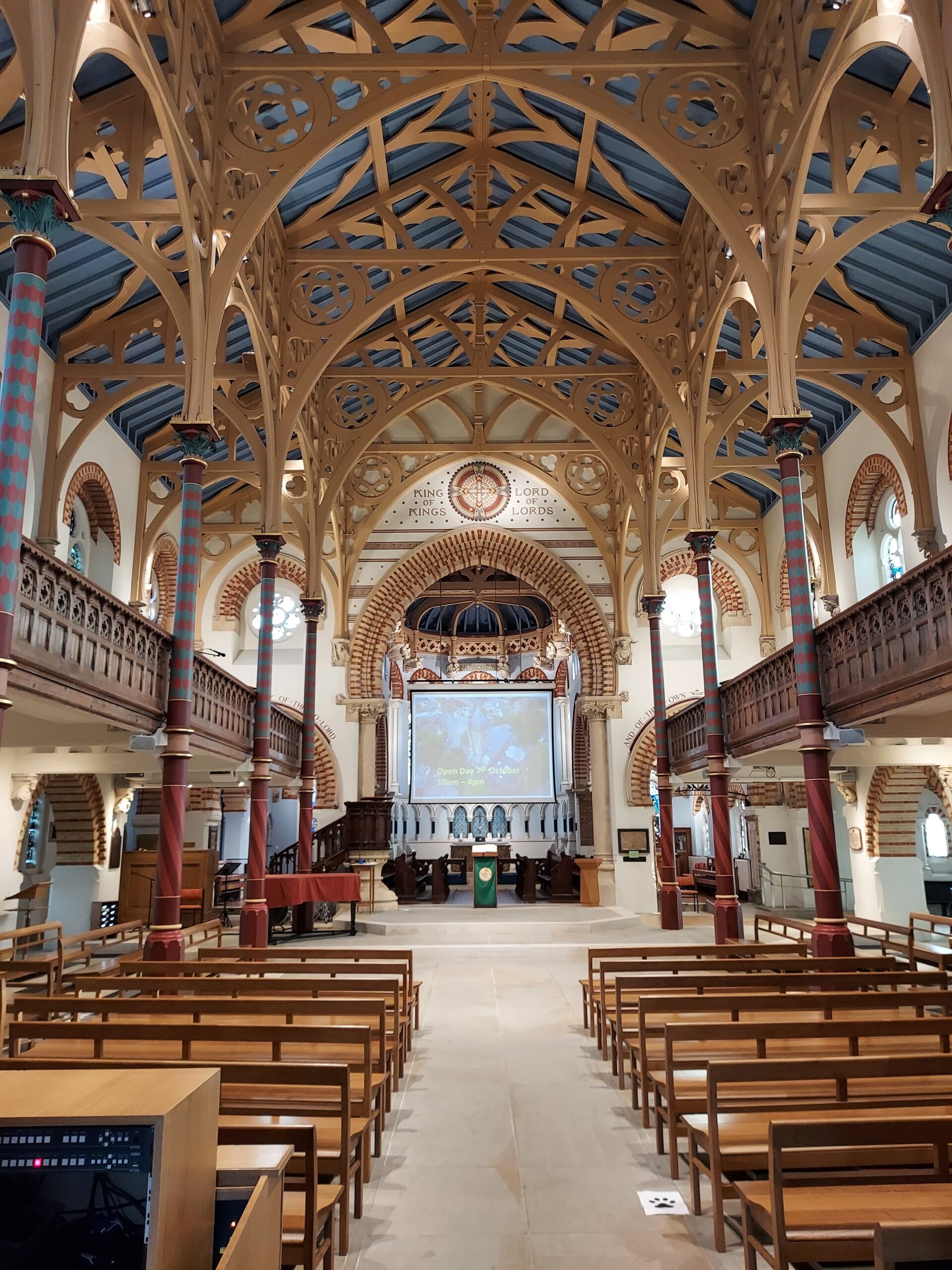
Between 1865 and 1873, S. S. Teulon adapted and enlarged the Georgian church, so that it resembled a Greek Byzantine basilica. A vestry was added in 1887 and the organ enlarged in 1927, while further redecoration took place in the 1950s and the ‘Polygon’ building – used as a community space – was built in 1978. The church was restored in 2003.

The inside of St Mary's Church

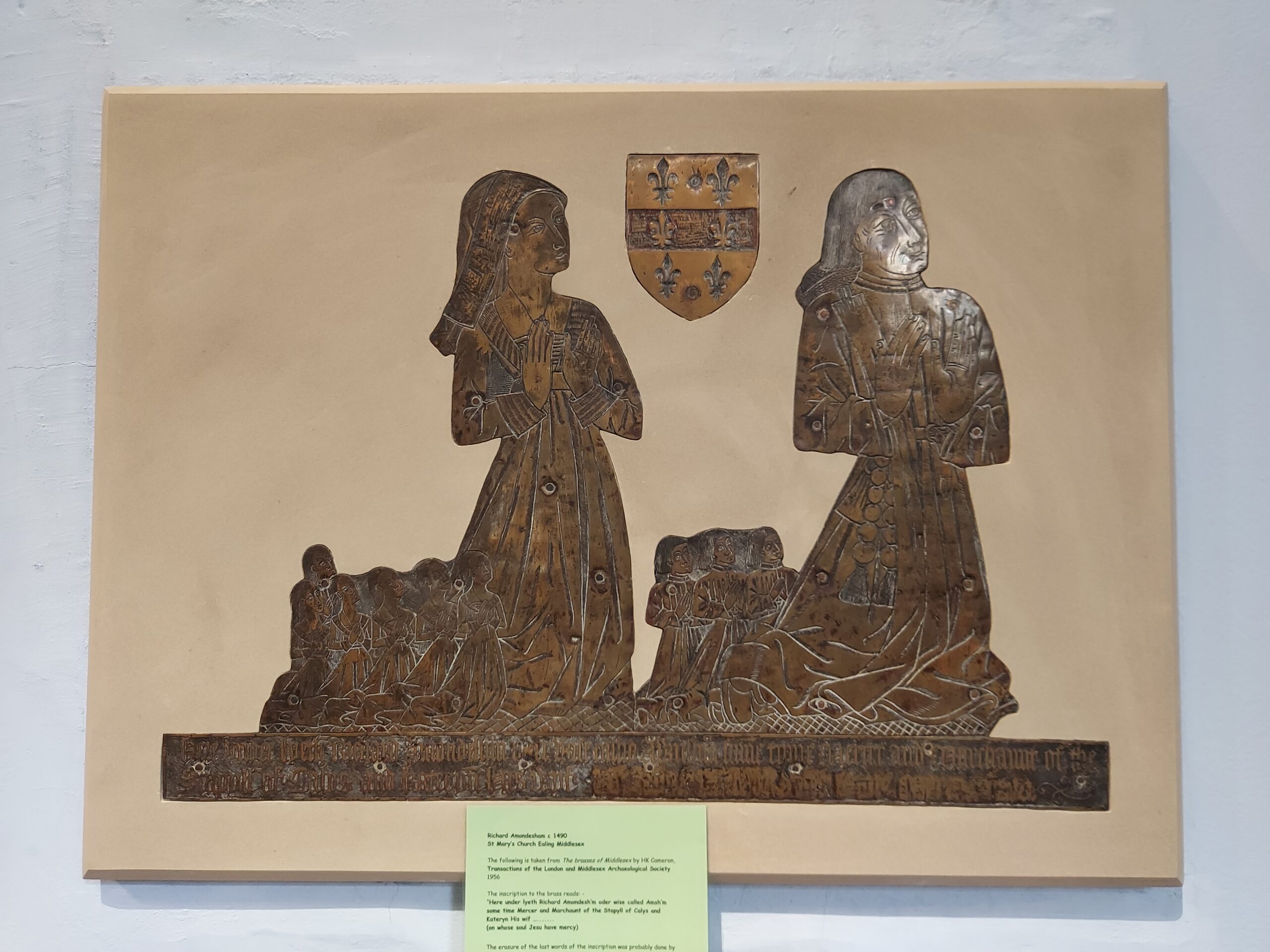
Victorian stained glass windows were commissioned by Thomas Boddington, who lived at Gunnersbury Lodge. From the old church, wall tablets and a medieval brass to Richard and Kateryn Amondesham (around 1490) were retained.

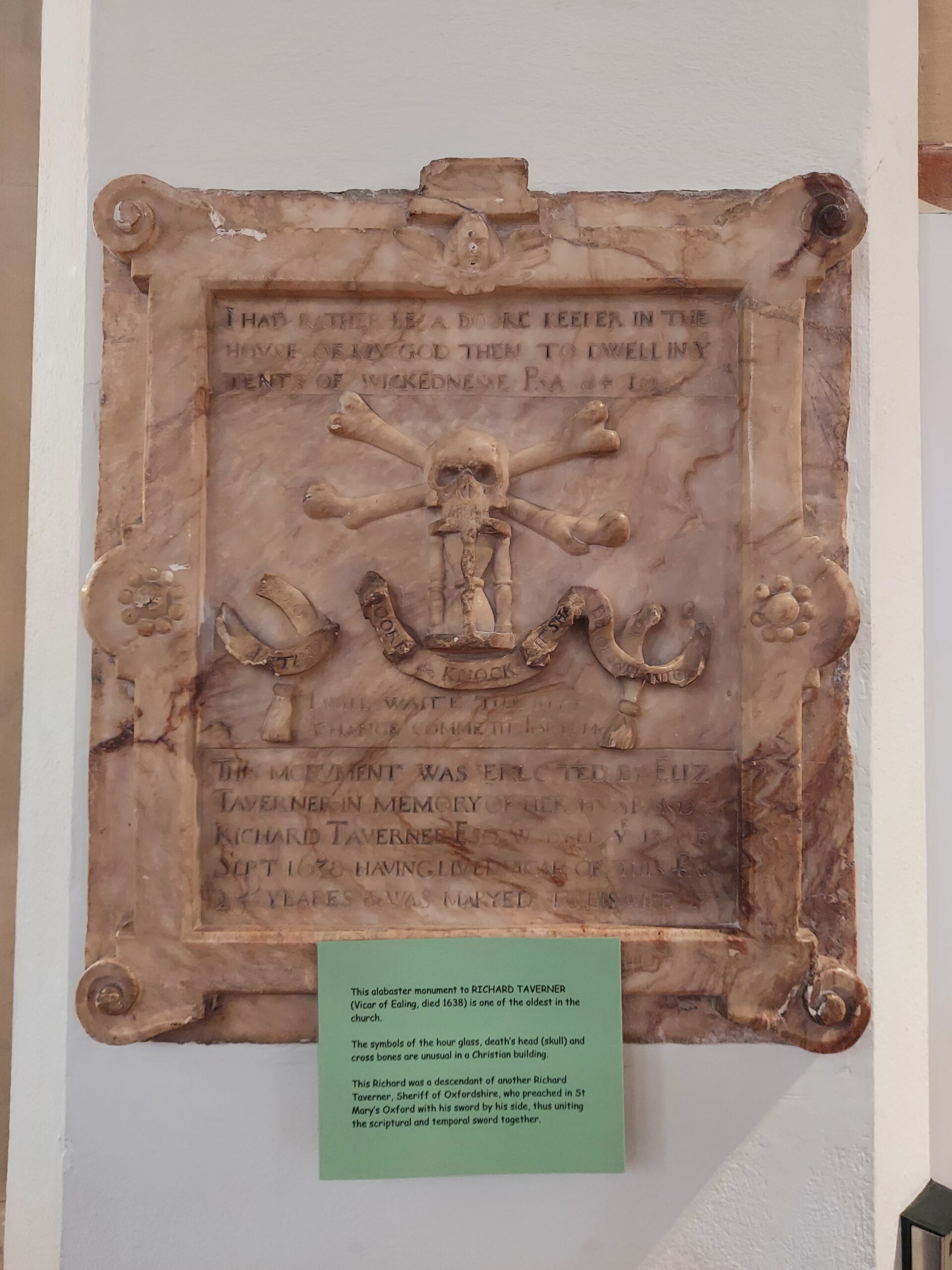
Alabaster monument to Richard Taverner

medieval brass to Richard and Kateryn Amondesham

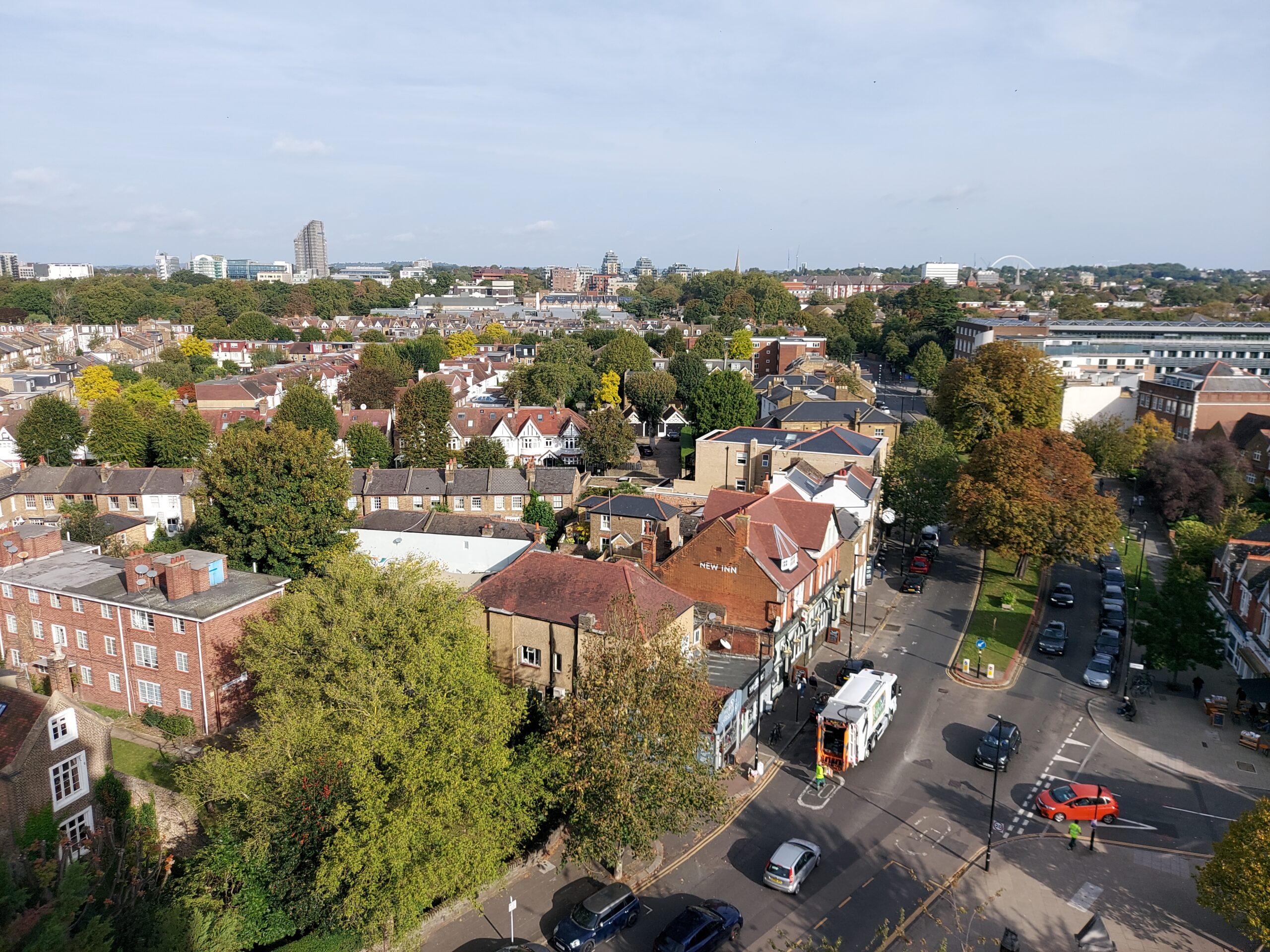
Members of the Church were on hand to take groups of lucky visitors up the tower. It was a hard climb but the beautiful views were worth it.

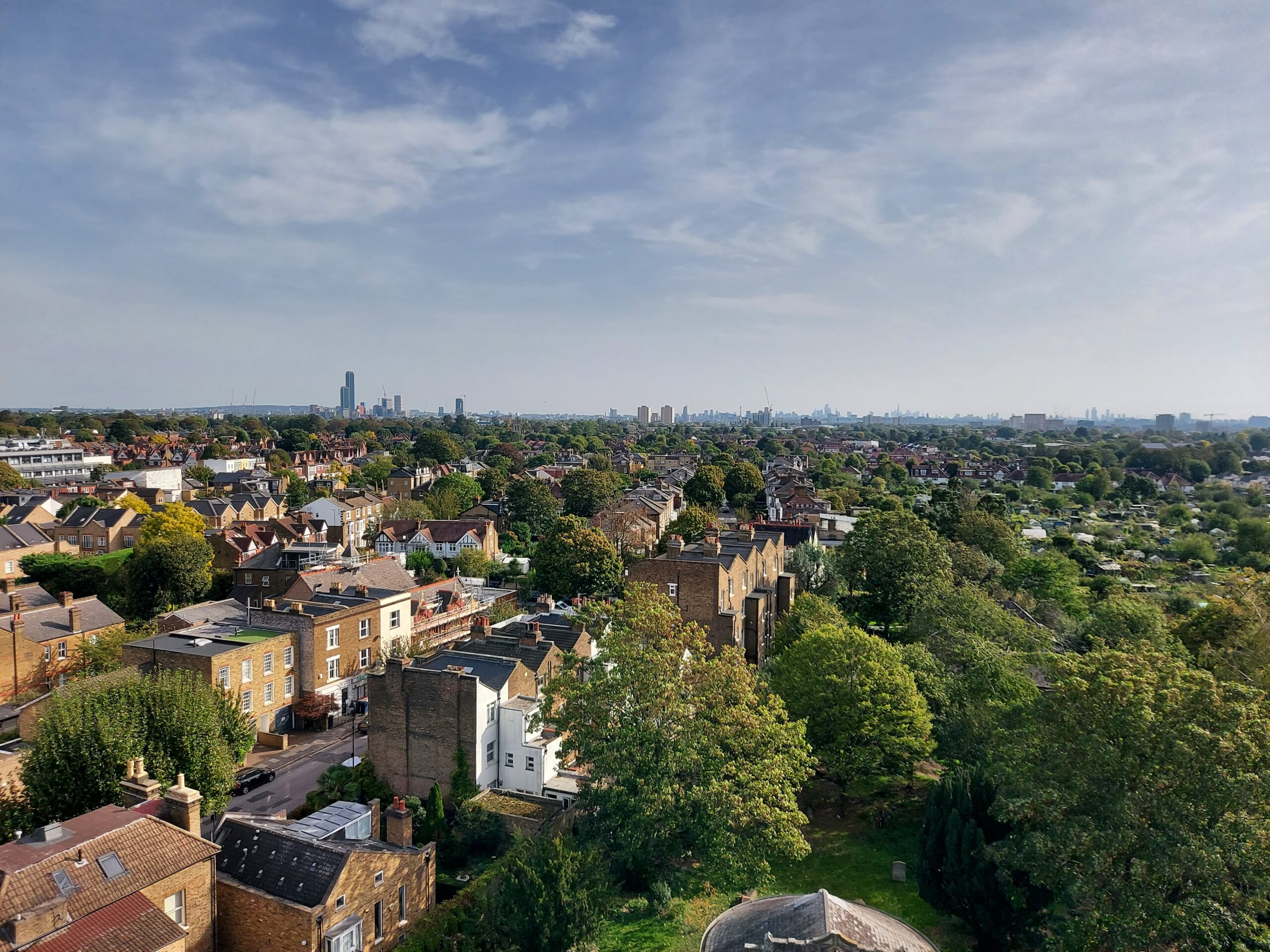
South Ealing Road, looking north, with Wembley Stadium visible in the distance

Looking east towards London

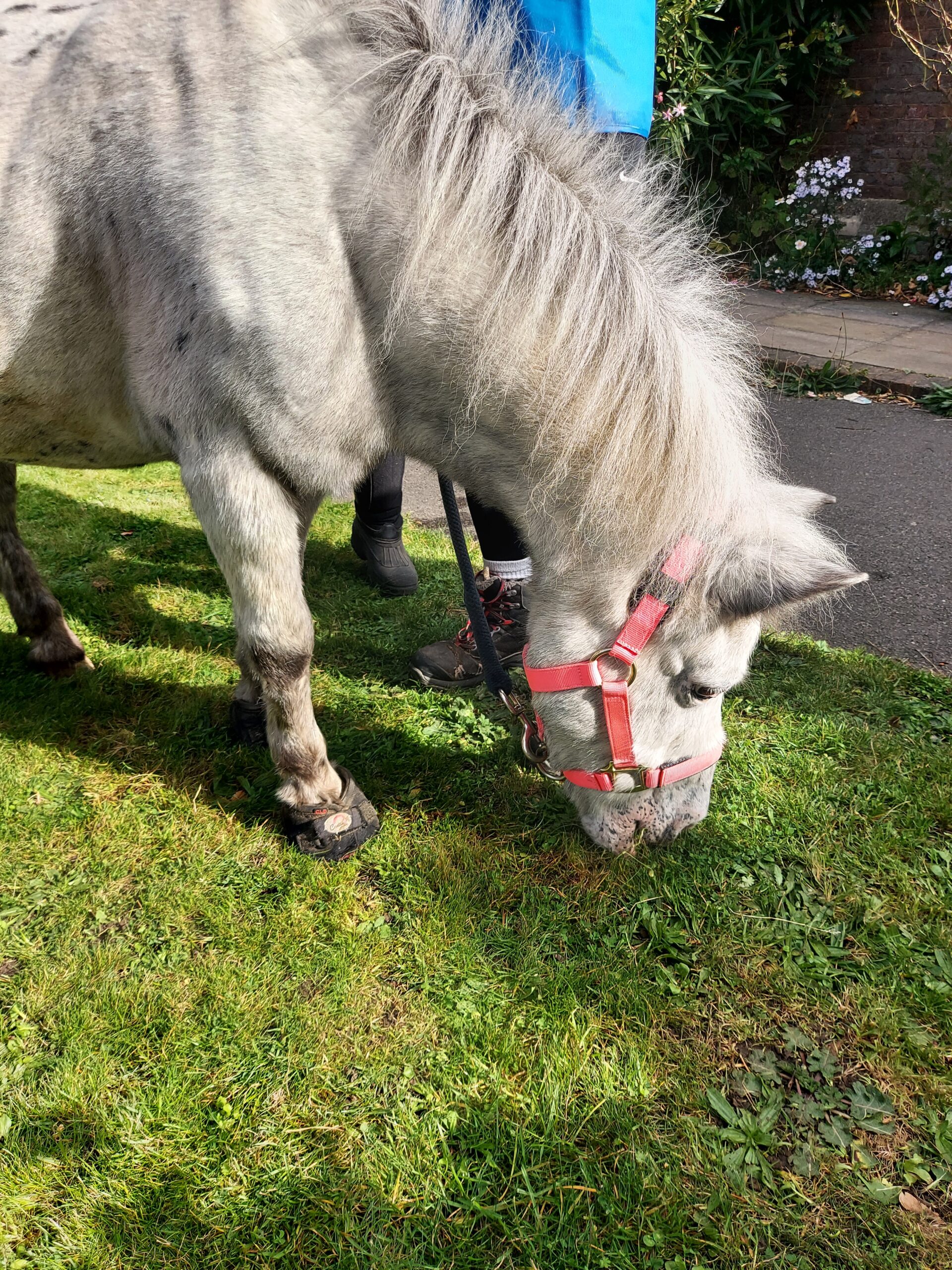
Finally, as part of the open day some gorgeous ponies had been brought over for a visit from a nearby riding school!

Late Night Keats: Frankenstein – Keats House

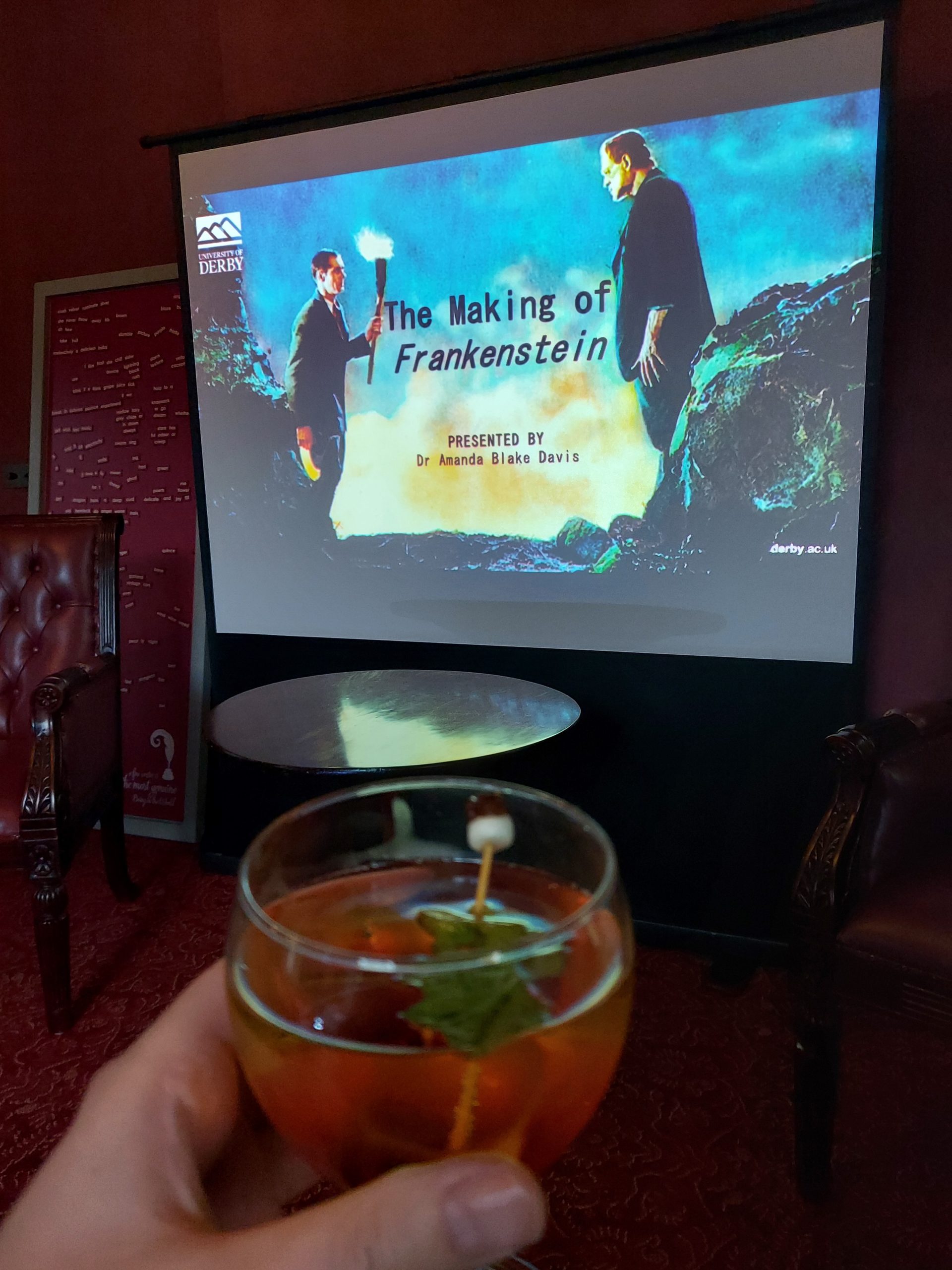
Presentation screen 'The Making of Frankenstein'

It’s years since I’ve been to Keats House, but I decided to go along one evening in October for a special event inspired by Mary Shelley’s Frankenstein. The highlight of the evening was a talk by Dr Amanda Blake Davis about the making of Frankenstein – the original inspiration and novel and subsequent stage and screen adaptations. It was interesting to hear about the context of the time and the idea of ‘the spark of life’ put forward by Erasmus Darwin.

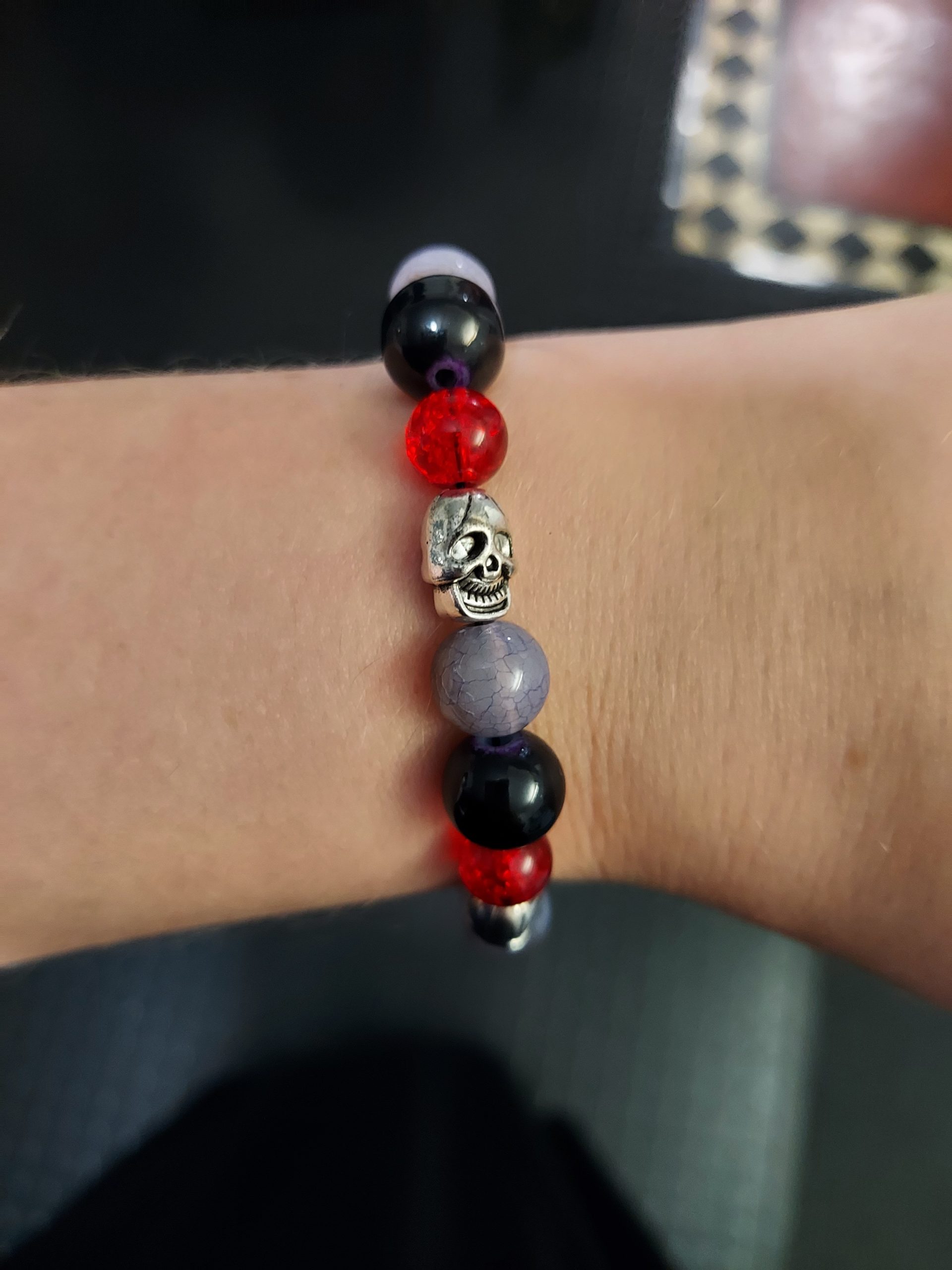
Another fun experience was ‘Mary Shelley’s Literary Salon’, where we got to listen and speak to Mary Shelley herself! I also enjoyed myself making a gothic bead bracelet with spooky colours and skeleton beads.

A purple, lilac and red bracelet with skull beads

St Augustine’s Tower – Open House London

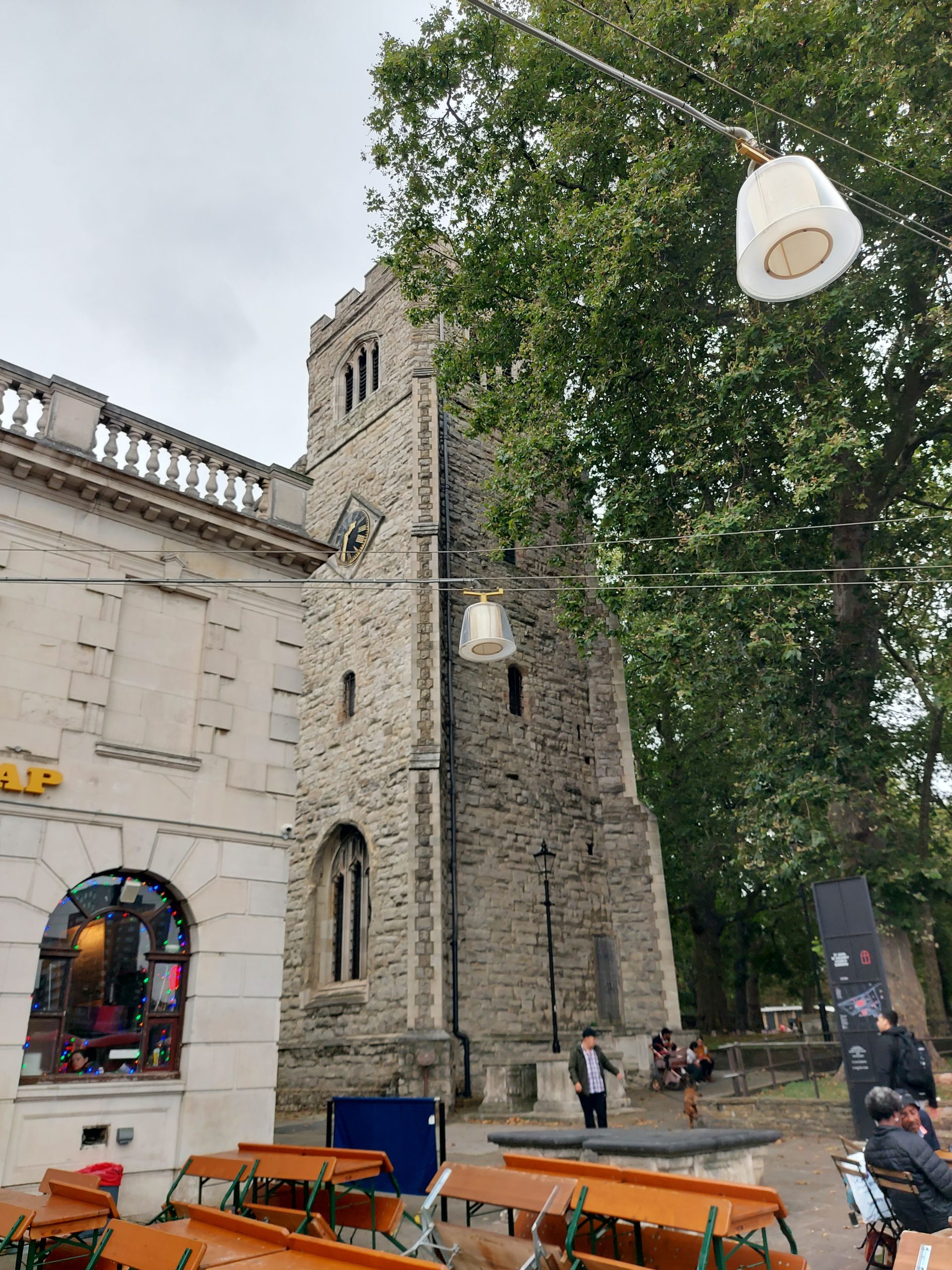
St Augustine's Tower

As part of my Advanced Community Service badge for Rebel Badge Club, I had to take part in three one-off volunteering projects. One of the projects I chose was helping out at an Open House London event, as I have attended many of these as a visitor over the years.

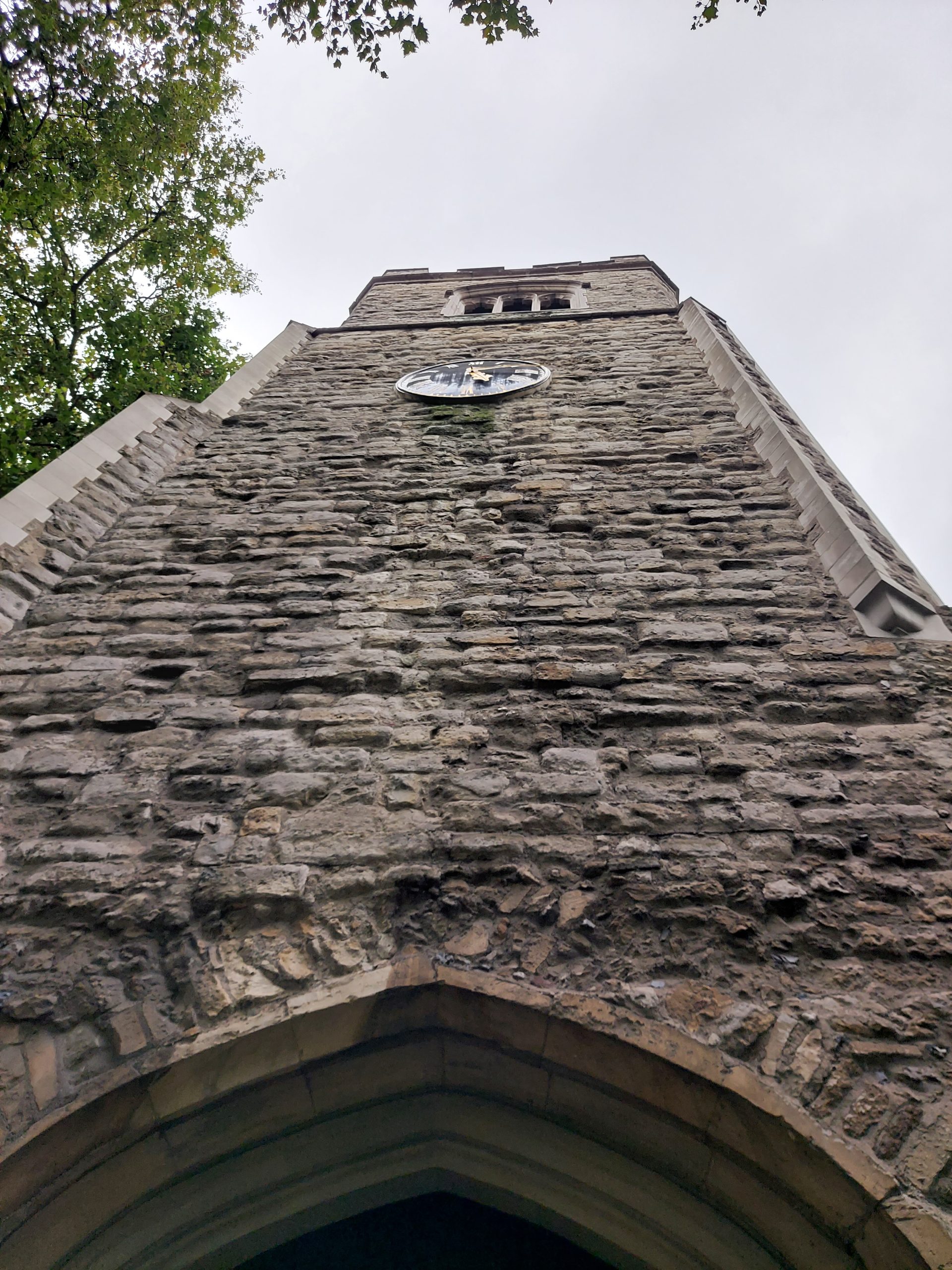
I ended up helping out at St Augustine’s Tower. Grade I listed, this is the oldest building in Hackney, and stands in the centre of the original village. It is what remains of the Church of St Augustine, built at the end of the thirteenth century and later renamed to St John.

A close up of the tower

Despite extensions and additions, the church was deemed too small for the growing congregation in Hackney, and a new church was commissioned and designed by James Spiller, completed in 1797. Built without a steeple, one was eventually added in 1814, but it was not strong enough to bear the weight of the bells, so these remained with the original tower. This ensured that the tower was saved when the rest of the church was demolished. Even after the bells were finally moved in 1854, the tower was left standing, partly because pulling it down seemed more trouble than it was worth.

Hackney Council bought the tower in 1929 to save it from being demolished. Hackney Historic Buildings Trust has owned it since 1990, and has raised money to undertake repairs and open it to the public more often.

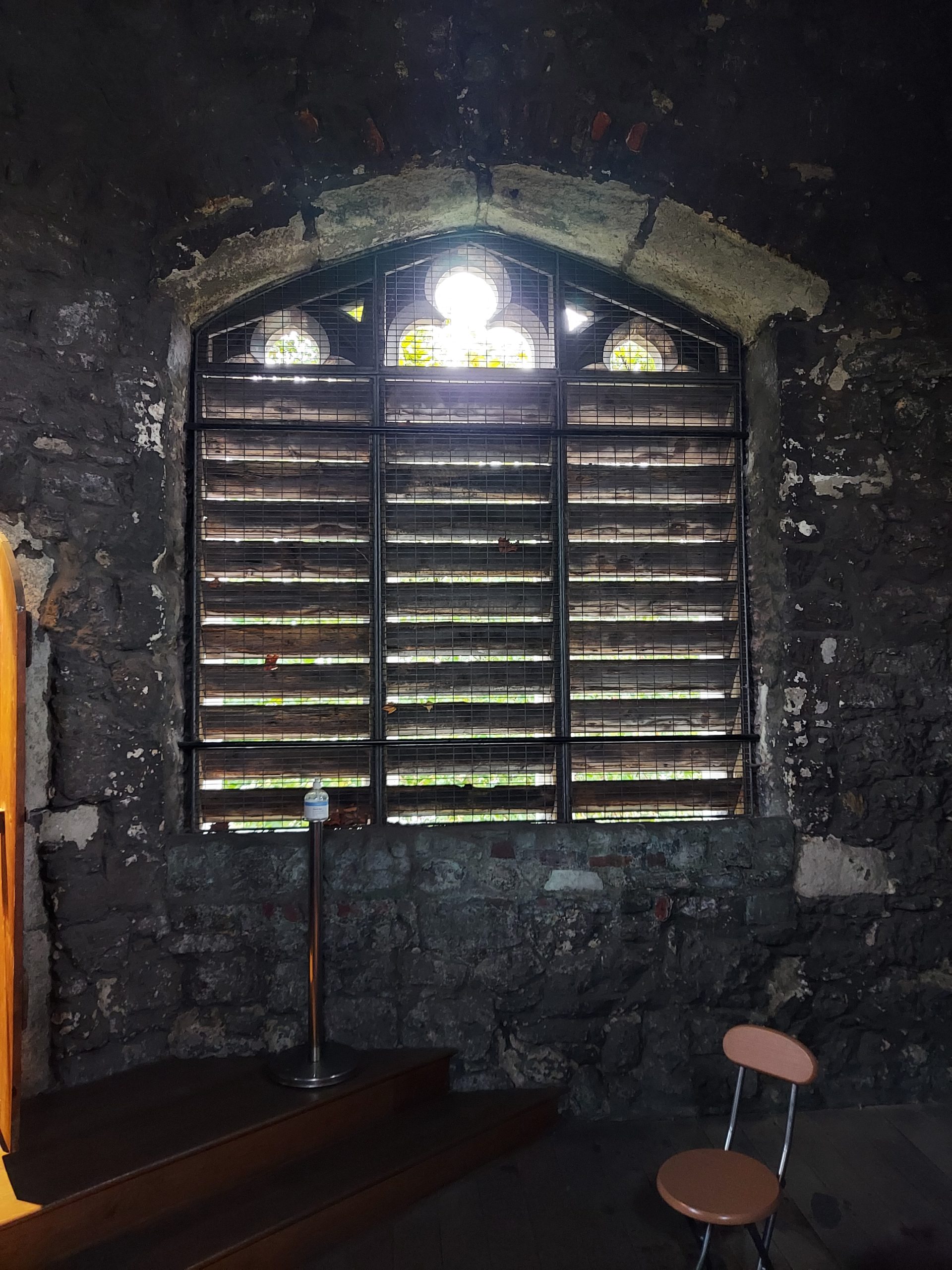
Inside the tower

Owing to the weather, I wasn’t able to climb up to the top of the tower and look at the view. However, I got to see the rest of the tower during my volunteering session. The ground floor contains information and displays about the history of the tower. The floor above contains displays about the history of Hackey as a whole. Higher up, you can see the original clock workings dating from the sixteenth or seventeenth century.

I definitely want to return to St Augustine’s Tower in the future to climb up to the roof. This little gem is well worth visiting.

FACTS

Address: Hackney, London, E8 1HT

Website: staugustinestower.org

Opening Hours: 2-4:30pm the last Sunday of the month (except December)

Price: Free

Thames River Police Museum – Open House London

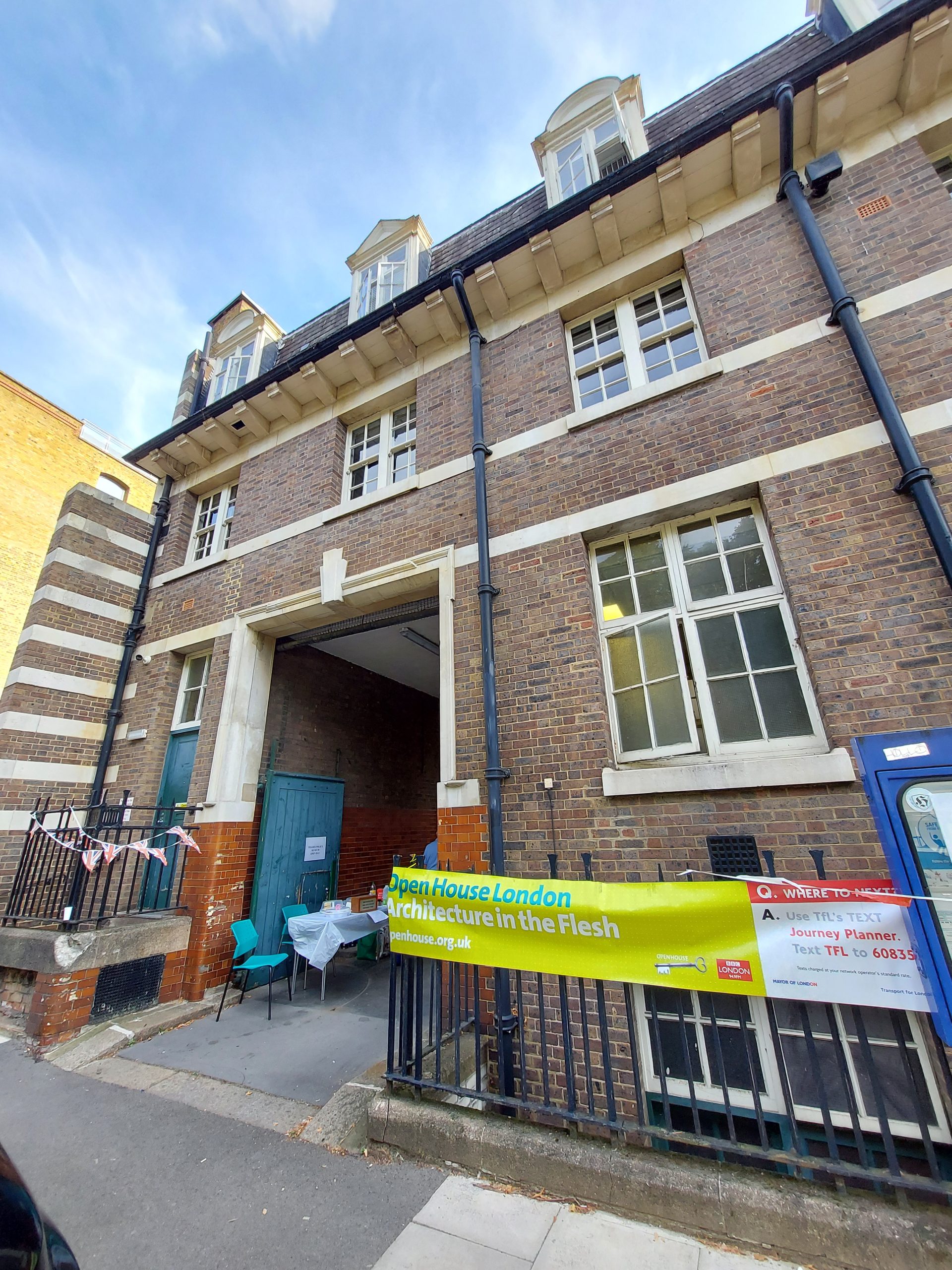
Thames River Police Museum

As part of Open House London, I decided to visit the Thames River Police Museum, as I was going to be in the area and thought it sounded interesting. The museum is located in Wapping, and is only open on a handful of days per year, as it is situated within a working police station (the Metropolitan Police’s Marine Police Unit). Whatever your opinion of the Met or views on the police in general, the museum is a fascinating place to visit, crammed full of history, and exploring the Thames River Police from 1798 to the present day.

The River Police were one of the first uniformed forces in the world. Though it was a government body, it was funded by the shipping companies, who were losing lots of money to thieves who regularly pilfered their stock. The force proved very successful, saving over £122,000 in the first six months of its operation, not to mention several lives.

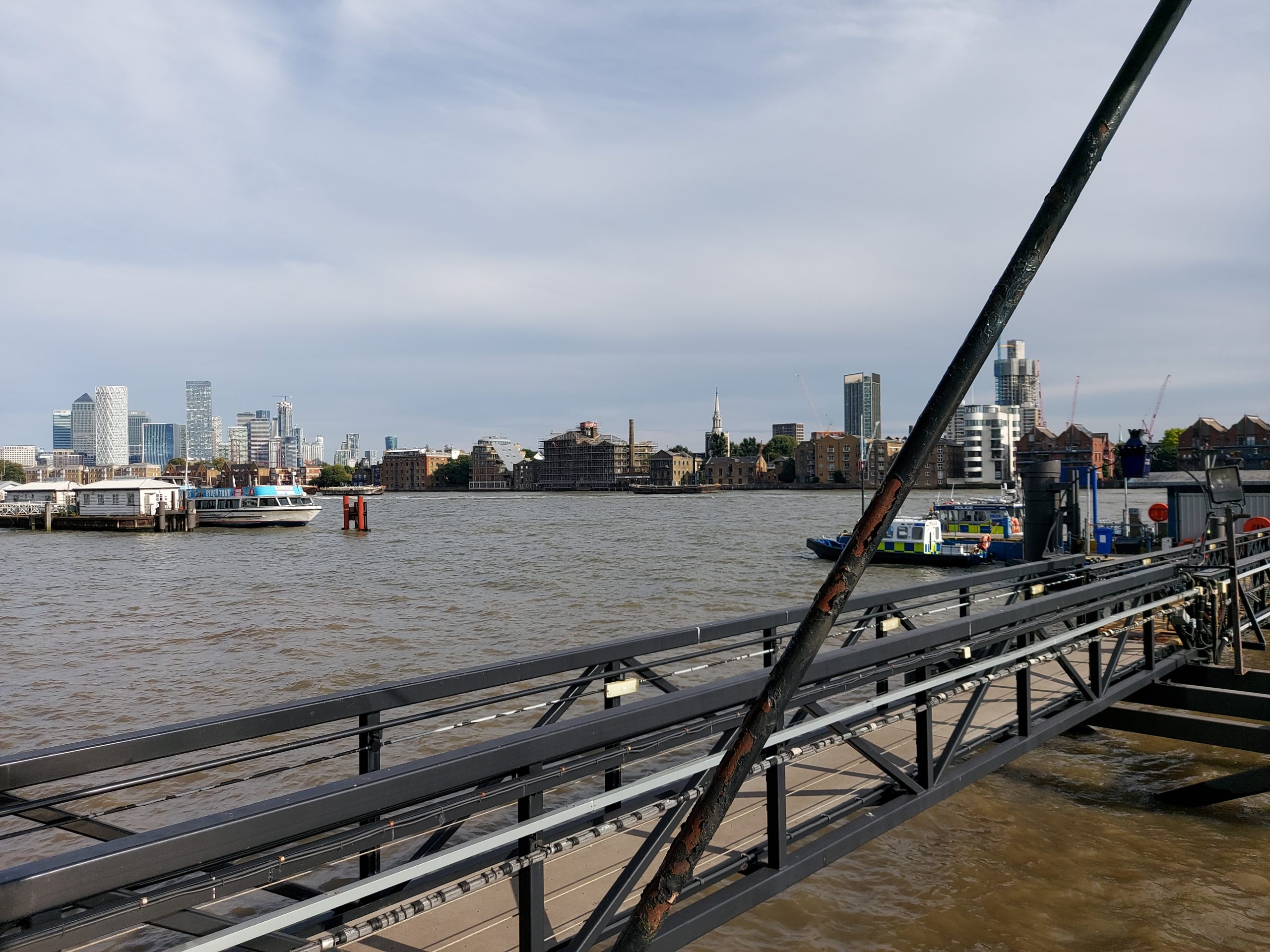
View of the Thames from the back of the museum

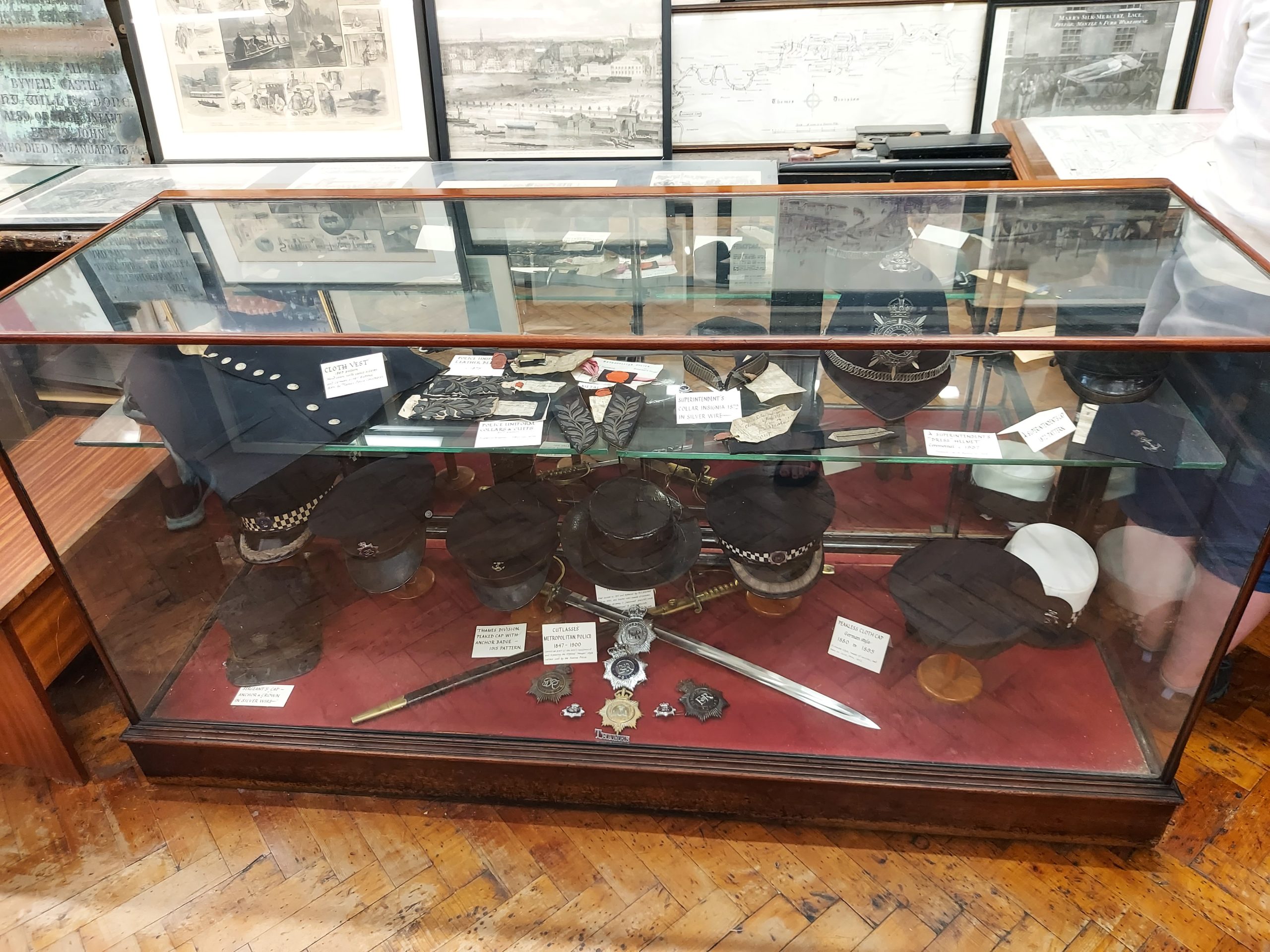
Like many small museums, this one contains many artefacts and it would take a very long time to go through all of them. Some of the most interesting items are old uniforms and equipment worn and used by police officers of the past. Photographs and documents tell the stories behind the force. One of their jobs is the recovery of dead bodies from the river: I certainly don’t envy them this work.

Some of the most poignant items relate to the Princess Alice Disaster of 1878, in which almost 650 individuals died after the paddle steamer sank while returning from a trip to the seaside. The museum contains the boat’s original flag.

This little museum is definitely worth a visit, so keep an eye out for its opening days – or head down during the next Open House London weekend.

Hats and equipment used by members of the Thames River Police

FACTS

Address: 98 Wapping High Street, London, E1W 2NE

Website: thamespolicemuseum.org.uk

Opening Hours: By advance appointment and on special dates

Price: Free

Royal Pharmaceutical Society Museum – Open House London

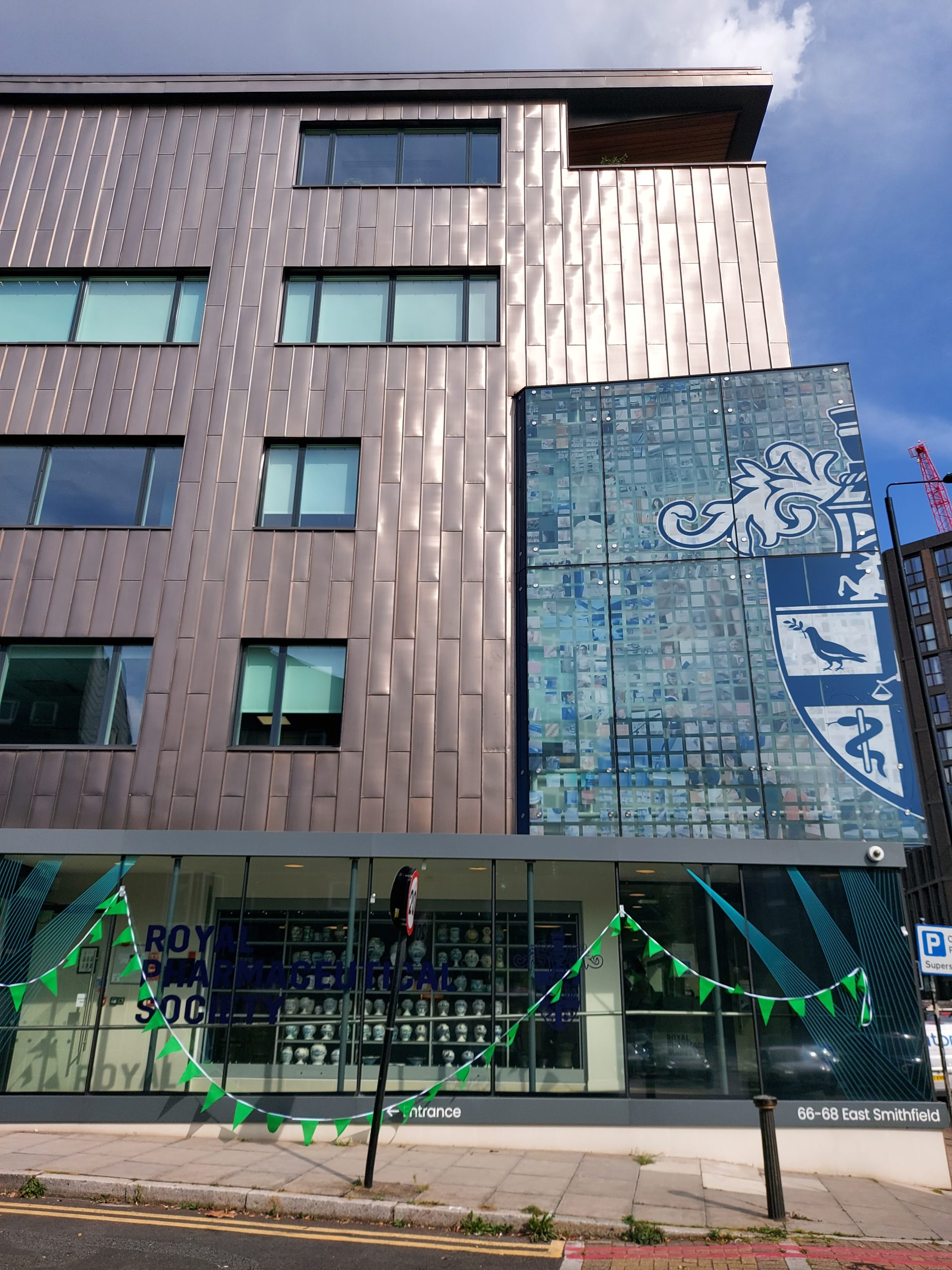
The Royal Pharmaceutical Society

As part of my Open House London explorations I paid a visit to the Royal Pharmaceutical Society Museum and Library. Not far from Tower Hill, it was a bit off the beaten track compared to the places I usually visit, but it was definitely worth it.

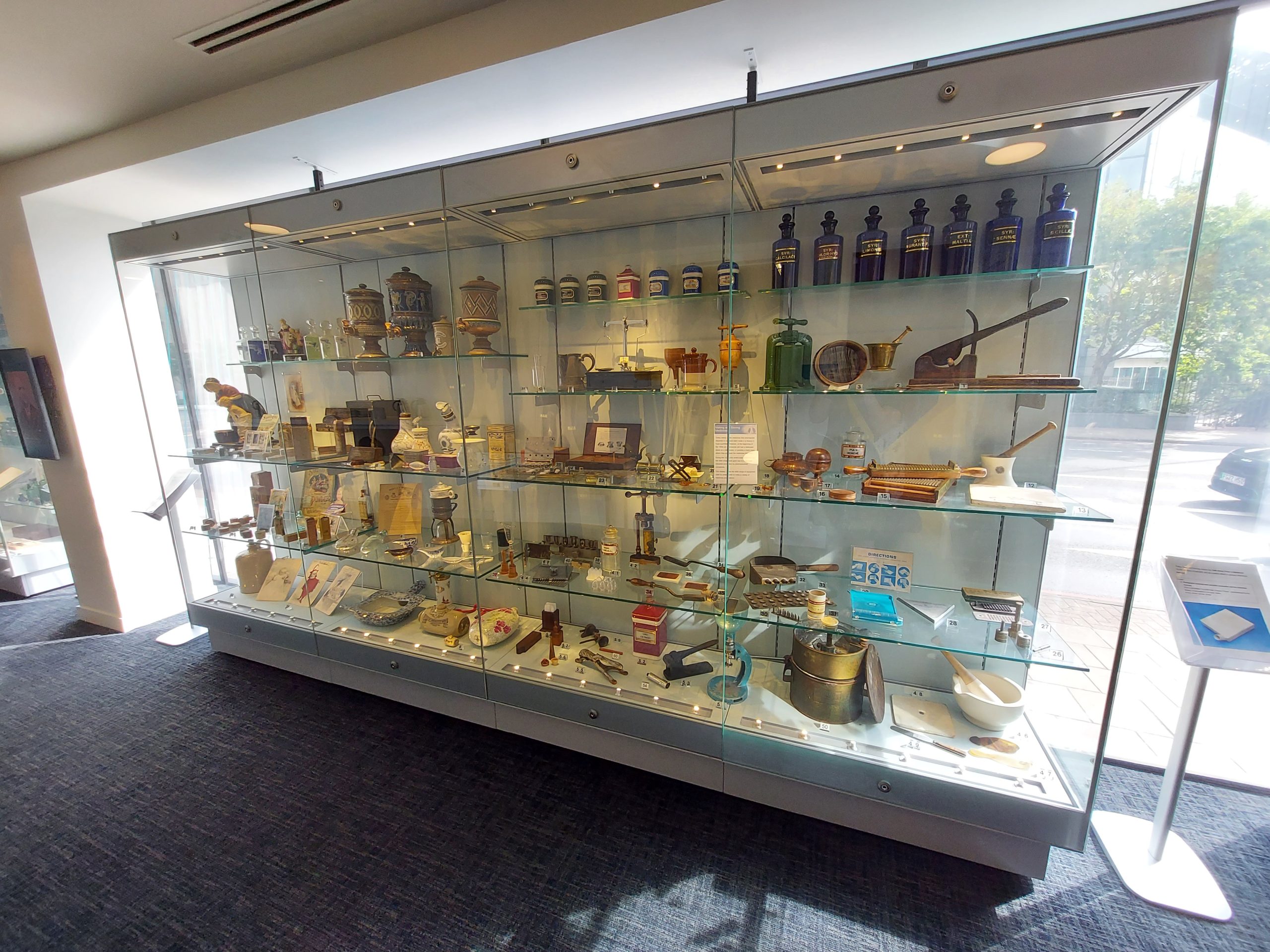
Items on display at the RPS

The building itself is new, having been designed in 2015, but the RPS’s museum was originally founded in 1842. It was meant to be a study resource for students of the newly formed School of Pharmacy. In 1937, it was decided to establish a historical collection, and librarian Agnes Lothian played a key role in purchasing relevant artefacts. In the 1950s, some of the collections were deemed less relevant and transferred away, while in 1976 the Society’s move to new premises in Lambeth prompted the decision to display items from the collections throughout the building. Since 2015 the collections have been housed in the Society’s new headquarters, mostly on the ground floor. The collections, which cover the history of pharmacy in Britain from the fourteenth century to the present day, including traditional dispensing equipment and storage containers, oil paintings and photographs, branded medicines, mortars, and drug jars – not forgetting early printed books, including herbals and early pharmacopoeias, housed in the library.

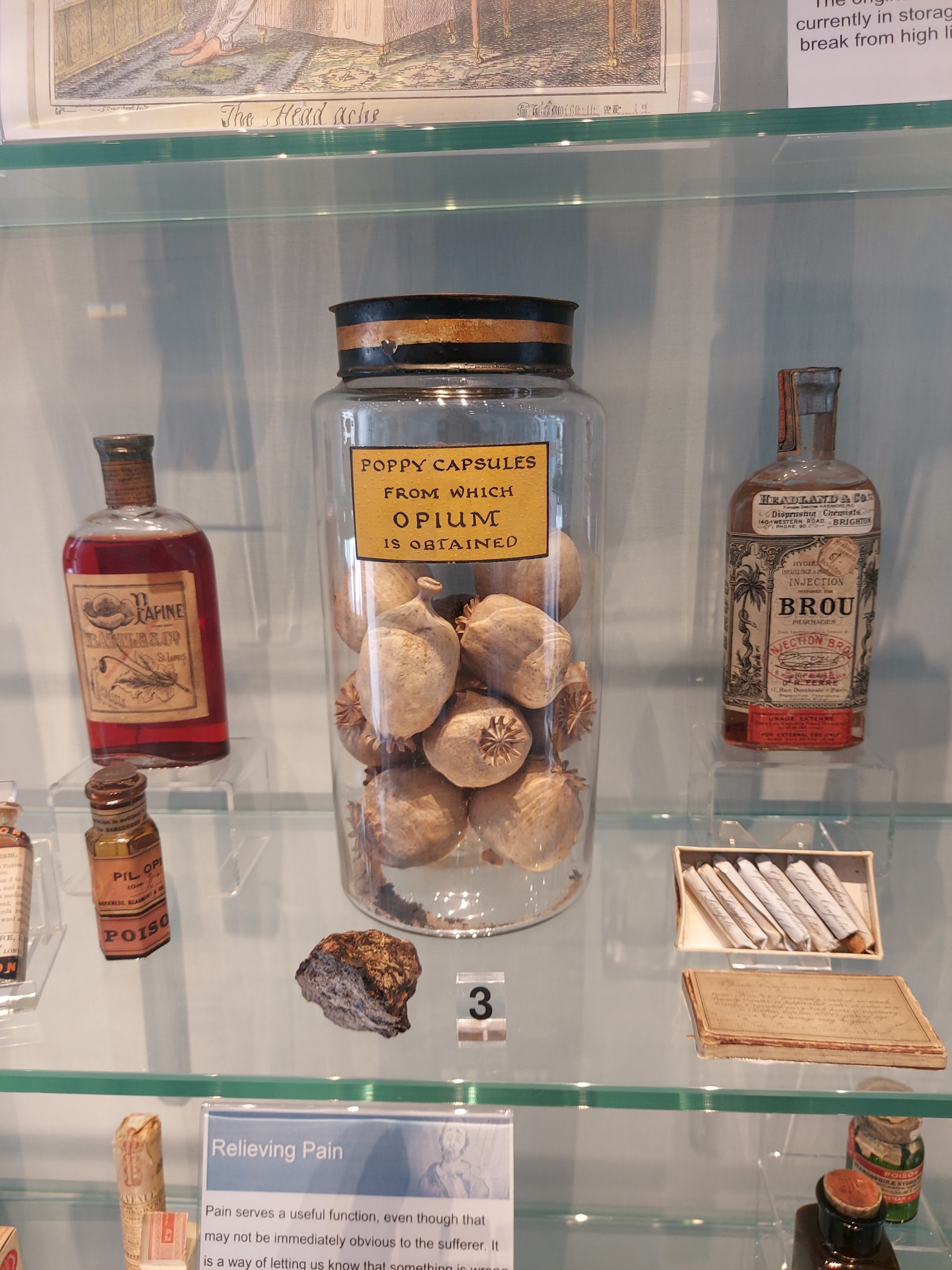
I enjoyed a free guided tour before checking out the collections for myself. There were some fascinating artefacts on display, including a polar bear-shaped container for bear grease, supposedly meant to stop hair loss, and drugs once widely prescribed including morphine and cocaine. Definitely a worthwhile place to visit if you’re in the area.

Opium poppy capsules

FACTS

Address: 66 East Smithfield, London, E1W 1AW

Website: rpharms.com/about-us/museum

Opening Hours: Mon-Fri 9am-5pm (closed on Bank Holidays)

Price: Free

Kensington Gardens Nature Walk

Kensington Gardens

I signed up to attend a nature walk in Kensington Gardens. I was mainly prompted to do this by the Nature Lover badge, but I was excited nevertheless. It was a lovely autumn day in the Gardens, and we saw and learned a lot.

Some of the trees we were introduced to included bay, ginkgo biloba, turkey oak, yew, horse chestnut, sweet chestnut and lime/linden. We learned that the ginkgo biloba tree has ‘swimming’ sperm and can switch gender; the turkey oak has male and female flowers on the same tree; and the oldest trees in London and the UK are yews, which have separate sex trees – only the females produce berries. Horse chestnut trees are not native to the UK and will probably go extinct in the next century because of climate change, whereas sweet chestnuts have prettier flowers, are edible, and are more spiky.

ginkgo biloba treeGinkgo Biloba tree

Some of the plants we came across included rosemary, lavender, brambles and stinging nettles, as well as numerous flowers. Flowerbeds in the Gardens can be created with AI to provide the most pollen and nectar. Interestingly, some butterflies (including peacock butterflies) will only lay eggs on stinging nettles.

Throughout the walk we came across plenty of fungi, including artist’s bracket, chicken of the woods and birch polypore. Chicken of the woods is commonly found on oak and cherry trees (the one we saw was on a cherry). Birch polypores generally only grow on dead and dying birch trees; these fungi have about 80 sexes to be as compatible with as many others as possible.

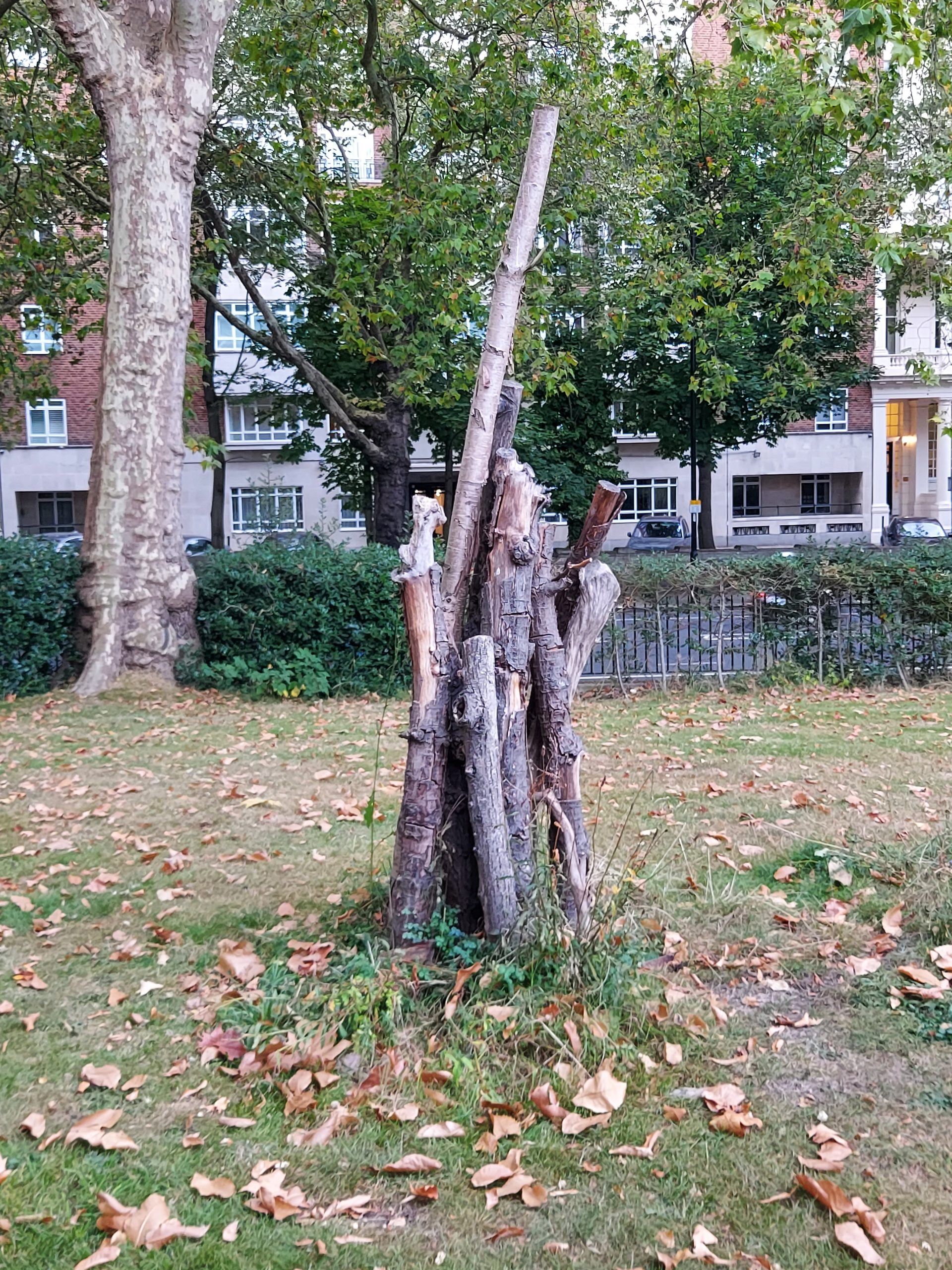
LoggeryLoggery

We spied a loggery designed for beetles and also turned over some logs to see what we could find. Stag beetles are endangered in the UK; we didn’t see any on our walk, but they do live in the park, on or in rotting wood. We did spot woodlice: some woodlice are all female and reproduce asexually, because of a bacteria that turns eggs female while they are developing. Ladybird larvae can be found on leaves – they look very different to adult ladybirds. We learned about aphids, which are fascinating: aphids clone themselves (though they can mate with others if needed);  they have babies that are already pregnant and they can also have babies with wings (or without). Amazing!

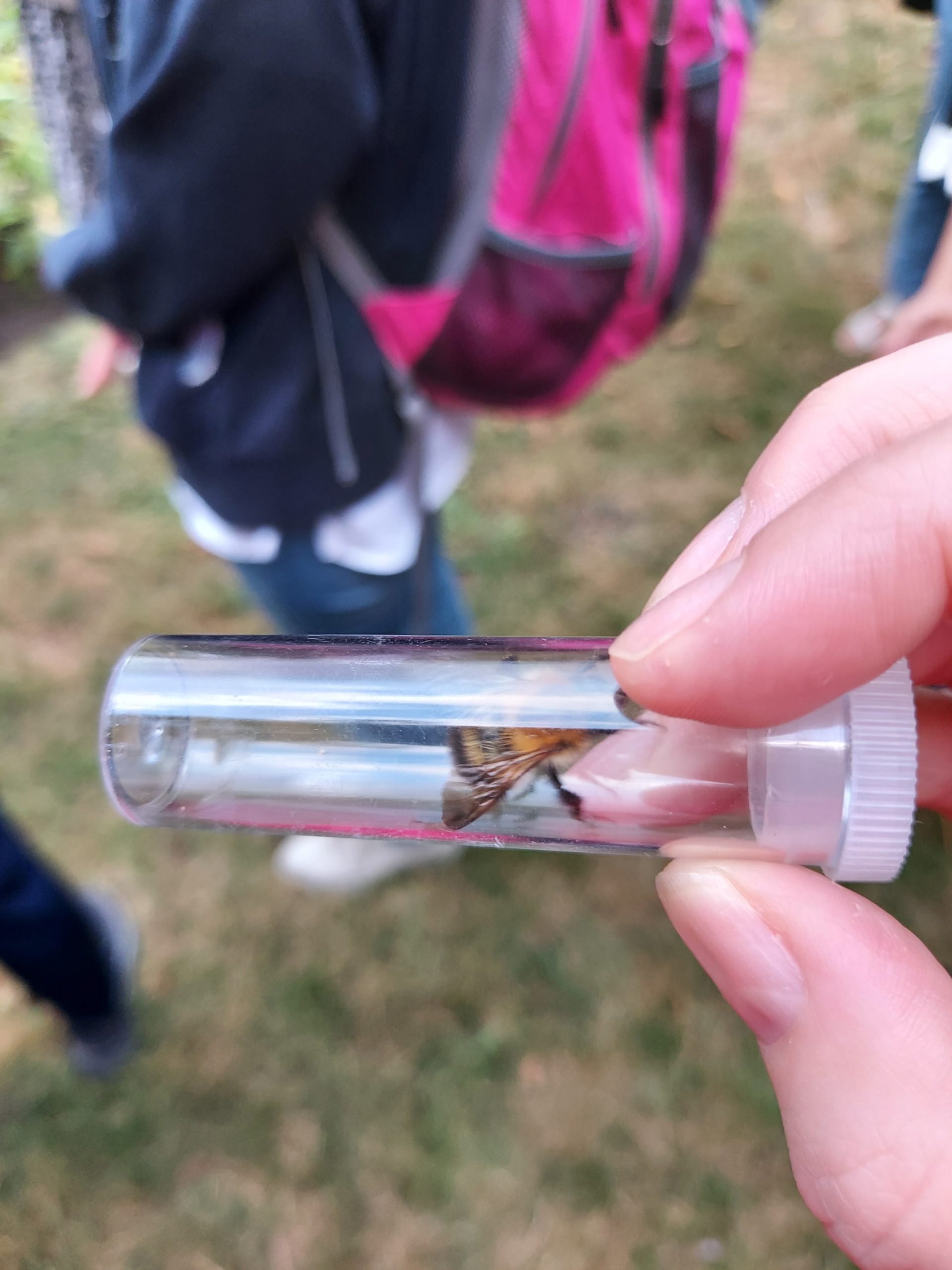
We found a bee and were able to take a closer look. Most bees are, in fact, solitary. Apparently there is a type of bee called a cuckoo bee that will kill the queen and settle in to the hive so that the worker bees feed their larvae instead!

A beeBee

My favourite thing I learned during the walk was about galls and oak gall ink. Galls on acorns are created by wasps to house their larvae. Oak gall ink was the first permanent ink, made with ground up oak apple galls and iron sulphates. The Magna Carta and the American Declaration of Independence were both signed with this ink! It has also been suggested that the existence of wasp nests could have inspired humans to make paper. It seems that wasps are useful for something after all!

I thoroughly enjoyed my nature walk and the chance to spend more time in Kensington Gardens.

Sugababes (One Night Only) at the O2

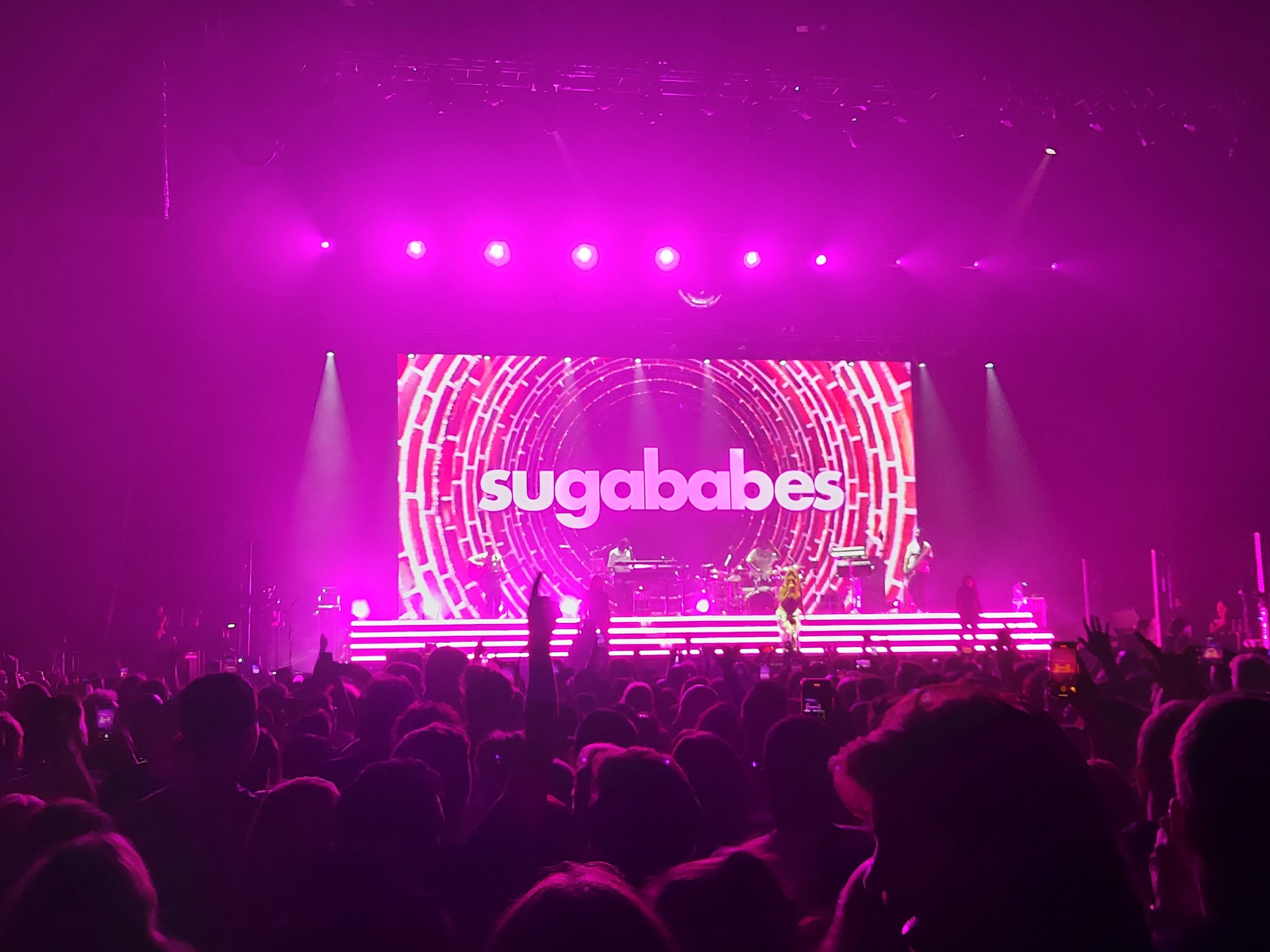
Sugababes on stage

I saw the Sugababes at Hammersmith Apollo last year, and had such a good time that I booked to see them at their One Night Only concert at the O2 Arena. They were just as good this time round, and played even more of their classics.

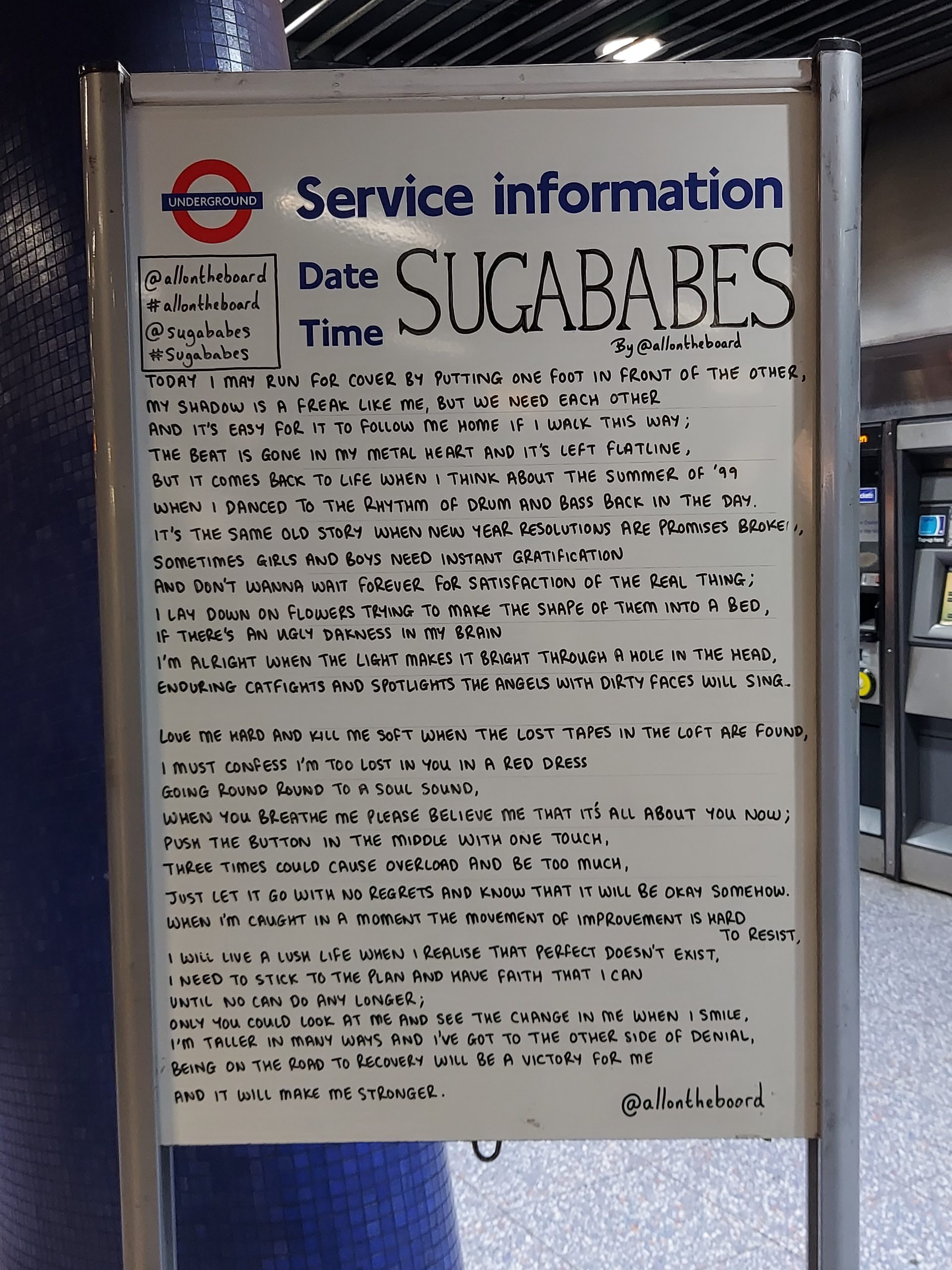
The group kicked off with the super catchy Push the Button, continuing with Red Dress, Hole in the Head and Ugly. I’m now used to seeing Siobhan sing songs previously performed by her successor in the band, Heidi, and she fits really well into these Noughties-era tracks. Keisha and Mutya are stalwarts of the group, and the three of them have superb stage presence and flawless vocals.

About a decade ago, the trio released a superb song, Flatline, under the name MKS (Mutya Keisha Siobhan). It was great to hear them perform it tonight, along with other classics of that era that were never released at the time, such as Today and Beat Is Gone. Luckily, with the recent release of The Lost Tapes, fans can finally own these tracks and more.

I was pleasantly surprised to hear one of my favourite songs, Run For Cover, performed, as well as other album tracks from Overload such as One Touch, Lush Life and One Foot In. These were performed against a backdrop of retro video footage showing the girls as young teenagers around the year 2000, which was incredibly nostalgic to see.

Sugababes have a huge back catalogue these days, but they still managed to play many of their hits that I love, such as Too Lost In You, Stronger and, of course, Freak Like Me. The encore featured the classics Round Round and About You Now, as well as the new single When The Rain Comes, showing that the group still has plenty to offer.

Board at North Greenwich station

Setlist

  • Push the Button
  • Red Dress
  • Hole in the Head
  • Ugly
  • Flatline
  • Run For Cover
  • Today
  • Shape
  • One Touch
  • Lush Life
  • One Foot In
  • Overload
  • Flowers
  • Too Lost in You
  • Beat Is Gone
  • Stronger
  • Freak Like Me

Encore

  • When the Rain Comes
  • Round Round
  • About You Now

Livery Halls – Open House London

There is so much choice when it comes to Open House London that sometimes I like to come up with a theme in order to work out what buildings I want to visit. In the past, for example, I have focused on churches and theatres. This year, I decided to visit several livery companies, located in the City of London.


Chartered Accountants’ Hall
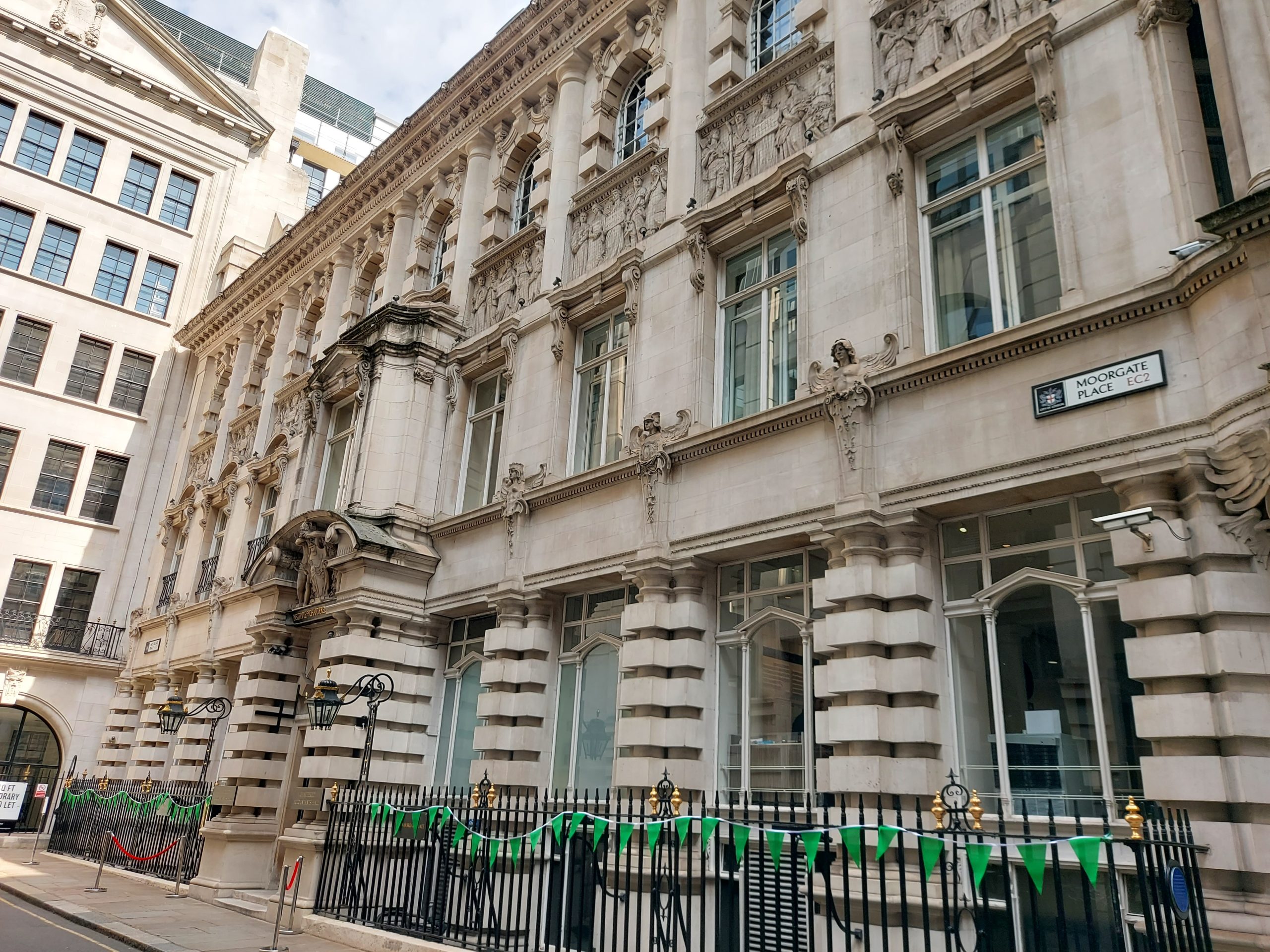
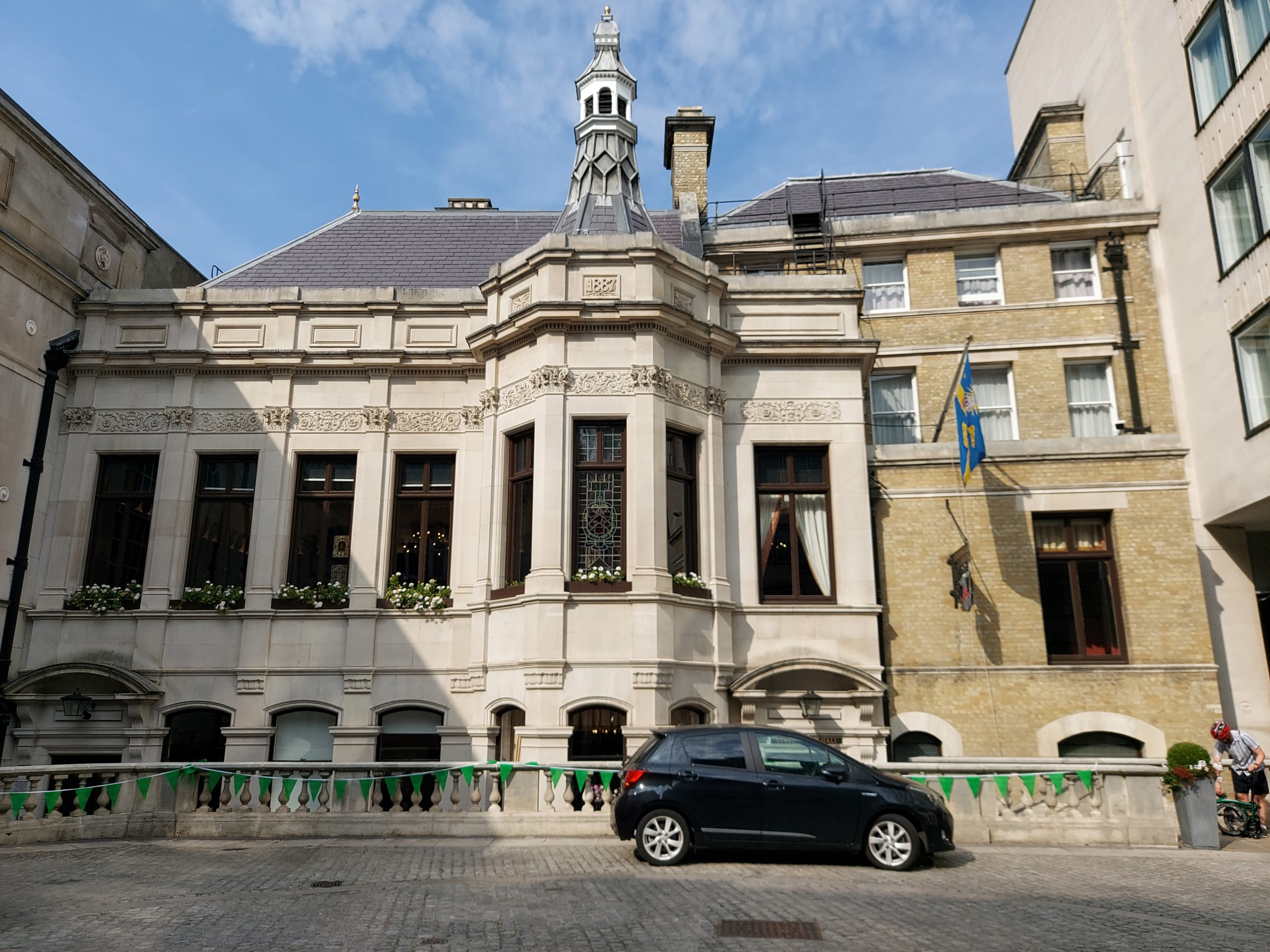
The front of Chartered Accountants' Hall

I began the day with a visit to the Chartered Accountants’ Hall, the headquarters of the Institute of Chartered Accountants in England & Wales. It was originally built in 1890 to the design of Sir John Belcher RA, and was extended in the 1930s and again in the 1960s, this time to a more modern design by Sir William Whitfield. I enjoyed my guided tour of the Hall, especially the decorative bridge, inspired by the Rialto Bridge in Venice. The stained glass windows in this room – the members’ room – are relatively recent, having been created by Alexander Beleschenko in 2022. Now Grade II listed, the building has a fascinating exterior, with a carved stone frieze by Hamo Thorneycroft. Its interior features works of art by, among others, Eduardo Paolozzi.
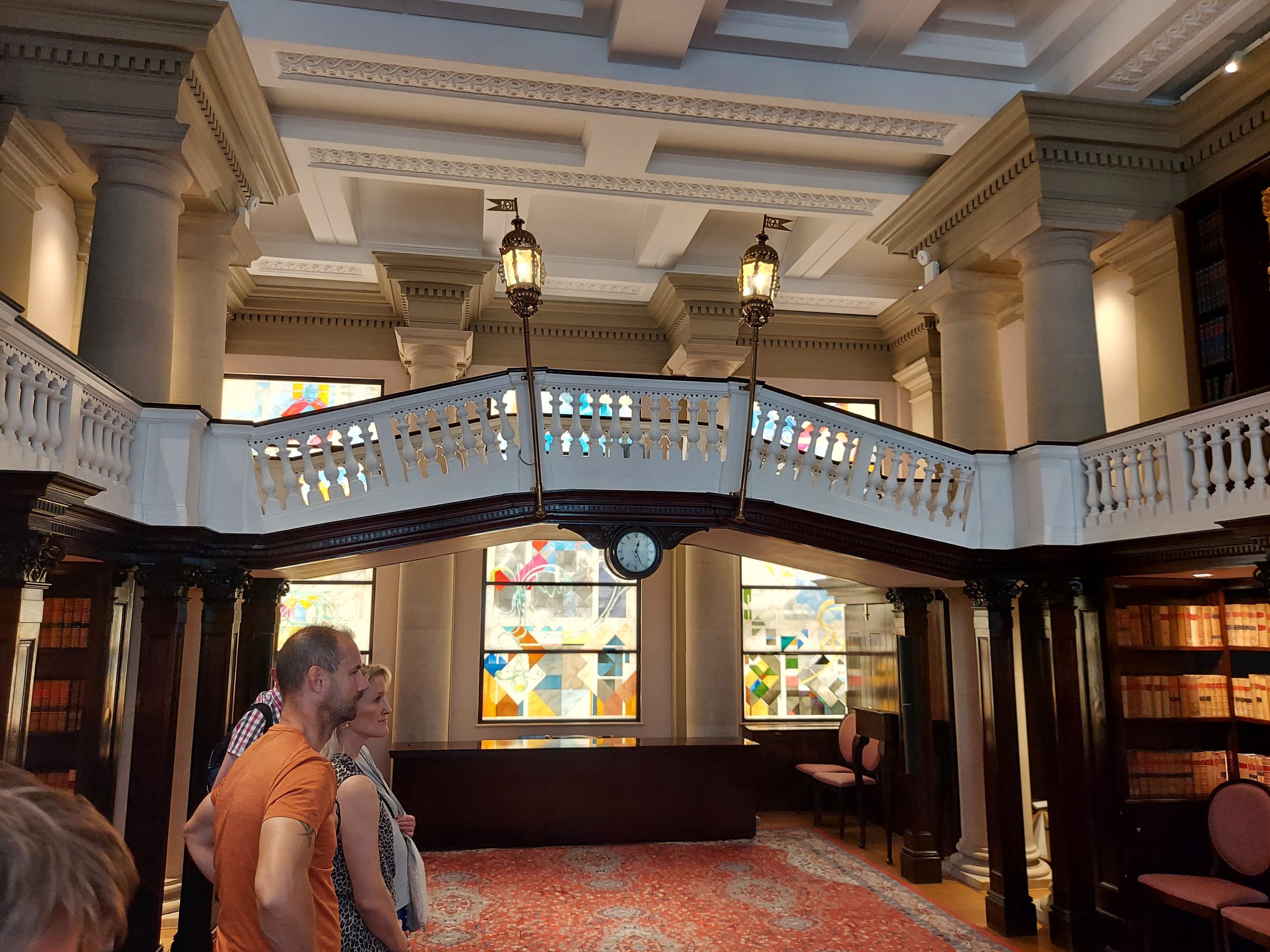
Decorative bridge at Charted Accountants' Hall


Stationers’ Hall

The front of Stationers' Hall

I then made my way to the Stationers’ Hall, home of the Stationers’ Company. The Company has the strap line, “The City of London Livery Company for the Communications and Content Industries“. Stationers’ Hall is one of the few ancient remaining Livery Halls in the City of London. It is Grade I listed and was completed in 1673, after the Great Fire of London.

The hall has several beautiful rooms. The Stock Room, named after the Company’s publishing venture founded in 1603, has oak panelling and carvings dating back to the 17th century, as well as armorial shields of Past Masters of the Company.

She oak panelling and carvings in the Stock Room date back to the 17th century, while around the friezes are displayed the armorial shields of Past Masters or the Company including HRH The Duke of Windsor.  The room takes its name from the Company’s publishing venture founded in 1603. The Court Room is bright, ornate and richly carpeted, with an 18th century carved mantelpiece and gold Rococo ornamentation on the walls. I also particularly liked the images of books dotted here and there around the room.

The Main Hall is the most magnificent room of all, with oak flooring and carved oak panelling dating from the 1600s. It even has a Minstrels’ Gallery. The stained glass windows display several important figures in the world of books and printing, such as William Shakespeare, William Caxton and William Tynedale.

This Hall also has a lovely peaceful garden, which was a joy to relax in after the hectic day.
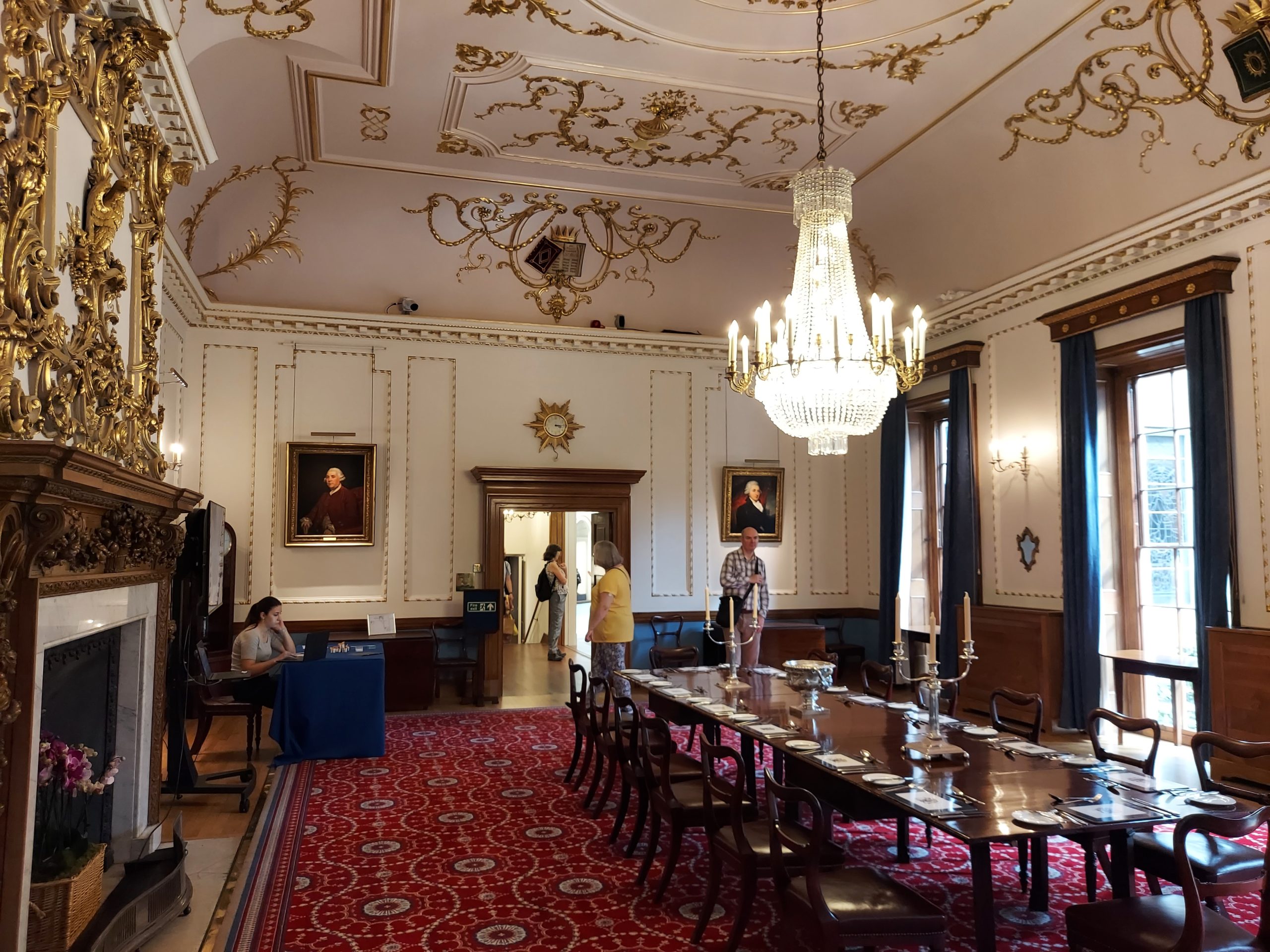
Court Room at Stationers' Hall


Founders’ Hall

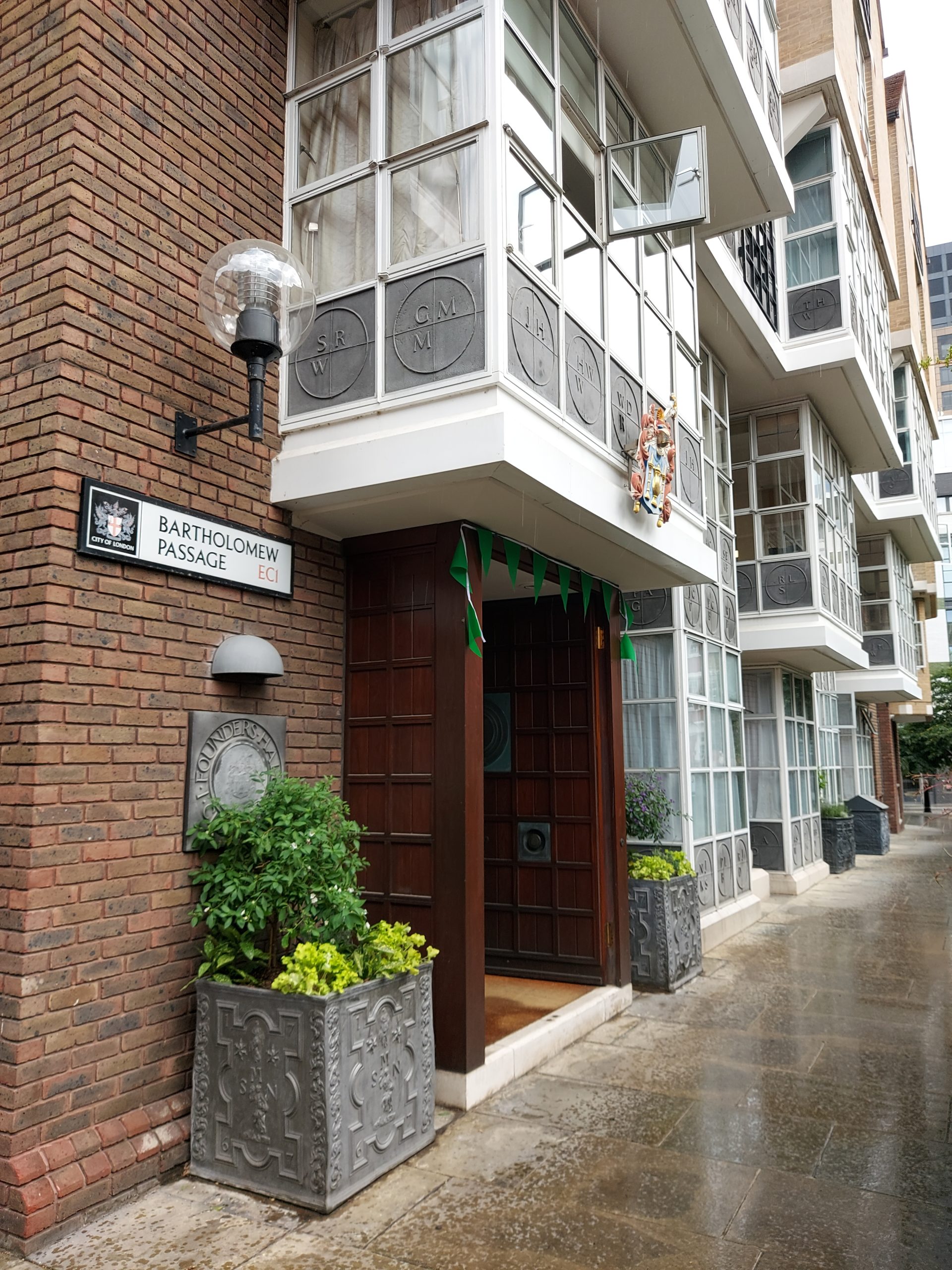
The front of Founders' Hall

Finally, I popped into Founders’ Hall, home to the Worshipful Company of Founders. Unlike the other two halls I visited today, Founders’ Hall is contemporary, though the company itself dates back to 1365. It was formed as a guild aiming to ensure high standards in the production of bronze and brass articles.

The first Hall was destroyed in the Great Fire of London. This one is actually the fifth Hall for the Company, and was begun in 1985, designed by Sam Lloyd. It was Grade II listed in 2018, and contains Arts & Crafts and postmodern influences. Here, it was particularly interesting to see the coats of arms and other articles on display in the basement Hall, and have the chance to ring some bells in the ground floor Parlour.
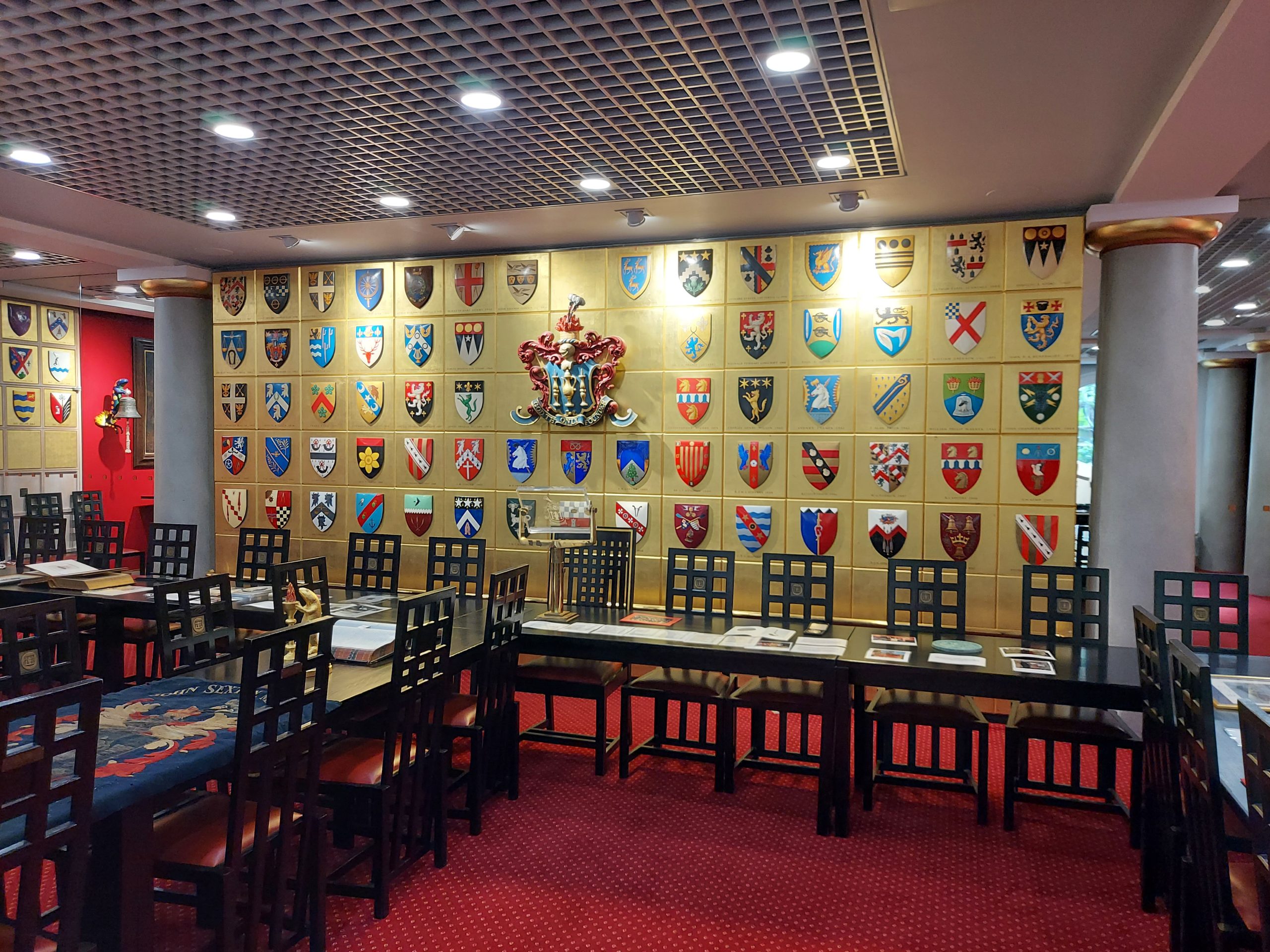
Coats of arms inside Founders' Hall


I had a great day exploring these Halls. I think my favourite was probably Stationers’ Hall, owing to their connection with books and their lovely garden, but they all have their merits, and a great deal of history.