The Old Operating Theatre Museum & Herb Garret

2015_0815OldOperatingTheatre01
Entrance to the museum on St. Thomas Street

After the slightly lurid experience of The Clink my friends and I headed to the other museum we were interested in, The Old Operating Theatre Museum & Herb Garret. This small museum, which was boarded up for years and only rediscovered 50 years ago, is located near London Bridge station – handily opposite the pub we found to have lunch in. As the oldest operating theatre in Europe, it is a unique little museum and I had been meaning to come for some time.

History

The operating theatre’s location in the roof of a church seems odd, until you consider that St Thomas’ Church was originally alongside St Thomas’ Hospital, now demolished. The wards of the South Wing were built directly around the church, with the operating room encroaching into the church roof. Before 1822, when the theatre was built, women (men had a different ward and operating theatre) were operated on in the ward itself, which must have been highly unpleasant for all involved. In 1815, the Apothecary’s Act stated that apprentice apothecaries must attend at public hospitals; this led to hundreds of students watching operations in this and other nearby theatres. Anaesthetics were only introduced in 1846, by which time this operating theatre had closed down. Therefore it is unique in representing a late stage in the history of surgery before anaesthetic. When St Thomas’ Hospital moved to Lambeth in 1862, the Operating Theatre was partly dismantled and the entrances were blocked up. Despite minor references in academic publications, it was largely forgotten until 1956 when a researcher, Raymond Russell, decided to investigate. Following his discovery, a fundraising plan was launched to restore the space, which was officially opened in 1962.

My Experience
2015_0815OldOperatingTheatre05
Inside the Operating Theatre

Entrance to the museum is not for the faint-hearted or the mobility-impaired. You have to climb up a spiral staircase, located in the church tower, to reach the tiny foyer and gift shop. We had arrived in time for the 2pm Saturday talk, Speed Surgery! – a demonstration of surgical techniques in the nineteenth century – which I’d booked in advance via email as advised on the website. It wasn’t as busy as we – or the staff – expected, possibly because the weather outside was lovely and everyone was out enjoying the sun. 2015_0815OldOperatingTheatre06The talk was fascinating, and covered many aspects of surgery before anaesthetic and germ theory. We learned that most surgeons did not wash their hands before operating, and wore aprons that were covered in blood from repeated use. We also examined the operating table, with grooves to catch the blood and boxes of sawdust underneath to absorb the gore. Trainee surgeons could watch and observe operations – in the absence of anaesthetic, a surgeon had to be fast in order to cause the minimum amount of pain possible. While surgery in general was dangerous and had a low survival rate, some minor operations, such as the removal of gallstones, were performed with good rates of success.

2015_0815OldOperatingTheatre09
Operating table

We were shown a variety of surgical instruments – these were fearsome-looking, though well-made: surgeons would often have a set of instruments made specially which they would carry around in a velvet-lined case. Beautiful, sure, but not particularly hygienic. I knew some of what we were told as I had studied the “Medicine Through Time” module way back in my GCSE days, but some of it I had forgotten, and I learned some new things too.

2015_0815OldOperatingTheatre10
The back of the theatre

During and after the talk we had the chance to admire the operating theatre itself, which was tiny and neat. Entrance was originally through the door at the back, now boarded up, which led to the hospital – not the spiral staircase, which is reassuring. This was the theatre for women – the men were operated on elsewhere. In the absence of electric light, this operating theatre, like many of the period, was located high up with large skylight windows, allowing for maximum natural light.
2015_0815OldOperatingTheatre11
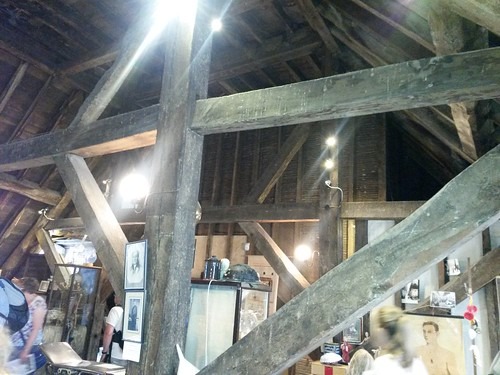
The garret

The museum itself has many interesting exhibits to do with the history of surgery and of the building, including fascinating photos of the area in the 19th and 20th centuries, and pictures of similar surgeries. There are numerous surgical instruments on display, as well as anaesthetic equipment and a section on children’s medicine, including a record of deaths in the area.

The “Herb Garret” aspect of the museum refers to the fact that when St Thomas’ Church was rebuilt in 1703, the large garret in the roof space was used by the St Thomas’ Apothecary to store and cure herbs. When the building was being restored, numerous herbs were found, including four opium poppies packed into the rafters. The exhibition includes many and varied herbs, with notes on what they were used for. There are also some notes on old-fashioned medical remedies – the most bizarre thing I learned was that in “ye olden days”, pregnancy tests were carried out by injecting a frog with the expectant woman’s hormones. If she was pregnant, the frog would lay eggs. The Old Operating Theatre & Herb Garret is a fascinating small museum that is definitely worth visiting. As well as the talks during museum hours, there are occasional special events – see the website for more details. Please note, however, though the museum has a gift shop there is no refreshment area and there are no toilets – so maybe pay a visit to the pub across the road before you go in!

FACTS

Address: 9a St. Thomas Street, London, SE1 9RY Website: thegarret.org.uk Opening Hours: 10.30am-6pm Prices: £6.50 adults, £5 concessions, £3.50 children
The Clink Prison Museum

My friends Gemma and Elizabeth, like me, are history geeks and when we got together in London we decided to go to a couple of museums. The Clink Prison Museum had been on our radar for a while, so when we met on Bankside we decided to venture over to London Bridge to check it out.

2015_0815Clink01
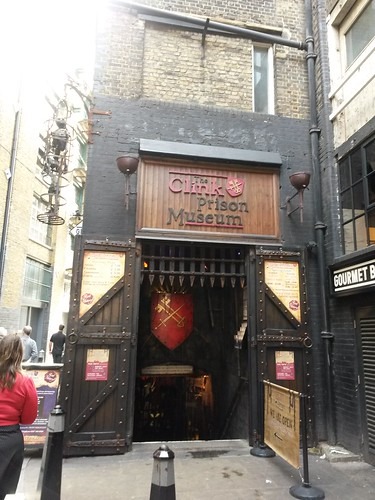
The entrance to The Clink Prison Museum

The museum is built on the site of the original Clink Prison, which dates back to 1144. The prison supposedly got its name from the clinking sound the prisoners’ chains made as they jangled together, and the name became a nickname for prisons all over the country. For over 600 years the prison housed debtors, drunkards, heretics, prostitutes and other criminals within Southwark, an area notorious for being morally dubious – everything that was banned in the more staid City across the river took place here instead.

History

The prison was originally established as two separate prisons, one for men and one for women, in the grounds of Winchester Palace, the residence of the Bishop of Winchester. Henry of Blois, brother to King Stephen, became Bishop in 1129 and his palace, of which only the wall of the Great Hall containing the Rose Window is still visible today, was completed in 1144. Bankside was subject to the laws of “the Liberty of the Bishop of Winchester”, later “the Liberty of the Clink”.

2015_0815Clink03
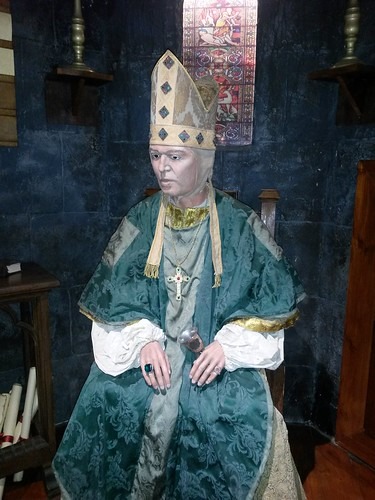
The Bishop of Winchester
2015_0815Clink04
Ring buddies!

Notable criminals housed within the Clink at various points include Sir Thomas Wyatt the Younger, who rebelled against Queen Mary I; Royalist supporters during the English Civil War; and Puritans who ended up settling in the New World as Pilgrim Fathers. However, hundreds of ordinary people were imprisoned here, though often the only record we have is a name. The museum website lists several examples, including the wonderfully named prostitute Prusanna Carnall (imprisoned 1661) and William Albaster, imprisoned in 1599 for refusing to attend church (!).

Attempts were made to destroy the prison during the Peasants’ Revolt in 1381 and Jack Cade’s rebellion in 1450; after each occasion the Clink was rebuilt, with the final two-storey prison occupying the current site of the museum. The end came during the Gordon Riots in 1780: Lord George Gordon, angry that Catholics had been granted favours in the new “Papists Act”, gathered together members of the Protestant Association and, among other things, broke into the Clink, burned it to the ground and released all the prisoners (none of whom, thankfully, were ever recaptured). Today, the remains of the Clink consist of the Winchester Palace stonework, the passage called Clink Street, and the structure preserved within the museum itself.

My Experience

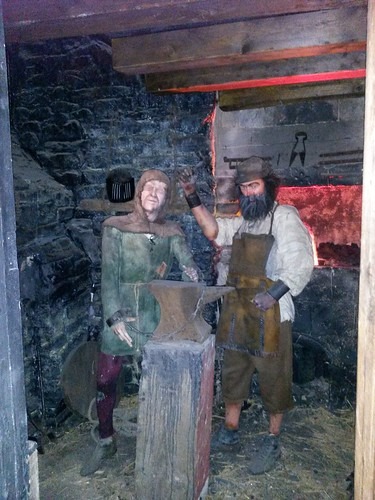
We arrived at the Clink at about eleven on a Saturday morning. We entered down the steps and were greeted cheerily by a costumed assistant (who, we found out later, was also manning the gift shop round the other side). We paid our entry fee and entered. The museum is atmospherically contained in a dingy basement; some of the structure was part of the original Clink. Evil-looking waxworks were dotted about, representing blacksmiths, gaolers and unfortunate prisoners.

2015_0815Clink02
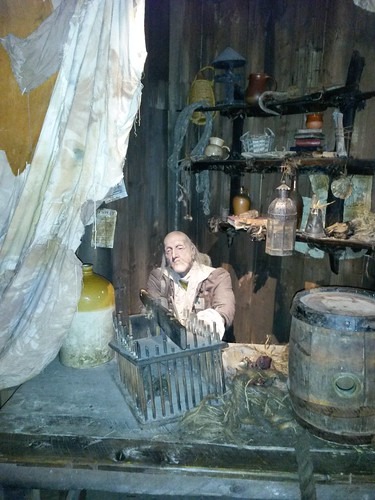
An evil-looking blacksmith prepares to shackle a prisoner

Information boards displayed lots of interesting facts about the Clink, but in some cases they didn’t look very professional – there were some glaring spelling errors including, in one case, the misspelling of the word “prisoners”. Having said that, I learned a lot from them: the boards gave information about the history of the Clink, the prisoners kept here and the punishments used. As we went round the museum we noticed that the information was sometimes a little disjointed, although it did follow an approximate chronological order.

2015_0815Clink05
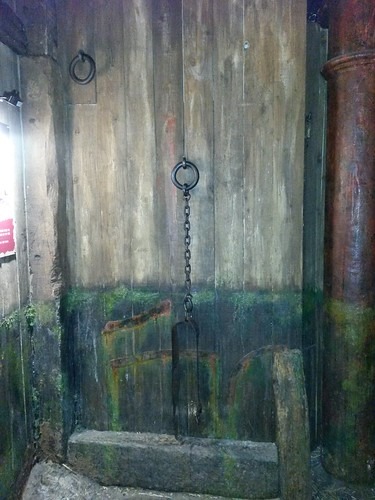
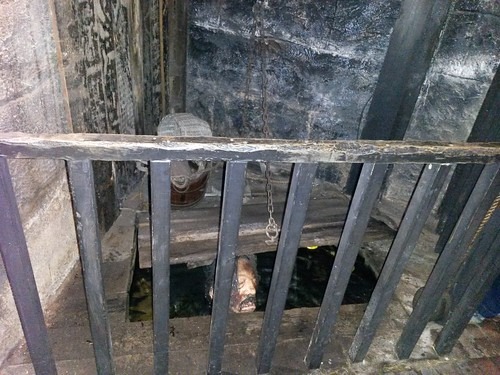
During high tide, the Thames would flood the Clink to this level – extremely unpleasant for the prisoners
2015_0815Clink06
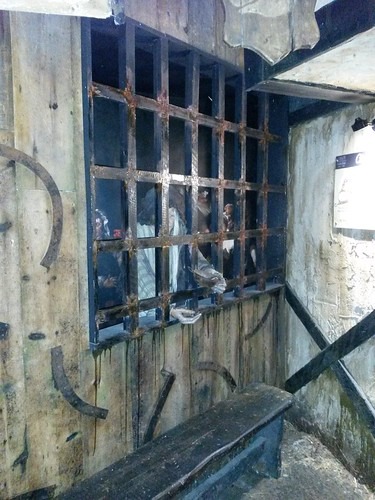
Prisoner begging through the gaol window
2015_0815Clink07
Prisoner trapped in the waterlogged oubliette

The museum concentrated on the kinds of punishments used – the oubliette, the stocks and other forms of torture – and I thought that this was rather a shame. It seemed as though the curators were trying to sensationalise the prison and turn the museum into something like the London Dungeon. I felt that they missed their chance to create a more “serious” but really worthwhile museum about the rich history of the Clink.

2015_0815Clink08
Infamous prisoner who would apparently fatten up rats and live off them…
2015_0815Clink09
During the English Civil War, several Royalists were imprisoned in the Clink

That said, I did enjoy my visit, and it was certainly an experience. I wouldn’t recommend going alone, though!

FACTS

Address: 1 Clink Street, London, SE1 9DG

Website: clink.co.uk

Opening Hours: 10am-6pm (winter)/9pm (summer), 7 days a week

Prices: £7.50 adults, £5.50 children/concessions

Soane’s Private Apartments Tour – Sir John Soane’s Museum

Sir John Soane’s Museum is a unique free museum near Holborn, the former home of the neo-classical architect responsible for the Bank of England. He established the house as a museum in 1833, and it contains numerous treasures from his collection.

I booked online for the rare chance to visit the Private Apartments at the top of the house. These were originally home to Soane and his wife, and later to curators of the museum. After refurbishment, they have been made available to visit as part of a guided tour.

I turned up with my ticket and was directed upstairs, where the group of us due to tour were gathered together and taken up a further flight of stairs, normally roped off. We were told that the house was bombed during the war and was refurbished afterwards; some lovely stained glass was pointed out to us that survived because it was removed from the house before bombing on the orders of the then live-in curator.

The first room we came to was Elizabeth (Eliza) Soane’s drawing room, where she would have taken tea, written letters and received guests. The room was decorated in her own style, with paintings of her children and family group as well as pictures that she liked. These included a beautiful representation of all the flowers in Shakespeare, and several sketches of Shakespearean characters. The next room was her bedroom, kept as it was for several years after her death by a heartbroken Soane, but eventually he turned it into a magnificent display room for his architectural models. The centrepiece was a very impressive model of a semi-excavated Pompeii, and surrounding this, on a beautiful wooden frame, were several models of notable classical buildings in both cork (for ruined buildings) and plaster of Paris (for models of buildings as-new). On the bottom of the stand were models of Soane’s own buildings, emphasising the inspiration Soane took from the classical world.
Following this we entered Soane’s bathroom, an elaborately decorated room with a grandfather clock (!) in the corner. The room contained an actual bath, and there were hot water pipes on the wall, but it is uncertain exactly how the system worked. After Soane’s death, the bath was sealed up at his request, and when it was opened after some years had passed it was found to contain a number of effects, such as pictures and documents, though none of these contained anything groundbreaking.

Next to the bathroom was Soane’s bedroom, although the bed there was not an original (that had been sold) but was one that had come from Pitzhanger Manor, his country house. Finally, we were led out of the apartments via a corridor decorated with lots of art and two mummified cats, which apparently were supposed to be lucky.

Changes have recently been announced to the Tours of the Private Apartments – the number of tours has been increased and you no longer need to book online, but can turn up on the day. The tours will continue to be free, as is entrance to the museum itself. It is definitely worth making the effort to go on a tour – it’s hugely interesting.

National Maritime Museum

2015_0417NMM01
The National Maritime Museum

On Friday I was due to go to the National Maritime Museum for a visit to the Caird Library and Archive (librarianship being my day job) and, having not visited the NMM proper for several years, I decided to take the entire day off and go around the museum before my library visit was due to begin. The museum, the main part of which is free to enter, was established by Act of Parliament in 1934, opening to the public in 1937. The site, encompassing the Naval College and the Royal Observatory, is a World Heritage site, and the buildings started out in 1807 as a school for the children of seafarers, though the most recent addition, the Sammy Ofer Wing, was only completed a few years ago.

2015_0417NMM06
Stern of a ship

The Museum’s collections include many and varied items relating to the history of Britain at sea, including art, maps, manuscripts, ship models and plans, a maritime reference laboratory, and seafaring objects including figureheads.

2015_0417NMM09
Interesting collection of figureheads

The central galleries have some fascinating exhibits on display. One of my favourites was Prince Frederick’s barge. This was used on the Thames by the Royal family for many years, often for pleasure cruises.

2015_0417NMM10
Prince Frederick’s barge (1731)

After wandering about the bright, airy central area of the Museum for a while, I checked out the different galleries. Voyagers: Britons and the Sea had varied artefacts from different time periods relating to how people on this island surrounded by sea saw their relationship to the water. Guiding Lights: 500 years of Trinity House and safety at sea looked at lighthouses and other ways of helping ships avoid the rocks, while Maritime London: 1700 to now is a chronological exploration of how London developed as an important port.

I then moved upstairs to the top of the building, where I looked at the Nelson, Navy, Nation gallery. Probably most notable for displaying the coat Nelson was wearing when he died at Trafalgar, the gallery also looked at the lead-up to the battle and the aftermath. I then popped into Forgotten Fighters: the First World War at Sea, which was a bit dry for my tastes, but an appropriate commemoration of World War I. Back on the first floor, the Great Map caught my eye. Children and families can play games and use tablets to interact with the map, but I contented myself with just looking at it. Next to it was the Environment Gallery, informing us about existing and possible future damage to our seas.
2015_0417NMM12
The Great Map

Two particularly detailed galleries, The Atlantic: Slavery, Trade, Empire and Traders: the East India Company and Asia look at the wider context of Britain’s relationship with the sea and the lands that sailors were able to explore and exploit. Finally, I ended my journey around the museum with a look at the restored Baltic Exchange Memorial Glass, damaged in the 1992 bomb that led to the demolition of the Baltic Exchange (the gherkin now occupies that site).

2015_0417NMM14
Baltic Exchange Memorial Glass

Plenty for all ages to see and do (there are also childrens’ play areas): not bad for a free museum.

FACTS

Address: Romney Road, Greenwich, SE10 9NF

Website: rmg.co.uk

Opening Hours: 10am-5pm

Prices: Free (except for special exhibitions)

The Darks – Tate Britain

The Darks is an installation/exhibition by Ruth Ewan and Astrid Johnson based at Tate Britain. I had read about it on the website, and when I went to the Tate to see some exhibitions on Easter Monday, I decided to give this tour a go.

The Darks plays on the format of a museum audio guide, and was inspired – if that is the right word – by the Millbank Prison which used to occupy the Tate site. Jeremy Bentham’s original 1816 plan was for a Panopticon, a system which would enable just one watchman to keep an eye on all the prisoners, but the end result was somewhat different. The triangle of Mercy, Justice and Vigilance was supposed to inform prison design. The guide features both real and fictional accounts from the likes of Dickens as well as prisoners transported to Australia from just outside the prison. The tour starts at the Tate’s Millbank entrance, then moves onto the steps; you cross the road and walk by the river until you reach the Morpeth Arms and Ponsonby Place, then head back to the Manton Entrance in Atterbury Street, finishing up in the Tate’s Lower Rotunda.

2015_0406TheDarks01
The Darks audio guide collection point
2015_0406TheDarks02
Tate Britain Millbank entrance
2015_0406TheDarks03
Looking out onto the river
2015_0406TheDarks04
The Rotunda
2015_0406TheDarks05
Looking west along the riverbank
2015_0406TheDarks06
The Thames
2015_0406TheDarks07
The Thames
2015_0406TheDarks08
Prisoners departed London here for transportation to Australia
2015_0406TheDarks09
The Morpeth Arms, where prison workers used to drink
2015_0406TheDarks10
Part of the octagon that used to mark the prison boundary
2015_0406TheDarks11
Another view of the boundary
2015_0406TheDarks12
Manton Entrance
2015_0406TheDarks13
Back inside Tate Britain

The Darks is a fascinating tour and I learned a lot about Millbank Prison and the site itself. I love anything that allows me to explore more of London, so this was ideal.

Wallace Collection

2015_0214WallaceCollection01

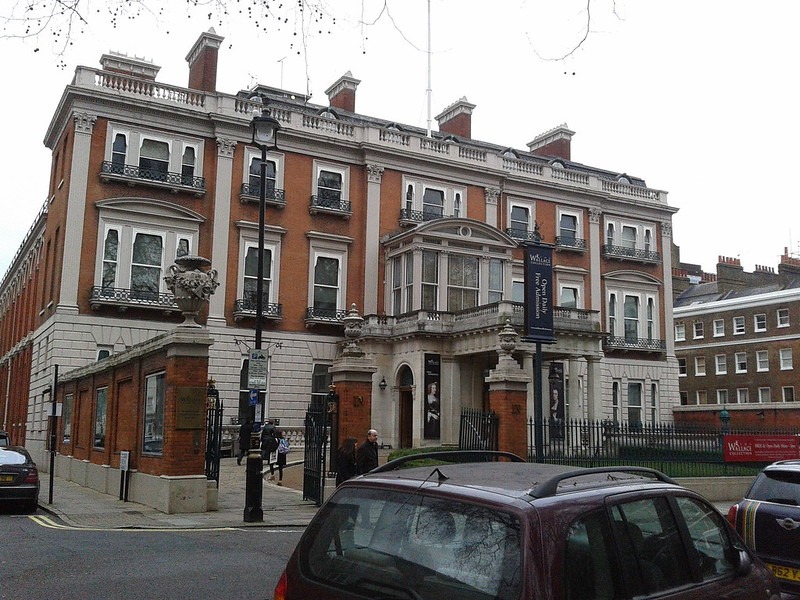
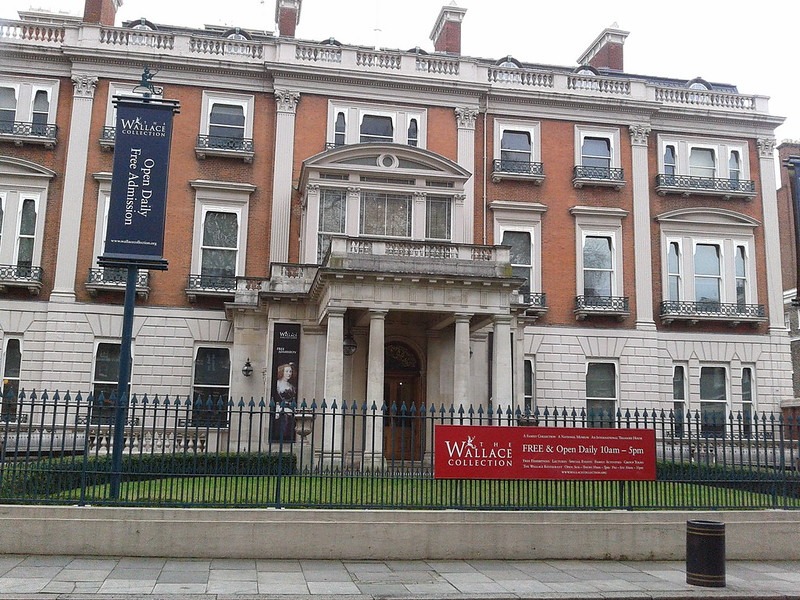
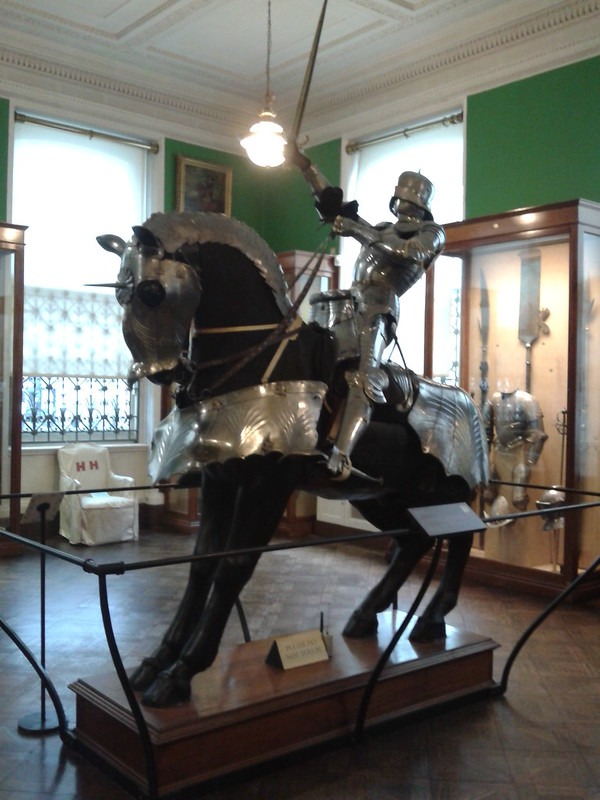
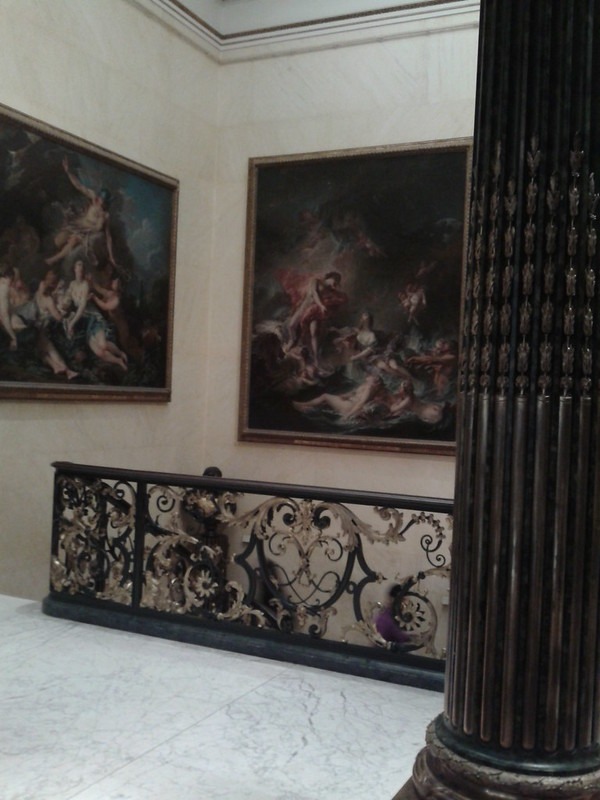
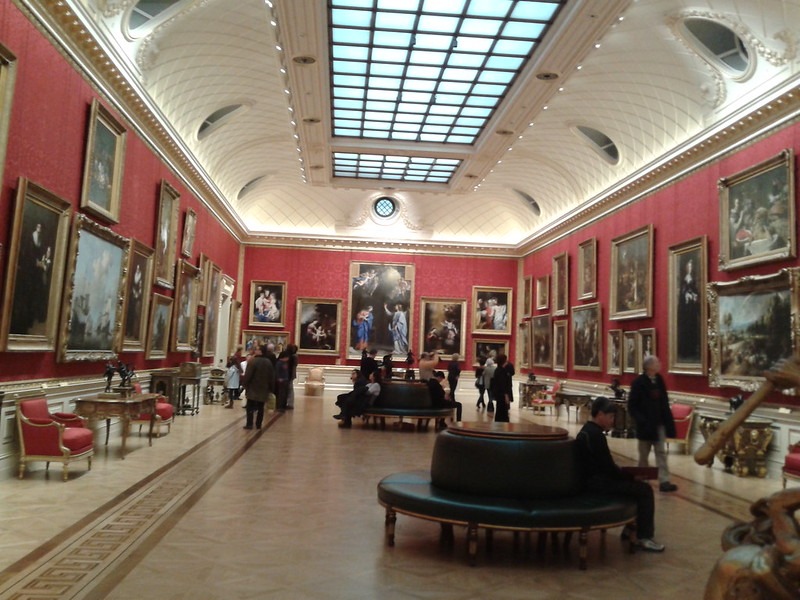
On Saturday I finally got round to visiting the Wallace Collection, a unique free museum based in Hertford House, Manchester Square near Oxford Street. The collection was accumulated in the 18th and 19th centuries by the first four Marquesses of Hertford and Sir Richard Wallace, the fourth Marquess’s son. Lady Wallace, Sir Richard’s widow, bequeathed the collection to the nation in 1897. Under the terms of the bequest the main collection cannot be added to, however museum staff do continue to seek out objects and archives relating to the family.

2015_0214WallaceCollection02

2015_0214WallaceCollection03

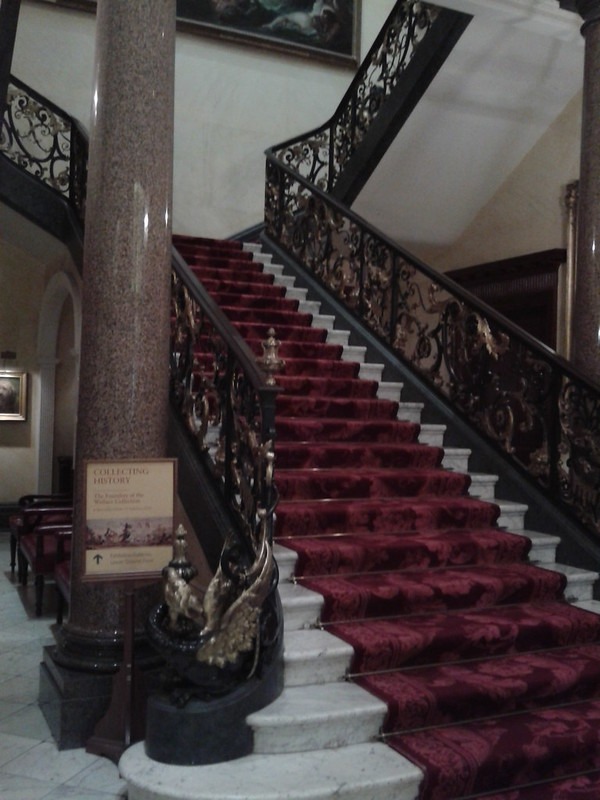
The house is situated in an impressive but quiet square, and opens into a lovely hallway. There is a posh-looking restaurant out the back (which I’d love to go to for Prosecco one day) and a gift shop, in addition to the 25 galleries. Eighteenth century French painting, works by the Old Masters and some rather famous works (including Frans Hals’ The Laughing Cavalier (1624)) sit alongside ancient furniture, small religious mementoes and an extensive armoury. I also saw the temporary exhibition, Collecting History: The Founders of the Wallace Collection.

2015_0214WallaceCollection04

2015_0214WallaceCollection05

I enjoyed looking around, although there was an overwhelming amount of art and I certainly couldn’t take it all in. I enjoyed the sumptuous interior of the house itself, however, and I would like to make a return journey or two to explore further.

2015_0214WallaceCollection06

2015_0214WallaceCollection07

FACTS

Address: Hertford House, Manchester Square, London, W1U 3BN

Website: wallacecollection.org

Opening Hours: 10am-5pm

Prices: Free

Tudor World / The Falstaff Experience

The Stratford upon Avon museum known as Tudor World and The Falstaff Experience is an “interactive museum” all about the town where Shakespeare grew up. It explores life in the Tudor era and looks at where Will may have got some of his inspiration. I popped in last time I was in Stratford to pass some time in between seeing some plays.

The museum is hosted in a Grade 2 listed building on Sheep Street, in the centre of the town. Known as the Shrieve’s House and Barn, it is the oldest lived-in house in Stratford, and used to be home to an inn run by William Rogers who was supposedly the inspiration for Shakespeare’s Falstaff.

2014_1011TudorWorld01
The Shrieve’s House and Barn
2014_1011TudorWorld02
Informative plaque on the wall
2014_1011TudorWorld04
Entrance to Tudor World
2014_1011TudorWorld03
Visiting

Tudor World is great fun and very child-friendly, with plenty of grim and gruesome exhibits and a “guide” in the form of a young pickpocket who pops up on information boards as you go around. The museum contains a lot of wax figures and other props which I found pretty atmospheric and creepy. There are even “smell-boxes” that let you smell what the deck of a ship or the inside of a pub would have been like! The “Falstaff Experience” part of the museum is a room with a very detailed inn replicated: it is possible that Shakespeare visited the inn and gained inspiration for his character of Falstaff.

As well as being open every day of the week (except Christmas Day) between 10.30 and 5.30, the museum is often open in the evening for ghost tours or ghost hunts (including overnight ones). Occasionally plays are performed in the Courtyard. Admission costs £5.50 for adults and £3 for children, with a family ticket and discounts for concessions available. Well worth a visit on a rainy day, with or without children.

The Musical Museum

2014_0824MusicalMuseum01
The Musical Museum

I’ve gone past The Musical Museum in Brentford a few times on the bus, but had never been until it was open for free for the 50th anniversary weekend. Though I was supposed to be packing for my holiday, I took a break in order to go down to Kew Bridge.

2014_0824MusicalMuseum03
Inside the entrance
2014_0824MusicalMuseum04
Inside the museum

The museum contains one of the world’s foremost collections of automatic musical instruments, including pianos, orchestrions, orchestrelles and violin players, among others. The star of the collection is the Wurlitzer organ, which is located in the hall. When I arrived, a tour was just going into the hall, so I tacked onto the end and enjoyed a quick performance from the tour guide. We also got to see the organ lowered down into the pit!

2014_0824MusicalMuseum02
The Mighty Wurlitzer
2014_0824MusicalMuseum05
One of the museum’s instruments

As well as having a look around myself, I attended the beginning of the next tour, in which the enthusiastic guide played us some of the instruments. This was great fun and I found the ingenuity and cleverness of these machines fascinating. There were several children there and they seemed to be thoroughly enjoying themselves.
2014_0824MusicalMuseum06
One of the museum’s instruments
2014_0824MusicalMuseum07
One of the museum’s instruments

The museum normally costs £10 but as I mentioned, it was free on the anniversary weekend. The museum completely relies on entry fees to run and maintain the instruments, so I’d urge you to visit and check out this quirky and unusual museum.

FACTS

Address: 399 High Street, Brentford, TW8 0DU

Website: musicalmuseum.co.uk

Opening Hours: Fri-Sun (& Bank Holiday Mondays) 11am-5pm

Prices: Adult £10, Concession £17.50, Child £4; under-5s free

MAD Museum – Stratford upon Avon

2014_0703MADMuseum
Entrance to the MAD Museum on Henley Street

Yesterday I went on one of my many day trips to Stratford upon Avon. The show I was there to see didn’t start until 3 pm, which left me a few hours to kill. I’d wandered past the MAD Museum on Henley Street a few times, and thought the time was right for me to pay it a visit.

I walked in at the right time, as a huge school party was just leaving. There were only a couple of other visitors remaining, so I had most of the exhibitions to myself.

The museum has only been in existence since 2011 (it originally occupied premises on Sheep Street) but has already won several awards, including the TripAdvisor Certificate of Excellence for 2014. MAD is short for Mechanical Art and Design and the museum showcases kinetic sculptures and art. Think marble runs, but much more varied and elaborate!

The museum is full of delights, most of which are interactive: press a button and see what happens. My favourites were the typewriter converted to a music-making machine, thanks to wires connecting each key with a glass filled with water, and the large-scale ‘marble-run’ style sculpture set in a kitchen. Several of the works are available to buy, and all display remarkable ingenuity. This museum is an ideal place to visit no matter what your age or level of interest in mechanics – though I think someone interested in how things work would get the most out of it.

Langdon Down Centre

The Langdon Down Centre
Entrance to the Langdon Down Centre

I visited the Normansfield Theatre in the Langdon Down Centre a couple of weeks ago to attend a performance. I reviewed the production here, but I wanted to post something on the theatre and the building itself, as it has a history much more interesting than most.

The centre was founded as a private home and hospital/care facility by Dr. John Langdon Down, who specialised in the care of people with learning disabilities. Many had the condition which now bears the Doctor’s name – Down’s syndrome. Langdon Down’s approach was radical for the time, with his emphasis on education and sympathetic care.

The theatre itself is utterly stunning. It’s rare to find such a beautiful surviving example of a private Victorian theatre; completed in 1879, it was built as an entertainment venue by Langdon Down as somewhere for his patients and students to explore drama and music. The performance I attended was a music hall-style revue telling the story of Langdon Down and one of his patients, James Henry Pullen, whose incredible creative ability is still evident in the ‘Giant of Earlswood’ which is still on display in the Centre, and the stunningly detailed ships he constructed from wood, on display in the museum.

Normansfield Theatre - proscenium arch
Normansfield Theatre – proscenium arch
Normansfield Theatre - side wall
Normansfield Theatre – side wall
Normansfield Theatre - ceiling
Normansfield Theatre – ceiling
Normansfield Theatre - back of the theatre
Normansfield Theatre – back of the theatre
The Giant of Earlswood