Building the Picture: Architecture in Italian Renaissance Painting – National Gallery

This short exhibition at the National Gallery explores the role of architecture in the painting of the Italian Renaissance, with focus on the 14th, 15th and 16th centuries. The result of a research partnership between the National Gallery and the University of York, Building the Picture: Architecture in Italian Renaissance Painting aims to show how architecture was inherently bound up with the work of many artists. The rooms of the exhibition are themselves laid out and divided by arches and columns, as if to illustrate the point.

The exhibition emphasises the multidisciplinary nature of art during the Renaissance: for instance, Michelangelo was a sculptor before designing buildings. Many paintings took architecture as a starting point. Most paintings were designed for specific spaces, such as Domenico Venziano’s “The Virgin & Child Enthroned” of 1435-43, which was designed to fit into a niche in Florence’s Carnesecchi Tabernacle.

Architecture was particularly present in annunciation scenes, in which it was common to divide Mary from Gabriel and any others present by use of walls. An example of this is Duccio’s “The Annunciation” of 1311, in which the two appear to belong in their own “frames” within the picture. This division was intended to mark Mary out as special.

Another kind of picture is “Saint Jerome in His Study”, a work from around 1510 by Vincenzo Catena. The architecture here is welcoming and open, as if inviting the viewer to step into the picture. Perhaps this represents Saint Jerome’s work of making the Bible accessible through translation.

Another series of works explores paintings that evoke the concept of Solomon’s temple in Jerusalem, such as Sebastiano del Piombo’s “The Judgement of Solomon”. Other images of the 5th century Saint Zenobius, Bishop and patron saint of Florence, invoke the architecture of the city to help locate his miracles in real places. Finally, a selection of Nativity paintings set in ruins showed how the setting symbolised the ruin of the old order.

This short but free exhibition is certainly worth a look if you are in central London with a bit of free time to spare.

Britain: One Million Years of the Human Story – Natural History Museum

At the weekend I went to see a couple of exhibitions at the Natural History Museum. The first was Britain: One Million Years of the Human Story, inspired by the Ancient Human Occupation of Britain (AHOB) project, a three-phase study investigating humans from Palaeolithic and Mesolithic northern Europe.

The exhibition told a chronological story from the earliest evidence of human presence in the British Isles, through to the first appearance of Homo sapiens in Britain. I found it fascinating to learn about the presence of early humans. Among the items on display were a skull from the earliest known Neanderthal in Britain, bones from the animals that lived during that time, and tools and other evidence of human habitation. Over the last million years, humans have been present in Britain on and off, depending on weather and other conditions. Other amazing creatures have been here too, including mammoths, rhinos and lions.

Evidence of human presence has been found mainly in the south: the north and Scotland experienced longer and more severe freezes, meaning that evidence could have been destroyed. Finds have been discovered at places such as Kent’s Cavern in Devon and Happisburgh in Norfolk.

I was interested to learn that when Homo sapiens superseded Neanderthals, the latter’s genes were not wiped out entirely. Apparently most humans (except for those most closely descended to the original Homo sapiens who came out of Africa) have some Neanderthal genes. Two purpose-built models show how the species differed.

2014_0817Britain01
Neanderthal man
2014_0817Britain02
Homo sapiens

At the end of the exhibition, there was a video with six celebrities talking about the results of their own DNA analysis. It was interesting to see the huge range and scope of their DNA origins, from Scandinavian and Asian to Native American. I wonder what mine would say?

The Old Palace Exhibition – Somerset House

2014_0813TheOldPalace01

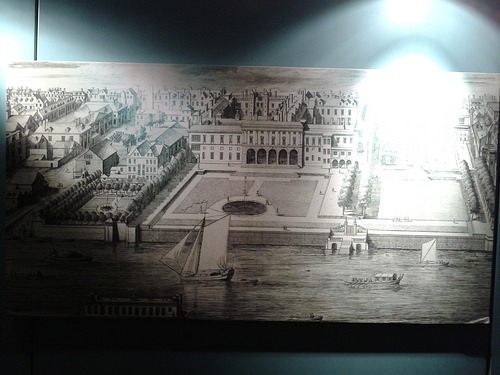
After visiting the tattoo art exhibition at Somerset House I found my way downstairs into a “hidden” exhibition about the old Somerset House palace. This was built during the Tudor period, originally for Protector Somerset, but he died before it was completed.

The palace being next to the Thames, it was ideally placed for river-based entertainment. During the seventeenth century, a floating coffee house called “The Folly” was often moored outside. Visitors travelling along the river would often stop and visit: Samuel Pepys, the famous diarist, himself visited in 1668.

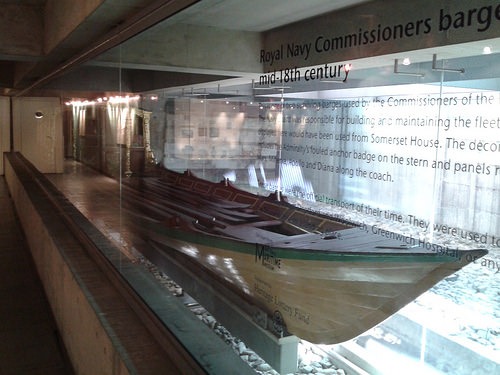
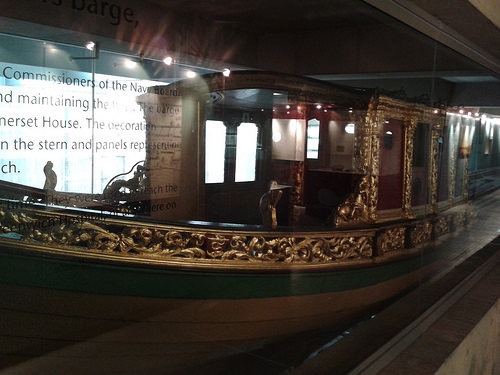
On display are several items from the history of Somerset House, dug up by archaeologists over the years. There is also a barge, used by the Commissioners of the Royal Navy, which would have patrolled the river during the 17th century.

2014_0813TheOldPalace02

2014_0813TheOldPalace03

Time: Tattoo Art Today – Embankment Galleries, Somerset House

2014_0813Time01

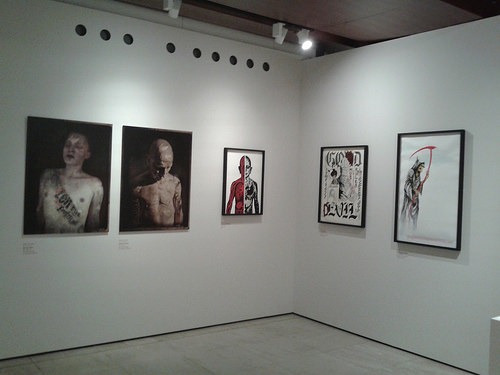
Somerset House is currently hosting an exhibition on tattoo art. I don’t have any tattoos myself, but I can appreciate the incredible artistry that goes into them.

2014_0813Time05

2014_0813Time08

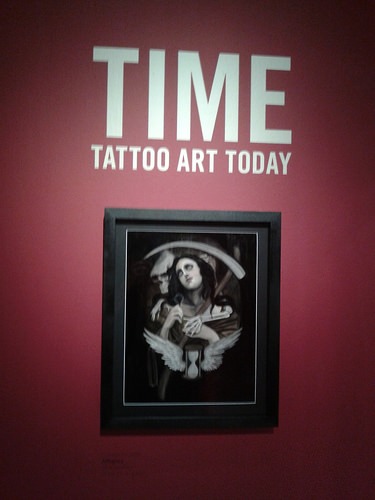
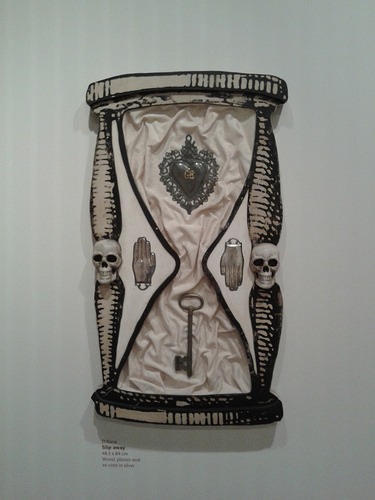
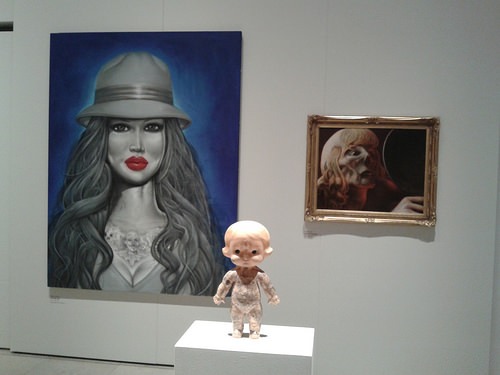
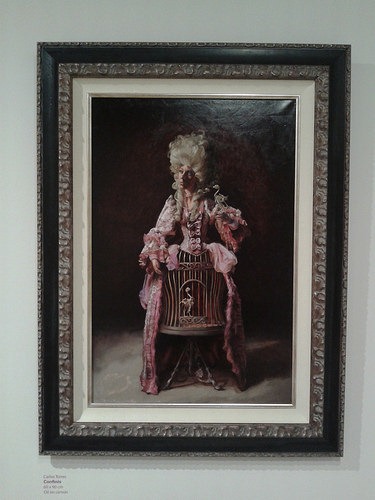
Time: Tattoo Art Today presents artworks from 70 of the world’s most influential tattoo artists, including Ed Hardy, Horiyoshi III, Paul Booth and Rose Hardy. The artists were commissioned to create new works on the theme of time. The result is a varied collection of artworks made with a range of different materials and methods including watercolour, sculpture, oil painting and painting on silk.

2014_0813Time03

2014_0813Time07

There were some incredible pictures, wonderfully detailed. I still don’t think I want a tattoo myself, but I can’t help but admire the quality of the artists’ work.

2014_0813Time06
Rose Hardy, Rouge

Time: Tattoo Art Today is on in the Embankment Galleries, Somerset House, until 5 October. Entry is free.


Joan Fontcuberta: Stranger than Fiction – Science Museum

On Sunday morning I went to South Kensington, hoping to go and see some exhibitions at the Natural History Museum, but there was a huge queue outside so I went to an exhibition in the Science Museum instead. The exhibition in question was Stranger than Fiction, created by the photographer and artist Joan Fontcuberta.

Fontcuberta subverts traditional ideas of photography as a medium of truth by crafting elaborate fictions that challenge our concept of reality versus fiction. I found the exhibition absolutely fascinating. It features six documentary narratives, each of which use photographs alongside journalism, diaries, museum displays and articles to develop the story.

The Fauna series looks at the lost archive of the mysterious Professor Peter Ameisenhaufen, who documented a large number of highly unusual creatures. The level of detail, imagination and level of detail that went into this work made it one of my favourites.

Herbarium looks at rare and unusual plant species, and there were several drawings of weird and wonderful flora. Orogenesis is made up of computer-generated geographical landscapes inspired by works of art, while Constellations consists of incredible images of starry skies.

Another of my favourites was Sirens, which purports to illustrate the discovery of mermaid fossils. The images were so realistic that I could almost believe they weren’t fiction. I also liked Karelia, which looks at Fontcuberta’s “exposure” of the fake miracles supposedly performed by monks in this monastery in Finland. This work was funnier than the others – the idea of performing a “weeping blood” miracle and hiring oneself out as a mourner at a funeral made me chuckle!

This exhibition was pretty unusual – “stranger than fiction”, you might say. Definitely worth a visit.

Shakespeare: Greatest Living Playwright – V&A

The small display Shakespeare: Greatest Living Playwright is on in the Theatre & Performance area at the Victoria & Albert Museum until the 28th of September. It celebrates the 450th anniversary of Shakespeare’s birth, and consists of artefacts such as a copy of the First Folio and videos of several theatre practitioners currently involved with Shakespeare. These include Sinead Cusack, Cush Jumbo and Simon Russell Beale, and I really enjoyed hearing about their experiences, especially Cusack, as she played Cleopatra in the first ever RSC production I saw back in 2002.

British Folk Art – Tate Britain

After visiting the Kenneth Clark exhibition, I went along to the British Folk Art museum, also at Tate Britain. This exhibition comprises collections from across Britain which have been described as folk art, a term generally used in connection to social history or folklore studies. It is the first major exhibition of its kind in the country, and covers work from the seventeenth century to the middle of the 20th, which is when folk art supposedly began to become more commodified.

The first section of the exhibition consisted of a selection of painted, carved or constructed signs outside buildings which were used to denote the kind of business and as an early form of advertising. Some of these signs are obvious, such as a boot or a shoe to denote a cobbler, and a padlock or key for a locksmith. Others are less so: a bear was often used outside a barber’s (as bear grease was commonly used on the hair), and the three golden balls outside a pawn shop represent the family crest of the Medicis, wealthy Italian bankers. The detail and craftsmanship evident on some of these signs is incredible.

In early 19th century Frant, a village near Tunbridge Wells, a tailor named George Smart created and sold pictures made from textile  scraps, which he then sold to tourists. “Smart’s Repository” produced some amazing pictures of fascinating village figures, including the policeman and an old woman in a red coat. Many folk artists painted pictures relating to rural life and landscapes, including images of the sea and sky. One notable such artist was Alfred Wallis (1855-1942), a rag and bone merchant and self-taught painter from St Ives, who created paintings based on his early career at sea.

Some folk arts were classed as crafts, including the mysterious “god in a bottle” sculptures (wood and liquid in glass bottles), straw crafts and leatherwork. Some were carved figures, such as the Highlander which was kept outside a tobacconists, and ship figureheads such as the huge HMS Calcutta, made in Mumbai 1831 of Indian hardwood.

I was hugely fascinated by the work of Mary Linwood (1755-1845), a woman who imitated the Old Masters and British artists to recreate their work in needlepoint. Her fantastically detailed works showed an incredible amount of talent, yet how to categorise an artist who, while incredibly able, does not create original works?

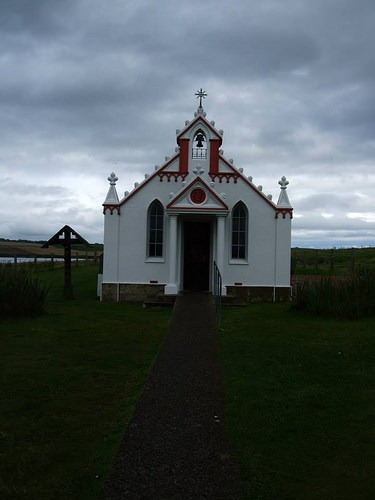
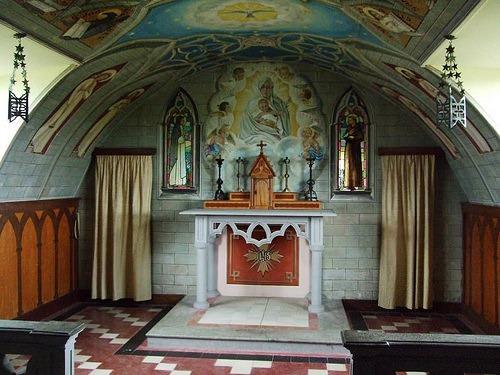
Towards the end of the exhibition there were displayed assorted sculptures, artefacts and textiles, from places such as Beamish Museum in County Durham. These reveal the wide-ranging skills and talents of folk art practitioners. At the end, archival photographs displayed some other examples of folk art, including one man who transformed his back garden into a wonderland, and the chapel built in Orkney by Italian prisoners during the Second World War.

Overall this was a fascinating exhibition, and one which I thoroughly enjoyed. It is on until the end of August, so do try to catch it if you can.

1174530_10100105106923904_31112506_n
The Italian Chapel in Orkney (taken by me on holiday last year)
1233498_10100105106968814_1082326885_n
The interior of the Italian Chapel

Kenneth Clark: Looking for Civilisation – Tate Britain

On Saturday I visited Tate Britain to see two exhibitions which were due to end shortly. In fact, one of them, Kenneth Clark: Looking for Civilisation, has now ended – the last day was Sunday. I was originally in two minds whether to go to see this, but I’m really glad I did.

Kenneth Clark is not someone I had ever heard of before this exhibition, but it seems that he made a significant contribution to the study and appreciation of art during the 20th century. Born into a wealthy family, he used his fortune to collect art and to assist struggling artists. He had wide-ranging tastes: in contemporary terms he had particular preference for the Bloomsbury Group and artists such as Henry Moore, Graham Bell and Victor Passmore. Clark believed that the lack of patronage in the art world was causing artists to be removed from “real life”, and he sought to rectify this.

Clark had no formal art training, and while he produced some excellent books about art, including a fine study of Leonardo da Vinci’s drawings, he also made several mistakes, including quite a number of misattributions. Aged thirty, he became director of the National Gallery – one of his first acts was to install electric lights, so that viewers could actually see the artworks when there was not enough natural light. During the Second World War he ensured the safety of the artworks by evacuating them to Wales.

Towards the end of his life Kenneth Clark presented the groundbreaking series Civilisation, which proved a landmark arts documentary in the 1960s. I left the exhibition with a great deal of admiration for this man who was clearly so passionate about art.

Enduring War: Grief, Grit and Humour – British Library

Until 12 October 2014, a free exhibition in the Folio Society Gallery of the British Library, Enduring War: Grief, Grit and Humour, is on display to mark the centenary of the start of the First World War. The exhibition uses posters, poetry, books and pamphlets to look at how soldiers from home and overseas, and civilians back in “Blighty”, coped with the conditions of the war. It is really interesting – and sobering – to look at diaries, letters and journals from the conflict. The range of responses is fascinating and I thought it made an interesting foil to the recent exhibition of First World War portraits at the National Portrait Gallery.

Matisse: The Cut-Outs – Tate Modern

2014_0601Matisse

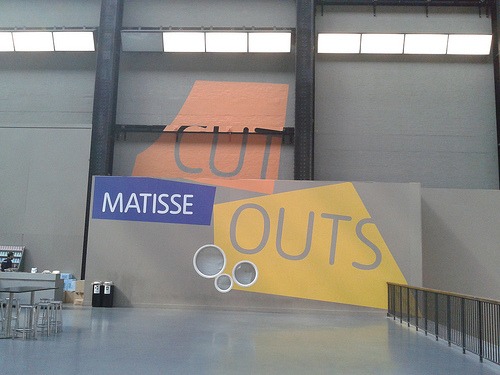
I got up early on Sunday to visit the Matisse: The Cut-Outs exhibition at Tate Modern. I’d booked my ticket in advance for the earliest possible time, hoping for a less crowded experience, but unfortunately it was still pretty busy. A worthwhile experience, though.

As the title suggests, the exhibition covers Matisse’s cut-outs, which he began to create towards the end of his life as ill health meant that he became unable to work and paint in his usual way. I think there’s something really inspiring about an artist driven to create by any means possible, overcoming obstacles to continue making work, and the cut-outs aren’t the childish simple pictures I’d wondered they might be. The images are deceptively simple and show how Matisse used colour and shapes in a creative and original way. My favourite pictures were the famous snail and the carnival images, especially the horse.