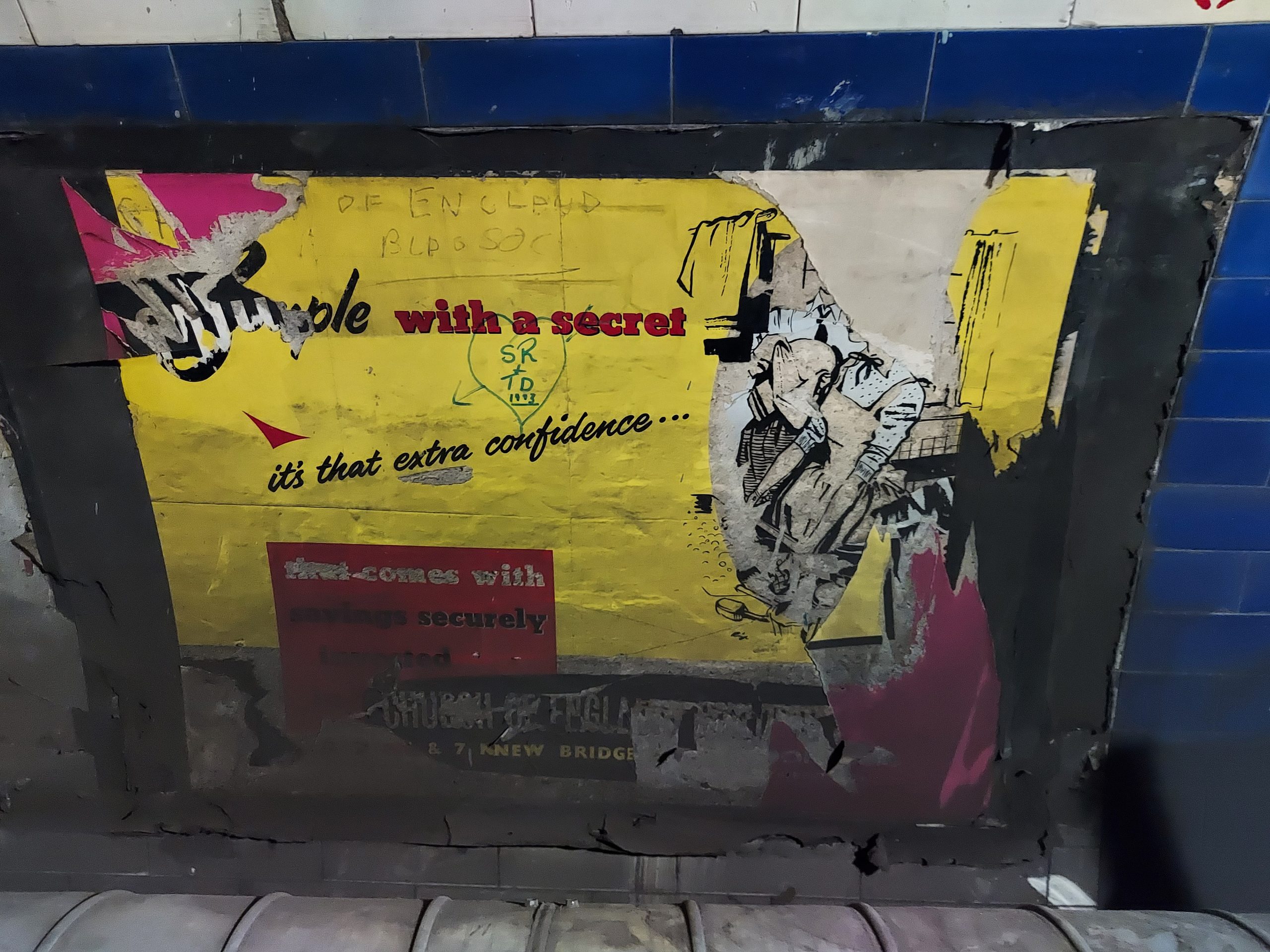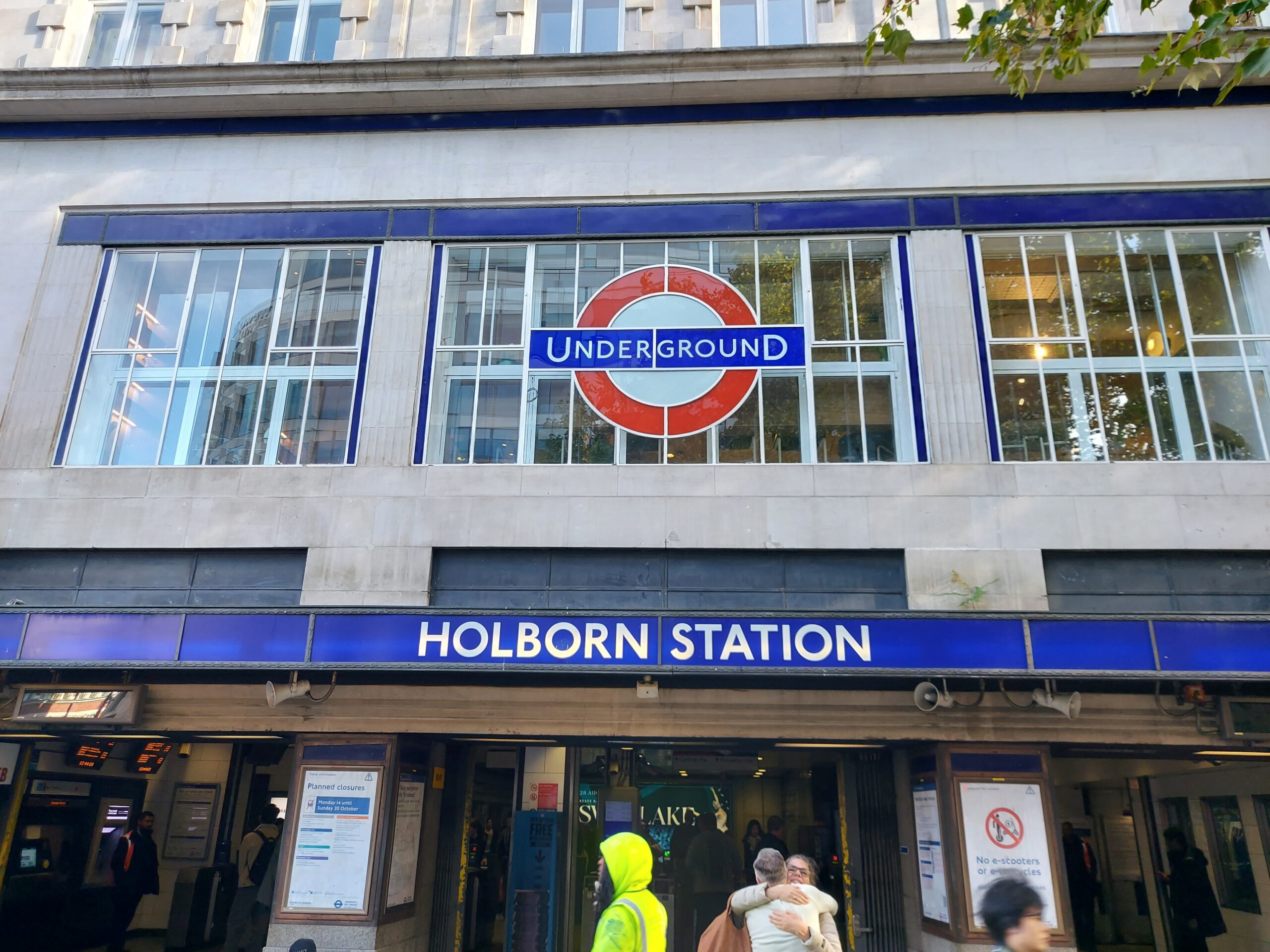
Hidden London – Holborn: The Secret Platforms

Outside Holborn station
Holborn station today

I got to take part in another Hidden London tour recently – this time Holborn: The Secret Platforms. This is a new tour offering insights into one of central London’s most popular stations. Despite being a busy working station, a third of the station is not open to the public, and this tour opens up those hidden areas.

The station originally opened in 1906 and featured four platforms, all serving the Piccadilly line. At the time, the surrounding area was notorious for its poverty and crime, but the station helped it to develop into an important business district. In 1933, the station was reorganised and expanded to include escalators and encompass the Central line, leading to the closure of the nearby British Museum station.
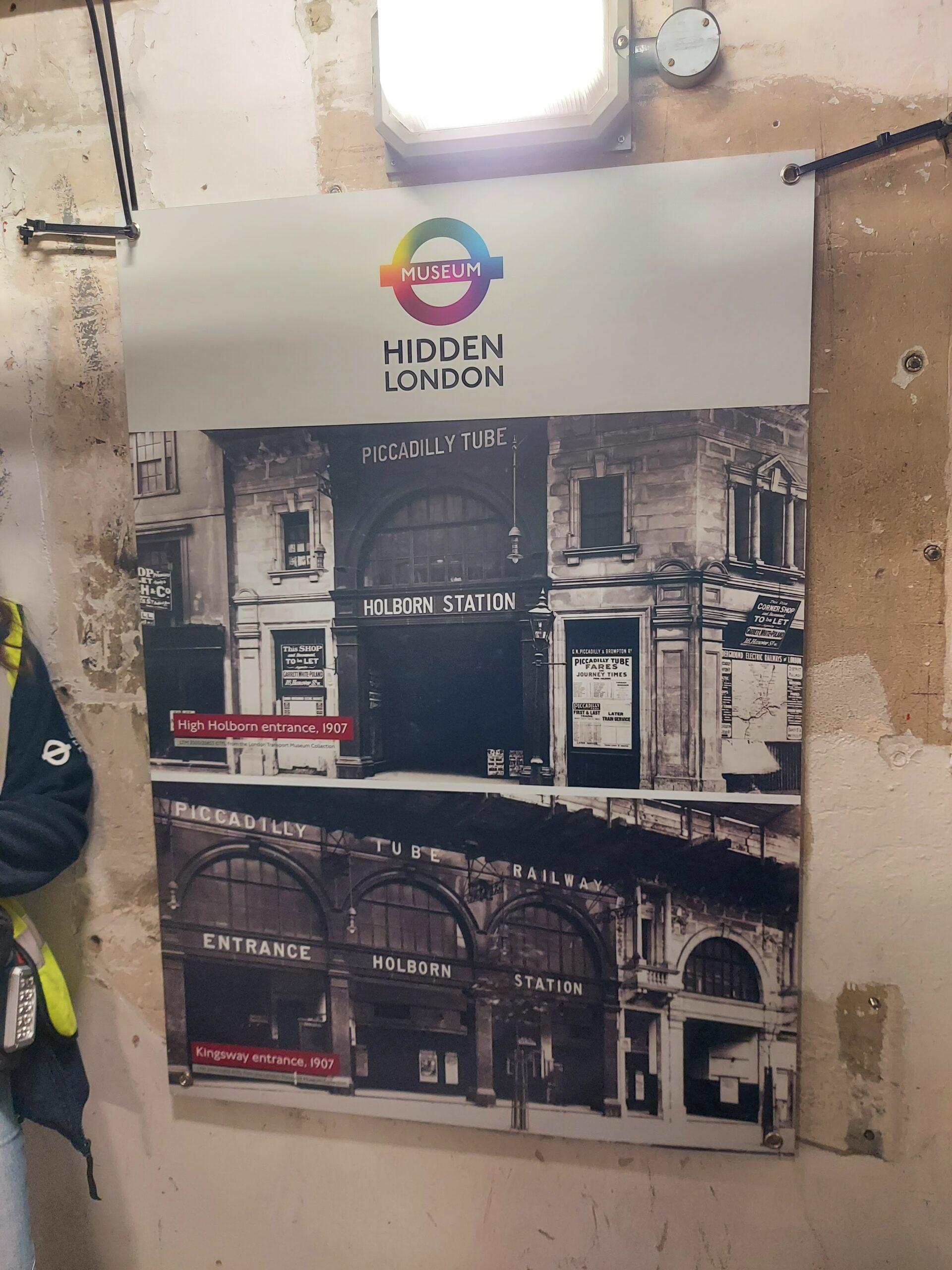
Original entrances to Holborn Station

The original station was designed by Leslie Green, although the facade was of polished granite stained red, not the usual brickwork, in order to fit in with local architecture. We got to walk down the emergency spiral staircase, fitted to complement the lifts that were originally in place.
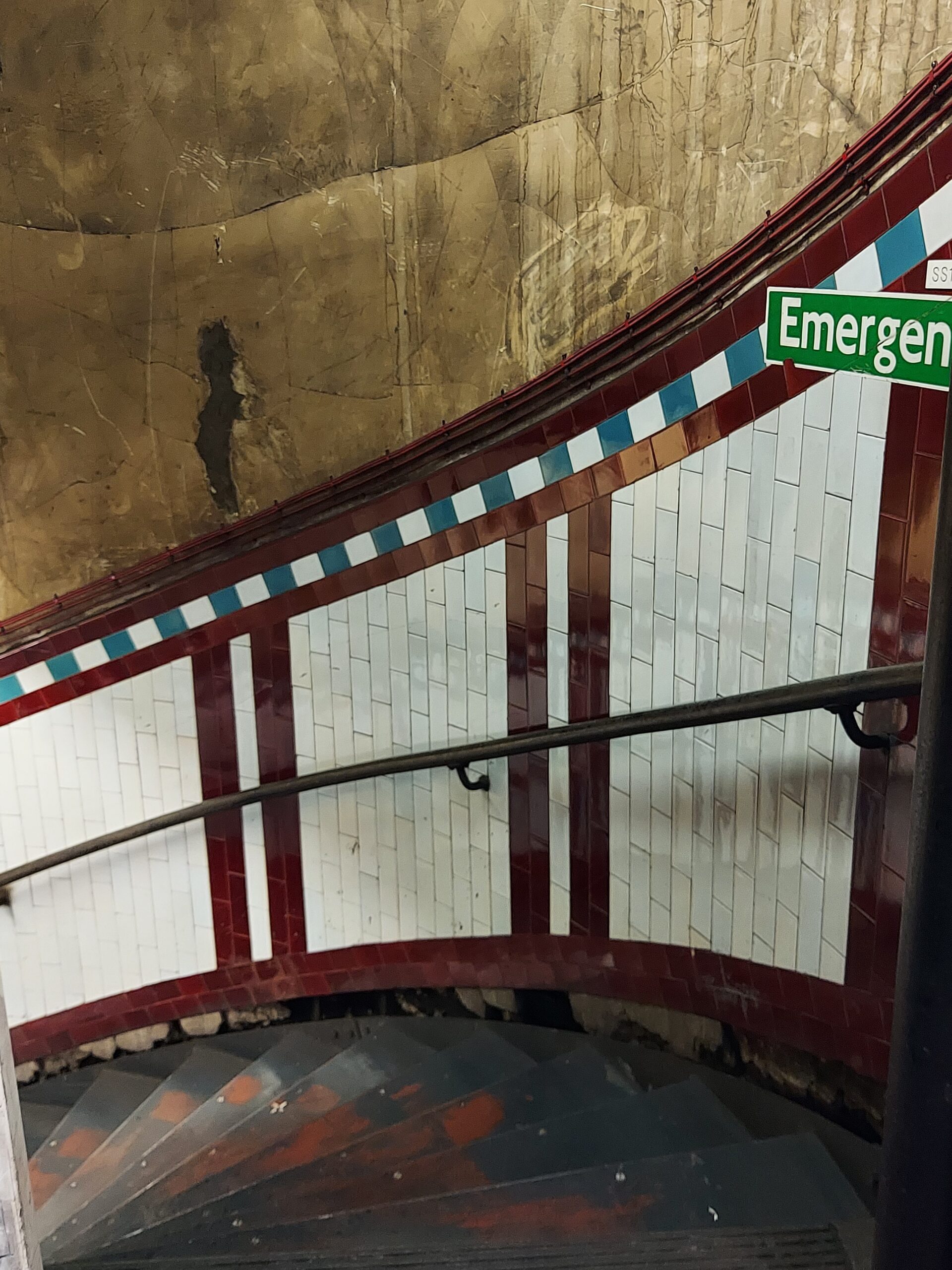
Emergency spiral staircase at Holborn

The main reason that so much of this station is now disused is the closure, in 1994, of the little-used Aldwych extension. I visited Aldwych on my very first Hidden London tour (before it was even called Hidden London) around a decade ago, so it was exciting to be able to see the disused tracks from the other end. In the past they have been used as wartime accommodation, a science lab, a model railway club, a substation, and signalling.
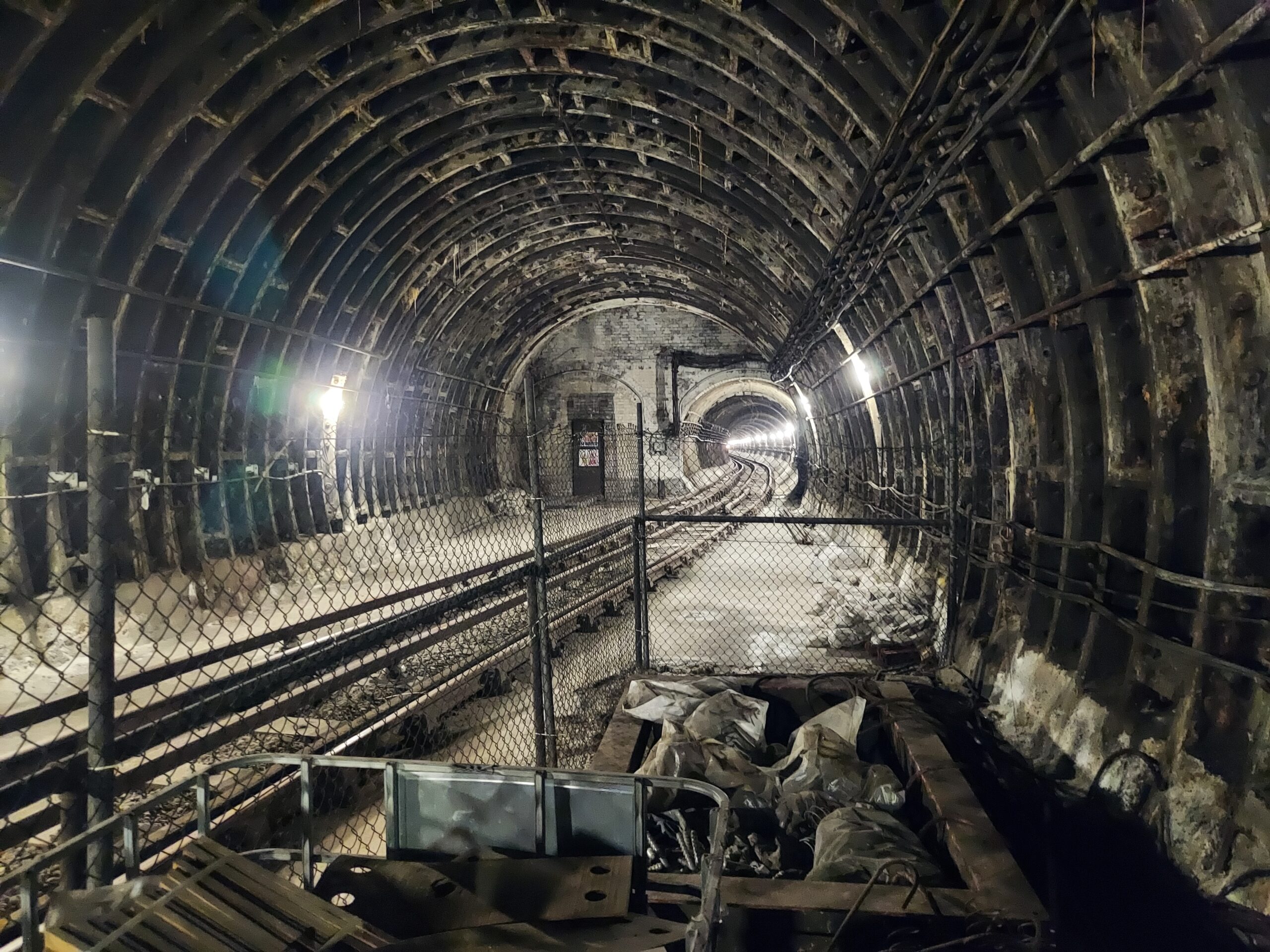
Disused tunnel heading to Aldwych

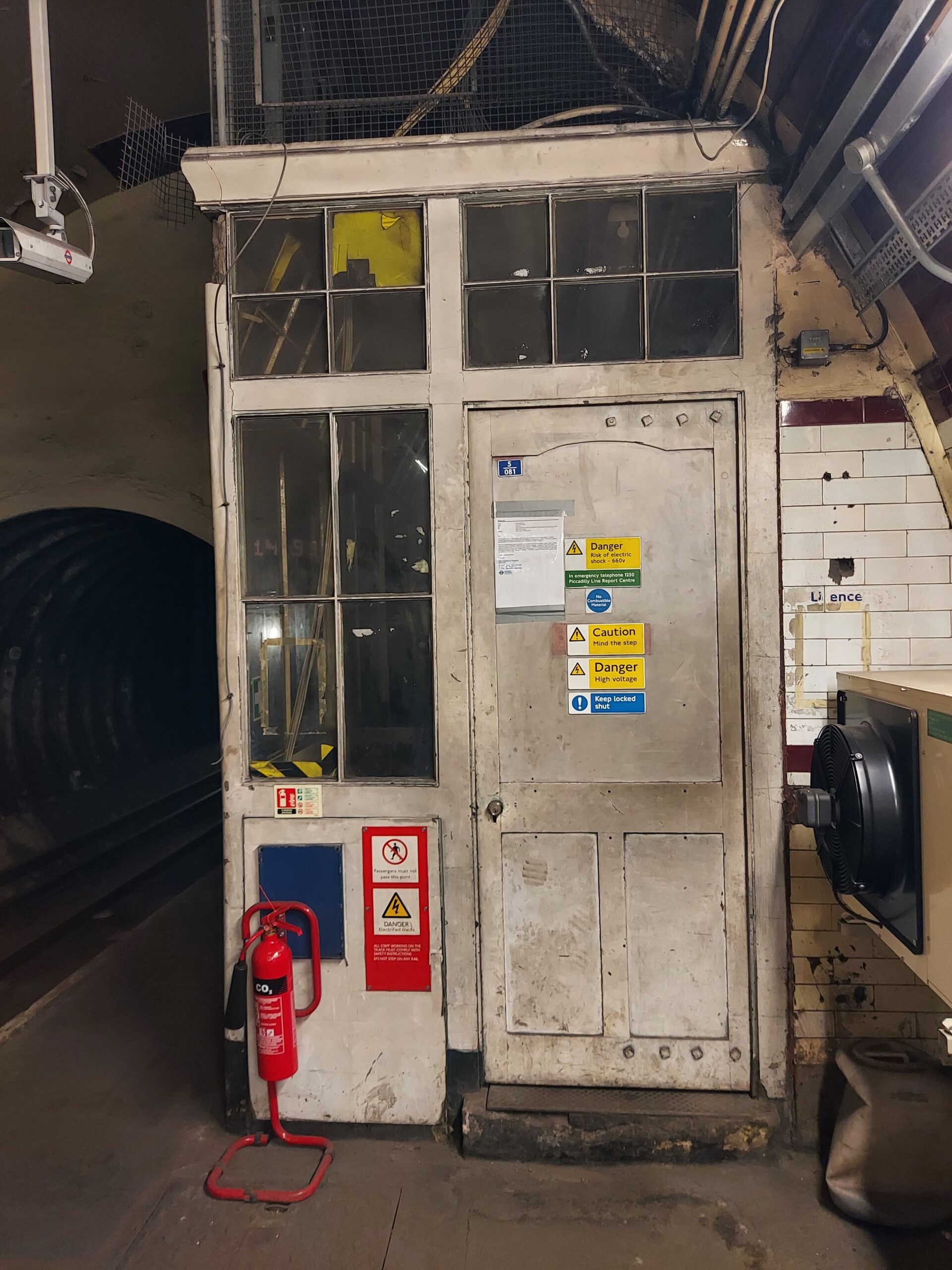
We also got to see some of the disused tunnels and platforms. I was surprised to learn that filming has taken place here – including one of the Superman movies starring Christopher Reeve, and Aqua’s video for ‘Turn Back Time’. One of the old platforms is home to an early 20th-century signalling cabin.
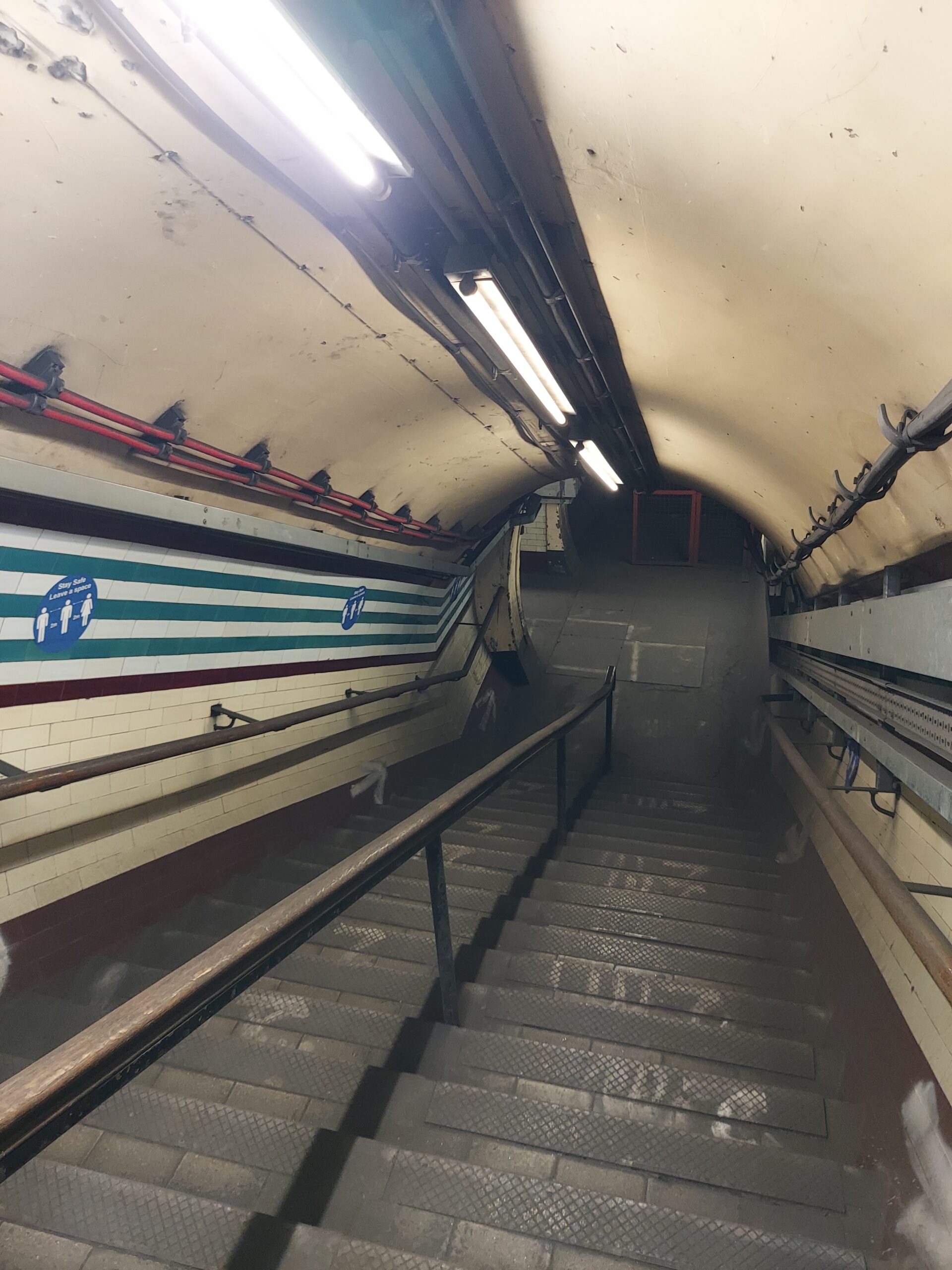
Disused Holborn staircase
Disused staircase
Early 20th-century signalling cabin
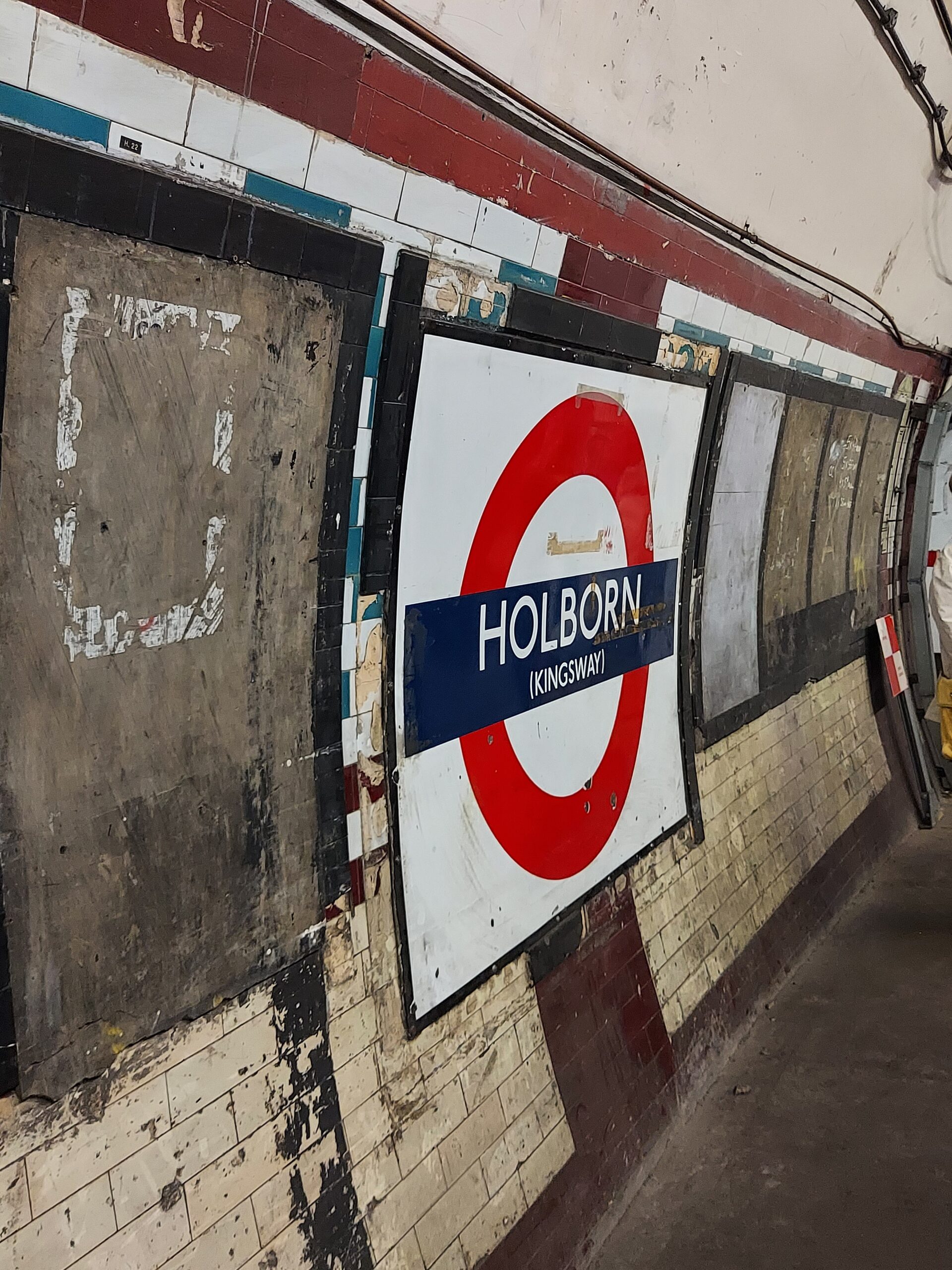
Holborn (Kingsway) sign on one of the disused platforms

I know I say this every time, but the Holborn tour was one of my favourites so far! I would definitely recommend it for any Tube fans.
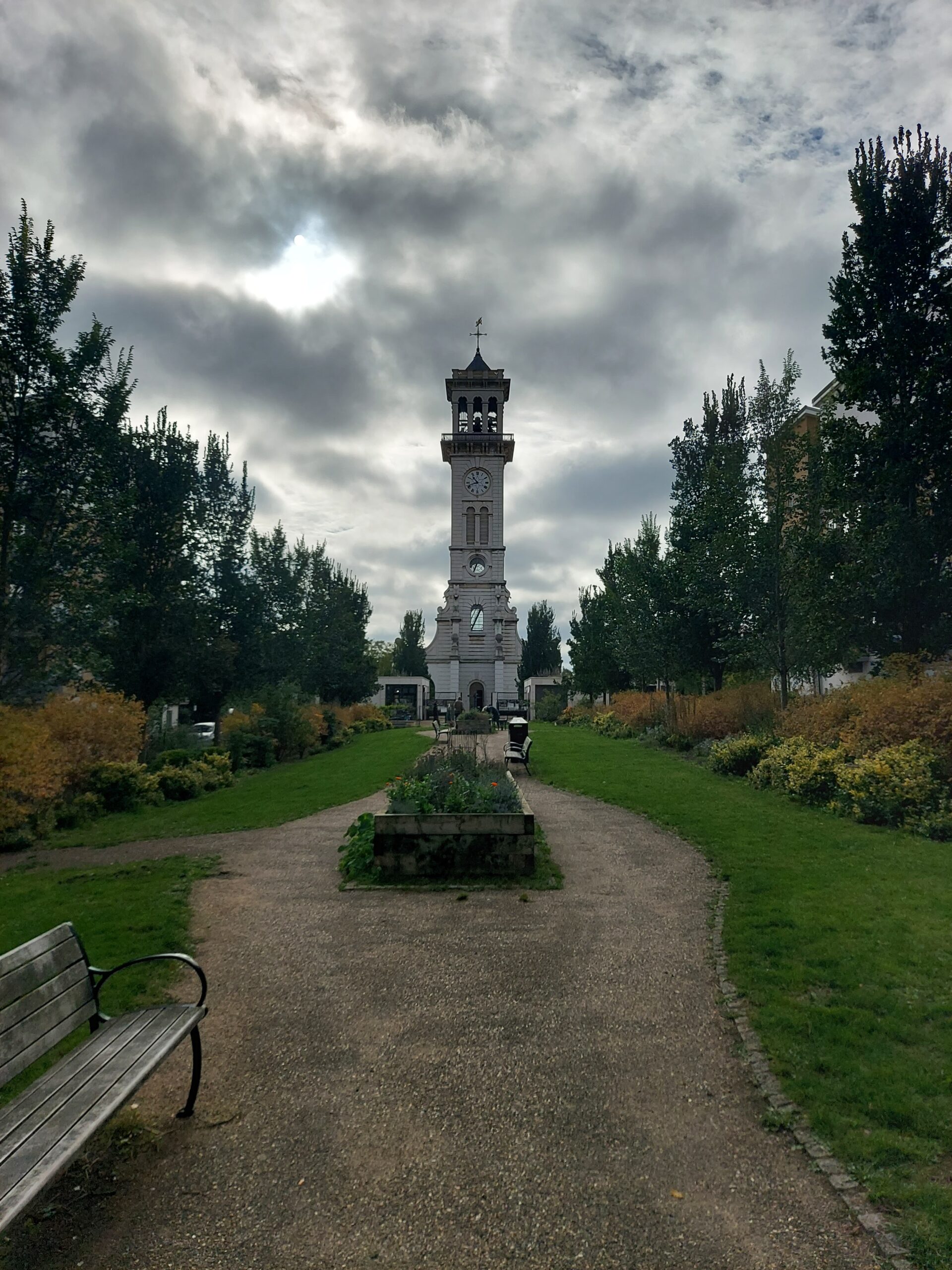
Caledonian Market Clock Tower

Caledonian Park Clock Tower

When I completed my kickboxing course recently, I kept walking past Caledonian Market Clock Tower, and wanting to know more about its history. I got my wish when I saw that guided tours were taking place allowing people to climb to the top of the tower and learn more about it at the same time.

The tower used to be the centrepiece of the Metropolitan Cattle Market (later Caledonian Market), just off the Caledonian Road in the parish of Islington (now the London Borough of Islington). It was built by James Bunstone Bunning, architect of the City of London Corporation, and was opened in June 1855 by Prince Albert. The market was opened in response to the difficulties of taking live cattle to crowded Smithfield in the City. It covered 30 acres, and was built on the site of the former Copenhagen House, the Ambassador of Denmark’s residence in the seventeenth century.

The market played host to cattle from all around the country, including Scotland, Yorkshire, East Anglia, Wales and the Cotswolds. Sheep, cows, pigs and horses were all sold here. The conditions were much improved from Smithfield: there was more space, animals were better treated, and there was access to water. At each corner of the market, large pubs (some of which still remain) provided accommodation, entertainment and relaxation for traders and visitors.

The clock face seen from the inside

The advent of refrigeration in the early twentieth century removed the need for livestock to be brought to London for slaughter. The market became a well-known bric-a-brac market, and was famous for the variety of goods sold. After World War II, the market transferred to Bermondsey, but it is still known by its old name of the Caledonian Market.

The market here in Islington finally closed in 1963. The area was converted to housing and to Caledonian Park. The clock tower still stands as the magnificent centrepiece of the Park, and is Grade II* listed. It was restored between 2016 and 2019.

Our tour took us up one floor at a time of this fascinating structure. Overall, we climbed quite a lot of steps, but it wasn’t so bad as we only did a small number at a time. Some of the narrower staircases were particularly tricky, but handholds and ropes have been added to help. Most of my party managed to get up OK.

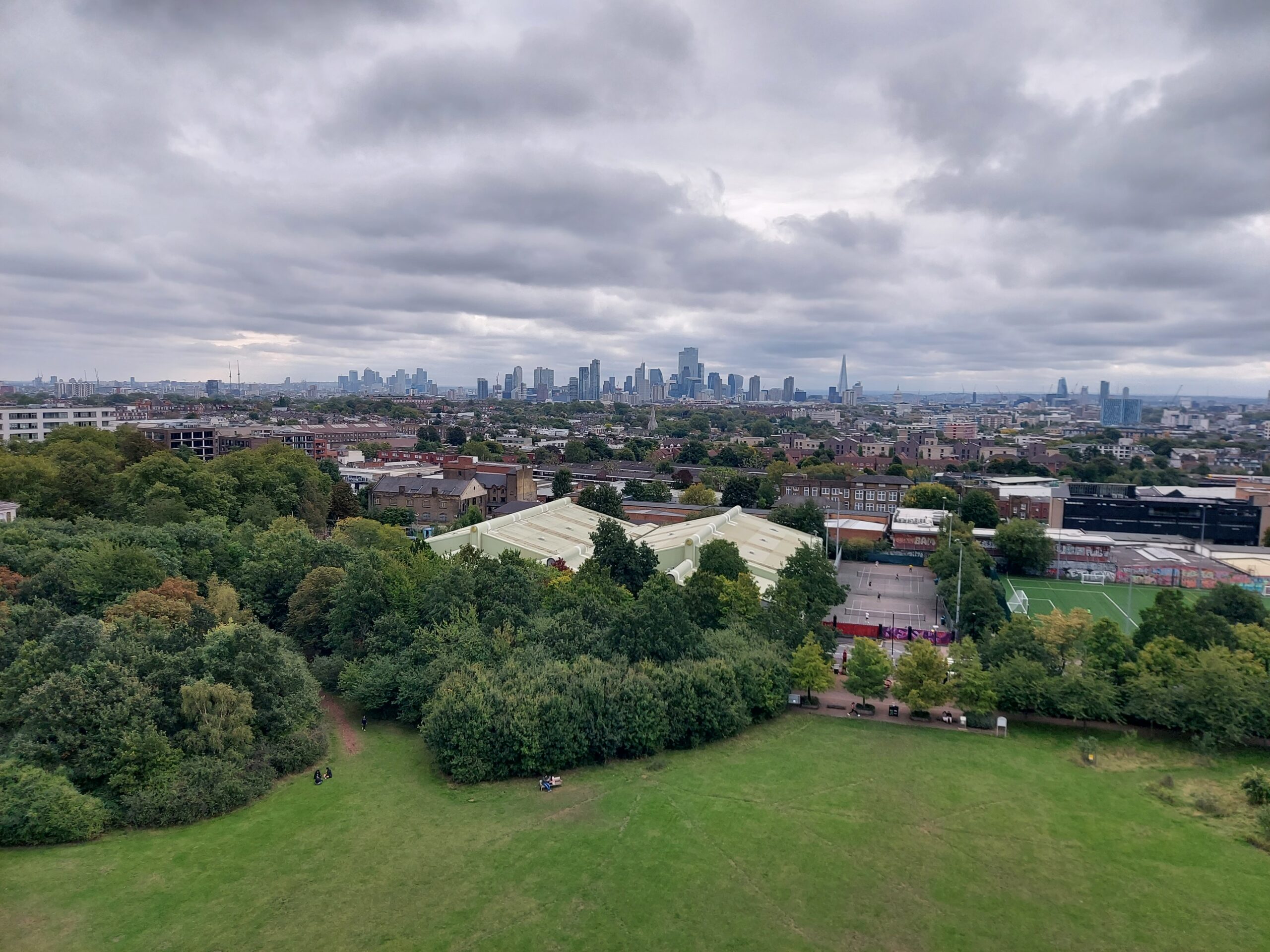
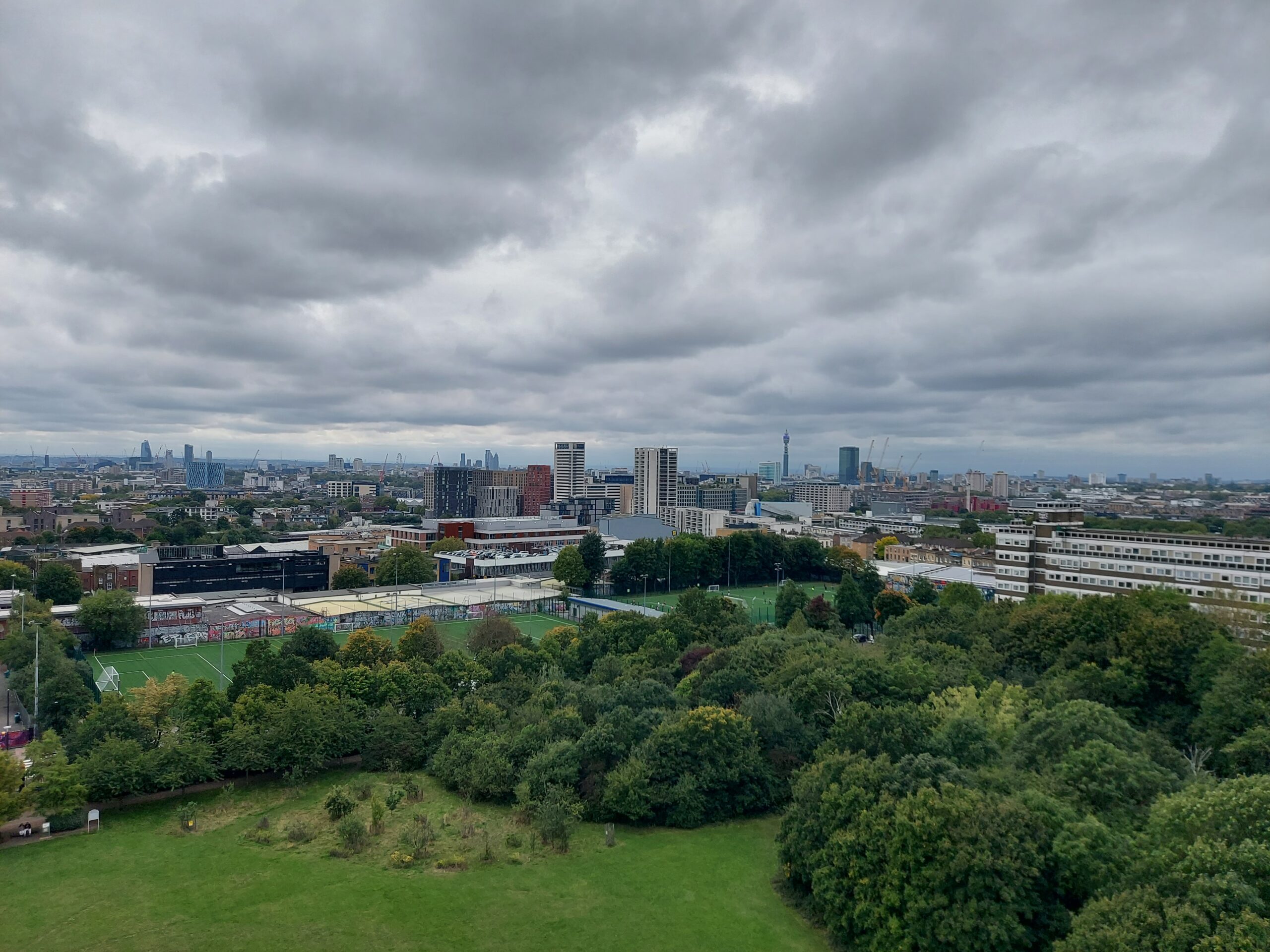
We got to see the workings of the magnificent pendulum clock, and, most excitingly, wonderful views over London. In the north, we could see Alexandra Palace; to the east, the Olympic Park; and to the south, the high-rise buildings of the City and Canary Wharf.

If you have a reasonable level of fitness and are able to manage steep steps, I would definitely recommend booking yourself on a tour. They are run by Islington Guided Walks and can be booked via Eventbrite.

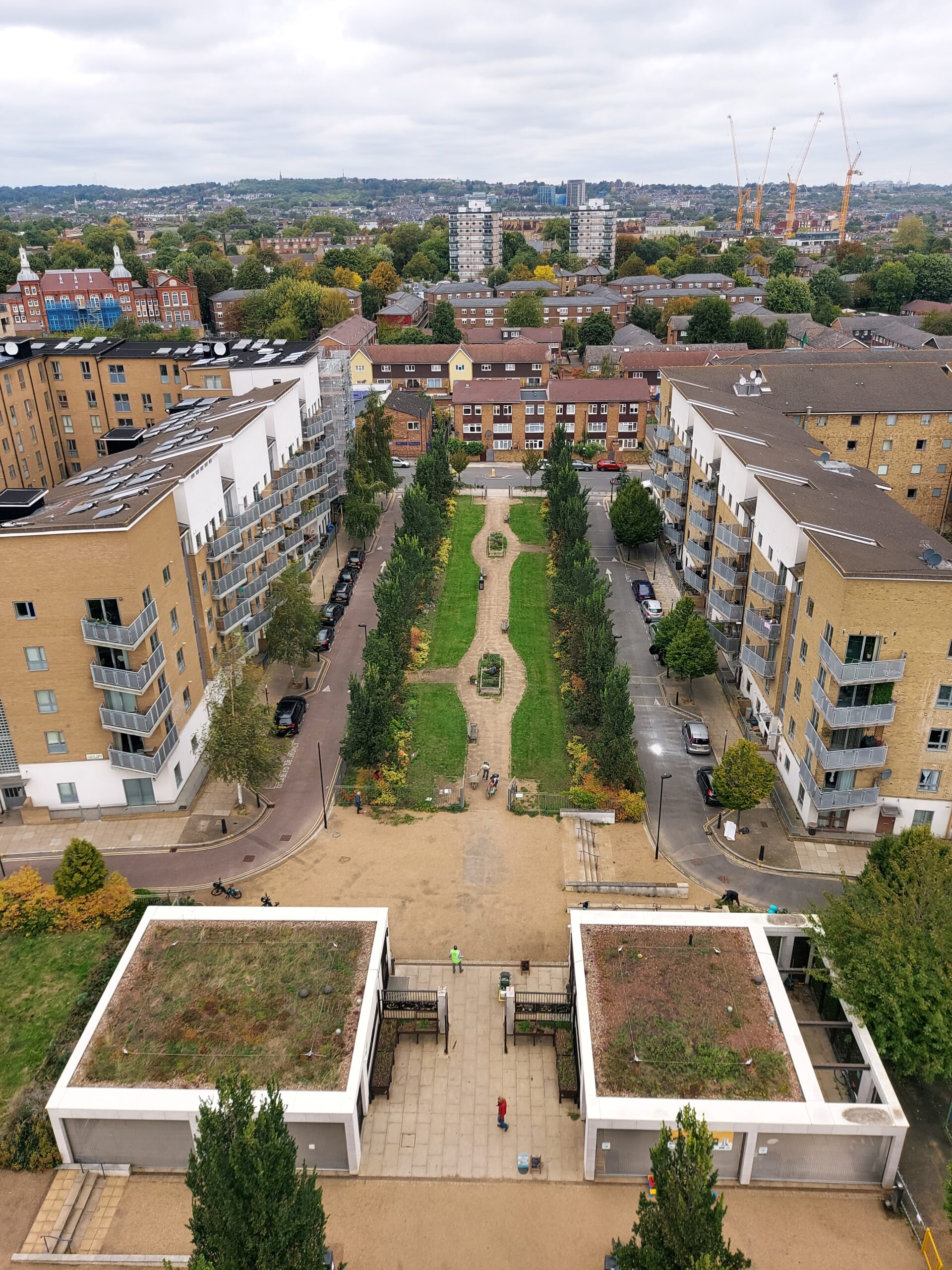
Looking north
Looking north
Looking south towards the City
Looking south east towards the City
South west towards central London

Hidden London – Baker Street: The World’s First Underground

In recent years, Hidden London tours have expanded to encompass not only disused stations, but working stations with lots of history. Baker Street is one such station, and I attended a tour on a sunny Sunday.

Baker Street is one of the earliest Underground stations, and is Grade II* listed. Today, it has 10 platforms served by 5 different lines – more than any other on the network. It first opened in 1863 as part of the Metropolitan Railway: these original platforms are still in use by the Circle and Hammersmith & City lines and look a lot like they did back then.

The oldest platforms at Baker Street
Original Baker Street platforms

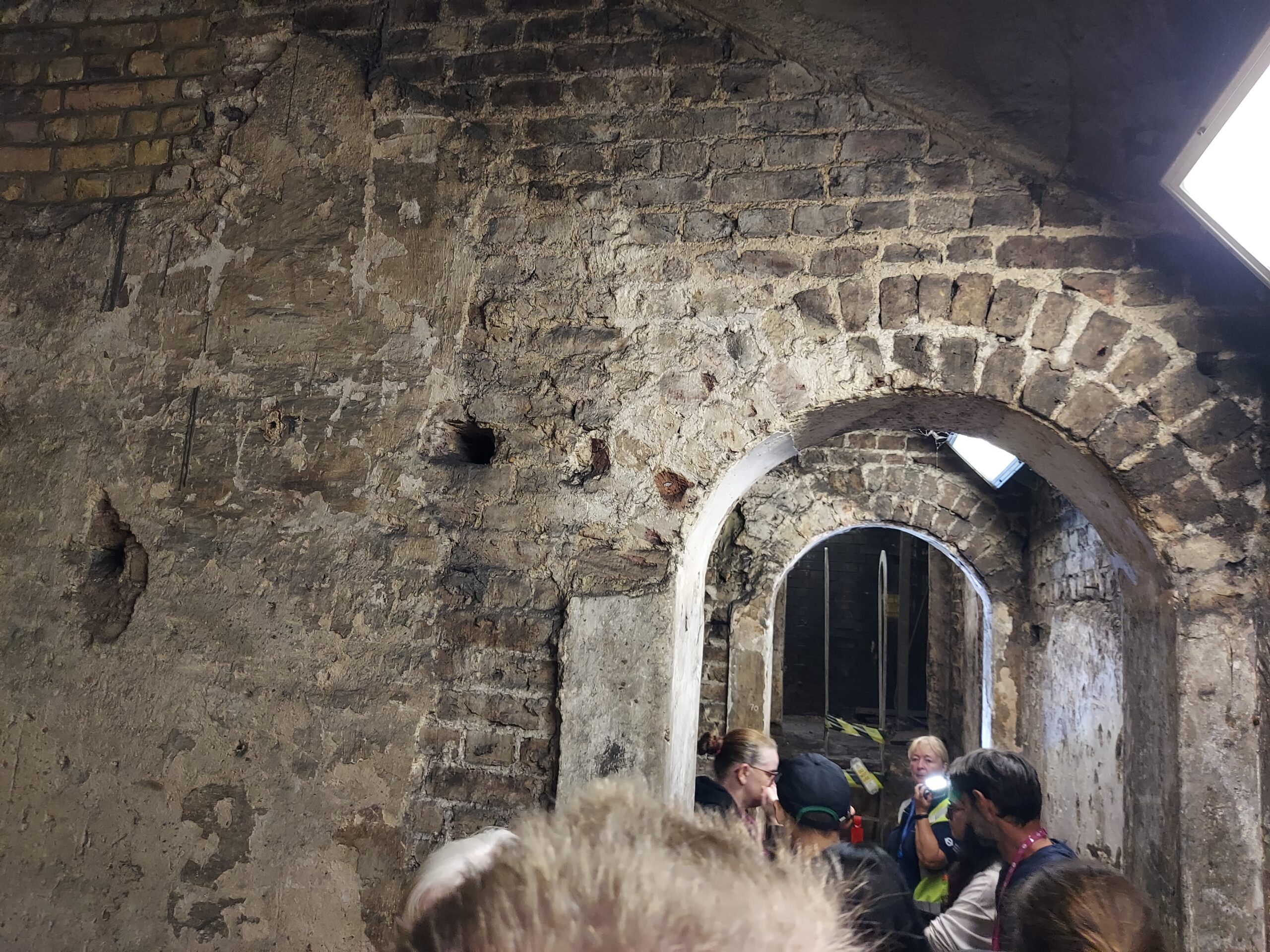
We got to go into some hidden corners of the station; in particular a space once used as a waiting room.

Former waiting room
Former waiting room

Later platforms were built in 1868 as part of the Metropolitan & St John’s Wood Railway. The platforms were rebuilt in 1892, but still struggled to cope with increased demand, so a decision was taken to rebuild the station and create a new headquarters for the Metropolitan Railway at the same time.

Jubilee line platforms
Metropolitan line platforms

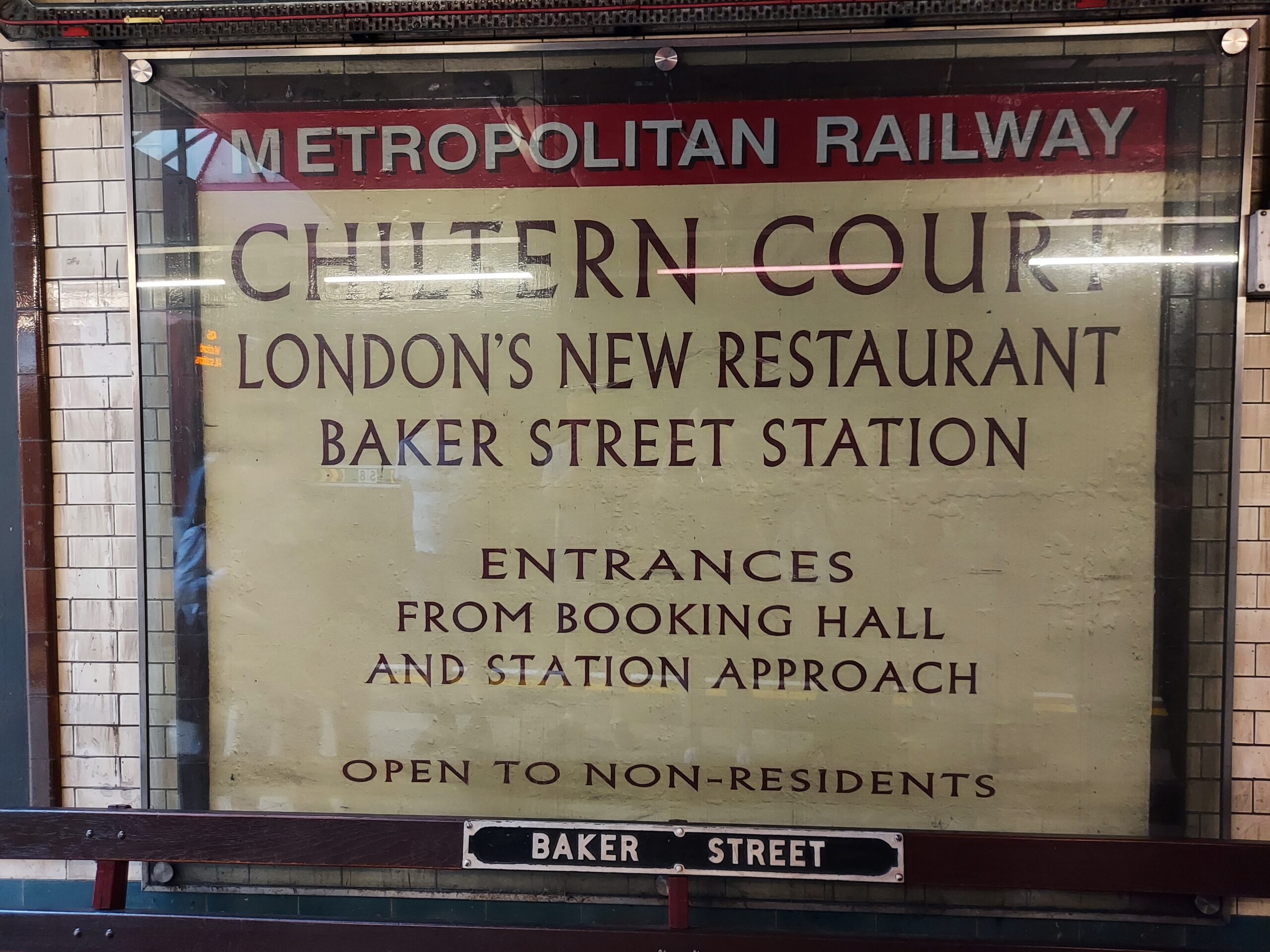
The architect Charles Walter Clark replaced the original buildings and created a single sub-surface ticket hall, as well as a subway linking the Circle and Bakerloo lines (the latter had originally opened on a separate site with a Leslie Green station). Plans to build a hotel on top of the station were halted by the First World War, but similar plans were revived in the 1920s with the construction of Chiltern Court. This block of flats was highly prestigious and included such distinguished residents as H. G. Wells and Arnold Bennett.

Poster advertising the Chiltern Court restaurant

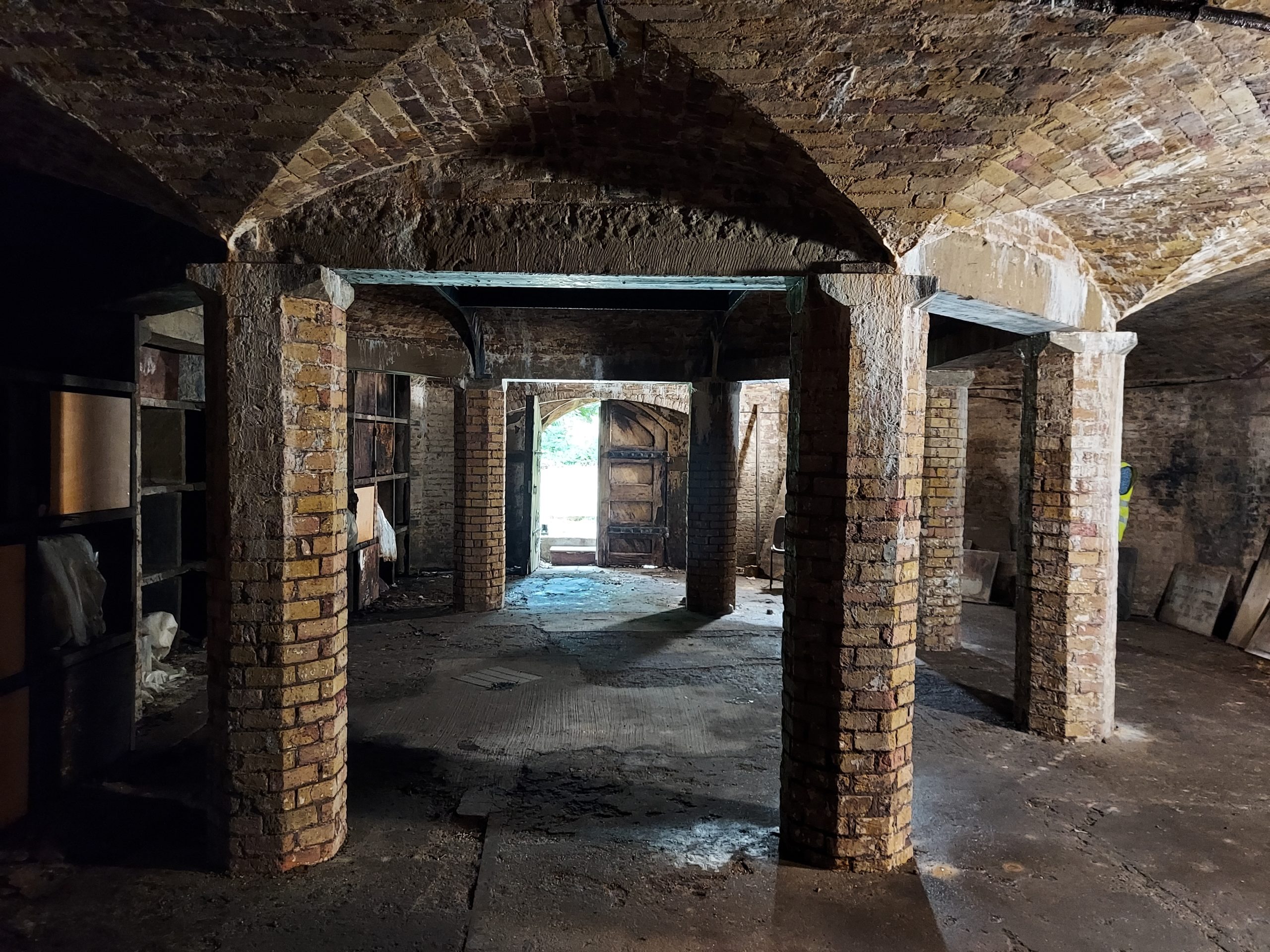
One of the most exciting parts we got to see was the original underground Bakerloo station, including tiling and lift shafts. We also got to look down through gratings to see the trains pulling in to the platform (now the Jubilee line).

Original Bakerloo line tunnel
Original Bakerloo line tunnel, with tiling visible

As the home of the Metropolitan line, the station has been a headquarters for transport staff for many years. Its facilities have included the Central Control Rooms for the Bakerloo, Central, Jubilee and Metropolitan lines; one of the first operational sites of the British Transport Police; a canteen staff training school; and the Lost Property Office. The London Transport Rifle Club was also located here until the 1990s.

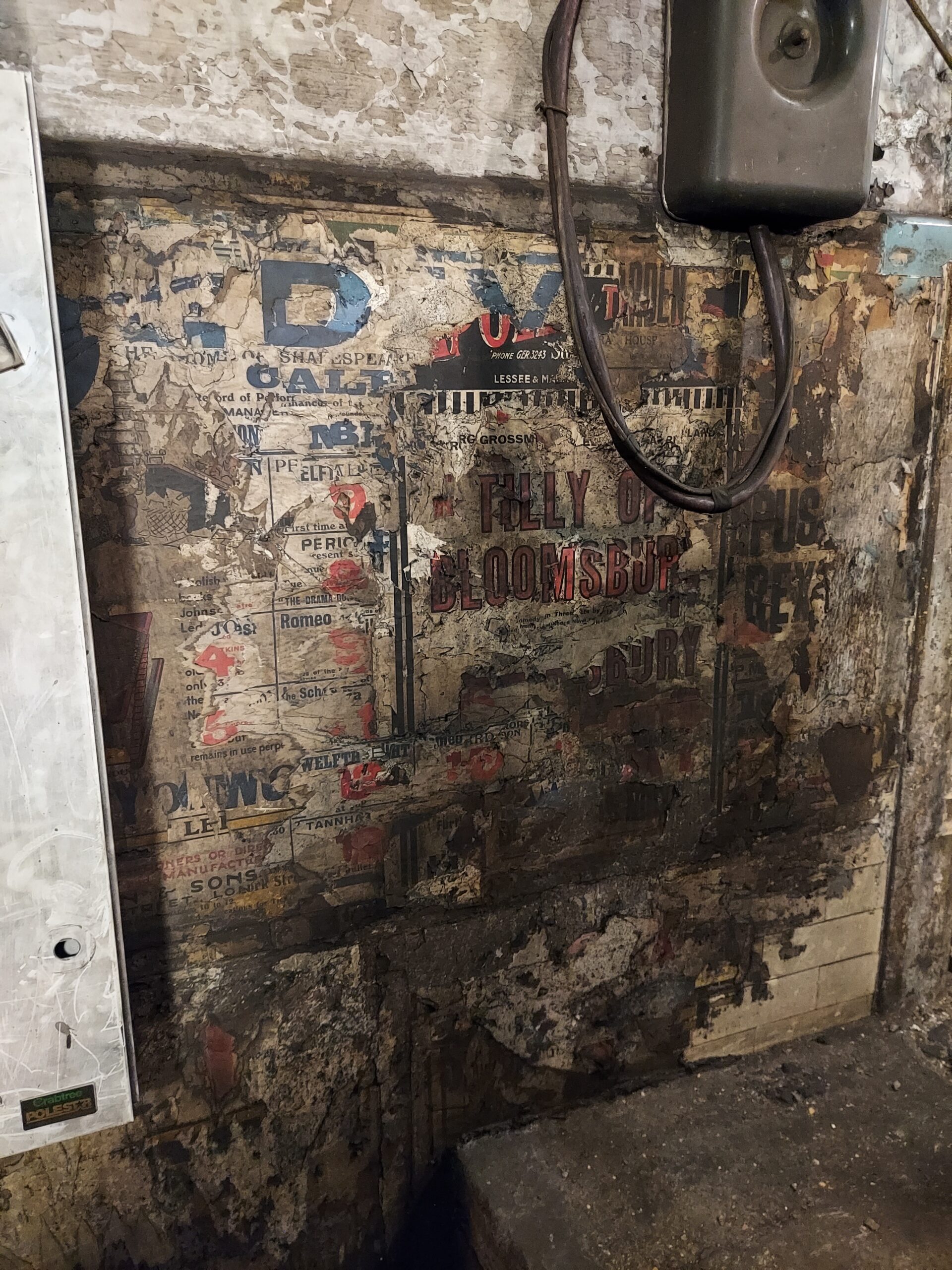
Original posters
Original posters

My tour of Baker Street proves that even current stations have a lot of history and hidden areas to explore. Definitely recommended, and I can’t wait to book another Hidden London tour.

Nunhead Cemetery: Crypt & Chapel Tour

I visited Nunhead Cemetery several years ago, as part of my ‘Magnificent Seven’ tour, and recently went back while I was completing the Green Chain walk. This reminded me that I never did visit the crypt, and after checking the Friends of Nunhead Cemetery website I found out that Crypt & Chapel tours ran on certain dates. I therefore resolved to pop down and attend one.

Nunhead Chapel from the outside

The crypt is located beneath the chapel. At one time it was considered the most prestigious place to be buried, and the most expensive. Those buried here had their own space with a metal plaque to identify them. Mourners could come down to the crypt (there is evidence of heating pipes and a space for a gas lamp) to view their loved one’s final resting place; there are two spaces either side of the main area which could have been used as waiting areas. The architecture is simple but impressive, and I imagine this could once have been quite a grand space.

Nunhead Crypt

Sadly, when the cemetery went out of business, the chapel burnt down due to arson and the crypt was vulnerable to the elements. It was also broken into, and thieves opened and ransacked the coffins in search of valuables, dispersing the bodies around the crypt in the process. Some years ago, there was an attempt to put the pieces back together, and the remains are now in some sort of order, but it’s no longer possible to identify which body belongs to which named individual, which seems sad. The spaces for the coffins are covered with basic wood plaques, and the atmosphere as a whole is rather damp and dingy. Personally I feel that those who chose burial in the cemetery itself, with an elaborate headstone, made the better choice – even the weathered and damaged monuments have a kind of grandeur about them.

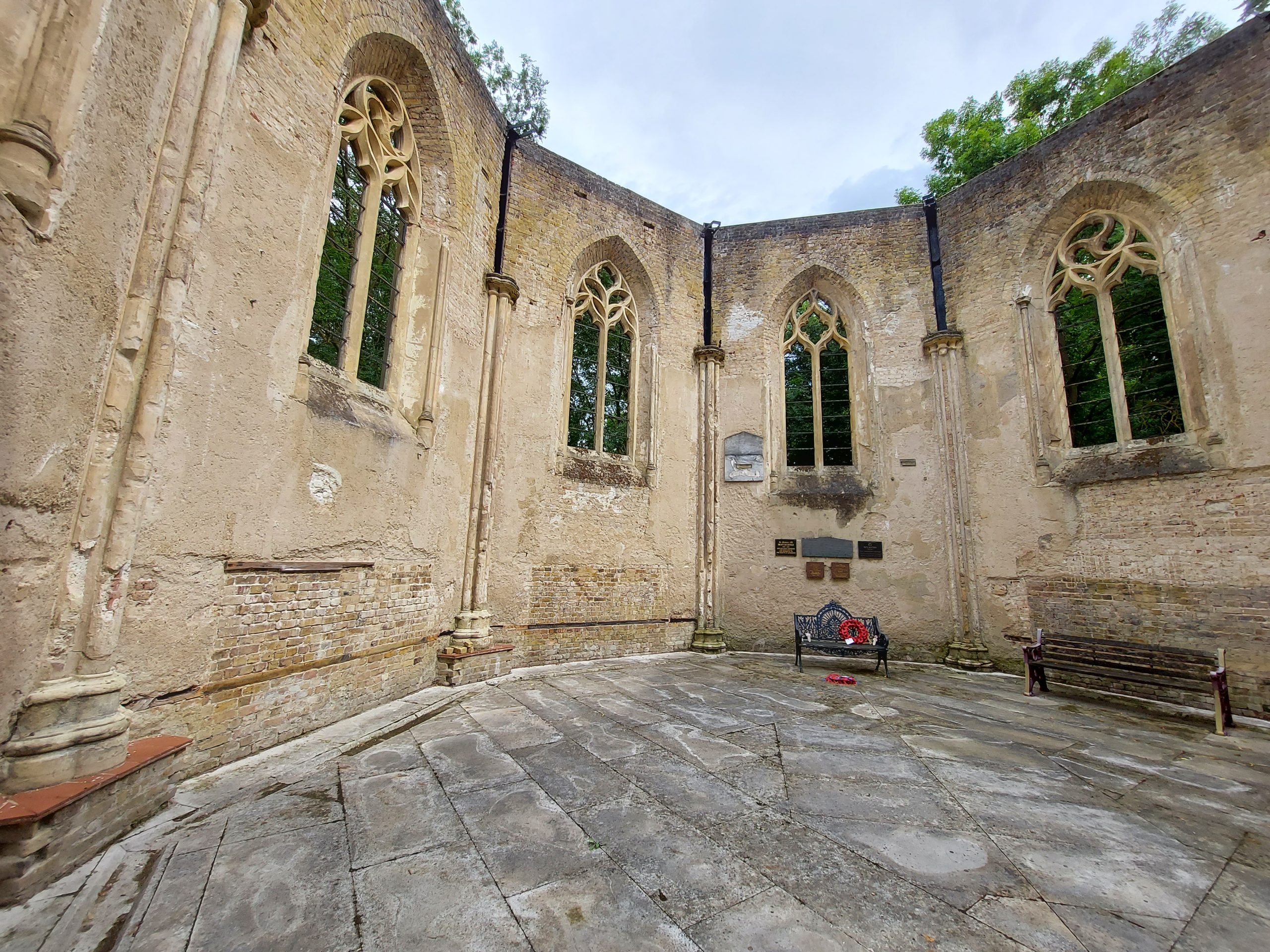
The ruined Anglican chapel, on the other hand, has a rather pleasant feel about it. The arson attack which made it into a shell is undoubtedly a shame, but the chapel is now open to the air, and is rather nice. You can still see the marks on the wall where the pews used to stand. Some of the wall decorations are rather fragile, but overall the chapel seems to be standing up pretty well.

The interior of Nunhead Chapel

Stonehenge

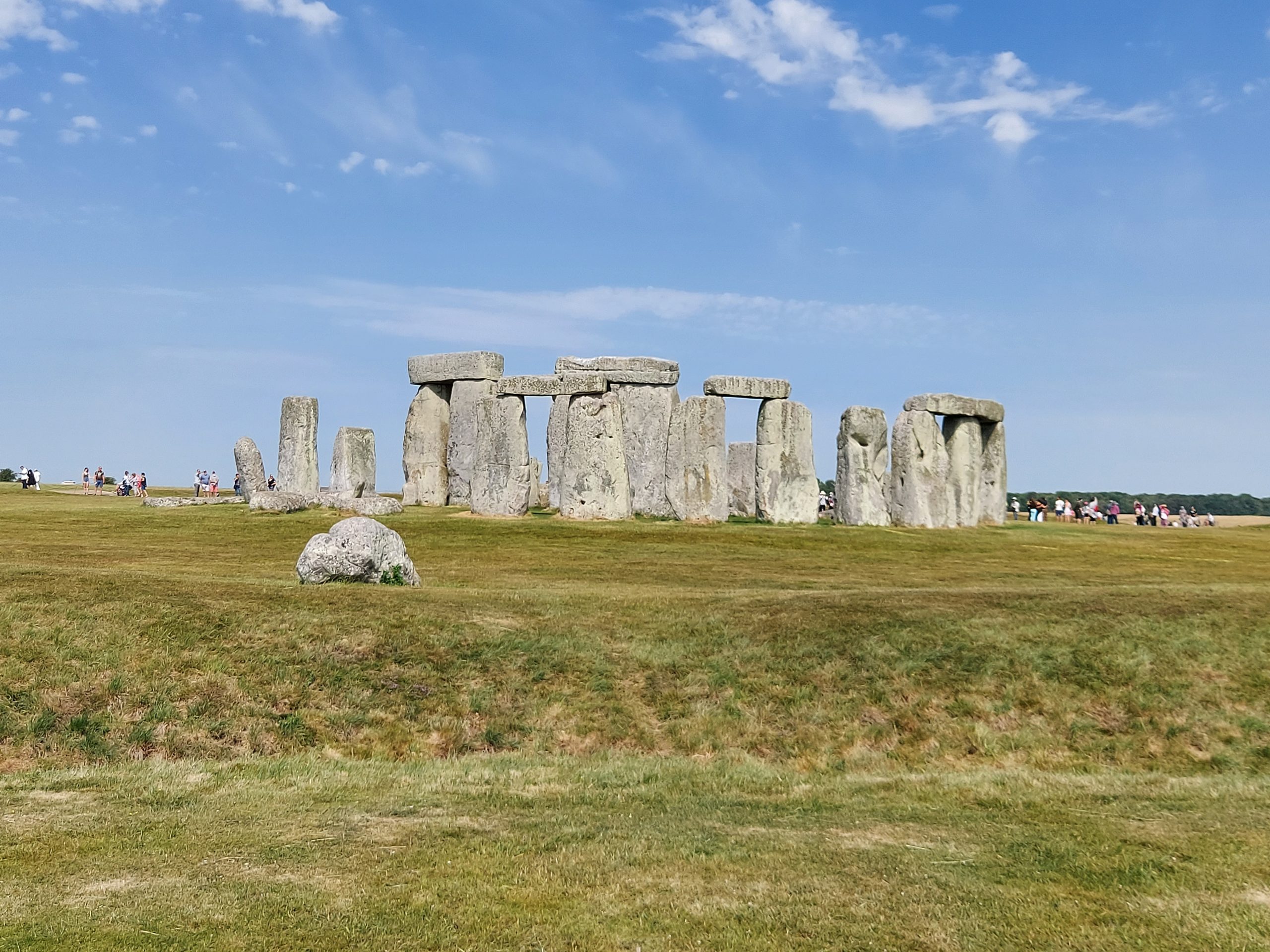
Stonehenge has been on my list of places to visit for years, and I finally got around to visiting this year. I found out that you can sign up for coach trips that take you from central London there and back, so I chose one and arrived bright and early on a Sunday morning.

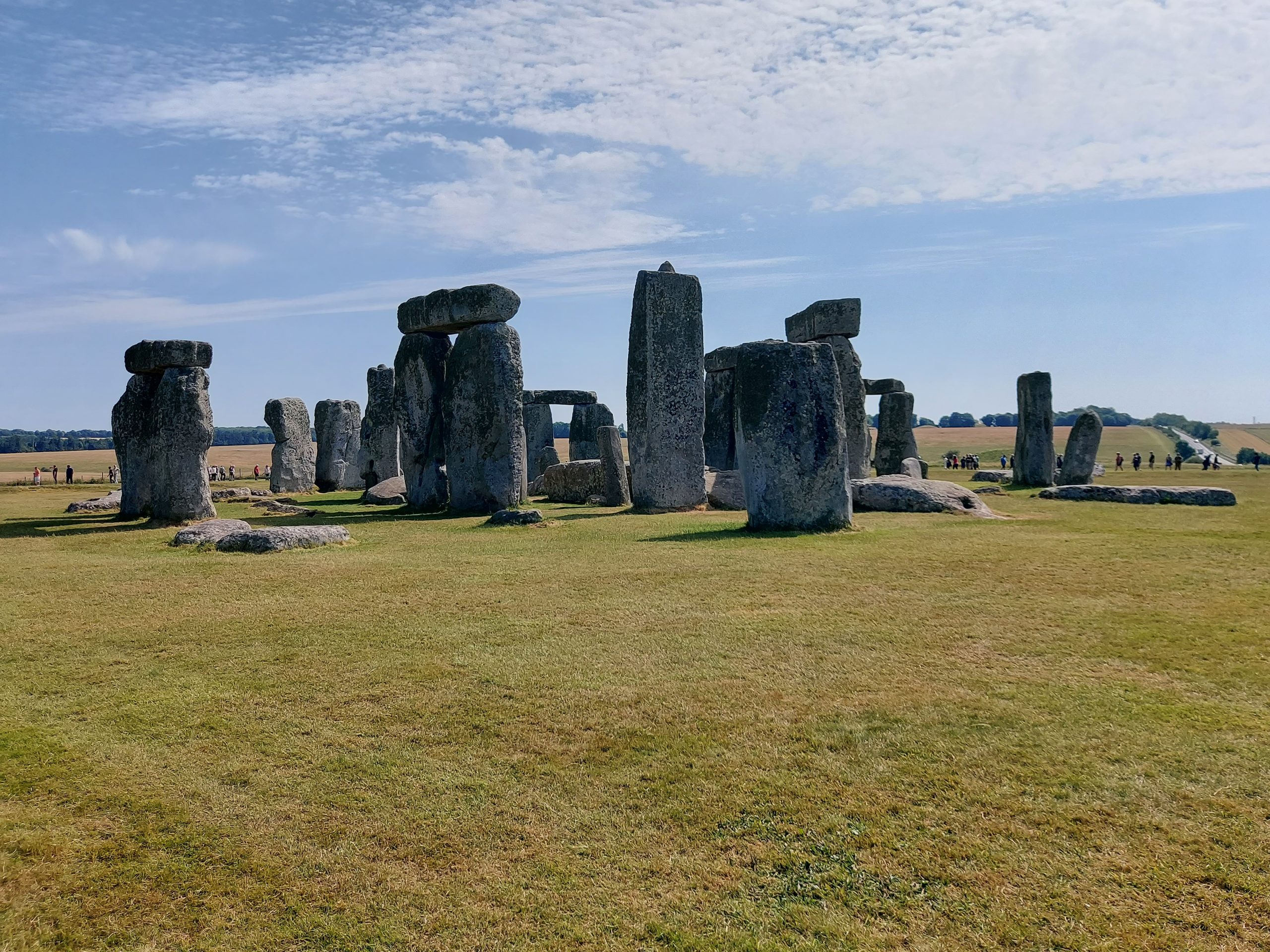
Stonehenge

The early start proved worth it when we arrived at the site and there weren’t too many people around (as opposed to the huge numbers who had arrived by the time we left). The first thing I did was to hop on the shuttle bus that takes you from the visitor centre up to the Stones. In other circumstances I might have walked, but we only had a limited time at the site, and I wanted to make the most of it.

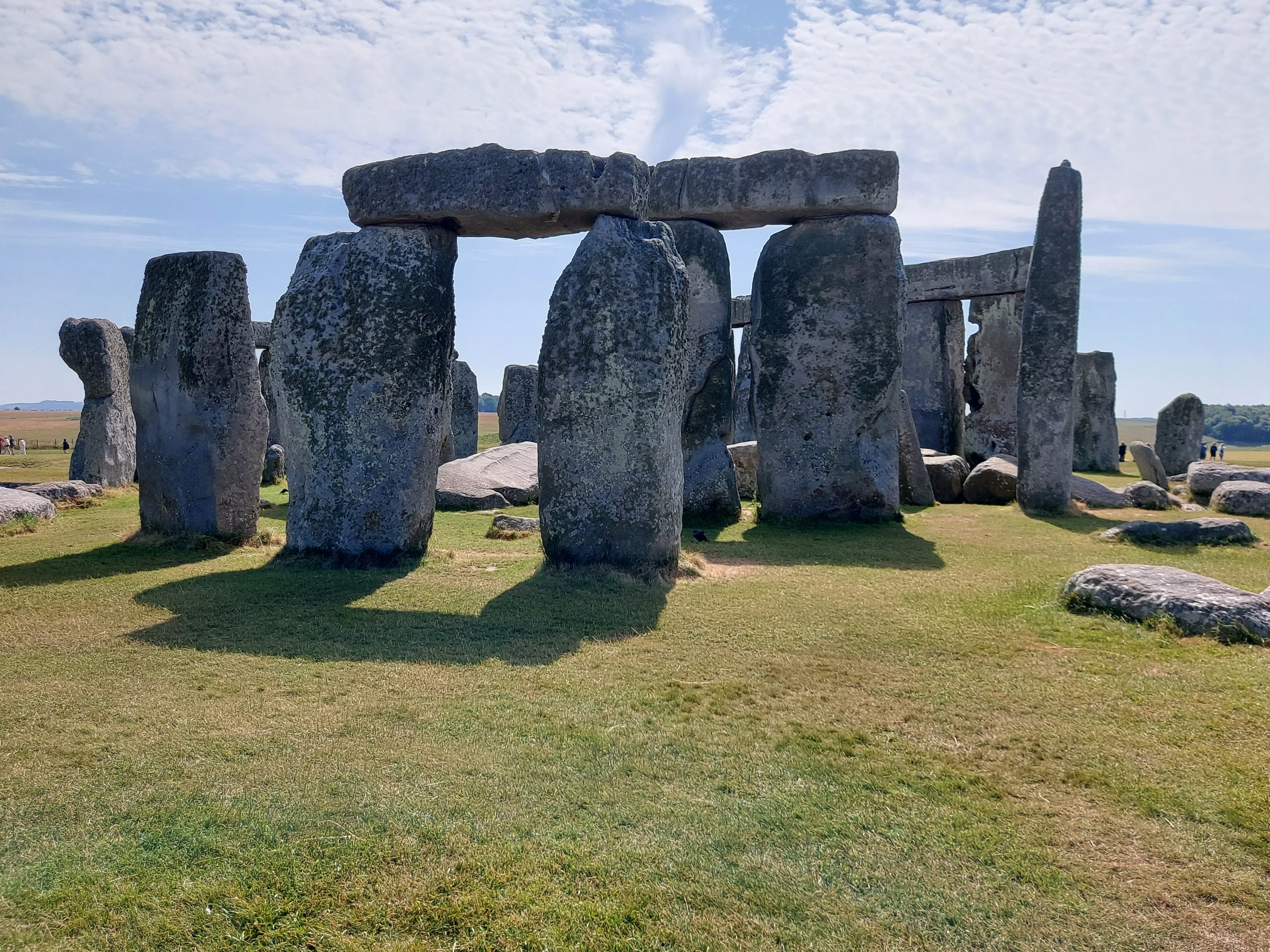
I genuinely found Stonehenge really impressive. There is something magical about a stone circle, in place for millennia on the Salisbury plain. I took my time walking around the site, taking it all in and observing the position of the stones – many have collapsed or been moved since they were originally in place, but it’s still possible to identify the layout as it corresponds to sunrise and sunset during the Solstice.

Stonehenge

I then caught the bus back down to the visitor centre and spent some time looking around the small Neolithic village that has been built outside. I then headed indoors and explored the exhibition, which looks at the life of Stonehenge over the years and how it might have been used, as well as showcasing some of the finds from the site. My favourite theory is that which suggests Stonehenge was a place for the dead, while nearby Woodhenge was a site for the living.

A temporary exhibition, Circles of Stone: Stonehenge and Prehistoric Japan, was fascinating and compared and contrasted stone circles of prehistoric Japan with Stonehenge, built around the same time.

I spent some time looking around the gift shop, but didn’t have time to visit the cafe. I’d brought my own lunch with me, however, so this was no problem.

Overall I’m so glad I got to tick this place off my list – it’s a must-visit.

Stonehenge

FACTS

Address: Near Amesbury, Wiltshire, SP4 7DE

Website: english-heritage.org.uk/visit/places/stonehenge

Opening Hours: Daily 9:30-5

Price: Adult £23, concession £20, child £14

Rituals of Power Through the Centuries – The Society of Antiquaries

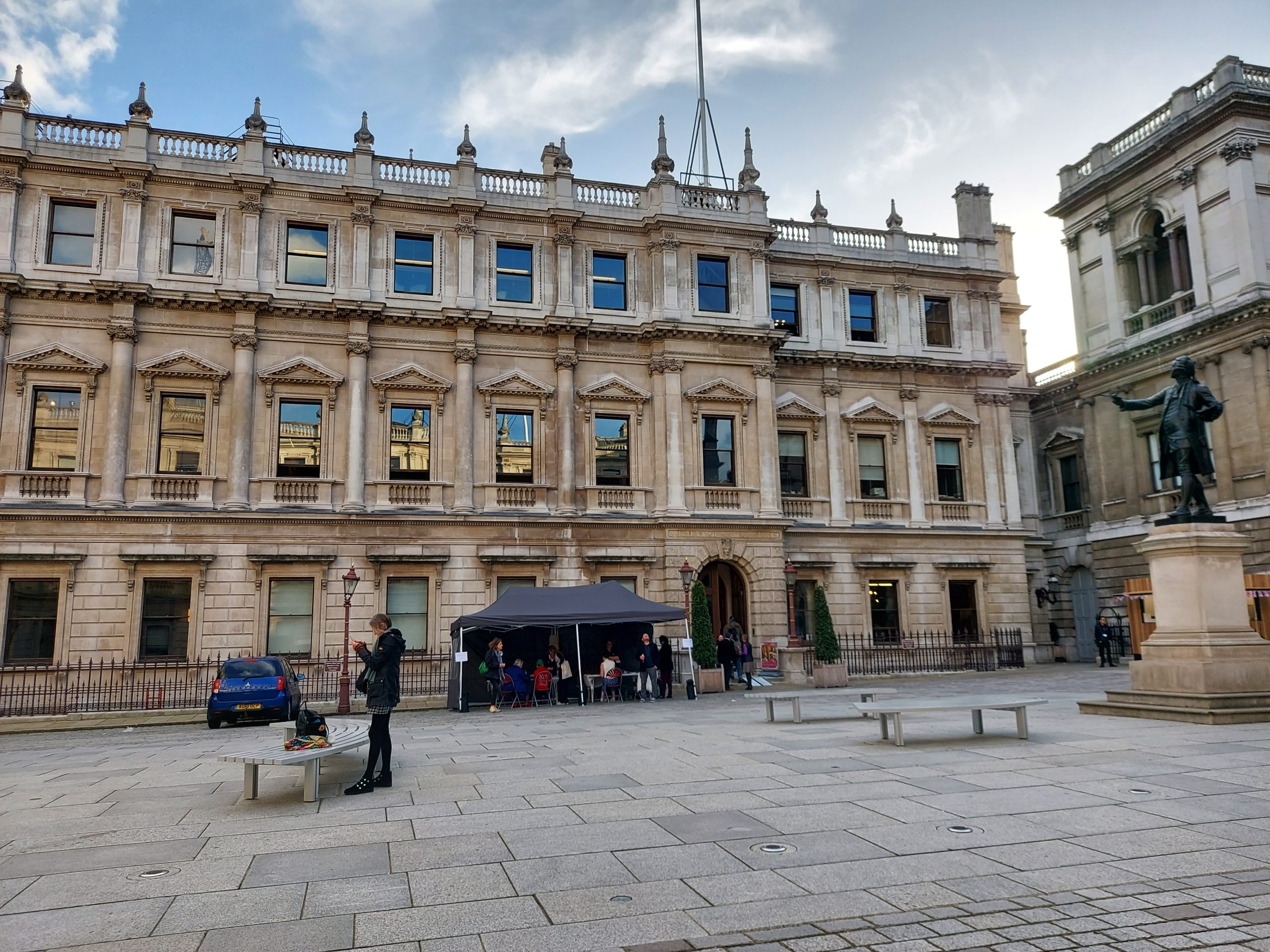
The Society of Antiquaries

To coincide with Charles II’s coronation today, I went along to an event at The Society of Antiquaries last night. The Society organised poetry and music sessions, displayed portraits of royals across time and opened up access to its beautiful library.

I went to a fascinating talk about the Magna Carta and listened to a librarian talk about the Great Seal of Henry VIII, which was on display for visitors. I also saw other artefacts like Civil War pamphlets and a panorama of Queen Victoria’s coronation procession.

Finally I took part in some lino block printing, making myself a postcard and a little badge to take away.

The Library

Executions – Museum of London Docklands

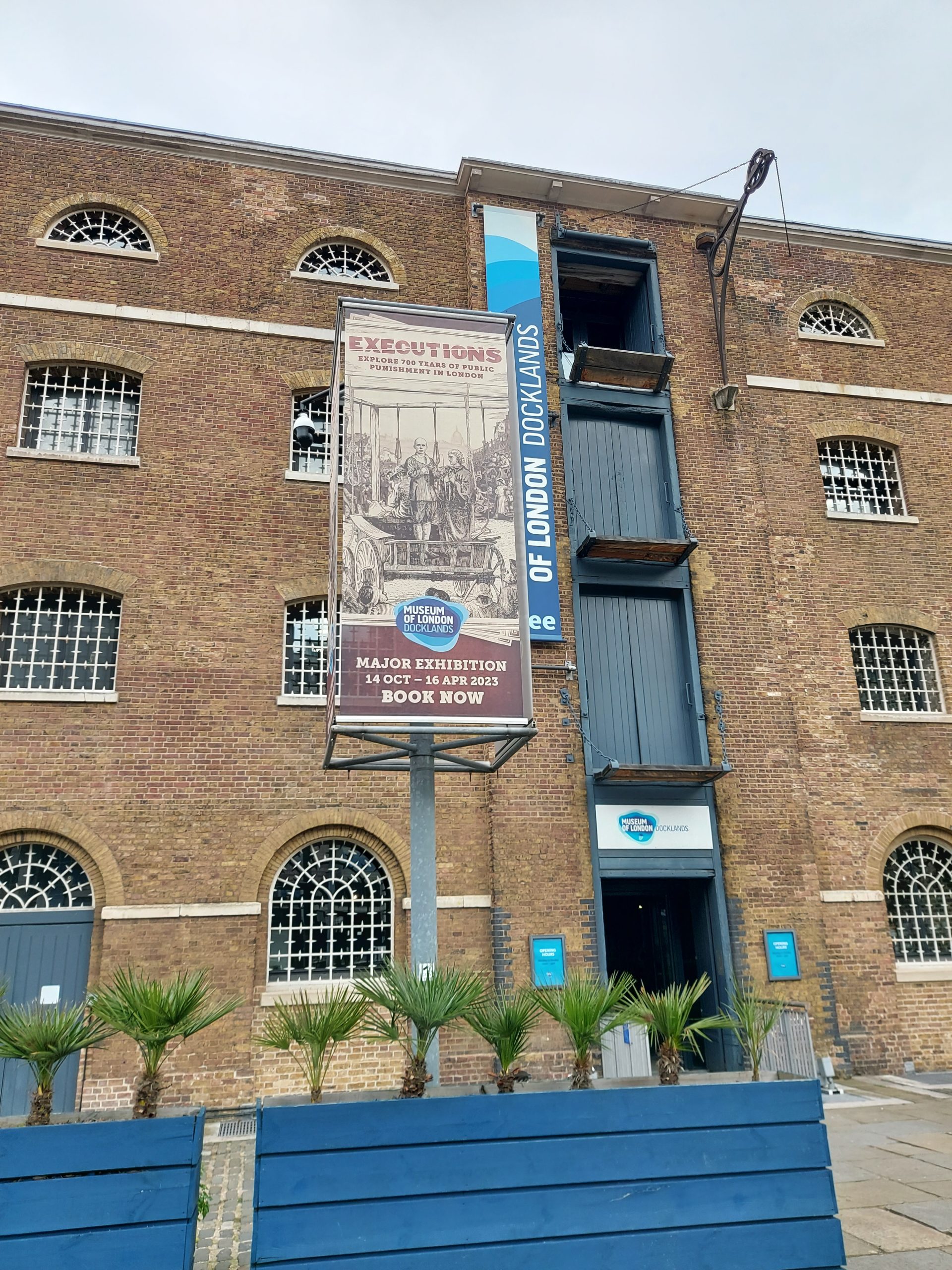
Museum of London Docklands

I visited the Museum of London Docklands to check out the Executions exhibition before it closed. The exhibition looked at the impact that capital punishment had on the history and landscape of London over the last few centuries.

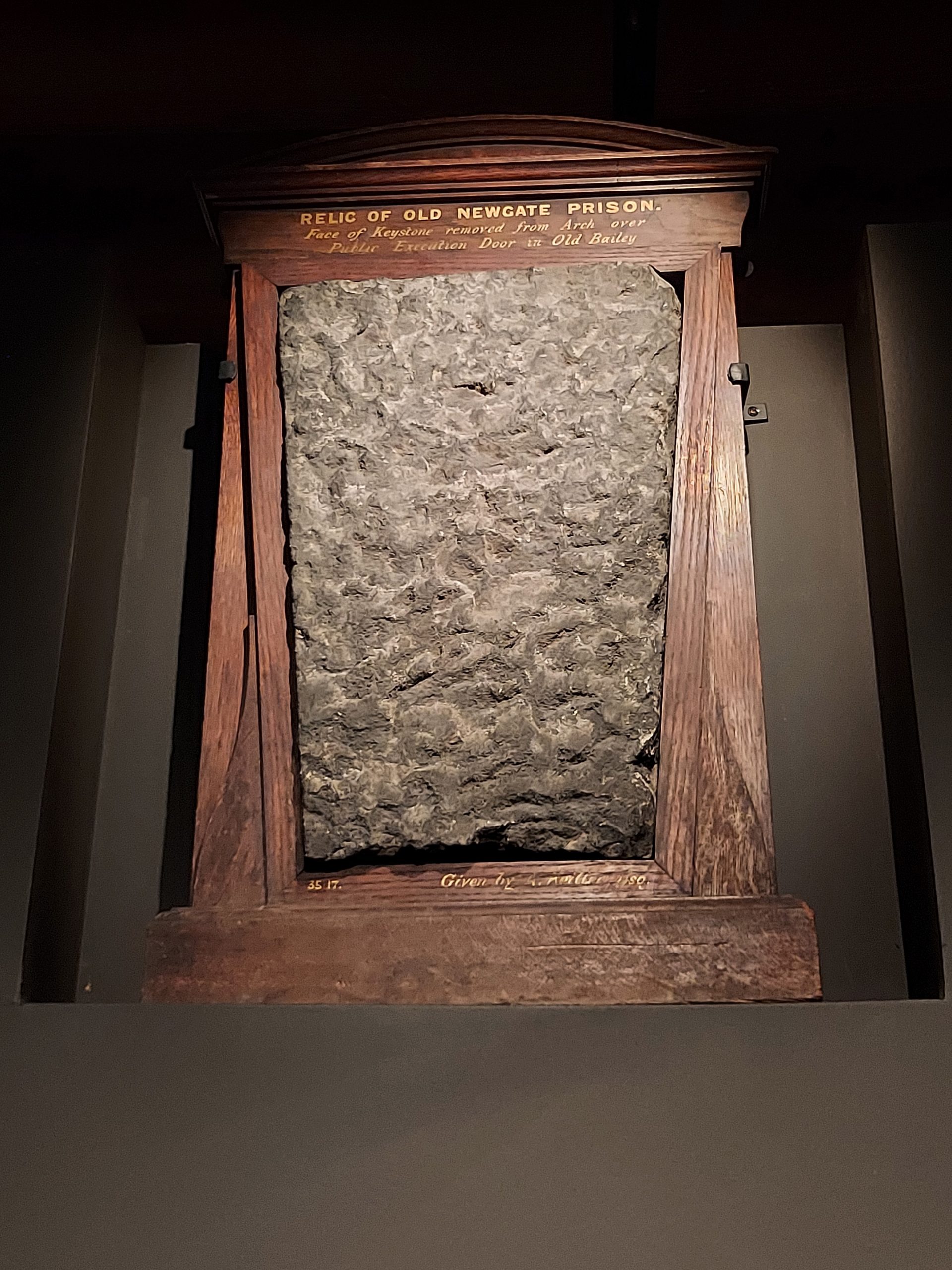
The first public execution took place in 1196, the last in 1868. During this time, these killings – supposedly meant to act as a deterrent to crime – were watched by huge crowds of people. An ‘execution economy’ developed, which was often bloodthirsty and rather chilling. As one map shows, executions became built into the very fabric of London. One of the most famous prisons, from which many prisoners were executed, was Newgate, relics from which are interspersed throughout the museum.

Stone from Newgate Prison

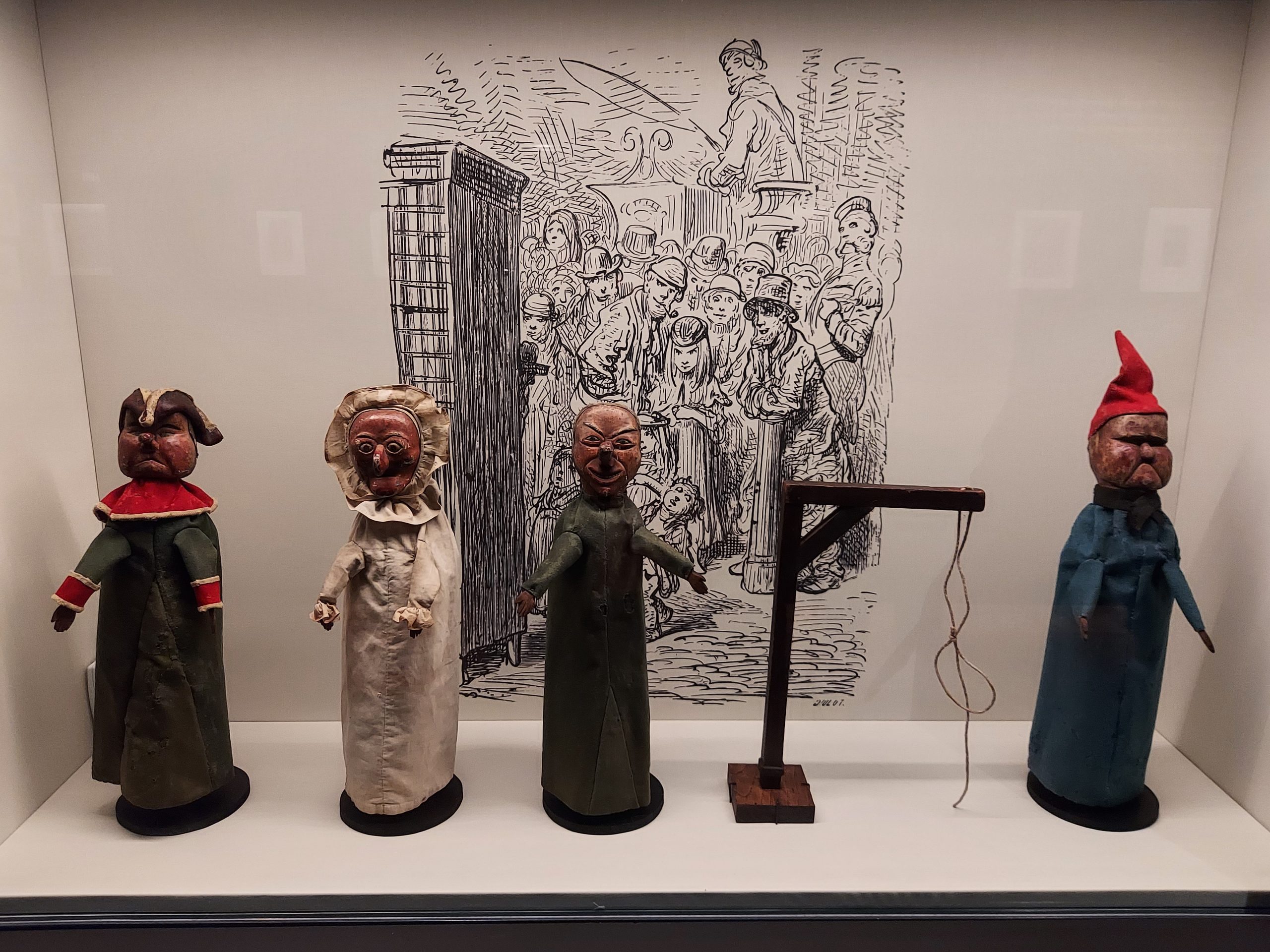
By the end of the eighteenth century, more than 200 crimes were punishable by death. Deaths were ordered in London’s courts more often than the courts of the rest of the country combined. Ballads were written about condemned criminals, papers detailing their horrific crimes did a roaring trade, and puppet shows made fun of executions.
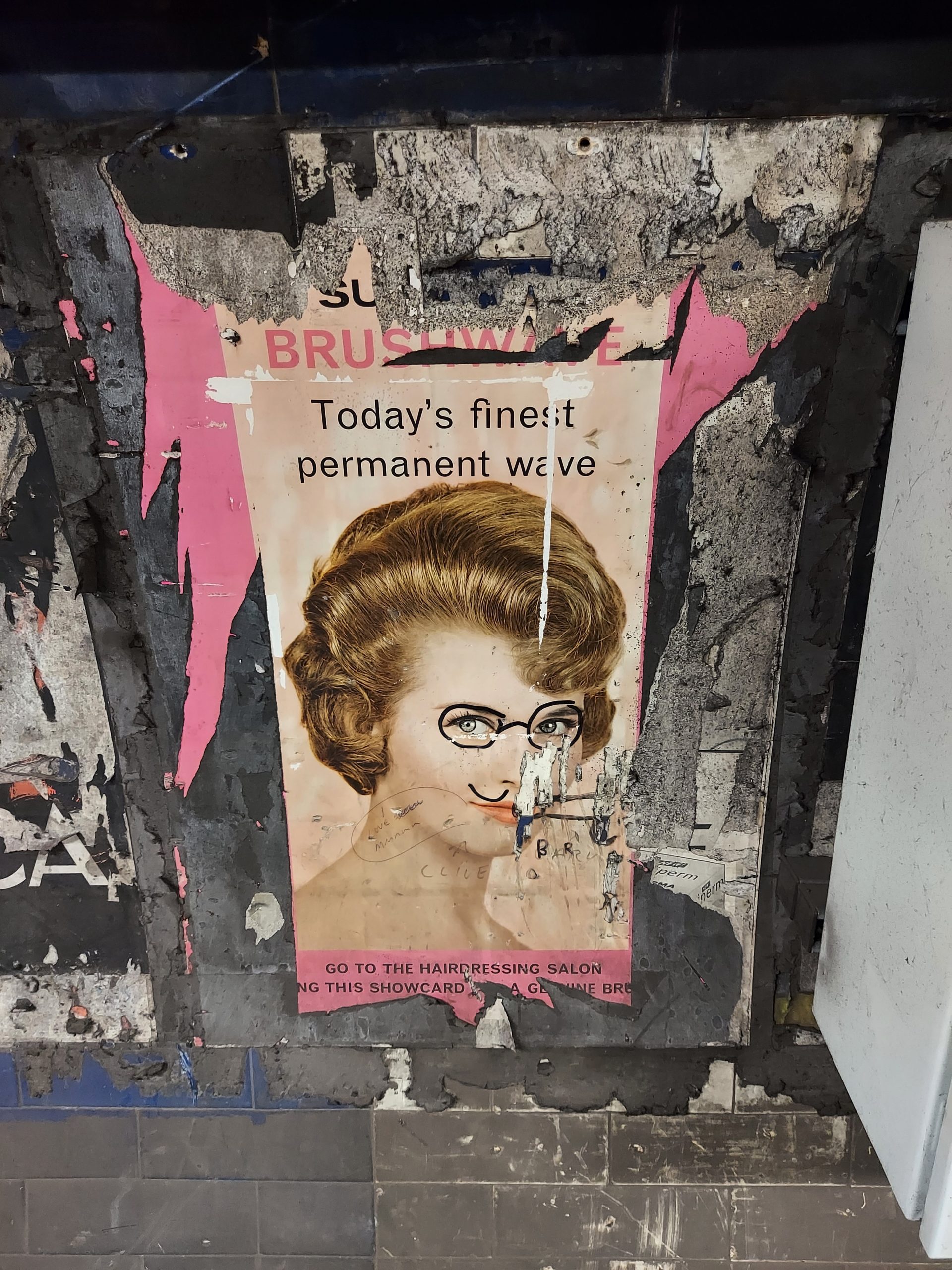
Execution-themed puppets

Methods of execution were not limited to hanging. Traitors were hung, drawn and quartered. Members of the nobility were usually beheaded, while heretics were often burnt at the stake. The exhibition included many letters and pleas for clemency from criminals, which brought home the human aspect to this grisly history.

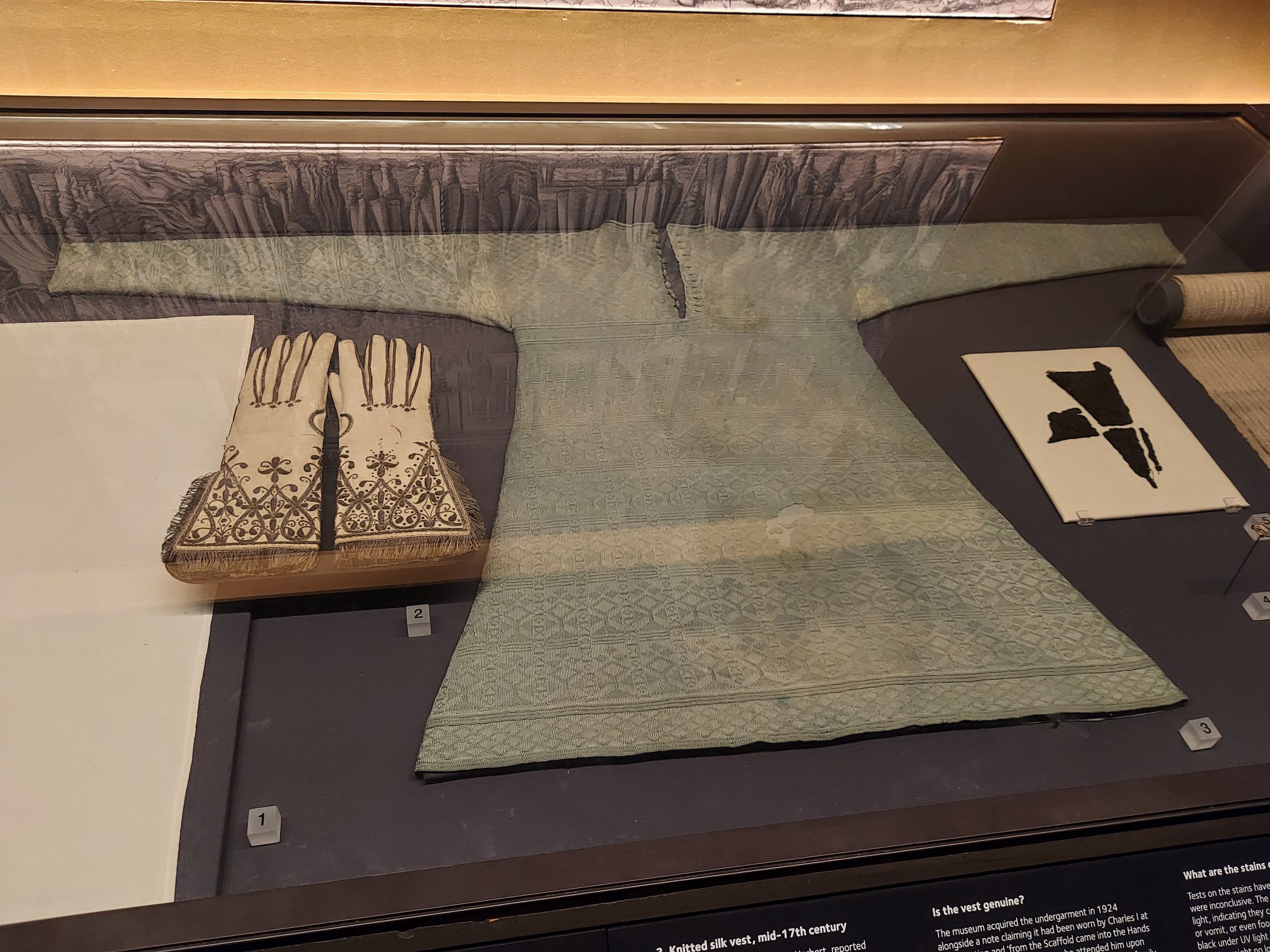
Possibly the most famous execution in London took place when Charles I was beheaded in 1649. The exhibition displayed one of the shirts he supposedly wore at his execution.

Charles I's supposed execution clothes

The exhibition was possibly not for the faint-hearted, but it was sensitively done and certainly worth seeing. It’s important that we confront the most unsavoury and difficult aspects of our past, and the exhibition certainly managed that.

Hidden London – Euston: The Lost Tunnels

A couple of years ago I signed up for a virtual tour of Euston tube station’s lost tunnels. The tour was fascinating and I resolved to sign up for an in-person tour if and when they reopened. At the weekend I was lucky enough to get my chance.
Leslie Green-designed entrance to Euston station (CCE&HR branch) with its iconic oxblood bricks

We met at Euston Square station and watched a short video about the history of Euston mainline and Underground stations. I won’t repeat the information here as I put much of it in my blog post about the virtual tour, but it was a useful refresher. We then walked over to the old CCE&HR building, now surrounded by railings and facing imminent demolition. Finally we headed towards Euston station, through the barriers and down the escalators to the southbound Northern line platform (Bank branch), from where we headed through a door at the end of the platform to reach the disused tunnels.

Inside the disused tunnels at Euston

After checking out the tunnels we walked into another area where yellow paint was recently discovered – this shade of yellow in an Underground station means the Second World War. These tunnels were marked for use as a shelter during possible air raids for railway staff who weren’t able to get home.

Finally we went into a very secret space above the tracks and got to see the trains pulling into the station – it felt very surreal.

There’s no point in repeating what I said about the virtual tour, so instead, here are some pictures I took of the inside of the station.

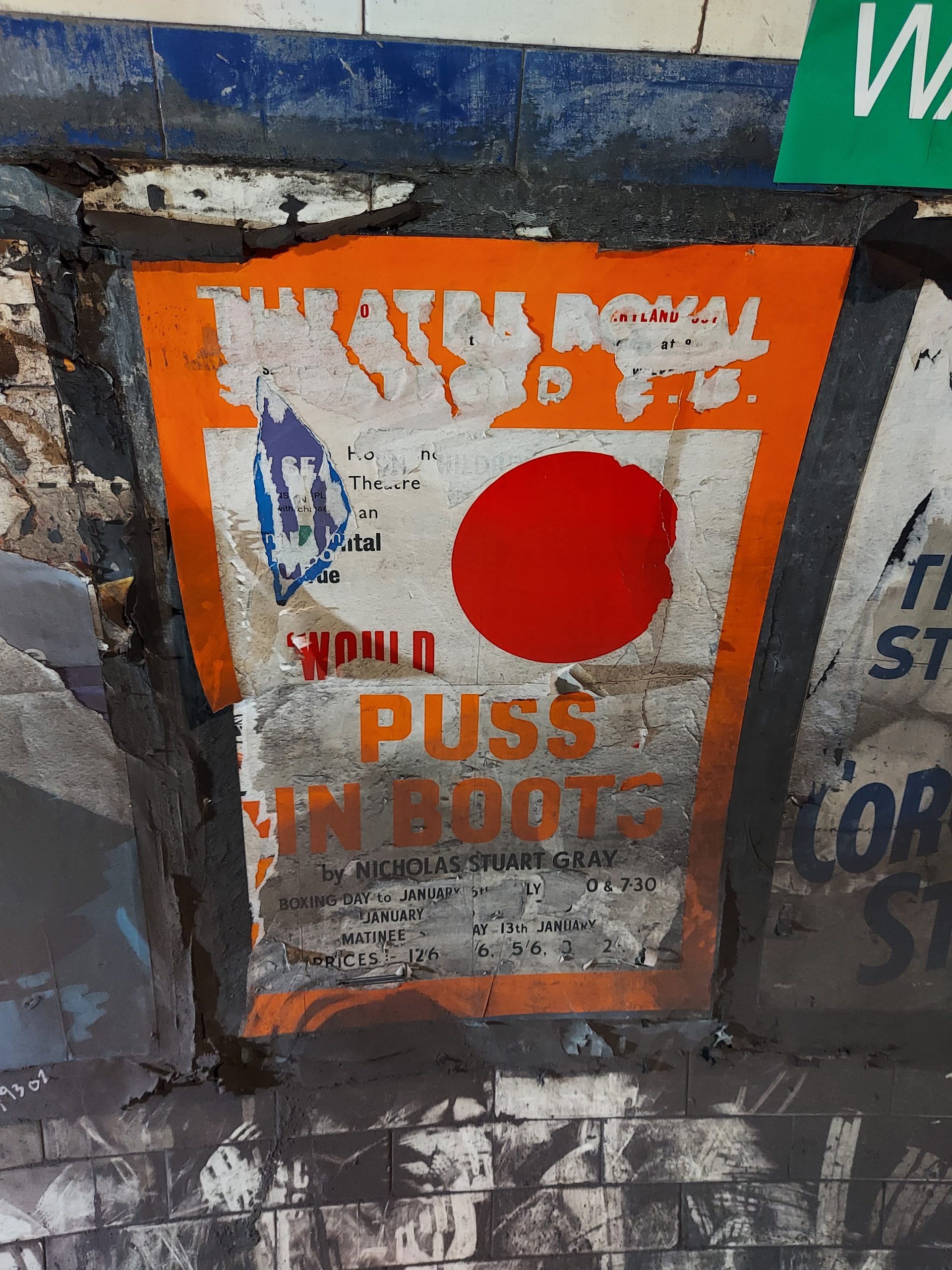
Poster for 'Puss In Boots' in the Euston tunnels
Poster for the musical 'West Side Story' in the Euston tunnels

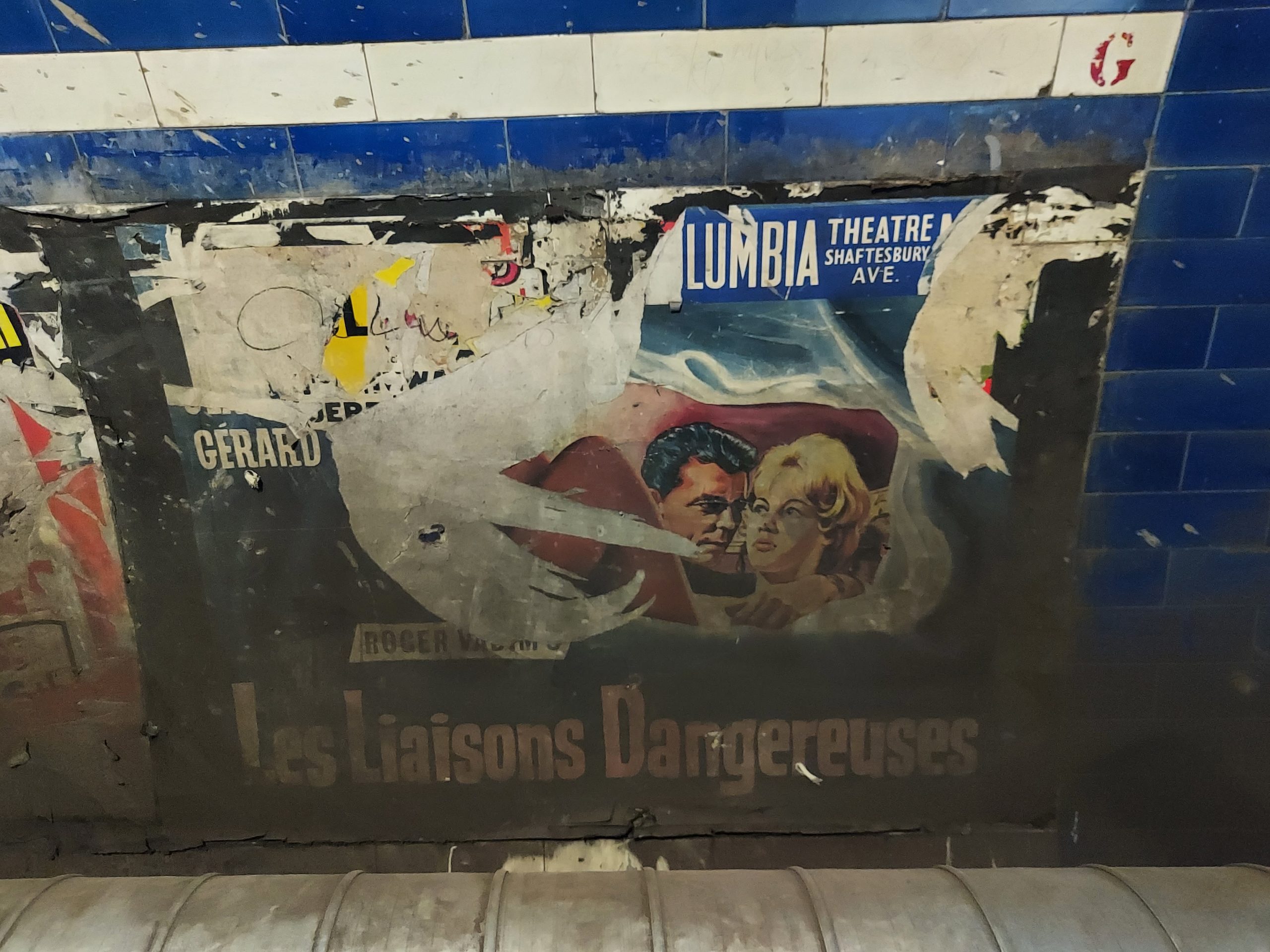
Poster for the film 'Les Liaisons Dangereuses' in the Euston tunnels
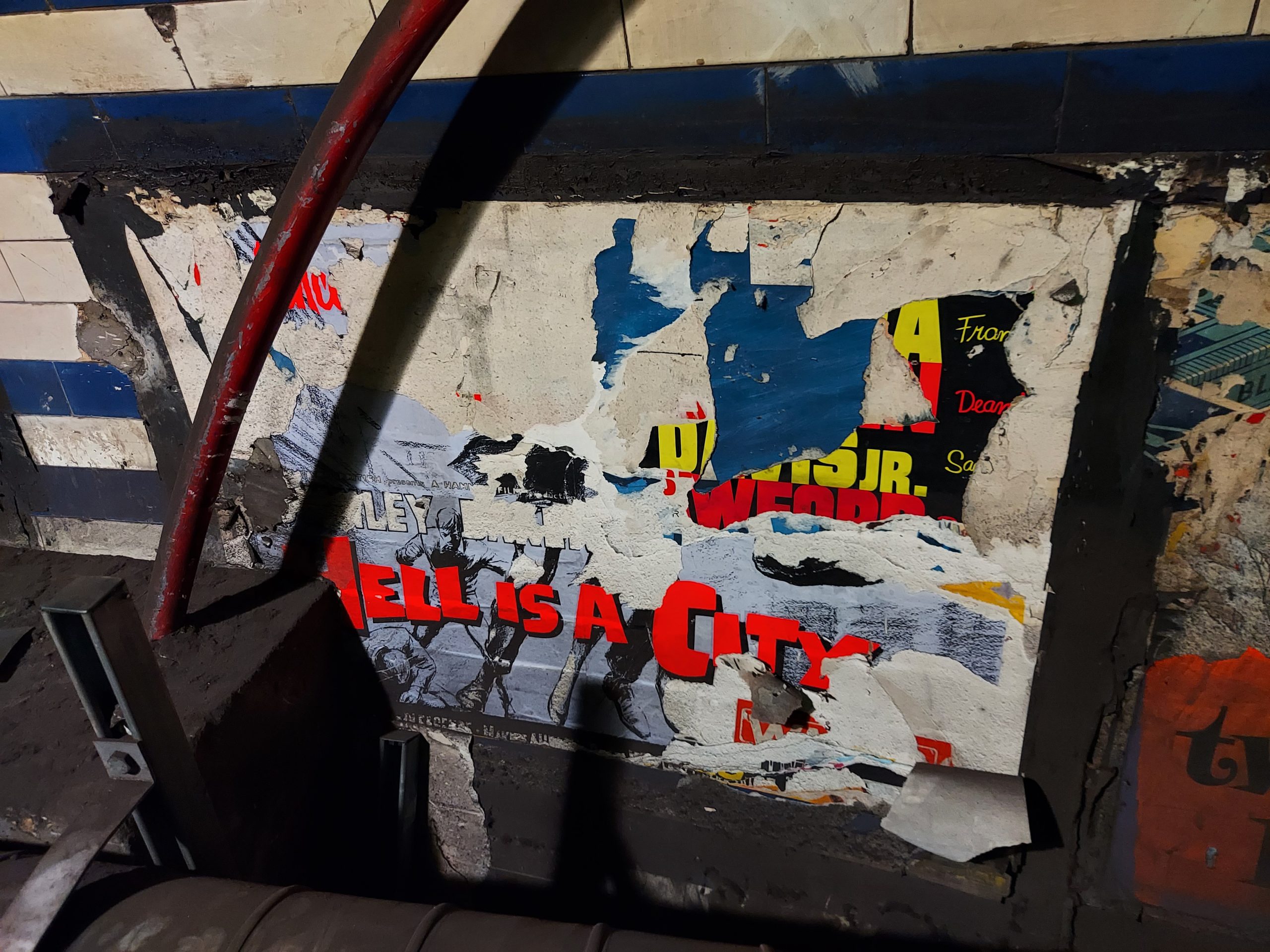
Poster in the Euston tunnels
Poster for the film 'Spartacus' in the Euston tunnels
Advert poster in the Euston tunnels
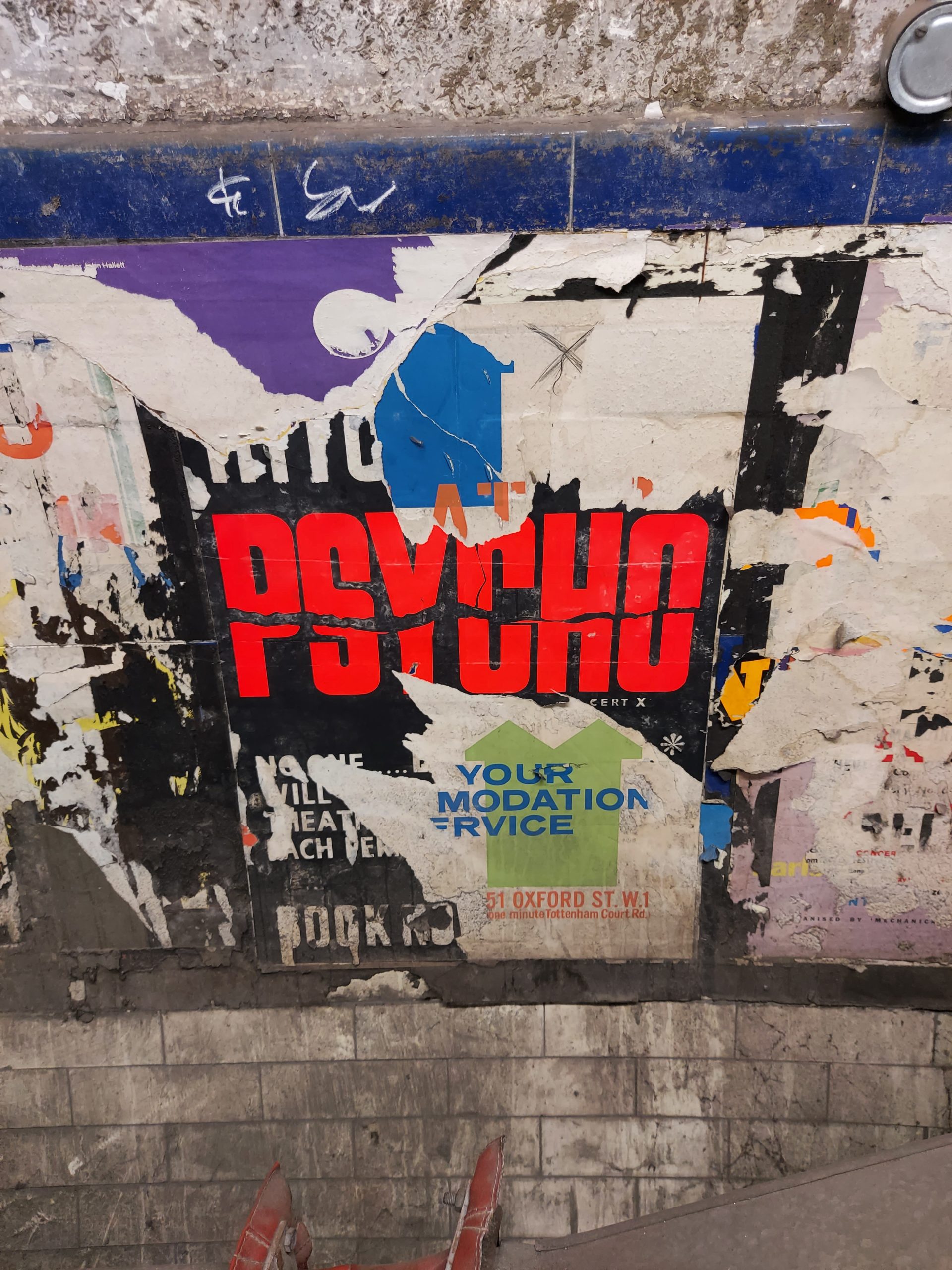
Poster for the movie 'Psycho' in the Euston tunnels
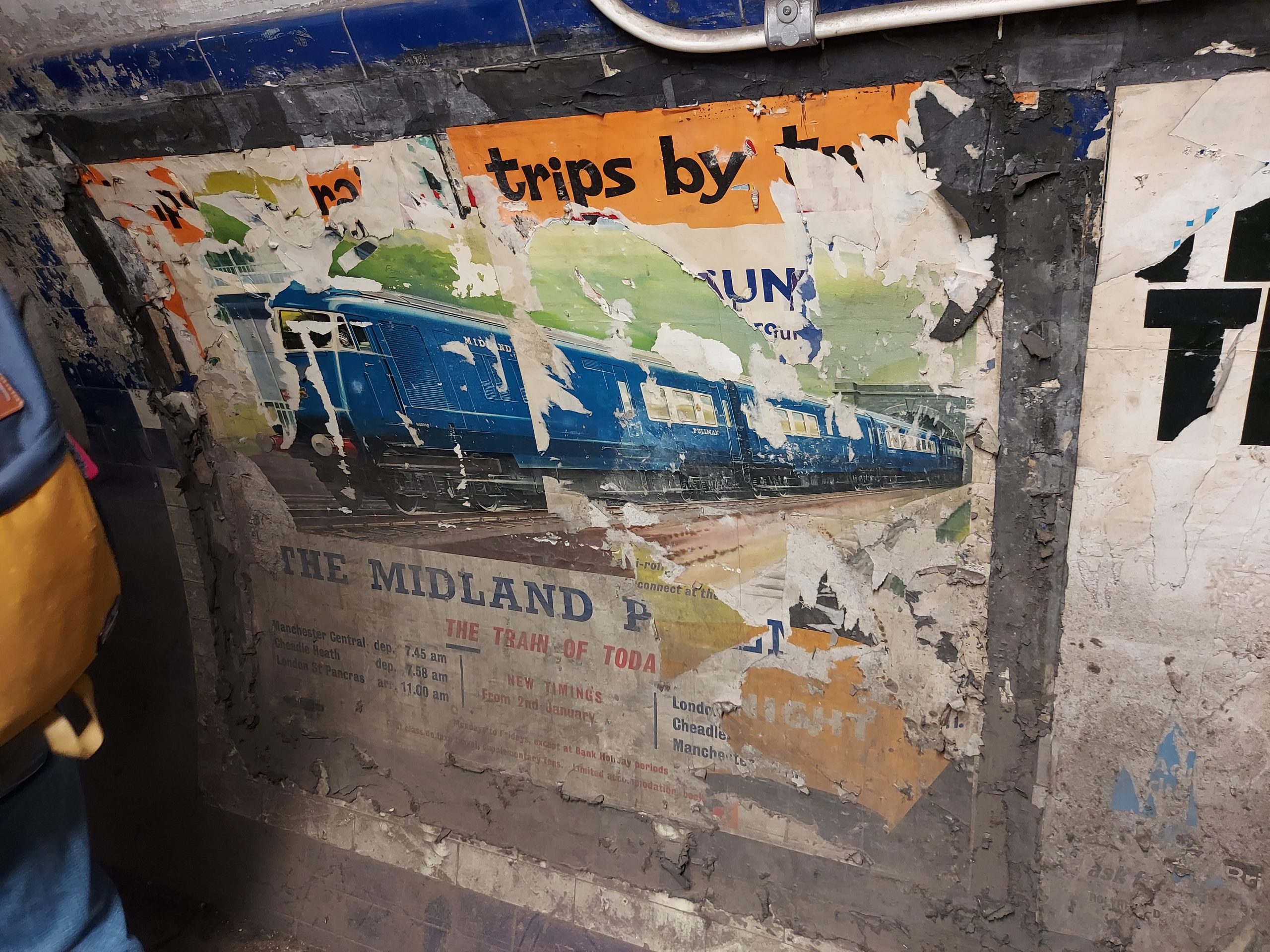
Railway poster in the Euston tunnels

Alexander the Great: The Making of a Myth – British Library

Alexander the Great exhibition poster

I got up earlier than usual to visit the British Library and the exhibition Alexander the Great: The Making of a Myth. The exhibition explores the life of the famous warrior and conqueror and some of the myths surrounding his life that have appeared since then. It is true that Alexander built a huge empire throughout his short life. It is less likely to be true that he rode across the sky on a flying chariot, travelled to the bottom of the sea in a glass bell, or that his horse Bucephalus, strong and powerful as he was, actually ate people.

Alexander the Great was born in Macedonia in 356 BC, the son of King Philip II of Macedon and Queen Olympias. His empire stretched from Greece to India, encompassing Egypt and Persia, though he died at only 32. We are not completely sure why he was called ‘the Great’: the earliest reference is in Mostellaria, a play by Plautus. He has been known by many names, depending on the language and culture of the society referring to him:  some of his names include Iskandar or Sikandar.

One of the key sources for the myths surrounding Alexander’s life is the Alexander Romance. During the ancient and medieval eras, this text was hugely popular, and portrayed Alexander as a mythical adventurer. In the twelfth century, the poet Nizami’s Iskandarnamah (Story of Alexander) told of Alexander’s journey to see Sirens, mythical half-bird or half-fish creatures.

Even today, Alexander’s story is still being reinvented for a modern audience. Reimena Yee publishes an ongoing graphic novel online, entitled Alexander, The Servant and the Water of Life. It is an Alexander Romance for the 21st century and shows how Alexander’s life and mythical status still captures the imagination.

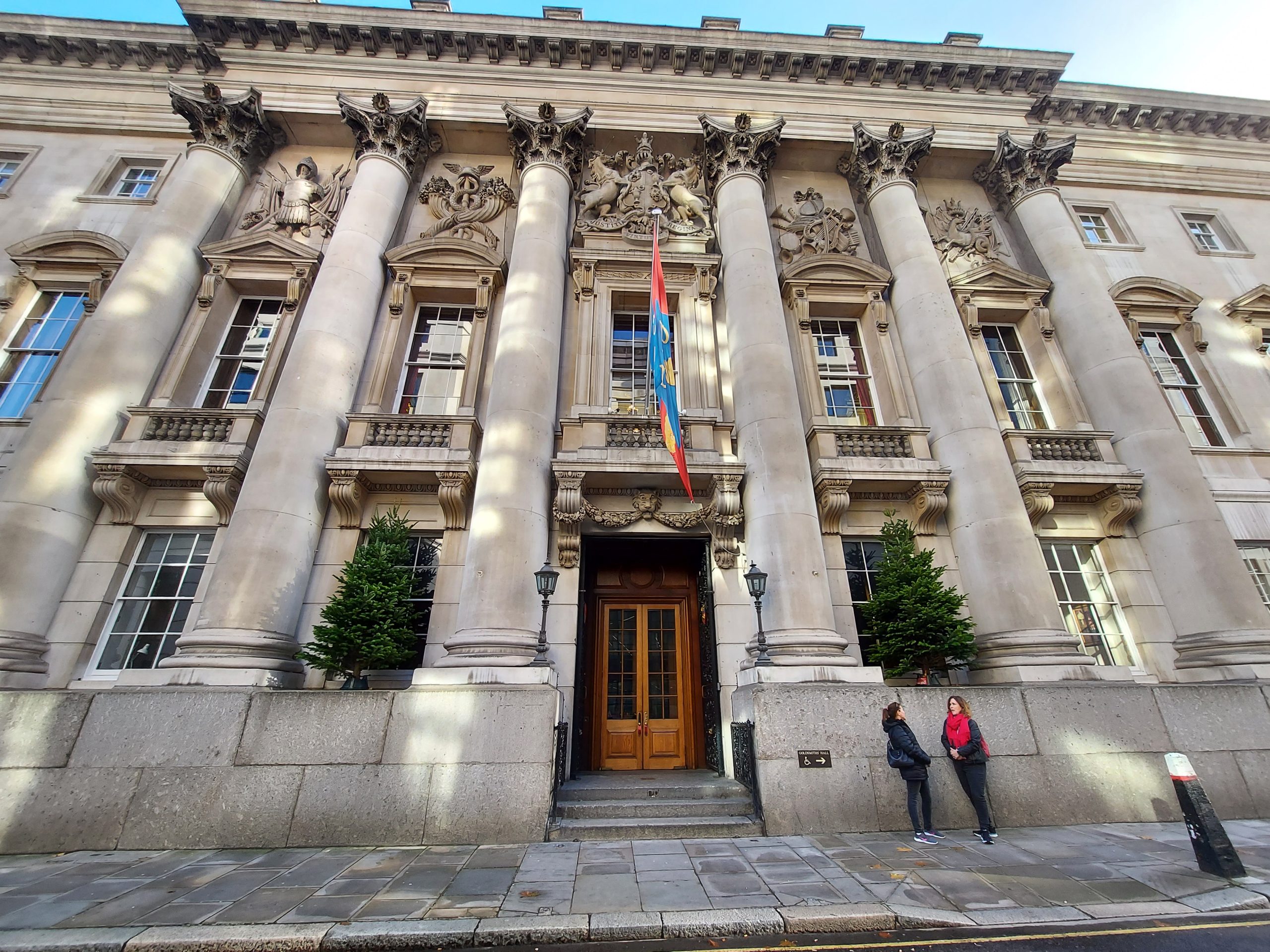
Goldsmiths’ Hall Open Day

The front of Goldsmiths' Hall

Well before the pandemic, I signed up for a tour of Goldsmiths’ Hall, due to take place in 2020. Well, we all know how that turned out. Many date rearranges later, the tour finally took place in late November 2022.

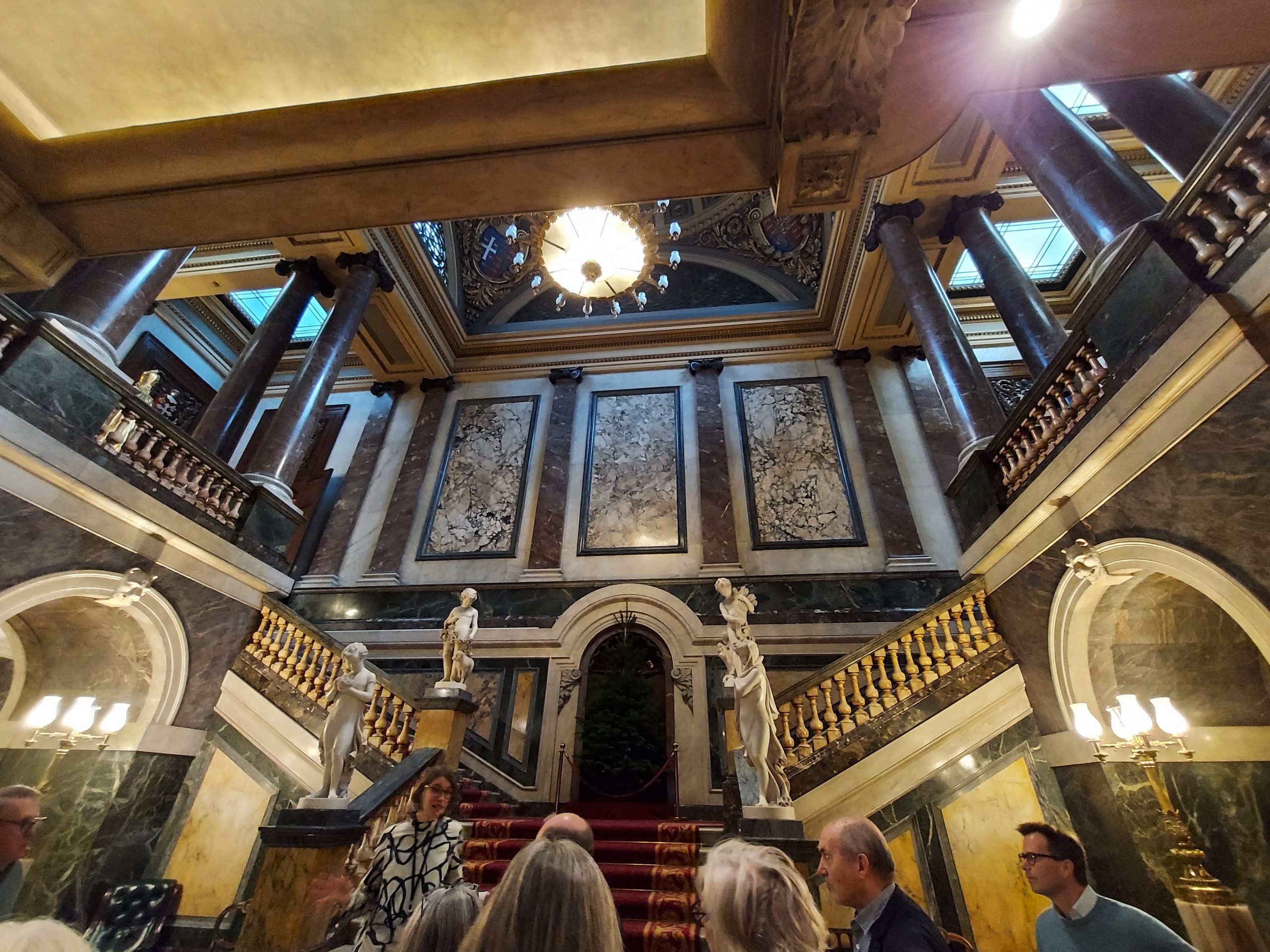
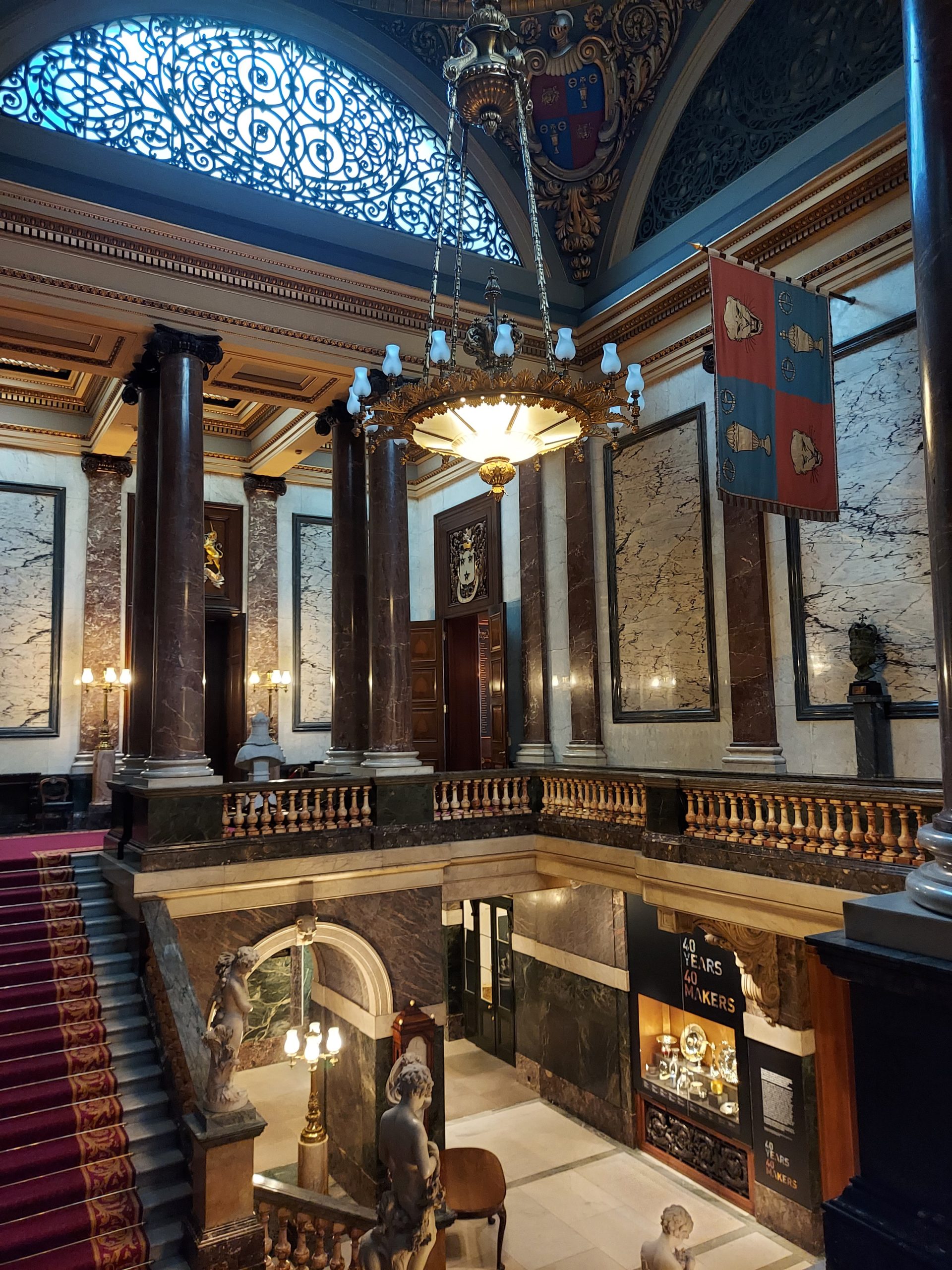
The main staircase of Goldsmiths' Hall

The Worshipful Company of Goldsmiths, also known as the Goldsmiths’ Company, is one of the Twelve Great Livery Companies of the City of London. It received its first royal charter in 1327. Despite the name, a ‘goldsmith’ traditionally works in both gold and silver, and today, platinum and palladium too.

The main staircase of Goldsmiths' Hall

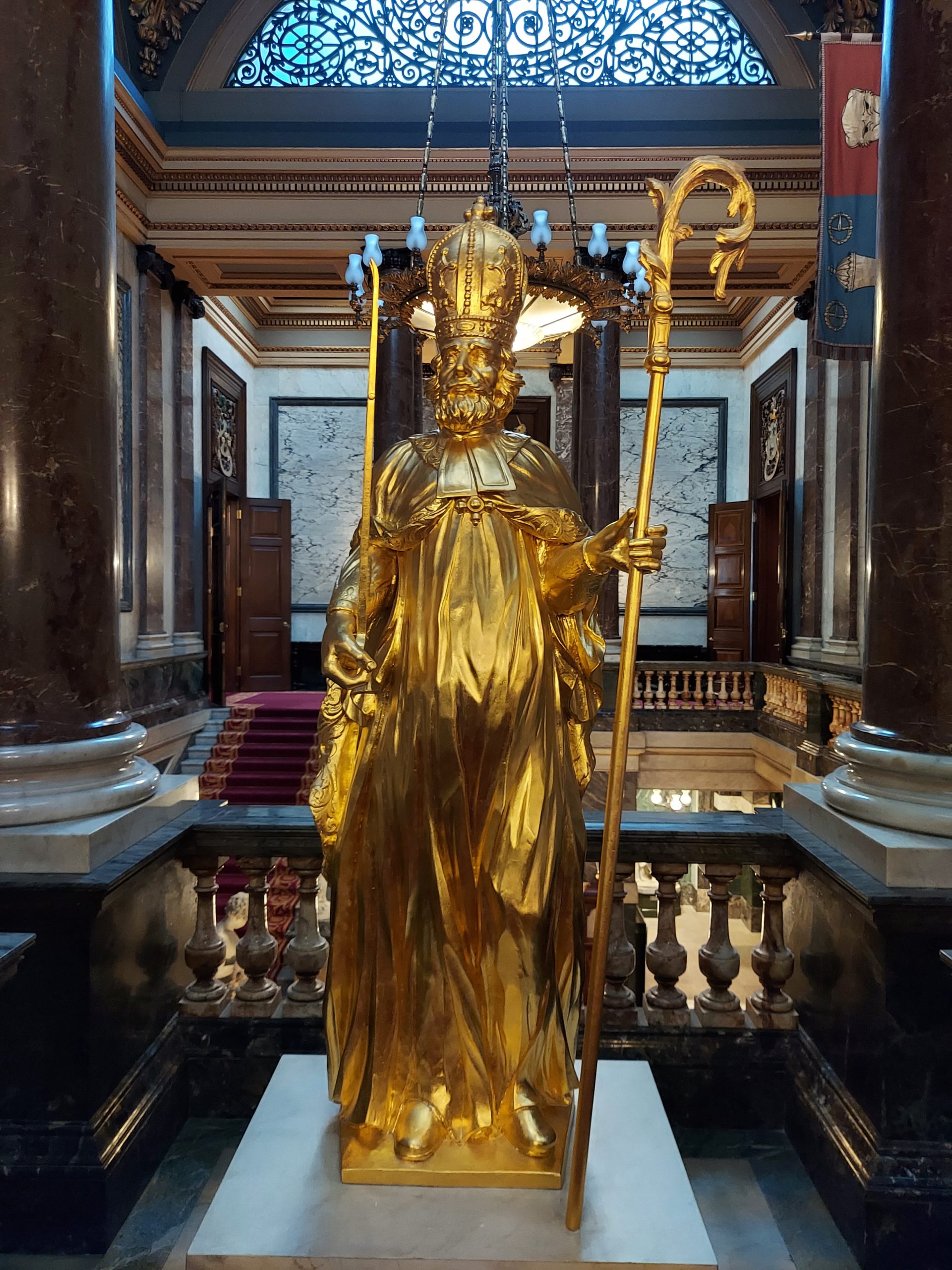
Legal recognition of the company began in 1300 when King Edward I passed a statute requiring gold and silver to be of a defined standard. This was the beginning of hallmarking: the metal was tested and marked with the leopard’s head, supposedly taken from the royal arms. With the bestowing of the royal charter in 1327, the company was formally acknowledged as a craft guild, with the patron saint of St. Dunstan.

Gold-plated statue of St. Dunstan, patron saint of the Company

In 1339, 19 goldsmiths bought the current site (albeit smaller than it is now) for use as a headquarters. During the medieval period, the Company would meet at least three times a year to discuss business. In the late fifteenth century, the first assay office was established at Goldsmiths’ Hall, ensuring that quality goods were marked as such. The hall was rebuilt in the 1630s, but gutted by the Great Fire of London in 1666, and restored in 1669. In 1829 that building was demolished, replaced by one designed by Philip Hardwick, the Company’s surveyor, which still stands today.

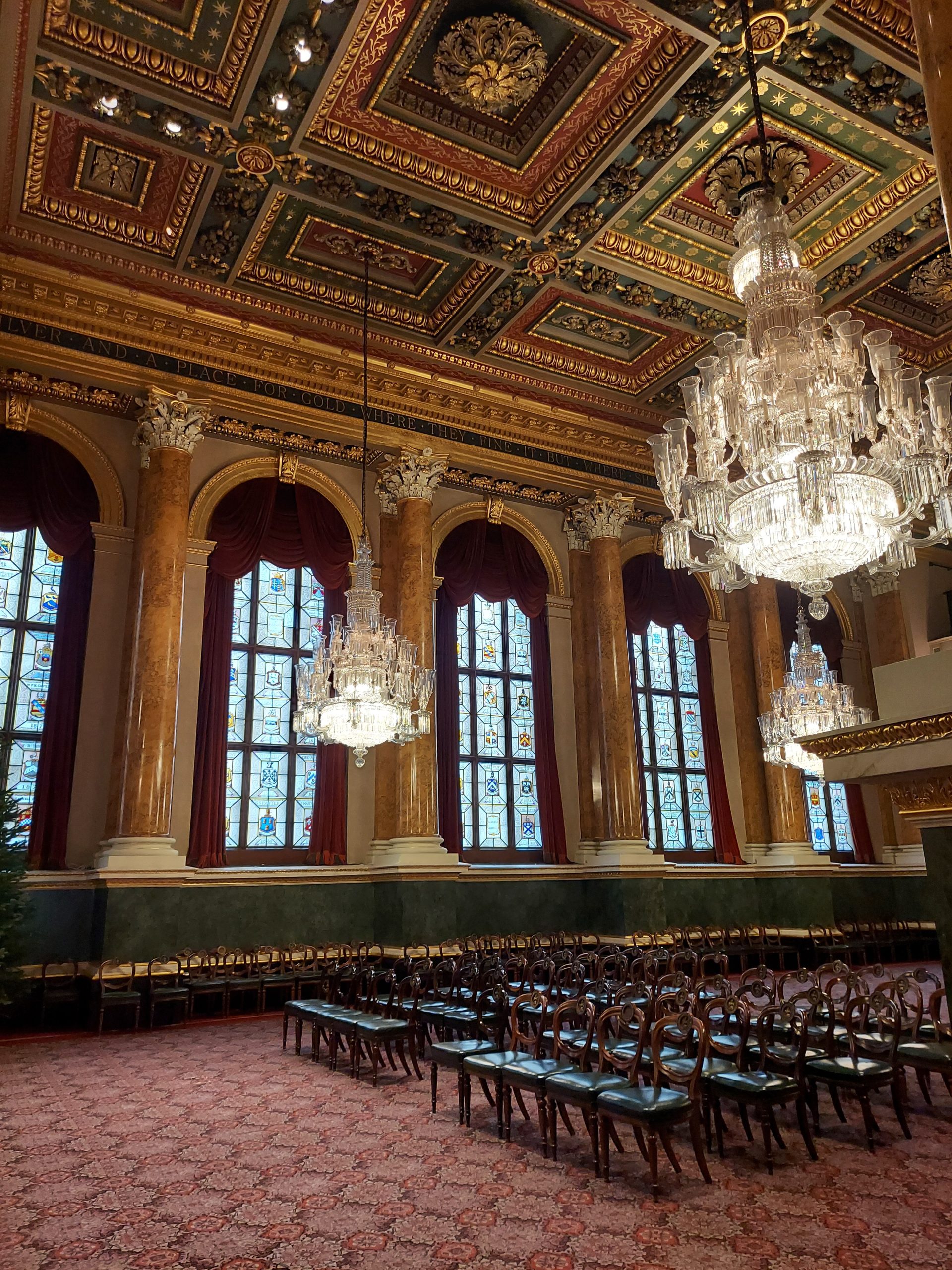
Inside Goldsmiths Hall

Our tour took us from the main staircase into some of the chief rooms used by the Company. We sat in the main hall while our guide told us about the history of the Company and of assaying and hallmarking. It was interesting to learn about the history of the building – including how the ceiling became stained from the pipe smoke of the Victorian-era members!

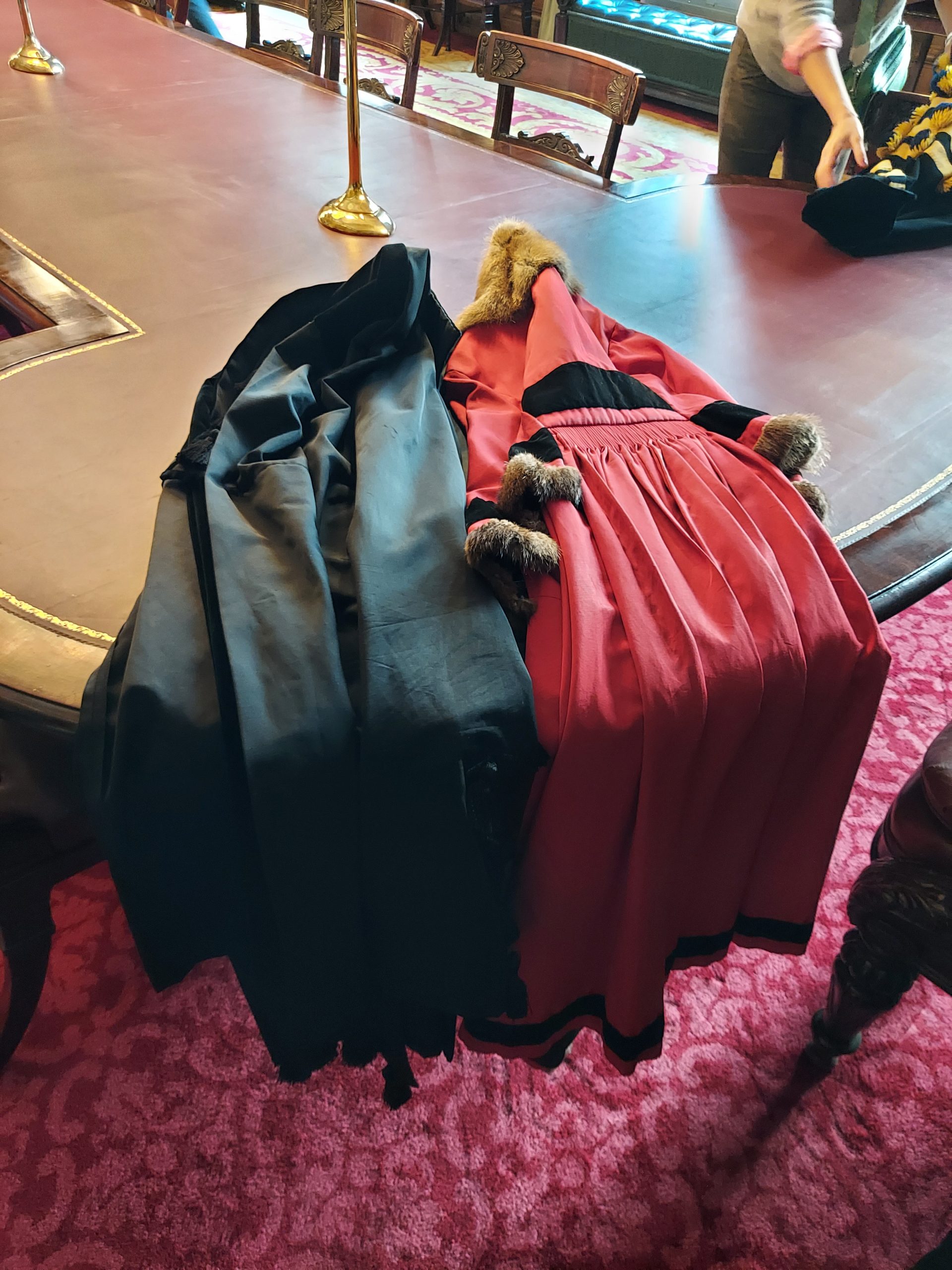
Official robes

The tour was worth the wait and I would definitely recommend signing up for one if you can. Tours run throughout the year, although they do book up in advance.

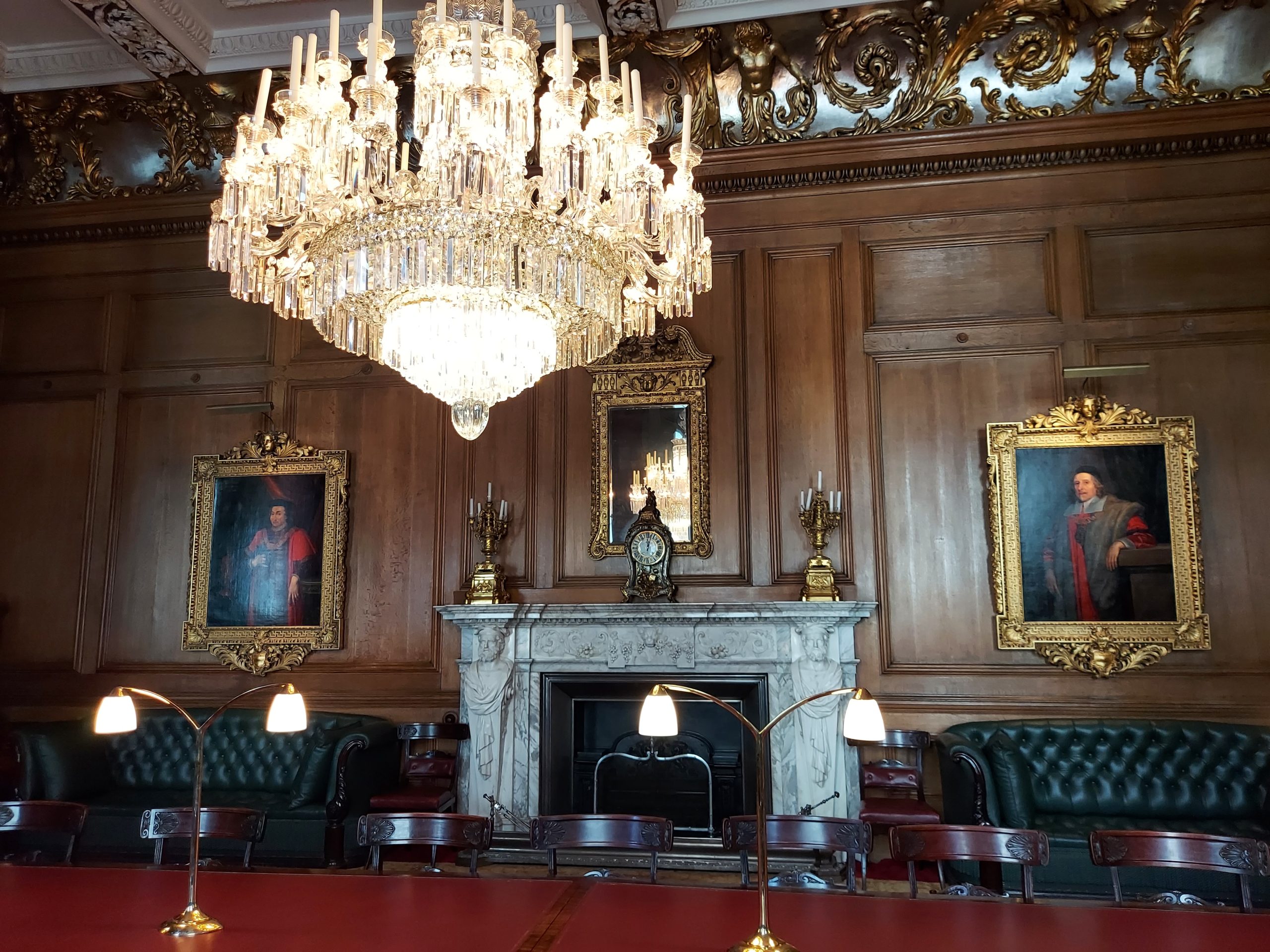
A wood-panelled meeting room

The Goldsmiths’ Company
Foster Lane
London
EC2V 6BN