Hidden Stories of St James’s Park

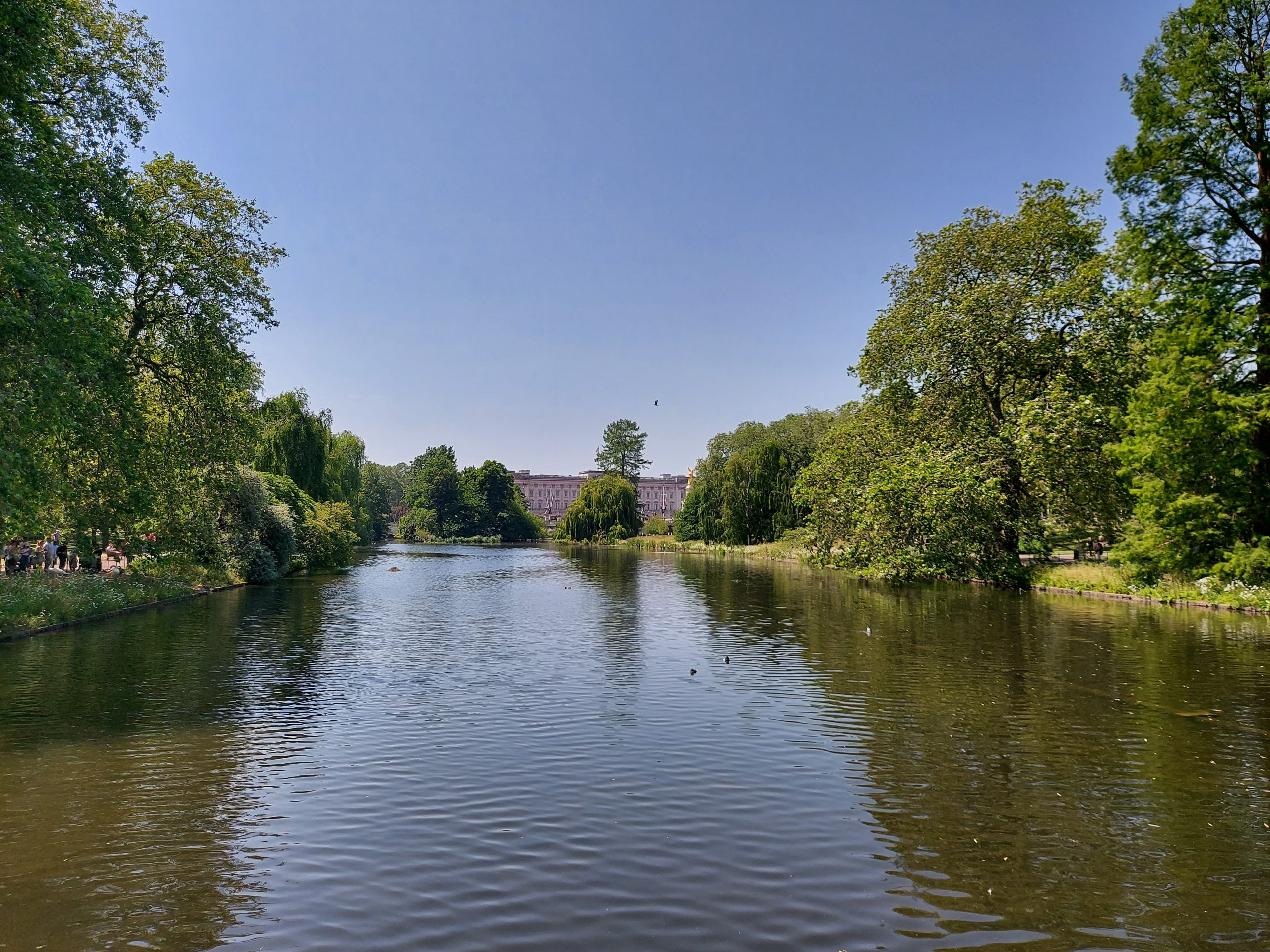
St James's Park looking towards Buckingham Palace

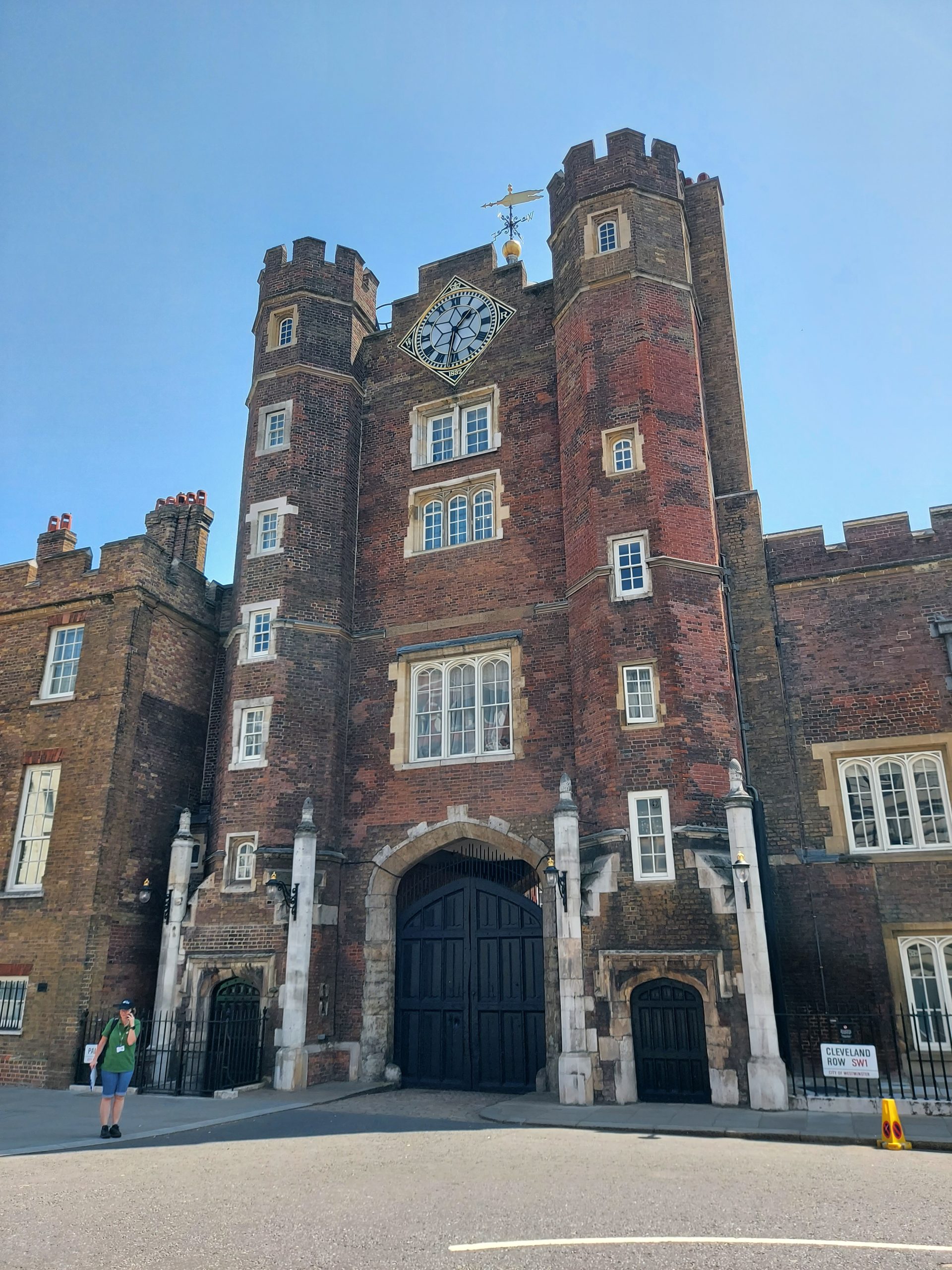
I signed up for a Hidden Stories of St James’s Park walk and attended on a sunny day in early summer. The walk began inside the park but then we headed out towards St James’s Palace, which was was built by Henry VIII on the site of the Hospital of St. James, Westminster between 1531 and 1536. To be honest this is a palace I didn’t know much about and hadn’t really paid any attention to, so I was glad to get a closer look at it. You can tell it is from the same era as Hampton Court Palace as it has a similar look about it.

St James's Palace

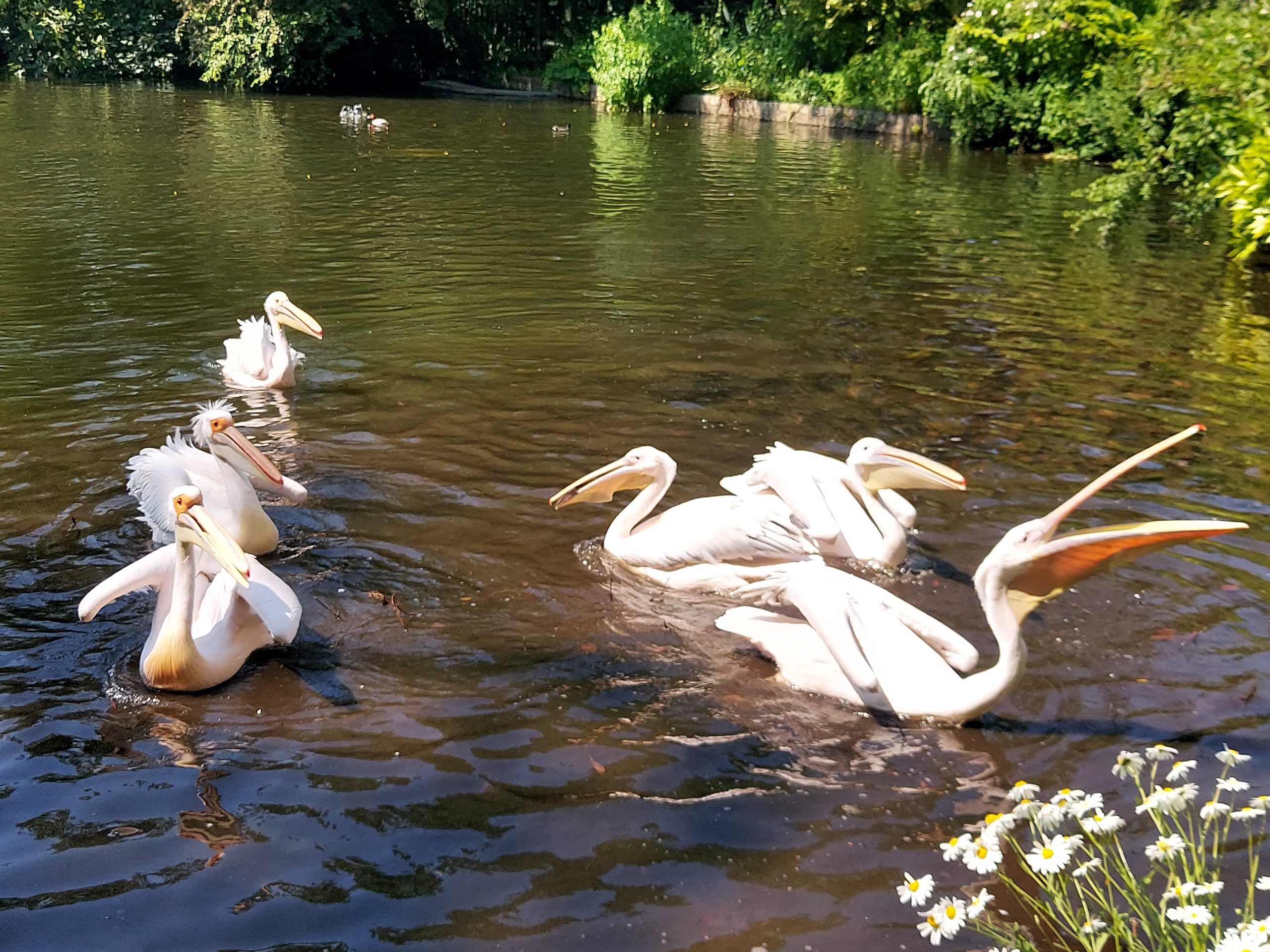
We learned about the history of the park and had a good look round. The best part was when we got to go and see the pelicans at feeding time. These quirky creatures are a familiar fixture in the park.

Pelicans at St James's Park

Check out the Royal Parks Events page for more information about this walk and other events run in the parks.

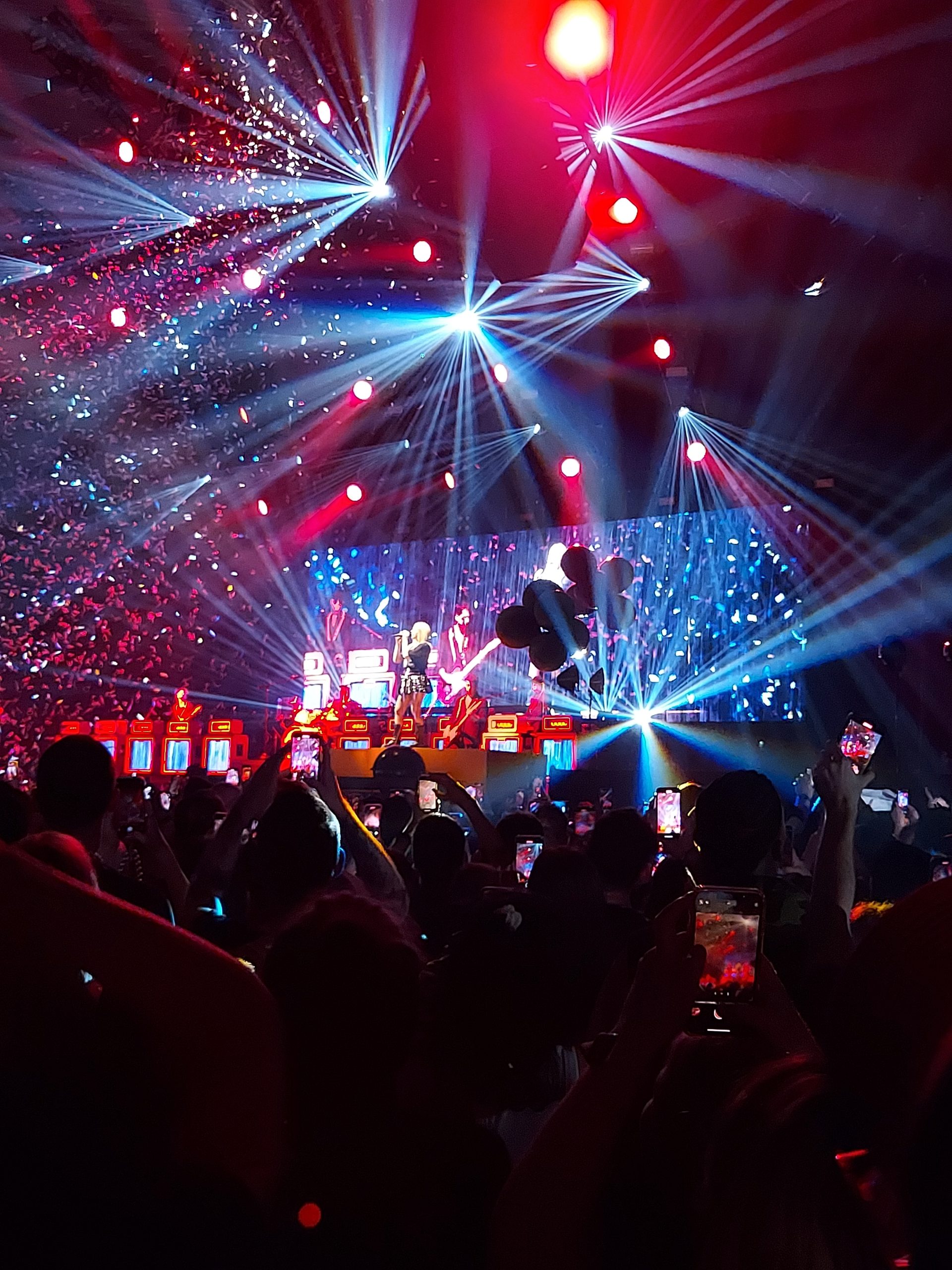
Avril Lavigne at Alexandra Palace

I originally booked to see Avril Lavigne in the spring of 2020.

When the pandemic hit, it was rearranged to 2021, then 2022. About a month before the gig, it was postponed again, to May 2023.

Luckily, this gig actually took place!

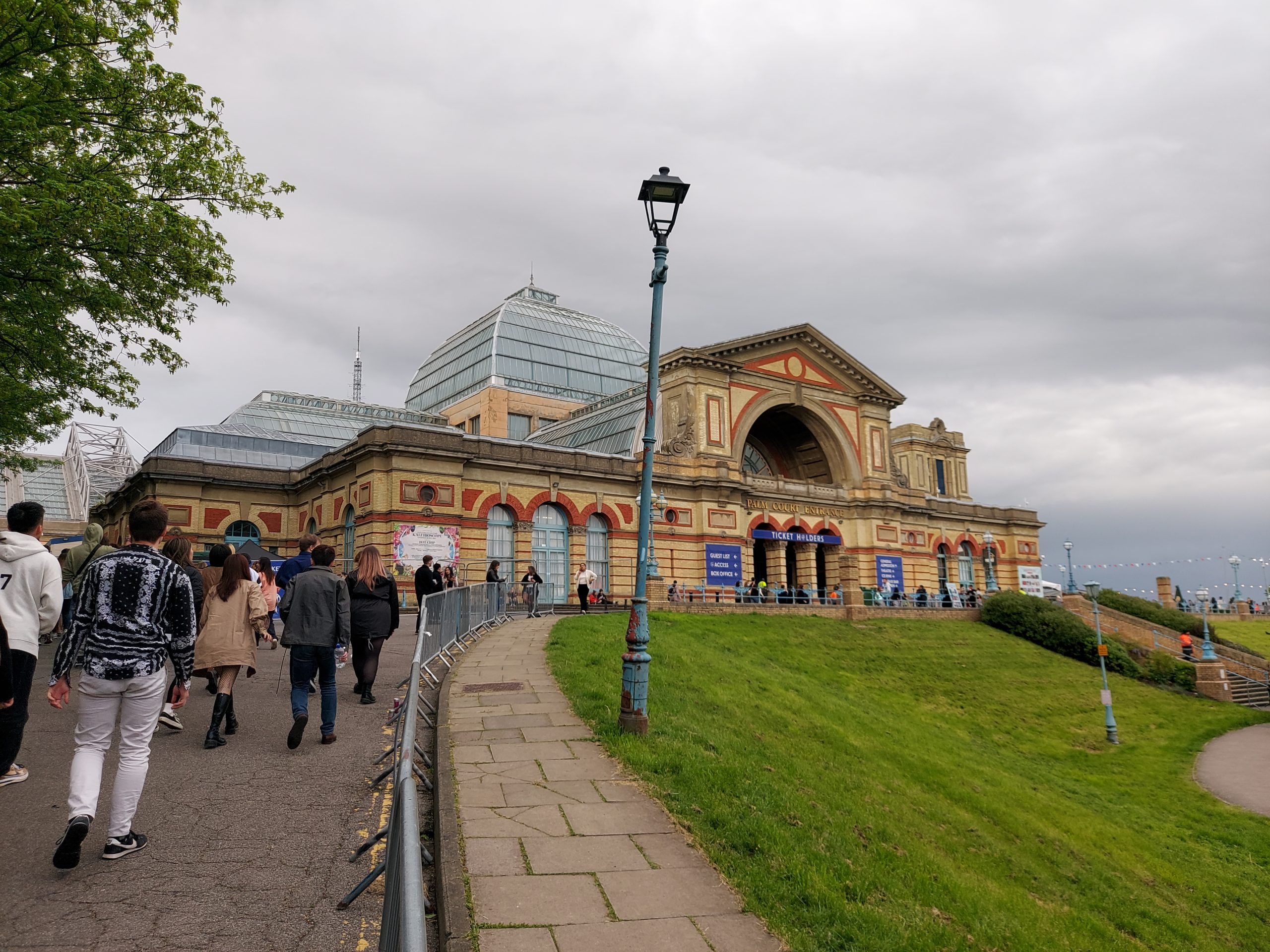
I’ve been a fan of Avril since my teenage years. Her first two albums in particular soundtracked my life at sixth form and university, and I was excited at finally getting the chance to see her live. The original gig was meant to take place at Brixton Academy, but with the issues that place has been facing lately, it was moved to Alexandra Palace. Which suits me fine, because although it’s a long way away, it is easy to reach, and is a great venue.

Alexandra Palace

Even waiting to go into the concert was good fun, as the DJ was playing Noughties classics from the likes of Christina Aguilera, Nelly Furtado and Blink 182. I had some chips while I was waiting and contemplated how it was over 20 years since Avril’s debut album Let Go was released. (Don’t do this, you will end up with an existential crisis).

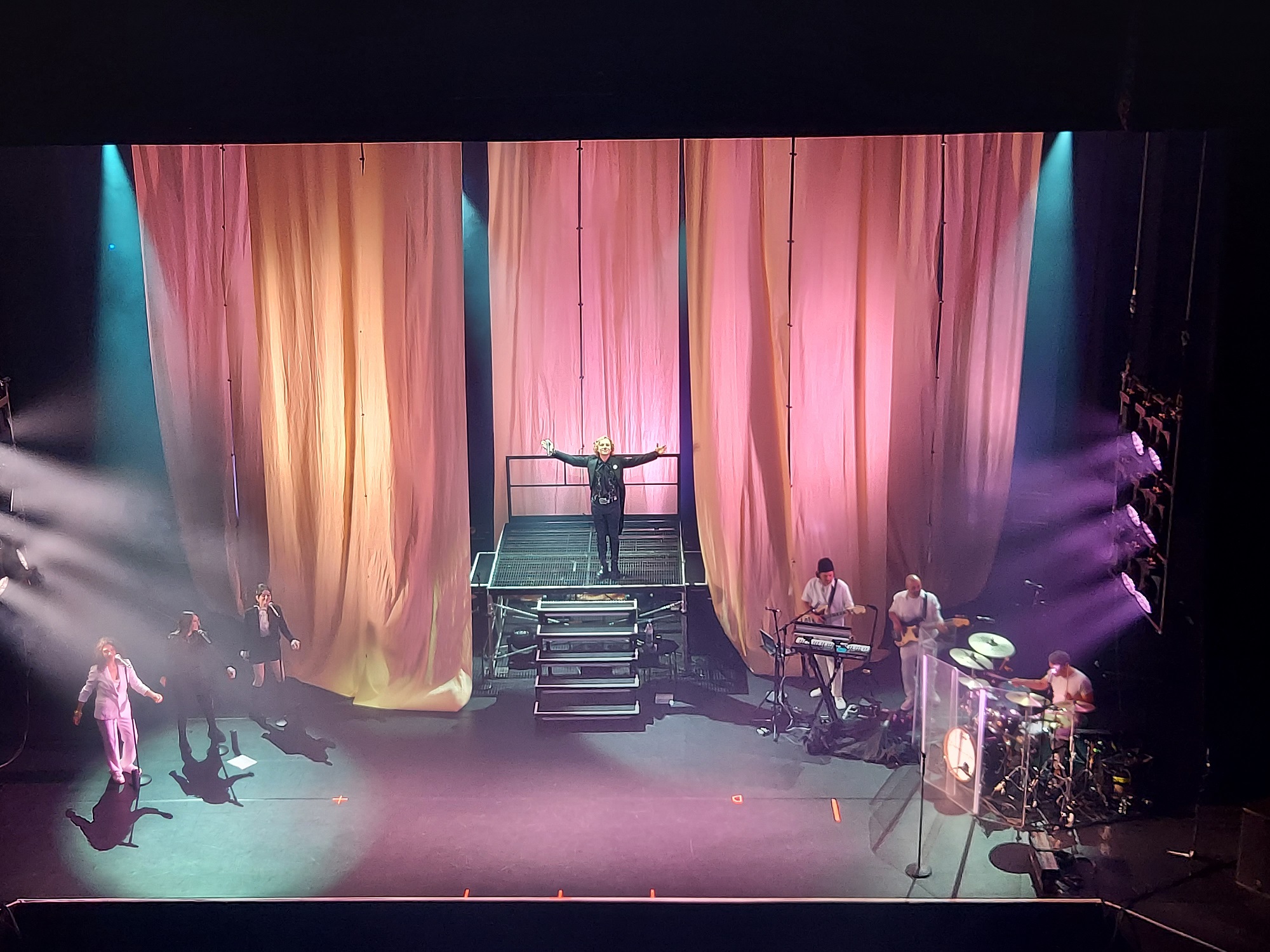
When Avril finally came on she was great. She opened with her recent single ‘Bite Me’ (which sounds a lot like her early stuff) and followed with several hits, including some of my favourites, like ‘When You’re Gone’ and ‘My Happy Ending’. Of course, hearing ‘Complicated’ and the iconic ‘Sk8er Boi’ was brilliant. I knew she was going to play ‘Girlfriend’, so I wasn’t too disappointed when she did, even though it’s not a favourite of mine.

A surprise was the cover of the Spice Girls’ ‘Wannabe’, with phem, her support act. The encore featured ‘Head Above Water’, one of my favourite of her more recent songs, as well as ‘I’m With You’ which I love. She ended on a high with ‘Here’s To Never Growing Up’.

At one time I used to think that Avril couldn’t really sing live. I’m happy to be able to say I’ve been proved wrong. She was great, full of energy, and looked exactly the same as she did twenty years ago. I want to know her secret!

While I prefer her earlier music, and some of her output has been patchy, it’s impressive that she has continued to make good pop music for all this time. Some of her more recent songs are favourites of mine. I’m roughly the same age as Avril and feel like I’ve grown up with her – judging by the ages of those around me at the concert, I’m not alone.

Avril Lavigne on stage at Alexandra Palace

Setlist

  • Bite Me
  • What the Hell
  • Complicated
  • When You’re Gone
  • My Happy Ending
  • I’m a Mess
  • Wannabe (Spice Girls cover) (with phem)
  • Love Sux
  • Girlfriend
  • Love It When You Hate Me
  • Sk8er Boi

Encore

  • Head Above Water
  • I’m With You
  • Here’s to Never Growing Up
Harvest Mice release in Marnham Fields

I joined Ealing Wildlife Group at the weekend to help release harvest mice into the Marnham Fields meadow. I’d wanted to do this for a while, ever since I saw the events listed on Facebook! The breeding programme has been running for a couple of years now, with volunteers raising baby mice until they are old enough to go out into the world.

I got to carry a box of mice to the release spot and then we all took it in turns to hold a tiny mouse and release it onto a nearby branch. They are the most adorable things. Some of the mice jumped straight onto the branch and headed for their new life with enthusiasm, others were a bit more tentative and stayed looking around before vanishing into the bushes. Overall, a very successful release.

harvest mouse on a branch

Rituals of Power Through the Centuries – The Society of Antiquaries

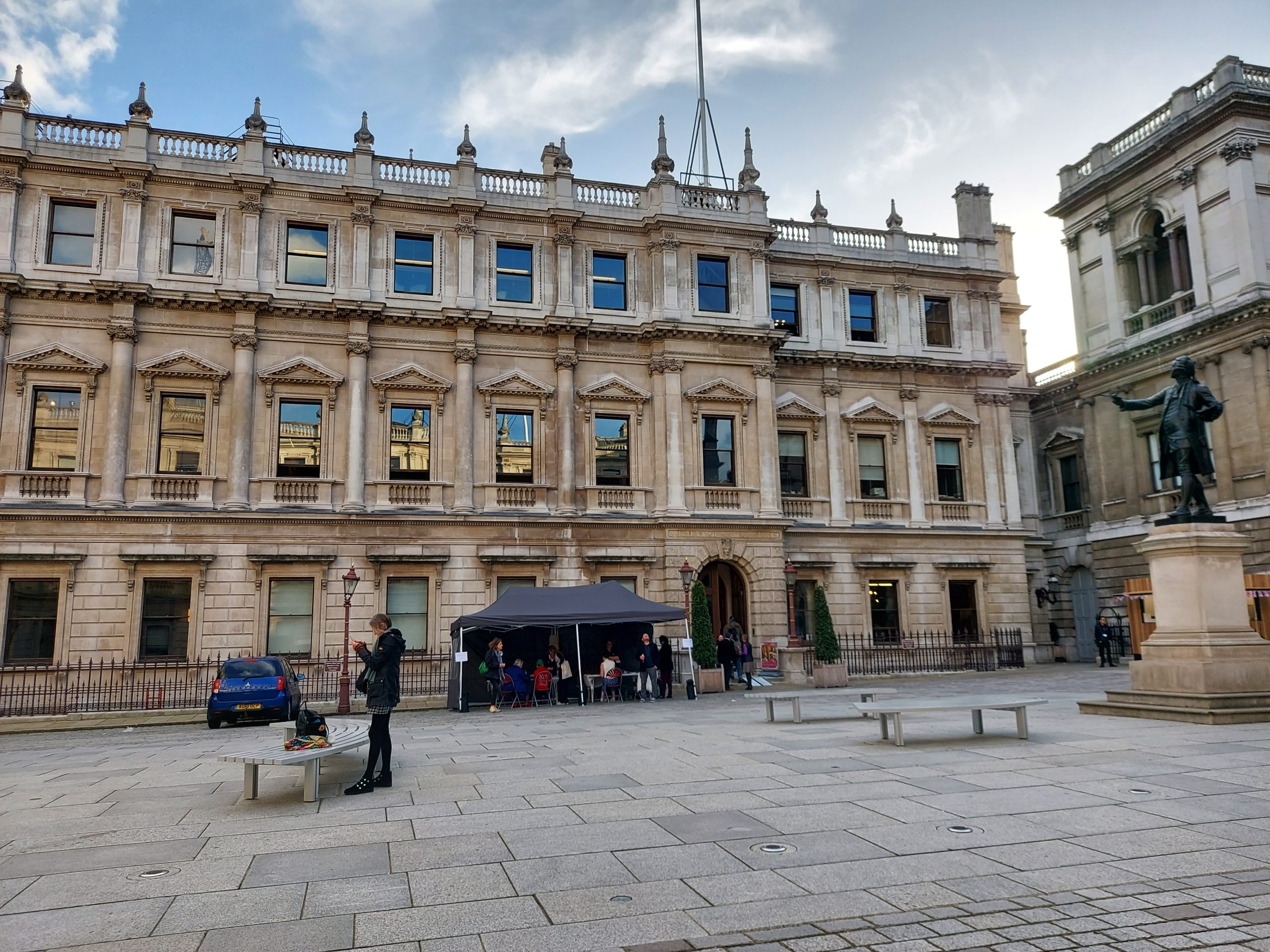
The Society of Antiquaries

To coincide with Charles II’s coronation today, I went along to an event at The Society of Antiquaries last night. The Society organised poetry and music sessions, displayed portraits of royals across time and opened up access to its beautiful library.

I went to a fascinating talk about the Magna Carta and listened to a librarian talk about the Great Seal of Henry VIII, which was on display for visitors. I also saw other artefacts like Civil War pamphlets and a panorama of Queen Victoria’s coronation procession.

Finally I took part in some lino block printing, making myself a postcard and a little badge to take away.

The Library

Jack in the Green

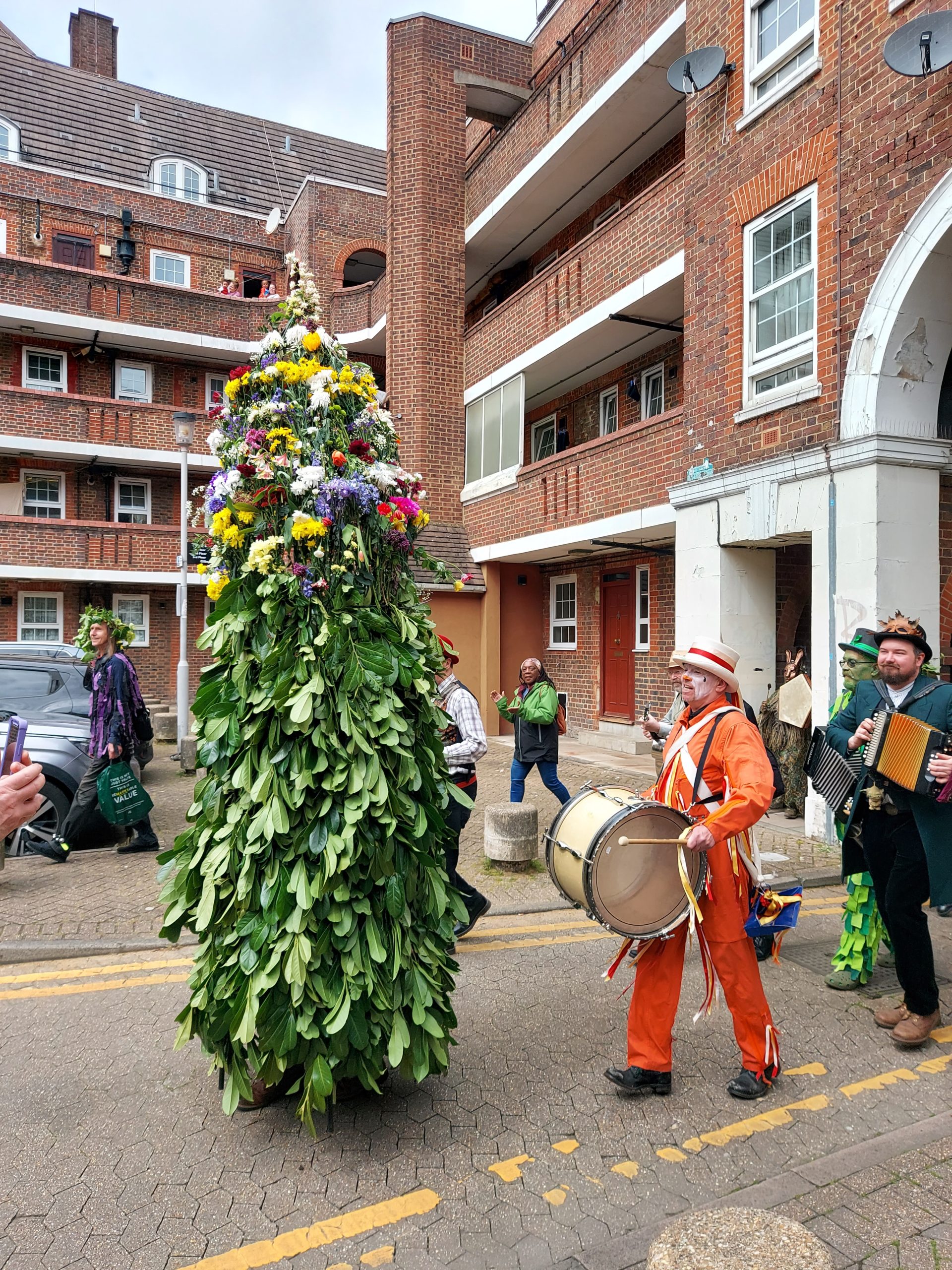
The May Day tradition of ‘Jack in the Green’ has been revived in recent years, in places like Whitstable and Hastings. Jack’s origins are shrouded in mystery: some claim he is a survival from pagan tradition, others that he dates back to the sixteenth or seventeenth centuries. Supposedly, he dates from a time when May Day celebrations meant making bigger and more ridiculous garlands that eventually seemed to cover the carrier in greenery. Nowadays, an individual completely covered in foliage (and in Hastings, wearing a floral crown) heads a procession to mark the day. At the end, he is “slain” (foliage removed) to release the spirit of summer.

Earlier today I attended a Jack in the Green procession, held in Deptford, south east London. There was a lovely atmosphere and the whole thing had a real celebratory feel.

image shows an individual dressed in green foliage with a man dressed in orange and carrying a drum behind him

Donatello: Sculpting the Renaissance – V&A

I clearly hadn’t had enough of Italian sculpture after returning home from Italy, because before I went back to work I went along to the Donatello exhibition at the V&A. As a child, like many of my era, I only knew Donatello as a turtle, but now I know better! Florence-born Donatello has been called the greatest sculptor of all time. The exhibition looks at his work as well as the impact he made on subsequent generations of artists.

Donatello's statue of David
Donatello’s ‘David’

I admittedly don’t know all that much about sculpture, but Donatello’s pieces did seem superb, full of detail and humanity. I found his David particularly intriguing, contrasted with Michaelangelo’s version of the same figure. My only real criticism is that too many of the sculptures on display were not by Donatello, but his contemporaries.

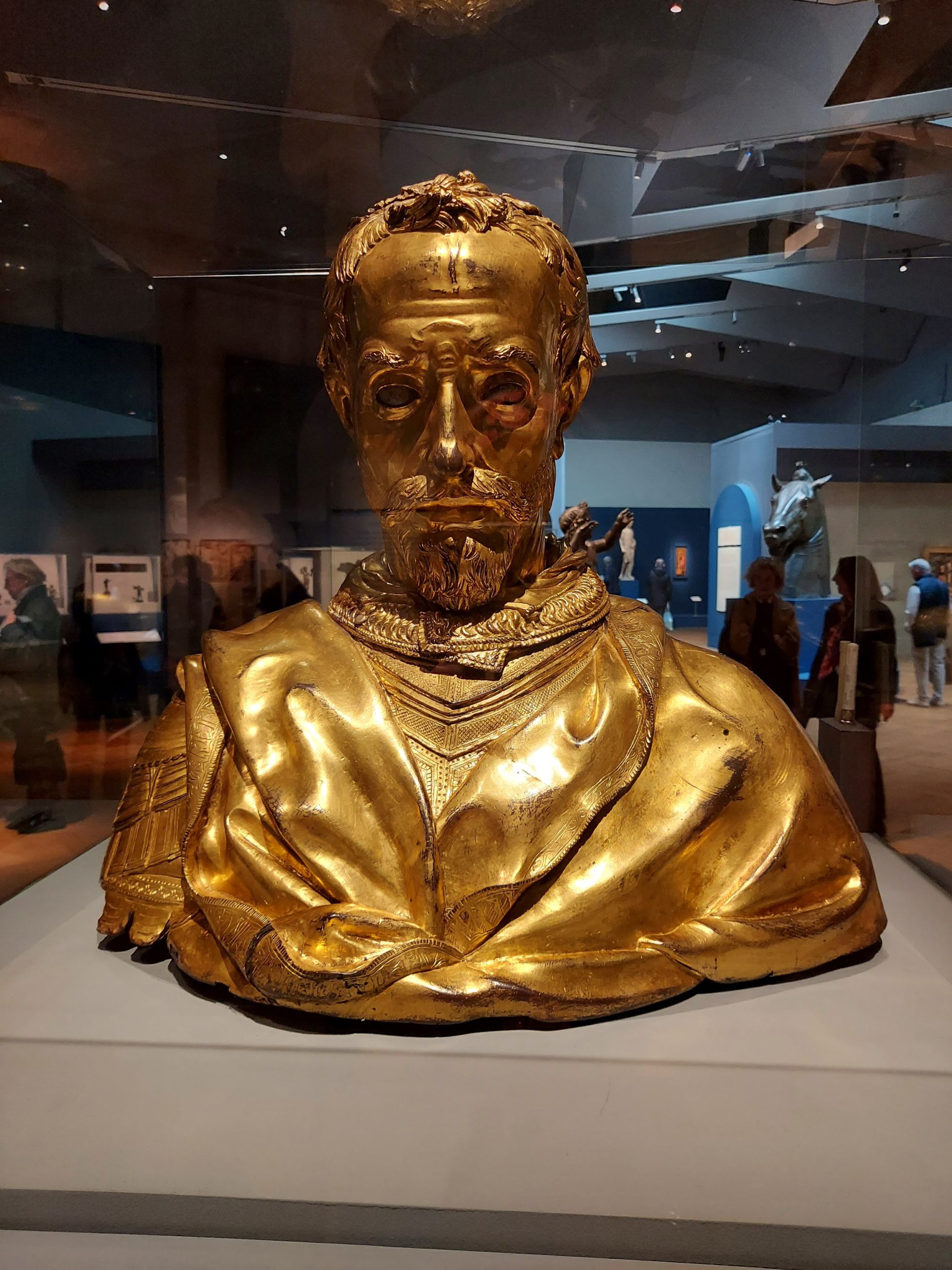
Donatello's bronze sculpture of a man
Bronze bust of a man

St Mary’s Church, Islington: A Guided Tour

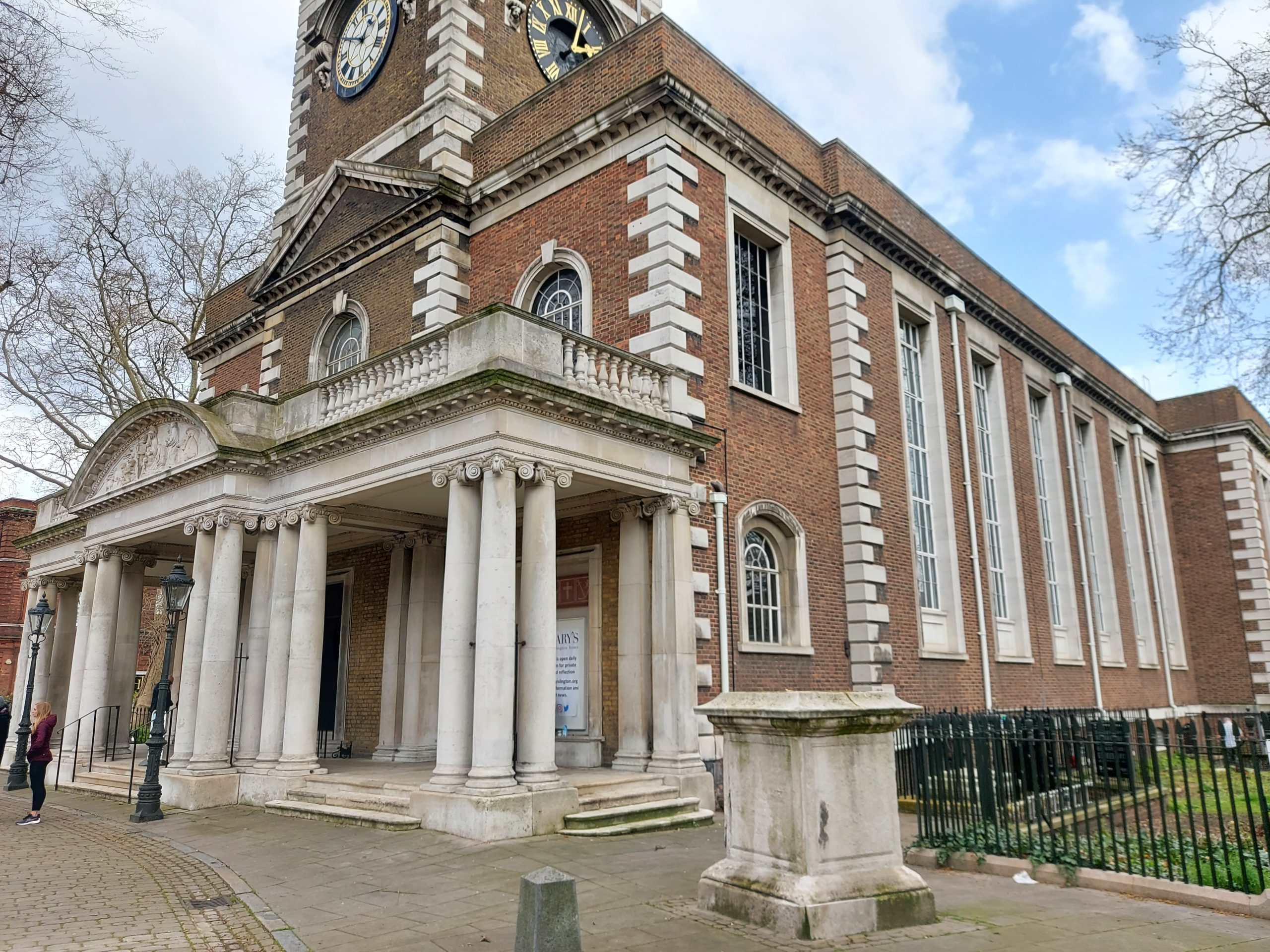
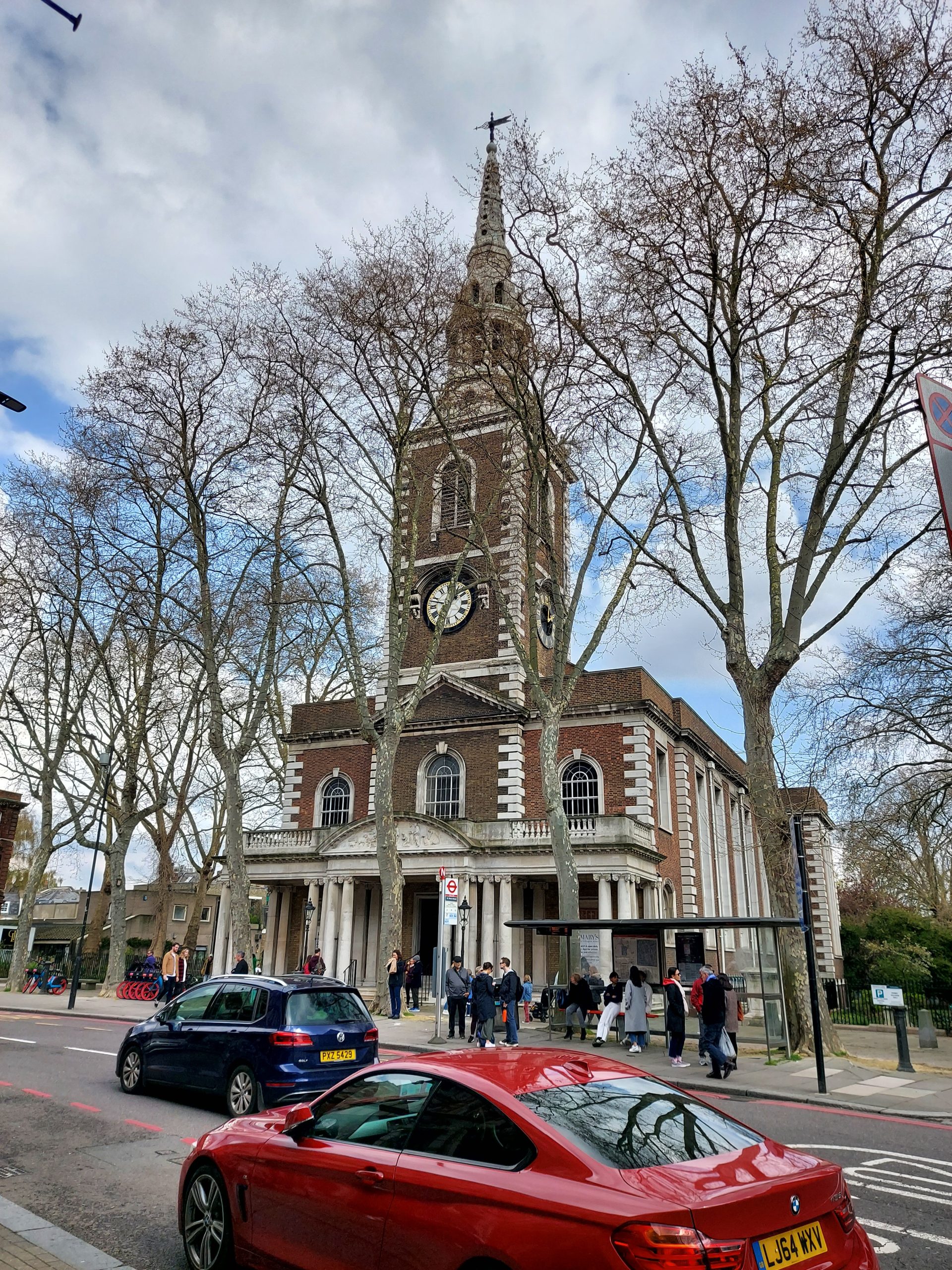
St Mary's Church, Islington

I’ve spent quite a bit of time in Islington – the Almedia and Little Angel theatres are there, plus a couple of pub theatres – and I’ve often walked past St Mary’s Church. I was pleased to get the chance to sign up to a guided tour of the church, organised by Islington Guided Walks.

St Mary's Church, Islington

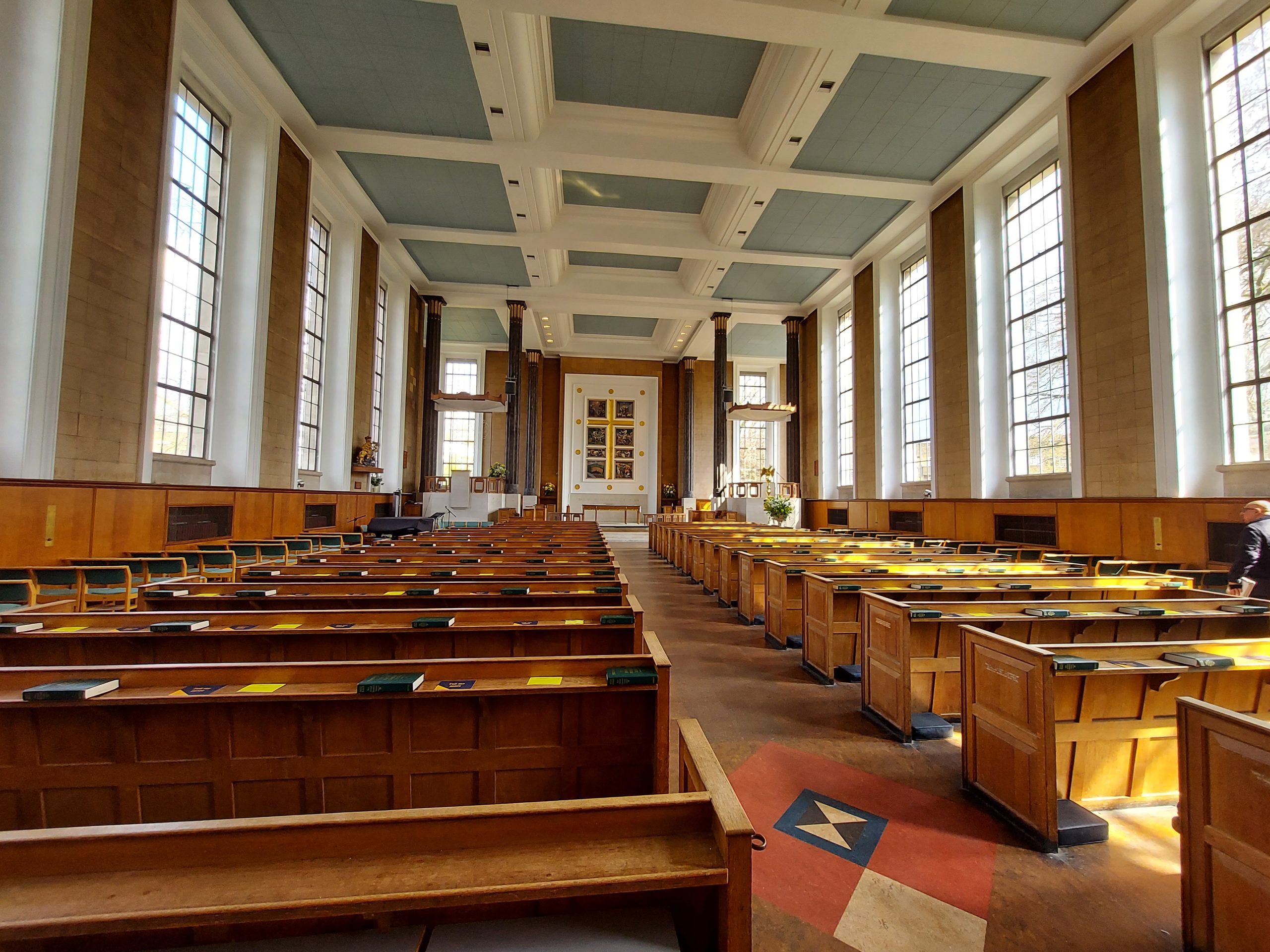
There has been a church on this site since the twelfth century, replaced by a new building in the fifteenth century and again in the 1750s. Maps show the church was at the centre of the parish, even while it was small and surrounded by fields. On the 9th of September 1940, the church was hit by a bomb, destroying everything except the tower and portico. I was surprised when I saw inside: from the outside the church certainly looks like a Georgian creation, and while the rebuilt church in the 1950s resembles a Georgian church in many ways, it is also distinctly modern.

Interior of St Mary's Church, Islington

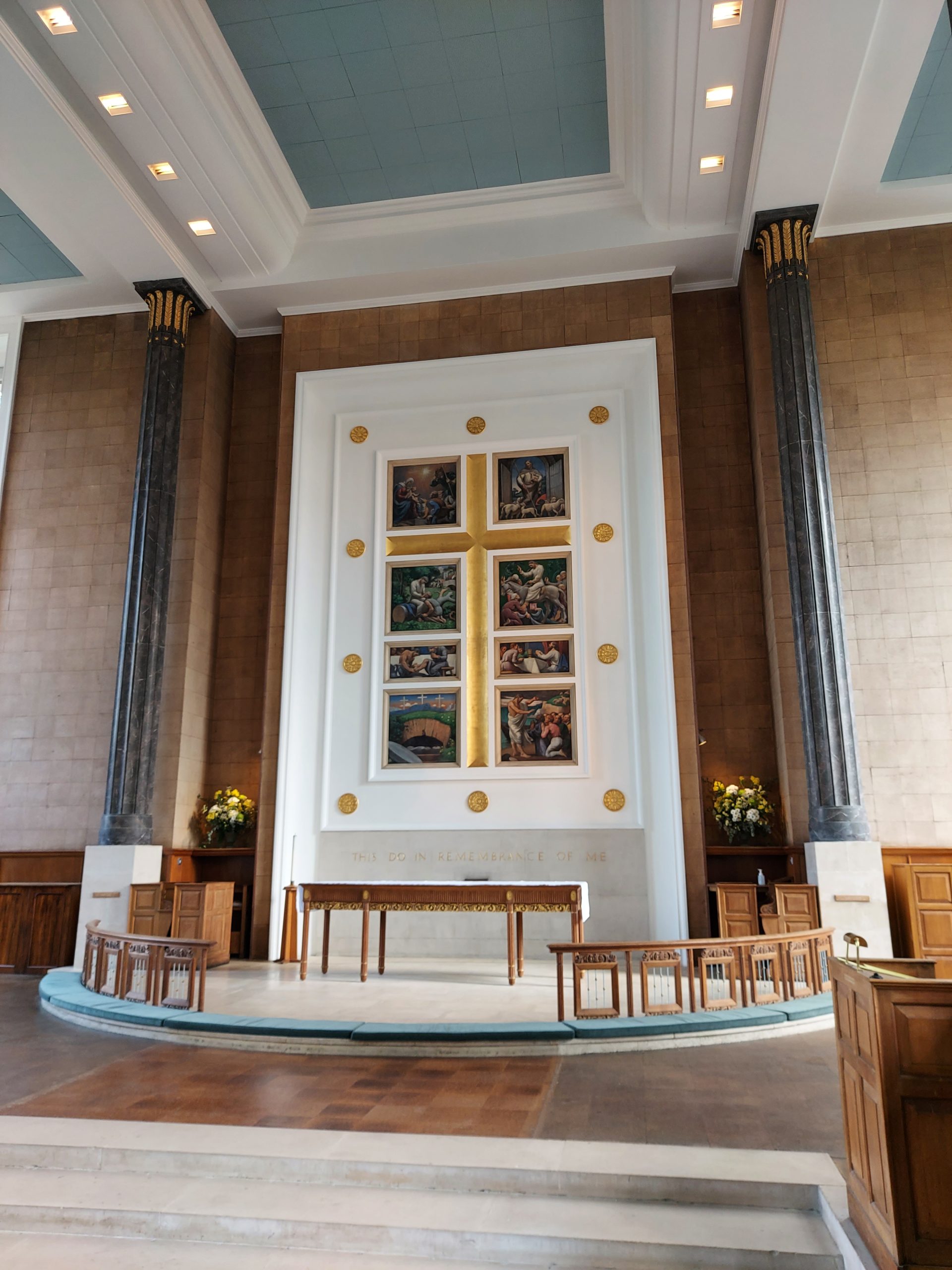
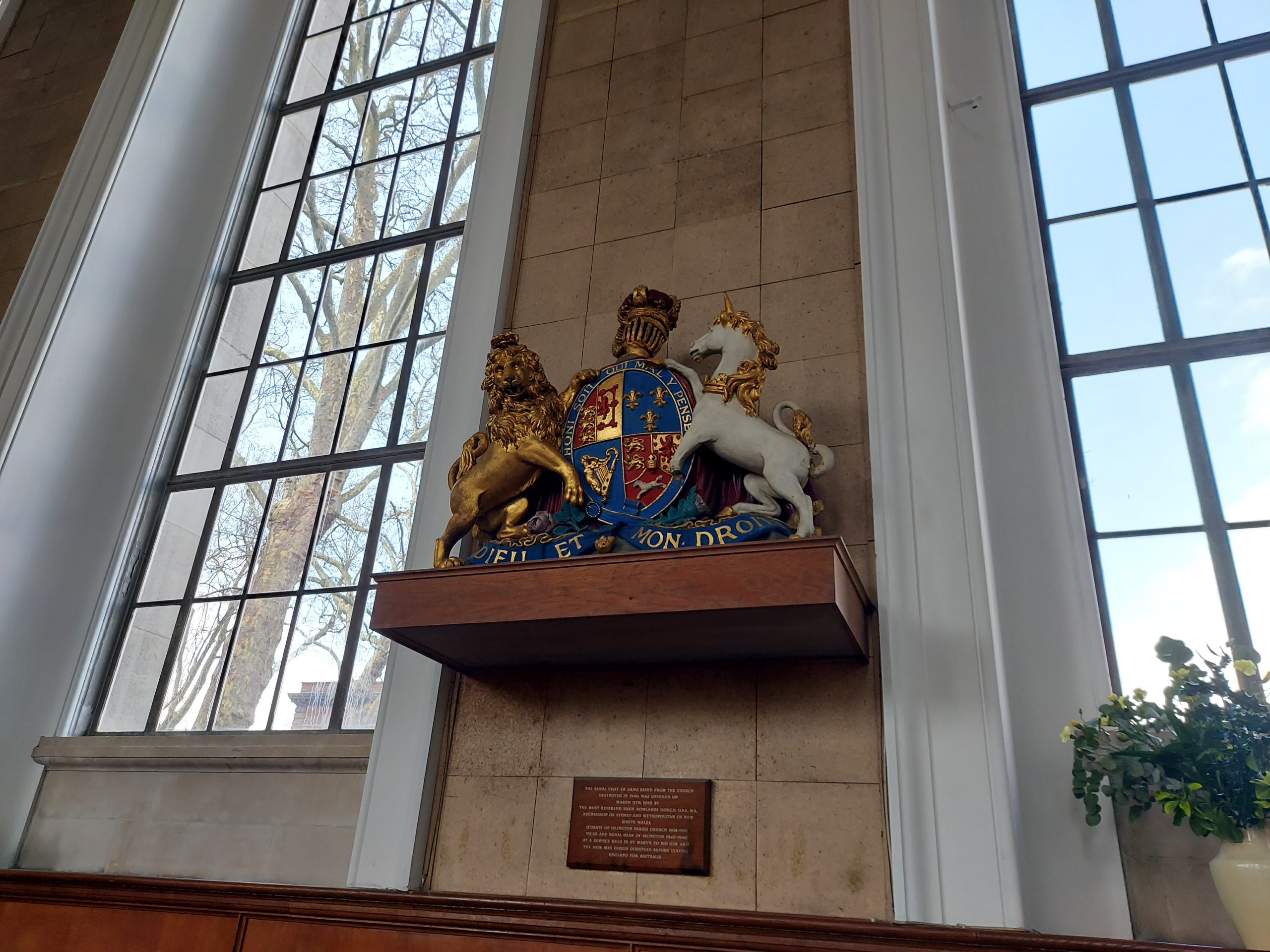
The murals at the east end of the church were painted by Brian Thomas and depict events in Jesus’ life. Pews were donated by various local individuals and groups, including the Arsenal football team. The marble font is the original one from 1754, but the organ pipes decorating the west end came from a church at Berkeley Square. The Royal Arms which hang on the wall of the church are the arms of George II: he was king when the 1754 church was opened. At that time, it was a statutory requirement that all churches displayed the Royal Arms. Miraculously, they survived the World War II bombing.

Front of St Mary's Church, Islington

A small chapel to the right as you enter the church, the Prayer Chapel, contains brasses dating from 1540, originally present in the medieval church. They represent Robert and Alice Fowler and Henry and Margaret Saville (née Fowler), the Fowlers being an influential local family.

Royal Arms inside St Mary's Church, Islington

The crypt, today a rather bland space used for community events, actually dates back to the very first church on the site: one skirting stone has been identified as dating from the twelfth century.

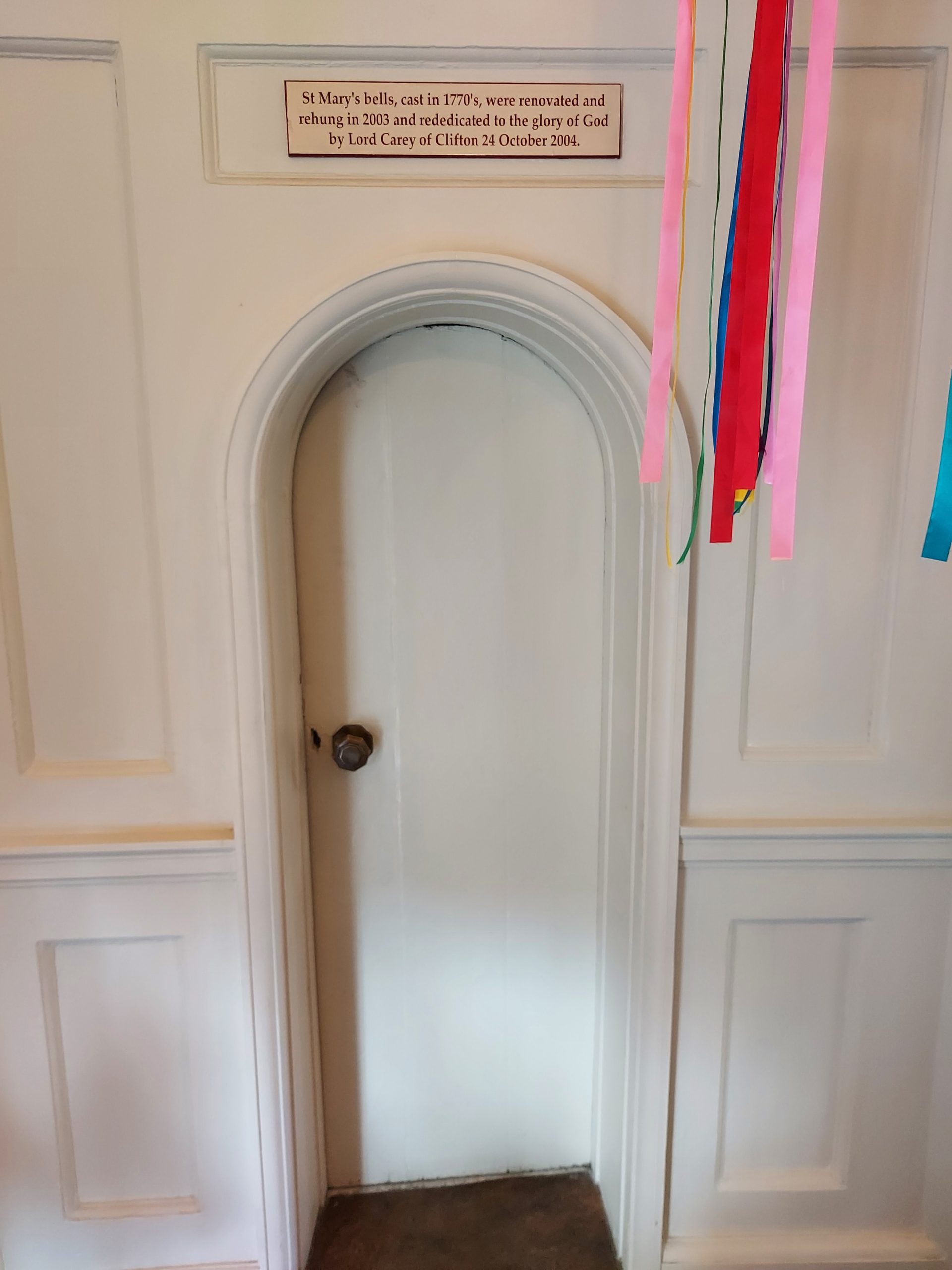
The tower is all that remains of Launcelot Dowbiggin’s eighteenth century church. Inside the winding staircase is an original ship’s mast. The staircase takes you first to the bell chamber, containing bells from the Georgian church.

Entrance to the tower in St Mary's Church, Islington

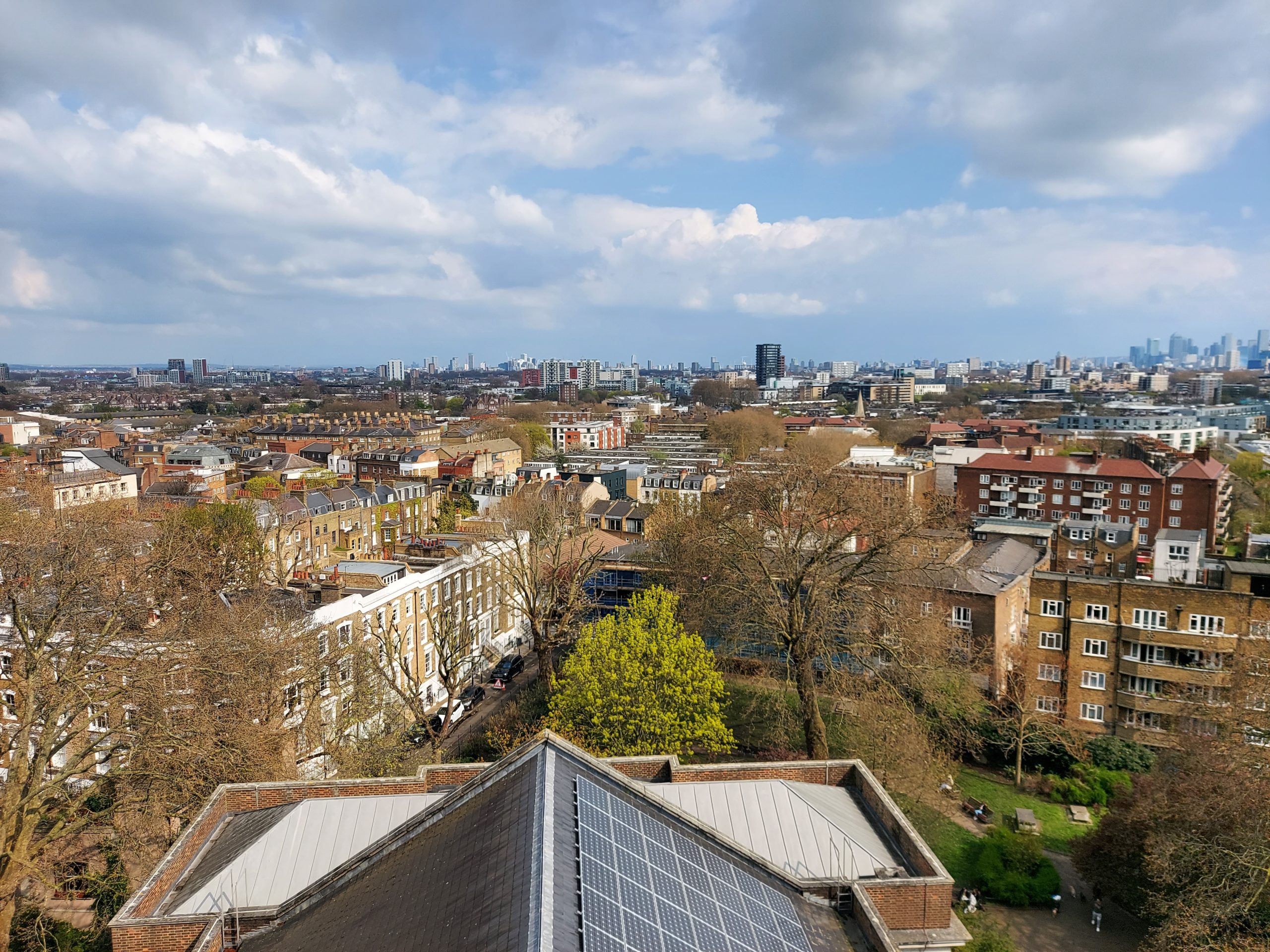
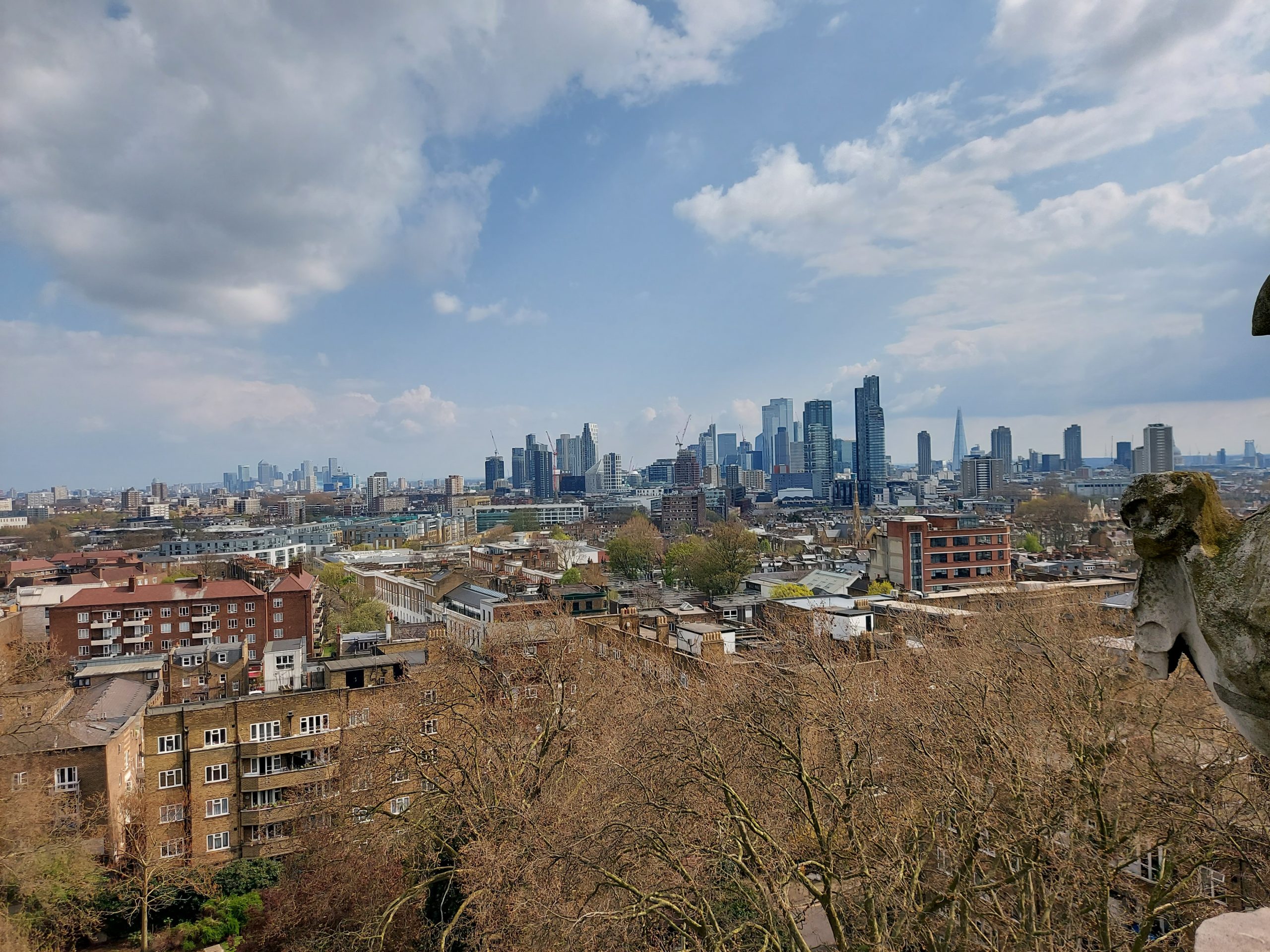
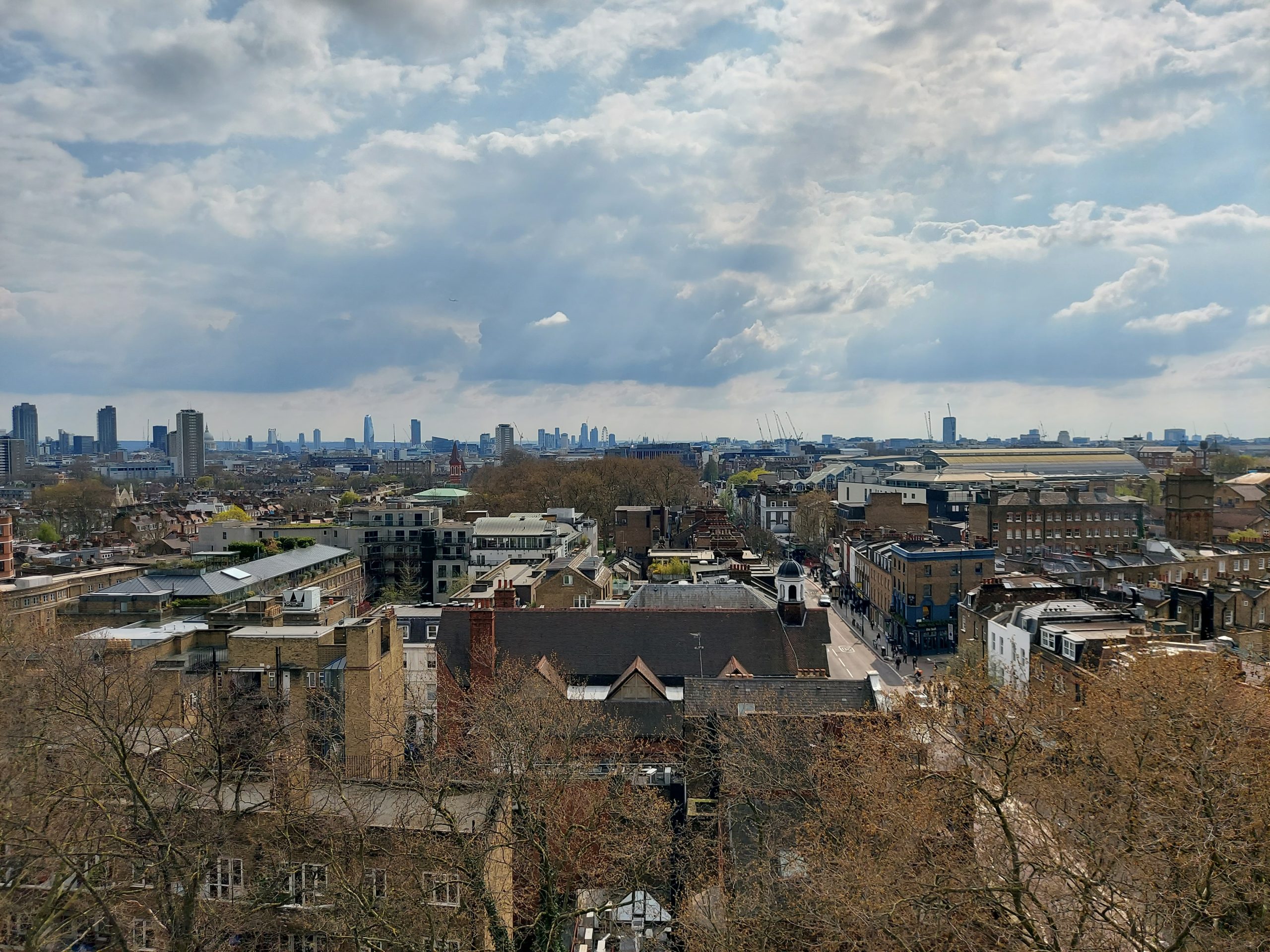
Finally, we arrived at the top of the tower, and enjoyed stunning views over Islington and London as a whole. We could see right down Upper Street.

View from the top of the tower
View down Upper Street

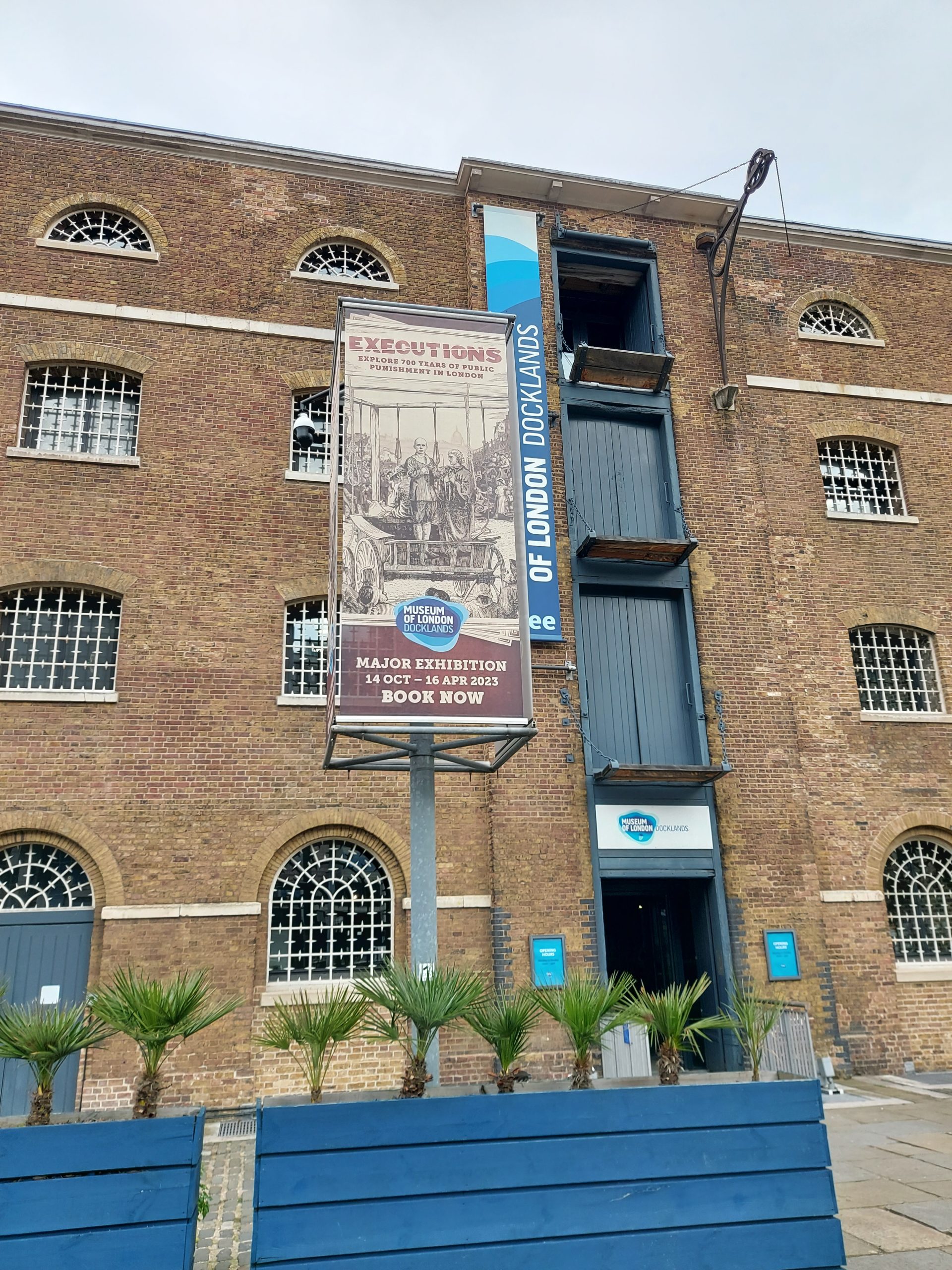
Executions – Museum of London Docklands

Museum of London Docklands

I visited the Museum of London Docklands to check out the Executions exhibition before it closed. The exhibition looked at the impact that capital punishment had on the history and landscape of London over the last few centuries.

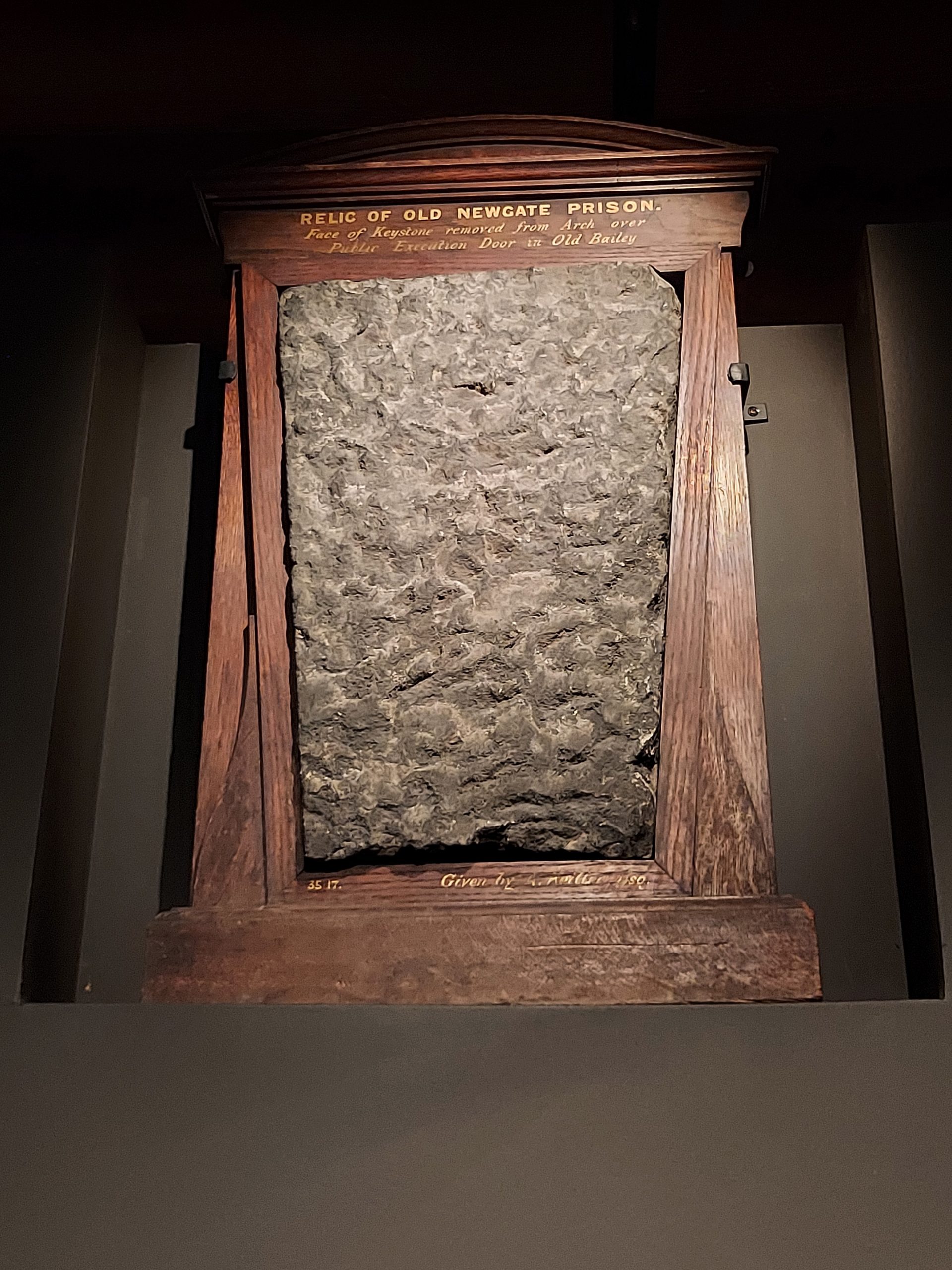
The first public execution took place in 1196, the last in 1868. During this time, these killings – supposedly meant to act as a deterrent to crime – were watched by huge crowds of people. An ‘execution economy’ developed, which was often bloodthirsty and rather chilling. As one map shows, executions became built into the very fabric of London. One of the most famous prisons, from which many prisoners were executed, was Newgate, relics from which are interspersed throughout the museum.

Stone from Newgate Prison

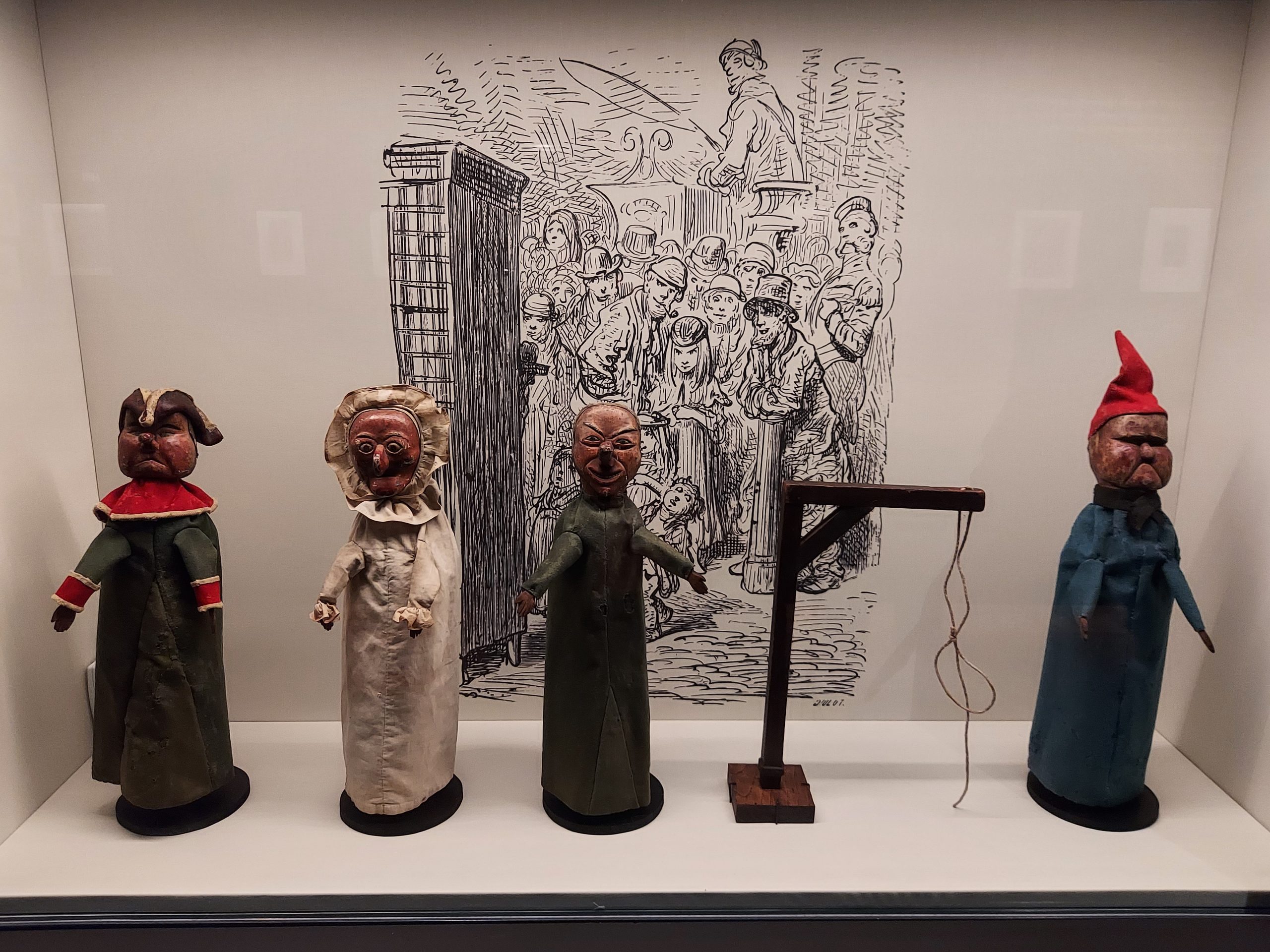
By the end of the eighteenth century, more than 200 crimes were punishable by death. Deaths were ordered in London’s courts more often than the courts of the rest of the country combined. Ballads were written about condemned criminals, papers detailing their horrific crimes did a roaring trade, and puppet shows made fun of executions.

Execution-themed puppets

Methods of execution were not limited to hanging. Traitors were hung, drawn and quartered. Members of the nobility were usually beheaded, while heretics were often burnt at the stake. The exhibition included many letters and pleas for clemency from criminals, which brought home the human aspect to this grisly history.

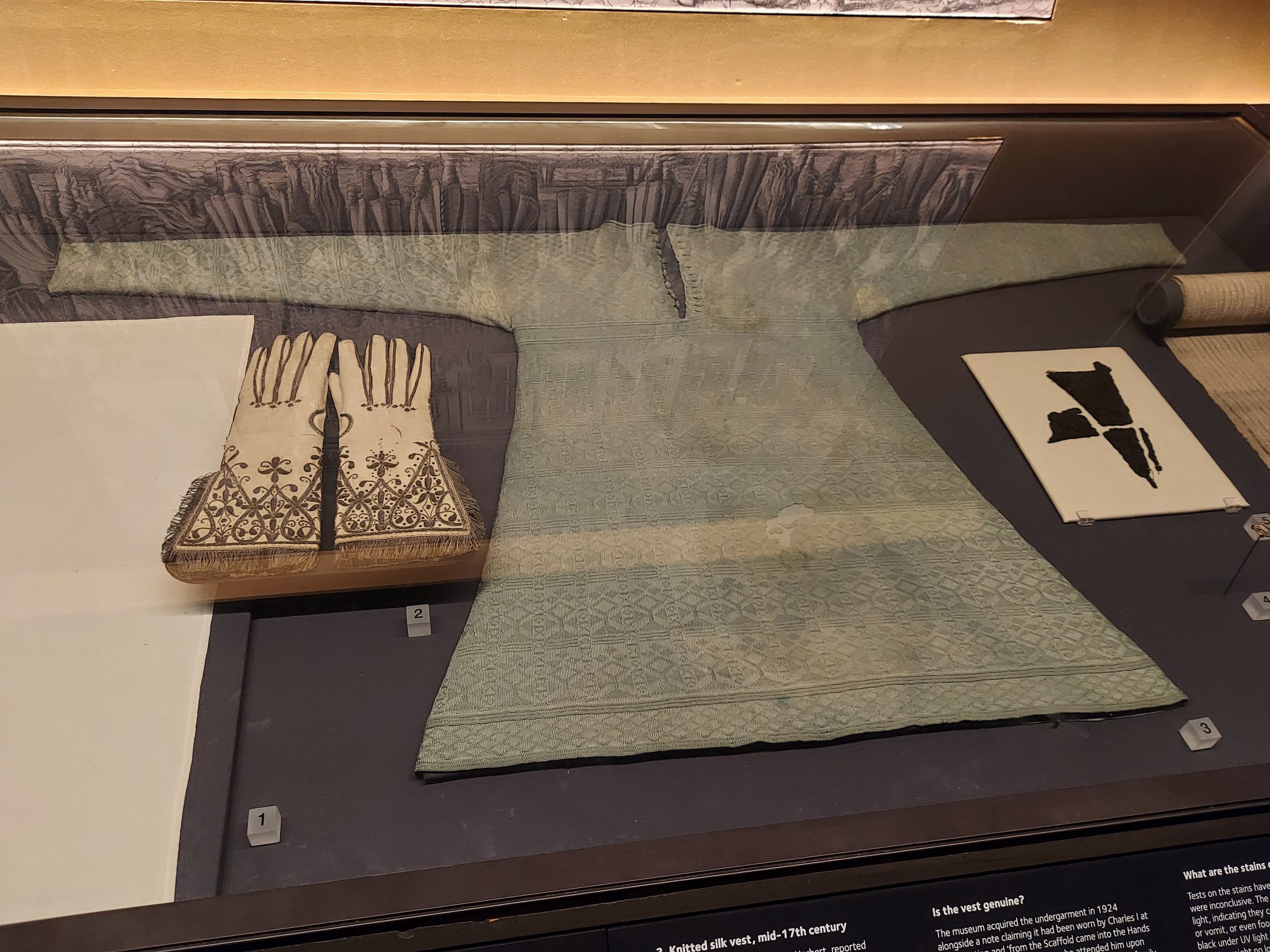
Possibly the most famous execution in London took place when Charles I was beheaded in 1649. The exhibition displayed one of the shirts he supposedly wore at his execution.

Charles I's supposed execution clothes

The exhibition was possibly not for the faint-hearted, but it was sensitively done and certainly worth seeing. It’s important that we confront the most unsavoury and difficult aspects of our past, and the exhibition certainly managed that.

Darren Hayes at the London Palladium

Palladium

When I was a teenager, I loved the band Savage Garden. I remember in particular listening to them on the bus on the way to college. The group actually only released two albums before splitting up, and singer Darren Hayes began a solo career.

Twenty five years after Savage Garden first burst on to the scene. Darren has embarked on a new tour. Marking, and celebrating, the release of his latest album Homosexual, it also celebrates his entire career and features many of his solo hits and classic Savage Garden songs.

I’d never seen Darren live before and he was brilliant. He really engaged the crowd and showcased some excellent dance moves (especially considering he’s now 50!). His voice is just as good as ever and it was amazing to hear some of my favourites, including ‘To The Moon and Back’ and ‘Truly Madly Deeply’, live.

The show was also surprisingly moving, as Darren spoke openly about the shame he felt about his sexuality growing up, his abusive father, and his first marriage. At times he got very emotional but the support shown by the crowd was heartwarming.

On a lighter note, his banter and interactions with his band and backing singers/dancers was very funny and really livened things up.

I am so glad I decided to go to this gig. It will go down as one of the most memorable I have attended.

Darren Hayes on stage at the Palladium

Setlist

  • Homosapien / Chained to You
  • Affirmation
  • The Animal Song
  • Insatiable / Forget Me Nots
  • All You Pretty Things / Step into the Light
  • To The Moon And Back
  • Two Beds and a Coffee Machine
  • I Don’t Know You Anymore
  • Poison Blood
  • I Knew I Loved You
  • Casey
  • Do You Remember?
  • Homosexual (Act One)
  • Let’s Try Being in Love
  • Pop!ular
  • Break Me Shake Me / Last Night A DJ Saved My Life
  • Hey Matt
  • Dublin Sky
  • Crash and Burn
  • Truly Madly Deeply

Encore

  • I Want You
  • The Best Thing

Hidden London – Euston: The Lost Tunnels

A couple of years ago I signed up for a virtual tour of Euston tube station’s lost tunnels. The tour was fascinating and I resolved to sign up for an in-person tour if and when they reopened. At the weekend I was lucky enough to get my chance.

Leslie Green-designed entrance to Euston station (CCE&HR branch) with its iconic oxblood bricks

We met at Euston Square station and watched a short video about the history of Euston mainline and Underground stations. I won’t repeat the information here as I put much of it in my blog post about the virtual tour, but it was a useful refresher. We then walked over to the old CCE&HR building, now surrounded by railings and facing imminent demolition. Finally we headed towards Euston station, through the barriers and down the escalators to the southbound Northern line platform (Bank branch), from where we headed through a door at the end of the platform to reach the disused tunnels.

Inside the disused tunnels at Euston

After checking out the tunnels we walked into another area where yellow paint was recently discovered – this shade of yellow in an Underground station means the Second World War. These tunnels were marked for use as a shelter during possible air raids for railway staff who weren’t able to get home.

Finally we went into a very secret space above the tracks and got to see the trains pulling into the station – it felt very surreal.

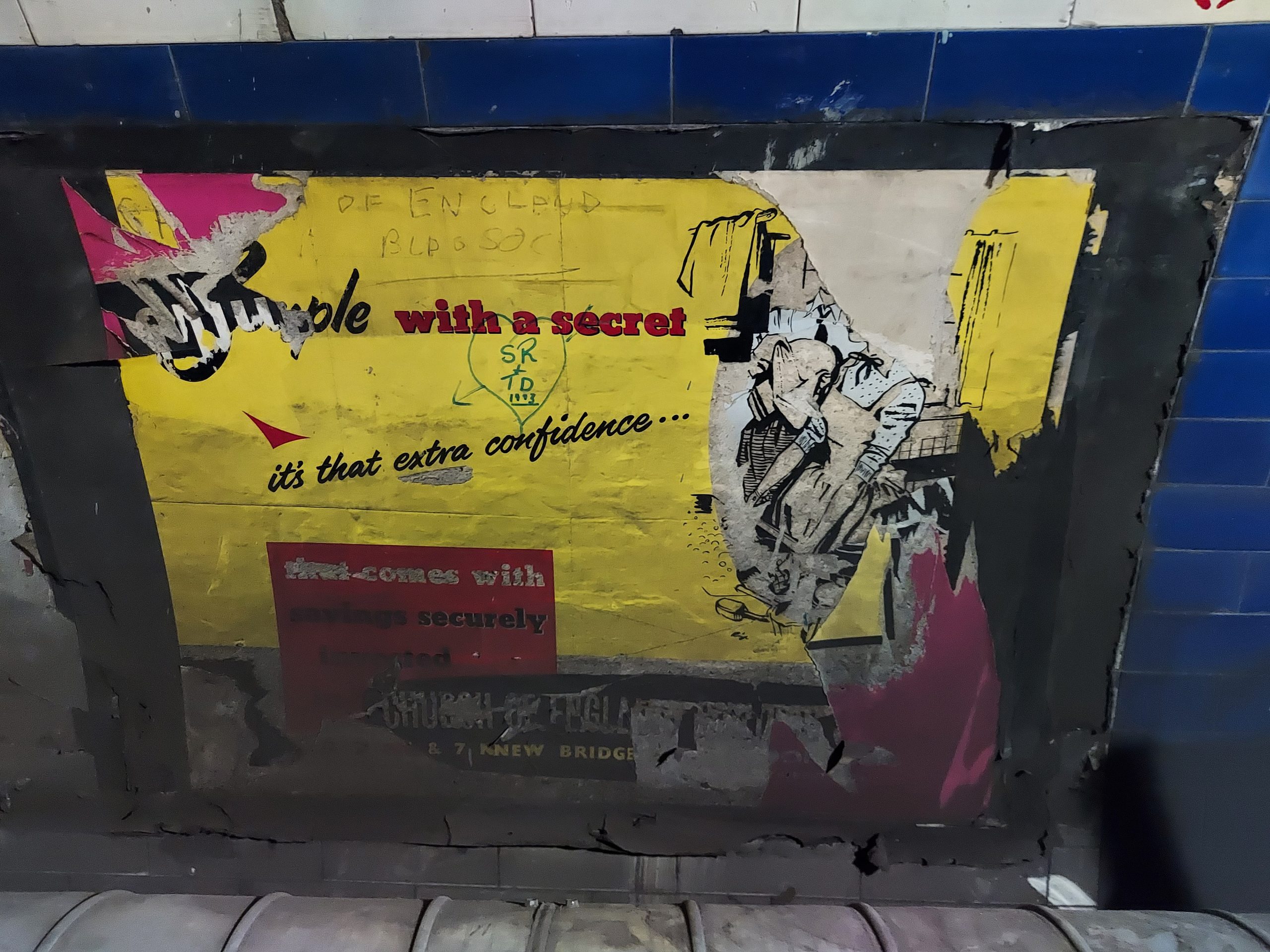
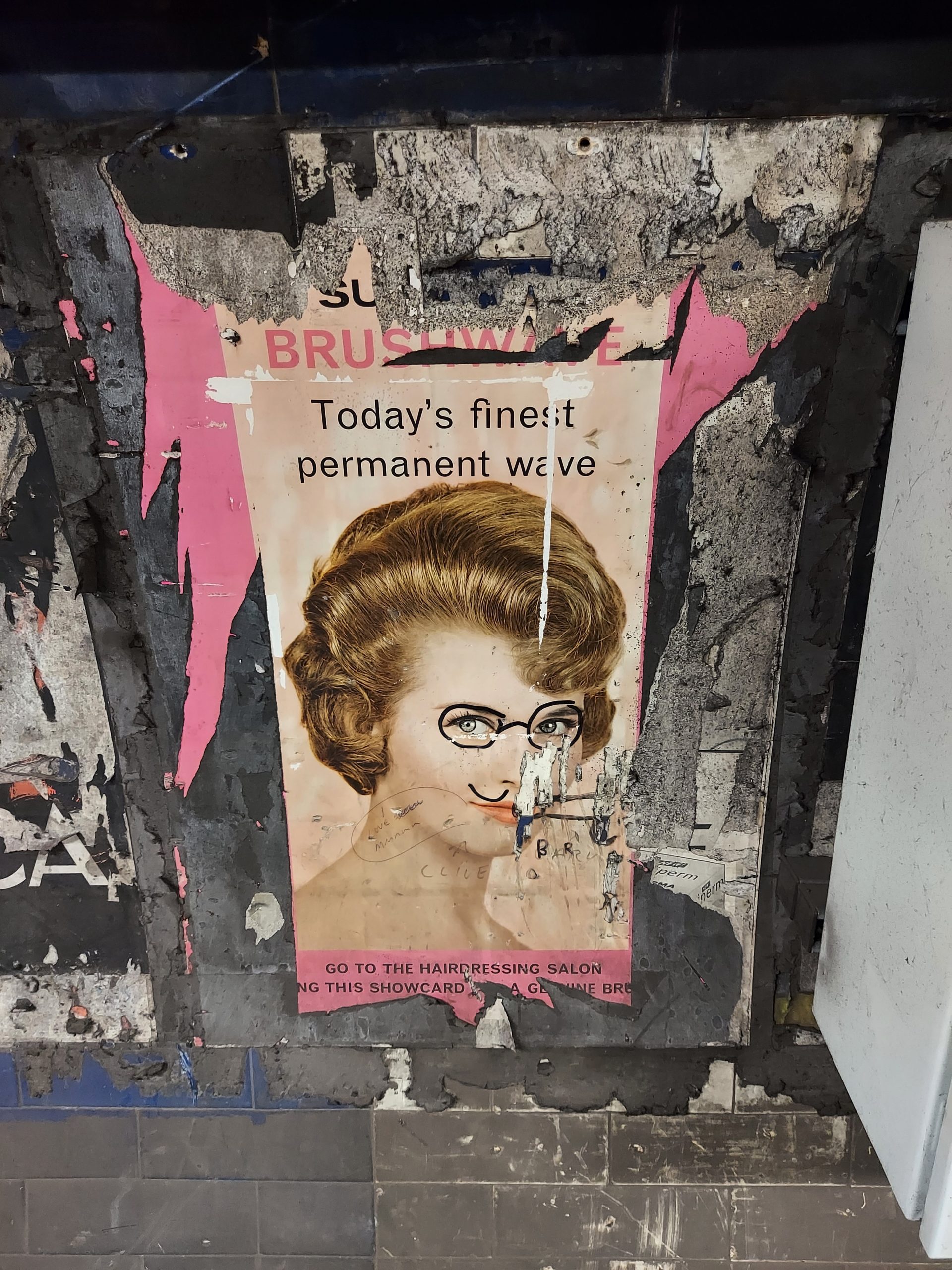
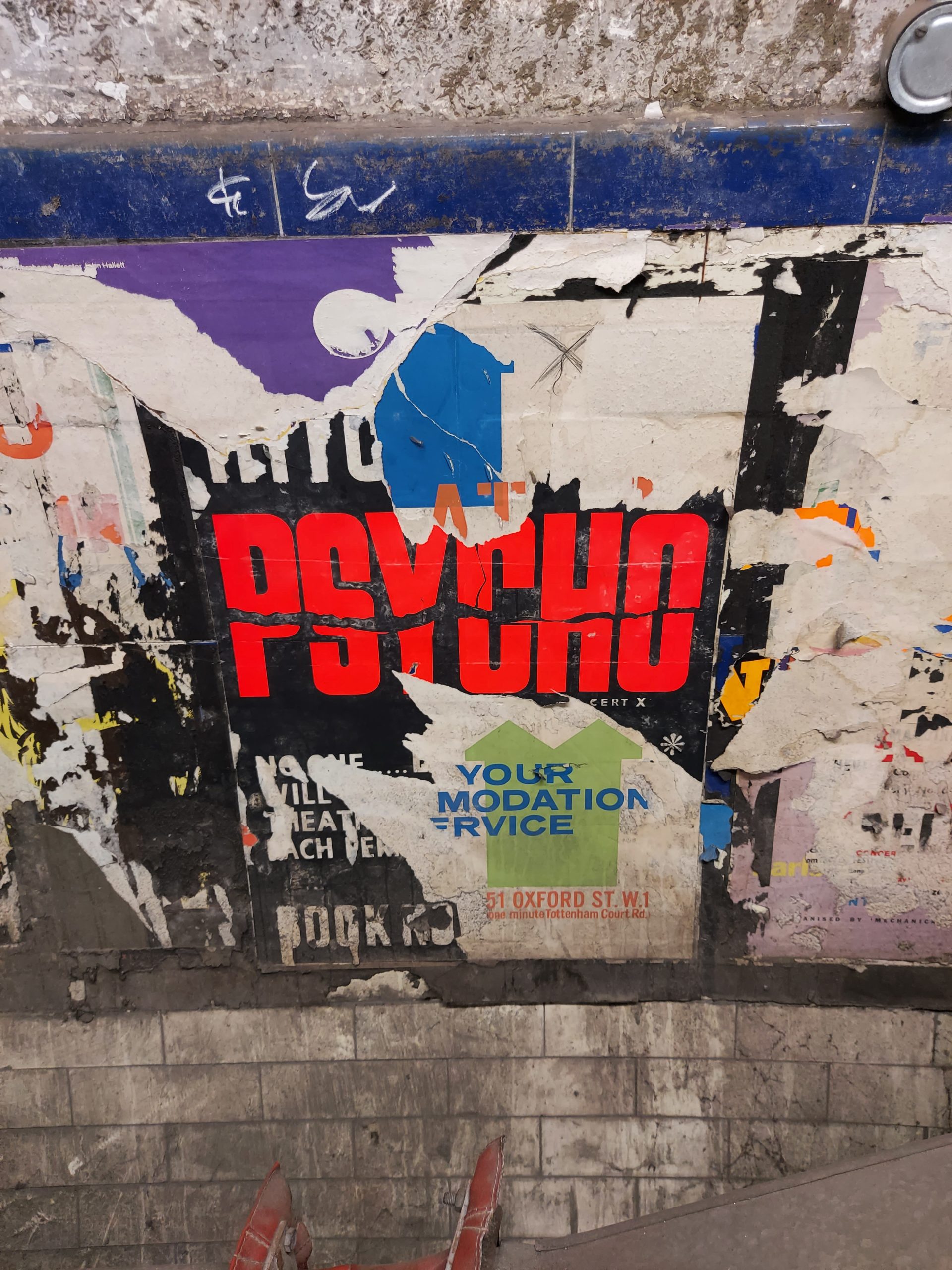
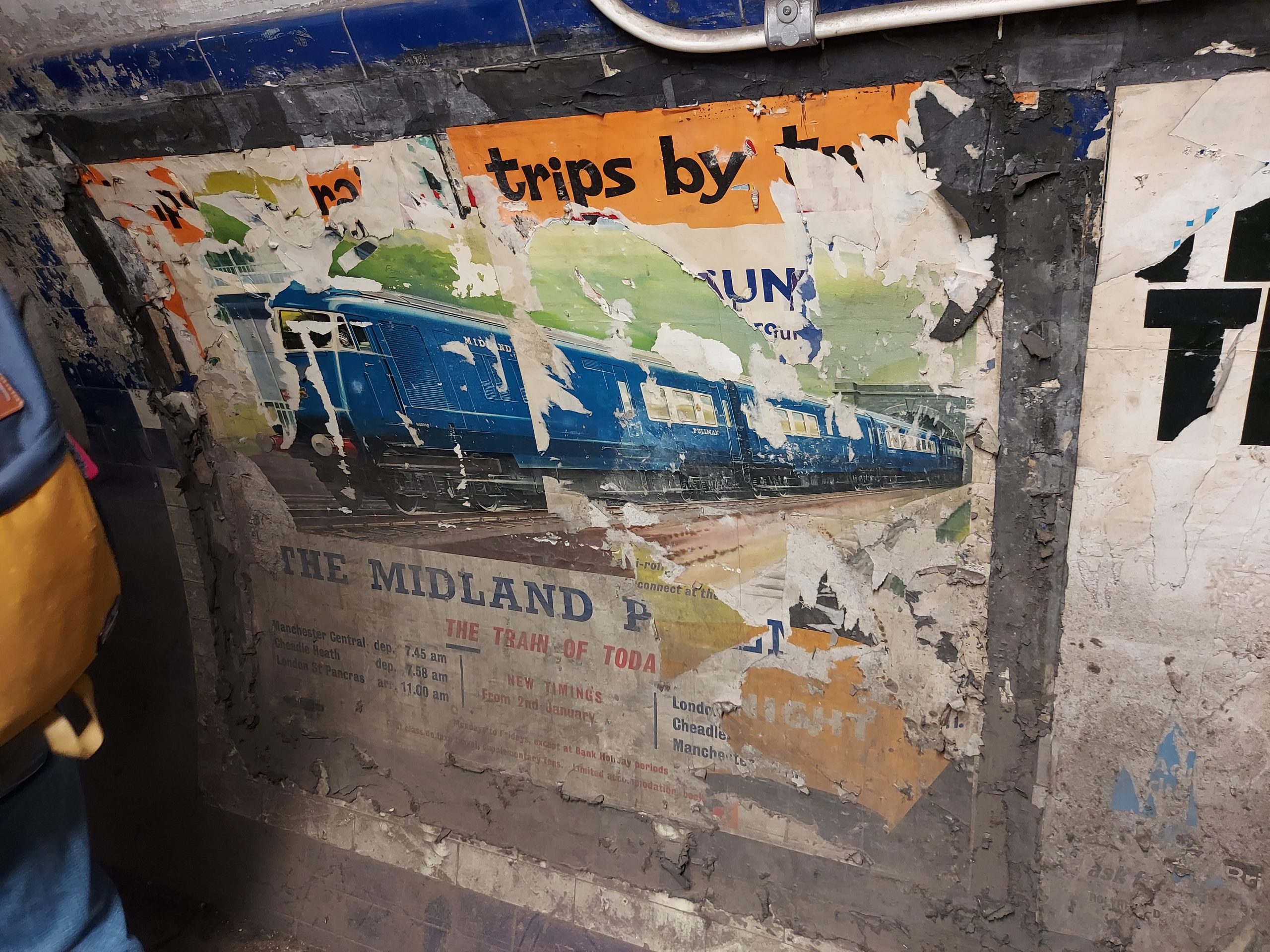
There’s no point in repeating what I said about the virtual tour, so instead, here are some pictures I took of the inside of the station.

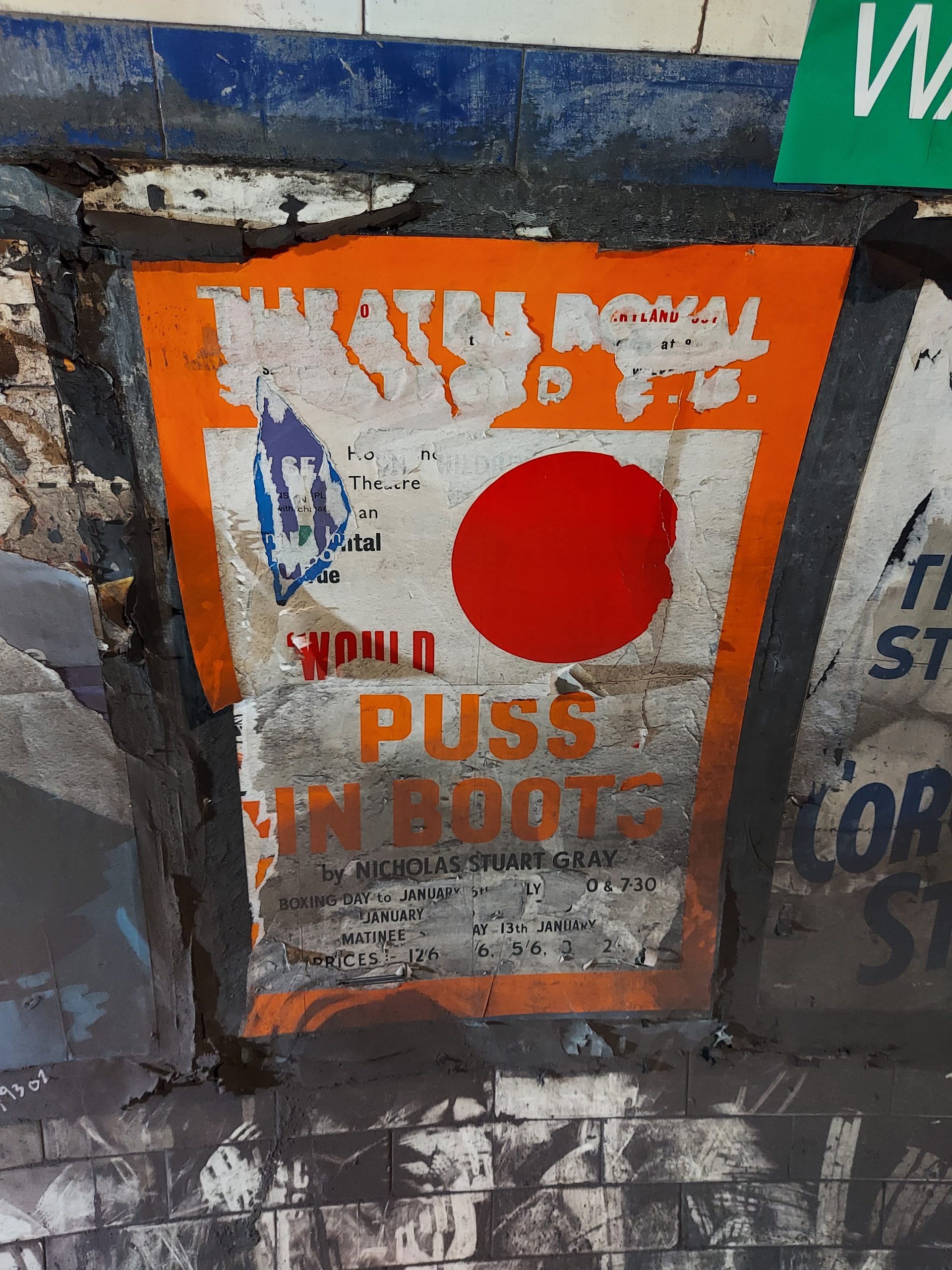
Poster for 'Puss In Boots' in the Euston tunnels
Poster for the musical 'West Side Story' in the Euston tunnels

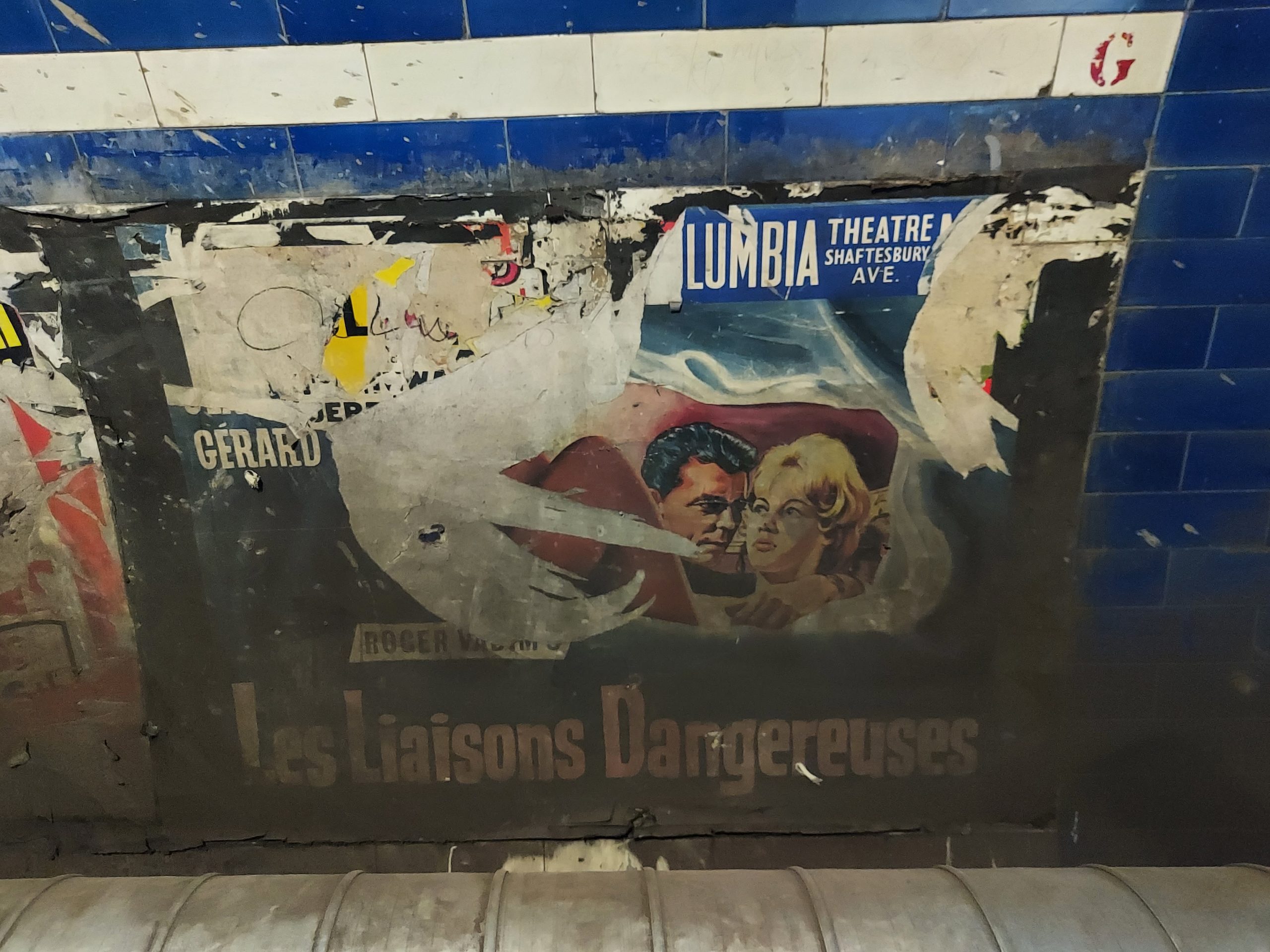
Poster for the film 'Les Liaisons Dangereuses' in the Euston tunnels
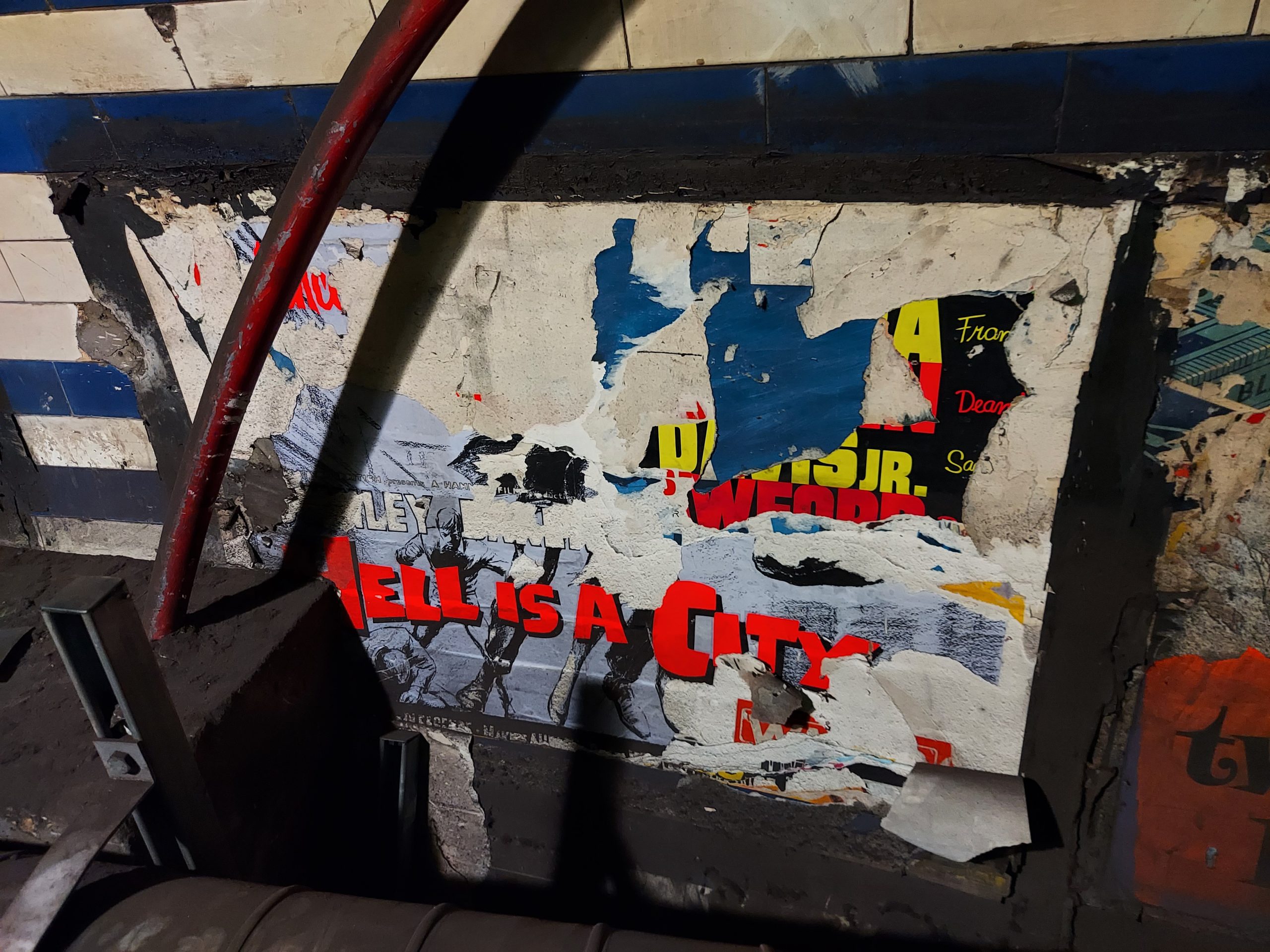
Poster in the Euston tunnels
Poster for the film 'Spartacus' in the Euston tunnels
Advert poster in the Euston tunnels
Poster for the movie 'Psycho' in the Euston tunnels
Railway poster in the Euston tunnels