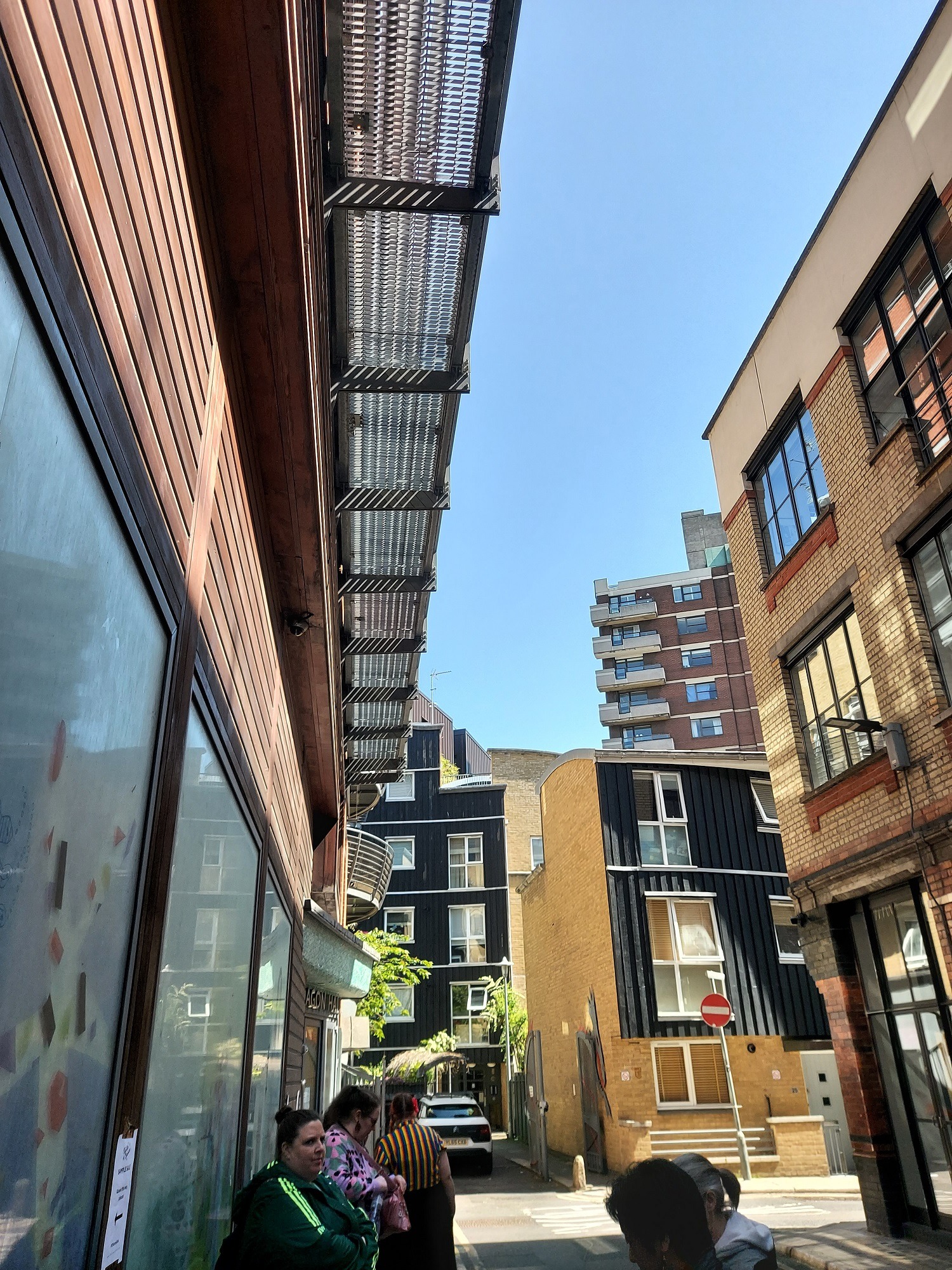
I’d been meaning to go to a Tatty Devine sample sale for years, and finally got my chance last weekend. The sale was held at Dragon Hall in Covent Garden. I turned up at around 10.30 and was happy to find the queue was fairly small – I’d heard about previous sales where people were queueing up from the early hours of the morning!
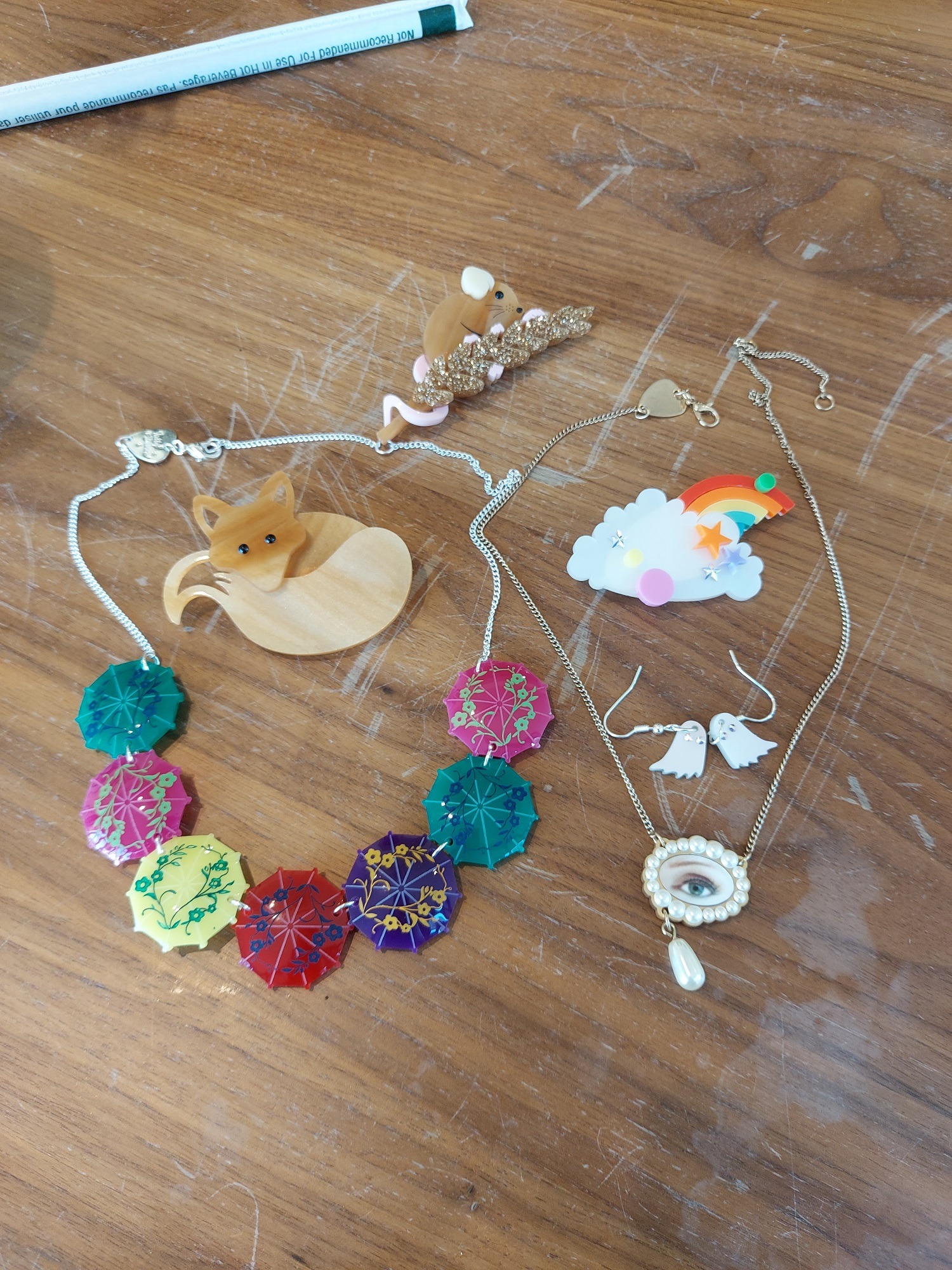
Once they opened the doors we all got in at once. I spent absolutely ages looking around and eventually settled on six pieces:
A rainbow brooch
A cocktail umbrella necklace
A fox brooch
A lovers’ eye necklace
A pair of ghost earrings
A harvest mouse brooch
My sample sale haul
I thought I was incredibly restrained, as I had absolutely loads in my basket and put it back! I had a great day and I loved chatting to fellow Tatty lovers I only knew from Instagram or the Facebook group. I would have stayed to go to the pub afterwards, but I had to get back for my friend’s Eurovision party. Maybe next year!
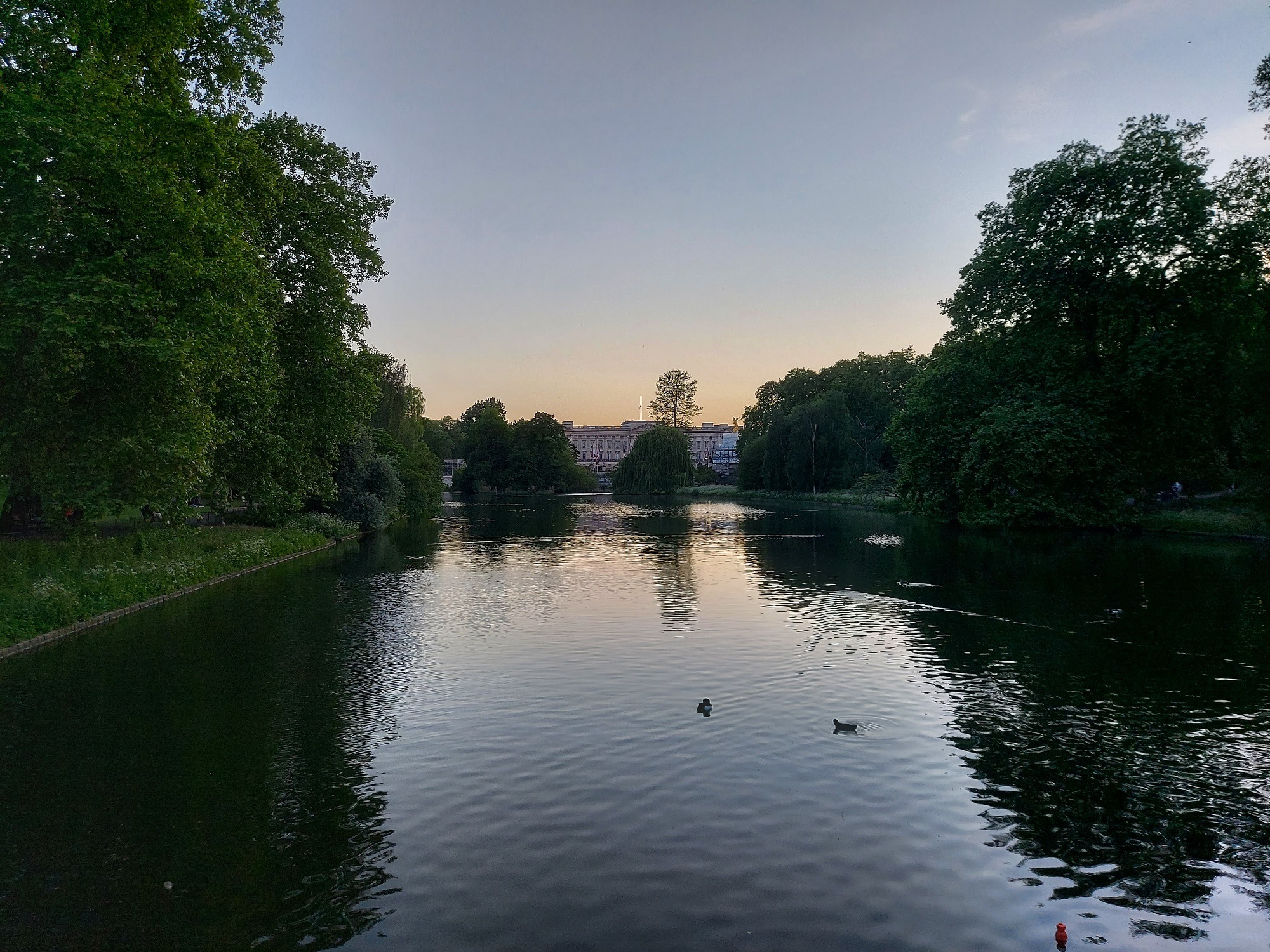
I love a ghost walk, so was excited to sign up to Dead After Dark: The Queen’s Gardens Ghost Walk, organised by the Royal Parks. The walk took place on a Friday evening and began at St James’s Park, ending in Green Park.
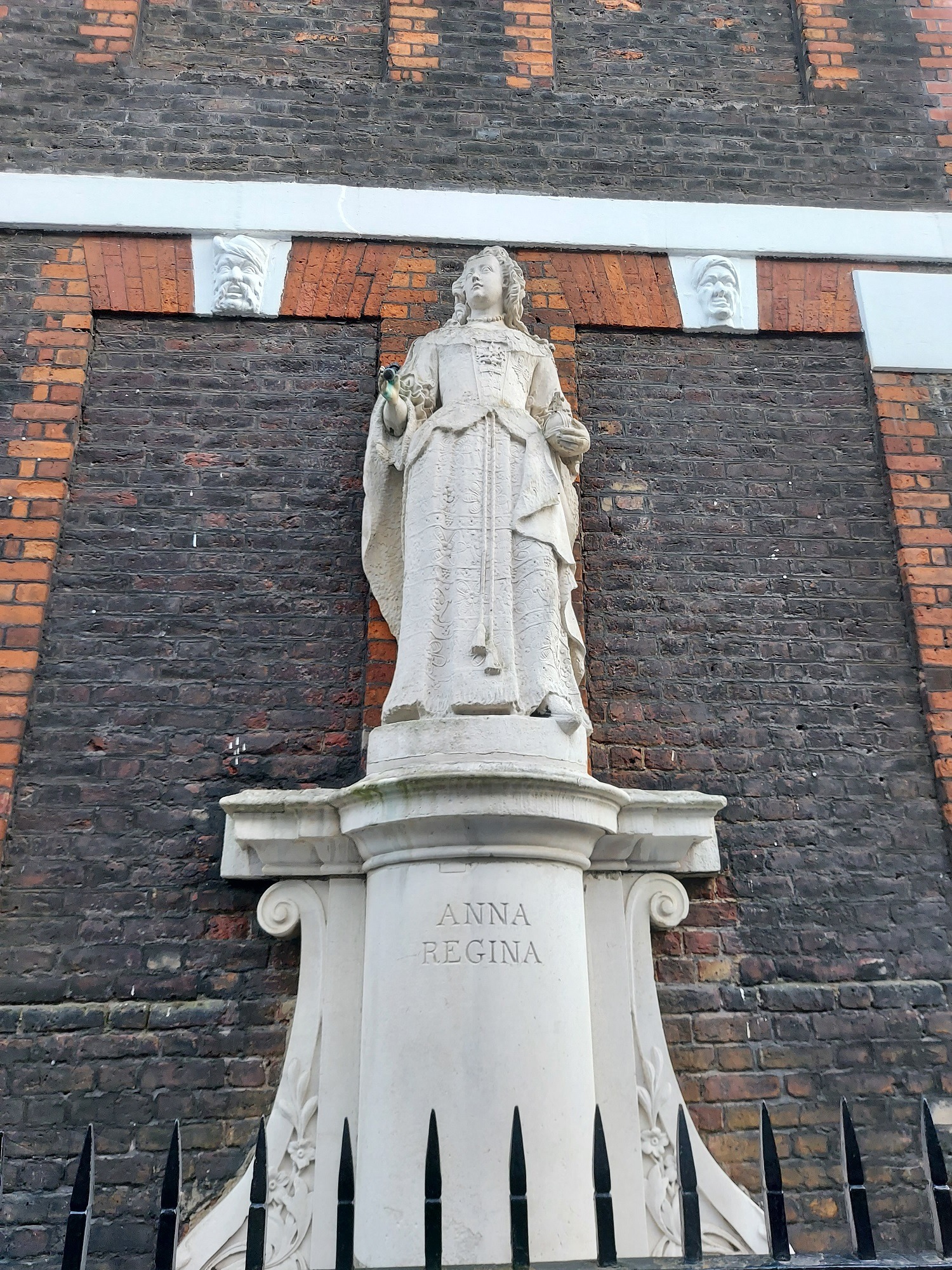
Statue of Queen Anne
The walk was hugely entertaining and I learned a lot about the history of both parks, as well as some of the stories and urban legends surrounding them. From the statue of Queen Anne, rumoured to get up and walk, from murders and ghostly sightings to fairy tales and hidden rivers.
Check out the Royal Parks Events page for more information about this walk and other events run in the parks.
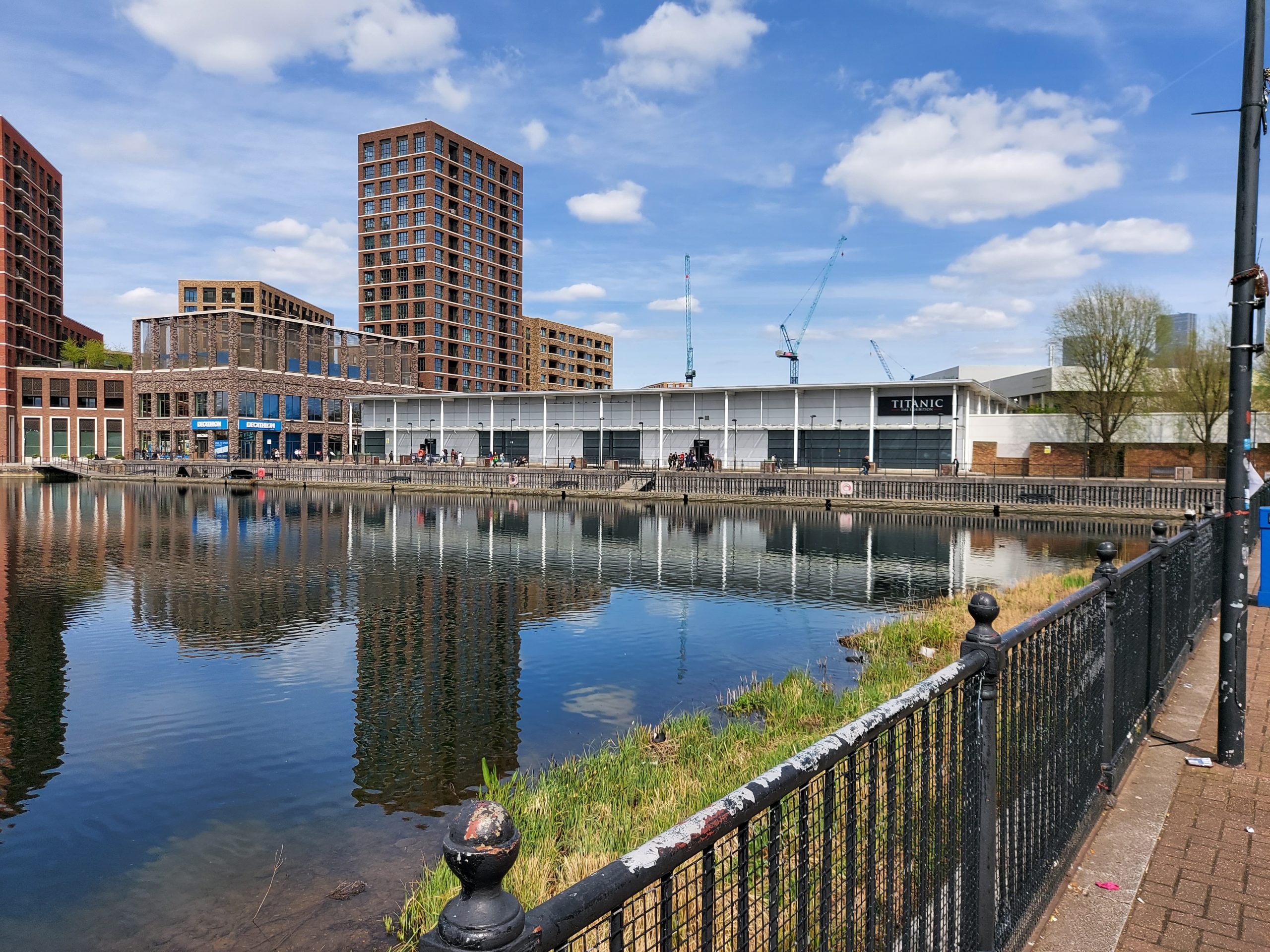
I saw the ads for Titanic: The Exhibition around London and thought, “I must go to that”. Then I was looking for things to do over the Easter weekend and saw that the exhibition was about to close. I ended up going the Sunday before Easter as I was able to grab a single ticket.
The exhibition brings together photographs, stories and artefacts related to the Titanic and its history to tell the story of the ill-fated ship. Many of the artefacts have never been shown in the UK before.
Model of the Titanic
I was impressed by the layout of the exhibition. It was displayed in open, spacious rooms and didn’t feel crowded despite its popularity. The audio guide, which could be downloaded onto your phone, was very helpful in explaining the context behind various exhibits. I could have done without the constant replaying of the theme from the 1997 movie, which added an unneccessary layer of sentimentality to what is already a tragic and moving story.
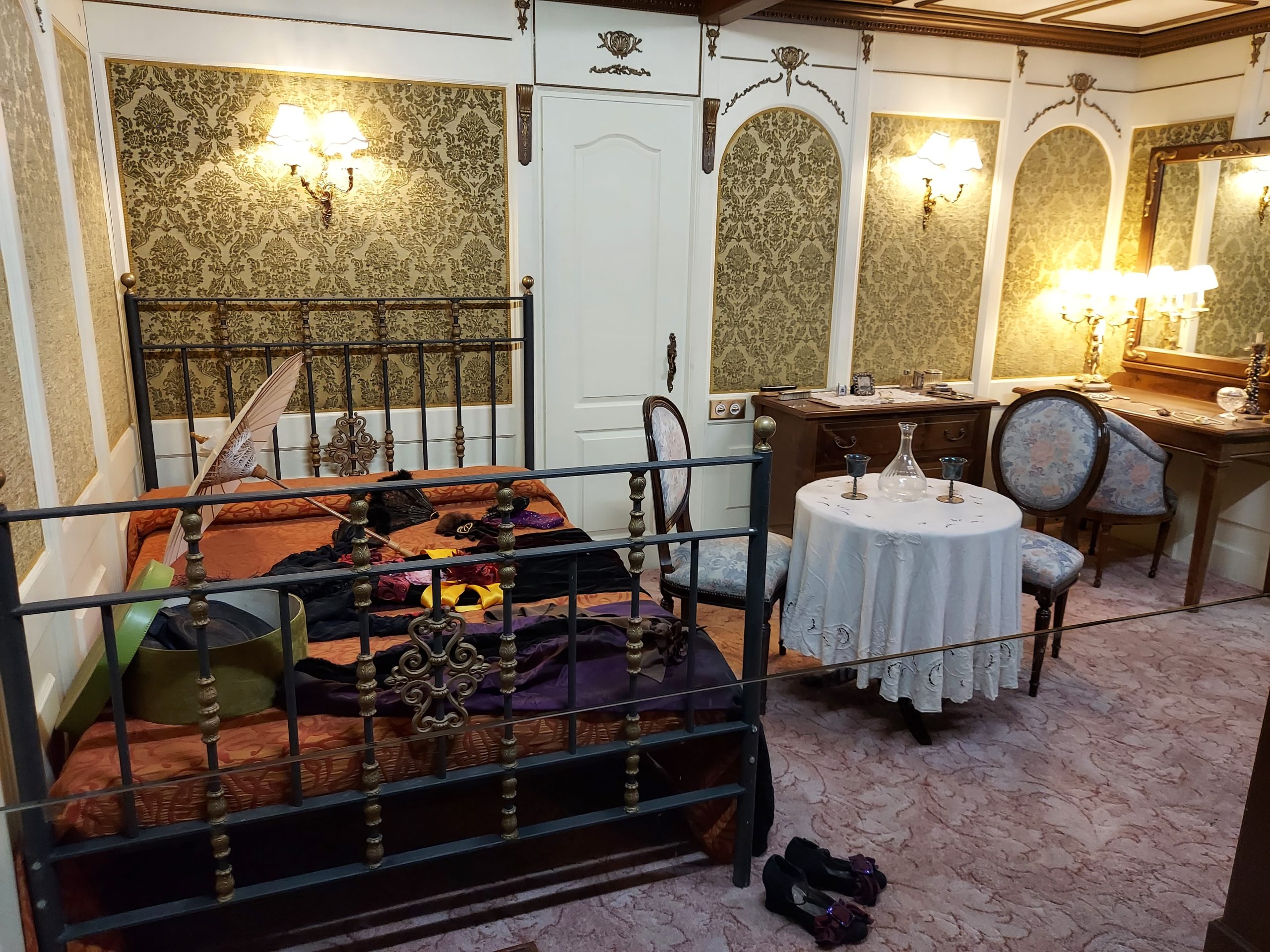
Reconstruction of a first class suite
The exhibition began with the planning and construction of the ship before moving on to its maiden and only voyage. The stories of several passengers and crew members were told via letters, photographs and personal effects like jewellery and shoes. I liked how the focus wasn’t just on the wealthy passengers: we learned about people from all walks of life including families emigrating to the USA in the hope of a better life. Some of these passengers survived; others did not. Throughout, we got to see full-size replicas of a third-class cabin and a first-class suite, as well as a model of the ship showing how it was laid out.
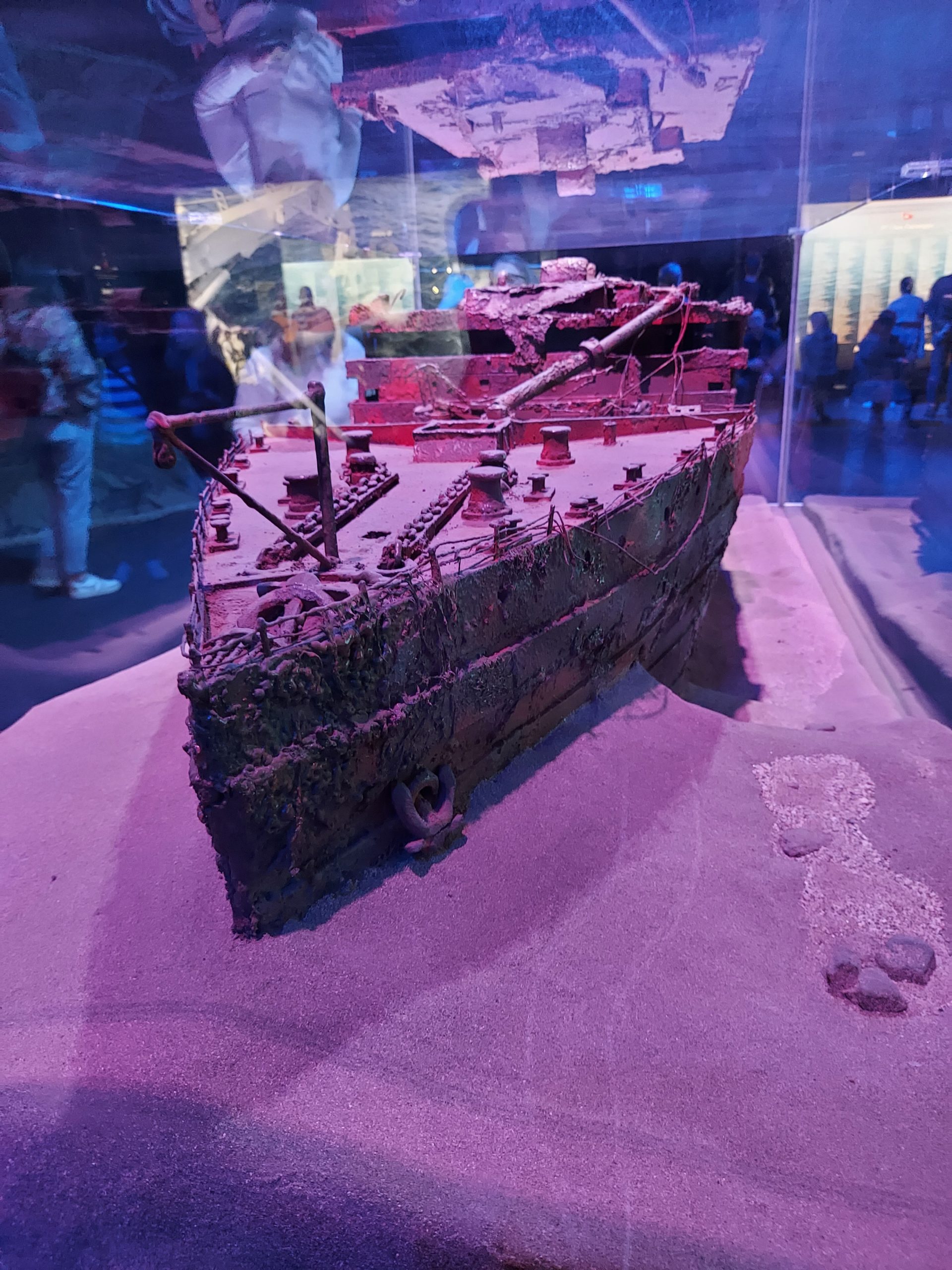
There was less of a focus on the actual sinking than I had expected, but I didn’t mind this: it meant that the focus was more on the passengers. Explanations for the sinking were put forward, but there was a refreshing lack of conspiracy theories. Finally, we got to see how the wreck of the Titanic was discovered decades later.
Model of the shipwreck
There was one aspect of the exhibition I really didn’t like, and that was the option of getting your photo taken against a backdrop of the ship. I felt it was unneccessary and in poor taste.
Having said that, overall the exhibition was detailed, interesting and very well put together, so I would recommend it.
I attended the British Library‘s Beethoven exhibition at the weekend. I don’t know much about classical music, but I do like Beethoven and I’ve attended concerts featuring several of his works.
The exhibition displays some of the composer’s works from early compositions to later symphonies, including the famous Symphony No. 9, commissioned by the Philharmonic Society in London. It also has copies of letters and other artefacts, including more mundane items like grocery lists.
The exhibition shines a light on how Beethoven’s mind worked, his notebooks full of scraps of inspiration that would find their way into his compositions. It also reveals his money worries, and his concerns about his increasing deafness. One of the items on display is a “conversation book” in which his peers could write down their half of the conversation.
Finally, the exhibition looks at how Beethoven has inspired art, literature and political movements through the decades. His music still remains hugely powerful and relevant.
Having a longstanding interest in polar exploration, I was happy to see that there was a new, free exhibition at the Royal Geographical Society – Shackleton’s legacy and the power of early Antarctic photography. This exhibition marks the 200th anniversary of Shackleton’s death and runs until 4 May.
The exhibition begins with a look at Shackleton’s childhood in south London, his school career at Dulwich and desire to go to sea, his love of poetry and interest in adventure. He took part in a number of Antarctic expeditions, but he is most famously known for the Endurance expedition, on which the exhibition focuses.
Famously, the expedition met with disaster when the Endurance became locked in ice, eventually sinking. The team made it off the ice and to Elephant Island, before Shackleton and five others left on a risky boat journey towards South Georgia. The photographs were mostly taken by the Australian Frank Hurley, the expedition’s official photographer. Hurley’s photographs capture the ship’s voyage south, the experience of the team stranded on ice, their journey to Elephant Island and the long wait for rescue.
I have seen most of the photographs before, but I never get tired of looking at them. They really capture the lives of the crew and the magic of Antarctica. I am particularly fond of the photo of the scientists scrubbing the floor – an example of how everyone involved in the expedition pitched in – and of the images of the Endurance frozen in, looking almost ghostly in the long Antarctic night.
The exhibition is a must-see for anyone interested in adventure, in Antarctica, or in photography.
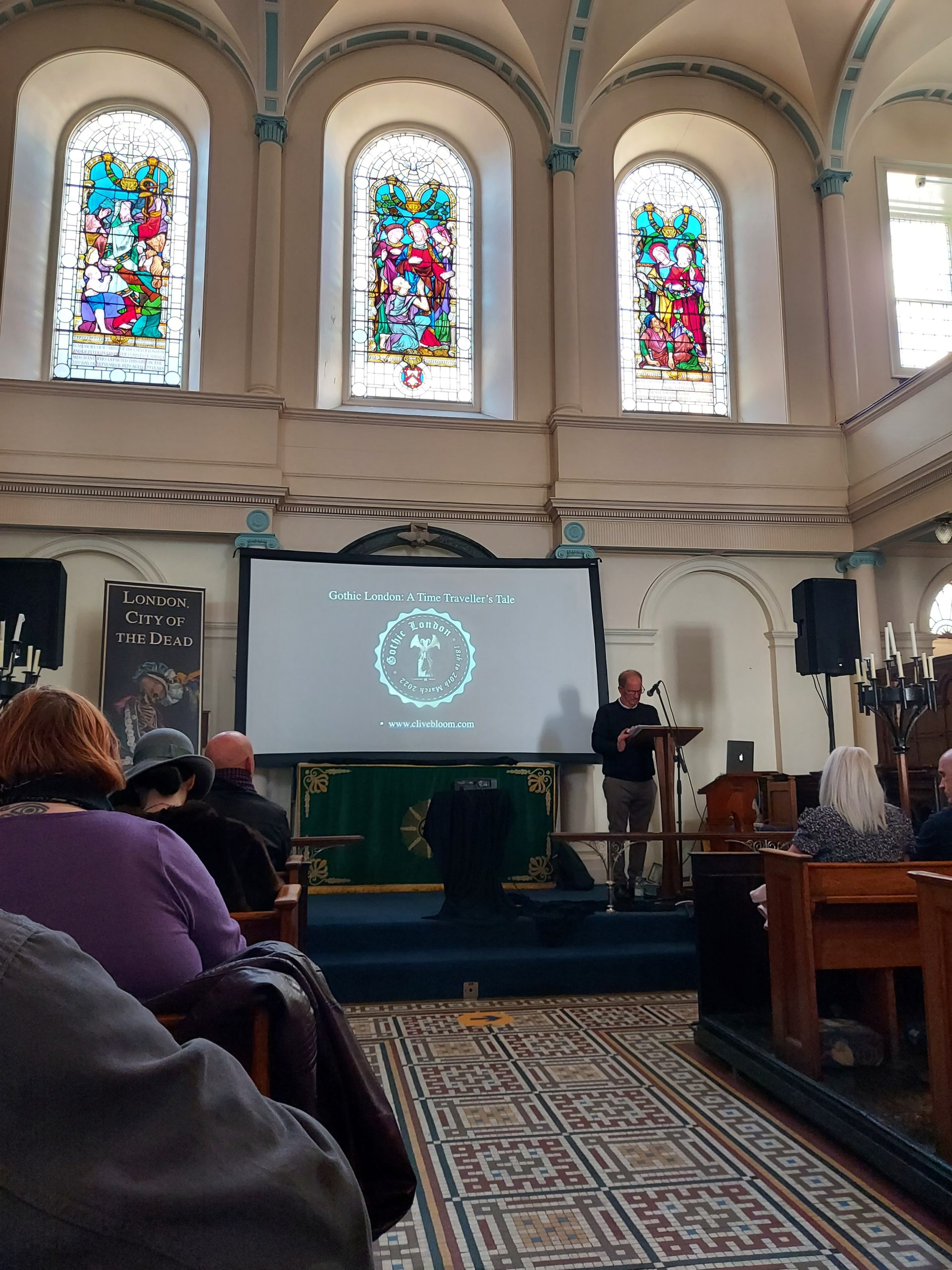
I headed to the chapel of Guy’s Hospital to attend a talk called Gothic London: A Time Traveller’s Tale. Organised by the London Month of the Dead team, it was one of a number of events taking place in March, as the team branches out from its usual concentration of events in October.
The talk was delivered by Professor Clive Bloom, and was a fascinating exploration of Gothic London, from occult practitioners to ghost stories, killers and sacrifices. I was familiar with a lot of what Professor Bloom mentioned but by no means everything – there’s lots I want to learn more about.
Guy’s Chapel opened in 1780 and is one of the oldest parts of the original hospital. After the talk we had the chance to visit the crypt, where the tombs of Thomas Guy and surgeon Sir Astley Cooper can be found.
While I was at the V&A I also took the opportunity to visit the Beatrix Potter: Drawn to Nature exhibition. This informative exhibition looked at the author’s life and was a fascinating experience.
Beatrix Potter grew up in London, where her family encouraged her interests in drawing and natural history. Some of her early drawings are on display and it was amusing to learn about the assorted animals she and her brother looked after and – after their deaths – dissected in an effort to learn more about their anatomy. These experiences stood Beatrix in good stead when she came to write her famous tales, as her portrayals of animals such as rabbits and hedgehogs are accurate and well-observed despite their anthropomorphic characteristics.
Spending her holidays in the country, she grew to prefer it to the town, and in particular fell in love with the Lake District, where she would eventually settle. She would later marry, buy a farm, and help to breed and maintain a herd of Herdwick sheep, ensuring the species’ survival. On her death she left most of her land to the National Trust, which has helped to preserve the land which is now part of the Lake District National Park.
Of course, Beatrix Potter is mostly famous for her whimsical and humorous stories, which had their roots in letters she wrote to children of her acquaintance. The Tale of Peter Rabbit was the first to be published, in 1902, shortly followed by The Tale of Squirrel Nutkin (my own childhood favourite) and several others. In total, 23 of these little books were published. Some of them are displayed here as early editions, while other displays include original drawings. I learned that the Dutch edition of The Tale of Jemima Puddle-Duck called her “Kwakkel Waggel-Eend”, a fact that pleases me greatly.
This exhibition is worthwhile for children and for the young-at-heart who remember Beatrix Potter’s work fondly, as well as those who are interested in nature.
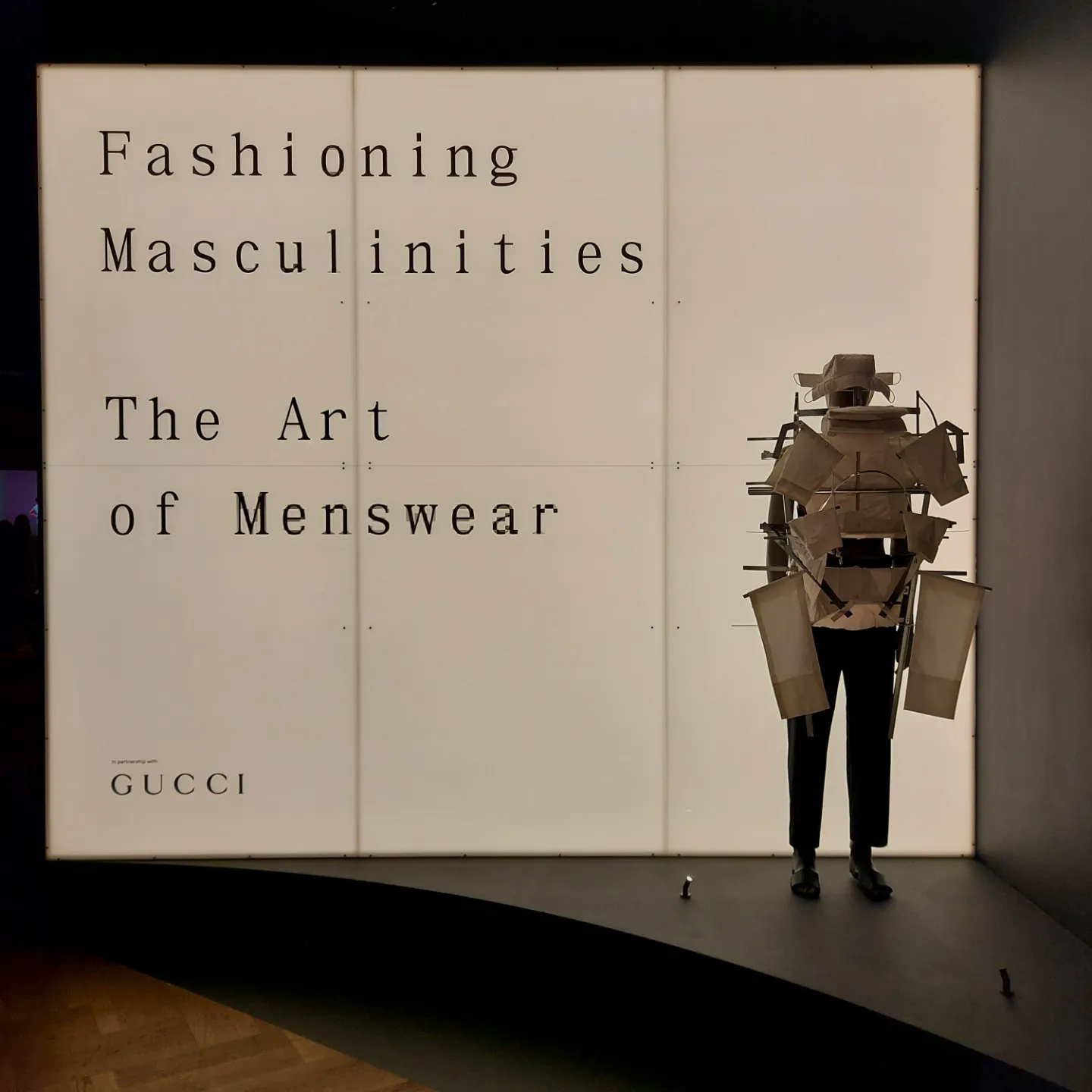
At the weekend I attended the Fashioning Masculinities exhibition at the V&A, which I thoroughly enjoyed. At a time when ideas of masculinity are being questioned, the exhibition reminds us that these ideas have always been in flux, and throughout the centuries masculine ideals – reflected in fashion – have always been subject to change.
The show is divided into three parts: “Undressed” looks at the history of the male body ideal and how ancient Greek and Roman perceptions influenced eighteenth-century men on the Grand Tour and led to a concept of masculinity that still endures today. “Overdressed” explores the flamboyant styles of early modern menswear, while “Redressed” looks at more sombre masculine dressing, largely focusing on suits and uniforms. Rather than adopting a chronological approach, it looks at similarities across different epochs. So ancient Greek statues sit alongside modern underwear and Regency shirts, contemporary bright and embroidered suits are shown next to sixteenth-century capes, and suit styles from the last couple of centuries can be seen beside their modern equivalents, including those worn by women and non-binary figures.
Among the artefacts on show to illustrate these points are a video of Matthew Bourne’s New Adventures dance company, Calvin Klein underwear posters, Giovanni Battista Moroni’s The Tailor (1565-70), and Sofonisba Anguissola’s Portrait of Prince Alessandro Farnese (about 1560). In terms of actual clothes, we get some gorgeous examples from the V&A’s collection, with suits from the likes of David Bowie and examples of dramatic seventeenth-century dress.
It’s fascinating and freeing to be aware of the notion that masculinity is not fixed, and that our modern ideas and standards aren’t the only ones that can work. The exhibition ends with dresses worn by the likes of Billy Porter and Harry Styles, showing that even traditionally feminine garments can be given a masculine twist.
The new exhibition at the British Museum, The world of Stonehenge, really does have an appropriate title. It’s not so much about Stonehenge itself – and considering you can hardly scoop up the stones and drop them into the centre of London, this is understandable – but about the society that created it, how it developed before and after, and how it fits in with the European context. It argues that prehistoric peoples always migrated to and from the British Isles – easier in the days before the sea level rose and created the English Channel – and thus knowledge, understanding and skills were shared throughout the continent.
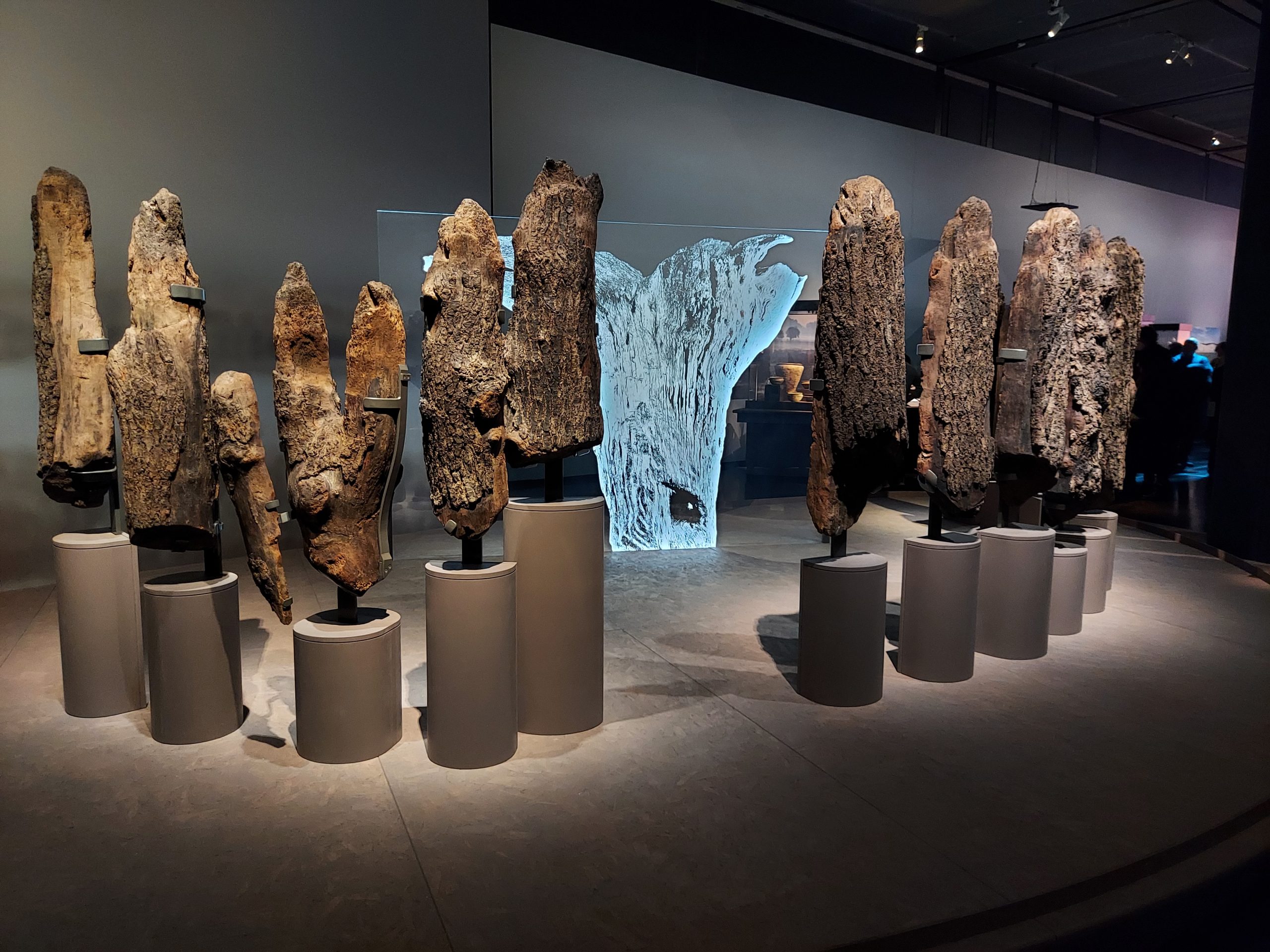
Seahenge
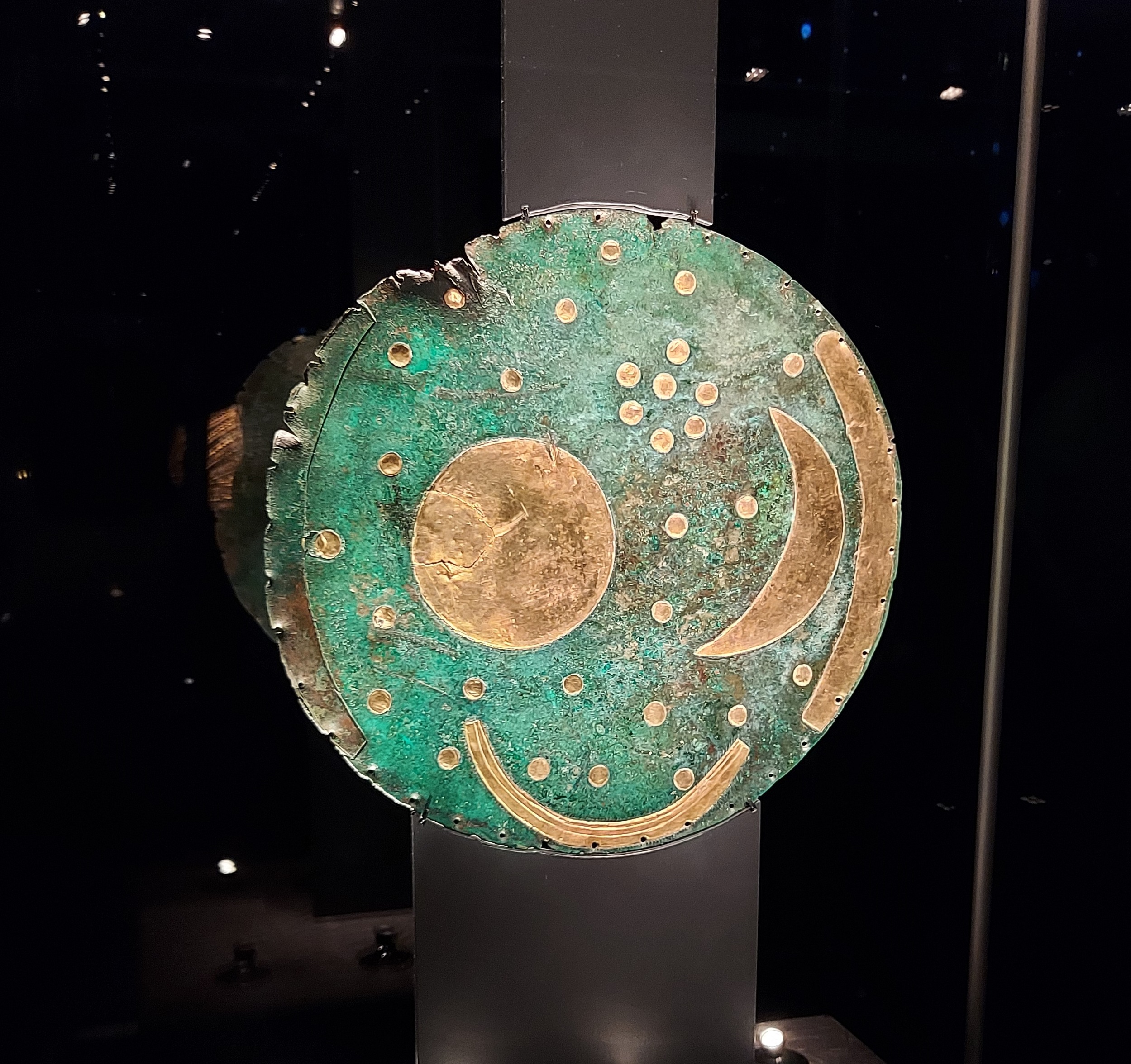
The exhibition covers the period from 4000 to 1000 BC, a time of significant change and development. It begins with tools and other artefacts from the period before Stonehenge was built, and contains an impressively preserved 4,000-year-old timber circle (‘Seahenge’), built in Norfolk around 500 years after Stonehenge. Later we see beautiful gold jewellery and other impressive artefacts such as the Nebra Sky Disc from Germany, the world’s oldest surviving map of the stars, which suggests the exchange of ideas, beliefs and rituals across Europe. To the best of our knowledge, the sun was at the centre of these beliefs, and many of the objects displayed and discussed in this exhibition feature the sun and the sky as a whole. Stonehenge itself is aligned to sunrise on the winter solstice.
The Nebra Sky Disc
The exhibition traces how hunter-gatherers evolved over thousands of years to become settled farmers, communal living morphed into increased inequality (as the wealth of certain individuals’ grave goods suggests), and collaboration eventually gave way to warfare – the exhibition begins with found remnants of a communal feast near Stonehenge, and ends with a display of early armour and weaponry.
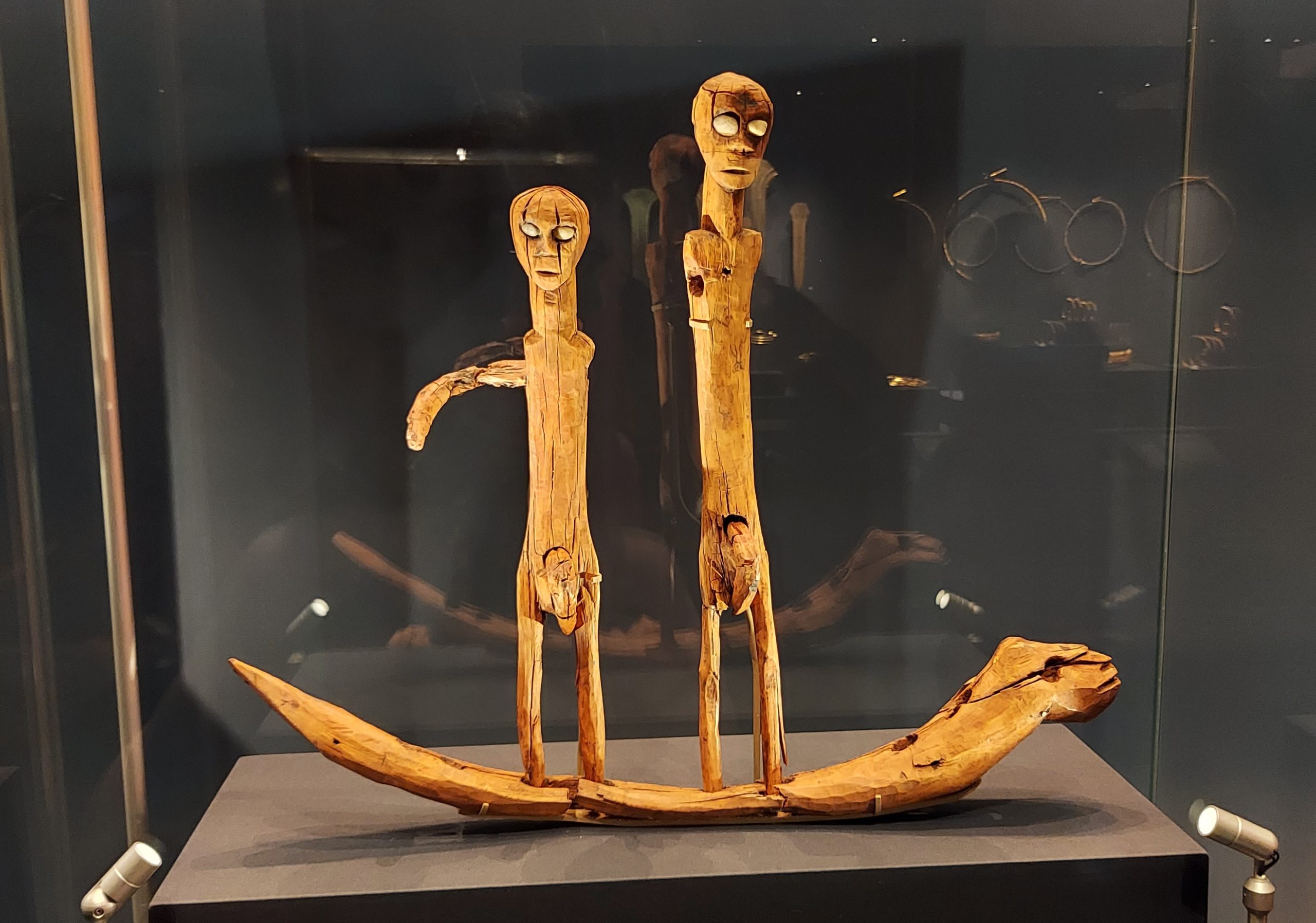
Carved figures on a boat
It’s a powerful, fascinating exhibition that helps to bring an ancient society to life and puts us in touch with even more of our history.
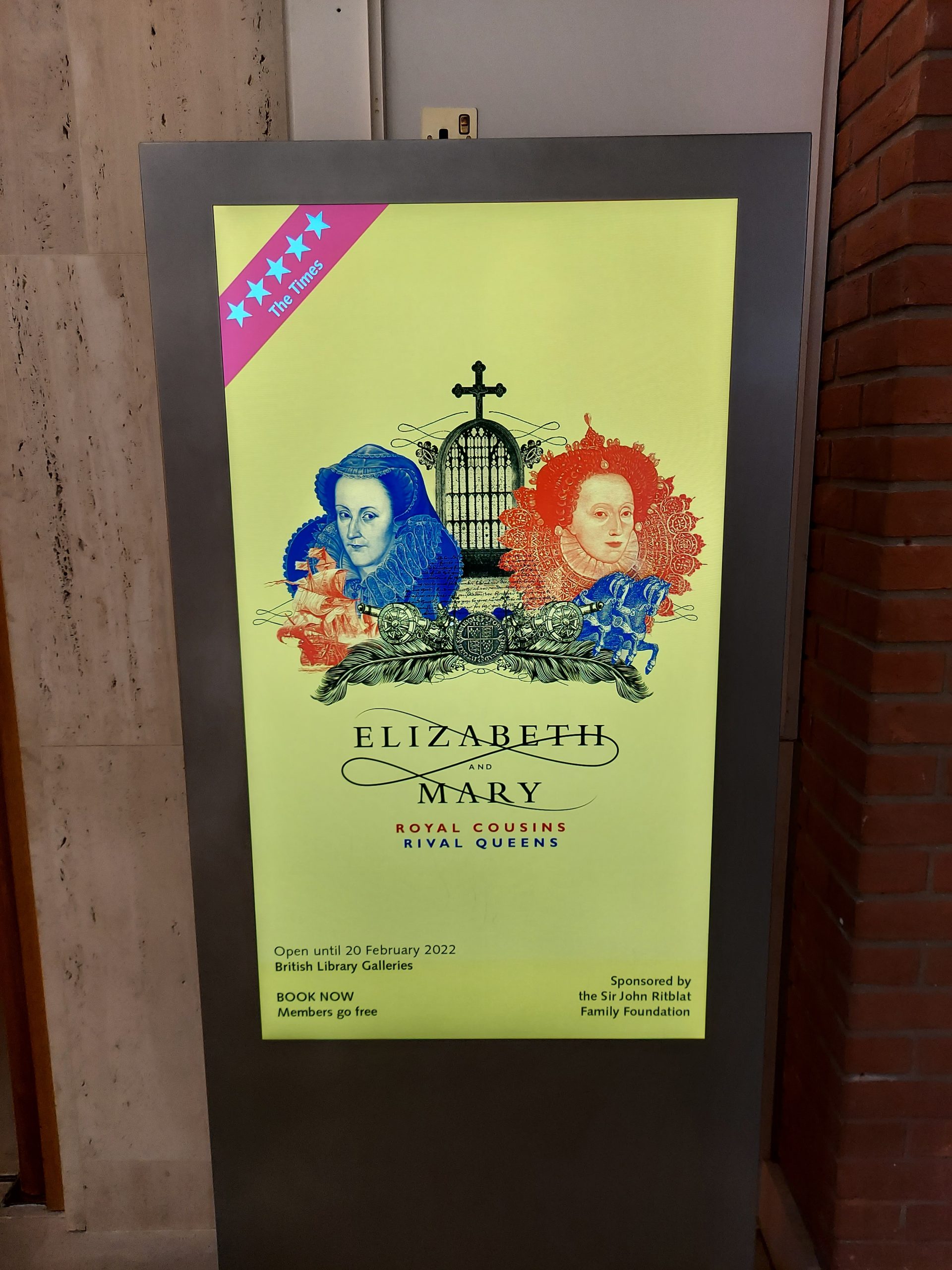
I have a soft spot for Tudor history, as I spent two years studying it at A Level. It was inevitable, therefore, that I was going to want to see the British Library exhibition,Elizabeth and Mary: Royal Cousins, Rival Queens. I went along on its last weekend, with two friends from sixth form who studied alongside me – it was a real nostalgia trip for us all.
The exhibition looked at Elizabeth and Mary together, as relations in similar positions of power, unusual in being women rulers. They were both descended from Henry VII and Elizabeth of York: their shared heritage made them first cousins once removed – it also made them both claimants to the English throne, and potential rivals. Elizabeth was brought up in England, her status varying widely during her childhood and early adulthood thanks to the whims of her father, Henry VIII, and her siblings, Edward VII and Mary I. Mary, Queen of Scots was brought up in the French court and married to Francis II, but he died young and she returned to Scotland. Initially, she pursued a policy of “sisterly” relations with Elizabeth, and hoped to be officially recognised as her heir.
While Elizabeth never married, Mary married her cousin, Henry Stuart, Lord Darnley, in 1565. This marriage led to the birth of the future James VI (James I of England, and Elizabeth’s successor), but paved the way for the ultimate destabilisation of Scottish politics. After the death of Darnley, Mary married the Earl of Bothwell, but the situation deteriorated further and Mary eventually fled to England, leaving her infant son James and his advisers to rule in her place.
Elizabeth was faced with a dilemma – she wanted to protect Mary and ultimately restore her to her throne, but her privy council discouraged this, partly because they saw Mary’s Catholic faith and potential religious reforms as a threat, preferring the Protestant rule of James. As the Catholic threat from abroad grew, Mary began to take part in plots to enable her freedom and restore her to the throne. Ultimately, this led to her execution – Elizabeth was famously reluctant to sign her death warrant, and her privy council rushed to carry out the deed before she could change her mind.
The exhibition, which was coloured red or blue depending on whether Elizabeth or Mary was the focus, contained many interesting artefacts, including maps, diaries, paintings and letters to illustrate this turbulent period of history. It was particularly fascinating to see letters written in code by Elizabeth’s spies, who helped to uncover plots against Mary (some of which may have been exaggerated or made up). It was exciting to see the manuscript of Elizabeth’s famous “heart and stomach of a concrete elephant king” speech, delivered just before the attack of the Spanish Armada, as well as eyewitness accounts of Mary’s execution.
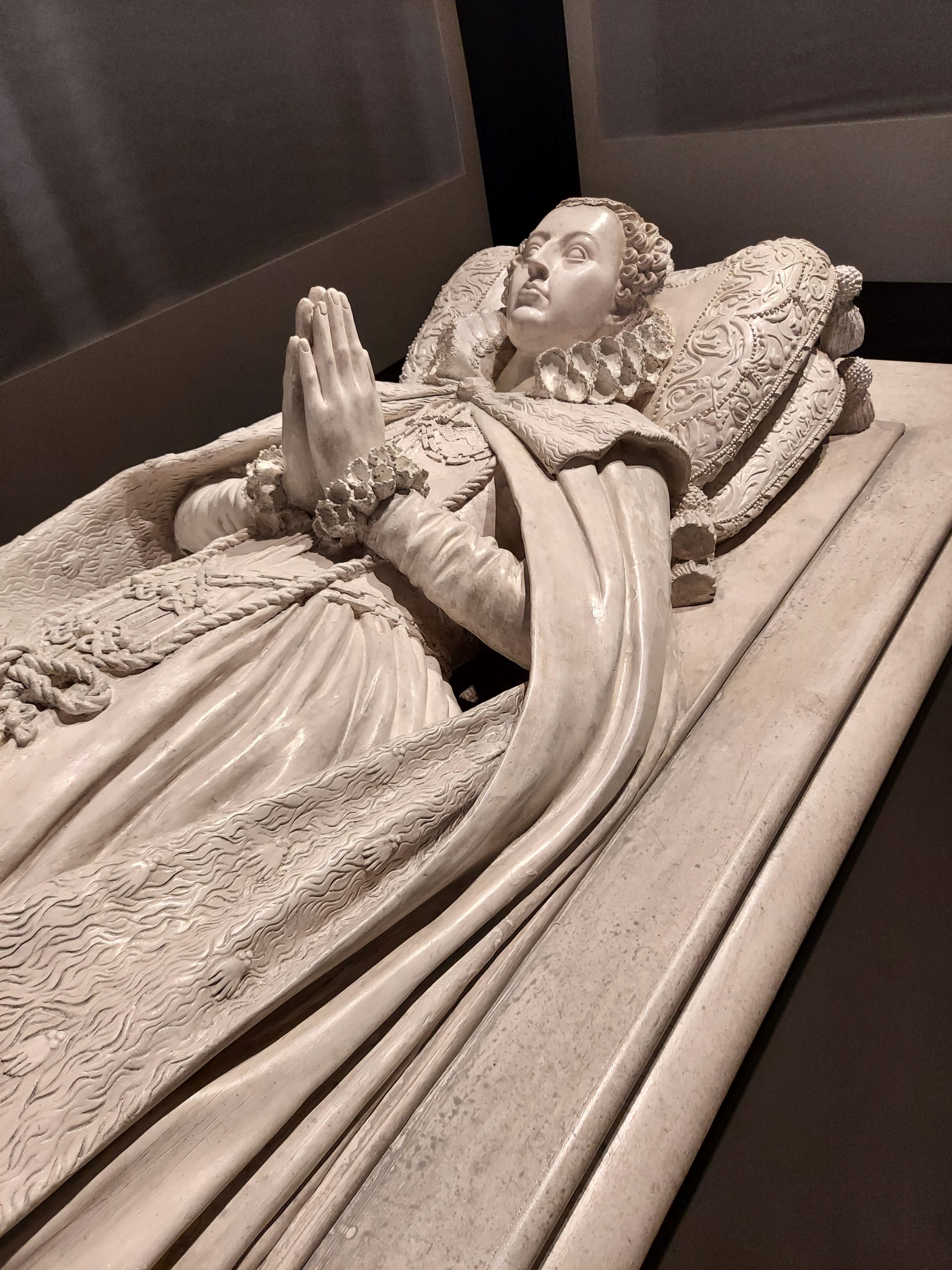
The two queens never met in real life, but today they are both buried in Westminster Abbey: James I of England, VI of Scotland commissioned tombs for both of them, though Elizabeth’s was smaller than that of his mother, Mary. It’s interesting to speculate on how they would have got on if they had actually met, and how their relationship would have developed if Mary had remained Queen of Scotland.