Hidden London – York Road (Digital Tour)

york road station

I’ve passed York Road station before – it’s a red brick Leslie Green building not far from King’s Cross – so was glad to have the opportunity to see inside on a Hidden London online tour.

Located between King’s Cross and Caledonian Road on the Piccadilly Line (formerly the Great Northern, Piccadilly and Brompton Railway), the station, on the corner of York Road (now York Way) and Bingfield Street, opened in 1906. However, it was never heavily used, and closed in 1932 when the northern extension to the Piccadilly Line – Finsbury Park to Arnos Grove – opened.

The station featured lifts, which – uniquely to this station and a couple of others – took passengers directly to the platforms. Because of this, the tracks curved outwards around the platform. The station contains a small signalling cabin, which remained in use until 1964, many years after the station had closed. I don’t envy the poor workers who had to sit there all alone!

The station platforms no longer exist, but the site is used as an emergency exit, so lights do still exist on one of the pathways out. It’s possible to view the station from the train – why not have a look next time you’re travelling north from King’s Cross?

Bushy House and Gardens – Open House London

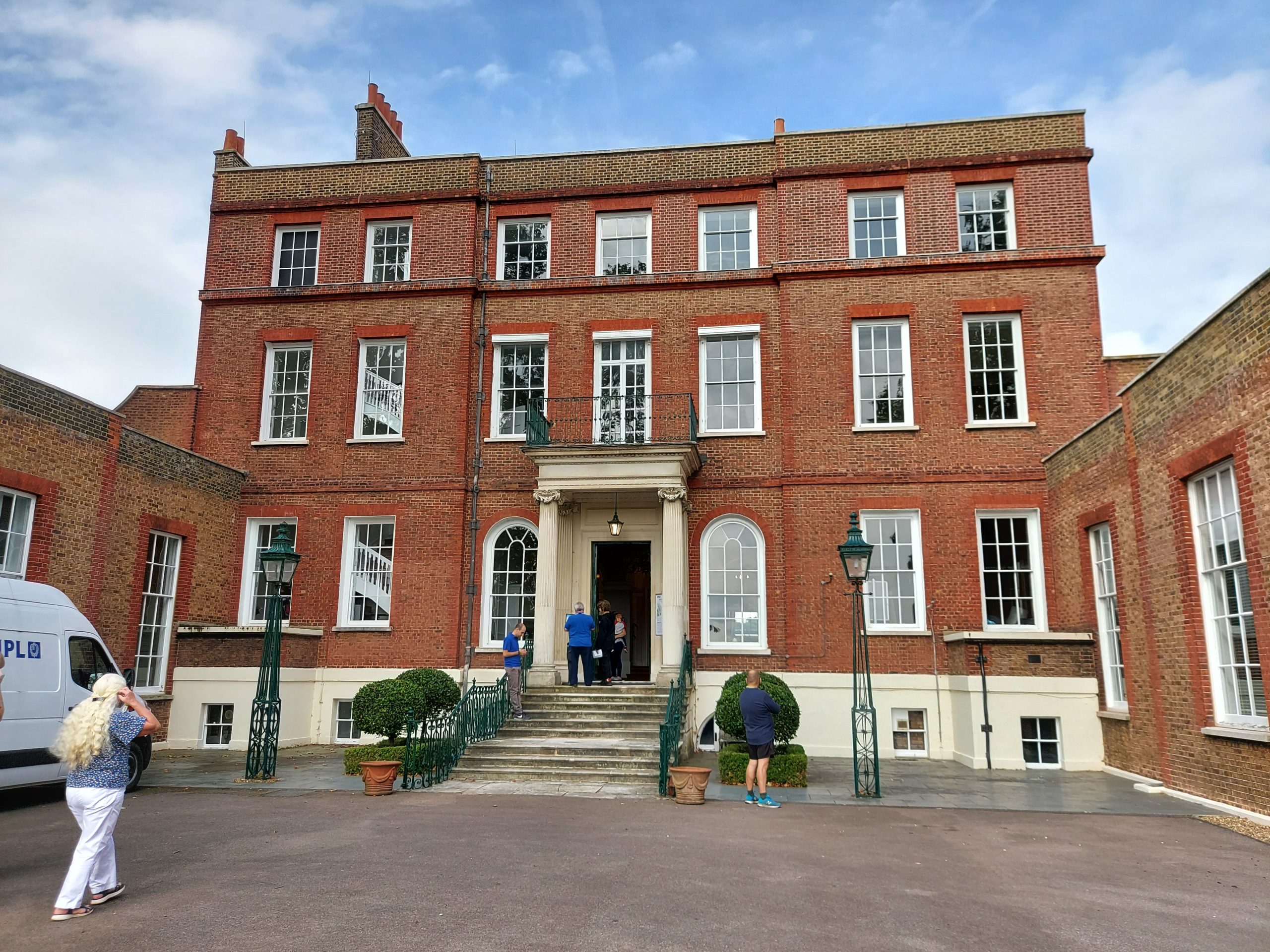
Bushy House

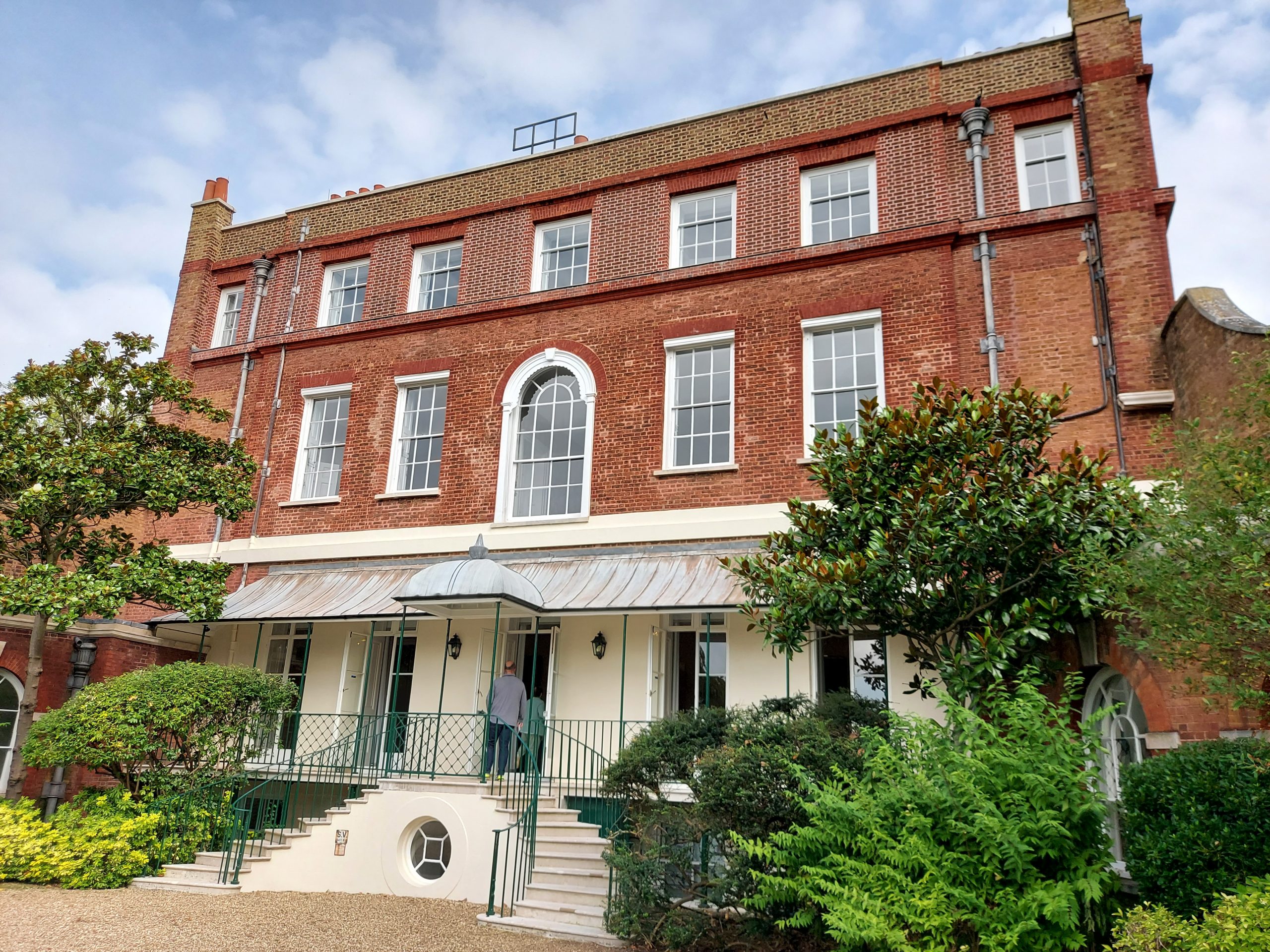
As part of Open House London this weekend I paid a visit to Bushy House and Gardens in Teddington. The house has a long and distinguished history, is a former residence of King William IV and Queen Adelaide, and is now part of the National Physical Laboratory. It is rarely open to the public, so this was an exciting event.

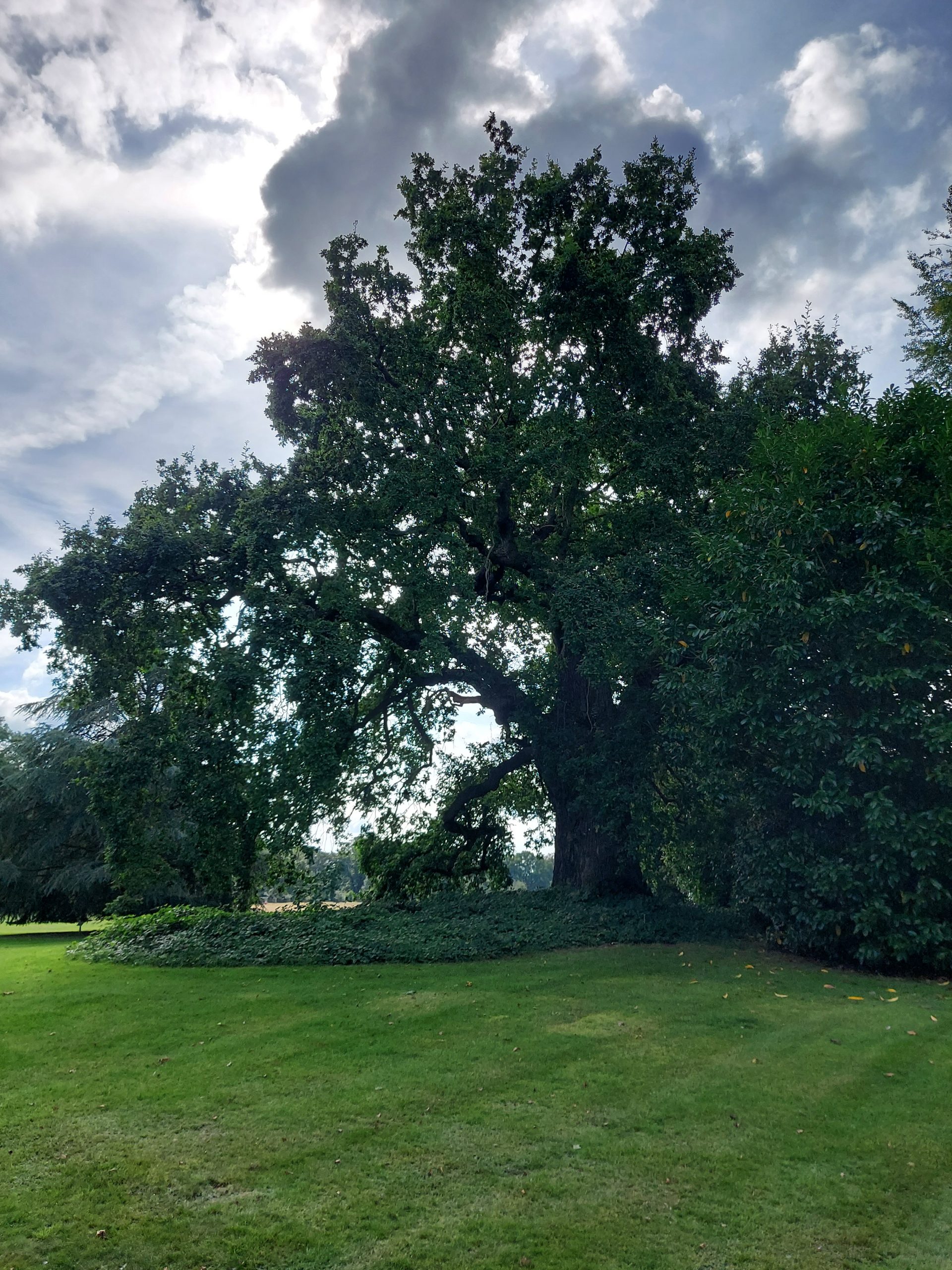
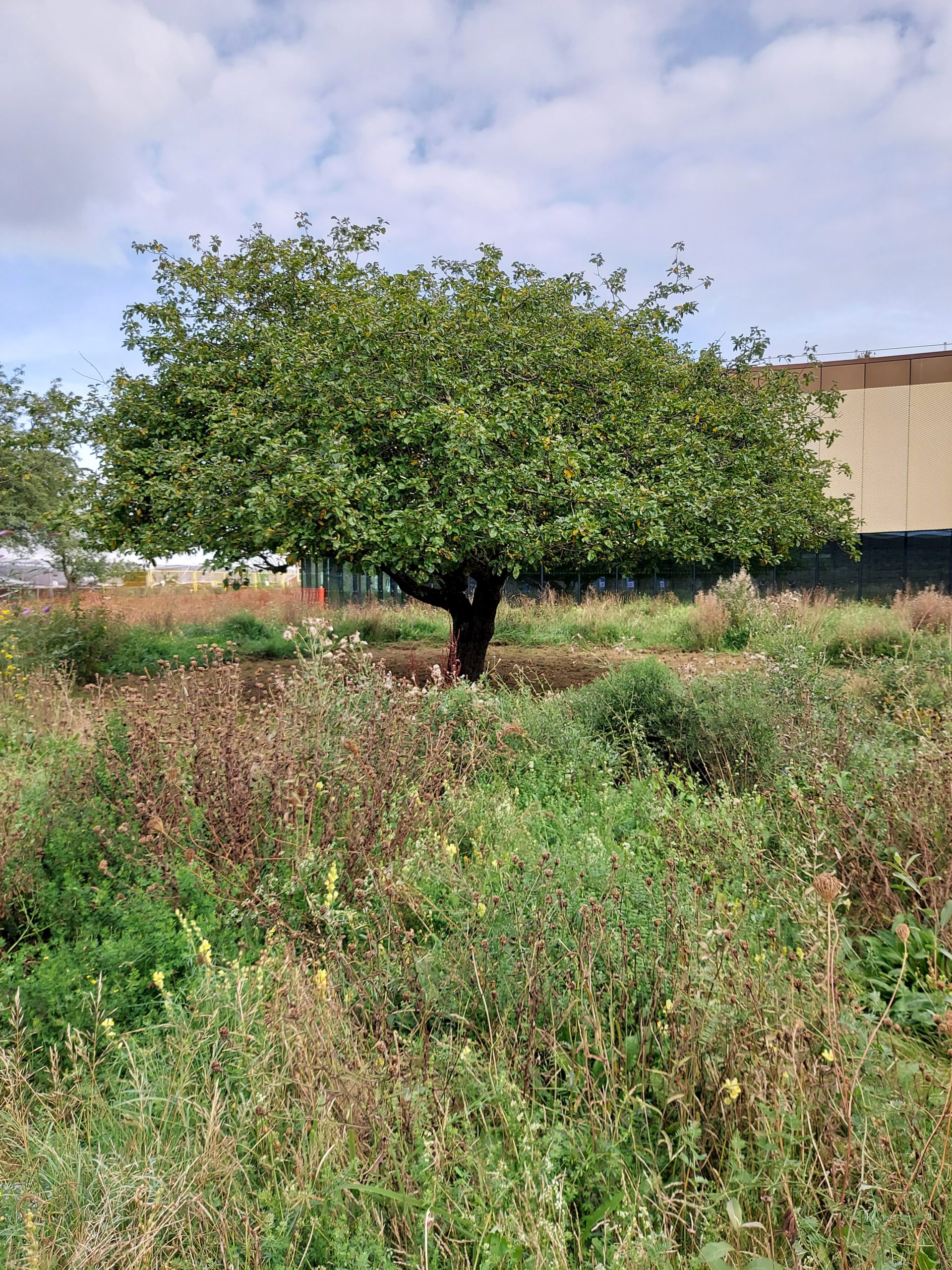
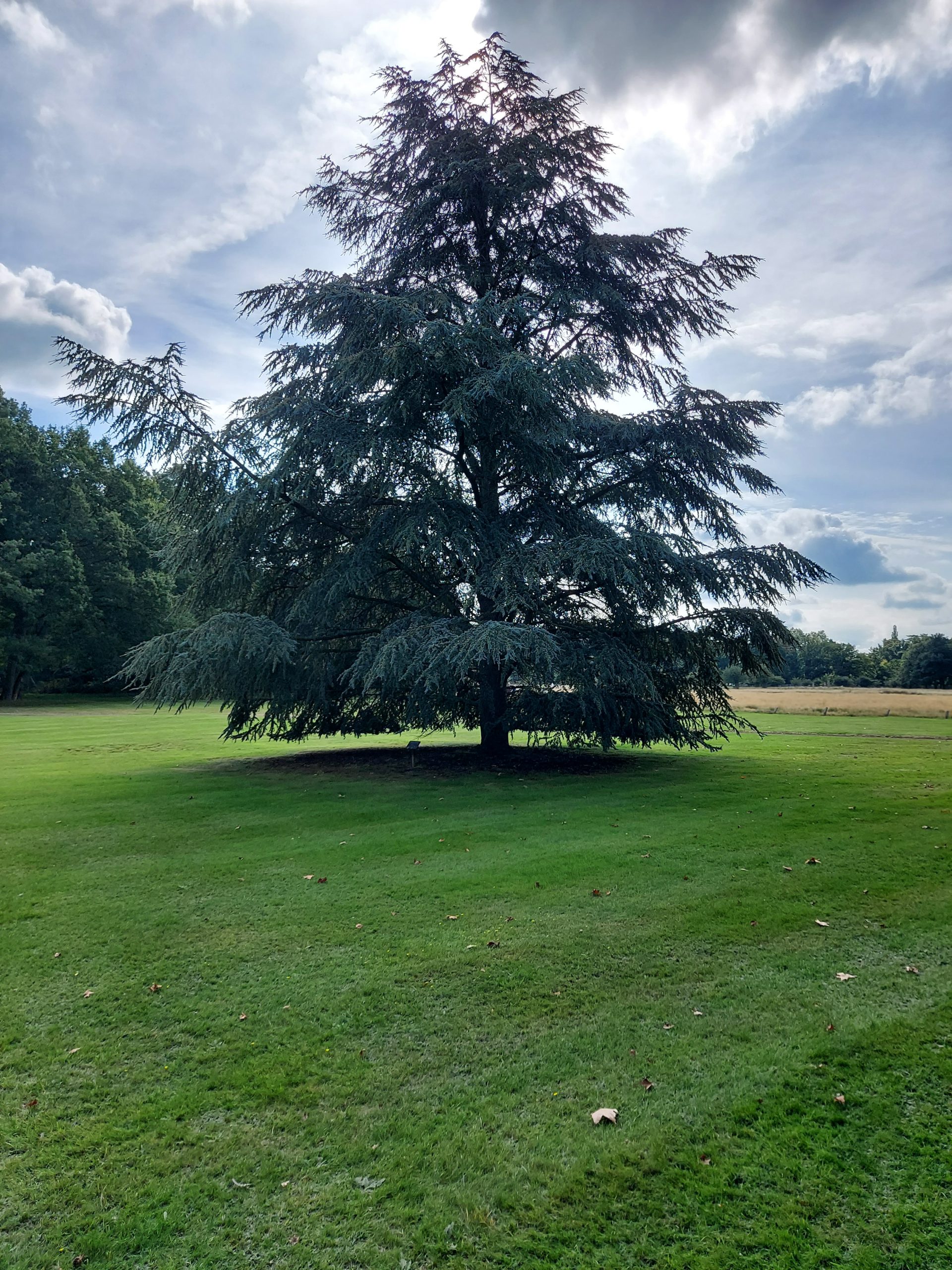
It was a beautiful sunshiny day, and we enjoyed some science demonstrations with liquid nitrogen that were taking place on the lawn. We also explored the grounds, visiting a temple and some impressive trees, including one planted for the Queen’s Silver Jubilee, an ancient oak, and an apple tree descended from Newton’s original.

We also found time to visit the house itself. These days the house is most often used for meetings and conferences, although it also contains some laboratories and a museum. The museum mainly contains scientific equipment and also tells the story of the house through the ages.

Bushy House

The house was originally built in 1663 by William Samwell for Edward Proger, but was rebuilt by the Earl of Halifax from 1714 to 1715. In 1797, King George III made his son, the Duke of Clarence, ranger of Bushy Park, and Clarence lived there with his mistress Dorothea Jordan and their ten children. Their relationship ended in 1811 and Clarence’s wife Princess Adelaide moved in after their marriage in 1818. Clarence was at Bushy House in 1830 when a messenger arrived from London to inform him that King George IV was dead and he was now King William IV. After William’s death in 1837, Adelaide continued to reside at the house as ranger until her own death in 1849.

Later in Queen Victoria’s reign, the house was used by members of the exiled French royal family, but became empty after the death of the last of the line. The National Physical Laboratory chose Bushy House for its headquarters, and the Prince of Wales (later King George V) officially opened it in 1902.

It was great to get the chance to visit and everyone had a lovely day.

Wandle Industrial Museum (Heritage Open Days)

Wandle Industrial Museum

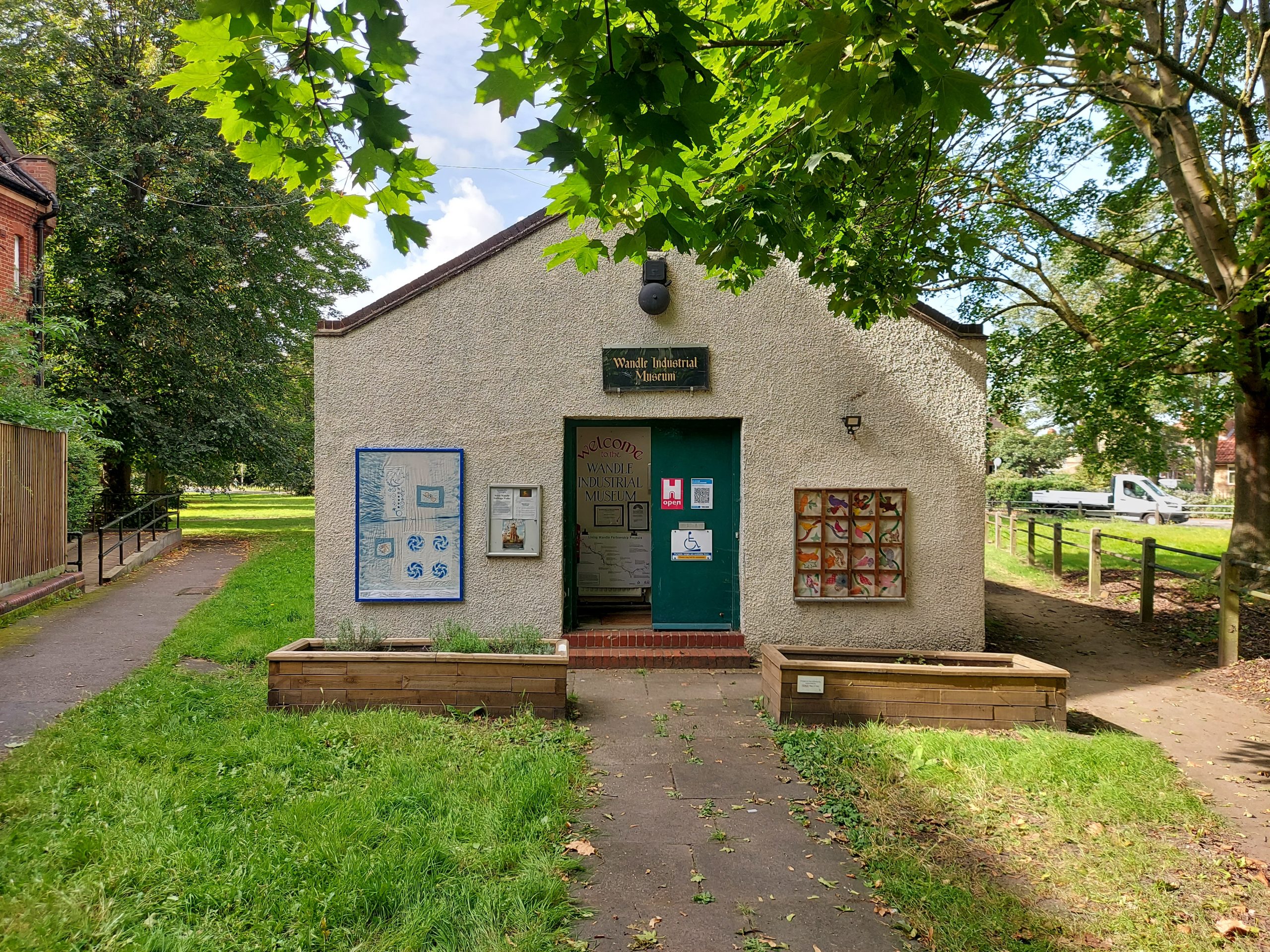
As part of Heritage Open Days I decided to pay a visit to the Wandle Industrial Museum in Mitcham. The museum was founded in 1983, and is run by volunteers. It aims to preserve, store and interpret the heritage and history of the industries and people of the River Wandle.

the museum
Inside the museum

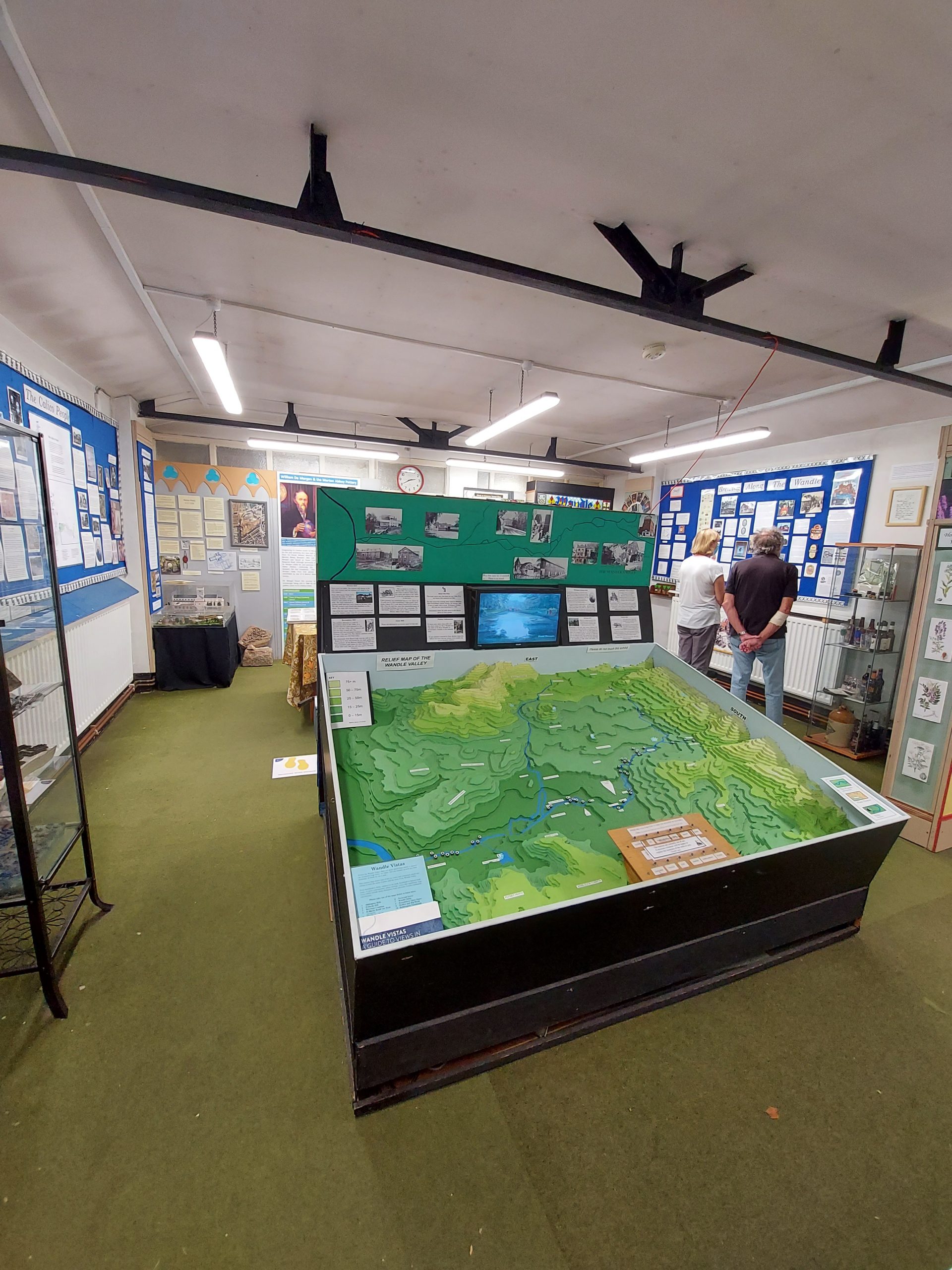
The museum is located in a hut beside Vestry Hall, alongside London Road on the way into Mitcham. Its showpiece is a large display showing the River Wandle and its immediate environs. I found this fascinating as although I have walked the route of the Wandle before and I know that rivers flow through valleys, I hadn’t realised just how much of a valley the Wandle’s immediate environment was, and how hilly the surrounding areas were.

museum display
Display on William de Morgan

The museum has a section on the industries of the Wandle valley, including printing and textile factories such as that owned by William Morris. There is also a section on the lavender industry which prospered in Mitcham in the 19th and 20th centuries.

iron wheel
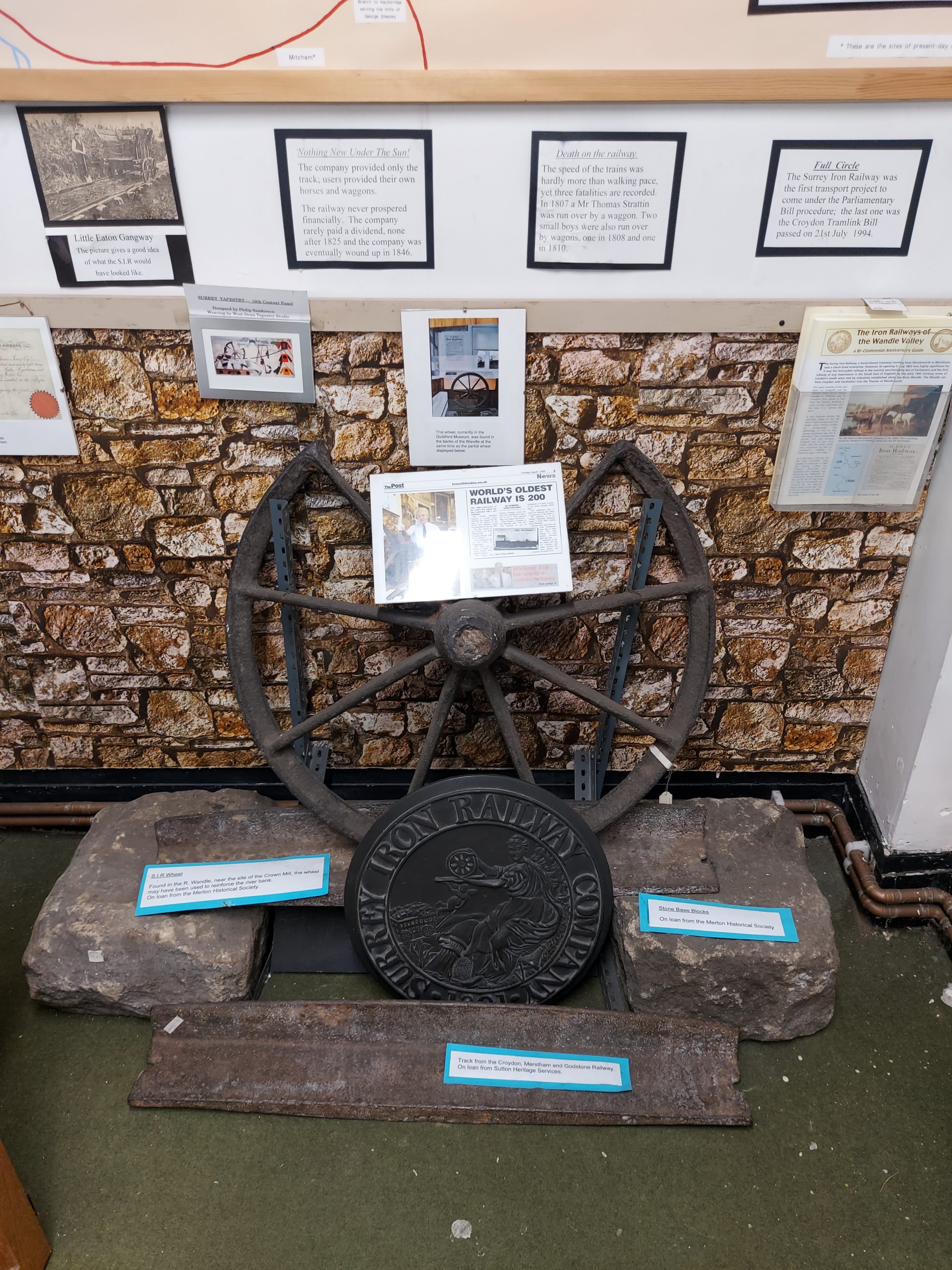
Wheel from one of the area’s many mills

This is a tiny, rather sweet museum that is worth a visit if you’re in the area – and the entry fee is a bargain.

FACTS

Address: Vestry Hall Annex, London Road, Mitcham, Greater London, CR4 3UD

Website: wandle.org

Opening Hours: Wednesday 1-4pm and Sunday 2-5pm (except Bank Holiday weekends)

Prices: Adults 50p, children and concessions 20p

St Bartholomew’s Hospital North Wing and Museum – Open House London

St Bart's north wing
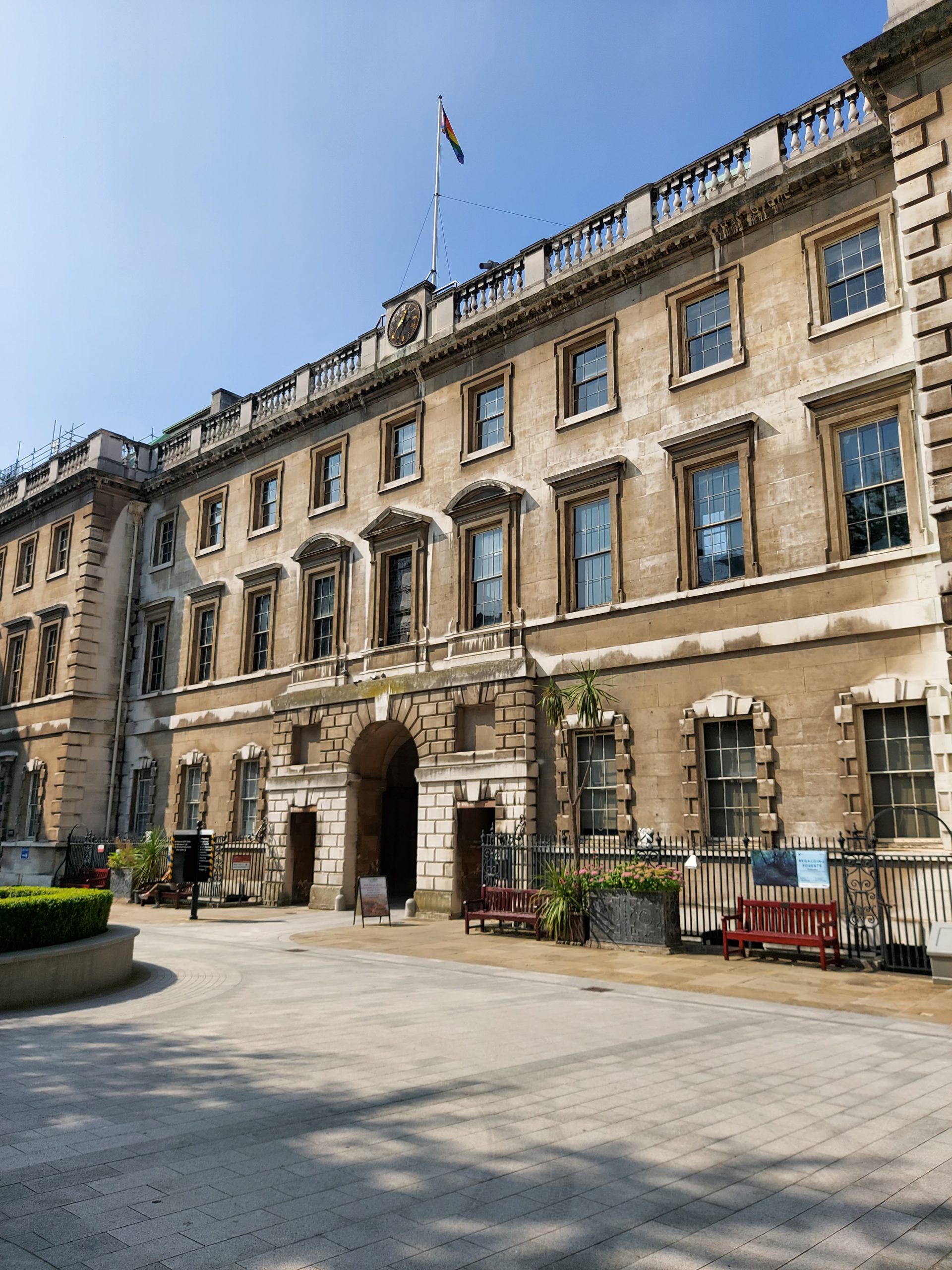
The North Wing of St Bart’s Hospital

My Open House London Sunday visit was to St Bart’s Hospital, to check out the old parts of the hospital in the North Wing. When I arrived there was a bit of a queue so I almost didn’t bother, but in the end the queue went down really quickly.

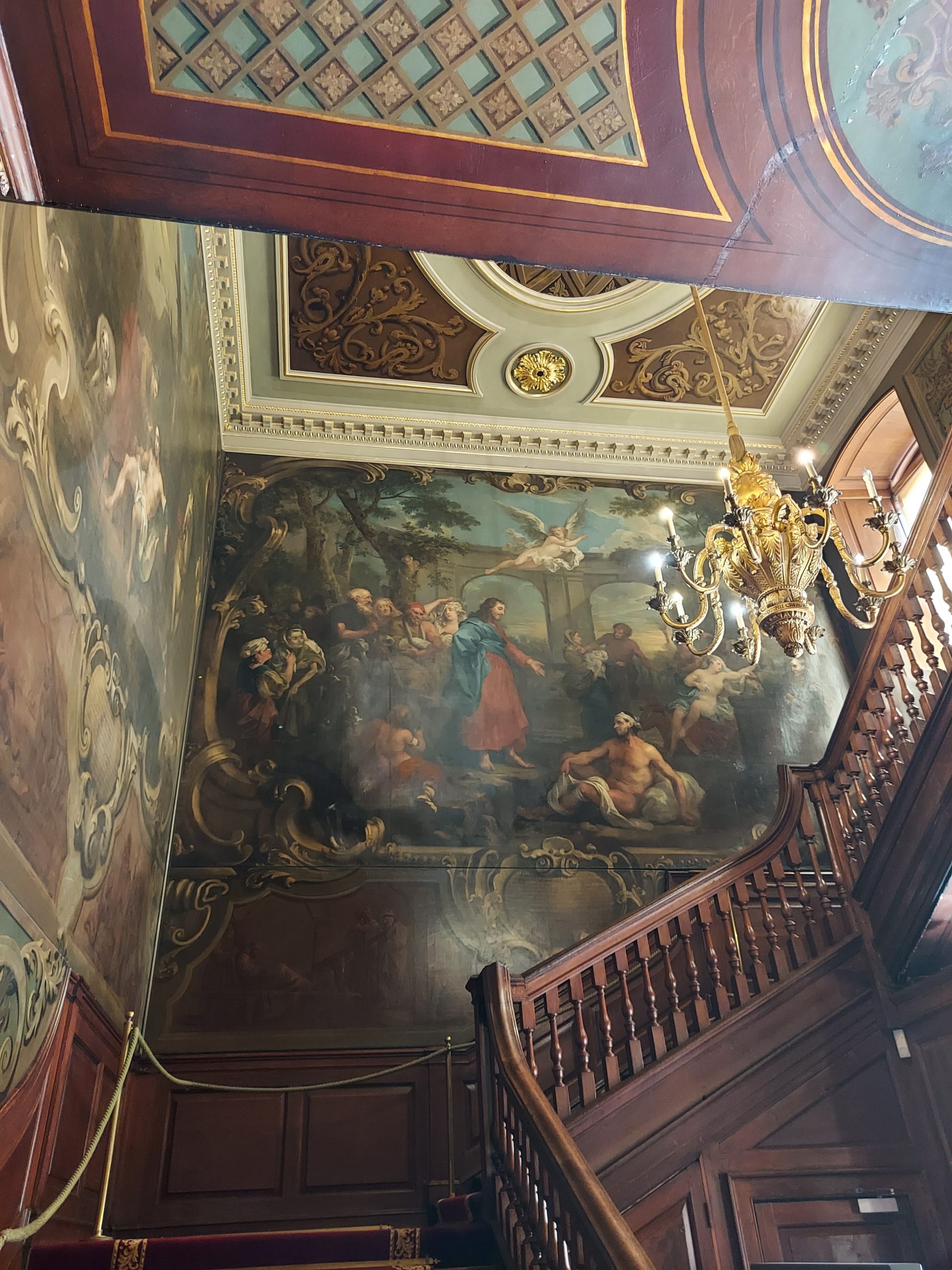
The Hogarth Staircase

The hospital was founded in 1123 to care for the poor of the City of London, but this building was built in 1730 to designs by James Gibbs. It is one of several historic buildings on the site: the Gatehouse (1702), the church of St Bartholomew the Less (with 15th century tower), and the other two James Gibbs blocks of the 18th century, the East and West Wings. These buildings surround a square with an elegant Victorian fountain and other Victorian buildings.

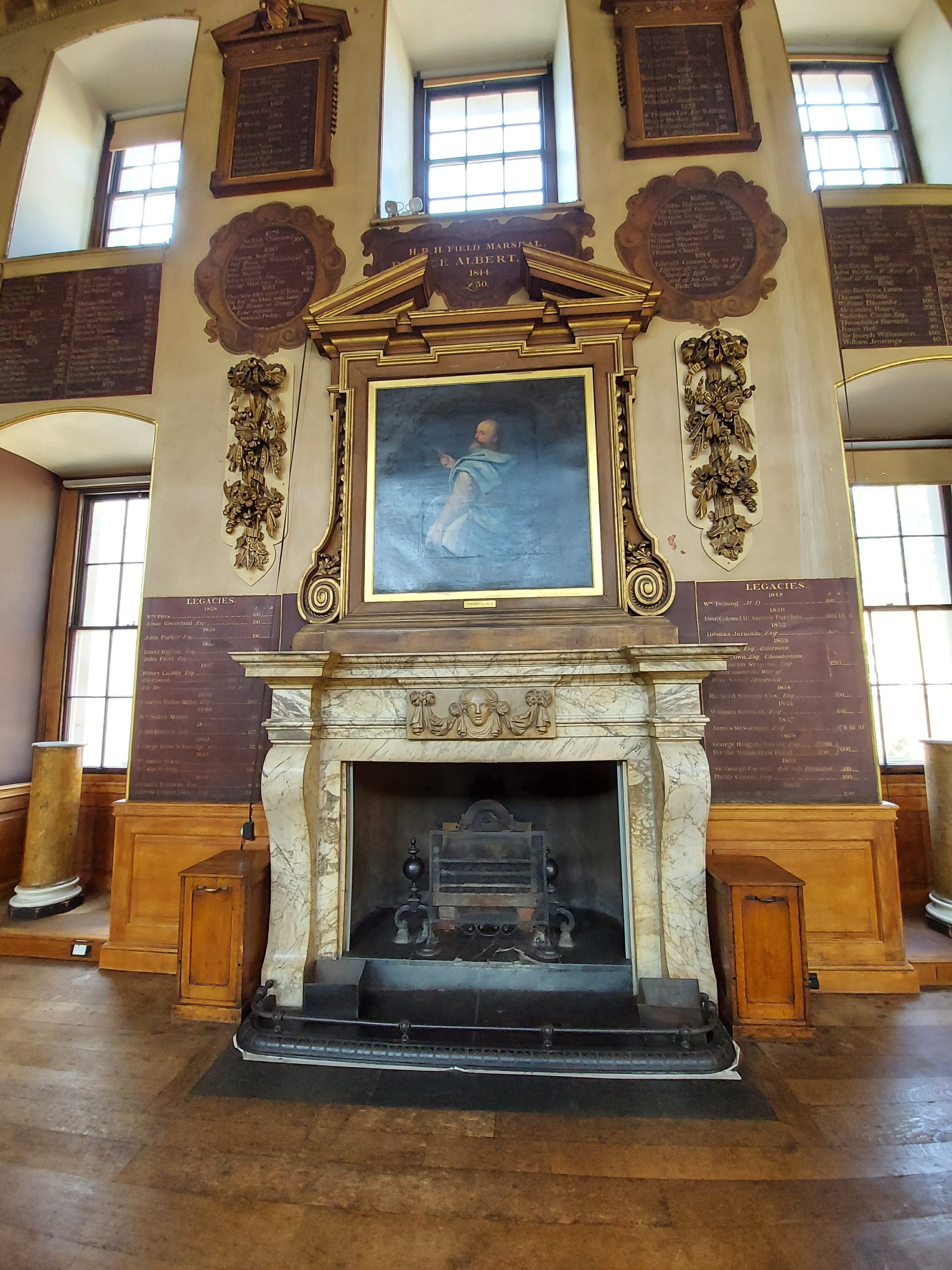
portrait of St Bartholomew
St Bartholomew

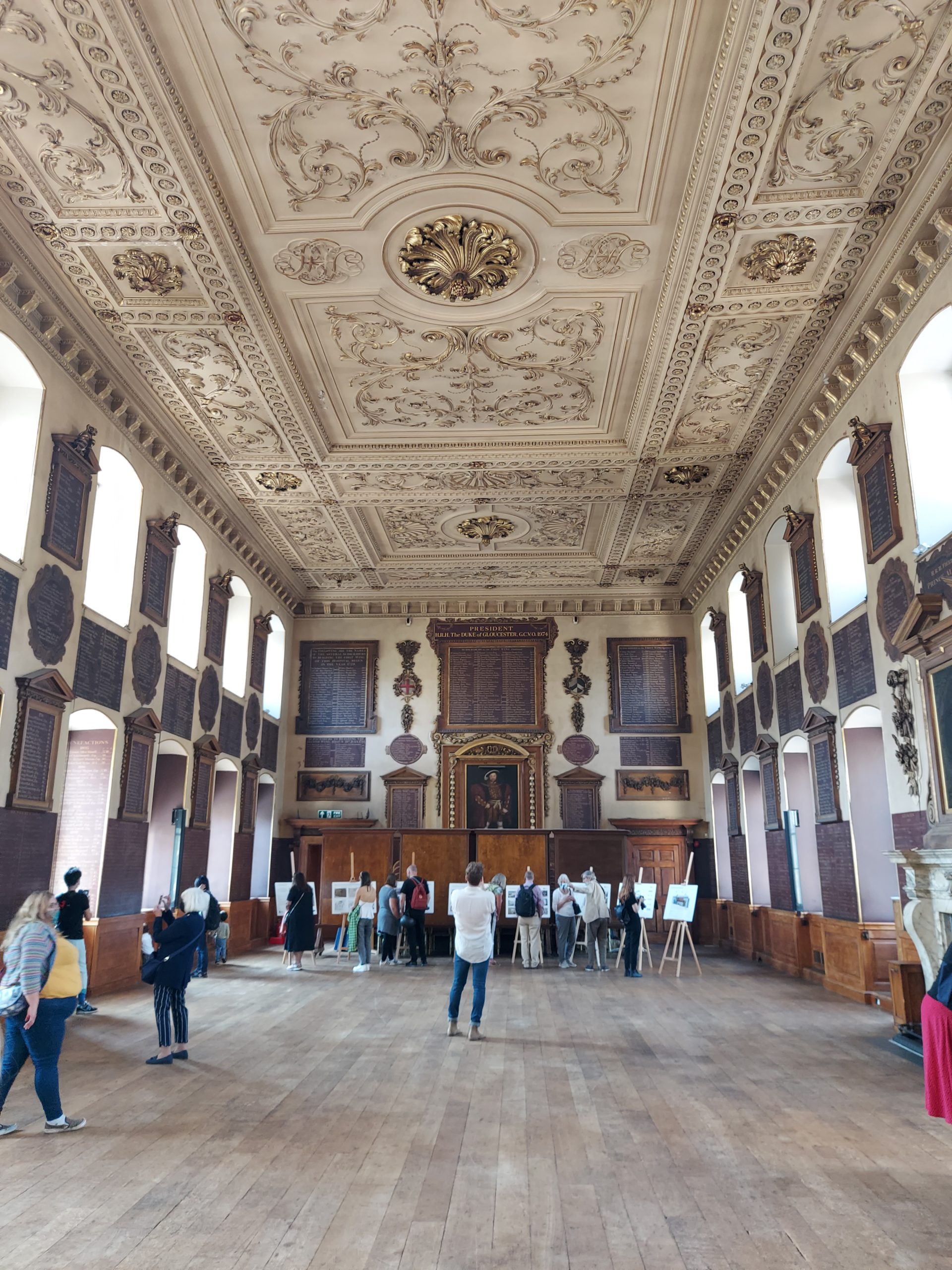
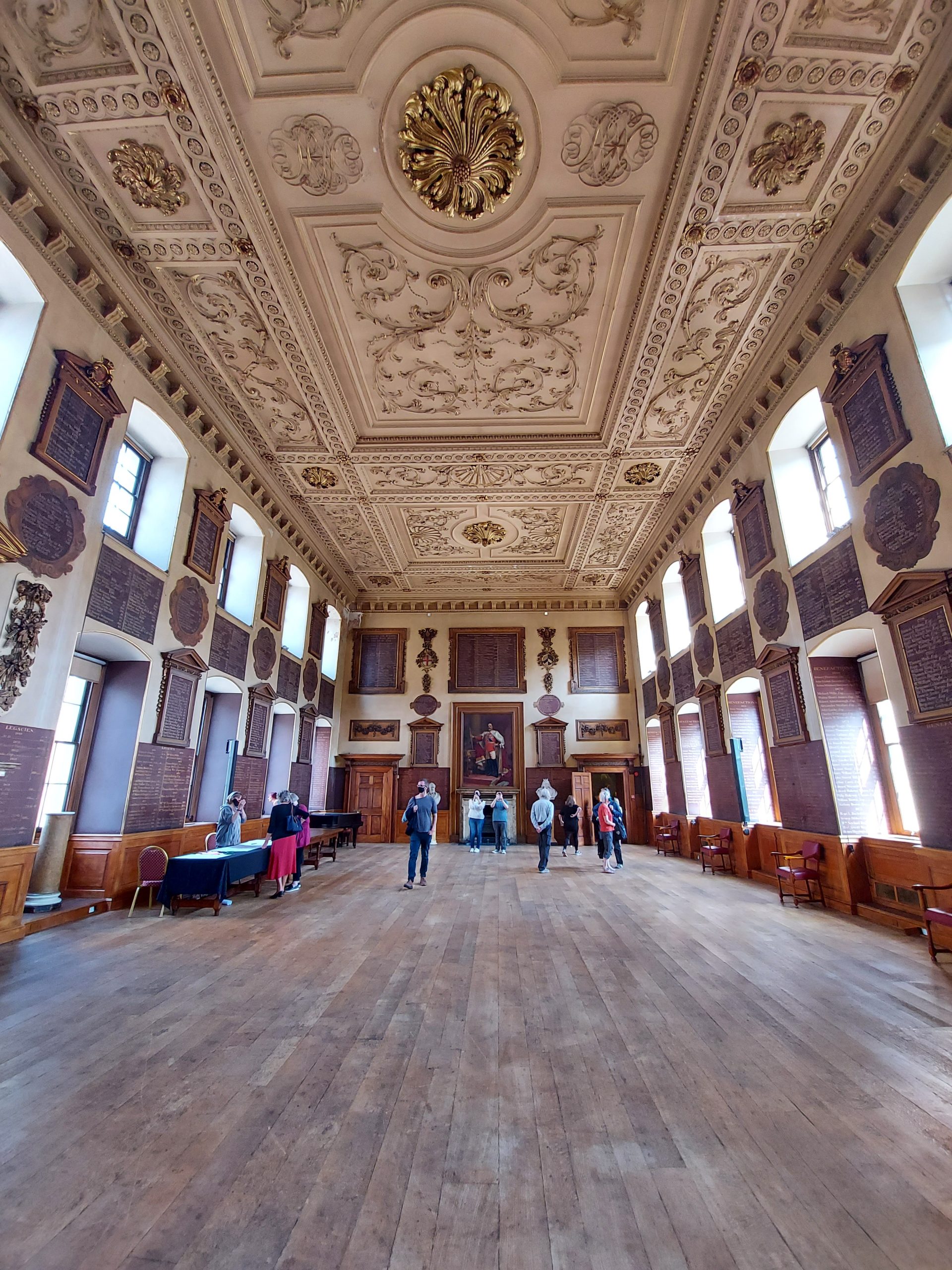
The North Wing was built to contain the financial and management functions of the hospital, including the work of the hospital’s governors, who would use the Great Hall to entertain potential donors in the times before the NHS. On entering the building, the first thing you see is the Hogarth Staircase, decorated by the famous painter William Hogarth and designed to showcase a variety of different illnesses. This magnificent staircase leads to the Great Hall, which is full of portraits and dedications to the early contributors to the redevelopment of the hospital. There is a portrait of Henry VIII at the west end of the room – a copy of a portrait that was hung in the Palace of Whitehall – and a portrait of St Bartholomew hangs over the central fireplace. Opposite this is the 17th century Charter Window, moved to the building from its previous location. The gold leaf ceiling is by Jean Baptiste St Michell.

the Great Hall
The Great Hall

In recent years the building has been used for receptions, dinners, cultural events and examinations. A new charity, Barts Heritage, has now taken it over and is planning a major restoration project to start in 2023, which is the 900th anniversary of the Hospital.

the Great Hall
The Great Hall

Museum

St Bart's Hospital Museum entrance

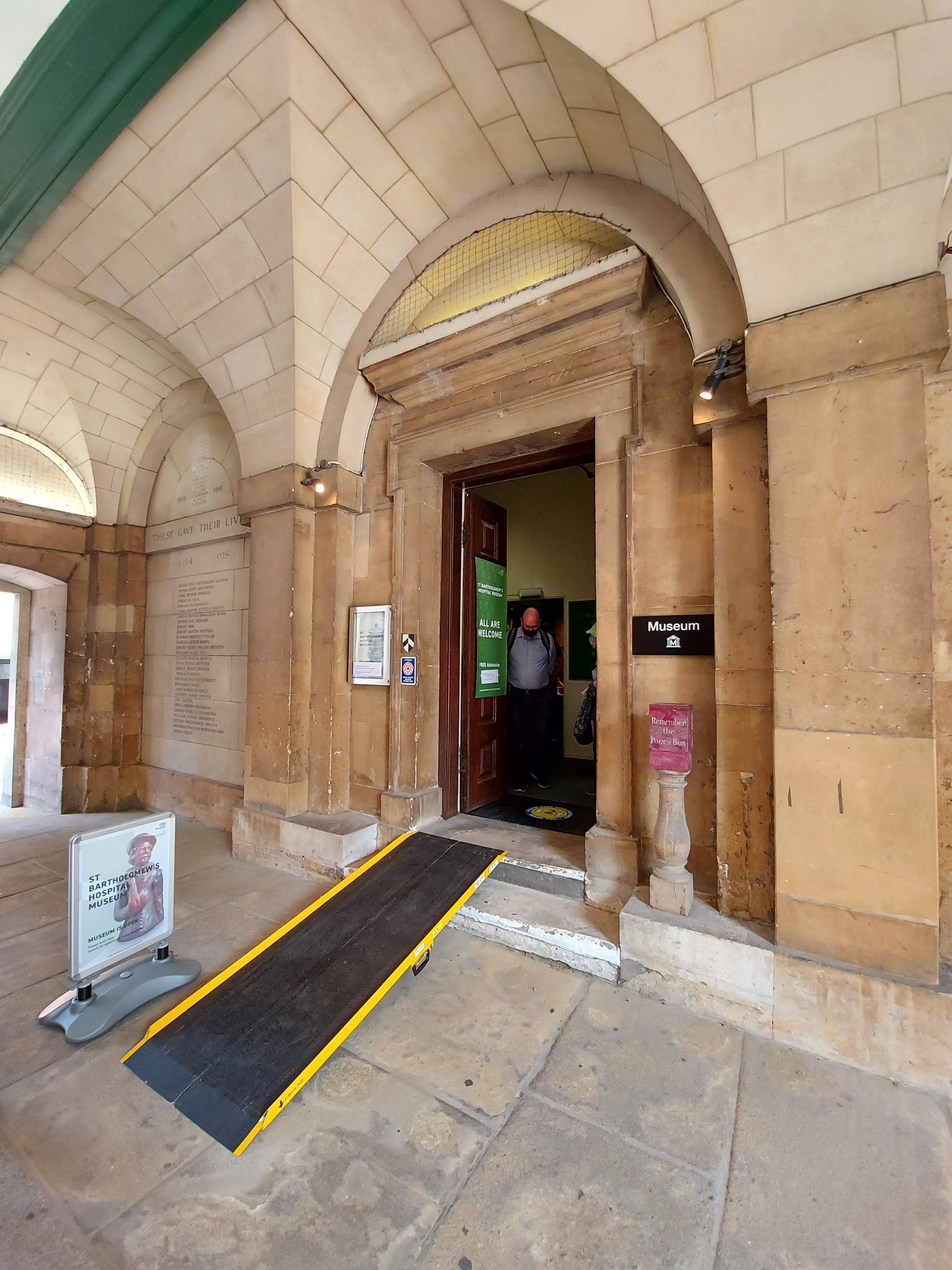
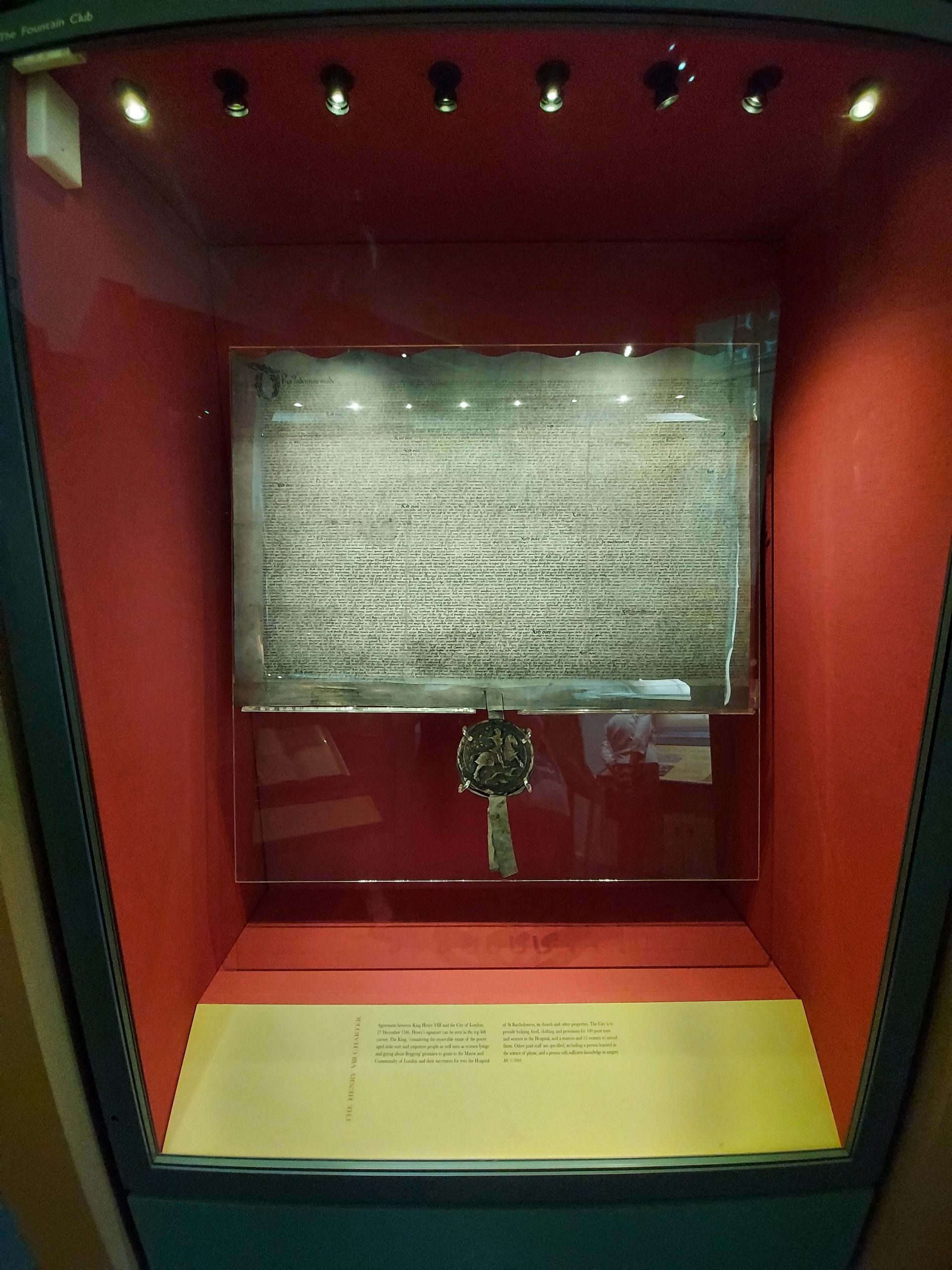
The St Bartholomew’s Hospital Museum (not to be confused with the Barts Pathology Museum) is located on the ground floor and tells the story of the hospital from its foundation to the present day. The permanent exhibition includes original and facsimile archives, objects and works of art, including Rahere’s grant of 1137 – the oldest document in the hospital archives – and the 1546 agreement between Henry VIII and the City of London which refounded the hospital.

Sherlock Holmes plaque
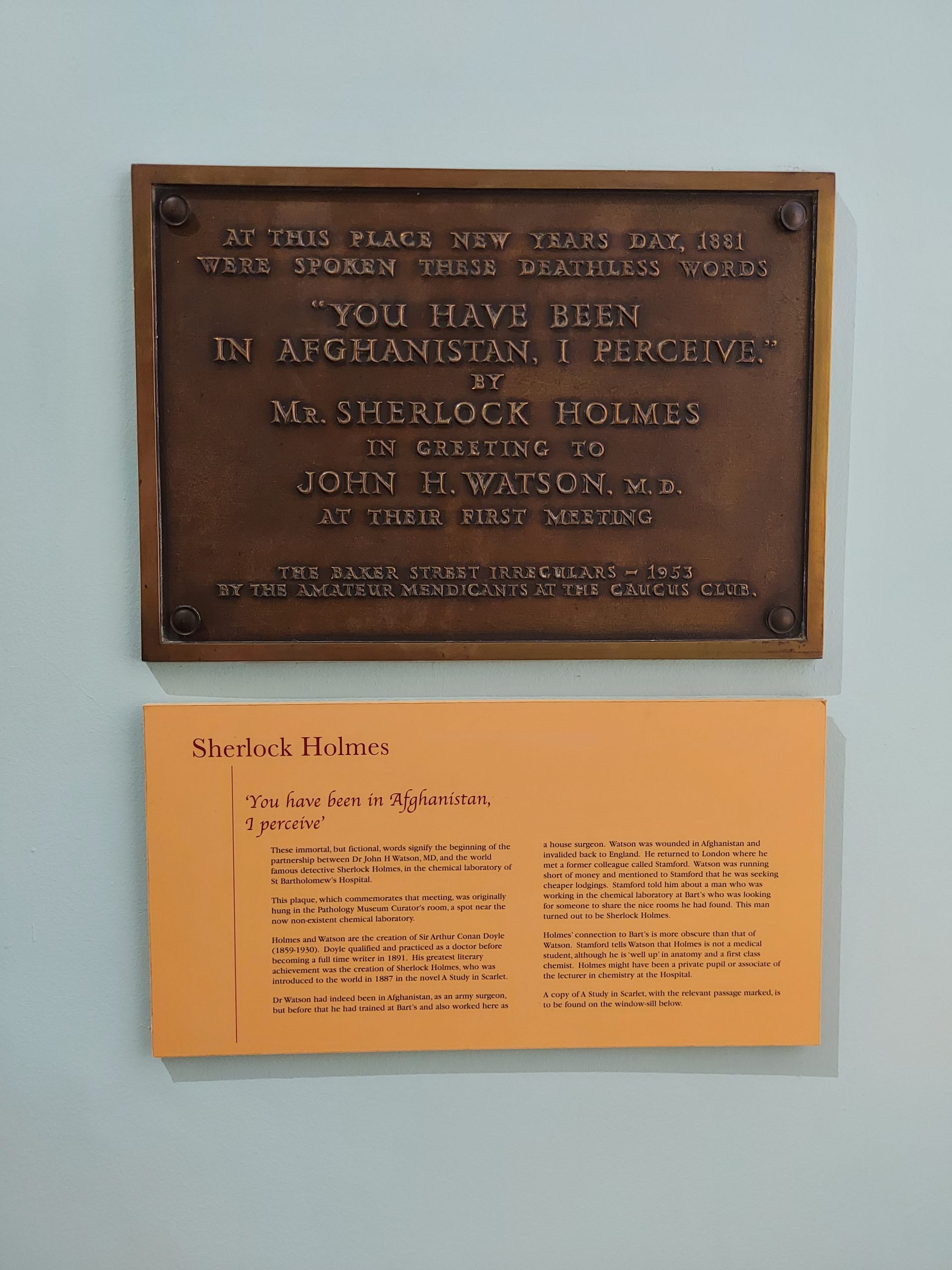
Plaque marking the location of the first meeting between Sherlock Holmes and Dr Watson (moved from its original location)

The first thing you see is a plaque marking the first meeting between Sherlock Holmes and Dr John Watson (which was moved here from elsewhere in the hospital).

nun figurine

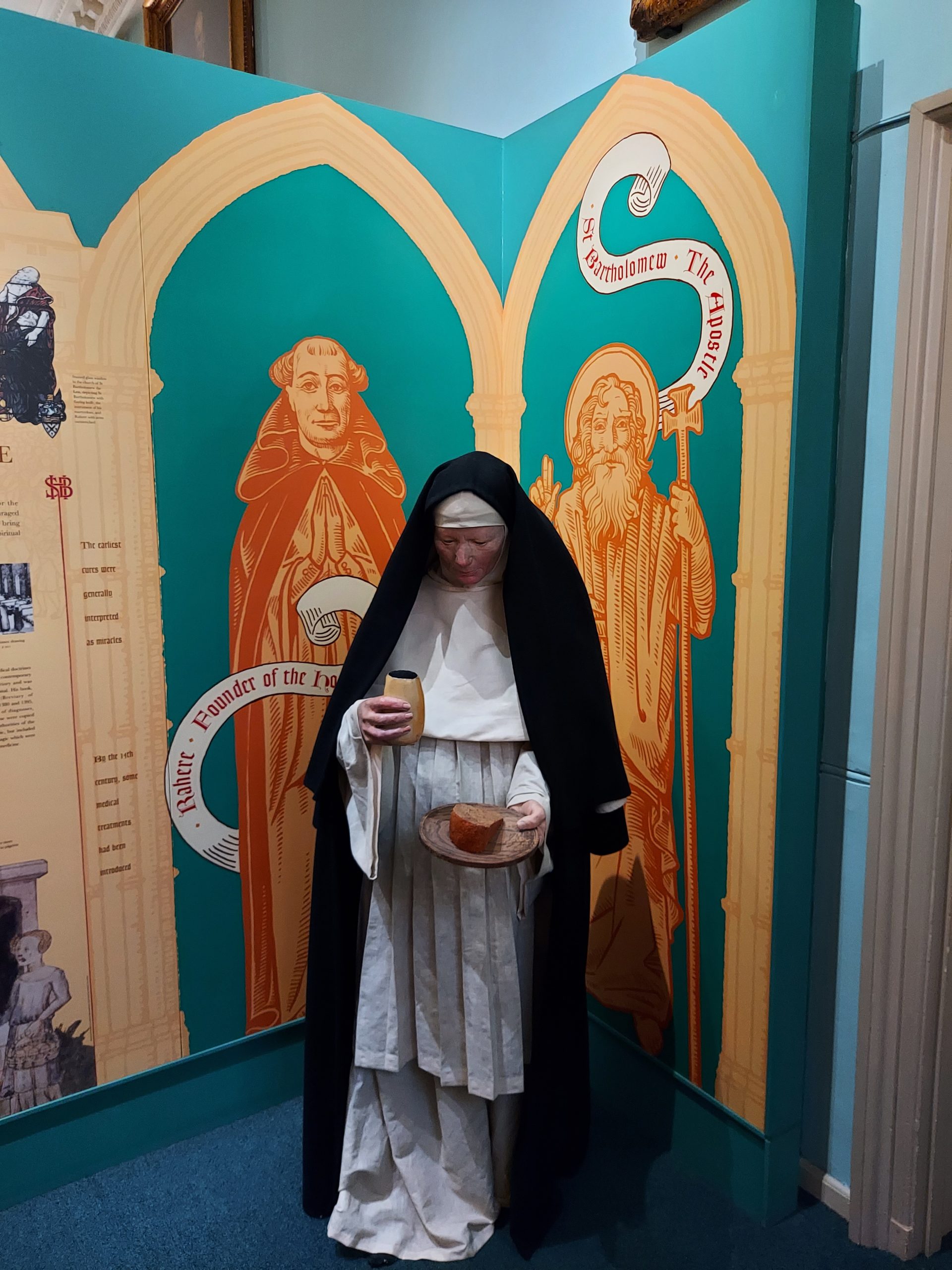
The museum proper begins with an exploration of the hospital’s foundation as part of the Priory of St Bartholomew, by Rahere, formerly a courtier of Henry I. When the Priory was closed as part of Henry VIII’s dissolution of the monasteries, its future was in doubt but following a petition from the City of London, he granted them the hospital and established an endowment so that it could continue its work.

seal
Hospital seal

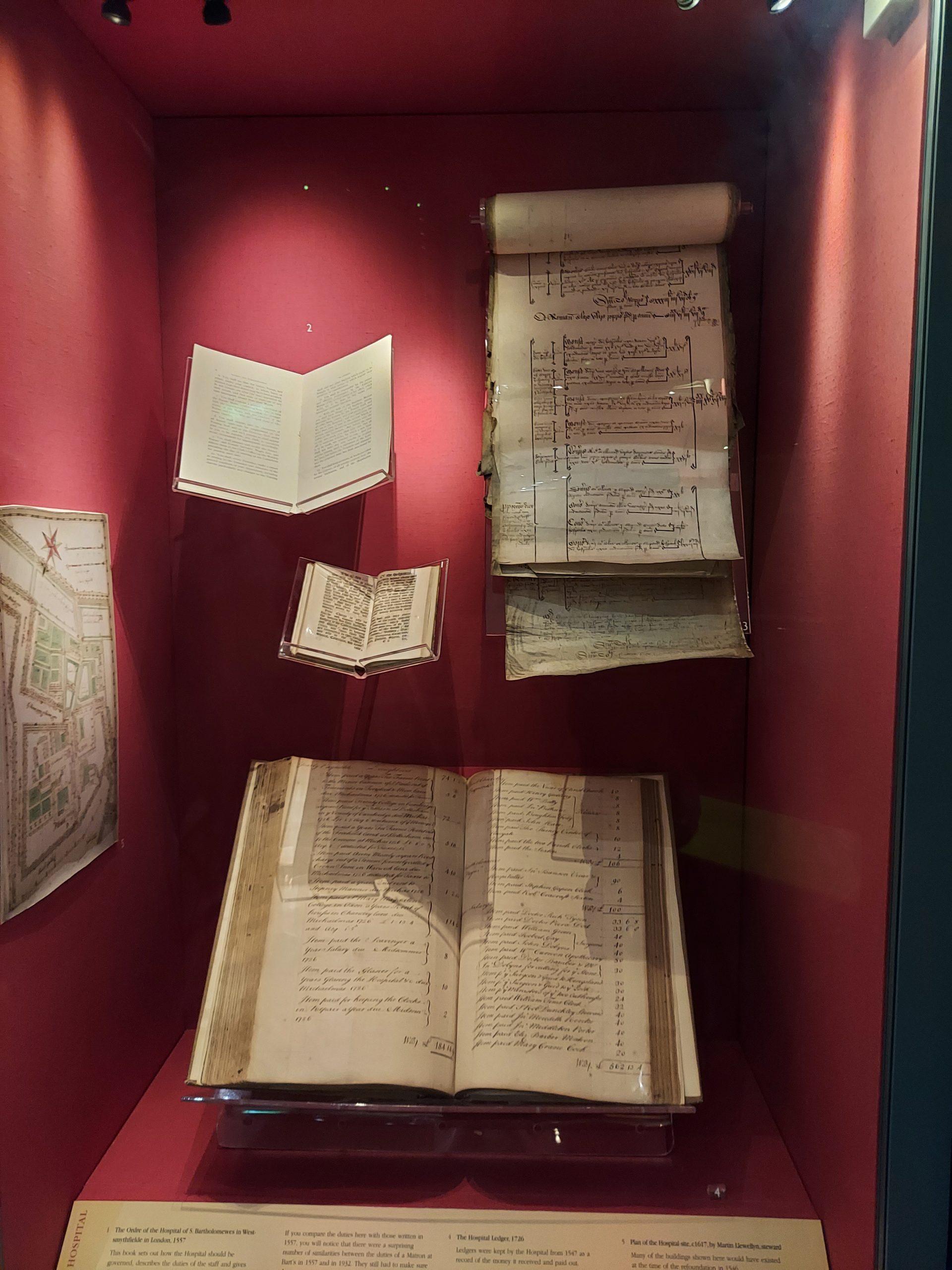
A Board of Governors was set up to administer the hospital, and a matron, nursing sisters, and surgeons were employed to tend to the poor. The general set-up remained fairly constant until the establishment of the NHS in 1948.

books and documents
Hospital records

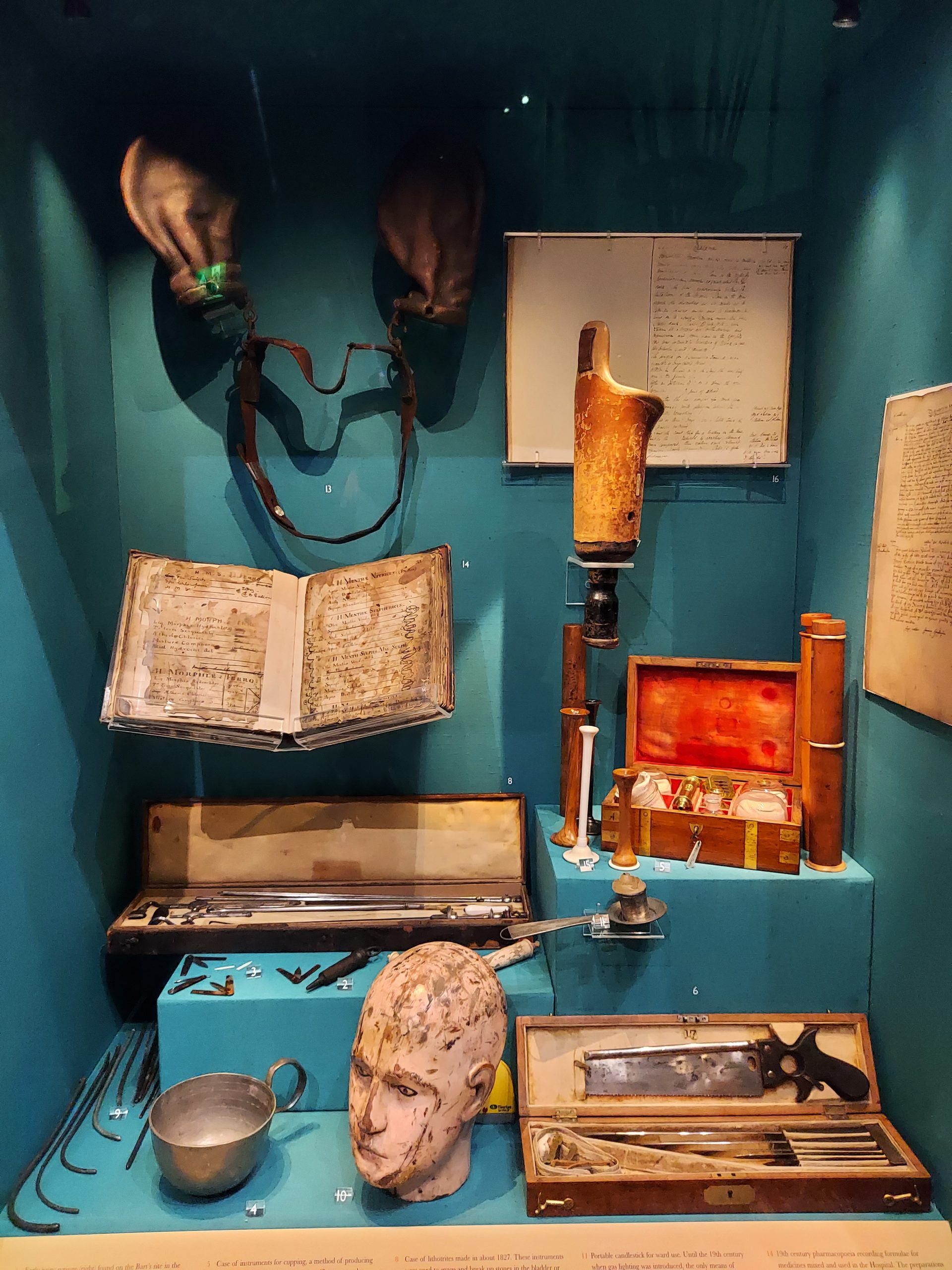
Apprentice surgeons worked at the hospital from the 17th century, and in 1734, anatomy lectures were established. A purpose-built lecture theatre was constructed in 1791, and a formal Medical College established in the 19th century, followed by a School of Nursing in 1877.

assorted medical artefacts
Equipment used in the hospital
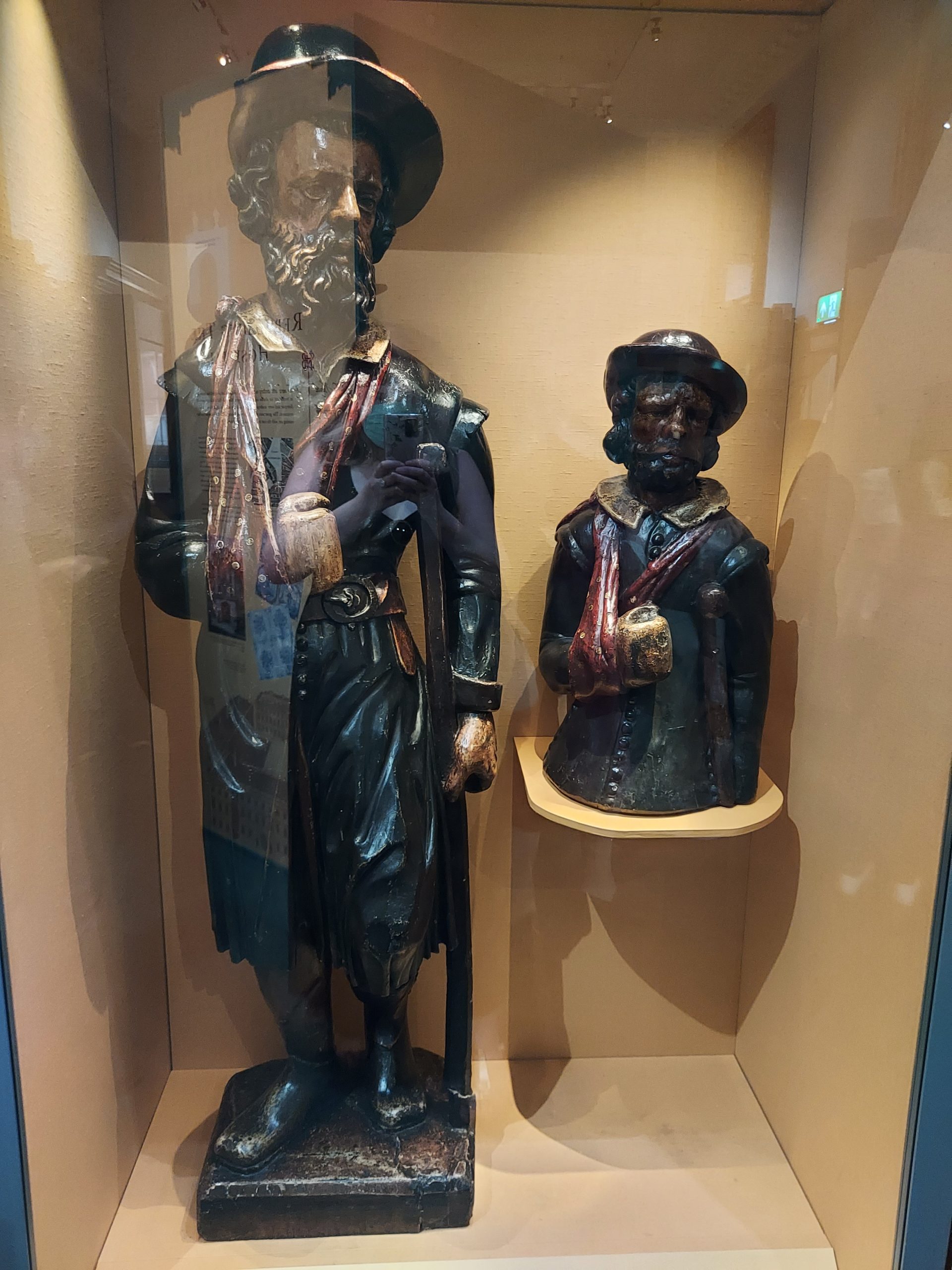
figures from the hospital
Figurines which stood outside the hospital in the 17th century

FACTS

Address: North Wing, St Bartholomew’s Hospital, West Smithfield, London, EC1A 7BE

Website: bartshealth.nhs.uk/bartsmuseum

Opening Hours: 10am-4pm Tues-Fri

Price: Free

St Pancras New Church – Open House London

St Pancras new church
St Pancras New Church

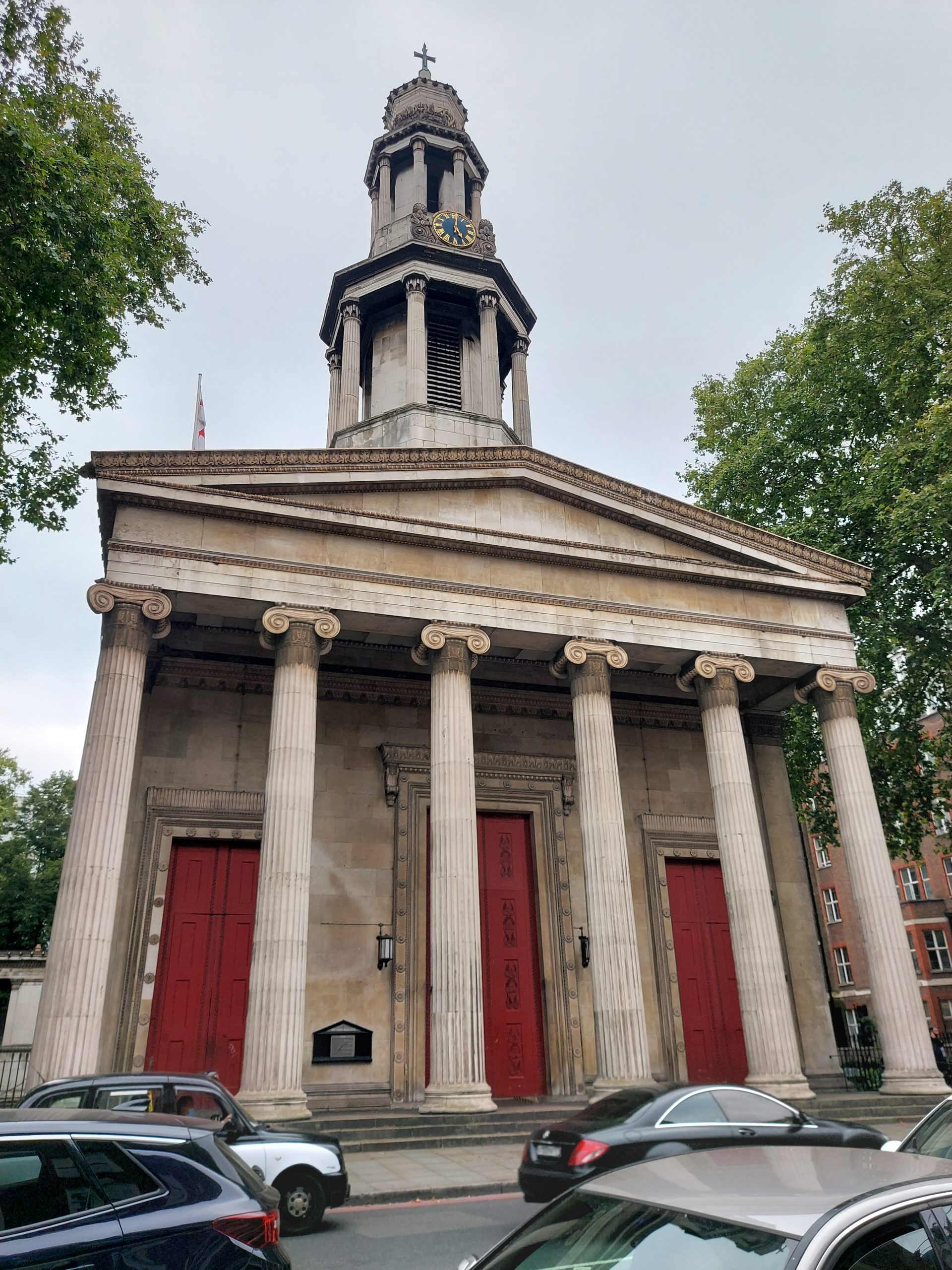
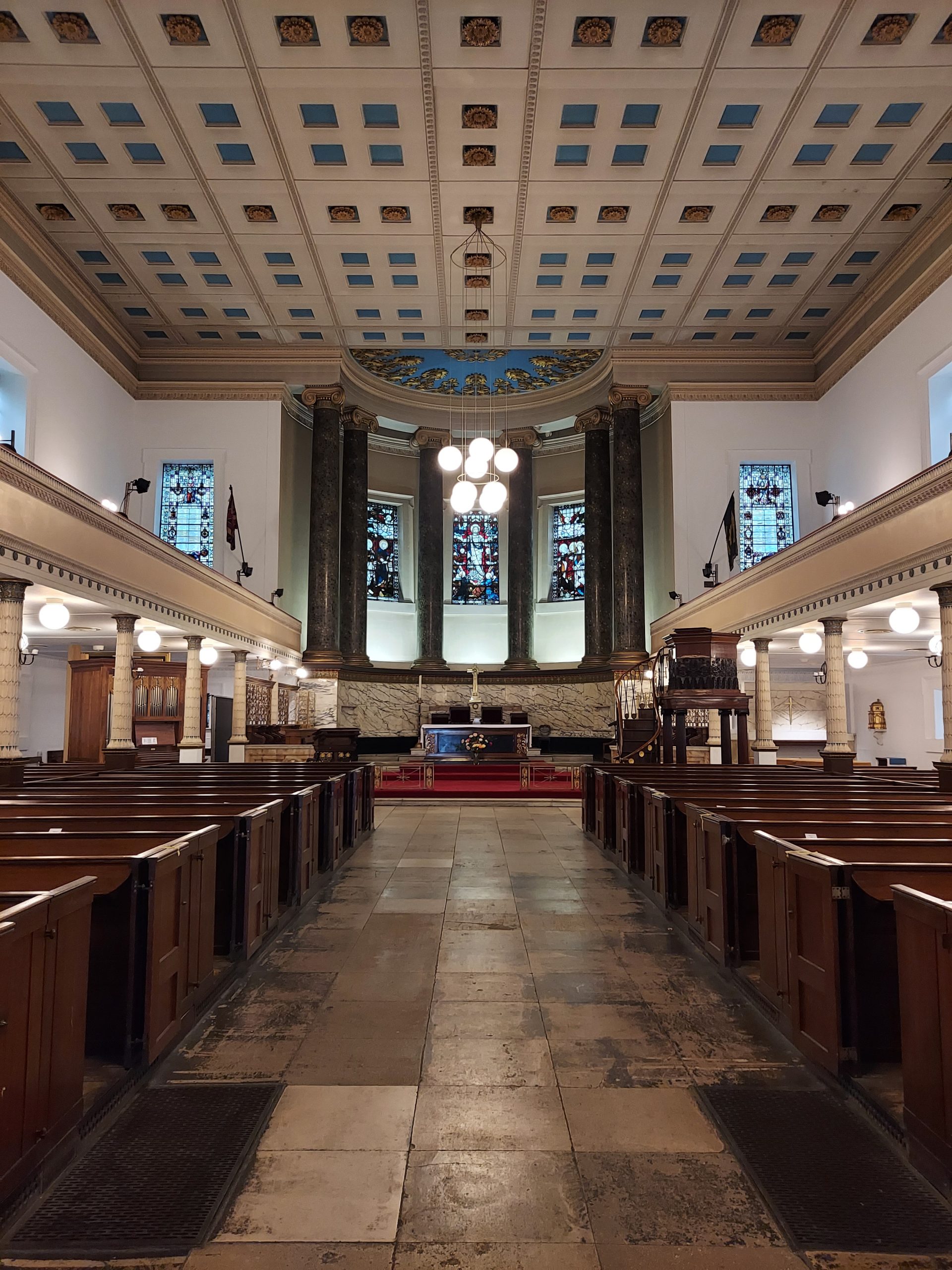
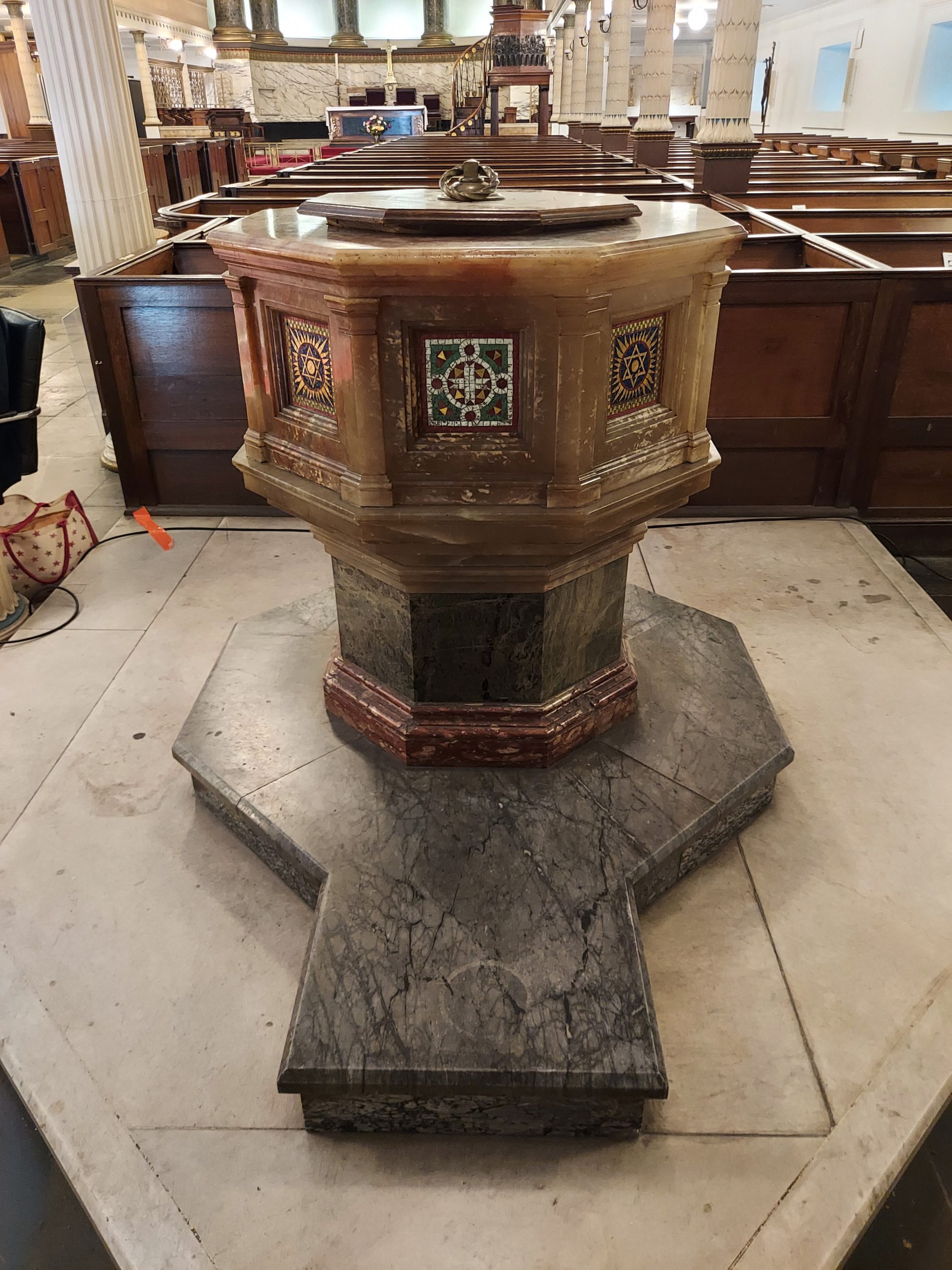
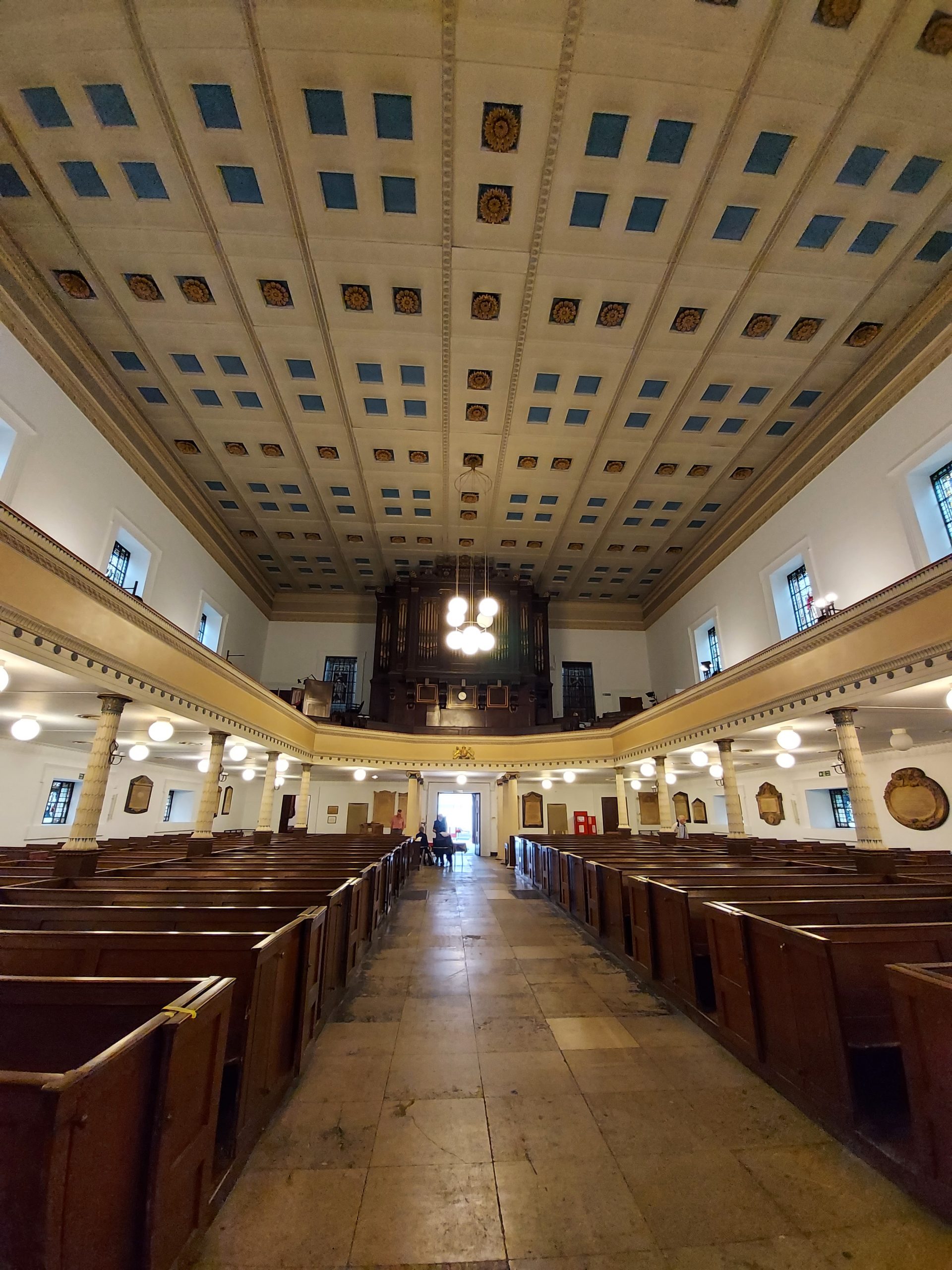
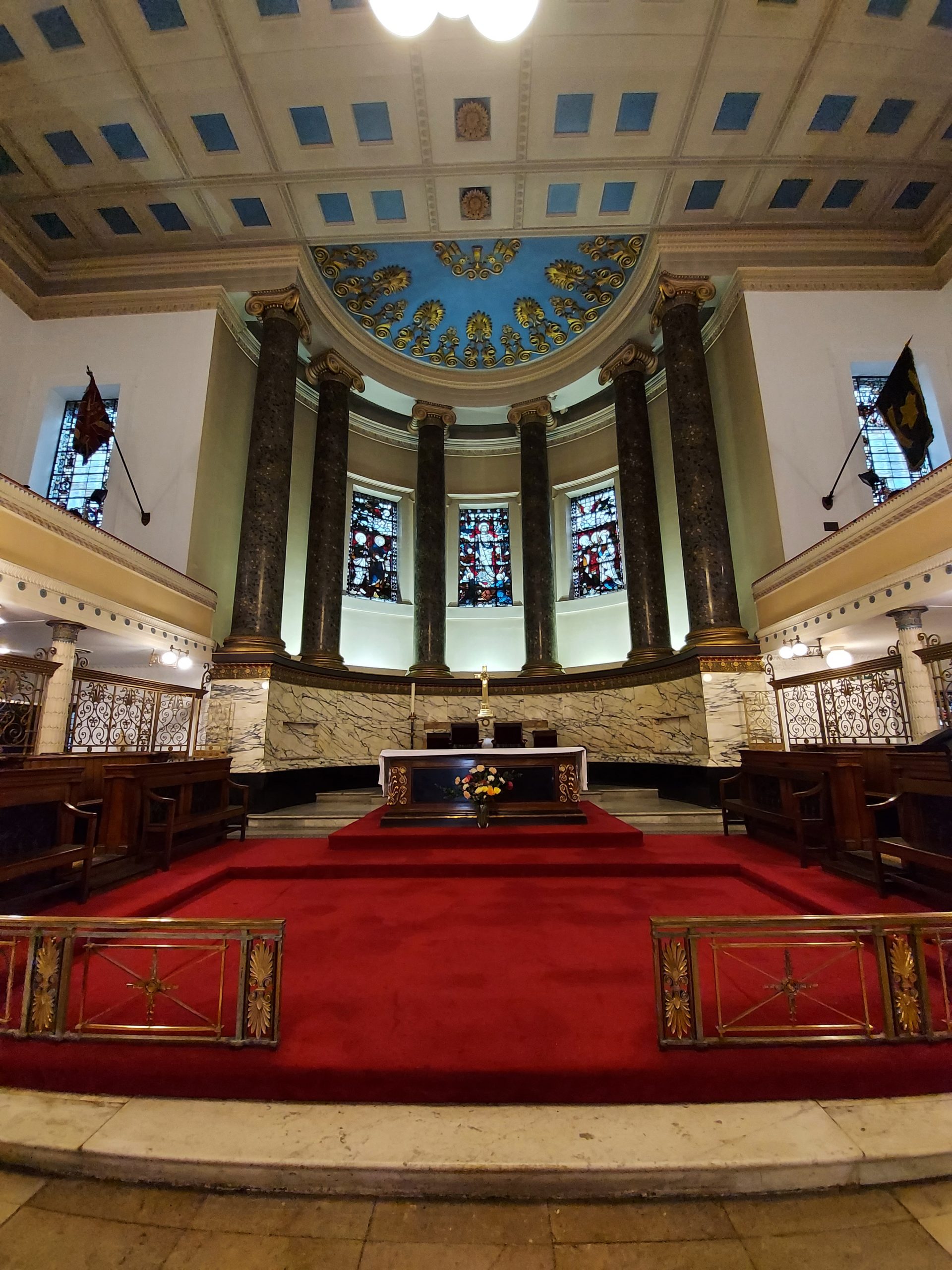
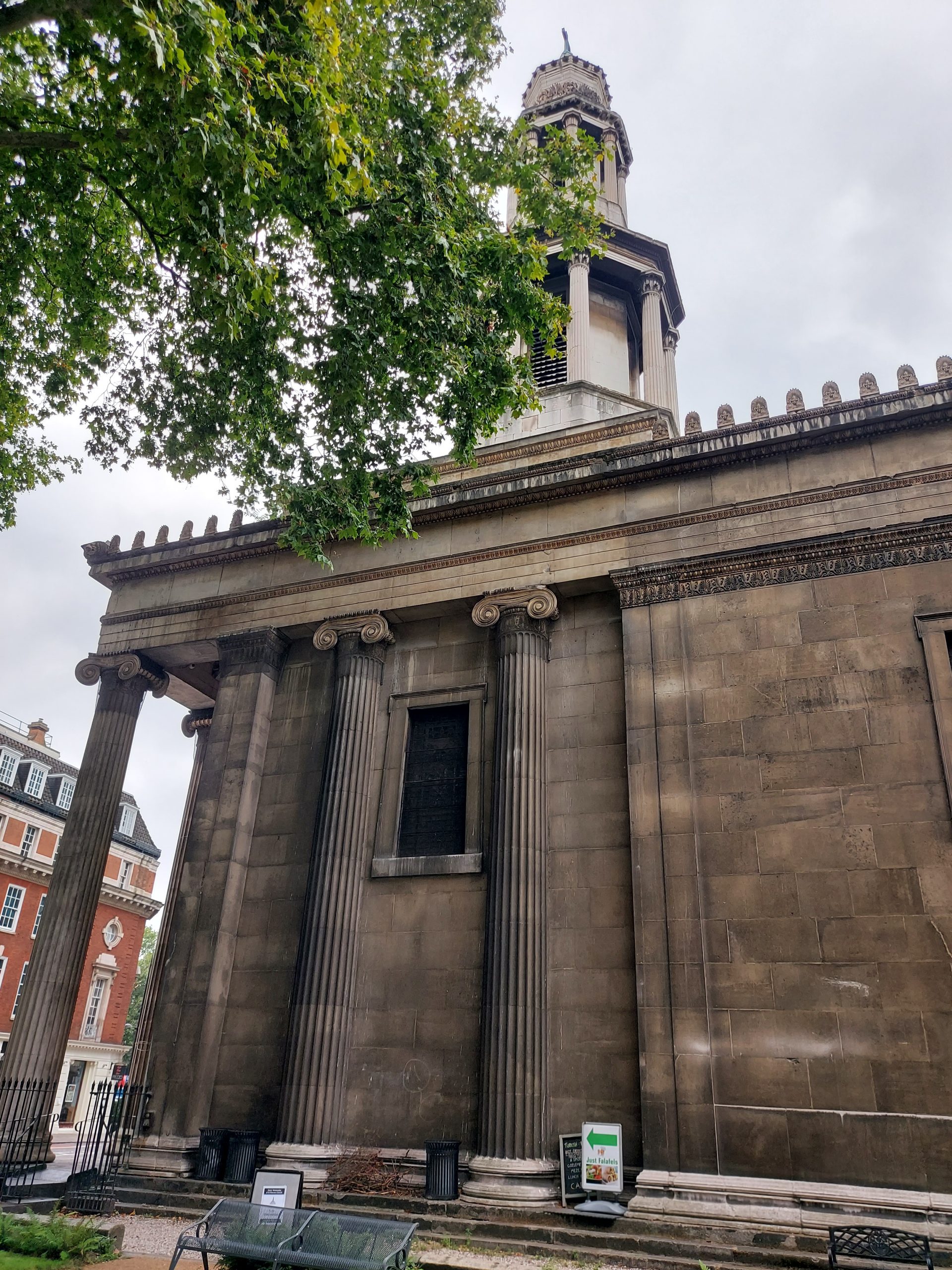
I’ve visited St Pancras Old Church before, but despite walking past it on numerous occasions I’d never been inside St Pancras New Church, built in 1822 to accommodate the increasing population of the area. Designed by architect William Inwood, with help from his son Henry William, it is a fine example of Georgian architecture, taking inspiration from Greek design and boasting an elegant simplicity. Ionic columns can be seen outside and inside the church, and the walls are a light white colour (the Victorians painted them dark red, and also installed the stained glass windows – the windows originally contained plain glass).

the church
Eastward view of the church’s interior

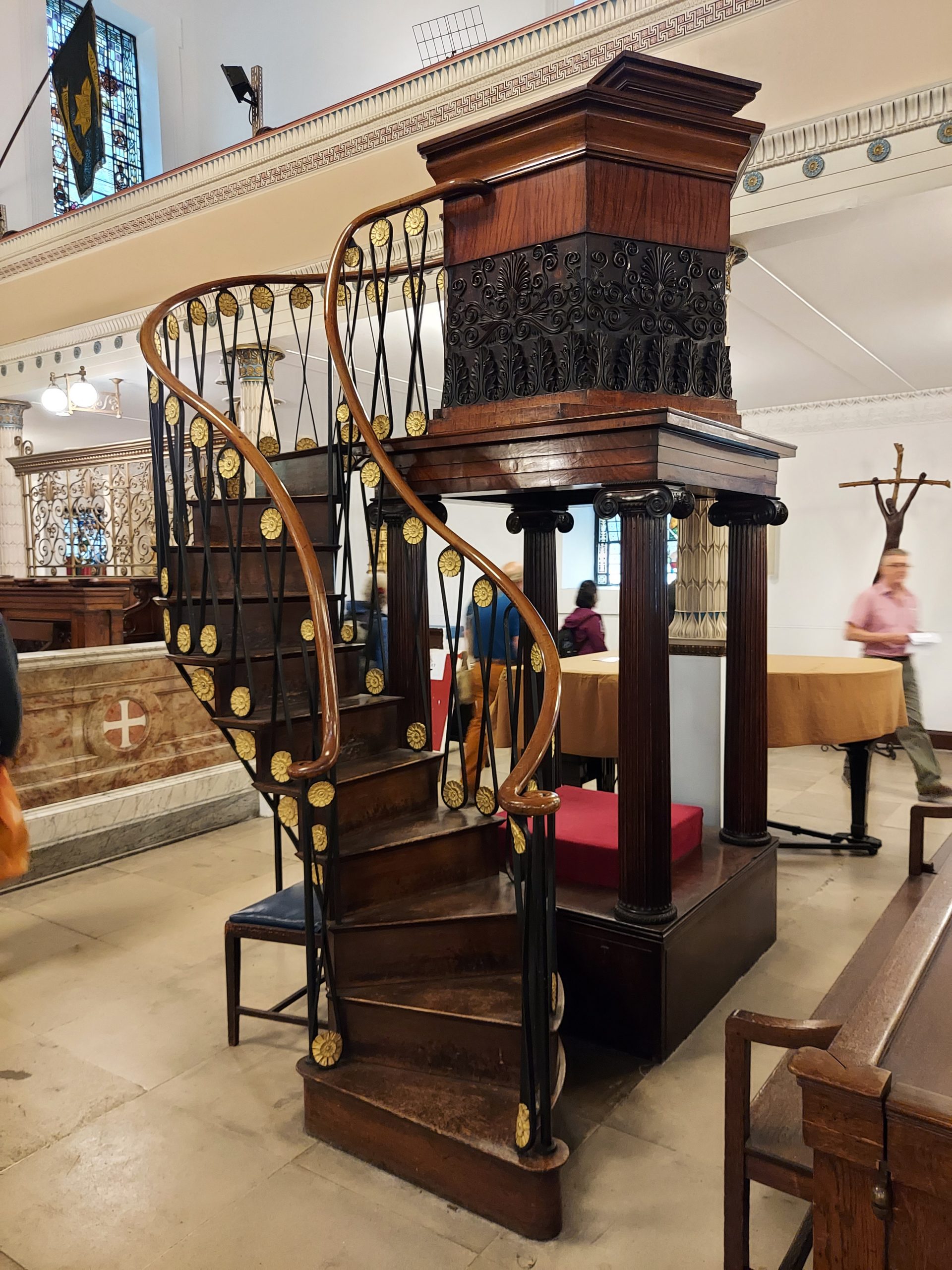
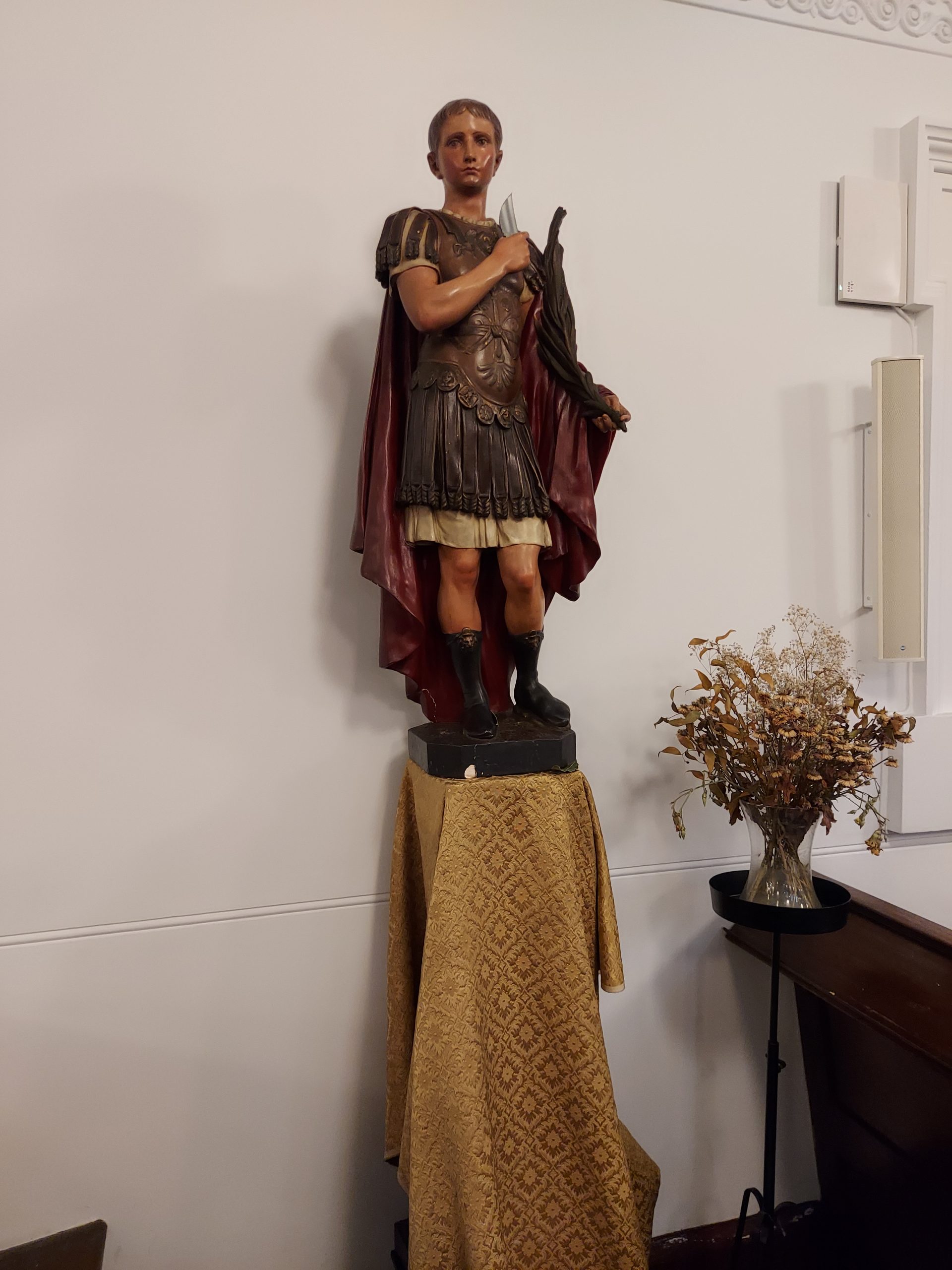
A statue of St Pancras, a Roman boy who converted to Christianity and was beheaded in 304AD for refusing to recant, stands on the left hand side of the church, surrounded by plaques dedicated to the good and the great of the parish. The font stands at the west end of the church – the base is of marble, the top of alabaster, and it dates from 1887, although the bowl inside is original. The pulpit, made from the Fairlop Oak from Hainault Forest, was originally taller, to alllow those sitting on the balcony to see and hear the speaker; it has since been shortened.If the high altar along the back wall looks familiar and rather modern, that is because it is by Charles Holden, who also designed Senate House and numerous Underground stations. It dates from 1914. The organ on the balcony at the back of the church was installed in 1864, and came from a music hall in Birmingham.

view of the church interior
View of the church interior westwards, including the organ
high altar
Charles Holden’s high altar

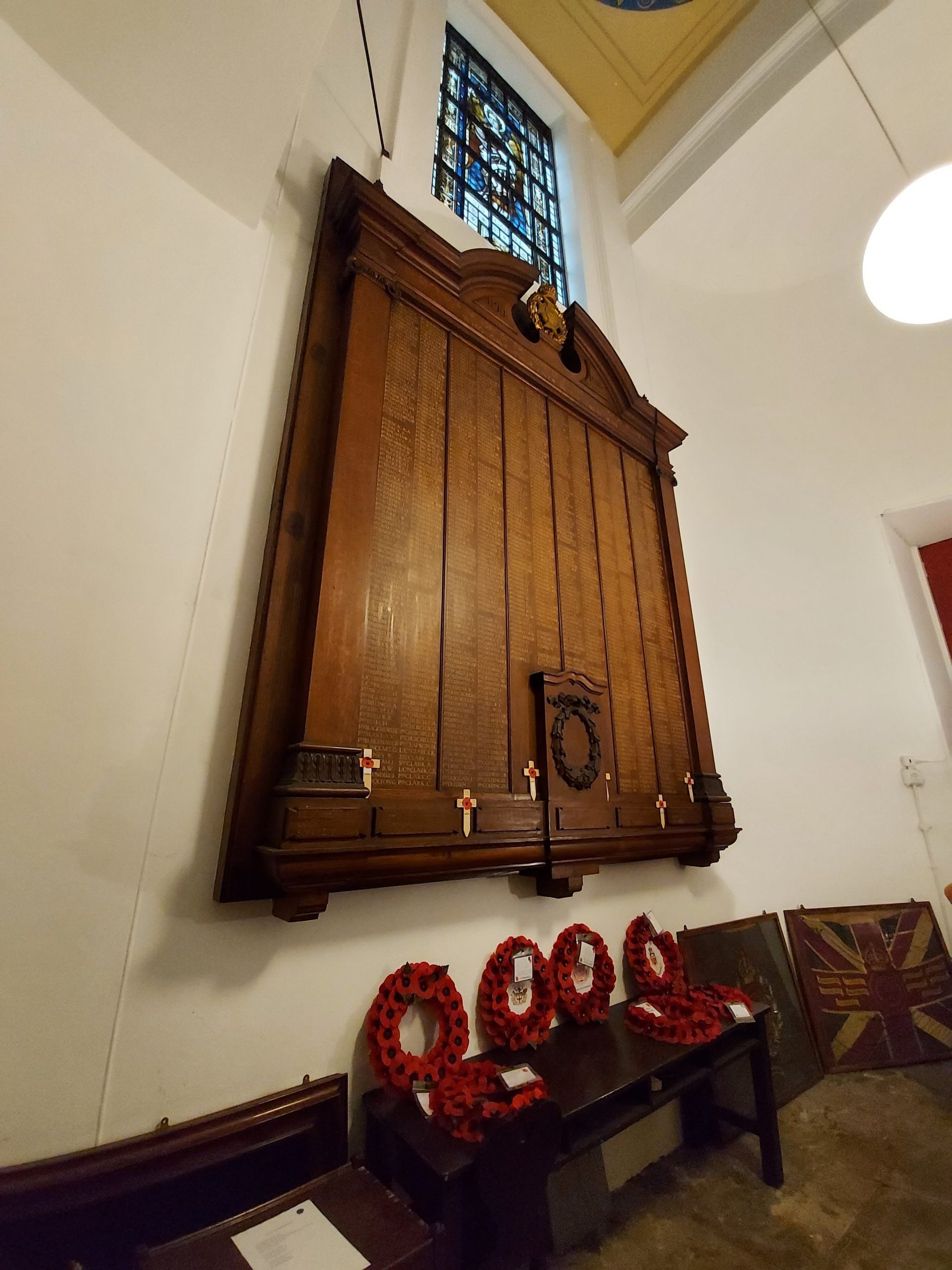
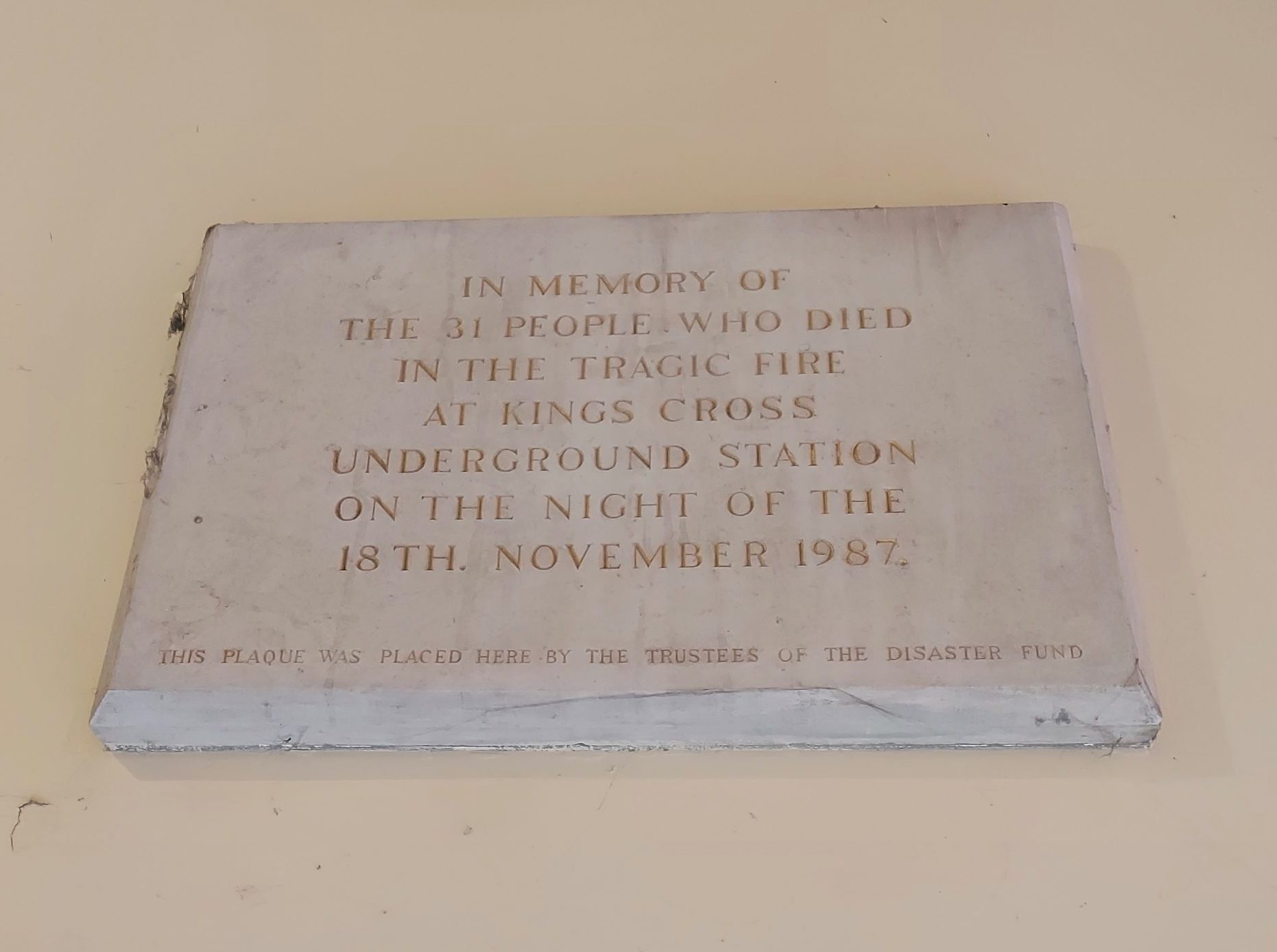
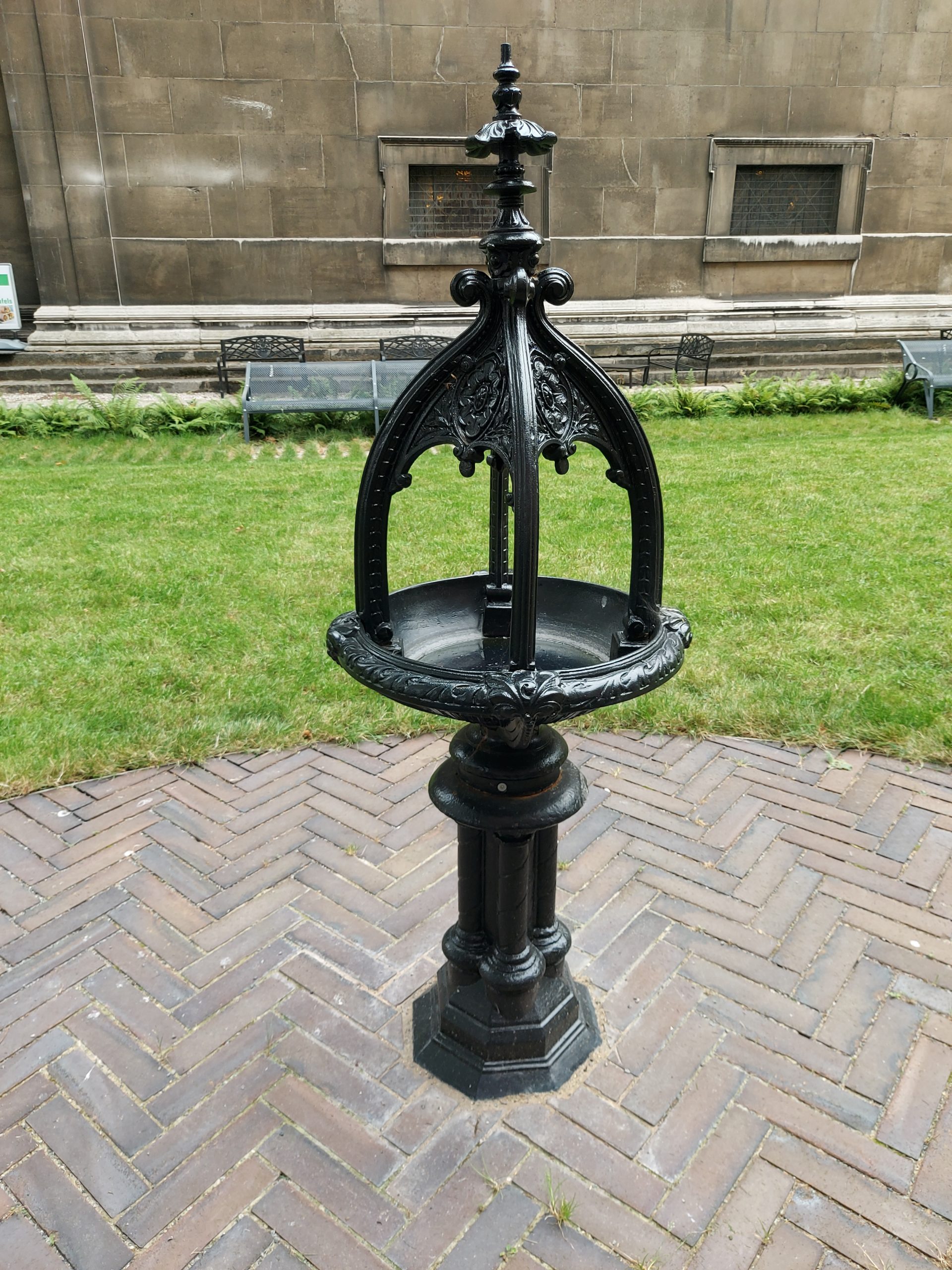
The south vestibule contains a huge memorial to the members of the St Pancras Regiment, dating from World War I. The entrance to the church contains more plaques, including one to those who died in the King’s Cross fire of 1987.There is a lovely peaceful garden at the side of the church, behind the busy main road. It contains a Victorian drinking fountain, dating from the 1880s, which was originally in St James’s Gardens, a space west of Euston station and now lost owing to the work on HS2. From the garden you can see the octagonal tower, which was copied from the Tower of the Winds in Athens. Here also you can see that in places, the Portland stone, now darkened by pollution, has retained its original bright white colour.

St Pancras church
Side view of the church

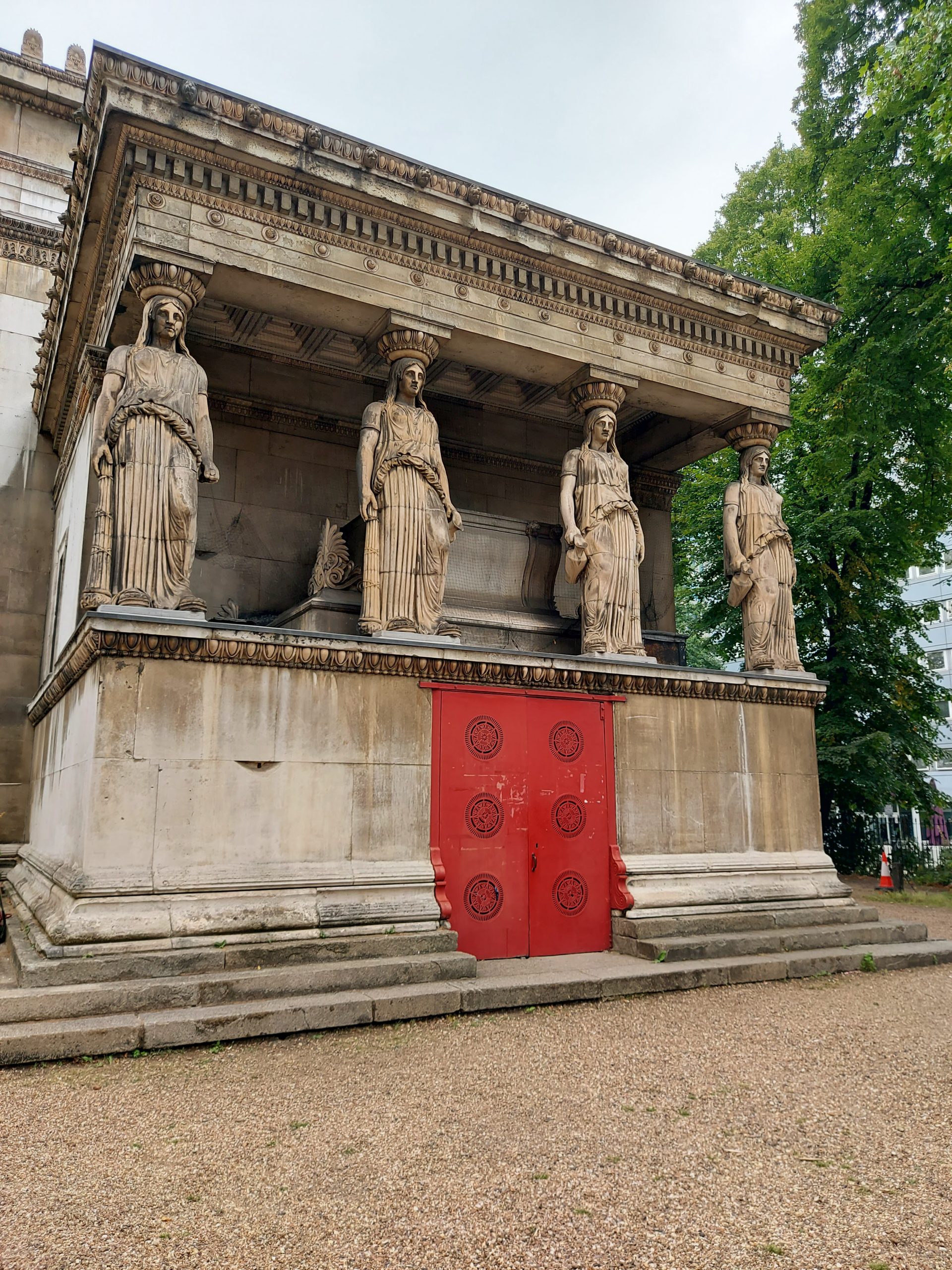
The crypt underneath the church is guarded by caryatids (statues of women holding up the roof). These were also inspired by similar statues in Athens, but had to be shortened in the middle as they were originally too big to fit. Sadly the crypt was closed by the time I got there, but it plays host to regular art exhibitions, so I will have the chance to see it in the future.

crypt
The caryatids guarding the crypt

FACTS

Address: Euston Road, London, NW1 2BA

Website: stpancraschurch.org

Prices: Free

Whitewebbs Museum of Transport – Open House London

Museum building

Open House London is taking place at the beginning of September this year, not the end, which is slightly discombobulating, Still, I organised myself well enough to plan my weekend, and decided to head up to Enfield to visit Whitewebbs Museum of Transport. The nearest station is Crews Hill, which can be reached via train from King’s Cross or Finsbury Park. From there it is a fifteen-minute walk to the museum, past seemingly every garden centre in outer London.

History

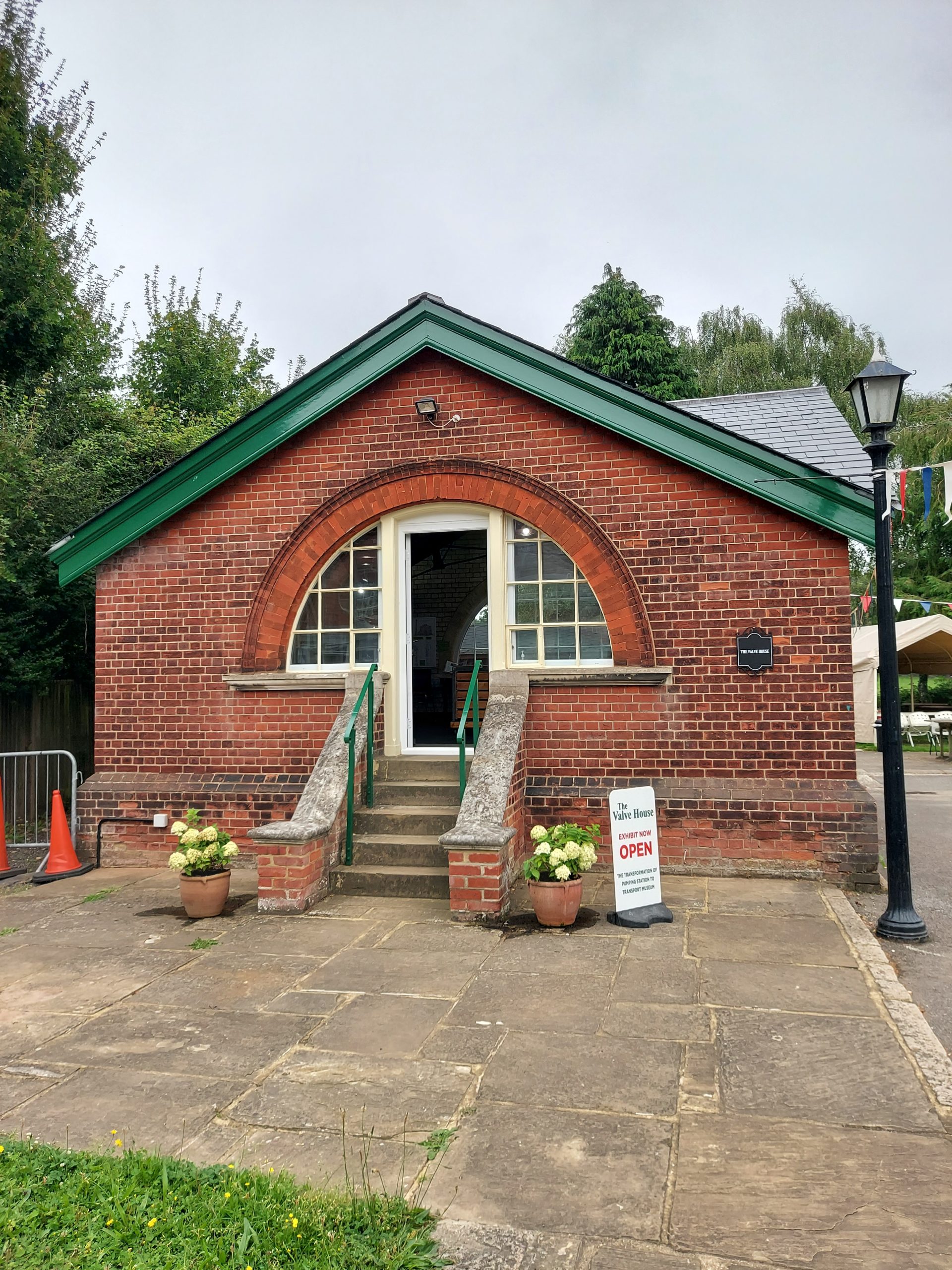
The museum was originally Whitewebbs Pumping Station, built in 1898, one of 16 such stations built to pump water from the well below ground into the New River (actually a man-made canal some 400 years old) in a bit to bring fresh water to Londoners (the river followed a different course at that time, if you’re wondering why no river can be seen nearby). This was later abandoned – most water now reaches Londoners through underground pipes – and the museum team aquired the then-derelict building in 1986. They restored the building, added floors, staircases and a cafe, and populated the museum site with other vehicles and related buildings.

Museum

Inside the building the ground floor plays host to numerous old cars. I’m no expert on vehicles but I do like imagining myself in an early-20th century open-top car with a picnic basket in the back heading out for a relaxing summer’s day, and several of these fit the bill. Others belonged to a later period – the Seventies or the Eighties.

On the first floor, the cafe led into a room full of motorbikes – one a rare Soviet model. Above this was a selection of miniature cars for children, along with an atmospheric mock-up of the kind of situation many old cars are found in – rotting away in old sheds. Alongside this car was a motorbike from the days prior to World War II.

motorbikes
On the first floor

The top floor held other artefacts such as cameras, children’s toys and even a wedding dress. One volunteer excitedly demonstrated the horse racing game, which seemed fairly ingenious. I spoke to a few volunteers in the museum: they were all lovely and very enthusiastic.

model planes suspended from the ceiling
Top floor

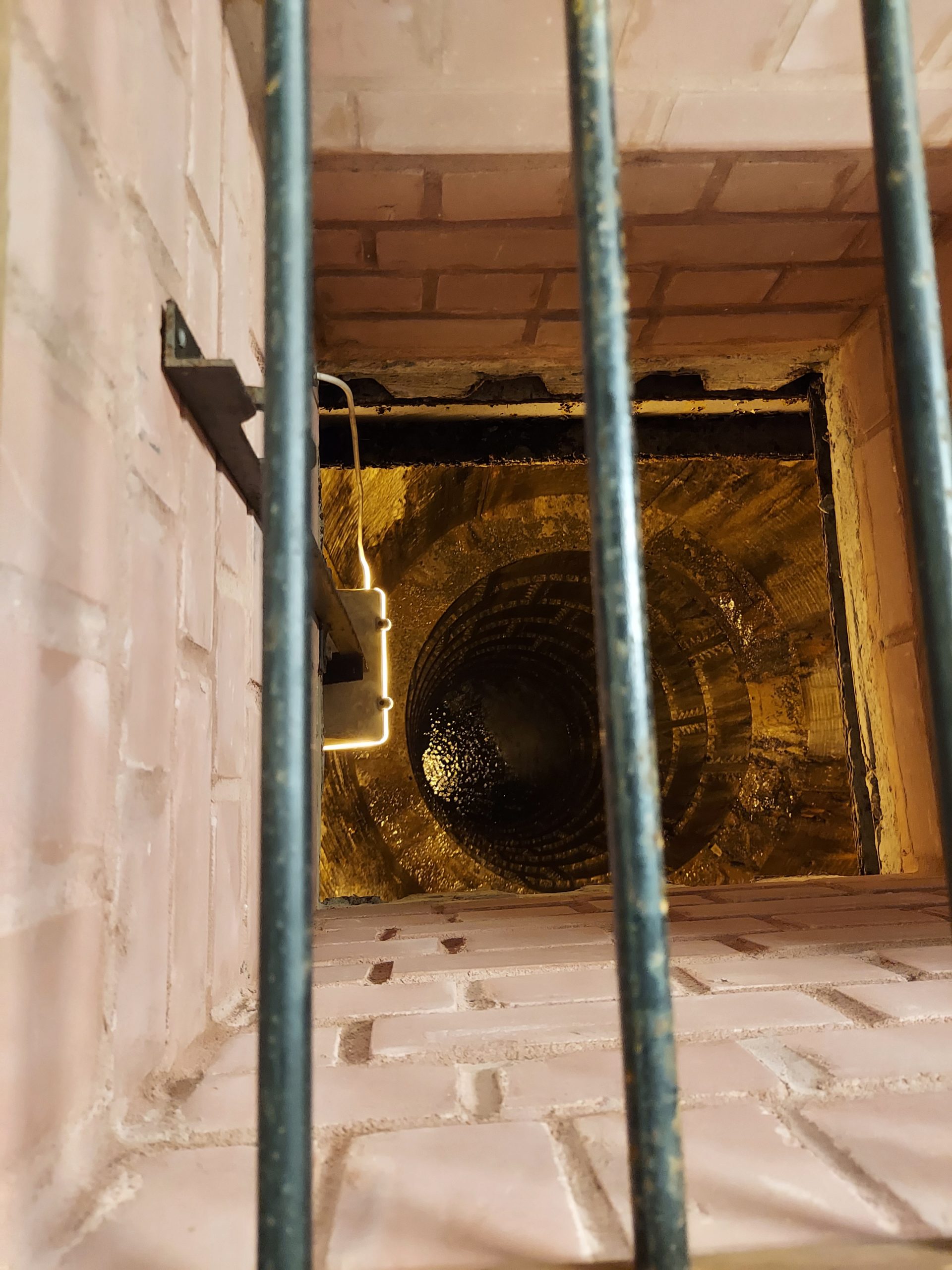
Finally, I was taken down to the basement as part of a small group to see the well whose construction provided the foundation for the entire building. I was convinced I was going to drop my phone in – luckily I managed to avoid this mishap.

the well
View into the well

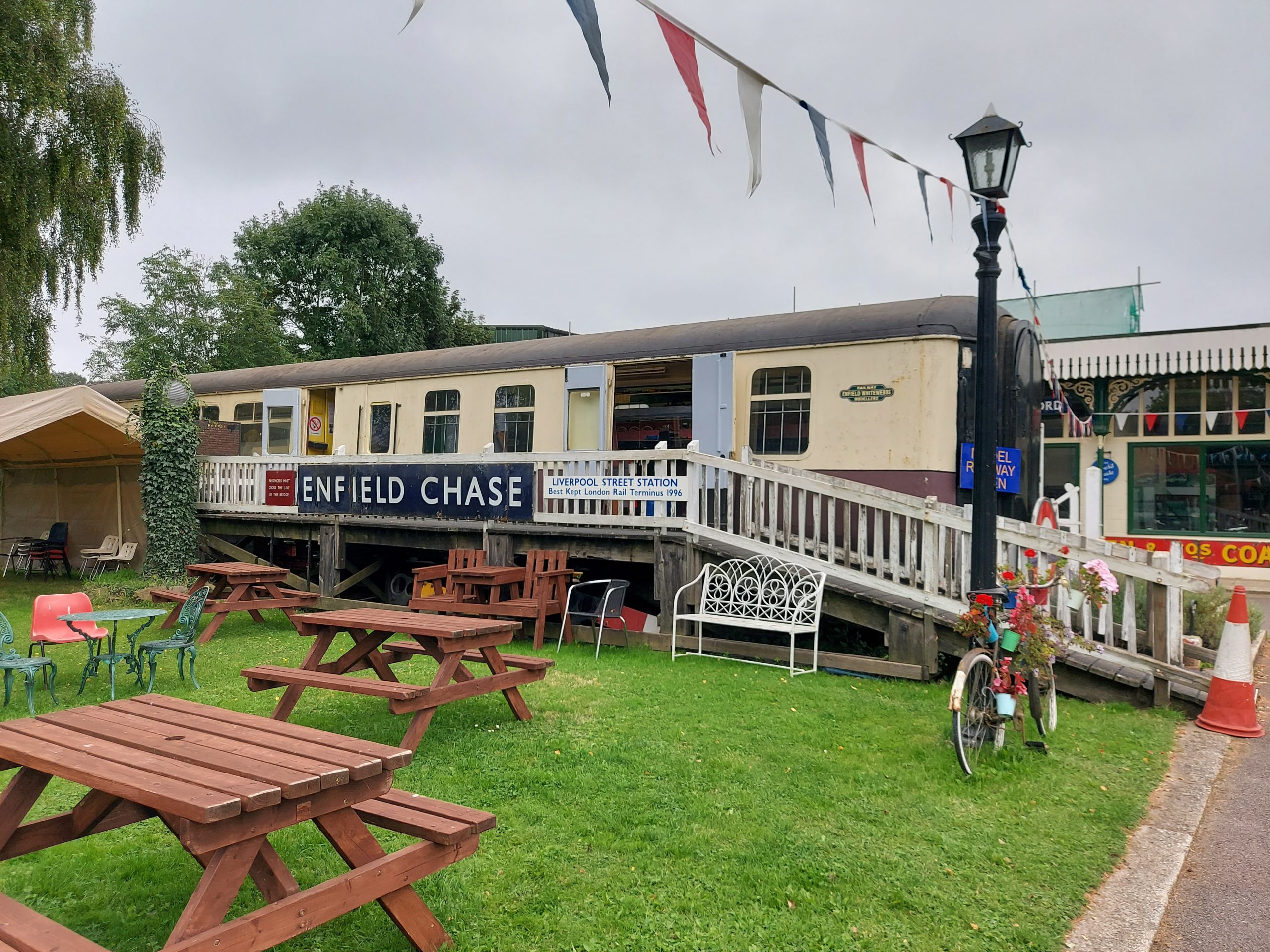
At the back of the museum, there was more to see, including garages, a fire station, ‘shops’ and larger vehicles, including early fire engines – one of which was happily spraying water onto the car park. There was also a railway carriage which played host to a model railway, as well as the original valve house which housed a plan of the original pumping station.

row of shops
At the back of the museum
old railway carriage
Old railway carriage, home to a model railway
valve house
The original valve house

Despite the distance, Whitewebbs is a worthwhile place to visit and makes for a pleasant day out.

FACTS

Address: Whitewebbs Road, Enfield, EN2 9HW

Website: whitewebbsmuseum.co.uk

Opening Hours: 10am-4pm Tues, last Sunday of each month

Price: Adults £7, children under 12 free

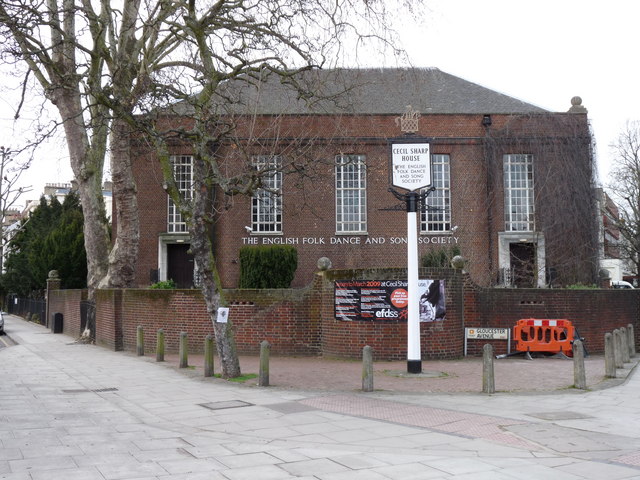
Historical Pageants Day & Evening – Cecil Sharp House

It might not sound like the most exciting way to spend a Saturday, but I decided to attend the Historical Pageants Day and Evening at Cecil Sharp House, and I really enjoyed myself. I booked to attend because I’m interested in history, but I didn’t really know anything about historical pageants. By the end of the day, I not only knew a lot more, but I had a strong urge to attend a pageant myself.

The introduction to the day was provided by the enthusiastic and informative Paul Readman from King’s College London. He explained how historical pageants were popular from the early to mid-20th century, with the first pageant of this type generally held to be the Sherborne Pageant of 1905. Further pageants were held around the country in subsequent years, some of them written by and starring local dignitaries, others featuring the likes of E. M. Forster and Ralph Vaughan Williams, but all of them featuring local people as part of the wider cast. Pageants told stories of the local area, typically from the ancient Roman and medieval periods; many of them were painstakingly researched, often by actual historians, but they also included myths and legends from the locality, and rewriting of history was common. My favourite example of this was a photograph from Birmingham’s 1938 pageant featuring Egbert the dinosaur surrounded by cavepeople – even at the time people knew that humans and dinosaurs did not roam the earth together, but why let that get in the way of an amusing scene? Queen Elizabeth I often made an appearance in pageants, even when her presence was historically anachronistic – perhaps because her name was linked with an idea of ‘Merrie England’.

Pageants were particularly popular in the cities of the midlands and the north such as Carlisle and Birmingham. They were hugely popular to watch, attended by millions of people. Many pageants made use of modern technology, such as film: in fact, one pageant, the Glastonbury Pageant of 1922, was created as a film rather than a live experience. Later in the century, pageants used amplification and recording tech, as well as advertising to get the word out.

Some aspects of pageantry could be seen as fairly conservative, with the past viewed through rather rose-coloured glasses, but pageants were popular all along the political spectrum – even the Communist Party had one. Often the aim was to bring people together by acting out a shared history, but even at the time there were discussions about inclusion, and these attempts were not always successful.

Pageant-making was less popular in the latter half of the century, although some pageants did take place. They rarely happen now, but Axbridge in Somerset has established a tradition of a pageant every ten years (the next one is set for next year, rescheduled from 2020 for pandemic-related reasons). I would very much like to attend!

After this introduction, Parker Gordon from the University of St Andrews gave a talk on pageant music, which served a variety of functions including creating drama, cueing speakers and simply passing the time – one instruction found in a sheet of pageant music advised the musicians to continue playing the motif over and over while a bunch of horses and their riders made their way down the hill. Military bands were often deployed during pageants, as their music carried, but some pageants featured piano music and some with less of a budget even used gramophones. Following this talk, Angela Bartie from the University of Edinburgh discussed oral histories of pageants at Bury St Edmunds and Carlisle. The most memorable anecdote featured a former participant describing how, dressed as a redcoat soldier, he found himself in the dungeons of Carlisle Castle (where Jacobite soldiers were formerly held) and felt rather spooked.

Next we saw some video footage: firstly of Bury St Edmunds pageants in 1907, 1959 and 1970, and then of the St Albans millenary pageant of 1948. It was interesting to see how styles and focus changed over a period of half a century, and the aspects of life each pageant chose to illustrate. After lunch there were more short talks, with subjects including David Clarke, ‘the last pageant master’, the 1910 Saffron Walden pageant, and experiences of researching historical pageantry.

Throughout the day, information boards and exhibition items concerning pageants (such as photographs, postcards and souvenirs) were on display around the hall. After a break, it was time for the evening part of the programme which featured scenes from the forthcoming Axbridge Pageant (which were great fun) as well as pageant music by composers such as Ralph Vaughan Williams and Martin Shaw. After an interval there were performances of folk songs by the Boyd-Shaw trio which were accompanied by archive film from the Carlisle and St Albans pageants. I left knowing a lot more about historical pageants, and I definitely hope to attend one some day.

Florence Nightingale Museum

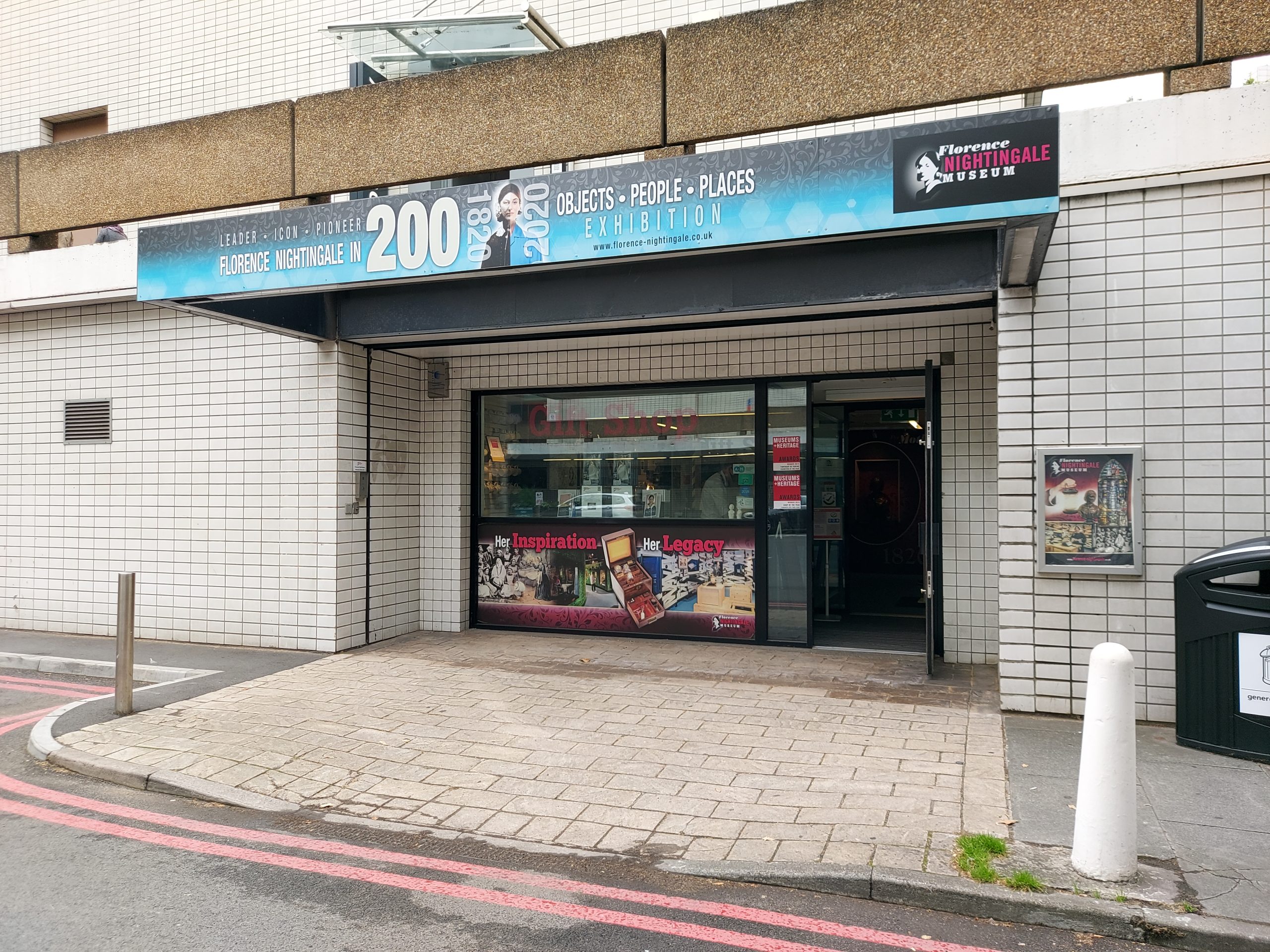
Florence Nightingale Museum

On the Saturday before I went back to work, I headed down to the Florence Nightingale Museum. I had been planning to go for a while, but then COVID hit. The museum has reopened – albeit only on the first full weekend of each month – so I took this opportunity to visit. The museum, which is on the site of St Thomas’ Hospital, can be reached via Waterloo station or via Westminster station and then crossing Westminster Bridge, which is how I got there.

Turkish lantern
Florence’s famous lamp

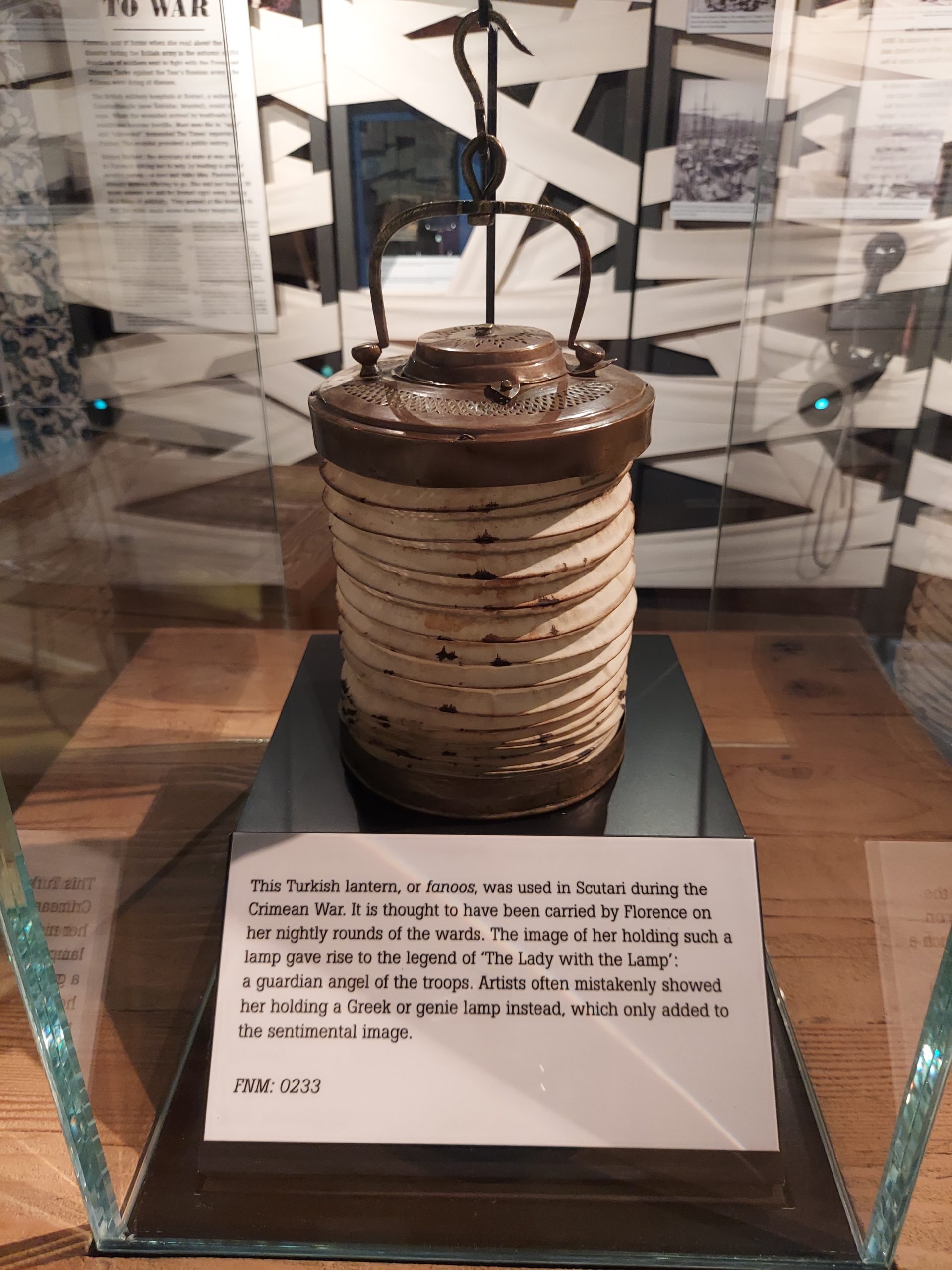
The museum explores the life of Florence, the famous Crimean War nurse who was known as “The Lady with the Lamp”. The current exhibition Florence Nightingale in 200 Objects, People & Places marks the 200th anniversary of Florence’s birth in 1820 (originally planned for 2020, the exhibition has been extended into 2021). In the museum and exhibition there are countless artefacts that bring Florence to life and tell her story.

stuffed owl
Athena, Florence’s pet owl

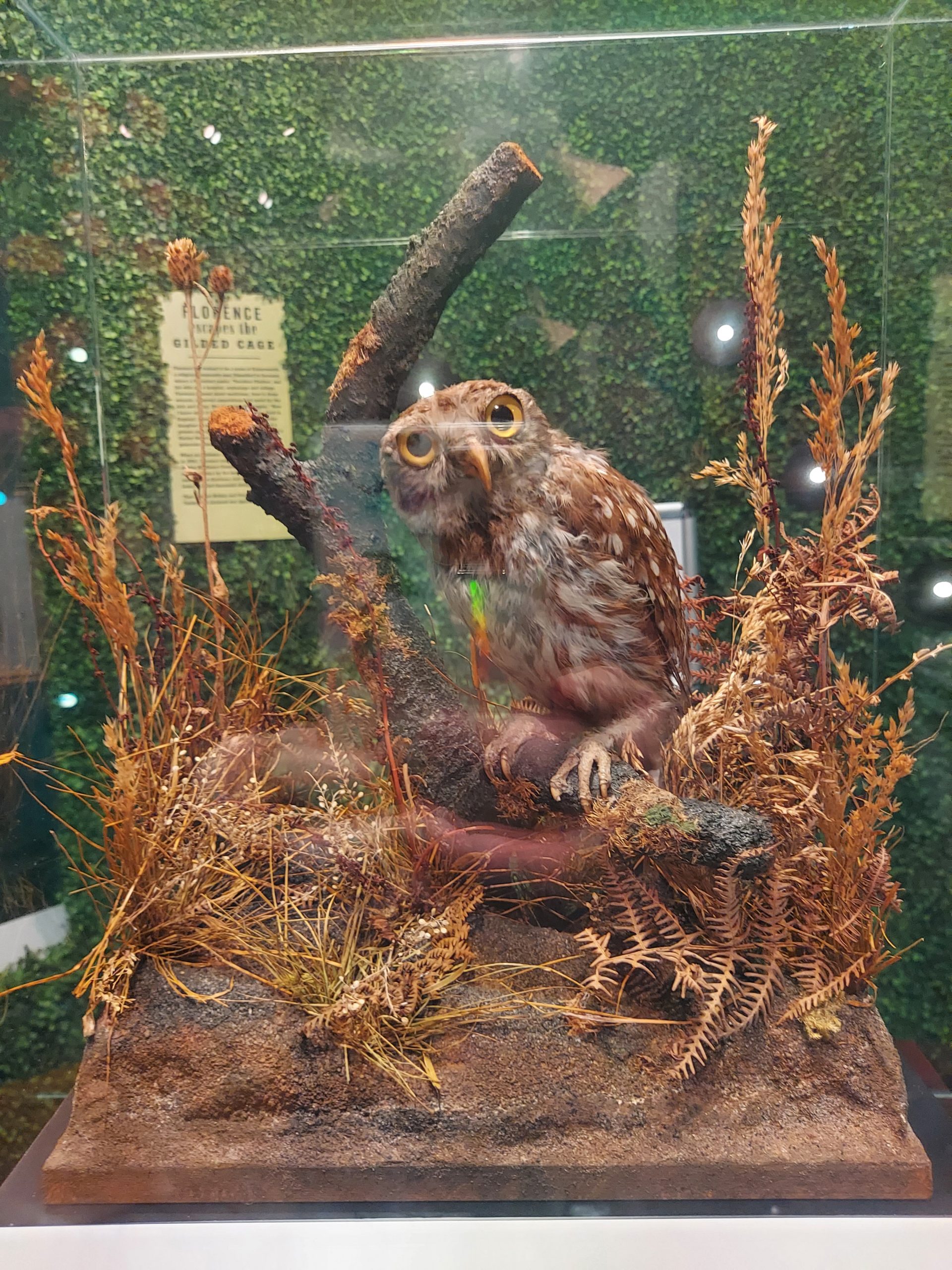
The first section of the museum covers Florence’s childhood, growing up in a middle-class educated family. Artefacts such as photos, sketches and books belonging to her and her sister Parthenope are displayed here, alongside more unusual exhibits such as Florence’s pet owl Athena, stuffed after its death. Bibles and prayer books show Florence’s religious faith, and other books and novels reveal the breadth of her education.

photographs and paintings
Pictures of Florence and her sister

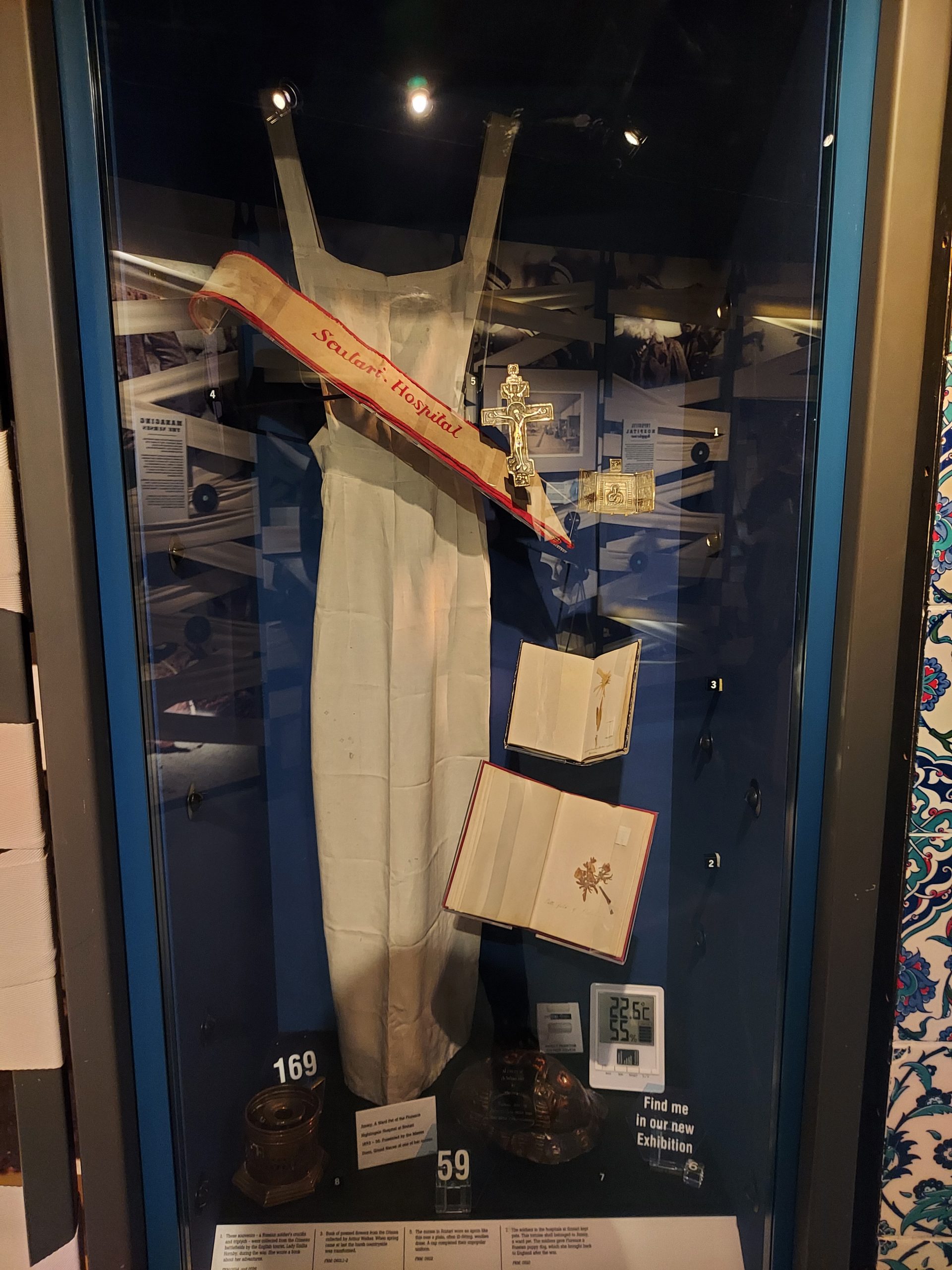
The next section looks at the time Florence spent nursing in the Crimea, with artefacts from the time including medicine chests, nurse’s uniforms and record books. Florence’s main strengths were in management and organisation, and she kept her trainee nurses in line – sometimes rather strictly. She also – crucially – implemented hygienic practices such as handwashing, which helped to reduce the death rate, as most soldiers died due to poor sanitation rather than injuries.

nurse's uniform
Nurse’s uniform and artefacts

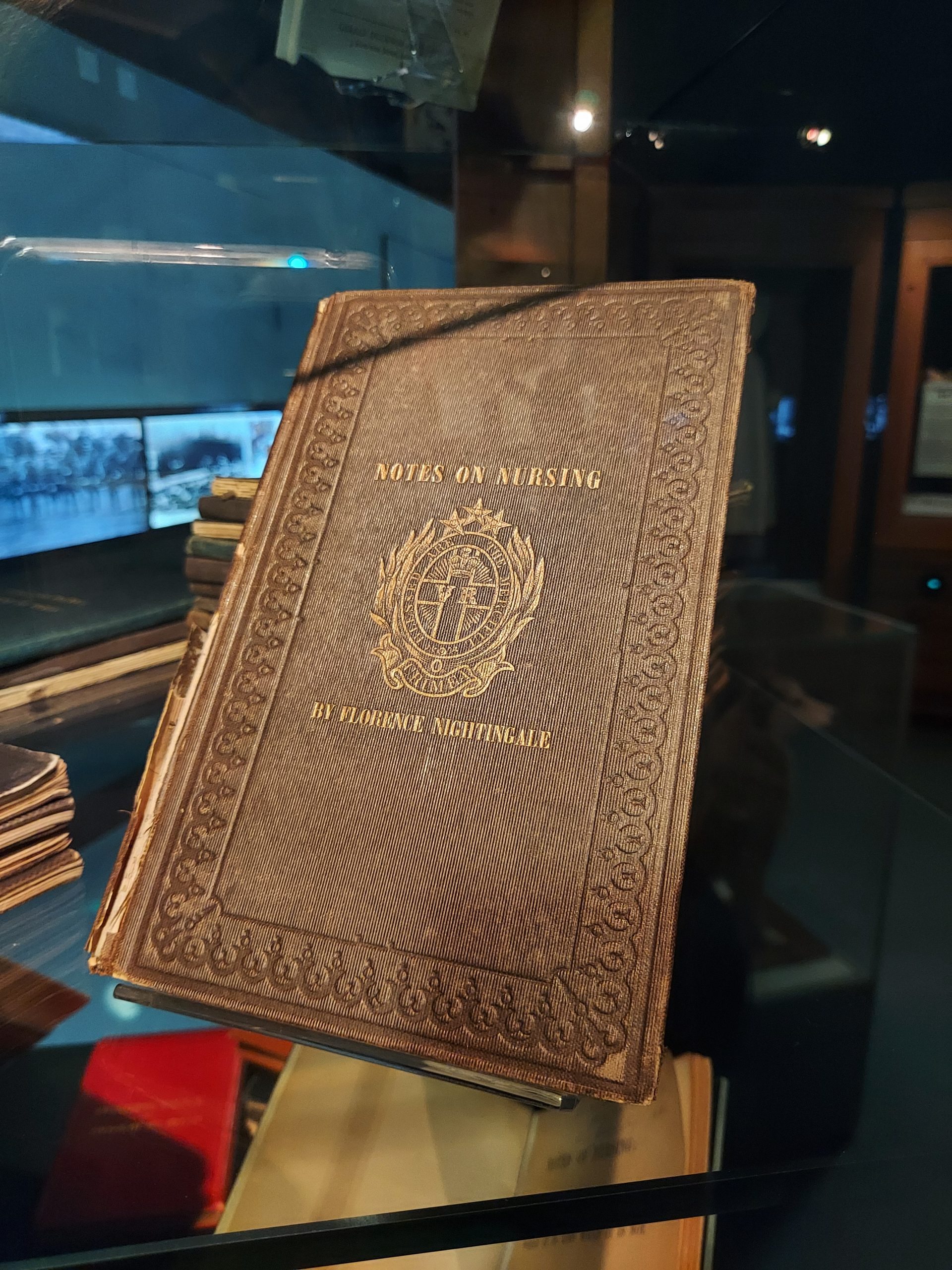
After the Crimea, Florence set up a nursing school back in England and published Notes on Nursing, a classic of the genre. She influenced the sphere of nursing for decades to come. This section also looks at nursing in a wider context, and features other notable nurses such as Edith Cavell (her stuffed dog is on display here) and Mary Seacole. The special exhibition section at the back of the building had lots more objects including letters, photographs, documents, and even a Florence Nightingale Barbie which was released last year.

brown book
Nightingale’s ‘Notes on Nursing’

The museum is well worth a visit: it has plenty to see and everything is well organised and displayed. Book a visit soon and support this small but worthwhile museum.

FACTS

Address: St Thomas’ Hospital, 2 Lambeth Palace Road, London, SE1 7EW

Website: florence-nightingale.co.uk

Opening Hours: First full weekend of every month, 10.15am – 4.30pm

Price: Adult £9, concession £7, student £6, child £5

Benjamin Franklin House – Architectural Tour

The Benjamin Franklin House has been a visitor attraction in London for years, but I’d never got around to visiting, until now. Looking for something to do during my week off, I found the museum’s website which advised that architectural tours run every Friday. It’s not often I get a Friday off when I’m in London, so I booked straight away.

Benjamin Franklin House

Benjamin Franklin was one of the Founding Fathers of the United States of America. He was a polymath and one of the leading intellectuals of his time. The Grade 1 listed house is at 36 Craven Street, a Georgian side street not far from Charing Cross station and Trafalgar Square – it really is very central. It dates from around 1730, and Franklin lodged there for 16 years between 1757 and 1775 in his role as chief colonial diplomat. The street would have looked very different at the time – this was before the Embankment was built, so the Thames would have been much closer to the house.

brown door
Front door

As it turned out, it was a quiet day and there were only two of us on the tour, but the house had been decorated in red, white and blue in preparation for Independence Day celebrations at the weekend. We were shown around the house starting with the basement: a brown plaque is on display here that was originally on the side of the wrong house on this street. A room here is devoted to the history of the house, which served as a lodging house for much of its life before being converted into a hotel in the 20th century. In the late 1990s, the Friends of Benjamin Franklin House were granted the freehold to 36 Craven Street from the British government, and set about restoring the property.

display table
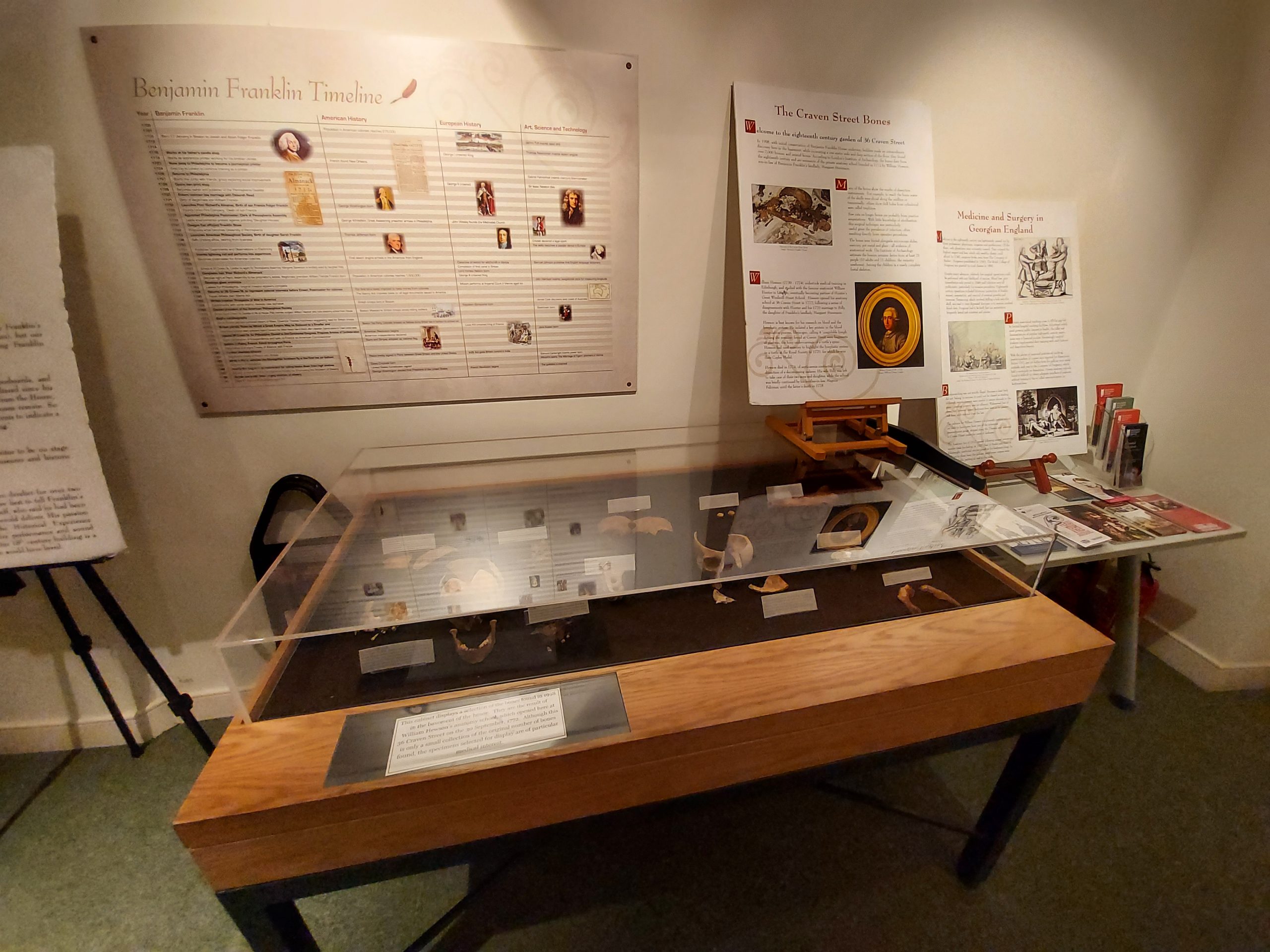
Human bones found during excavation

During the excavation, a number of human bones were found. It is believed that William Hewson, Franklin’s landlady’s son-in-law, was responsible for these remains: an early anatomist, he had been living in the house for two years and working in secret, as well as running an anatomy school. The basement is also where the kitchen is located, where food would be cooked for the landlady, her family and lodgers. The kitchen includes a recess built into the wall – historians aren’t certain what it is, but some believe it may have been a kind of early fridge.

sitting room
Sitting room

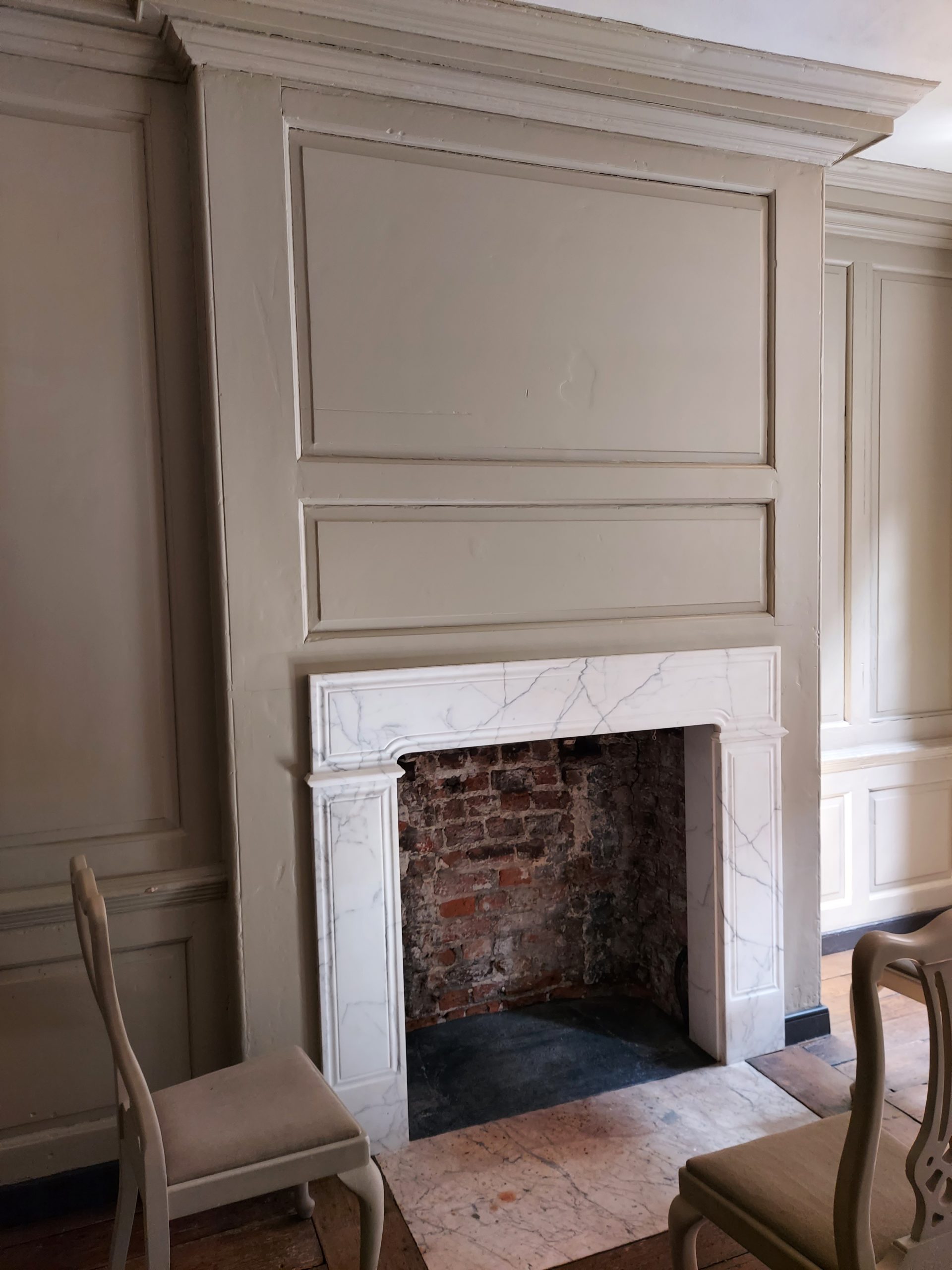
The ground floor was the main sitting room used by the family – as a valued and longstanding guest Franklin was also able to spend time here. The address gained a reputation as the ‘first American embassy’ as he used to invite statesmen and cultural figures to discuss events of the day. Many of the features in this room are original, such as the two-part window shutters, although parts of the fireplace are not. The floor slopes in places, being built on slightly uneven ground. On this floor, our guide also showed us the mechanism by which the door would have been kept shut by means of a chain.
window
Window featuring original shutters

Upstairs is the set of rooms inhabited by Franklin, although at the time it would have been one big room. He apparently used to ‘sunbathe’ naked with the windows wide open – luckily this was early in the morning so no one else would have had to see this sight. Franklin also used to go swimming in the Thames to keep fit – presumably the pollution levels were lower then than they would later become. The back of the house holds a key and kite display in honour of one of Franklin’s most famous experiments, and the fireplace contains a bust of Franklin, currently topped with a jaunty party hat.

large spacious room
Franklin’s room

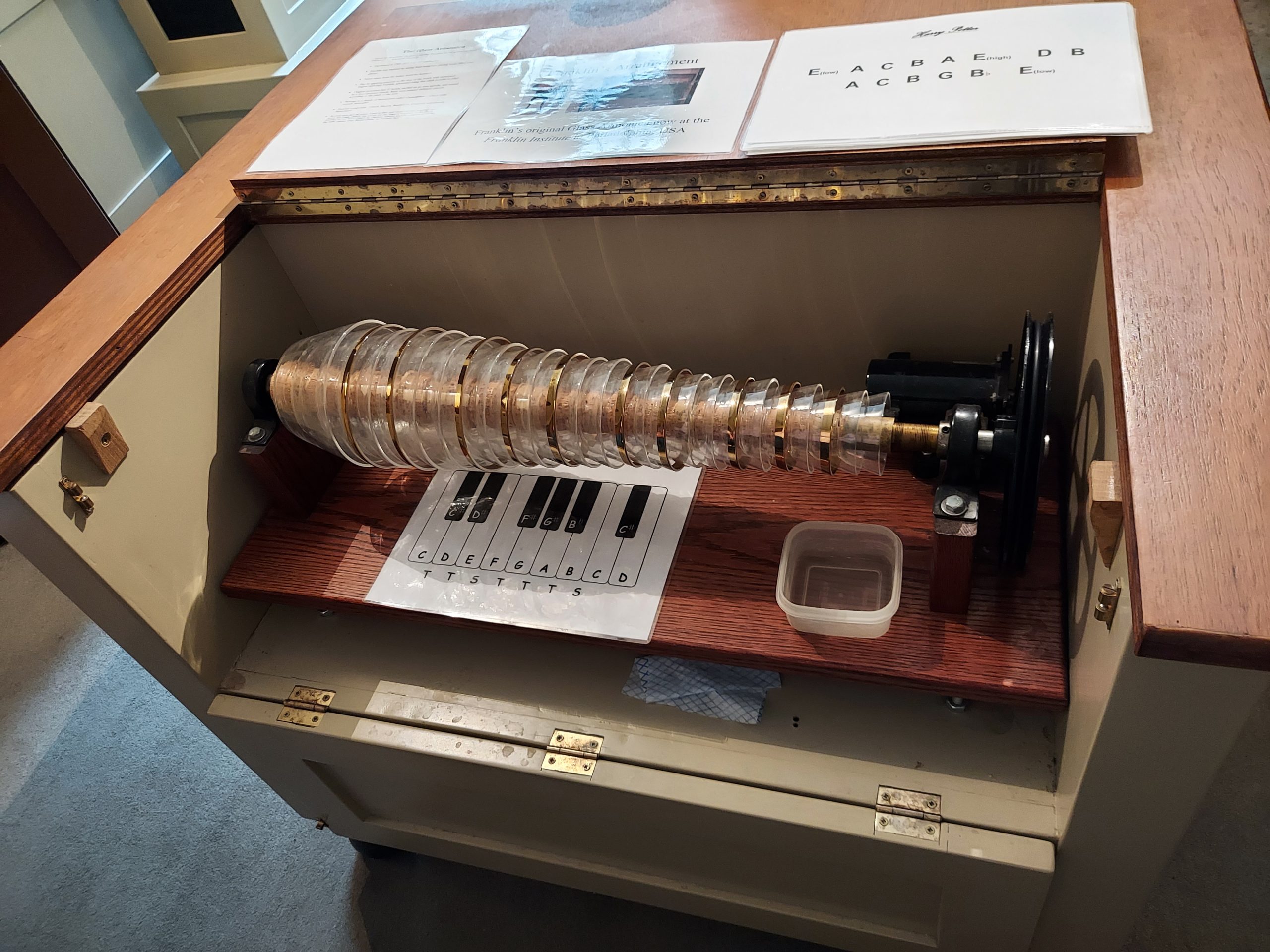
Above this were rooms used by the landlady, similar in style to Franklin’s below, while above this were rooms used by other lodgers. Today these rooms host educational resources, including Franklin’s own invented instrument, a glass harmonica.The tour was fascinating and I definitely plan to return for the Historical Experience.

glass harmonica
Glass harmonica

Noël Coward: Art & Style – Guildhall Art Gallery

entrance to Noel Coward exhibition

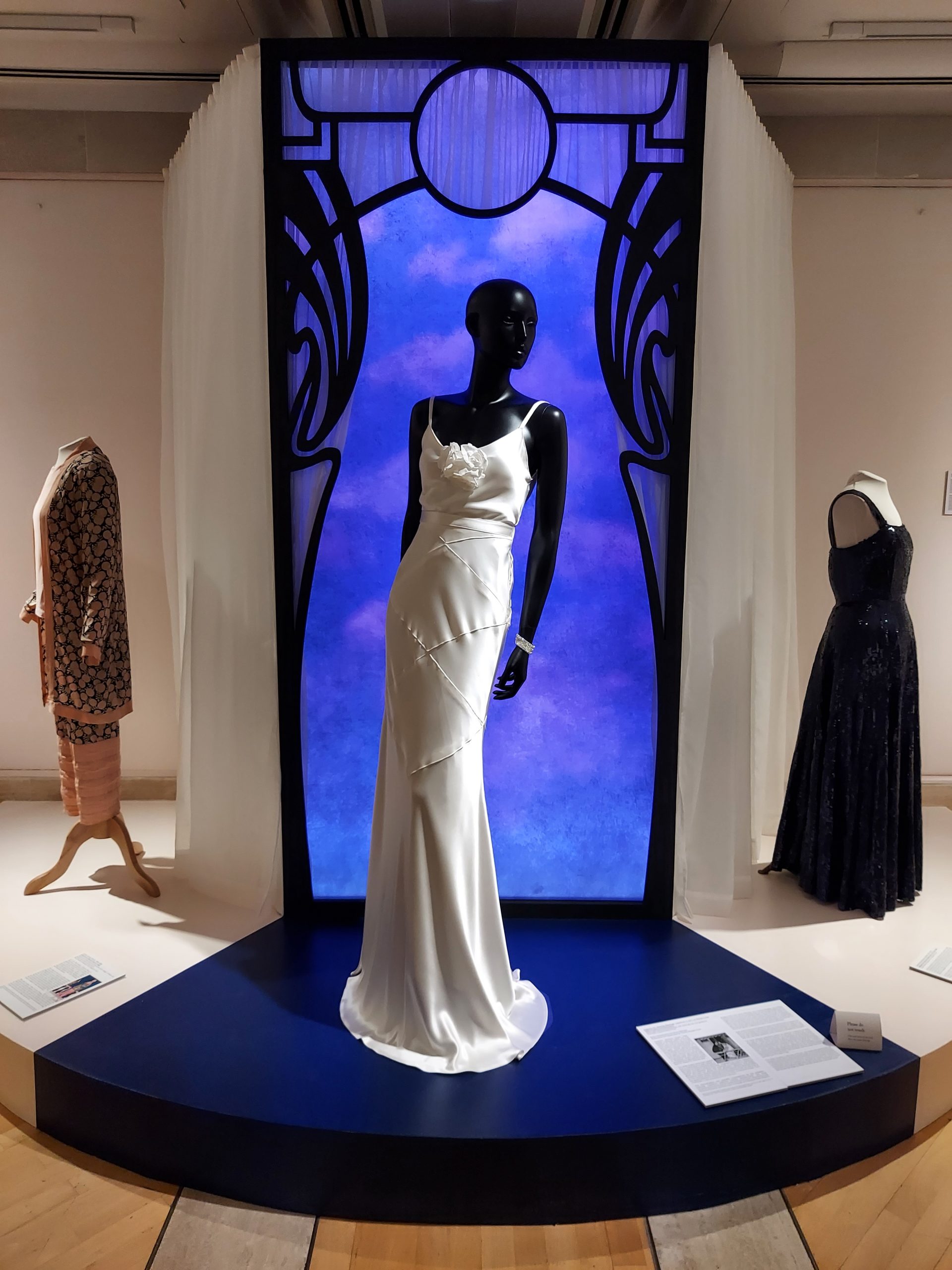
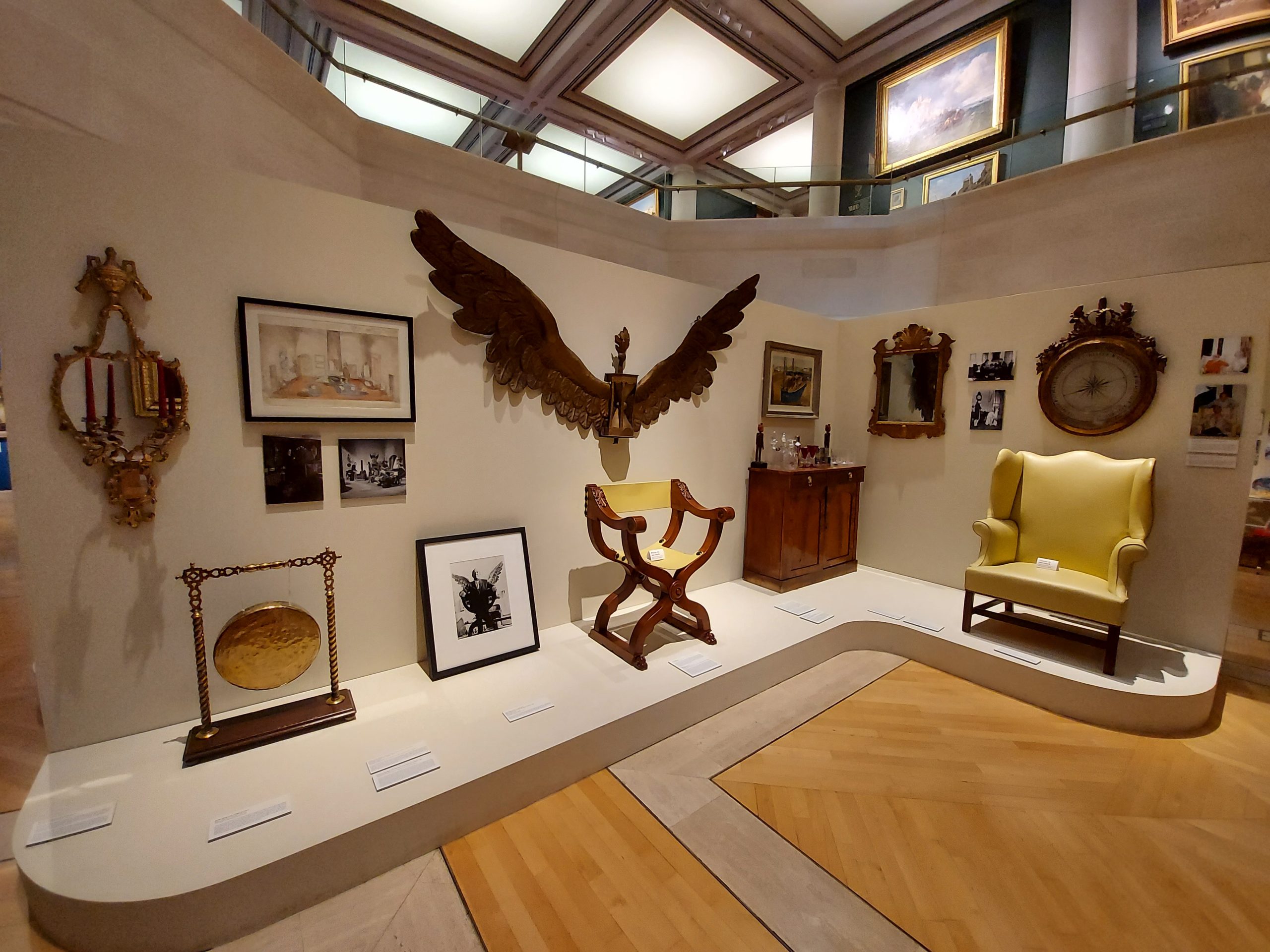
On the last day of my leave I decided to head to the Guildhall Art Gallery to see the Noël Coward: Art & Style exhibition. This free exhibition runs until December and focuses on the visual aspects of Coward’s style – his personal appearance, his various homes and also his stage shows. In the exhibition, dresses worn by actresses performing his work, outfits worn by Coward himself, and items from his personal collection are displayed.

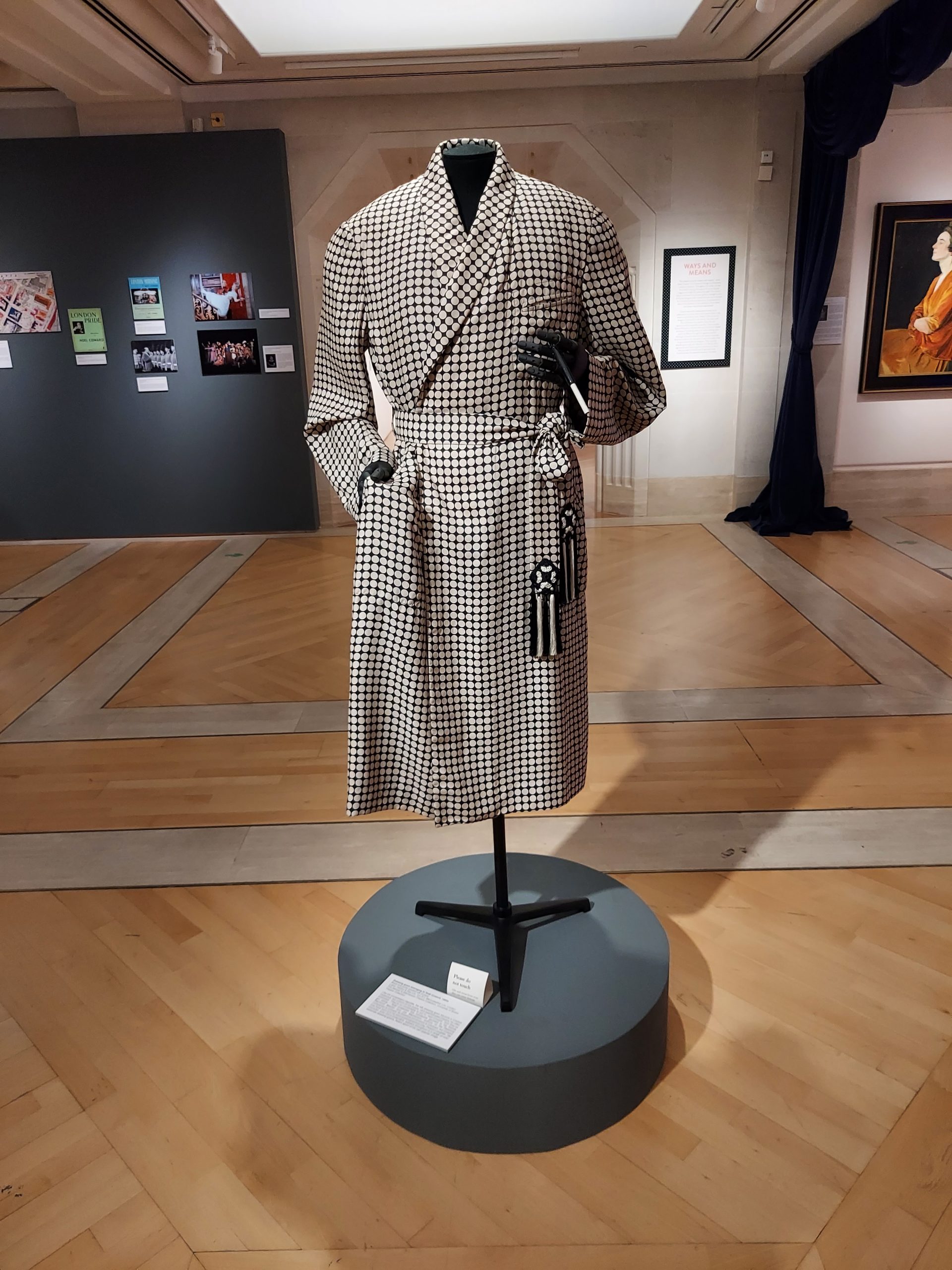
black and white check dressing gown
One of Coward’s famous dressing gowns

Coward was born in Teddington and grew up in a middle-class family. He performed on stage as a child and this gave him a taste for the theatre. Starting out as a song and sketch writer, Coward penned many musical revues and began to collaborate with artists, couturiers and designers including Cecil Beaton and Gladys Calthrop to create stylish looks for his shows.

30s dresses
Some of the beautiful dresses worn by female stars of Coward’s shows

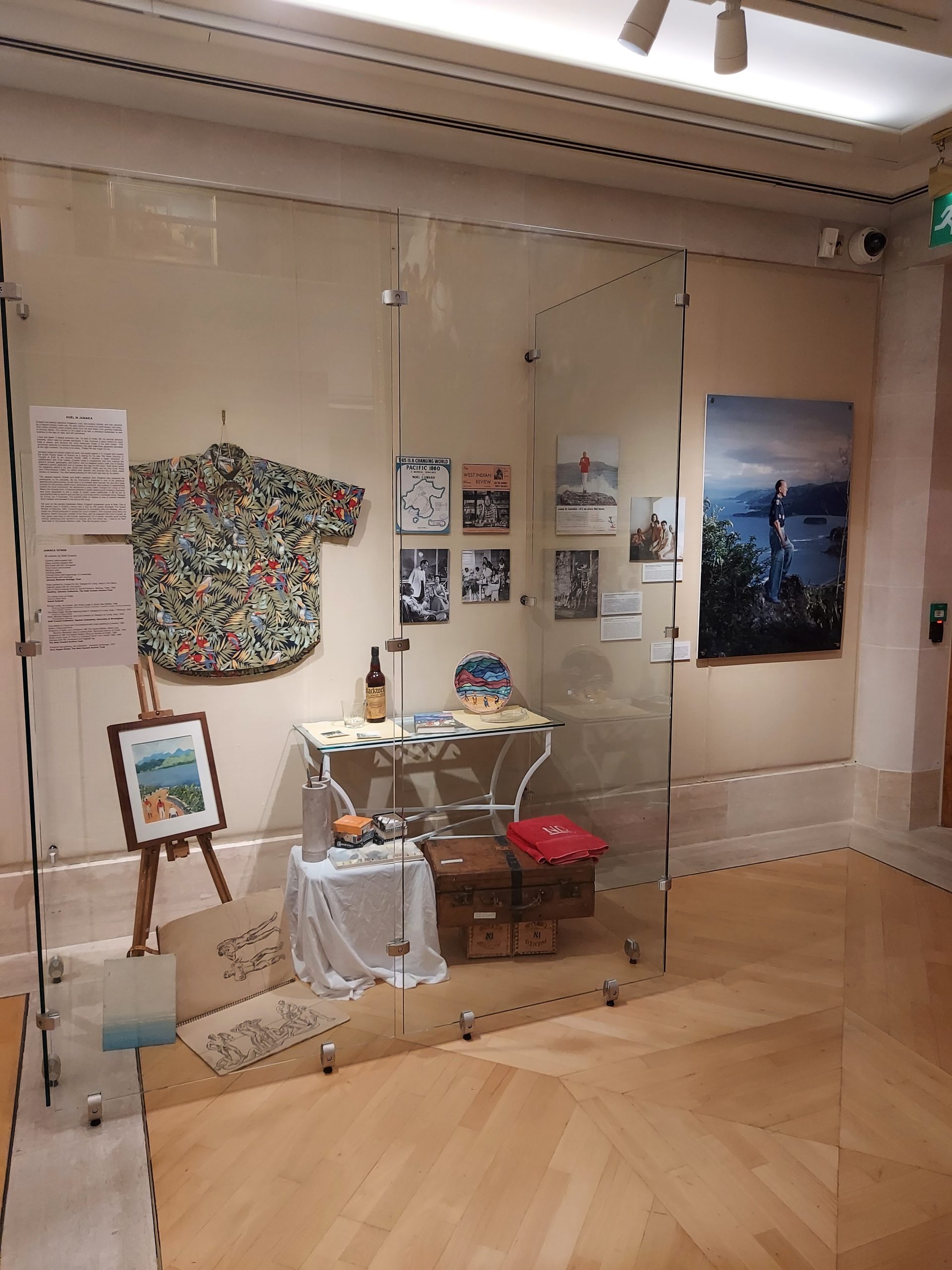
Aware of his public image, Coward perfected the art of appearing in promotional pictures in his trademark silk dressing gown. He was an amateur painter, and spent much of his relaxation time in Jamaica developing his style. He decorated his various homes in the UK and abroad with items that became instantly recognisable. In the exhibition, items themselves are displayed alongside photographs of Coward that feature them.

household items
Some of Coward’s favourite pieces of furniture

Even after Coward’s death, his popularity has remained and his works are constantly being reinvented and restyled. The costumes for the 2020 film adaptation of Blithe Spirit, for example, were inspired by Coward and his world.

household and clothing items
Clothing and household items used by Coward in Jamaica

This exhibition is fascinating and hugely detailed. The fact that it is free is fantastic – I would normally expect an exhibition of this calibre to charge an entrance fee. It’s worth seeing for any fans of Coward, or indeed any fans of 20th century style.