After the slightly lurid experience of The Clink my friends and I headed to the other museum we were interested in, The Old Operating Theatre Museum & Herb Garret. This small museum, which was boarded up for years and only rediscovered 50 years ago, is located near London Bridge station – handily opposite the pub we found to have lunch in. As the oldest operating theatre in Europe, it is a unique little museum and I had been meaning to come for some time.
History
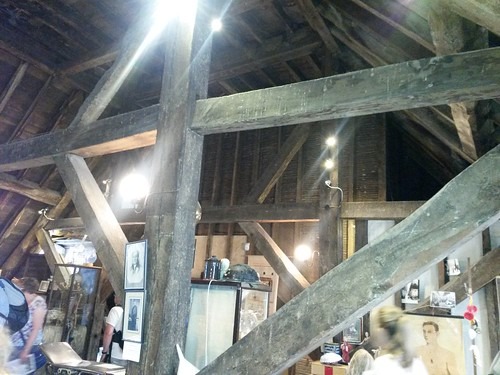
The operating theatre’s location in the roof of a church seems odd, until you consider that St Thomas’ Church was originally alongside St Thomas’ Hospital, now demolished. The wards of the South Wing were built directly around the church, with the operating room encroaching into the church roof. Before 1822, when the theatre was built, women (men had a different ward and operating theatre) were operated on in the ward itself, which must have been highly unpleasant for all involved. In 1815, the Apothecary’s Act stated that apprentice apothecaries must attend at public hospitals; this led to hundreds of students watching operations in this and other nearby theatres. Anaesthetics were only introduced in 1846, by which time this operating theatre had closed down. Therefore it is unique in representing a late stage in the history of surgery before anaesthetic. When St Thomas’ Hospital moved to Lambeth in 1862, the Operating Theatre was partly dismantled and the entrances were blocked up. Despite minor references in academic publications, it was largely forgotten until 1956 when a researcher, Raymond Russell, decided to investigate. Following his discovery, a fundraising plan was launched to restore the space, which was officially opened in 1962.
My Experience
Inside the Operating Theatre
Entrance to the museum is not for the faint-hearted or the mobility-impaired. You have to climb up a spiral staircase, located in the church tower, to reach the tiny foyer and gift shop. We had arrived in time for the 2pm Saturday talk, Speed Surgery! – a demonstration of surgical techniques in the nineteenth century – which I’d booked in advance via email as advised on the website. It wasn’t as busy as we – or the staff – expected, possibly because the weather outside was lovely and everyone was out enjoying the sun. The talk was fascinating, and covered many aspects of surgery before anaesthetic and germ theory. We learned that most surgeons did not wash their hands before operating, and wore aprons that were covered in blood from repeated use. We also examined the operating table, with grooves to catch the blood and boxes of sawdust underneath to absorb the gore. Trainee surgeons could watch and observe operations – in the absence of anaesthetic, a surgeon had to be fast in order to cause the minimum amount of pain possible. While surgery in general was dangerous and had a low survival rate, some minor operations, such as the removal of gallstones, were performed with good rates of success.
Operating table
We were shown a variety of surgical instruments – these were fearsome-looking, though well-made: surgeons would often have a set of instruments made specially which they would carry around in a velvet-lined case. Beautiful, sure, but not particularly hygienic. I knew some of what we were told as I had studied the “Medicine Through Time” module way back in my GCSE days, but some of it I had forgotten, and I learned some new things too.
The back of the theatre
During and after the talk we had the chance to admire the operating theatre itself, which was tiny and neat. Entrance was originally through the door at the back, now boarded up, which led to the hospital – not the spiral staircase, which is reassuring. This was the theatre for women – the men were operated on elsewhere. In the absence of electric light, this operating theatre, like many of the period, was located high up with large skylight windows, allowing for maximum natural light.
The garret
The museum itself has many interesting exhibits to do with the history of surgery and of the building, including fascinating photos of the area in the 19th and 20th centuries, and pictures of similar surgeries. There are numerous surgical instruments on display, as well as anaesthetic equipment and a section on children’s medicine, including a record of deaths in the area.
The “Herb Garret” aspect of the museum refers to the fact that when St Thomas’ Church was rebuilt in 1703, the large garret in the roof space was used by the St Thomas’ Apothecary to store and cure herbs. When the building was being restored, numerous herbs were found, including four opium poppies packed into the rafters. The exhibition includes many and varied herbs, with notes on what they were used for. There are also some notes on old-fashioned medical remedies – the most bizarre thing I learned was that in “ye olden days”, pregnancy tests were carried out by injecting a frog with the expectant woman’s hormones. If she was pregnant, the frog would lay eggs. The Old Operating Theatre & Herb Garret is a fascinating small museum that is definitely worth visiting. As well as the talks during museum hours, there are occasional special events – see the website for more details. Please note, however, though the museum has a gift shop there is no refreshment area and there are no toilets – so maybe pay a visit to the pub across the road before you go in!
FACTS
Address: 9a St. Thomas Street, London, SE1 9RY Website: thegarret.org.uk Opening Hours: 10.30am-6pm Prices: £6.50 adults, £5 concessions, £3.50 children
My friends Gemma and Elizabeth, like me, are history geeks and when we got together in London we decided to go to a couple of museums. The Clink Prison Museum had been on our radar for a while, so when we met on Bankside we decided to venture over to London Bridge to check it out.
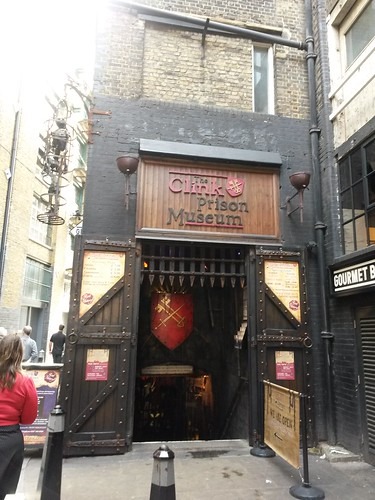
The entrance to The Clink Prison Museum
The museum is built on the site of the original Clink Prison, which dates back to 1144. The prison supposedly got its name from the clinking sound the prisoners’ chains made as they jangled together, and the name became a nickname for prisons all over the country. For over 600 years the prison housed debtors, drunkards, heretics, prostitutes and other criminals within Southwark, an area notorious for being morally dubious – everything that was banned in the more staid City across the river took place here instead.
History
The prison was originally established as two separate prisons, one for men and one for women, in the grounds of Winchester Palace, the residence of the Bishop of Winchester. Henry of Blois, brother to King Stephen, became Bishop in 1129 and his palace, of which only the wall of the Great Hall containing the Rose Window is still visible today, was completed in 1144. Bankside was subject to the laws of “the Liberty of the Bishop of Winchester”, later “the Liberty of the Clink”.
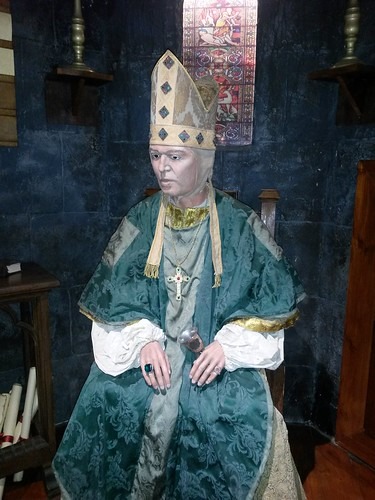
The Bishop of WinchesterRing buddies!
Notable criminals housed within the Clink at various points include Sir Thomas Wyatt the Younger, who rebelled against Queen Mary I; Royalist supporters during the English Civil War; and Puritans who ended up settling in the New World as Pilgrim Fathers. However, hundreds of ordinary people were imprisoned here, though often the only record we have is a name. The museum website lists several examples, including the wonderfully named prostitute Prusanna Carnall (imprisoned 1661) and William Albaster, imprisoned in 1599 for refusing to attend church (!).
Attempts were made to destroy the prison during the Peasants’ Revolt in 1381 and Jack Cade’s rebellion in 1450; after each occasion the Clink was rebuilt, with the final two-storey prison occupying the current site of the museum. The end came during the Gordon Riots in 1780: Lord George Gordon, angry that Catholics had been granted favours in the new “Papists Act”, gathered together members of the Protestant Association and, among other things, broke into the Clink, burned it to the ground and released all the prisoners (none of whom, thankfully, were ever recaptured). Today, the remains of the Clink consist of the Winchester Palace stonework, the passage called Clink Street, and the structure preserved within the museum itself.
My Experience
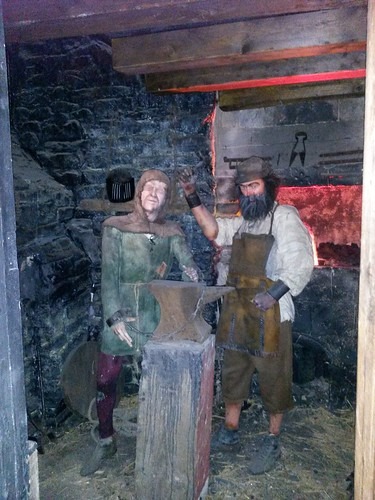
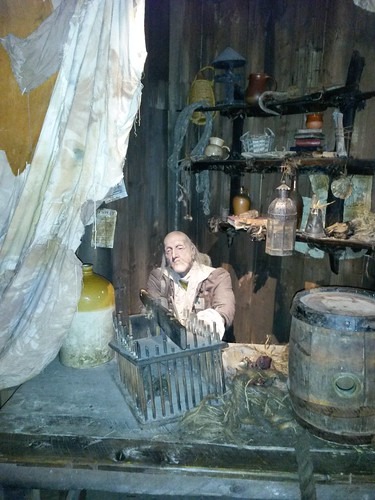
We arrived at the Clink at about eleven on a Saturday morning. We entered down the steps and were greeted cheerily by a costumed assistant (who, we found out later, was also manning the gift shop round the other side). We paid our entry fee and entered. The museum is atmospherically contained in a dingy basement; some of the structure was part of the original Clink. Evil-looking waxworks were dotted about, representing blacksmiths, gaolers and unfortunate prisoners.
An evil-looking blacksmith prepares to shackle a prisoner
Information boards displayed lots of interesting facts about the Clink, but in some cases they didn’t look very professional – there were some glaring spelling errors including, in one case, the misspelling of the word “prisoners”. Having said that, I learned a lot from them: the boards gave information about the history of the Clink, the prisoners kept here and the punishments used. As we went round the museum we noticed that the information was sometimes a little disjointed, although it did follow an approximate chronological order.
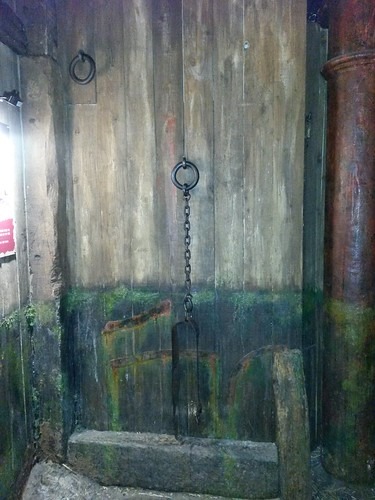
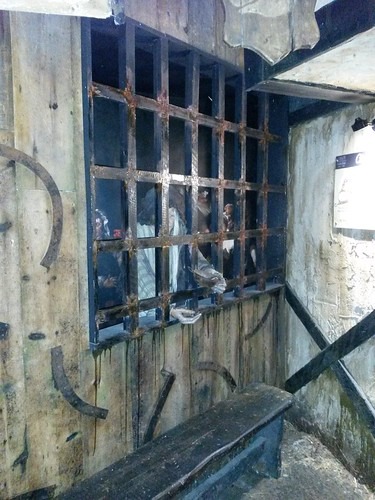
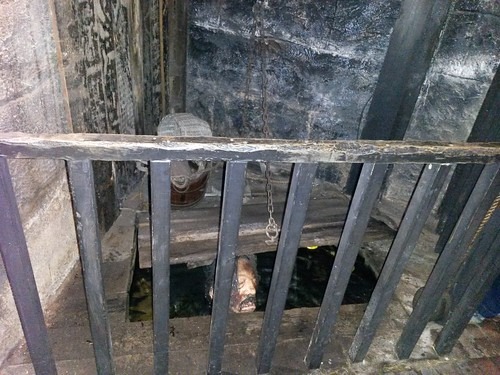
During high tide, the Thames would flood the Clink to this level – extremely unpleasant for the prisonersPrisoner begging through the gaol windowPrisoner trapped in the waterlogged oubliette
The museum concentrated on the kinds of punishments used – the oubliette, the stocks and other forms of torture – and I thought that this was rather a shame. It seemed as though the curators were trying to sensationalise the prison and turn the museum into something like the London Dungeon. I felt that they missed their chance to create a more “serious” but really worthwhile museum about the rich history of the Clink.
Infamous prisoner who would apparently fatten up rats and live off them…During the English Civil War, several Royalists were imprisoned in the Clink
That said, I did enjoy my visit, and it was certainly an experience. I wouldn’t recommend going alone, though!
Sir John Soane’s Museum is a unique free museum near Holborn, the former home of the neo-classical architect responsible for the Bank of England. He established the house as a museum in 1833, and it contains numerous treasures from his collection.
I booked online for the rare chance to visit the Private Apartments at the top of the house. These were originally home to Soane and his wife, and later to curators of the museum. After refurbishment, they have been made available to visit as part of a guided tour.
I turned up with my ticket and was directed upstairs, where the group of us due to tour were gathered together and taken up a further flight of stairs, normally roped off. We were told that the house was bombed during the war and was refurbished afterwards; some lovely stained glass was pointed out to us that survived because it was removed from the house before bombing on the orders of the then live-in curator.
The first room we came to was Elizabeth (Eliza) Soane’s drawing room, where she would have taken tea, written letters and received guests. The room was decorated in her own style, with paintings of her children and family group as well as pictures that she liked. These included a beautiful representation of all the flowers in Shakespeare, and several sketches of Shakespearean characters. The next room was her bedroom, kept as it was for several years after her death by a heartbroken Soane, but eventually he turned it into a magnificent display room for his architectural models. The centrepiece was a very impressive model of a semi-excavated Pompeii, and surrounding this, on a beautiful wooden frame, were several models of notable classical buildings in both cork (for ruined buildings) and plaster of Paris (for models of buildings as-new). On the bottom of the stand were models of Soane’s own buildings, emphasising the inspiration Soane took from the classical world.
Following this we entered Soane’s bathroom, an elaborately decorated room with a grandfather clock (!) in the corner. The room contained an actual bath, and there were hot water pipes on the wall, but it is uncertain exactly how the system worked. After Soane’s death, the bath was sealed up at his request, and when it was opened after some years had passed it was found to contain a number of effects, such as pictures and documents, though none of these contained anything groundbreaking.
Next to the bathroom was Soane’s bedroom, although the bed there was not an original (that had been sold) but was one that had come from Pitzhanger Manor, his country house. Finally, we were led out of the apartments via a corridor decorated with lots of art and two mummified cats, which apparently were supposed to be lucky.
Changes have recently been announced to the Tours of the Private Apartments – the number of tours has been increased and you no longer need to book online, but can turn up on the day. The tours will continue to be free, as is entrance to the museum itself. It is definitely worth making the effort to go on a tour – it’s hugely interesting.
My attempt to visit each one of the Magnificent Seven cemeteries is coming to a close with my visit to Tower Hamlets Cemetery, the last of the seven to be founded in 1841. I visited one Sunday afternoon.
Southern Grove entrance
Getting There
Soanes Centre
The address of the cemetery is Southern Grove, London, E3 4PX. The main entrance to the park is five minutes’ walk from Mile End underground station. This is the location of the Soanes Centre, where courses and educational activities take place.
History
Inside the cemetery
The City of London and Tower Hamlets Cemetery (“Bow Cemetery” to locals) opened in 1841 after being formally consecrated by the Bishop of London. In 1966, an Act of Parliament closed the cemetery and redeclared it a park. Owned and managed by the Greater London Council until 1985, it was passed to the London Borough of Tower Hamlets. Since 1990, when the “Friends of Tower Hamlets Cemetery Park” were formed, the Borough Council and the “Friends” have worked together to promote and care for the park and run a programme of public events. It is now a designated Local Nature Reserve and a Site of Metropolitan Importance for Nature Conservation, managed by the Friends via a Service Level Agreement with LBTH Parks.
Additions have been made to the park within the last few years: the Soanes Centre, offering workshops and classes, was opened in 1993, while land including Scrapyard Meadows and Ackroyd Drive Greenlink has expanded the original area of the park. Tower Hamlets Cemetery Park is a conservation area and has several English Heritage Grade II listed monuments.
A solitary grave in amongst the parkland
My Visit
Near the entrance to the cemetery
Tours of the Cemetery Park do take place every month. However, though I turned up for a tour, it looked like I was going to be the only one there, so I didn’t bother, choosing to explore myself instead. Tours sometimes focus on the history of the cemetery and sometimes on the flora and fauna to be found within; I would certainly try and go on a tour in the future if I knew it would focus on the history.
War memorial
The war memorial can be found soon on entering the cemetery. From here, you can look around you and see how the city has grown up around the park.
Overlooking the cemetery
The graves are fairly close together and some of them are quite overgrown, but I think this adds to the atmosphere.
A row of graves
The cemetery is smaller than others I’ve visited, and I soon reached the end, where a railway bridge allows trains to rush past. This area is overgrown and wild: more meadow than graveyard.
The railway bridgeWoodland and wild flowers
A quick crossing of a footpath leads you to the chalk maze and a heap of wildflowers. I could see bees and hear crickets chirping, and for a while it felt as though I wasn’t in London at all.
Chalk mazeBench overlooking the chalk maze
Back into the cemetery, I found some interesting standalone graves, including this one in memory of a three month old baby, which I found incredibly sad.
Baby’s graveSolitary standing grave
I came across this memorial to those killed in air raids during World War II. The cemetery itself was bombed five times during the war, resulting among other things to damage to both of the chapels, which were later demolished.
WWII air raid memorial
This grave marks the resting place of a well-known local councillor.
Will Crooks’s grave
The Rev. David Roe is another notable burial.
Grave of the Rev. David Roe
This spot marks the site of the Dissenters’ Chapel.
Site of Dissenters’ Chapel
The Anglican chapel was located here.
Site of Anglican Chapel
Architecture
This cemetery doesn’t have so many notable graves, but I did like the architecture here, which in many cases was more subtle and delicate than I’ve seen before. Traditional symbols like angels, crosses and urns are common, but more unusual monuments include this little horse.
Horse lying atop a graveGrieving womanAngelImpressive monument
This carving of a ship on the sea is evocative and very impressive.
Beautifully carved ship
This sunlight-dappled tomb looks like a bath with a headless individual relaxing in it.
Slightly creepyWeeping woman
I love the detail on this carved drape.
Draped tombstone
This Art Deco-style gravestone is unusual and pretty.
Art Deco style
I enjoyed my visit to Tower Hamlets. It’s as much a park as it is a cemetery but it has a great deal of atmosphere. Plenty of people seemed to be enjoying it when I was there: dog walkers, runners, and those who were just sitting and relaxing.
Would I go back?
Possibly – it would be nice to do a history tour at some point. The cemetery doesn’t have many notable burials, but it is a lovely place.
And with that, my tour of the Magnificent Seven is over. Now I need a new project…
My latest cemetery visit involved a trip to Abney Park in east London. This cemetery, one of the least famous of the “Magnificent Seven”, recently celebrated its 175th anniversary.
South Lodge entrance to Abney Park
Getting There
The address is Stoke Newington High Street, London N16 0LH, and the tour begins by the South Lodge. The nearest station is Stoke Newington, a new addition to the London Overground, which can be reached from Liverpool Street station.
History
The cemetery is located in Stoke Newington in the London Borough of Hackney, originally on the outskirts of the city but now a busy part of east London. It is named after Sir Thomas Abney, Lord Mayor of London in 1700-01 and owner of the manor of Stoke Newington in the early eighteenth century. His town house, built in 1676, stood on the site of the present cemetery. The surrounding parkland, laid out by Lady Mary Abney and Dr. Isaac Watts (whose statue occupies pride of place in the cemetery, although he is not actually buried there), became a garden cemetery in 1840. What distinguishes Abney Park from the other garden cemeteries founded around this time is its non-denominational status, the first such garden cemetery in Europe. This means that the ground was not consecrated, and it was used as a burial place for Christians practising outside of the Church of England. The fact that Watts, a noted nonconformist thinker, was associated with the area was a bonus.
Abney Park was sold in the 1880s to a commercially-minded general cemetery company, and in 1978 it passed to the local council. Sadly, a period of neglect and decay followed, and it was included on the Heritage At Risk Register in 2009. Today, the cemetery is a designated Local Nature Reserve and Conservation Area. Following a period of care by the Abney Park Trust, management of the cemetery recently passed back to Hackney Council.
A broken statue
Tour
The tour began with an introduction to the cemetery and the concept of the Magnificent Seven, which is familiar to me after five other tours, but will be fascinating to those who haven’t previously heard the story. It was informative and interesting, and covered the flora and fauna to be found in the cemetery as well as the architecture, the chapel and some of the notable burials.
Heading into the cemetery
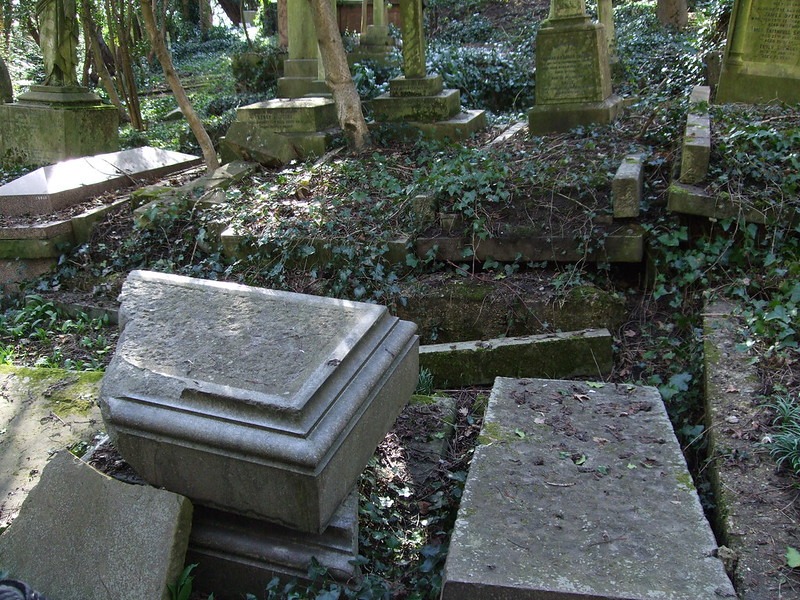
While the Abney Park Trust have taken really good care of the cemetery in the last few years, there are still overgrown areas. Some of these are intentional, to allow wildlife to flourish.
A selection of overgrown gravesDensely-packed burialsAn aged treeBeautiful stone angel and crossThe first burial in the cemetery
Following arson the chapel is sadly a shell, fenced off in an attempt to stop people getting inside. The basic structure is still there and some of its former beauty is still apparent. It could be restored, if only the money was forthcoming.
The chapelThe window shapes are still evident
The war memorial is located near the chapel.
War memorial
Abney Park doesn’t have as many famous burials as some of the other cemeteries I’ve visited. However, one notable individual is a policeman, William Frederick Tyler. He was killed in the “Tottenham Outrage” of 1909, shot by a robber.
Grave of William Frederick Tyler
The statue of Isaac Watts is located near the chapel.
Statue of Isaac Watts
William Thomas “Tommy” Hall was a famous cyclist who broke the world motor-paced hour record in 1903.
Grave of Tommy Hall
One of the saddest things I’ve seen in any of the cemeteries is this: a row of paupers’ graves lining the path.
Paupers’ graves
I had never heard of this author, but the title of his tome intrigued me.
Intriguing gravestone
This memorial commemorates east Londoners killed in the Blitz, including factory workers who died when a bomb destroyed their factory.
The Blitz memorial
Salvation Army founder William Booth has a large memorial in the cemetery.
William Booth’s grave
This intriguing memorial shows how widespread the Salvation Army had become.
This tomb supposedly marks the location of the door of the original Abney Park house.
The lion tomb on the right belongs to Frank Bostock, a lion tamer who was known as the “Animal King”.
A selection of graves, including the Bostock family tomb
The cemetery is also well known for being a haven for wildlife, including owls, woodpeckers and kestrels.
Architecture
The cemetery layout is a bit different to some of the others I have visited. The Egyptian Revival entrance was designed by William Hosking FSA in collaboration with Joseph Bonomi the Younger and the cemetery’s founder George Collison II. The South Lodge bears hieroglyphics which, translated, mean the “Abode of the Mortal Part of Man”.
Close-up of the Egyptian-style columns
There are no divisions in the cemetery separating one religious group from any other. The chapel, the first non-denominational cemetery chapel in Europe, designed by William Hosking, was built in a northern European brick Gothic style.
As in the other cemeteries I have visited, draped urns, crosses and angels are common.
This anchor is particularly well done.
Would I go back?
Yes – there are many interesting things to see that the tour didn’t include, such as the grave of Joanna Vassa (daughter of Olaudah Equiano) and that of James Braidwood, the first director of the London Fire Engine Establishment (forerunner to the London Fire Brigade), who died in the Tooley Street fire of 1861. There are also a number of early theatre and musical hall performers buried here, and you can do a separate tour about those, as well as a nature walk if you are interested in that side of things. Abney Park is a beautiful cemetery and deserves to be visited.
FACTS
Address: Stoke Newington High Street, London, N16 0LH
Founded: 1840
Size: 31 acres
Still in operation?: No (except for a small number of burials which take place in existing plots)
Official website: http://www.abneypark.org
Owners: Hackney Council, who have recently taken over the Cemetery’s management from the Abney Park Trust.
Friends group: Abney Park Cemetery Trust
Tours: These take place on the first Sunday of the month, beginning at 2pm and lasting for around an hour and a half. They are free, but donations are welcome. Meet at the South Lodge, on Stoke Newington High Street.
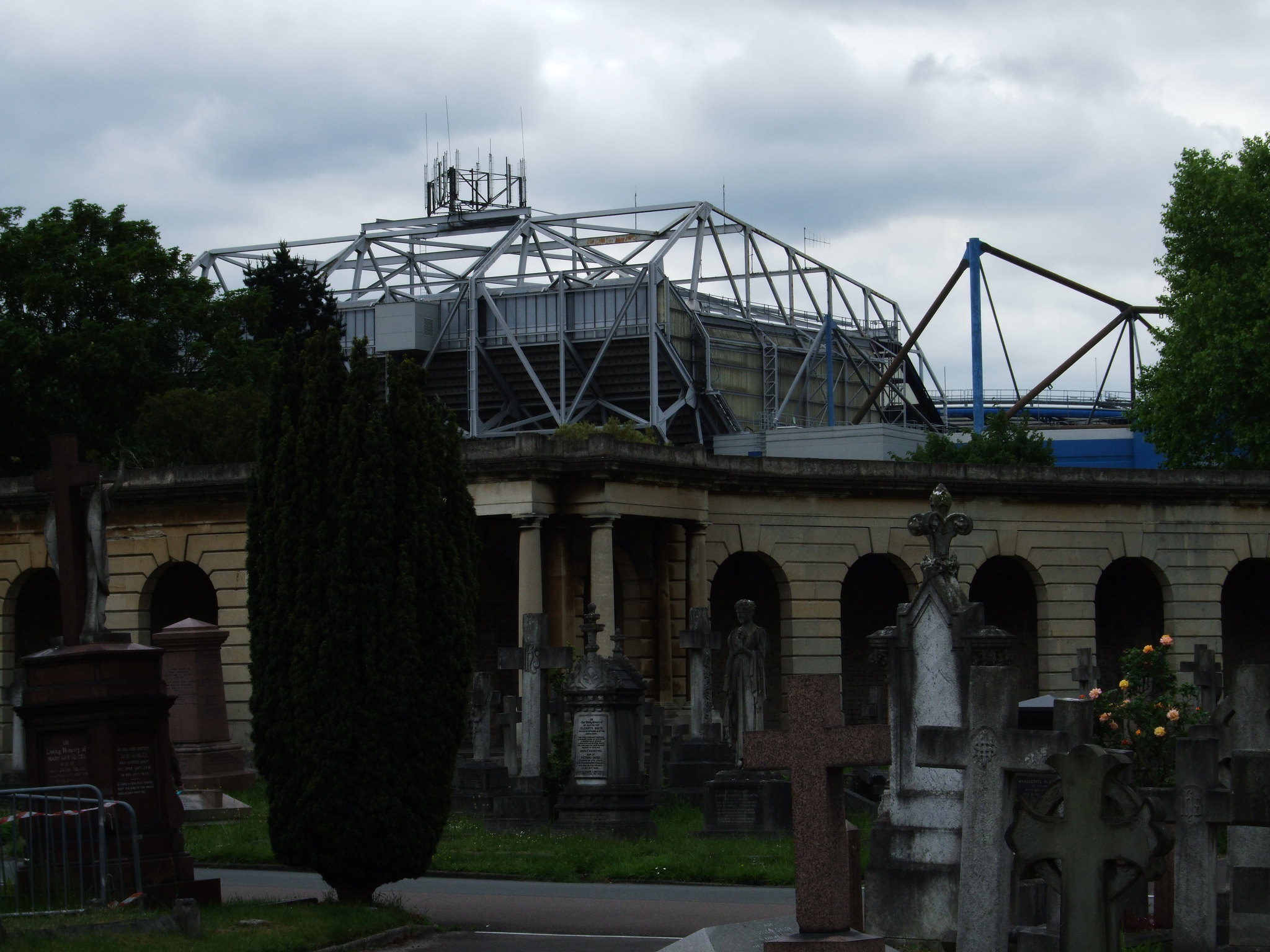
My attempt to visit each one of the Magnificent Seven cemeteries continued with a trip to Brompton Cemetery. This is the most central of the seven and the easiest one for me to reach, located in west London. However, it is also positioned right next to Stamford Bridge, and the day of my trip coincided with a football match between Chelsea and Sunderland – considering I am a Sunderland supporter I should have probably been aware of this, but I was taken by surprise to find hordes of people clad in blue getting off at Fulham Broadway station. Eventually I managed to disentangle myself from them and made my way over to the cemetery. Many supporters clad in football shirts and scarves were wandering through the cemetery, but the rush of people eventually petered out, to be replaced by cheers and roars from the football ground which punctuated the quiet during the tour.
Stamford Bridge stadium, viewed from Brompton Cemetery
Getting There
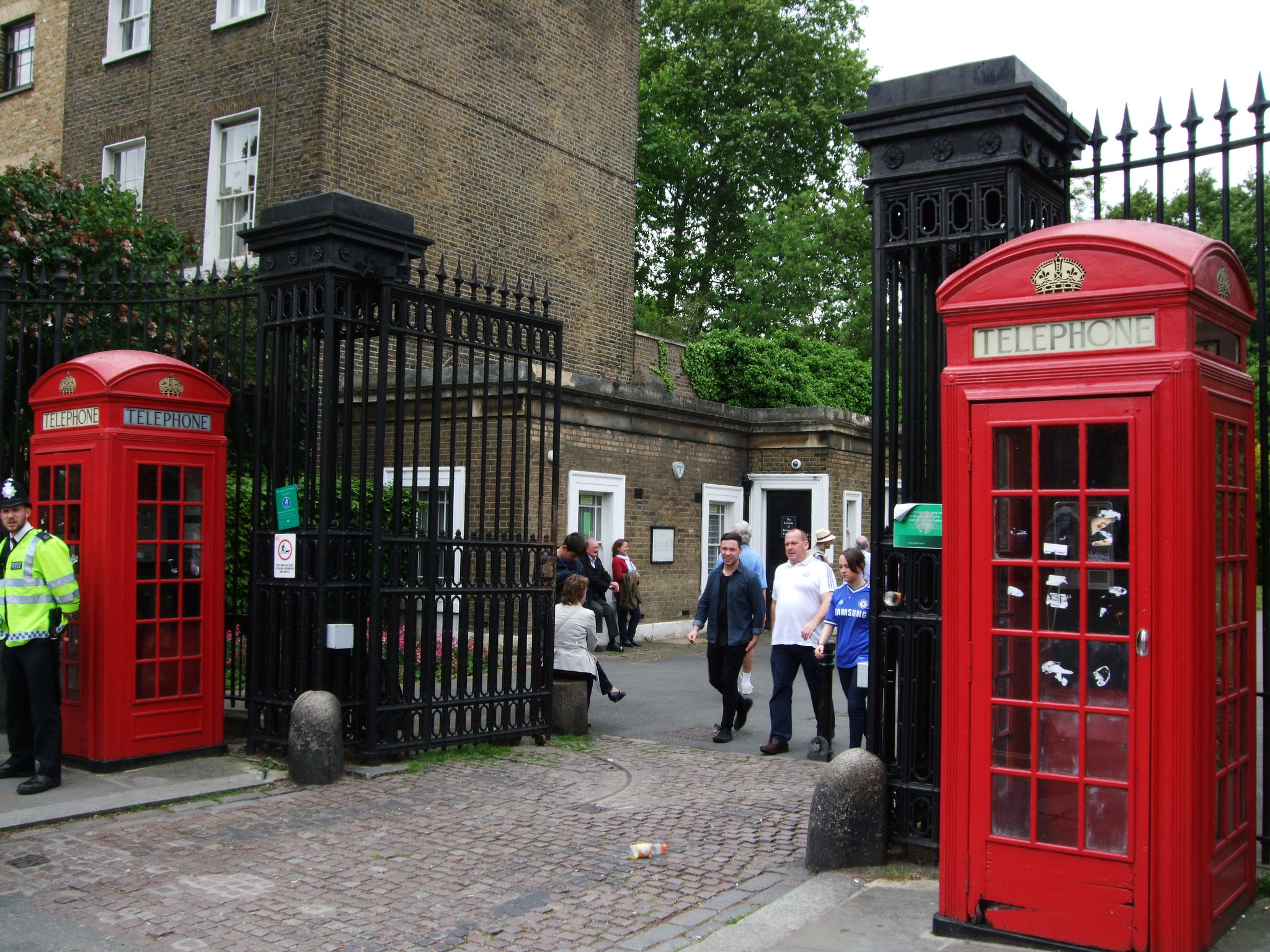
The cemetery lies between Old Brompton and Fulham Roads, on the western border of the Royal Borough of Kensington and Chelsea. The postal address is Old Brompton Road, London, SW10 9UG and the nearest tube station to the main entrance (the North Gate) is West Brompton, with Earls Court a little further off. However, the tour was scheduled to begin at the South Lodge, so I got off at Fulham Broadway instead.
The South Gate
History
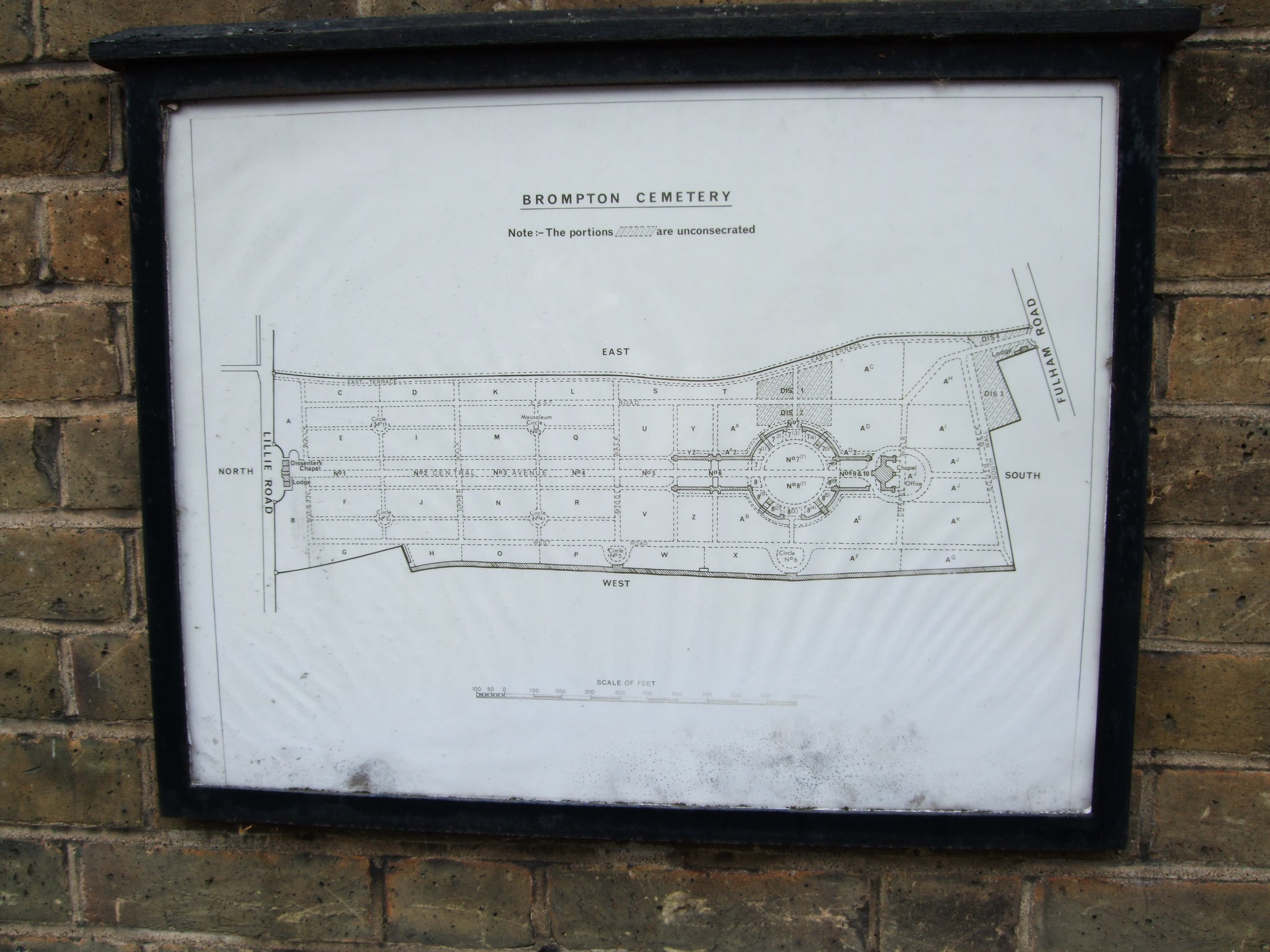
Brompton Cemetery, which is Grade I Listed on the English Heritage Register of Historic Parks and Gardens, was originally consecrated by the Bishop of London in June 1840. The cemetery occupies a rectangular site, and comprises 39-acres (16 hectares) which were purchased from Lord Kensington in 1838.
Map showing the layout of Brompton Cemetery
The cemetery was founded by the architect, inventor and entrepreneur Stephen Geary (1797-1854), who was also responsible for Highgate and Nunhead cemeteries. However, when the company directors held a competition for the cemetery’s design, the lead judge Sir Jeffry Wyatville (1766–1840), a distinguished architect, chose a design by his assistant Benjamin Baud (c.1807-1875), forcing Geary’s resignation.
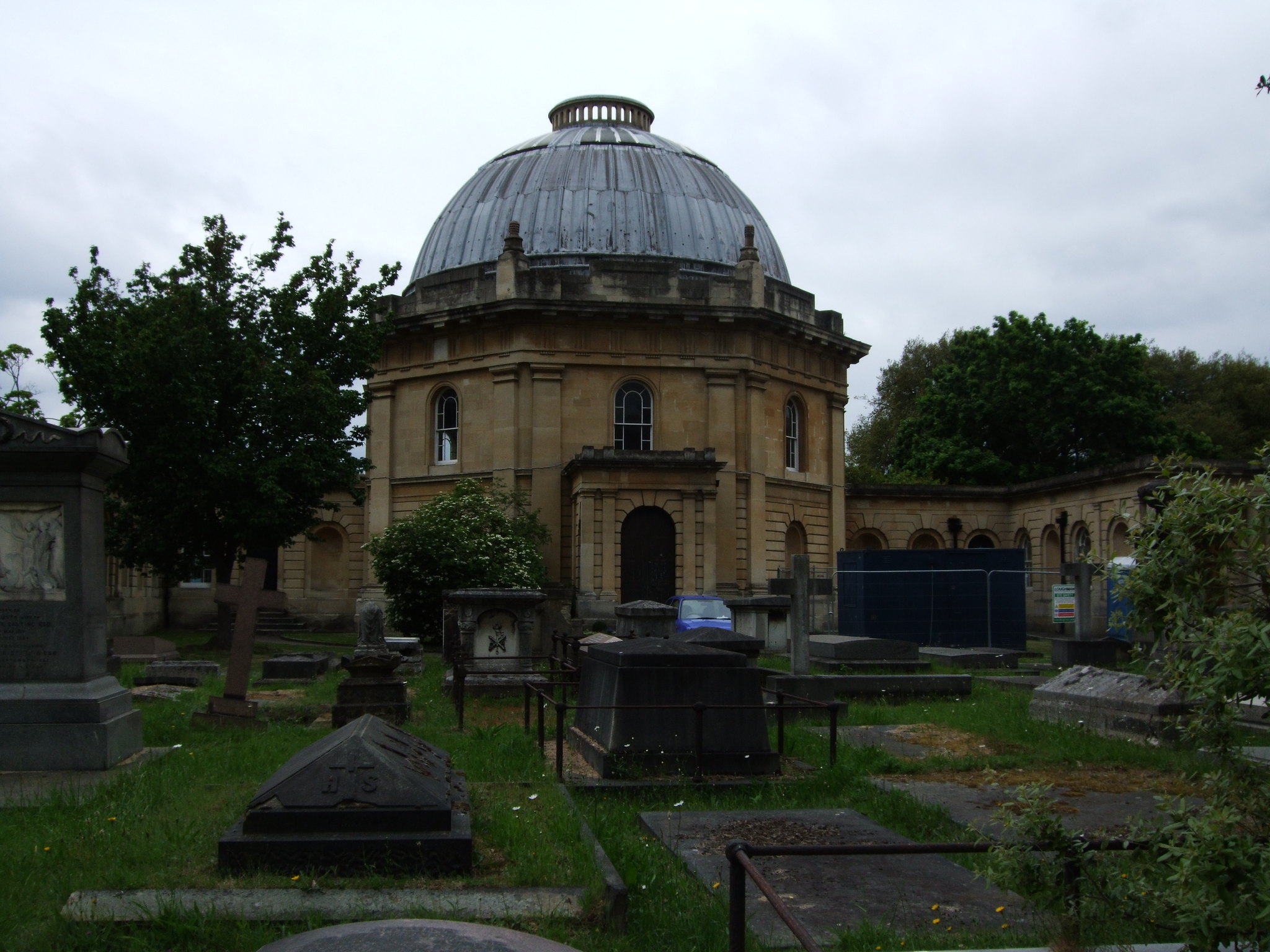
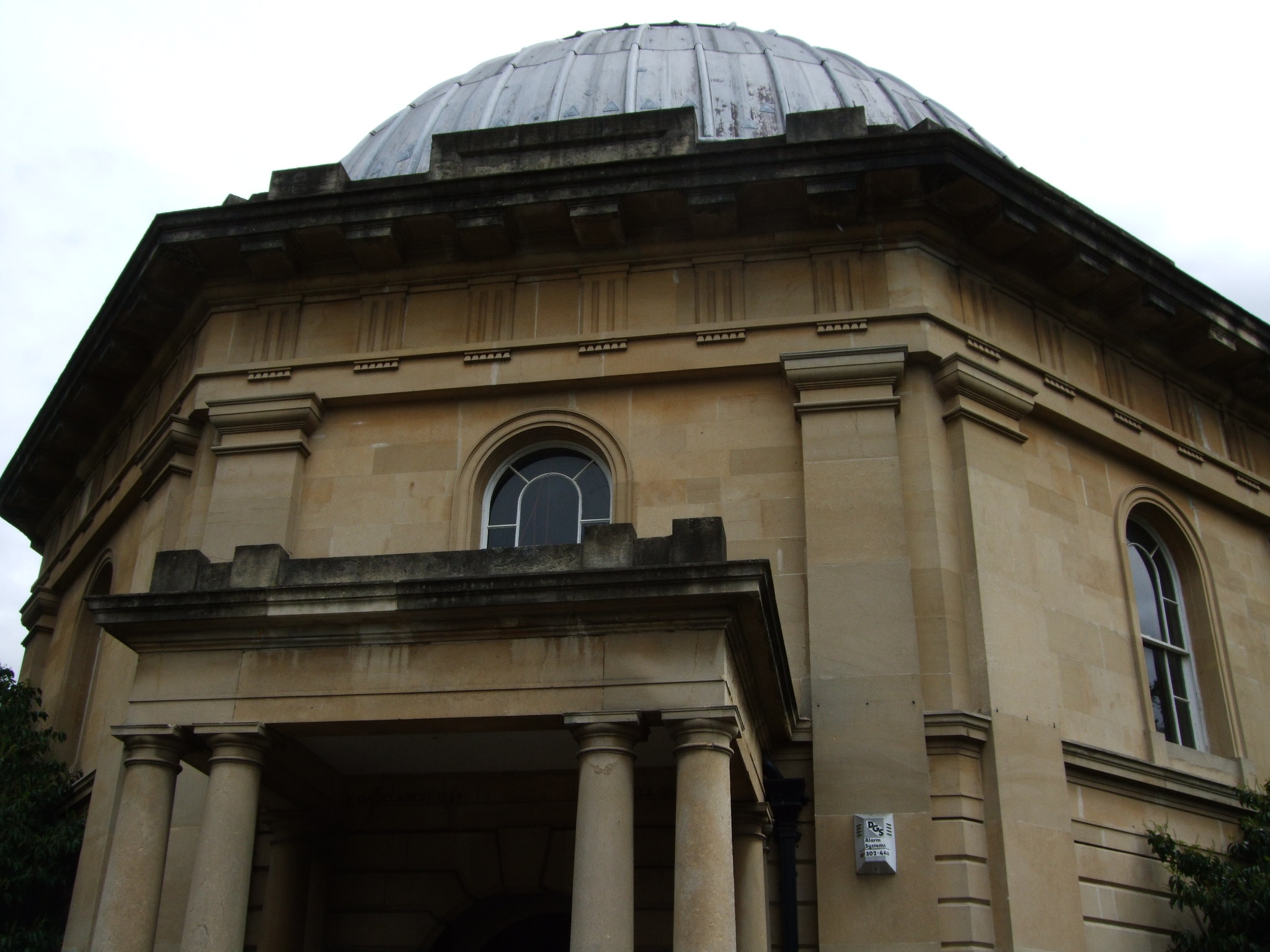
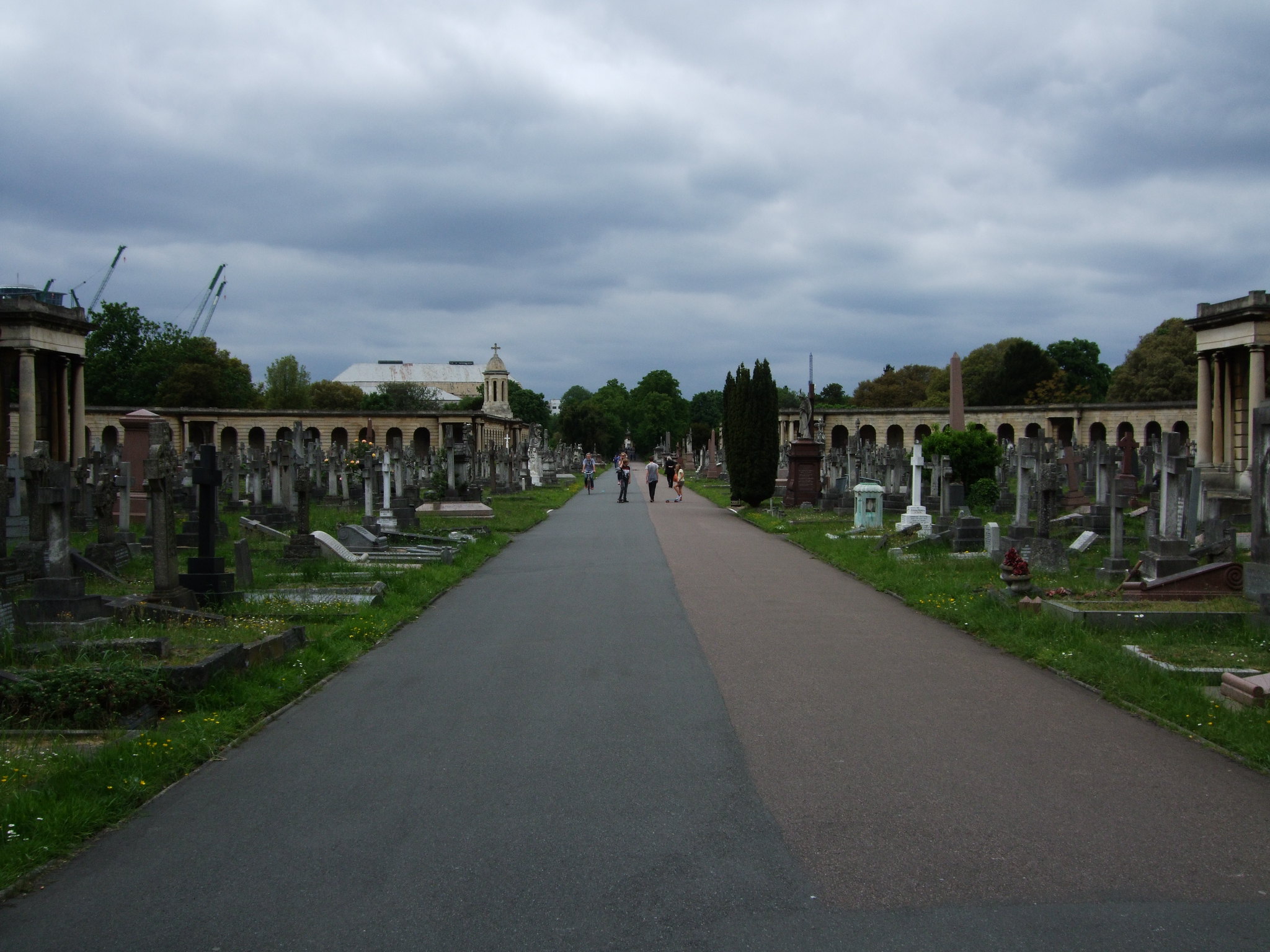
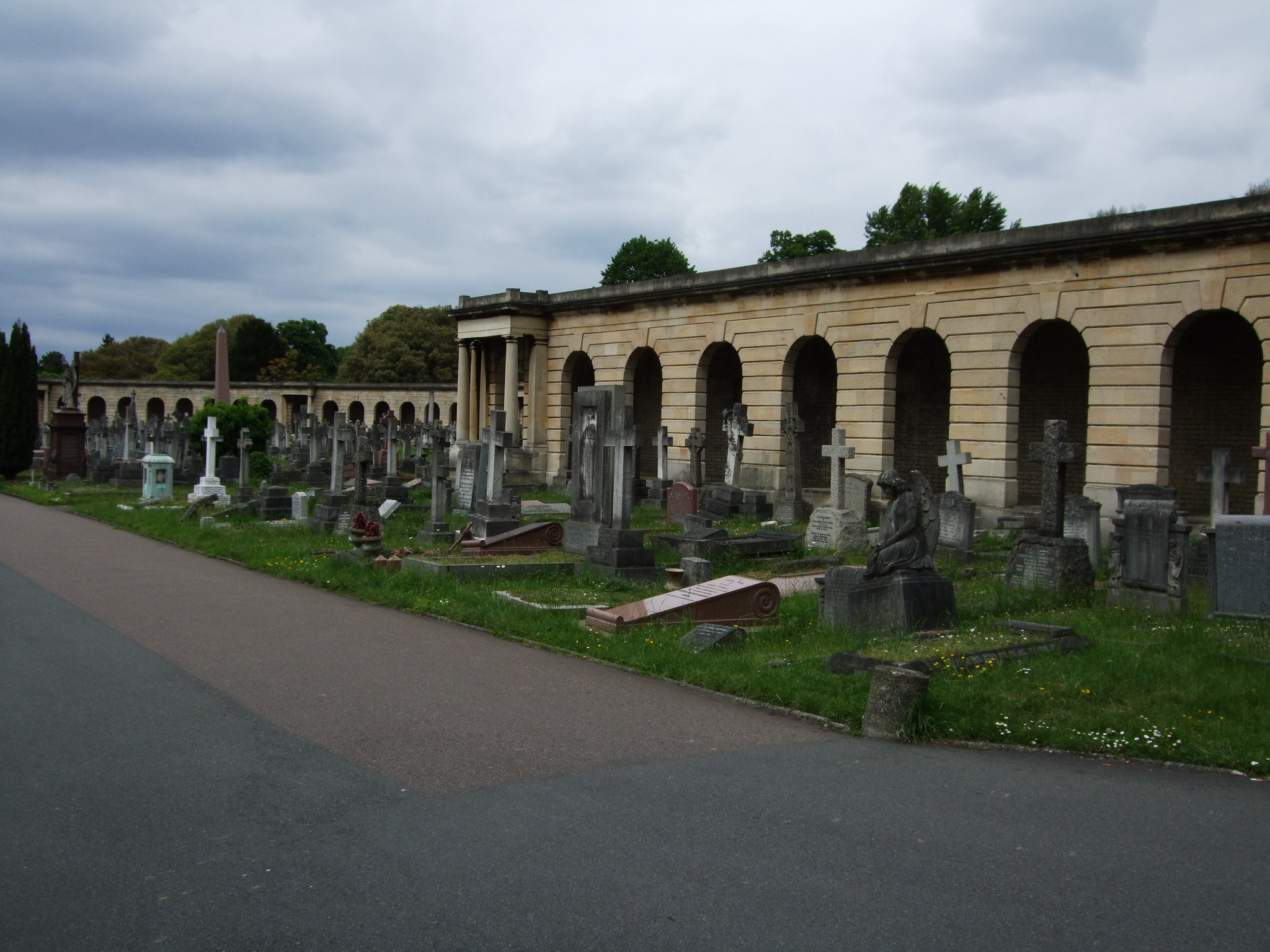
Baud’s design incorporates neoclassical elements but is chiefly notable for its resemblance to a cathedral. The central avenue, or “nave”, leads to the domed chapel, or “high altar”, while a circle of arcades with catacombs below is said to have been inspired by the piazza of St. Peter’s in Rome. The North Gatehouse was designed to represent the “great west door”; it suffered bomb damage during World War II and has since been restored.
The chapel
The cemetery was purchased under the short-lived Metropolitan Interments Act of 1850, which prohibited burial in overcrowded crypts and urban churchyards, and gave the state the power to purchase commercial cemeteries. It was the first cemetery to be nationalised, and remains Britain’s only crown cemetery, currently in the care of the Royal Parks Agency. Closed to burials between 1952 and 1996, it is now once again a working cemetery, restored, maintained and preserved by The Friends of Brompton Cemetery.
Tour
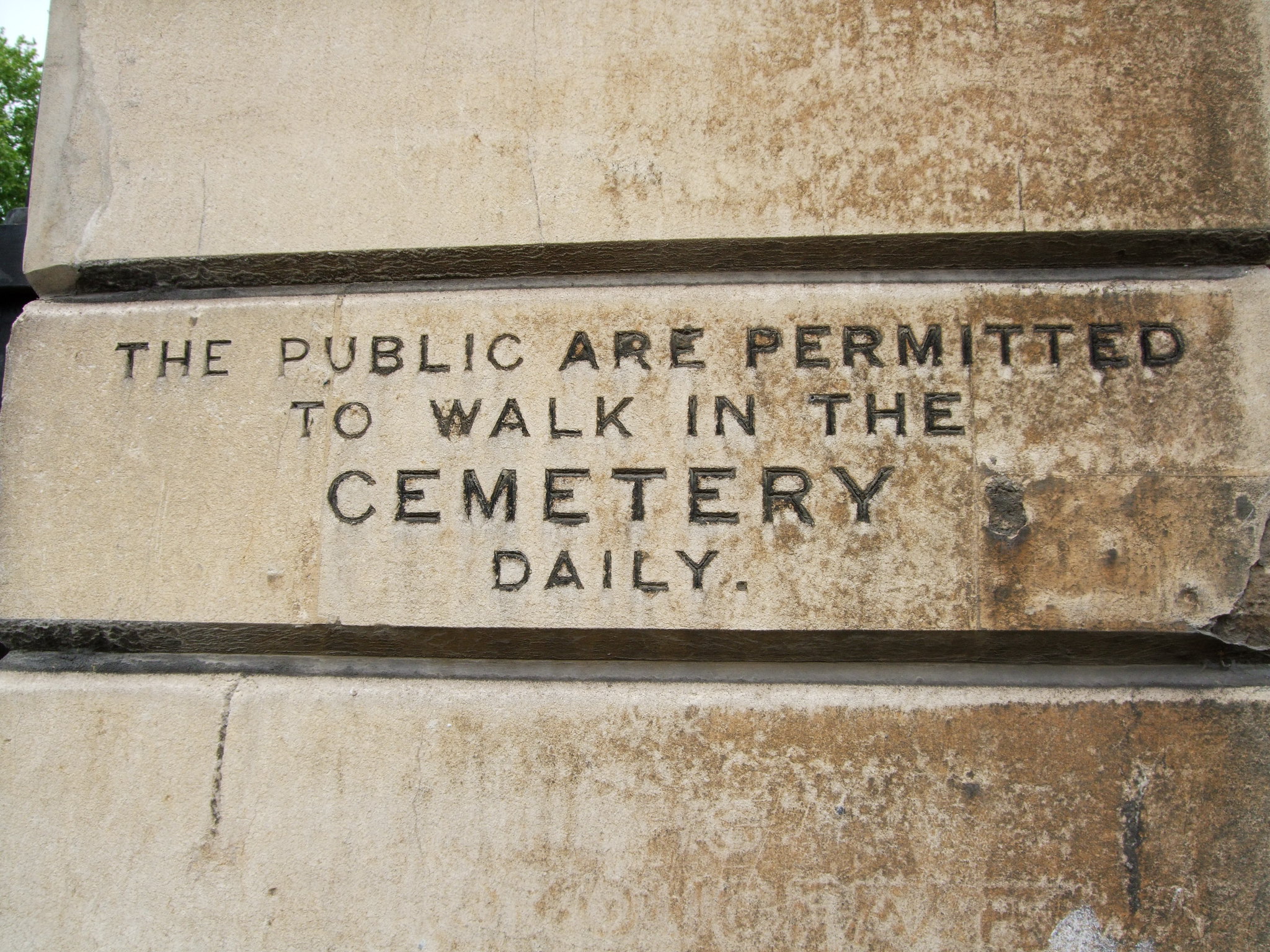
Notice at the South Gate
I attended a tour run by the Friends. These take place on Sunday afternoons and I was pleasantly surprised to find quite a crowd waiting at the gate. Our guide was incredibly knowledgeable and I am sure he could have told us much more about the cemetery than he was able to impart during the two hours of the walk.
Exploring the cemetery
Brompton doesn’t have the number of famous people that the likes of Highgate and Kensal Green possess within their walls, but there are still several notable individuals buried here. George Salting was an art collector who left considerable legacies to the British Museum, the Victoria & Albert and the National Gallery.
The grave of George Salting and his parents
Pioneer of the women’s suffrage movement Emmeline Pankhurst is also buried here, though we didn’t get to see her grave.
The chapel
We stopped off by the chapel, which was open for us to take a look around. It is possible to buy drinks and snacks here too.
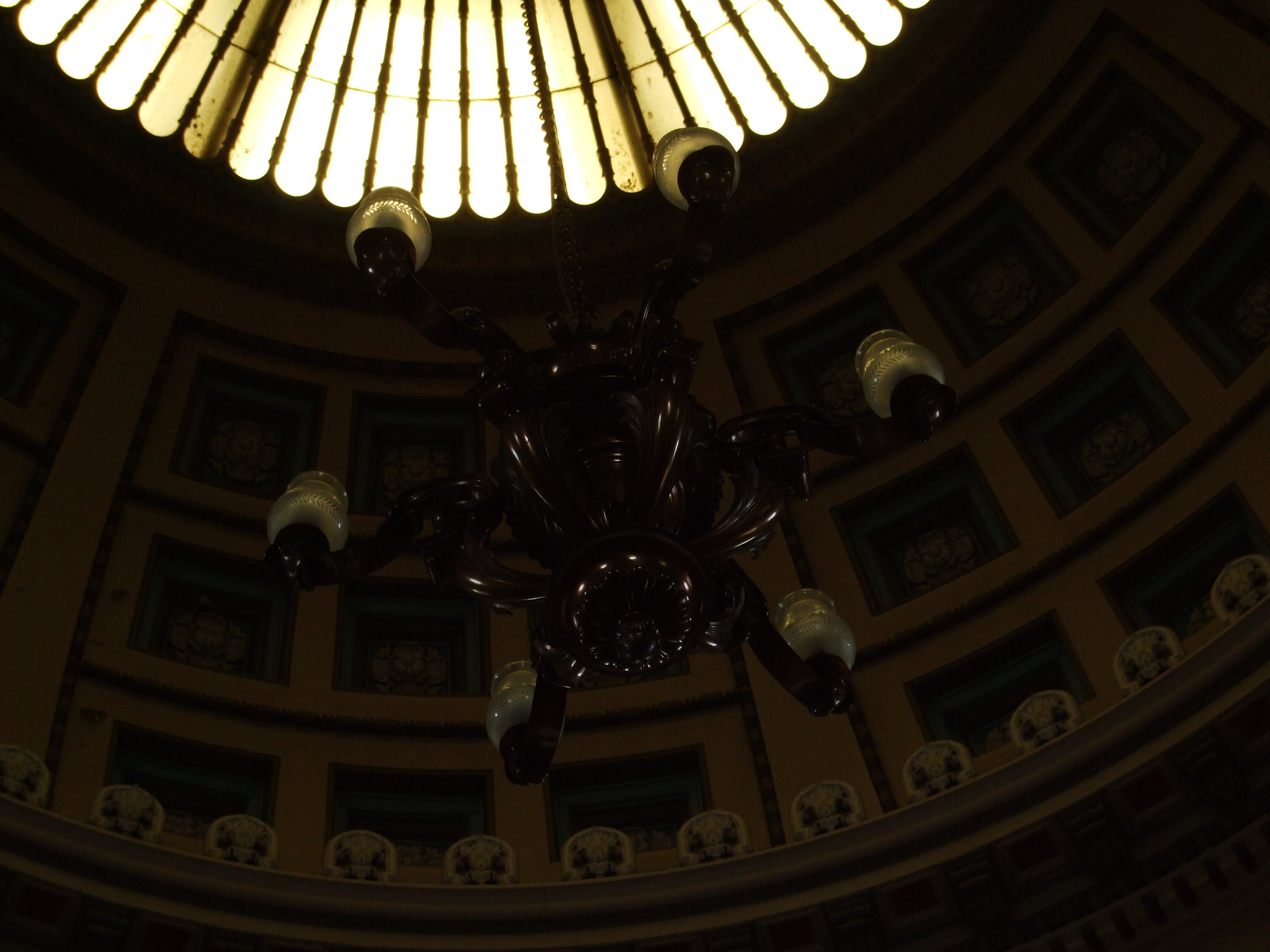
I was advised that the best way to take pictures of the chapel’s ceiling was to lie down, so that’s what I did – on a row of chairs rather than the floor.
The chapel ceiling
Looking north from the chapel
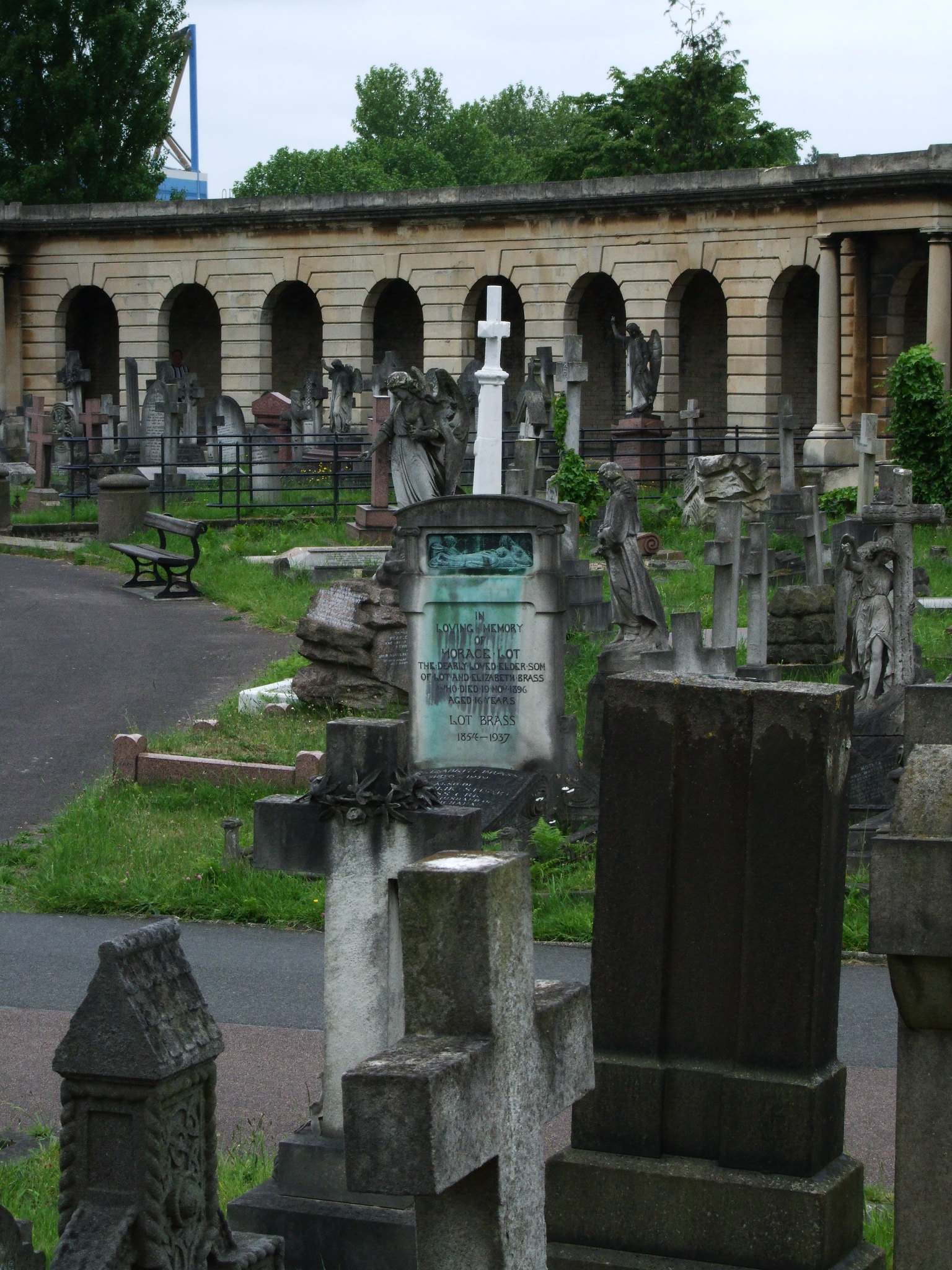
Just beyond the chapel, two arcades flank more sets of gravestones.
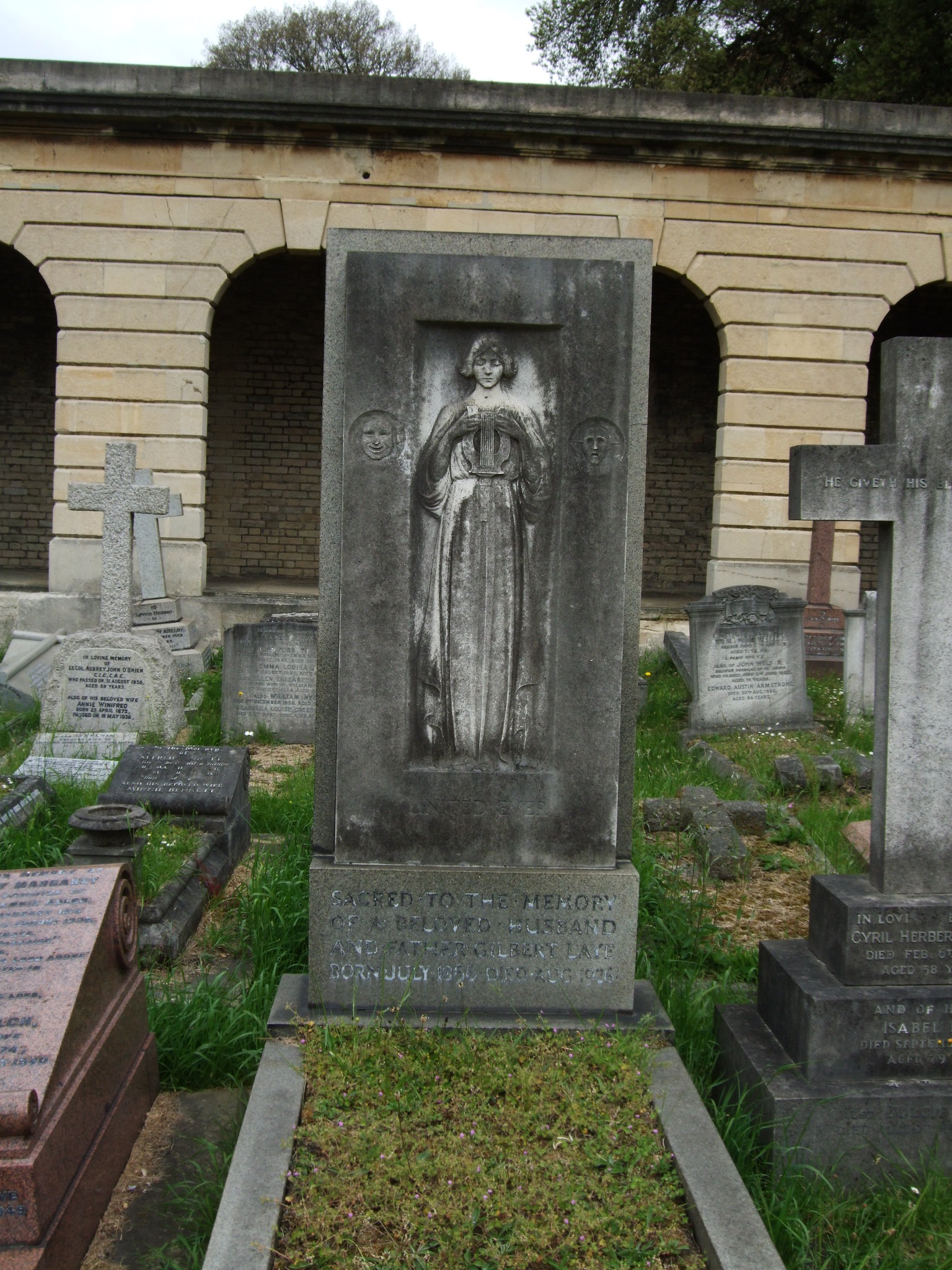
Gilbert Laye was an actor, composer and theatrical manager. I particularly liked his headstone, with the comedy and tragedy masks on either side.
Grave of Gilbert Laye
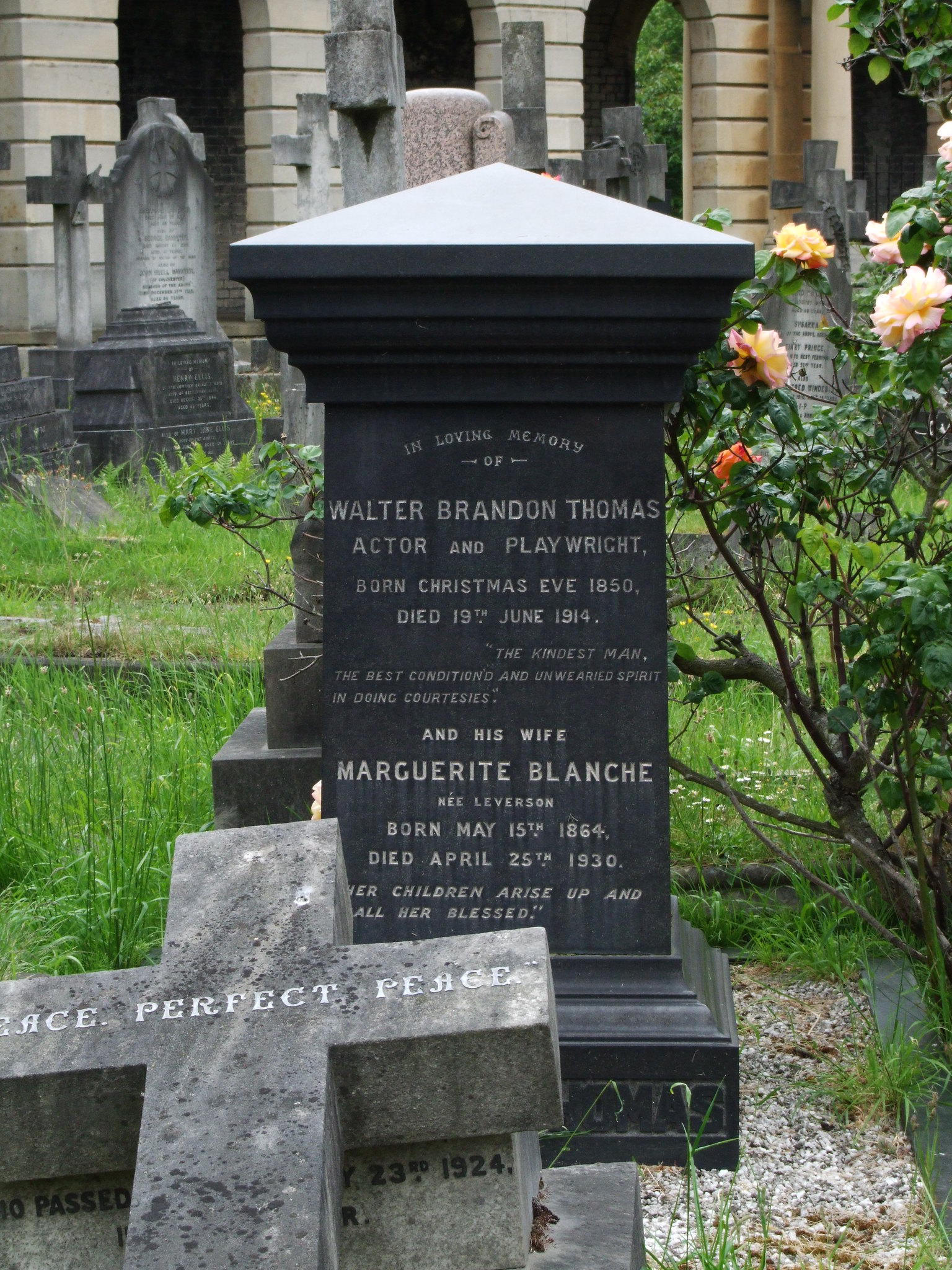
Continuing the theatrical theme, Walter Brandon Thomas was an actor and playwright best known today for his (genuinely funny) farce Charley’s Aunt.
Burial place of Walter Brandon Thomas
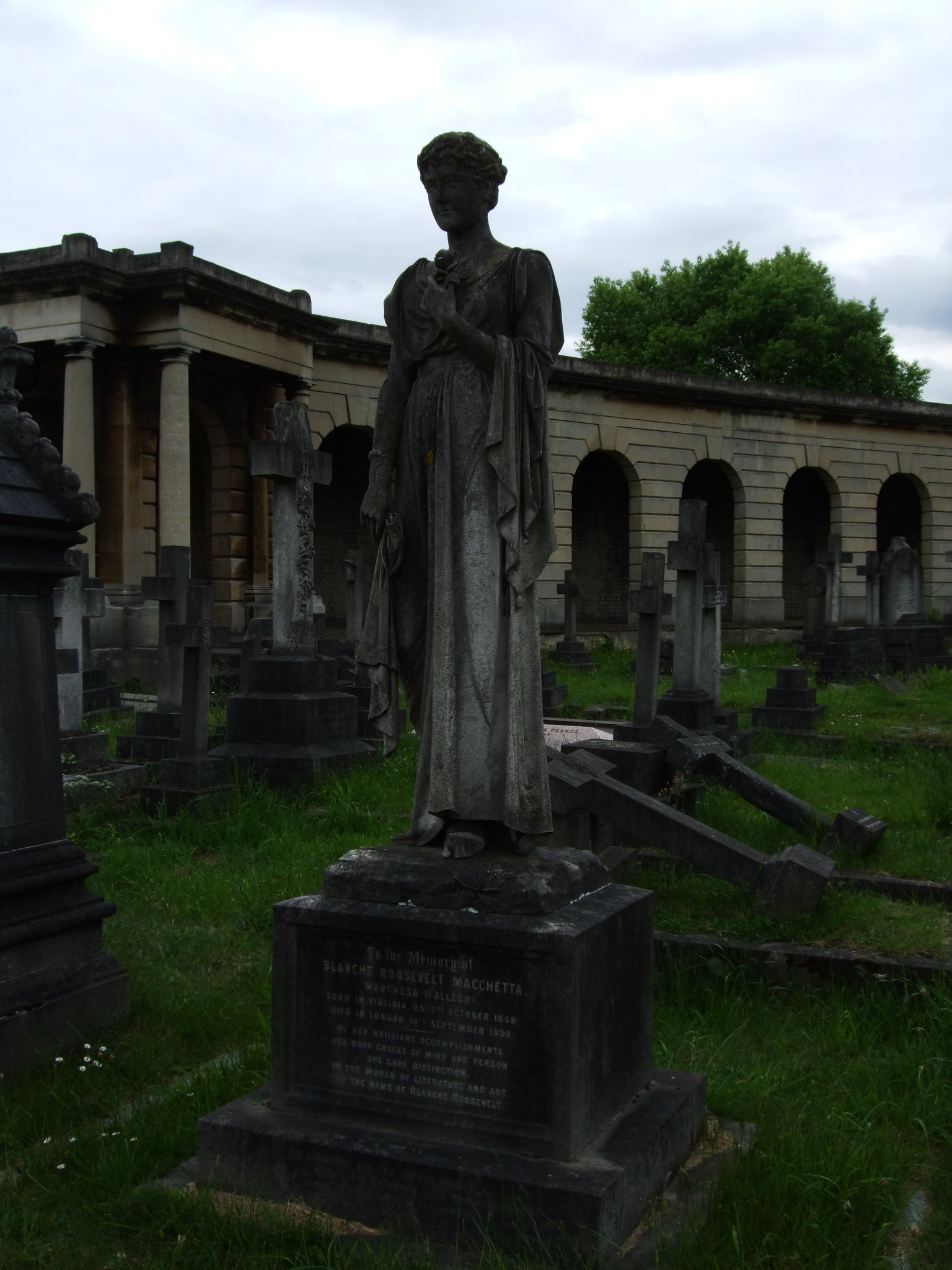
Blanche Roosevelt Macchetta was the first American woman to sing at Covent Garden’s Royal Opera House. After an accident, she died at the age of 45. The statue on her grave is of her.
Tomb of Blanche Roosevelt Macchetta
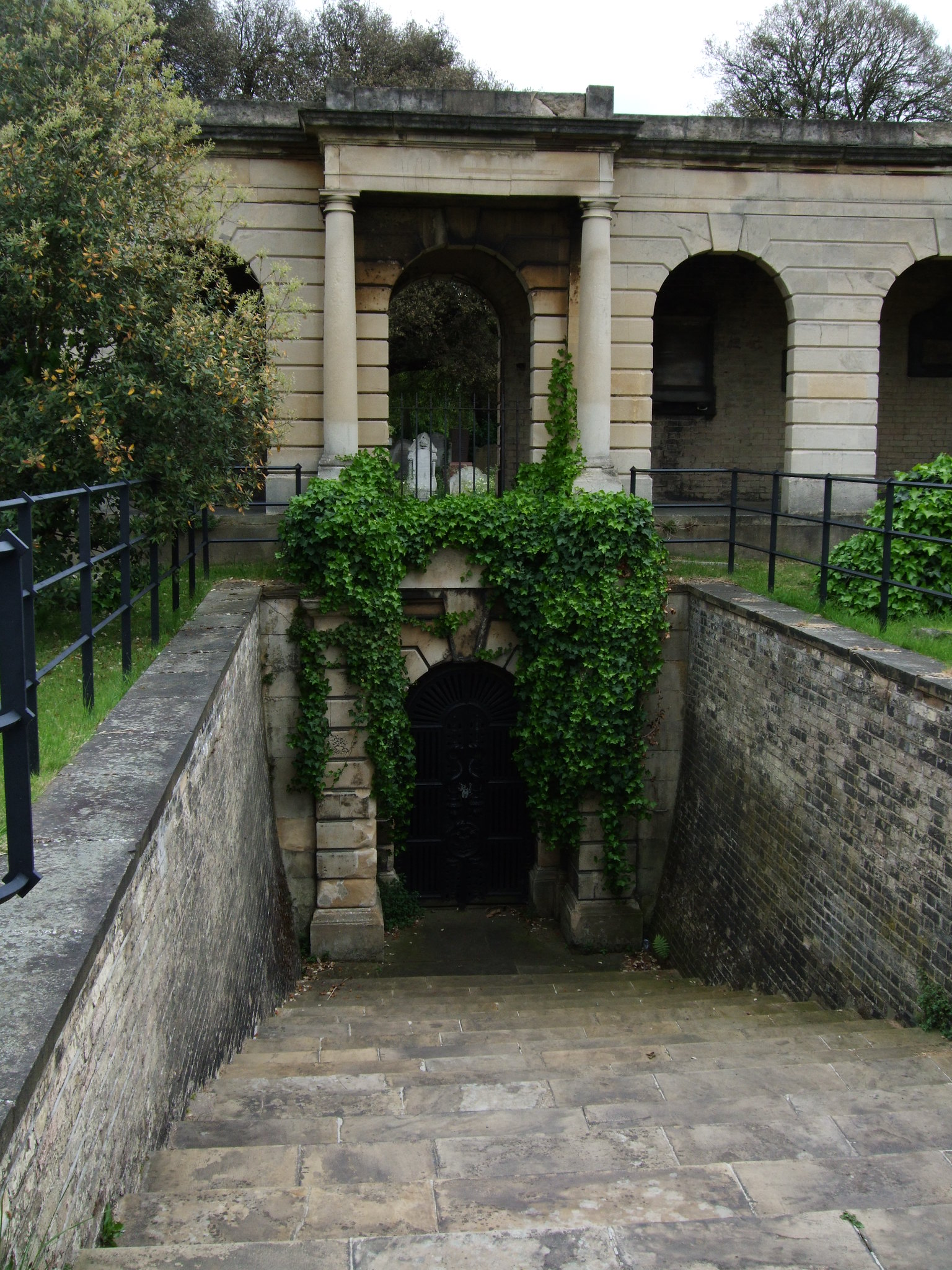
Below the arcades, catacombs are located. We weren’t able to look inside on this occasion but we were able to admire the gates, with their ornate design heavy with symbolism, including the two serpents.
Entrance to the catacombs
The interesting gravestone with the image of a wolf marks the former burial place of the Native American Sioux chief, Long Wolf, who died of pneumonia while touring with Buffalo Bill’s Wild West Show. In 1997 his remains were returned to his home in South Dakota.
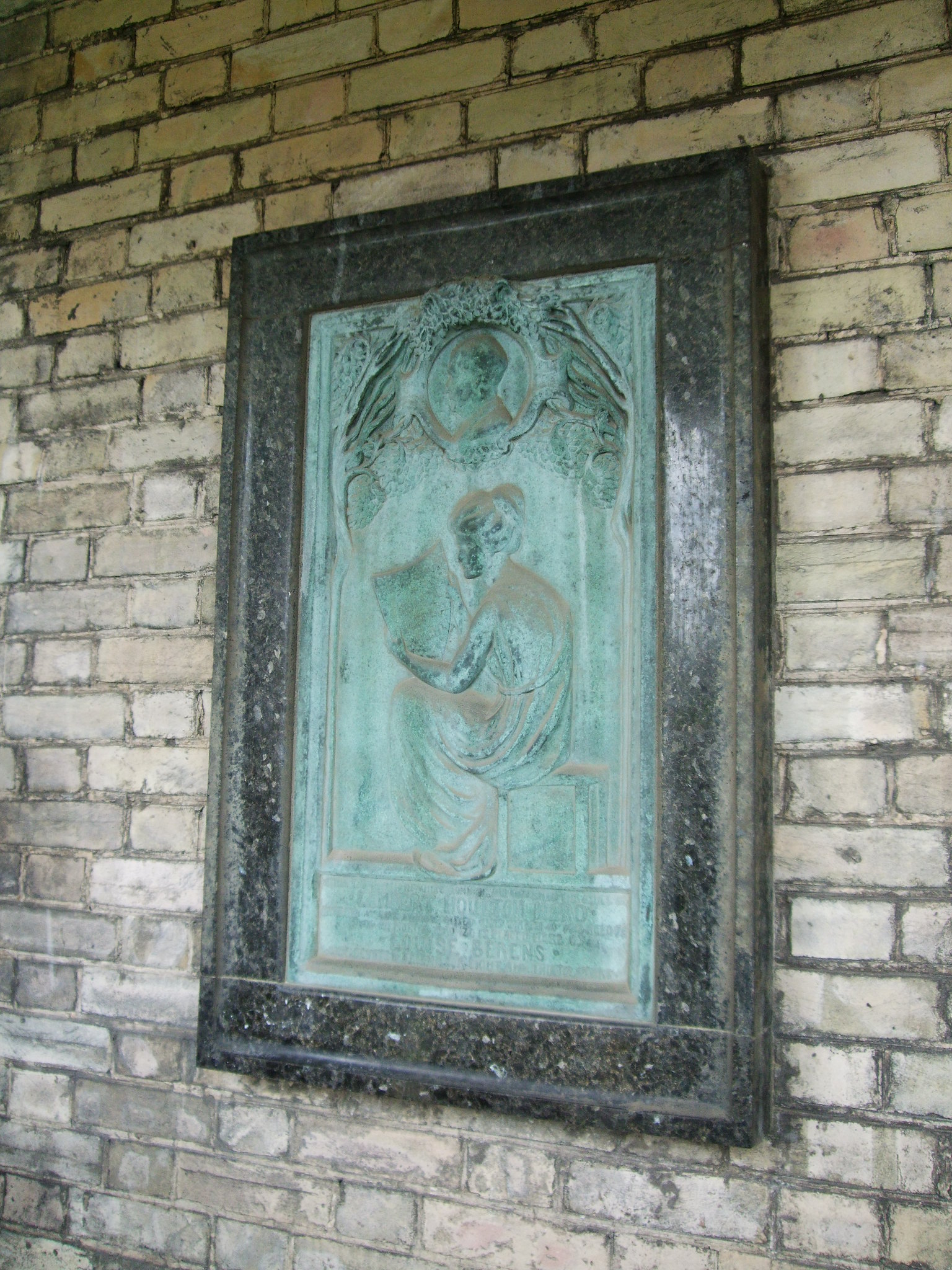
Long Wolf’s former burial placeOrnate plaque displayed on the wall of the arcade
Queen Victoria had the body of a favourite servant, her courier Joseph Julius Kanné, buried here.
Grave of Joseph Julius Kanné
Brompton Cemetery has memorials to the Brigade of Guards and the Chelsea Pensioners, as well as the graves of several Victoria Cross holders. One of these is Reginald Warneford, who was awarded the medal for downing an airship but who sadly died just over a week later during a non-combative flight.
Tomb of Reginald Warneford
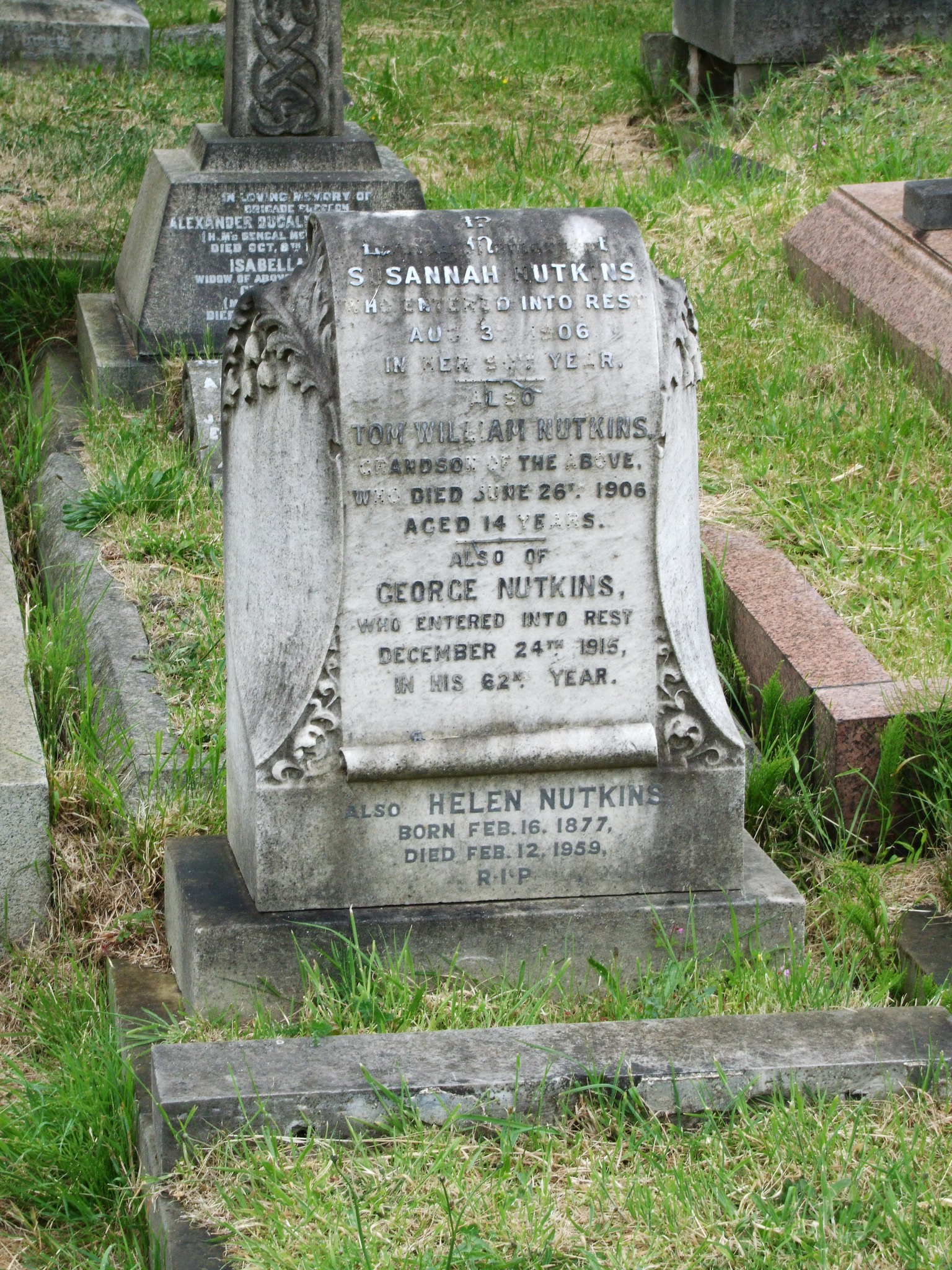
The cemetery has an interesting connection with the author Beatrix Potter, who lived nearby as a child and who is thought to have walked in the cemetery frequently. It has been suggested that the names of several individuals buried here influenced the names of some of her best-loved characters.
The Nutkins family – inspiration for Squirrel Nutkins?
An interesting-looking sarcophagus on “legs” was bought by the painter Valentine Princep as a 13th-century original. Many years after his death, however, it was found to be fake.
One of the most impressive monuments in the cemetery is the burial place of Frederick Richards Leyland, an art collector from Liverpool. His tomb was designed by the Pre-Raphaelite Edward Burne-Jones, and is Grade II-listed.
Leyland’s beautiful tomb
Richard Tauber was an acclaimed Austrian tenor who settled in Britain after the German annexation of Austria just before the Second World War.
Richard Tauber’s grave
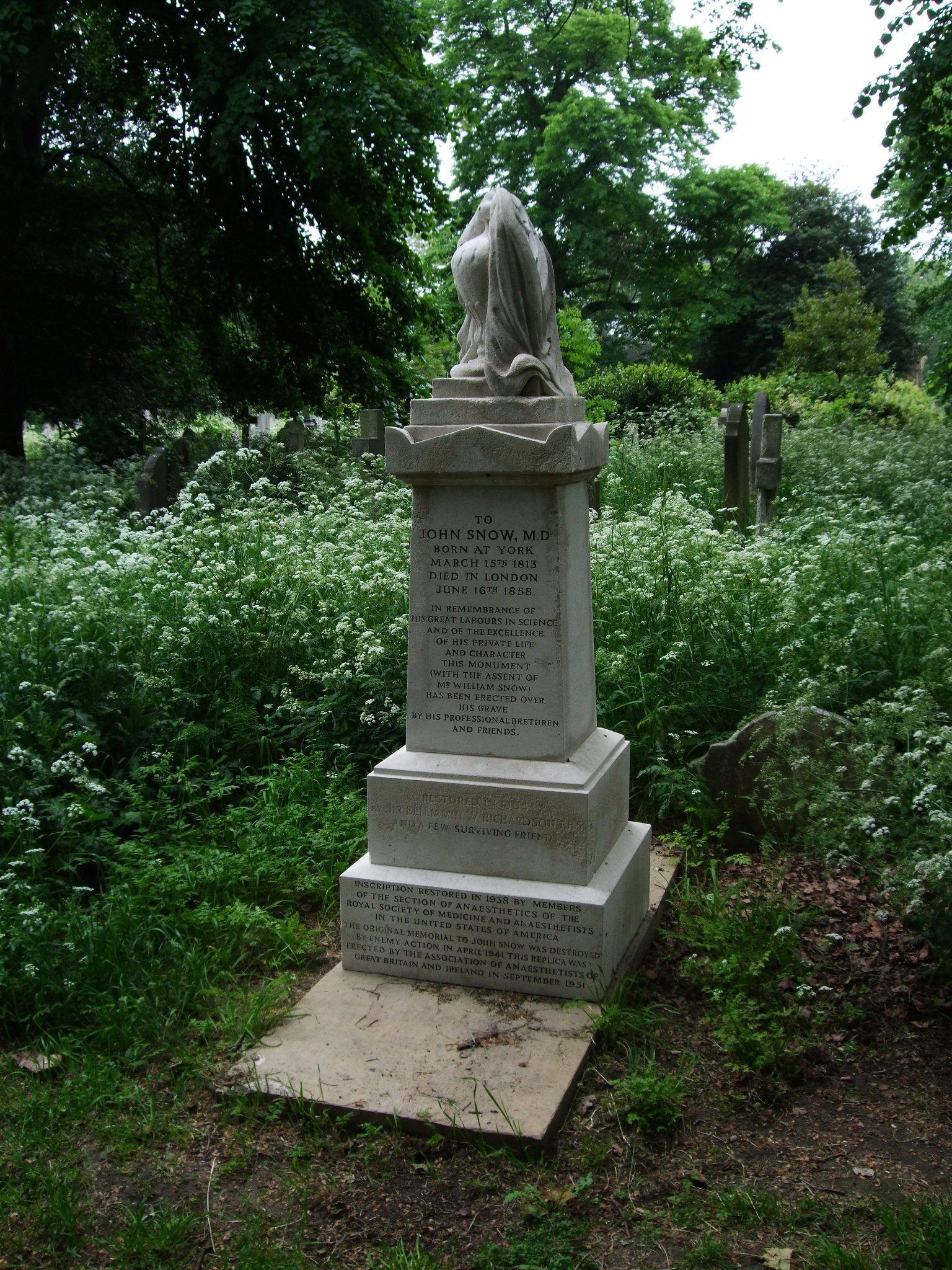
John Snow – not that John Snow, not that one either – was a physician who famously proved that cholera was not, as was commonly supposed, spread in the air but was ingested by mouth: he traced an outbreak of the disease in Soho to a particular pump on Broad Street, showing that the disease was transported via the water. I remember learning about him in history lessons at school, so I was rather excited to see his grave.
Grave of John Snow, rebuilt after being destroyed during World War II
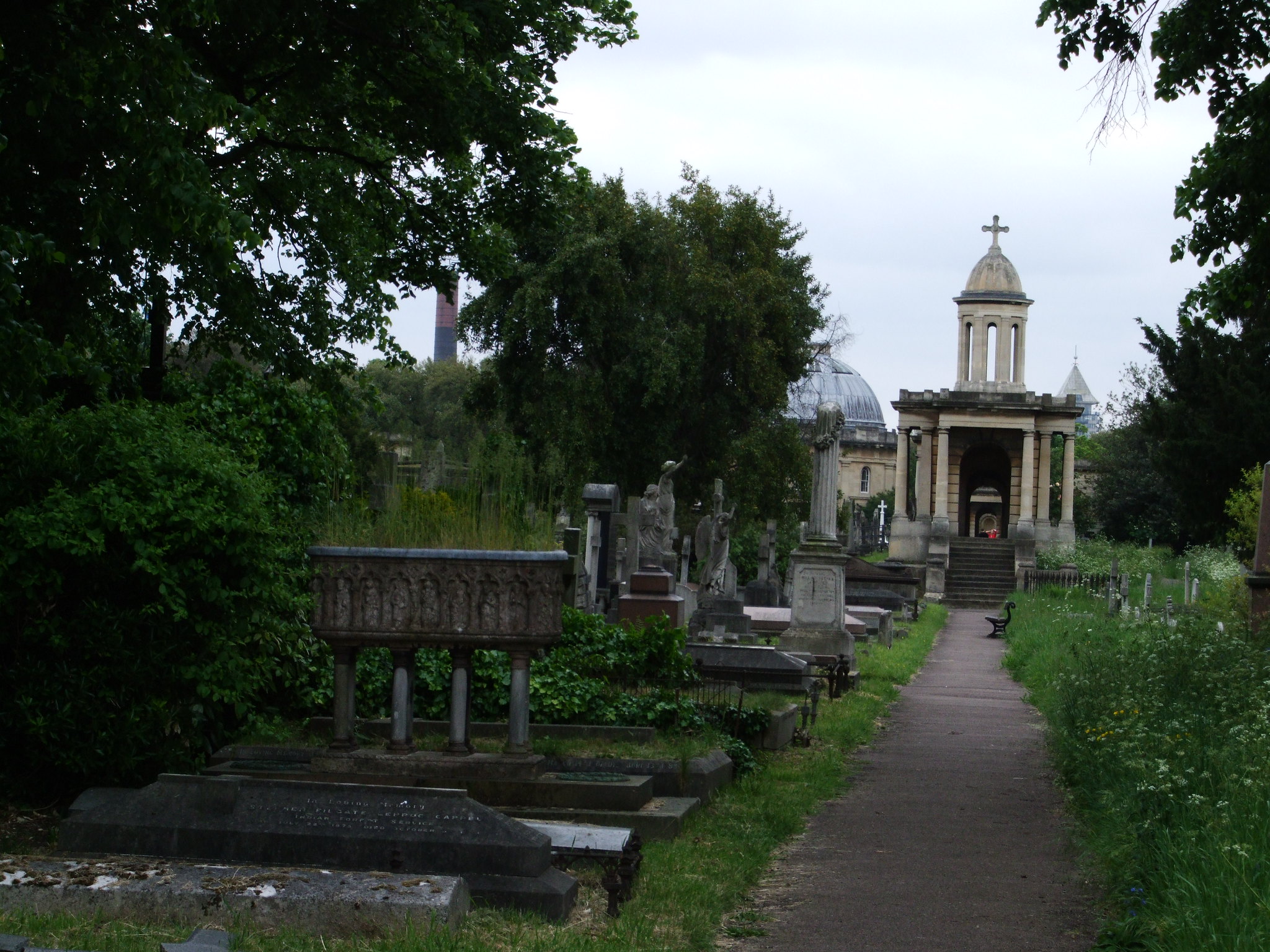
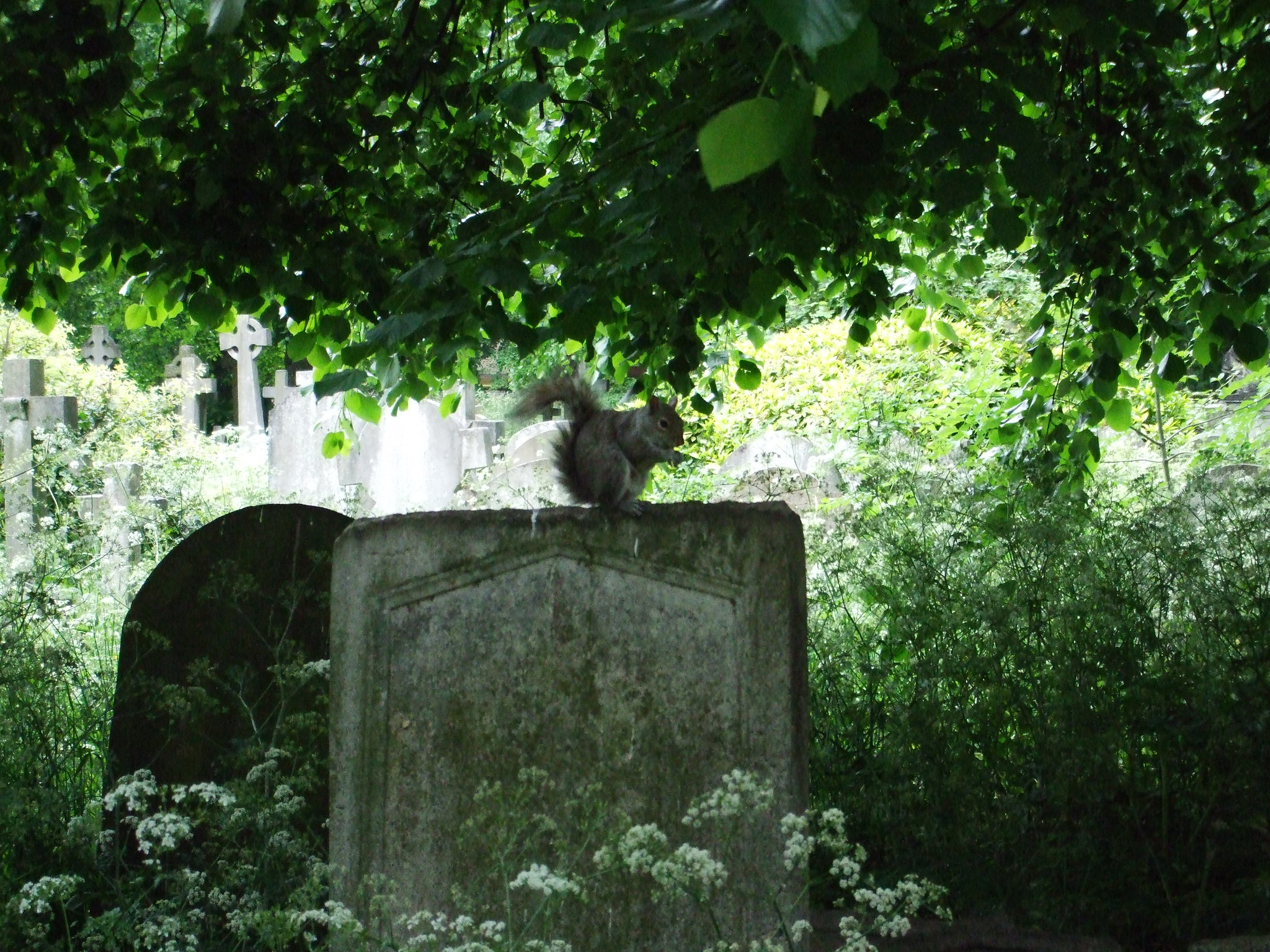
The cemetery is something of a haven for wildlife.
Architecture
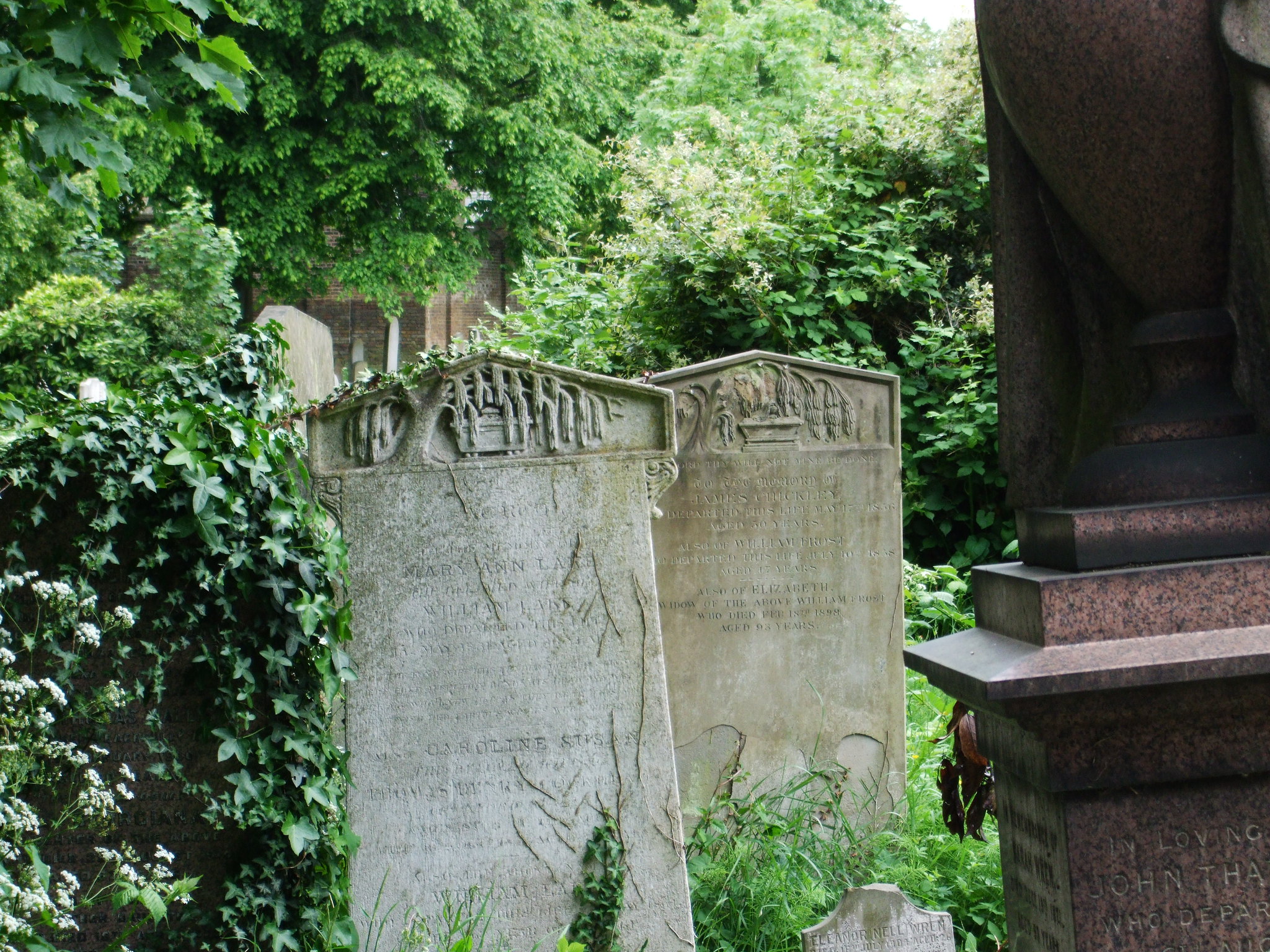
Like the other cemeteries I’ve visited, Brompton Cemetery has some beautiful architecture to admire, including some impressive gravestones as well as the cemetery design as a whole. Familiar symbols of death, such as urns and broken columns, sit alongside ornate Art Nouveau designs.
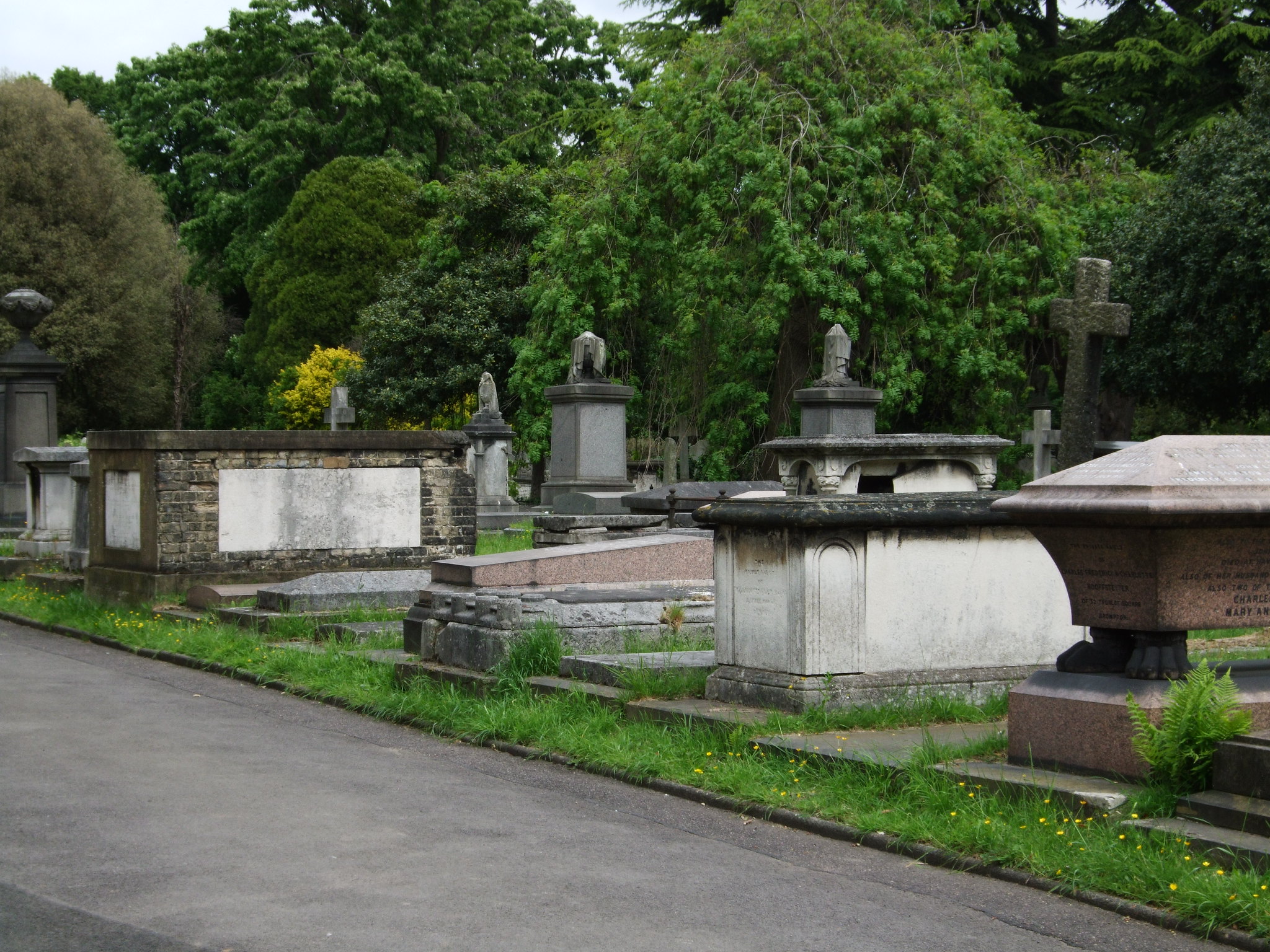
Sadly, these impressive statues have lost their headsBeautiful weeping willowsThe broken column represents a life cut short
Lovely “Art Nouveau” tomb
A draped urn, another common symbol
One of the most ornate and magnificent tombs in Brompton Cemetery
The central path ran the length of the cemetery, leading towards the North Gate.
Approaching the North GateThe North Gate, seen from outside the cemetery
Brompton’s central location makes it an ideal place for a leisurely walk. I would definitely recommend a tour, too, so that you can discover more about the cemetery.
Would I go back?
Yes – I wasn’t able to see Emmeline Pankhurst’s grave and because of the rain I wasn’t able to wander about as much as I would have liked. I’d love to have the chance to explore the cemetery at my leisure, and to visit the catacombs, too.
FACTS
Address: Old Brompton Road, London, SW10 9UG
Founded: 1840
Size: 39 acres
Still in operation?: Yes
Official website: https://www.royalparks.org.uk/parks/brompton-cemetery
Owners: Crown Estates, managed by The Royal Parks
Friends group: Friends of Brompton Cemetery (http://brompton-cemetery.org.uk/)
Tours: These cost £6 and take place at 2pm every Sunday from May to August, and on two Sundays a month from September to April. Meet at the South Lodge, at the Fulham Road entrance.
The final exhibition I saw at Tate Britain was Salt and Silver: Early Photography 1840 – 1860. It was a fascinating exhibition with some of the earliest photographs ever taken on display. William Henry Fox Talbot pioneered a method of taking pictures with salted paper prints in 1839, the same year as Louis Daguerre invented the daguerrotype. Talbot’s images included pictures of china, glass, paper and people – including his daughter – as he explored the potential of the new medium. Other photographs on display include fascinating Paris landmarks including the Arc de Triomphe, images of India and the American Civil War, and the construction of Nelson’s Column in Trafalgar Square.
Later, Gustave Le Gray improved the salted paper print method by using waxed paper negative proofs. Further images displayed showcase the extra detail this method offered: the pyramids of Egypt, the Crimean war and ordinary life, in the shape of some Newhaven fishwives, are pictured. Early photography was inspired by portraiture when it came to pictures of people: pictures were often posed, but they were unique in being able to capture individuals, particularly children, at a specific moment in time. Most of the pictures are of ordinary people, but there is one notable image of French author Victor Hugo.
A fascinating exhibition, this is a must-see for anyone interested in photography or history.
The Darks is an installation/exhibition by Ruth Ewan and Astrid Johnson based at Tate Britain. I had read about it on the website, and when I went to the Tate to see some exhibitions on Easter Monday, I decided to give this tour a go.
The Darks plays on the format of a museum audio guide, and was inspired – if that is the right word – by the Millbank Prison which used to occupy the Tate site. Jeremy Bentham’s original 1816 plan was for a Panopticon, a system which would enable just one watchman to keep an eye on all the prisoners, but the end result was somewhat different. The triangle of Mercy, Justice and Vigilance was supposed to inform prison design. The guide features both real and fictional accounts from the likes of Dickens as well as prisoners transported to Australia from just outside the prison. The tour starts at the Tate’s Millbank entrance, then moves onto the steps; you cross the road and walk by the river until you reach the Morpeth Arms and Ponsonby Place, then head back to the Manton Entrance in Atterbury Street, finishing up in the Tate’s Lower Rotunda.
The Darks audio guide collection pointTate Britain Millbank entranceLooking out onto the riverThe RotundaLooking west along the riverbankThe ThamesThe ThamesPrisoners departed London here for transportation to AustraliaThe Morpeth Arms, where prison workers used to drinkPart of the octagon that used to mark the prison boundaryAnother view of the boundaryManton EntranceBack inside Tate Britain
The Darks is a fascinating tour and I learned a lot about Millbank Prison and the site itself. I love anything that allows me to explore more of London, so this was ideal.
Nunhead Cemetery, looking towards the Anglican chapel
My visit to Nunhead Cemetery marked the mid-point of my “Magnificent Seven” tour. I very nearly didn’t visit on Sunday – I lost an hour of sleep to the clock change, and when I woke up all I could hear was the sound of the wind and the rain hitting my window, which didn’t exactly make me want to leap out of bed and spend time out of doors. However, I forced myself to make the effort, and luckily by the time I reached the Cemetery the wind had died down and the rain had stopped.
Getting There
Nunhead is one of only two of the seven cemeteries to be located south of the river, the other being West Norwood. Its address is Linden Grove, London SE15 3LP, and the closest railway station is Nunhead, which can be reached from Victoria or London Bridge stations. Peckham Rye station is a little further away but as more trains stop at this station than at Nunhead (including Overground trains), it is sometimes the better option.
Approaching the Cemetery along Linden Grove
The cemetery is located very close to Nunhead station, and it is easy to reach, though you do come upon it suddenly as you step out of a housing estate. The railings are reproductions, the originals having been removed during World War II, but the neoclassical gates are original, although they have been restored. The upturned torches, which symbolise life extinguished, are common symbols in Victorian cemeteries.
The restored Cemetery gates
I was due to participate in the tour, the meeting place for which is beside the Anglican chapel.
Approaching the Anglican chapel
History
The fourth of the Magnificent Seven cemeteries to be built, in response to an overcrowding problem in central London burial grounds, Nunhead was founded in 1840 by the London Cemetery Company. It was originally called All Saints Cemetery, Nunhead. The first person to be buried here was a man called Charles Abbott, a 101 year old Ipswich grocer. The cemetery was popular, becoming nearly full by the middle of the 20th century, but was never as prestigious as Kensal Green or nearby West Norwood.
Abandoned by the company, the Cemetery fell into a state of disrepair and neglect, exacerbated by vandalism. In the early 1980s, the Friends of Nunhead Cemetery were formed to renovate and protect the Cemetery. Nunhead is now owned by the London Borough of Southwark and is a Local Nature Reserve, forming a habitat for many animals and birds. It was reopened in 2001, having been restored with funds from Southwark Council and the Heritage Lottery Fund. Nunhead is listed Grade II*.
Blue plaque
The neoclassical lodges were designed by James Bunstone Bunning, who was also responsible for the entrance gates and the landscaping. One is now occupied as a private house, while the other is sadly derelict.
One of the neoclassical lodges, now derelict, with catacombs underneath
The Gothic-style Anglican chapel was designed by Thomas Little. It fell victim to arson, but has been partially restored.
Close-up of the chapelSide view of the chapel
Tour
Looking towards the Cemetery gates from the chapel
I attended a tour run by the Friends of Nunhead Cemetery. The tour began at the Anglican chapel, and we learnt about the history of the Cemetery. I was impressed with the height of the landscape, and the wonderful views that were apparent even on such a dull day.
One of the first graves we saw was that of Henry Daniel, a mason employed by the London Cemetery Company, buried surrounded by many of the memorials that he built.
Family vault of Henry and Charlotte DanielClose-up of the tomb with anchor and serpent decoration
An interesting part of the Cemetery was the Muslim section, something I had not expected to come across.
Muslim area
We noted the tomb of Bryan Donkin (d. 1855), the inventor of the tin can. His son, another Bryan, also buried here, opened a banknote factory in Russia.
Tomb of Bryan Donkin
On our way up the hill, our guide pointed out the silver granite memorial to the ship owner John Allen (d. 1865).
Heading up the hill with Allen’s tomb on the right
The tomb is a reworking of an ancient monument brought to Britain from Egypt.
Memorial of John AllenMemorial of John Allen
Some parts of the memorial are in excellent condition, but others have decayed: the two angels that formerly flanked the head of the monument are no longer in position.
A fallen weeping angel
The Stearns family mausoleum was built in 1902 by the Doulton firm. It is similar to monuments at West Norwood.
Stearns family mausoleum
Our walk eventually brought us to the top of the hill. It was considered more prestigious to be buried at the top, because you were thought to be closer to God.
Approaching the top of the hill
However, being at the top does mean that your memorial is more exposed to the weather. This one is looking a bit wonky.
An unusually carved tomb
It is possible to see St Paul’s Cathedral from this point on the hill – a stunning view.
View of London from the very top of the Cemetery
Near the top is buried John Moritz Oppenheim, a skin and fur merchant who died in 1864 and was a generous patron of the arts, despite being blind for 20 years. His stone shows an angel touching his eyes.
Grave of John Moritz Oppenheim
The Cemetery is overgrown in parts and could do with some restoration, although I did think that this unkempt look made it more atmospheric.
Many of the graves are overgrown
The Cemetery is an important nature reserve: this pond, for example, is very important for wildlife.
Pond for wildlife
We headed back down the hill towards the entrance.
The way downA winding path flanked by graves
The location of the former Dissenters’ chapel is marked by a clearing. The unconsecrated ground surrounding it contains graves of people belonging to non-Anglican denominations.
Location of the former Dissenters’ chapel
In the area you can see the Cemetery’s only gravestone with a Welsh inscription.
Welsh grave
Finally, we were shown the Scottish Martyrs obelisk, a memorial to 5 lowland Scots sentenced to transportation for advocating parliamentary reform.
Scottish Martyrs obelisk
Scouts
The Scouts memorial
The Scouts memorial commemorates a tragic accident that occurred in 1912. On the 4th of August, nine boys were drowned at Leysdown after their boat overturned. The tragedy resulted in huge public mourning, and a bronze life-size Scout was designed by Sir Giles Gilbert Scott and erected here in 1914. Sadly stolen in 1969, it was replaced by this marble stone in 1992.
Some Commonwealth war graves are located in the same area, soldiers who died in a nearby hospital after returning from the Front in World War I.
Commonwealth War Graves
Architecture
As with the other cemeteries I have visited so far, the architecture is varied and impressive. Many of the usual symbols are present, including angels, broken columns and crosses.
A stone angel decorating a graveTomb with a scroll carvingBroken column with rose design
This unusual anchor does not actually belong to the grave on which it rests. It was discovered after a period of bad weather destroyed the vegetation covering it, and bears an intriguing message.
Anchor-shaped stoneA crossA cross covered with ivy
Nunhead is one of the least-known of the Magnificent Seven cemeteries, and its lack of fame and location south of the river might put people off visiting. However, it is a little gem: a lovely site on a hill, romantically overgrown, and a haven for wildlife.
Would I go back?
Yes – Nunhead would be a lovely place for a quiet walk. I also want to do a tour of the crypt, chapel and viewing tower, run by the Friends on various dates throughout the year.
There is an Open Day each year: in 2015 this will be the 16th of May. You can view details here.
Facts
Address: Linden Grove, London SE15 3LP
Founded: 1840
Size: 53 acres
Still in operation?: Yes
Official website: http://www.southwark.gov.uk/info/461/a_to_z_of_parks/660/nunhead_cemetery
Owners: London Borough of Southwark
Friends group: Friends of Nunhead Cemetery (FONC) (http://www.fonc.org.uk/)
Tours: General tours on the last Sunday of every month, free, 2.15 pm at the Linden Grove entrance. Special interest tours on certain dates – see the FONC website for details.
Highgate Cemetery is probably the most famous cemetery in London – I had heard of Highgate before any of the other Magnificent Seven. It is the burial place of some of the most famous figures ever to have graced London, and is well-known in popular culture, having appeared in novels such as Falling Angels by Tracy Chevalier and Her Fearful Symmetry by Audrey Niffenegger. I’m not quite sure how I’ve managed to live in London for four years without visiting.
Getting There
Highgate has a lovely setting on a hill in North London. The nearest tube station is actually Archway, not Highgate. From Archway, take the 210,143 or 271 bus up Highgate Hill to Waterlow Park (you can walk, but it’s better to save your energy for exploring the cemetery). You have to walk through the park, which is lovely, to reach the cemetery.
Approaching Swain’s Lane from Waterlow Park
History
The English Heritage Grade 1* listed Highgate Cemetery originally opened in 1839, the third of the “Magnificent Seven” after Kensal Green and West Norwood, part of a ring of garden cemeteries around the outskirts of central London designed to draw burials away from the overcrowded and unhygienic inner-city cemeteries. An 1836 Act of Parliament created the London Cemetery Company, which bought seventeen acres of land on the steep hillside near Highgate Village for the sum of £3,500. The original design was by architect and entrepreneur Stephen Geary whose Tudor-Gothic style is evident in the entrance and chapels, and the Cemetery was dedicated to St. James by the Right Reverend Charles Blomfield, Lord Bishop of London, on 20 May 1839. The original Cemetery is now known as the West Cemetery; the East Cemetery was an extension established in 1854 thanks to the huge popularity of Highgate.
The Cemetery was built in the grounds of the Ashurst estate, evidence of which is the presence of a magnificent Cedar of Lebanon dating from the late seventeenth century. Sadly, Highgate’s profitability declined in the twentieth century and it began to decay, with vandalism and overgrown weeds prevalent until the Friends of Highgate Cemetery Trust, set up in 1975, took over in 1981. The Friends are still responsible for the upkeep of the Cemetery and run the guided tours which are the only way to see the West Cemetery (you can walk around the East Cemetery alone but you do have to pay).
East Cemetery
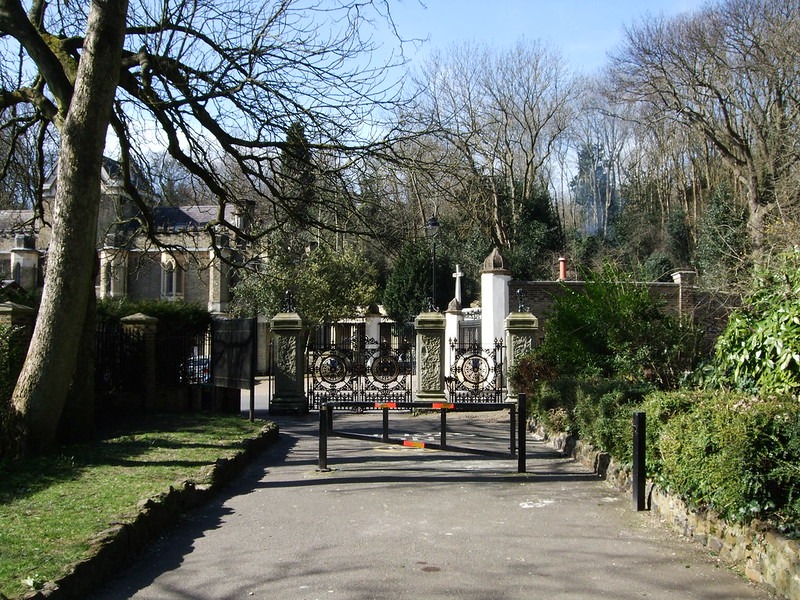
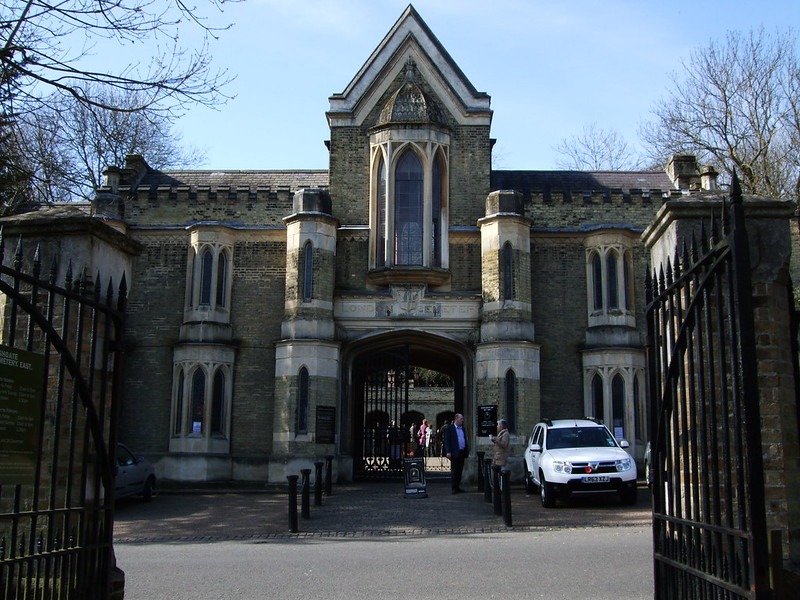
Entrance to the East Cemetery
On Saturdays, you can’t book tours in advance: you just turn up. I had a bit of time to wait until my West Cemetery tour so I decided to have a look around the East Cemetery first (entry is included in the price of your West Cemetery tour ticket). The Eastern part was built later than the original West Cemetery, but it is still worth seeing. In fact, the lady at the entrance selling tickets to other visitors summed it up nicely when she said that the West Cemetery has the famous monuments, the East Cemetery has the famous people.
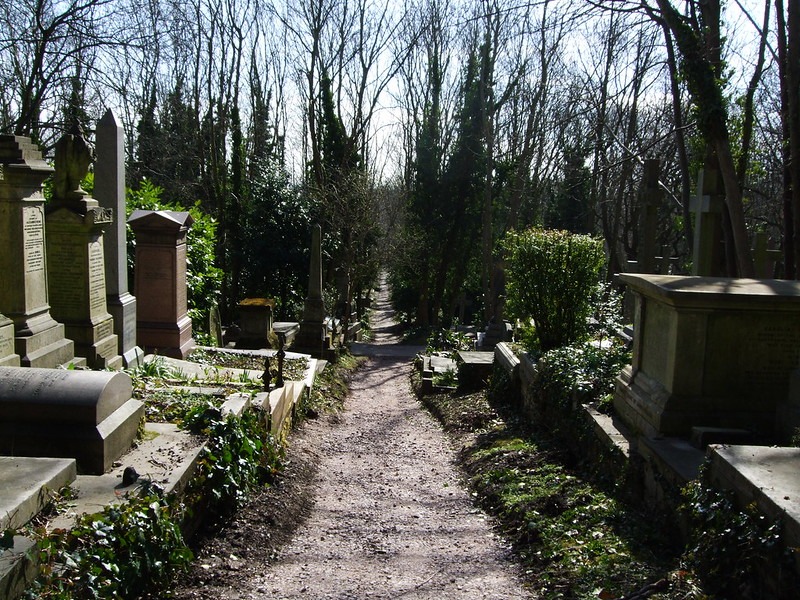
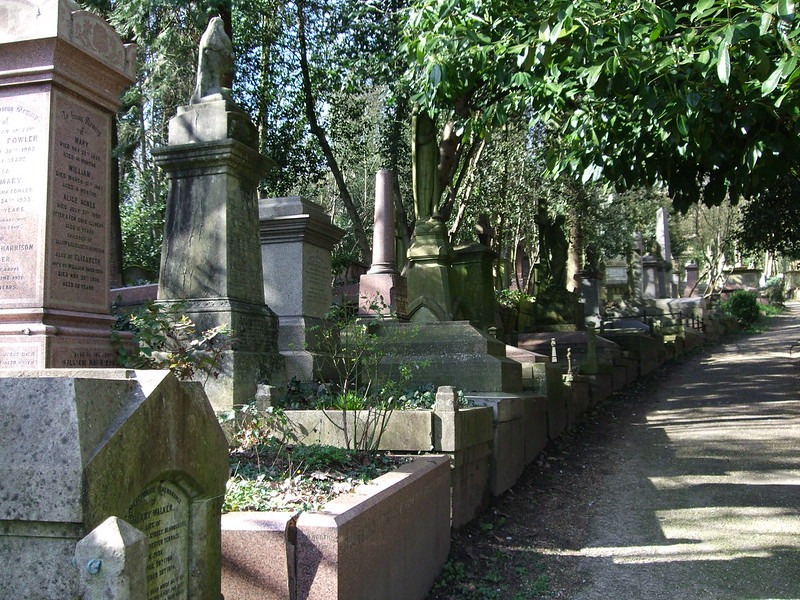
Inside the East CemeteryInside the East Cemetery
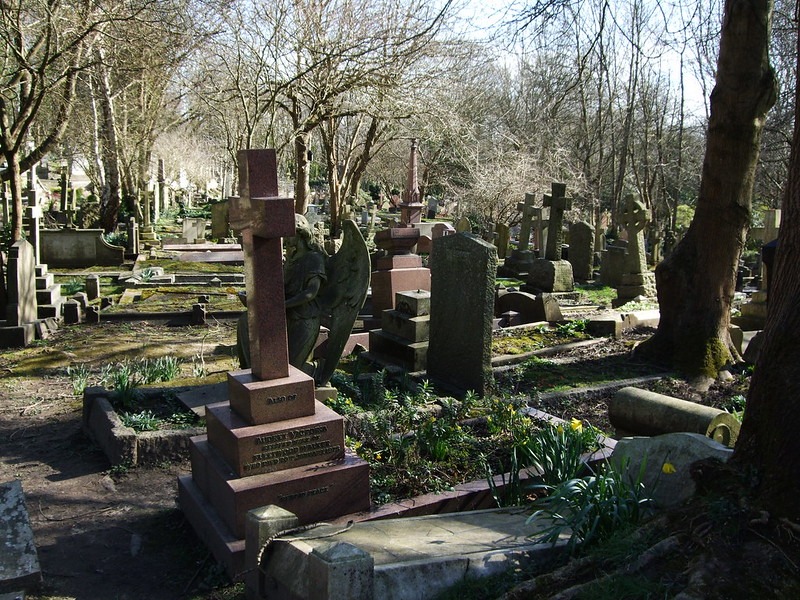
It was a lovely sunny day – warm enough to walk around without a coat – and I enjoyed exploring the beautiful Cemetery and the landscape of gravestones, with a couple of mausoleums thrown in.
Pocklington mausoleum
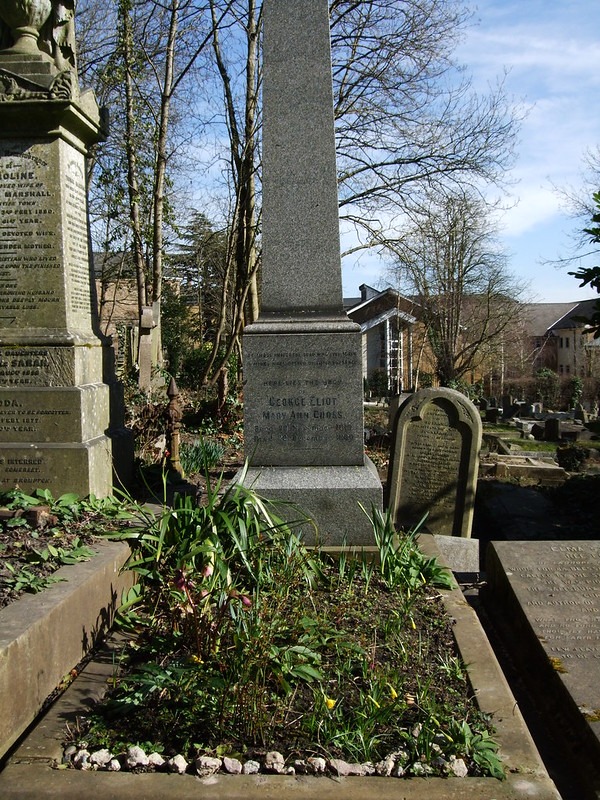
I had a good time finding significant graves, including that of one of my favourite Victorian writers, George Eliot, author of Middlemarch. Her real name of Mary Ann Cross is also on her tombstone.
Grave of George Eliot
A more recent but equally loved writer, Douglas Adams, famed for the Hitchhiker’s Guide to the Galaxy books, was buried here in 2001. His grave is often marked with pens.
Grave of Douglas Adams
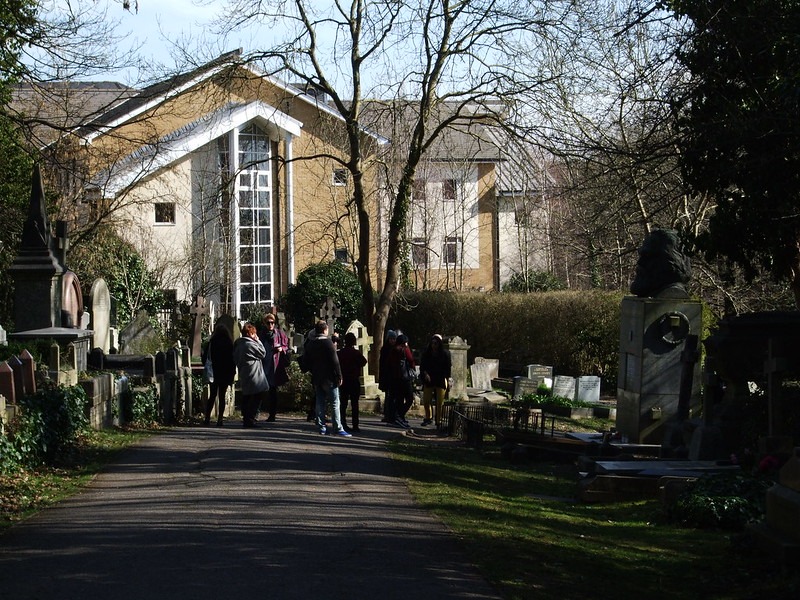
Karl Marx is probably the most famous person buried at Highgate. His grave is easy to spot because there are lots of people milling around it.
Approaching Karl Marx’s tomb
The original gravestone, which is embedded within the newer structure, is plain and simple; the impressive tombstone, with the carved message “WORKERS OF ALL LANDS UNITE”, was erected by the Communist Party of Great Britain in 1954. The portrait bust is by Laurence Bradshaw. In 1970 there was an attempt to blow up the monument with a homemade bomb.
Marx’s tomb
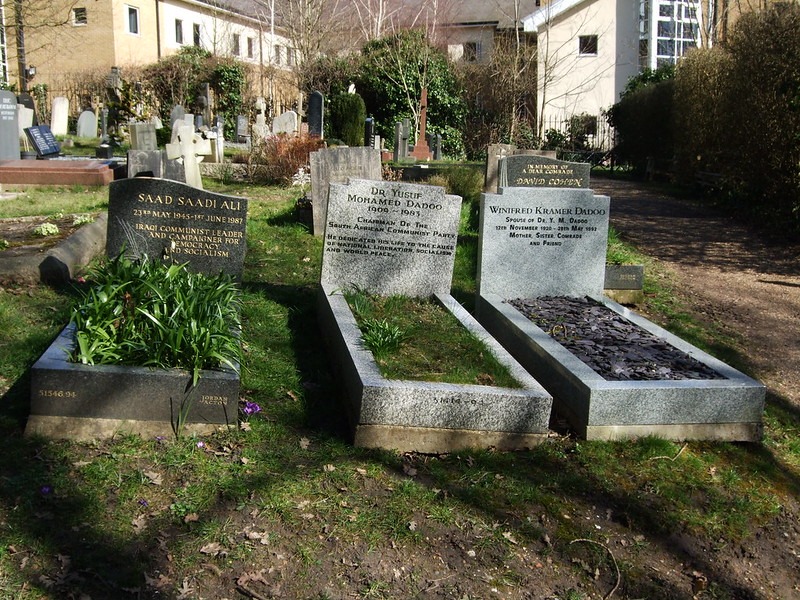
A number of other Communists and revolutionaries are buried near Marx, as is the Marxist historian Eric Hobsbawm.
Socialist leaders and thinkersEric Hobsbawm’s grave
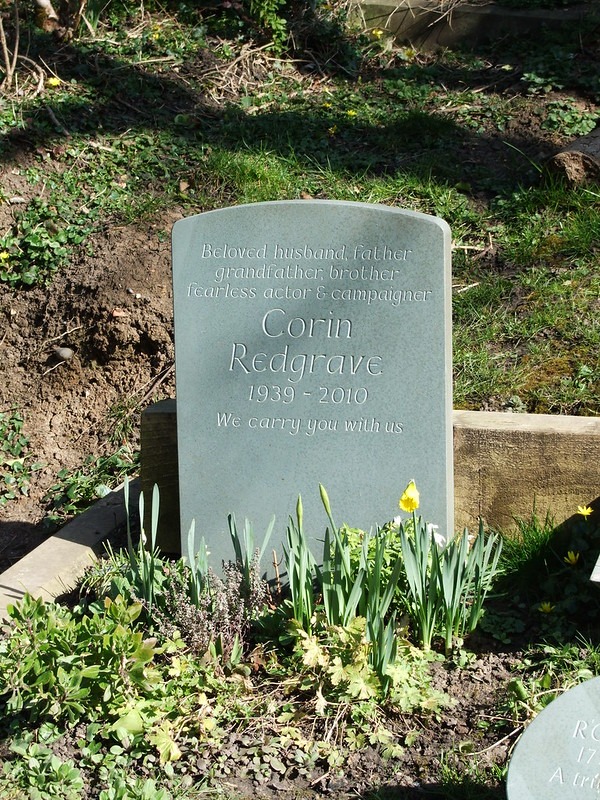
Actor Corin Redgrave is buried at Highgate.
Burial place of Corin Redgrave
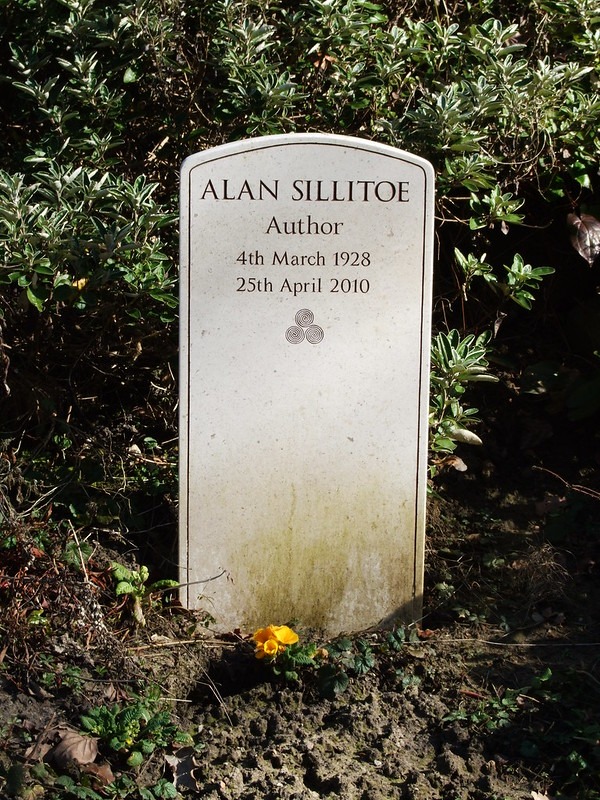
Writer Alan Sillitoe (author of Saturday Night and Sunday Morning) also rests here.
Alan Sillitoe’s grave
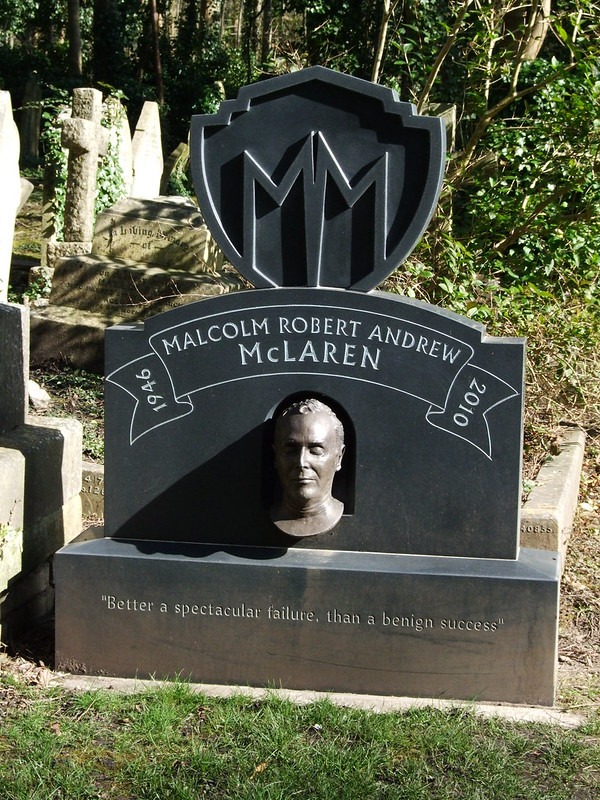
Malcolm MacLaren, manager of the Sex Pistols, musician and fashion designer, is buried in an unique grave.
Malcolm McLaren’s grave
The artist Patrick Caulfield’s gravestone, dramatically reading “DEAD”, is one of my favourites.
Patrick Caulfield’s tombstone
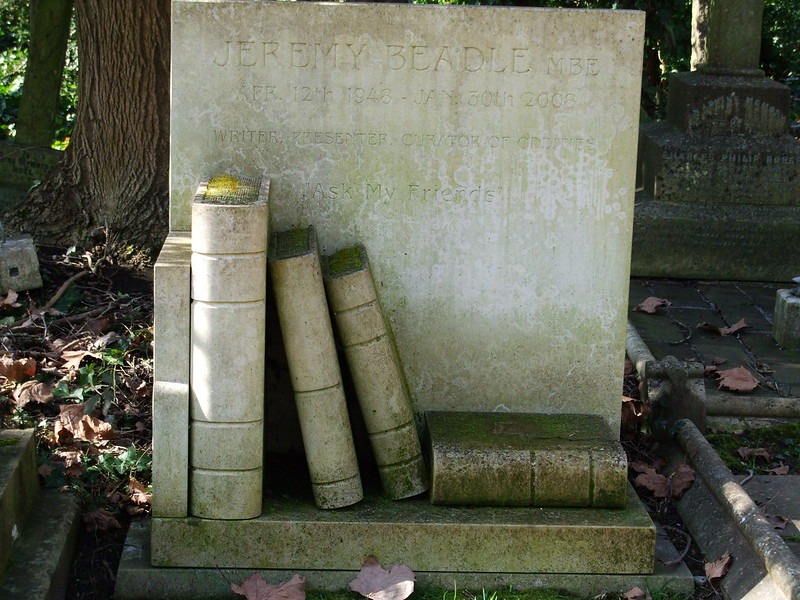
One of my most surprising finds was the grave of TV personality and presenter (of Beadle’s About and You’ve Been Framed!)Jeremy Beadle. I really liked his gravestone, which looks like a bookshelf.
Jeremy Beadle’s grave
Aside from the famous individuals buried here, there are plenty of graves noteworthy for their architecture. A variety of styles are in evidence, including Victorian:
Grave of Caroline Tucker
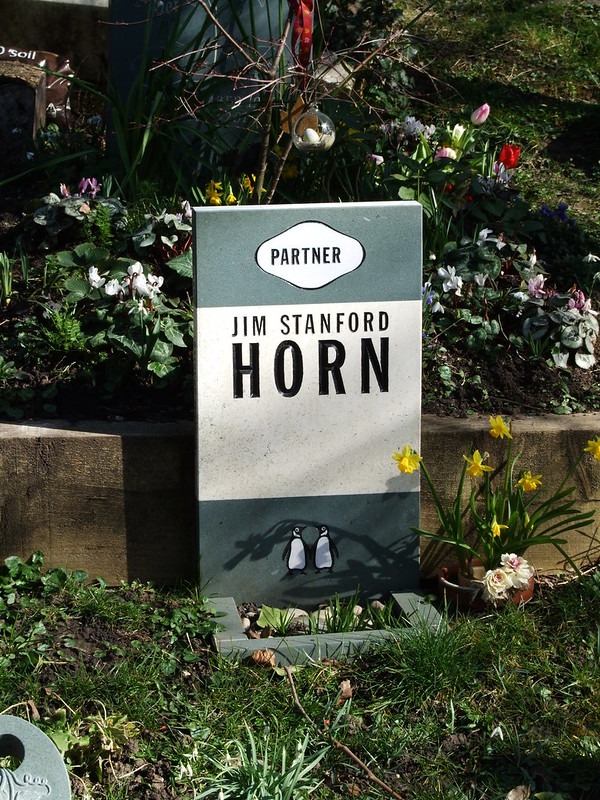
…and modern. I love this Penguin Books-themed stone.
Jim Stanford Horn’s gravestone
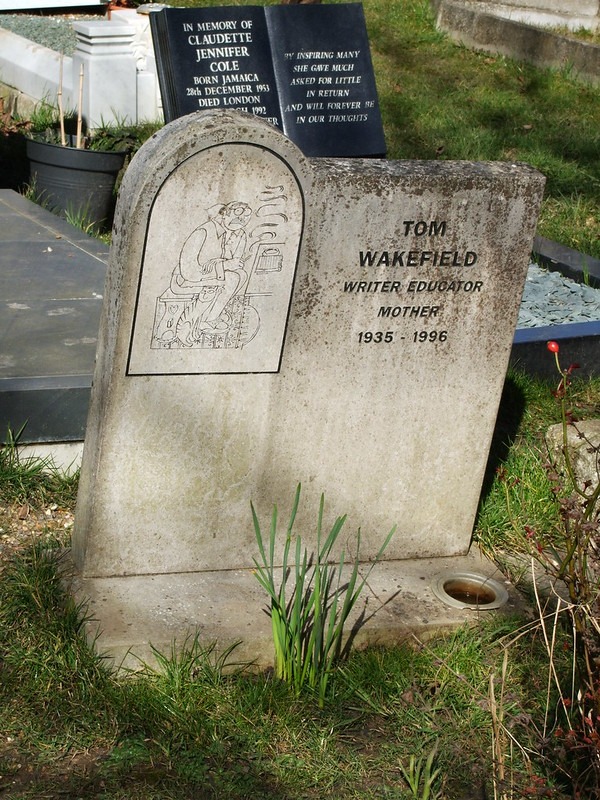
I was intrigued by this picture and description.
Tom Wakefield’s grave
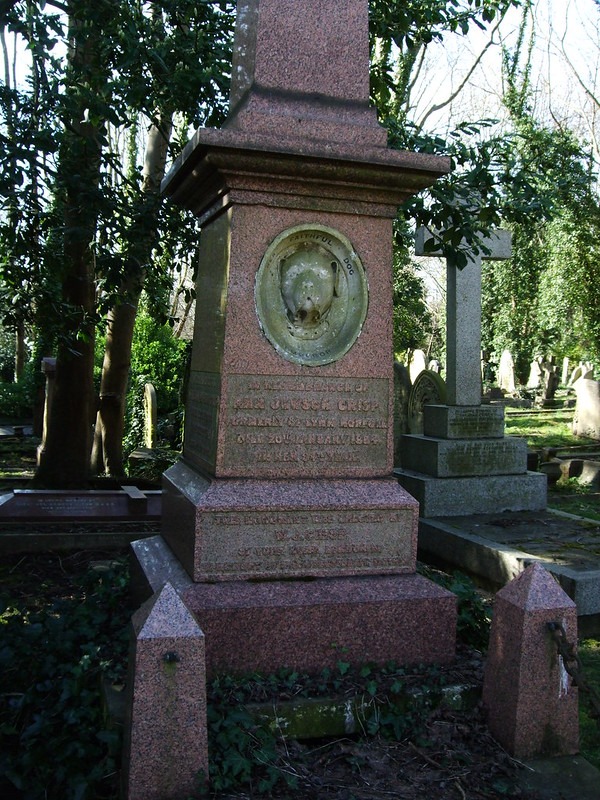
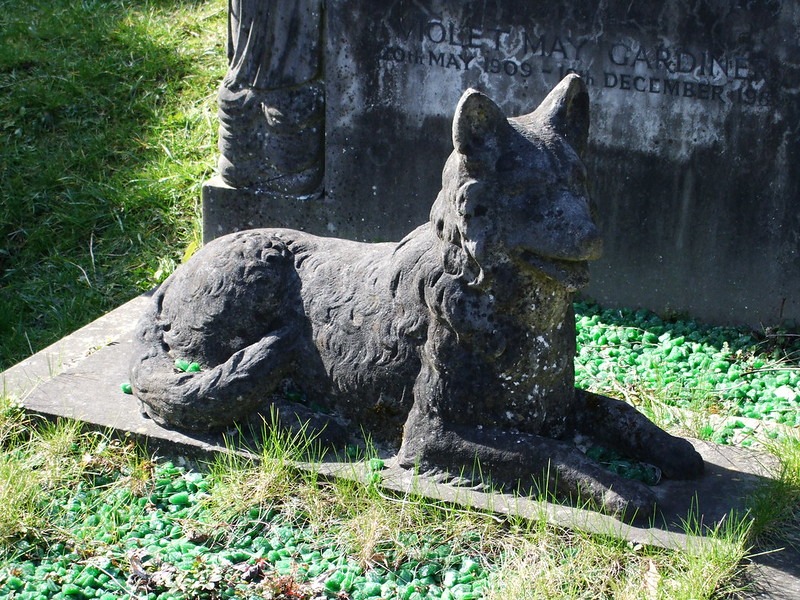
This person obviously loved their dog very much.
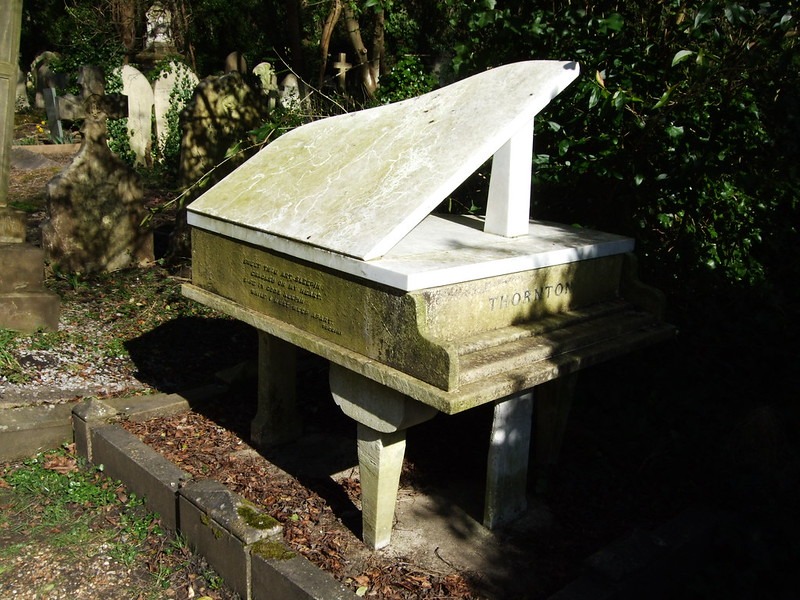
This piano is amazing.
Tomb of Thornton
The East Cemetery is beautiful and I could wander around for hours.
However it was time to leave this side and head over to the West Cemetery for my tour.
West Cemetery
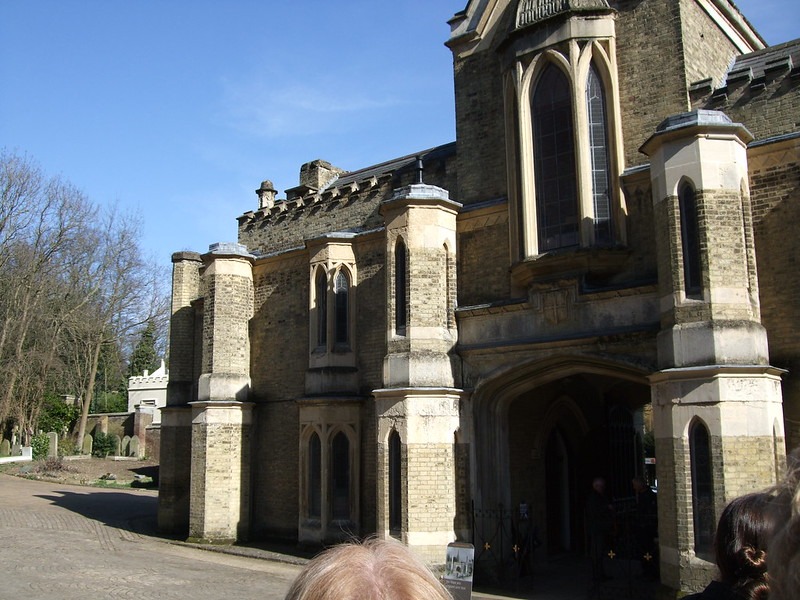
Entrance to the West Cemetery
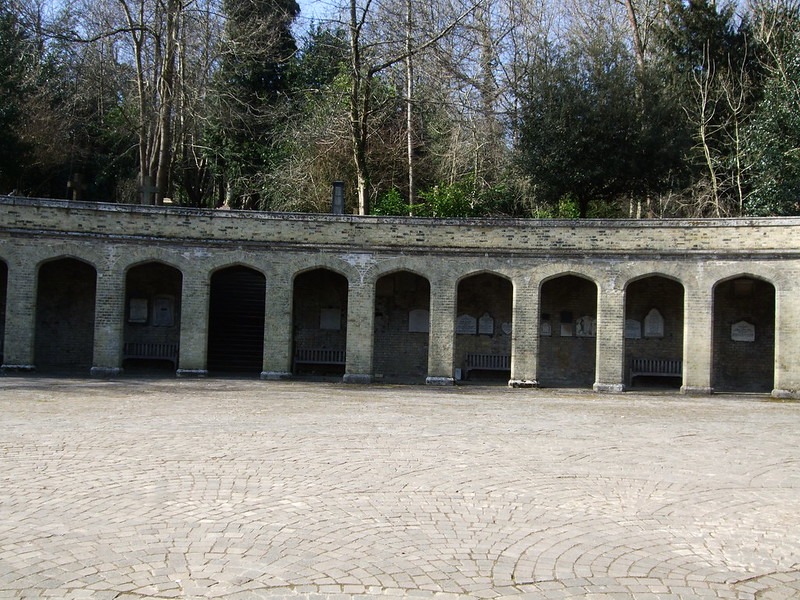
After waiting in the chapel for our tour guide, we were taken outside to the courtyard and arcade.
The Chapel
The smaller part of the chapel on the left, formerly the Dissenters’ Chapel, is now the private area for staff. The larger part on the right was the Anglican chapel: it is now the visitor centre and gift shop and has been recently restored.
The courtyard and arcade: the area was designed to be big enough for a coach and horses to turn around
Our guide explained the history of the site as we began our tour. Stephen Geary, the architect (and founder of the London Cemetery Company), appointed a surveyor (James Bunstone Bunning) and a garden designer/landscape architect (David Ramsey) who laid out the beautiful, winding paths. It’s a gloriously peaceful place.
The Chapel, seen from our route into the Cemetery
Things weren’t always so quiet: some parts of the Cemetery suffered bomb damage during World War II. The damage has been purposely left as a memorial.
Bomb damage
In more recent history, Alexander Litvinenko, the Russian poisoned in London in 2006, was buried here.
Alexander Litvinenko
The largest plot in Highgate belongs to a military man, and the railings around his tomb are miniature cannons.
The oldest grave in the Cemetery belongs to Elizabeth Jackson of Little Windmill Street, Soho, who died aged thirty-six and was buried on 26 May 1839.
Grave of Elizabeth Jackson
The Egyptian Avenue, a gorgeous structure with vaults – rather like above-ground catacombs – is located towards the top of the Cemetery. At first these vaults didn’t sell very well, as they were seen to be too “pagan” in tone, but after Queen Victoria popularised an interest in Egypt this changed.
Leading up to the Egyptian Avenue
In recent years a colony of rare orb weaver spiders has been discovered living inside the vaults of the Egyptian Avenue. The cold, dark conditions of the vaults are perfect for the spiders. This is no doubt a good thing in terms of ecological diversity, but I for one will be staying well away from the vaults!
Inside the Avenue
The Avenue leads to the Circle of Lebanon, which consists of twenty vaults around an inner circle; sixteen were added to an outer circle in the 1870s. The Circle was made by excavating earth from around the Cedar of Lebanon which had been present since the land was part of the Ashurst Estate. Above the Circle, a Gothic-style catacomb, known as the Terrace Catacombs as it was built on the site of the original terrace of Ashurst House, was constructed in 1842. We were able to visit the catacombs and they were fascinating, though sadly (but understandably) we were not allowed to take photos.
Inside the Circle of LebanonClose-up of some of the vaults in the Circle
Author Radclyffe Hall lies in one of the vaults.
Resting place of Radclyffe HallThe magnificent Cedar of LebanonLooking down into the Circle of LebanonLooking down into the Circle of Lebanon
Coming out of the Circle of Lebanon and the Terrace Catacombs, we moved into the main Cemetery once again. Our first stop was the tomb of George Wombwell, the menagerie owner, who owned several exotic animals and raised the first lion in captivity in Britain.
Wombwell’s tomb with a statue of his lion, Nero
We saw the tiny stone of Adam Worth, a well-mannered and pleasant criminal mastermind who was apparently the inspiration behind Moriarty in the Sherlock Holmes stories.
Adam Worth’s grave
The mausoleum of millionaire newspaper magnate Julius Beer is one of the most impressive in the Cemetery. Sadly, though, he originally constructed it for his daughter Ada, who died aged eight. Apparently when the tomb was first reopened after many years, the Friends were unable to get the door open and had to send someone in through the broken top of the mausoleum. Once inside, they discovered why the door wouldn’t open – the floor was thick with bird poo. Lovely! Thankfully the structure has since been restored, although we couldn’t go inside as there was a problem with the door.
Mausoleum of Julius Beer
Thomas Sayers was a famous English bare-knuckle fighter during the Victorian period, a time when such fighting was in fact illegal. His final fight, against US champion John Camel Heenan, took place in Hampshire and ended in chaos when the spectating public invaded the ring and the police had to get involved. A public subscription raised a retirement fund for him and he never fought again, although he died aged only 39 in 1865. Thousands of people turned out on the streets of Highgate to see his funeral, although the chief mourner was his dog, Lion, who guards his tomb in effigy.
Grave of Thomas Sayers
Michael Faraday, the well-known scientist most famous for his work in electromagnetism and electrochemistry, is buried in the Dissenters’ area of the Cemetery.
Michael Faraday’s grave
Charles Dickens himself is buried in Poets’ Corner at Westminster Abbey, but he was familiar with Highgate and has family connections there. His sister Frances (Fanny) Burnett is buried there along with her son Henry (Harry) Augustus, supposedly the inspiration for Tiny Tim in A Christmas Carol.
Grave of Dickens’ sister
Dickens’ parents, John and Elizabeth, also rest in Highgate.
Burial place of Charles Dickens’ parents
Continuing the writers’ theme, I spied the grave of author Beryl Bainbridge.
Beryl Bainbridge’s grave
Highgate Cemetery is an absolutely fascinating place. It’s a shame about the entry charge, as it would be a wonderful place to visit again and again. Having said that, the Friends do a fantastic job of keeping everything going and the money is certainly put to good use.
I had heard horror stories about rude and grumpy staff, but I didn’t see any evidence of this at all: everyone seemed lovely and my tour guide was informative and friendly.
I really enjoyed my visit but was sad not to have been able to see the grave of Elizabeth Siddall (pre-Raphaelite muse, artist and wife of Dante Gabriel Rossetti); apparently it is in a part of the Cemetery closed to visitors.
Would I go back?
Despite the cost, yes. It’s a hugely interesting place, with lots to see. A cheaper trip could take in the East Cemetery only; this would only cost £4. I would be back like a shot if I could have a chance to see Lizzie Siddall’s grave.
FACTS
Address: Swain’s Lane, London N6 6PJ
Founded: 1839 (Eastern extension opened 1854)
Size: 37 acres
Still in operation?: Yes
Official website: http://highgatecemetery.org
Owners: Friends of Highgate Cemetery Trust (registered charity)
Tours: West Cemetery – weekdays at 2.45 pm (book online via website); weekends every half hour 11-3: £12 adults, £6 children. East Cemetery – Saturdays at 2 pm: £8 adults, £4 children (normal admission £4 adults, children free).


 The talk was fascinating, and covered many aspects of surgery before anaesthetic and germ theory. We learned that most surgeons did not wash their hands before operating, and wore aprons that were covered in blood from repeated use. We also examined the operating table, with grooves to catch the blood and boxes of sawdust underneath to absorb the gore. Trainee surgeons could watch and observe operations – in the absence of anaesthetic, a surgeon had to be fast in order to cause the minimum amount of pain possible. While surgery in general was dangerous and had a low survival rate, some minor operations, such as the removal of gallstones, were performed with good rates of success.