Warwick Castle

Warwick Castle
Warwick Castle

I’ve wanted to visit Warwick Castle for years – it’s one of the major historical sites in the UK and every time I go to Stratford on the train I go through Warwick and see the signs to the Castle. As a birthday treat to myself I decided to finally visit.

History

The beginnings of the Castle go back to 914 when Ethelfleda, daughter of Alfred the Great, ordered the building of a ‘burh’ or an earthen rampart to protect the small hill top settlement of Warwick from Danish invaders. In 1068, William the Conqueror founded a motte and bailey fort, consisting of a large earth mound with a timber stockade around both the top and base. This mound is still visible as part of the Castle today.

The earliest part of the Castle

Henry de Beaumont was appointed the 1st Earl of Warwick in 1088. Successive Earls followed until the title passed to Richard Neville, who married the prior Earl’s sister, in 1449. This is the part of Warwick Castle’s history I’m most familiar with, because of Neville’s role in the Wars of the Roses and his unofficial title of ‘Kingmaker’. Later, the Castle lapsed into disrepair until James I presented it to Sir Fulke Greville in 1604. In 1871, a fire damaged the Private Apartments and the Great Hall and over 100 years later the Castle was bought by the Tussaud’s Group, marking its beginnings as a tourist attraction.

My Visit

I booked online because it was a bit cheaper – also you get to skip the queue once you get there. The Castle is not far from the centre of town so it isn’t much of a walk.

Inside, there is lots to see and do. I decided to do all the rampart-climbing in the morning, before it got too hot and before I ran out of energy. There are great views over the Warwickshire countryside, and there are informative panels that explain the history of different parts of the Castle.

View from the ramparts

Underneath the main building there is a walk-through display which shows the Earl of Warwick preparing for battle. Some of the wax figures are a little creepy, but this area is also pretty informative about what is probably the most famous period of the Castle’s history. Across the grounds, there is a ‘time machine’ exhibition which uses video technology to take you through the many centuries of the Castle’s history, with Horrible Histories-style humour.

I climbed to the top of the hill, formerly the old motte and bailey castle, and then decided I wanted a rest. This proved opportune as I was just in time for a birds of prey flying display, which was amazing. I actually ended up seeing two of these, and they were fascinating, featuring kestrels, eagles, an Andean condor, and my favourite – Ernie the owl.
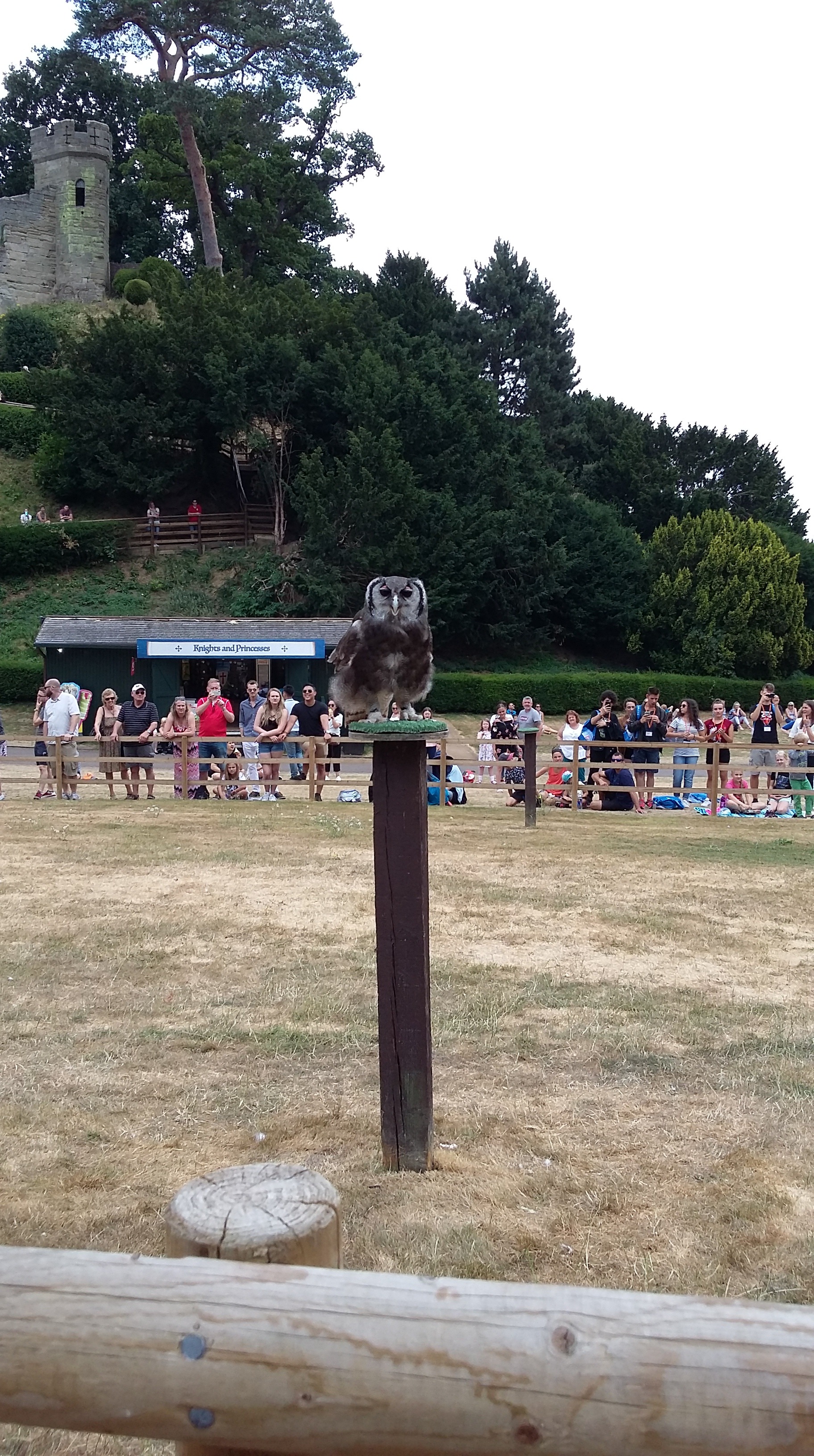
Ernie the Owl
Ernie the owl

I left the big part of the Castle until last. This part was rebuilt after a fire in the nineteenth century. It explored the history of the Castle as a retreat for the great and the good in later centuries, with waxworks of Victorian worthies demonstrating the weekend parties and lavish entertainments that went on here.

Newer part of the Castle

I didn’t visit the Dungeons, being somewhat squeamish – this part costs more to visit anyway. I didn’t visit the Princess Tour either, that being aimed at very young children.

Nevertheless, I found that there was plenty to do – I think all ages and temperaments would find something to entertain them here. I’d definitely recommend Warwick Castle for a day out.

FACTS

Address: Warwick, CV34 4QU

Website: warwick-castle.com

Opening Hours: 10am-4/5pm depending on season/event

Prices: £36 for an open-dated ticket for one adult that allows you to visit the Castle and Dungeon at any time within 12 months; discounts are available for booking a selected day in advance (as opposed to just turning up), omitting the Dungeon, and for children or concessions. Check the website for special offers. Short breaks are also available.

Pope’s Grotto

I can’t even remember where I found out about Pope’s Grotto, but this unique curiosity is well worth visiting and the Pope’s Grotto Preservation Trust, supported by Radnor House School, the owners of this grade 2* listed site, is hoping to repair and conserve it. The grotto is the last remaining part of Alexander Pope’s villa, which he built in 1720 on the banks of the Thames at Twickenham. The villa was demolished in 1808 and the site has been developed numerous times since then – but the grotto still remains.

Entrance to the grotto

Alexander Pope

Alexander Pope was a 18th century poet whose famous works include The Rape of the Lock; he also translated the Iliad and the Odyssey. While not a household name today, he contributed several popular phrases to the English language, including ‘eternal sunshine of the spotless mind’ (the name of one of my favourite films), ‘fools rush in where angels fear to tread’, and ‘a little learning is a dangerous thing.’

History of the Grotto

In 1719, Pope came to live in Twickenham, demolishing one of the houses on the site to build himself a villa. He decided to build a grotto beneath the house, inspired by the interest in classical mythology that had prompted his translations of Homer. In later years, Pope decided to redesign the grotto as a museum of mineralogy and mining, after a visit to the Hotwell Spa on the banks of the Avon. He sought help and donations from people all over the country, and friends and acquaintances sent material too: Sir Hans Sloane donated two small pieces of basalt from the Giants’ Causeway in Ireland.

The Thames
The Thames seen from above the grotto

Inside the Grotto

Inside, it’s an eerie but fascinating experience. You enter through the school and walk outside onto the terrace, with a great view of the river, before heading down some steps and to the entrance of the grotto. The entrance takes you into a long corridor, extending to the other side of the road, lined with stones and minerals. There is even fossilised wood from the Dropping Well in Knaresborough.

Long corridor
Long corridor

Above the archway is a sign, requisitioned from an unknown location.

Sign above the archway
17th-century sign

On either side of the corridor there are chambers. To the left, one chamber has a statue, possibly of St Catherine or the Virgin Mary, as well as a tree trunk in one corner.

Female statue
Female statue

This tree trunk is supposedly from a willow planted by Pope.

Willow branch
Willow branch

Ammonite casts are placed above the archways on each side.

Ammonite cast
An ammonite cast

I spied lots of different minerals on the walls, but I have no idea what they all are.

Mineral
One of the minerals on the wall of the grotto

The second chamber had a statue of St James the Great, and there were lots of boxes of minerals ready to stick on the walls.

Statue of St James the Great

Restoration Project

The project began with a pilot to conserve the South Chamber last summer. The full project, for which funds are currently being sought, will involve careful cleaning, replacement of the cement floor, new lighting and sound effects, and a digital interpretation.

Conclusion

Pope’s Grotto is well worth a visit, if you can catch it on an Open Day (there are two more in June, and the site will also be open for free access in September during Open House London weekend). It’s a fascinating curiosity, whether you have an interest in Pope or not.

FACTS

Address: Radnor House Independent School, 21 Cross Deep, Twickenham, TW1 4QG

Website: popesgrotto.org.uk

Opening Times: Check popesgrotto.org.uk/visits/ for details; you can subscribe to the newsletter for information about open dates/times

Prices: £6, £5 for concessions

Walk the Fleet

Everyone’s heard of the Thames, but surprisingly few people seem to have heard of its many tributaries – the most famous being the Fleet River. This is perhaps understandable, given that the Fleet (and many other minor rivers in London) are hidden away – but the signs are still there, if you know where to look. I’ve wanted to walk the Fleet for a while, and decided to go for it on Saturday: the weather was slightly cooler at the beginning of the Bank Holiday weekend.

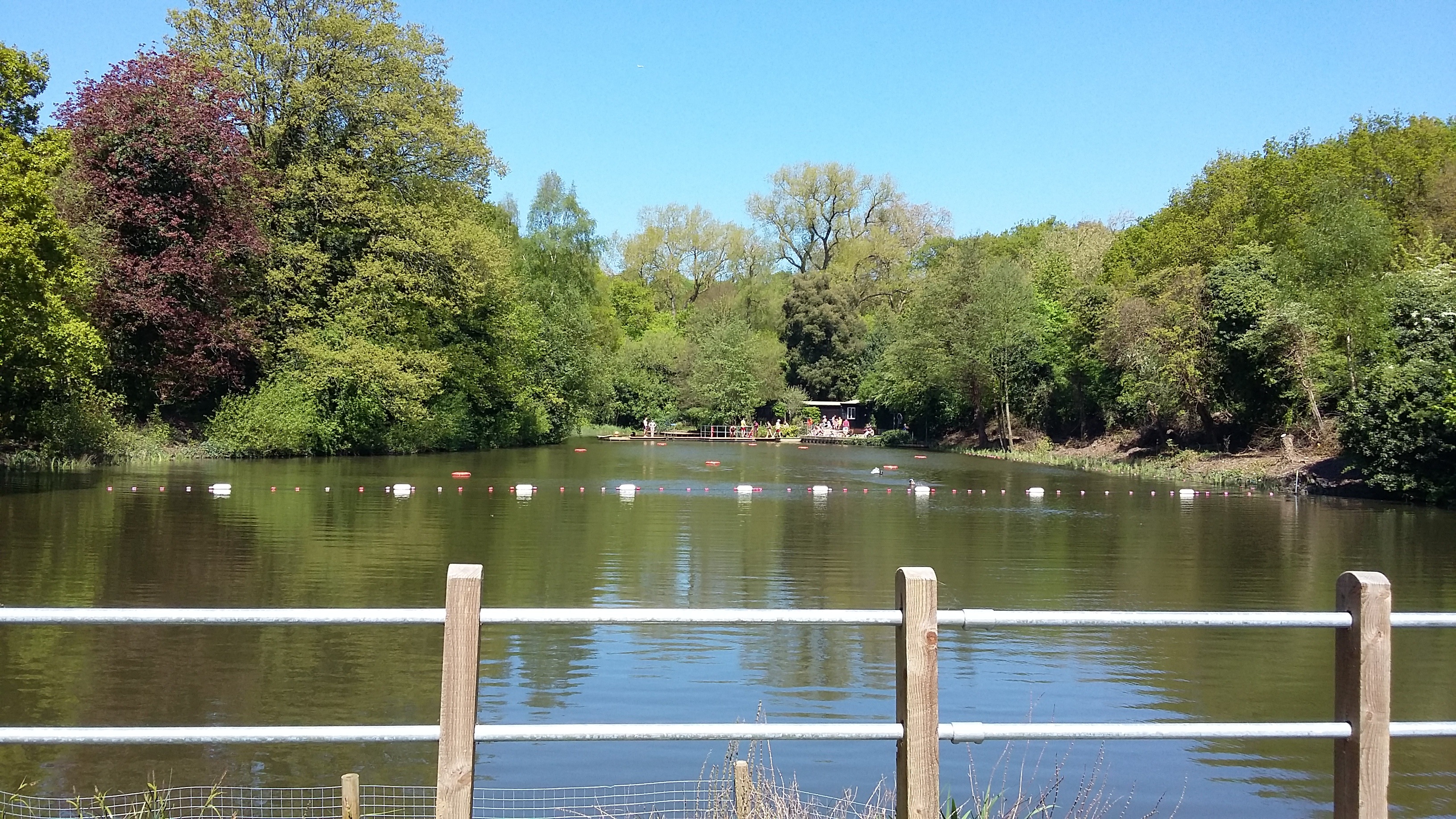
Vale of Health Pond
Vale of Health Pond

I began my journey on Hampstead Heath, where the Fleet (the name is derived from the Anglo-Saxon flēot, ‘tidal inlet’) still flows overground, at the Vale of Health pond: this pond feeds the Hampstead Brook, the western arm of the River Fleet. You can follow the course of the brook through the woods of Hampstead Heath, though it was almost dried up on the hot day I visited. Further on, the stream flows into the public bathing ponds at the bottom of the Heath.

Hampstead Heath
The Fleet flowing through Hampstead Heath

(I should mention here that another branch of the river flows down from Highgate, but I chose the Hampstead branch, purely because it was easier for me to get to. One day I might go and check out the Highgate branch too).

Hampstead Ponds
Hampstead Ponds

The Fleet was a major river in Roman times, and its status was largely maintained into the Anglo-Saxon era, with wells, supposedly with healing qualities, built at Clerkenwell and Bridewell. As London increased in size, the river became notorious for filth and sewage, surrounded by prisons and slums. From 1680 the Fleet became the New Canal, lined with wharves frequently used by the coal trade from the North East of England; hence the street names Newcastle Close and Old Seacoal Lane. From the mid-eighteenth century onwards, parts of the river were gradually covered over, enclosed in brick-lined sewers, until the 1870s when the final section, up at Hampstead, was covered.

Prince Albert
Grating outside the Prince Albert pub

The two branches converge in Kentish Town, before heading down towards the centre of London. I walked away from the calming greenery of the Heath into the built-up and urban Camden, stopping at the Prince Albert pub, where the Fleet flows under an iron grating. It can be heard easily (but not so easily seen, in the sunlight). Sadly, my plan to stop for a drink in the pub was thwarted as it was closed (this also happened with the next pub on my route. Clearly the universe is conspiring against me).

Heading down towards King’s Cross, I passed St Pancras Old Church (another blog post to follow). I was fascinated to see a picture showing the Fleet rushing by the Church in the days before it was covered up. King’s Cross was originally named Battle Bridge, referring to an ancient bridge over the Fleet where Boudica’s army is said to have fought an important battle against the Romans. I hurried past the busy King’s Cross station and onto Gray’s Inn Road, before avoiding the traffic and heading into a quieter, more residential area. I passed a housing estate called Fleet Court – clearly I was going in the right direction. My route also took me past the Mount Pleasant Mail Centre and the new Postal Museum.

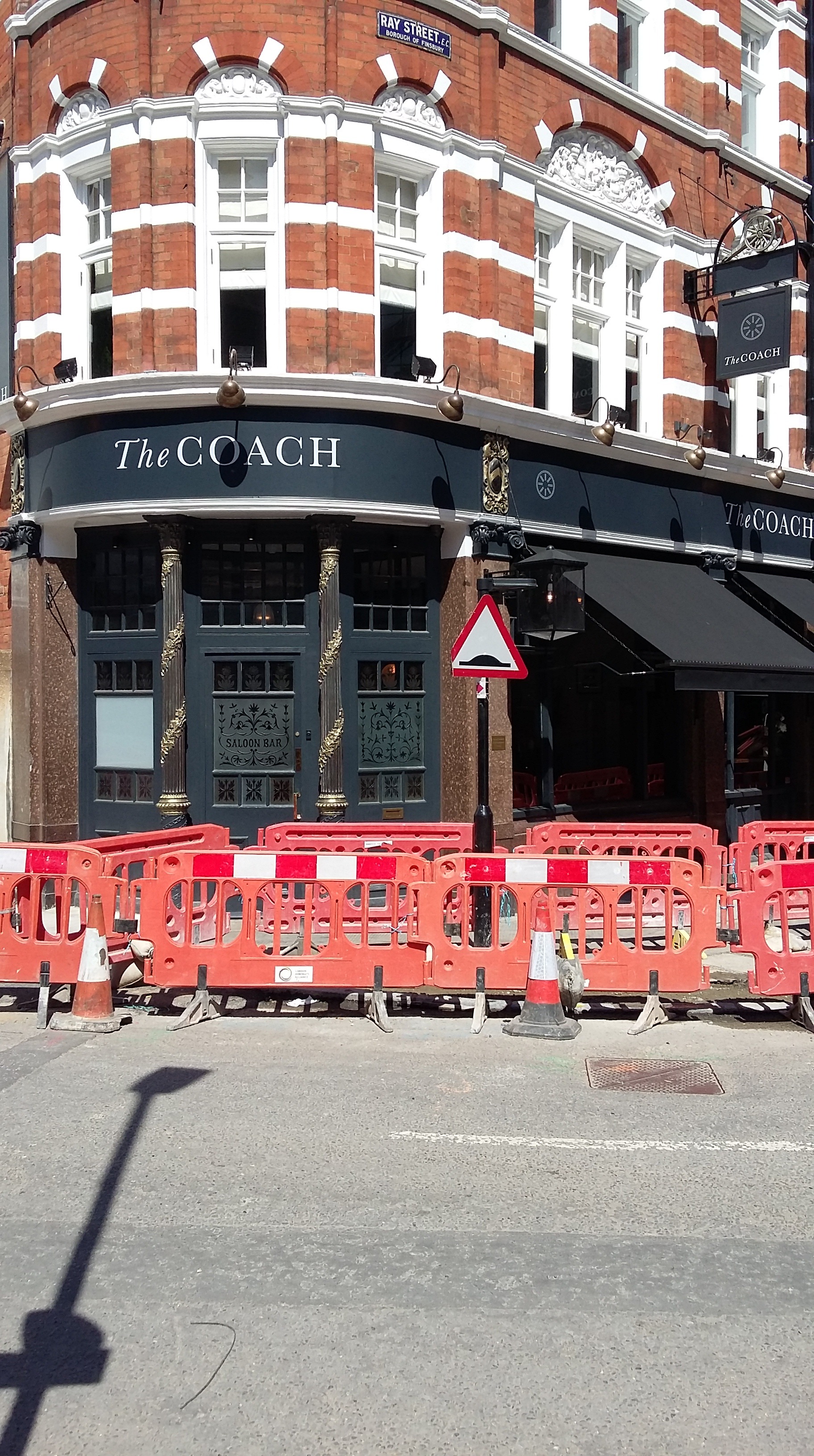
The Coach
Grating outside The Coach pub

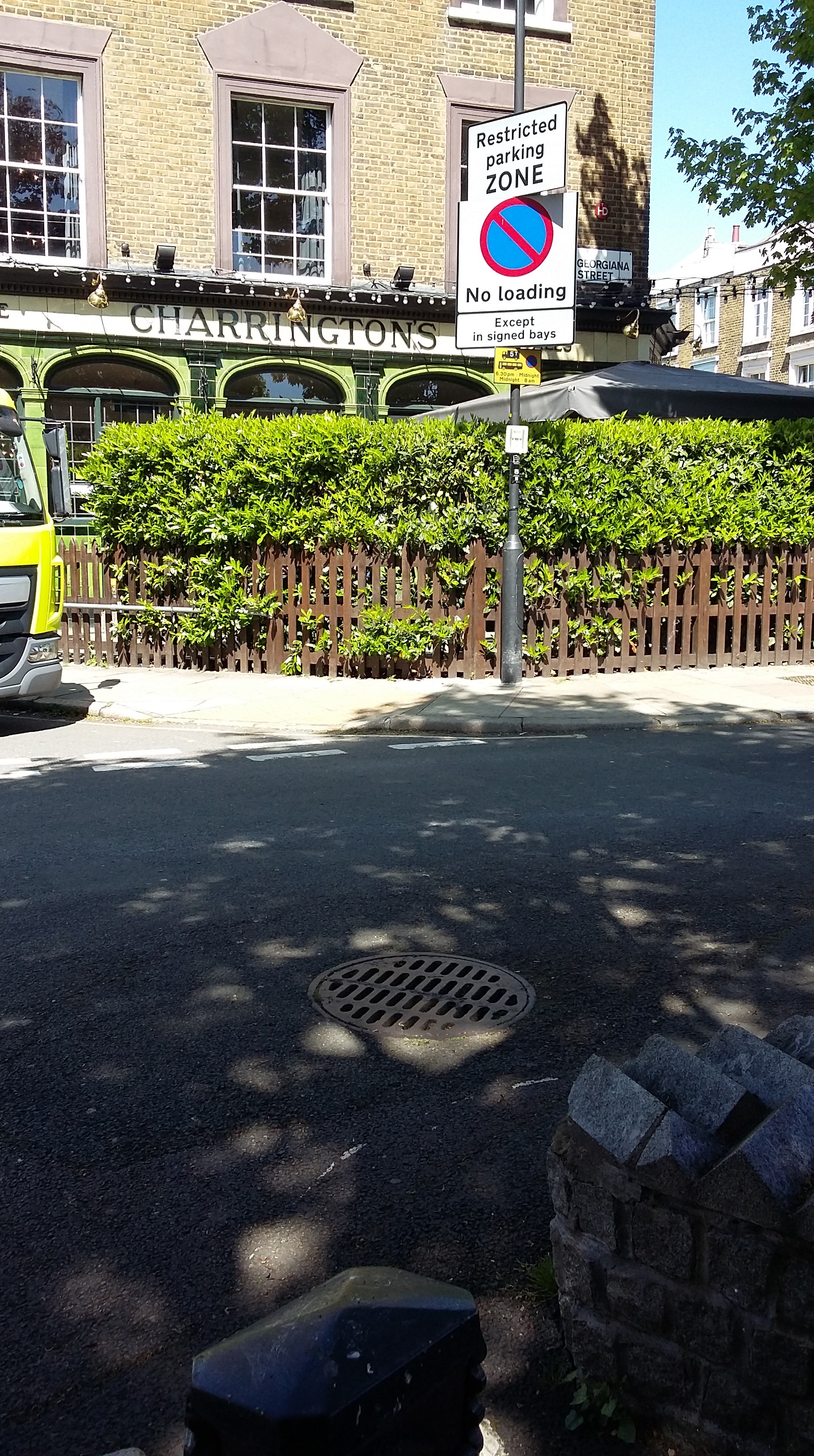
My next encounter with the Fleet was in Farringdon, outside the Coach pub, where another grating covers the rushing Fleet, though I wasn’t able to hear anything this time. The Fleet’s presence here seems to be more well-known: I overheard someone pointing it out as I loitered. The original Hockley tavern, which stood on the site, was in the midst of an area known for gambling and bear-baiting and apparently, in 1709, a bear killed the landlord.

I walked down Saffron Hill, a small, sloping street, but couldn’t find any signs of the Fleet here although I’d heard that they exist. Never mind – I soon arrived at Holborn Viaduct, a bridge over a valley which was carved out by the widening Fleet over several years. This stretch of the river was once full of ships, loading and unloading their produce (including the stones for Old St Paul’s Cathedral). This part of the river was also known as the ‘Holbourne’.

Holborn Viaduct
Holborn Viaduct

Towards the end of my walk, I passed Ludgate Circus, which crosses Fleet Street, named for the river. It was originally the site of the Fleet Bridge river crossing. The King Lud pub occupied the building now used by Leon between 1870 and 2005, and it is rumoured that the Fleet could be seen flowing under a glass floor panel.

Ludgate Circus
Ludgate Circus

Finally, my walk came to an end as I reached Blackfriars Bridge. What remains of the Fleet flows out of Victorian sewers into the Thames underneath the bridge, although sadly I couldn’t view the exit as the area is currently undergoing building works. Still, I was very pleased to have finally got the chance to follow the Fleet.

Blackfriars Bridge
The Fleet flows into the Thames beneath Blackfriars Bridge

Where To See and Hear the Hidden River Fleet from Londonist and Going underground: Mile after mile of ornate brickwork and labyrinthine tunnels which reveal the beauty of London’s hidden River Fleet from Mail Online (I know, I know, but it was genuinely interesting) helped me to work out my route, spot the Fleet along the way, and learn about its history. There is also a fascinating article on Wikipedia.

Old Royal Naval College

Gateway to the ORNC
Gateway to the ORNC

The Old Royal Naval College dominates the centre of Maritime Greenwich, being sited not far from Cutty Sark DLR station and very close to the DLR itself. Some tourists initially mistake it for the National Maritime Museum. The site has a rich history. Greenwich Palace, the birthplace of Mary I and Elizabeth I, originally occupied the site; it was known as the Palace of Placentia. Having fallen into disrepair during the English Civil War, it was demolished in 1694. Designed by Christopher Wren, the buildings were conceived as Greenwich Hospital (established by Mary II), and built between 1696 and 1712. The hospital closed in 1869, and between 1873 and 1998 it was the Royal Naval College, Greenwich.

Old Royal Naval College

Since 2002 much of the site has been open to the public. I’ve wandered around the grounds frequently, visited a couple of the buildings, and attended concerts, but I decided to take advantage of a free guided tour on the same day as I visited the Discover Greenwich Visitor Centre, which has lots of information about the site.

Monument to Bellot
Monument to Bellot

Our guide took us along the waterfront, pointing out the memorial to Captain Bellot, a Frenchman who perished searching for Franklin in the Arctic (there is a memorial to the Franklin expedition in the Chapel). As the Thames was at low tide, she also pointed out the remains of a pier established by Margaret of Anjou, who originally had the palace built.

Remains of the 15th-century pier

Of course, you can wander around the grounds yourself, but on a tour you are shown things you probably wouldn’t have noticed, like the spot on which archaeological remains of Greenwich Palace were discovered. Apparently it is forbidden to put too much weight onto the grass, in case the site beneath is damaged. The iron gates by the river are where Nelson’s body was brought on shore for lying in state before he was taken to St Paul’s Cathedral for burial.

Gateway to the Thames

The tour guide also pointed out just how impressive Christopher Wren’s calculations were: commanded by Queen Mary to ensure the Queen’s House kept it’s view of the river, he ensured the buildings on either side were placed to keep the Queen’s House precisely in the middle.

The Queen's House viewed from the ORNC
The Queen’s House viewed from the ORNC

A statue of George II is also a notable landmark. The statue is made of one single piece of marble and the king is depicted in the guise of a Roman Emperor.

Statue of George II
Statue of George II

Today, the University of Greenwich leases Queen Mary, King William and Queen Anne Courts and Trinity Laban School of Music and Dance occupies King Charles Court. The latter also performs regularly in the beautiful Chapel. We also popped into the Painted Hall, painted between 1707-1726 by Sir James Thornhill. The Hall is currently undergoing restoration, and I was lucky enough to take part in a Painted Hall Ceiling Tour, which takes you up to the ceiling so that you can view the artwork close up.

The Old Royal Naval College is well worth a visit, and there are so many things to do, from learning about history in the Visitor Centre, taking a guided tour, or listening to a concert in the Chapel.

FACTS

Address: King William Walk, Greenwich, London, SE10 9NN

Website: ornc.org

Opening Hours: 10am-5pm

Prices: Free (charges for some concerts and for Painted Hall Ceiling Tours)

Discover Greenwich Visitor Centre

Greenwich Visitor Centre

Not to be confused with the Greenwich Heritage Centre, which is located in Royal Arsenal, the Discover Greenwich Visitor Centre is located near the Cutty Sark, in the grounds of the Old Royal Naval College. Housed in the Pepys Building, originally an engineering laboratory for the ORNC, it opened in 2010.

The free Centre offers an introduction to the history and attractions within the Greenwich World Heritage Site. It has information on the history of the Palace of Placentia, models of Christopher Wren’s original designs for Greenwich Hospital, the carved heads originally intended to decorate the exterior of the Painted Hall, and a model of a lion originally intended for external decoration, too. I particularly enjoyed the section about Greenwich Palace, the birthplace of Henry VIII, and the archaeological work that has discovered more about the palace and its layout and decoration.

Lion

The Centre has other displays about maritime Greenwich and about the history of the Royal Naval College, which occupied Greenwich Hospital and the surrounding area between 1873 and 1998. It also has a Tourist Information desk and a gift shop.

Greenwich Visitor Centre

This free visitor centre is well worth checking out as introduction to Greenwich.

FACTS

Address: 2 Cutty Sark Gardens, Old Royal Naval College, London, SE10 9LW

Website: ornc.org/visitor-centre

Opening Hours: 10am-5pm

Prices: Free

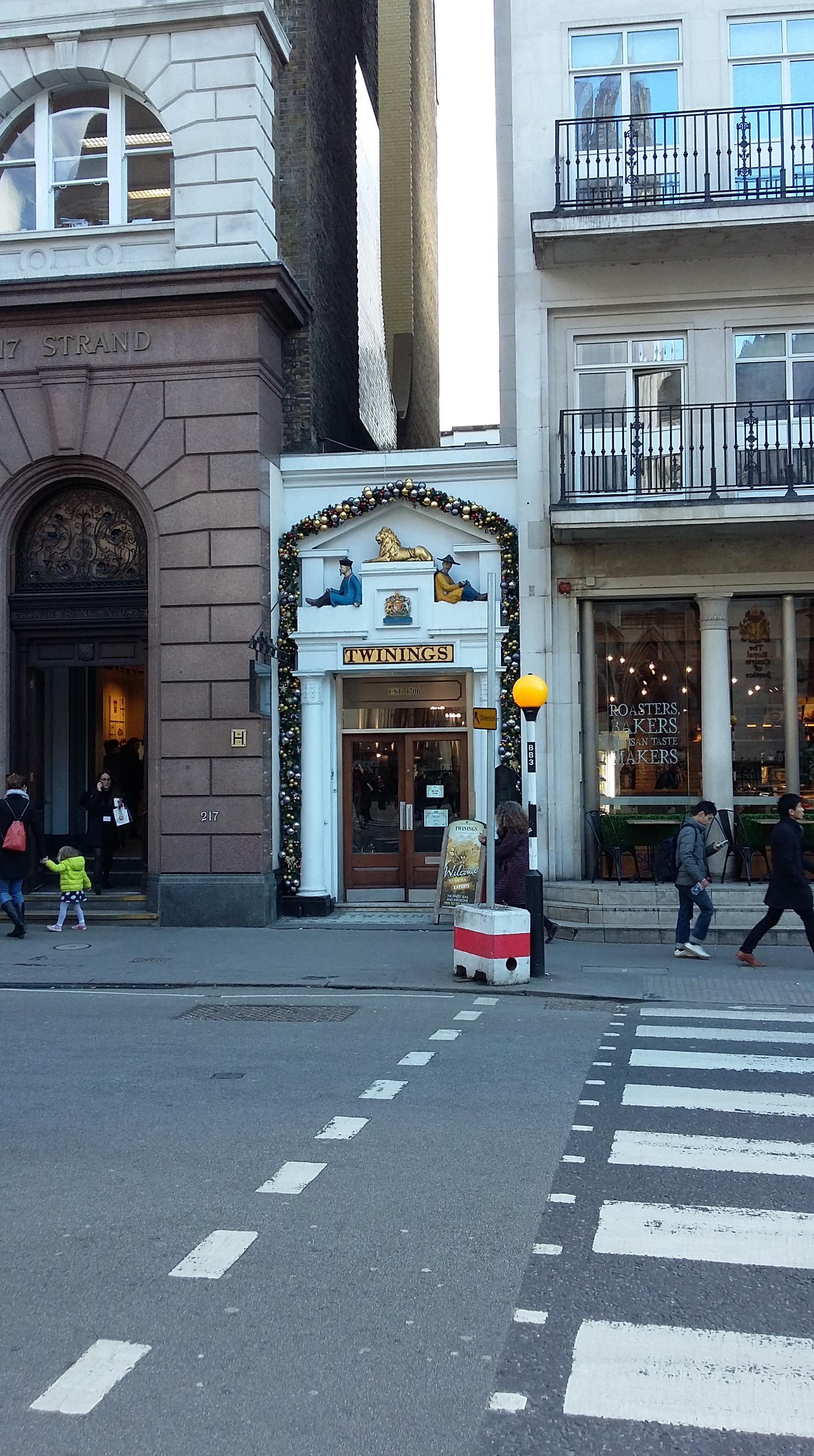
Twinings Tea Museum

Twinings Tea Shop

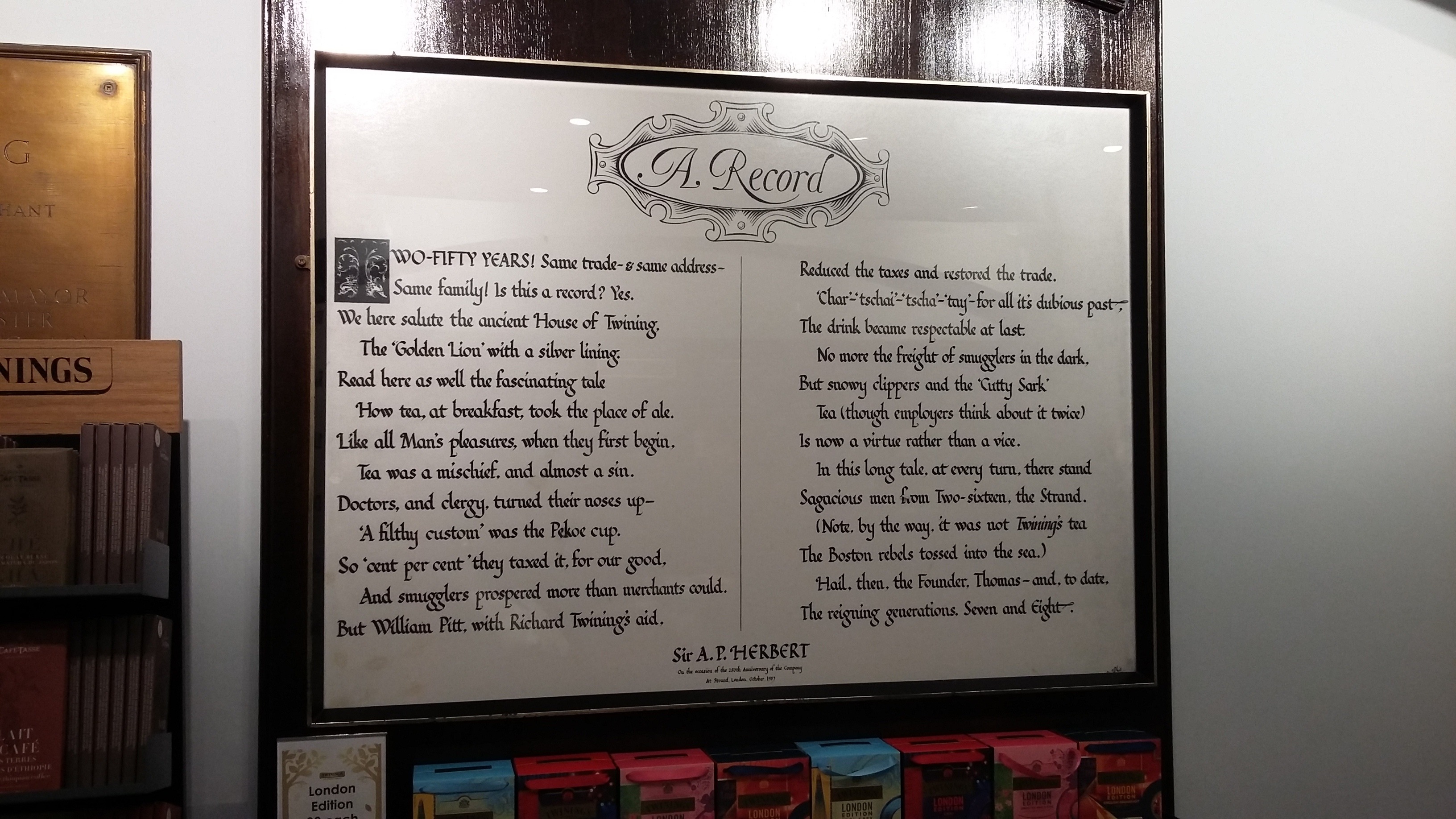
I wandered past the Twinings Tea Shop and Museum quite by chance on my day off; it’s located on the Strand, a busy street in the heart of London, and still retains its old-fashioned look. Inside, it sells more kinds of tea than you can shake a stick at: from black tea like good old English Breakfast and Earl Grey, to fruit teas and green teas, as well as rather more bizarre flavours like Salted Caramel Green Tea (not recommended). It’s possible to buy a Twinings-branded wooden box (like the kind you get in posh hotels) and fill it with teabags of your choice. I made a mental note of this for future reference.

Plaque

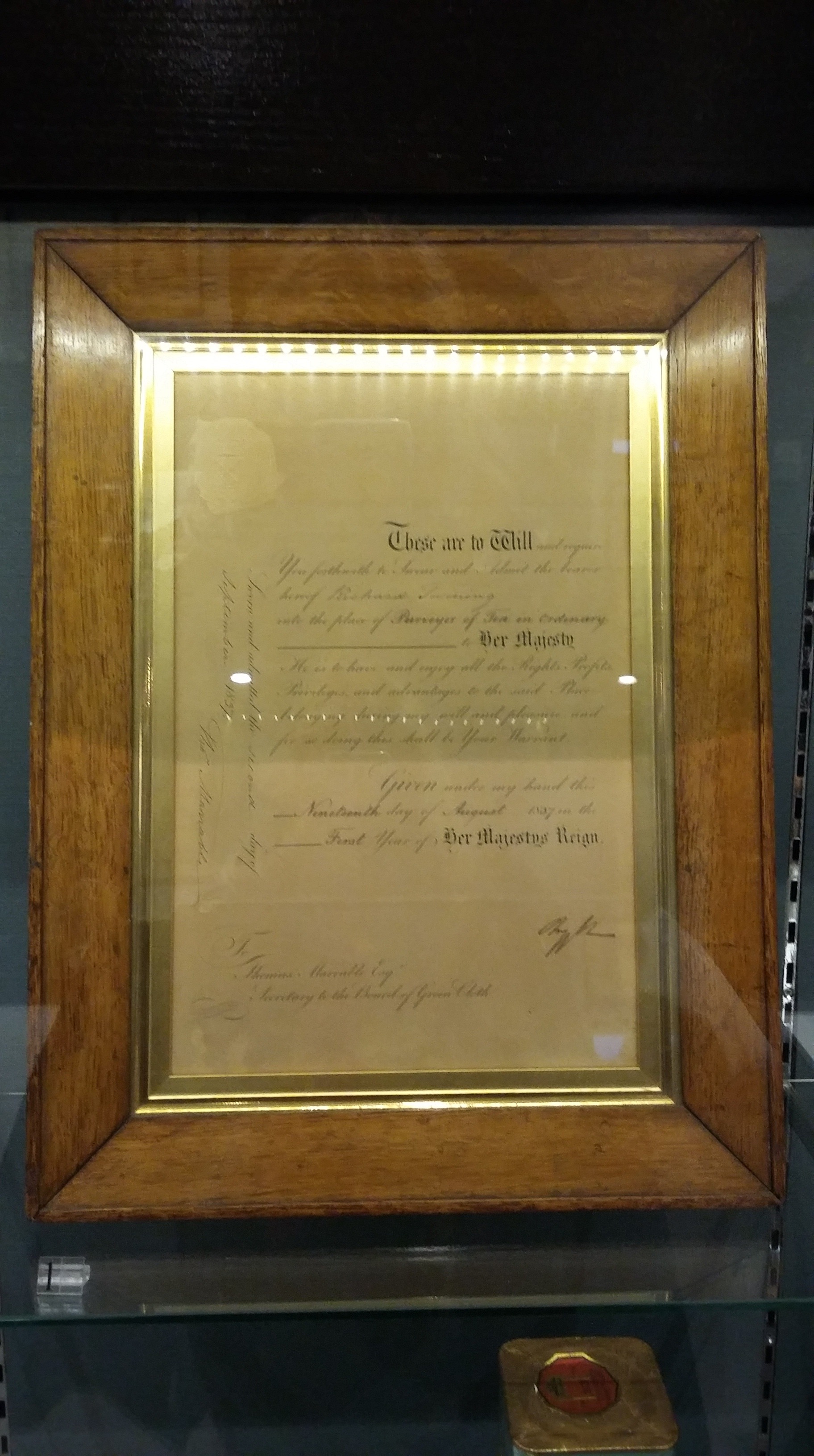
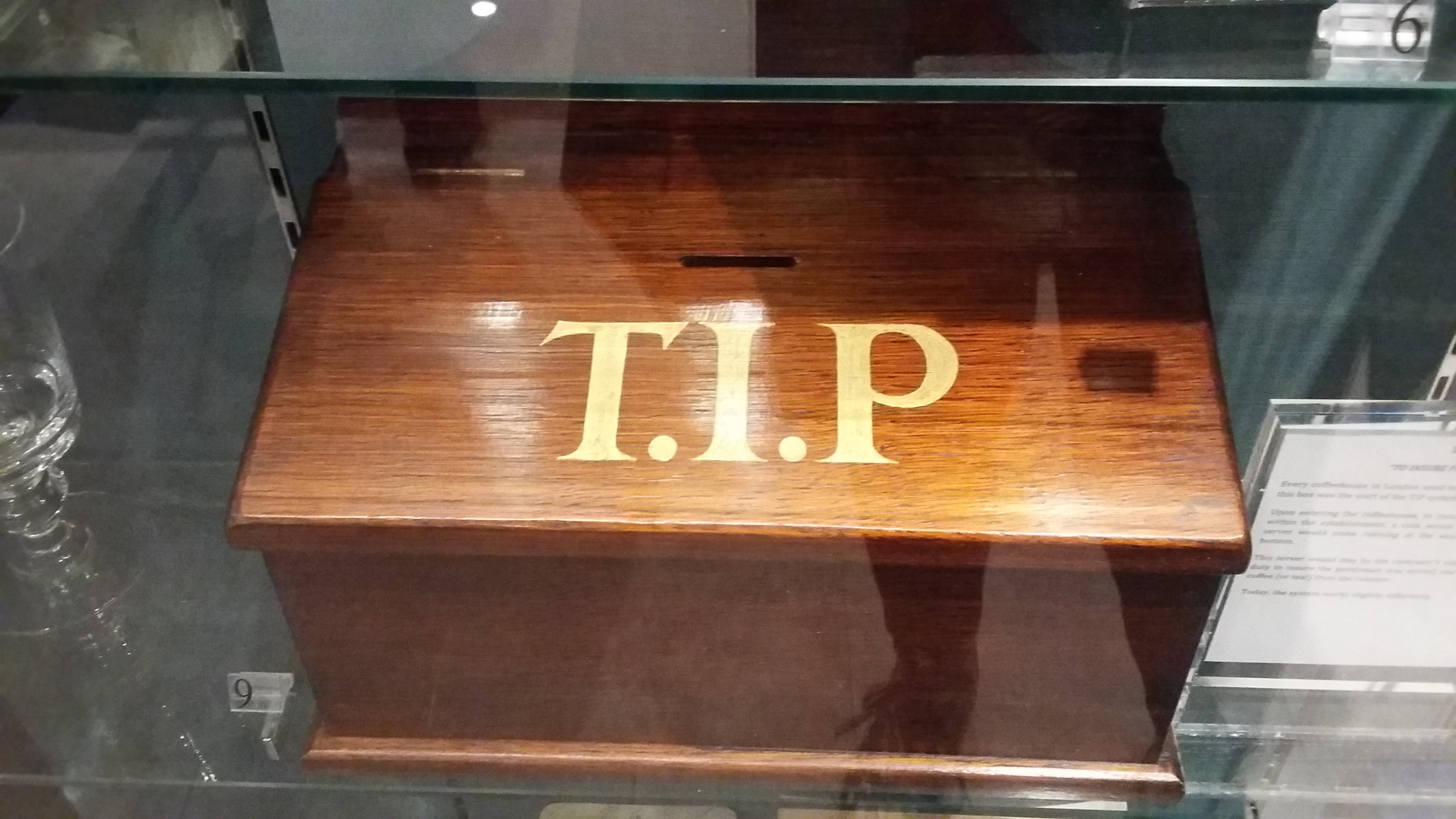
The ‘museum’, which is right at the back of the narrow shop, has artefacts from Twinings rich history, which dates back 300 years, founded by Thomas Twining who helped to ensure tea became a rival drink to coffee which was then popular in London’s coffee houses. Tea’s popularity rose dramatically, and Twinings was later granted a royal warrant.

Royal warrant

TIP box

There is also a ‘tea bar’ where you can sample different varieties of tea.

Tea bar

The shop is a really worthwhile place to visit, whether you want to stock up on tea, look round the museum, or just sample a few different brews.

FACTS

Address: 216 Strand, London, WC2R 1AP

Website: twinings.co.uk/about-twinings/flagship-store-london-216-strand

Opening Hours: 9.30–7 Mon-Fri, 10.30–5.30 Sat, 11-5 Sun

Price: Free

All Hallow’s Eve by Lamplight – Tower Hamlets Cemetery

Hallowe’en is the perfect time to visit a cemetery; besides, I never did get to go on a proper tour of Tower Hamlets. So I was happy to book a place on the All Hallow’s Eve by Lamplight tour, run by the Cemetery Club.

Tower Hamlets Cemetery

We gathered at the entrance by the war memorial and collected some lanterns to take with us on our walk. And we needed them – there are no other lights in the cemetery, and even with the lanterns it was pretty dark. (I apologise for the poor quality of these photographs – I tried with and without flash and they were both pretty dire). Our guides escorted us round the cemetery, stopping at various points to tell us about various notable people buried here.

Towards the end of the tour we enjoyed some soul cakes of the kind eaten at Victorian Hallowe’en – they were baked to an original Victorian recipe and were yummy – spicy and delicious. We learned about nineteenth century Hallowe’en traditions and superstitions.

Finally, we were treated to an original Victorian music hall song, originally sung by Alexander Hurley, and based on a real event involving a strongman defeated by a daring rival.

Sadly I didn’t see any bats on the walk – perhaps because they were all frightened off by the fireworks. However it was a fascinating and atmospheric walk.

Tower Hamlets Cemetery

Opera: Passion, Power and Politics – V&A

As soon as I found out about the Opera: Passion, Power and Politics exhibition at the V&A I knew I wanted to go. So did my auntie, who loves opera, so I booked tickets for her visit in October – not long after the exhibition opened in the new Sainsbury Wing.

Rather than covering every single thing to do with the history of opera, the exhibition organisers have selected seven key dates and places in the history of this comparatively modern art form, and used them as pegs on which to hang a broad history of opera.

Venice 1642
Venice is traditionally regarded as the home of opera. During the seventeenth century, the importance of the city in international trade was in decline, but it was still a key centre for culture. With no Royal Court and a relatively lax attitude, the new art form was able to grow. The key work of this section was Claude Monteverdi’s L’incoronazione Di Poppea, the first public opera (I’ve seen his earlier L’Orfeo, but that was privately performed). It was based on historical events.

London 1711
By this time London was important on the world stage, having recently been rebuilt after the Great Fire of 1666. In 1689, Henry Purcell composed Dido and Aeneas, while Handel later wrote Rinaldo. A theatre opened in the Haymarket, specifically showing opera, though this blatant display of Italian influences on the English stage did not impress many critics. The Royal Opera House in Covent Garden opened in 1732.

Vienna 1786
Like the other cities, Vienna was enjoying a golden era of creativity during this period, when Mozart penned Le Nozze di Figaro. His opera was revolutionary in the sense that it brought servants to the fore.

Milan 1842
The opera house La Scala opened in Milan around this time, when Verdi composed Nabucco. Based on a biblical story, it nevertheless struck a chord with many Italians who sought to see their country united (which happened in 1861). ‘Va, pensiero’ became an unofficial Italian anthem and is still sung as such today.

Paris 1861
It seems to be a pattern that the upsurgence of opera in a particular city leads to the building of a new opera house: this did happen in Paris. This section focused on Wagner and his revolutionary opera Tannhauser. Wagner believed in the idea of opera as total work of art, and wrote all his libretti himself. He believed that the music should form one continuous melody, rather than being made up of separate arias and works.

Dresden 1905
This period is exemplified by Richard Strauss’ Salome, a one-act opera inspired by Oscar Wilde’s play. It tapped into contemporary ideas around the changing role of women.

Leningrad 1934
Shostakovich’s Lady Macbeth of Mtsensk shocked contemporary audiences with its depiction of female sexuality. At first acclaimed as a composer for ordinary people, Shostakovich was later accused of anti-Soviet behaviour, and Lady Macbeth was banned. 1934 was an important year in Russia because it marked the end of artistic freedom and the imposition of Socialist Realism.

The exhibition ends with a ‘world’ section in which you can see video clips from all over the world.

The exhibition has some fascinating artefacts on display: tableware used by Venetian nobility, busts of notable composers, original drawings by Aubrey Beardsley, Soviet posters advertising Shostakovich’s work. I would have liked to see more costumes, but the ones they had were impressive, including a dress covered in stars. There was a beautiful selection of items that would have been worn by fashionable Parisian opera goers, including a lace mantilla, opera glasses, and a collapsible top hat for the gentleman opera goer.

The exhibition does miss quite a bit out: I was sorry not to see more about my own favourite, Puccini. However, with such a big subject to cover, it does do a good job of exploring the history in an accessible way without overwhelming with information.

Garrick’s Temple to Shakespeare – Open House London

Garrick's Temple to Shakespeare
Garrick’s Temple to Shakespeare

On the Sunday of the Open House London weekend, I headed south again to visit Garrick’s Temple to Shakespeare, created by David Garrick for his hero William Shakespeare. Born in Hereford and raised in Lichfield, Garrick moved to London and became the most well-known and acclaimed actor of the age. In 1754 he purchased Hampton House, now Garrick’s Villa, overlooking the Thames at Hampton.

Garrick's Villa
Garrick’s Villa

His riverside garden was laid out by Lancelot ‘Capability’ Brown, and this octagonal Palladian temple was built in 1756. The temple has a dome and eight Ionic columns, making it similar in style to the temple at Chiswick House.

Bust of Garrick
Bust of Garrick

From the temple, Garrick gave money and cakes to poor children every year on May Day. He also used it for entertaining friends such as Dr Johnson, as well as for writing and storing relics to Shakespeare. Eventually he had a tunnel constructed to enable him to reach the temple from his house.

Inside the temple
Inside the temple

In 1758 Garrick commissioned a life-size marble statue of Shakespeare from the eminent Huguenot sculptor, Louis François Roubiliac *Garrick may have posed for this himself). The original version had ‘veins’ across the face, a characteristic of the marble; Garrick insisted the head was replaced. The original statue is now in the British Library; this version was given to the Trust by the British Museum.

Shakespeare sculpture

The temple eventually fell into disrepair until the late 20th century when the local council and several charities raised funds to restore the building and lay out the gardens again. It is now managed by the Garrick’s Temple to Shakespeare Trust, and contains copies of paintings from major galleries plus original 18th century prints and engravings about Garrick. It’s open on Sunday afternoons throughout the summer months and occasionally you can attend concerts here, too.

Garrick on stage
Garrick on stage

FACTS

Address: Hampton, Middlesex, TW12 2EJ

Website: garrickstemple.org.uk

Opening Hours: Sundays 2-5 March-Oct (check the website for exact dates/times)

Price: Free

The National Archives – Open House London

The National Archives

Every year as September approaches I look forward to Open House London, when normally closed buildings open their doors to the public for free. This year I spent my Saturday down at The National Archives at Kew, somewhere I’d never yet visited.

History

The National Archives are the official archive and publisher for the UK government and they also care for over 1,000 years of national documents. They are experts and leaders in the information and records management and archive fields, and focus on ensuring the future of physical and digital records.

The National Archives was created in 2003 by combining the Public Record Office and the Historical Manuscripts Commission. The building itself was built in 1977 as an additional home for the public records then held at Chancery Lane. The site used to be a World War I hospital, and it was later used by several government departments.

NA foyer

My visit

There were a number of activities and talks taking place all day. I went on a Repository Tour, which was a fascinating journey through the document shelves behind the scenes. We saw the carts zooming past the shelves, on their way to pick up books ordered by readers, and saw the lift system that sends requested books down to the reading room. Extra-valuable items can only be viewed in a specially-constructed strongroom, where you’re only allowed out by a member of staff. I also joined a Collection Care Studio tour, which was a fascinating chance to explore the ways in which the NA look after the objects in their collection. These included the protection of fragile or unusual objects with 3D printing technology, iron gall ink and the Naval Knights of Windsor, conservation as part of the digitisation process, care of highly used documents, caring for Terence Cuneo’s war paintings, packing items for loans and collections, wax seals, x-rays and the hunt for arsenic wallpaper samples, and the emergency plan.

Afterwards I attended a couple of talks: The Public Record Office, Kew: Its place in British Architecture of the 1970s and The Changing Face of Kew. I also wandered around the public areas of the building and saw a couple of screenings of films from the archives including excerpts from Blue Peter. There were a few displays of documents about the building of the PRO at Kew and the 40th anniversary of the National Archives at Kew.

Domesday book

Finally I popped into the Keeper’s Gallery, which has a permanent exhibition about the history of the Archives and its most popular holdings, including the Domesday Book. It proved an interesting way to round off my day.

FACTS

Address: Kew, Richmond, Surrey, TW9 4DU

Website: nationalarchives.gov.uk

Opening Hours: Tues-Sat 9-5 (late opening Tues and Thurs)

Price: Free