2018 Royal Academy Summer Exhibition

Royal Academy

I’d never been to the Summer Exhibition at the Royal Academy, and decided that this year would be the first that I would go. This year it’s special for two reasons: one, it is the 250th Summer Exhibition, and two, it marks the opening of the newly redesigned Royal Academy of Arts.

I went with a friend who has been to many Summer Exhibitions in the past and really enjoys them. This year’s has been curated by artist Grayson Perry, and as usual is made up of works by well known professional artists, enthusiastic amateurs, and everything in between.

Lacking any skill or knowledge of art myself, I’m in no position to judge the quality of the works, but I was able to pick out many that I liked. My tastes tend towards the traditional, but there was something for everyone: classic painting, abstract art, sculpture, models, mixed media and more in every conceivable style. I’ve added a few of my favourites below.

Hong Kong

Hong Kong skyline

*I visited Hong Kong in 2010 and wrote about it on the website Ciao. I’ve decided to edit and publish a version of my holiday diary here*

I spent a week in Hong Kong in March 2010. Why Hong Kong? Well, I decided that I wanted to go somewhere reasonably far-flung; it should be somewhere I could ‘do’ in a week; I knew I would be travelling alone, so it should be somewhere safe; and it should have a prospect of reasonable weather in March, which is when I wanted to go (i.e. no typhoons, rain or extreme heat!). Hong Kong ticked all of those boxes, and was within my price range.

I took the Lonely Planet City Guide to Hong Kong and Macau and found it to be an excellent, useful guide. The removable map was very handy for getting around.

***Description and History***
This is what I learned from Wikipedia:
Hong Kong is one of the two special administrative regions of the People’s Republic of China; the other is Macau. Situated on China’s south coast and enclosed by the Pearl River Delta and South China Sea, it is famous for its expansive skyline and deep natural harbour. Hong Kong is one of the most densely populated areas in the world, and has a population of 95% ethnic Chinese and 5% from other groups.

Hong Kong became a colony of the British Empire after the First Opium War (1839-42). Originally confined to Hong Kong Island, the colony’s boundaries were extended in stages to the Kowloon Peninsula and the New Territories by 1898. It was occupied by Japan during the Pacific War, after which the British resumed control until 1997, when China regained sovereignty.

***The Useful Stuff***
I haven’t put prices in my review as these are subject to change, but here is how I think Hong Kong prices compare to the UK’s (based on my understanding and not just my own experience):

Accommodation – Expensive (if not using hostels)
Transport – Cheap
Attractions – Cheap to average
Eating out – Cheap to expensive and everything in between

*Booking*
Normally when I go on holiday I book it online. However as this was my first time holidaying completely alone, I decided to go and speak to someone to make sure I was doing everything right. I decided to go with STA Travel as they are a large reputable company, and when I was searching for flights they came up cheaper on the STA website.

I made an appointment one afternoon in January at my local branch. The lady I spoke to was very friendly and helpful and with her assistance I booked flights, 7 nights’ accommodation and three tours. The total cost came to almost exactly £1000. I was actually shaking when I left the branch – I’ve never spent so much money on something ‘frivolous’ in my life! However I was also incredibly excited. My flights with Virgin Atlantic cost approximately £550, my insurance approx £40, hostel around £140 and the rest of the money was for the tours.

No visa is needed for British nationals to visit Hong Kong for up to 180 days. However, if you are visiting mainland China you will need a visa.

*Flights*
I flew to Hong Kong with Virgin Atlantic from Heathrow Terminal 3. I won’t say too much about my experience as I have already written a review, however I will say that I was really happy with my flights and I recommend Virgin Atlantic. I checked in online both in Britain and Hong Kong (by using a coffee shop terminal). In Hong Kong it is possible to check in for your return flight at Hong Kong or Kowloon Station and drop off your bags there, meaning that if your flight isn’t until the evening you can still get a full day in the city unencumbered by baggage. I have a particularly nervous temperament however and prefer to keep my bags with me as long as possible, so I didn’t take advantage of this service. It also means that you have to use the Airport Express trains, which are more expensive than other methods of reaching the airport.

I was able to prebook a cheap train ticket to London for the outbound flight. My flight wasn’t until the evening so I travelled down the same day. I flew out on the Monday and returned the following Wednesday in the early hours of the morning, just over a week later.

*Transferring from the Airport*
This is the part I always hate – you arrive in a strange country, tired and jetlagged, and have to navigate a brand new transport system. I had never done it alone before, so I was incredibly nervous. However it proved to be really easy. Some of the ways you can travel from the airport include:

Airport Express – this is the most heavily advertised and on the surface the most simple way to reach Hong Kong, however it is also the most expensive. It will drop you at Kowloon or Hong Kong Station, from which there are shuttle buses available to take you to your hotel.

Bus – There are plenty of buses from the airport. I chose to use a bus on my way to my hostel in Kowloon. They are well labelled and mine had an electronic screen which displayed the stations in Chinese and English, so it was easy to know which stop was mine.

Bus + MTR – This is how I got to the airport on the way back, but I wish I’d been savvy enough to know about it on the way there. Simply get a cheap shuttle bus to Tung Chung Station at the end of the Tung Chung line, and from there you can travel to any station on the MTR network. It follows almost exactly the same route as the Airport Express, but stops in more places and is much cheaper! Personally this is the method I’d recommend to travel to and from the airport.

*Getting Around Hong Kong*
Octopus Card – I cannot stress this enough, if you are going to Hong Kong pick up one of these. It saves so much time and hassle. They are available from customer service points in various MTR stations (including the one at the airport). You pay HKD (Hong Kong Dollars) 150, of which 100 is credit and 50 is a refundable deposit. Simply go to a customer service point when you leave to have the deposit and any remaining credit (minus a small admin charge) refunded to you. The cards can be used at/in/on:
-The MTR (journeys are cheaper this way)
-Buses
-Trams
-The Peak Tram
-The Star Ferry
-7-11s and a variety of other stores and bakeries (no more rummaging around for loose change)
The cards can be topped up at MTR stations at add-value machines: simply insert the card, feed in a HKD note and you’re done.

MTR – Hong Kong’s underground system. Growing up near the Tyne and Wear Metro means I’m really used to these kinds of trains and they’re always my first choice when travelling abroad – mainly because it’s near-impossible to get lost on them. The MTR is clean, efficient and always on time. One line runs along the north of Hong Kong Island; others run under the harbour to reach Kowloon, the New Territories and Lantau Island. Journeys are cheap. Get an Octopus card for even cheaper trips and to avoid the queues for the ticket machines, and always remember to scan the card when entering and exiting the station.

Buses – Buses always make me nervous, especially when travelling on a new route, because it’s often hard to know where you are. However, Hong Kong buses are really easy to use and well signposted. They are particularly useful for getting around in the south of Hong Kong Island where the MTR does not reach.

Trams – These run along the north of Hong Kong Island and have been around for almost 100 years! Believe it or not they used to run along the coastline – some serious land reclamation has taken place. They are fairly slow but provide a scenic way to get about the north of the island. Try and get to the front of the top deck for the best view. I found that many people, when they saw I was a tourist, would move to let me sit there which was really nice of them. Please note: you get on the tram at the back entrance and pay – and leave – at the front when you get off. This confused me somewhat at first as it is the opposite to British buses where you pay when you get on and get off at the back (if there is a rear exit).

Tram

Star Ferry – These have been running across Victoria Harbour for around 100 years, and are so named because they all have star-themed names: North Star, Solar Star etc. I loved travelling on the ferry – the breeze from the water is lovely on a hot day and you get a great view. It’s dirt cheap too.

Taxis – Apparently taxis in Hong Kong are excellent value for money, but I never used one so I won’t say anything more about them.

Hong Kong

*Accommodation*
As it’s such a densely-populated, high-rise, businesslike city, accommodation in Hong Kong is expensive. I’m a bit of a cheapskate when it comes to accommodation – I resent paying good money for somewhere to sleep when I would rather spend it on sightseeing. I booked a ‘hostel’ style hotel in Kowloon, on Nathan Road, for £20 a night – I thought this was a bargain considering it was a single ensuite room. I was staying in the optimistically-named Lucky Hotel in Chungking Mansions.

It was only after I’d booked my holiday that I found out Chungking Mansions has a bit of a reputation, and I wasn’t sure if I should just cut my losses and go somewhere else. However I stuck with it and I’m pleased to say everything was absolutely fine. My room was very small and basic, but very clean and quiet and I felt completely safe the whole time I was there. My bathroom was absolutely tiny, little more than a toilet with a shower head, but from previous experience in Asia I know that this is quite usual in densely-populated cities. Also, this was a single room – the two, three and four-bed rooms had proportionally larger bathrooms. The lifts in the block, which I’d heard were ‘coffin-sized’ and always crowded, weren’t as bad as I’d been led to expect and had CCTV. I also saw a lot of security guards inside the block, and there were quite a few families with young children staying at various guesthouses in the block – I’m sure no parent would want their child staying somewhere unsafe.

One warning I’d read about was justified – namely, that people will loiter outside the block and try to get you to come and stay at their guesthouse; if you tell them you already have somewhere booked they will lie and try and get you to go with them, saying that they know the way, but when you get there they will charge you. Someone tried it on with me and it was a bit scary but if you make sure you know which block you’re going to and which floor (there is a board next to each block’s lifts listing all the guesthouses and which floors they are on) you will be fine. They will not force you and are not physically dangerous. Also, once you’re settled in your guesthouse they won’t bother you going in and out as they can see you’ve no luggage with you!

Although my experience was good, I met another girl on one of my tours who was also staying in a hostel at Chungking Mansions (don’t know which one, sorry) and she left after one night because she thought it was dodgy. If you want a basic, cheap place to stay I do recommend the Lucky Hotel but if you’re after any kind of luxury then go elsewhere!

*Food*
I am a vegetarian so I admit to being a bit of a wuss when it came to eating out in Hong Kong. According to my guidebook, there are quite a few vegetarian restaurants if I’d bothered to look for them. However I’m not fond of eating in restaurants alone so I mainly bought food from the 7-11 stores, the numerous bakeries (which sell some interesting rolls) and (I’m ashamed to say it) Starbucks. I did eat in the veggie Buddhist restaurant near the Big Buddha on Lantau Island, which involved a very tasty Chinese meal. The day trips I went on also included meals and as they are designed for tourists there was a veggie option. Again these consisted of Chinese food: assorted sauteed vegetables, fried tofu and boiled or fried rice. The food was very tasty. If you’re not a veggie there are plenty of restaurants around serving all kinds of food. There are McDonald’s and Starbucks everywhere and I even saw a couple of Pizza Express outlets, including one in Stanley!

***My Trip***

*Day 1*
My first full day in Hong Kong was a Wednesday so I decided to take advantage of the fact that many museums are free on this day. I first visited the Hong Kong Museum of Art, which has a lovely view of the harbour and some fascinating galleries, especially the Chinese Fine Art gallery. I especially liked a temporary exhibition on the history of Canton (now Guangzhou) which used to be an important trading port in China. It was designed to be like a ‘travel guide’ to 19th century Canton and I found it really interesting and imaginatively put together.

Hong Kong Museum of Art

Secondly I walked north through Kowloon to the Hong Kong Museum of History. I love this kind of thing: I studied history at uni so I really enjoy finding out about the past of the places I visit. I really enjoyed this museum: it covered the history of Hong Kong from prehistoric times to the recent handover to China, and although there was a lot to see it was never boring or dull. I definitely recommend both of these museums.

Hong Kong Museum of History

After this I took the Star Ferry to Hong Kong Island. It was really exciting to be going on the ferry and it was lovely being on the water and feeling the fresh breeze, especially as it was such a hot day. Once on Hong Kong Island I made my way to the Peak Tram. This took some time as I managed to get lost – there are lots of covered walkways above the traffic as you get off the ferry, and once you’re on the ground you can’t just walk in a straight line – you have to find somewhere to cross the road! I did manage to find the tram eventually and took a trip up.

Star Ferry

The Peak Tram was initially designed to carry rich Westerners up Victoria Peak, where many used to live to make the most of the cooler temperatures at the top. Now it is chiefly a tourist attraction. It is a decidedly strange feeling travelling on a tram which is going up an almost 90-degree hill! You get a great view too.

At the top there are a number of gift shops and restaurants but the main attraction is the viewing deck (which you unfortunately have to pay extra for). The views are amazing and you can get some fantastic photos. I ended up going back on Saturday night to look at the skyline in the dark.

*Day 2*
The second day in Hong Kong was actually spent in Macau, which like HK is a Special Administrative Region of China. It was formerly under Portuguese rule and the Portuguese influence is still visible. I went on a tour which I booked back in the UK, but some of the other people I met had booked it at the Holiday Inn Golden Mile (on Nathan Road) or at other locations. The company was called Gray Tours. To be honest if you have a little time you could easily plan a trip here yourself, but booking a trip does take some of the hassle out of it.

Macau

We took a ferry to Macau which was fun. Don’t forget your passport as it will need to be checked.

Macau

In Macau we saw a good number of interesting things, including a temple, the Macau Museum and the ruins of the Church of St Paul. The church burned down many years ago but the front end stayed standing: this was deemed a miracle at the time and remains pretty impressive now! At one point during the trip we visited a bakery. The cynical part of me thinks that this was a way for the tour guide to get commission, but to be fair the biscuits were delicious (you are allowed free nibbles from the boxes in the front) and the Portuguese egg custard tarts were yummy.

Church of St Paul

The Macau Tower was another item on our itinerary: this offered some pretty impressive views over Macau and also beneath us owing to the glass ceiling. You can go bungee jumping from it but I declined!

Macau from the Tower

Macau is famous for gambling as it is the only place in China where it is actually permitted. It is known as the ‘Las Vegas of the East’. Personally I wasn’t bothered about gambling so didn’t try it.

Temple in Macau

I really enjoyed Macau and would have been happy to spend at least a couple of days there instead of a one-day whistle-stop tour!

*Day 3*
I decided to spend the Friday visiting the Big Buddha on Lantau Island. Despite being on an island the place is really easy to get to – just get off at Tung Chung Station (at the end of the Tung Chung line, the same station you would use if you were getting the shuttle bus to the airport). Across the square you will see the lower station for the cable car that takes you to the top.

Cable car to Lantau Island

The cable car must be a relatively new introduction – a friend of mine visited Hong Kong a few years ago and said that it wasn’t yet built and they had to get a bus there. The cable car is certainly an easier and more scenic route. I arrived at 10am which is opening time and there were still quite a few people in the queue, so I definitely recommend going early.

There are different options for the cable cars: standard and crystal. The crystal car comes with a see-through glass bottom so it’s not for the fainthearted! I chose the ordinary one as it was a bit cheaper. The ride took about twenty minutes and there were some fantastic views of the sea, the airport and, as you approach it, of the big Buddha itself.

Village of souvenir shops

The village next to the cable car stop is incredibly touristy and obviously fake – it consisted almost entirely of souvenir shops and a small cinema showing some sort of film which I avoided because the guidebook said it was rubbish. It took about twenty minutes to walk to the Buddha itself. At the foot of the steps to the Buddha you are asked if you want to buy a meal ticket for the nearby monastery’s vegetarian restaurant – only with a ticket can you get into some of the rooms at the top including the ‘relic’. It’s probably not worth buying this just to see the rooms, as they’re really nothing special, but I decided to go ahead as I was looking forward to a proper vegetarian meal!

Climbing up the steps was hard but not impossible if you’re reasonably fit. There are some good views from the top and the Buddha looks pretty impressive close up. After that I was dying for my lunch so I headed towards the restaurant for a very tasty meal!

Big Buddha

I spent the afternoon travelling back to Hong Kong Island and going about on the tram – this was a fun way to pass some time. I spent the evening just sitting in some coffee shops as I was really tired.

Temple

*Day 4*
Today I went on the ‘Land Between’ tour. This is another tour I booked while in the UK but apparently it is very popular and can be booked in Hong Kong. The tour takes you up through Kowloon and into the New Territories, starting at the Yuen Yuen Institute (a modern, impressive temple complex) and going on to a traditional village, a waterfall and a fishing point.

Hong Kong village

I booked the full-day tour so I had a Chinese lunch included which was very tasty. I really enjoyed the trip as I thought it showed a different side to Hong Kong and was a real eye-opener.

Yuen Yuen Institute

After the tour I had time to go on the Big Bus Company’s tour bus around Hong Kong Island. This is a good way to see a lot of the city, but it is rather expensive – I was tired by this time though and welcomed the chance to relax for a bit! Later that evening I went back up Victoria Peak for amazing views of the city.

On the tour bus

*Day 5*
I began my relaxing Sunday by sightseeing on the tour bus’s other route (included in the ticket price) in Kowloon. After that I got a bus from beside the Star Ferry Pier in Hong Kong Island to the south side of the island. Aberdeen, a cute fishing village, was my first stop, but I didn’t stay there long as I wanted to get to Stanley.

On the way to Stanley

Stanley really is a lovely little village, that has a pier and nearby beaches. There are bars and restaurants dotted along the front – there was even a Pizza Express! I visited the Maritime Museum which was surprisingly interesting and cheap to get in. I also walked along the front to visit the Military Cemetery (I have a thing about cemeteries, I visit one every time I go on holiday), where there were loads of graves from the 19th century and World War II, including lots of children’s graves which was really sad.

Military Cemetery

I really liked Stanley and could have easily spent a couple of days there relaxing, there isn’t a great deal to do but once you’ve ticked the sightseeing boxes I think it would be lovely just sitting by the sea.

Stanley

*Day 6*
My final full day in Hong Kong involved my trip to Shekou and Guangzhou (formerly Canton). I had to get up ridiculously early so the tour group could catch the early ferry, which took about an hour.

School in China

Our first stop was a Chinese kindergarten in Shekou, which is a fast-growing shoppers’ city – I thought it was a rather odd place to take a tour group, but the kids were cute! We also stopped at a zoo to see a panda (who was dozing in a teddy-bear like way), a museum which had on display a couple of the terracotta warriors, and a temple. We took the train back to Kowloon which was interesting – the seats had far more legroom than trains in the UK and we each got a bottle of mineral water free!

China

I really enjoyed my trip to mainland China but I was a bit disappointed it wasn’t more ‘historical’. I would have liked to have seen more old buildings from both ancient China and colonial times but instead there were lots of skyscrapers, without the iconic buildings you get in places like Beijing. I guess this was more ‘authentic’ though and closer to the way people in China actually live.

Panda

The biggest differences between mainland China and Hong Kong was that in the latter city most of the signs are in both Chinese and English – in China most signs are just in Chinese. Also, in China all the toilets were ‘squatter-style’ whereas in Hong Kong I only saw a couple like that – the vast majority were Western-style.

Temple

*Day 7*
This was my last day in Hong Kong so I spent the day hopping about from MTR station to MTR station visiting odd sites that I hadn’t had time to go to before, such as the tomb of a Han emperor and the Noonday Gun (made famous by a song of Noel Coward’s). After I’d exhausted these random places I caught the MTR to Tung Chung Station and took the shuttle bus to the airport, where I returned my Octopus card and got my deposit back, and checked in for a straightforward flight back to the UK.

Noonday Gun

***My Verdict***

Well, as you can probably tell I loved Hong Kong and had a great time! I really recommend it as a holiday destination in its own right or a stopover on the way to Australasia. I feel there is something there for everyone – it’s safe and child-friendly enough for families (especially considering theme parks like Ocean Park and Disneyworld, which I didn’t go to myself), exciting enough for backpackers, safe enough for solo travellers like me and varied enough for everyone. If you want to go somewhere on your own but are a bit nervous then I definitely recommend Hong Kong – it’s really easy to navigate and I found that my confidence has definitely increased having been there.

I hope my review hasn’t bored you: if you have found it interesting or you have been inspired to perhaps visit Hong Kong then it has been worth it!

Hong Kong at night

Pope’s Grotto

I can’t even remember where I found out about Pope’s Grotto, but this unique curiosity is well worth visiting and the Pope’s Grotto Preservation Trust, supported by Radnor House School, the owners of this grade 2* listed site, is hoping to repair and conserve it. The grotto is the last remaining part of Alexander Pope’s villa, which he built in 1720 on the banks of the Thames at Twickenham. The villa was demolished in 1808 and the site has been developed numerous times since then – but the grotto still remains.

Entrance to the grotto

Alexander Pope

Alexander Pope was a 18th century poet whose famous works include The Rape of the Lock; he also translated the Iliad and the Odyssey. While not a household name today, he contributed several popular phrases to the English language, including ‘eternal sunshine of the spotless mind’ (the name of one of my favourite films), ‘fools rush in where angels fear to tread’, and ‘a little learning is a dangerous thing.’

History of the Grotto

In 1719, Pope came to live in Twickenham, demolishing one of the houses on the site to build himself a villa. He decided to build a grotto beneath the house, inspired by the interest in classical mythology that had prompted his translations of Homer. In later years, Pope decided to redesign the grotto as a museum of mineralogy and mining, after a visit to the Hotwell Spa on the banks of the Avon. He sought help and donations from people all over the country, and friends and acquaintances sent material too: Sir Hans Sloane donated two small pieces of basalt from the Giants’ Causeway in Ireland.

The Thames
The Thames seen from above the grotto

Inside the Grotto

Inside, it’s an eerie but fascinating experience. You enter through the school and walk outside onto the terrace, with a great view of the river, before heading down some steps and to the entrance of the grotto. The entrance takes you into a long corridor, extending to the other side of the road, lined with stones and minerals. There is even fossilised wood from the Dropping Well in Knaresborough.

Long corridor
Long corridor

Above the archway is a sign, requisitioned from an unknown location.

Sign above the archway
17th-century sign

On either side of the corridor there are chambers. To the left, one chamber has a statue, possibly of St Catherine or the Virgin Mary, as well as a tree trunk in one corner.

Female statue
Female statue

This tree trunk is supposedly from a willow planted by Pope.

Willow branch
Willow branch

Ammonite casts are placed above the archways on each side.

Ammonite cast
An ammonite cast

I spied lots of different minerals on the walls, but I have no idea what they all are.

Mineral
One of the minerals on the wall of the grotto

The second chamber had a statue of St James the Great, and there were lots of boxes of minerals ready to stick on the walls.

Statue of St James the Great

Restoration Project

The project began with a pilot to conserve the South Chamber last summer. The full project, for which funds are currently being sought, will involve careful cleaning, replacement of the cement floor, new lighting and sound effects, and a digital interpretation.

Conclusion

Pope’s Grotto is well worth a visit, if you can catch it on an Open Day (there are two more in June, and the site will also be open for free access in September during Open House London weekend). It’s a fascinating curiosity, whether you have an interest in Pope or not.

FACTS

Address: Radnor House Independent School, 21 Cross Deep, Twickenham, TW1 4QG

Website: popesgrotto.org.uk

Opening Times: Check popesgrotto.org.uk/visits/ for details; you can subscribe to the newsletter for information about open dates/times

Prices: £6, £5 for concessions

Jewellery brand of the month: Pandacat Productions

For May’s jewellery brand I’ve chosen another UK brand, the relatively new, Glasgow-based:

PANDACAT PRODUCTIONS

This brand is the brainchild of Jess Milne and was only started this year. I’ve bought one piece already – the Second Star to the Right Necklace, which I wore to a theatre performance of Peter Pan.

Second Star to the Right Necklace

I’ve also got my eye on this lovely Venetian Mask Necklace.

Venetian Masquerade Mask Necklace

This lamp post brooch is very Narnia.

Winter Lamp Post and Robin Brooch

Christmas or not, it’s always a good time for a Mince Pie Brooch.

Mince Pie Brooch
Mince Pie Brooch

These baby dragon brooches are adorable.

Baby Dragon Brooch
Baby Dragon Brooch

Check out Pandacat Productions via the following links:

Etsy: etsy.com/uk/shop/PandacatProductions

Instagram: instagram.com/elpandacat (I particularly recommend following on Instagram for sneak peeks of new collections including a forthcoming Wizard of Oz range!)

Victorian Giants: The Birth of Art Photography – National Portrait Gallery

Victorian Giants exhibition

I went to an exhibition of Victorian photography at the National Portrait Gallery, Victorian Giants: The Birth of Art Photography. The exhibition featured four photographers: Oscar Rejlander, Julia Margaret Cameron, Clementina Hawarden and Lewis Carroll. These four were pioneers in the world of photography in the 1960s, sharing ideas and inspiration and creating a body of work that still looks radical decades on.

I have some familiarity with the work of Cameron and Carroll, but I was previously unaware of Hawarden and Rejlander. I particularly liked Hawarden’s portrait of a woman by a mirror, in which we see both the woman and her reflection. I also enjoyed Rejlander’s composite photograph of decadent nudes, which resembled a dramatic painting.

There was lots to enjoy in the exhibition, from candid photographs of children (I loved the grumpy child photographed by Carroll) to portraits of important figures of the age and unknown sitters dressed up as mythological figures.

What Does the Antarctic Mean? – British Library

Exhibition banner

I went to a fascinating talk at the British Library, entitled What Does the Antarctic Mean?, part of the Cook’s voyages exhibition season. The talk was chaired by journalist Julia Wheeler, who has written books on both the Antarctic and the Arctic, and featured Jane Francis (Director of the British Antarctic Survey), Damon Stanwell-Smith (Executive Director of the International Association of Antarctica Tour Operators), Jane Rumble (Head of the Polar Regions at the Foreign and Commonwealth Office) and Klaus Dodds (Royal Holloway University of London).

The talk began with a discussion on the significance of Antarctica. Jane Francis emphasised the importance of Antarctica to science, and explained how the continent influences the world: the climate, sea level rises and tides. Klaus Dodds said that 200 years ago, people tended to see as ice as sublime, awesome, terrifying, and now that relationship has been flipped on its head as we have become aware of the human power over ice. He also talked about the imaginative aspect of Antarctica, and mentioned the Antarctic Treaty, which inspired other treaties including those involving space.

Jane Rumble pointed out that 200 years ago no one knew Antarctica existed: its importance has increased in a very short space of time. It is the only place in the world with no wars, no territorial claims. Damon Stanwell-Smith confessed to amazement that a continent larger than North America hasn’t been colonised, and talked about how Antarctica is something you feel – there is nothing like being there.

The group then discussed the Antarctic Treaty. Dodds explained that this treaty was negotiated over 6 weeks in 1959, and involved the 12 parties who had participated in the International Geophysical Year 1957-58. This was during the middle of the Cold War – there was a worry that such collaboration would not continue.

There were many issues. The UK, Argentina and Chile claimed the same territory – could they come to blows? The Australian president was convinced that Russian communists wanted to establish bases in Antarctica, while the USA had seriously considered nuclear testing. The treaty nearly didn’t happen – especially thanks to Australia, France and Argentina. The treaty would only happen if all 12 countries passed it; there was a deliberate decision to avoid mention of mineral resources or there would have been no agreement.

Rumble then discussed the UK’s territorial claims in more detail, starting with the 1908 claim to the Antarctic peninsula region. There was some discussion on whether the UK should claim the whole thing; in the end they didn’t, but they did cajole the Commonwealth nations Australia and new Zealand to claim. France joined in, then Germany tried in the 1930s, following which the British supported Norway’s rival claim. As a Norwegian, Roald Amundsen, was first to the South Pole, that country’s claim should really have been considered earlier, but at the time Norway was a small newly-independent nation and nobody really took them seriously.

Chile and Argentina placed their own claims during World War II. In 1943 the UK set up the first permanent presence in Antarctica – Operation Tabarin. The US put their base at the South Pole, while Russia put theirs in the Australian bit and refused to move. Despite all this, there is still one unclaimed sector, the most remote.

Rumble discussed the huge amounts of scientific collaboration taking place in Antarctica among scientists, who tend to ignore politics. Shared science programmes abound, including a new joint UK/US project investigating a glacier. If it melts, there will be a sea level rise of over 5 metres. Francis pointed out that when the climate changes, it changes at the Poles first, so Antarctica is the perfect place for this research.

Stanwell-Smith talked about the sometimes-controversial business of modern commercial tourism. This began in the late 1960s and has gone from strength to strength ever since. Most visitors are from North America and other anglophone countries, but there has been an increase in Chinese visitors. In the last year there have been more than 50,000 visitors (of whom 9,000 were on cruises – and did not get off the ship), a rise of 17% from the previous year.

Stanwell-Smith argued that allowing visitors is important, albeit in an appropriate way. Most people who visit have a fascination with Antarctica; perhaps they are older and have a long-held ambition to go. Visiting Antarctica also allows the importance of the continent to be emphasised. Francis pointed out that far more than these visitors, the main problem is people who treat the continent like an adventure playground: such as Guirec Soudee, a French man who is travelling around the world with his pet chicken, Monique. It sounds like a fun story, but there was a very real risk that the chicken could have passed on avian flu to the native penguin population.

Dodds spoke about the challenging relationship between tourists and scientists: some scientists see tourists as a distraction, but public outreach is now recognised as an important part of a scientist’s role. Dodds also pointed out that Antarctica still has a very small number of visitors for such a large place.

Finally, Rumble was asked about the most important aspect of Antarctica to the UK government, and responded, ‘Peace and stability.’ A strong treaty system is very important and science is a clear priority.

I really enjoyed this fascinating talk.

St Pancras Old Church

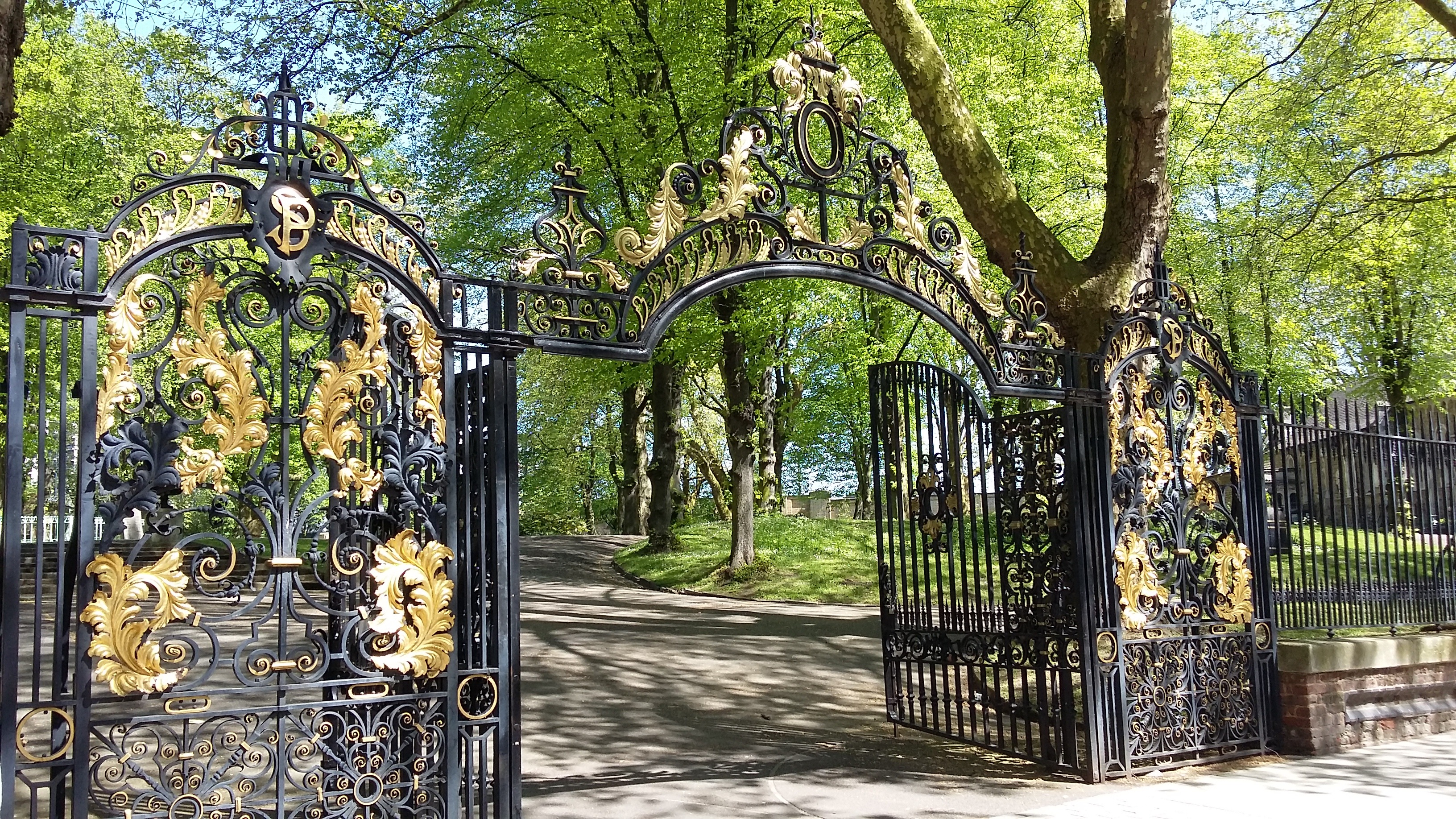
churchyard gateway
St Pancras Old Churchyard

I’ve been meaning to visit St Pancras Old Church ever since I moved to London, so when I walked past it while on my Fleet walk I just had to pop in.

History

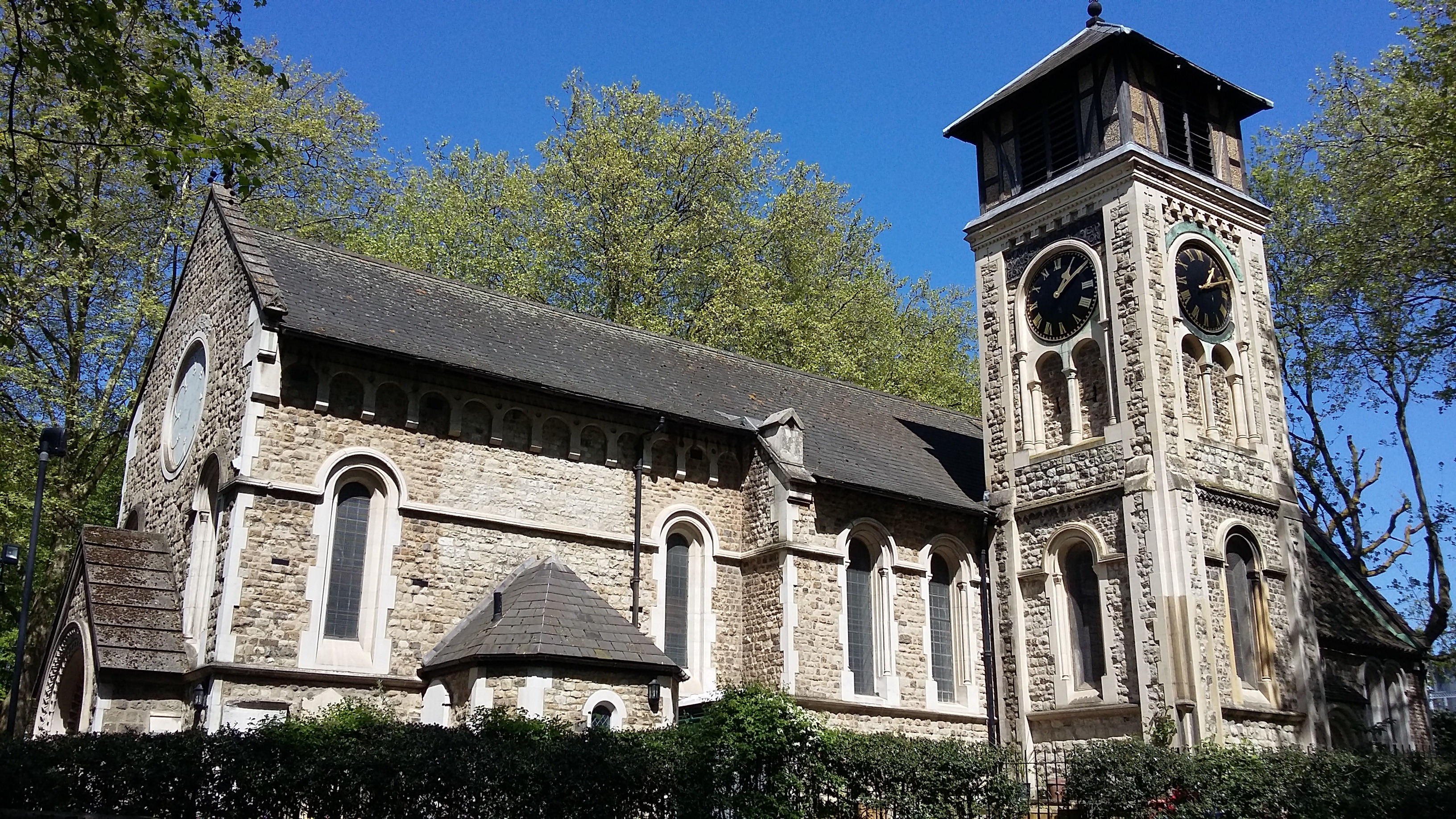
The church is located in Somers Town, is dedicated to the Roman martyr Saint Pancras, and is believed by many to be one of the oldest sites of Christian worship in England.

church
St Pancras Old Church

The church thrived until the 14th century, when the population largely moved to Kentish Town, possibly because the area was prone to flooding (the Fleet ran past). The church fell into disrepair but was rebuilt in the Victorian era. Now managed by the London Borough of Camden, it was restored at the beginning of this century.

Notable burials

Many French refugees who had fled the Revolution were buried in the churchyard, including the transgender spy Chevalier d’Éon. John Polidori, famous companion of Byron, is also buried here, as is the architect John Soane, whose tomb, designed by himself, was the inspiration for the famous red telephone boxes.

Sir John Soane's tomb
Sir John Soane’s tomb

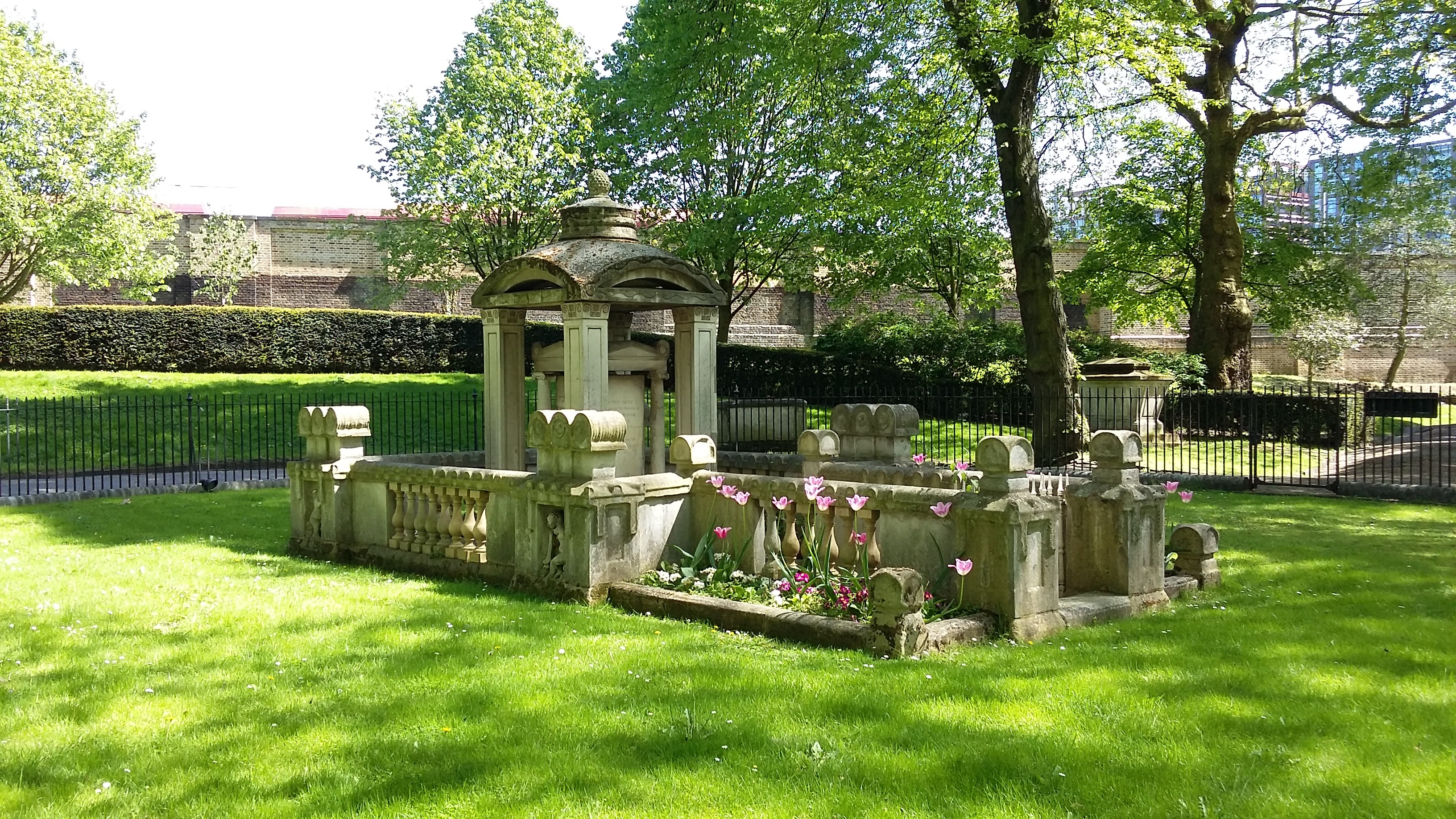
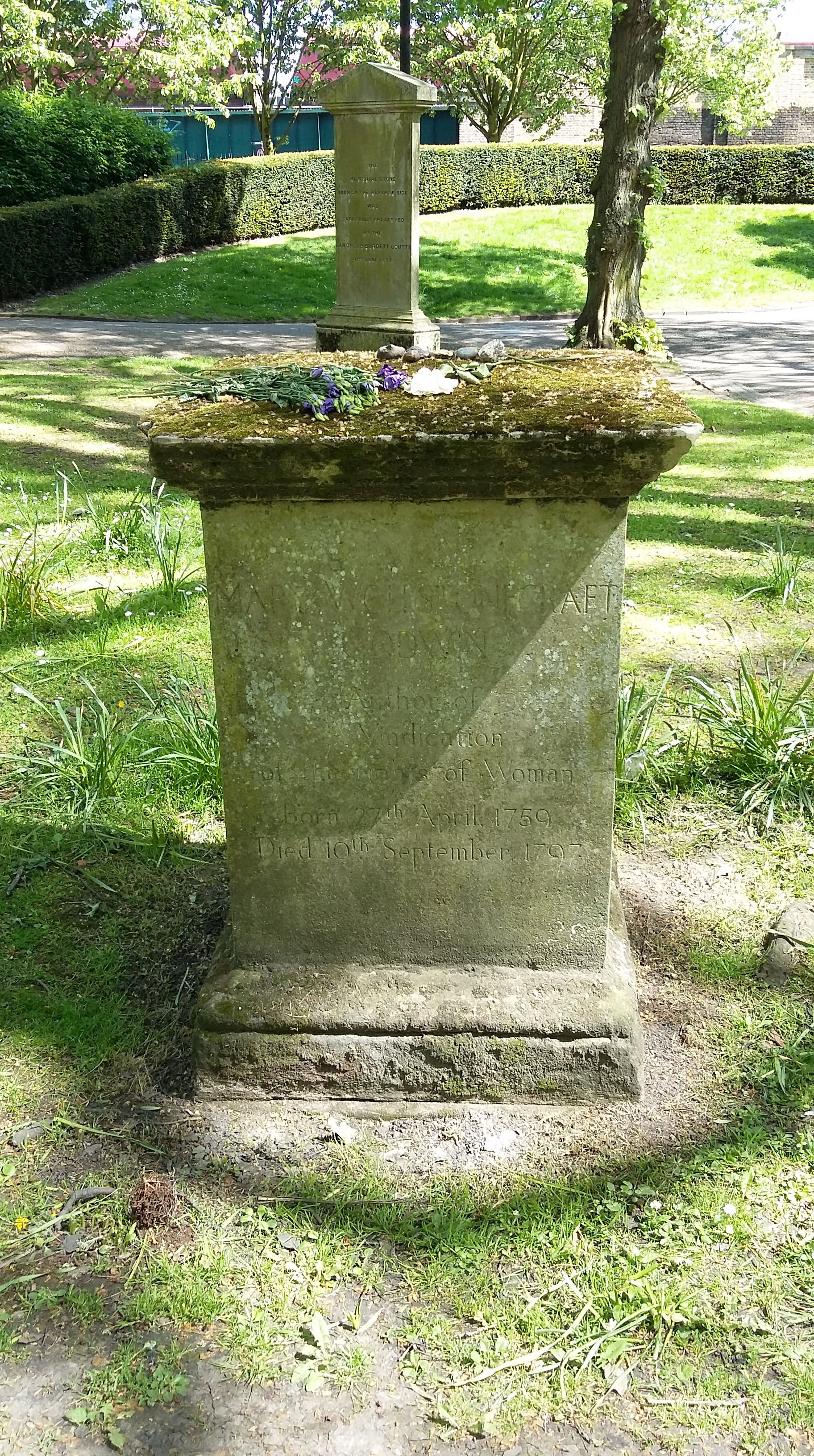
The tomb of Mary Wollstonecraft and William Godwin is here, although their remains are now in Bournemouth. Their daughter Mary and her future husband Percy Shelley met here frequently.

Tomb of Mary Wollestonecraft and William Godwin
Tomb of Mary Wollstonecraft and William Godwin
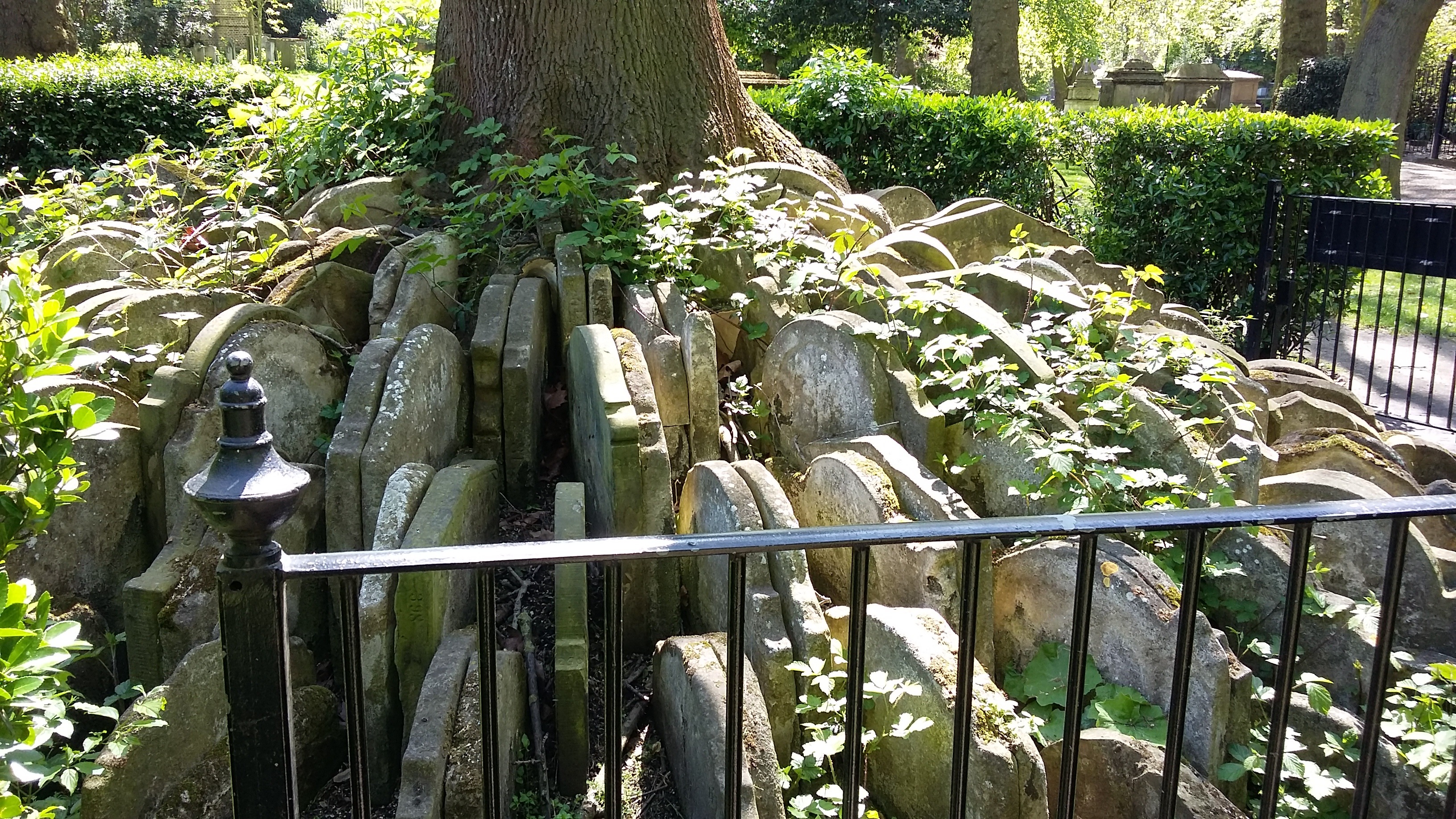
The Hardy tree

As a longtime fan of the novelist Thomas Hardy I was keen to see this famous tree. The young Hardy was apprenticed to a London architecture firm in the 1860s. When a new train line was planned directly through the cemetery, Hardy was assigned the unenviable task of moving the dead bodies. Left with a pile of gravestones, he decided to place them in a ring around a tree near the church, where over the years they have been absorbed into the tree, forming an impressive spectacle.

The Hardy tree
The Hardy tree
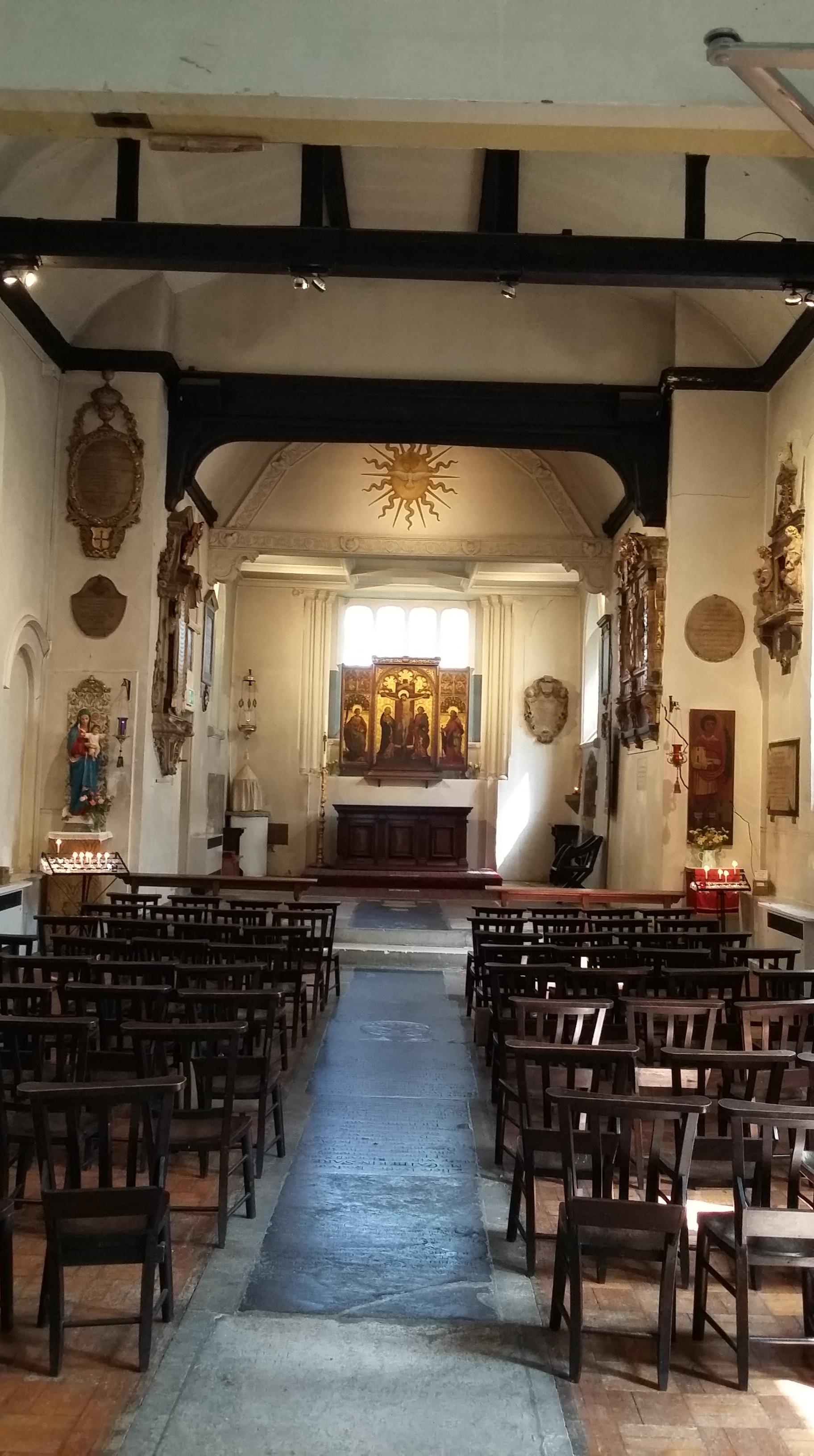
The Church

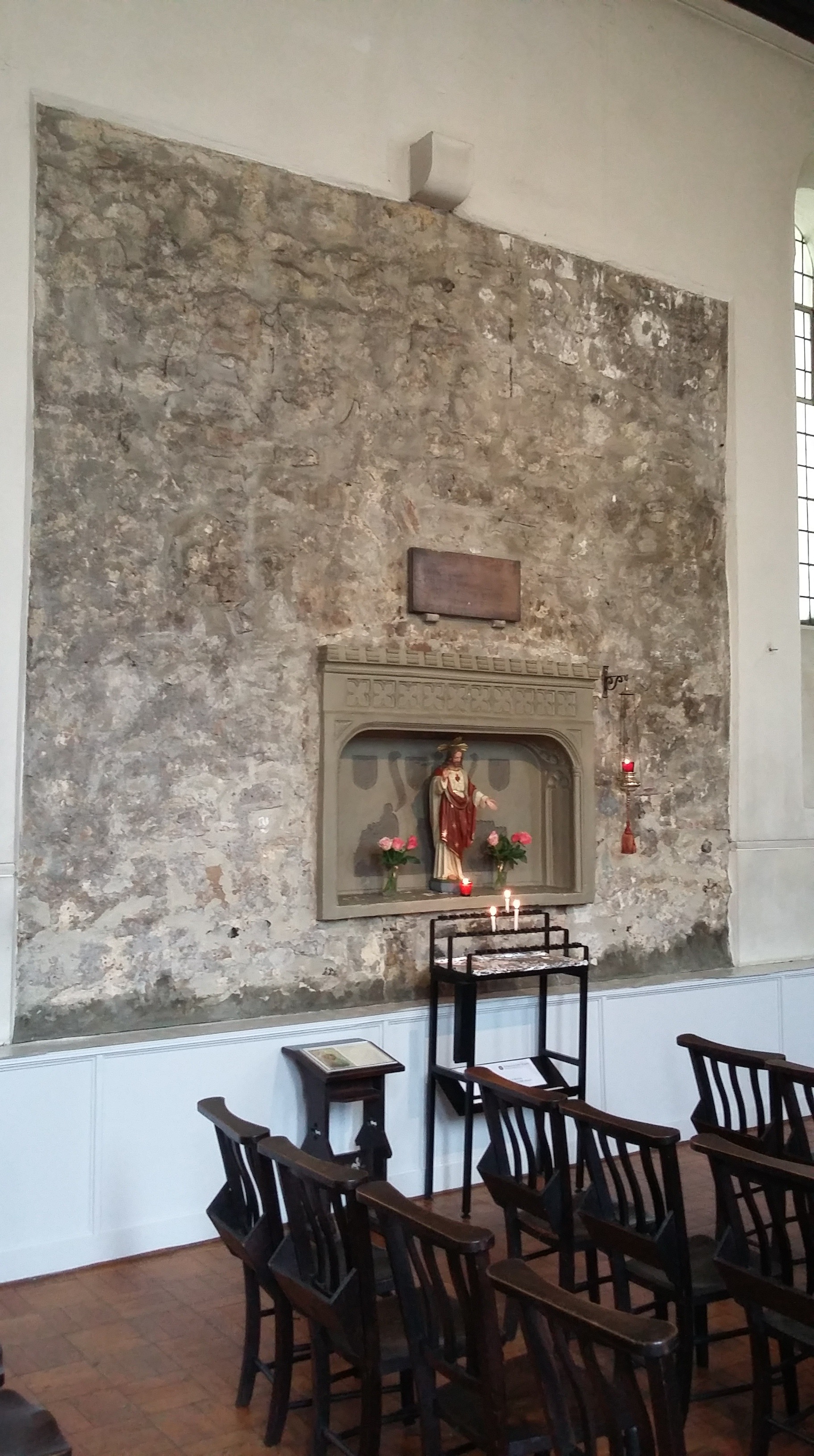
The church was rebuilt in the Victorian era, but elements from its medieval past are still visible, including an entire section of wall.

Inside the church
Inside the church
Medieval wall
Medieval wall

I really wish I’d visited this churchyard before as it’s a beautiful place. There were lots of people just sitting about reading, which sounds like a great idea. It was lovely to be able to stop here and have a rest during my walk.

FACTS

Address: Pancras Road, Camden Town, London, NW1 1UL

Website: posp.co.uk/st-pancras-old-church

Prices: Free

Walk the Fleet

Everyone’s heard of the Thames, but surprisingly few people seem to have heard of its many tributaries – the most famous being the Fleet River. This is perhaps understandable, given that the Fleet (and many other minor rivers in London) are hidden away – but the signs are still there, if you know where to look. I’ve wanted to walk the Fleet for a while, and decided to go for it on Saturday: the weather was slightly cooler at the beginning of the Bank Holiday weekend.

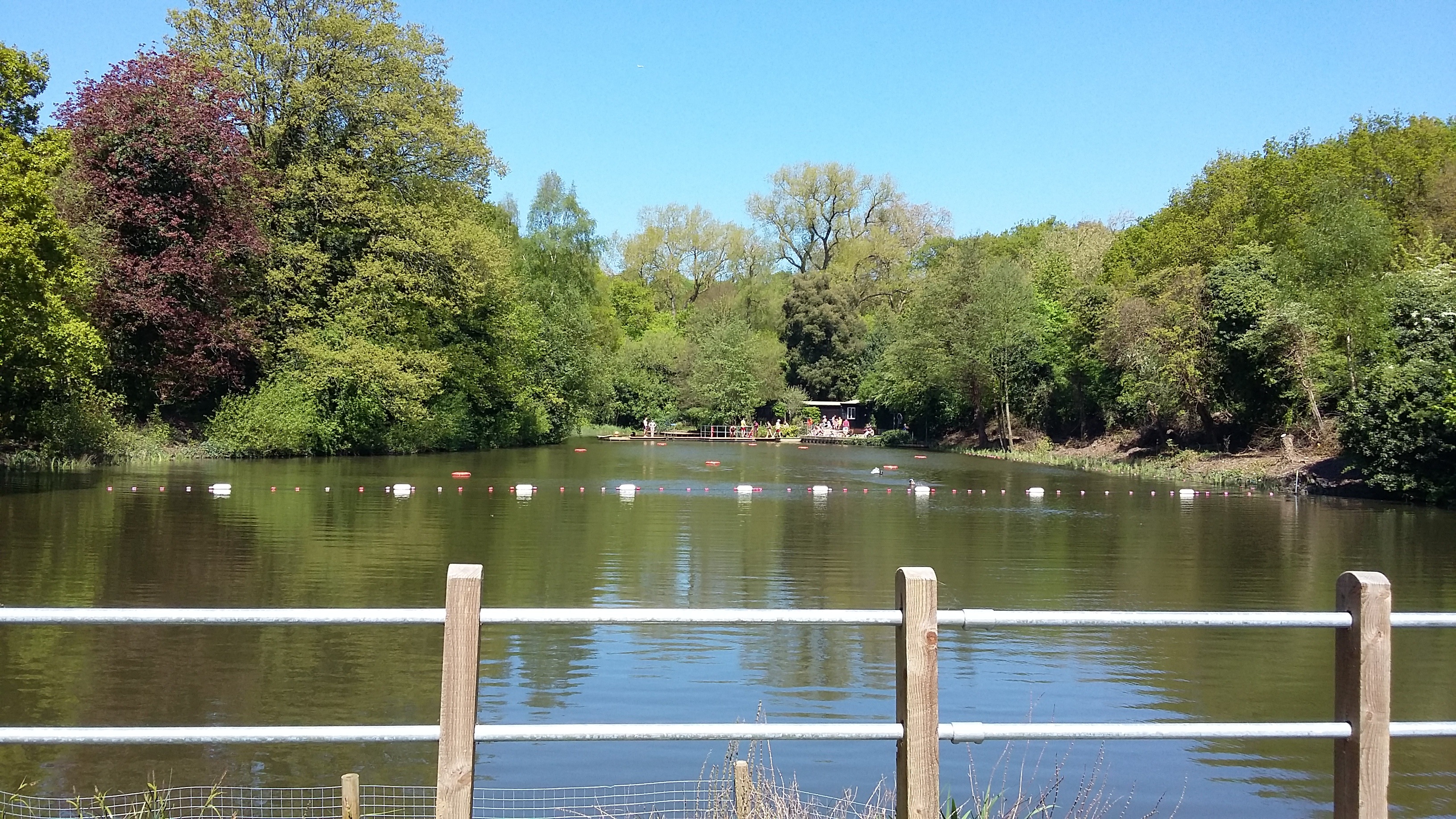
Vale of Health Pond
Vale of Health Pond

I began my journey on Hampstead Heath, where the Fleet (the name is derived from the Anglo-Saxon flēot, ‘tidal inlet’) still flows overground, at the Vale of Health pond: this pond feeds the Hampstead Brook, the western arm of the River Fleet. You can follow the course of the brook through the woods of Hampstead Heath, though it was almost dried up on the hot day I visited. Further on, the stream flows into the public bathing ponds at the bottom of the Heath.

Hampstead Heath
The Fleet flowing through Hampstead Heath

(I should mention here that another branch of the river flows down from Highgate, but I chose the Hampstead branch, purely because it was easier for me to get to. One day I might go and check out the Highgate branch too).

Hampstead Ponds
Hampstead Ponds

The Fleet was a major river in Roman times, and its status was largely maintained into the Anglo-Saxon era, with wells, supposedly with healing qualities, built at Clerkenwell and Bridewell. As London increased in size, the river became notorious for filth and sewage, surrounded by prisons and slums. From 1680 the Fleet became the New Canal, lined with wharves frequently used by the coal trade from the North East of England; hence the street names Newcastle Close and Old Seacoal Lane. From the mid-eighteenth century onwards, parts of the river were gradually covered over, enclosed in brick-lined sewers, until the 1870s when the final section, up at Hampstead, was covered.

Prince Albert
Grating outside the Prince Albert pub

The two branches converge in Kentish Town, before heading down towards the centre of London. I walked away from the calming greenery of the Heath into the built-up and urban Camden, stopping at the Prince Albert pub, where the Fleet flows under an iron grating. It can be heard easily (but not so easily seen, in the sunlight). Sadly, my plan to stop for a drink in the pub was thwarted as it was closed (this also happened with the next pub on my route. Clearly the universe is conspiring against me).

Heading down towards King’s Cross, I passed St Pancras Old Church (another blog post to follow). I was fascinated to see a picture showing the Fleet rushing by the Church in the days before it was covered up. King’s Cross was originally named Battle Bridge, referring to an ancient bridge over the Fleet where Boudica’s army is said to have fought an important battle against the Romans. I hurried past the busy King’s Cross station and onto Gray’s Inn Road, before avoiding the traffic and heading into a quieter, more residential area. I passed a housing estate called Fleet Court – clearly I was going in the right direction. My route also took me past the Mount Pleasant Mail Centre and the new Postal Museum.

The Coach
Grating outside The Coach pub

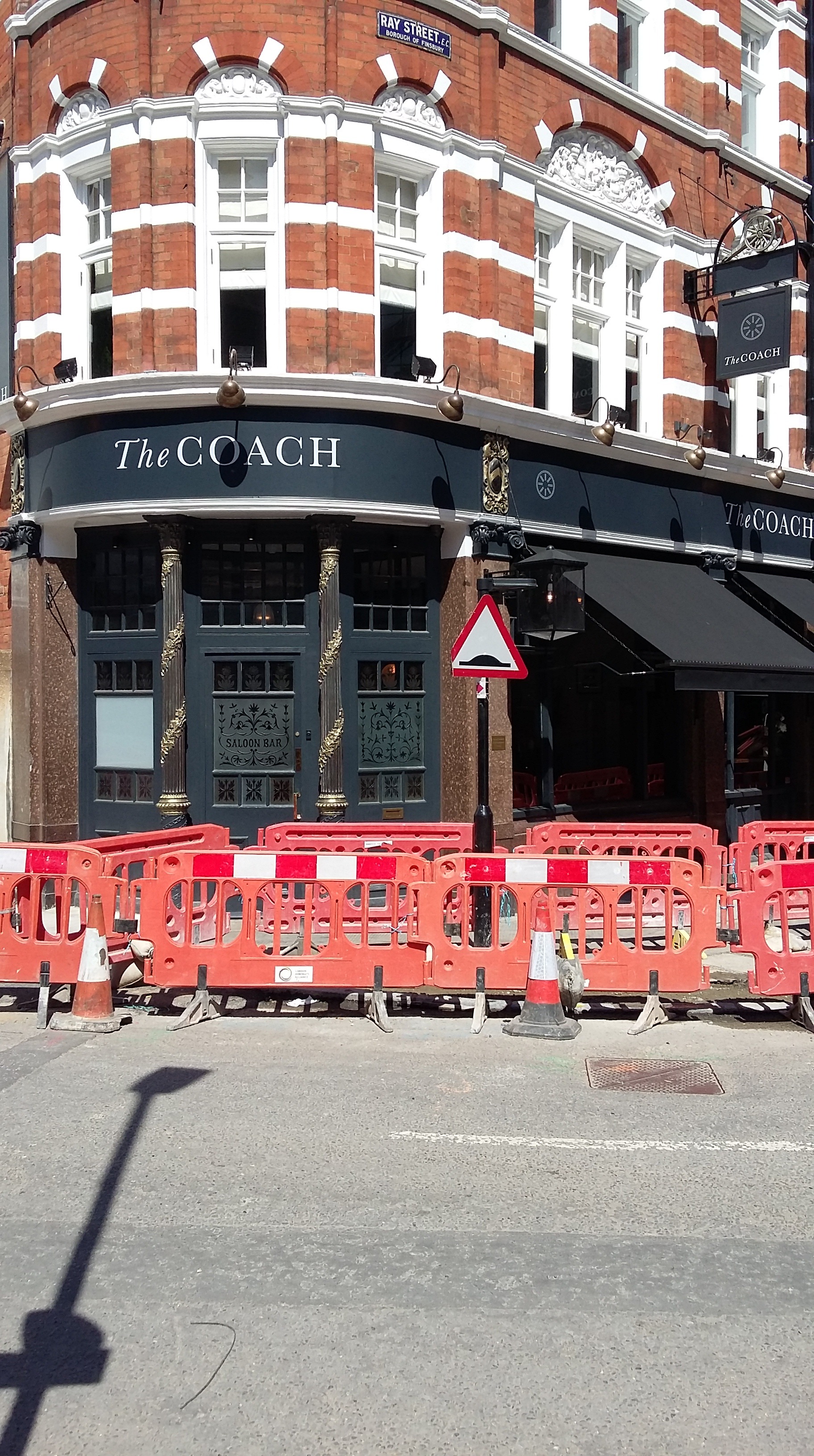
My next encounter with the Fleet was in Farringdon, outside the Coach pub, where another grating covers the rushing Fleet, though I wasn’t able to hear anything this time. The Fleet’s presence here seems to be more well-known: I overheard someone pointing it out as I loitered. The original Hockley tavern, which stood on the site, was in the midst of an area known for gambling and bear-baiting and apparently, in 1709, a bear killed the landlord.

I walked down Saffron Hill, a small, sloping street, but couldn’t find any signs of the Fleet here although I’d heard that they exist. Never mind – I soon arrived at Holborn Viaduct, a bridge over a valley which was carved out by the widening Fleet over several years. This stretch of the river was once full of ships, loading and unloading their produce (including the stones for Old St Paul’s Cathedral). This part of the river was also known as the ‘Holbourne’.

Holborn Viaduct
Holborn Viaduct

Towards the end of my walk, I passed Ludgate Circus, which crosses Fleet Street, named for the river. It was originally the site of the Fleet Bridge river crossing. The King Lud pub occupied the building now used by Leon between 1870 and 2005, and it is rumoured that the Fleet could be seen flowing under a glass floor panel.

Ludgate Circus
Ludgate Circus

Finally, my walk came to an end as I reached Blackfriars Bridge. What remains of the Fleet flows out of Victorian sewers into the Thames underneath the bridge, although sadly I couldn’t view the exit as the area is currently undergoing building works. Still, I was very pleased to have finally got the chance to follow the Fleet.

Blackfriars Bridge
The Fleet flows into the Thames beneath Blackfriars Bridge

Where To See and Hear the Hidden River Fleet from Londonist and Going underground: Mile after mile of ornate brickwork and labyrinthine tunnels which reveal the beauty of London’s hidden River Fleet from Mail Online (I know, I know, but it was genuinely interesting) helped me to work out my route, spot the Fleet along the way, and learn about its history. There is also a fascinating article on Wikipedia.

Old Royal Naval College

Gateway to the ORNC
Gateway to the ORNC

The Old Royal Naval College dominates the centre of Maritime Greenwich, being sited not far from Cutty Sark DLR station and very close to the DLR itself. Some tourists initially mistake it for the National Maritime Museum. The site has a rich history. Greenwich Palace, the birthplace of Mary I and Elizabeth I, originally occupied the site; it was known as the Palace of Placentia. Having fallen into disrepair during the English Civil War, it was demolished in 1694. Designed by Christopher Wren, the buildings were conceived as Greenwich Hospital (established by Mary II), and built between 1696 and 1712. The hospital closed in 1869, and between 1873 and 1998 it was the Royal Naval College, Greenwich.

Old Royal Naval College

Since 2002 much of the site has been open to the public. I’ve wandered around the grounds frequently, visited a couple of the buildings, and attended concerts, but I decided to take advantage of a free guided tour on the same day as I visited the Discover Greenwich Visitor Centre, which has lots of information about the site.

Monument to Bellot
Monument to Bellot

Our guide took us along the waterfront, pointing out the memorial to Captain Bellot, a Frenchman who perished searching for Franklin in the Arctic (there is a memorial to the Franklin expedition in the Chapel). As the Thames was at low tide, she also pointed out the remains of a pier established by Margaret of Anjou, who originally had the palace built.

Remains of the 15th-century pier

Of course, you can wander around the grounds yourself, but on a tour you are shown things you probably wouldn’t have noticed, like the spot on which archaeological remains of Greenwich Palace were discovered. Apparently it is forbidden to put too much weight onto the grass, in case the site beneath is damaged. The iron gates by the river are where Nelson’s body was brought on shore for lying in state before he was taken to St Paul’s Cathedral for burial.

Gateway to the Thames

The tour guide also pointed out just how impressive Christopher Wren’s calculations were: commanded by Queen Mary to ensure the Queen’s House kept it’s view of the river, he ensured the buildings on either side were placed to keep the Queen’s House precisely in the middle.

The Queen's House viewed from the ORNC
The Queen’s House viewed from the ORNC

A statue of George II is also a notable landmark. The statue is made of one single piece of marble and the king is depicted in the guise of a Roman Emperor.

Statue of George II
Statue of George II

Today, the University of Greenwich leases Queen Mary, King William and Queen Anne Courts and Trinity Laban School of Music and Dance occupies King Charles Court. The latter also performs regularly in the beautiful Chapel. We also popped into the Painted Hall, painted between 1707-1726 by Sir James Thornhill. The Hall is currently undergoing restoration, and I was lucky enough to take part in a Painted Hall Ceiling Tour, which takes you up to the ceiling so that you can view the artwork close up.

The Old Royal Naval College is well worth a visit, and there are so many things to do, from learning about history in the Visitor Centre, taking a guided tour, or listening to a concert in the Chapel.

FACTS

Address: King William Walk, Greenwich, London, SE10 9NN

Website: ornc.org

Opening Hours: 10am-5pm

Prices: Free (charges for some concerts and for Painted Hall Ceiling Tours)

Discover Greenwich Visitor Centre

Greenwich Visitor Centre

Not to be confused with the Greenwich Heritage Centre, which is located in Royal Arsenal, the Discover Greenwich Visitor Centre is located near the Cutty Sark, in the grounds of the Old Royal Naval College. Housed in the Pepys Building, originally an engineering laboratory for the ORNC, it opened in 2010.

The free Centre offers an introduction to the history and attractions within the Greenwich World Heritage Site. It has information on the history of the Palace of Placentia, models of Christopher Wren’s original designs for Greenwich Hospital, the carved heads originally intended to decorate the exterior of the Painted Hall, and a model of a lion originally intended for external decoration, too. I particularly enjoyed the section about Greenwich Palace, the birthplace of Henry VIII, and the archaeological work that has discovered more about the palace and its layout and decoration.

Lion

The Centre has other displays about maritime Greenwich and about the history of the Royal Naval College, which occupied Greenwich Hospital and the surrounding area between 1873 and 1998. It also has a Tourist Information desk and a gift shop.

Greenwich Visitor Centre

This free visitor centre is well worth checking out as introduction to Greenwich.

FACTS

Address: 2 Cutty Sark Gardens, Old Royal Naval College, London, SE10 9LW

Website: ornc.org/visitor-centre

Opening Hours: 10am-5pm

Prices: Free