Barbie®: The Exhibition – Design Museum

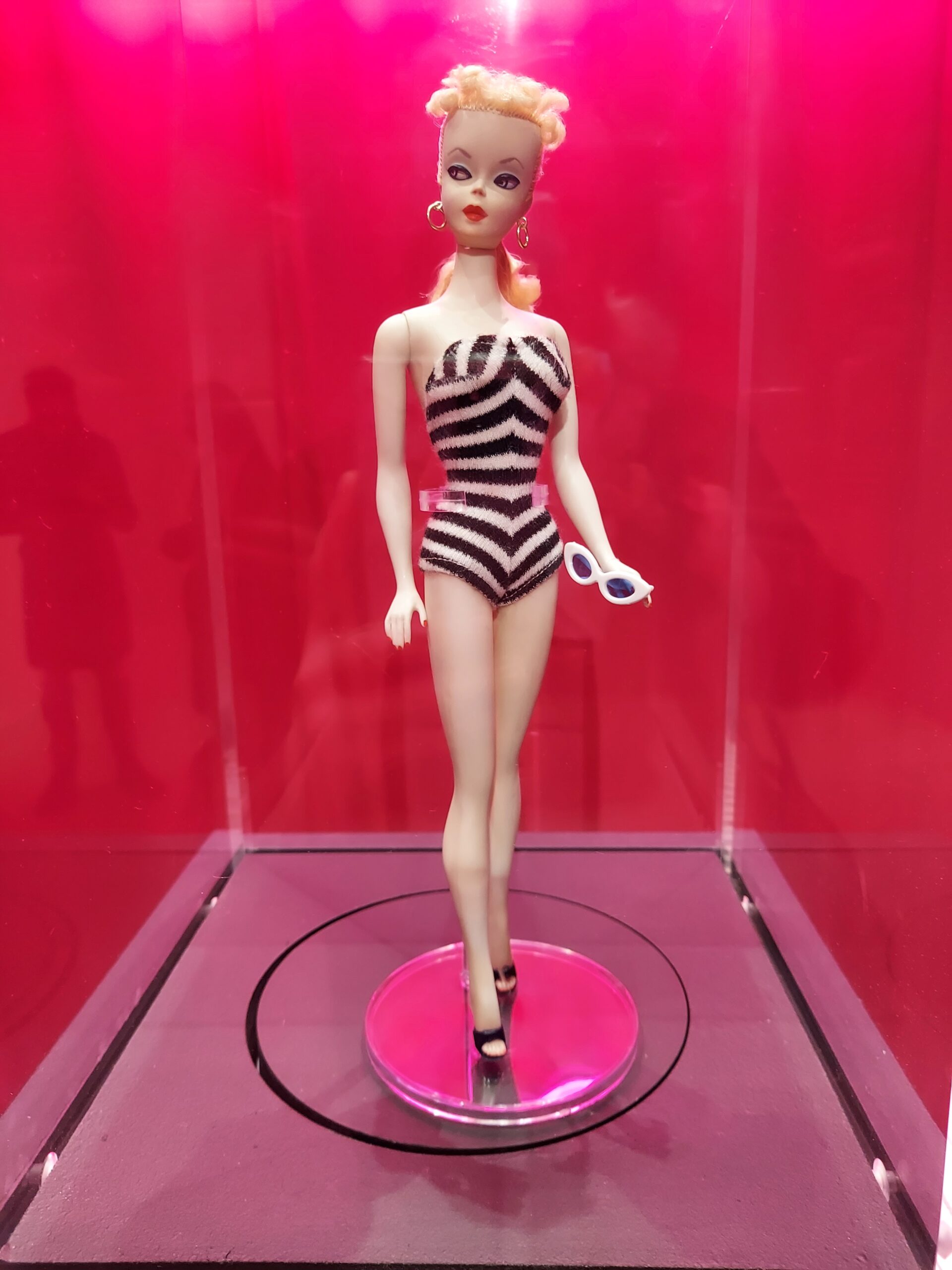
Original Barbie

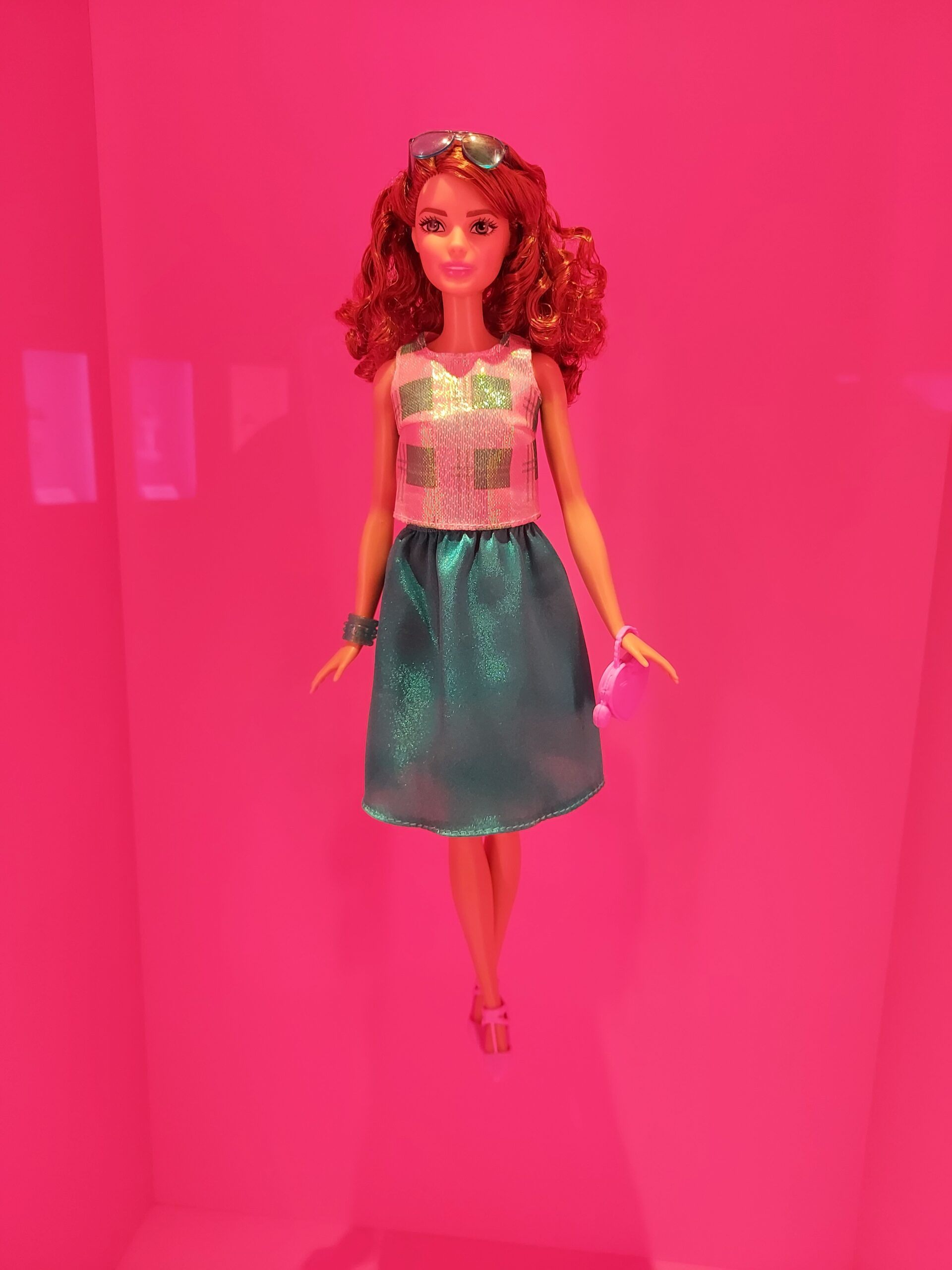
I had a Friday off work so I went along to the Design Museum to see the Barbie exhibition. Like most little girls, I had Barbies when I was a child and the exhibition, featuring over 250 objects, promised to be an interesting look at the evolution of Barbie from 1959 to the present day.

On display was one of the first ever dolls released by Mattel in 1959, as well as other examples including the best-selling Barbie of all time, the Totally Hair Barbie of 1992. I remember seeing this doll advertised at the time, and kind of wanting it, while at the same time knowing that I would never dare to cut her hair so there would be no point.

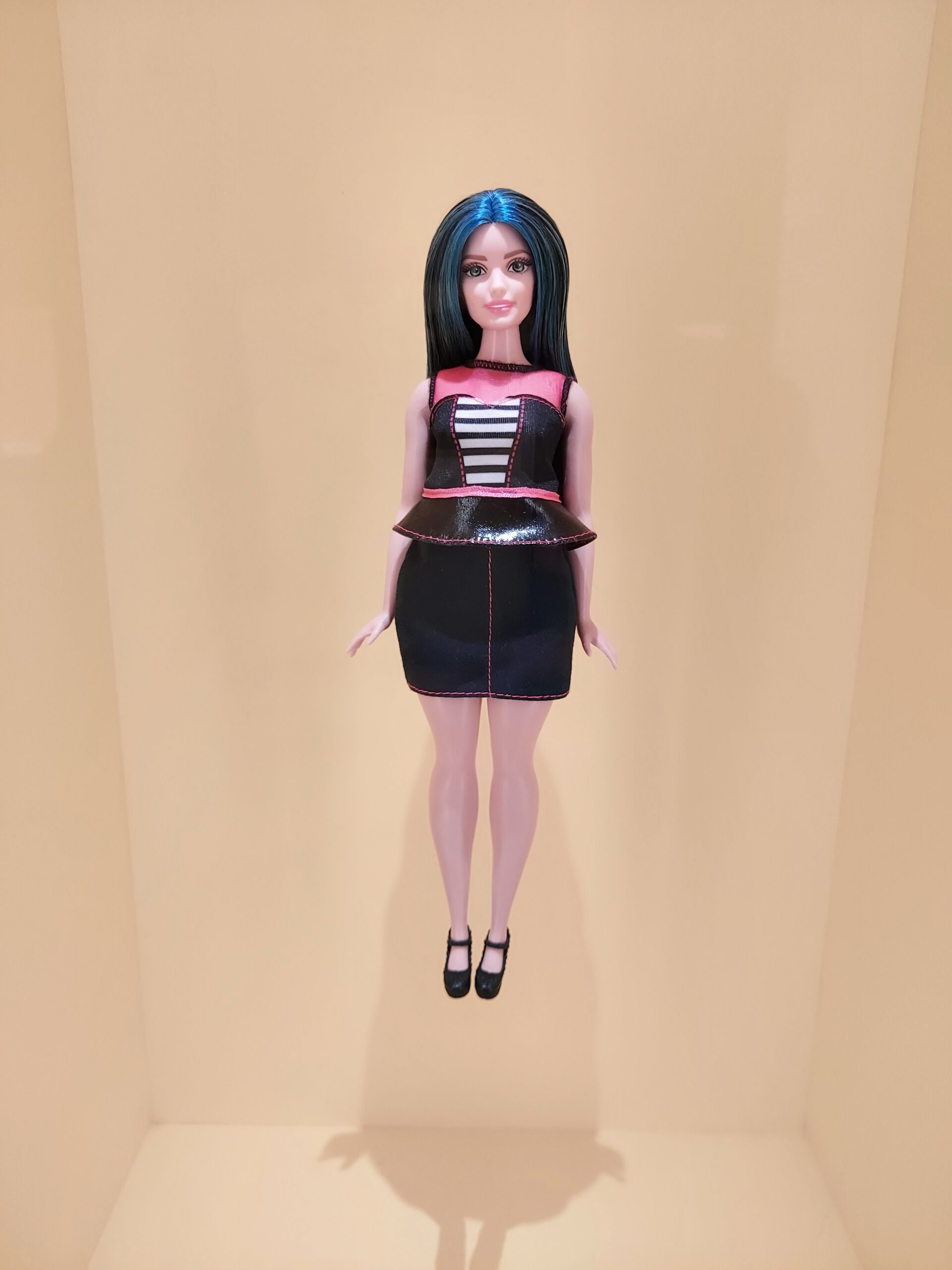
I have never seen so many Barbie dolls in one place. So many different kinds have been released over the years, with countless outfits. I had fun choosing my favourites and recognising the ones I owned. The doll has also reflected changing attitudes and social mores, with Barbie increasingly reflecting and inspiring societal aspirations. Barbies are doctors, teachers and even astronauts.
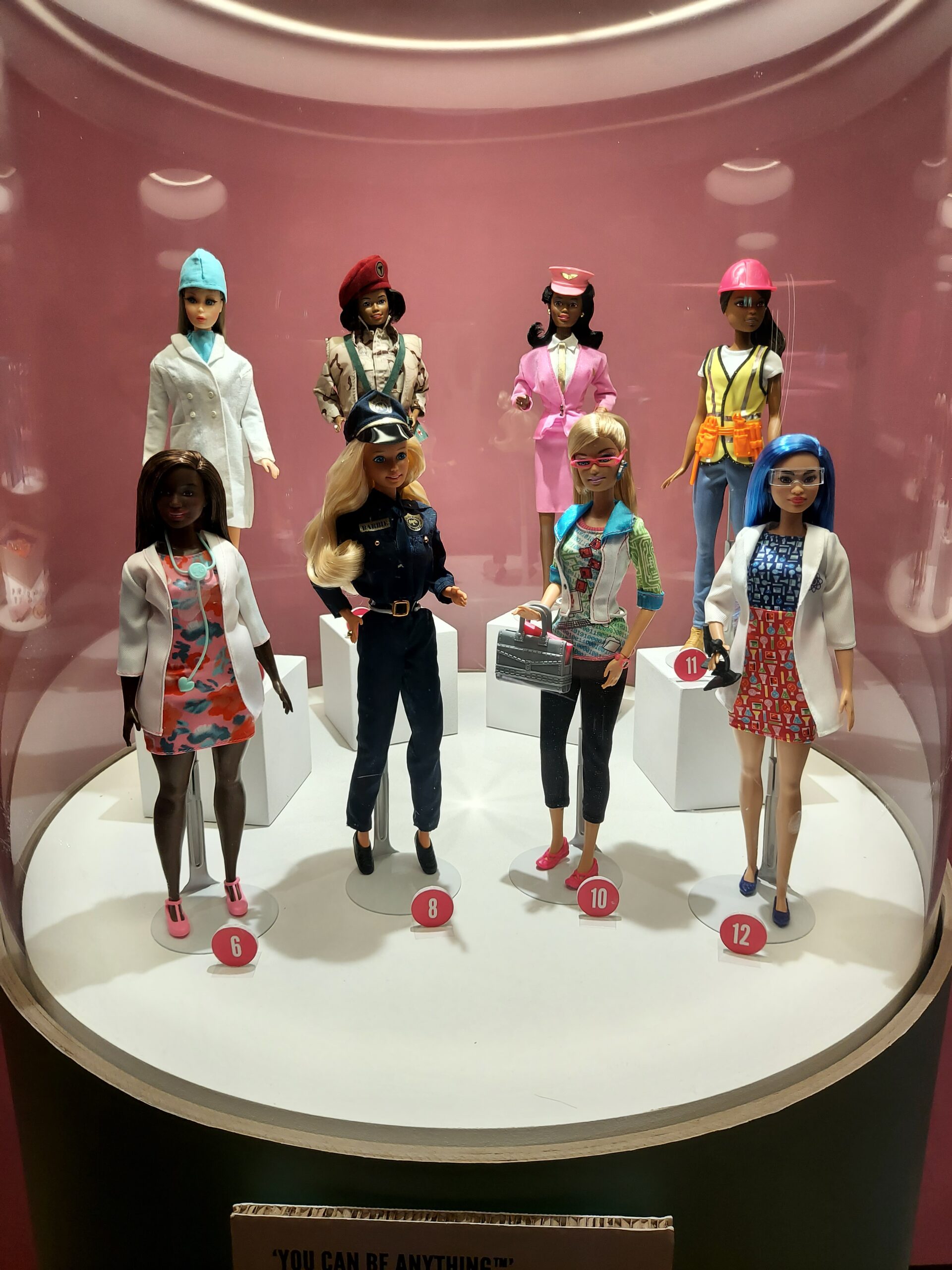
Barbies with different professions

Barbie has had lots of friends over the years, such as Midge, Christie and Teresa, as well as a younger sister, Skipper. And let’s not forget Ken, who has also appeared in various incarnations over the years since his first appearance in 1961.
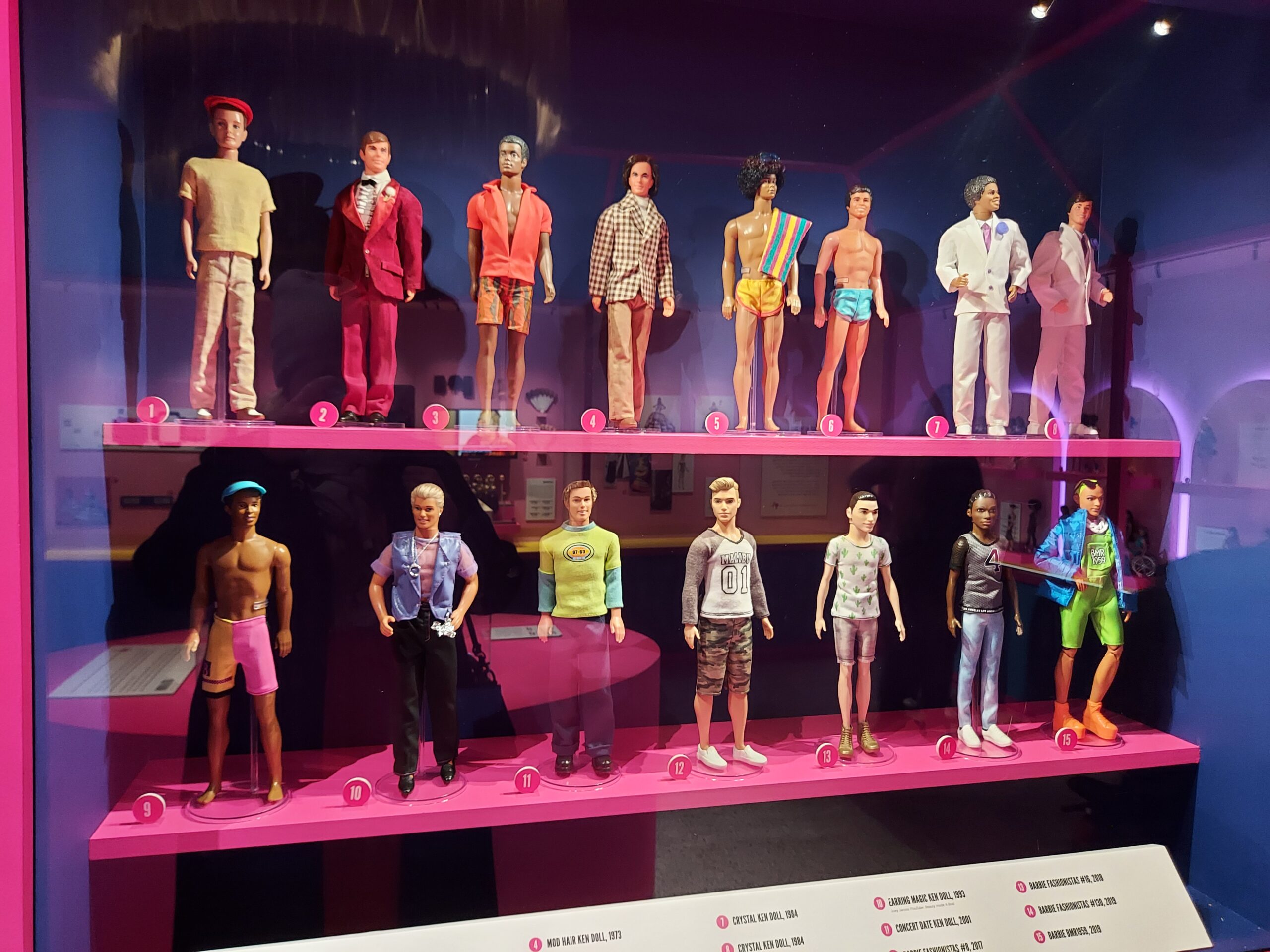
Ken dolls

As well as dolls, the exhibition looks at Dreamhouses, vehicles and furniture. These also reflect the times in which they were made and served as aspirational models for children. I have fond memories of my own Barbie campervan, though I can’t say it’s given me a taste for the outdoors.

It’s good to see that Barbie has become much more diverse through the decades. Black, Hispanic and Asian dolls have all been released, as well as those with Down syndrome, dolls that use wheelchairs and Barbies with different body shapes.
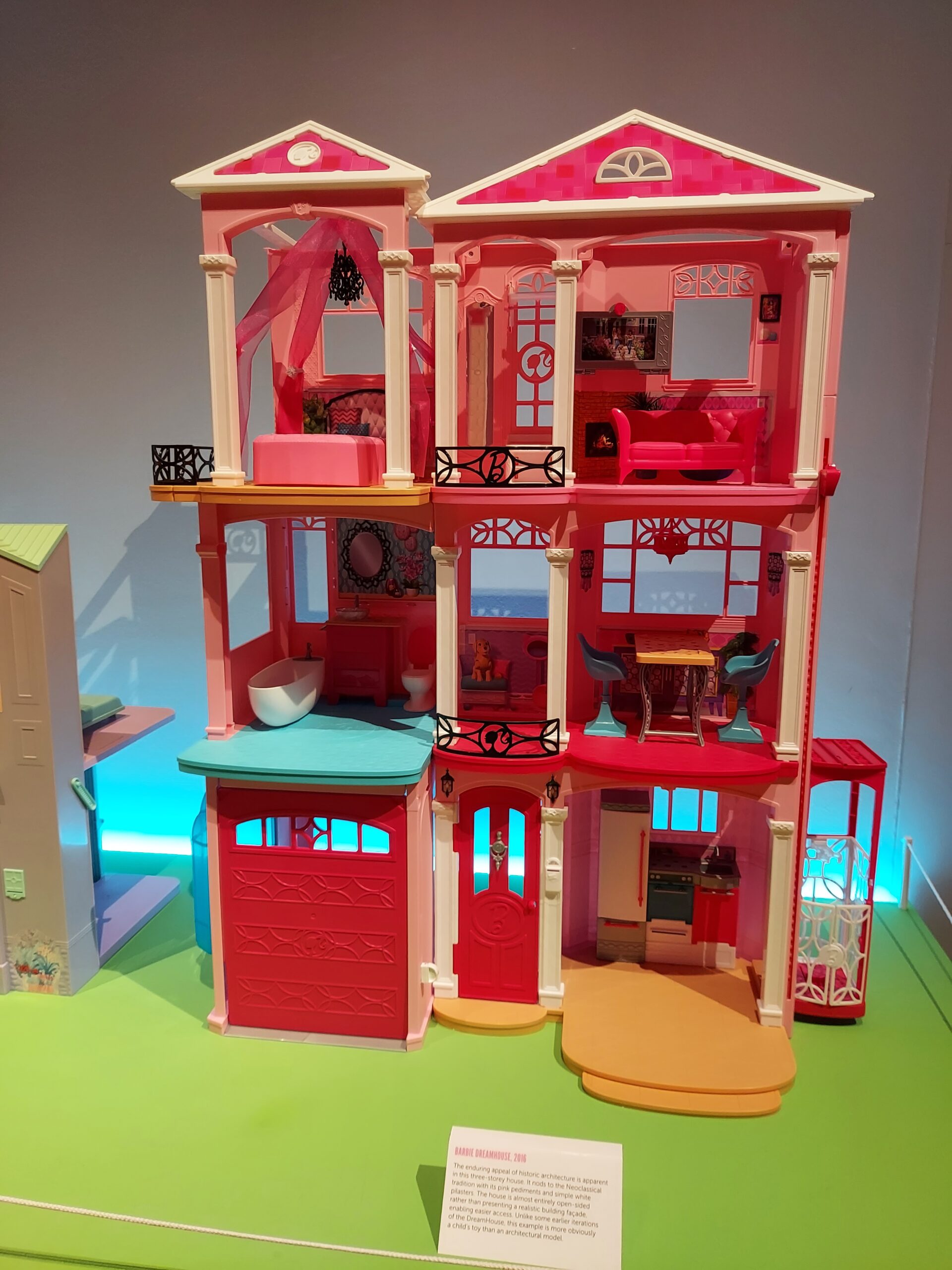
Barbie dream house

This was a fun, nostalgic exhibition that was fascinating to explore and showed how influential Barbie has been for over half a century.
Chocolate House Greenwich – Old Royal Naval College

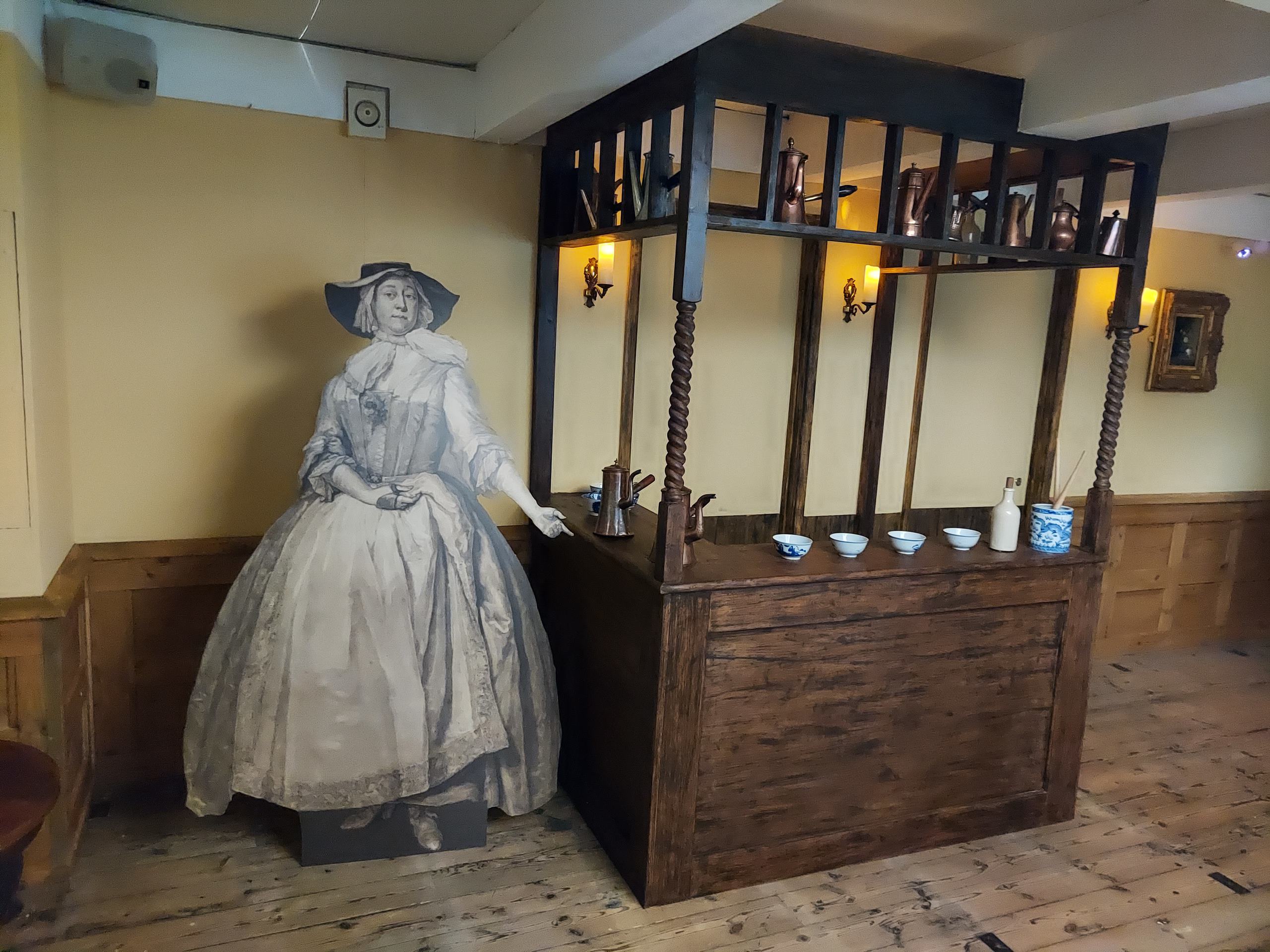
While I was in Greenwich exploring the Old Royal Naval College, I visited the Visitor Centre’s most recent exhibition, Chocolate House Greenwich. The exhibition explores how chocolate helped revive Greenwich as a place to visit in the Georgian era.

The exhibition looks at the origins of chocolate in Central America and how it became a symbol of sophistication among members of the Enlightenment. Greenwich became a popular destination and hub for astronomy, science and culture, helped by the presence of the Royal Observatory. Grace and Thomas Tosier’s famous “royal” Chocolate House was a hub of activity and discussion, once located on the edge of Blackheath in ‘Chocolate Row’ and recreated here.

recreation of the Tosier Chocolate House

Silk Roads – British Museum

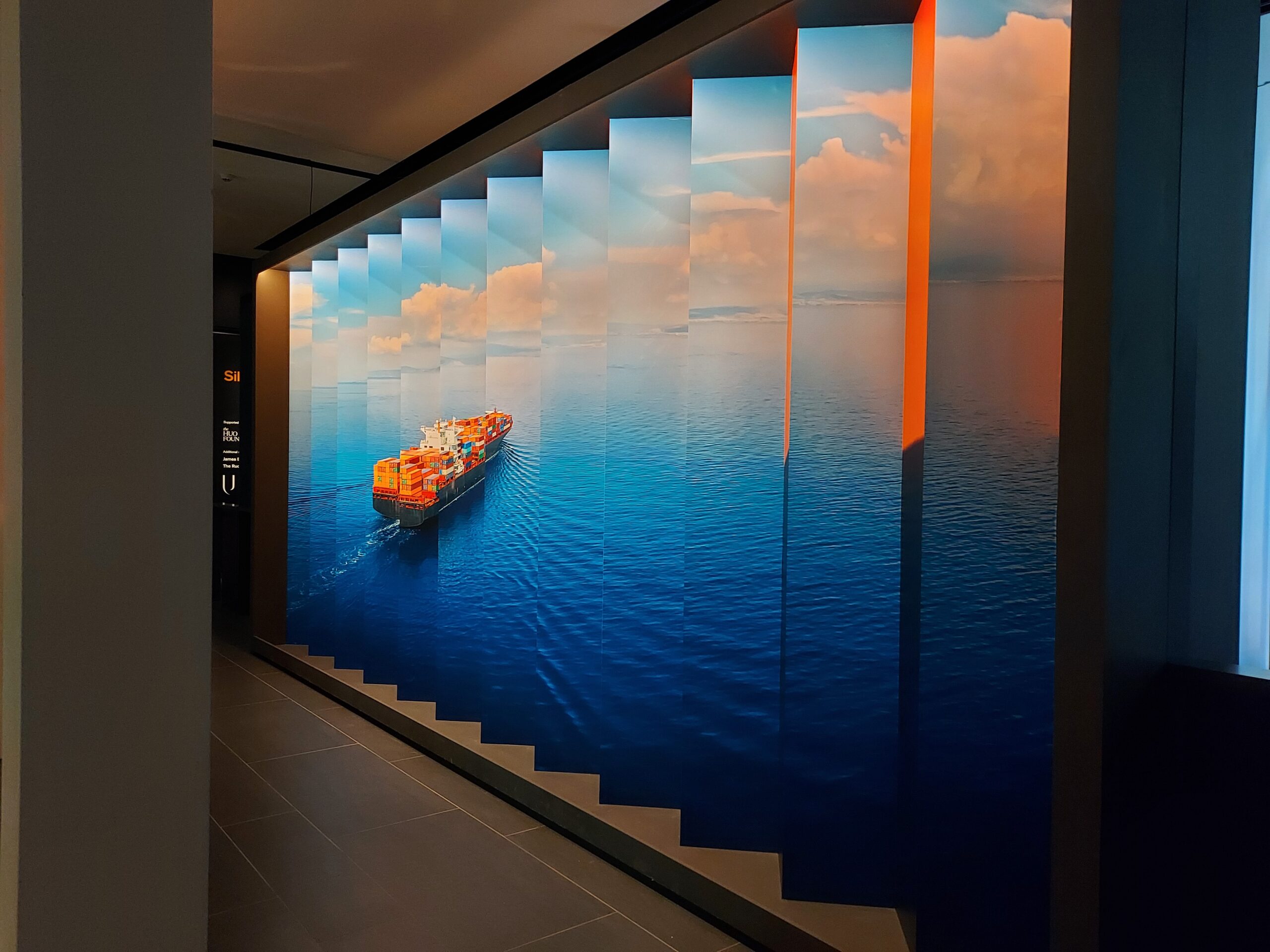
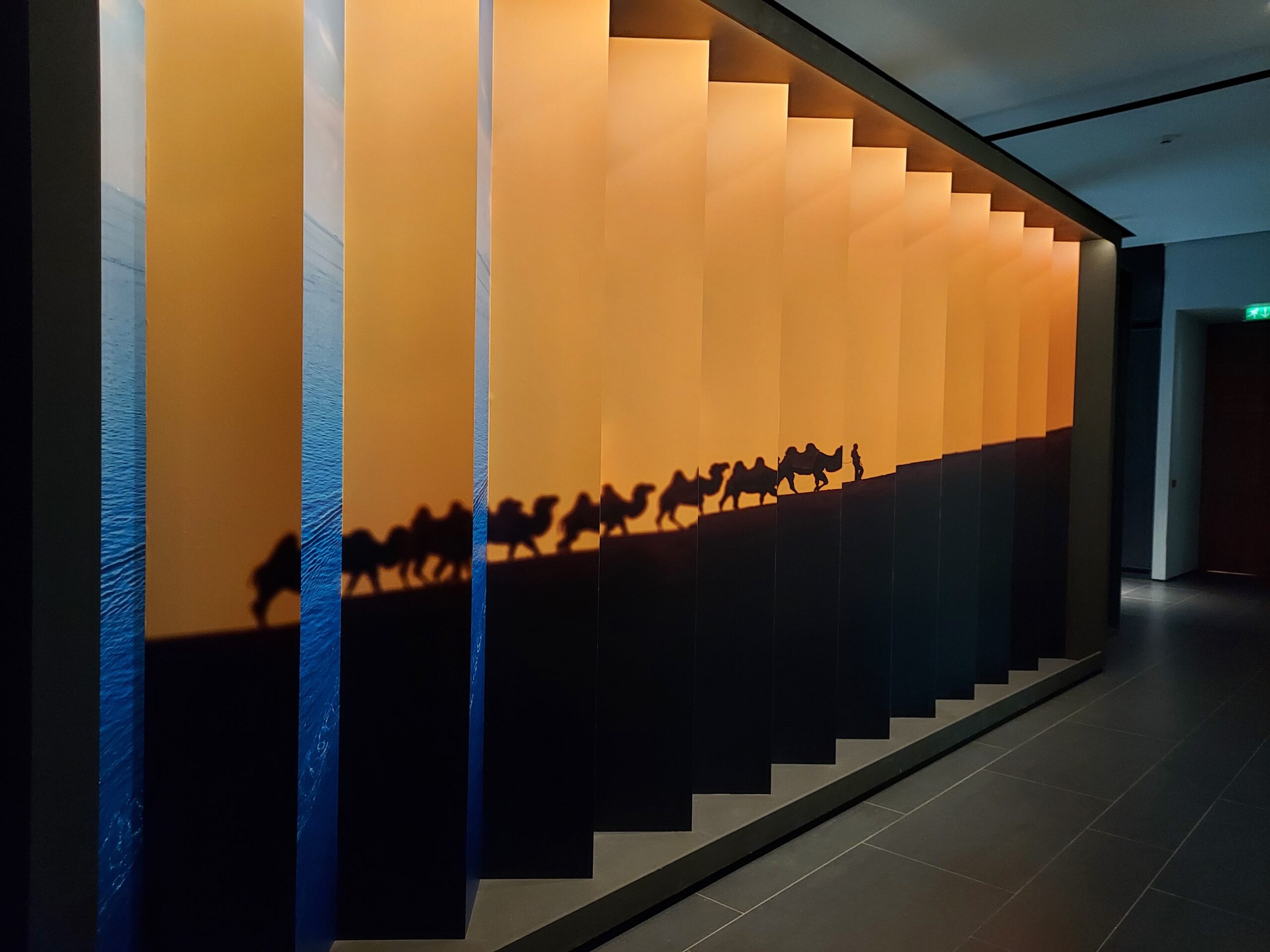
Following on from the British Library’s exhibition about Dunhuang, I went along to the Silk Roads exhibition at the British Museum. This was another fascinating exhibition, this time covering the length of the network that encompassed Europe and Asia.

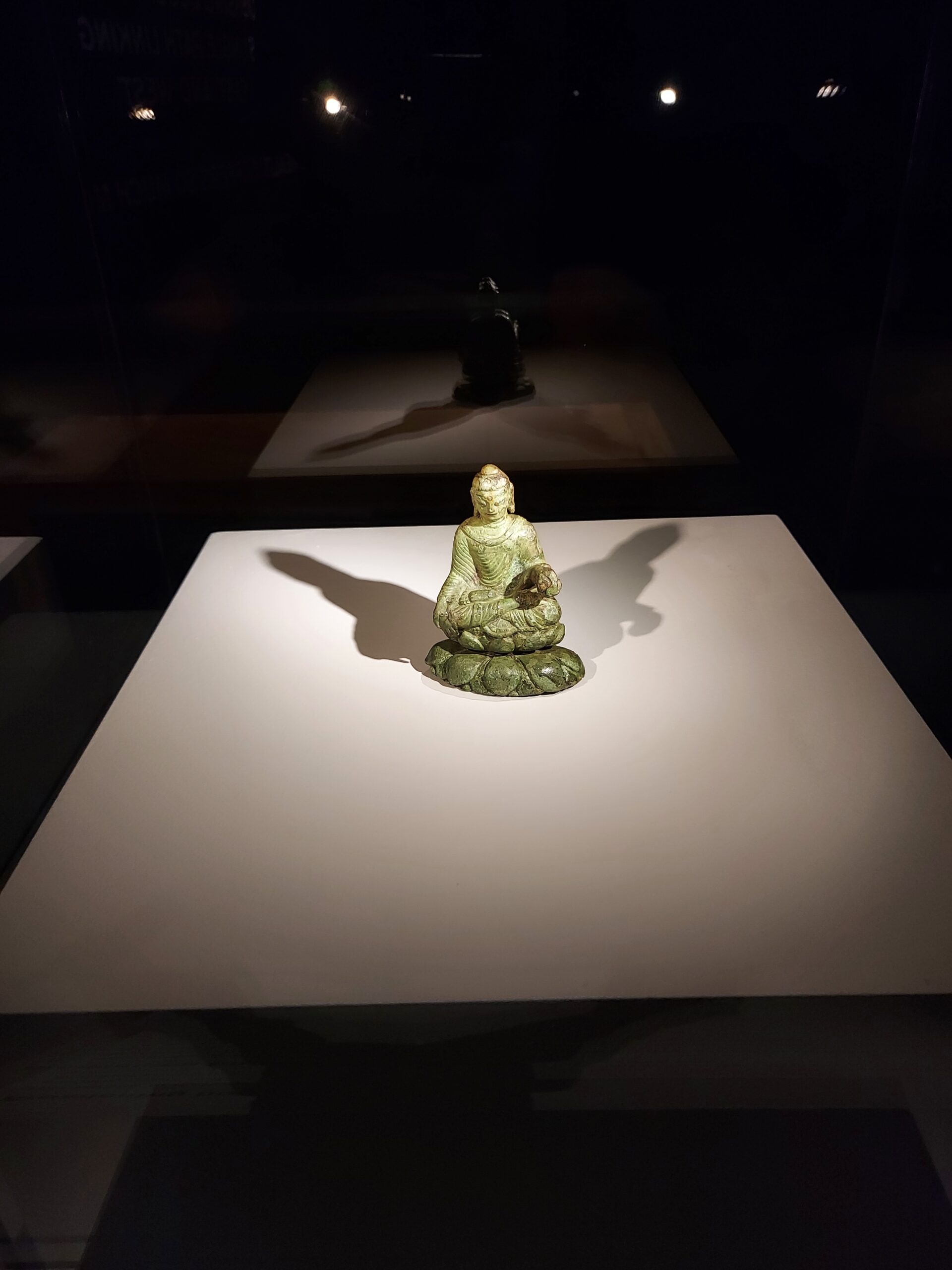
Silk was just one of the items traded. A key item displayed was a Buddha statue made between the 500s and the mid-600s, probably in the Swat Valley, Pakistan, but found on the Swedish island of Helgö – demonstrating just how far this network spread.

Buddha statue

The exhibition explores the route from east to west, beginning in Nara Japan in the seventh century AD when rulers began to send envoys to Sui-Tang China. Trade took place in both directions throughout Asia: for instance, Buddhism arrived in Japan from western Asia, and burials revealed a taste for expensive imported goods. In Tang China, the capital Chang’an had a population of one million, at the time the largest city in the world. Envoys from as far away as the Mediterranean arrived here. A shipwreck near Belitung Island, Indonesia, in the early AD 800s found over 60,000 items, mostly Chinese ceramics.

Dunhuang and other oasis cities along the desert routes, including two branches around the Tarim Basin, are explored. The exhibition features Samarkand and Uzbekistan, exploring the spread of Islam alongside the tolerance of other religions. There was a notable transmission of knowledge at this time, especially to and from Baghdad, the capital of the Abbasid caliphate, between AD 749 and 1258. Many imported goods were found in the former capital, Samarra.

Later in the exhibition, the Byzantine empire, Aachen, Spain and Sutton Hoo are all referenced. UK burials often contained items from Syria, further examples of the international trade taking place at this time.

The exhibition was fascinating and wide-ranging, and definitely worth seeing, even – and perhaps especially – if you’ve already seen the British Library’s version.

Lost Victorian City: A London Disappeared – London Archives

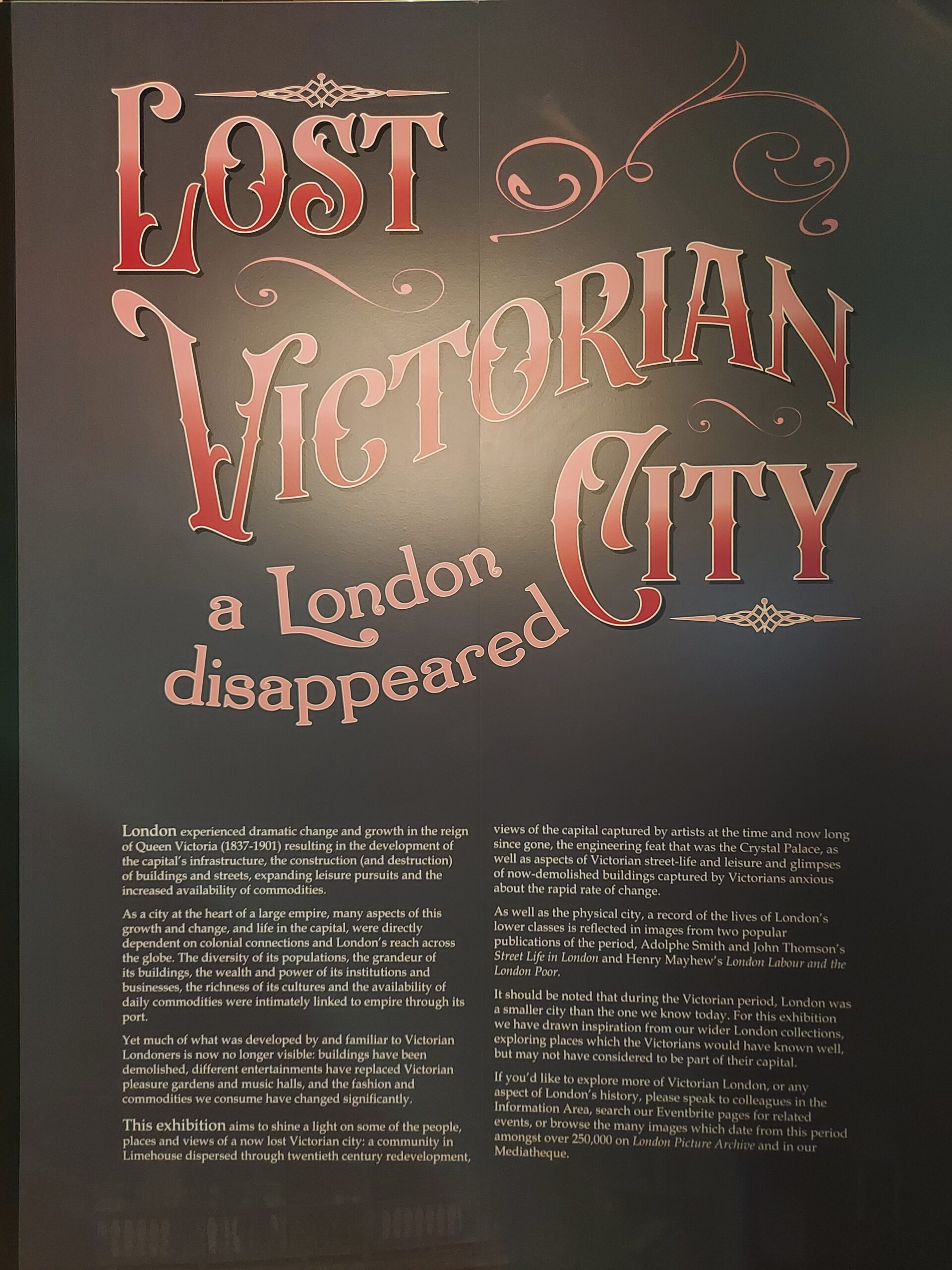
Exhibition introduction

I headed to the London Archives (formerly the London Metropolitan Archives) on Saturday to see their latest exhibition, Lost Victorian City: A London Disappeared. The exhibition consists of photographs and other resources documenting a London that no longer exists, from the Crystal Palace to Limehouse, obsolete forms of transport to vanished pubs.

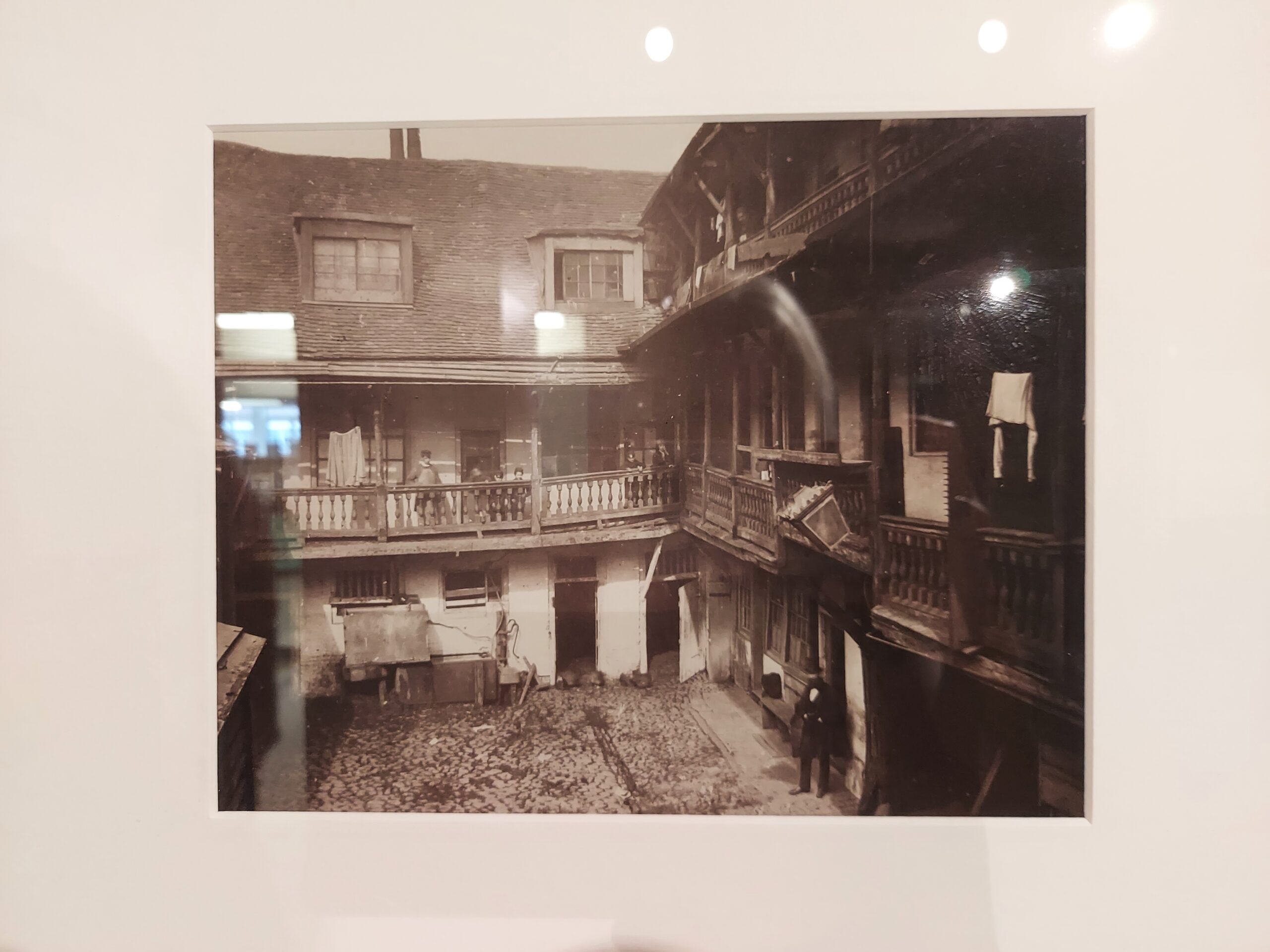
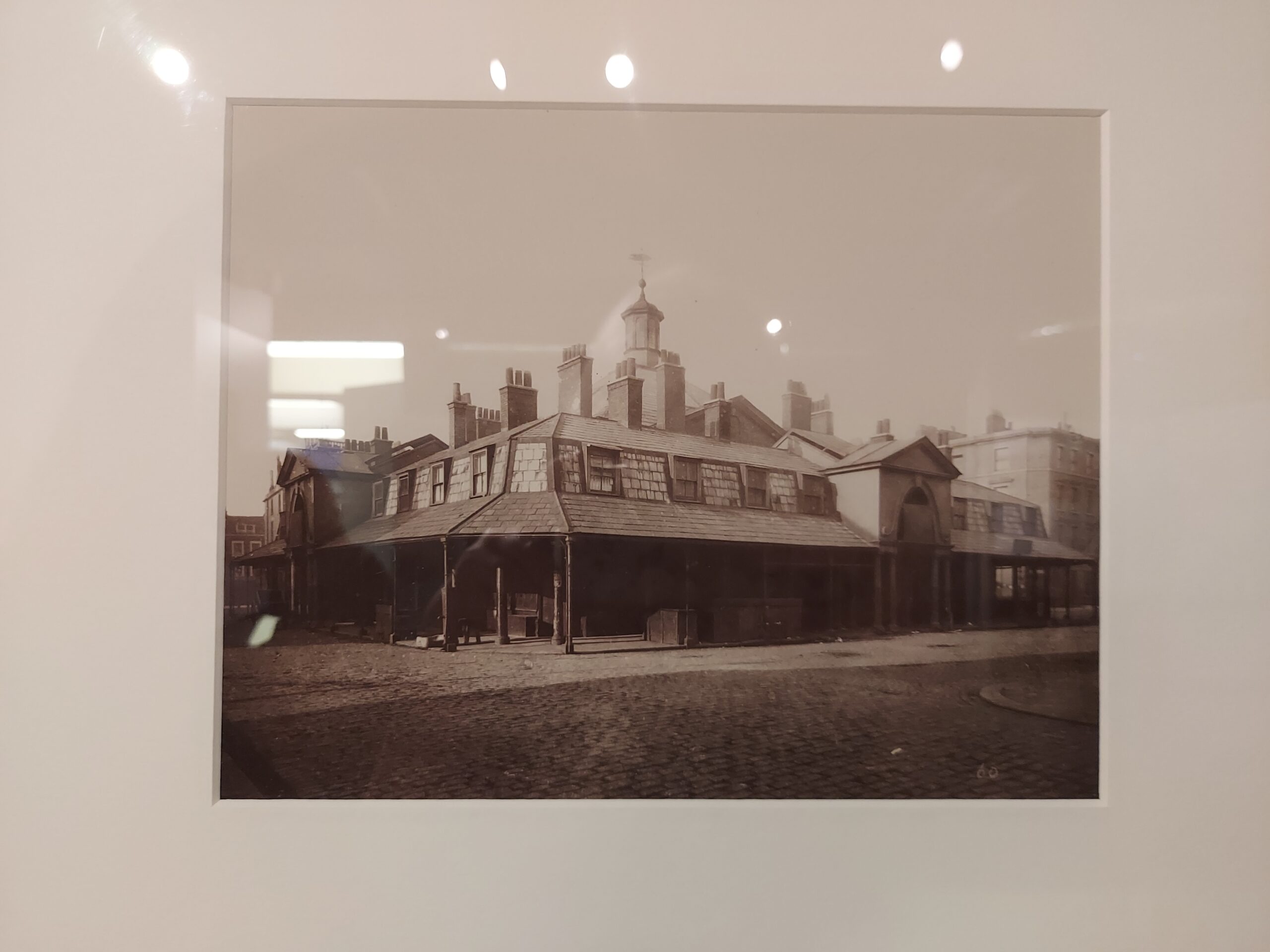
My favourites were the pictures taken by the Society for Photographing Relics of Old London, including the Oxford Arms, a galleried inn on Warwick Lane – near what is now the Old Bailey – and Oxford Market on a very different-looking Oxford Street. This prescient group wanted to capture a rapidly vanishing world, and succeeded admirably.

A galleried inn in the nineteenth century
The Oxford Arms, Warwick Lane
A low building in the nineteenth century
Oxford Market, Oxford Street

Ranjit Singh: Sikh, Warrior, King – The Wallace Collection

Entrance to the exhibition

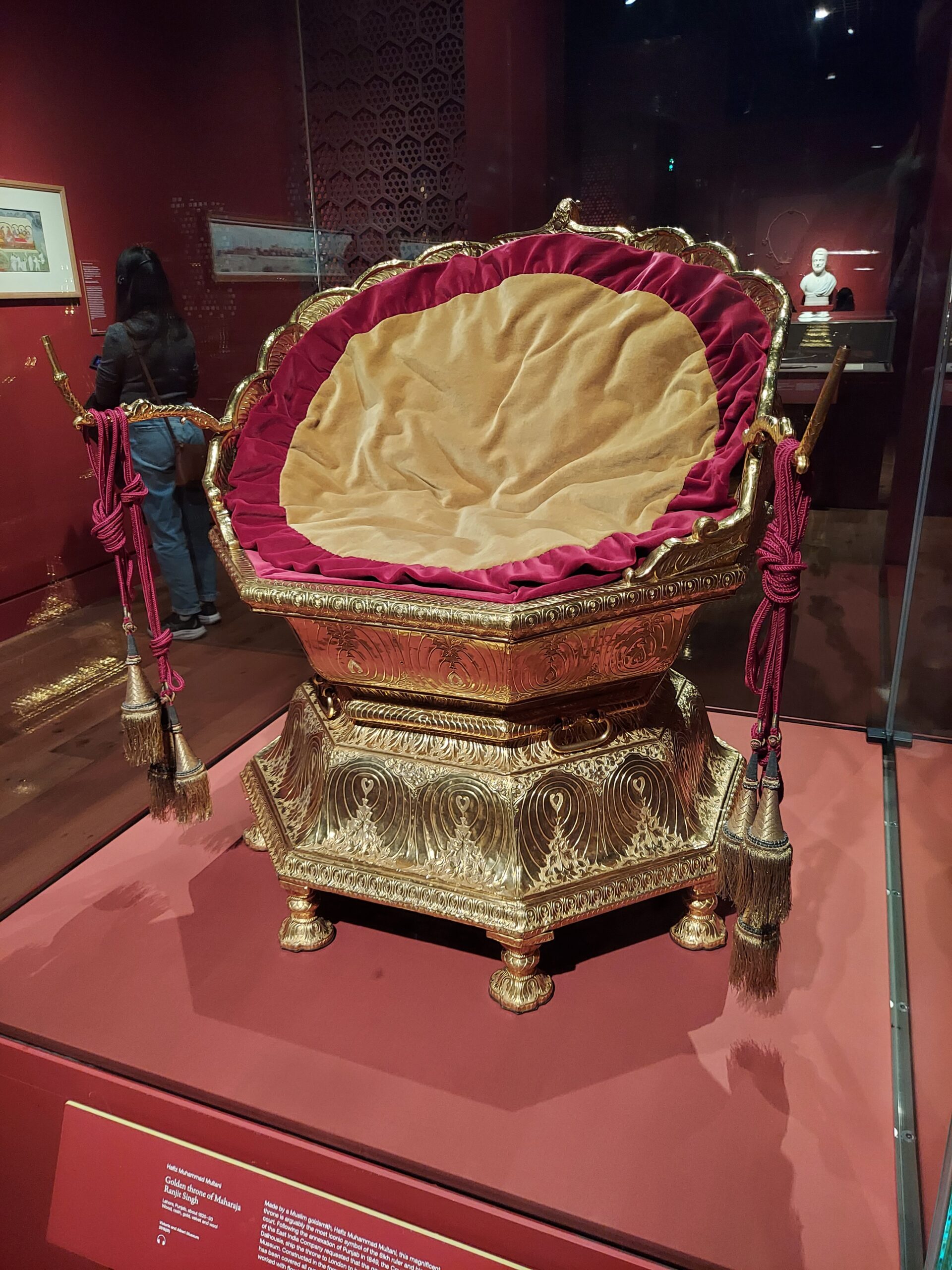
I attended the exhibition Ranjit Singh: Sikh, Warrior, King taking place at the Wallace Collection. The exhibition looks at the great Sikh leader Ranjit Singh (1780–1839), who conquered the Punjab after decades of unrest prompted by Afghan invasions. His Sikh Empire remained unconquered by the British or anyone else until after his death.

Ranjit Singh’s leadership resulted in a golden age, with thriving trade, arts and an army created to protect his land from invaders. The exhibition features jewellery, weapons and artwork from the Sikh Empire, taken from several public and private collections. It also looks at the immediate aftermath of his death, with the disintegration of his empire and the exile, in Britain, of his most famous wife and his son and heir.

The exhibition is well worth seeing and I’m glad I got the chance to learn about this intriguing man and this fascinating period of history.

Ranjit Singh's throne

A Silk Road Oasis: Life in Ancient Dunhuang – British Library

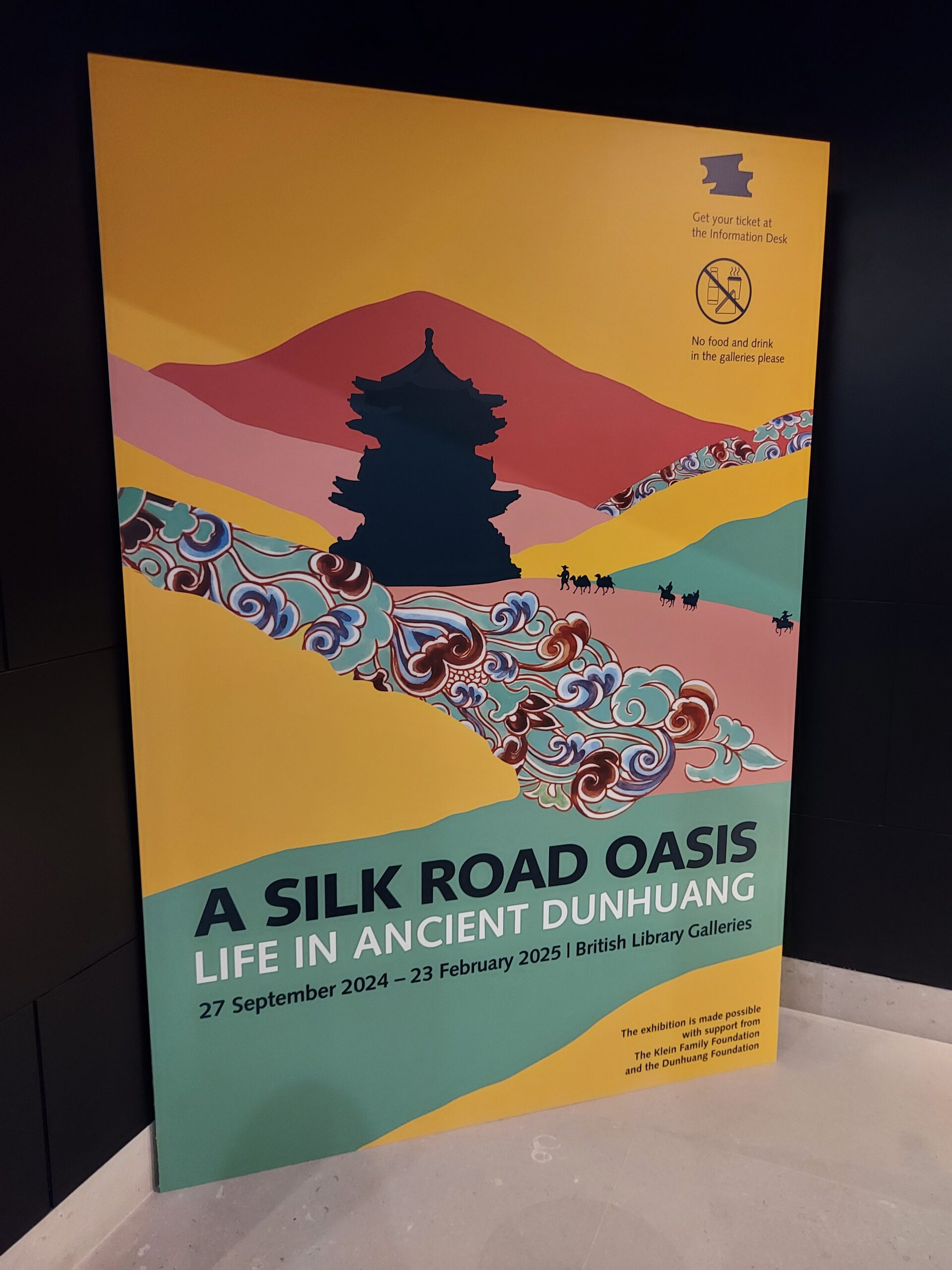
Entrance to the exhibition

I went along to the British Library‘s new exhibition, A Silk Road Oasis: Life in Ancient Dunhuang, which I found fascinating. The exhibition looks at life in one particular settlement during the first millennium, largely based on artefacts discovered in the Mogao Caves.

Archeological research shows that Dunhuang, a Chinese city, was an important settlement on the edge of the Gobi Desert. As a frontier garrison on the Silk Road, it was fortified with defensive walls and watchtowers (the Dunhuang Limes) and was a prime example of multiculturalism: a multilingual stele from 1348 displays a Buddhist mantra in six different scripts – Sanskrit, Tibetan, Old Uyghur, Phags-pa, Tangut and Chinese.

We explore the history of this settlement via the stories of individuals who played a part in shaping Dunhuang society. For instance, ‘The Merchant’ discusses how Sogdians – an Iranian people with settlements approaching China – helped to form a network of agents and messengers spreading news such as impending attacks by the Huns. We see a letter written by Miwnay, an abandoned wife with a young child forced to serve a wealthy Chinese family while she tries to find out what has become of her husband (could he have been killed on the Silk Road?).

In ‘The Printer’, ‘The Scribe’ and ‘The Artist’ we learn how printing technology (developed in China in the seventh century) was used to print religious and other texts in Dunhuang, while scribes created manuscripts and sutras on behalf of the Tibetan empire who ruled Dunhuang between 786 and 848. A government-supported painting academy, featuring artists from all over the region, emerged in the 10th century, allowing the creation of works on silk, hemp and paper, as well as murals in the Mogao Caves.

Religion played an important part in Dunhuang life. The city was a major hub for Buddhist worship from the fourth century. ‘The Lay Buddhist’ focuses on an anonymous man in his 80s who copied a dozen small booklets of the Diamond Sutra in Chinese, using his own blood as ink. At the other end of the age spectrum, ‘The Buddhist Nun’ shows how Deng Ziyi was granted permission to become a novice nun at the young age of 10, two years before the official age permitted. Becoming a nun allowed women the chance for a role beyond that of daughter, wife and mother; between 800 and 1000 there were more nuns than monks living in Dunhuang.

In ‘The Diplomat’, we are introduced to multilingual envoy Ca Kima-sana, originally from the central Asian kingdom of Khotan, 1,800 km to the west. A wealthy Khotanese community was established in Dunhuang from the 10th century. This exchange of ideas contributed to the transmitting of medical knowledge. ‘The Fortune Teller’ showed how people like Shenzi, the monk and yin and yang master, helped both the ruling elite and ordinary people by advising on the best time and date to start a project or begin a journey. A scroll on display from 649-700 is the oldest complete star chart in existence from any civilisation.

An entire section at the back of the exhibition is devoted to the Mogao Caves. In 1900, a Daoist priest, Wang Yuanlu, discovered a small room (now known as the Library Cave, or Cave 17) containing tens of thousands of manuscripts, paintings and other objects from the fifth to the eleventh centuries. These were eventually brought to the UK by the archaeologist Marc Aurel Stein, while other artefacts were dispersed to France, Japan and Russia, as well as Beijing.

This raises questions about colonialism and who has ownership over these items. The International Dunhuang Project (now Programme) was founded in 1994 in order to provide access to Dunhuang and other collections relating to the Eastern Silk Road worldwide and help to ensure their long-term preservation. I must admit I am grateful to have been able to view these wonderful items.

Inside the exhibition

Shakespeare and War – National Army Museum

Entrance to the exhibition

I popped in to the National Army Museum to check out their exhibition on Shakespeare and War before it closed. The exhibition looks at how Shakespeare’s plays have been used across the centuries to criticise, justify and explore the consequences of war.

The material featured dates from the English Civil War and covers the period up to the current Ukraine conflict. It includes propaganda created by those at the top, including a World War I recruitment poster featuring a line from Macbeth, and more personal reflections by soldiers who looked to Shakespeare’s plays to find meaning in times of conflict. Recent productions of plays featuring war have taken their soldierly background seriously, such as a Royal Shakespeare Company production of Othello that explored the idea that the general was suffering from PTSD. The exhibition was interesting and covered a topic I wasn’t all that familiar with.

Fortitude – Royal College of Physicians

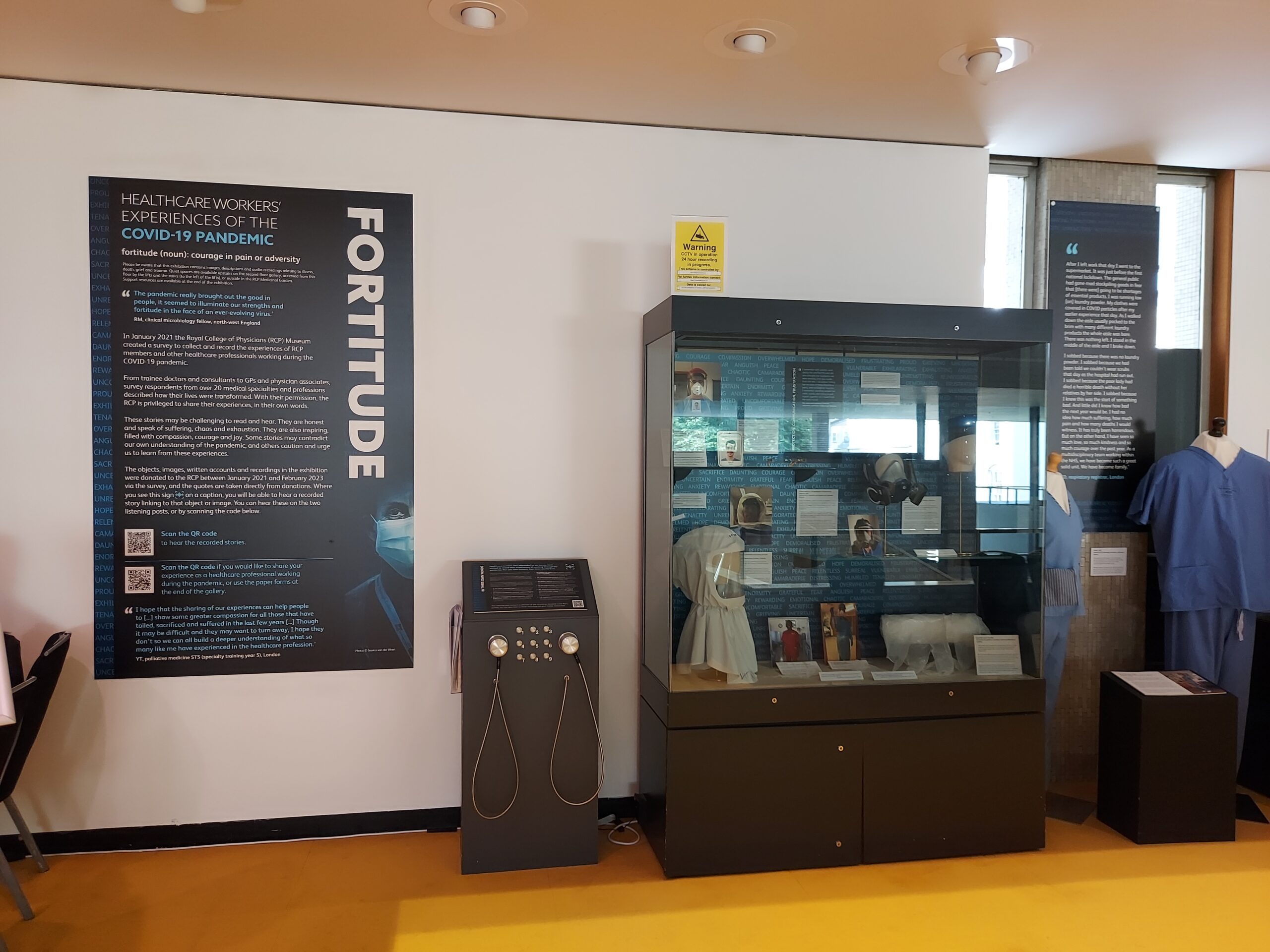
Display case at the Fortitude exhibition

On Thursday night after work I went to the Royal College of Physicians to see their latest exhibition Fortitude. The exhibition draws on real life stories to examine the impact of the Covid pandemic on healthcare workers.

The exhibition is divided into sections based on moods and feelings, such as togetherness, resilience, despair and, eventually, fortitude. I was more or less aware of the struggles endured by doctors and other medical staff during the pandemic, but the exhibition really brought it home. Many suffered themselves, worried for their families, and watched loved ones and their colleagues die. They struggled with the scale of the tragedy and lost innumerable patients, as well as having to contend with inadequate PPE and the difficulties associated with masking.

I didn’t expect to be so moved by the exhibition and I found myself in tears by the end. A very necessary reminder of what these individuals went through and how we need to learn from their experiences.

Now You See Us: Women Artists in Britain 1520-1920 – Tate Britain

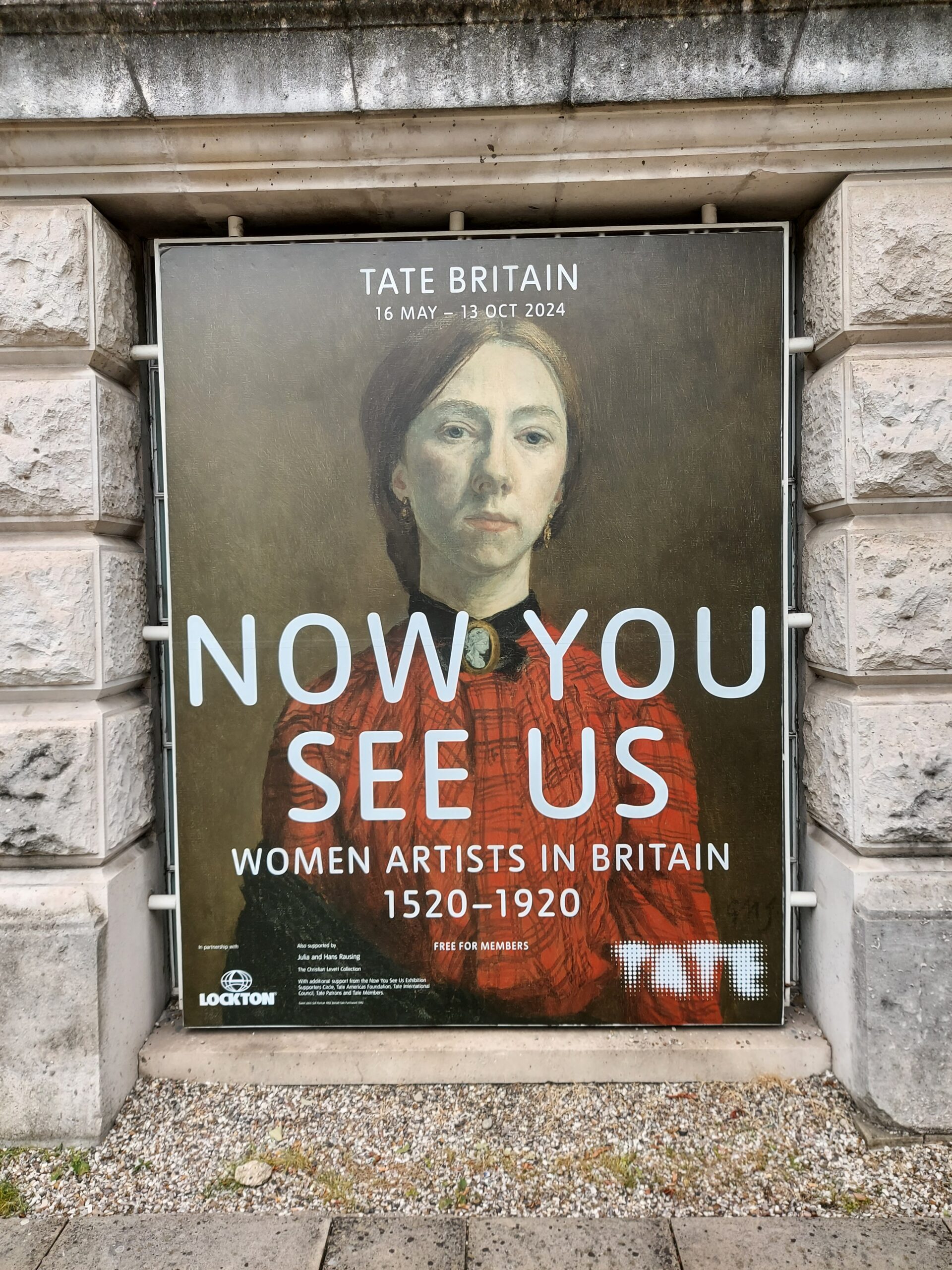
Poster for the exhibition

The second exhibition I went to see at Tate Britain was Now You See Us: Women Artists in Britain 1520-1920. This exhibition, spanning 400 years, features art by women through the centuries struggling to be taken seriously and be recognised as professional artists.

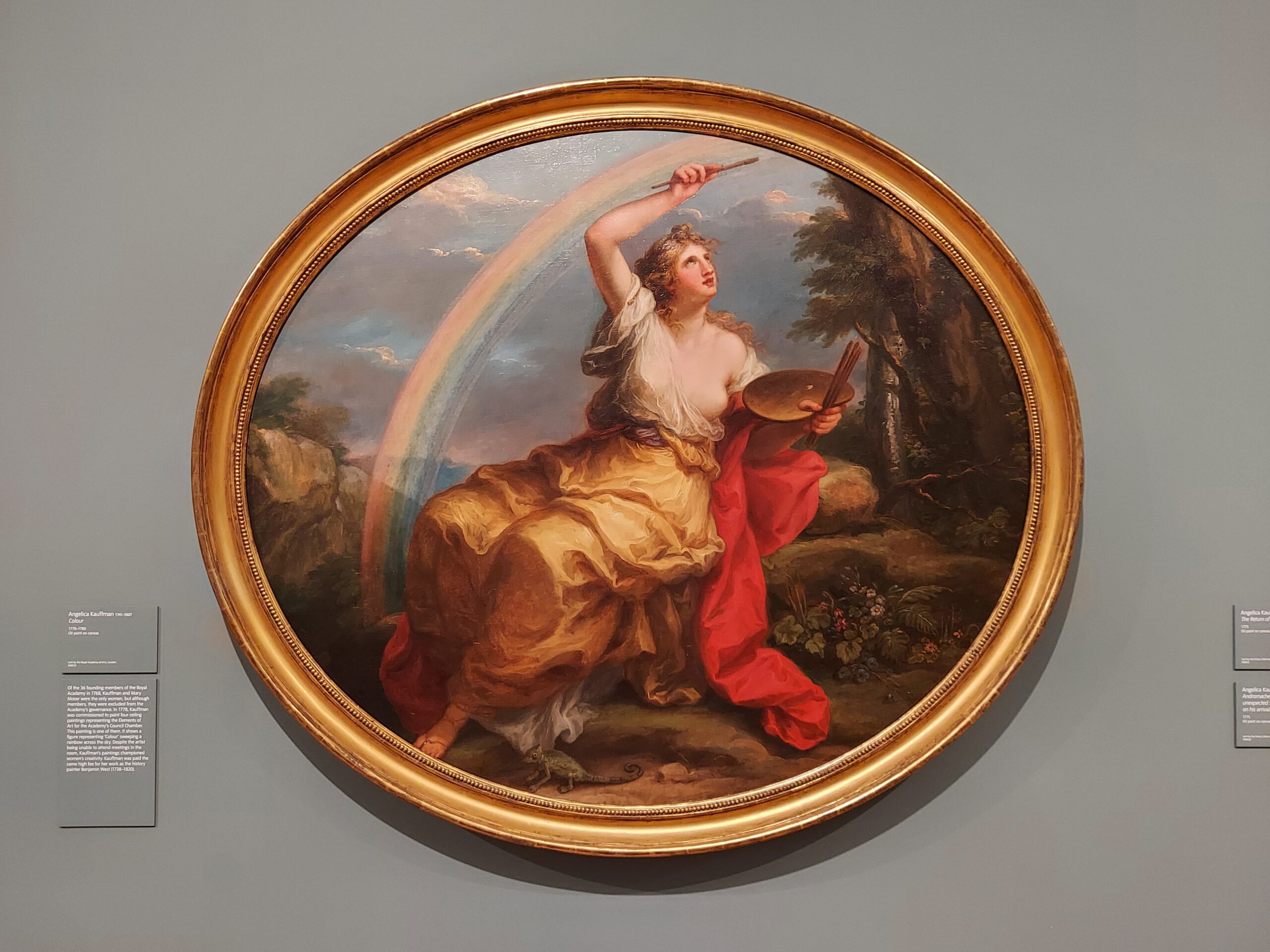
The art in the exhibition is displayed in a roughly chronological manner. It begins with artists like Mary Beale, one of Britain’s first professional women artists, and Angelica Kauffman, who was Swiss but who had a successful career in London and was one of the founder members of the Royal Academy.

painting of a woman and a rainbow
Colouring, Angelica Kauffman, 1788-80

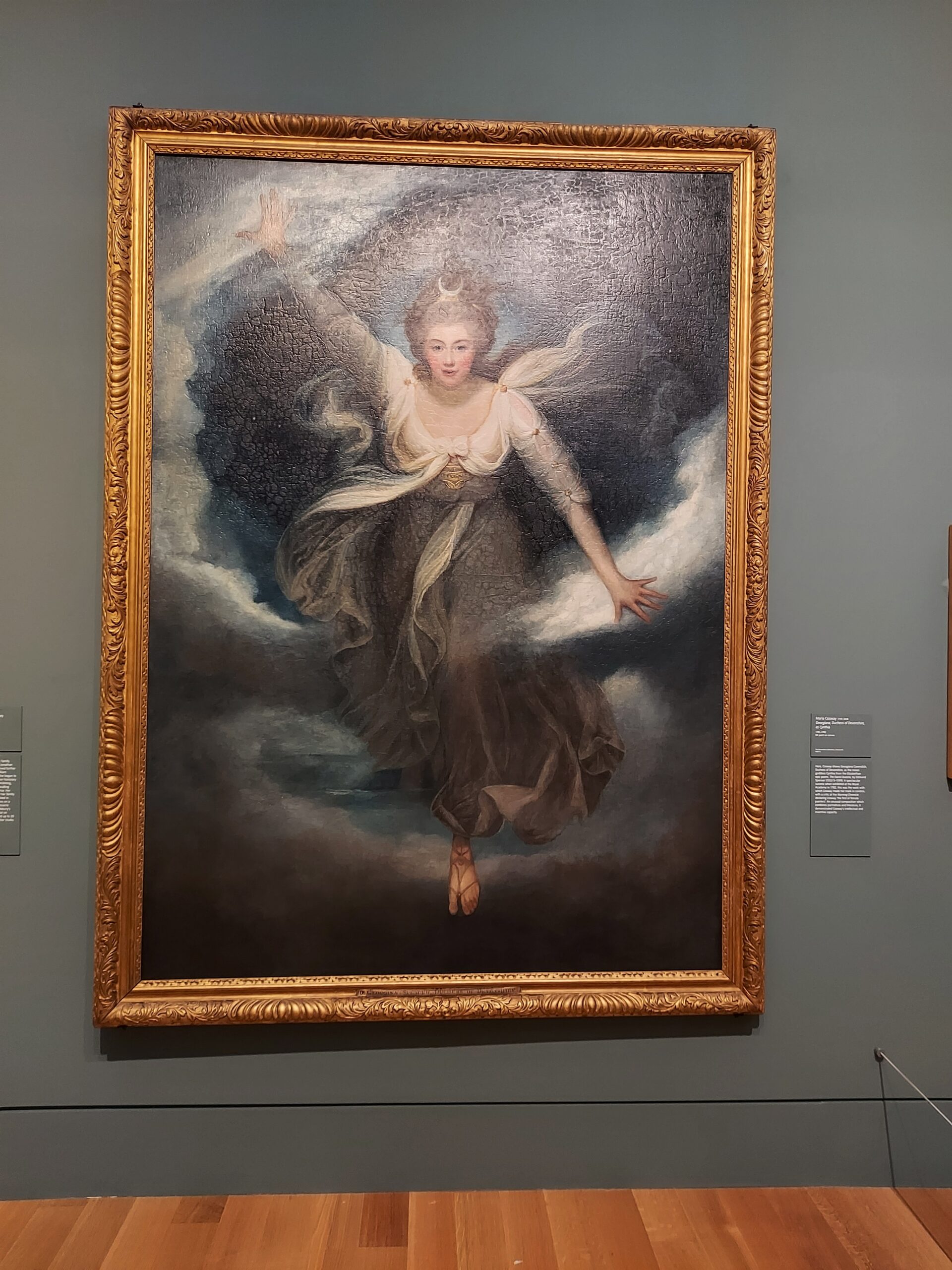
Female artists of the period often painted portraits, usually, though not exclusively, of women.

Painting of a woman
Maria Cosway, Georgiana as Cynthia from Spenser’s ‘Faerie Queene’, 1781-82

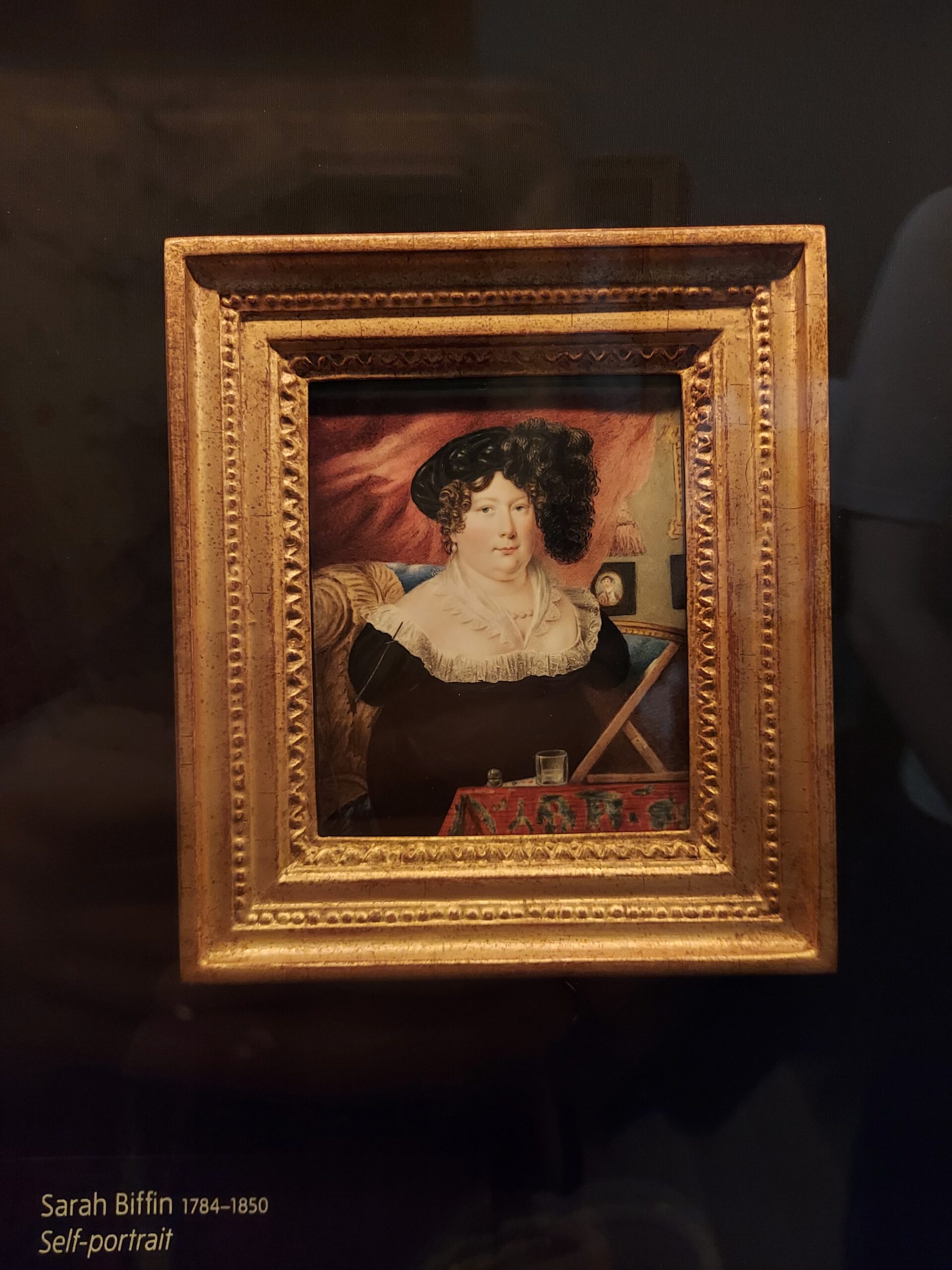
I was particularly impressed by the work of Sarah Biffin, who was born without legs or arms and learned to paint using her mouth.

Portrait of a woman
Sarah Biffin, Self-portrait, 1820s

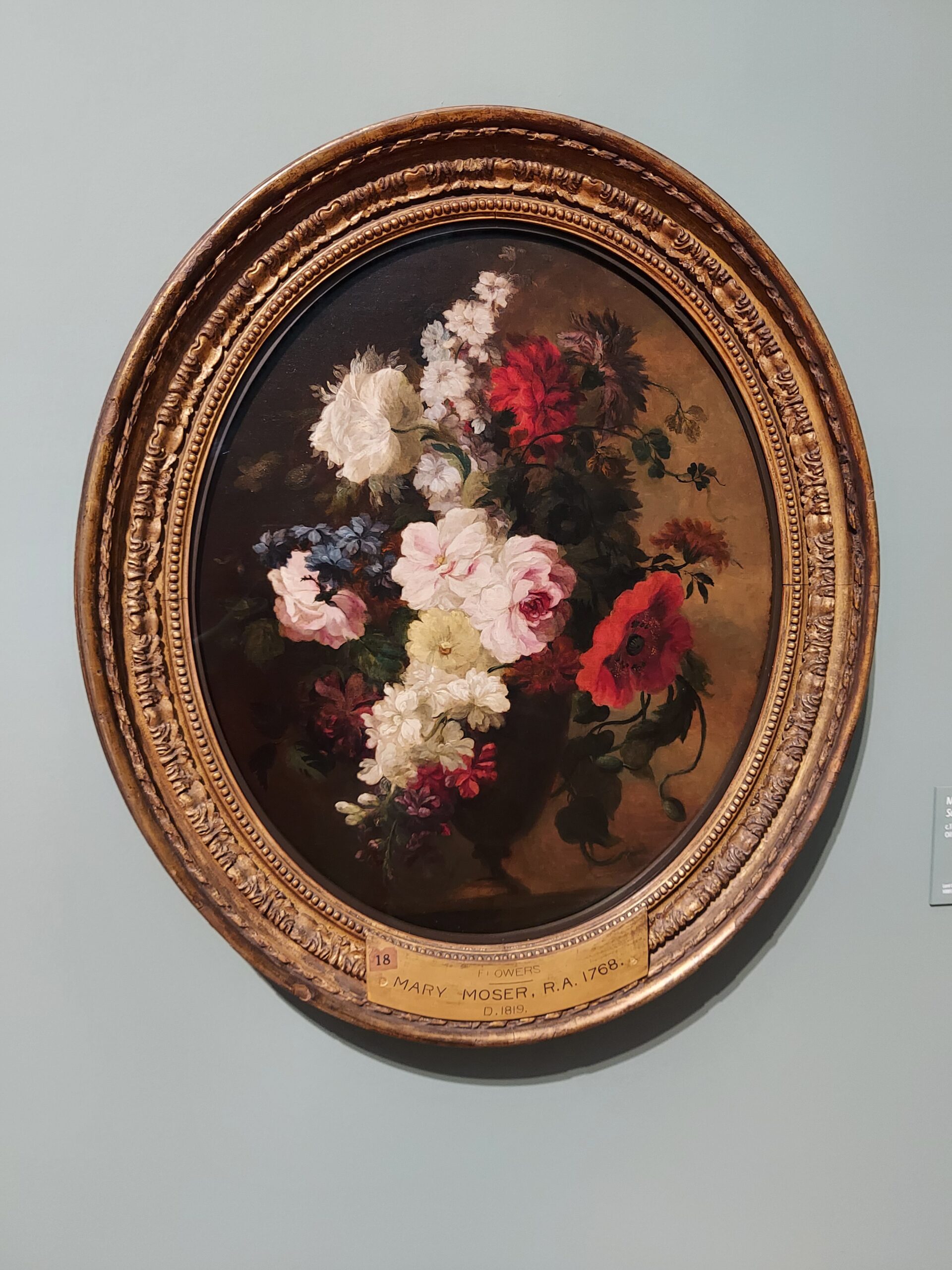
Still life paintings, especially flowers, were seen as an appropriate subject for women; while not groundbreaking, the floral works in the exhibition are technically as skilfully produced as any man’s. The only other female founder member of the Royal Academy, Mary Moser, was famous for her floral works.

Still life with flowers
Mary Moser, Summer, c. 1780

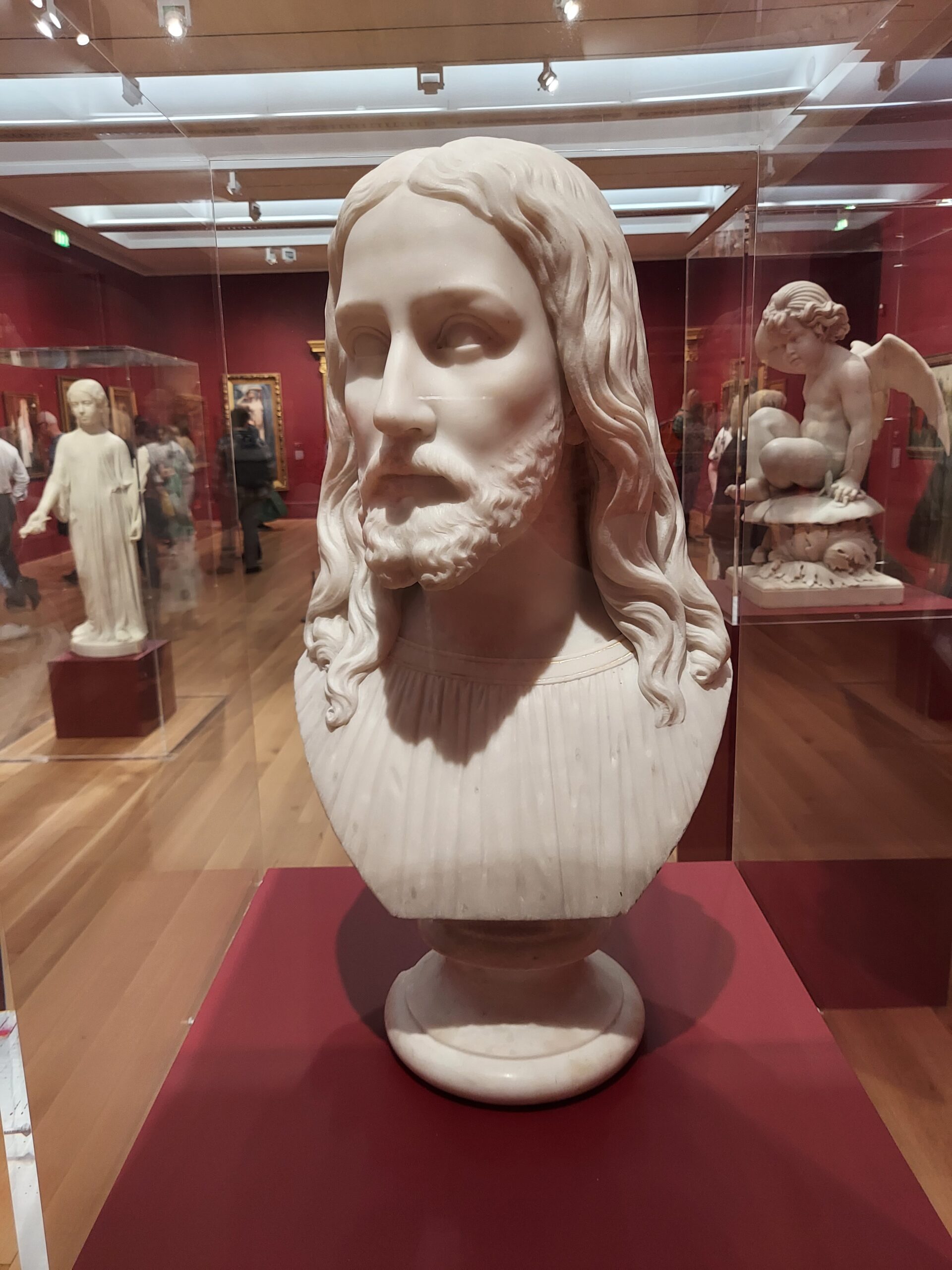
Not everything in the exhibition is a painting. Some sculptures are on display, including a bust of Christ by Edmonia Lewis, the first female black American to work as a professional sculptor.

Sculpture of the bust of Christ
Bust of Christ, Edmonia Lewis, 1870

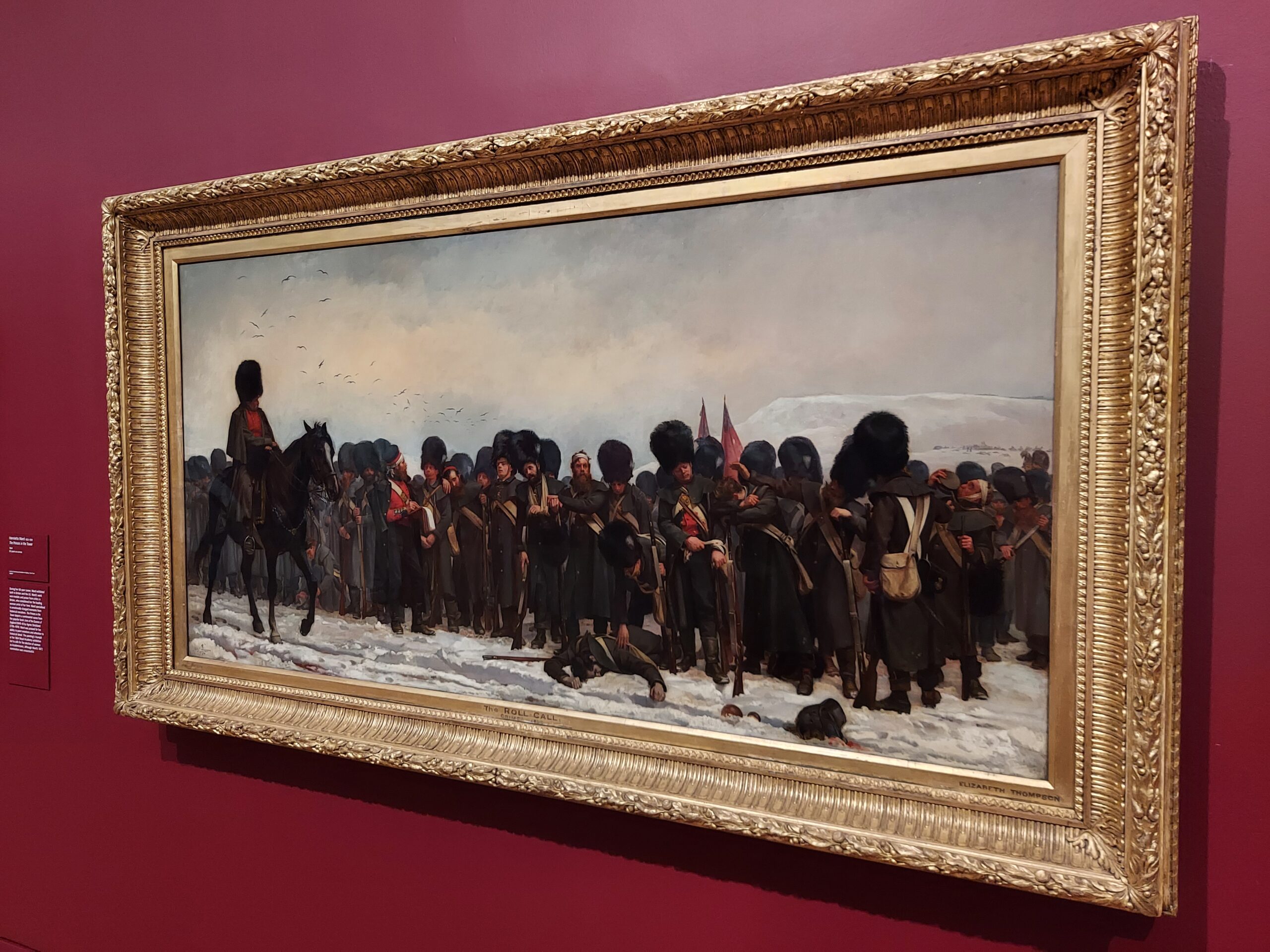
As time wore on, more and more women were able and willing to challenge the expectations laid down for them. For example, Elizabeth Butler (Lady Butler) painted works with the theme of war, usually thought of as a ‘male’ subject.

Soldiers in the snow
Lady Butler, The Roll Call, 1874

Other women ventured outside the confines of the studio and painted outdoor and social scenes.

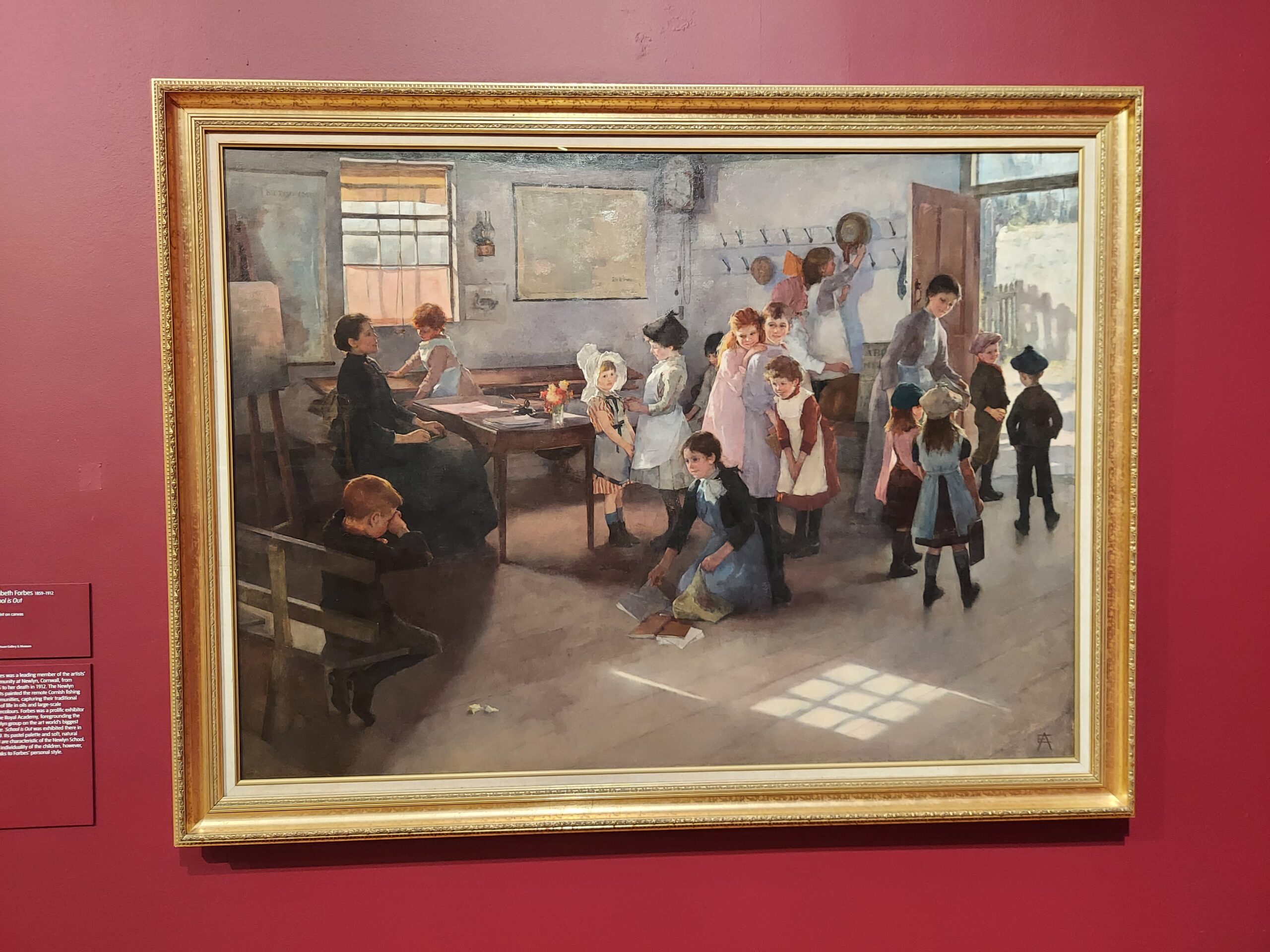
Children in a classroom
Elizabeth Adela Stanhope Forbes, School Is Out, 1889

I was impressed with the exhibition, which introduced me to some superb artists I was unfamiliar with and who paved the way for gender equality in the art world. I understood more about their struggles and was grateful for their efforts as well as their wonderful creations.

Sargent and Fashion – Tate Britain

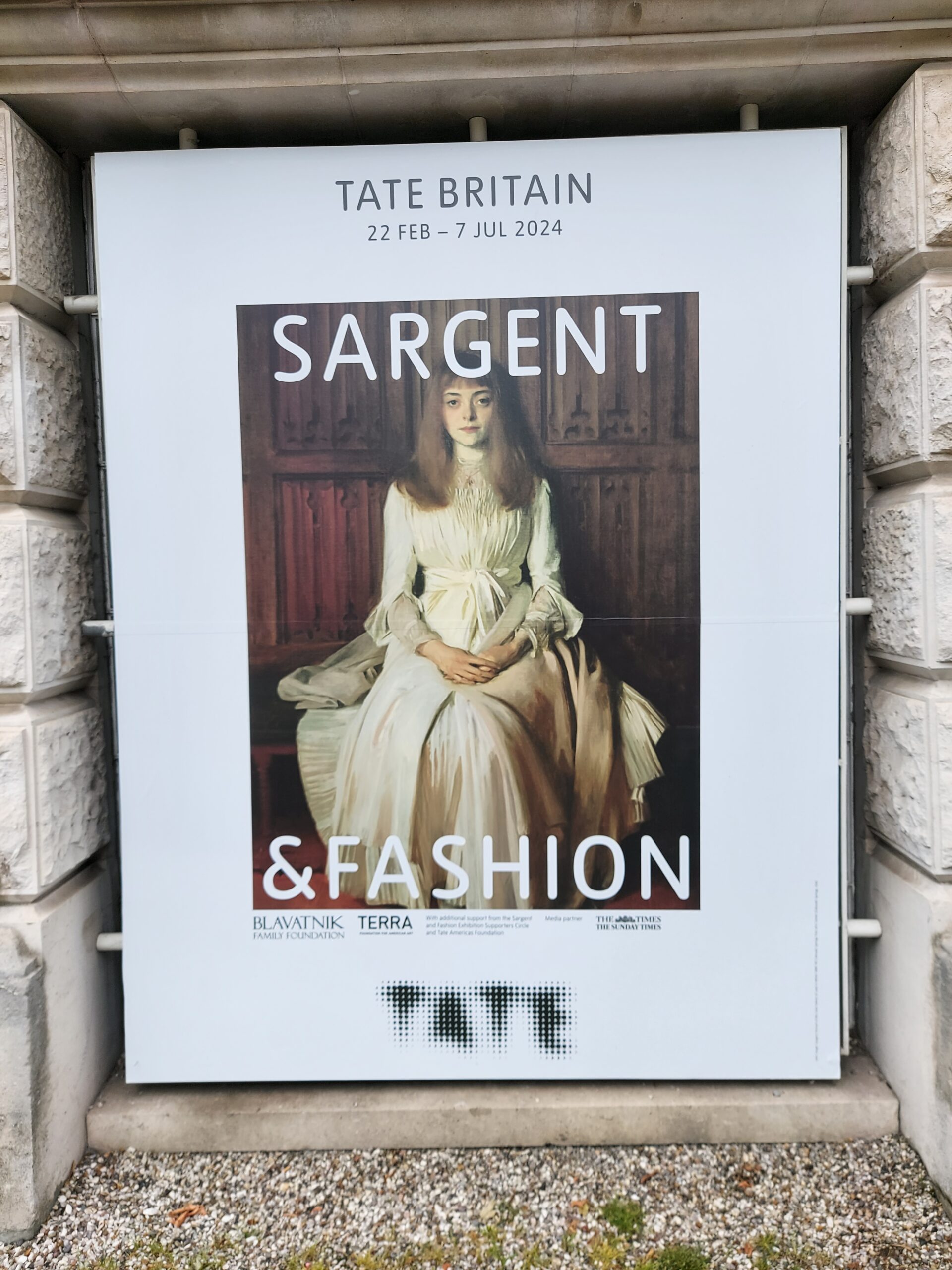
Exhibition poster for Sargent and Fashion

At the weekend I visited Tate Britain to check out a couple of exhibitions. The first one I saw was Sargent and Fashion.

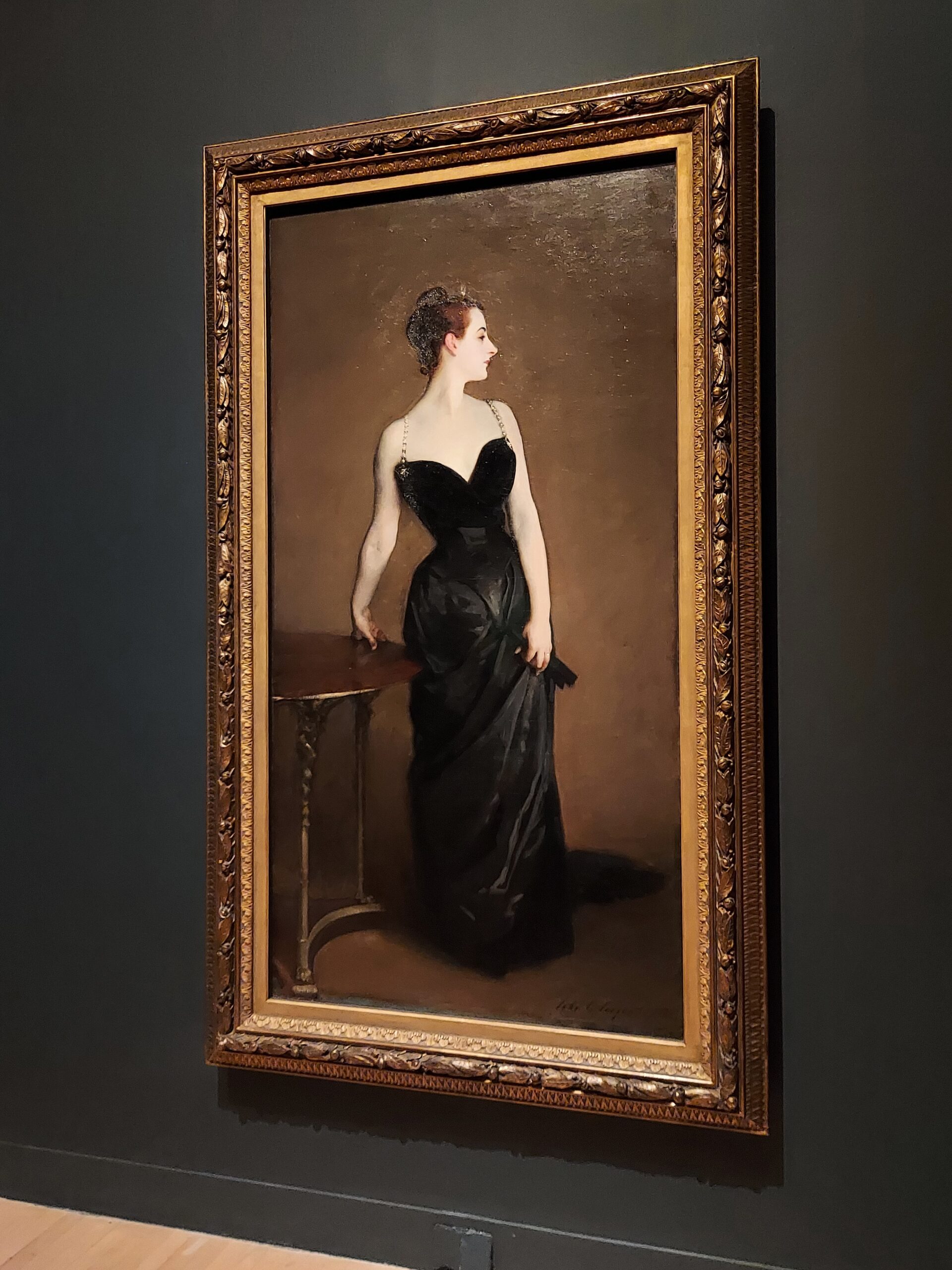
Painting of a pale white woman wearing long black evening dress
Portrait of Madame X, 1883-84

This exhibition explores the relationship between artist John Singer Sargent and the fashions of his day. The paintings in the exhibition emphasise focus on the clothes worn by his sitters: some of their choice, others at his suggestion. Sometimes these clothes caused controvery: Singer’s famous Portrait of Madame X was originally painted with one of Virginie Amélie Avegno Gautreau’s straps hanging from her shoulder, but this was seen as too risqué and he edited the painting.

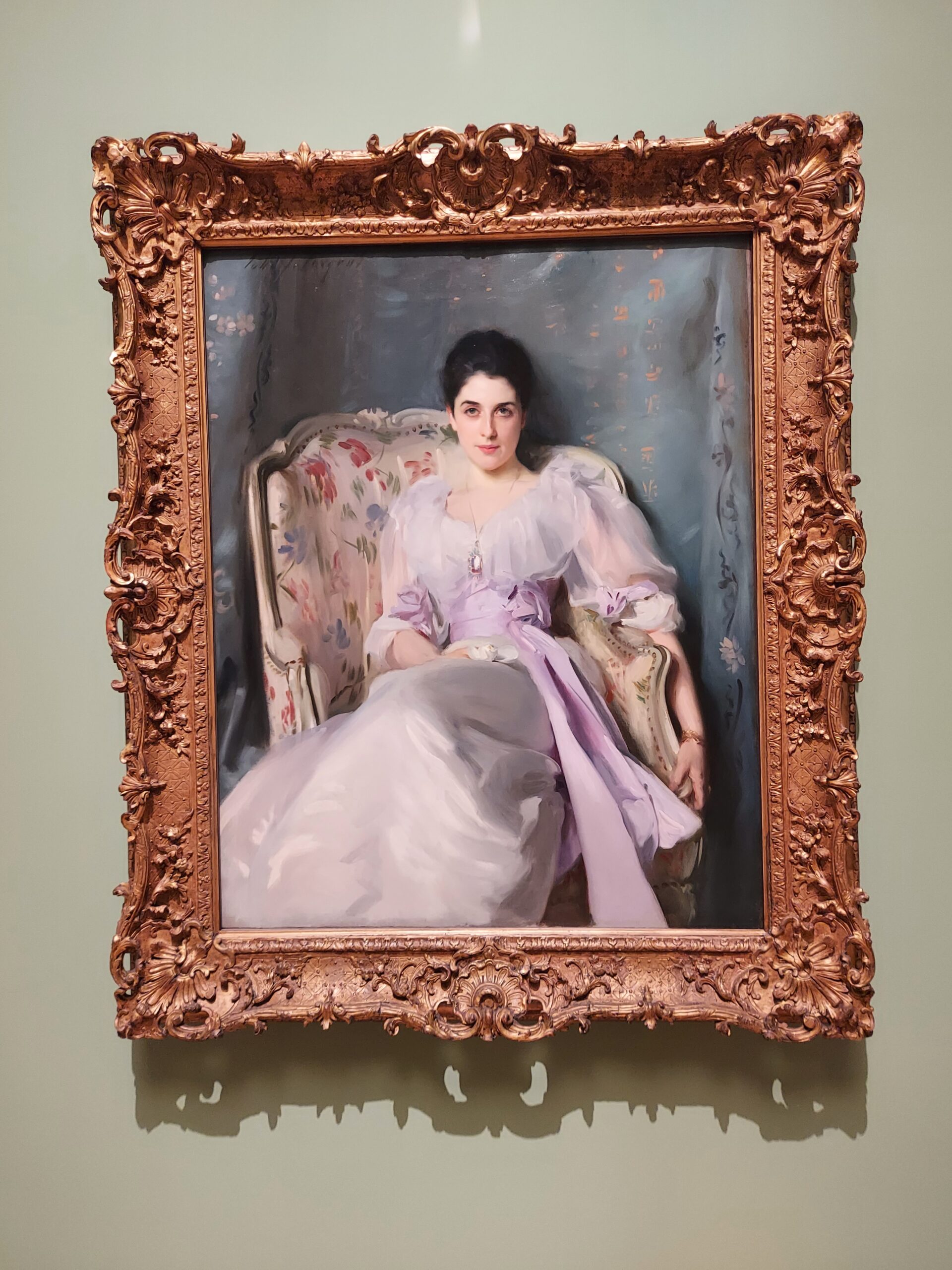
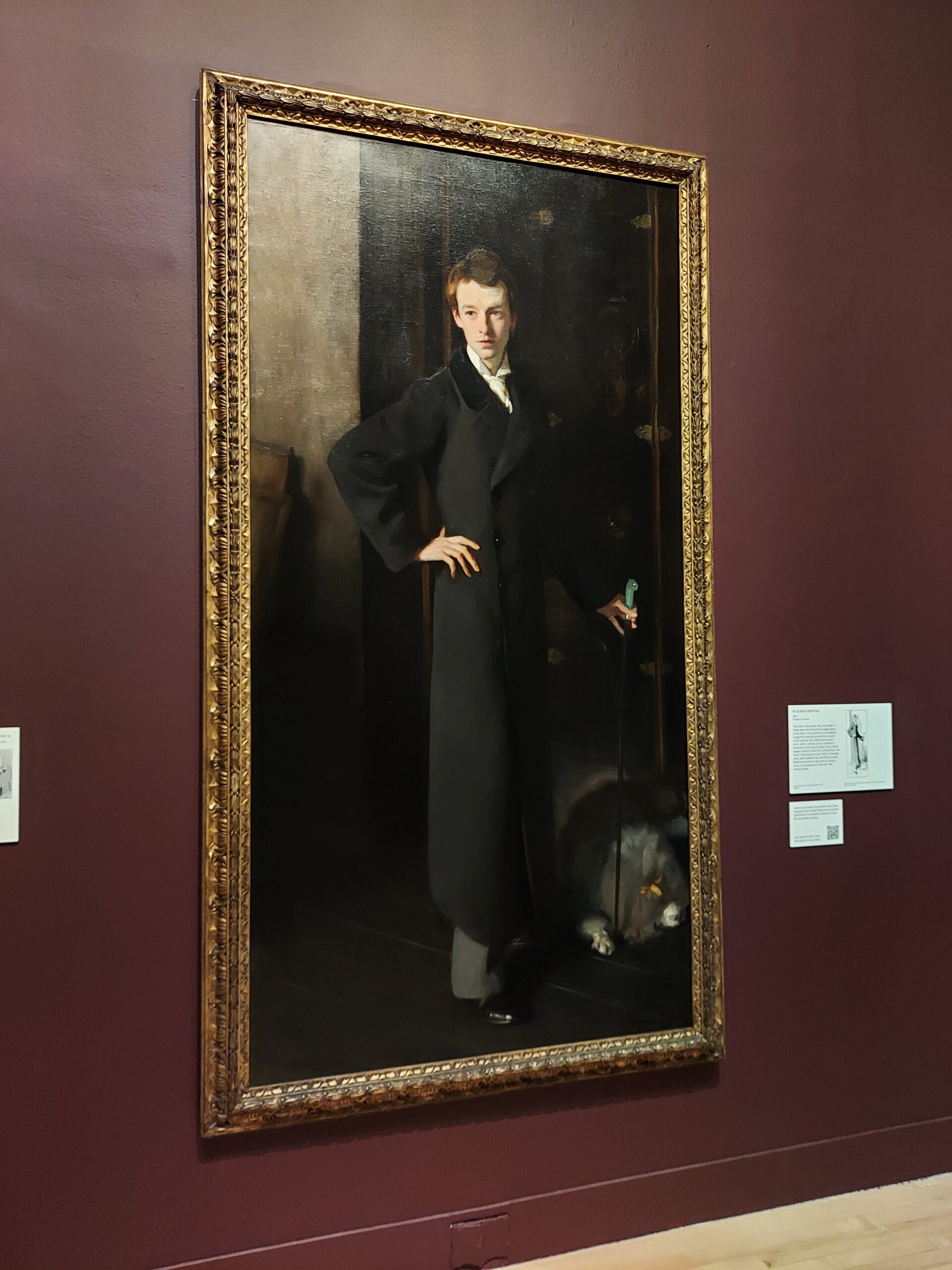
The exhibition made me realise that he was really wonderful at painting clothes, capturing the ripples of the fabric and the different shades evoked. He used clothes to convey the personality of the sitter, whether long flowing gowns, delicate fabrics, or clean lines.

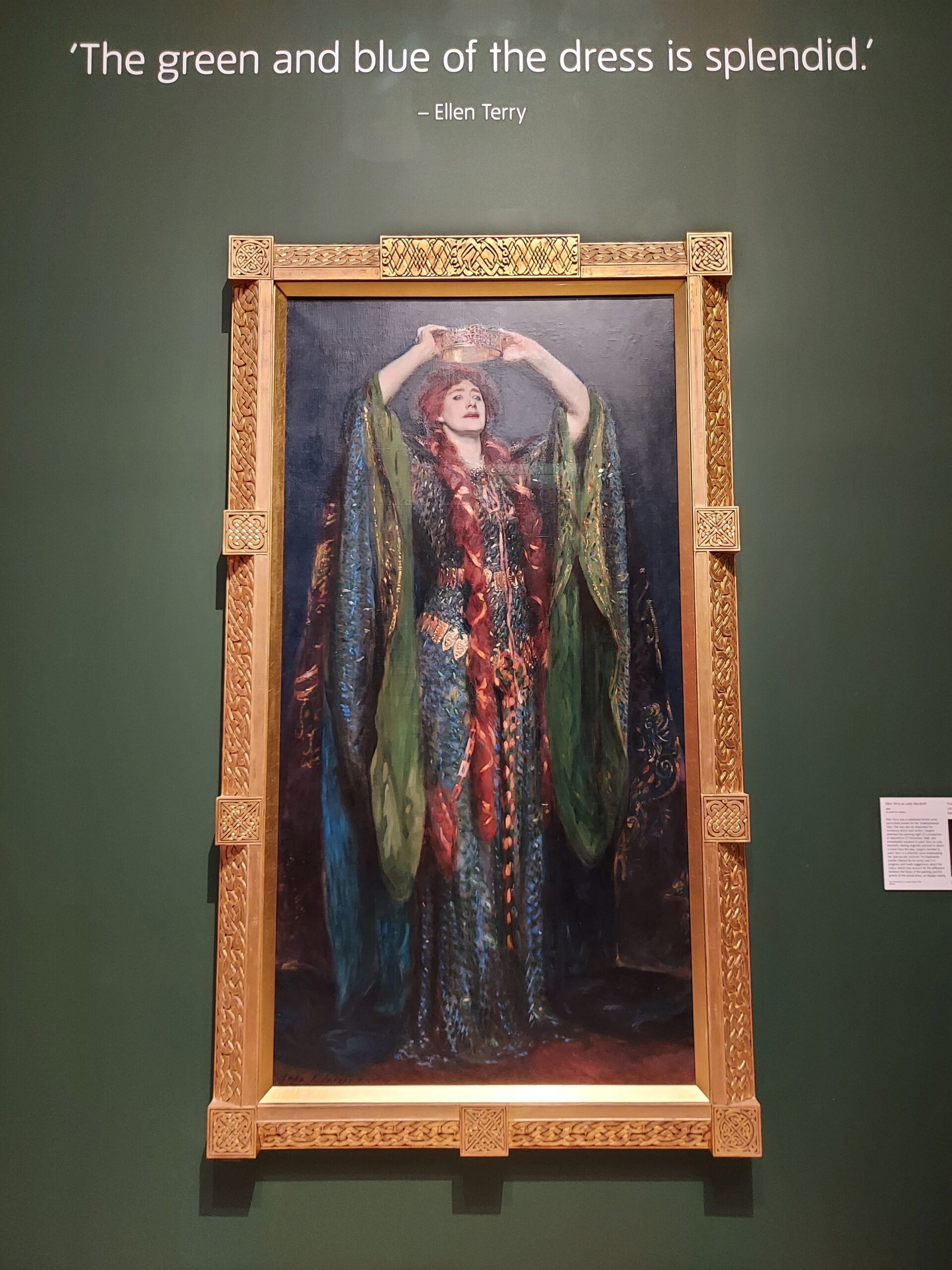
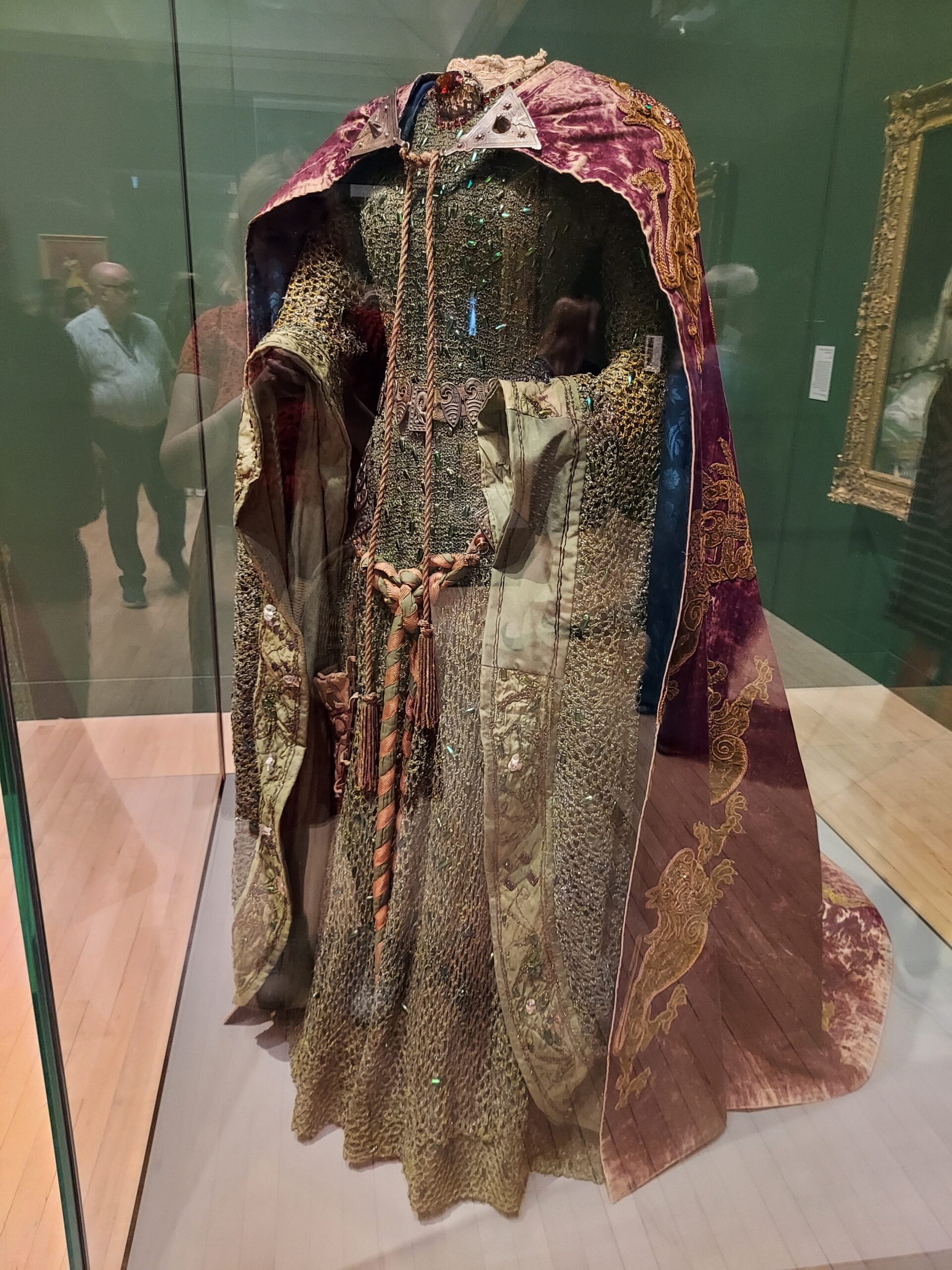
One thing I loved about the exhibition was the display of some of the costumes and clothes worn in the paintings, alongside the pictures. I especially loved seeing Sargent’s portrait of Ellen Terry as Lady Macbeth alongside the dress she wore in the production and the painting. Interestingly, the real life dress was green, whereas the painted version is blue – presumably for artistic reasons.

I found this exhibition hugely enjoyable, and appreciated seeing all this beautiful art. I left with a better understanding of how Sargent, art and fashion intertwined.