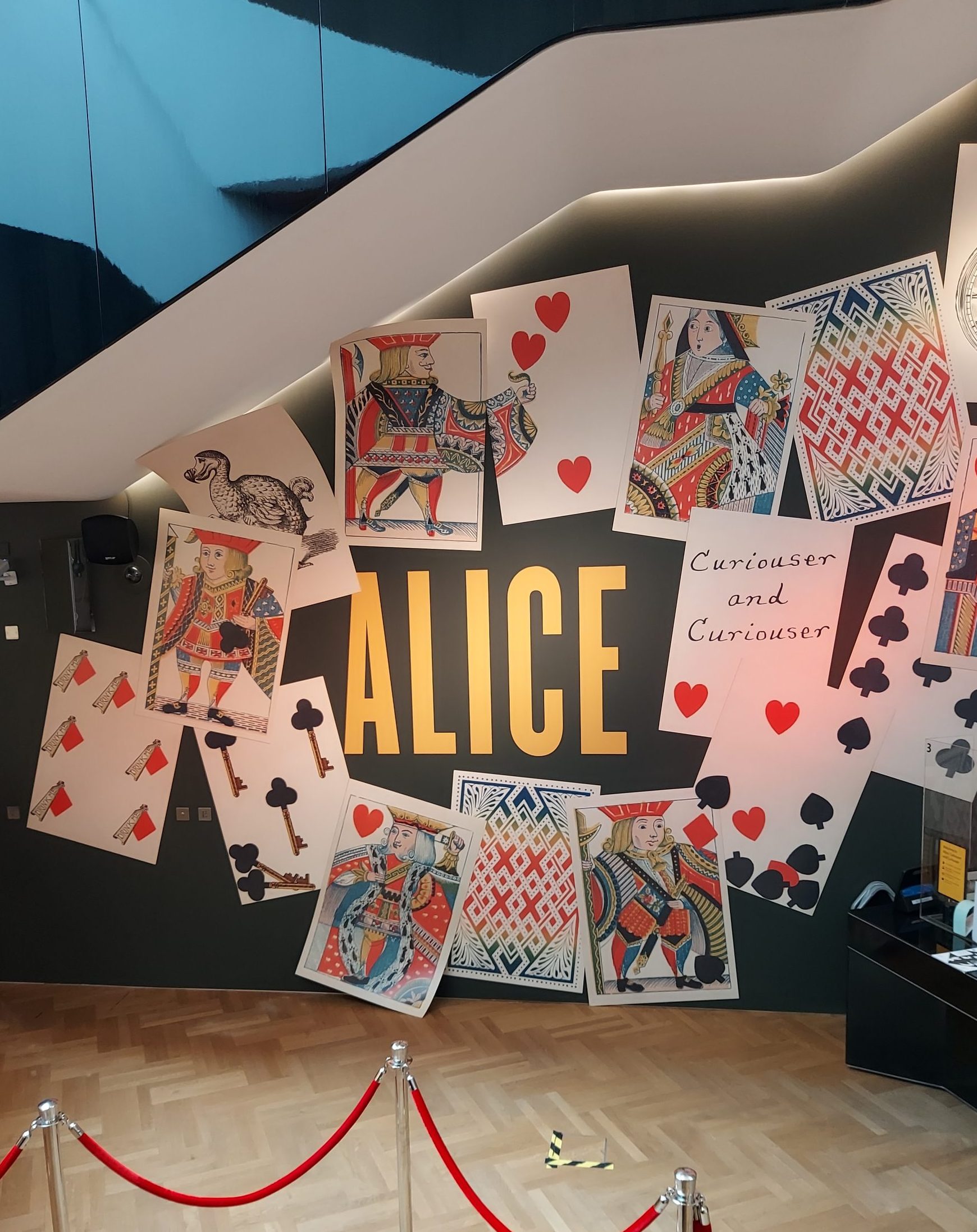
Alice’s Adventures in Wonderland and its sequel, Through the Looking Glass, and What Alice Found There, are two of my all-time favourite books and I’ve loved them since I was a child. I was excited, therefore, to hear about the V&A‘s new exhibition, Alice: Curiouser and Curiouser. The exhibition looks at the story’s beginnings as a tale told by Charles Lutwidge Dodgson (aka Lewis Carroll) to the three daughters of the Dean of Christchurch one sunny day in Oxford, to its legacy in film, fashion, art, literature and the public imagination.
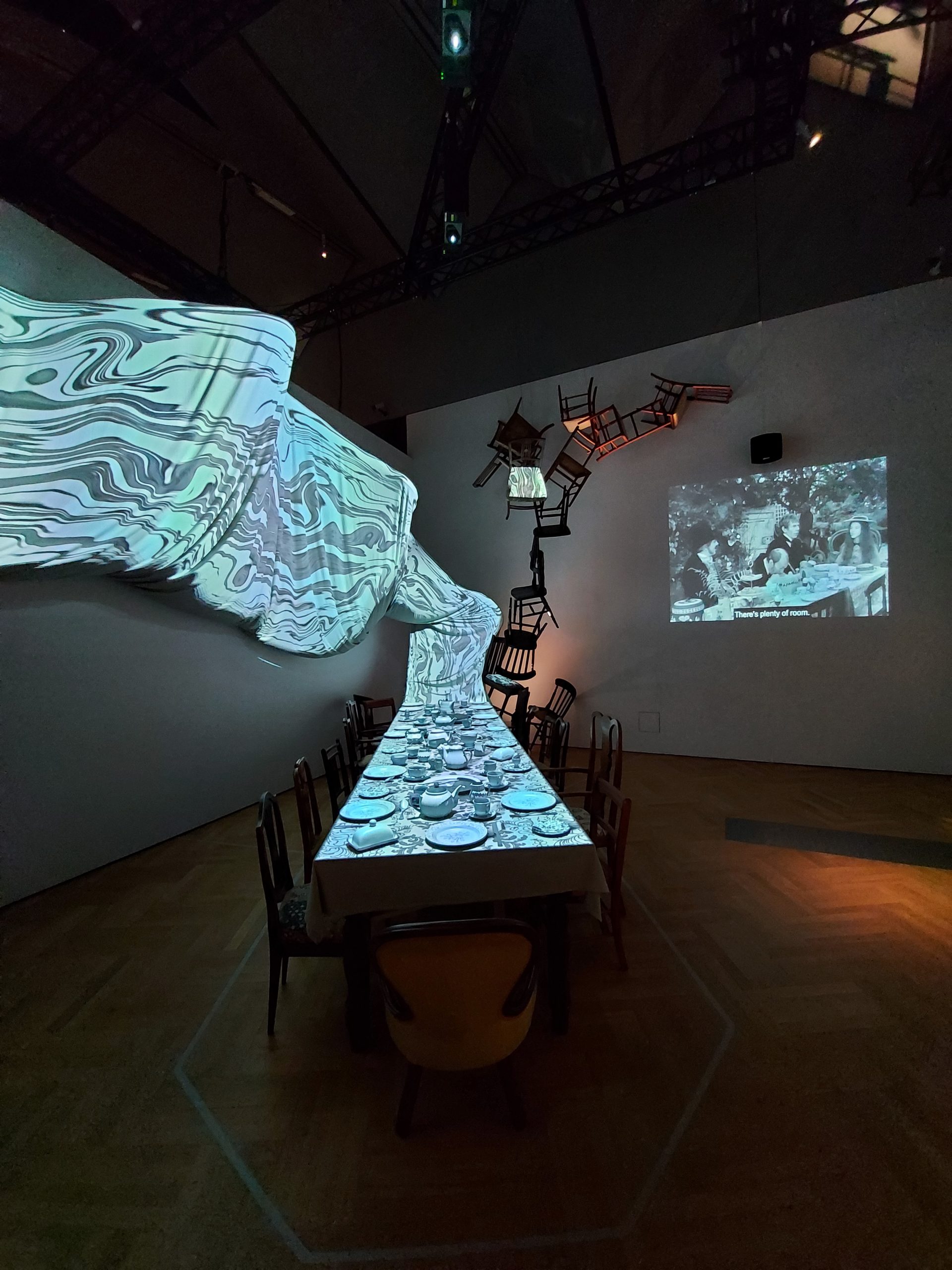
The Mad Hatter’s tea party with Jonathan Miller’s Alice film
The first room of the exhibition is devoted to the creation and initial reception of Alice, with pictures, manuscripts and photographs related to the original books. Some of my favourite exhibits were original drawings by John Tenniel, first illustrator of the published Alice, and photographs of Carroll and the Liddell children, particularly Alice herself who inspired the original tale. This section of the exhibition also incorporates contemporary Wonderland merchandise, such as a chess set.
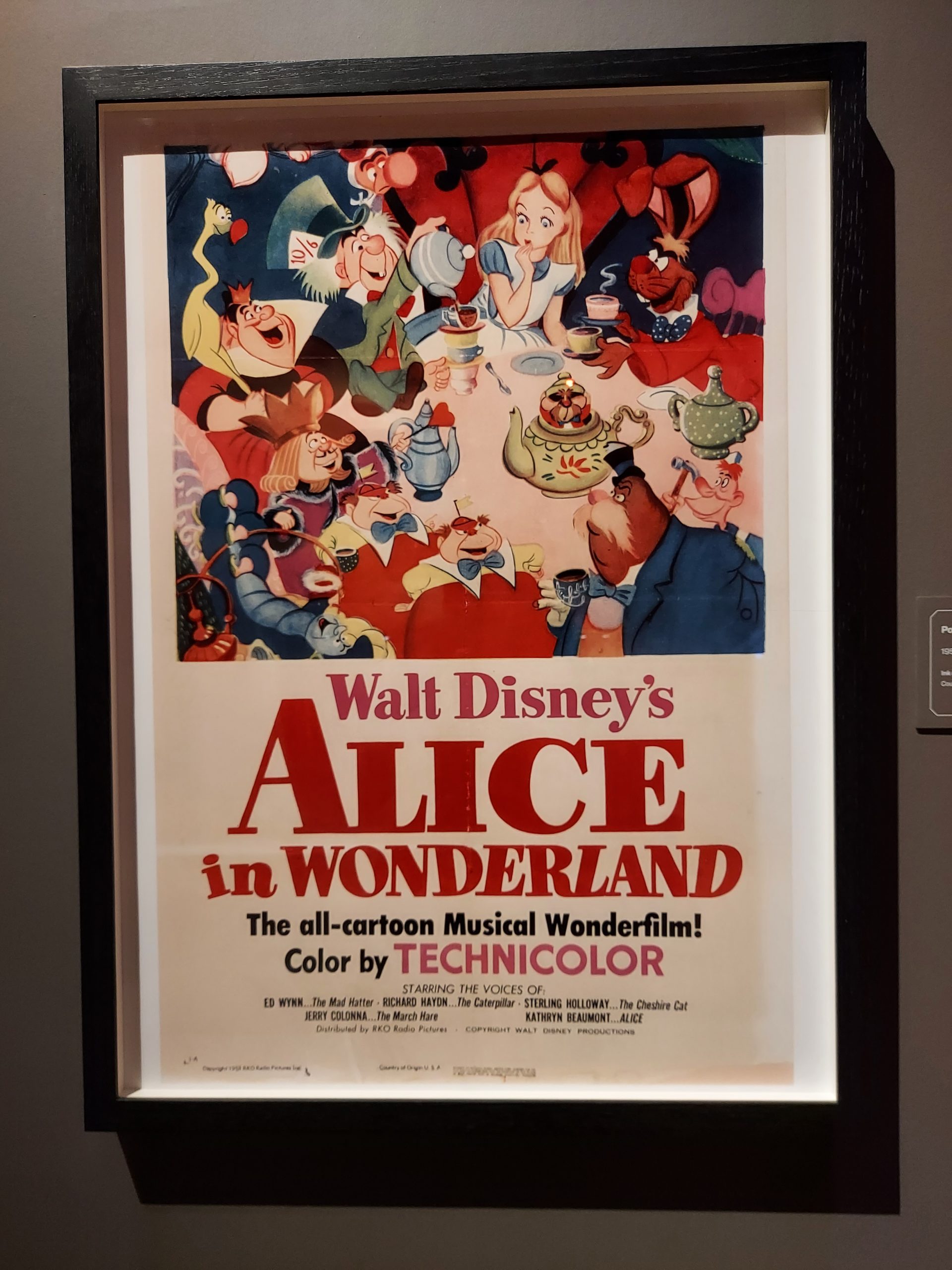
Poster for Disney’s Alice in Wonderland
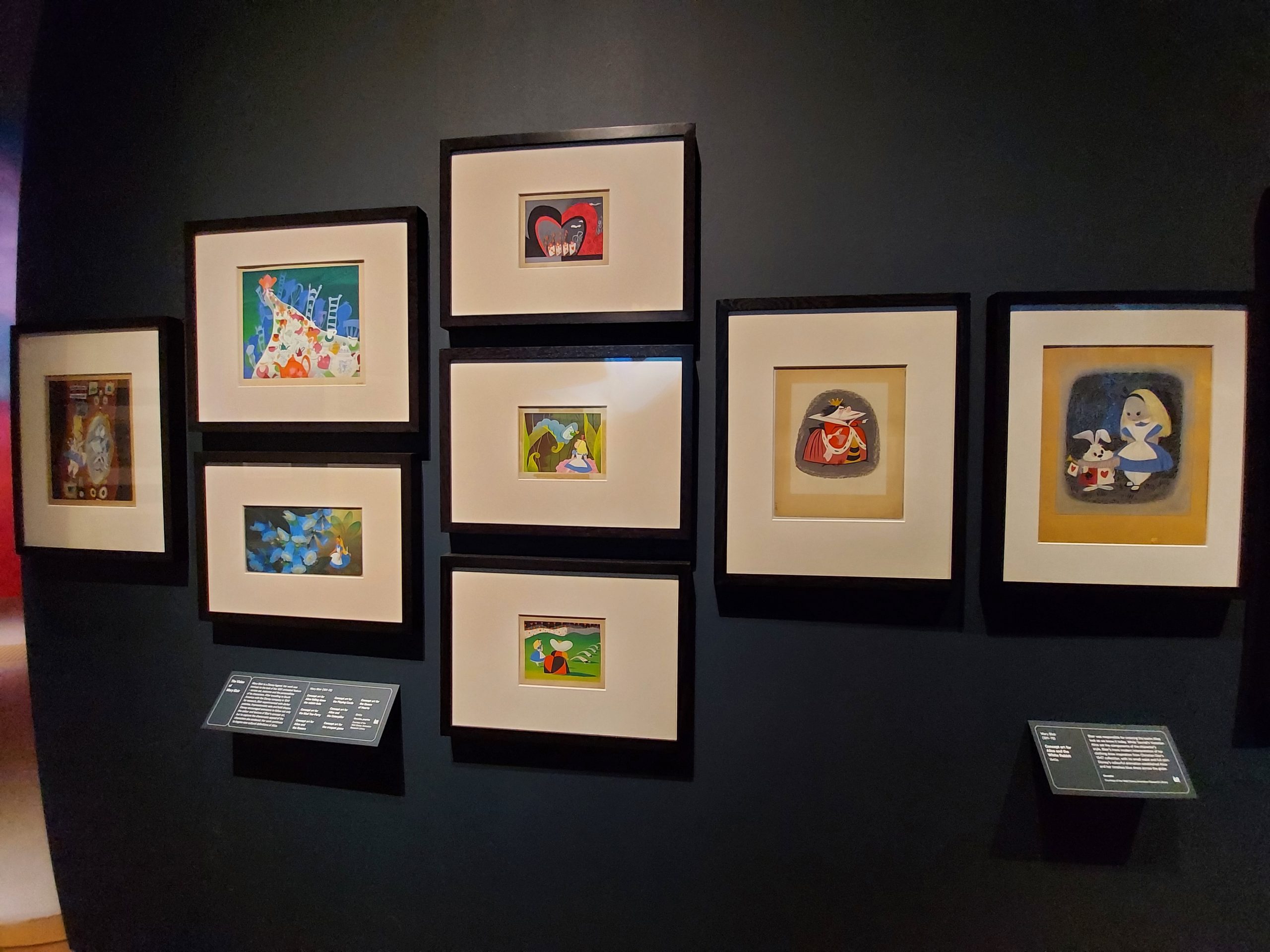
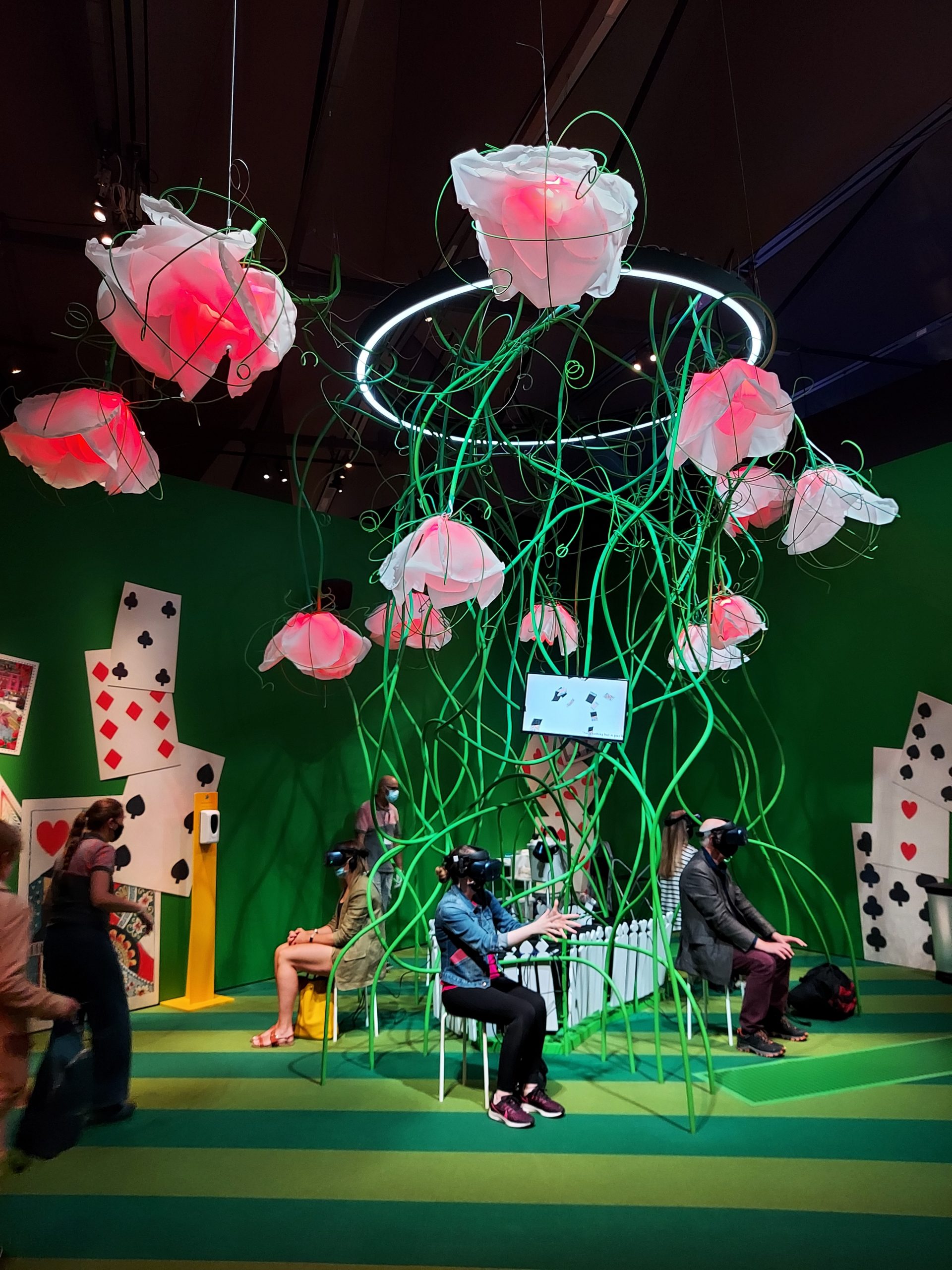
The exhibition then moves on to look at how Wonderland has been explored and interpreted over the last 150 years, making use of interactive exhibitions and beautifully staged sets. One room shows the Mad Hatter’s and March Hare’s tea party alongside clips from Jonathan Miller’s dreamlike adaptation from 1966. Another features an interactive virtual reality experience which lets you play croquet with the Queen of Hearts. A side room contains stills from Disney’s animated Alice in Wonderland – my favourite film adaptation – alongside works by Mary Blair which inspired the look of the movie.
Stills from the Disney Alice
Later exhibits explore the inspiration of Alice’s look in modern fashion shoots, as well as stage adaptations such as the Royal Opera House’s recent ballet. The power and fascination of Alice and her world continues to inspire.
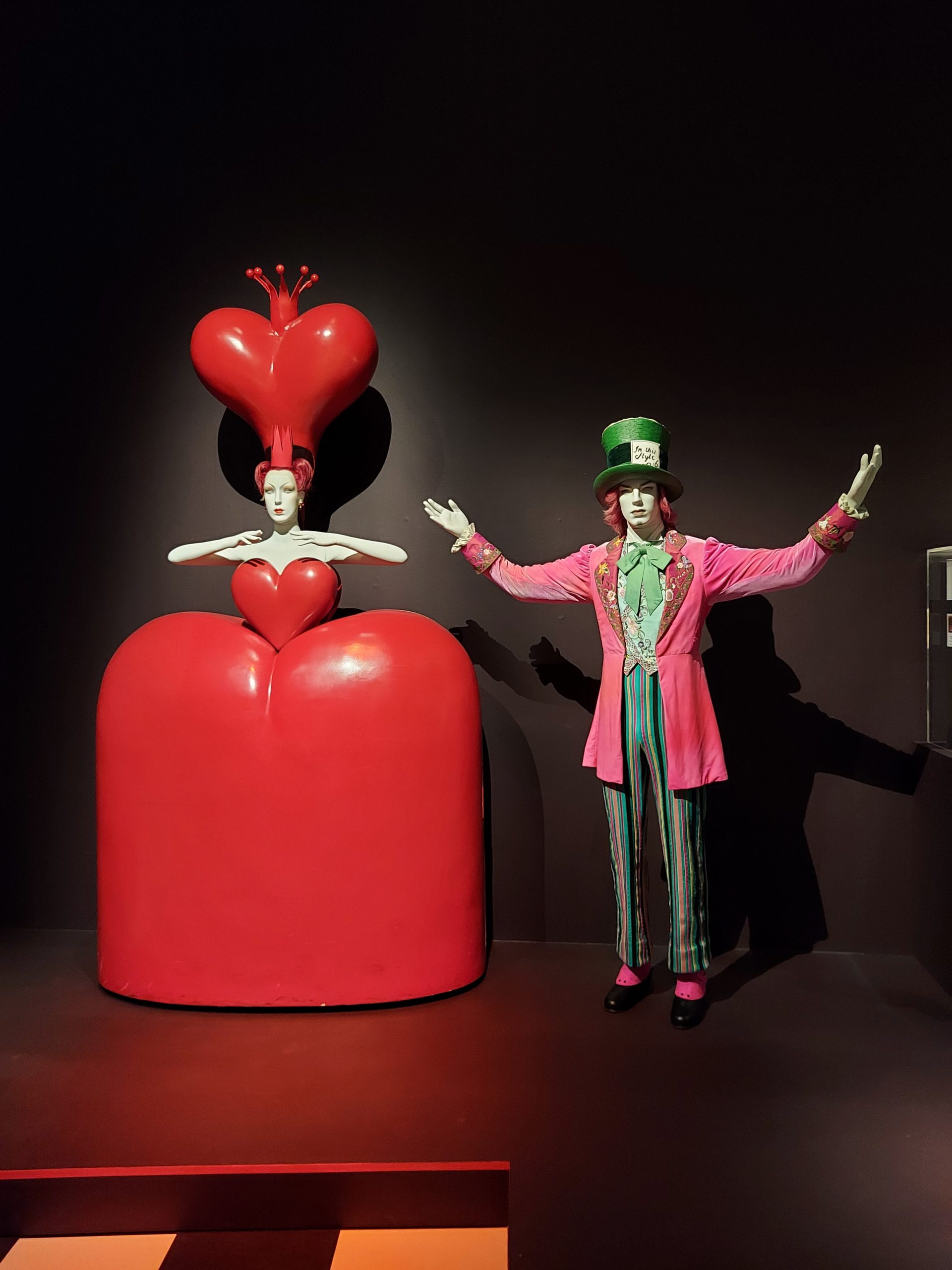
ROH costumes: the Queen of Hearts and the Mad Hatter
I loved this exhibition and it is a must-see for Alice fans. It is accessible to those who only know the main story but has plenty for those with a keener interest. Definitely recommended.
On the Wednesday of my day off work I headed down to Dulwich Picture Gallery to see their latest exhibition. Unearthed: Photography’s Roots was described as looking at the “pioneering story of photography from the 1840s to today told through stunning still lifes of plants and botany.” The exhibition began with Victorian still life pictures by early pioneers such as William Henry Fox Talbot and Anna Atkins. Most of these were of flowers and other plants – ferns were a popular choice, as these were a passion for many Victorians. Also on display were photographs by Japanese artist Kazumasa Ogawa and English gardener Charles Jones. Jones’ pictures were particularly interesting knowing the background behind them – they were discovered in a trunk at Bermondsey Market in 1981, 20 years after his death.
Later in the exhibition, more modern versions of still life pictures were displayed by the likes of Robert Mapplethorpe and Richard Learoyd, using many of the same techniques as the Victorian photographers. I definitely preferred the nineteenth century images, early photography being an interest of mine, but the later pictures had merit too.
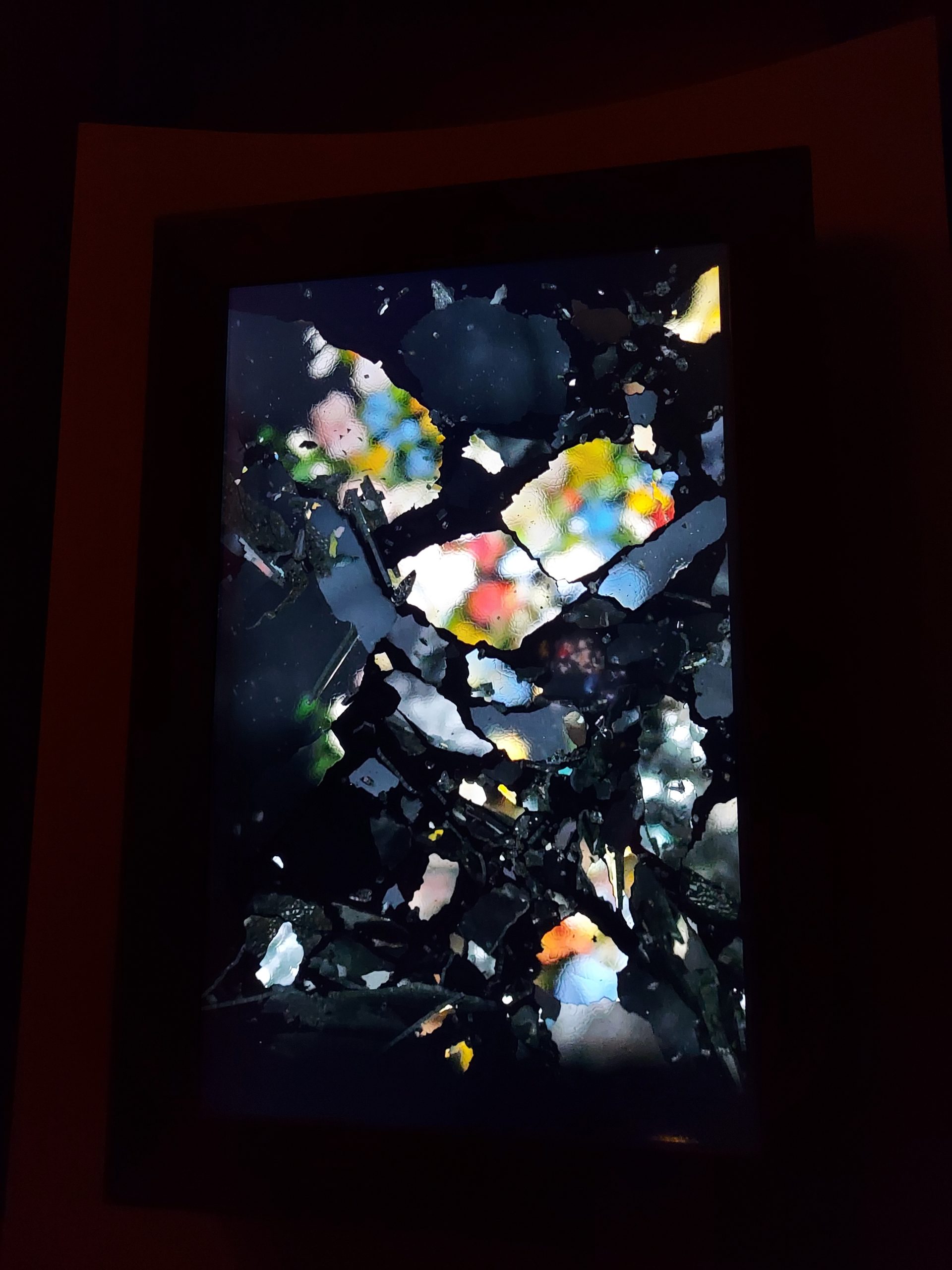
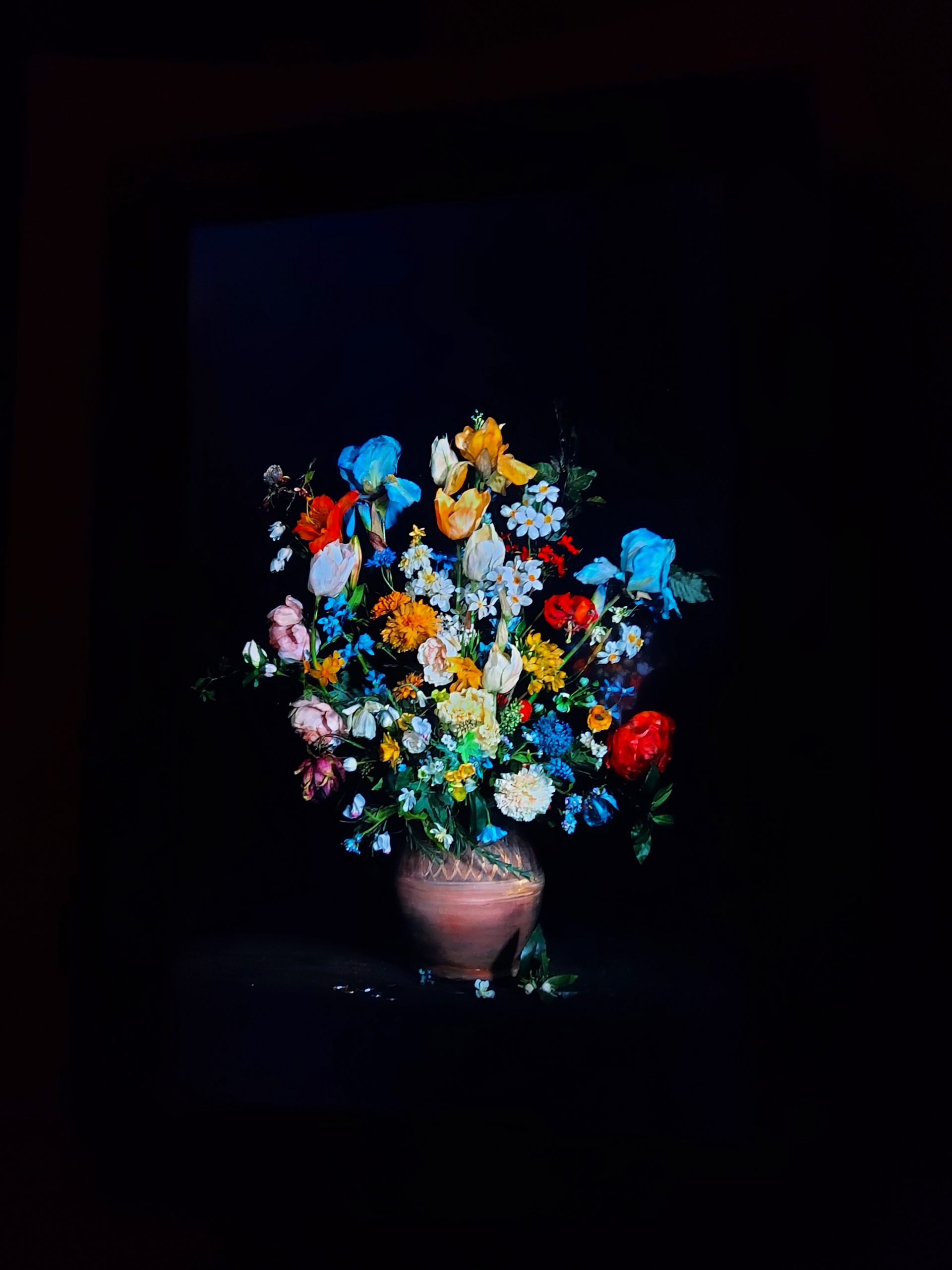
In the mausoleum, an installation from Ori Gersht was displayed, based on a still life painting by Brueghel the elder. It showed the painting ‘cracking’ like a mirror and coming back together, which was compelling to watch.
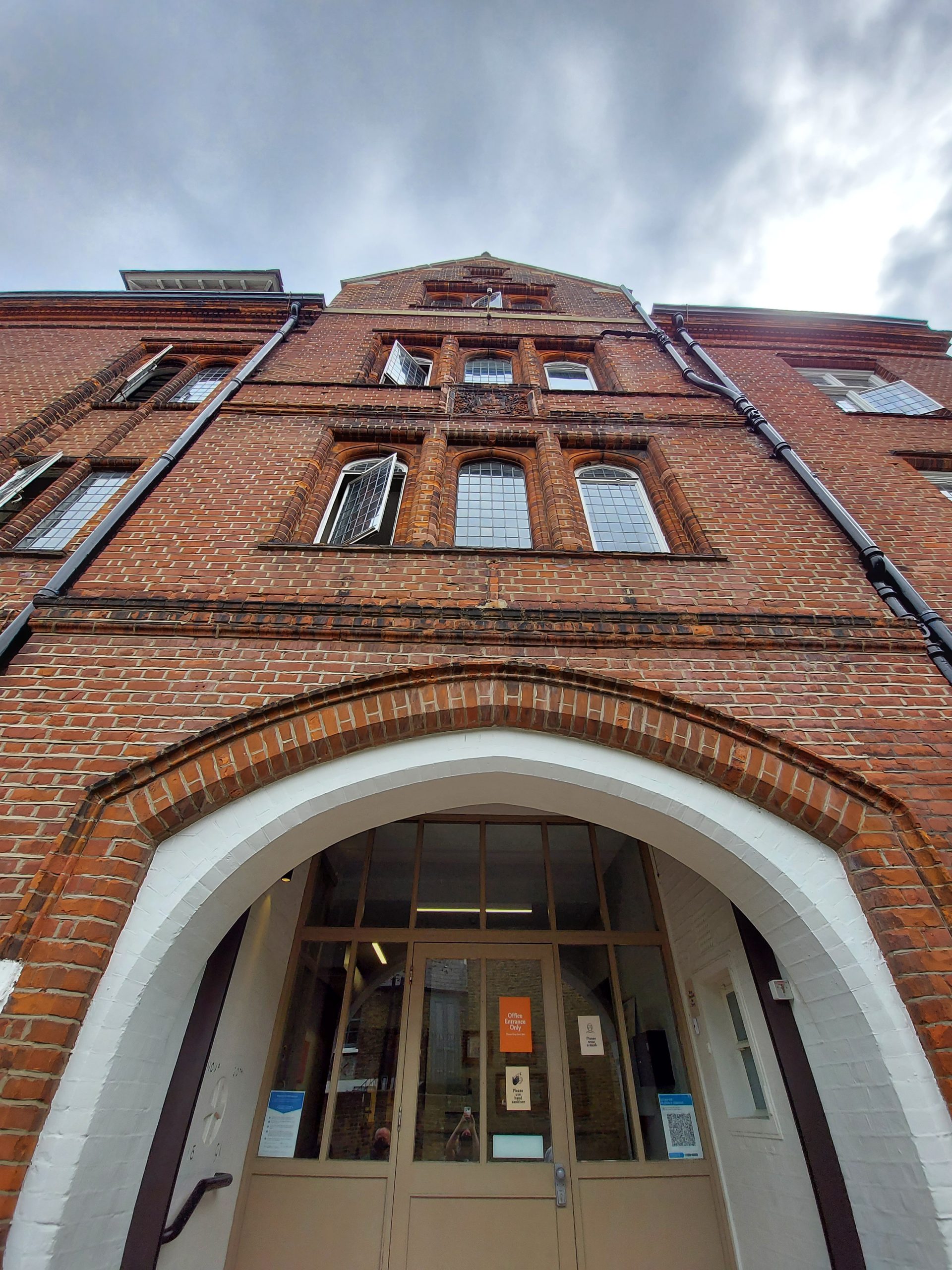
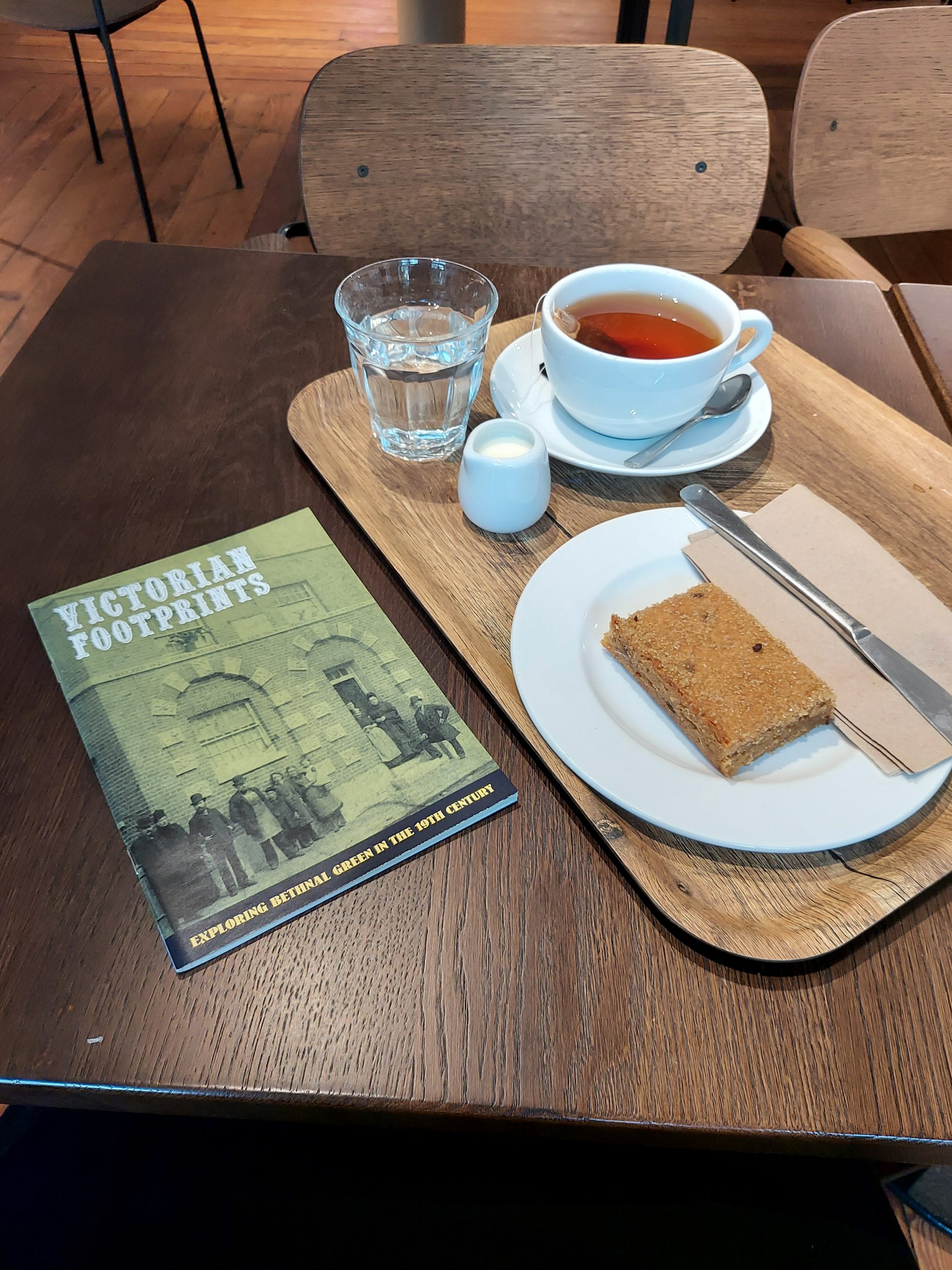
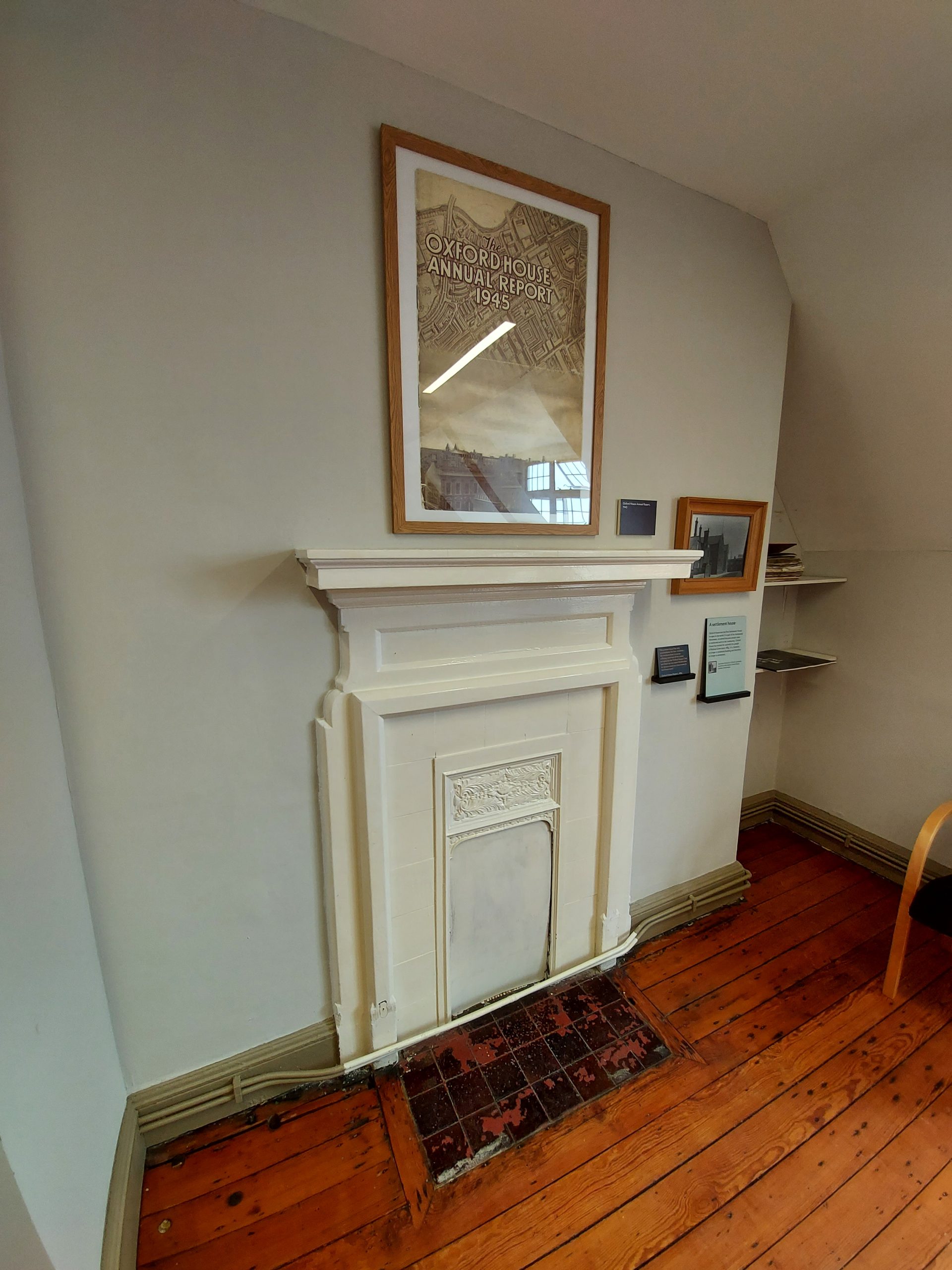
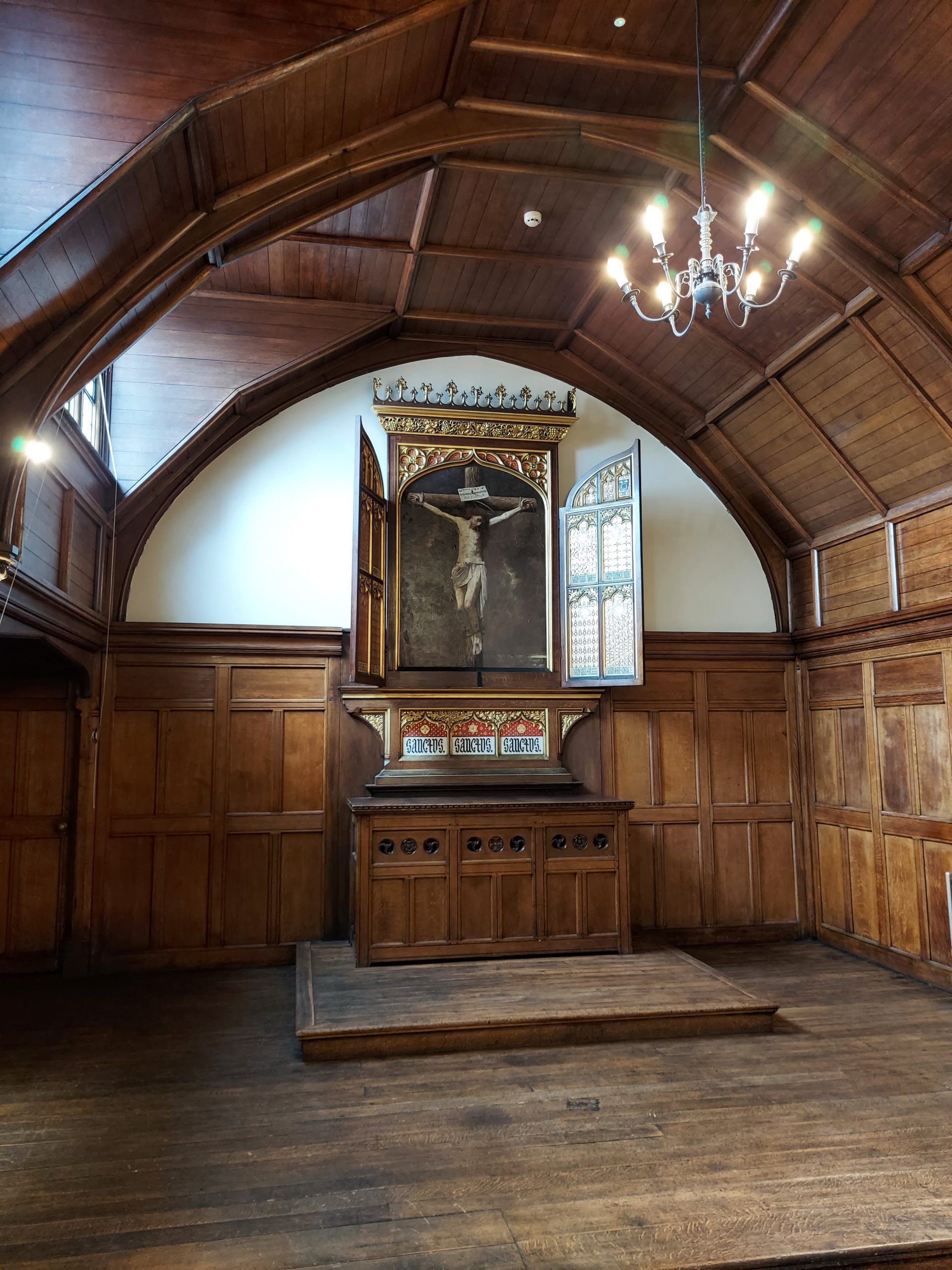
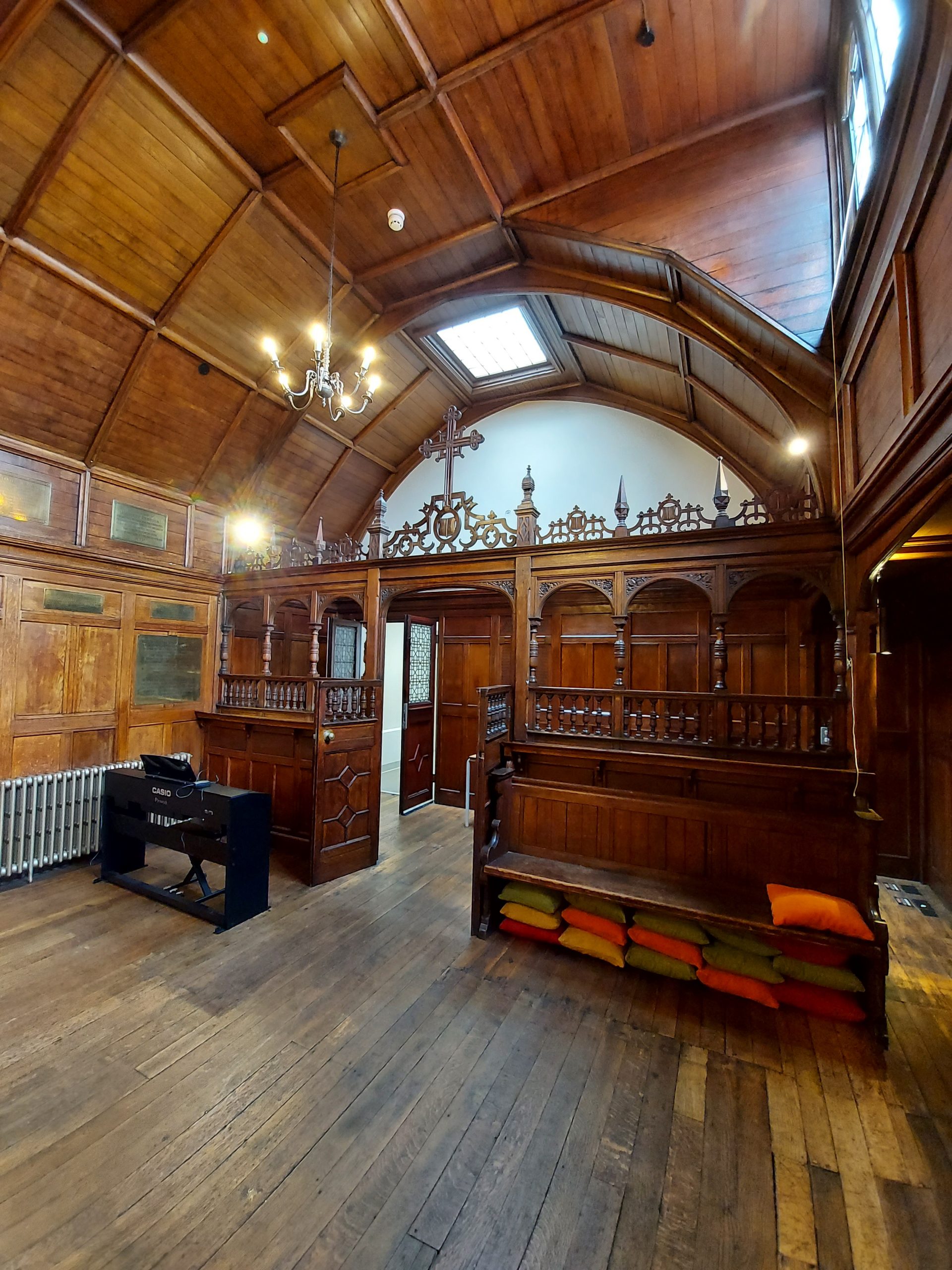
On my second day off I’d booked a tour of Oxford House in east London. Located in Bethnal Green, this building originally opened in 1884 as a settlement house. Such houses were common in the Victorian era, designed for well-off students to experience living in a poorer area and working for the betterment of society. Unlike the nearby secular Toynbee Hall, Oxford House was planned as a religious house, with a chapel inside. Students from Keble College, Oxford would live in, holding prayer meetings and taking classes in and around the House.
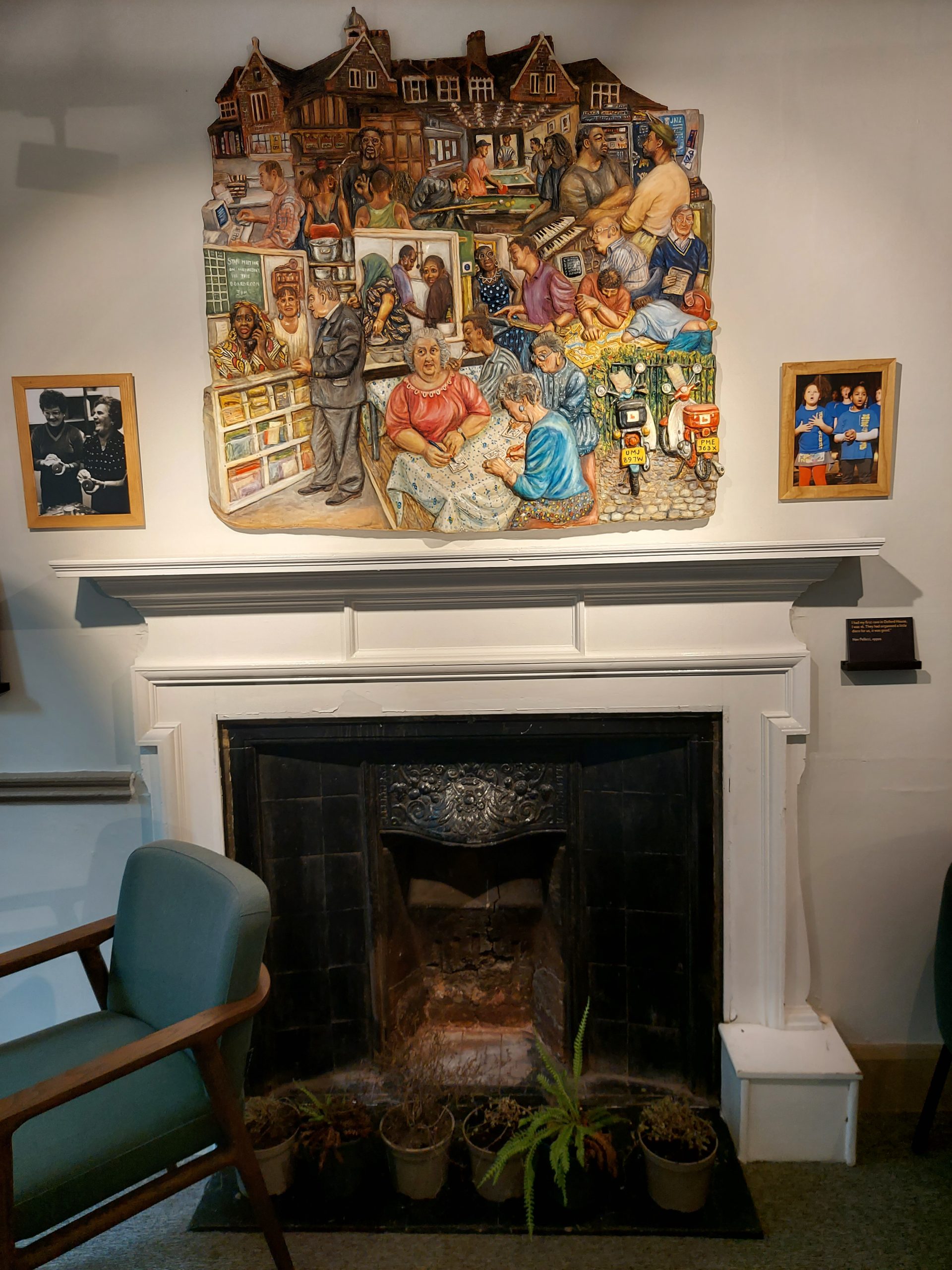
Fireplace with art showing the life of Oxford House
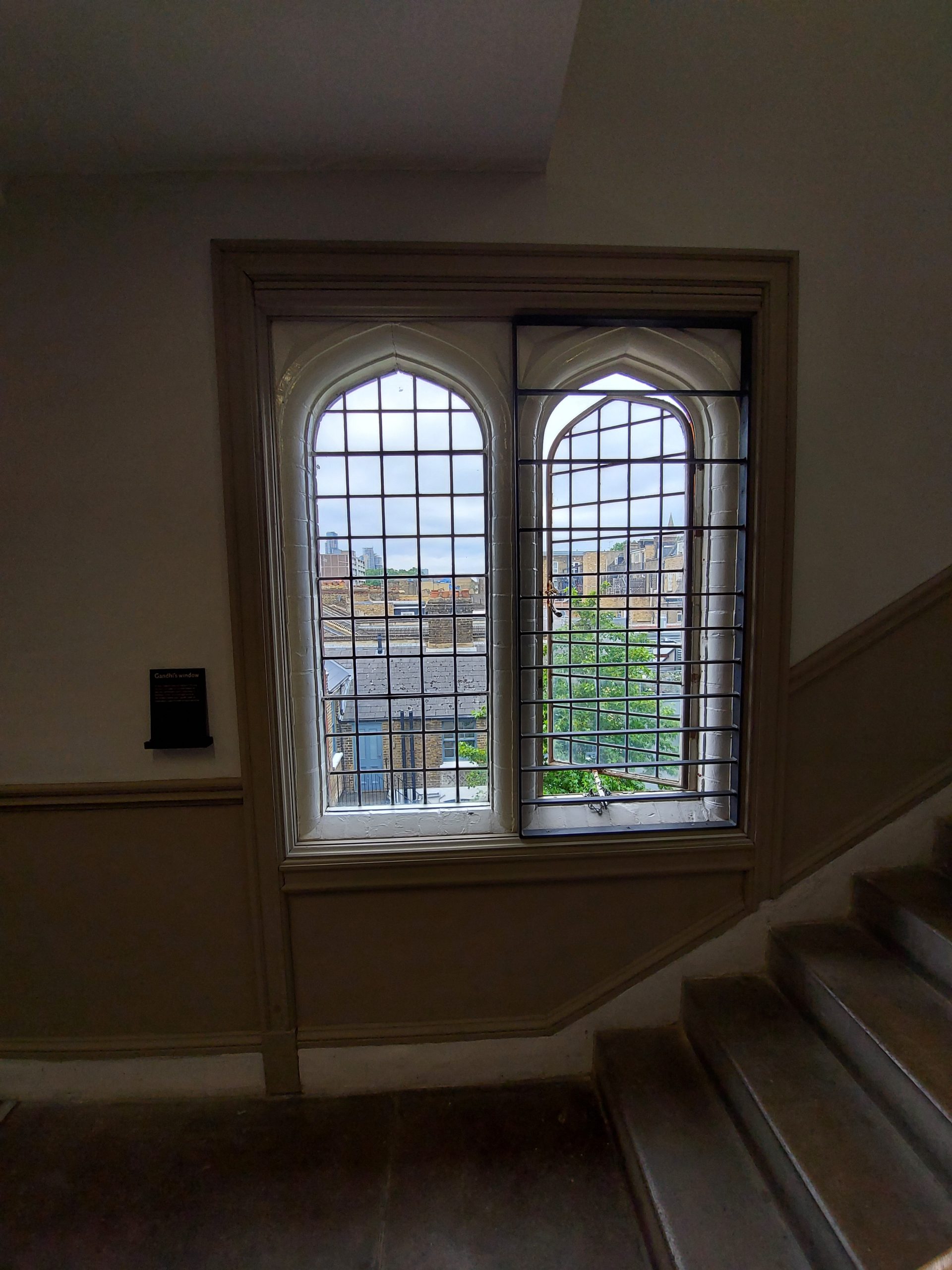
The window out of which Gandhi delivered a speech
One of the meeting rooms
Inside the chapel
In later years, there were more efforts to ensure that the people running the House were part of the community. During World War II it became a house for pacifists and conscientious objectors; in 1935 Gandhi, on a tour of the UK, visited and made an impromptu speech out of a window. In later years, Oxford House was popular with the Somali community – many people remember the delicious food cooked by the Somali women in charge of the kitchens – and was host to groups such as the Lesbian and Gay Christian Association. Oxford House is now a community and arts centre, and seeks to remain part of the community it has served for over a century.
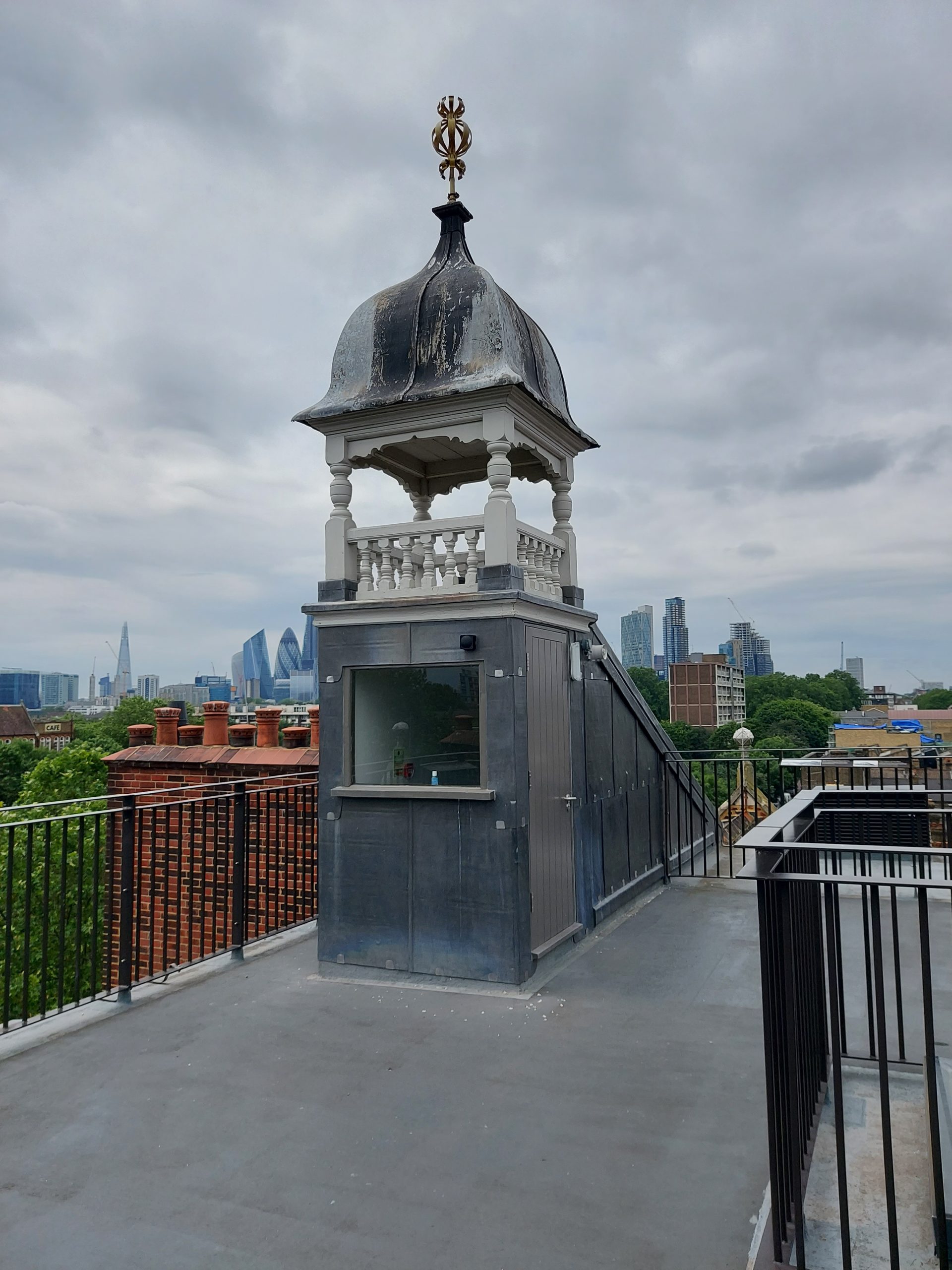
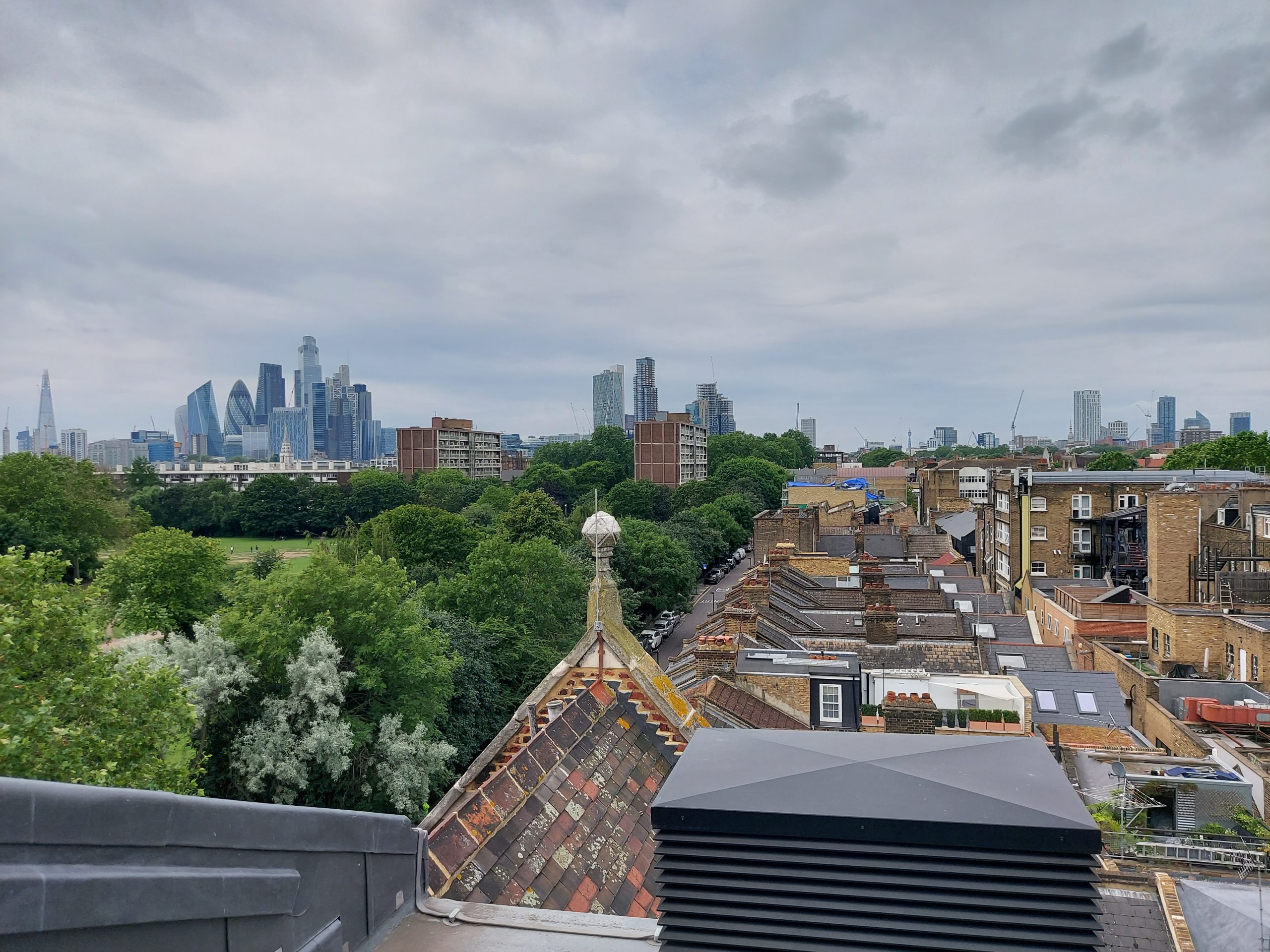
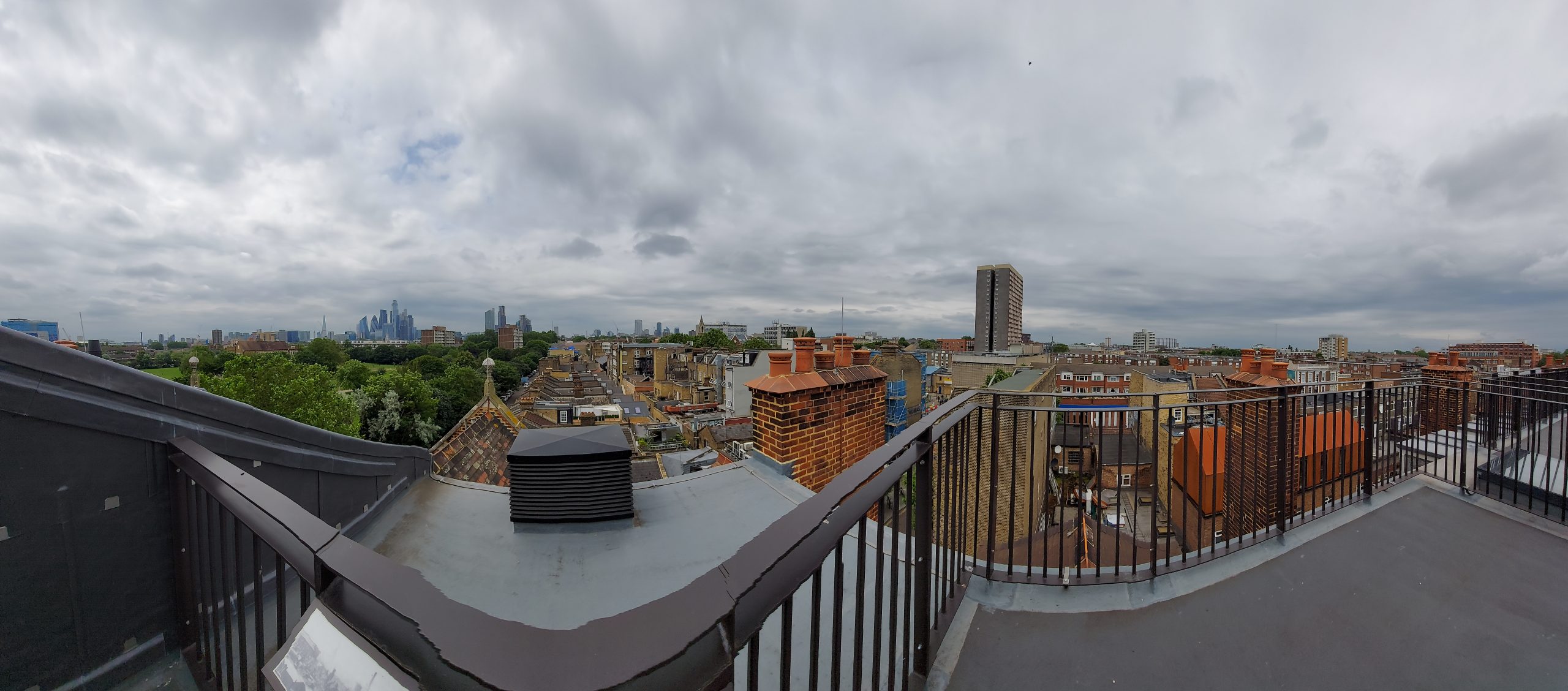
At the end of the tour we got to visit the roof, which offers impressive views over east London. It’s not usual to see London from up high in this part of the city, and I really enjoyed the experience.
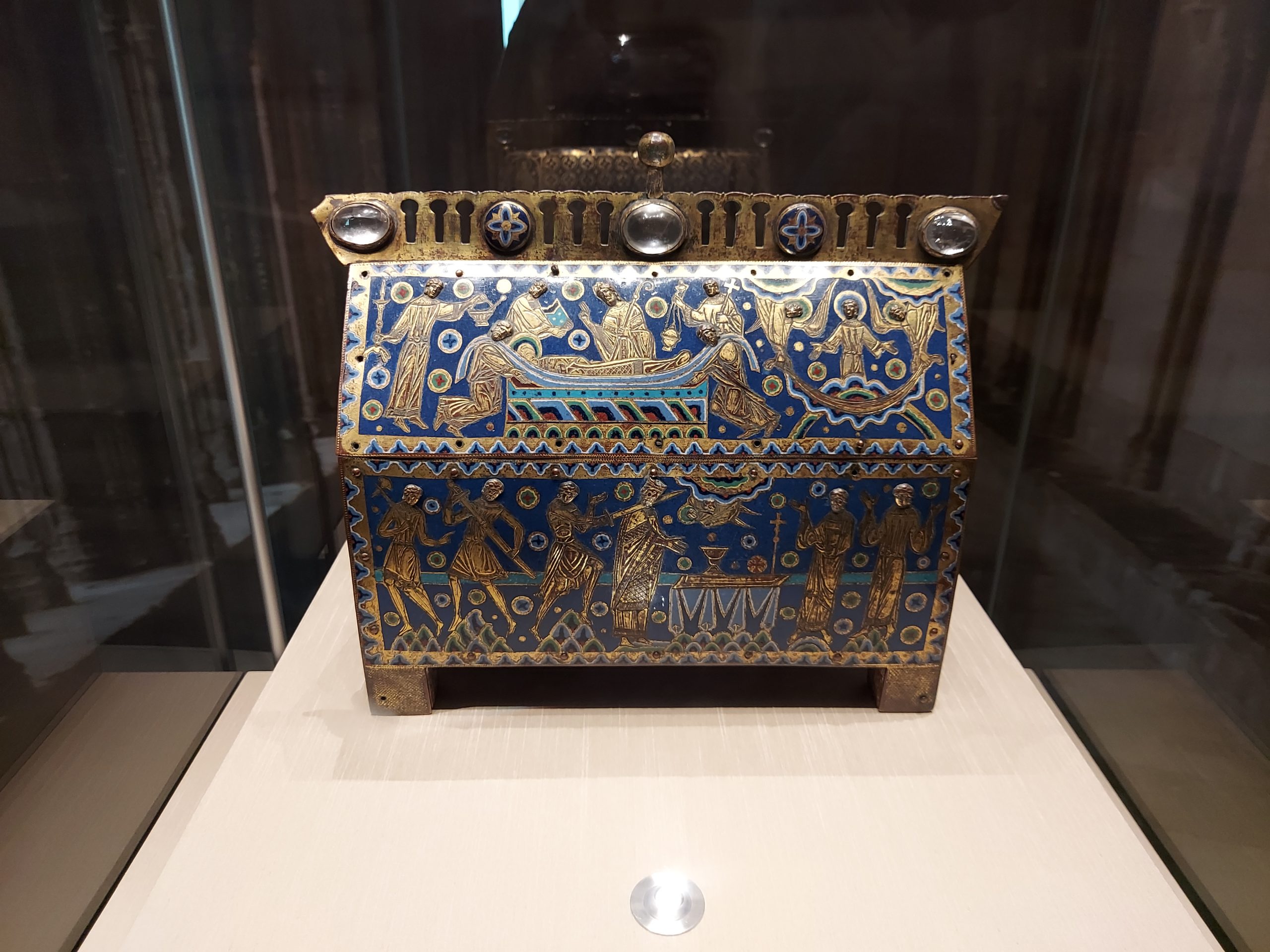
Reliquary casket showing the murder of Thomas Becket
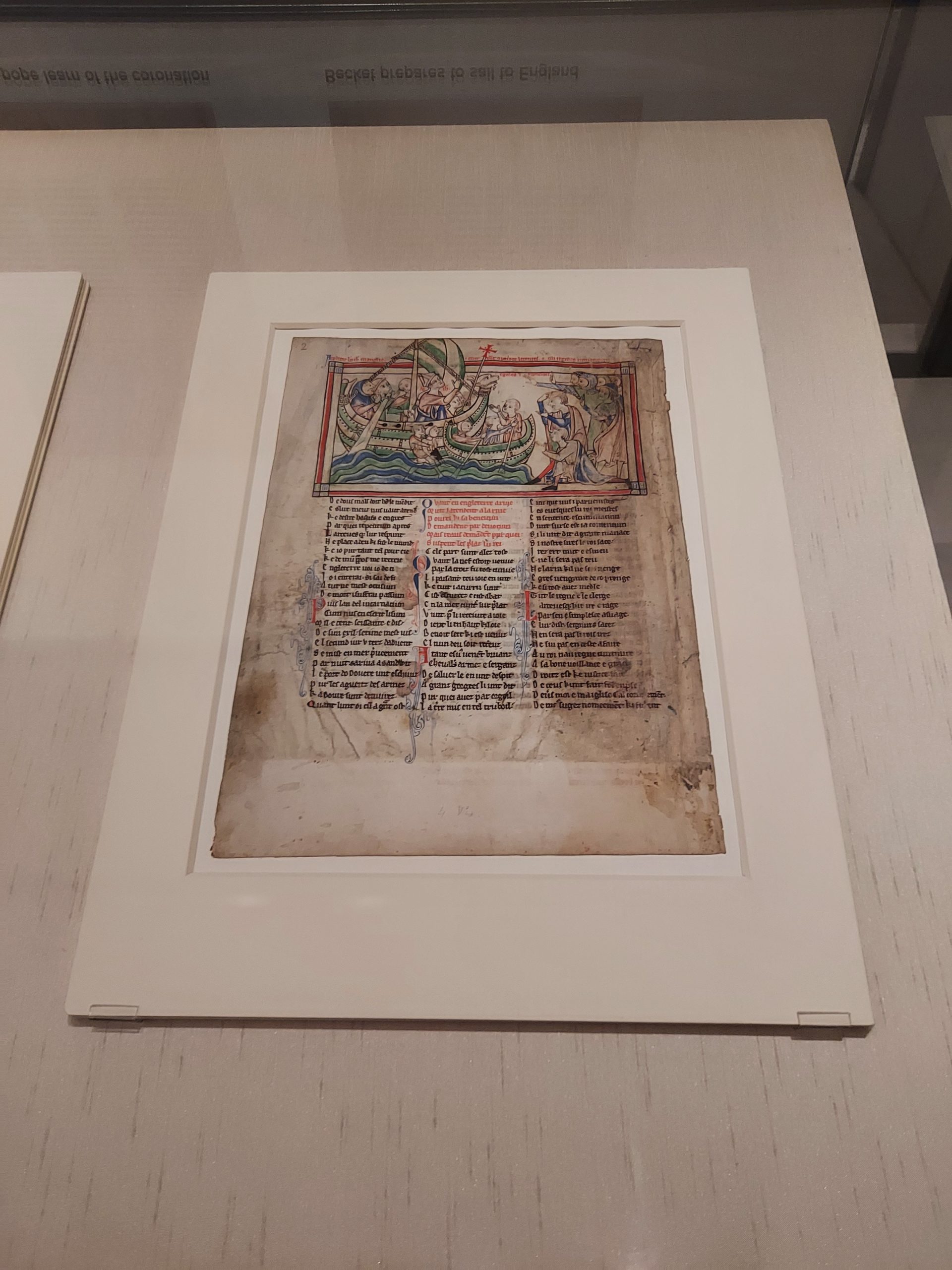
While I was at the British Museum I also took the opportunity to visit the Becket exhibition. Thomas Becket: murder and the making of a saint looks at the life, death and legacy of this key medieval figure, with objects related to his life and later sainthood.Becket was born in London in 1120. Thanks to key contacts and his own ability, he worked his way up to the position of Chancellor, befriending King Henry II. Henry made him Archbishop of Canterbury despite the fact that he wasn’t a priest, intending him to retain his Chancellor role and essentially do what he told him. Thomas wasn’t having any of it though, rejecting the Chancellor role once he had become Archbishop, and repeatedly challenging the authority of the King over the church.
Eventually he fled to France, returning after excommunicating the bishops who had taken part in Henry’s son’s coronation. On 29 December 1170 he was murdered by four knights, who killed him in Canterbury Cathedral.
Manuscript page showing Becket’s Channel journey
Becket’s death horrified Europe, and he was later made a saint, his shrine in Canterbury a place of pilgrimage. Without his death we wouldn’t have Chaucer’s Canterbury Tales, based around a group of pilgrims on a journey to Becket’s shrine. He became popular as far away as Sweden and South Italy, and his relics spread far and wide. Some of the relics are on display, including the stained glass windows from the shrine, showing all the miracles St Thomas supposedly performed.
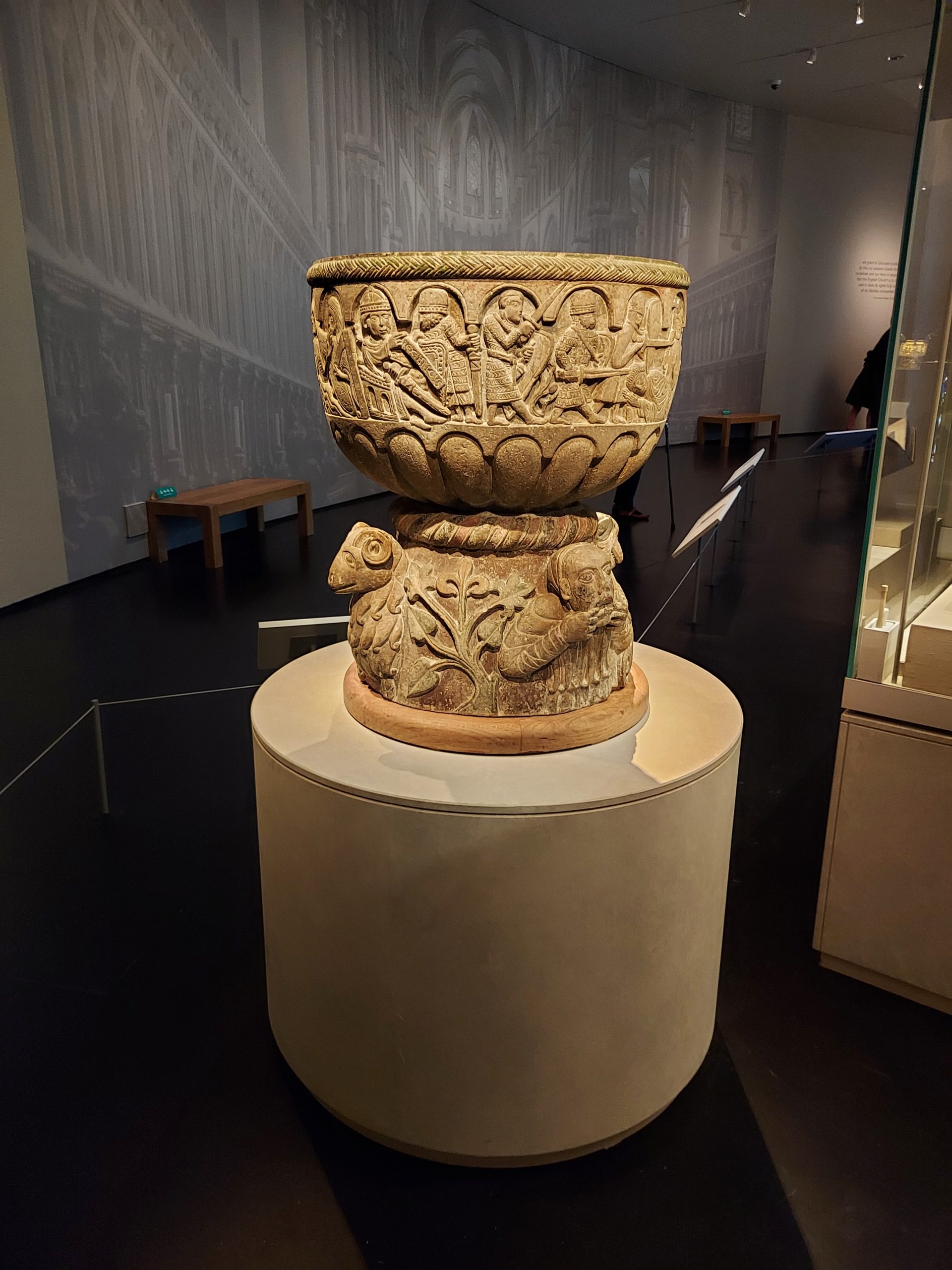
Stone font from Sweden
Becket’s shrine was destroyed during the reign of Henry VIII and veneration of the saint was banned. Historians see parallels between his treatment and the treatment of figures like Archbishop Cranmer and Thomas More – he represented a challenge to the authority of the monarch. Becket’s popularity still survived in Europe and, secretly, in England. In modern times, he remains one of the best known figures of the medieval period.
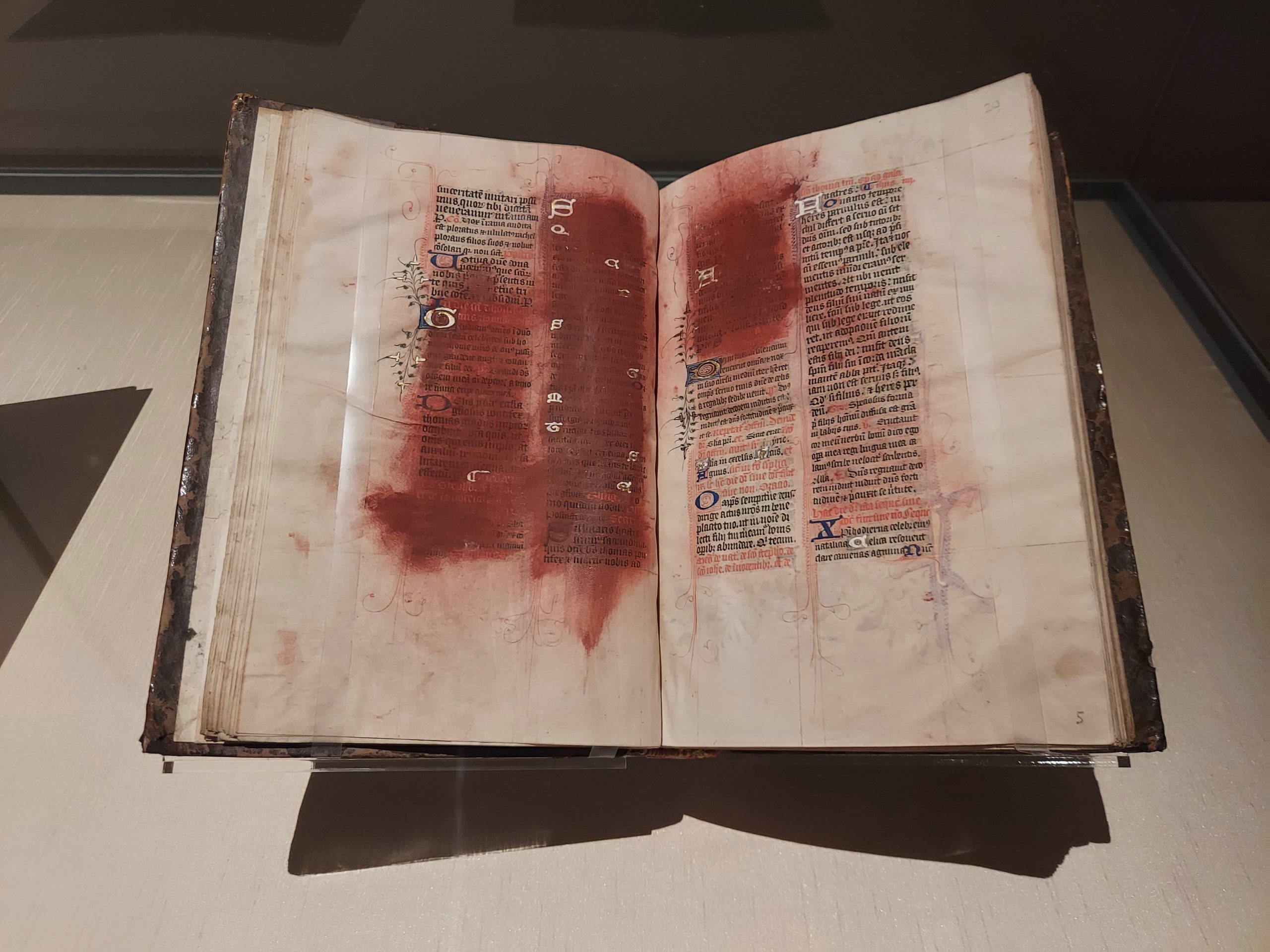
Becket’s story has been obliterated by red ink in this book
I enjoyed this exhibition: I didn’t know much about Becket except his name and the manner of his death. I found I had a lot of respect for this figure who was prepared to challenge authority, even at the cost of his own safety.
On the first day of my week off work I headed to the British Museum to see the Nero exhibition. Nero: the man behind the myth looks at this infamous Roman emperor and examines whether he really was the villain history remembers him as.
The exhibition began with an illustration of the complex family tree that enabled Nero to take power. He became emperor as a teen, and although close to his mother, later had him executed. He also executed his tutor and possibly his wife, although evidence suggests she was more likely to have died after a miscarriage. It’s worth noting that most of the Roman emperors executed members of their family at some point – it was a cut-throat world and, while not ideal(!), doesn’t necessarily make him any worse than the rest of them.
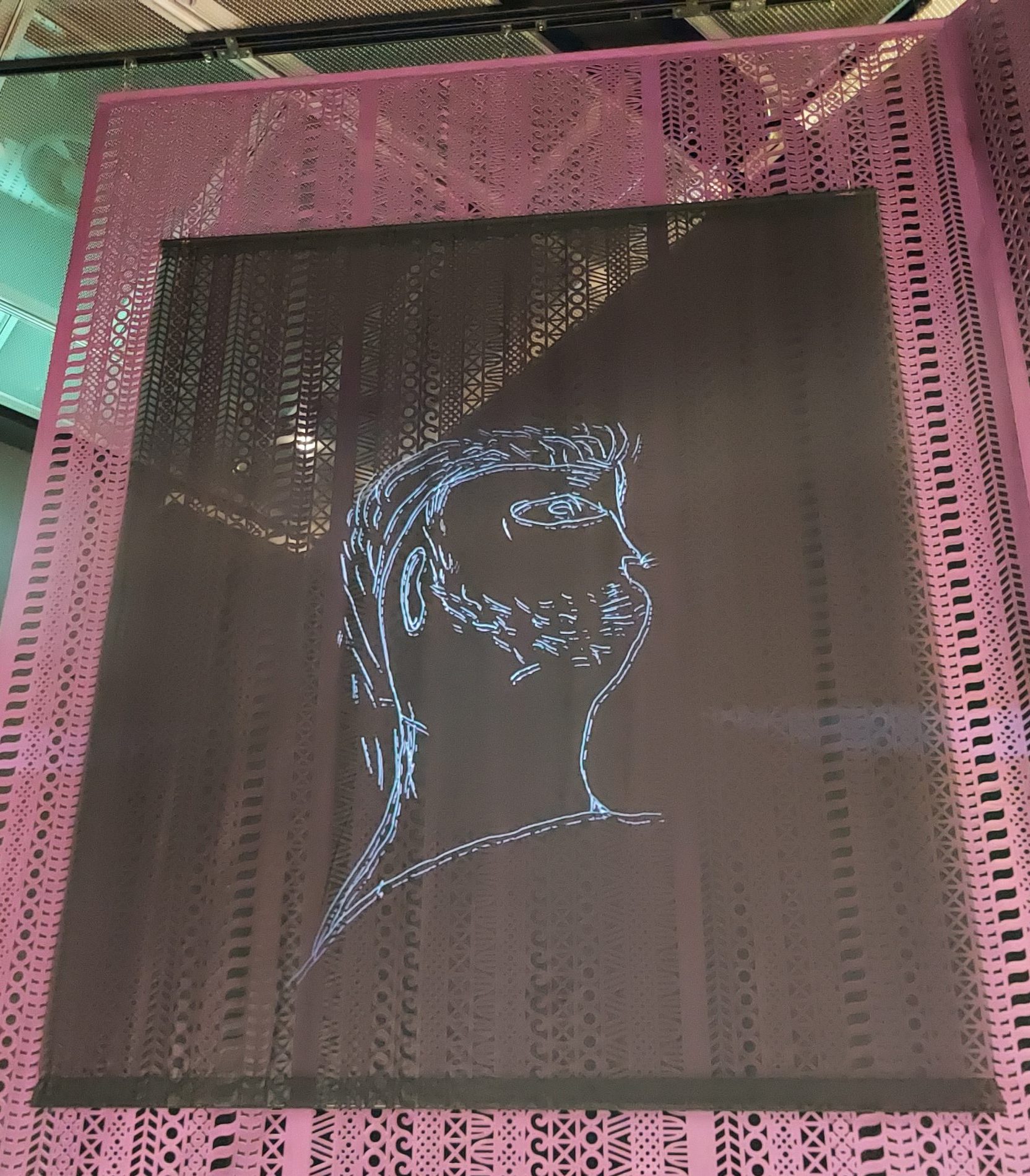
Nero as a boy
Part of the exhibition focused on the rebellion of Boudicca, which I found very interesting. After the rebellion Nero put another general in place to implement reforms, suggesting that he listened to those who were discontented. On the other hand, another incident closer to home showed that he could be ruthless – when a slave rebelled Nero ensured the law allowing a slave owner to execute all of their slaves was followed to the letter.
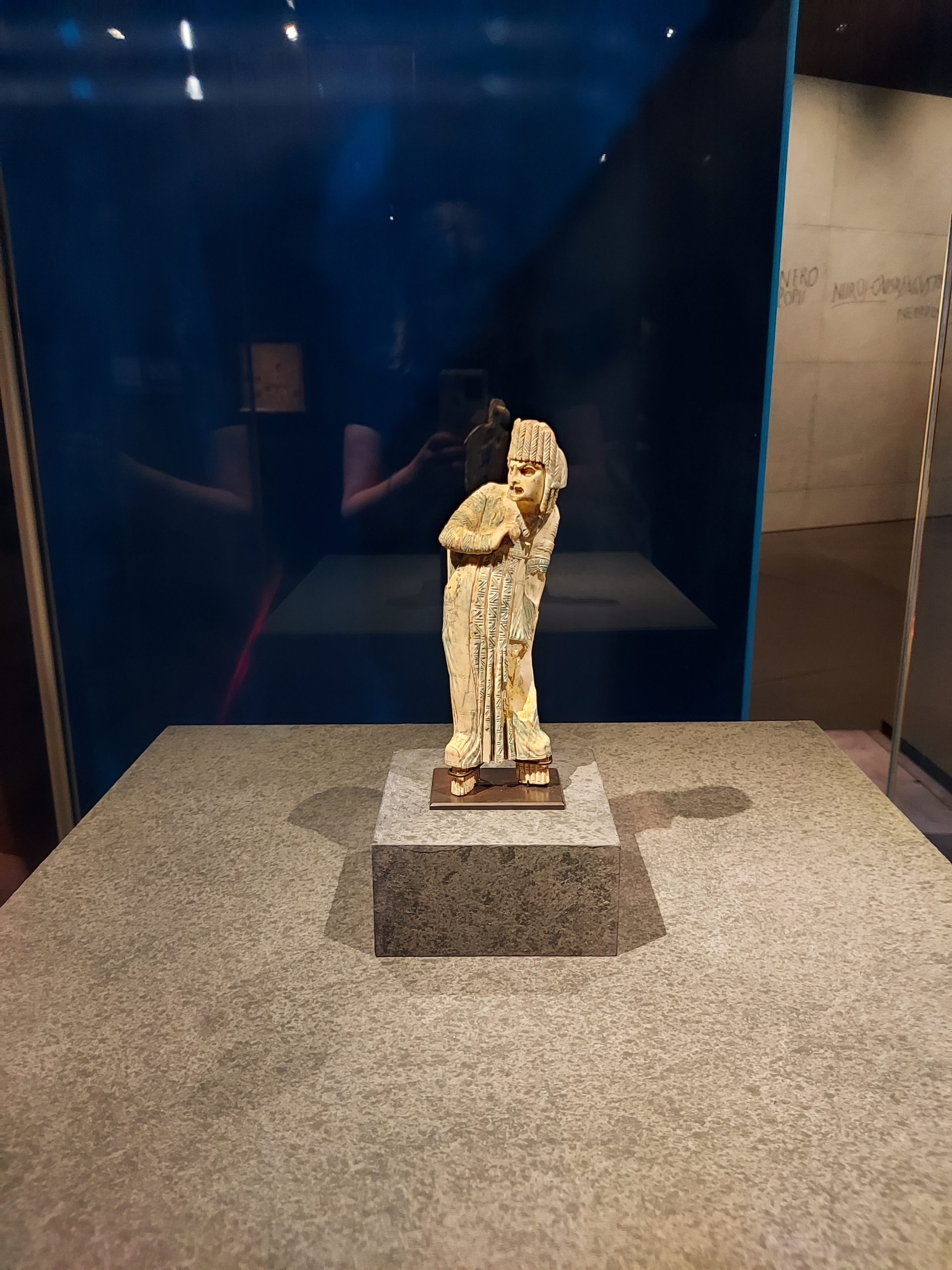
Nero was interested in the arts and enjoyed performing in plays, which some figures criticised him for. I can definitely understand this as should the leader of a people really be spending their time acting on stage?
Nero on stage
Nero is probably best remembered for playing the fiddle while Rome burned, but when the infamous fire started he wasn’t even in Rome. He actually came back and put measures in place to house and feed residents displaced by the fire. However, he did unfairly blame members of a new religious sect (later known as Christians) for the blaze. Nero rebuilt his palace in a lavish style, which drew some criticism – although it was no more lavish than the homes of other wealthy Romans. He did try to make events open to people from different classes, and seems to have been popular with ordinary people.
Nero was forced to commit suicide aged 30, and his reign was followed by a year of instability with four different emperors. An expert in Roman history may feel differently, but to me, the exhibition suggests that Nero wasn’t actually as bad as he was made out.
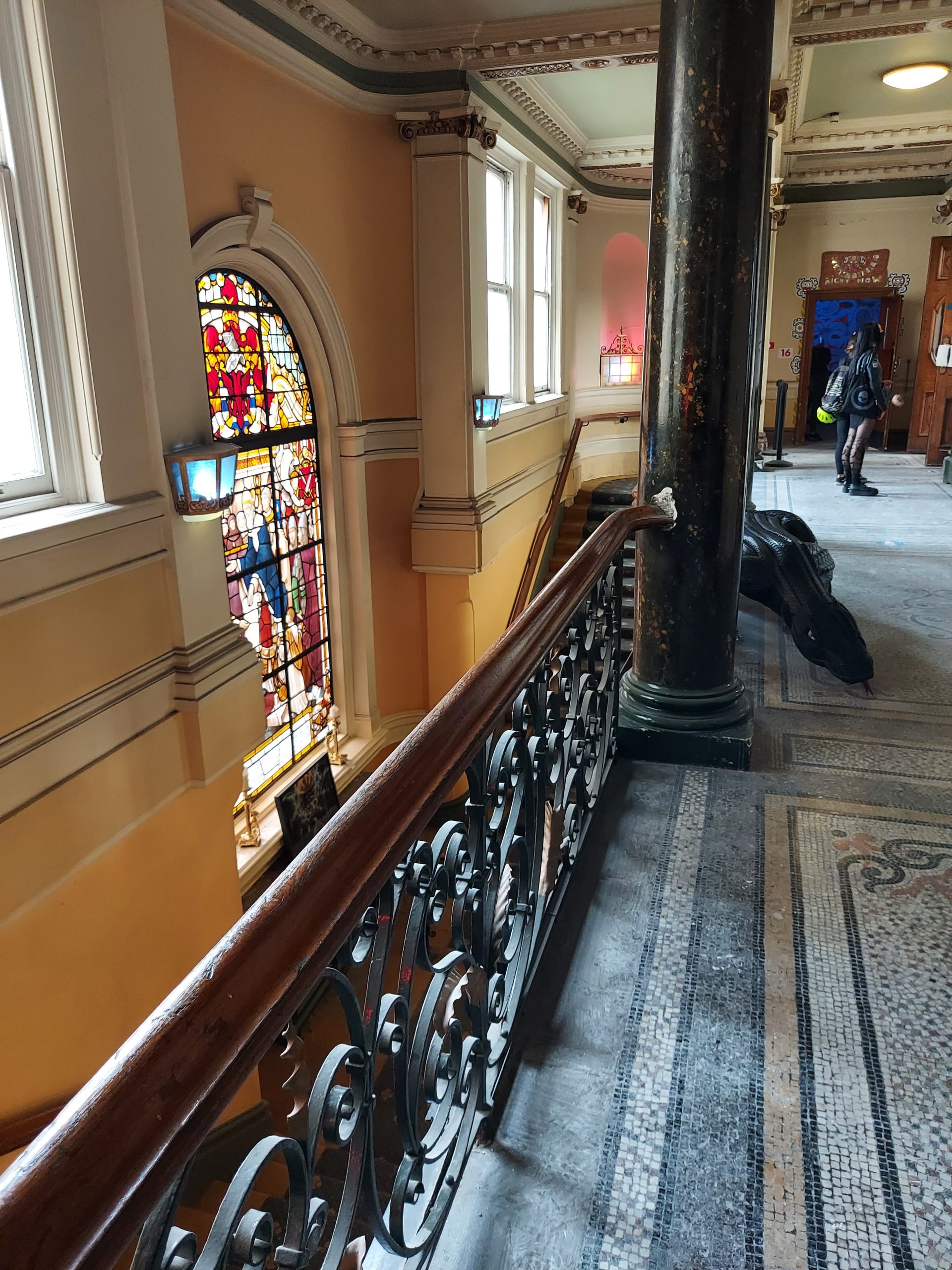
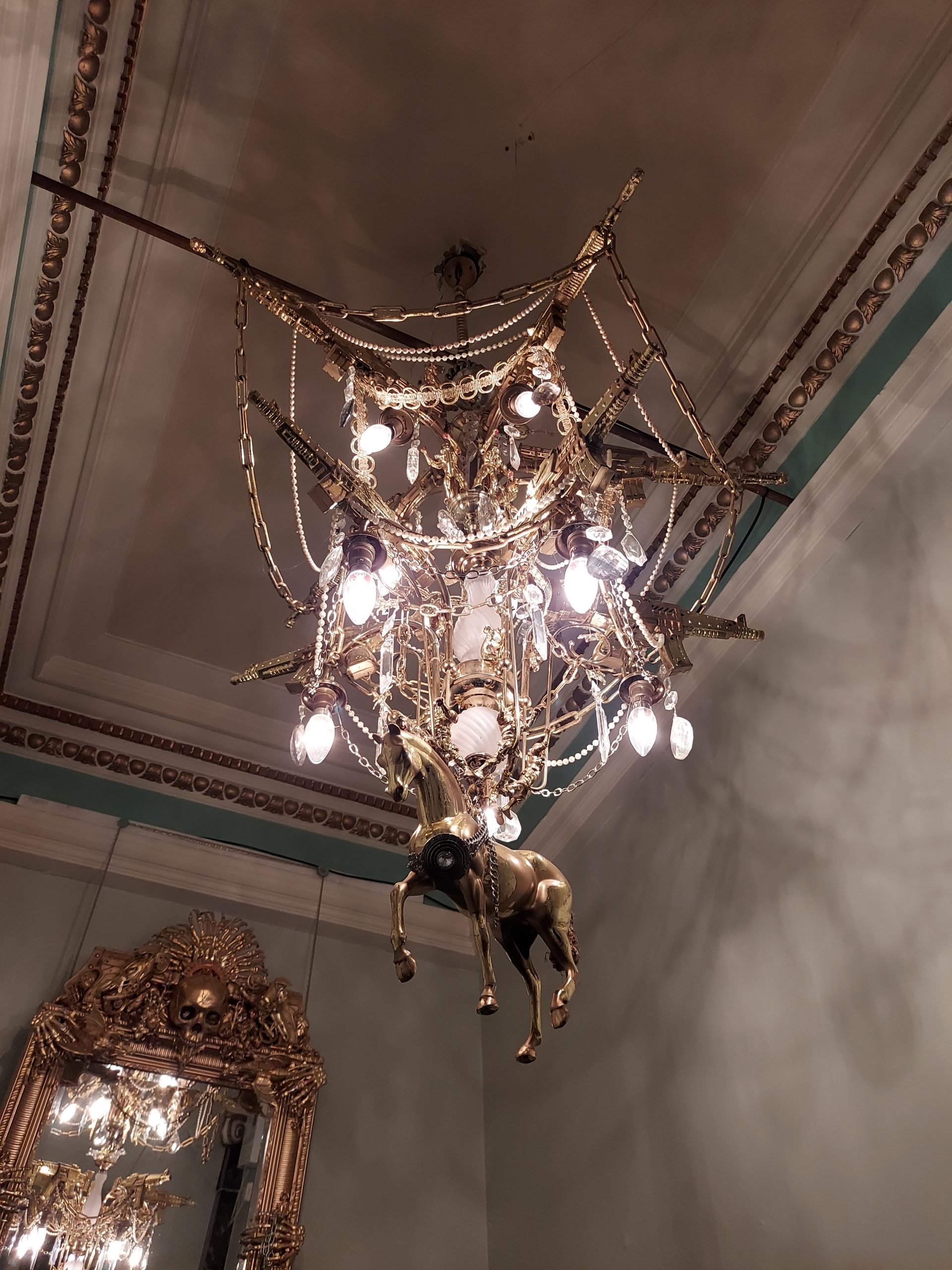
After attending the Bags exhibition I decided to head down to Fulham Town Hall to see the Art in the Age of Now exhibition. The building on Fulham High Street has been abandoned for 20 years and is about to be redeveloped, but not before hosting an exhibition of modern art.
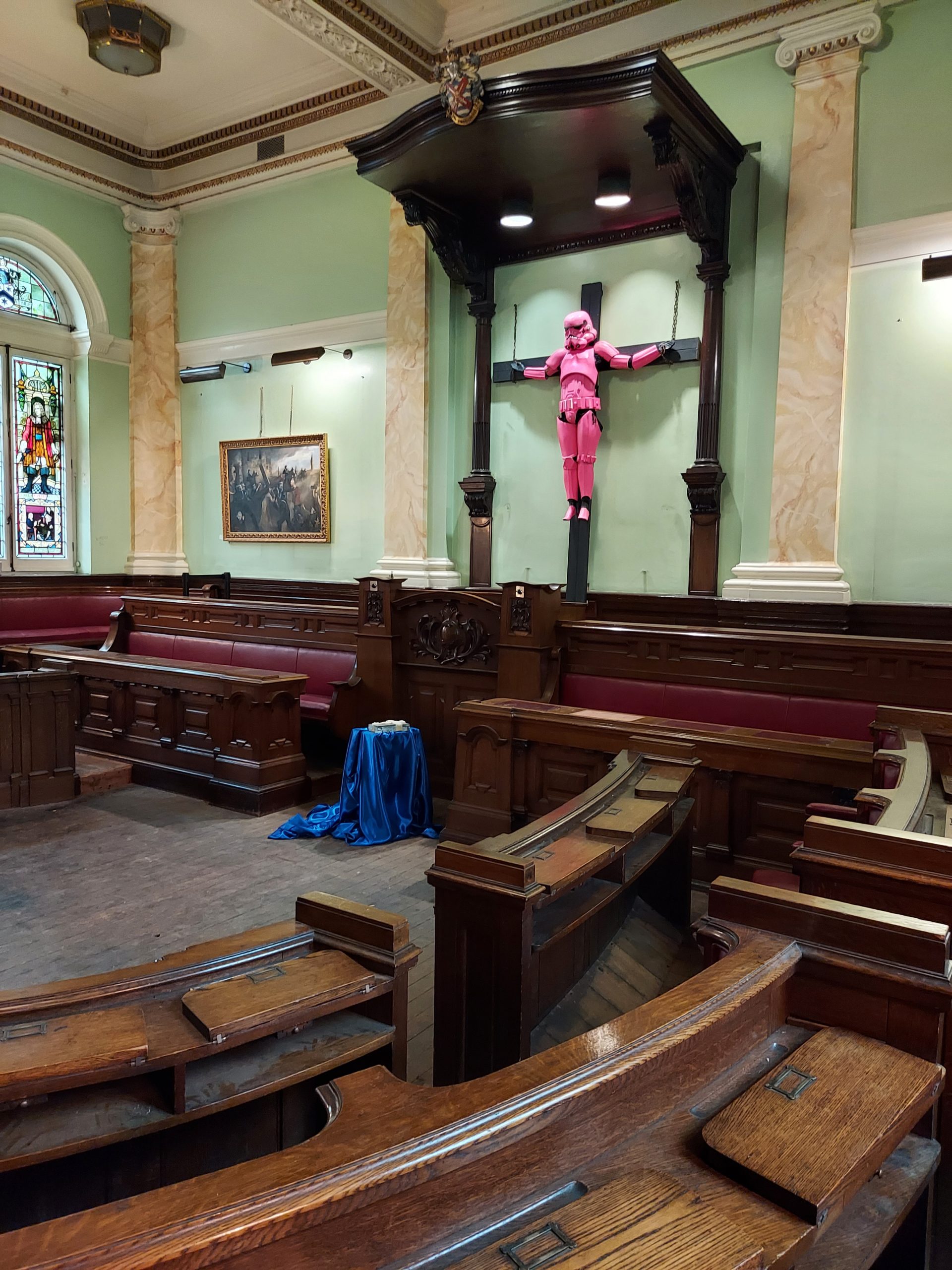
For me the hall itself, built in 1890, was the main attraction. Shabby and run-down, it had the kind of faded grandeur that I love – it felt like somewhere Punchdrunk would host an immersive theatre production. For every crumbling ceiling or damp floorboard there was an ornate balustrade or a beautiful bit of stained glass. The original council chamber is still intact, and very impressive, but the main draw was the old ballroom.
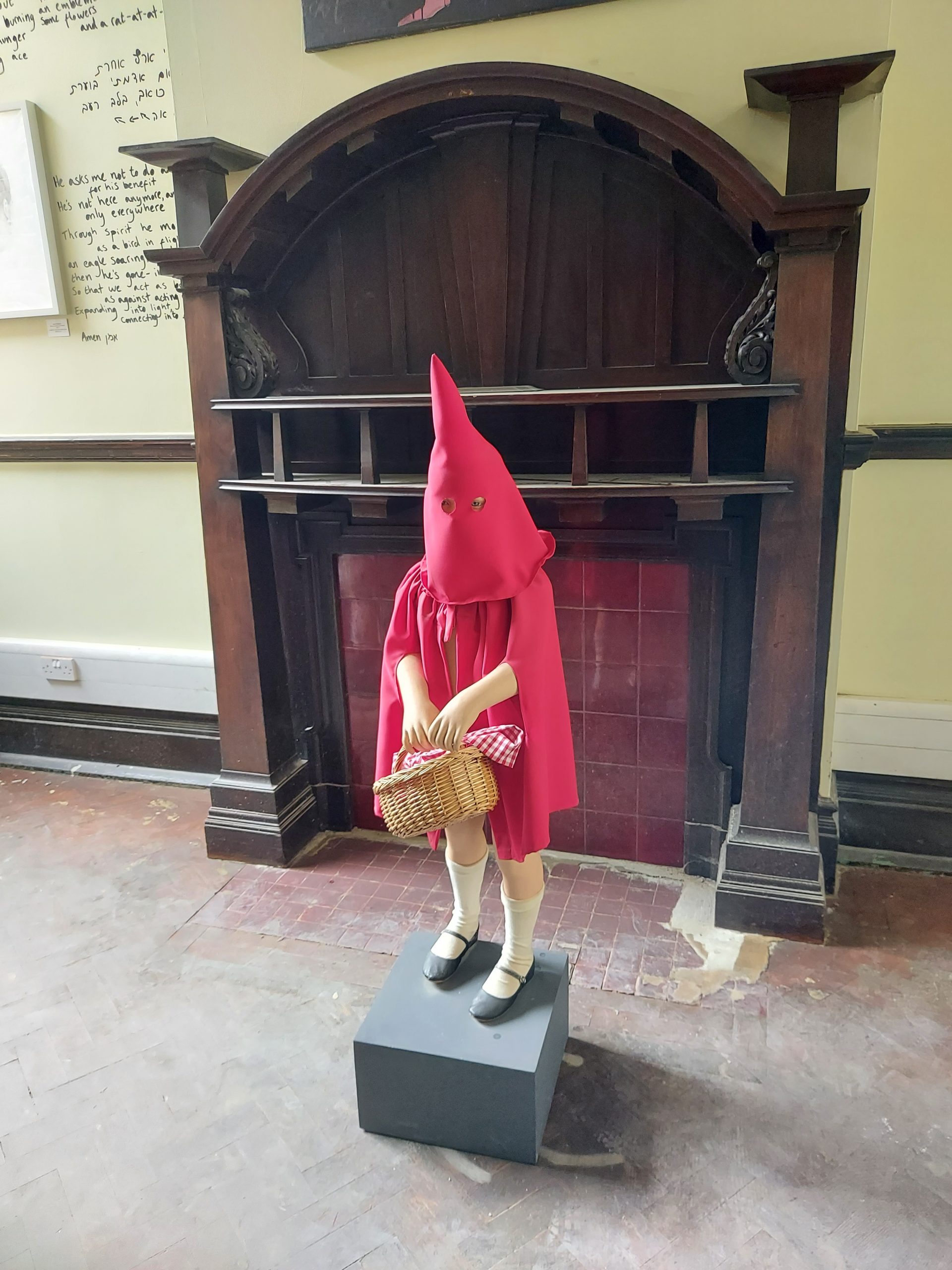
Los Hengeles by Ben Moore
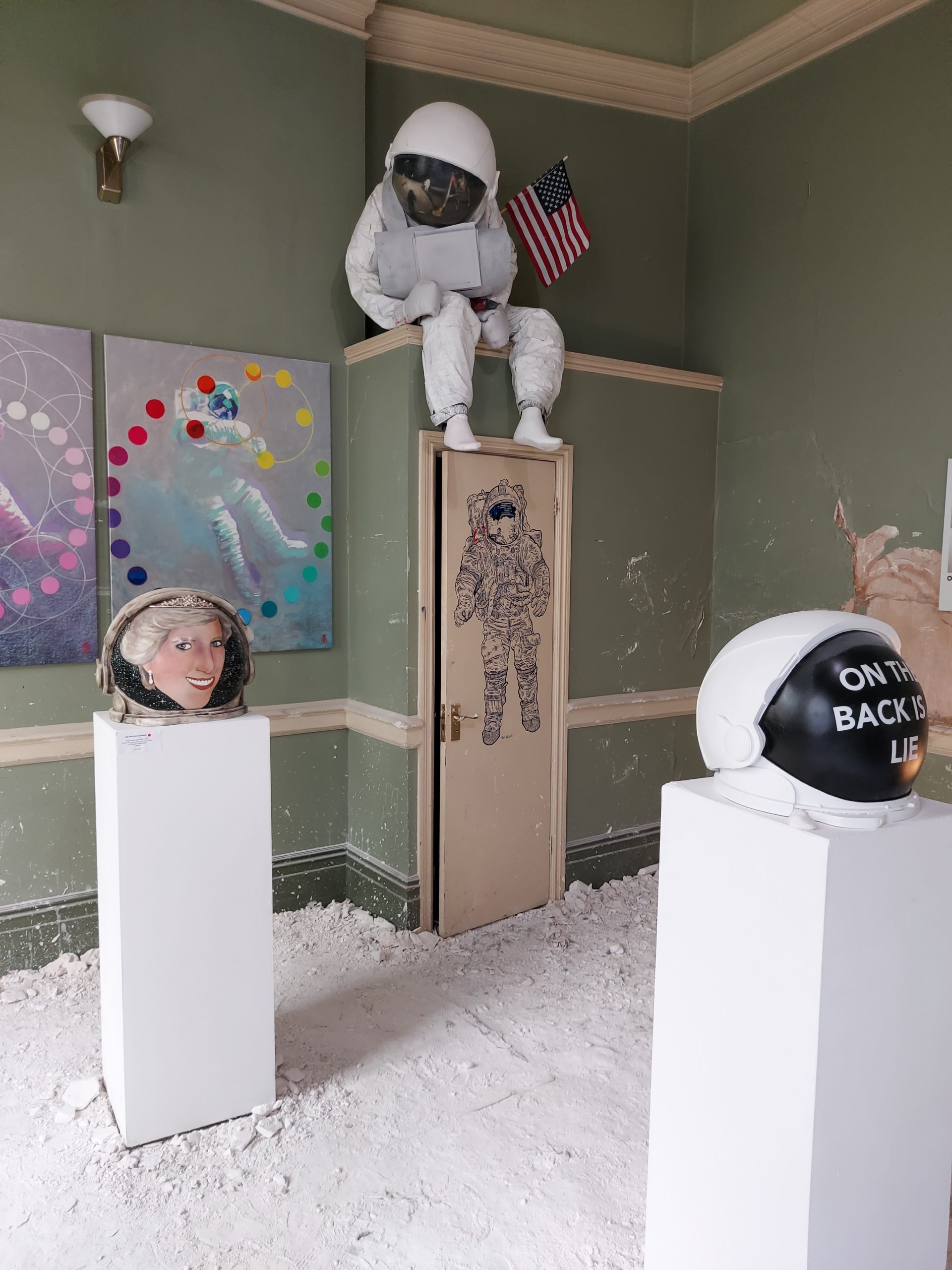
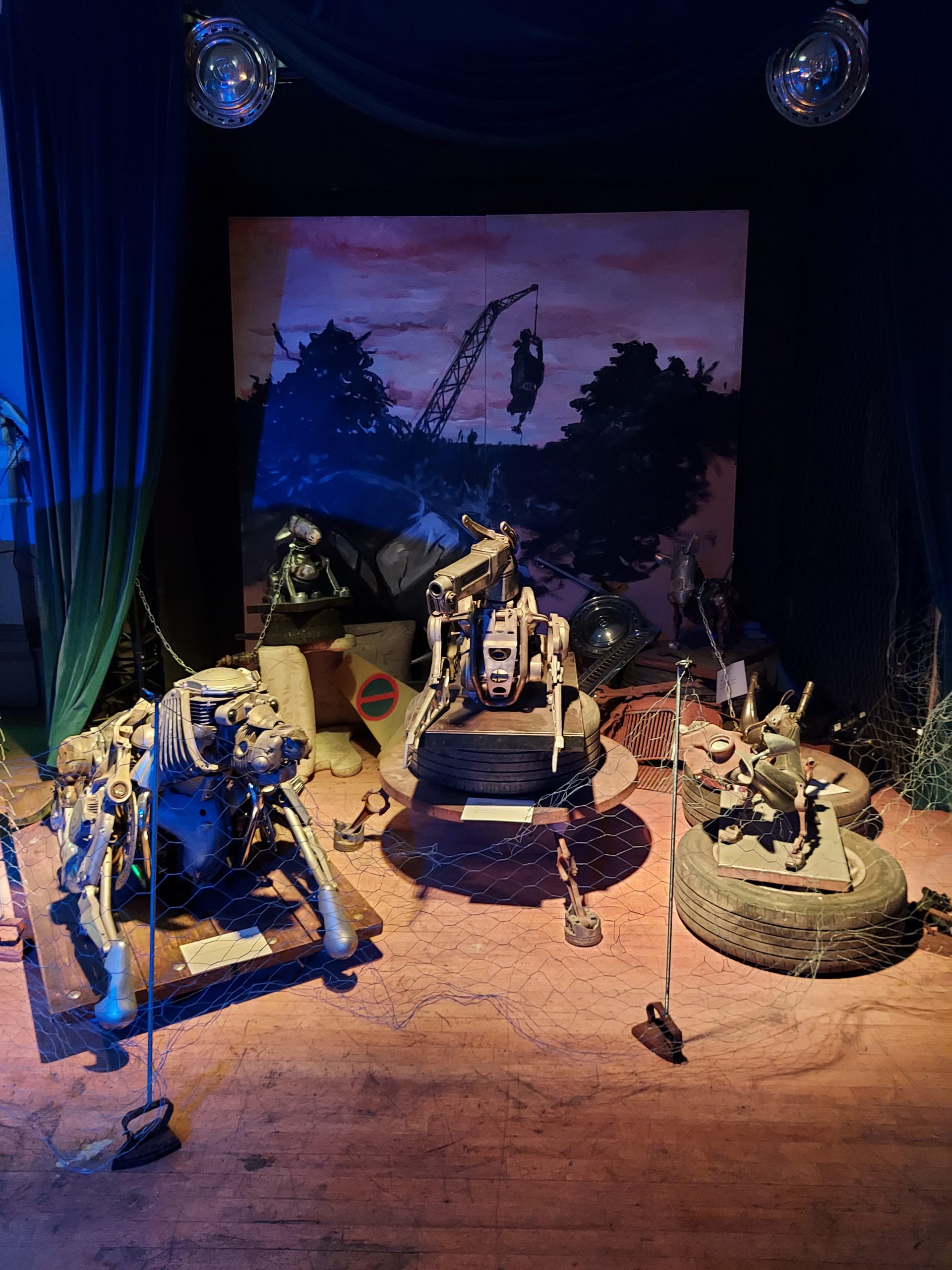
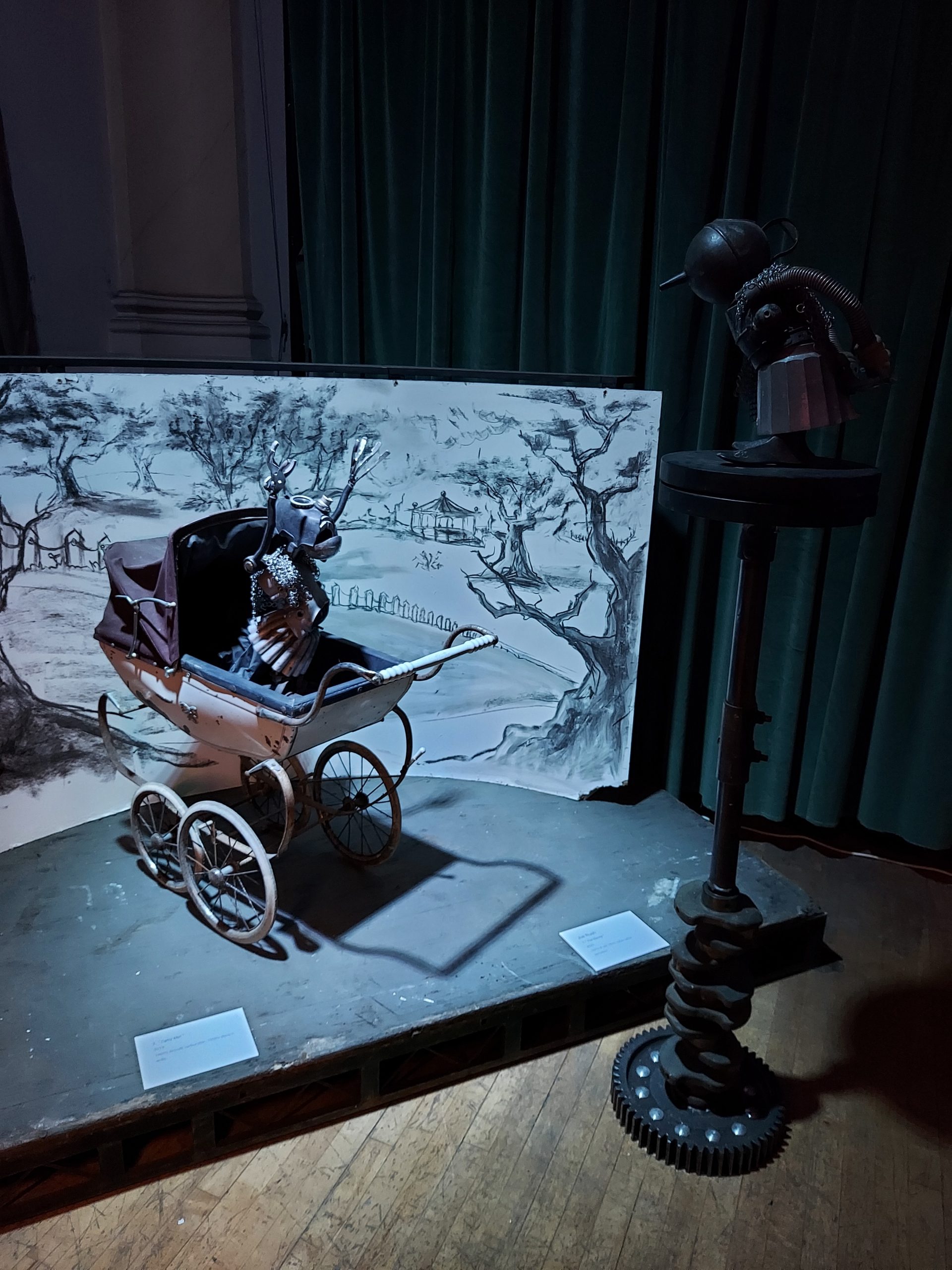
Having said that, the art itself, curated by Ben Moore, intrigued me too – modern art is very hit and miss for me, but there was plenty here to pique my interest. All kinds of artworks are on show, including sculptures, paintings, collages and photography.
My absolute favourite works were the mechanical sculptures by Joe Rush. These were incredible and full of detail – a definite highlight for me.
The building was such a maze I didn’t manage to get round it completely; I’m sure there were bits I missed. However, what I did see was fascinating and definitely worth a look.
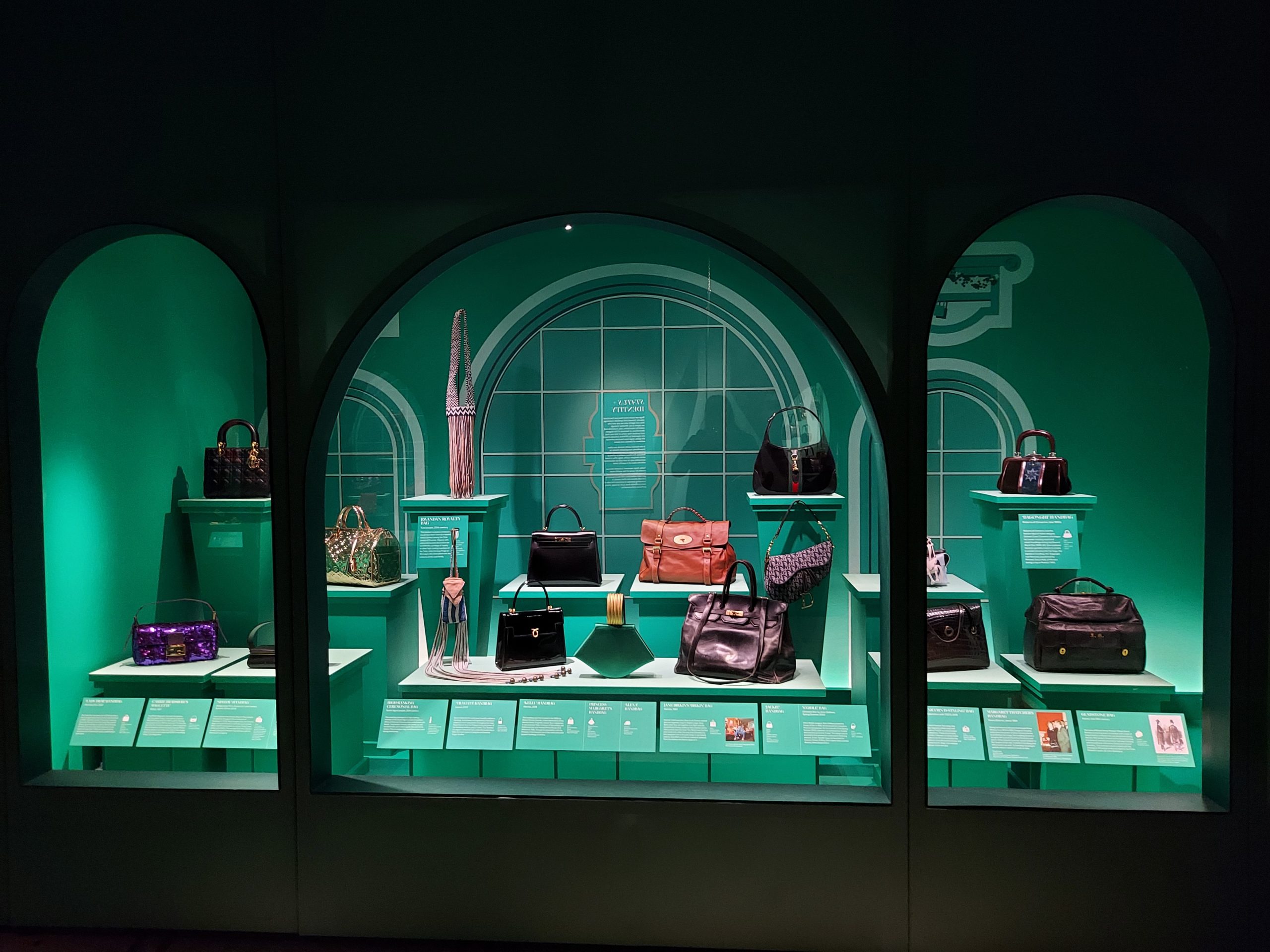
Recently I visited the Bags: Inside Out exhibition at the Victoria & Albert Museum. Along the same lines as the shoes exhibition a few years ago, Bags looks at the history of these accessories and displays examples of bags in all shapes and sizes, serving a variety of purposes.
A dress with pockets and another with a chatelaine
I’m personally a huge fan of bags* – I think it’s because unlike clothes, you can’t grow out of them – and so I was looking forward to this exhibition. The exhibition begins several centuries ago, when women often had pockets built deep into their dresses for storage purposes. Later, many women wore chatelaines – metal contraptions pinned to their waist with keys and other accessories dangling from them.
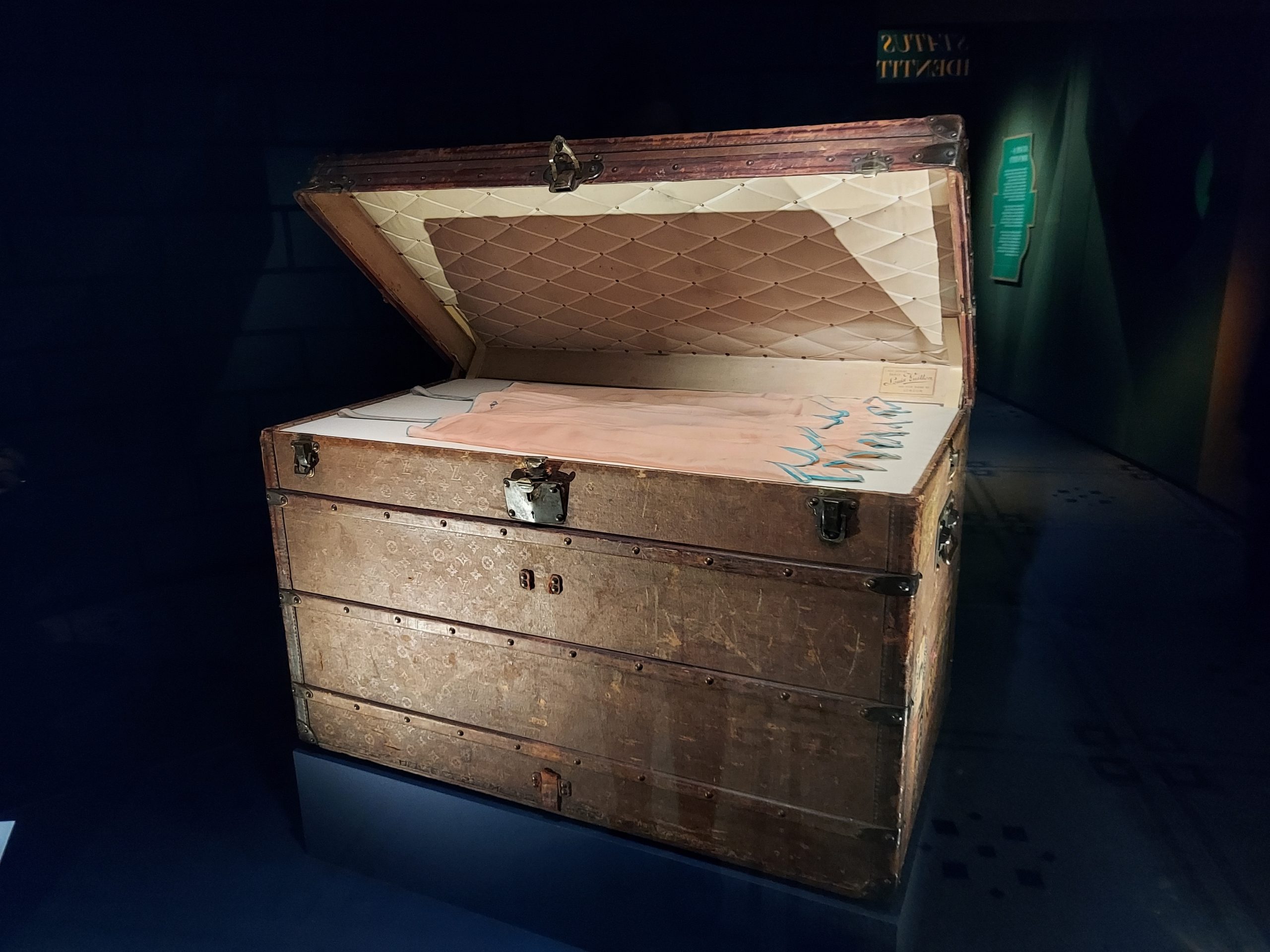
Both men and women often carried small coin purses.As the world moved on, different kinds of bags evolved: tiny evening bags, practical rucksacks, sturdy travelling trunks, convenient shoulder bags.
A trunk designed to store clothes while travelling by sea
Vivien Leigh’s writing case and Winston Churchill’s despatch box are two notable examples of bags on display alongside many beautiful examples from less famous owners.
Winston Churchill’s attache case and Vivien Leigh’s letter-writing case
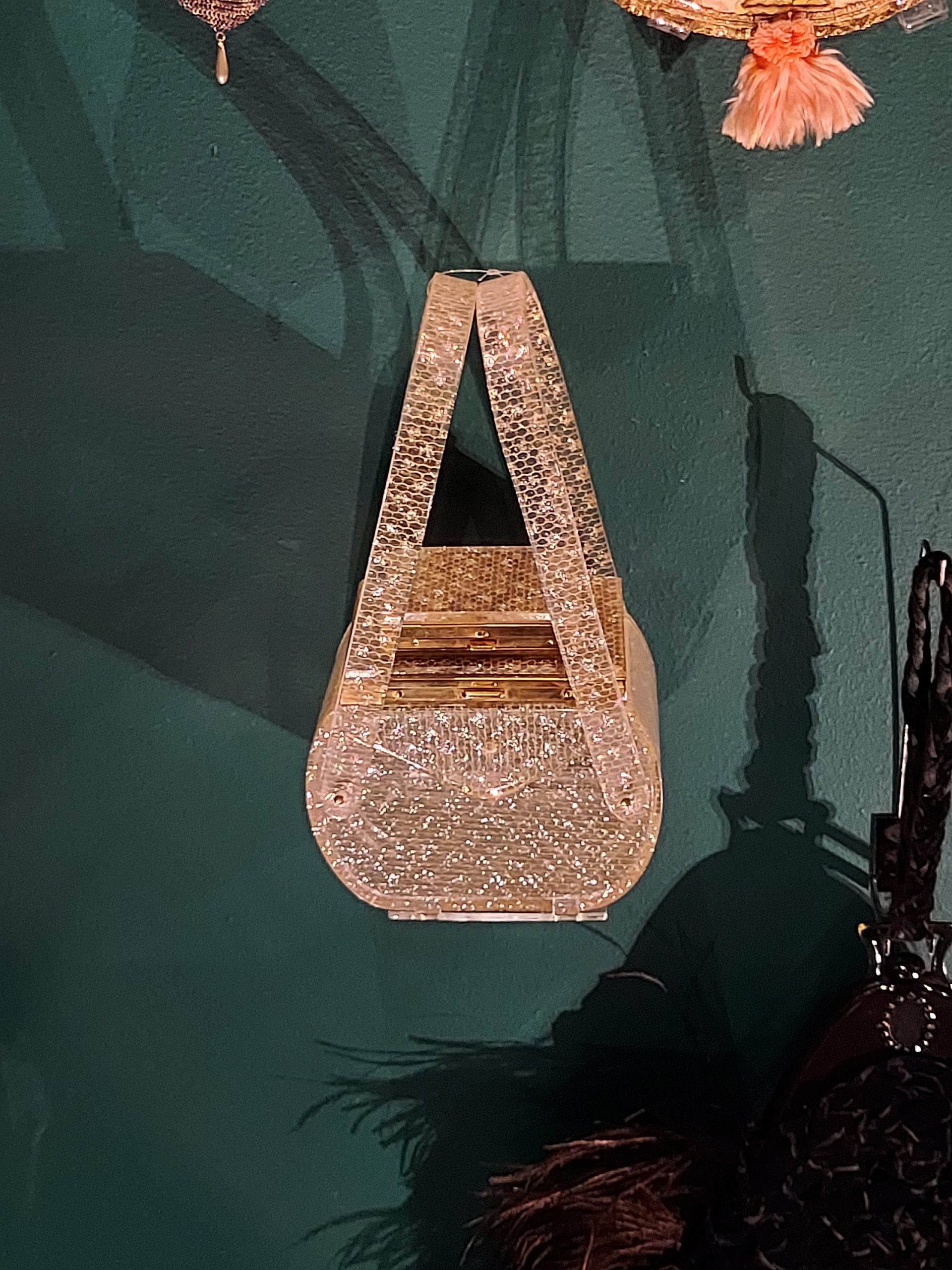
I particularly liked the bags with lots of tiny compartments, popular in the late nineteenth and early twentieth centuries, such as a handbag with a compartment for lipstick, or an ‘opera bag’ containing opera glasses and a fan.
In terms of more modern styles, I liked a bag from the collection of fashion blogger ‘Mr Bags’ which comes with a cute unicorn charm.
Bag designed by ‘Mr Bags’
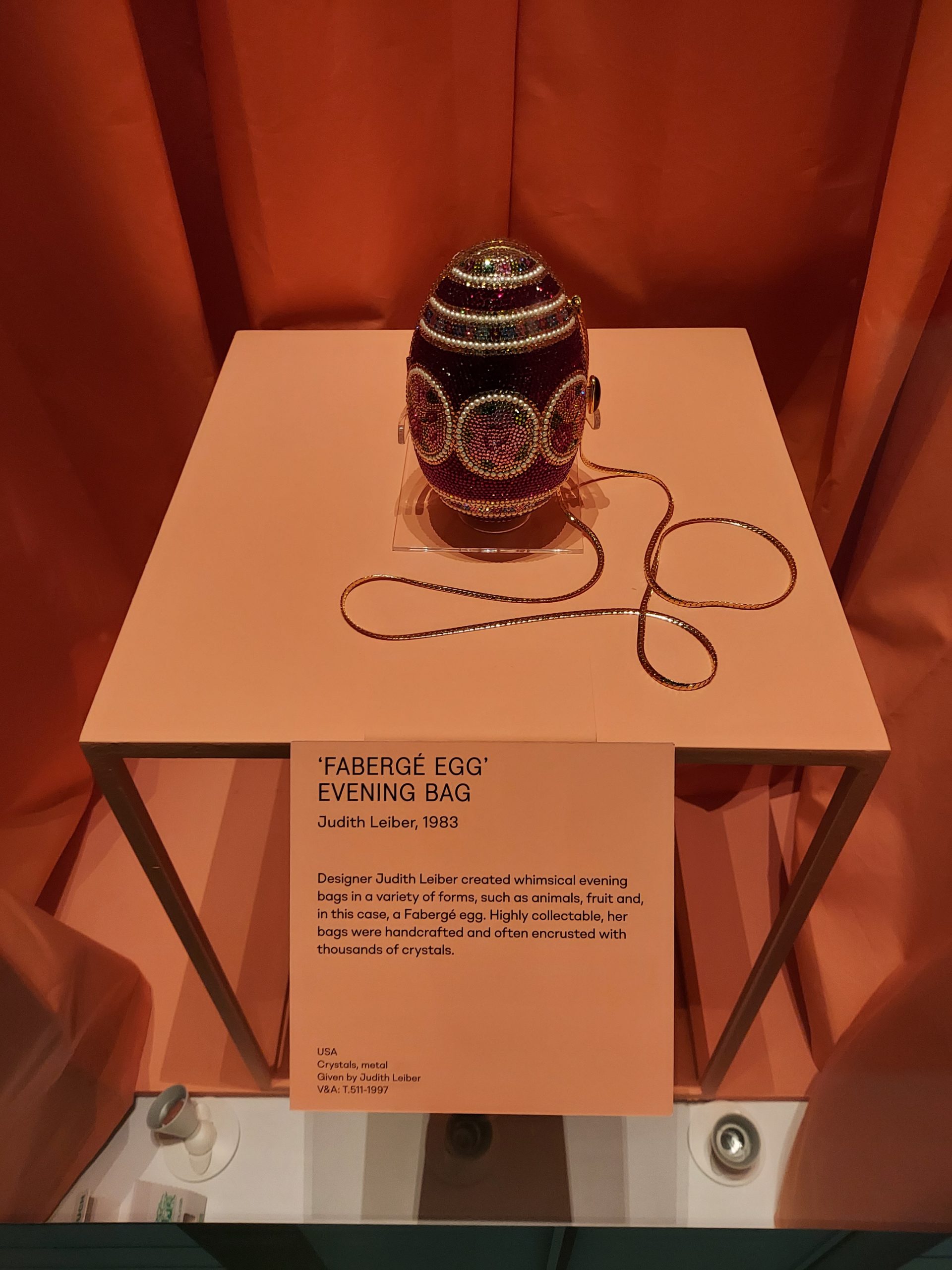
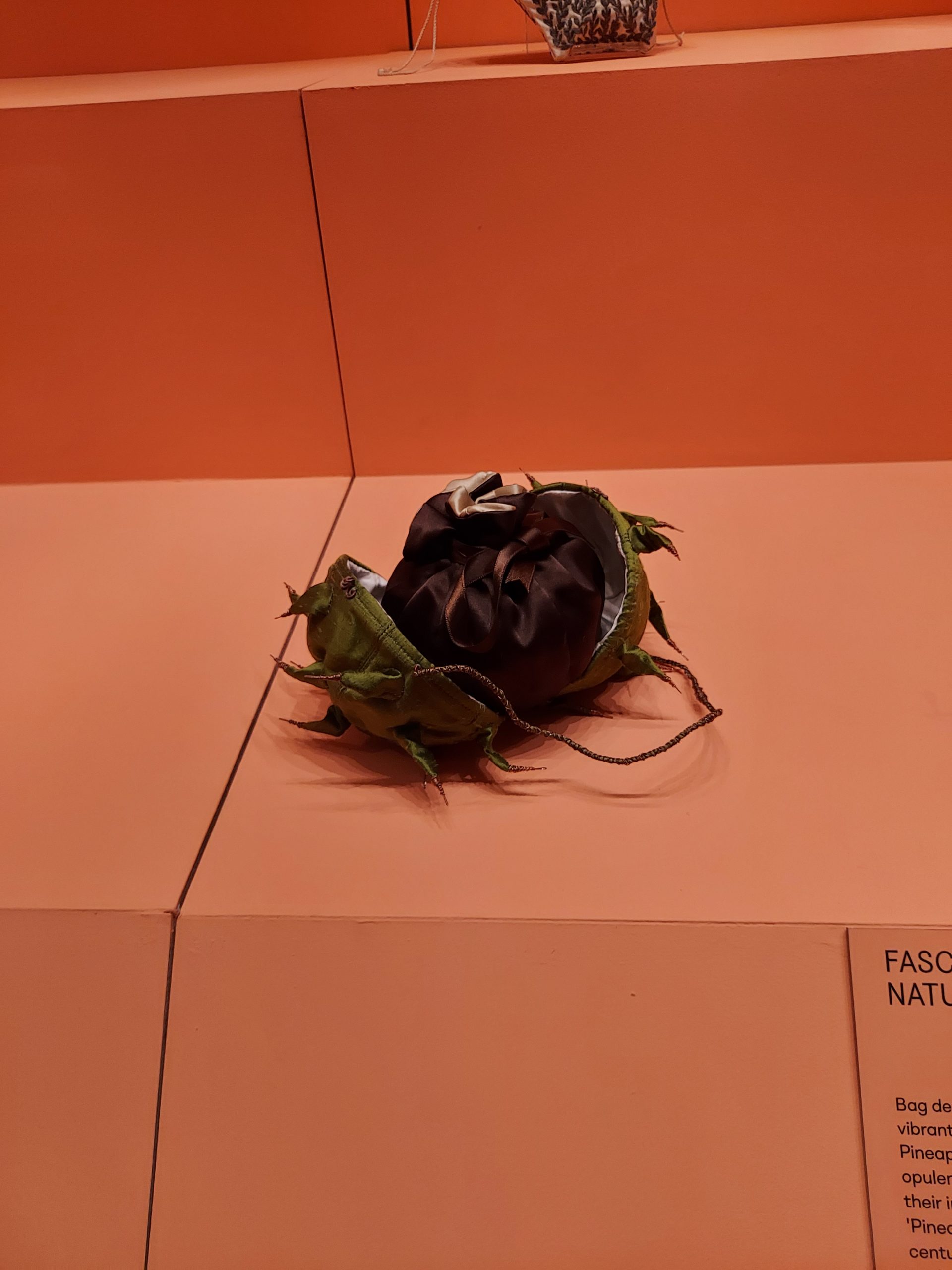
My absolute favourite bags, however, are novelty bags in unusual shapes, and this exhibition had several excellent examples.
On the upper level of the exhibition there was a display devoted to the making of bags – it looks like a very complicated and scientific process and I confess it was far beyond me! This part of the exhibition also looked at different materials used to make bags and their properties.
Bags: Inside Out is worth a visit especially if you are a bag lover like me. Even if you aren’t, you will probably appreciate the design and craftsmanship that goes into creating a beautiful bag.
*When I was a child I had a shiny black (fake) leather backpack that I adored. In it I kept my Dear Diary, notebook, lip gloss and whichever book I was reading at the time. I took it everywhere with me and loved it so much that my brother made up stories about it: “The Adventures of the Black Bag”. I can’t remember what any of the stories were about, but the title sounds vaguely Holmesian.
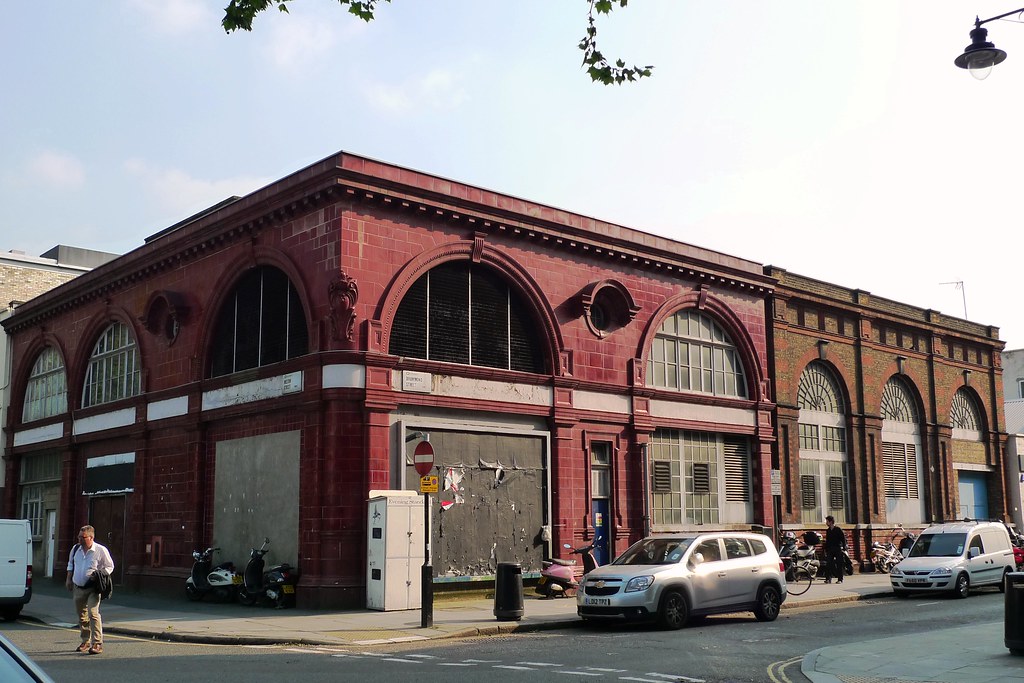
The now-disused, Leslie Green-designed entrance to Euston Underground (CCE&HR branch)
When thinking of Euston station, I suspect most people would think of the ugly 60s building that, amid much controversy, replaced the famous arch which marked the entrance to the railway station. However, in a virtual tour entitled ‘Euston: The Lost Tunnels’ I learned that there is much more going on beneath this station. There are no less than two disused stations in amongst the tracks and tunnels of Euston as it is now; some of these tunnels have not been used by passengers for over a century.
The mainline station opened in 1837, linking passengers in the Midlands to London. Companies operating the city’s tube lines wanted to take advantage of the passenger traffic from the station, and in the early 1900s the Charing Cross, Euston & Hampstead Railway (CCE&HR) and the City & South London Railway (C&SLR) had both been permitted to build stations near, albeit not directly on, the mainline terminus. They were allowed to construct a shared underground ticket hall below ground, which linked up their two stations on either side of the main station – the only such ticket hall which still survives.
The C&SLR, London’s first deep level tube line, opened in 1890 and extended to Euston in 1907. The station building was designed by Sidney Smith and the façade was green and white, Doulton’s glazed Carraraware. Today, the building no longer stands but the C&SLR is now the Bank branch of the Northern line. Like many stations on this line, the C&SLR at Euston had an island platform, but this has now been modified (this is why some platforms at Euston seem massive).
Later the same year, the CCE&HR opened its station, a typical Leslie Green design with oxblood-red tiles, with a green and cream design inside. However, passengers largely preferred the joint ticket office below ground and both station buildings had relatively low usage. By 1914, both companies were part of the Underground Electric Railways of London (UERL), aka the Underground Group, and the individual station buildings were closed.
The 1960s rebuild of the mainline station prompted a redesign and expansion of the Underground ticket hall, and the construction of the Victoria line that same decade also led to changes. The station was remodelled and rationalised, the ventilation system was upgraded, and many tunnels were closed off to passengers, remaining in use as ventilation shafts and storage areas, and acting as time capsules, with old advertising displays and movie posters fixing the tunnels in time.
With the construction of HS2, the CCE&HR station building pictured above is due to be demolished, but the disused tunnels will remain – something I’m extremely glad about.
I’d been meaning to visit Brookwood Cemetery for a few years, and finally got round to it on the May bank holiday weekend. It was a warm day when I set off, beginning my journey at Waterloo Station. I followed the Brookwood Cemetery Trail at discoveringbritain.org.
If you’ve visited any of the Magnificent Seven in what were, in the nineteenth century, the outskirts of London, you will probably be familiar with with the context behind the development of new cemeteries. London was growing increasingly crowded and there was increasingly little room for burials in the parish churches. Entrepreneurs founded cemeteries further from the centre of London where there was more space. One example, the London Necropolis Company, went even further: Brookwood Cemetery in Surrey opened in 1854, more than 25 miles from central London, along with the Necropolis Railway that took the dead and their grieving families out of the capital and into leafy Surrey.
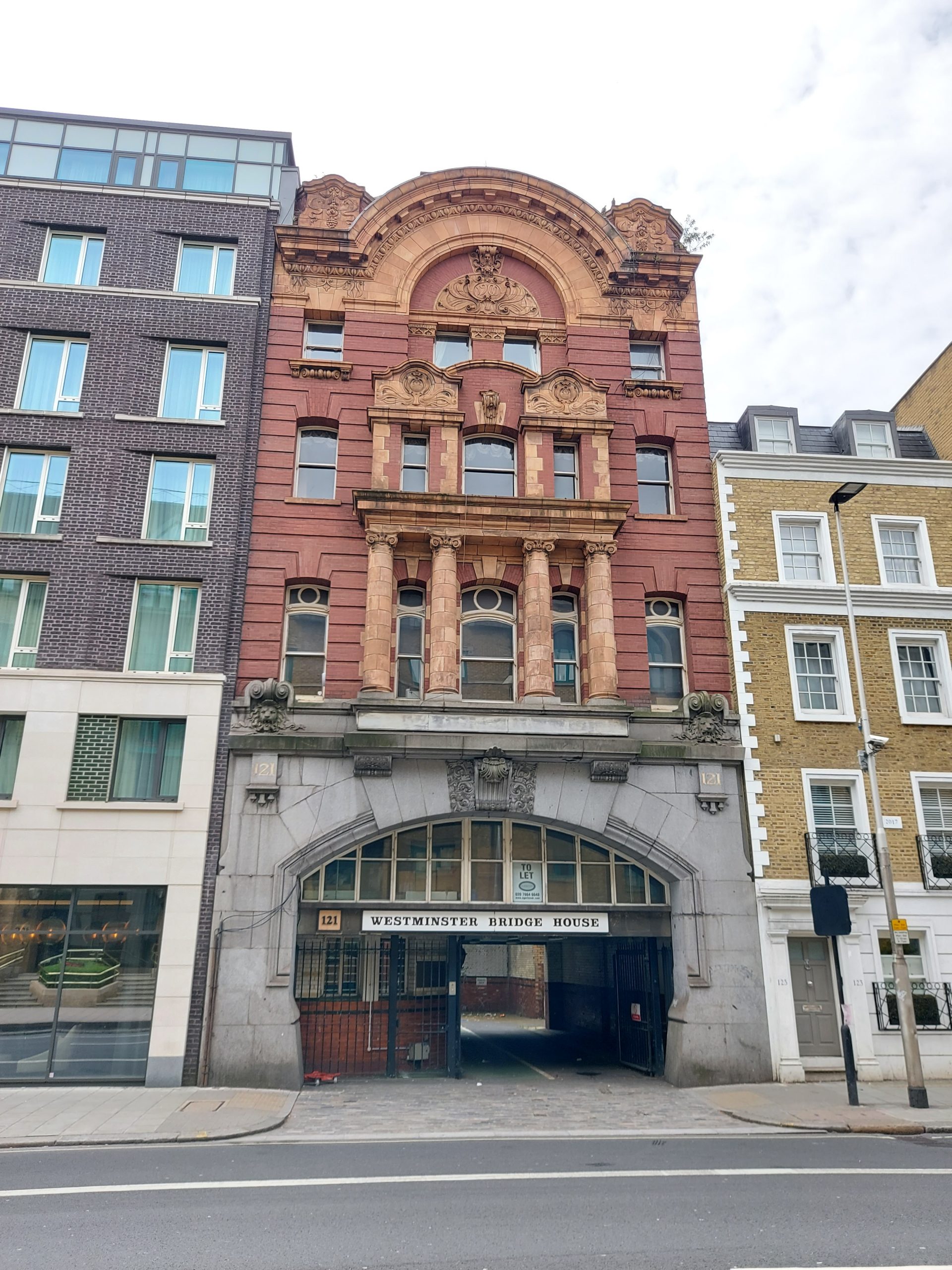
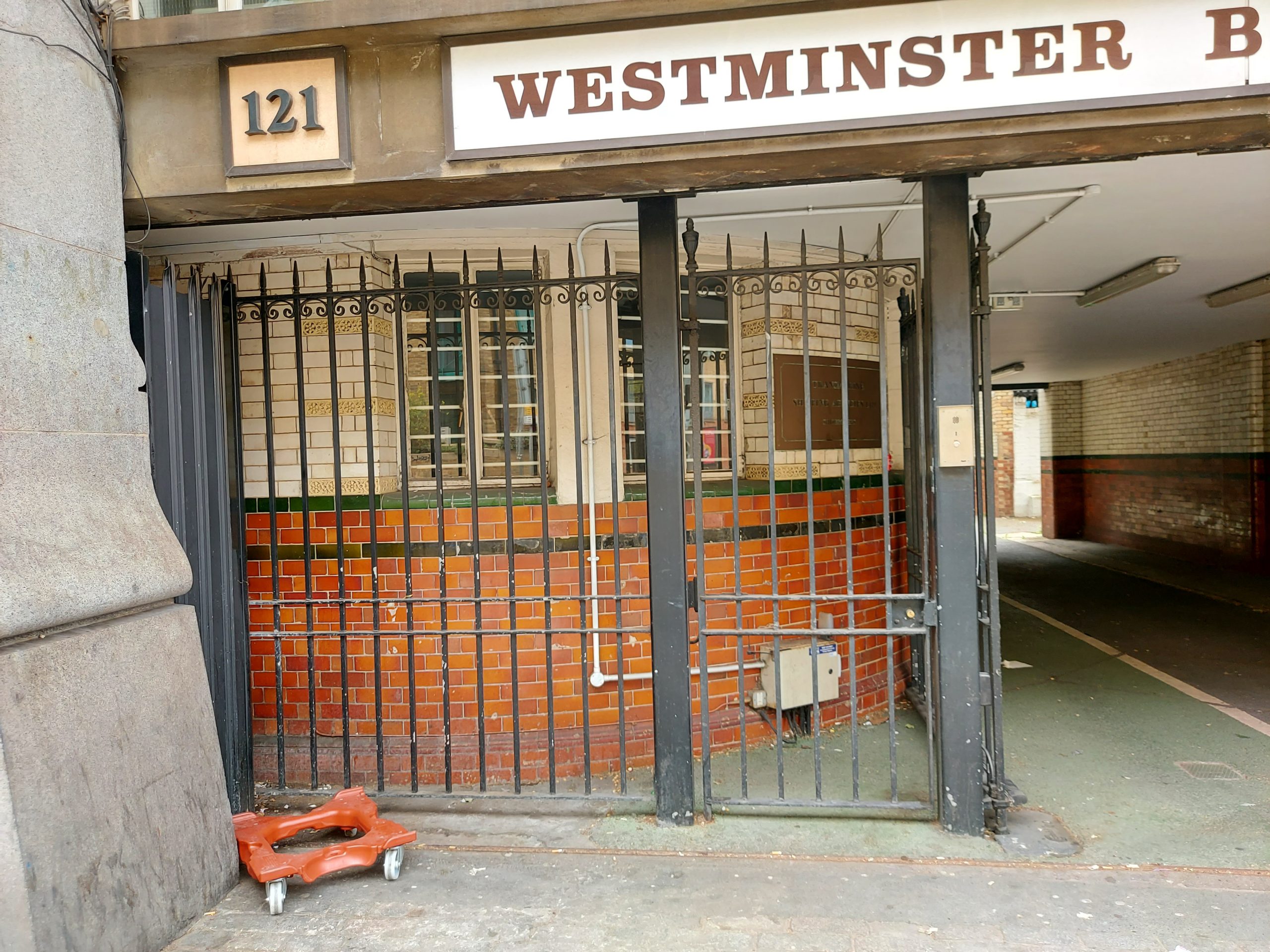
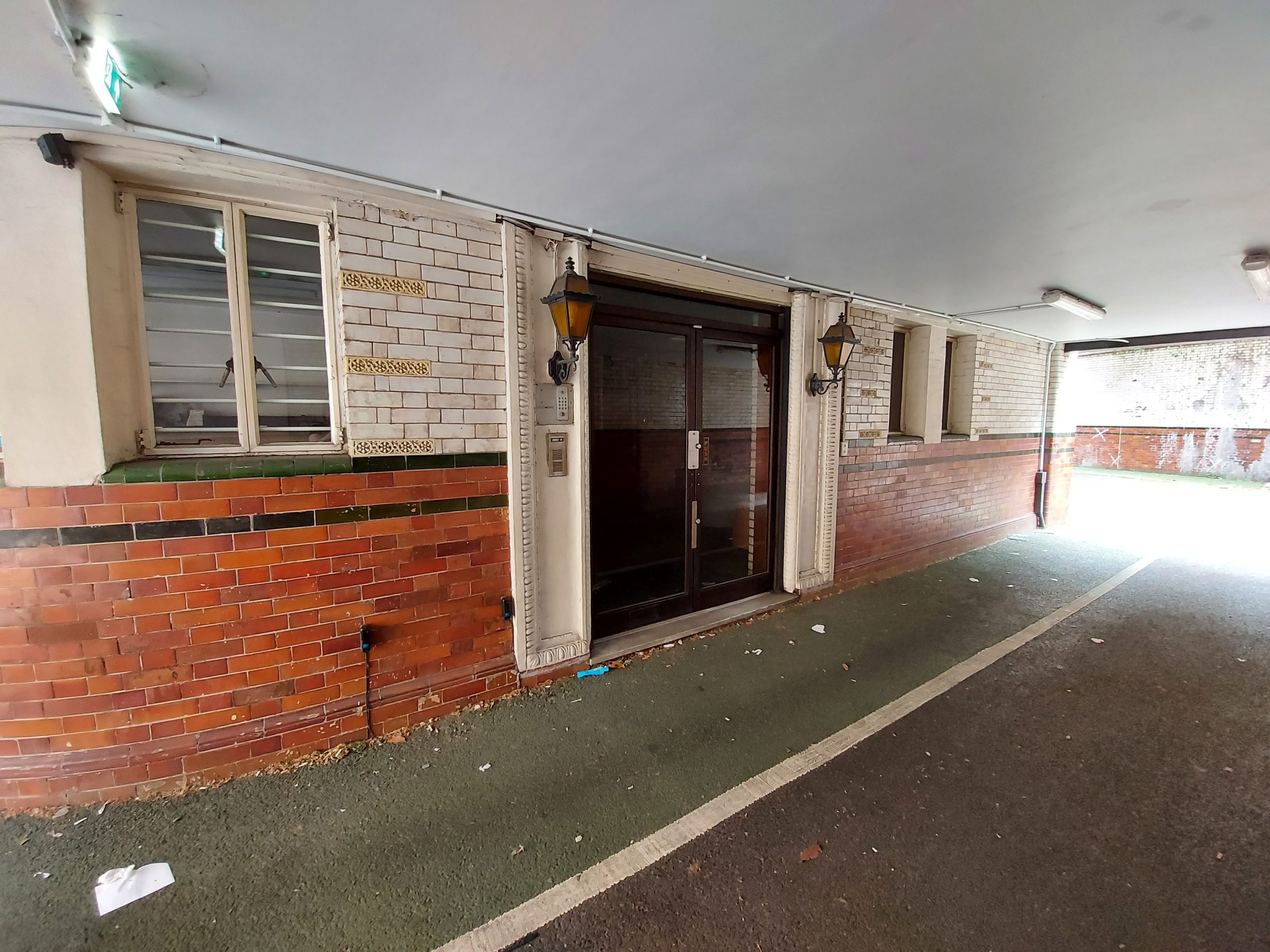
My walk began near Waterloo Station, on Westminster Bridge Road, where the original entrance to the Necropolis Railway still stands.
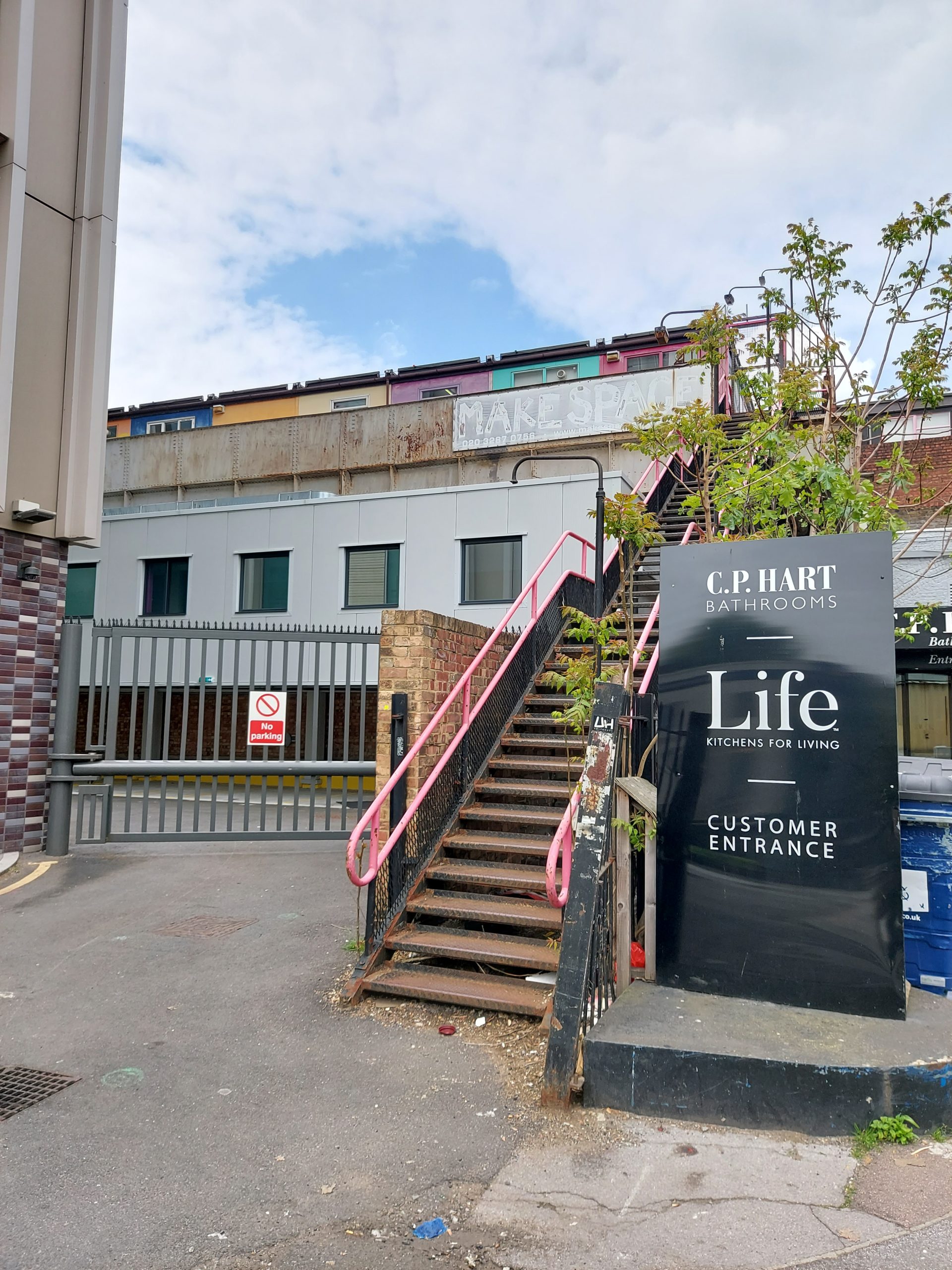
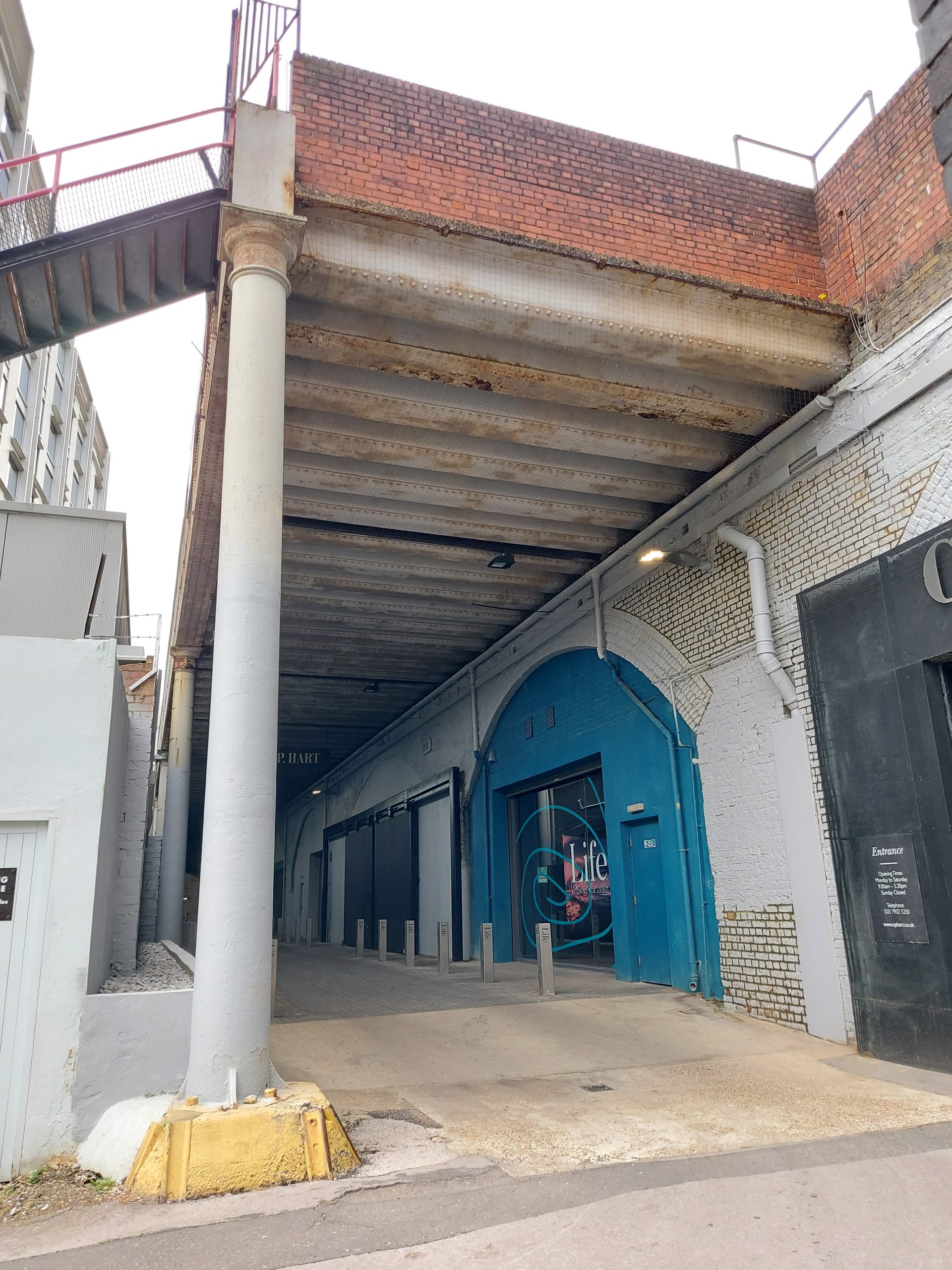
Nearby, on Newnham Terrace, a dead-end street reveals white pillars that once held up the platform from which the train containing coffins and mourners began its journey to Brookwood. The first train ran on 13 November 1854, and ran until 17 April 1941 – when the station was bombed.
From a nearby junction, trains would join the main London to Woking line to complete their journey. I headed back to Waterloo and boarded a train which stopped at Brookwood. I got off here, ignoring the exit leading towards the village of Brookwood and heading in the opposite direction, where the exit leads directly into the cemetery.
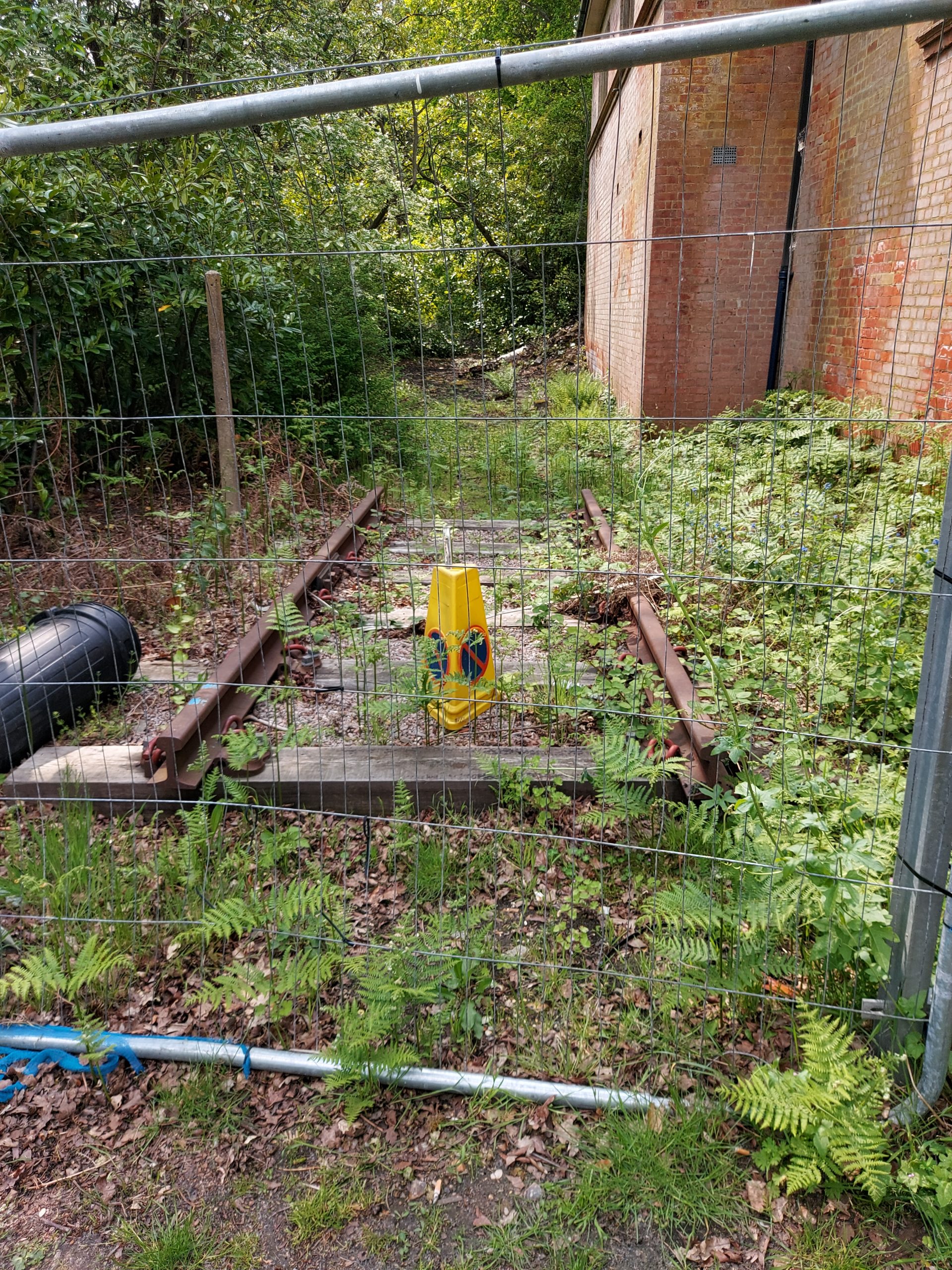
The short stretch of track immediately visible on the right as you exit the station commemorates the old Brookwood Cemetery branch line. This line ran from the mainline station to two smaller stations within the cemetery: the North Station for Non-Conformists, the South Station for Anglicans.
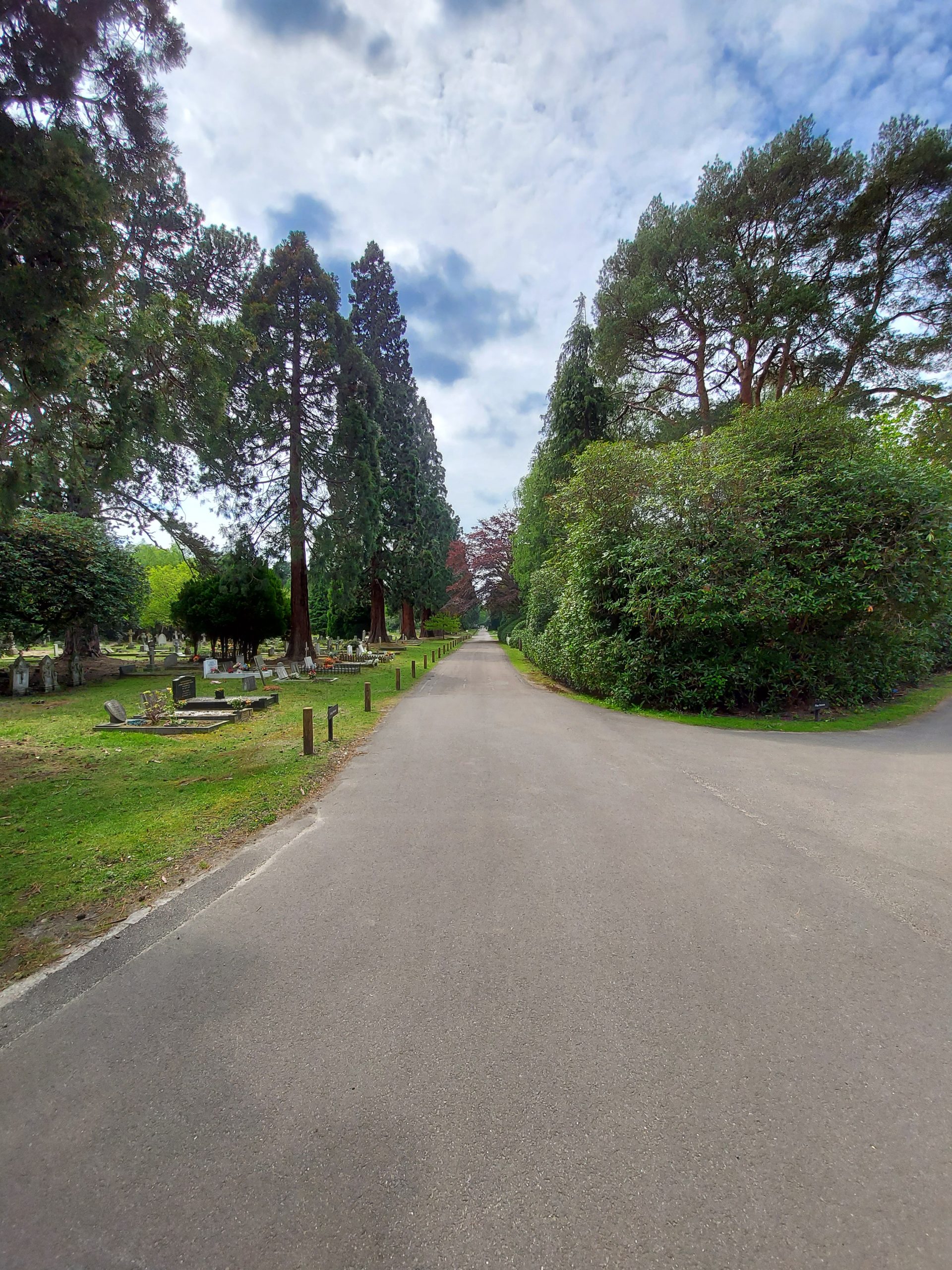
Long Avenue
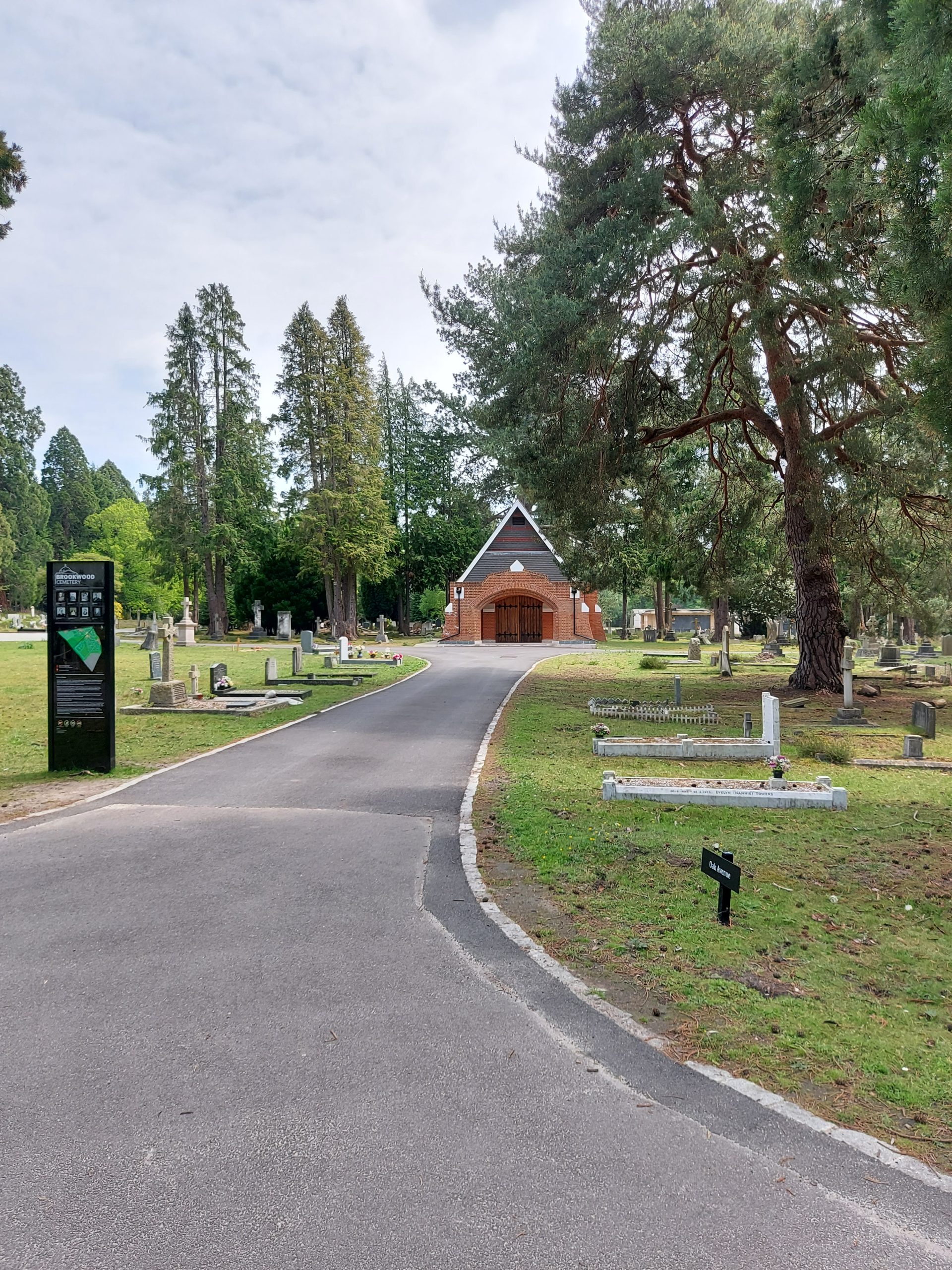
Chapel
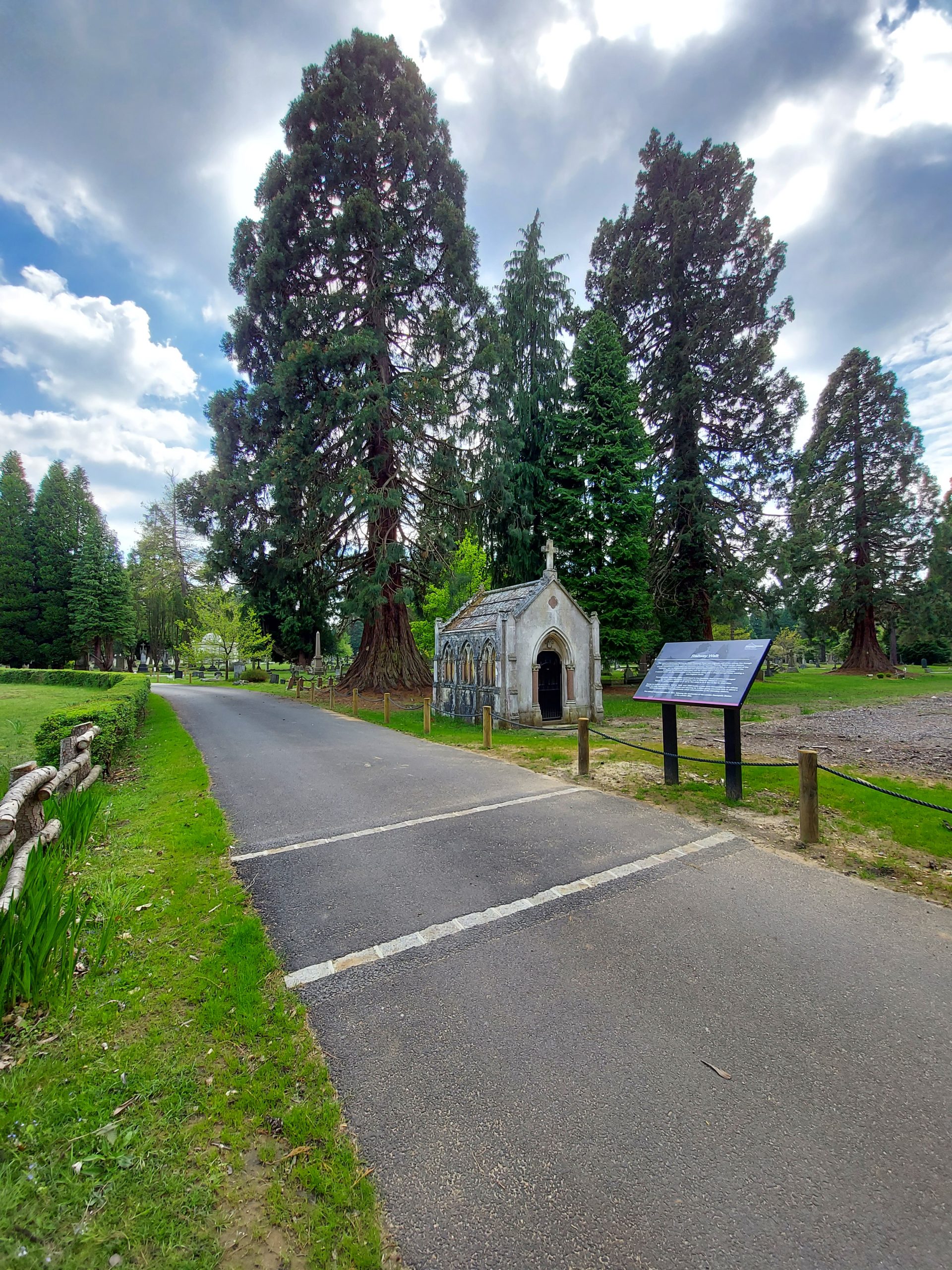
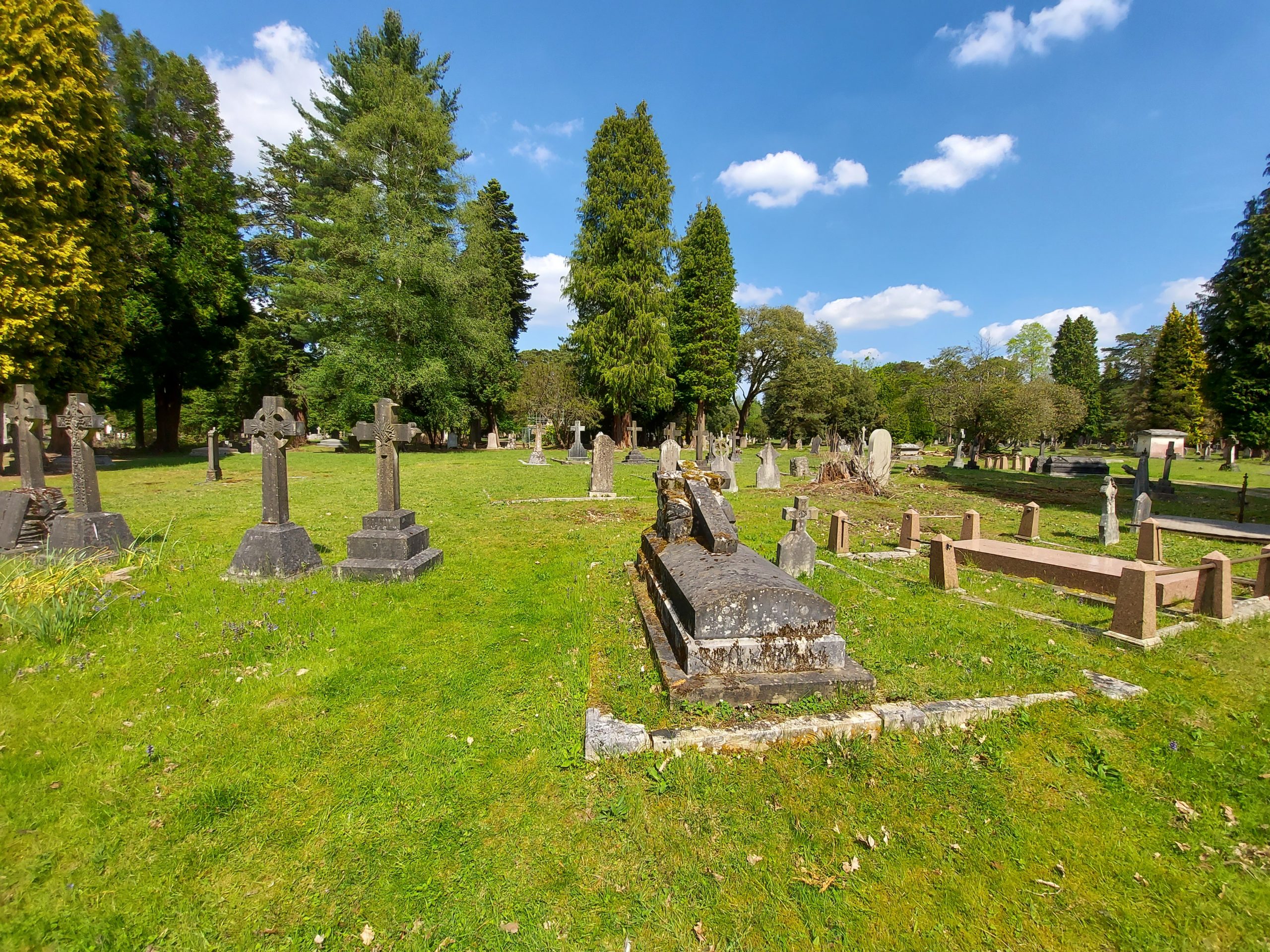
Brookwood is the largest cemetery in the United Kingdom and one of the largest in Europe. As I walked around it I noticed that it was spacious and open, not cramped like some of the Magnificent Seven are. Demand wasn’t as high as forecast back in the nineteenth century, so much of Brookwood’s capacity went unused. However, around two thirds of Brookwood’s burials are in unmarked graves, pauper burials paid for by the parishes of London.
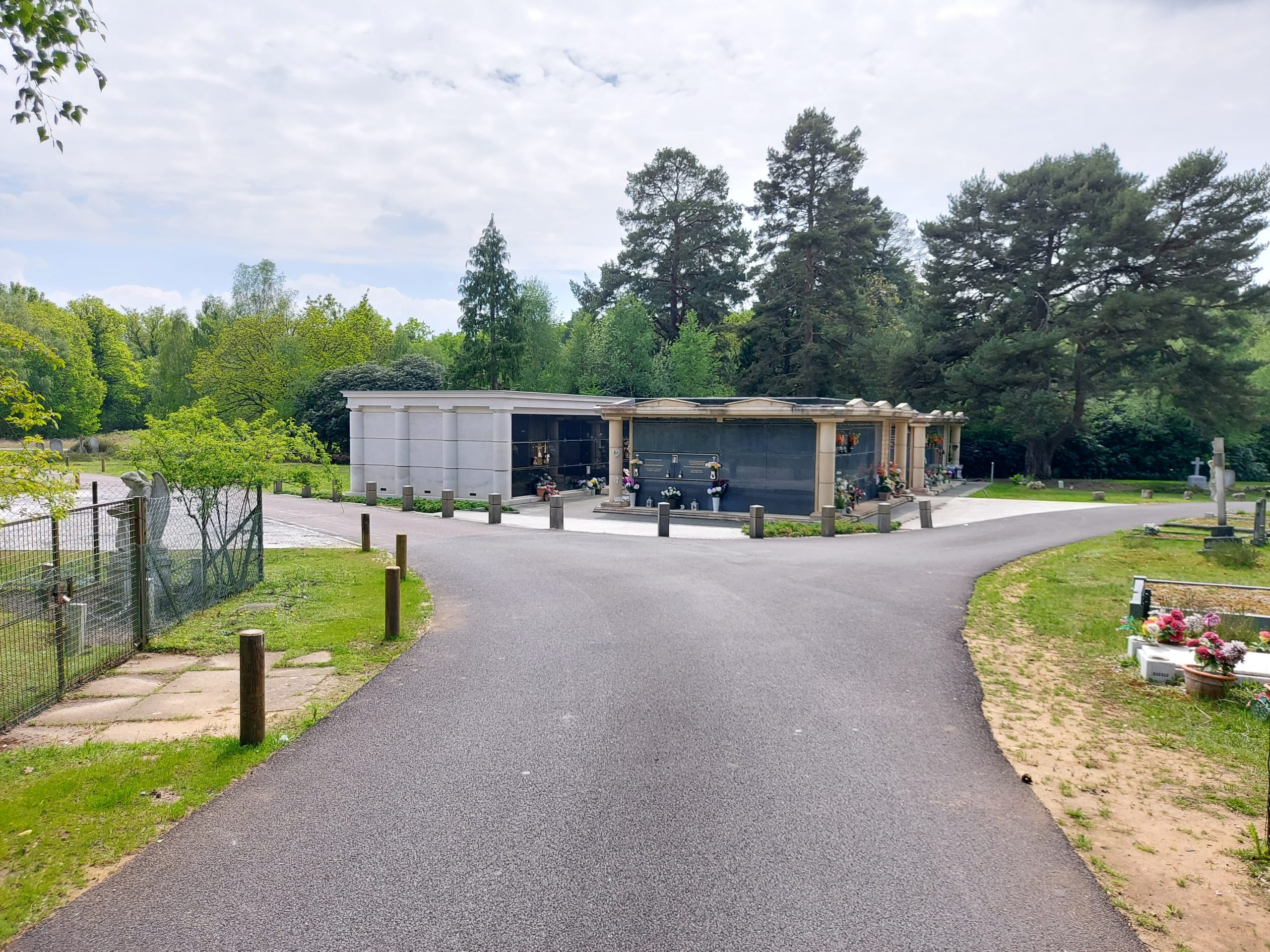
Columbarium
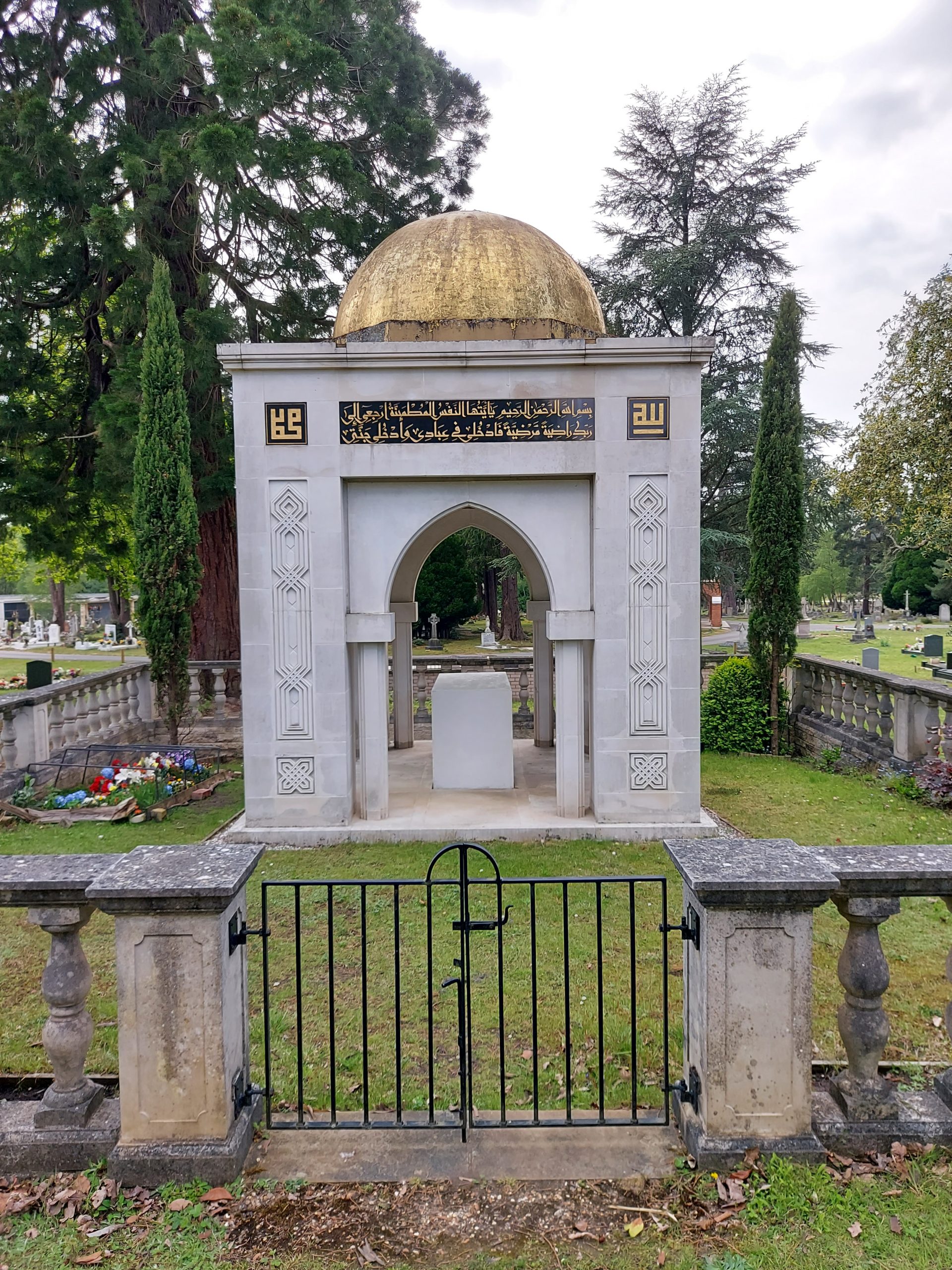
Elaborate tomb
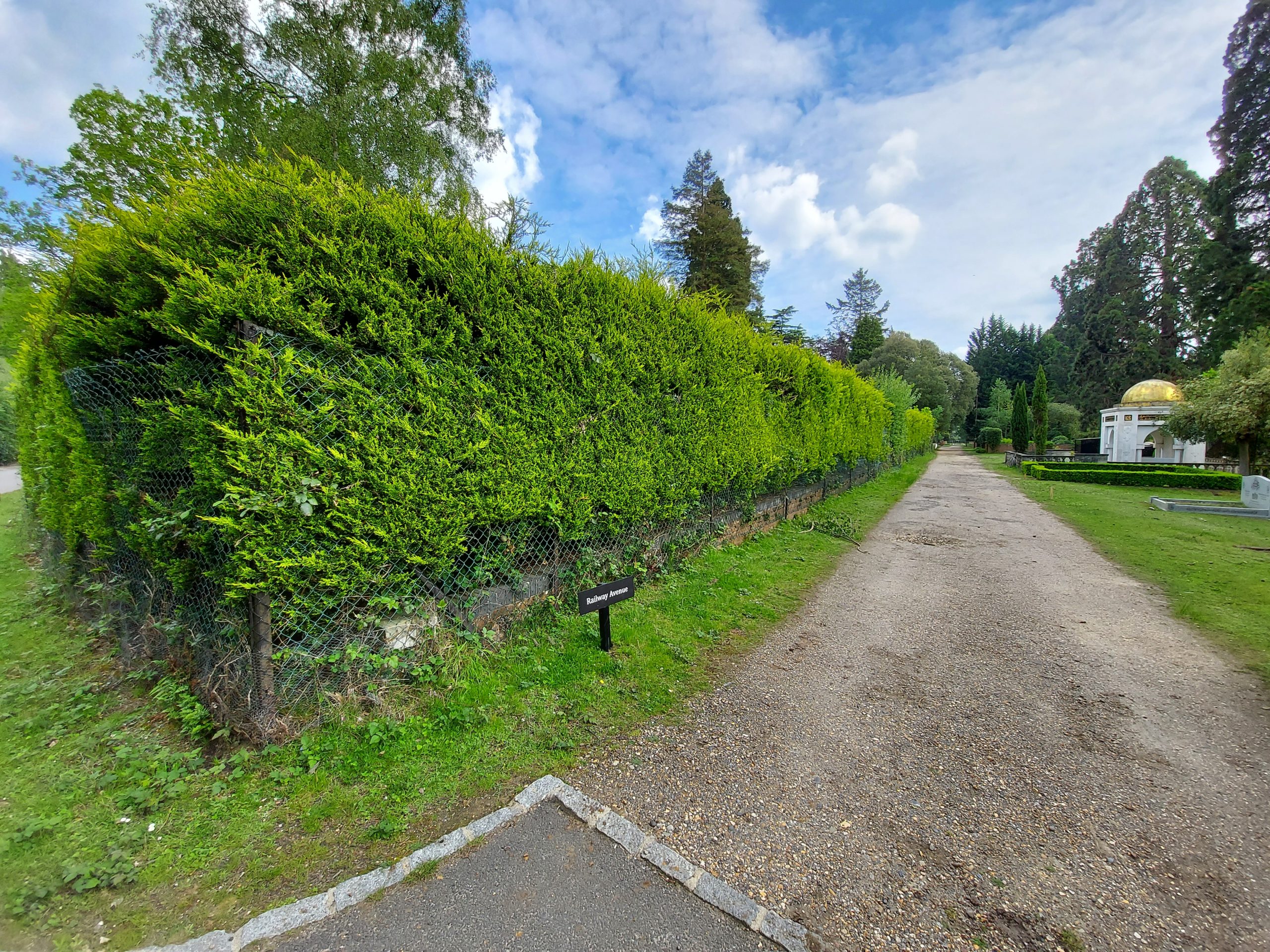
I began my walk in the north part of the cemetery. I was impressed that people of different religions and backgrounds are buried here: as well as all denominations of Christians, the cemetery is a burial place for many Jews and Muslims. There is even a columbarium. I headed down Long Avenue then turned into Railway Avenue, so named because it follows the route of the original branch line train. A low brick wall marks the location of the North Station (the building was demolished in the 1960s).
Location of North Station
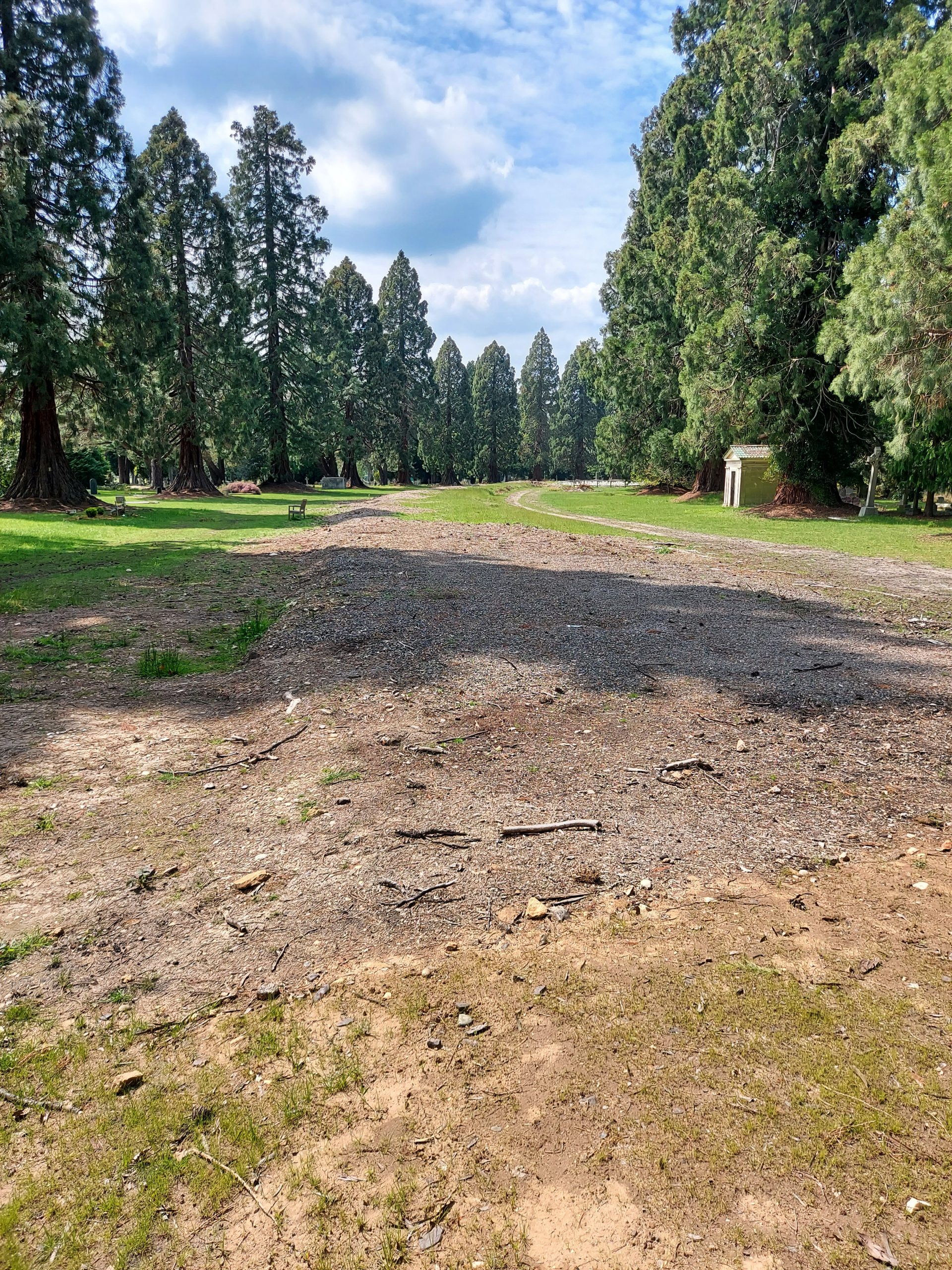
Route of the former branch line on the way to the South Station
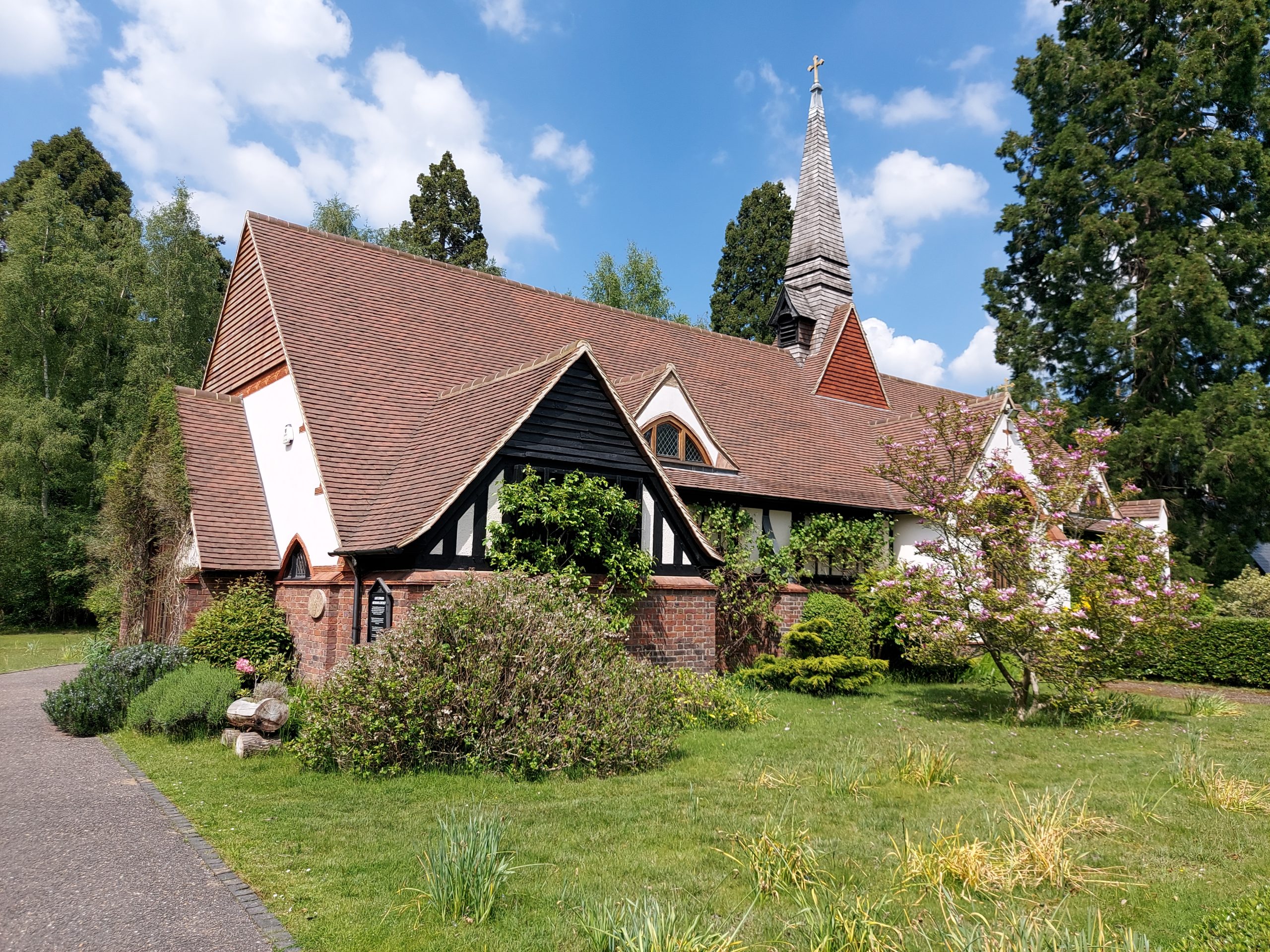
The cemetery is divided into two by the public road Cemetery Pales. I crossed the road to reach the south section, following the track of the branch line. In this section can be found the church of St Edward the Martyr, an Anglo-Saxon king of England who was murdered three years into his reign. His remains were buried at Shaftesbury Abbey in Dorset, but were rediscovered in the 1930s and enshrined here as holy relics. The remains of the South Station can be found behind this church.
Church of St Edward the Martyr
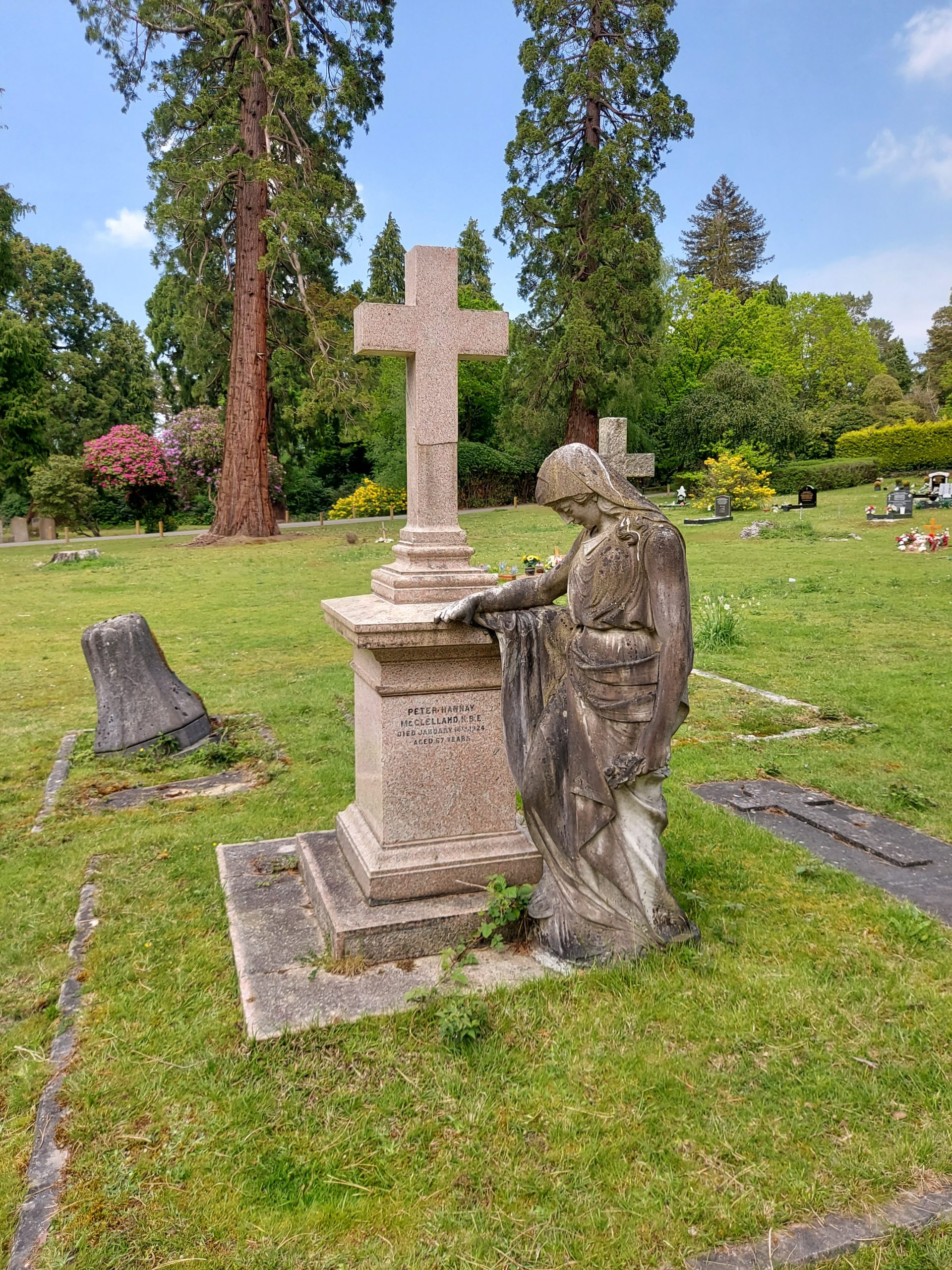
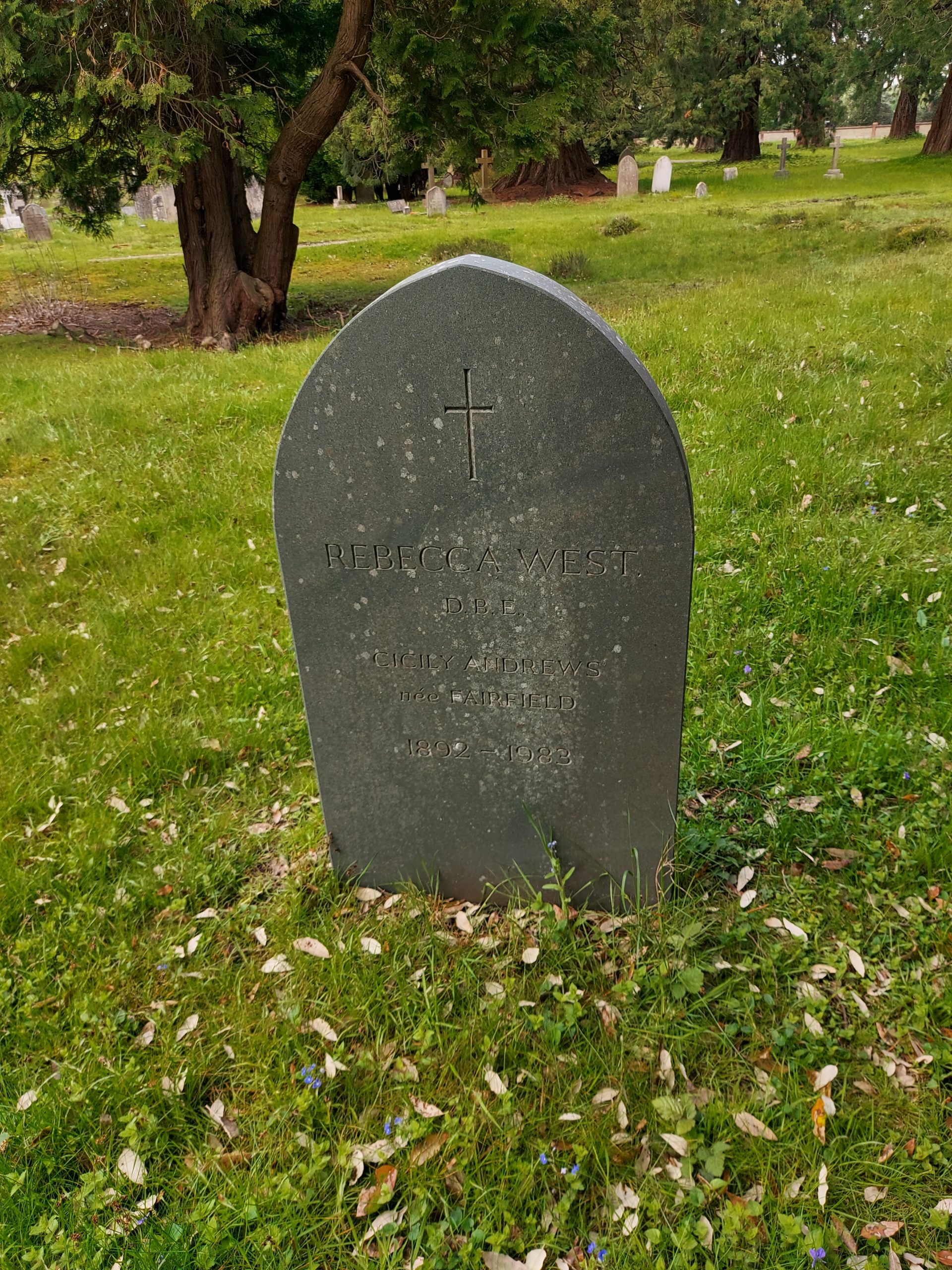
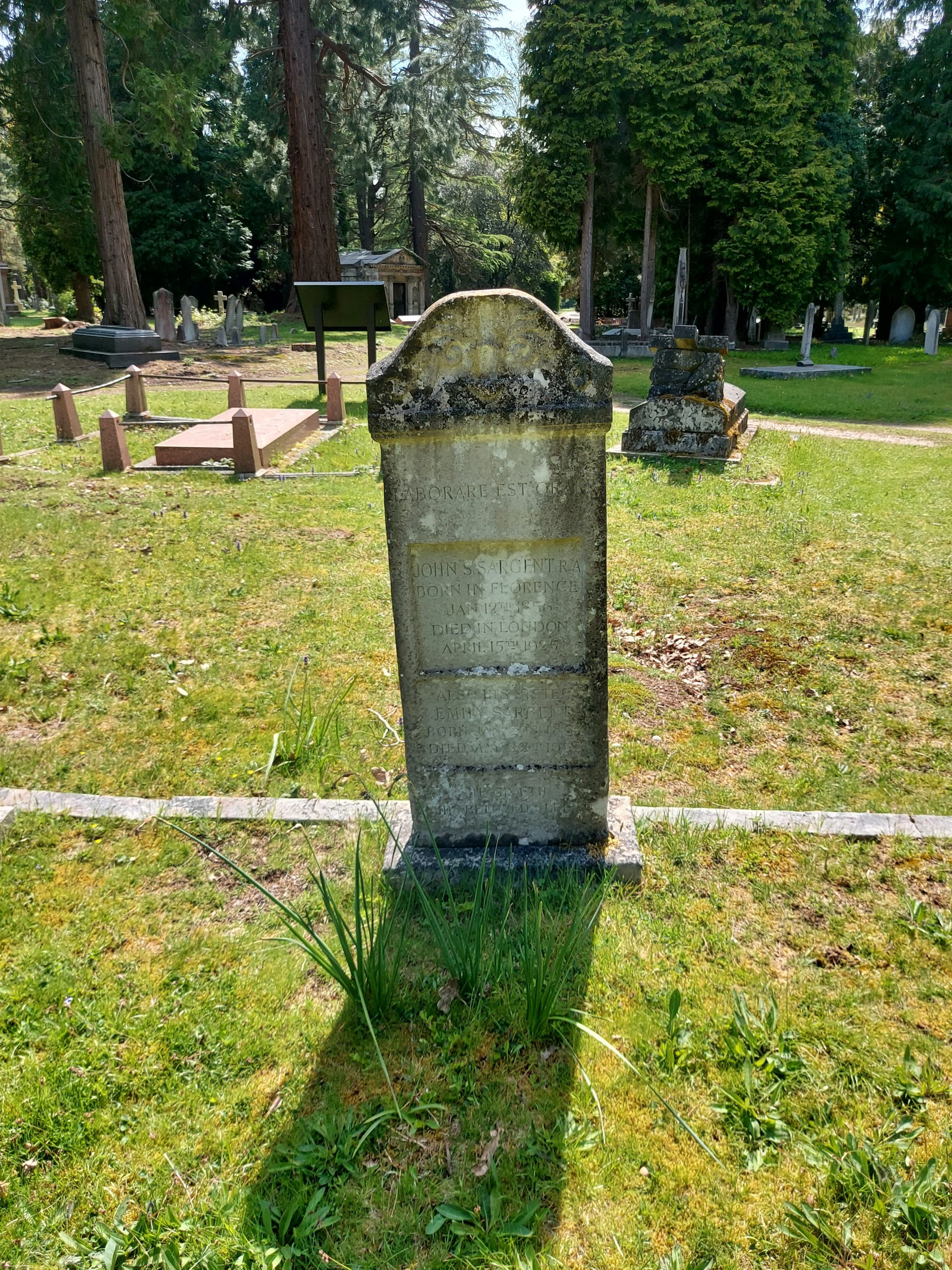
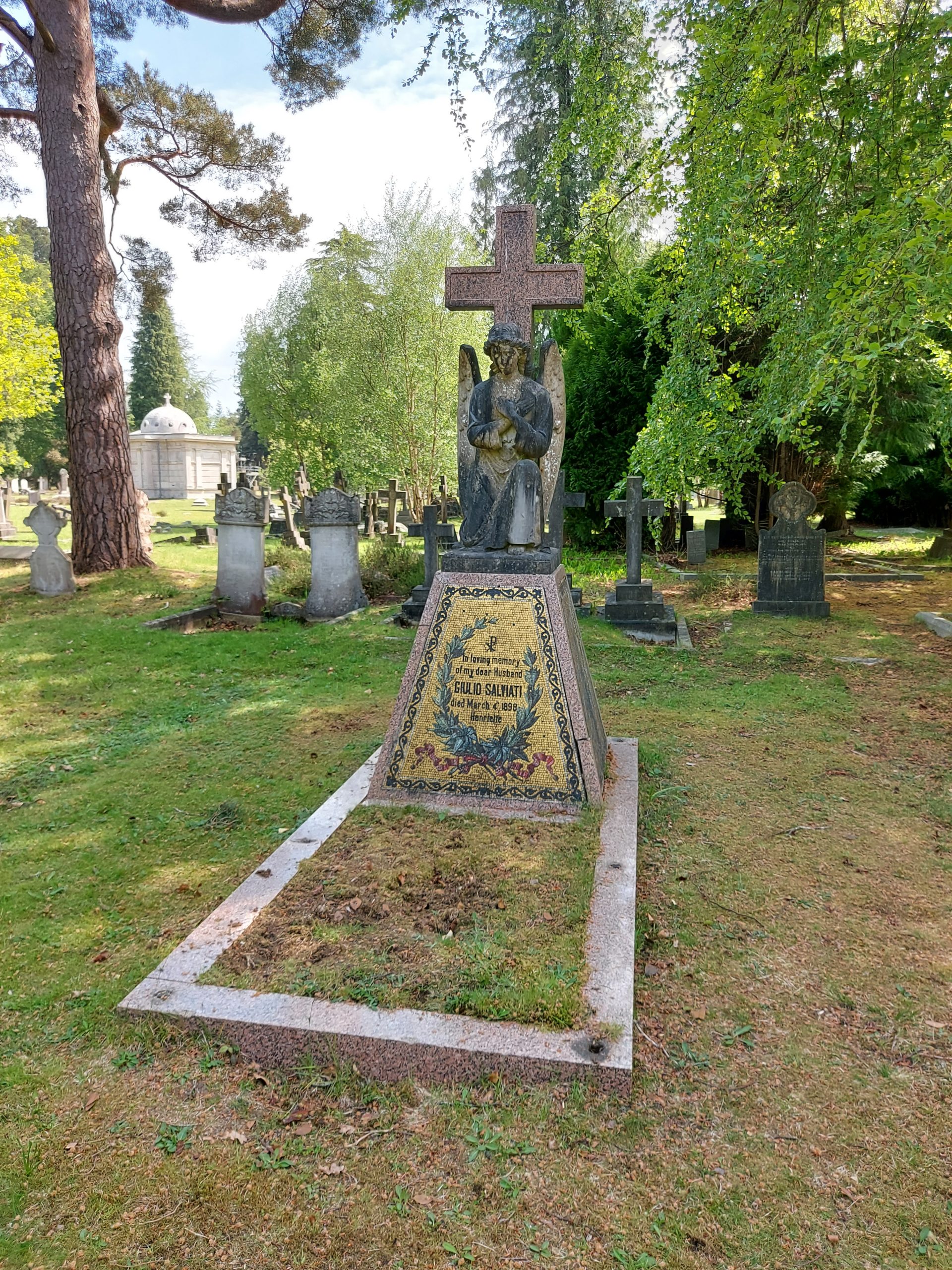
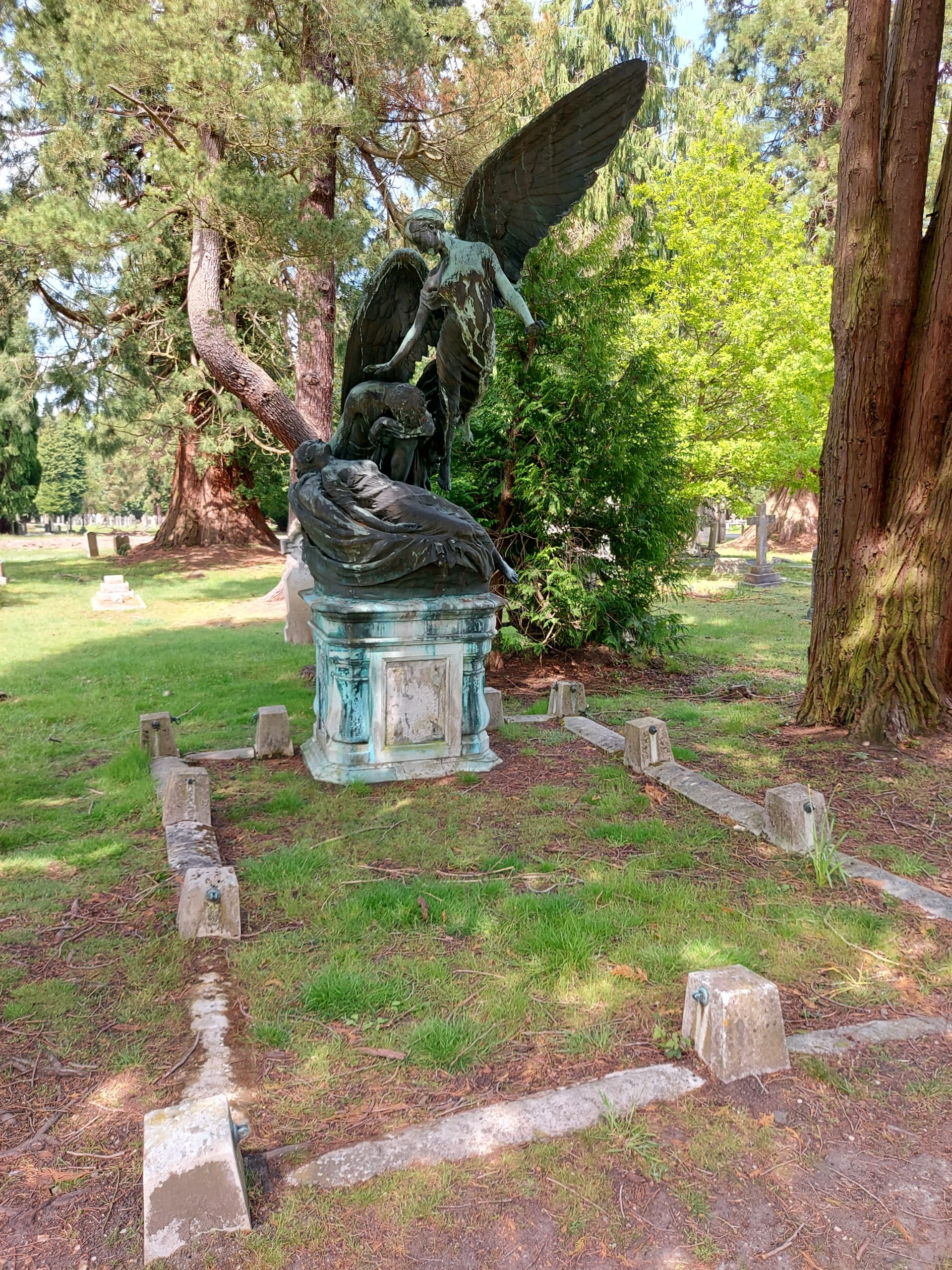
This section of the cemetery was my favourite as it had more of the Victorian monuments and grave markers I love. Some notable individuals are also buried here, such as artist John Singer Sargent and novelist Rebecca West.
Rebecca West’s grave
John Singer Sargent’s grave
Brookwood is an amazing place to explore and I’m so glad I finally made the trip. If old graveyards are your thing, don’t miss it. Do be respectful though- especially as it is still a working cemetery. It’s a haven of peace and tranquillity which is sorely needed these days.
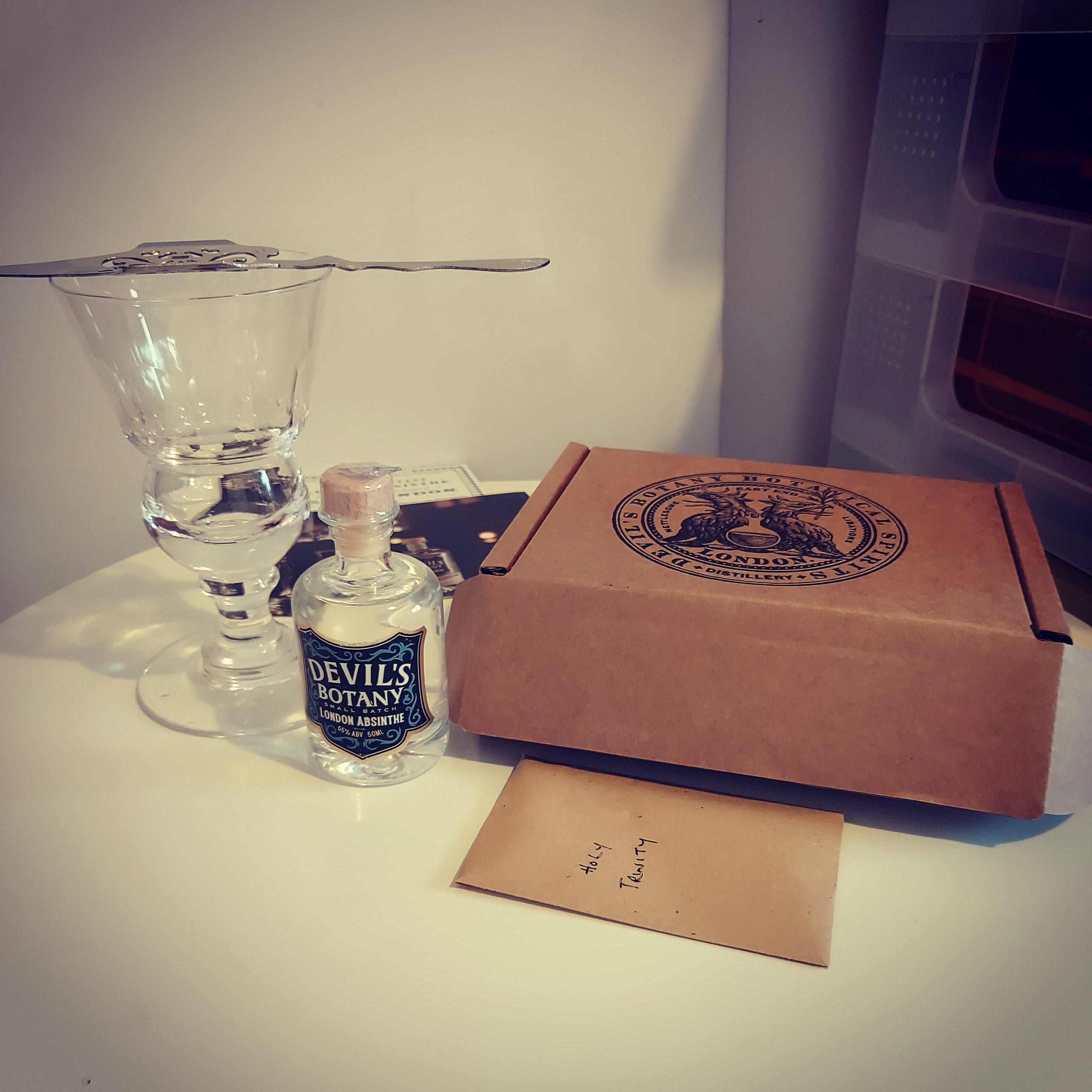
On Good Friday I signed up for an online absinthe tasting and lecture courtesy of the Viktor Wynd Museum and the Last Tuesday Society. I’d been meaning to go to the in-person tasting for a while, but of course lockdown put paid to real-life events for some time. The Origins & Rituals of Absinthe didn’t tell me much I didn’t already know about absinthe and its history (as I had a bit of an obsession with the stuff when I was at uni), but it was interesting to be reminded nevertheless. The ticket price included a discount on the tasting kit, which contained some of the ingredients which go to make up absinthe, such as wormwood, anise and fennel, as well as a small bottle of the finished product.
This particular brand of absinthe is Devil’s Botany, a new absinthe made in London. Unlike the absinthes I am familiar with, it is clear, not green, but I was impressed nevertheless. It had a crisp refreshing taste and was sweet enough not to need sugar. I would happily drink this again and I wonder if I will develop an absinthe habit to get me through the last few months of lockdown…