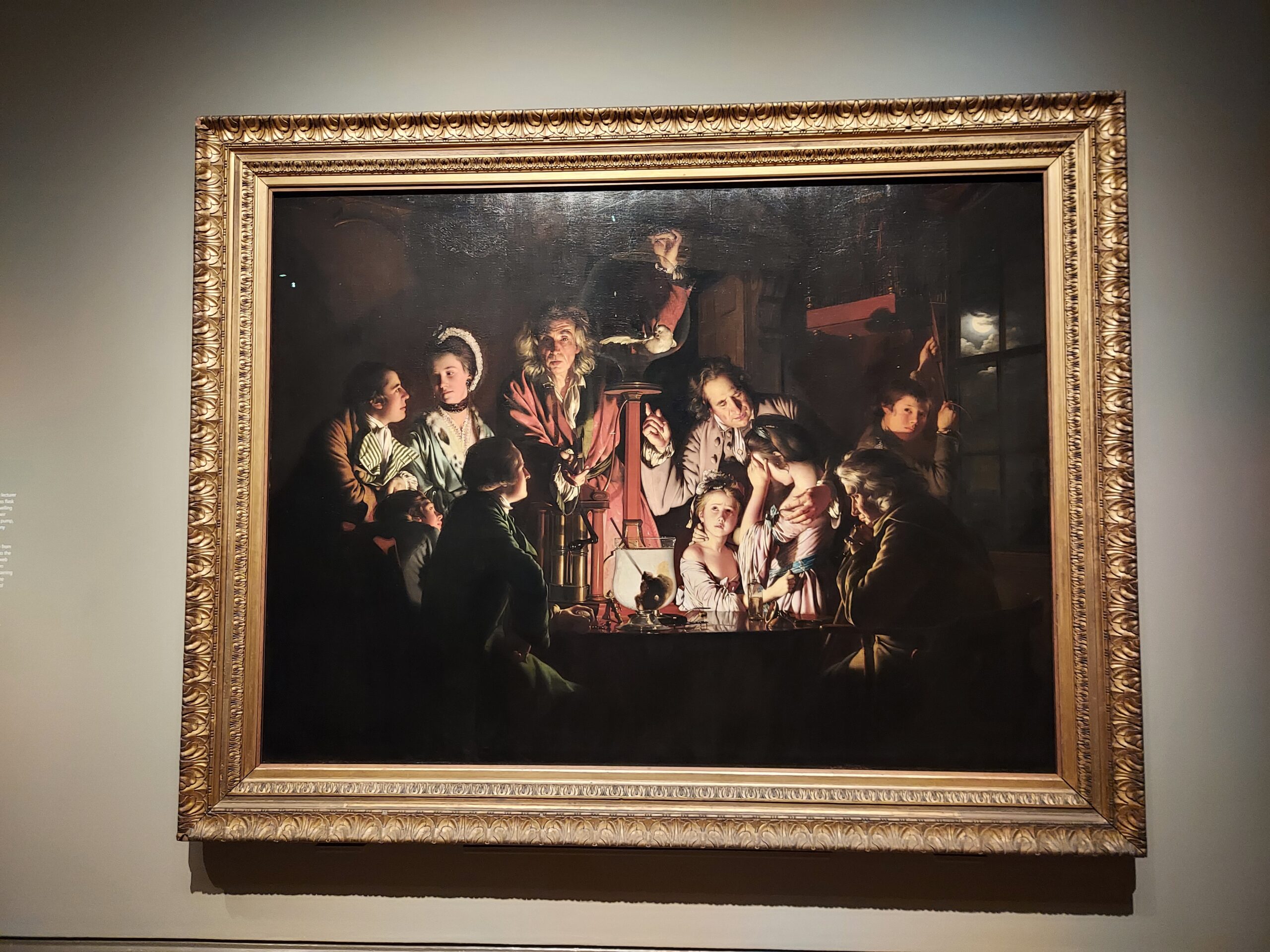
Wright of Derby: From the Shadows is a small but powerful exhibition at the National Gallery. It is the first major exhibition to look at the British artist’s ‘candlelight’ paintings, shedding new light on them – no pun intended.
Wright is most famous for his scientific paintings and Enlightenment associations. This exhibition reveals a gothic aspect to his work: a hint of the Romantic age that would succeed the Enlightenment. Perhaps they are not as different as you might think: both eras inspire wide-eyed wonder.
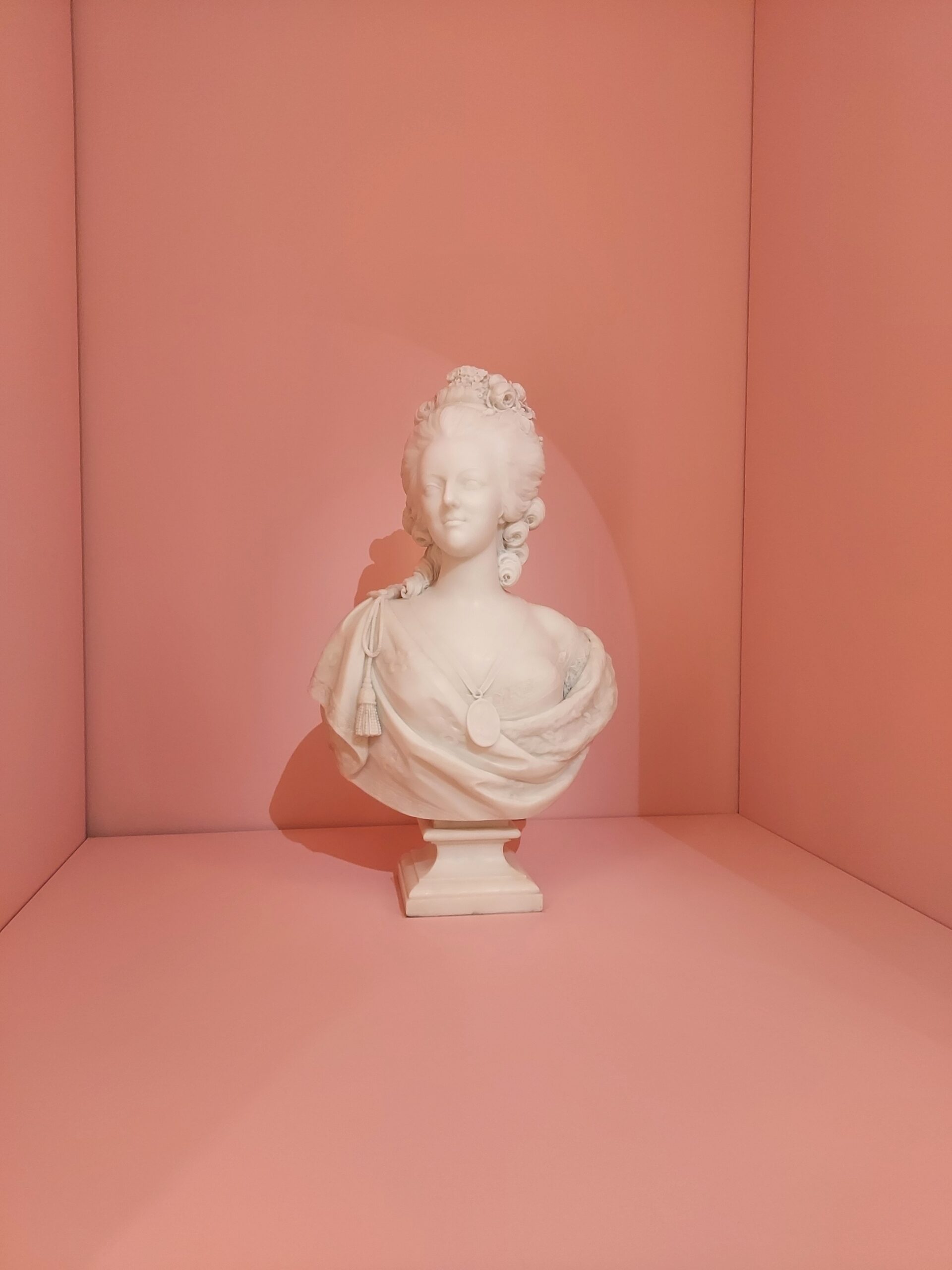
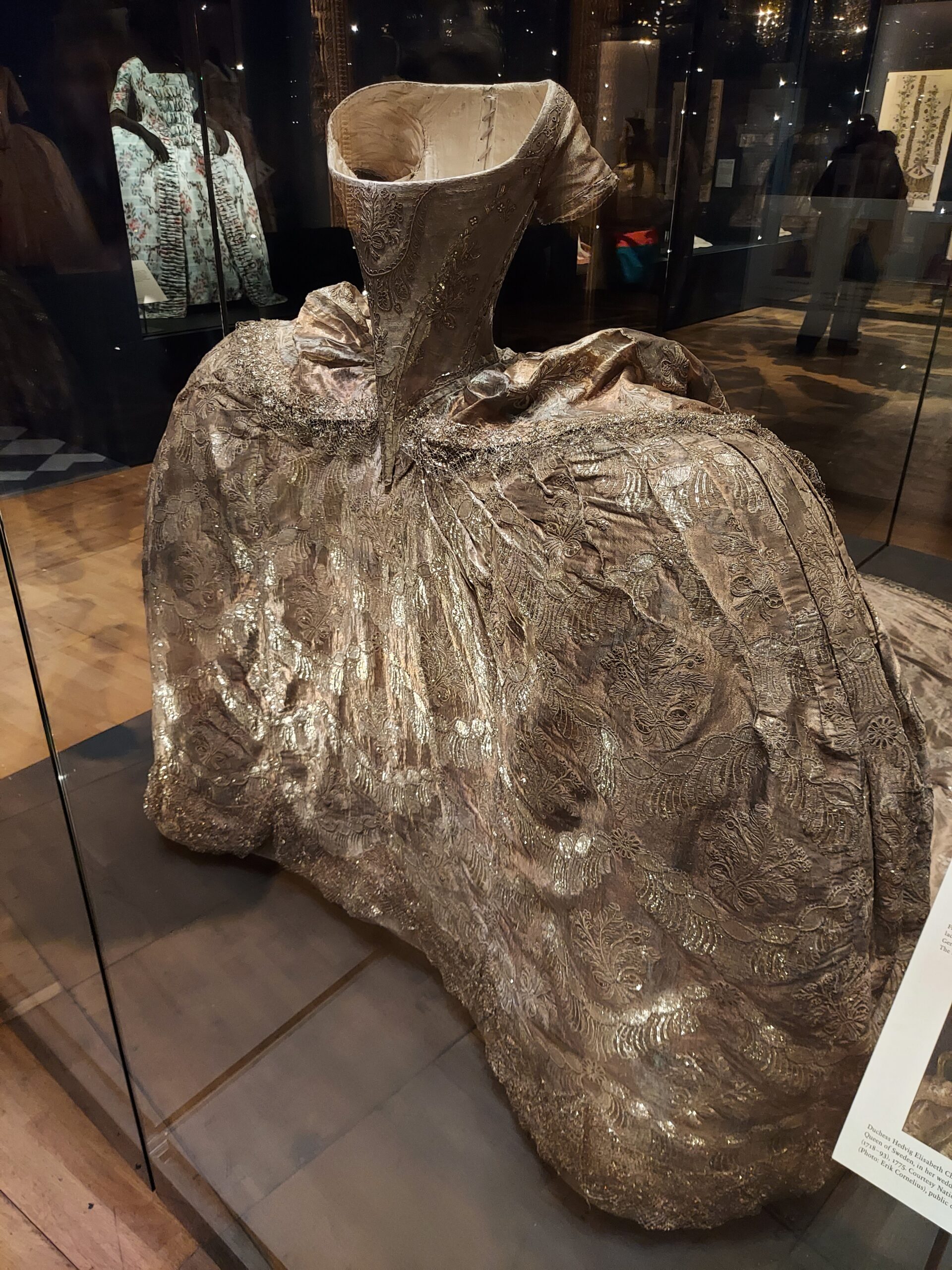
During my latest trip to London I visited the Marie Antoinette Style exhibition at the V&A. Marie Antoinette, Queen of France, is a controversial figure in history but the exhibition focused on her influence in terms of fashion and style, which has lasted to this day.
Daughter of the Empress of Austria, Maria Antonia Josepha Johanna von Österreich-Lothringen was sent to Paris aged 14 in order to marry the French Dauphin. She used fashion to make an impact, setting new trends with the help of her dressmaker, Rose Bertin. This was a way to showcase her power and influence as a woman and Queen. Many of her dresses, accessories and other possessions are on display in the exhibition.
The French public were unimpressed at their Queen’s show of wealth, and she became a beacon for their discontent, understandably though perhaps unfairly given there were plenty of aristocrats far more to blame for the state of the nation than she. The French Revolution followed soon after, and Marie Antoinette was executed along with the rest of her family, at the age of 37.
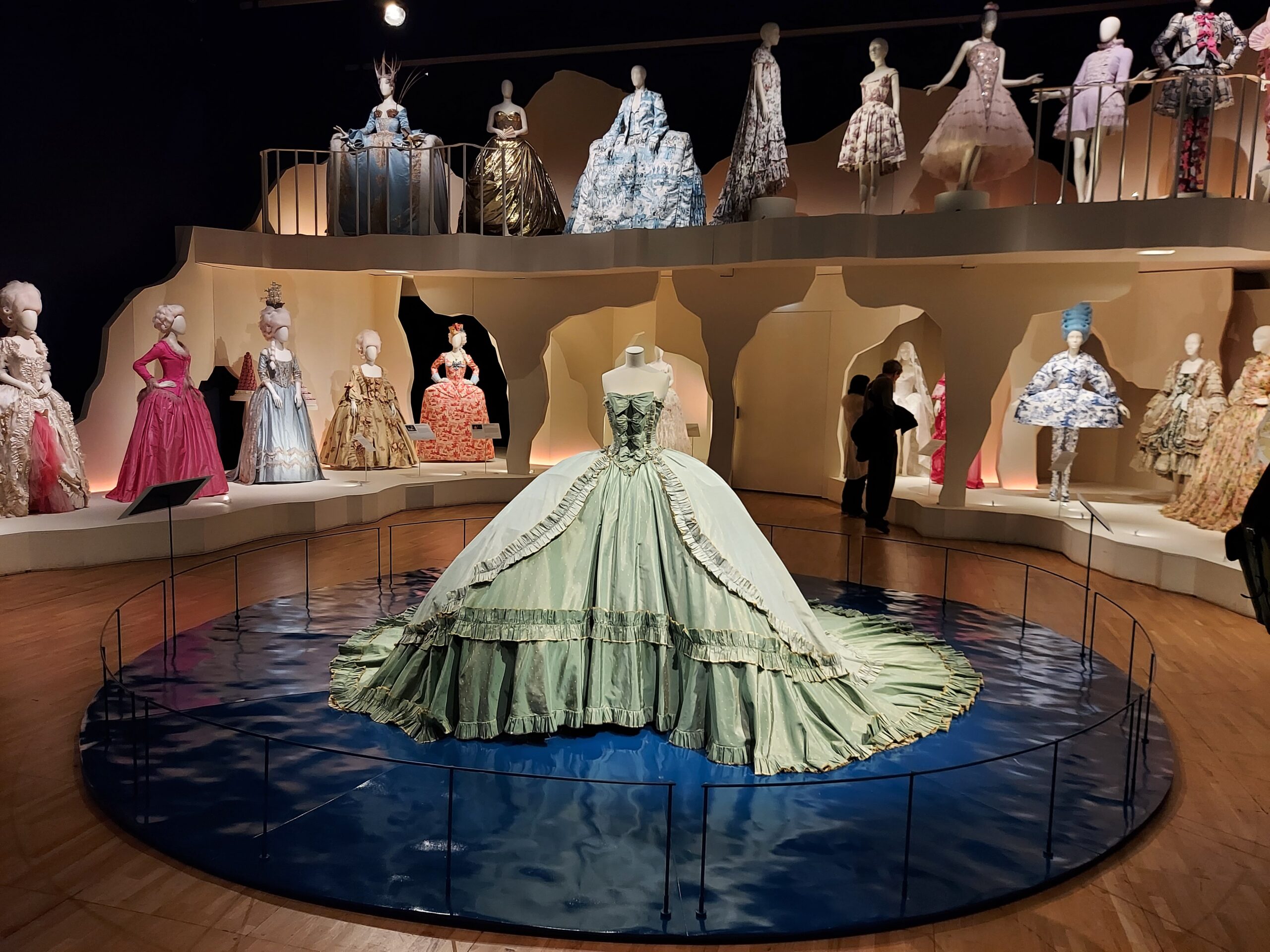
In more recent years, the French queen’s reputation has enjoyed something of a renaissance, at least where her sense of style is concerned. She was played by Kirsten Dunst in the 2006 Sofia Coppola film, channelled by Madonna in the 80s, and was the source of inspiration for numerous fashion designers. The second part of the exhibition focuses on her influence, which is considerable.
Overall, the exhibition is a must for anyone interested in history, fashion, and how the two coincide.
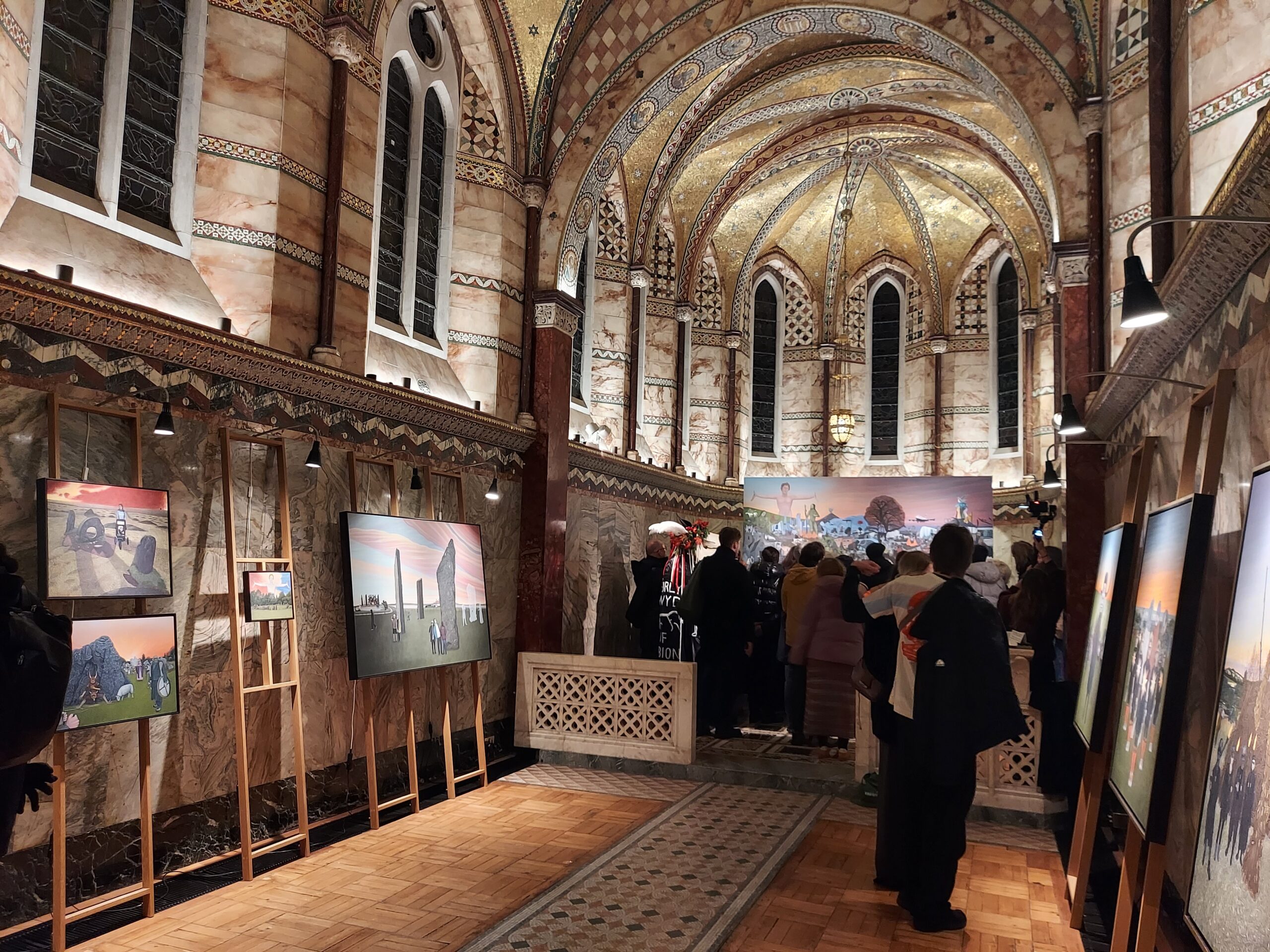
As part of my last weekend in London, I visited the exhibition Ben Edge: Children of Albion in Fitzrovia Chapel. It explores the ideas of the artist Ben Edge surrounding folklore and the relationship of traditional folk belief to the modern day. The large, detailed painting Children of Albion provides the exhibition’s centrepiece, and is a fascinating work, with new discoveries at every point.
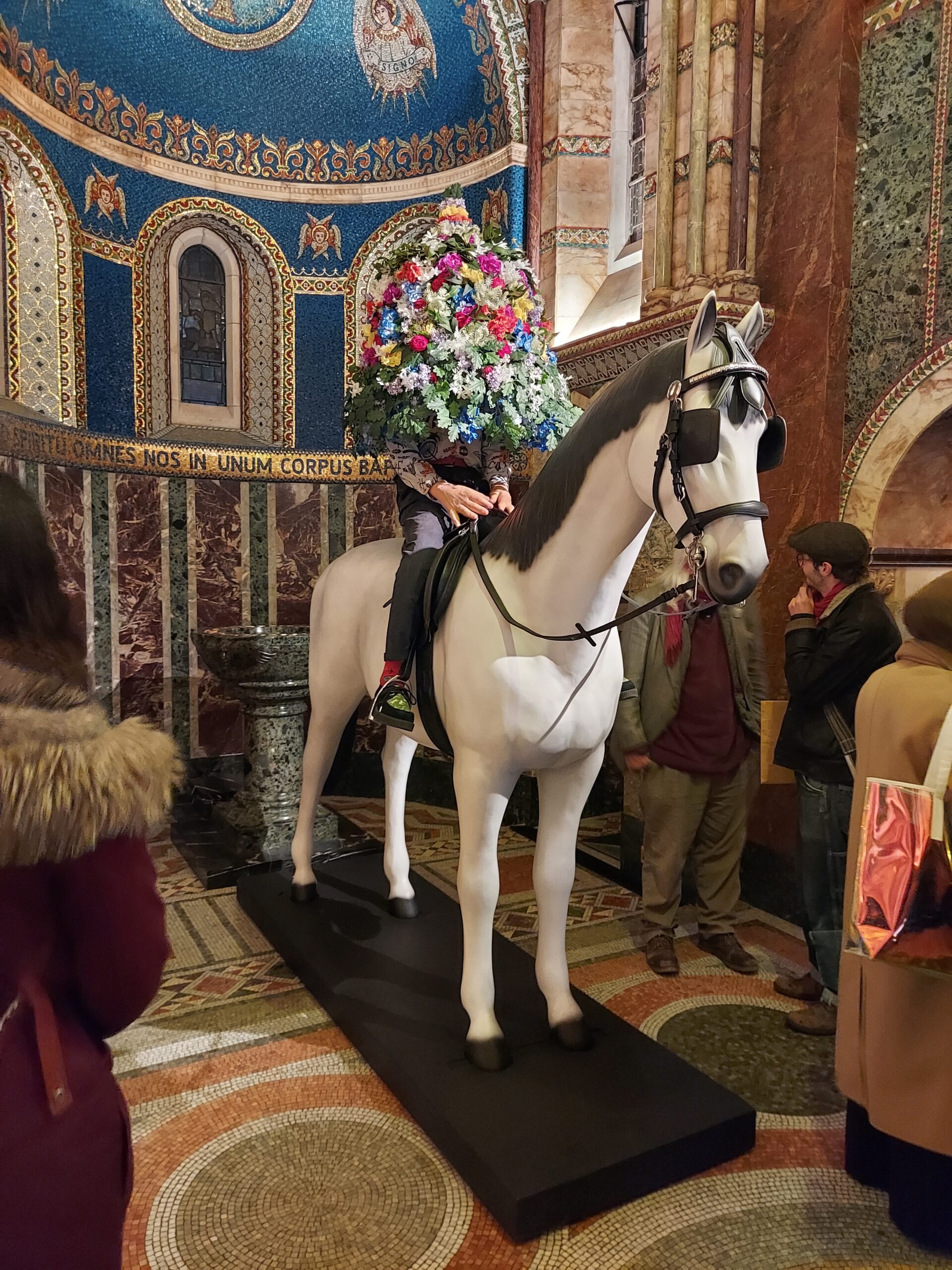
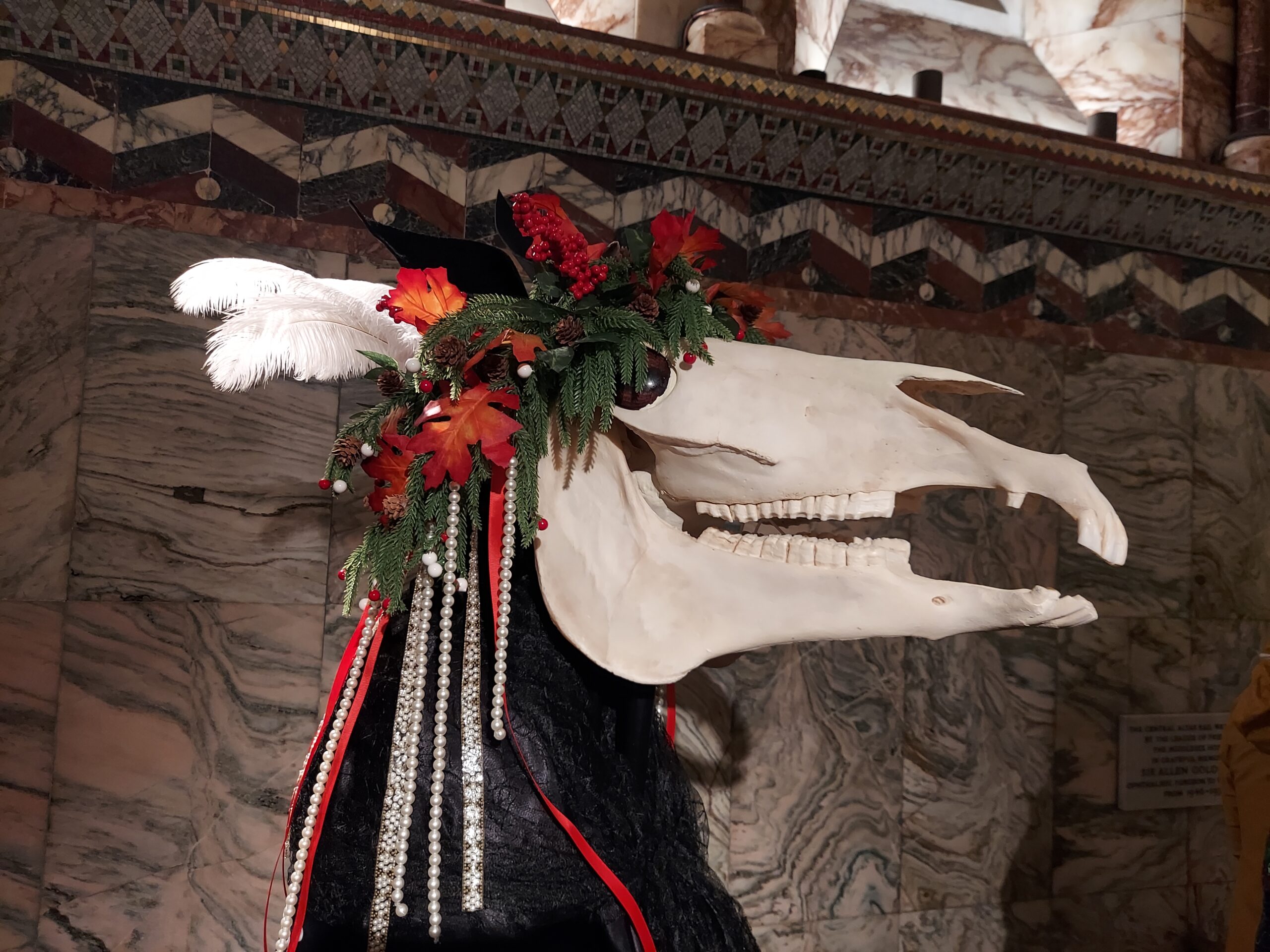
The exhibition featured many other works of art, including a Mari Lwyd figure, and the sculpture Where Must We Go in Search of Our Better Selves, a white horse ridden by the Garland King, a figure of Derbyshire folklore. Folklore has enjoyed a renaissance in the country in the last few years, and the exhibition reflects that.
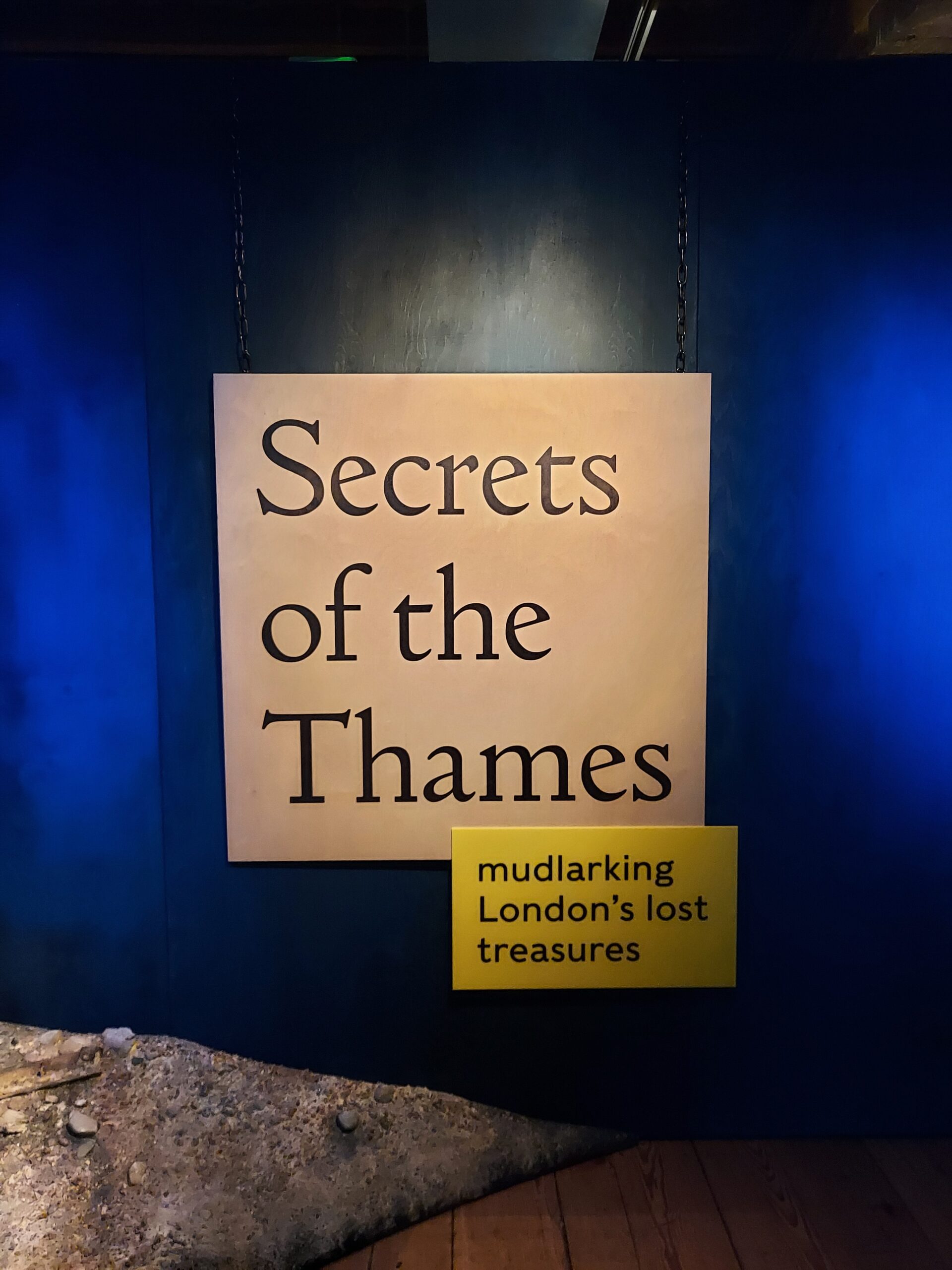
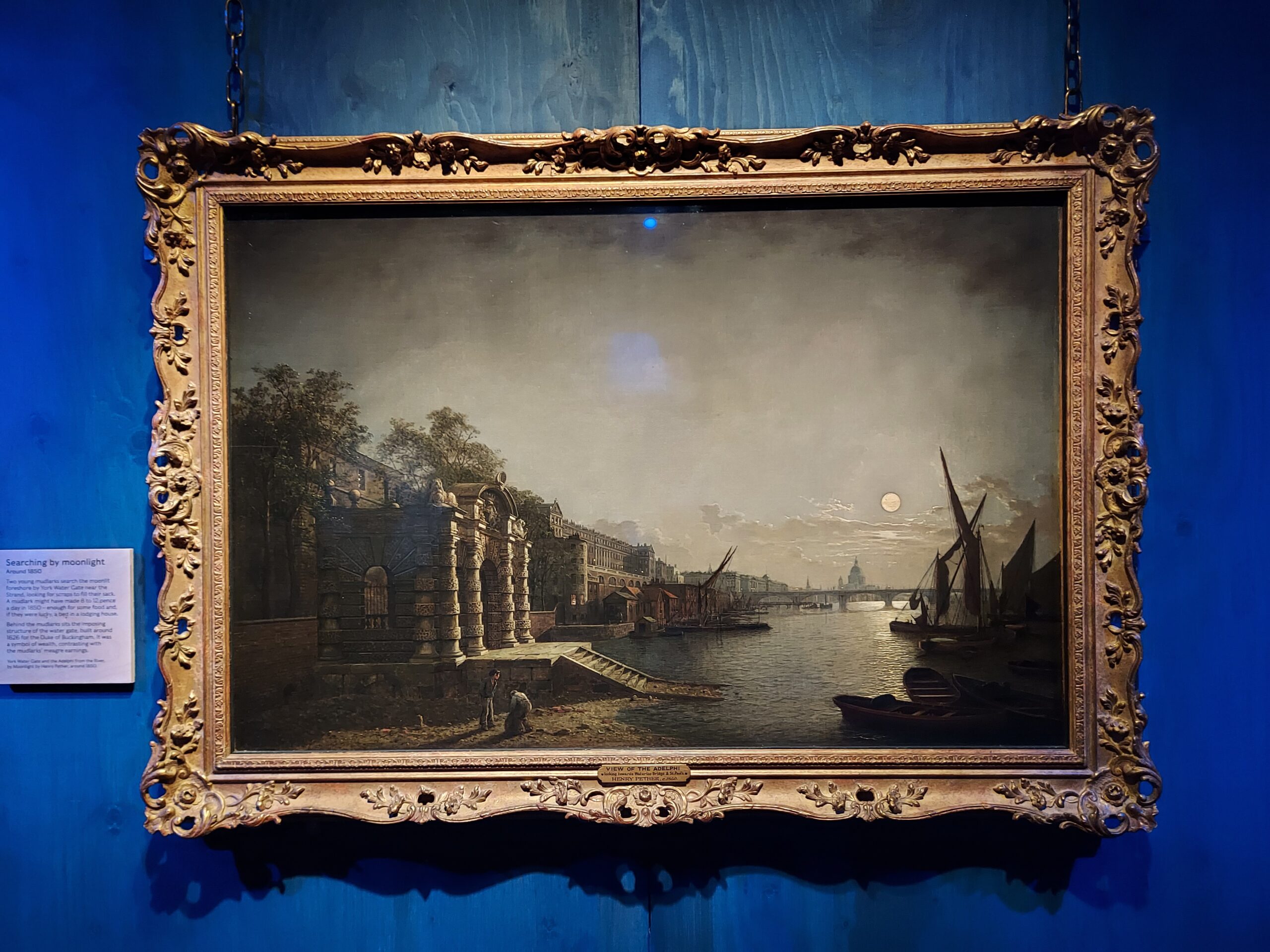
At the weekend I also went to see the Secrets of the Thames exhibition at London Museum Docklands. I find the concept of mudlarking fascinating (while knowing that I’m far too impatient to enjoy it for real), and this exhibition is all about the amazing treasures that have been found in the river, featuring over 350 mudlarked objects.
Humans have lived alongside the Thames for over 10,000 years. Their lives have left traces in and beside the river as London developed. The earliest mudlarkers were active in the early 1800s, searching the Thames foreshore for coal, metal and rope in order to make their living. Today, mudlarkers need to be licensed by the Port of London Authority, and they primarily search for historical treasures. Around 700 finds are recorded each year.
There are some absolutely fascinating items on display, including the Iron Age Battersea Shield, a medieval ring, a Viking dagger and eighteenth-century false teeth, as well as a sixteenth-century ivory sundial (the two halves of which were discovered by different mudlarks years apart), a typeface, and numerous clay pipes.
This exhibition is a fascinating testament to London’s history and the secrets that are hidden within the Thames.
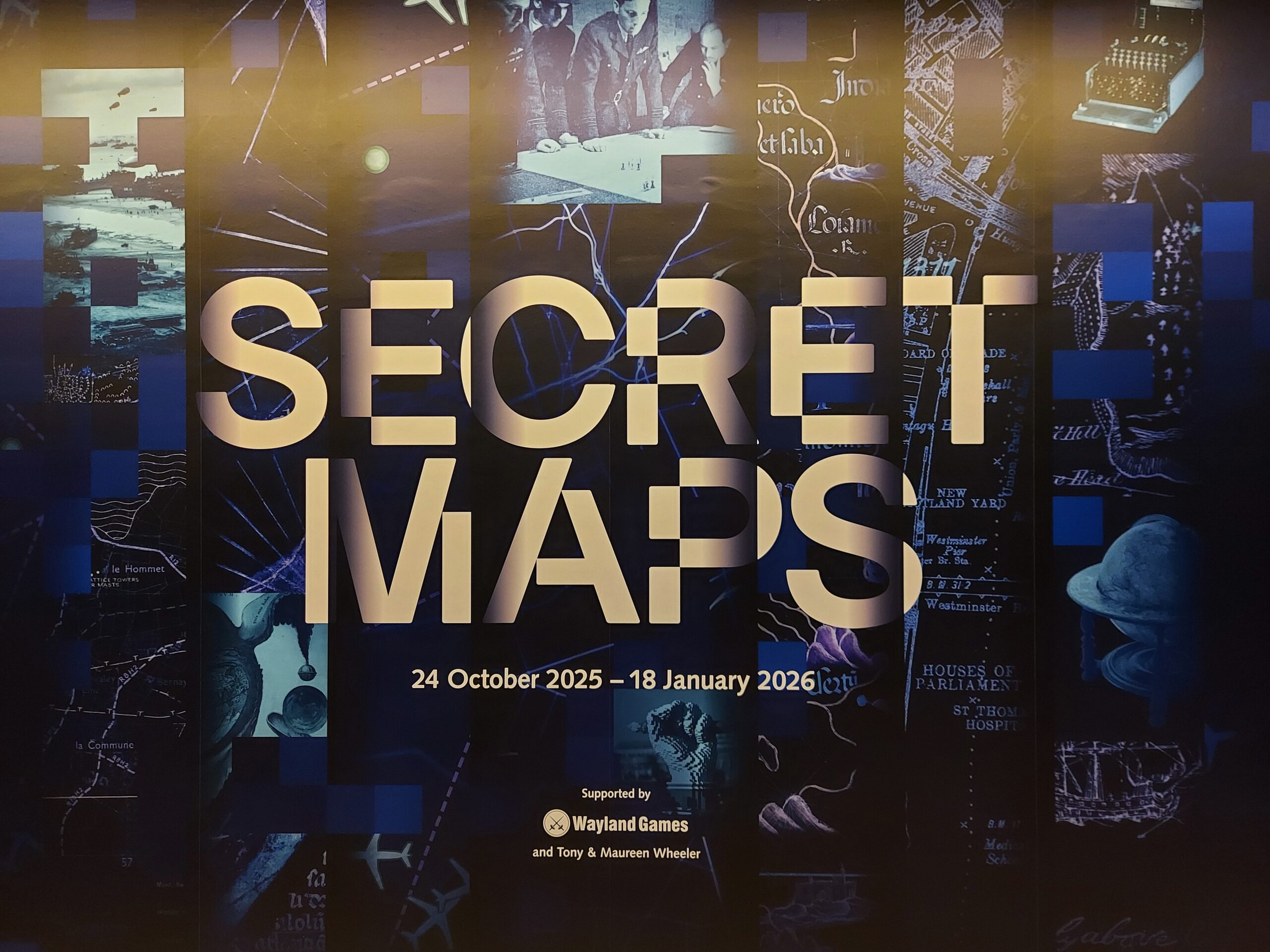
At the weekend I went along to the British Library to see the Secret Maps exhibition. Featuring over 100 items, the exhibition looks at how maps have played a role in secrecy through the ages, covering several centuries. It shows how maps can be political tools, valuable in global conflict as well as helping create a sense of community.
Some of the maps shown in the exhibition include maps of the English south coast commissioned for the Tudor court, trading routes used by the Dutch East India Company, and military plans for the D-Day landings. Others include the first maps of the proposed Partition of India, maps of sacred landscapes created by the Incas, and an A-Z of apartheid-era South Africa only featuring white neighbourhoods.
The fascinating exhibition shows how maps can take different forms, show very different things, and reveal contemporary prejudices, preoccupations and standards. Maps are certainly not neutral, and we can learn a lot from them.
‘We entered Cosprop as ourselves and walked out as the person we were playing.’ – Helena Bonham Carter
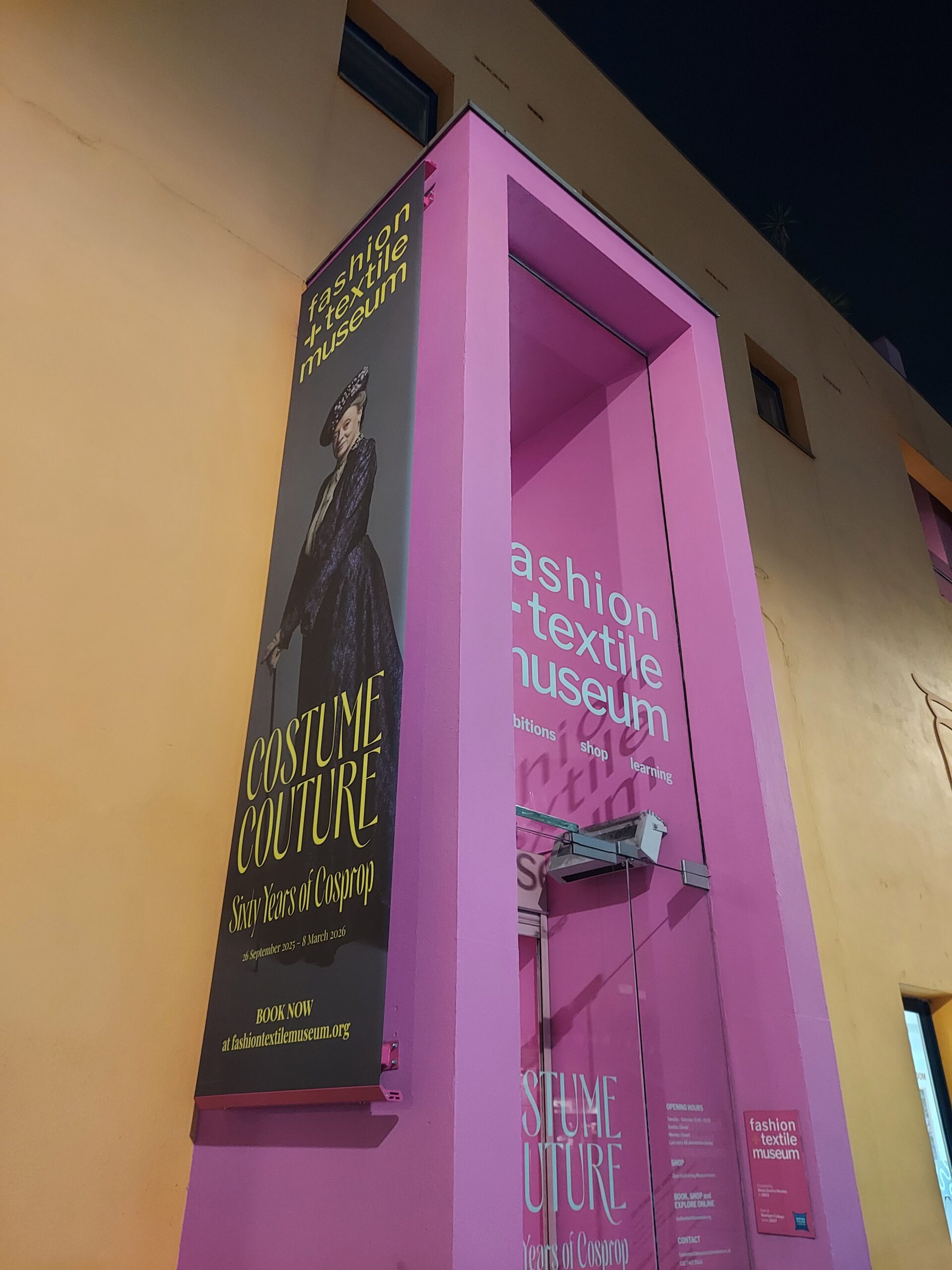
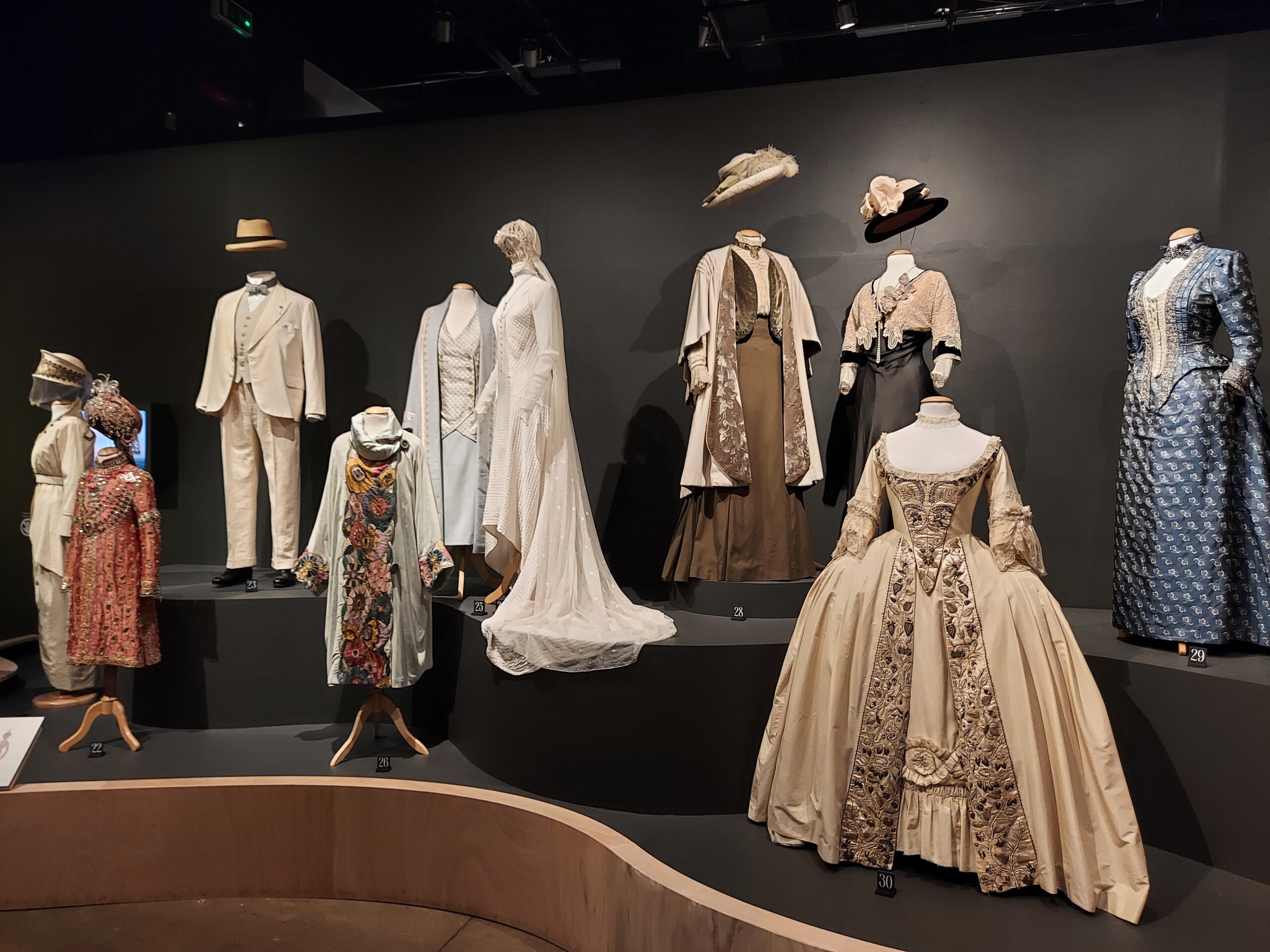
I attended a late-night opening of the exhibition Costume Couture: Sixty Years of Cosprop at the Fashion & Textile Museum. The exhibition celebrates the 60th anniversary of the company Cosprop, founded by costume designer John Bright in 1965. Bright, who has won Oscars and BAFTAs for his work, has made a mark on film, TV and stage through his costumes and his work as a designer, maker, collector and historian.
Bright trained in fashion design at South-West Essex Technical College and School of Art, then worked in acting, stage managing and costume designing. He also began to collect costumes and antique clothing from Parisian and London flea markets. Other costume designers were attracted by his collections, and used them for research, costuming and stock hire. The film The Charge of the Light Brigade (1968) and the TV series War and Peace (1972) were instrumental in cementing Cosprop’s reputation.
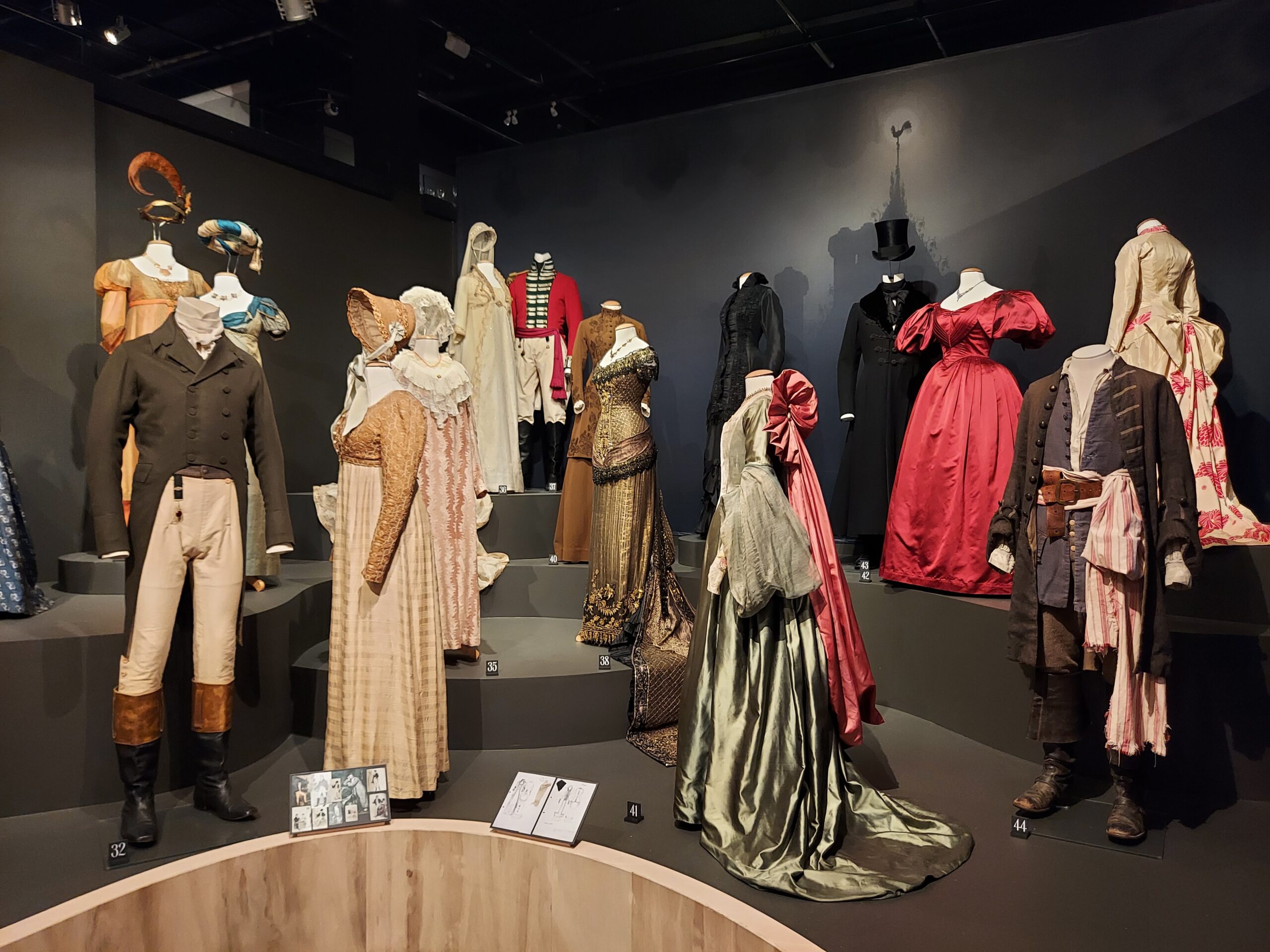
The exhibition displays costumes and accessories, as well as photographs and other memorabilia, from the full range of Cosprop’s history. Productions featured in the exhibition include A Room with a View (1985), Out of Africa (1985), Pride and Prejudice (1995) and Mrs Harris Goes to Paris (2022), with costumes from the likes of Helena Bonham Carter, Meryl Streep, Colin Firth and Lesley Manville displayed. The costumes are rich in detail and show the extensive research that went into creating them. Many are also incredibly beautiful.
Some of my highlights included:
The 1930s suit worn by David Suchet as Hercule Poirot in Death on the Nile (2004)
Outfits worn by Jennifer Ehle and Colin Firth in Pride and Prejudice (1995)
Jack Sparrow’s suit from Pirates of the Caribbean: The Curse of the Black Pearl (2003)
Clothes of the Crawley family from Downton Abbey (2010 onwards)
Outfits worn by Michael Fassbender, Mia Wasikowska and Judi Dench in Jane Eyre (2011)
1770s gown worn by Keira Knightley as Georgiana, Duchess of Devonshire in The Duchess (2008)
‘Actors walk in with just a script and the name of their character. They walk out with that character fully formed in their mind, having brought him or her to life through the angle of a hat, the fabric of a coat or the feel of a pair of shoes.’ – John Bright
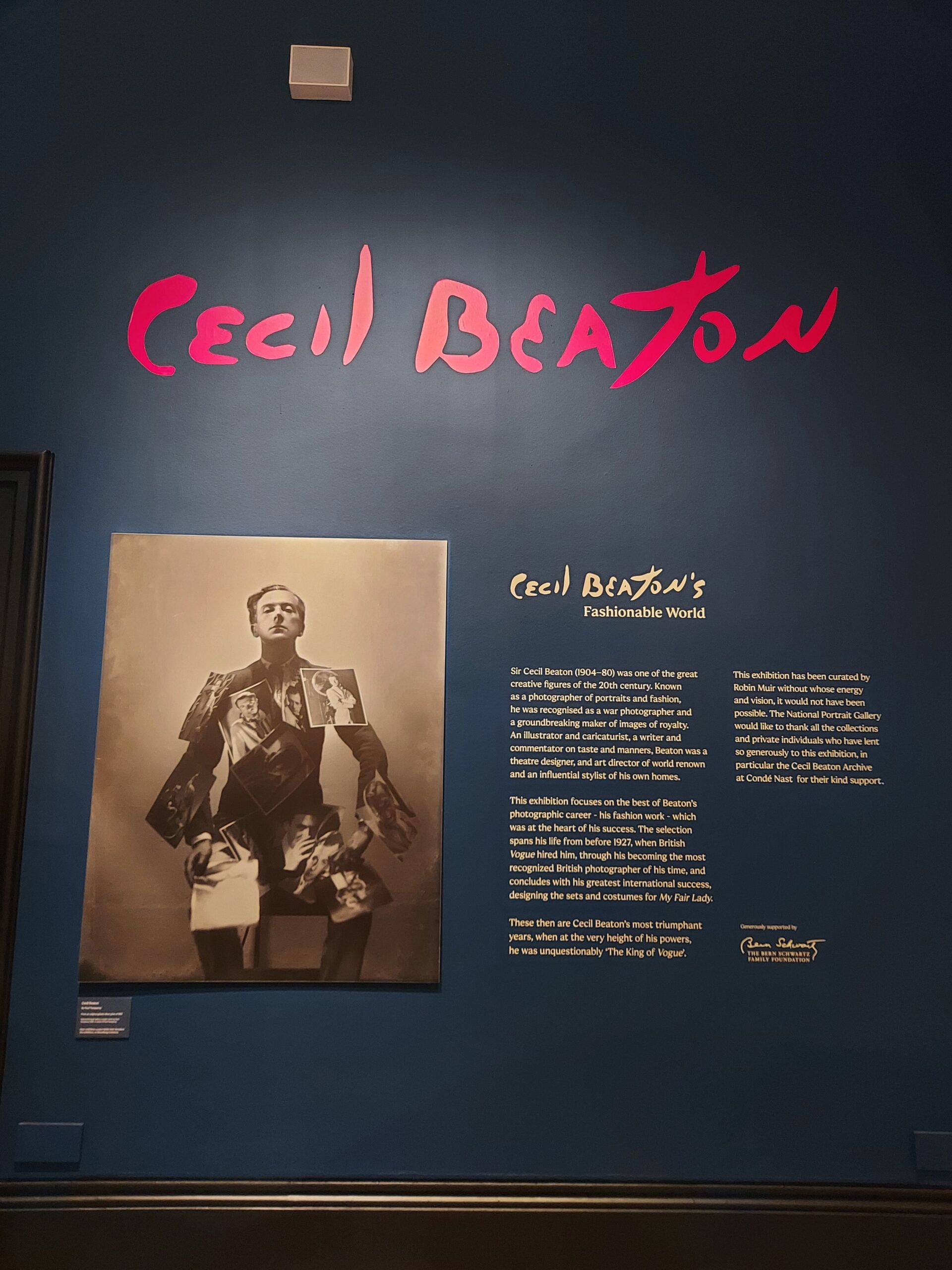
In a previous life, I worked in a library and catalogued the letters of Cecil Beaton, so any exhibition relating to him or his work is a must-see for me. Cecil Beaton’s Fashionable World at the National Portrait Gallery looks at his work in the realms of fashion and portrait photography.
The work on display here covers the Bright Young Things of the 1920s and the Jazz Age, the interwar years, the glamorous 1950s and the dazzle of Hollywood. The exhibition includes over 200 items including photographs, sketches, illustrations and letters, and features stars such as Marilyn Monroe, Audrey Hepburn and Elizabeth Taylor.
This enjoyable exhibition is well worth a visit to appreciate Beaton’s talent, variety, and the styles of the mid-20th century.
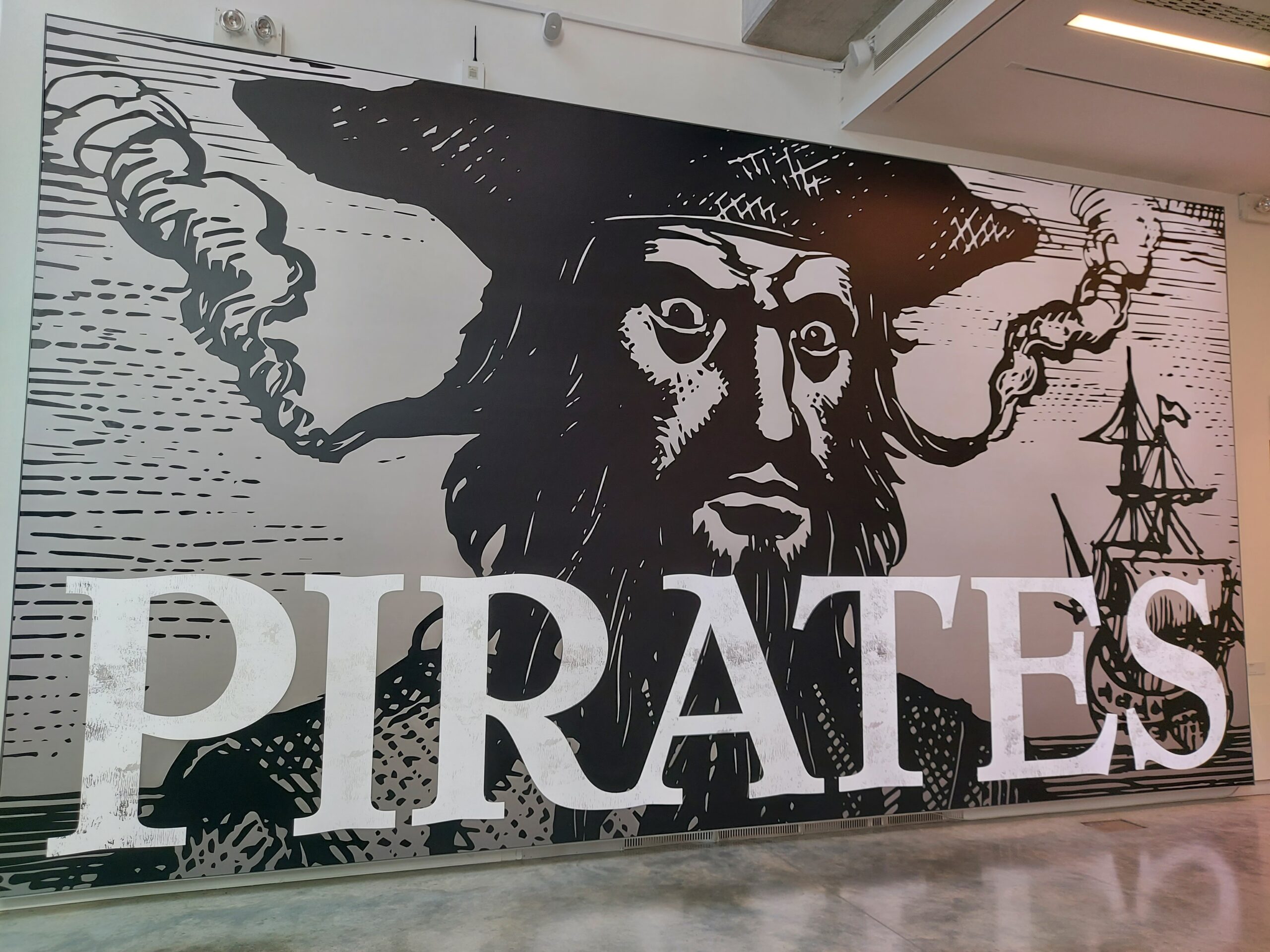
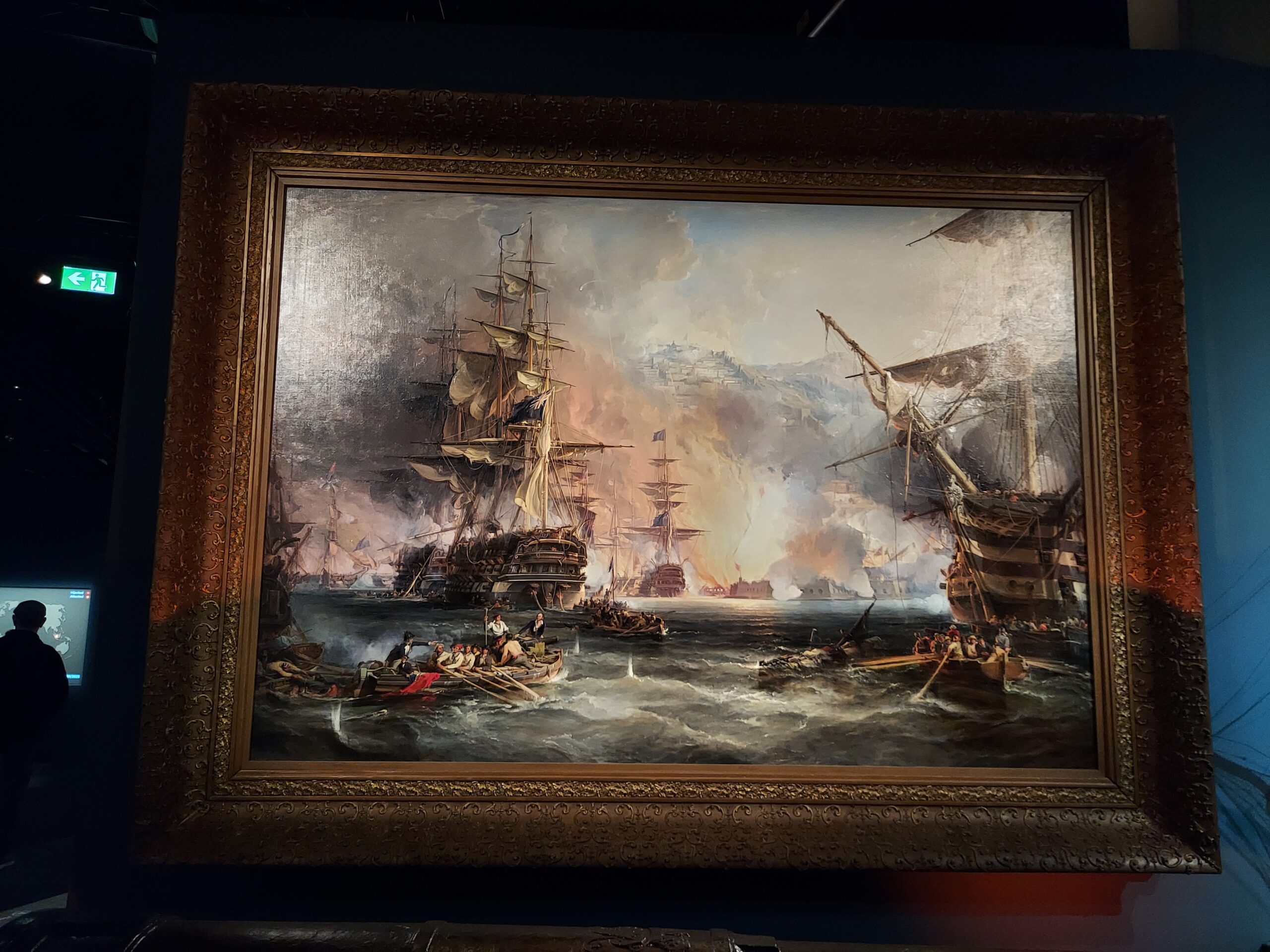
Along with some fellow Rebels – as September featured the Pirate Challenge monthly badge – I went along to the National Maritime Museum to see the Pirates exhibition. I really enjoyed the exhibition and learned a lot.
The exhibition explored the history of pirates in both history and fiction. It looked at famous fictional pirates including Long John Silver and Captain Jack Sparrow, as well as Captain Hook and Captain Pugwash. It also examined the real pirates who sailed the seas, including Edward ‘Blackbeard’ Teach, Anne Bonny and William Kidd. One of the more intriguing things I learned was that Stede Bonnet, protagonist of Our Flag Means Death, was a real pirate!
Pirates have sailed the seas all over the world, from the Caribbean to North Africa and the South China Sea. Even today, piracy still exists and the exhibition looked at the role of pirates in the modern world. Modern-day pirates are understandably condemned, however historical and fictional pirates are often romanticised. The reality, even at the time, was extremely brutal with a replica gibbet cage showing what could happen to pirates if caught.
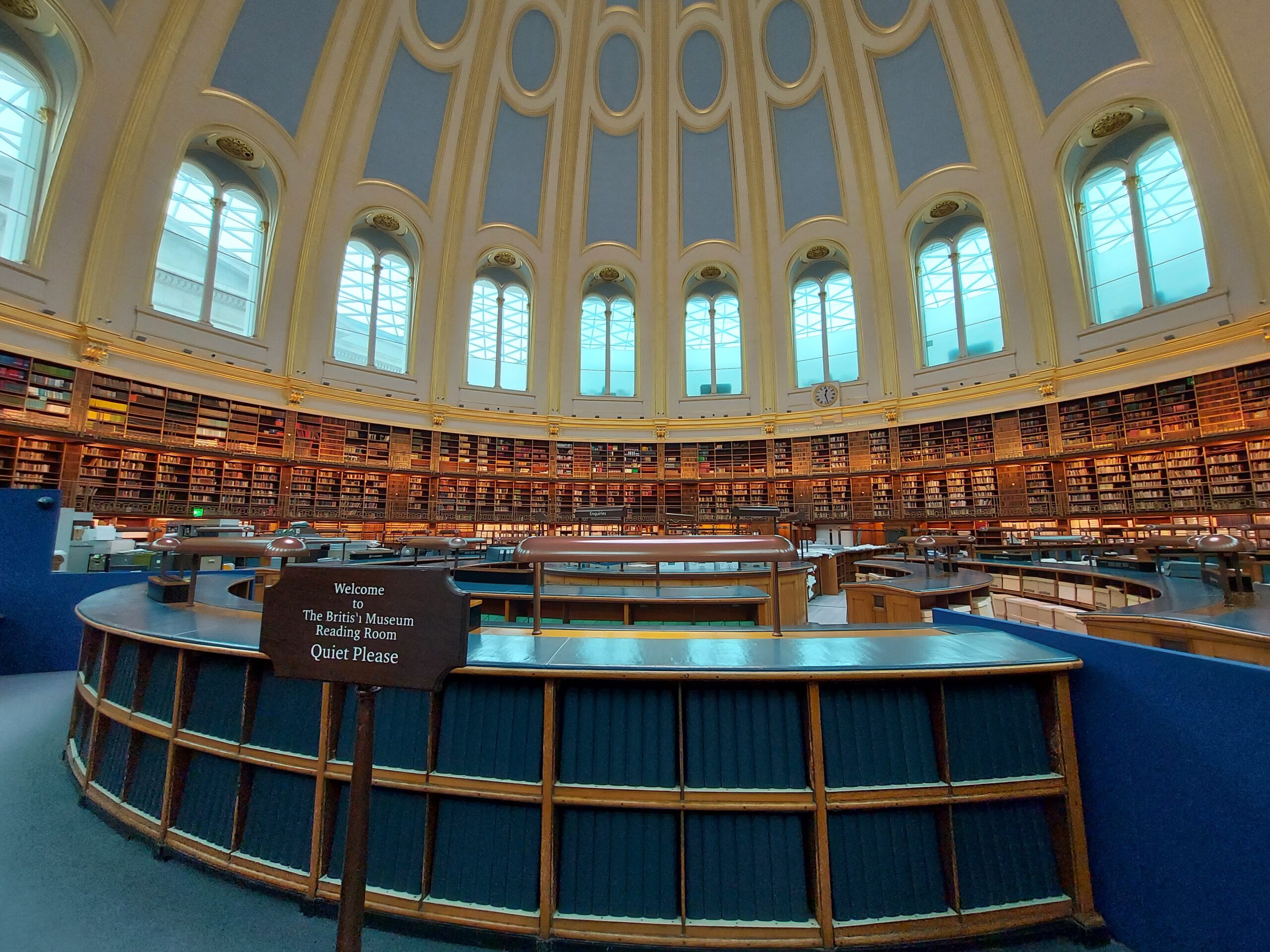
After Rebel Summer Camp I took an extra day off and went along to the British Museum. Recently, tours of the famous Reading Room have been made available at 11 and 12 on Tuesdays. Accessed via the Great Court, the Reading Room has a rich history.
The tour explored the history of the Room, how it evolved over decades, and some of the famous people who studied there. The British Museum itself opened in the 1820s but by the 1850s it could be seen that the Library needed a larger reading room and more storage for books. The Principal Librarian Antonio Panizzi suggested building a round room, surrounded by shelving, in the then-empty courtyard. The architect, Sydney Smirke, created a pioneering design with a concrete floor, modern heating and ventilation systems, and a domed ceiling supported by cast iron. After opening in 1857, over 62,000 people came to visit the new Reading Room in the first ten days.
In the beginning, the space supported a maximum of 302 readers, with 2 of the 38 long tables reserved for women. The room had underground heating, leather chairs and over 40km of shelving. To consult a book, a patron would examine the General Catalogue of Printed Books in the centre of the room, fill out a request form, and wait for around an hour. In 1979, the Reading Room became one of the first public places in London to have electric lighting, having previously relied on natural light and gas lanterns, which meant that it was impossible to work in the darkness of winter or when London was enveloped by fog, which was frequently. Some of the notables who made use of the Reading Room include Karl Marx, Lenin, Sylvia Pankhurst, Oscar Wilde, Gandhi and Beatrix Potter.
In 1997 the British Library, which had formally detached from the British Museum in 1973, moved to a purpose-built building near St Pancras. The Reading Room was open to visitors between 2000 and 2007, and for the following decade hosted a number of special exhibitions. It was then closed to the public once again, until 2023 when these tours resumed. I’m glad I got a chance to see this historic Reading Room and I hope visitors can continue to access it in the future.
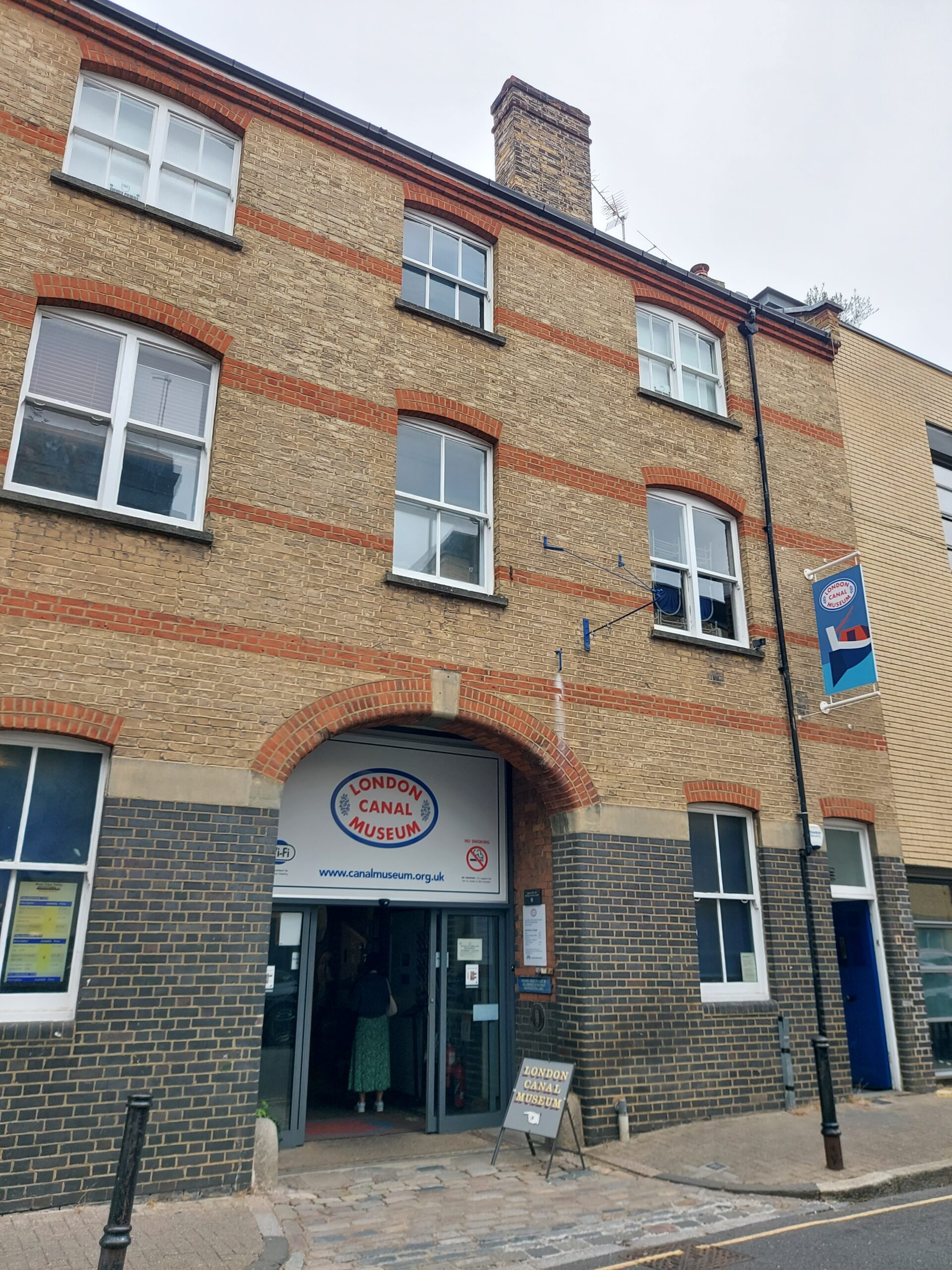
I finally visited the London Canal Museum for the first time in August. The museum is located in King’s Cross, on the Regent’s Canal which runs across North London. The building was formerly Gatti’s Ice House, originally constructed in 1862-63, and the museum opened in 1992.
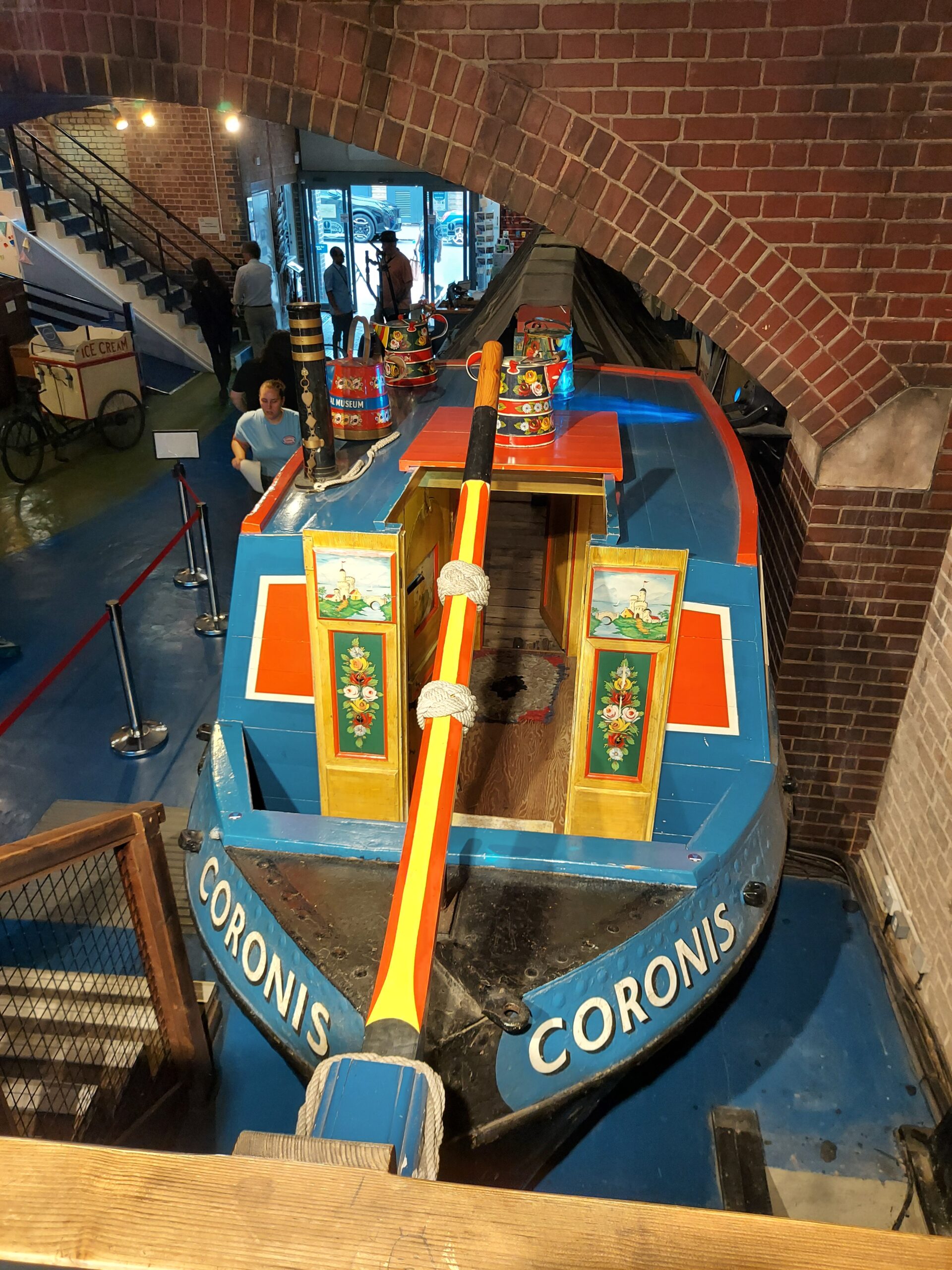
The museum tells the interesting story of London’s canals, with information about canal engineering, boats and cargoes, focusing on the Regent’s Canal in particular. It also looks at the social history of canal workers, the art of canals and canal boats, ice cream and the ice trade. There is a life size narrowboat cabin, too, so you can imagine sailing along the canal in a pleasant boat.
The museum is small, but there is a surprising amount to see, over two floors. You can also take a canal boat ride from just outside the museum – I didn’t do this, but I definitely want to in the future.
Ice Well Descent
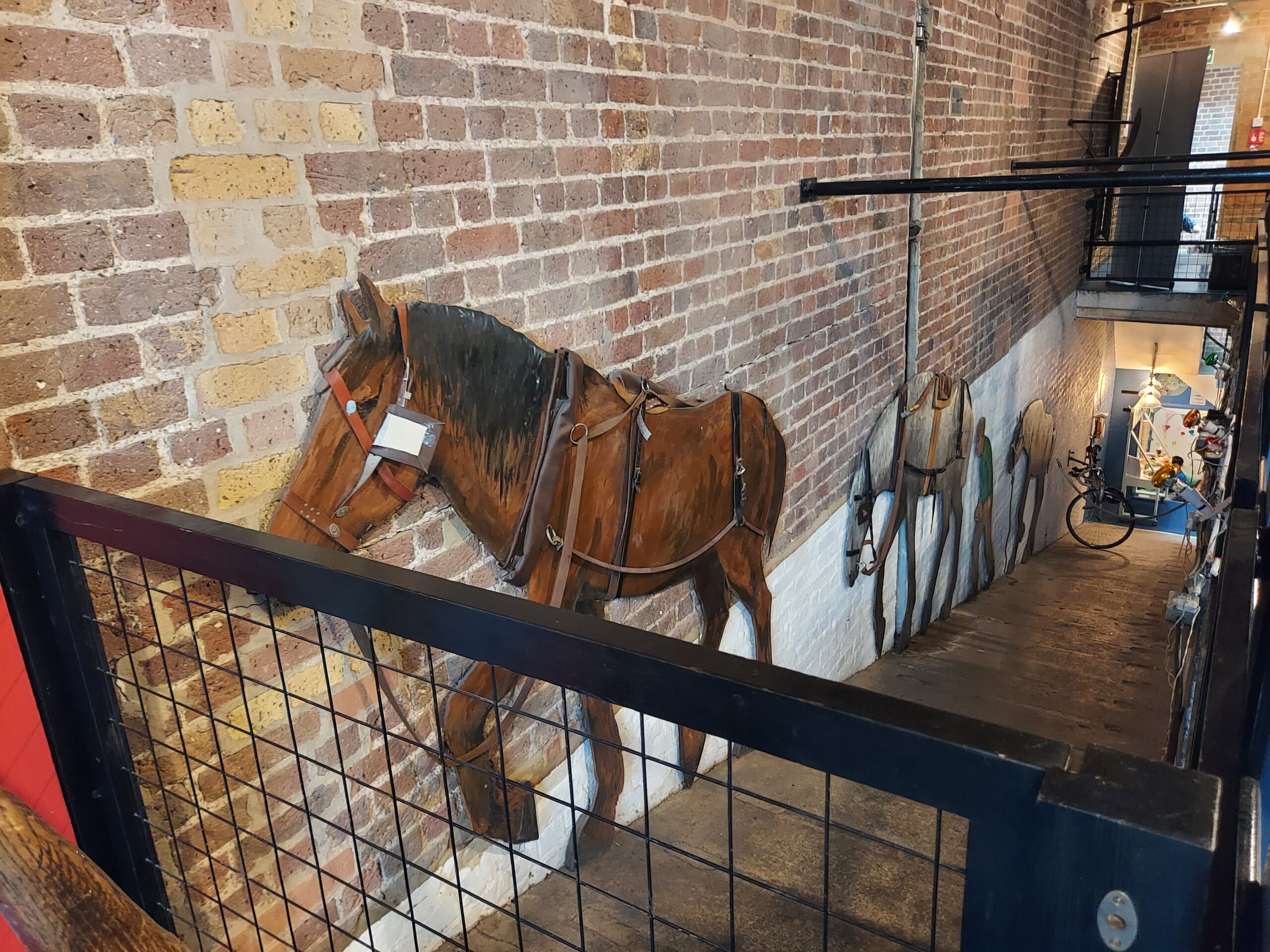
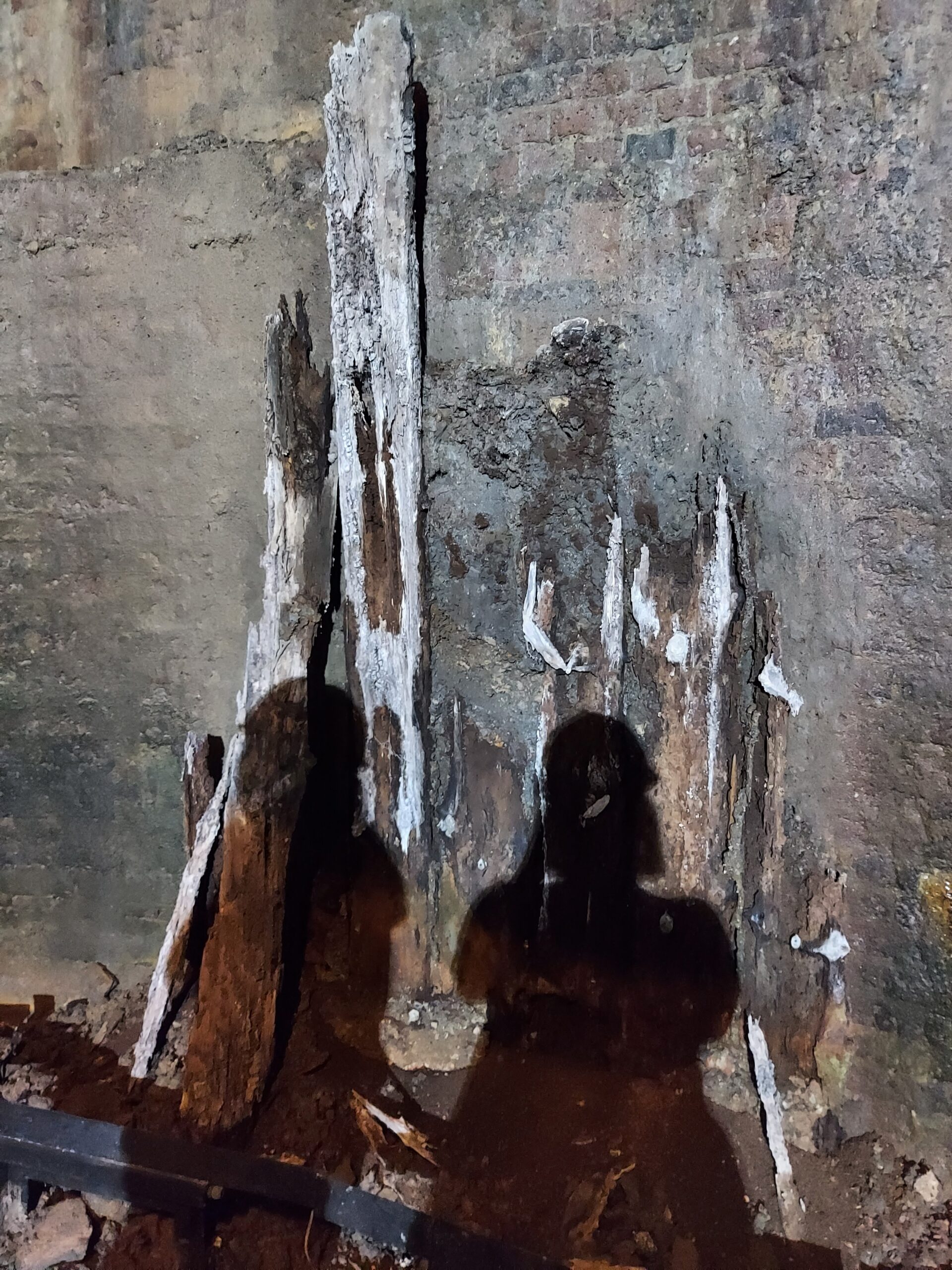
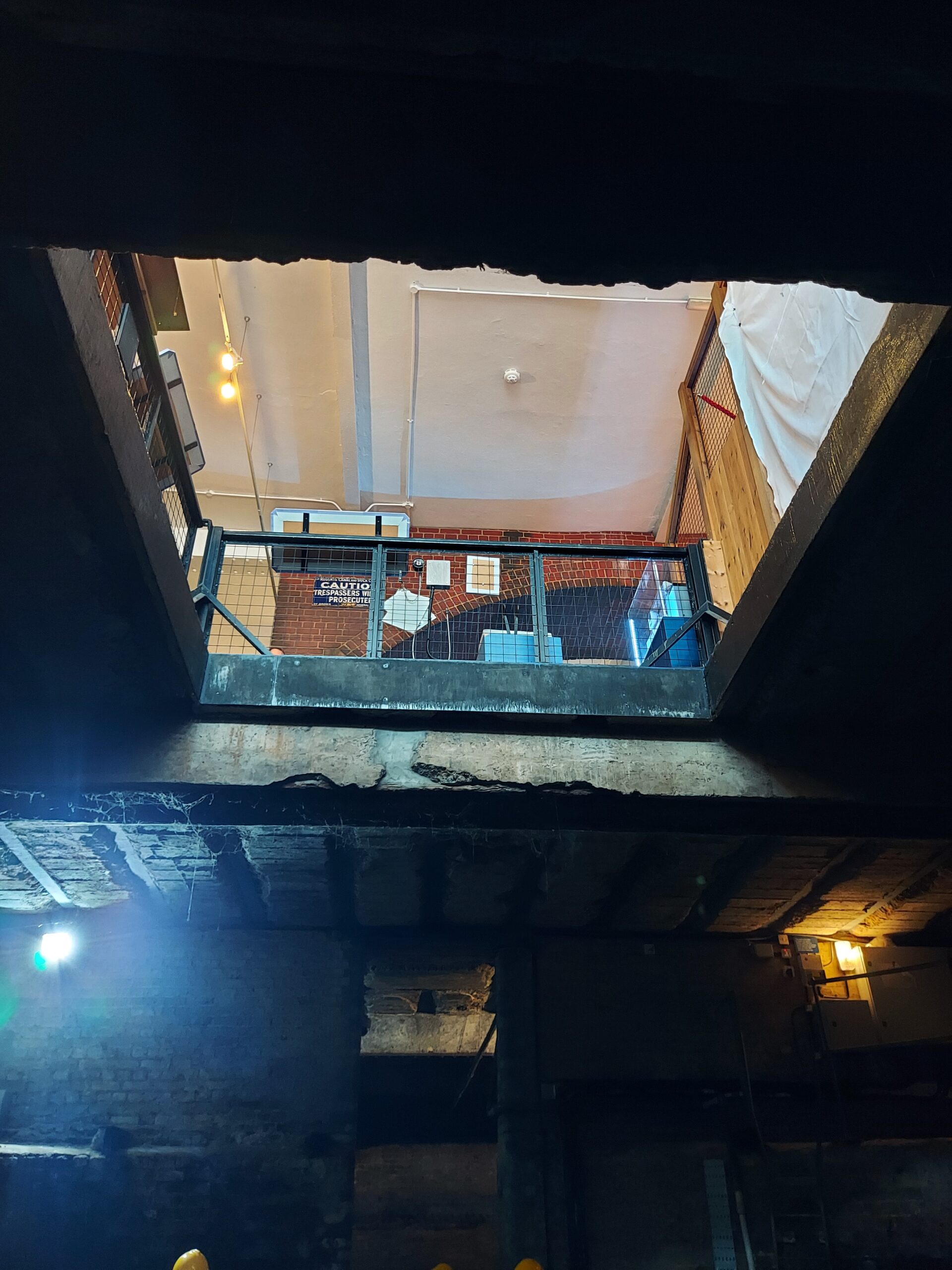
The reason I particularly wanted to visit on this date was the annual ice well descent, allowing visitors to descend into the underground ice store at the heart of the museum. Before freezers, ice was imported from Norway and kept in wells like this for preservation, sold to restaurants and food shops to keep food cool. These particular ice wells were used until at least 1902, beneath stables for the horses which pulled the ice delivery carts. It was fun to go down into the ice well and imagine what it might have been like when they were full of ice.
I definitely recommend a visit to the London Canal Museum to learn more about London’s industrial past.