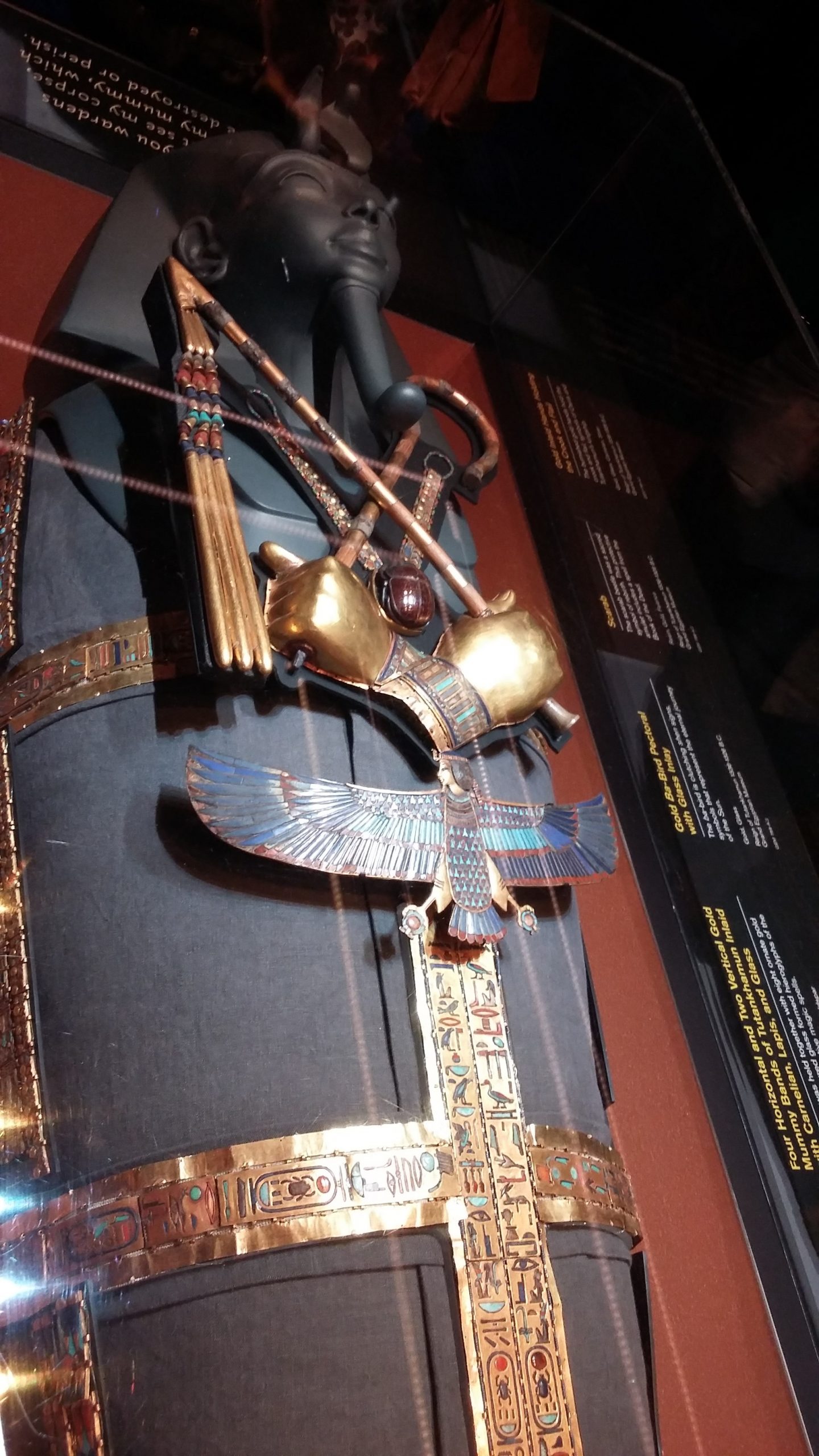
Bags: Inside Out – V&A

entrance to the bags exhibition

Recently I visited the Bags: Inside Out exhibition at the Victoria & Albert Museum. Along the same lines as the shoes exhibition a few years ago, Bags looks at the history of these accessories and displays examples of bags in all shapes and sizes, serving a variety of purposes.

A dress with pockets and another with a chatelaine

I’m personally a huge fan of bags* – I think it’s because unlike clothes, you can’t grow out of them – and so I was looking forward to this exhibition. The exhibition begins several centuries ago, when women often had pockets built deep into their dresses for storage purposes. Later, many women wore chatelaines – metal contraptions pinned to their waist with keys and other accessories dangling from them.

selection of bags

Both men and women often carried small coin purses.As the world moved on, different kinds of bags evolved: tiny evening bags, practical rucksacks, sturdy travelling trunks, convenient shoulder bags.
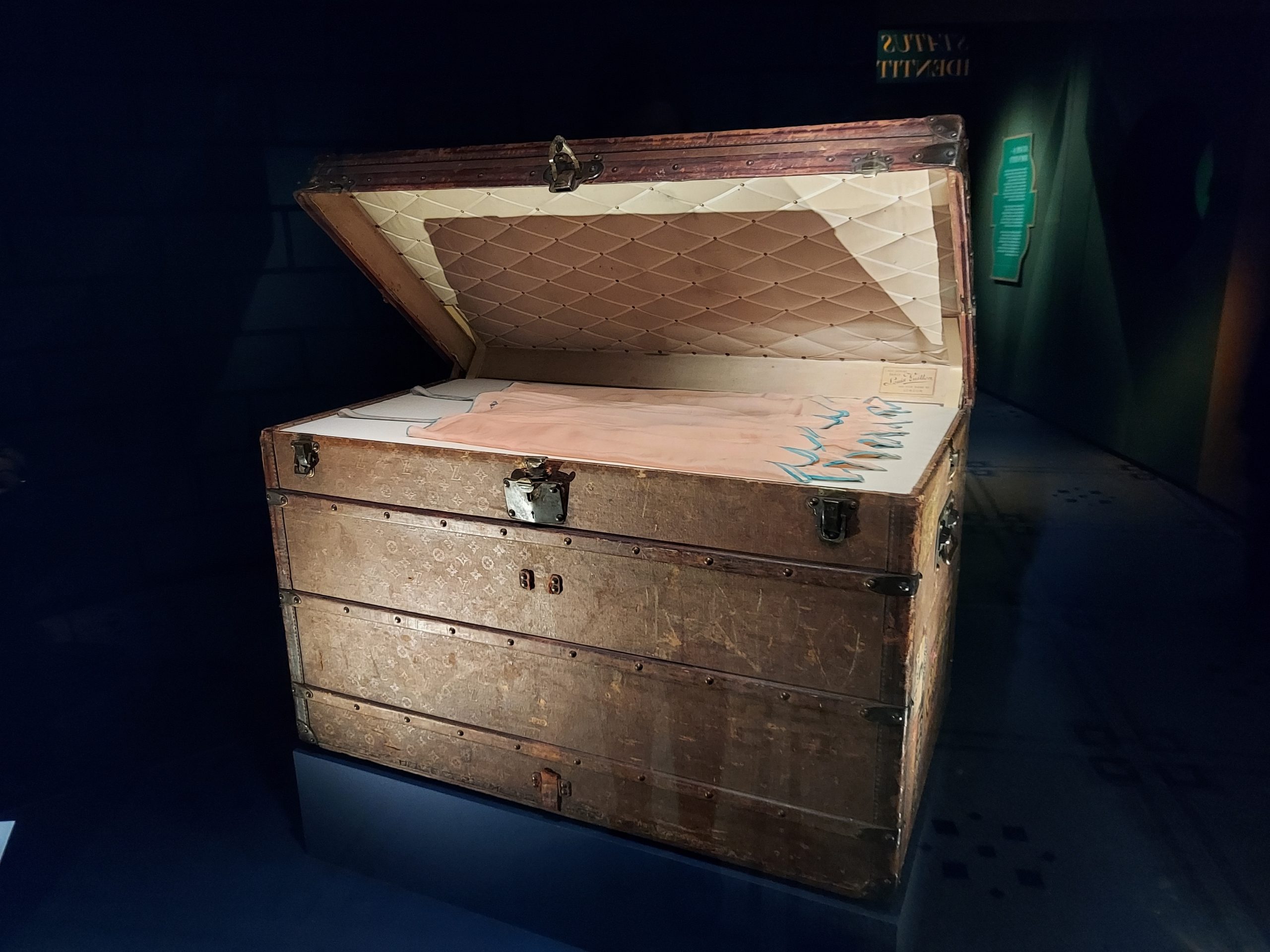
wooden trunk
A trunk designed to store clothes while travelling by sea

Vivien Leigh’s writing case and Winston Churchill’s despatch box are two notable examples of bags on display alongside many beautiful examples from less famous owners.

briefcases
Winston Churchill’s attache case and Vivien Leigh’s letter-writing case

I particularly liked the bags with lots of tiny compartments, popular in the late nineteenth and early twentieth centuries, such as a handbag with a compartment for lipstick, or an ‘opera bag’ containing opera glasses and a fan.
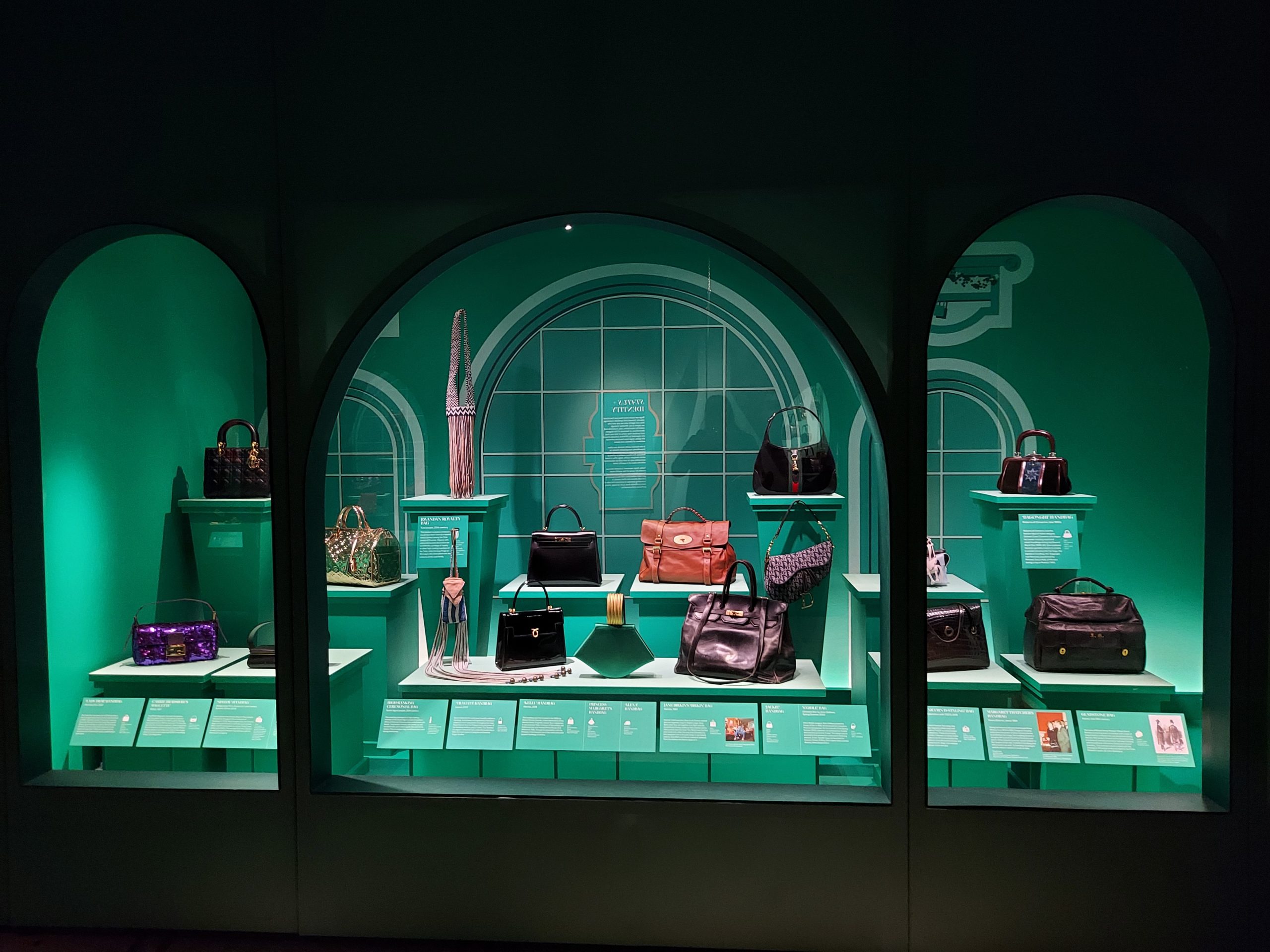
selection of bags

In terms of more modern styles, I liked a bag from the collection of fashion blogger ‘Mr Bags’ which comes with a cute unicorn charm.

small blue and black bag with a unicorn charm
Bag designed by ‘Mr Bags’

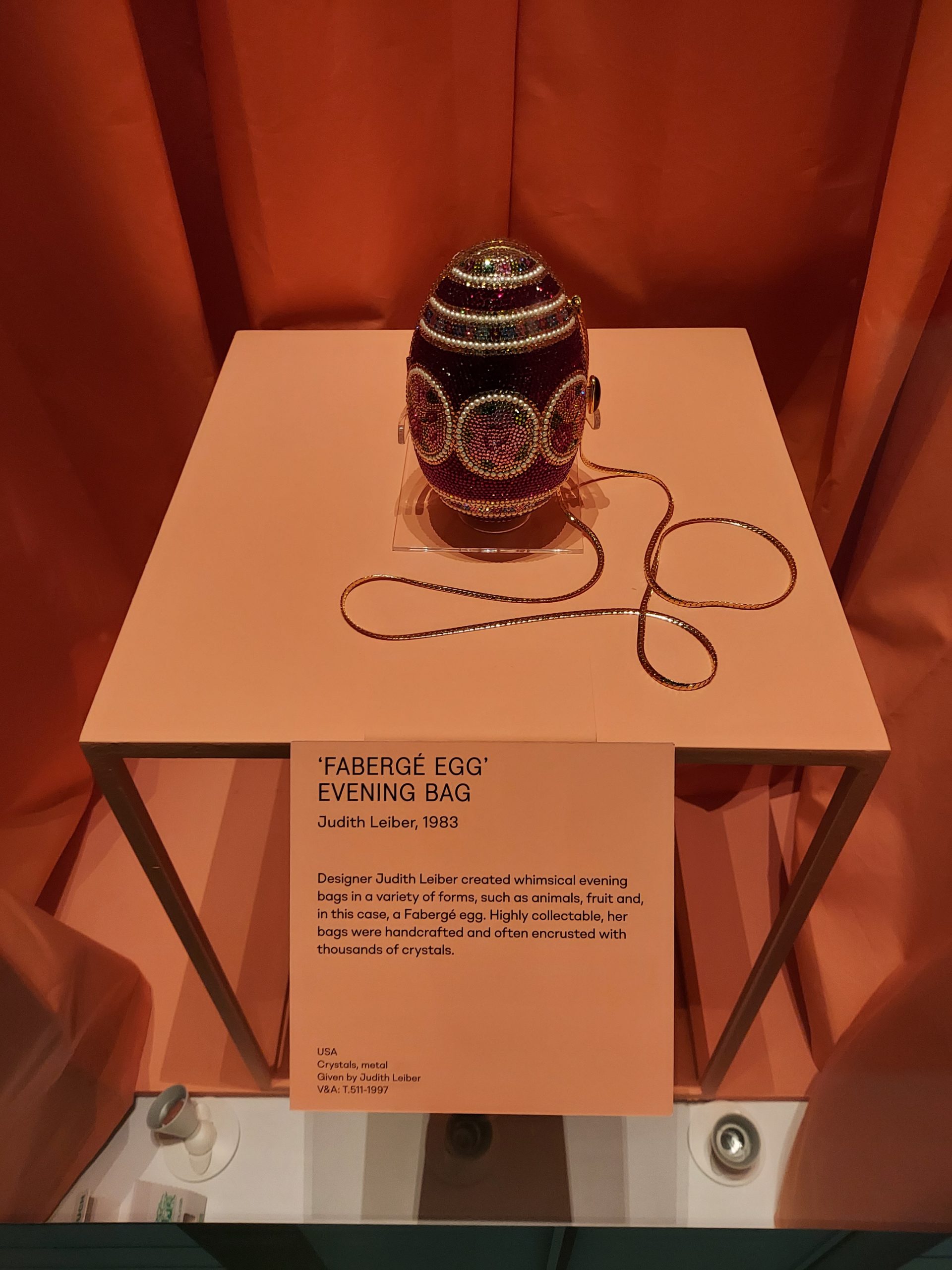
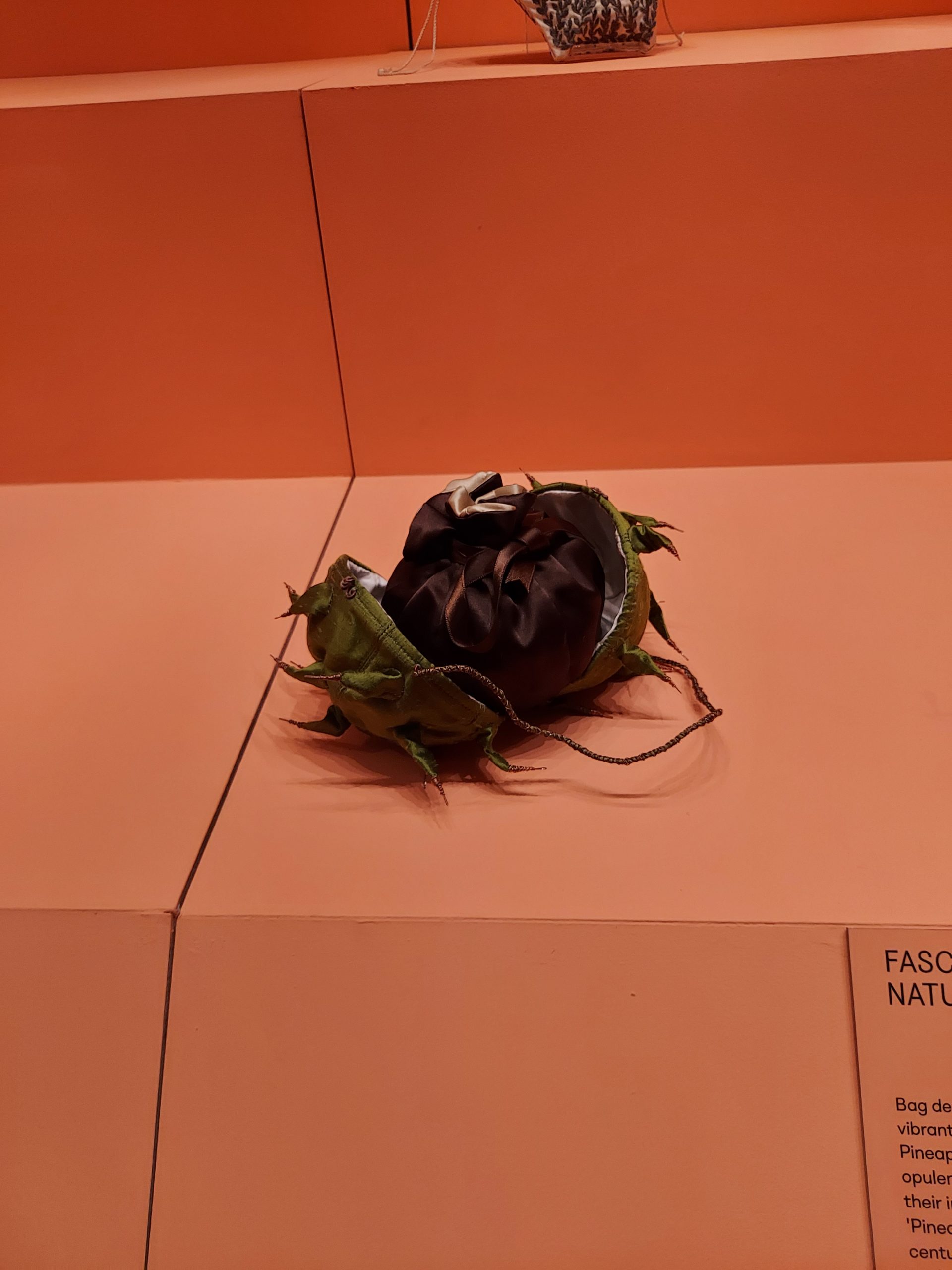
My absolute favourite bags, however, are novelty bags in unusual shapes, and this exhibition had several excellent examples.

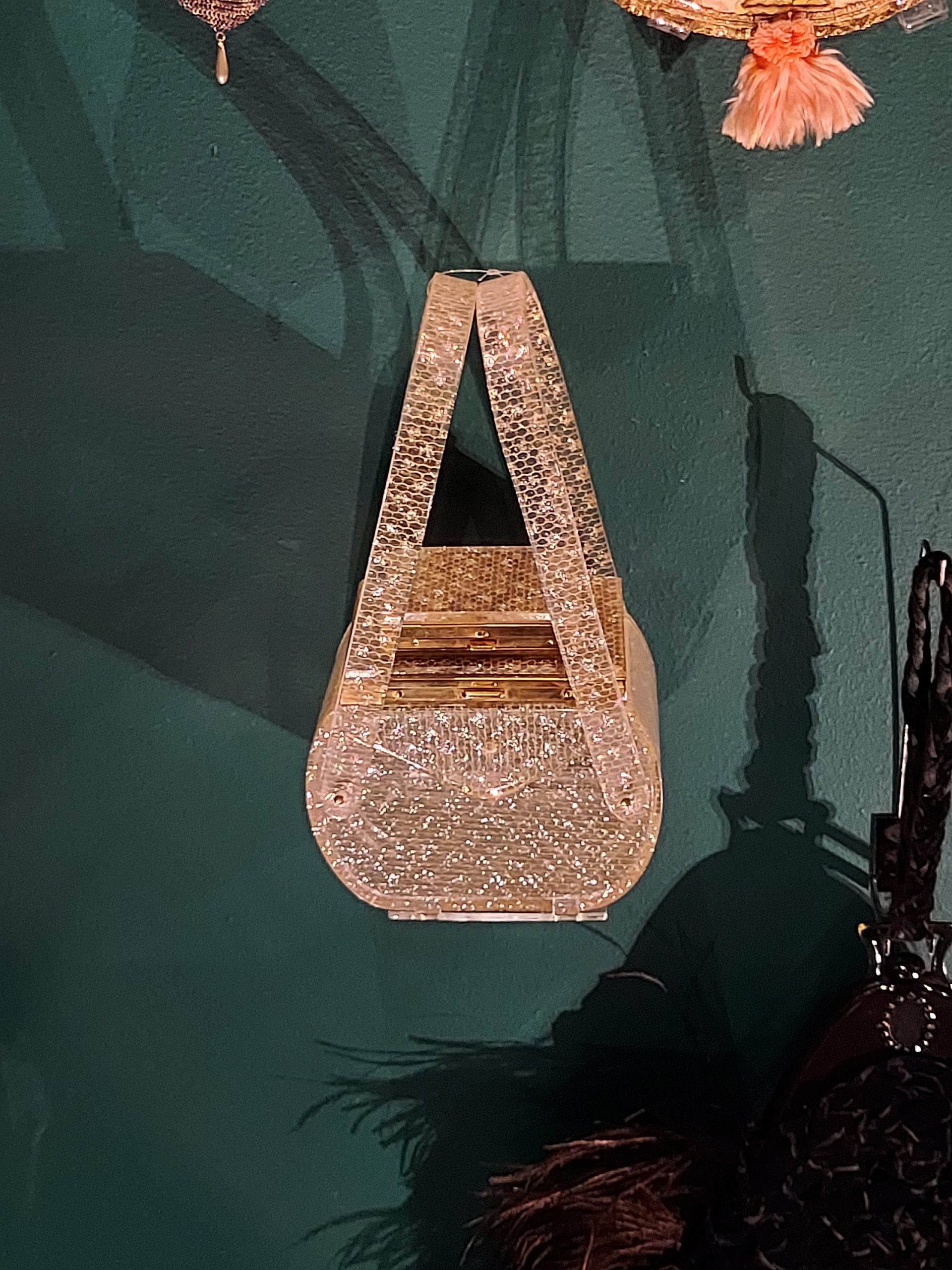
On the upper level of the exhibition there was a display devoted to the making of bags – it looks like a very complicated and scientific process and I confess it was far beyond me! This part of the exhibition also looked at different materials used to make bags and their properties.

How to make bags

Bags: Inside Out is worth a visit especially if you are a bag lover like me. Even if you aren’t, you will probably appreciate the design and craftsmanship that goes into creating a beautiful bag.

*When I was a child I had a shiny black (fake) leather backpack that I adored. In it I kept my Dear Diary, notebook, lip gloss and whichever book I was reading at the time. I took it everywhere with me and loved it so much that my brother made up stories about it: “The Adventures of the Black Bag”. I can’t remember what any of the stories were about, but the title sounds vaguely Holmesian.
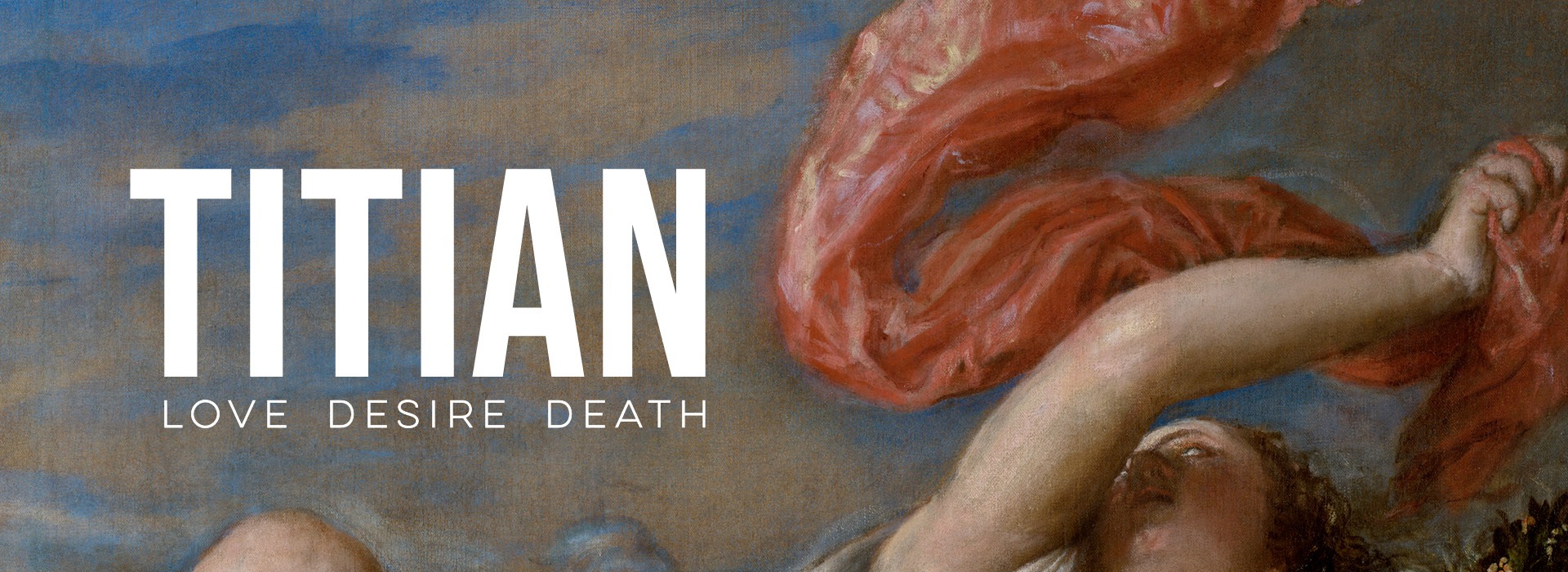
Titian: Love, Desire, Death – National Gallery

After months of closures, museums were slowly starting to reopen, so I took my birthday off work and planned a few days out. My first stop was the Titian: Love, Desire, Death exhibition at the National Gallery.

Organised by the National Gallery, the National Galleries of Scotland, the Museo Nacional del Prado, and the Isabella Stewart Gardner Museum, Boston, the exhibition brings together all six paintings in the series commissioned by Philip of Spain, the future King Philip II, in 1551. Philip requested Titian, who at the time was the most famous painter in Europe, to produce a group of paintings representing classical myths, taken mostly from the Metamorphoses of the poet Ovid.

The paintings include ‘Diana and Actaeon’ and ‘Diana and Callisto’, works owned jointly by the National Gallery and the National Galleries of Scotland; ‘Venus and Adonis’, owned by the Prado, Madrid; ‘Danaë’, in the care of English Heritage and usually displayed at Apsley House; ‘Rape of Europa’, belonging to the Isabella Stewart Gardner Museum in Boston; and ‘Perseus and Andromeda’, part of the Wallace Collection.

The exhibition is certainly about quality rather than quantity; Titian described the works as his ‘poesie’, a visual equivalent of poetry, and they are certainly impressive even to a non-art expert like me. They are dramatic and full of detail, powerfully conveying a range of emotions: anger, shame, lust, guilt, sadness.

Dora Maar – Tate Modern

Dora Maar exhibition poster

When I visited Tate Modern‘s Dora Maar exhibition I didn’t know it would be my last exhibition for a while, but with hindsight it was a good one to go out on. I confess I had never previously heard of Maar, but I ended up loving her work.

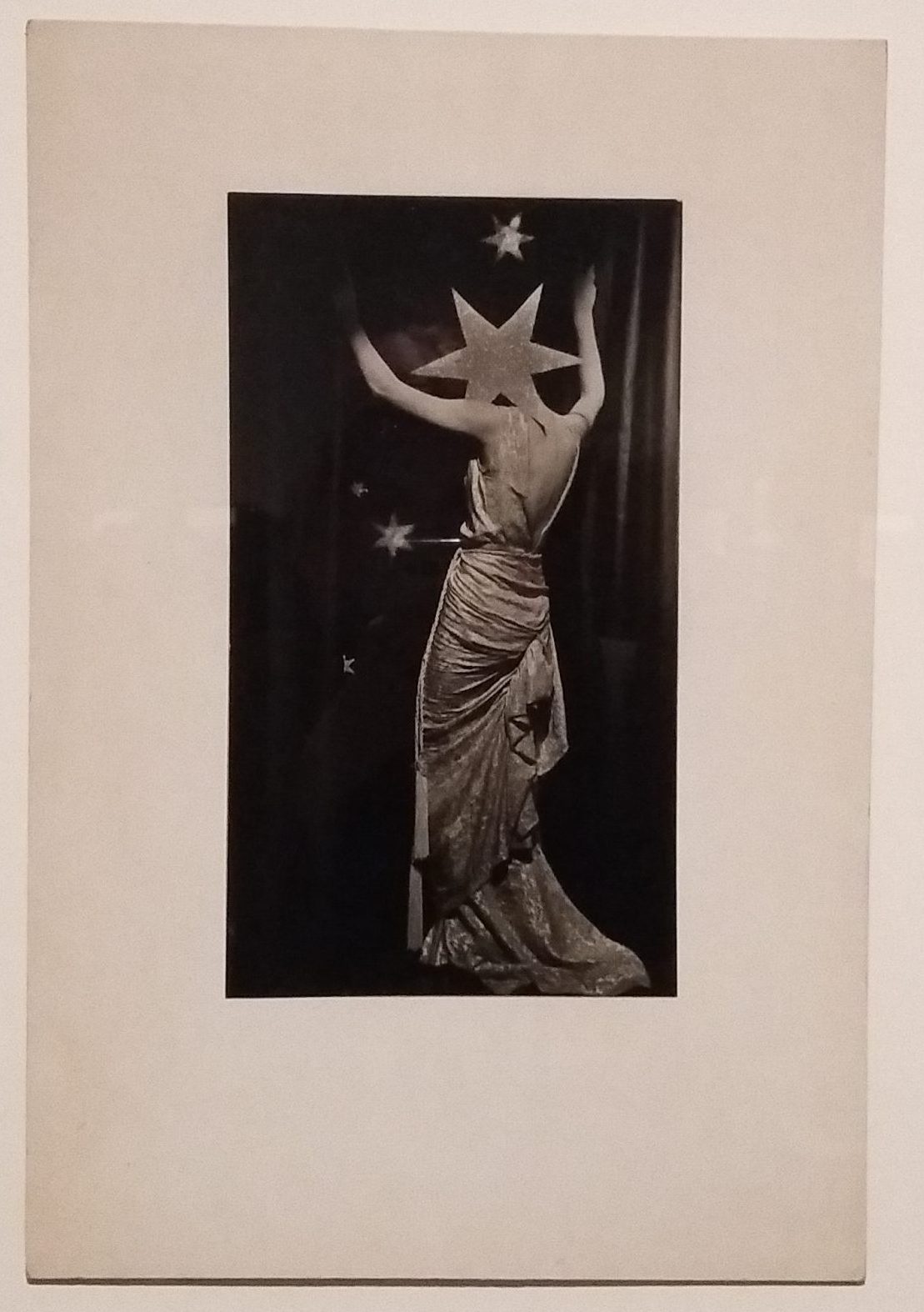
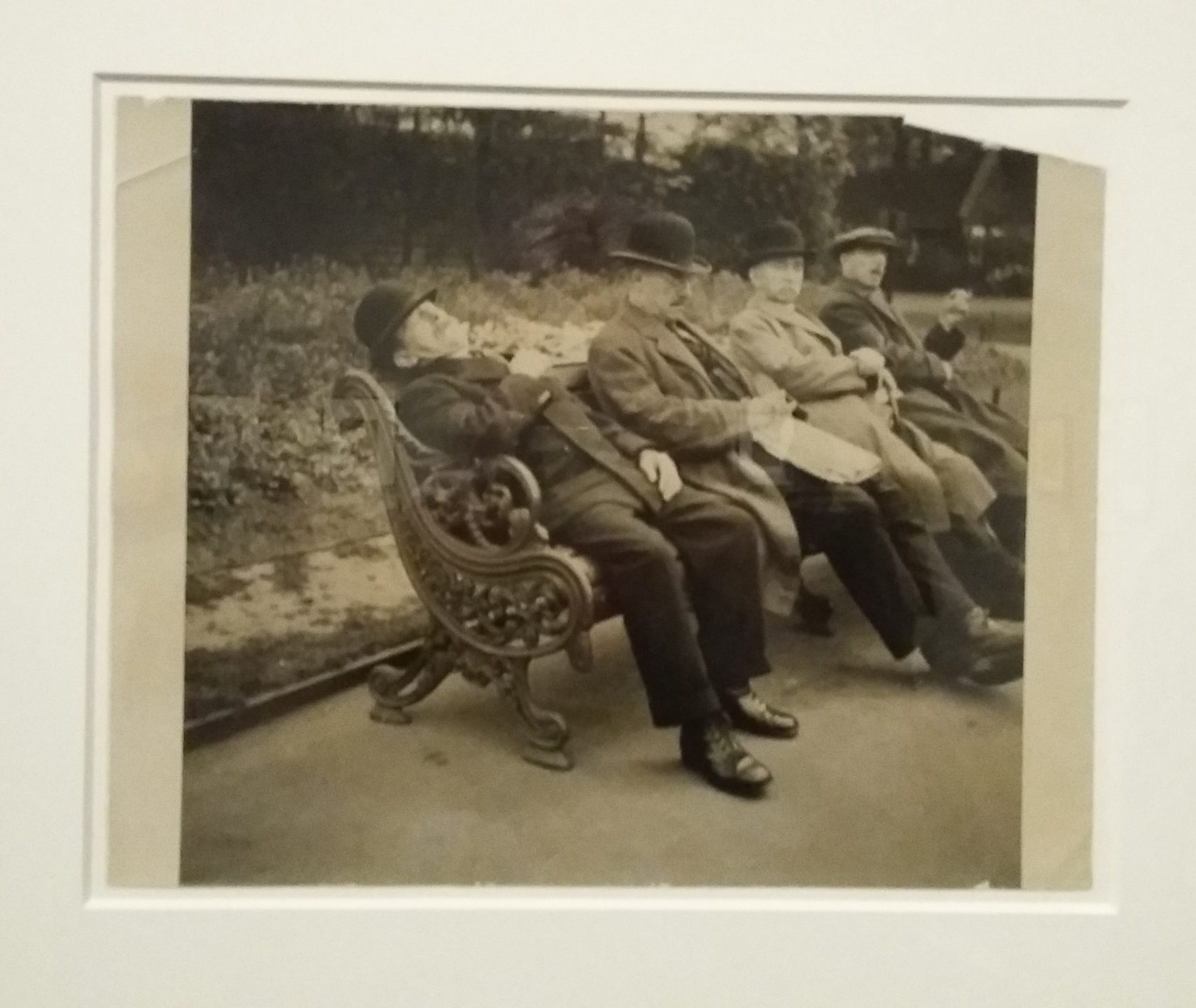
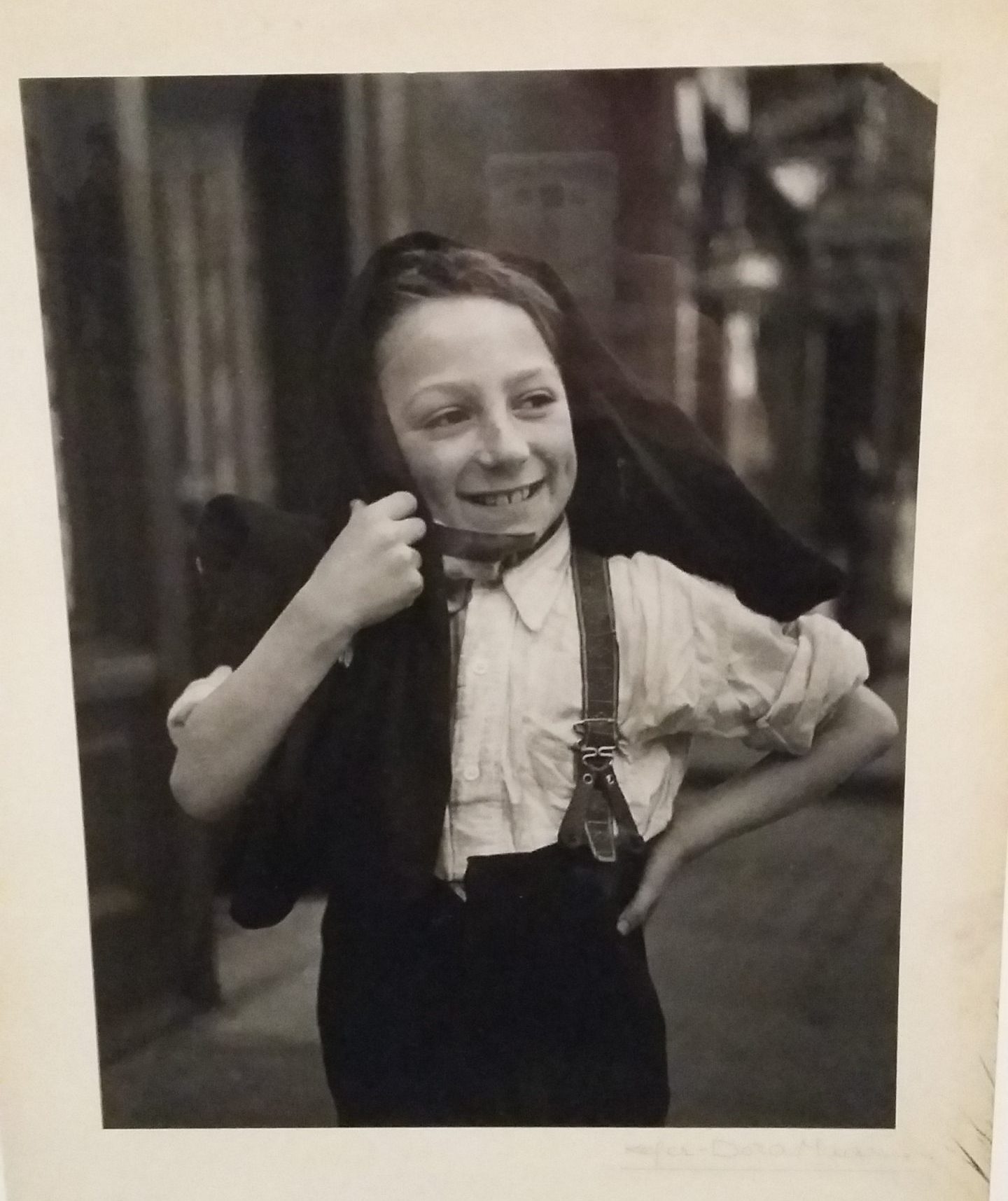
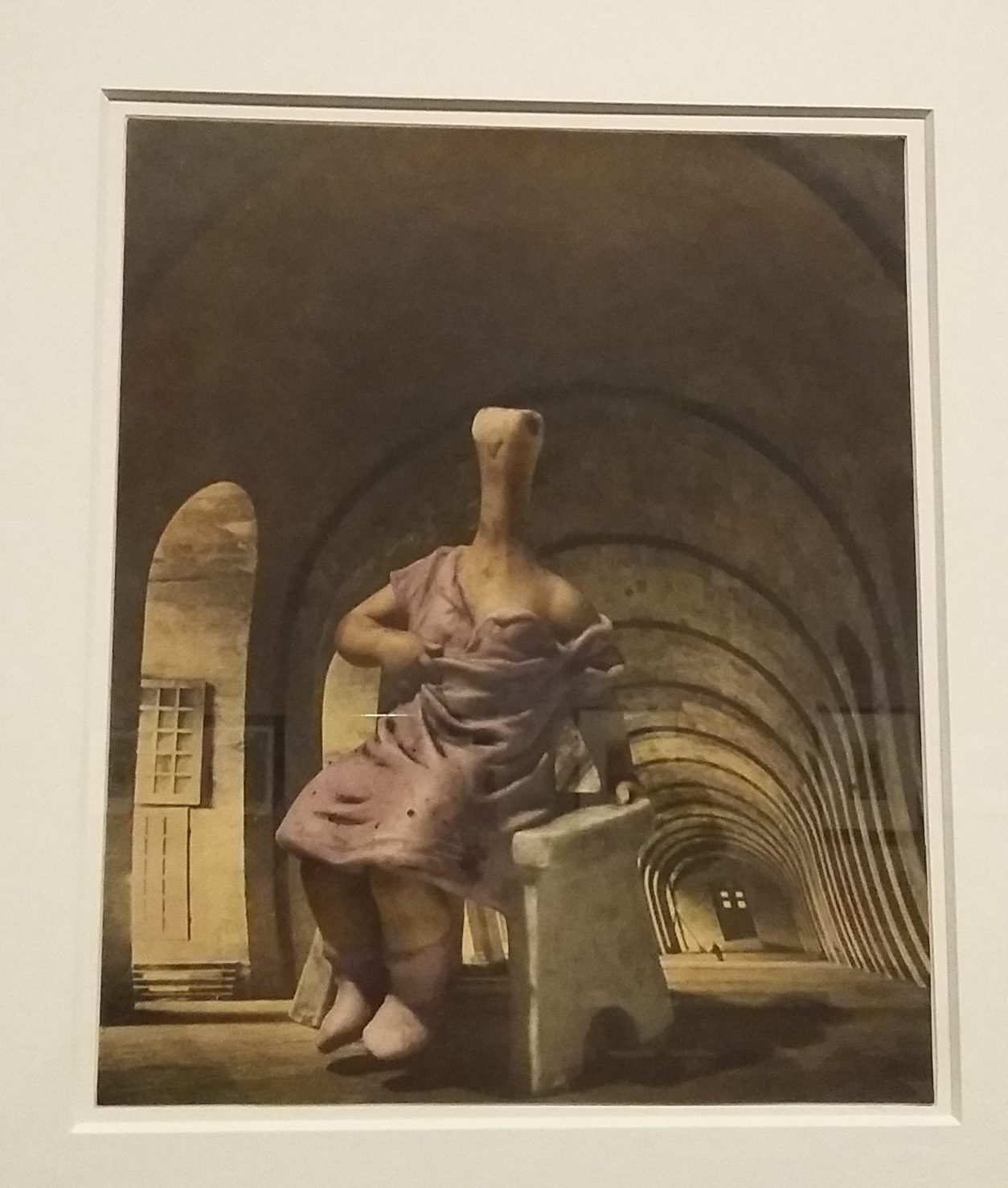
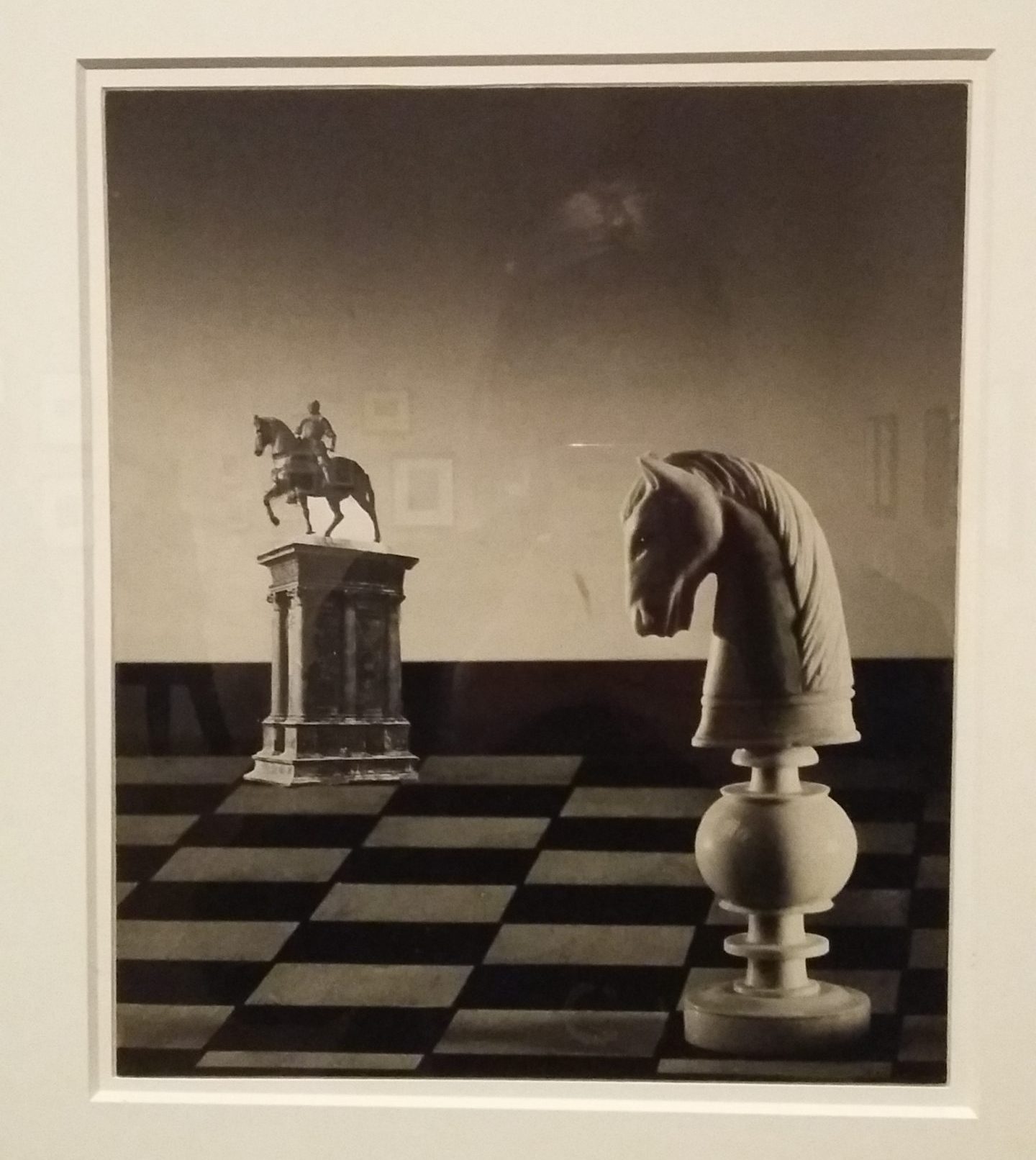
While Maar (1907-1997) had a long and illustrious career, she is barely remembered today, forgotten mainly thanks to her gender and also perhaps her relationship with Pablo Picasso, which overshadowed her. She helped to document his Guernica of 1937, in the period which most defined her – her works of Surrealism were celebrated at the time and these are the most remembered today. Her images from this period are striking and unique.

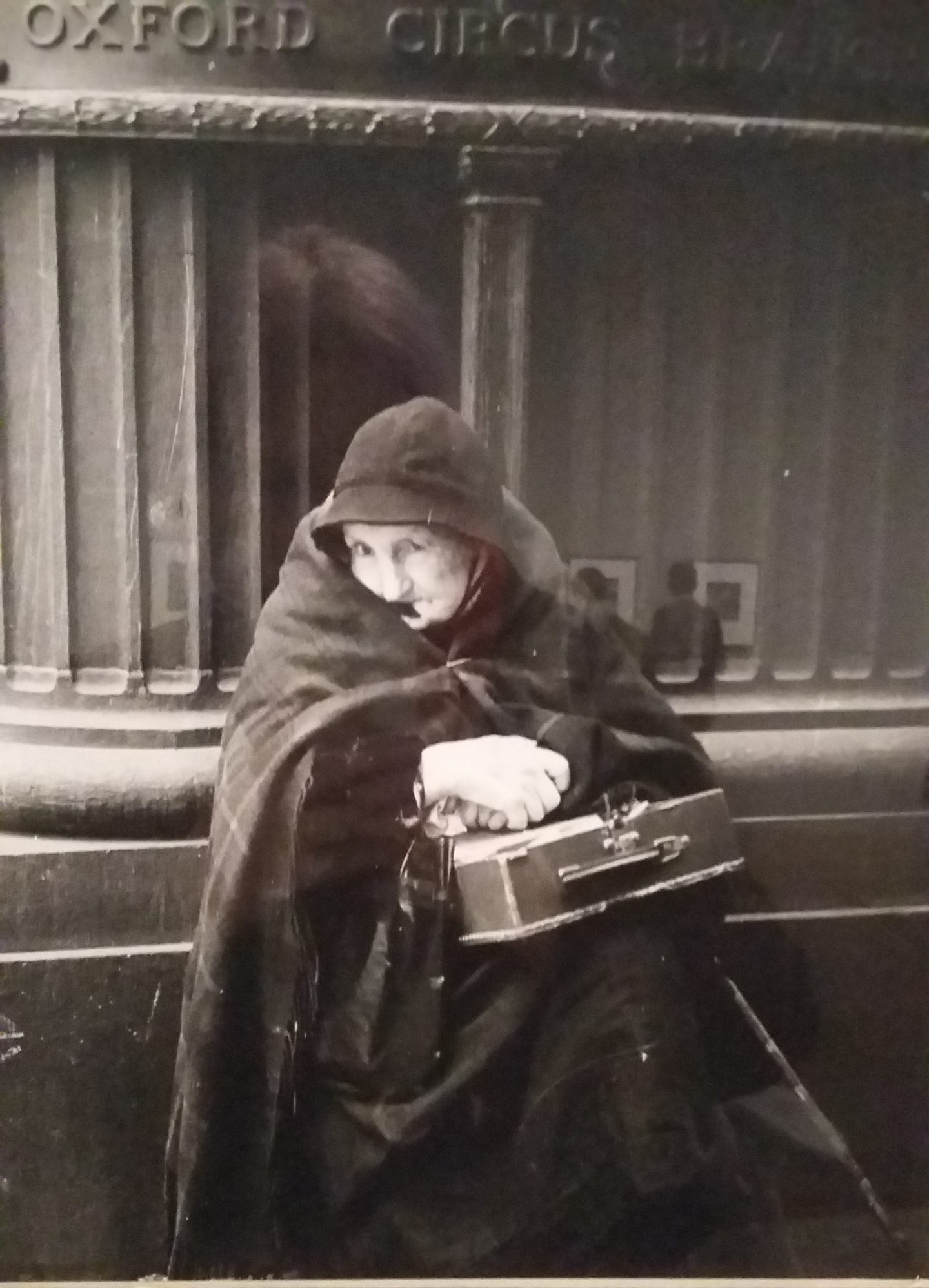
What I liked even more, however, were Maar’s realism-influenced photographs taken on the streets of Barcelona, Paris and London during the Great Depression of the 1930s. These really stood out to me, revealing the characters behind the faces, and making me want to know more about them. It doesn’t surprise me that Maar signed her name to many left-wing manifestos – an unusual guesture for a woman in that period, but one which seems natural in her obvious appreciation and admiration for ordinary people.

I’m so glad I got the chance to visit this unique exhibition before everything closed down – it’s one which will stick in my mind for many years.

William Blake – Tate Britain

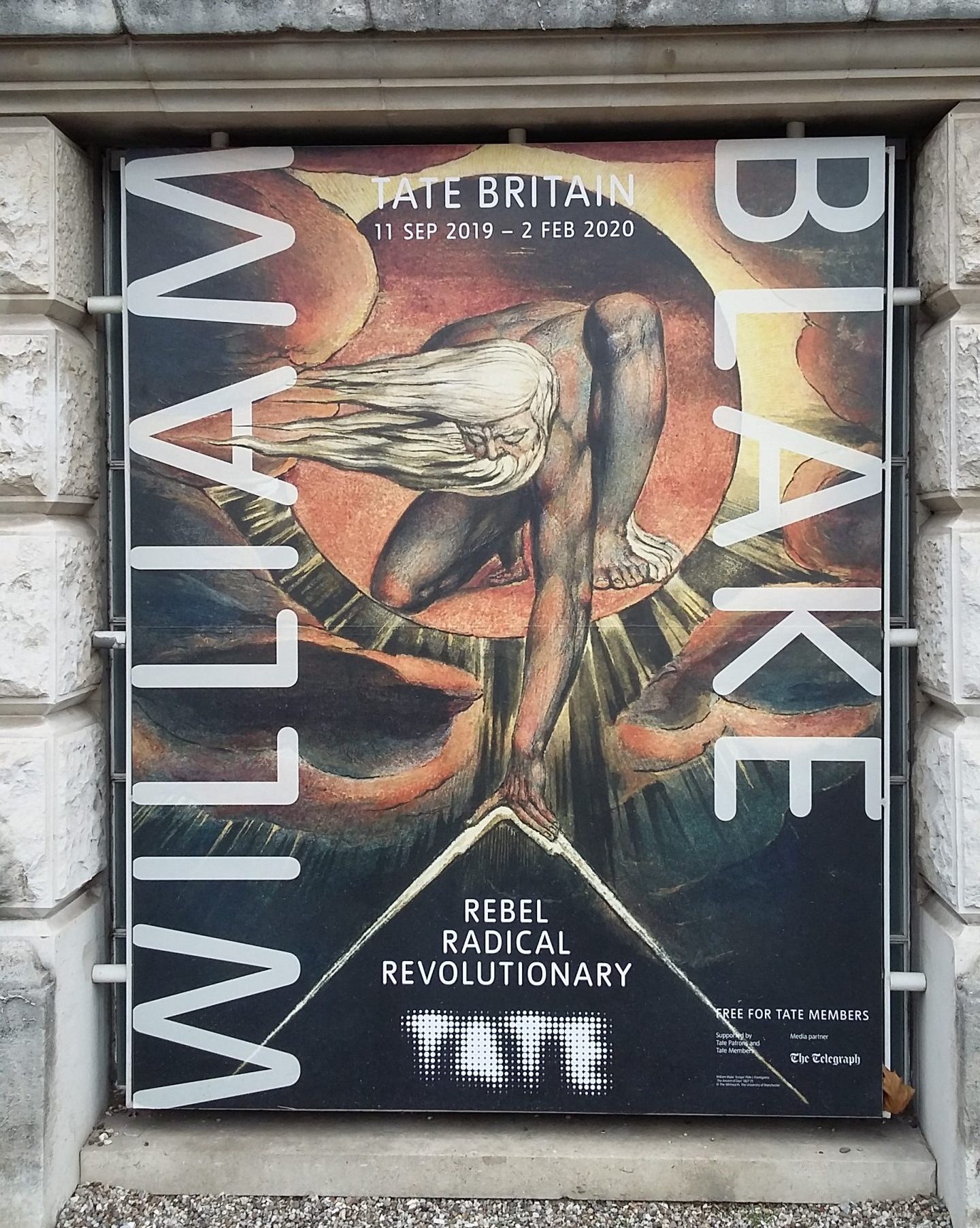
Exhibition poster

I first encountered William Blake’s work in sixth form, when I studied his Songs of Innocence and of Experience for A level. This major exhibition at Tate Britain explores Blake’s whole life, tracing his development as an artist from his beginnings at the Royal Academy through to his unique and visionary works. It acknowledges the complex questions raised by his images of slavery, and mentions the contribution his wife Catherine made to his work.

Blake was born in 1757 in London, where he lived for almost all of his life, most famously in Lambeth, south of the river.  As a teenager he was apprenticed to an engraver, and later studied at the Royal Academy. He initially followed the prescribed course of study, practising by sketching the classical statues provided for this purpose, but grew frustrated with the restrictions this placed on him, and began to explore his own myths in his art. One example of this is his long poem Tiriel: he envisioned this as a combination of words and images, integrated as one whole. Much of his early work, and his images for Tiriel, are displayed in the first rooms of the exhibition.

Blake spent much of his career as an engraver and print maker. He pioneered a technique, still not fully understood, of relief etching, which he used to create beautiful illuminated books, which were not commercially lucrative but were nevertheless admired by a select few collectors. Blake would often produce images without text to sell individually. Two of his key collections, displayed here, are the pages from his famous Songs of Innocence and of Experience, and America: A Prophecy, inspired by the American War of Independence.

Patrons were crucial to Blake being able to make a living. He had several patrons throughout his life, and and a section of the exhibition is devoted to the work he produced for them. However, his relationship with them was often tense as he felt they restricted his creativity and artistic freedom. In later life Blake hosted his own exhibition, above the shop owned by his family, in 1809, however, it was poorly received by the critics.

Towards the end of his life, Blake did receive appreciation from younger artists who saw him as a radical, someone who had refused to compromise his vision. It was at this time that he began his work Jerusalem. The exhibition is a comprehensive, intelligent and engaging exploration of Blake’s work.

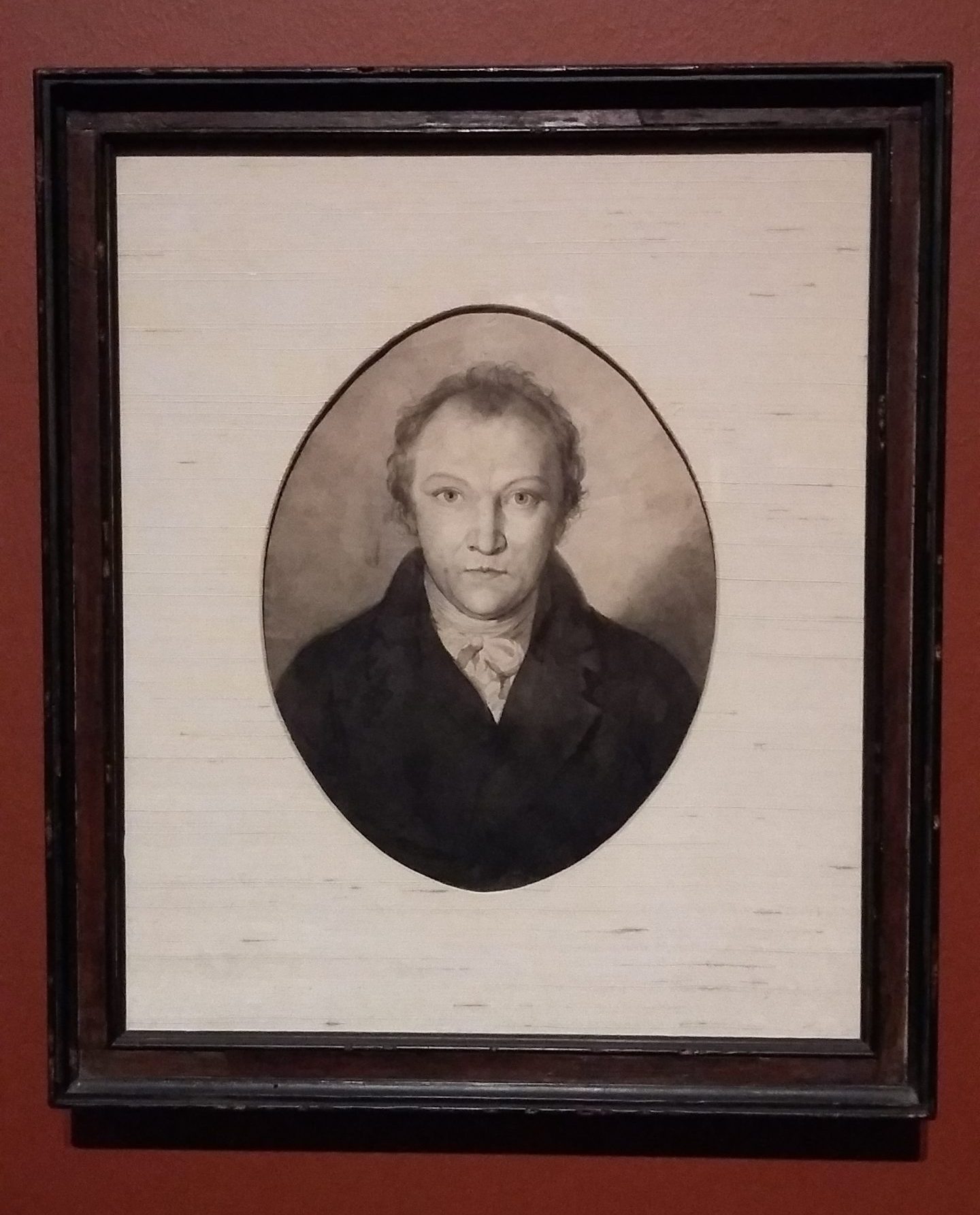
William Blake

The Moon – National Maritime Museum

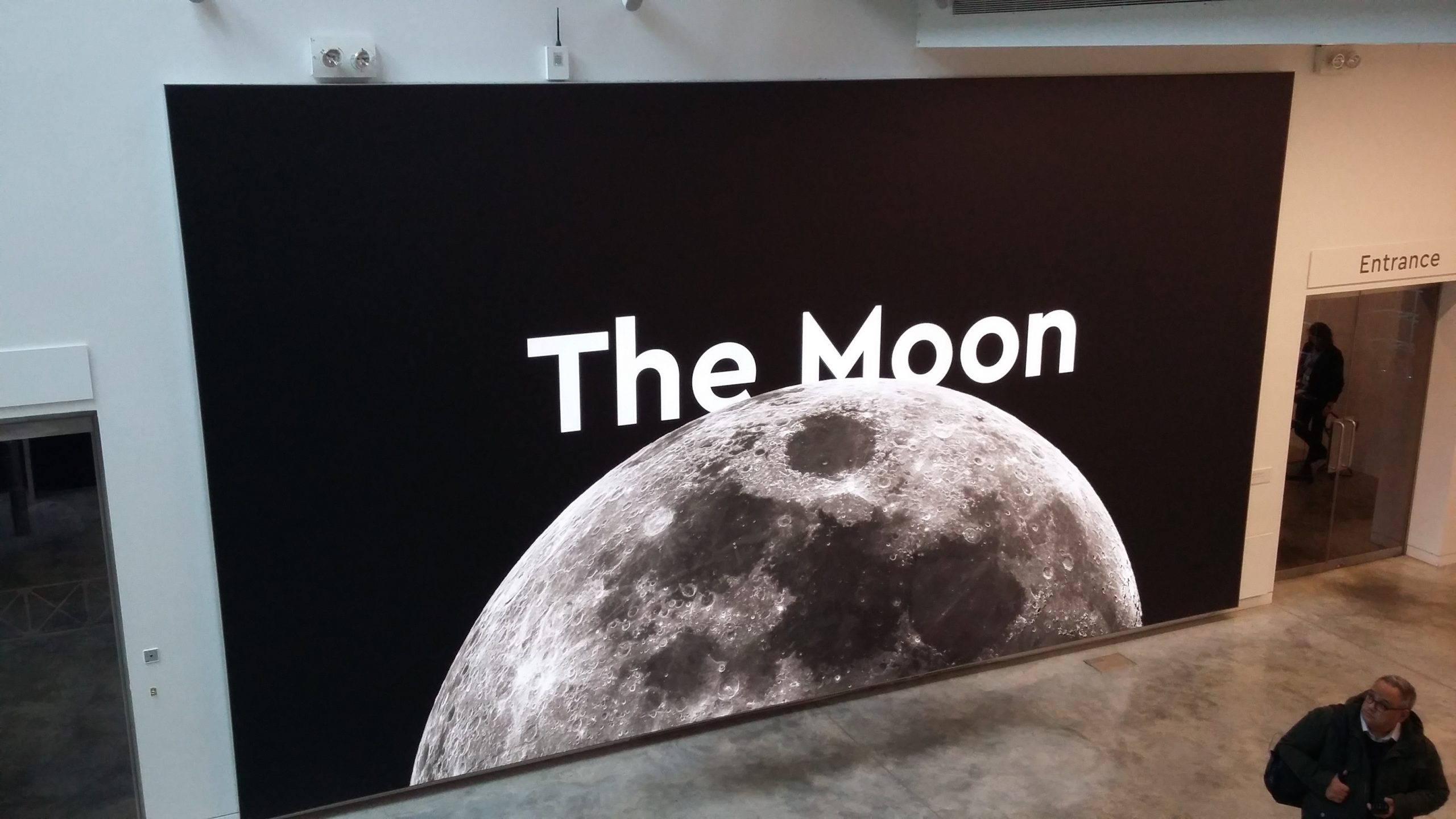
the moon banner

We like the moon, ’cause it is close to us…

I went to the National Maritime Museum to visit The Moon on its very last day. The Science Museum had an exhibition on the Sun not long ago, so this exhibition seemed apt. Also, it’s the celestial body associated with my star sign, Cancer. The exhibition marks 50 years since the moon landings, but as well as space travel it looks at the history of our understanding of the moon, literature associated with it, and religious and cultural practices with the moon at their centre.

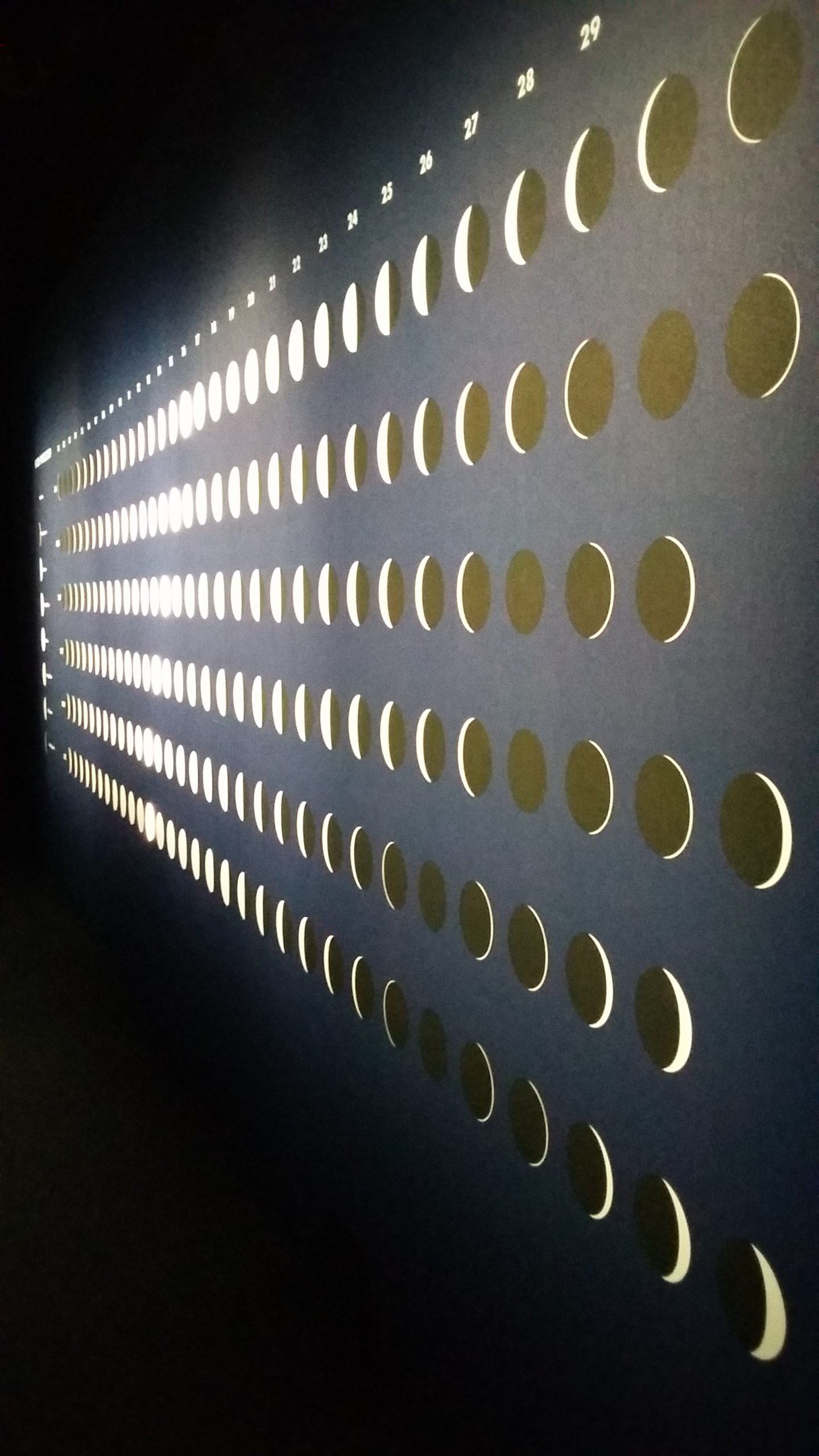
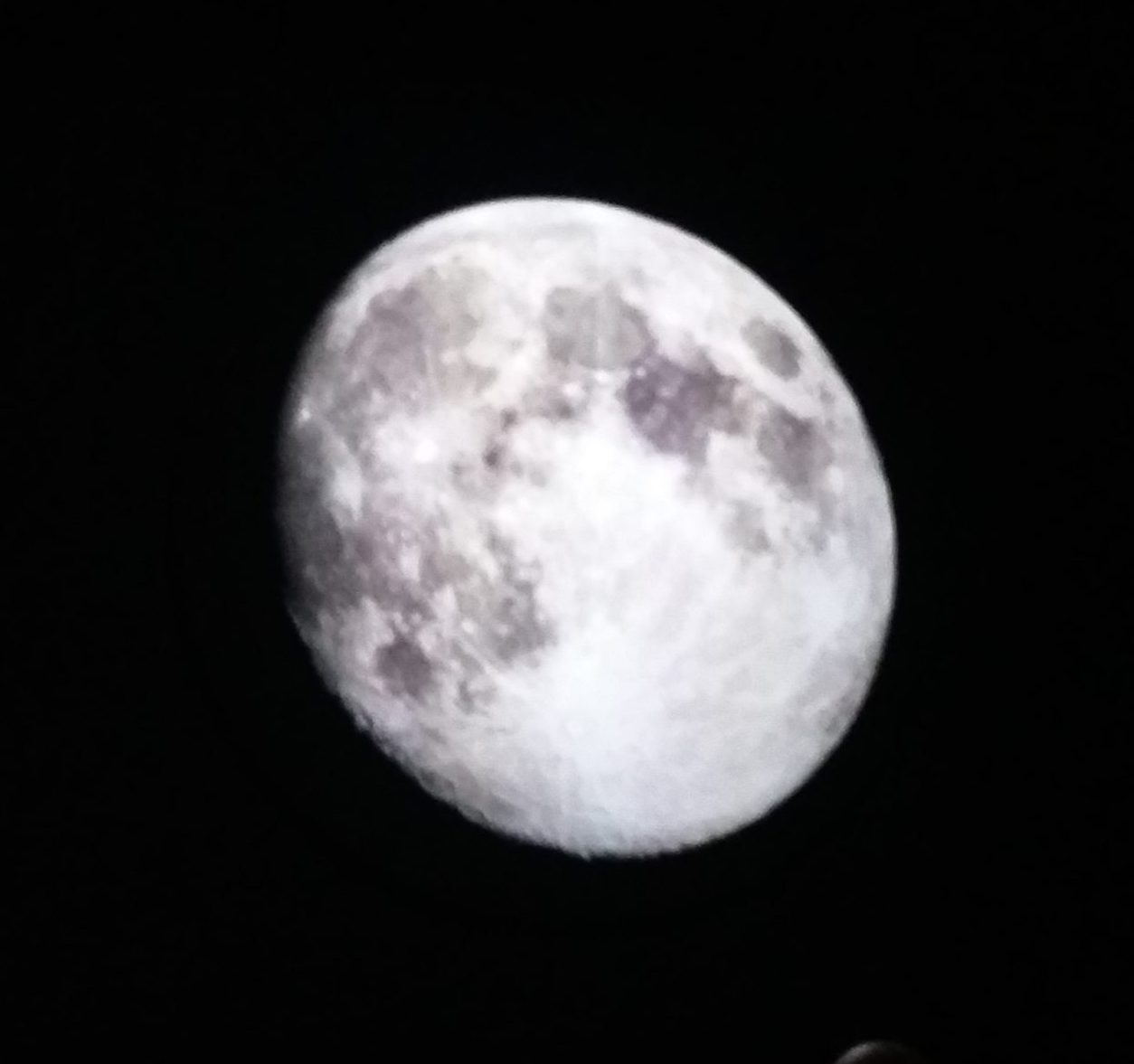
Phases of the moon

Accompanied by a musical soundtrack of Debussy’s ‘Clair de Lune’, the exhibition explores early superstitions about the Moon, looks at the scientific developments that allowed us to view and eventually visit it, and looks to the future with the prospect of human settlement on the Moon. I was intrigued by the role of the Moon in the lives of ordinary people, and the names given to the different phases of the Moon. Much of the artwork featuring moonlit landscapes is beautiful, and the early photos and diagrams of its surface perhaps even more so.

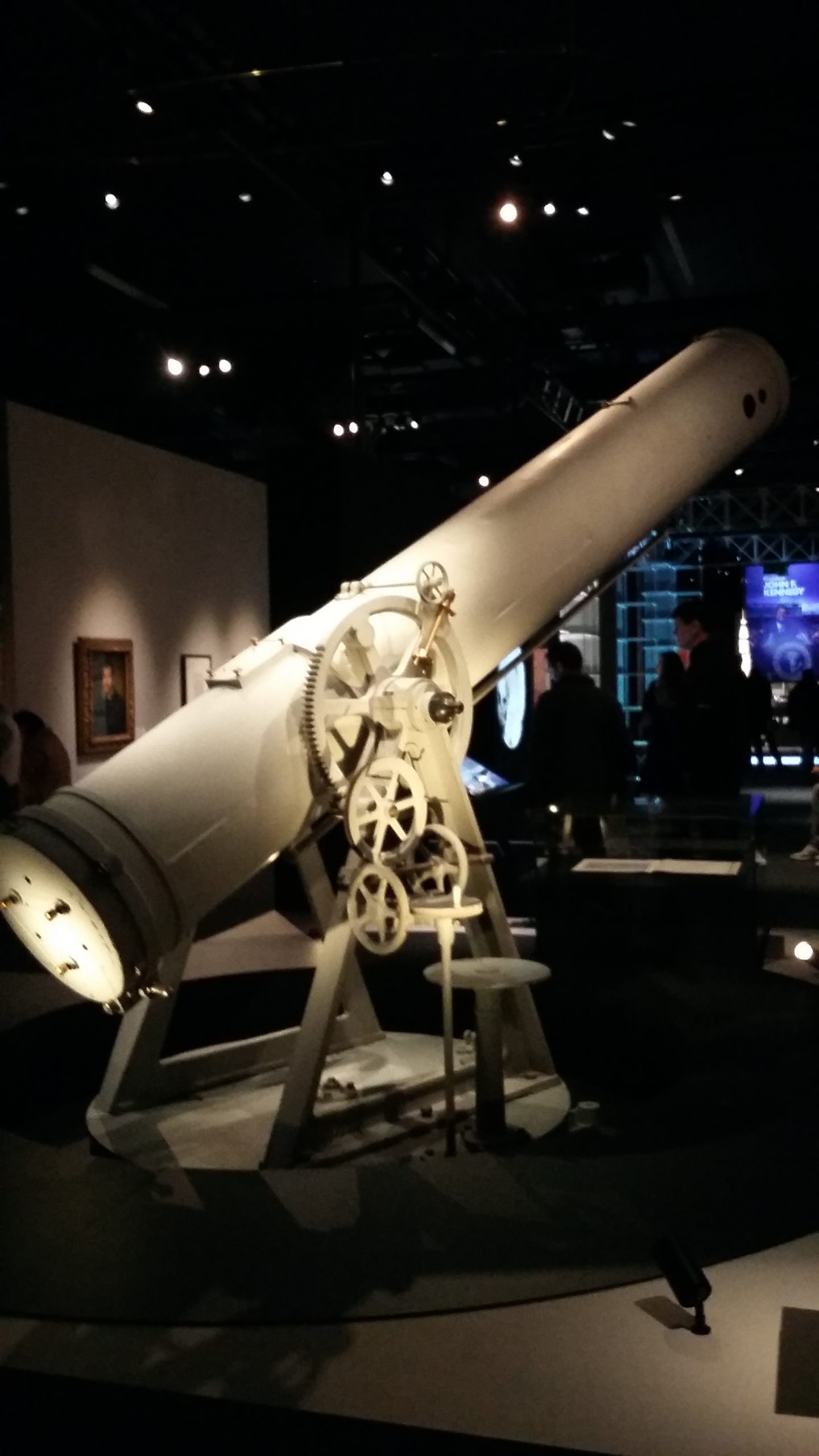
telescope

An important part of the exhibition is devoted to the Space Race: items from actual Apollo missions are some of the most exciting on display. This leads on to a section that asks who owns the Moon: there are some difficult questions to be asked in the future, but there is also excitement at the prospect of further exploration.

The Moon

Troy: Myth and Reality – British Museum

urn
Urn showing Achilles killing Penthesilea

On the first Saturday of the New Year I went to the British Museum with my friend to see the exhibition Troy: Myth and Reality. The exhibition looks at the myths surrounding Troy and the Trojan War before exploring the evidence for the real existence of Troy and how the legend has been interpreted over the centuries.The first object on display is a magnificent urn painting, dating from approximately 530BC. It shows Achilles at the instant he kills Penthesilea, leader of the Amazons: a dramatic moment showcasing the violence of the Trojan War. Homer’s Iliad and Odyssey, as well as Virgil’s Aeneid, tell stories of characters such as Achilles both real and mythical, and are hugely well known in the Western world and beyond.

Most people know the basics of the myth: Trojan prince Paris runs off with Helen, wife of Menelaus, king of the Spartans. But was she abducted or did she go willingly? Whas she as beautiful as legend suggests – “the face that launched a thousand ships” – or was she simply an excuse for the Greeks to declare war? The contemporary and near-contemporary artefacts in the exhibition offer a variety of perspectives and interpretations.One aspect I found fascinating was the gallery exploring the discovery of Troy as a real place:

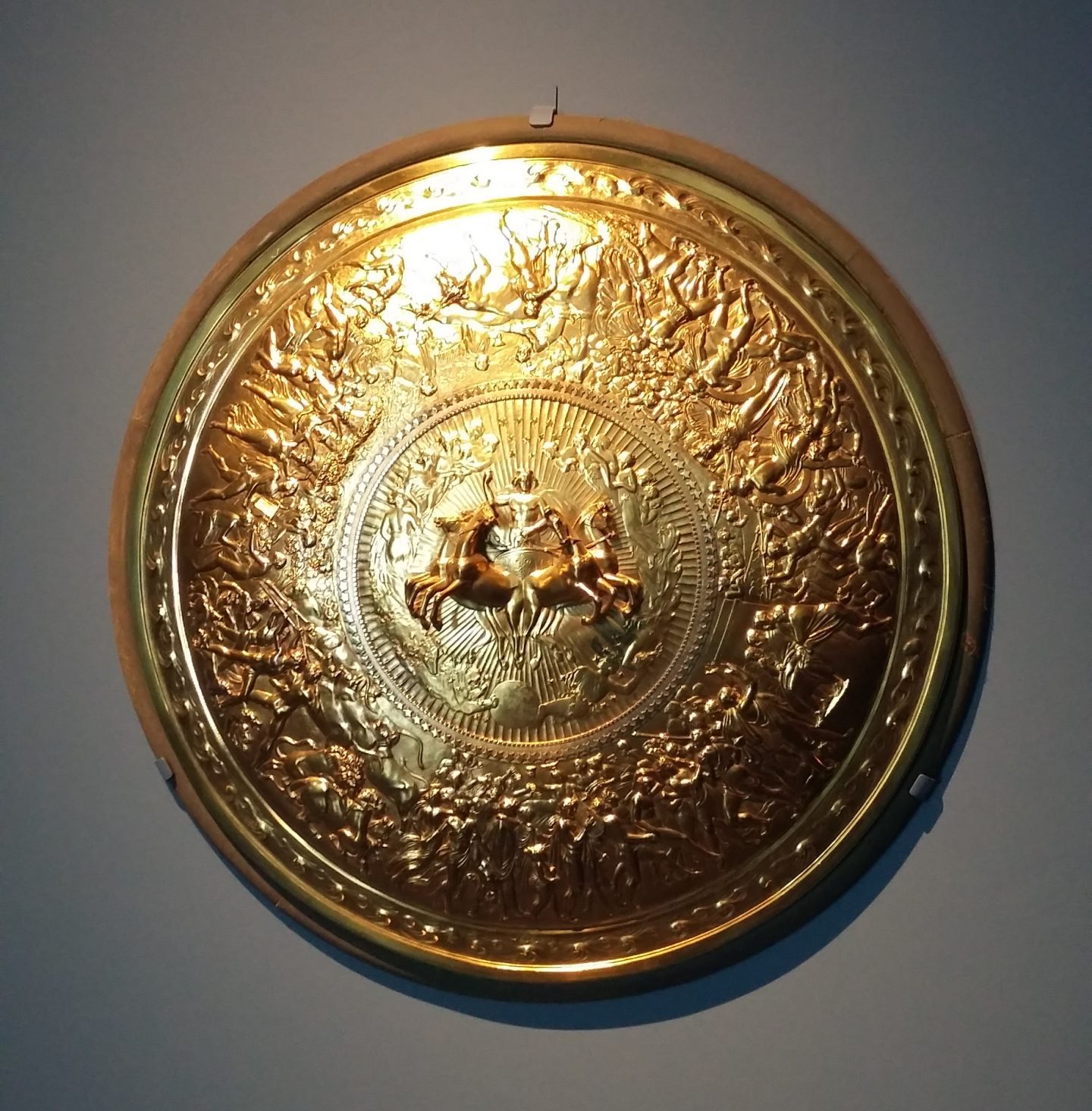
Homer’s Iliad references the northern Turkish city of Ilium, and for many years Troy was thought to be at a place called Bounarbashi. In the nineteenth century the focus changed to Hisarlik. Many objects excavated during this period are displayed here. The second half of the exhibition focuses on differing interpretations of the Trojan War over the centuries, and it’s fascinating to see how these changed over time. It ends with a 19th-century interpretation of Achilles’ shield, symbolising how the myth has inspired artists and creators for years and years.

shield
19th-centuy shield of Achilles

George IV: Art & Spectacle – Queen’s Gallery

George IV painting

George IV: Art & Spectacle is the latest exhibition to take place at the Queen’s Gallery, London. This king, who spent many years as Prince Regent (giving the Regency period its name) before taking the throne in his own right, is portrayed here as a keen art collector whose legacy can still be seen today.

Growing up, George was not allowed to leave the country owing to the orders of his father, George III, so instead he collected works of art from all over Europe and the east, as well as paintings of subjects closer to home – his family, and earlier monarchs. His energies were first directed at Carlton House, his London residence, which he filled with art, sculpture and furniture, but his vision eventually outgrew this comparatively small living space. Famously, he established the Royal Pavilion in Brighton, and on becoming king he instigated work at Windsor Castle and Buckingham House, transforming the latter, under the care of architect Thomas Nash, into Buckingham Palace.

It seems that George did have a keen eye: he collected works by the likes of Rembrandt, as well as commissioning works of his own. He enjoyed literature too, keeping a collection of Jane Austen’s works in each of his residences, and inviting Sir Walter Scott to dine.

One thing I found interesting about the exhibition was that George, spending money lavishly at a time of economic hardship for many of his subjects, was widely disliked, and this image of him has coloured our perception. I’m not really surprised, and it makes me wonder if having this exhibition now was really a good choice, as poverty levels in the UK reach crisis point. Not long ago, there was criticism over a plan to refurbish Buckingham Palace during this time of austerity, and however much George IV embraced the arts, I feel similarly about his own spending, fascinating as this exhibition was.

200 Years of Polar Exploration

exhibition poster

The auction house Spink held an exhibition entitled 200 Years of Polar Exploration recently, featuring artefacts that have never been on display before, including photographs, equipment, medals and other memorabilia, from the expeditions of Scott and Shackleton, to 21st century explorations led by figures such as Sir Ranulph Fiennes and the late Henry Worsley.

The exhibition was staged in aid of The Endeavour Fund, which aims to help wounded, injured and sick service personnel and veterans use outdoor challenges and sport as part of their recovery and rehabilitation. This was the charity promoted by Worsley, who took part in several Antarctic expeditions before tragically dying of peritonitis during his 2016 attempt to make the world’s first unaided Antarctic crossing. One of the items on display was his pair of skis, decorated before their use by his children – a moving and poignant sight.

Other items included medals, and photographs from the Heroic Age and later. As always, I loved the opportunity to explore artefacts re;ated to Antarctic exploration and its history.

Tutankhamun: Treasures of the Golden Pharaoh

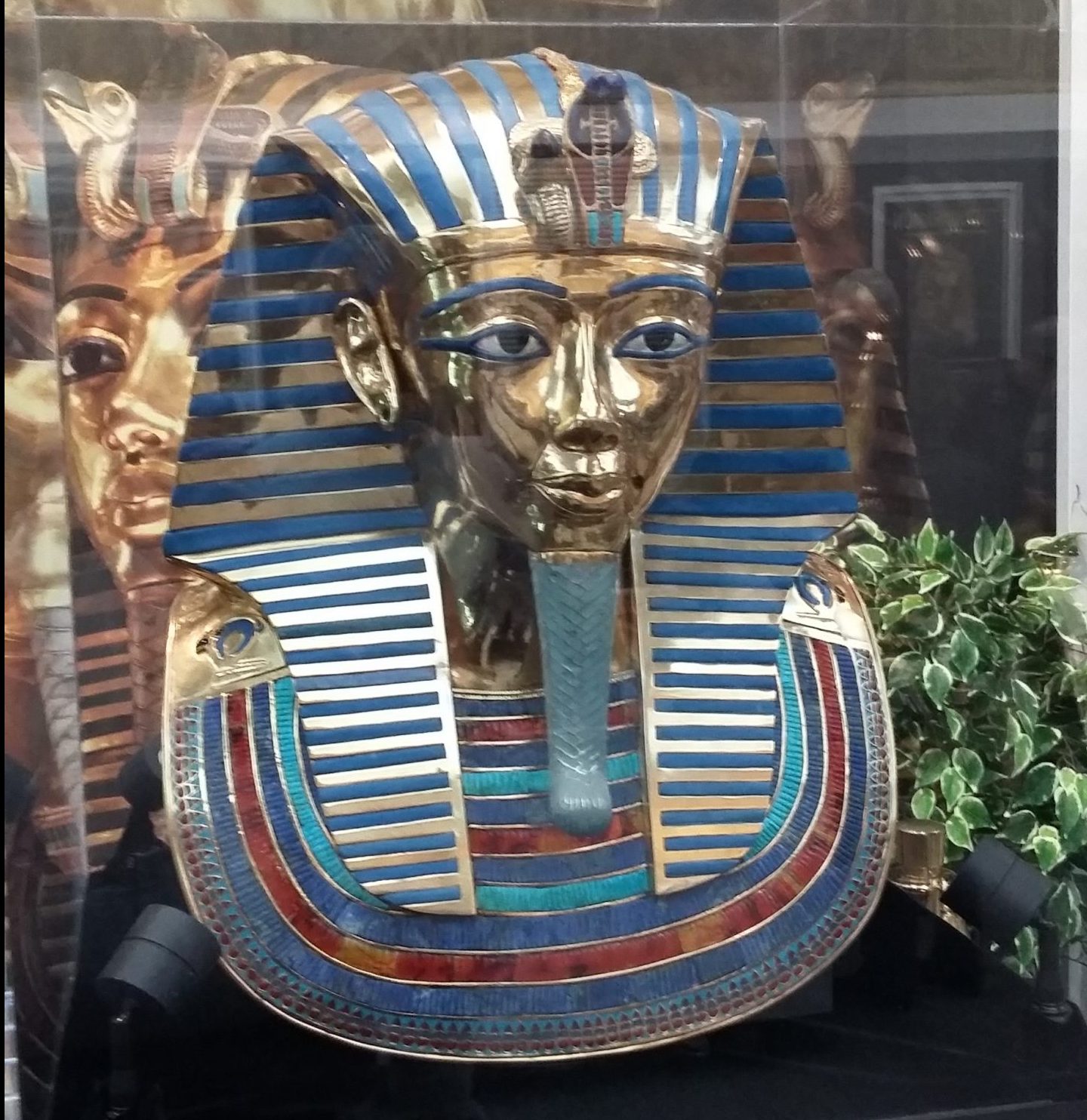
Mask replica
A replica of Tutankhamun’s famous mask

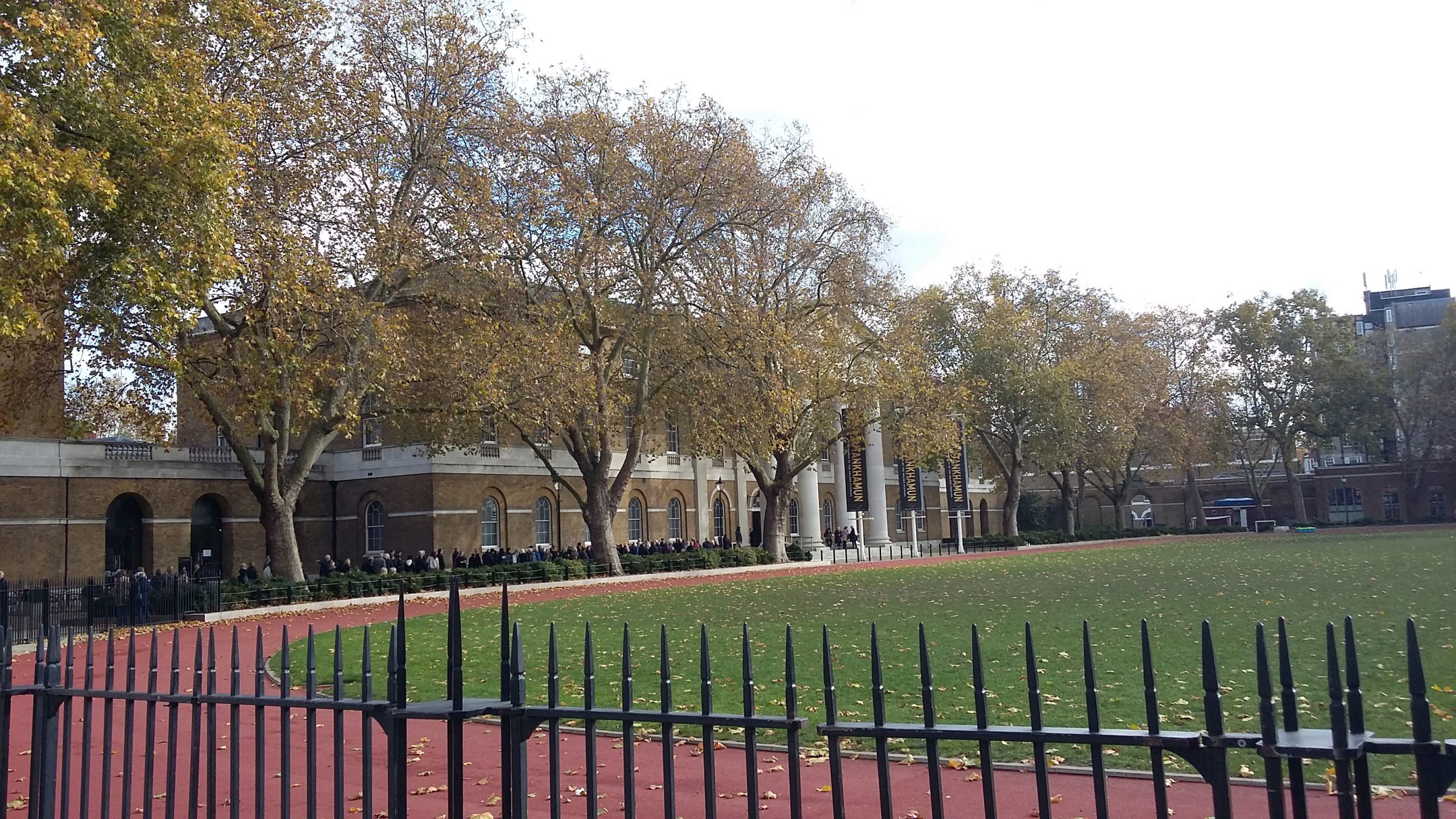
I feel very lucky to have got tickets for Tutankhamun: Treasures of the Golden Pharaoh at the Saatchi Gallery in London. I went to the exhibition on a day off in November, with my mam and a friend, who’d come down to London for the purpose.

Saatchi Gallery
Saatchi Gallery
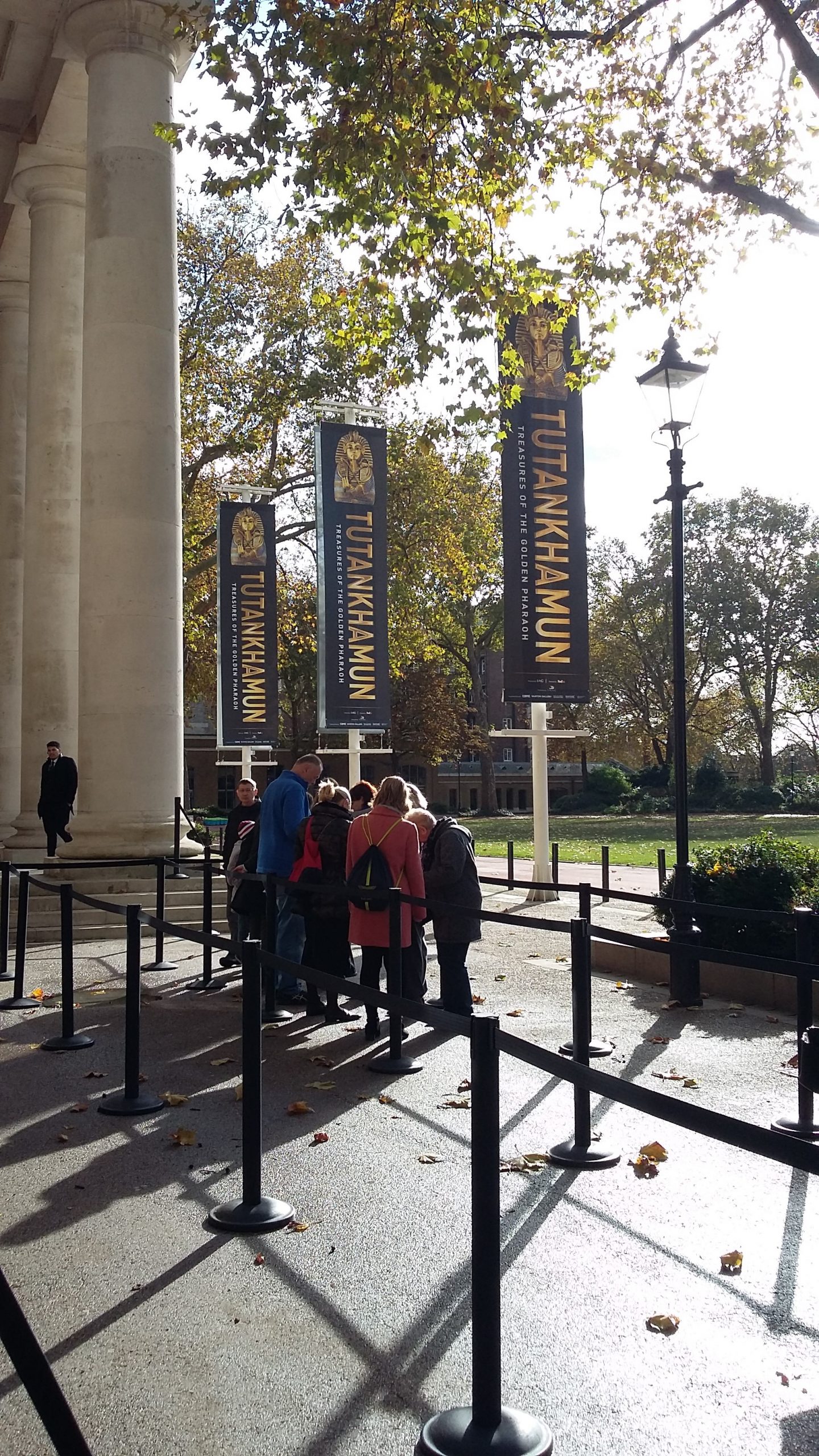
Exhibition queue
Waiting to go in

The queue outside the Saatchi Gallery was massive, and it was obvious that the exhibition was going to be popular. It commemorates the 100th anniversary of the discovery of Tutankhamun’s tomb, and marks the last time these artefacts will tour before being permanently housed in a purpose-built museum in Giza. Although the exhibition does not include Tutankhamun’s famous mask (which is available to view in replica at the end of the exhibition), it includes a vast array of treasures, many of which have travelled out of Egypt for the first time. London is the third stop on the exhibition’s world tour.

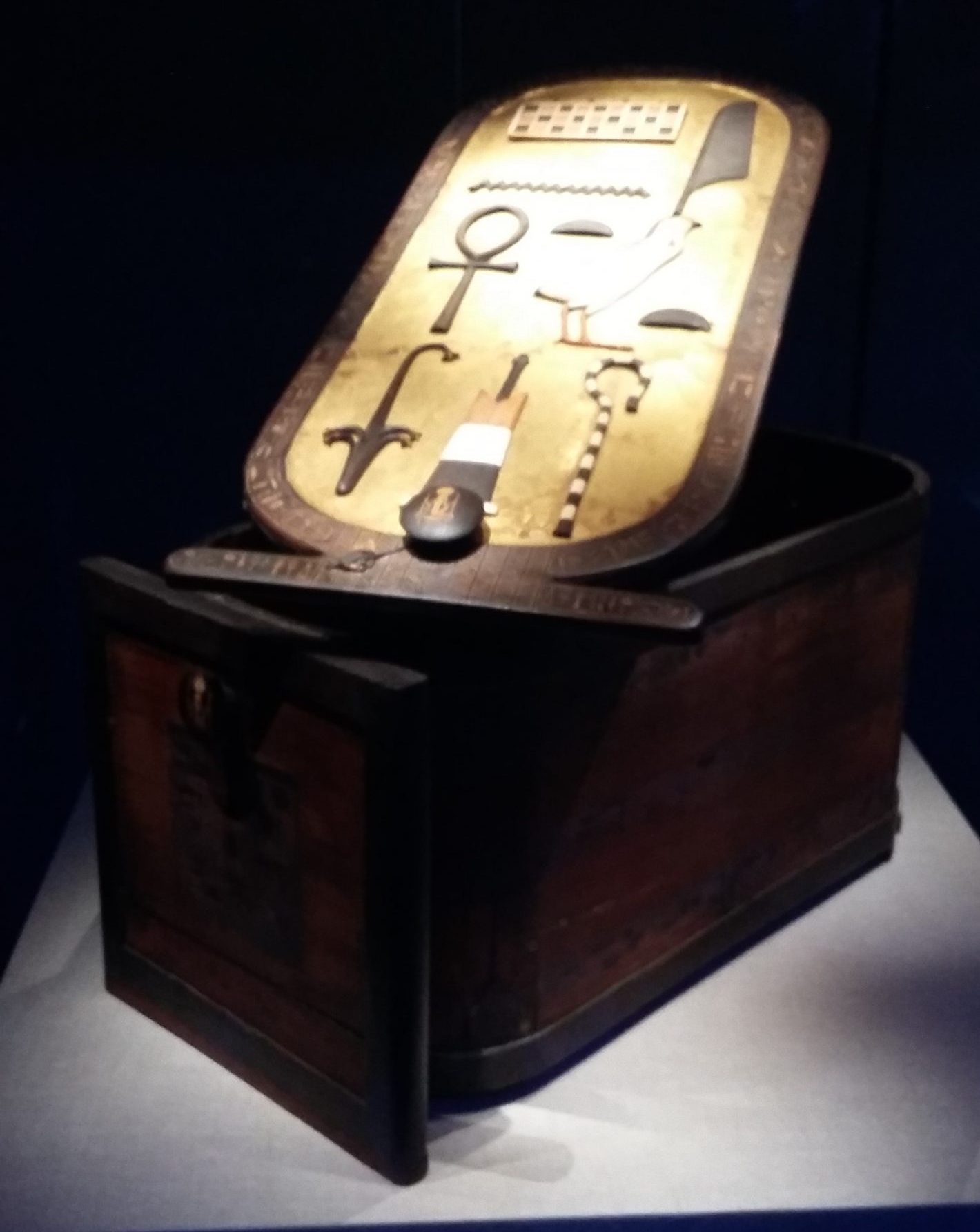
Cartouche box
Cartouche box

The treasures take up the whole of the Saatchi Gallery; great thought and care have been taken in arranging a one-way route allowing visitors to navigate the site with ease. The space was crowded, but I can’t see how it could have been made less so to accommodate everyone wanting to see the exhibition. Though I had to wait a little time to view a few of the exhibits, I managed to see everything I wanted without feeling rushed or overwhelmed.

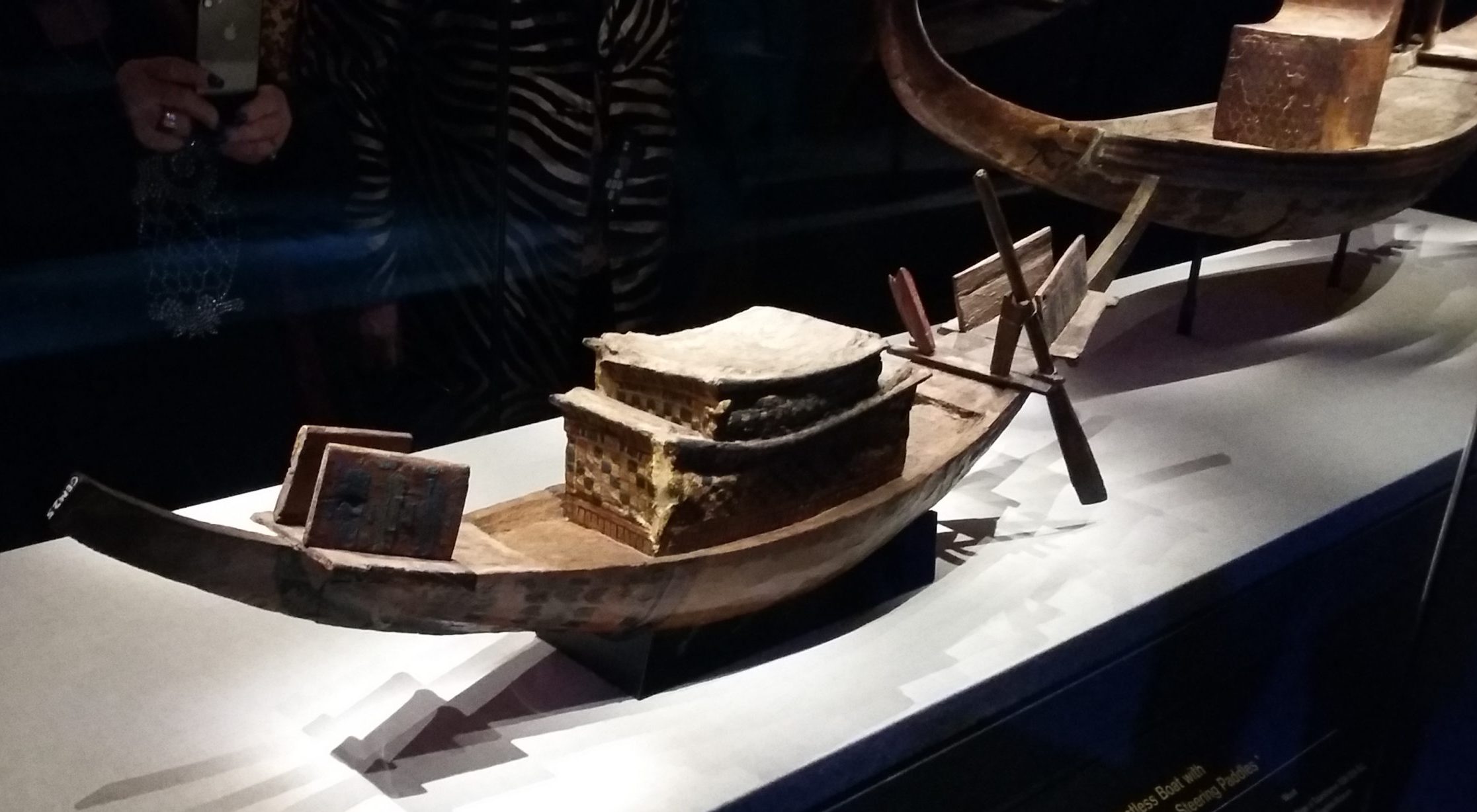
Wooden boat
Wooden model of a boat
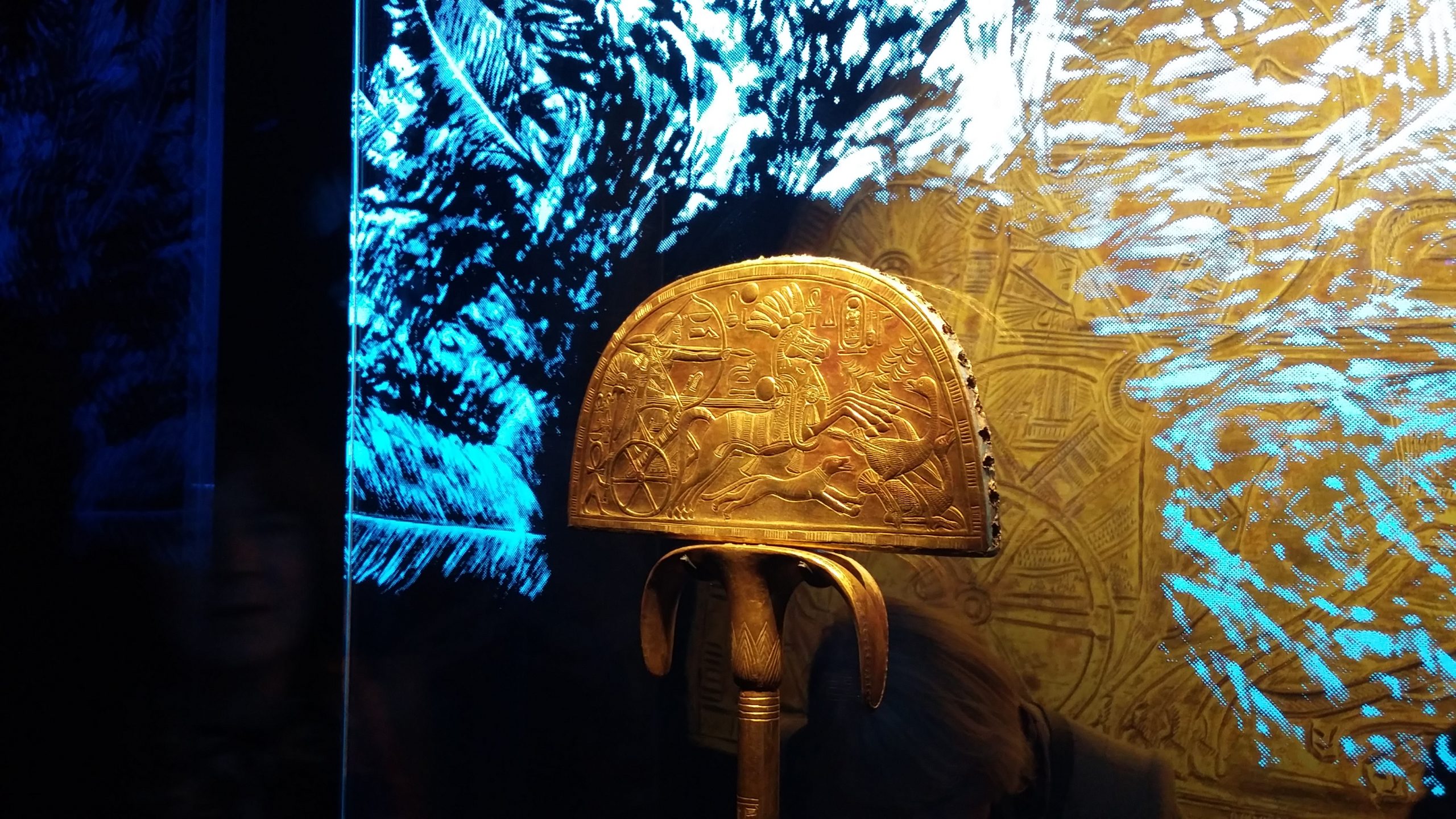
Fan
Fan
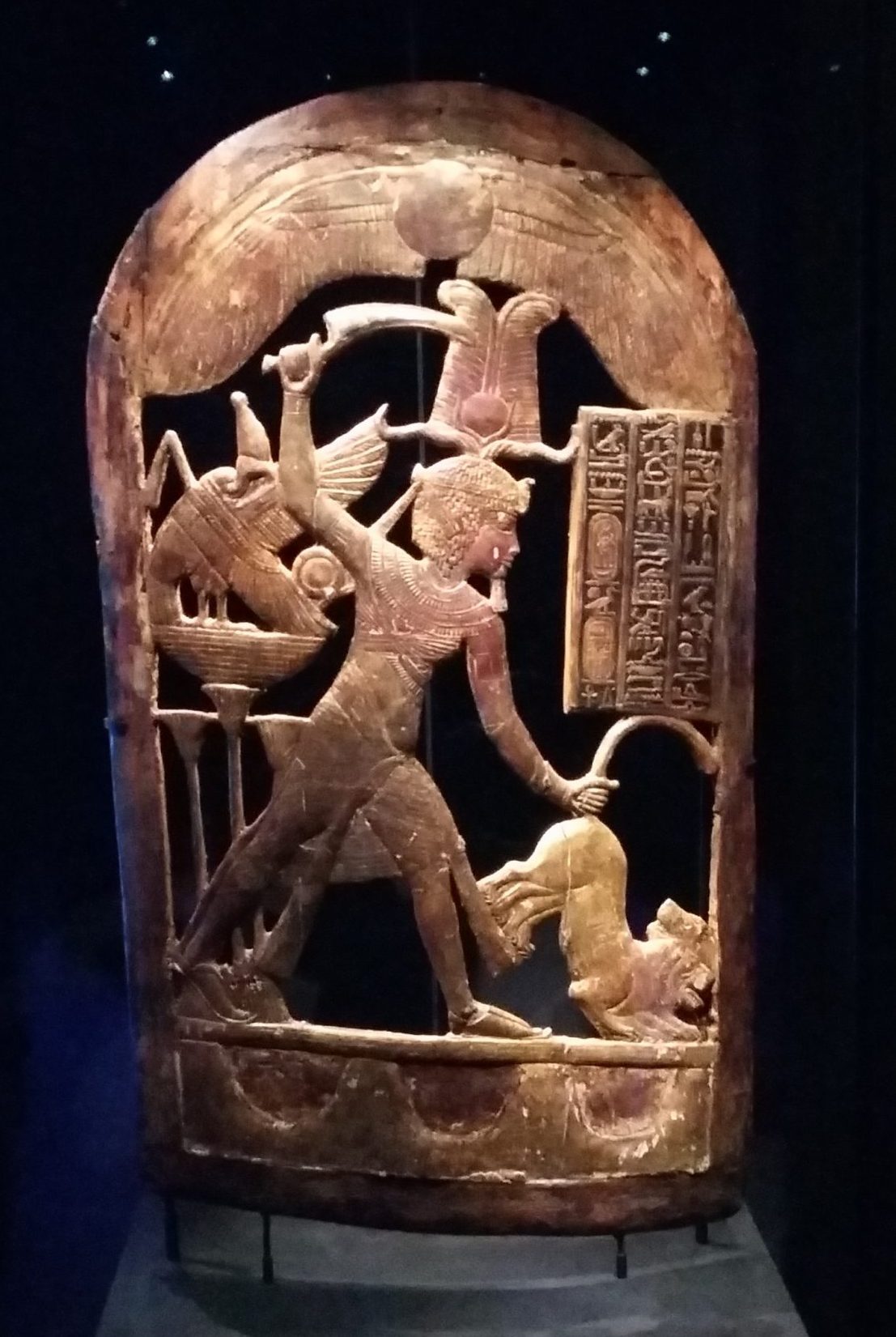
Shield
Shield

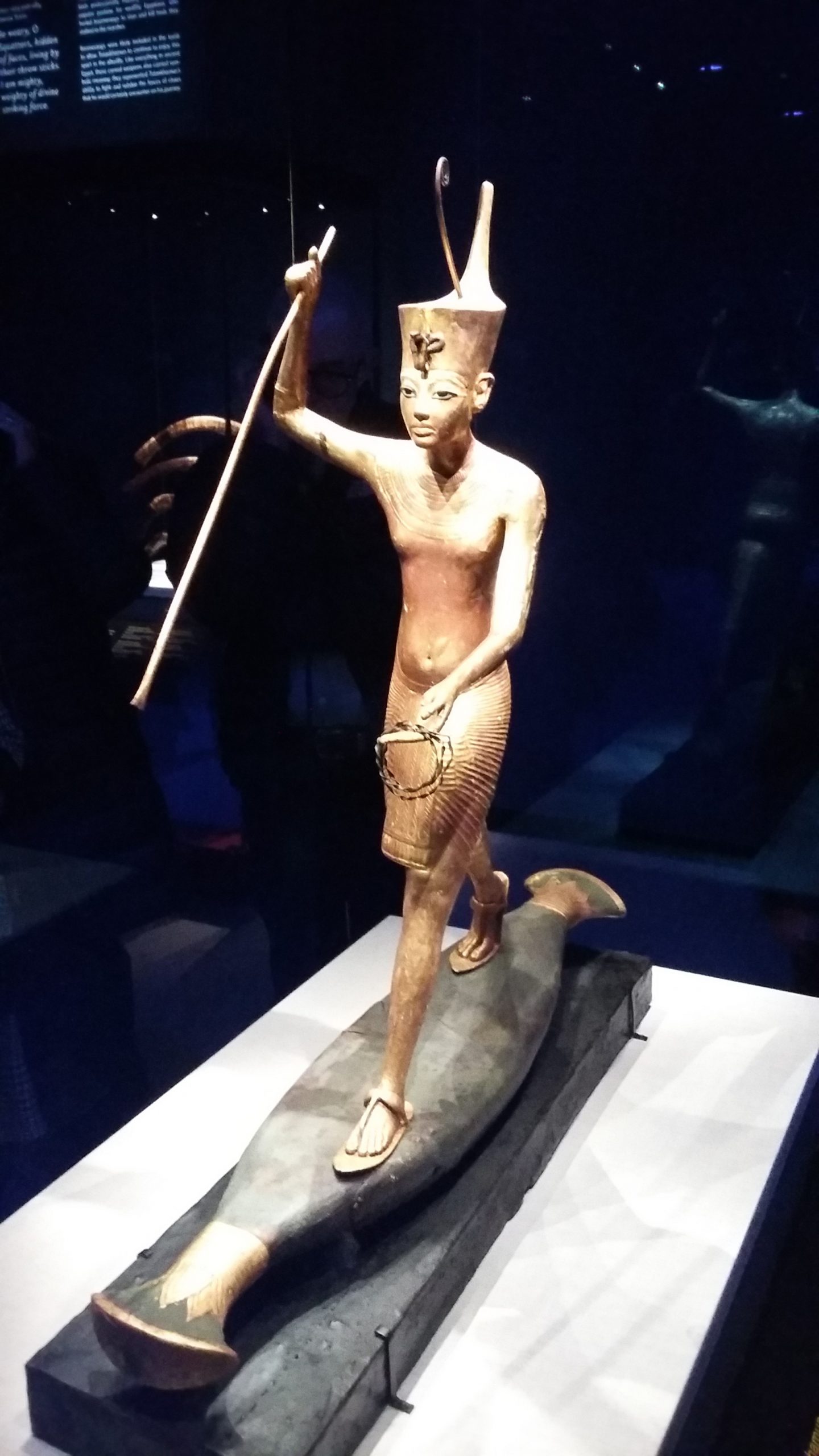
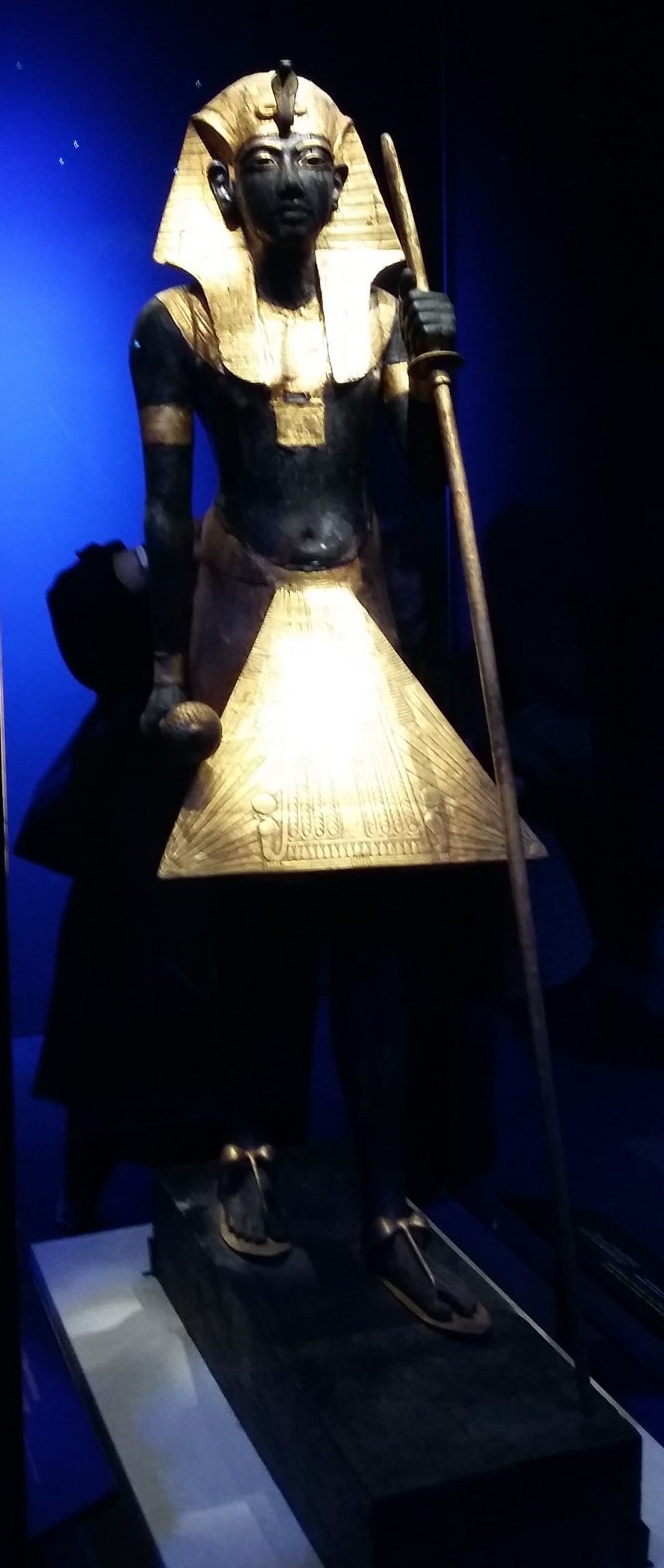
The exhibition is structured in a way that corresponds to how the boy-king’s tomb was laid out. You move through outer chambers before finally arriving at the sarcophagus. The artefacts, many of which were made in a hurry by artisans after Tutankhamun’s early death as a teenager, reflect everything a pharaoh would need in the afterlife, including statues, shields, fans, boxes embossed with hieroglyphs, shining and often encrusted with gems. However, there are also the more mundane items, such as simple chairs, a bed and even foodstuffs. It really struck me what good condition these items are in, considering they are over three thousand years old. I’m sure the centuries spent locked inside a dry, dark tomb would have helped, but still, it’s pretty impressive. Keeping in mind their age, the workmanship and the detail on these artefacts is simply astounding.

In addition there is an examination that led up to Howard Carter’s discovery of the tomb in 1922, including the acknowledgement that a young boy acting as a water carrier for the archaeological party, Sheikh Hussein Abd el-Rassul, helped to discover the tomb by uncovering the top step. Finally, the exhibition looks at Tutankhamun in popular culture, including songs, films, and the Egyptian influence on 1920s fashions.

Sarcophagus
Sarcophagus

Tutankhamun: Treasures of the Golden Pharaoh is an expensive exhibition, but I honestly feel it is worth the money. We spent a good half day there, and there was much to admire and to learn about.

The exhibition runs until 3 May 2020.

Secret Rivers – Museum of London Docklands

Secret Rivers exhibition

I managed to catch the Secret Rivers exhibition at the Museum of London Docklands on its very last day. The exhibition looks at the history of several of London’s hidden rivers, many of which have been covered over, re-routed or used for other purposes.

First to be examined was the Walbrook, which flowed through the heart of the City of London. This river was often used for ritual (the Temple of Mithras, which I’ve previously visited, was nearby), and the items found in it bear witness to its role at the centre of life in Roman times.

Secondly, the most famous lost river, the Fleet, was explored. This river was located outside of the City, and as such originally played a role at the heart of rural life, before an increasingly dense population helped to pollute the river (during the fourteenth century, people used to build houses with toilets extending out over the river, so that waste would drop directly into it – one of the items recovered from the river was a three-seat medieval toilet). Eventually it was covered and used as a sewer, though you can still swim in the Fleet up at Hampstead, where the outdoor pools are filled with water from this river.

From here, the exhibition explored the contrasting ways in which rivers were used. The Neckinger in Bermondsey, for instance, was heavily polluted and had several mills along its banks, while the Westbourne in west London was used to create the ponds in Hyde Park. The Tyburn, now covered over, has been the subject of a campaign to restore it and use it for fishing, while the Wandle has been uncovered at several points, making it a haven for wildlife. There is also the Lea, still used for recreational activities and transformed towards central London by the construction of the Olympic Park.

Finally, the exhibition looked at the works of art that have been inspired by the hidden rivers. Of particular interest to me were the various books, which I plan to seek out in the future.